Articles | Volume 18, issue 6
https://doi.org/10.5194/essd-18-4179-2026
© Author(s) 2026. This work is distributed under
the Creative Commons Attribution 4.0 License.
the Creative Commons Attribution 4.0 License.
https://doi.org/10.5194/essd-18-4179-2026
© Author(s) 2026. This work is distributed under
the Creative Commons Attribution 4.0 License.
the Creative Commons Attribution 4.0 License.
Data description article
| 
18 Jun 2026
Data description article |
| 18 Jun 2026
| 18 Jun 2026
Global thermocline vertical velocities: a novel observation-based estimate
Diego Cortés-Morales
CORRESPONDING AUTHOR

Institut Mediterrani d'Estudis Avançats, IMEDEA (CSIC-UIB), Esporles, Spain
Laboratoire d'Océanographie et du Climat: Expérimentations et Approches Numériques (LOCEAN-IPSL), Paris, France
Alban Lazar
Laboratoire d'Océanographie et du Climat: Expérimentations et Approches Numériques (LOCEAN-IPSL), Paris, France
Sorbonne Université, Paris, France
Diana Ruiz Pino
Laboratoire d'Océanographie et du Climat: Expérimentations et Approches Numériques (LOCEAN-IPSL), Paris, France
Sorbonne Université, Paris, France
Juliette Mignot
Laboratoire d'Océanographie et du Climat: Expérimentations et Approches Numériques (LOCEAN-IPSL), Paris, France
Institut de Recherche pour le Développement (IRD), Marseille, France
Related authors
Laura Gómez-Navarro, Maxime Ballarotta, Diego Cortés-Morales, Marie-Isabelle Pujol, Laura Fortunato, Baptiste Mourre, and Ananda Pascual
State Planet, 7-osr10, 8, https://doi.org/10.5194/sp-7-osr10-8-2026, https://doi.org/10.5194/sp-7-osr10-8-2026, 2026
Short summary
Short summary
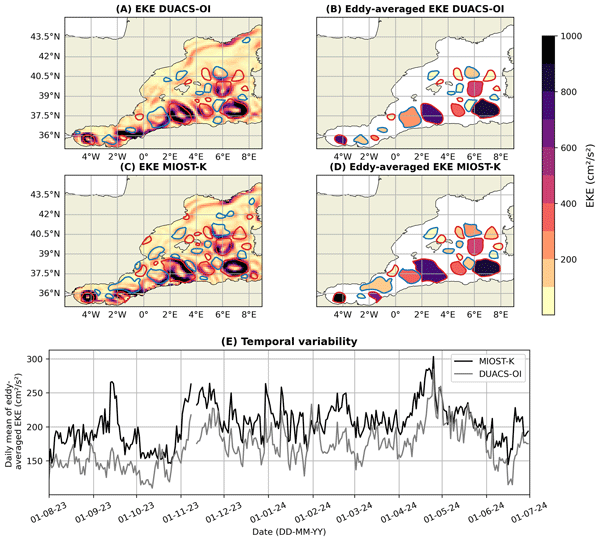
Understanding how the ocean moves heat, nutrients, and pollution is vital for climate studies and ecosystem health. We examined eddies in the western Mediterranean Sea using innovative satellite observations from the Surface Water and Ocean Topography mission. Compared to existing data, we detected major differences in eddy patterns. These advances improve our ability to monitor the ocean, manage marine pollution, and support sustainable maritime activities.
Laura Gómez-Navarro, Maxime Ballarotta, Diego Cortés-Morales, Marie-Isabelle Pujol, Laura Fortunato, Baptiste Mourre, and Ananda Pascual
State Planet, 7-osr10, 8, https://doi.org/10.5194/sp-7-osr10-8-2026, https://doi.org/10.5194/sp-7-osr10-8-2026, 2026
Short summary
Short summary
Understanding how the ocean moves heat, nutrients, and pollution is vital for climate studies and ecosystem health. We examined eddies in the western Mediterranean Sea using innovative satellite observations from the Surface Water and Ocean Topography mission. Compared to existing data, we detected major differences in eddy patterns. These advances improve our ability to monitor the ocean, manage marine pollution, and support sustainable maritime activities.
Elsa Mohino, Paul-Arthur Monerie, Juliette Mignot, and Simona Bordoni
Weather Clim. Dynam., 7, 1619–1639, https://doi.org/10.5194/wcd-7-1619-2026, https://doi.org/10.5194/wcd-7-1619-2026, 2026
Short summary
Short summary
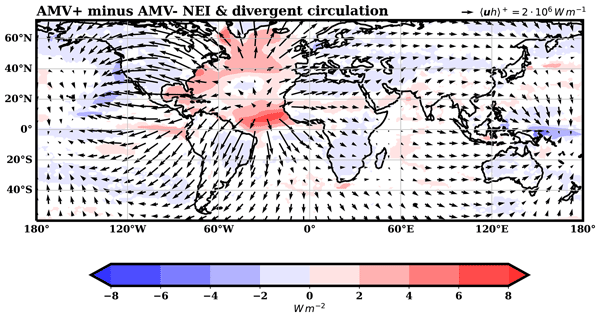
In this study, we show that the positive phase of the Atlantic Multidecadal Variability, with warmer North Atlantic surface temperatures, enhances local latent heat release and net energy input into the atmosphere. The excess energy is exported through a northward shift of the tropical rain belt, leading to increased rainfall over the Sahel. Deep convection is also enhanced while mid-level dry-air intrusion is reduced due to a weakening of the shallow meridional circulation over the Sahara.
Waly Dione, Ibrahima Camara, Alban Lazar, Diana Ruiz-Pino, and Amadou Thierno Gaye
EGUsphere, https://doi.org/10.5194/egusphere-2026-2571, https://doi.org/10.5194/egusphere-2026-2571, 2026
This preprint is open for discussion and under review for Ocean Science (OS).
Short summary
Short summary
Marine heatwaves (1982–2024) in the senegalo-mauritanian upwelling show strong spatial heterogeneity. Shallow zones face up to 50 heat days/year, while persistent upwelling areas like Cap Blanc act as refuges. Wind relaxation drives events by weakening upwelling. The Grande Coast shows increasing vulnerability. Biologically, heatwaves reduce chlorophyll in the south, whereas Cap Blanc shows seasonal biomass increases during cold periods due to residual nutrients.
Didier Swingedouw, Laura Jackson, Aixue Hu, Anastasia Romanou, Nicole C. Laureanti, Wilbert Weijer, Sina Loriani, Bette Otto-Bliesner, Ayako Abe-Ouchi, Lucas Almeida, Alessio Bellucci, Reyk Börner, Gokhan Danabasoglu, Donovan P. Dennis, Marion Devilliers, Sybren Drijfhout, Jonathan Donges, Friederike Fröb, Thomas L. Frölicher, Guillaume Gastineau, Heiko Goelzer, Chuncheng Guo, Urs Hofmann, Anna Höse, Colin Jones, Torben Koenigk, Ann Kristin Klose, Valerio Lembo, Jose Licon-Salaiz, Ken Mankoff, Virna Meccia, Irina Melnikova, Oliver Mehling, Laurie Menviel, Juliette Mignot, Jon I. Robson, Gavin A. Schmidt, Robin Smith, Yuchen Sun, Irene Trombini, Matteo Willeit, Richard Wood, Fanghua Wu, Lin Zhaohui, and Ricarda Winkelmann
EGUsphere, https://doi.org/10.5194/egusphere-2026-1698, https://doi.org/10.5194/egusphere-2026-1698, 2026
Short summary
Short summary
This study presents a plan for climate model experiments to better understand how changes in freshwater in the North Atlantic affect major ocean currents. We designed coordinated simulations to test their response to warming, added freshwater, and possible recovery after weakening. Comparing results across models and past climate evidence helps improve confidence in projections and assess risks of large ocean circulation changes.
Clovis Thouvenin-Masson, Jacqueline Boutin, Vincent Échevin, Alban Lazar, and Jean-Luc Vergely
Ocean Sci., 20, 1547–1566, https://doi.org/10.5194/os-20-1547-2024, https://doi.org/10.5194/os-20-1547-2024, 2024
Short summary
Short summary
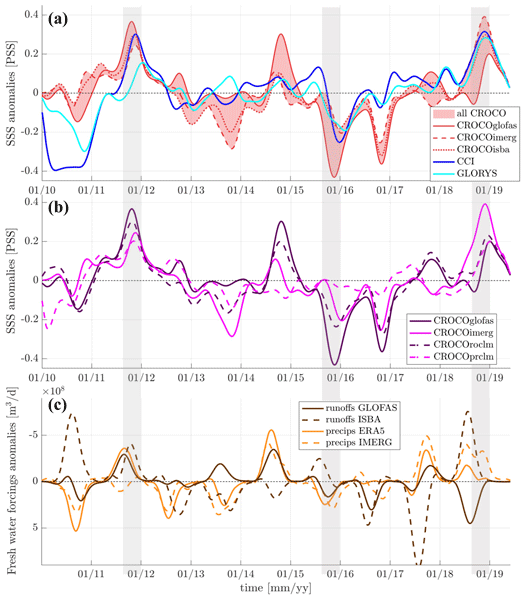
We focus on understanding the impact of river runoff and precipitation on sea surface salinity (SSS) in the eastern North Tropical Atlantic (e-NTA) region off northwestern Africa. By analyzing regional simulations and observational data, we find that river flows significantly influence SSS variability, particularly after the rainy season. Our findings underscore that a main source of uncertainty representing SSS variability in this region is from river runoff estimates.
Roberto Bilbao, Pablo Ortega, Didier Swingedouw, Leon Hermanson, Panos Athanasiadis, Rosie Eade, Marion Devilliers, Francisco Doblas-Reyes, Nick Dunstone, An-Chi Ho, William Merryfield, Juliette Mignot, Dario Nicolì, Margarida Samsó, Reinel Sospedra-Alfonso, Xian Wu, and Stephen Yeager
Earth Syst. Dynam., 15, 501–525, https://doi.org/10.5194/esd-15-501-2024, https://doi.org/10.5194/esd-15-501-2024, 2024
Short summary
Short summary
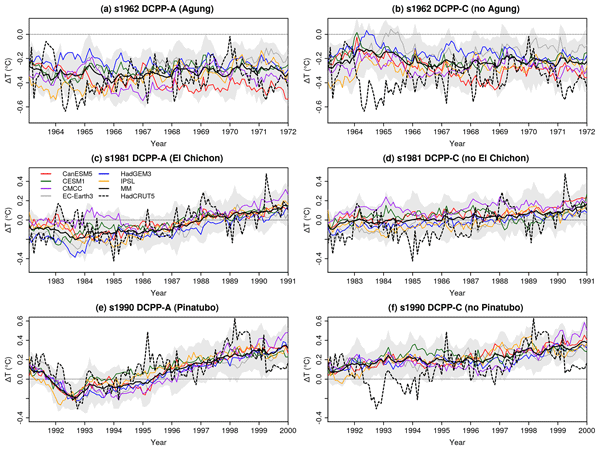
In recent decades three major volcanic eruptions have occurred: Mount Agung in 1963, El Chichón in 1982 and Mount Pinatubo in 1991. In this article we explore the climatic impacts of these volcanic eruptions with a purposefully designed set of simulations from six CMIP6 decadal prediction systems. We analyse the radiative and dynamical responses and show that including the volcanic forcing in these predictions is important to reproduce the observed surface temperature variations.
Elsa Mohino, Paul-Arthur Monerie, Juliette Mignot, Moussa Diakhaté, Markus Donat, Christopher David Roberts, and Francisco Doblas-Reyes
Earth Syst. Dynam., 15, 15–40, https://doi.org/10.5194/esd-15-15-2024, https://doi.org/10.5194/esd-15-15-2024, 2024
Short summary
Short summary
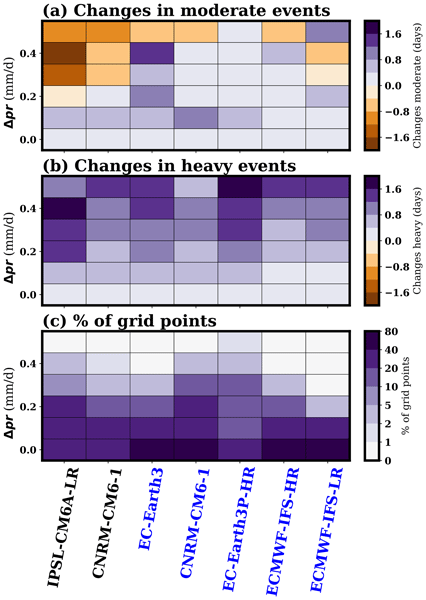
The impact of the Atlantic multidecadal variability (AMV) on the rainfall distribution and timing of the West African monsoon is not well known. Analysing model output, we find that a positive AMV enhances the number of wet days, daily rainfall intensity, and extremes over the Sahel and tends to prolong the monsoon length through later demise. Heavy rainfall events increase all over the Sahel, while moderate ones only occur in the north. Model biases affect the skill in simulating AMV impact.
Adama Sylla, Emilia Sanchez Gomez, Juliette Mignot, and Jorge López-Parages
Geosci. Model Dev., 15, 8245–8267, https://doi.org/10.5194/gmd-15-8245-2022, https://doi.org/10.5194/gmd-15-8245-2022, 2022
Short summary
Short summary
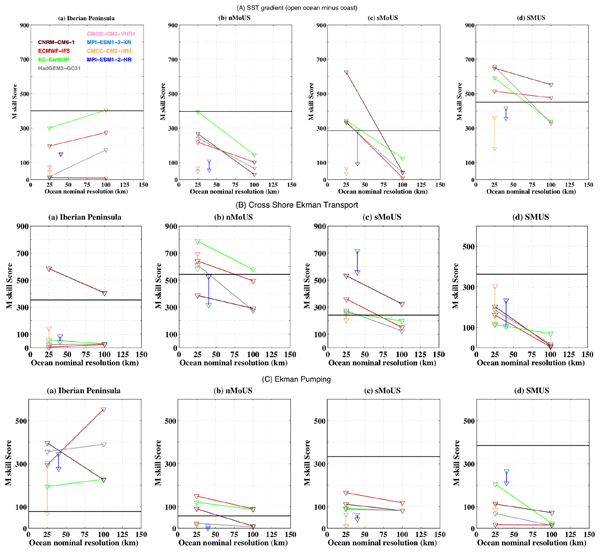
Increasing model resolution depends on the subdomain of the Canary upwelling considered. In the Iberian Peninsula, the high-resolution (HR) models do not seem to better simulate the upwelling indices, while in Morocco to the Senegalese coast, the HR models show a clear improvement. Thus increasing the resolution of a global climate model does not necessarily have to be the only way to better represent the climate system. There is still much work to be done in terms of physical parameterizations.
Yona Silvy, Clément Rousset, Eric Guilyardi, Jean-Baptiste Sallée, Juliette Mignot, Christian Ethé, and Gurvan Madec
Geosci. Model Dev., 15, 7683–7713, https://doi.org/10.5194/gmd-15-7683-2022, https://doi.org/10.5194/gmd-15-7683-2022, 2022
Short summary
Short summary
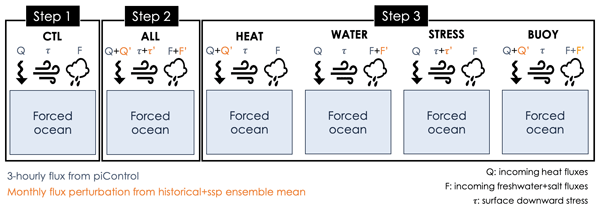
A modeling framework is introduced to understand and decompose the mechanisms causing the ocean temperature, salinity and circulation to change since the pre-industrial period and into 21st century scenarios of global warming. This framework aims to look at the response to changes in the winds and in heat and freshwater exchanges at the ocean interface in global climate models, throughout the 1850–2100 period, to unravel their individual effects on the changing physical structure of the ocean.
Cited articles
Adcroft, A., Hill, C., Campin, J.-M., Marshall, J., and Heimbach, P.: Overview of the formulation and numerics of the MIT GCM, in: Proceedings of the ECMWF seminar series on Numerical Methods, Recent developments in numerical methods for atmosphere and ocean modelling, 139–149, https://stage.ecmwf.int/sites/default/files/elibrary/2004/7642-overview-formulation-and-numerics-mit-gcm.pdf (last access: 30 March 2026), 2004. a
Allen, J., Smeed, D., Nurser, A., Zhang, J., and Rixen, M.: Diagnosis of vertical velocities with the QG omega equation: An examination of the errors due to sampling strategy, Deep-Sea Res. Pt. I, 48, 315–346, https://doi.org/10.1016/S0967-0637(00)00035-2, 2001. a
Aristegui, J., Barton, E. D., Alvarez-Salgado, X. A., Santos, A. M. P., Figueiras, F. G., Kifani, S., Hernandez-Leon, S., Mason, E., Machu, E., and Demarcq, H.: Sub-regional ecosystem variability in the Canary Current upwelling, Prog. Oceanogr., 83, 33–48, https://doi.org/10.1016/j.pocean.2009.07.031, 2009. a
AVISO+: SSALTO/DUACS User Handbook, AVISO+, cLS-DOS-NT-06-034, Issue 4.4, SALP-MU-P-EA-21065-CLS, 2015. a
Bachèlery, M.-L., Illig, S., and Dadou, I.: Interannual variability in the South-East Atlantic Ocean, focusing on the Benguela upwelling system: remote versus local forcing, J. Geophys. Res.-Oceans, 121, 284–310, https://doi.org/10.1002/2015JC011168, 2016. a
Balmaseda, M. A., Hernandez, F., Storto, A., Palmer, M., Alves, O., Shi, L., Smith, G. C., Toyoda, T., Valdivieso, M., Barnier, B., Behringer, D., Boyer, T., Chang, Y.-S., Chepurin, G. A., Ferry, N., Forget, G., Fujii, Y., Good, S., Guinehut, S., Haines, K., Ishikawa, Y., Keeley, S., Köhl, A., Lee, T., Martin, M. J., Masina, S., Masuda, S., Meyssignac, B., Mogensen, K., Parent, L., Peterson, K. A., Tang, Y. M., Yin, Y., Vernieres, G., Wang, X., Waters, J., Wedd, R., Wang, O., Xue, Y., Chevallier, M., Lemieux, J.-F., Dupont, F., Kuragano, T., Kamachi, M., Awaji, T., Caltabiano, A., Wilmer-Becker, K., and Gaillard, F.: The ocean reanalyses intercomparison project (ORA-IP), J. Oper. Oceanogr., 8, s80–s97, https://doi.org/10.1080/1755876X.2015.1022329, 2015. a
Barceló-Llull, B., Rosselló, P., Combes, V., Sánchez-Román, A., Pujol, M. I., and Pascual, A.: Kuroshio extension and Gulf Stream dominate the eddy kinetic energy intensification observed in the global ocean, Sci. Rep.-UK, 15, 21754, https://doi.org/10.1038/s41598-025-06149-9, 2025. a, b
Bessières, L., Leroux, S., Brankart, J.-M., Molines, J.-M., Moine, M.-P., Bouttier, P.-A., Penduff, T., Terray, L., Barnier, B., and Sérazin, G.: Development of a probabilistic ocean modelling system based on NEMO 3.5: application at eddying resolution, Geosci. Model Dev., 10, 1091–1106, https://doi.org/10.5194/gmd-10-1091-2017, 2017. a
Bower, A. S. and Rossby, T.: Evidence of cross-frontal exchange processes in the Gulf Stream based on isopycnal RAFOS float data, J. Phys. Oceanogr., 19, 1177–1190, https://doi.org/10.1175/1520-0485(1989)019<1177:EOCFEP>2.0.CO;2, 1989. a
Bretherton, F. P., Davis, R. E., and Fandry, C.: A technique for objective analysis and design of oceanographic experiments applied to MODE-73, Deep Sea Research and Oceanographic Abstracts, 23, 559–582, https://doi.org/10.1016/0011-7471(76)90001-2, 1976. a
Buongiorno Nardelli, B., Santoleri, R., and Sparnocchia, S.: Small mesoscale features at a meandering upper-ocean front in the Western Ionian Sea (Mediterranean Sea): vertical motion and potential vorticity analysis, J. Phys. Oceanogr., 31, 2227–2250, https://doi.org/10.1175/1520-0485(2001)031<2227:SMFAAM>2.0.CO;2, 2001. a
Buongiorno Nardelli, B., Mulet, S., and Iudicone, D.: Three-dimensional ageostrophic motion and water mass subduction in the Southern Ocean, J. Geophys. Res.-Oceans, 123, 1533–1562, https://doi.org/10.1002/2017JC013316, 2018. a, b, c, d
Carton, J. A., Chepurin, G. A., and Chen, L.: SODA3: a new ocean climate reanalysis, J. Climate, 31, 6967–6983, https://doi.org/10.1175/JCLI-D-18-0149.1, 2018. a
Carton, J. A., Penny, S. G., and Kalnay, E.: Temperature and salinity variability in the SODA3, ECCO4r3, and ORAS5 ocean reanalyses, 1993–2015, J. Climate, 32, 2277–2293, https://doi.org/10.1175/JCLI-D-18-0605.1, 2019. a
Christensen, K. M., Gray, A. R., and Riser, S. C.: Global estimates of mesoscale vertical velocity near 1,000 m from Argo observations, J. Geophys. Res.-Oceans, 129, e2023JC020003, https://doi.org/10.1029/2023JC020003, 2024. a
Colin de Verdière, A. and Ollitrault, M.: A direct determination of the World Ocean barotropic circulation, J. Phys. Oceanogr., 46, 255–273, https://doi.org/10.1175/JPO-D-15-0046.1, 2016. a
Colin de Verdière, A., Meunier, T., and Ollitrault, M.: Meridional overturning and heat transport from Argo floats displacements and the planetary geostrophic method (PGM): application to the subpolar North Atlantic, J. Geophys. Res.-Oceans, 124, 6270–6285, https://doi.org/10.1029/2018JC014565, 2019. a
Comby, C., Barrillon, S., Fuda, J.-L., Doglioli, A. M., Tzortzis, R., Grégori, G., Thyssen, M., and Petrenko, A. A.: Measuring vertical velocities with ADCPs in low-energy ocean, J. Atmos. Ocean. Tech., 39, 1669–1684, https://doi.org/10.1175/JTECH-D-21-0180.1, 2022. a
Cortés-Morales, D. and Lazar, A.: Vertical velocity 3D estimates from the linear vorticity balance in the North Atlantic Ocean, J. Phys. Oceanogr., 54, 2185–2203, https://doi.org/10.1175/JPO-D-24-0011.1, 2024. a
Cortés-Morales, D. and Lazar, A.: Global Observation-based LInear Vorticity Vertical Velocities (OLIV3) over isopycnal levels, Zenodo [data set], https://doi.org/10.5281/zenodo.16962780, 2025. a, b, c, d
Cortés-Morales, D., Lazar, A., Ruiz-Pino, D., and Mignot, J.: dcortales/compute_wglvb: OLIV3 paper v1 (Version v1), Zenodo [code], https://doi.org/10.5281/zenodo.20398378, 2026. a
Croll, D. A., Marinovic, B., Benson, S., Chavez, F. P., Black, N., Ternullo, R., and Tershy, B. R.: From wind to whales: trophic links in a coastal upwelling system, Mar. Ecol. Prog. Ser., 289, 117–130, https://doi.org/10.3354/meps289117, 2005. a
Daniault, N., Mercier, H., and Lherminier, P.: The 1992–2009 transport variability of the East Greenland-Irminger Current at 60° N, Geophys. Res. Lett., 38, https://doi.org/10.1029/2011GL046863, 2011. a
D'Asaro, E. A., Shcherbina, A. Y., Klymak, J. M., Molemaker, J., Novelli, G., Guigand, C. M., Haza, A. C., Haus, B. K., Ryan, E. H., Jacobs, G. A., Huntley, H. S., Laxague, N. J. M., Chen, S., Judt, F., McWilliams, J. C., Barkan, R., Kirwan Jr., A. D.. Poje, A. C., and Özgökmen, T. M.: Ocean convergence and the dispersion of flotsam, P. Natl. Acad. Sci. USA, 115, 1162–1167, https://doi.org/10.1073/pnas.1718453115, 2018. a
de Boyer Montegut, C., Madec, G., Fischer, A. S., Lazar, A., and Iudicone, D.: Mixed layer depth over the global ocean: an examination of profile data and a profile-based climatology, J. Geophys. Res.-Oceans, 109, https://doi.org/10.1029/2004JC002378, 2004. a
Dee, D. P., Uppala, S., Simmons, A. J., Berrisford, P., Poli, P., Kobayashi, S., Andrae, U., Balmaseda, M., Balsamo, G., Bauer, P., Bechtold, P., Beljaars, A. C. M., van de Berg, L., Bidlot, J., Bormann, N., Delsol, C., Dragani, R., Fuentes, M., Geer, A. J., Haimberger, L., Healy, S. B., Hersbach, H., Hólm, E. V., Isaksen, L., Kållberg, P., Köhler, M., Matricardi, M., McNally, A. P., Monge-Sanz, B. M., Morcrette, J.-J., Park, B.-K., Peubey, C., de Rosnay, P., Tavolato, C., Thëpaut, J.-N., and Vitart, F.: The ERA-Interim reanalysis: configuration and performance of the data assimilation system, Q. J. Roy. Meteor. Soc., 137, 553–597, https://doi.org/10.1002/qj.828, 2011. a
DeVries, T., Holzer, M., and Primeau, F.: Recent increase in oceanic carbon uptake driven by weaker upper-ocean overturning, Nature, 542, 215–218, https://doi.org/10.1038/nature21068, 2017. a
Droghei, R., Buongiorno Nardelli, B., and Santoleri, R.: A new global sea surface salinity and density dataset from multivariate observations (1993–2016), Frontiers in Marine Science, 5, 84, https://doi.org/10.3389/fmars.2018.00084, 2018. a
Dussin, R., Barnier, B., Brodeau, L., and Molines, J. M.: Drakkar forcing set DFS5, MyOcean Report, https://www.drakkar-ocean.eu/publications/reports/report_DFS5v3_April2016.pdf (last access: 10 November 2025), 2016. a
Elmoussaoui, A., Arhan, M., and Tréguier, A.-M.: Model-inferred upper ocean circulation in the eastern tropics of the North Atlantic, Deep-Sea Res. Pt. I, 52, 1093–1120, https://doi.org/10.1016/j.dsr.2005.01.010, 2005. a
Falkowski, P. G., Ziemann, D., Kolber, Z., and Bienfang, P. K.: Role of eddy pumping in enhancing primary production in the ocean, Nature, 352, 55–58, https://doi.org/10.1038/352055a0, 1991. a
Faye, S., Lazar, A., Sow, B. A., and Gaye, A. T.: A model study of the seasonality of sea surface temperature and circulation in the Atlantic North-eastern Tropical Upwelling System, AIP Conf. Proc., 3, 76, https://doi.org/10.3389/fphy.2015.00076, 2015. a
Fischer, J., Leach, H., and Woods, J.: A synoptic map of isopycnic potential vorticity in the seasonal thermocline, J. Phys. Oceanogr., 19, 519–531, https://doi.org/10.1175/1520-0485(1989)019<0519:ASMOIP>2.0.CO;2, 1989. a
Forget, G., Campin, J.-M., Heimbach, P., Hill, C. N., Ponte, R. M., and Wunsch, C.: ECCO version 4: an integrated framework for non-linear inverse modeling and global ocean state estimation, Geosci. Model Dev., 8, 3071–3104, https://doi.org/10.5194/gmd-8-3071-2015, 2015. a
Foukal, N. P. and Lozier, M. S.: Assessing variability in the size and strength of the North Atlantic subpolar gyre, J. Geophys. Res.-Oceans, 122, 6295–6308, https://doi.org/10.1002/2017JC012798, 2017. a
Freeland, H. J.: Vertical velocity estimates in the North Pacific using Argo floats, Deep-Sea Res. Pt. II, 85, 75–80, https://doi.org/10.1016/j.dsr2.2012.07.019, 2013. a
Freilich, M. A. and Mahadevan, A.: Decomposition of vertical velocity for nutrient transport in the upper ocean, J. Phys. Oceanogr., 49, 1561–1575, https://doi.org/10.1175/JPO-D-19-0002.1, 2019. a
Fukumori, I., Heimbach, P., Ponte, R. M., and Wunsch, C.: A dynamically consistent, multivariable ocean climatology, B. Am. Meteorol. Soc., 99, 2107–2128, https://doi.org/10.1175/BAMS-D-17-0213.1, 2018. a
Garcia-Jove, M., Mourre, B., Zarokanellos, N. D., Lermusiaux, P. F., Rudnick, D. L., and Tintoré, J.: Frontal dynamics in the Alboran Sea: 2. Processes for vertical velocities development, J. Geophys. Res.-Oceans, 127, e2021JC017428, https://doi.org/10.1029/2021JC017428, 2022. a
Giglio, D., Roemmich, D., and Cornuelle, B.: Understanding the annual cycle in global steric height, Geophys. Res. Lett., 40, 4349–4354, https://doi.org/10.1002/grl.50774, 2013. a
Giordani, H., Prieur, L., and Caniaux, G.: Advanced insights into sources of vertical velocity in the ocean, Ocean Dynam., 56, 513–524, https://doi.org/10.1007/s10236-005-0050-1, 2006. a
Gomis, D., Ruiz, S., and Pedder, M. A.: Diagnostic analysis of the 3D ageostrophic circulation from a multivariate spatial interpolation of CTD and ADCP data, Deep-Sea Res. Pt. I, 48, 269–295, https://doi.org/10.1016/S0967-0637(00)00060-1, 2001. a
Guinehut, S., Dhomps, A.-L., Larnicol, G., and Le Traon, P.-Y.: High resolution 3-D temperature and salinity fields derived from in situ and satellite observations, Ocean Sci., 8, 845–857, https://doi.org/10.5194/os-8-845-2012, 2012. a
Gula, J., Molemaker, M. J., and McWilliams, J. C.: Gulf Stream dynamics along the southeastern US seaboard, J. Phys. Oceanogr., 45, 690–715, https://doi.org/10.1175/JPO-D-14-0154.1, 2015. a
Halpern, D. and Freitag, H. P.: Vertical motion in the upper ocean of the equatorial eastern Pacific, Oceanologica Acta, Special Issue, Gauthier-Villars, https://archimer.ifremer.fr/doc/00267/37842/ (last access: 5 April 2026), 1987. a
Halpern, D., Knox, R. A., Luther, D. S., and Philander, S. G. H.: Estimates of equatorial upwelling between 140° and 110° W during 1984, J. Geophys. Res.-Oceans, 94, 8018–8020, https://doi.org/10.1029/JC094iC06p08018, 1989. a
Helber, R. W. and Weisberg, R. H.: Equatorial upwelling in the western Pacific warm pool, J. Geophys. Res.-Oceans, 106, 8989–9003, https://doi.org/10.1029/2000JC000401, 2001. a
Hersbach, H., Bell, B., Berrisford, P., Biavati, G., Horányi, A., Muñoz Sabater, J., Nicolas, J., Peubey, C., Radu, R., Rozum, I., Schepers, D., Simmons, A., Soci, C., Dee, D., and Thépaut, J.-N.: ERA5 monthly averaged data on single levels from 1940 to present, Copernicus Climate Change Service (C3S) Climate Data Store (CDS) [data set], https://doi.org/10.24381/cds.f17050d7, 2023. a
Hoskins, B. J., Draghici, I., and Davies, H.: A new look at the ω-equation, Q. J. Roy. Meteor. Soc., 104, 31–38, https://doi.org/10.1002/qj.49710443903, 1978. a
Huang, R. X. and Russell, S.: Ventilation of the subtropical North Pacific, J. Phys. Oceanogr., 24, 2589–2605, https://doi.org/10.1175/1520-0485(1994)024<2589:VOTSNP>2.0.CO;2, 1994. a
Hughes, C. W. and De Cuevas, B. A.: Why western boundary currents in realistic oceans are inviscid: a link between form stress and bottom pressure torques, J. Phys. Oceanogr., 31, 2871–2885, https://doi.org/10.1175/1520-0485(2001)031<2871:WWBCIR>2.0.CO;2, 2001. a
Illig, S., Dewitte, B., Goubanova, K., Cambon, G., Boucharel, J., Monetti, F., Romero, C., Purca, S., and Flores, R.: Forcing mechanisms of intraseasonal SST variability off central Peru in 2000–2008, J. Geophys. Res.-Oceans, 119, 3548–3573, https://doi.org/10.1002/2013JC009779, 2014. a
Ingleby, B. and Huddleston, M.: Quality control of ocean temperature and salinity profiles – historical and real-time data, J. Marine Syst., 65, 158–175, https://doi.org/10.1016/j.jmarsys.2005.11.019, 2007. a
Jackett, D. R., McDougall, T. J., Feistel, R., Wright, D. G., and Griffies, S. M.: Algorithms for density, potential temperature, conservative temperature, and the freezing temperature of seawater, J. Atmos. Ocean. Tech., 23, 1709–1728, https://doi.org/10.1175/JTECH1946.1, 2006. a, b, c
Jacox, M. G., Edwards, C. A., Hazen, E. L., and Bograd, S. J.: Coastal upwelling revisited: Ekman, Bakun, and improved upwelling indices for the US West Coast, J. Geophys. Res.-Oceans, 123, 7332–7350, https://doi.org/10.1029/2018JC014187, 2018. a, b
Kara, A. B., Rochford, P. A., and Hurlburt, H. E.: An optimal definition for ocean mixed layer depth, J. Geophys. Res.-Oceans, 105, 16803–16821, https://doi.org/10.1029/2000JC900072, 2000. a
Kara, A. B., Rochford, P. A., and Hurlburt, H. E.: Mixed layer depth variability over the global ocean, J. Geophys. Res.-Oceans, 108, https://doi.org/10.1029/2000JC000736, 2003. a
Khatri, H., Griffies, S. M., Storer, B. A., Buzzicotti, M., Aluie, H., Sonnewald, M., Dussin, R., and Shao, A.: A scale-dependent analysis of the barotropic vorticity budget in a global ocean simulation, J. Adv. Model. Earth Sy., 16, e2023MS003813, https://doi.org/10.1029/2023MS003813, 2024. a
Klein, P. and Lapeyre, G.: The oceanic vertical pump induced by mesoscale and submesoscale turbulence, Annu. Rev. Mar. Sci., 1, 351–375, https://doi.org/10.1146/annurev.marine.010908.163704, 2009. a
Lazar, A., Inui, T., Malanotte-Rizzoli, P., Busalacchi, A. J., Wang, L., and Murtugudde, R.: Seasonality of the ventilation of the tropical Atlantic thermocline in an ocean general circulation model, J. Geophys. Res.-Oceans, 107, 18–1, https://doi.org/10.1029/2000JC000667, 2002. a
Leach, H.: The diagnosis of synoptic-scale vertical motion in the seasonal thermocline, Deep-Sea Res., 34, 2005–2017, https://doi.org/10.1016/0198-0149(87)90095-1, 1987. a
Lellouche, J.-M., Greiner, E., Le Galloudec, O., Garric, G., Regnier, C., Drevillon, M., Benkiran, M., Testut, C.-E., Bourdalle-Badie, R., Gasparin, F., Hernandez, O., Levier, B., Drillet, Y., Remy, E., and Le Traon, P.-Y.: Recent updates to the Copernicus Marine Service global ocean monitoring and forecasting real-time
Lellouche, J.-M., Greiner, E., Bourdallé-Badie, R., Garric, G., Melet, A., Marie, D., Clément, B., Mathieu, H., Olivier, L. G., Regnier, C., Candela, T., Testut, C.-E., Gasparin, F., Ruggiero, G., Benkiran, M., Drillet, Y., and Le Traon, P.-Y.: The Copernicus global
Liang, X., Spall, M., and Wunsch, C.: Global ocean vertical velocity from a dynamically consistent ocean state estimate, J. Geophys. Res.-Oceans, 122, 8208–8224, https://doi.org/10.1002/2017JC012985, 2017. a
Liao, F., Liang, X., Li, Y., and Spall, M.: Hidden upwelling systems associated with major western boundary currents, J. Geophys. Res.-Oceans, 127, e2021JC017649, https://doi.org/10.1029/2021JC017649, 2022. a, b
Madec, G., Bourdallé-Badie, R., Chanut, J., Clementi, E., Coward, A., Éthé, C., Iovino, D., Lea, D., Lévy, C., Lovato, T., Martin, N., Masson, S., Mocavero, S., Rousset, C., Storkey, D., Müeller, S., Nurser, G., Bell, M., Samson, G., Mathiot, P., Mele, F., and Moulin, A.: NEMO ocean engine NEMO ocean engine. In Notes du Pôle de modélisation de l'Institut Pierre-Simon Laplace (IPSL) (v4.0, Number 27), Zenodo [data set], https://doi.org/10.5281/zenodo.3878122, 2019. a, b
Mahadevan, A.: The impact of submesoscale physics on primary productivity of plankton, Annu. Rev. Mar. Sci., 8, 161–184, https://doi.org/10.1146/annurev-marine-010814-015912, 2016. a
Marshall, J. C., Williams, R. G., and Nurser, A. G.: Inferring the subduction rate and period over the North Atlantic, J. Phys. Oceanogr., 23, 1315–1329, https://doi.org/10.1175/1520-0485(1993)023<1315:ITSRAP>2.0.CO;2, 1993. a
Mulet, S., Rio, M.-H., Mignot, A., Guinehut, S., and Morrow, R.: A new estimate of the global 3D geostrophic ocean circulation based on satellite data and in-situ measurements, Deep-Sea Res. Pt. II, 77, 70–81, https://doi.org/10.1016/j.dsr2.2012.04.012, 2012. a
Munk, W. H.: Abyssal recipes, in: Deep Sea Research and Oceanographic Abstracts, Vol. 13, Elsevier, https://doi.org/10.1016/0011-7471(66)90602-4, 707–730, 1966. a
Naveira Garabato, A. C., Leach, H., Allen, J. T., Pollard, R. T., and Strass, V. H.: Mesoscale subduction at the Antarctic Polar Front driven by baroclinic instability, J. Phys. Oceanogr., 31, 2087–2107, https://doi.org/10.1175/1520-0485(2001)031<2087:MSATAP>2.0.CO;2, 2001. a
Oschlies, A.: Nutrient supply to the surface waters of the North Atlantic: a model study, J. Geophys. Res.-Oceans, 107, 14–1, https://doi.org/10.1029/2000JC000275, 2002. a
Palter, J. B., Marinov, I., Sarmiento, J. L., and Gruber, N.: Large-scale, persistent nutrient fronts of the world ocean: impacts on biogeochemistry, in: Chemical Oceanography of Frontal Zones, Springer, https://doi.org/10.1007/698_2013_241, 25–62, 2013. a
Parrish, R. H., Nelson, C. S., and Bakun, A.: Transport mechanisms and reproductive success of fishes in the California Current, Biological Oceanography, 1, 175–203, 1981. a
Pauly, D. and Christensen, V.: Primary production required to sustain global fisheries, Nature, 374, 255–257, https://doi.org/10.1038/374255a0, 1995. a
Pedlosky, J.: Ocean Circulation Theory, Springer Science and Business Media, https://doi.org/10.1007/978-3-662-03204-6, 1996. a
Penduff, T., Barnier, B., Terray, L., Bessières, L., Sérazin, G., Gregorio, S., Brankart, J., Moine, M., Molines, J., and Brasseur, P.: Ensembles of eddying ocean simulations for climate, CLIVAR Exchanges, Special Issue on High Resolution Ocean Climate Modelling, 26–29, https://www.researchgate.net/publication/283497595_Ensembles_of_eddying_ocean_simulations_for_climate (last access: 30 March 2026), 2014. a
Pinto, J. G. and Raible, C. C.: Past and recent changes in the North Atlantic oscillation, WIREs Clim. Change, 3, 79–90, https://doi.org/10.1002/wcc.150, 2012. a, b
Pollard, R. T. and Regier, L. A.: Vorticity and vertical circulation at an ocean front, J. Phys. Oceanogr., 22, 609–625, https://doi.org/10.1175/1520-0485(1992)022<0609:VAVCAA>2.0.CO;2, 1992. a
Polo, I., Lazar, A., Rodriguez-Fonseca, B., and Arnault, S.: Oceanic Kelvin waves and tropical Atlantic intraseasonal variability: 1. Kelvin wave characterization, J. Geophys. Res.-Oceans, 113, https://doi.org/10.1029/2007JC004495, 2008. a
Qiu, B. and Huang, R. X.: Ventilation of the North Atlantic and North Pacific: subduction versus obduction, J. Phys. Oceanogr., 25, 2374–2390, https://doi.org/10.1175/1520-0485(1995)025<2374:VOTNAA>2.0.CO;2, 1995. a, b
Reynolds, R. W., Smith, T. M., Liu, C., Chelton, D. B., Casey, K. S., and Schlax, M. G.: Daily high-resolution-blended analyses for sea surface temperature, J. Climate, 20, 5473–5496, https://doi.org/10.1175/2007JCLI1824.1, 2007. a
Robinson, A. and Stommel, H.: The oceanic thermocline and the associated thermohaline circulation 1, Tellus, 11, 295–308, https://doi.org/10.1111/j.2153-3490.1959.tb00035.x, 1959. a
Roch, M., Brandt, P., Schmidtko, S., and Tuchen, F. P.: Impact of the North Atlantic Oscillation on the decadal variability of the upper subtropical-tropical Atlantic Ocean, J. Geophys. Res.-Oceans, 129, e2023JC020614, https://doi.org/10.1029/2023JC020614, 2024. a
Rodriguez, J., Tintoré, J., Allen, J. T., Blanco, J. M., Gomis, D., Reul, A., Ruiz, J., Rodríguez, V., Echevarría, F., and Jiménez-Gómez, F.: Mesoscale vertical motion and the size structure of phytoplankton in the ocean, Nature, 410, 360–363, https://doi.org/10.1038/35066560, 2001. a
Roemmich, D.: The balance of geostrophic and Ekman transports in the tropical Atlantic Ocean, J. Phys. Oceanogr., 13, 1534–1539, https://doi.org/10.1175/1520-0485(1983)013<1534:TBOGAE>2.0.CO;2, 1983. a
Rossby, T.: Visualizing and quantifying oceanic motion, Annu. Rev. Mar. Sci., 8, 35–57, https://doi.org/10.1146/annurev-marine-122414-033849, 2016. a
Rudnick, D. L.: Intensive surveys of the Azores Front: 2. Inferring the geostrophic and vertical velocity fields, J. Geophys. Res.-Oceans, 101, 16291–16303, https://doi.org/10.1029/96JC01144, 1996. a
Ruiz, S., Pelegrí, J. L., Emelianov, M., Pascual, A., and Mason, E.: Geostrophic and ageostrophic circulation of a shallow anticyclonic eddy off Cape Bojador, J. Geophys. Res.-Oceans, 119, 1257–1270, https://doi.org/10.1002/2013JC009169, 2014. a
Salmon, R.: The shape of the main thermocline, J. Phys. Oceanogr., 12, 1458–1479, https://doi.org/10.1175/1520-0485(1982)012<1458:TSOTMT>2.0.CO;2, 1982. a
Schoonover, J., Dewar, W., Wienders, N., Gula, J., McWilliams, J. C., Molemaker, M. J., Bates, S. C., Danabasoglu, G., and Yeager, S.: North Atlantic barotropic vorticity balances in numerical models, J. Phys. Oceanogr., 46, 289–303, https://doi.org/10.1175/JPO-D-15-0133.1, 2016. a
Schott, F. A. and Stommel, H.: Beta spirals and absolute velocities in different oceans, Deep-Sea Res., 25, 961–1010, https://doi.org/10.1016/0146-6291(78)90583-0, 1978. a, b
Sévellec, F., Garabato, A. N., Brearley, J., and Sheen, K.: Vertical flow in the Southern Ocean estimated from individual moorings, J. Phys. Oceanogr., 45, 2209–2220, https://doi.org/10.1175/JPO-D-14-0065.1, 2015. a
Song, T., Rossby, T., and Carter, E.: Lagrangian studies of fluid exchange between the Gulf Stream and surrounding waters, J. Phys. Oceanogr., 25, 46–63, https://doi.org/10.1175/1520-0485(1995)025<0046:LSOFEB>2.0.CO;2, 1995. a
Sonnewald, M., Wunsch, C., and Heimbach, P.: Unsupervised learning reveals geography of global ocean dynamical regions, Earth and Space Science, 6, 784–794, https://doi.org/10.1029/2018EA000519, 2019. a
Stommel, H. and Arons, A.: On the abyssal circulation of the world ocean – I. Stationary planetary flow patterns on a sphere, Deep-Sea Res., 6, 140–154, https://doi.org/10.1016/0146-6313(59)90065-6, 1959. a, b
Stommel, H. and Schott, F.: The beta spiral and the determination of the absolute velocity field from hydrographic station data, Deep-Sea Res., 24, 325–329, https://doi.org/10.1016/0146-6291(77)93000-4, 1977. a
Sverdrup, H. U.: Wind-driven currents in a baroclinic ocean; with application to the equatorial currents of the eastern Pacific, P. Natl. Acad. Sci. USA, 33, 318–326, https://doi.org/10.1073/pnas.33.11.318, 1947. a
Tailleux, R.: On the determination of the 3D velocity field in terms of conserved variables in a compressible ocean, Fluids, 8, 94, https://doi.org/10.3390/fluids8030094, 2023. a
Thomas, M. D., De Boer, A. M., Johnson, H. L., and Stevens, D. P.: Spatial and temporal scales of Sverdrup balance, J. Phys. Oceanogr., 44, 2644–2660, https://doi.org/10.1175/JPO-D-13-0192.1, 2014. a, b
Tintoré, J., Gomis, D., Alonso, S., and Parrilla, G.: Mesoscale dynamics and vertical motion in the Alboran Sea, J. Phys. Oceanogr., 21, 811–823, https://doi.org/10.1175/1520-0485(1991)021<0811:MDAVMI>2.0.CO;2, 1991. a
Uchida, T., Balwada, D., Abernathey, R., McKinley, G., Smith, S., and Levy, M.: The contribution of submesoscale over mesoscale eddy iron transport in the open Southern Ocean, J. Adv. Model. Earth Sy., 11, 3934–3958, https://doi.org/10.1029/2019MS001805, 2019. a
Verezemskaya, P., Barnier, B., Gulev, S. K., Gladyshev, S., Molines, J.-M., Gladyshev, V., Lellouche, J.-M., and Gavrikov, A.: Assessing eddying (
Waldman, R. and Giordani, H.: Ocean barotropic vorticity balances: theory and application to numerical models, J. Adv. Model. Earth Sy., 15, https://doi.org/10.1029/2022MS003276, 2023. a
Weingartner, T. J. and Weisberg, R. H.: On the annual cycle of equatorial upwelling in the central Atlantic Ocean, J. Phys. Oceanogr., 21, 68–82, https://doi.org/10.1175/1520-0485(1991)021<0068:OTACOE>2.0.CO;2, 1991. a
Williams, R. G., Roussenov, V., and Follows, M. J.: Nutrient streams and their induction into the mixed layer, Global Biogeochem. Cy., 20, https://doi.org/10.1029/2005GB002586, 2006. a
Wunsch, C.: An estimate of the upwelling rate in the equatorial Atlantic based on the distribution of bomb radiocarbon and quasi-geostrophic dynamics, J. Geophys. Res.-Oceans, 89, 7971–7978, https://doi.org/10.1029/JC089iC05p07971, 1984. a
Wunsch, C.: The past and future ocean circulation from a contemporary perspective, in: Ocean Circulation: Mechanisms and Impacts – Past and Future Changes of Meridional Overturning, 173, https://doi.org/10.1029/173GM06, 53–74, 2007. a, b
Wyrtki, K.: The thermohaline circulation in relation to the general circulation in the oceans, Deep-Sea Res., 8, 39–64, https://doi.org/10.1016/0146-6313(61)90014-4, 1961. a
Wyrtki, K.: An estimate of equatorial upwelling in the Pacific, J. Phys. Oceanogr., 11, 1205–1214, https://doi.org/10.1175/1520-0485(1981)011<1205:AEOEUI>2.0.CO;2, 1981. a
Yang, P., Jing, Z., Sun, B., Wu, L., Qiu, B., Chang, P., and Ramachandran, S.: On the upper-ocean vertical eddy heat transport in the Kuroshio extension. Part I: Variability and dynamics, J. Phys. Oceanogr., 51, 229–246, https://doi.org/10.1175/JPO-D-20-0068.1, 2021. a
Yeager, S.: Topographic coupling of the Atlantic overturning and gyre circulations, J. Phys. Oceanogr., 45, 1258–1284, https://doi.org/10.1175/JPO-D-14-0100.1, 2015. a
Zhao, J. and Johns, W.: Wind-forced interannual variability of the Atlantic Meridional Overturning Circulation at 26.5° N, J. Geophys. Res.-Oceans, 119, 2403–2419, https://doi.org/10.1002/2013JC009407, 2014. a
Short summary
OLIV3 (Observation-based LInear Vorticity Vertical Velocities) is a new global dataset of large-scale oceanic vertical velocities. It is derived from the geostrophic linear vorticity balance, combining in situ and satellite, meridional velocities and wind stress. Comparisons with reanalysis and observation-based products show that OLIV3 captures the large-scale vertical flow, its climatology, and temporal variability, providing a better description of the ocean interior than Ekman pumping.
OLIV3 (Observation-based LInear Vorticity Vertical Velocities) is a new global dataset of...


Altmetrics
Final-revised paper
Preprint