Articles | Volume 18, issue 1
https://doi.org/10.5194/essd-18-411-2026
© Author(s) 2026. This work is distributed under
the Creative Commons Attribution 4.0 License.
the Creative Commons Attribution 4.0 License.
https://doi.org/10.5194/essd-18-411-2026
© Author(s) 2026. This work is distributed under
the Creative Commons Attribution 4.0 License.
the Creative Commons Attribution 4.0 License.
Data description article
| 
15 Jan 2026
Data description article |
| 15 Jan 2026
| 15 Jan 2026
PROMICE-2022 ice mask: a high-resolution outline of the Greenland Ice Sheet from August 2022

Department of Glaciology and Climate, Geological Survey of Denmark and Greenland (GEUS), Copenhagen, Denmark
Niels Jakup Korsgaard
Department of Glaciology and Climate, Geological Survey of Denmark and Greenland (GEUS), Copenhagen, Denmark
Anna Kirk Deichmann
Department of Glaciology and Climate, Geological Survey of Denmark and Greenland (GEUS), Copenhagen, Denmark
Tobias Socher
Department of Glaciology and Climate, Geological Survey of Denmark and Greenland (GEUS), Copenhagen, Denmark
Karin Gleie
Department of Glaciology and Climate, Geological Survey of Denmark and Greenland (GEUS), Copenhagen, Denmark
Thomas Scharffenberger
Department of Glaciology and Climate, Geological Survey of Denmark and Greenland (GEUS), Copenhagen, Denmark
Dominik Fahrner
Department of Glaciology and Climate, Geological Survey of Denmark and Greenland (GEUS), Copenhagen, Denmark
Eva Bendix Nielsen
Department of Glaciology and Climate, Geological Survey of Denmark and Greenland (GEUS), Copenhagen, Denmark
Penelope How
Department of Glaciology and Climate, Geological Survey of Denmark and Greenland (GEUS), Copenhagen, Denmark
Anders Anker Bjørk
Department of Glaciology and Climate, Geological Survey of Denmark and Greenland (GEUS), Copenhagen, Denmark
Department of Geosciences and Natural Resource Management, University of Copenhagen, Copenhagen, Denmark
Kristian Kjellerup Kjeldsen
Department of Glaciology and Climate, Geological Survey of Denmark and Greenland (GEUS), Copenhagen, Denmark
Andreas Peter Ahlstrøm
Department of Glaciology and Climate, Geological Survey of Denmark and Greenland (GEUS), Copenhagen, Denmark
Robert Schjøtt Fausto
Department of Glaciology and Climate, Geological Survey of Denmark and Greenland (GEUS), Copenhagen, Denmark
Related authors
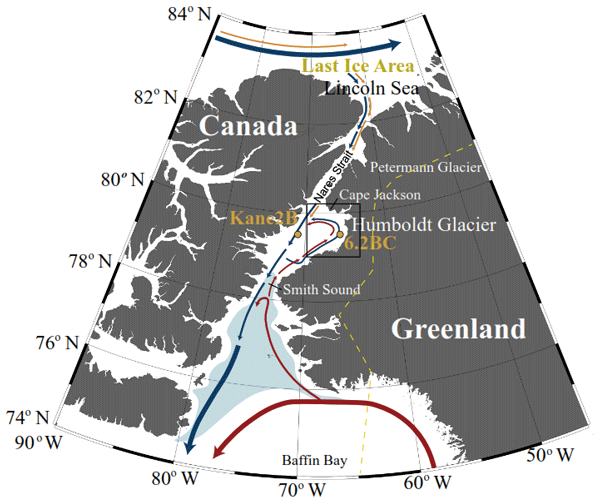
Anna Bang Kvorning, Marie-Alexandrine Sicre, Gregor Luetzenburg, Sabine Schmidt, Thorbjørn Joest Andersen, Vincent Klein, Eleanor Georgiadis, Audrey Limoges, Jacques Giraudeau, Anders Anker Bjørk, Nicolaj Krog Larsen, and Sofia Ribeiro
Clim. Past, 22, 605–624, https://doi.org/10.5194/cp-22-605-2026, https://doi.org/10.5194/cp-22-605-2026, 2026
Short summary
Short summary
We compare two marine sediment cores collected from contrasting locations in Kane Basin, northwest Greenland. The two sites differ in terms of how much sediment they receive, the level of primary production, and the source and composition of organic matter. Despite these spatial differences, both records reveal a similar long-term environmental trend, a shift from cold, heavy sea-ice conditions between ca. 1750–1900 CE, towards more open, fresher, and biologically productive waters by 1950 CE.
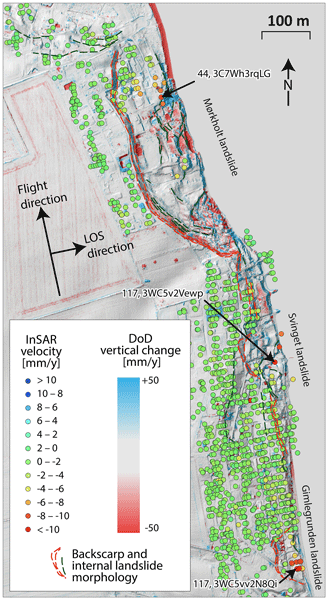
Kristian Svennevig, Julian Koch, Marie Keiding, and Gregor Luetzenburg
Nat. Hazards Earth Syst. Sci., 24, 1897–1911, https://doi.org/10.5194/nhess-24-1897-2024, https://doi.org/10.5194/nhess-24-1897-2024, 2024
Short summary
Short summary
In our study, we analysed publicly available data in order to investigate the impact of climate change on landslides in Denmark. Our research indicates that the rising groundwater table due to climate change will result in an increase in landslide activity. Previous incidents of extremely wet winters have caused damage to infrastructure and buildings due to landslides. This study is the first of its kind to exclusively rely on public data and examine landslides in Denmark.
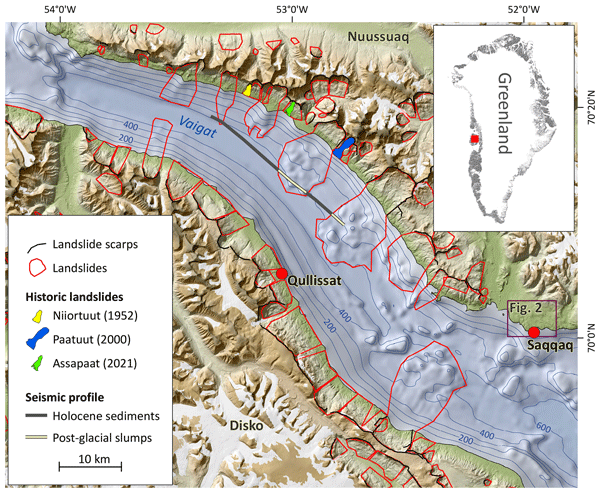
Niels J. Korsgaard, Kristian Svennevig, Anne S. Søndergaard, Gregor Luetzenburg, Mimmi Oksman, and Nicolaj K. Larsen
Nat. Hazards Earth Syst. Sci., 24, 757–772, https://doi.org/10.5194/nhess-24-757-2024, https://doi.org/10.5194/nhess-24-757-2024, 2024
Short summary
Short summary
A tsunami wave will leave evidence of erosion and deposition in coastal lakes, making it possible to determine the runup height and when it occurred. Here, we use four lakes now located at elevations of 19–91 m a.s.l. close to the settlement of Saqqaq, West Greenland, to show that at least two giant tsunamis occurred 7300–7600 years ago with runup heights larger than 40 m. We infer that any tsunamis from at least nine giga-scale landslides must have happened 8500–10 000 years ago.
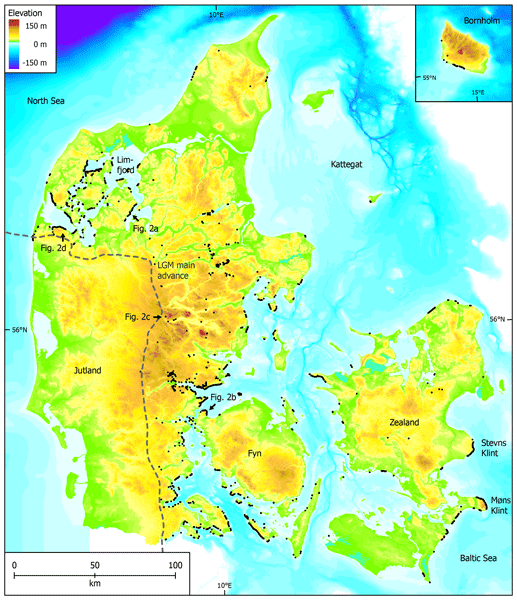
Gregor Luetzenburg, Kristian Svennevig, Anders A. Bjørk, Marie Keiding, and Aart Kroon
Earth Syst. Sci. Data, 14, 3157–3165, https://doi.org/10.5194/essd-14-3157-2022, https://doi.org/10.5194/essd-14-3157-2022, 2022
Short summary
Short summary
We produced the first landslide inventory for Denmark. Over 3200 landslides were mapped using a high-resolution elevation model and orthophotos. We implemented an independent validation into our mapping and found an overall level of completeness of 87 %. The national inventory represents a range of landslide sizes covering all regions that were covered by glacial ice during the last glacial period. This inventory will be used for investigating landslide causes and for natural hazard mitigation.
Sofie Hedetoft, Olivia Bang Brinck, Ruth Mottram, Andrea M. U. Gierisch, Steffen Malskær Olsen, Martin Olesen, Nicolaj Hansen, Anders Anker Bjørk, Erik Loebel, Anne Solgaard, and Peter Thejll
The Cryosphere, 20, 5071–5098, https://doi.org/10.5194/tc-20-5071-2026, https://doi.org/10.5194/tc-20-5071-2026, 2026
Short summary
Short summary
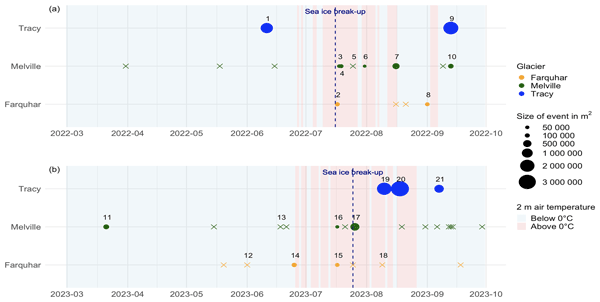
Iceberg mélange is the jumble of icebergs in front of some glaciers that calve into the sea. Some studies suggest mélange might help to control the retreat of glaciers. We studied 3 glaciers in NW Greenland where we used GPS sensors and satellites to track ice movement. We found that glaciers push forward and calve all year, including when mélange and landfast sea ice are present, suggesting mélange is not important in supporting glaciers, but may influence the seasonal calving cycle.
Anne Solgaard, Anders Kusk, John Peter Merryman Boncori, Jørgen Dall, Andreas P. Ahlstrøm, Signe B. Andersen, Michele Citterio, Penelope How, Nanna B. Karlsson, Kristian K. Kjeldsen, Signe H. Larsen, Mads C. Lund, Anja Løkkegaard, Martin P. Lüthi, Jessica Mejia, Kenneth D. Mankoff, Dirk van As, Shin Sugiyama, and Robert S. Fausto
Earth Syst. Sci. Data Discuss., https://doi.org/10.5194/essd-2026-221, https://doi.org/10.5194/essd-2026-221, 2026
Preprint under review for ESSD
Short summary
Short summary
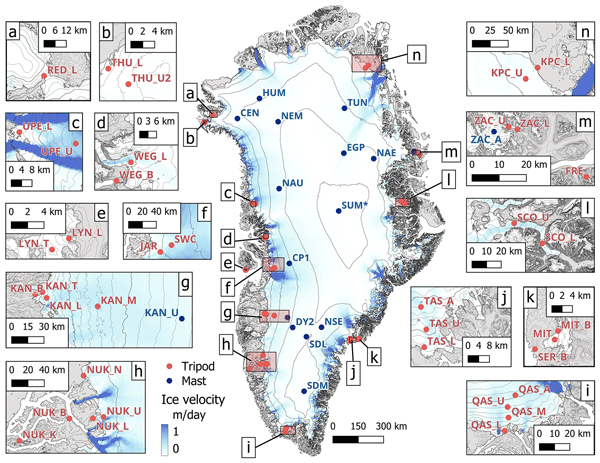
We present the PROMICE ice-velocity dataset, a time series of maps showing how fast the Greenland Ice Sheet flows. The time series is created using satellite radar images from Sentinel-1 since 2016 and is updated with a new map every 12 days providing a detailed view of ice sheet wide dynamics for more than a decade. Continuous updates and improvements, such as those presented here, are essential for maintaining long, consistent, high-quality records of key climate variables for research.
Robert S. Fausto, Penelope How, Baptiste Vandecrux, Mads C. Lund, Jason E. Box, Kenneth D. Mankoff, Signe B. Andersen, Dirk van As, Rasmus Bahbah, Michele Citterio, William Colgan, Henrik T. Jakobsgaard, Nanna B. Karlsson, Kristian K. Kjeldsen, Signe H. Larsen, Charlotte Olsen, Falk M. Oraschewski, Anja Rutishauser, Christopher L. Shields, Anne M. Solgaard, Ian T. Stevens, Synne H. Svendsen, Kirsty Langley, Alexandra Messerli, Anders A. Bjørk, Jonas K. Andersen, Jakob Abermann, Jakob Steiner, Rainer Prinz, Berhard Hynek, James M. Lea, Stephen Brough, and Andreas P. Ahlstrøm
Earth Syst. Sci. Data, 18, 2829–2873, https://doi.org/10.5194/essd-18-2829-2026, https://doi.org/10.5194/essd-18-2829-2026, 2026
Short summary
Short summary
In summary, the PROMICE (Programme for Monitoring of the Greenland Ice Sheet ) | GC-NET AWS (Greenland Climate Network automatic weather station) data product update represents a significant advancement in Arctic climate monitoring. Through enhanced station designs, state-of-the-art instrumentation, and a transparent, automated data processing workflow, the dataset offers an essential resource for studying the Greenland Ice Sheet and its periphery, validating climate models, and supporting global assessments of cryospheric change.
Anna Bang Kvorning, Marie-Alexandrine Sicre, Gregor Luetzenburg, Sabine Schmidt, Thorbjørn Joest Andersen, Vincent Klein, Eleanor Georgiadis, Audrey Limoges, Jacques Giraudeau, Anders Anker Bjørk, Nicolaj Krog Larsen, and Sofia Ribeiro
Clim. Past, 22, 605–624, https://doi.org/10.5194/cp-22-605-2026, https://doi.org/10.5194/cp-22-605-2026, 2026
Short summary
Short summary
We compare two marine sediment cores collected from contrasting locations in Kane Basin, northwest Greenland. The two sites differ in terms of how much sediment they receive, the level of primary production, and the source and composition of organic matter. Despite these spatial differences, both records reveal a similar long-term environmental trend, a shift from cold, heavy sea-ice conditions between ca. 1750–1900 CE, towards more open, fresher, and biologically productive waters by 1950 CE.
Jonas K. Andersen, Romain Millan, Eric Rignot, Lucille Gimenes, Bernd Scheuchl, Jean Baptiste Barré, and Anders A. Bjørk
The Cryosphere, 20, 1589–1598, https://doi.org/10.5194/tc-20-1589-2026, https://doi.org/10.5194/tc-20-1589-2026, 2026
Short summary
Short summary
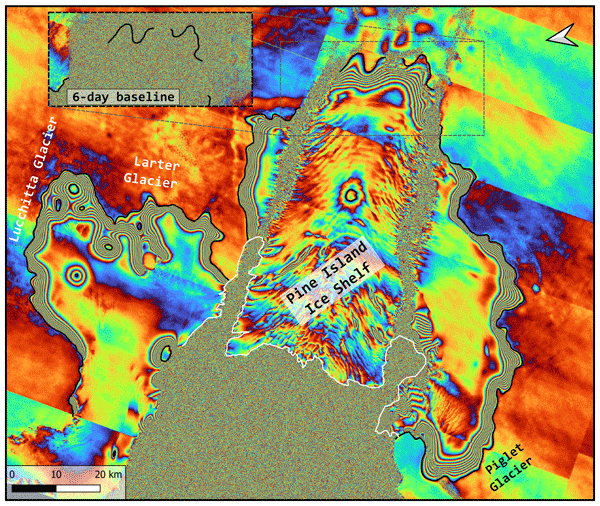
We used new satellite radar data from 2025 to map the border where Antarctic glaciers lose contact with the ground and begin to float. This updated map shows recent changes to many glaciers in the Amundsen Sea region, some of which have retreated by several kilometers. Our results help track how Antarctica is responding to climate change and highlight the value of future satellite missions for monitoring ice sheet stability.
Penelope How, Dorthe Petersen, Kristian K. Kjeldsen, Katrine Raundrup, Nanna B. Karlsson, Alexandra Messerli, Anja Rutishauser, Jonathan L. Carrivick, James M. Lea, Robert S. Fausto, Andreas P. Ahlstrøm, and Signe B. Andersen
Earth Syst. Sci. Data, 17, 6331–6351, https://doi.org/10.5194/essd-17-6331-2025, https://doi.org/10.5194/essd-17-6331-2025, 2025
Short summary
Short summary
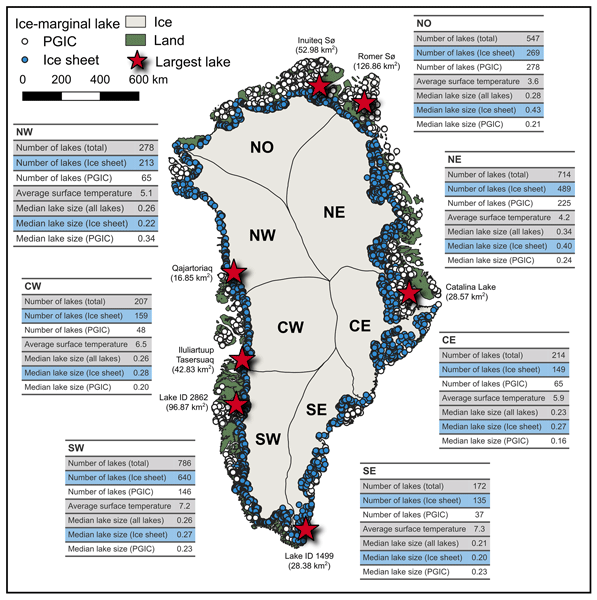
We mapped 2918 ice-marginal lakes across Greenland (2016–2023), revealing changes in size, abundance and temperature. This open dataset improves understanding of terrestrial water storage, glacier dynamics, and Arctic ecology, supporting research on sea level rise, glacier-lake interactions, and sustainable resource planning including hydropower development under Greenland’s climate commitments.
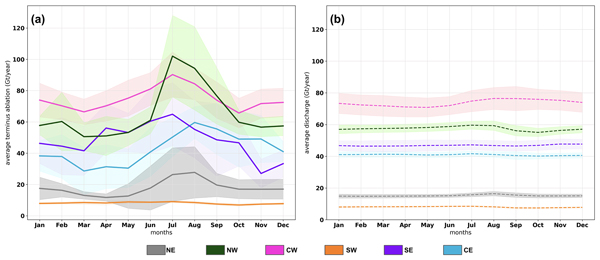
Aman KC, Ellyn M. Enderlin, Dominik Fahrner, Twila Moon, and Dustin Carroll
The Cryosphere, 19, 3089–3106, https://doi.org/10.5194/tc-19-3089-2025, https://doi.org/10.5194/tc-19-3089-2025, 2025
Short summary
Short summary
The sum of ice flowing towards a glacier’s terminus and changes in the position of the terminus over time collectively makes up terminus ablation. We found that terminus ablation has more seasonal variability than previously concluded from flux-based estimates of ice discharge. The findings are of importance in understanding the timing and location of the freshwater input to the fjords and surrounding ocean basins affecting local and regional ecosystems and ocean properties.
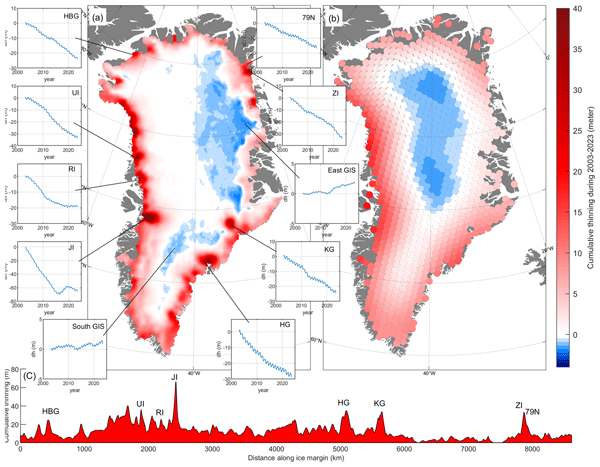
Shfaqat A. Khan, Helene Seroussi, Mathieu Morlighem, William Colgan, Veit Helm, Gong Cheng, Danjal Berg, Valentina R. Barletta, Nicolaj K. Larsen, William Kochtitzky, Michiel van den Broeke, Kurt H. Kjær, Andy Aschwanden, Brice Noël, Jason E. Box, Joseph A. MacGregor, Robert S. Fausto, Kenneth D. Mankoff, Ian M. Howat, Kuba Oniszk, Dominik Fahrner, Anja Løkkegaard, Eigil Y. H. Lippert, Alicia Bråtner, and Javed Hassan
Earth Syst. Sci. Data, 17, 3047–3071, https://doi.org/10.5194/essd-17-3047-2025, https://doi.org/10.5194/essd-17-3047-2025, 2025
Short summary
Short summary
The surface elevation of the Greenland Ice Sheet is changing due to surface mass balance processes and ice dynamics, each exhibiting distinct spatiotemporal patterns. Here, we employ satellite and airborne altimetry data with fine spatial (1 km) and temporal (monthly) resolutions to document this spatiotemporal evolution from 2003 to 2023. This dataset of fine-resolution altimetry data in both space and time will support studies of ice mass loss and be useful for GIS ice sheet modeling.
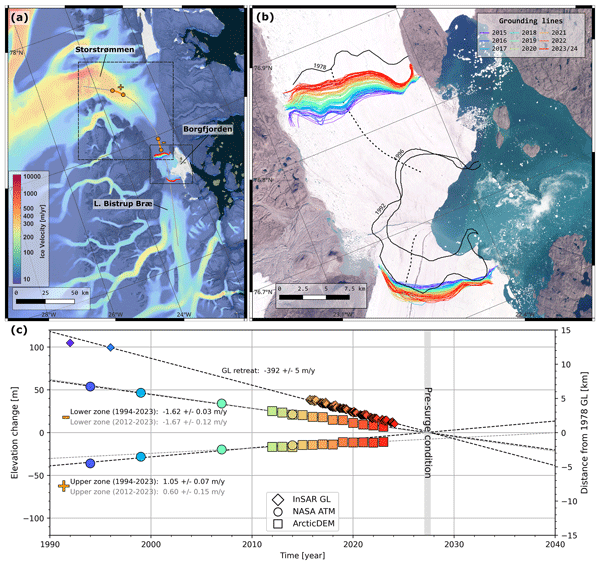
Jonas K. Andersen, Rasmus P. Meyer, Flora S. Huiban, Mads L. Dømgaard, Romain Millan, and Anders A. Bjørk
The Cryosphere, 19, 1717–1724, https://doi.org/10.5194/tc-19-1717-2025, https://doi.org/10.5194/tc-19-1717-2025, 2025
Short summary
Short summary
Storstrømmen Glacier in northeastern Greenland goes through cycles of sudden flow speed-ups (known as surges) followed by long quiet phases. It is currently in its quiet phase, but recent measurements suggest it may be nearing conditions for a new surge, possibly between 2027 and 2040. We also observed several lake drainages that caused brief increases in glacier flow but did not trigger a surge. Continued monitoring is essential to understand how these processes influence glacier behavior.
Rasmus Meyer, Mathias Preisler Schødt, Mikkel Lydholm Rasmussen, Jonas Kvist Andersen, Mads Dømgaard, and Anders Anker Bjørk
EGUsphere, https://doi.org/10.5194/egusphere-2024-3850, https://doi.org/10.5194/egusphere-2024-3850, 2025
Preprint archived
Short summary
Short summary
Understanding snow accumulation is important for water resource management, but measurements of snow depth in mountainous regions are sparse. We introduce a novel satellite-based approach to estimate snow depth for deep snow in mountainous regions by combining two types of satellite data: radar images and laser surface height measurements. Results suggest that our method more accurately estimate the magnitude of snowfall compared to modelled data over the Southern Norwegian Mountains.
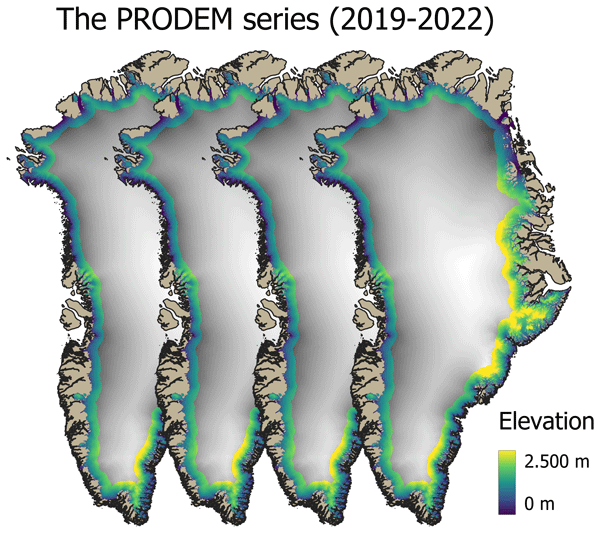
Mai Winstrup, Heidi Ranndal, Signe Hillerup Larsen, Sebastian B. Simonsen, Kenneth D. Mankoff, Robert S. Fausto, and Louise Sandberg Sørensen
Earth Syst. Sci. Data, 16, 5405–5428, https://doi.org/10.5194/essd-16-5405-2024, https://doi.org/10.5194/essd-16-5405-2024, 2024
Short summary
Short summary
Surface topography across the marginal zone of the Greenland Ice Sheet is constantly evolving. Here we present an annual series (2019–2022) of summer digital elevation models (PRODEMs) for the Greenland Ice Sheet margin, covering all outlet glaciers from the ice sheet. The PRODEMs are based on fusion of CryoSat-2 radar altimetry and ICESat-2 laser altimetry. With their high spatial and temporal resolution, the PRODEMs will enable detailed studies of the changes in marginal ice sheet elevations.
Signe Hillerup Larsen, Daniel Binder, Anja Rutishauser, Bernhard Hynek, Robert Schjøtt Fausto, and Michele Citterio
Earth Syst. Sci. Data, 16, 4103–4118, https://doi.org/10.5194/essd-16-4103-2024, https://doi.org/10.5194/essd-16-4103-2024, 2024
Short summary
Short summary
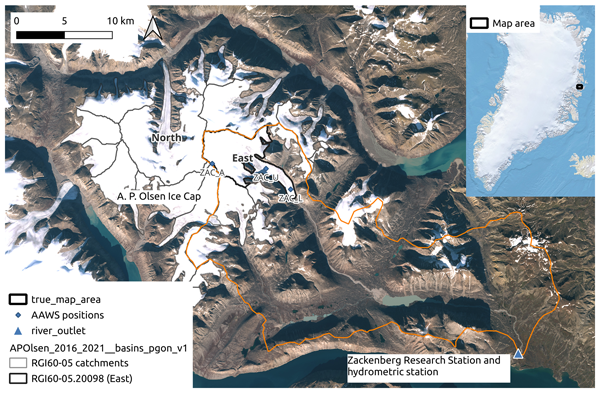
The Greenland Ecosystem Monitoring programme has been running since 1995. In 2008, the Glaciological monitoring sub-program GlacioBasis was initiated at the Zackenberg site in northeast Greenland, with a transect of three weather stations on the A. P. Olsen Ice Cap. In 2022, the weather stations were replaced with a more standardized set up. Here, we provide the reprocessed and quality-checked data from 2008 to 2022, i.e., the first 15 years of continued monitoring.
Kristian Svennevig, Julian Koch, Marie Keiding, and Gregor Luetzenburg
Nat. Hazards Earth Syst. Sci., 24, 1897–1911, https://doi.org/10.5194/nhess-24-1897-2024, https://doi.org/10.5194/nhess-24-1897-2024, 2024
Short summary
Short summary
In our study, we analysed publicly available data in order to investigate the impact of climate change on landslides in Denmark. Our research indicates that the rising groundwater table due to climate change will result in an increase in landslide activity. Previous incidents of extremely wet winters have caused damage to infrastructure and buildings due to landslides. This study is the first of its kind to exclusively rely on public data and examine landslides in Denmark.
Anja Rutishauser, Kirk M. Scanlan, Baptiste Vandecrux, Nanna B. Karlsson, Nicolas Jullien, Andreas P. Ahlstrøm, Robert S. Fausto, and Penelope How
The Cryosphere, 18, 2455–2472, https://doi.org/10.5194/tc-18-2455-2024, https://doi.org/10.5194/tc-18-2455-2024, 2024
Short summary
Short summary
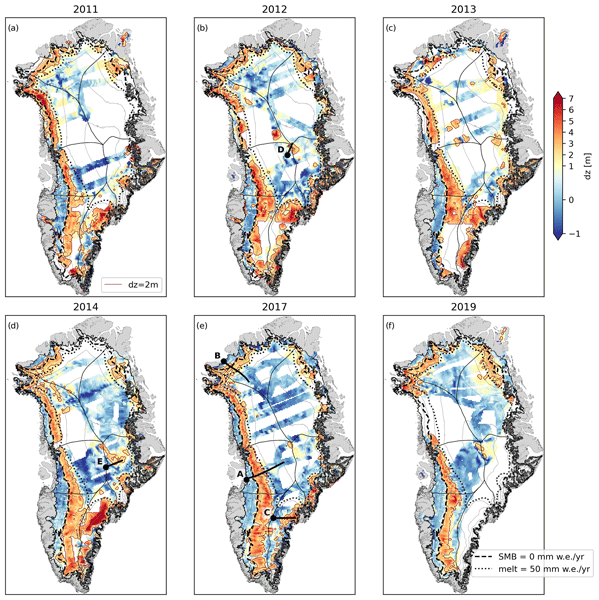
The Greenland Ice Sheet interior is covered by a layer of firn, which is important for surface meltwater runoff and contributions to global sea-level rise. Here, we combine airborne radar sounding and laser altimetry measurements to delineate vertically homogeneous and heterogeneous firn. Our results reveal changes in firn between 2011–2019, aligning well with known climatic events. This approach can be used to outline firn areas primed for significantly changing future meltwater runoff.
Niels J. Korsgaard, Kristian Svennevig, Anne S. Søndergaard, Gregor Luetzenburg, Mimmi Oksman, and Nicolaj K. Larsen
Nat. Hazards Earth Syst. Sci., 24, 757–772, https://doi.org/10.5194/nhess-24-757-2024, https://doi.org/10.5194/nhess-24-757-2024, 2024
Short summary
Short summary
A tsunami wave will leave evidence of erosion and deposition in coastal lakes, making it possible to determine the runup height and when it occurred. Here, we use four lakes now located at elevations of 19–91 m a.s.l. close to the settlement of Saqqaq, West Greenland, to show that at least two giant tsunamis occurred 7300–7600 years ago with runup heights larger than 40 m. We infer that any tsunamis from at least nine giga-scale landslides must have happened 8500–10 000 years ago.
Baptiste Vandecrux, Robert S. Fausto, Jason E. Box, Federico Covi, Regine Hock, Åsa K. Rennermalm, Achim Heilig, Jakob Abermann, Dirk van As, Elisa Bjerre, Xavier Fettweis, Paul C. J. P. Smeets, Peter Kuipers Munneke, Michiel R. van den Broeke, Max Brils, Peter L. Langen, Ruth Mottram, and Andreas P. Ahlstrøm
The Cryosphere, 18, 609–631, https://doi.org/10.5194/tc-18-609-2024, https://doi.org/10.5194/tc-18-609-2024, 2024
Short summary
Short summary
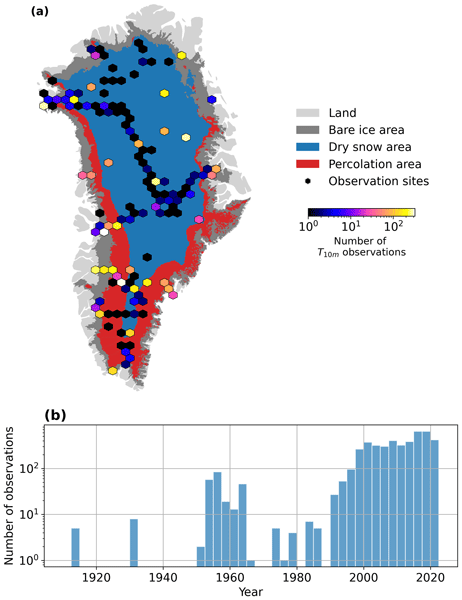
How fast is the Greenland ice sheet warming? In this study, we compiled 4500+ temperature measurements at 10 m below the ice sheet surface (T10m) from 1912 to 2022. We trained a machine learning model on these data and reconstructed T10m for the ice sheet during 1950–2022. After a slight cooling during 1950–1985, the ice sheet warmed at a rate of 0.7 °C per decade until 2022. Climate models showed mixed results compared to our observations and underestimated the warming in key regions.
Dominik Fahrner, Donald Slater, Aman KC, Claudia Cenedese, David A. Sutherland, Ellyn Enderlin, Femke de Jong, Kristian K. Kjeldsen, Michael Wood, Peter Nienow, Sophie Nowicki, and Till Wagner
Earth Syst. Sci. Data Discuss., https://doi.org/10.5194/essd-2023-411, https://doi.org/10.5194/essd-2023-411, 2023
Preprint withdrawn
Short summary
Short summary
Marine-terminating glaciers can lose mass through frontal ablation, which comprises submarine and surface melting, and iceberg calving. We estimate frontal ablation for 49 marine-terminating glaciers in Greenland by combining existing, satellite derived data and calculating volume change near the glacier front over time. The dataset offers exciting opportunities to study the influence of climate forcings on marine-terminating glaciers in Greenland over multi-decadal timescales.
Baptiste Vandecrux, Jason E. Box, Andreas P. Ahlstrøm, Signe B. Andersen, Nicolas Bayou, William T. Colgan, Nicolas J. Cullen, Robert S. Fausto, Dominik Haas-Artho, Achim Heilig, Derek A. Houtz, Penelope How, Ionut Iosifescu Enescu, Nanna B. Karlsson, Rebecca Kurup Buchholz, Kenneth D. Mankoff, Daniel McGrath, Noah P. Molotch, Bianca Perren, Maiken K. Revheim, Anja Rutishauser, Kevin Sampson, Martin Schneebeli, Sandy Starkweather, Simon Steffen, Jeff Weber, Patrick J. Wright, Henry Jay Zwally, and Konrad Steffen
Earth Syst. Sci. Data, 15, 5467–5489, https://doi.org/10.5194/essd-15-5467-2023, https://doi.org/10.5194/essd-15-5467-2023, 2023
Short summary
Short summary
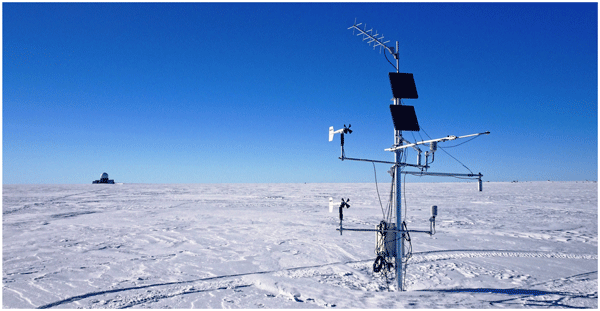
The Greenland Climate Network (GC-Net) comprises stations that have been monitoring the weather on the Greenland Ice Sheet for over 30 years. These stations are being replaced by newer ones maintained by the Geological Survey of Denmark and Greenland (GEUS). The historical data were reprocessed to improve their quality, and key information about the weather stations has been compiled. This augmented dataset is available at https://doi.org/10.22008/FK2/VVXGUT (Steffen et al., 2022).
Anja Løkkegaard, Kenneth D. Mankoff, Christian Zdanowicz, Gary D. Clow, Martin P. Lüthi, Samuel H. Doyle, Henrik H. Thomsen, David Fisher, Joel Harper, Andy Aschwanden, Bo M. Vinther, Dorthe Dahl-Jensen, Harry Zekollari, Toby Meierbachtol, Ian McDowell, Neil Humphrey, Anne Solgaard, Nanna B. Karlsson, Shfaqat A. Khan, Benjamin Hills, Robert Law, Bryn Hubbard, Poul Christoffersen, Mylène Jacquemart, Julien Seguinot, Robert S. Fausto, and William T. Colgan
The Cryosphere, 17, 3829–3845, https://doi.org/10.5194/tc-17-3829-2023, https://doi.org/10.5194/tc-17-3829-2023, 2023
Short summary
Short summary
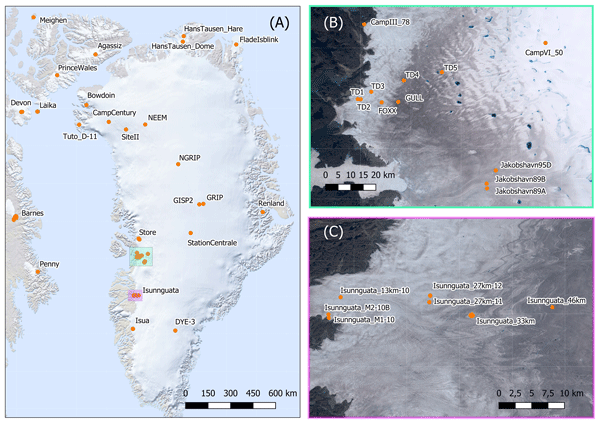
This study presents a database compiling 95 ice temperature profiles from the Greenland ice sheet and peripheral ice caps. Ice viscosity and hence ice flow are highly sensitive to ice temperature. To highlight the value of the database in evaluating ice flow simulations, profiles from the Greenland ice sheet are compared to a modeled temperature field. Reoccurring discrepancies between modeled and observed temperatures provide insight on the difficulties faced when simulating ice temperatures.
Sarah A. Woodroffe, Leanne M. Wake, Kristian K. Kjeldsen, Natasha L. M. Barlow, Antony J. Long, and Kurt H. Kjær
Clim. Past, 19, 1585–1606, https://doi.org/10.5194/cp-19-1585-2023, https://doi.org/10.5194/cp-19-1585-2023, 2023
Short summary
Short summary
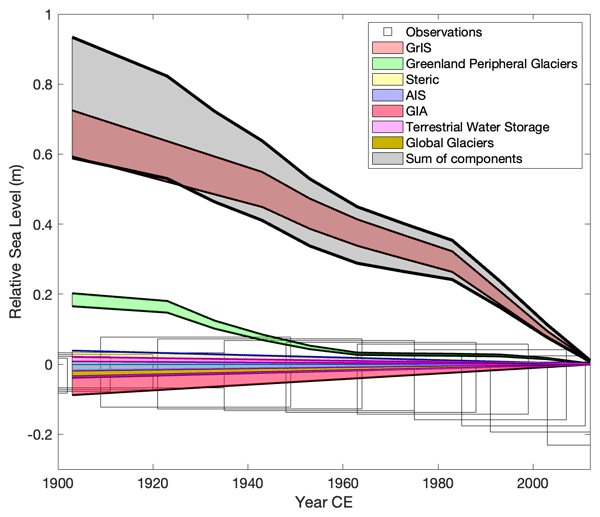
Salt marsh in SE Greenland records sea level changes over the past 300 years in sediments and microfossils. The pattern is rising sea level until ~ 1880 CE and sea level fall since. This disagrees with modelled sea level, which overpredicts sea level fall by at least 0.5 m. This is the same even when reducing the overall amount of Greenland ice sheet melt and allowing for more time. Fitting the model to the data leaves ~ 3 mm yr−1 of unexplained sea level rise in SE Greenland since ~ 1880 CE.
Inès N. Otosaka, Andrew Shepherd, Erik R. Ivins, Nicole-Jeanne Schlegel, Charles Amory, Michiel R. van den Broeke, Martin Horwath, Ian Joughin, Michalea D. King, Gerhard Krinner, Sophie Nowicki, Anthony J. Payne, Eric Rignot, Ted Scambos, Karen M. Simon, Benjamin E. Smith, Louise S. Sørensen, Isabella Velicogna, Pippa L. Whitehouse, Geruo A, Cécile Agosta, Andreas P. Ahlstrøm, Alejandro Blazquez, William Colgan, Marcus E. Engdahl, Xavier Fettweis, Rene Forsberg, Hubert Gallée, Alex Gardner, Lin Gilbert, Noel Gourmelen, Andreas Groh, Brian C. Gunter, Christopher Harig, Veit Helm, Shfaqat Abbas Khan, Christoph Kittel, Hannes Konrad, Peter L. Langen, Benoit S. Lecavalier, Chia-Chun Liang, Bryant D. Loomis, Malcolm McMillan, Daniele Melini, Sebastian H. Mernild, Ruth Mottram, Jeremie Mouginot, Johan Nilsson, Brice Noël, Mark E. Pattle, William R. Peltier, Nadege Pie, Mònica Roca, Ingo Sasgen, Himanshu V. Save, Ki-Weon Seo, Bernd Scheuchl, Ernst J. O. Schrama, Ludwig Schröder, Sebastian B. Simonsen, Thomas Slater, Giorgio Spada, Tyler C. Sutterley, Bramha Dutt Vishwakarma, Jan Melchior van Wessem, David Wiese, Wouter van der Wal, and Bert Wouters
Earth Syst. Sci. Data, 15, 1597–1616, https://doi.org/10.5194/essd-15-1597-2023, https://doi.org/10.5194/essd-15-1597-2023, 2023
Short summary
Short summary
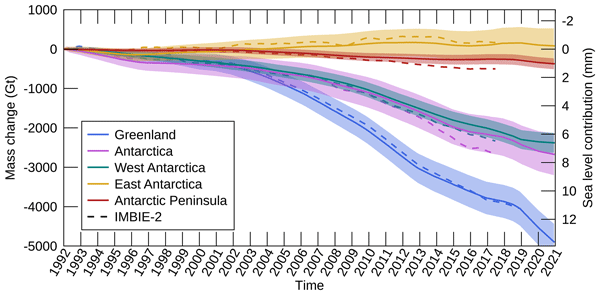
By measuring changes in the volume, gravitational attraction, and ice flow of Greenland and Antarctica from space, we can monitor their mass gain and loss over time. Here, we present a new record of the Earth’s polar ice sheet mass balance produced by aggregating 50 satellite-based estimates of ice sheet mass change. This new assessment shows that the ice sheets have lost (7.5 x 10¹²) t of ice between 1992 and 2020, contributing 21 mm to sea level rise.

Mads Dømgaard, Kristian K. Kjeldsen, Flora Huiban, Jonathan L. Carrivick, Shfaqat A. Khan, and Anders A. Bjørk
The Cryosphere, 17, 1373–1387, https://doi.org/10.5194/tc-17-1373-2023, https://doi.org/10.5194/tc-17-1373-2023, 2023
Short summary
Short summary
Sudden releases of meltwater from glacier-dammed lakes can influence ice flow, cause flooding hazards and landscape changes. This study presents a record of 14 drainages from 2007–2021 from a lake in west Greenland. The time series reveals how the lake fluctuates between releasing large and small amounts of drainage water which is caused by a weakening of the damming glacier following the large events. We also find a shift in the water drainage route which increases the risk of flooding hazards.
Sophie Goliber, Taryn Black, Ginny Catania, James M. Lea, Helene Olsen, Daniel Cheng, Suzanne Bevan, Anders Bjørk, Charlie Bunce, Stephen Brough, J. Rachel Carr, Tom Cowton, Alex Gardner, Dominik Fahrner, Emily Hill, Ian Joughin, Niels J. Korsgaard, Adrian Luckman, Twila Moon, Tavi Murray, Andrew Sole, Michael Wood, and Enze Zhang
The Cryosphere, 16, 3215–3233, https://doi.org/10.5194/tc-16-3215-2022, https://doi.org/10.5194/tc-16-3215-2022, 2022
Short summary
Short summary
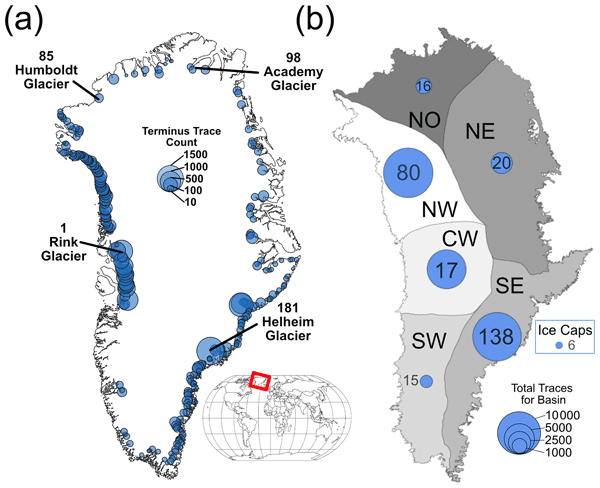
Terminus traces have been used to understand how Greenland's glaciers have changed over time; however, manual digitization is time-intensive, and a lack of coordination leads to duplication of efforts. We have compiled a dataset of over 39 000 terminus traces for 278 glaciers for scientific and machine learning applications. We also provide an overview of an updated version of the Google Earth Engine Digitization Tool (GEEDiT), which has been developed specifically for the Greenland Ice Sheet.
Romain Millan, Jeremie Mouginot, Anna Derkacheva, Eric Rignot, Pietro Milillo, Enrico Ciraci, Luigi Dini, and Anders Bjørk
The Cryosphere, 16, 3021–3031, https://doi.org/10.5194/tc-16-3021-2022, https://doi.org/10.5194/tc-16-3021-2022, 2022
Short summary
Short summary
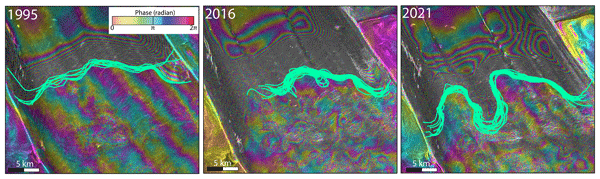
We detect for the first time a dramatic retreat of the grounding line of Petermann Glacier, a major glacier of the Greenland Ice Sheet. Using satellite data, we also observe a speedup of the glacier and a fracturing of the ice shelf. This sequence of events is coherent with ocean warming in this region and suggests that Petermann Glacier has initiated a phase of destabilization, which is of prime importance for the stability and future contribution of the Greenland Ice Sheet to sea level rise.
Gregor Luetzenburg, Kristian Svennevig, Anders A. Bjørk, Marie Keiding, and Aart Kroon
Earth Syst. Sci. Data, 14, 3157–3165, https://doi.org/10.5194/essd-14-3157-2022, https://doi.org/10.5194/essd-14-3157-2022, 2022
Short summary
Short summary
We produced the first landslide inventory for Denmark. Over 3200 landslides were mapped using a high-resolution elevation model and orthophotos. We implemented an independent validation into our mapping and found an overall level of completeness of 87 %. The national inventory represents a range of landslide sizes covering all regions that were covered by glacial ice during the last glacial period. This inventory will be used for investigating landslide causes and for natural hazard mitigation.

Mimmi Oksman, Anna Bang Kvorning, Signe Hillerup Larsen, Kristian Kjellerup Kjeldsen, Kenneth David Mankoff, William Colgan, Thorbjørn Joest Andersen, Niels Nørgaard-Pedersen, Marit-Solveig Seidenkrantz, Naja Mikkelsen, and Sofia Ribeiro
The Cryosphere, 16, 2471–2491, https://doi.org/10.5194/tc-16-2471-2022, https://doi.org/10.5194/tc-16-2471-2022, 2022
Short summary
Short summary
One of the questions facing the cryosphere community today is how increasing runoff from the Greenland Ice Sheet impacts marine ecosystems. To address this, long-term data are essential. Here, we present multi-site records of fjord productivity for SW Greenland back to the 19th century. We show a link between historical freshwater runoff and productivity, which is strongest in the inner fjord – influenced by marine-terminating glaciers – where productivity has increased since the late 1990s.
William Colgan, Agnes Wansing, Kenneth Mankoff, Mareen Lösing, John Hopper, Keith Louden, Jörg Ebbing, Flemming G. Christiansen, Thomas Ingeman-Nielsen, Lillemor Claesson Liljedahl, Joseph A. MacGregor, Árni Hjartarson, Stefan Bernstein, Nanna B. Karlsson, Sven Fuchs, Juha Hartikainen, Johan Liakka, Robert S. Fausto, Dorthe Dahl-Jensen, Anders Bjørk, Jens-Ove Naslund, Finn Mørk, Yasmina Martos, Niels Balling, Thomas Funck, Kristian K. Kjeldsen, Dorthe Petersen, Ulrik Gregersen, Gregers Dam, Tove Nielsen, Shfaqat A. Khan, and Anja Løkkegaard
Earth Syst. Sci. Data, 14, 2209–2238, https://doi.org/10.5194/essd-14-2209-2022, https://doi.org/10.5194/essd-14-2209-2022, 2022
Short summary
Short summary
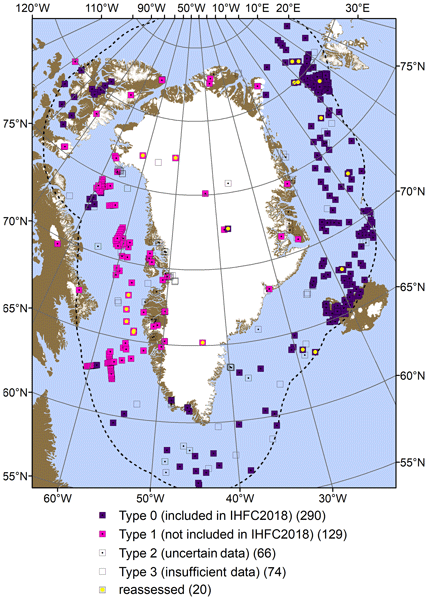
We assemble all available geothermal heat flow measurements collected in and around Greenland into a new database. We use this database of point measurements, in combination with other geophysical datasets, to model geothermal heat flow in and around Greenland. Our geothermal heat flow model is generally cooler than previous models of Greenland, especially in southern Greenland. It does not suggest any high geothermal heat flows resulting from Icelandic plume activity over 50 million years ago.
Kenneth D. Mankoff, Xavier Fettweis, Peter L. Langen, Martin Stendel, Kristian K. Kjeldsen, Nanna B. Karlsson, Brice Noël, Michiel R. van den Broeke, Anne Solgaard, William Colgan, Jason E. Box, Sebastian B. Simonsen, Michalea D. King, Andreas P. Ahlstrøm, Signe Bech Andersen, and Robert S. Fausto
Earth Syst. Sci. Data, 13, 5001–5025, https://doi.org/10.5194/essd-13-5001-2021, https://doi.org/10.5194/essd-13-5001-2021, 2021
Short summary
Short summary
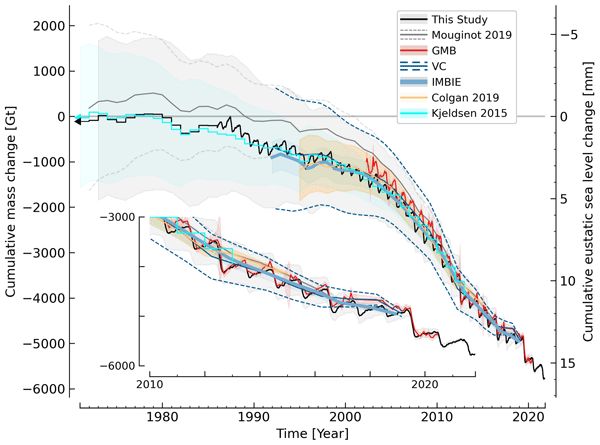
We estimate the daily mass balance and its components (surface, marine, and basal mass balance) for the Greenland ice sheet. Our time series begins in 1840 and has annual resolution through 1985 and then daily from 1986 through next week. Results are operational (updated daily) and provided for the entire ice sheet or by commonly used regions or sectors. This is the first input–output mass balance estimate to include the basal mass balance.
Cited articles
Airbus: WorldDEM4Ortho – Technical Product Specification, https://api.oneatlas.airbus.com/documents/2018-07_WorldDEM4Ortho_TechnicalSpec_Version1.4_I1.0.pdf (last access: 30 June 2025), 2018.
Andersen, J. K., Meyer, R. P., Huiban, F. S., Dømgaard, M. L., Millan, R., and Bjørk, A. A.: Brief communication: Storstrømmen Glacier, northeastern Greenland, primed for end-of-decade surge, The Cryosphere, 19, 1717–1724, https://doi.org/10.5194/tc-19-1717-2025, 2025.
Aschwanden, A., Fahnestock, M. A., Truffer, M., Brinkerhoff, D. J., Hock, R., Khroulev, C., Mottram, R., and Khan, S. A.: Contribution of the Greenland Ice Sheet to sea level over the next millennium, Science Advances, https://doi.org/10.1126/sciadv.aav9396, 2019.
Black, T. E. and Joughin, I.: Weekly to monthly terminus variability of Greenland's marine-terminating outlet glaciers, The Cryosphere, 17, 1–13, https://doi.org/10.5194/tc-17-1-2023, 2023.
Box, J. E., Hubbard, A., Bahr, D. B., Colgan, W. T., Fettweis, X., Mankoff, K. D., Wehrlé, A., Noël, B., van den Broeke, M. R., Wouters, B., Bjørk, A. A., and Fausto, R. S.: Greenland ice sheet climate disequilibrium and committed sea-level rise, Nat. Clim. Change, 12, 808–813, https://doi.org/10.1038/s41558-022-01441-2, 2022.
Cappelen, J. and Drost Jensen, C.: Climatological Standard Normals 1991–2020 – Greenland. The Climate of Greenland – with Climatological Standard Normals, 1991–2020, Danish Meteorological Institute, https://www.dmi.dk/fileadmin/Rapporter/2021/DMI_report_21_12_Greenland.pdf (last access: 27 June 2025), 2021.
Choi, Y., Morlighem, M., Rignot, E., and Wood, M.: Ice dynamics will remain a primary driver of Greenland ice sheet mass loss over the next century, Communications Earth & Environment, 2, https://doi.org/10.1038/s43247-021-00092-z, 2021.
Citterio, M. and Ahlstrøm, A. P.: Brief communication ”The aerophotogrammetric map of Greenland ice masses”, The Cryosphere, 7, 445–449, https://doi.org/10.5194/tc-7-445-2013, 2013.
Dømgaard, M., Kjeldsen, K., How, P., and Bjørk, A.: Altimetry-based ice-marginal lake water level changes in Greenland, Communications Earth & Environment, 5, https://doi.org/10.1038/s43247-024-01522-4, 2024.
Douglas, D. H. and Peucker, T. K.: Algorithms for the Reduction of the Number of Points Required to Represent a Digitised Line or its Caricature, Cartographica, 10, 112–122, https://doi.org/10.3138/FM57-6770-U75U-7727, 1973.
Drusch, M., Del Bello, U., Carlier, S., Colin, O., Fernandez, V., Gascon, F., Hoersch, B., Isola, C., Laberinti, P., Martimort, P., Meygret, A., Spoto, F., Sy, O., Marchese, F., and Bargellini, P.: Sentinel-2: ESA's Optical High-Resolution Mission for GMES Operational Services, Remote Sensing of Environment, 120, 25–36, https://doi.org/10.1016/j.rse.2011.11.026, 2012.
ESA: Galciers Climate Change Initative Database, CCI [data set], https://glaciers-cci.enveo.at/crdp2/index.html, last access: 3 July 2025.
European Space Agency (ESA): Sentinel-2 MSI Level-1C Imagery, Copernicus Open Access Hub [data set], https://dataspace.copernicus.eu/ (last access: 14 July 2025), 2022.
Fausto, R. S., van As, D., Mankoff, K. D., Vandecrux, B., Citterio, M., Ahlstrøm, A. P., Andersen, S. B., Colgan, W., Karlsson, N. B., Kjeldsen, K. K., Korsgaard, N. J., Larsen, S. H., Nielsen, S., Pedersen, A. Ø., Shields, C. L., Solgaard, A. M., and Box, J. E.: Programme for Monitoring of the Greenland Ice Sheet (PROMICE) automatic weather station data, Earth Syst. Sci. Data, 13, 3819–3845, https://doi.org/10.5194/essd-13-3819-2021, 2021.
Goelzer, H., Nowicki, S., Payne, A., Larour, E., Seroussi, H., Lipscomb, W. H., Gregory, J., Abe-Ouchi, A., Shepherd, A., Simon, E., Agosta, C., Alexander, P., Aschwanden, A., Barthel, A., Calov, R., Chambers, C., Choi, Y., Cuzzone, J., Dumas, C., Edwards, T., Felikson, D., Fettweis, X., Golledge, N. R., Greve, R., Humbert, A., Huybrechts, P., Le clec'h, S., Lee, V., Leguy, G., Little, C., Lowry, D. P., Morlighem, M., Nias, I., Quiquet, A., Rückamp, M., Schlegel, N.-J., Slater, D. A., Smith, R. S., Straneo, F., Tarasov, L., van de Wal, R., and van den Broeke, M.: The future sea-level contribution of the Greenland ice sheet: a multi-model ensemble study of ISMIP6, The Cryosphere, 14, 3071–3096, https://doi.org/10.5194/tc-14-3071-2020, 2020.
Greene, C. A., Gardner, A. S., Wood, M., and Cuzzone, J. K.: Ubiquitous acceleration in Greenland Ice Sheet calving from 1985 to 2022, Nature, 625, 523–528, https://doi.org/10.1038/s41586-023-06863-2, 2024.
Howat, I. M., Negrete, A., and Smith, B. E.: The Greenland Ice Mapping Project (GIMP) land classification and surface elevation data sets, The Cryosphere, 8, 1509–1518, https://doi.org/10.5194/tc-8-1509-2014, 2014.
JCGM: Joint Committee for Guides in Metrology. Evaluation of measurement data – Guide to the expression of uncertainty in measurement, JCGM [data set], https://doi.org/10.59161/JCGM100-2008E, 2008.
Kääb, A., Winsvold, S., Altena, B., Nuth, C., Nagler, T., and Wuite, J.: Glacier Remote Sensing Using Sentinel-2. Part I: Radiometric and Geometric Performance, and Application to Ice Velocity, Remote Sensing, 8, https://doi.org/10.3390/rs8070598, 2016.
KDS: Satellitfofo Grønland (Satellite images from Sentinel 2 and SPOT 6/7 licensed under CC BY 4.0), Danish Agency for Climate Data [data set], https://dataforsyningen.dk/data/4783 (last access: 5 July 2025), 2025a.
KDS: Åbent Land Grønland (Topographic Map of Greenland licensed under CC BY 4.0), Danish Agency for Climate Data [data set], https://dataforsyningen.dk/data/4771 (last access: 9 July 2025), 2025b.
Kjeldsen, K. K., Korsgaard, N. J., Bjork, A. A., Khan, S. A., Box, J. E., Funder, S., Larsen, N. K., Bamber, J. L., Colgan, W., van den Broeke, M., Siggaard-Andersen, M. L., Nuth, C., Schomacker, A., Andresen, C. S., Willerslev, E., and Kjaer, K. H.: Spatial and temporal distribution of mass loss from the Greenland Ice Sheet since AD 1900, Nature, 528, 396–400, https://doi.org/10.1038/nature16183, 2015.
Kjeldsen, K. K., Khan, S. A., Colgan, W. T., MacGregor, J. A., and Fausto, R. S.: Time-Varying Ice Sheet Mask: Implications on Ice-Sheet Mass Balance and Crustal Uplift, Journal of Geophysical Research: Earth Surface, 125, https://doi.org/10.1029/2020jf005775, 2020.
Korsgaard, N. J., Nuth, C., Khan, S. A., Kjeldsen, K. K., Bjork, A. A., Schomacker, A., and Kjaer, K. H.: Digital elevation model and orthophotographs of Greenland based on aerial photographs from 1978–1987, Sci. Data, 3, 160032, https://doi.org/10.1038/sdata.2016.32, 2016.
Luetzenburg, G., Svennevig, K., Bjørk, A. A., Keiding, M., and Kroon, A.: A national landslide inventory for Denmark, Earth Syst. Sci. Data, 14, 3157–3165, https://doi.org/10.5194/essd-14-3157-2022, 2022.
Luetzenburg, G., Korsgaard, N. J., Deichmann, A. K., and Fausto, R. S.: PROMICE-2022 Ice Mask QGIS Bundlle, GEUS Dataverse [data set], https://doi.org/10.22008/FK2/ARQ2L1, 2025a.
Luetzenburg, G., Korsgaard, N. J., Deichmann, A. K., and Fausto, R. S.: PROMICE-2022 Ice Mask Sentinel-2 RGB mosaic (August 2022), GEUS Dataverse [data set], https://doi.org/10.22008/FK2/OUKHBW, 2025b.
Luetzenburg, G., Korsgaard, N. J., Deichmann, A. K., Socher, T., Gleie, K., Scharffenberger, T., Meyer, R. P., Fahrner, D., Nielsen, E. B., How, P., Bjørk, A. A., Kjeldsen, K. K., Ahlstrøm, A. P., and Fausto, R. S.: PROMICE-2022 Ice Mask, GEUS Dataverse [data set], https://doi.org/10.22008/FK2/O8CLRE, 2025c.
MacGregor, J. A., Chu, W., Colgan, W. T., Fahnestock, M. A., Felikson, D., Karlsson, N. B., Nowicki, S. M. J., and Studinger, M.: GBaTSv2: a revised synthesis of the likely basal thermal state of the Greenland Ice Sheet, The Cryosphere, 16, 3033–3049, https://doi.org/10.5194/tc-16-3033-2022, 2022.
Maslov, K. A., Persello, C., Schellenberger, T., and Stein, A.: Globally scalable glacier mapping by deep learning matches expert delineation accuracy, Nat. Commun., 16, 43, https://doi.org/10.1038/s41467-024-54956-x, 2025.
Moon, T. A., Fisher, M., Stafford, T., and Thurber, A.: QGreenland (v3), National Snow and Ice Data Center, Zenodo [data set], https://doi.org/10.5281/zenodo.12823307, 2023.
Morlighem, M., Williams, C. N., Rignot, E., An, L., Arndt, J. E., Bamber, J. L., Catania, G., Chauche, N., Dowdeswell, J. A., Dorschel, B., Fenty, I., Hogan, K., Howat, I., Hubbard, A., Jakobsson, M., Jordan, T. M., Kjeldsen, K. K., Millan, R., Mayer, L., Mouginot, J., Noel, B. P. Y., O'Cofaigh, C., Palmer, S., Rysgaard, S., Seroussi, H., Siegert, M. J., Slabon, P., Straneo, F., van den Broeke, M. R., Weinrebe, W., Wood, M., and Zinglersen, K. B.: BedMachine v3: Complete Bed Topography and Ocean Bathymetry Mapping of Greenland From Multibeam Echo Sounding Combined With Mass Conservation, Geophys. Res. Lett., 44, 11051–11061, https://doi.org/10.1002/2017GL074954, 2017.
Mouginot, J., Rignot, E., Bjork, A. A., van den Broeke, M., Millan, R., Morlighem, M., Noel, B., Scheuchl, B., and Wood, M.: Forty-six years of Greenland Ice Sheet mass balance from 1972 to 2018, P. Natl. Acad. Sci. USA, 116, 9239–9244, https://doi.org/10.1073/pnas.1904242116, 2019.
Pattyn, F., Ritz, C., Hanna, E., Asay-Davis, X., DeConto, R., Durand, G., Favier, L., Fettweis, X., Goelzer, H., Golledge, N. R., Kuipers Munneke, P., Lenaerts, J. T. M., Nowicki, S., Payne, A. J., Robinson, A., Seroussi, H., Trusel, L. D., and van den Broeke, M.: The Greenland and Antarctic ice sheets under 1.5 °C global warming, Nat. Clim. Change, 8, 1053–1061, https://doi.org/10.1038/s41558-018-0305-8, 2018.
Paul, F., Bolch, T., Kääb, A., Nagler, T., Nuth, C., Scharrer, K., Shepherd, A., Strozzi, T., Ticconi, F., Bhambri, R., Berthier, E., Bevan, S., Gourmelen, N., Heid, T., Jeong, S., Kunz, M., Lauknes, T. R., Luckman, A., Merryman Boncori, J. P., Moholdt, G., Muir, A., Neelmeijer, J., Rankl, M., VanLooy, J., and Van Niel, T.: The glaciers climate change initiative: Methods for creating glacier area, elevation change and velocity products, Remote Sensing of Environment, 162, 408–426, https://doi.org/10.1016/j.rse.2013.07.043, 2015.
Paul, F., Winsvold, S., Kääb, A., Nagler, T., and Schwaizer, G.: Glacier Remote Sensing Using Sentinel-2. Part II: Mapping Glacier Extents and Surface Facies, and Comparison to Landsat 8, Remote Sensing, 8, https://doi.org/10.3390/rs8070575, 2016.
Paul, F., Barry, R. G., Cogley, J. G., Frey, H., Haeberli, W., Ohmura, A., Ommanney, C. S. L., Raup, B., Rivera, A., and Zemp, M.: Recommendations for the compilation of glacier inventory data from digital sources, Annals of Glaciology, 50, 119–126, https://doi.org/10.3189/172756410790595778, 2017a.
Paul, F., Barrand, N. E., Baumann, S., Berthier, E., Bolch, T., Casey, K., Frey, H., Joshi, S. P., Konovalov, V., Le Bris, R., Mölg, N., Nosenko, G., Nuth, C., Pope, A., Racoviteanu, A., Rastner, P., Raup, B., Scharrer, K., Steffen, S., and Winsvold, S.: On the accuracy of glacier outlines derived from remote-sensing data, Annals of Glaciology, 54, 171–182, https://doi.org/10.3189/2013AoG63A296, 2017b.
Porter, C., Howat, I., Noh, M.-J., Husby, E., Khuvis, S., Danish, E., Tomko, K., Gardiner, J., Negrete, A., Yadav, B., Klassen, J., Kelleher, C., Cloutier, M., Bakker, J., Enos, J., Arnold, G., Bauer, G., and Morin, P.: ArcticDEM – Mosaics, Version 4.1 (V1), Harvard Dataverse [data set], https://doi.org/10.7910/DVN/3VDC4W, 2024.
Rastner, P., Bolch, T., Mölg, N., Machguth, H., Le Bris, R., and Paul, F.: The first complete inventory of the local glaciers and ice caps on Greenland, The Cryosphere, 6, 1483–1495, https://doi.org/10.5194/tc-6-1483-2012, 2012.
Roberts-Pierel, B. M., Kirchner, P. B., Kilbride, J. B., and Kennedy, R. E.: Changes over the Last 35 Years in Alaska's Glaciated Landscape: A Novel Deep Learning Approach to Mapping Glaciers at Fine Temporal Granularity, Remote Sensing, 14, https://doi.org/10.3390/rs14184582, 2022.
Sasgen, I., van den Broeke, M., Bamber, J. L., Rignot, E., Sørensen, L. S., Wouters, B., Martinec, Z., Velicogna, I., and Simonsen, S. B.: Timing and origin of recent regional ice-mass loss in Greenland, Earth and Planetary Science Letters, 333–334, 293–303, https://doi.org/10.1016/j.epsl.2012.03.033, 2012.
Shepherd, A., Ivins, E. R., Geruo, A., Barletta, V. R., Bentley, M. J., Bettadpur, S., Briggs, K. H., Bromwich, D. H., Forsberg, R., Galin, N., Horwath, M., Jacobs, S., Joughin, I., King, M. A., Lenaerts, J. T. M., Li, J., Ligtenberg, S. R. M., Luckman, A., Luthcke, S. B., McMillan, M., Meister, R., Milne, G., Mouginot, J., Muir, A., Nicolas, J. P., Paden, J., Payne, A. J., Pritchard, H., Rignot, E., Rott, H., Sørensen, L. S., Scambos, T. A., Scheuchl, B., Schrama, E. J. O., Smith, B., Sundal, A. V., van Angelen, J. H., van de Berg, W. J., van den Broeke, M. R., Vaughan, D. G., Velicogna, I., Wahr, J., Whitehouse, P. L., Wingham, D. J., Yi, D., Young, D., and Zwally, H. J.: A Reconciled Estimate of Ice-Sheet Mass Balance, Science, 338, 1183–1189, https://doi.org/10.1126/science.1228102, 2012.
Sinergise Solutions: Sentinel Hub Processing API, https://www.sentinel-hub.com/ (last access: 10 July 2025), 2025.
Svennevig, K., Hicks, S. P., Forbriger, T., Lecocq, T., Widmer-Schnidrig, R., Mangeney, A., Hibert, C., Korsgaard, N. J., Lucas, A., Satriano, C., Anthony, R. E., Mordret, A., Schippkus, S., Rysgaard, S., Boone, W., Gibbons, S. J., Cook, K. L., Glimsdal, S., Løvholt, F., Van Noten, K., Assink, J. D., Marboeuf, A., Lomax, A., Vanneste, K., Taira, T. a., Spagnolo, M., De Plaen, R., Koelemeijer, P., Ebeling, C., Cannata, A., Harcourt, W. D., Cornwell, D. G., Caudron, C., Poli, P., Bernard, P., Larose, E., Stutzmann, E., Voss, P. H., Lund, B., Cannavo, F., Castro-Díaz, M. J., Chaves, E., Dahl-Jensen, T., Pinho Dias, N. D., Déprez, A., Develter, R., Dreger, D., Evers, L. G., Fernández-Nieto, E. D., Ferreira, A. M. G., Funning, G., Gabriel, A.-A., Hendrickx, M., Kafka, A. L., Keiding, M., Kerby, J., Khan, S. A., Dideriksen, A. K., Lamb, O. D., Larsen, T. B., Lipovsky, B., Magdalena, I., Malet, J.-P., Myrup, M., Rivera, L., Ruiz-Castillo, E., Wetter, S., and Wirtz, B.: A rockslide-generated tsunami in a Greenland fjord rang Earth for 9 days, Science, 385, 1196–1205, https://doi.org/10.1126/science.adm9247, 2024.
The IMBIE Team: Mass balance of the Greenland Ice Sheet from 1992 to 2018, Nature, 579, 233–239, https://doi.org/10.1038/s41586-019-1855-2, 2020.
Tobler, W.: Measuring spatial resolution, Bejing Conference on Land Use and Remote Sensing, 12–16, 1987.
Vernon, C. L., Bamber, J. L., Box, J. E., van den Broeke, M. R., Fettweis, X., Hanna, E., and Huybrechts, P.: Surface mass balance model intercomparison for the Greenland ice sheet, The Cryosphere, 7, 599–614, https://doi.org/10.5194/tc-7-599-2013, 2013.
Weidick, A., Bøggild, C. E., and Knudsen, N. T.: Glacier inventory and atlas of West Greenland, Rapport Grønlands Geologiske Undersøgelse, 158, 1–194, https://doi.org/10.34194/rapggu.v158.8196, 1992.
Short summary
We mapped the edge of the Greenland Ice Sheet using recent satellite images to create a detailed outline of its extent in 2022. This helps track how the ice sheet is changing as the climate warms. By carefully combining satellite data and checking results by hand, we created one of the most accurate maps of the ice sheet to date. This map supports research on ice loss and improves predictions of future changes in Greenland’s ice and its effect on the planet.
We mapped the edge of the Greenland Ice Sheet using recent satellite images to create a detailed...


Altmetrics
Final-revised paper
Preprint