Articles | Volume 18, issue 1
https://doi.org/10.5194/essd-18-397-2026
© Author(s) 2026. This work is distributed under
the Creative Commons Attribution 4.0 License.
the Creative Commons Attribution 4.0 License.
https://doi.org/10.5194/essd-18-397-2026
© Author(s) 2026. This work is distributed under
the Creative Commons Attribution 4.0 License.
the Creative Commons Attribution 4.0 License.
Data description article
| 
15 Jan 2026
Data description article |
| 15 Jan 2026
| 15 Jan 2026
Subsets of geostationary satellite data over international observing network sites for studying the diurnal dynamics of energy, carbon, and water cycles
Hirofumi Hashimoto
CORRESPONDING AUTHOR

NASA Ames Research Center, Moffett Field, CA 94035, USA
Department of Applied Environmental Science, California State University – Monterey Bay, Seaside, CA 93955, USA
Weile Wang
NASA Ames Research Center, Moffett Field, CA 94035, USA
Taejin Park
NASA Ames Research Center, Moffett Field, CA 94035, USA
Bay Area Environmental Research Institute, Moffett Field, CA 94035, USA
Sepideh Khajehei
NASA Ames Research Center, Moffett Field, CA 94035, USA
Bay Area Environmental Research Institute, Moffett Field, CA 94035, USA
Kazuhito Ichii
Center for Environmental Remote Sensing, Chiba University, Chiba-shi, Chiba 263-8522, Japan
Andrew R. Michaelis
NASA Ames Research Center, Moffett Field, CA 94035, USA
Alberto Guzman
NASA Ames Research Center, Moffett Field, CA 94035, USA
Department of Applied Environmental Science, California State University – Monterey Bay, Seaside, CA 93955, USA
Ramakrishna R. Nemani
Bay Area Environmental Research Institute, Moffett Field, CA 94035, USA
Margaret S. Torn
Earth and Environmental Sciences Area, Lawrence Berkeley National Laboratory, Berkeley, CA 94705, USA
Earth and Environmental Sciences Area, Lawrence Berkeley National Laboratory, Berkeley, CA 94705, USA
Center for Advanced Bioenergy and Bioproducts Innovation, University of Illinois Urbana-Champaign, Urbana, IL 61801, USA
Institute for Sustainability, Energy and Environment, University of Illinois Urbana-Champaign, Urbana, IL 61801, USA
Ian G. Brosnan
NASA Ames Research Center, Moffett Field, CA 94035, USA
Related authors
Conor T. Doherty, Weile Wang, Hirofumi Hashimoto, and Ian G. Brosnan
Geosci. Model Dev., 18, 3003–3016, https://doi.org/10.5194/gmd-18-3003-2025, https://doi.org/10.5194/gmd-18-3003-2025, 2025
Short summary
Short summary
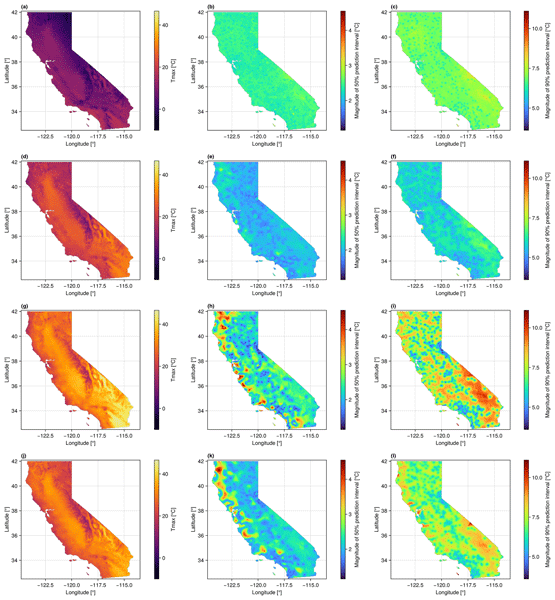
We present, analyze, and validate a methodology for quantifying uncertainty in gridded meteorological data products produced by spatial interpolation. In a validation case study using daily maximum near-surface air temperature (Tmax), the method works well and produces predictive distributions with closely matching theoretical versus actual coverage levels. Application of the method reveals that the magnitude of uncertainty in interpolated Tmax varies significantly in both space and time.
Anna-Maria Virkkala, Isabel Wargowsky, Judith Vogt, McKenzie A. Kuhn, Simran Madaan, Tiffany Windholz, Kyle A. Arndt, Gerard Rocher-Ros, Mathias Göckede, David Olefeldt, Edward A. G. Schuur, David Bastviken, Richard O'Keefe, Brendan M. Rogers, Jennifer D. Watts, Kelcy Kent, Kristoffer Aalstad, Kelly Aho, Joonatan Ala-Könni, Haley Alcock, Inge Althuizen, Christopher D. Arp, Jun Asanuma, Mika Aurela, Sivakiruthika Balathandayuthabani, Katrin Attermeyer, Alan Barr, Maialen Barret, Ochirbat Batkhishig, Christina Biasi, Mats P. Björkman, Andrew Black, Elena Blanc-Betes, Pascal Bodmer, Julia Boike, Abdullah Bolek, Frédéric Bouchard, Ingeborg Bussmann, Lea Cabrol, Eleonora Canfora, Sean Carey, Karel Castro-Morales, Namyi Chae, Andreas Christen, Torben R. Christensen, Casper T. Christiansen, Housen Chu, Graham Clark, Francois Clayer, Patrick Crill, Christopher Cunada, Scott J. Davidson, Joshua F. Dean, Sigrid Dengel, Matteo Detto, Catherine Dieleman, Florent Domine, Egor Dyukarev, Colin Edgar, Bo Elberling, Craig A. Emmerton, Eugenie Euskirchen, Grant Falvo, Thomas Friborg, Michelle Garneau, Mariasilvia Giamberini, Mikhail V. Glagolev, Miquel A. Gonzalez-Meler, Gustaf Granath, Jón Guðmundsson, Konsta Happonen, Yoshinobu Harazono, Lorna Harris, Josh Hashemi, Nicholas Hasson, Janna Heerah, Liam Heffernan, Manuel Helbig, Warren Helgason, Michal Heliasz, Greg Henry, Geert Hensgens, Tetsuya Hiyama, Beth Holmes, Macall Hock, David Holl, Jutta Holst, Thomas Holst, Gabriel Hould-Gosselin, Elyn Humphreys, Jacqueline Hung, Jussi Huotari, Hiroki Ikawa, Danil V. Ilyasov, Mamoru Ishikawa, Go Iwahana, Hiroki Iwata, Marcin Antoni Jackowicz-Korczynski, Joachim Jansen, Järvi Järveoja, Vincent E. J. Jassey, Rasmus Jensen, Katharina Jentzsch, Robert G. Jespersen, Carl-Fredrik Johannesson, Cheristy P. Jones, Anders Jonsson, Ji Young Jung, Sari Juutinen, Evan Kane, Jan Karlsson, Sergey Karsanaev, Kuno Kasak, Julia Kelly, Kasha Kempton, Marcus Klaus, George W. Kling, Natascha Kljun, Jacqueline Knutson, Hideki Kobayashi, John Kochendorfer, Kukka-Maaria Kohonen, Pasi Kolari, Mika Korkiakoski, Aino Korrensalo, Pirkko Kortelainen, Egle Koster, Kajar Koster, Ayumi Kotani, Praveena Krishnan, Juliya Kurbatova, Lars Kutzbach, Min Jung Kwon, Ethan D. Kyzivat, Jessica Lagroix, Theodore Langhorst, Elena Lapshina, Tuula Larmola, Klaus S. Larsen, Isabelle Laurion, Justin Ledman, Hanna Lee, A. Joshua Leffler, Lance Lesack, Anders Lindroth, David Lipson, Annalea Lohila, Efrén López-Blanco, Vincent L. St. Louis, Erik Lundin, Miska Luoto, Takashi Machimura, Marta Magnani, Avni Malhotra, Marja Maljanen, Ivan Mammarella, Elisa Männistö, Luca Belelli Marchesini, Phil Marsh, Pertti J. Martikainen, Maija E. Marushchak, Mikhail Mastepanov, Alex Mavrovic, Trofim Maximov, Christina Minions, Daniel F. Nadeau, Marco Montemayor, Tomoaki Morishita, Patrick Murphy, Erin Nicholls, Mats B. Nilsson, Anastasia Niyazova, Jenni Nordén, Koffi Dodji Noumonvi, Hannu Nykänen, Walter Oechel, Anne Ojala, Tomohiro Okadera, Sujan Pal, Alexey V. Panov, Tim Papakyriakou, Dario Papale, Sang-Jong Park, Frans-Jan W. Parmentier, Gilberto Pastorello, Mike Peacock, Matthias Peichl, Roman Petrov, Kyra St. Pierre, Norbert Pirk, Jessica Plein, Vilmantas Preskienis, Anatoly Prokushkin, Jukka Pumpanen, Hilary A. Rains, Niklas Rakos, Aleksi Räsänen, Helena Rautakoski, Riikka Rinnan, Janne Rinne, Adrian Rocha, Nigel Roulet, Alexandre Roy, Anna Rutgersson, Aleksandr F. Sabrekov, Torsten Sachs, Erik Sahlée, Alejandro Salazar, Henrique Oliveira Sawakuchi, Christopher Schulze, Roger Seco, Armando Sepulveda-Jauregui, Svetlana Serikova, Abbey Serrone, Hanna M. Silvennoinen, Sofie Sjogersten, June Skeeter, Jo Snöälv, Sebastian Sobek, Oliver Sonnentag, Emily H. Stanley, Maria Strack, Lena Strom, Patrick Sullivan, Ryan Sullivan, Anna Sytiuk, Torbern Tagesson, Pierre Taillardat, Julie Talbot, Suzanne E. Tank, Mario Tenuta, Irina Terenteva, Frederic Thalasso, Antoine Thiboult, Halldor Thorgeirsson, Fenix Garcia Tigreros, Margaret Torn, Amy Townsend-Small, Claire Treat, Alain Tremblay, Carlo Trotta, Eeva-Stiina Tuittila, Merritt Turetsky, Masahito Ueyama, Muhammad Umair, Aki Vähä, Lona van Delden, Maarten van Hardenbroek, Andrej Varlagin, Ruth K. Varner, Tarmo Virtanen, Elena Veretennikova, Timo Vesala, Carolina Voigt, Jorien E. Vonk, Robert Wagner, Katey Walter Anthony, Qinxue Wang, Masataka Watanabe, Hailey Webb, Jeffrey M. Welker, Andreas Westergaard-Nielsen, Sebastian Westermann, Jeffrey R. White, Christian Wille, Scott N. Williamson, Scott Zolkos, Donatella Zona, and Susan M. Natali
Earth Syst. Sci. Data, 18, 6357–6409, https://doi.org/10.5194/essd-18-6357-2026, https://doi.org/10.5194/essd-18-6357-2026, 2026
Short summary
Short summary
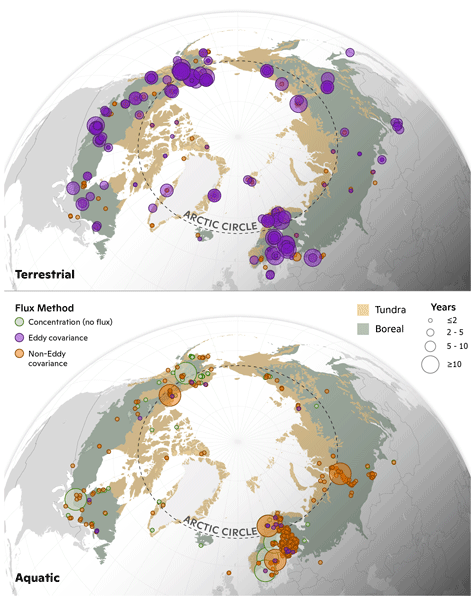
This dataset includes monthly measurements of carbon dioxide and methane exchange between land, water, and the atmosphere from over 1000 sites in Arctic and boreal regions. It combines measurements from a variety of ecosystems, including wetlands, forests, tundra, lakes, and rivers, gathered by over 260 researchers from 1984–2024. This dataset can be used to improve and reduce uncertainty in carbon budgets in order to strengthen our understanding of climate feedbacks in a warming world.
Pramit Kumar Deb Burman, Amol Kale, Yogesh K. Tiwari, Suraj Reddy Rodda, Sandipan Mukherjee, Pulakesh Das, Arunima Jayachandran, Dipankar Sarma, Palingamoorthy Gnanamoorthy, Nirmali Gogoi, Somnath Baidya Roy, Ganapati S. Bhat, and Kazuhito Ichii
EGUsphere, https://doi.org/10.5194/egusphere-2026-3597, https://doi.org/10.5194/egusphere-2026-3597, 2026
This preprint is open for discussion and under review for Biogeosciences (BG).
Short summary
Short summary
Accurate estimates of terrestrial carbon uptake are required to strategise effective climate mitigation measures. Several remotely sensed and modelled global datasets are available for such purposes, none of which is developed using in-situ measurements from India. We objectively evaluated the performance of these datasets over India. We find that machine learning algorithms perform best over croplands and forests, whereas satellite observations perform better over grasslands.
Binyan Sun, Guido L. B. Wiesenberg, Elaine Pegoraro, Margaret S. Torn, Michael W. I. Schmidt, and Mike C. Rowley
SOIL, 12, 757–771, https://doi.org/10.5194/soil-12-757-2026, https://doi.org/10.5194/soil-12-757-2026, 2026
Short summary
Short summary
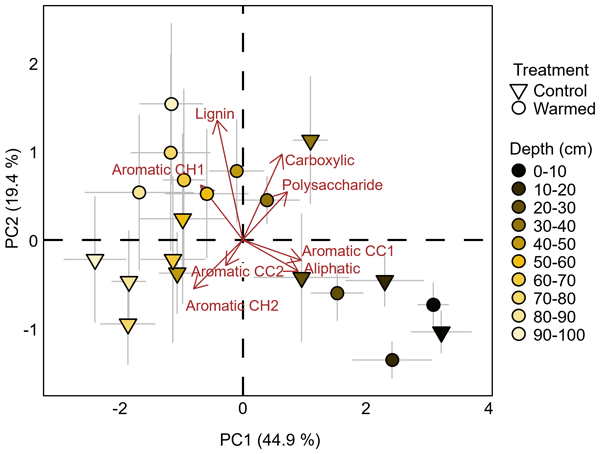
Soil is the largest terrestrial carbon pool but vulnerable to loss under warming. Using a +4 °C whole-soil warming experiment at Blodgett Forest Research Station to 1 m depth, we investigated density fractions across depths. Below 50 cm, carbon quantity and composition shifted, mainly from losses of unprotected soil organic carbon. Soil carbon protected by minerals stayed largely stable, indicating organo-mineral protection buffers subsoil carbon loss.
Kelcy Kent, Kyle Arndt, Danielle Trangmoe, Patrick Murphy, Sigrid Dengel, Margaret Torn, Oriana Chafe, Marco Montemayor, and Susan Natali
EGUsphere, https://doi.org/10.5194/egusphere-2026-3328, https://doi.org/10.5194/egusphere-2026-3328, 2026
This preprint is open for discussion and under review for The Cryosphere (TC).
Short summary
Short summary
With Arctic warming, thawing frozen ground releases greenhouse gases that further accelerate climate change. We analyzed a six-year record of carbon dioxide and methane gas exchange between the ecosystem and atmosphere at an Arctic tundra site, finding the site shifted between absorbing and releasing carbon depending on temperature, soil moisture, and landscape features, highlighting the importance of accounting for landscape variation when tracking and predicting evolving Arctic carbon stocks.
Madoka Koshino, Kazuhito Ichii, Misaki Hase, Daniel Henri, and Beak Munseon
EGUsphere, https://doi.org/10.5194/egusphere-2026-3311, https://doi.org/10.5194/egusphere-2026-3311, 2026
Short summary
Short summary
Vegetation change is often monitored using satellite observations, but different measures do not always show the same results. We compared four indicators across Asia and Oceania from 2000 to 2021 and found that agreement among them varied by region. In some northern areas, vegetation greening was not accompanied by increases in biomass or productivity. These findings show that combining multiple indicators provides a more complete picture of ecosystem change.
Mengze Li, Robert B. Jackson, Marielle Saunois, Philippe Ciais, Ben Poulter, Josep G. Canadell, Prabir K. Patra, Hanqin Tian, Zhen Zhang, Etienne Fluet-Chouinard, Zutao Ouyang, Ting Zhang, David J. Beerling, Dmitry A. Belikov, Philippe Bousquet, Danilo Custodio, Naveen Chandra, Xinyu Dou, Nicola Gedney, Peter O. Hopcroft, Alison M. Hoyt, Kazuhito Ichii, Akihito Ito, Atul K. Jain, Katherine Jensen, Fortunat Joos, Thomas Kleinen, Masayuki Kondo, Fa Li, Tingting Li, Xiangyu Liu, Shamil Maksyutov, Avni Malhotra, Adrien Martinez, Kyle McDonald, Joe R. Melton, Jurek Müller, Yosuke Niwa, Shufen Pan, Shushi Peng, Changhui Peng, Zhangcai Qin, Peter Raymond, William Riley, Arjo Segers, Rona L. Thompson, Aki Tsuruta, Yi Xi, Kunxiaojia Yuan, Wenxin Zhang, Bo Zheng, Qing Zhu, Qiuan Zhu, and Qianlai Zhuang
Earth Syst. Sci. Data, 18, 3507–3524, https://doi.org/10.5194/essd-18-3507-2026, https://doi.org/10.5194/essd-18-3507-2026, 2026
Short summary
Short summary
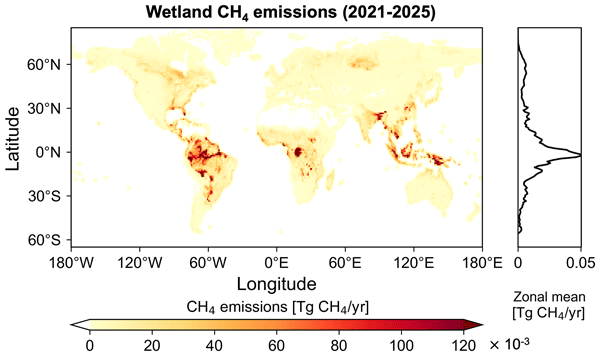
We proposed a framework that combines machine-learning and climate data to predict global natural vegetated wetland methane emissions for 2000–2025. We found that although total global emissions remained stable in the post-2020s, Northern Hemisphere emissions surged whilst tropical emissions fell. This approach allows us to rapidly monitor emissions and provides early warnings for climate impacts.
Jeffrey Beem-Miller, William J. Riley, Peter B. Reich, Michael W. I. Schmidt, Yuxuan Bai, Raimundo Bermudez Villanueva, Zach Brown, Abad Chabbi, Susan E. Crow, Wenxu Dong, Serita D. Frey, Paul J. Hanson, Kai Jensen, Melissa A. Knorr, Emma Lathrop, Avni Malhotra, Patrick Megonigal, Adrienne Nicotra, Andrew Nottingham, Genevieve L. Noyce, Roy L. Rich, Heidi Rodenhizer, Agustín Sarquis, Andreas Schindlbacher, Edward A. G. Schuur, Zheng Shi, Artur Stefanski, Viktoria Unger, Tana E. Wood, Yuanhe Yang, Zhijie Yang, Jizhong Zhou, Biao Zhu, and Margaret S. Torn
Earth Syst. Sci. Data Discuss., https://doi.org/10.5194/essd-2026-23, https://doi.org/10.5194/essd-2026-23, 2026
Revised manuscript accepted for ESSD
Short summary
Short summary
The Soil Warming to Depth Data Integration Effort (SWEDDIE) synthesizes data from deep soil warming experiments around the world (n = 23), offering new insight into warming responses of both surface and subsoils. We demonstrate that variation in soil warming with depth is driven largely by warming methodology, while soil moisture changes due to warming differ by ecosystem. This work serves a foundation for future syntheses with SWEDDIE.
Binyan Sun, Cyrill Zosso, Guido L. B. Wiesenberg, Elaine Pegoraro, Margaret S. Torn, and Michael W. I. Schmidt
SOIL, 11, 1077–1093, https://doi.org/10.5194/soil-11-1077-2025, https://doi.org/10.5194/soil-11-1077-2025, 2025
Short summary
Short summary
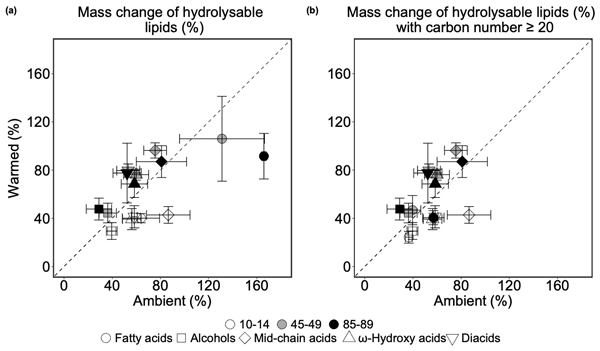
To understand how warming will change the dynamics of roots across soil profile, we took usage of a long-term field warming experiment and incubated 13C-labelled roots at three different depths. After 3 years of incubation, at compound class level, the effects of warming on decomposition of root-derived hydrolysable lipids were compound class specific. At monomer level, warming effects on suberin-derived monomer decomposition were depth-dependent and their resistance increased with chain length.
Masahito Ueyama, Yuta Takao, Hiromi Yazawa, Makiko Tanaka, Hironori Yabuki, Tomo'omi Kumagai, Hiroki Iwata, Md. Abdul Awal, Mingyuan Du, Yoshinobu Harazono, Yoshiaki Hata, Takashi Hirano, Tsutom Hiura, Reiko Ide, Sachinobu Ishida, Mamoru Ishikawa, Kenzo Kitamura, Yuji Kominami, Shujiro Komiya, Ayumi Kotani, Yuta Inoue, Takashi Machimura, Kazuho Matsumoto, Yojiro Matsuura, Yasuko Mizoguchi, Shohei Murayama, Hirohiko Nagano, Taro Nakai, Tatsuro Nakaji, Ko Nakaya, Shinjiro Ohkubo, Takeshi Ohta, Keisuke Ono, Taku M. Saitoh, Ayaka Sakabe, Takanori Shimizu, Seiji Shimoda, Michiaki Sugita, Kentaro Takagi, Yoshiyuki Takahashi, Naoya Takamura, Satoru Takanashi, Takahiro Takimoto, Yukio Yasuda, Qinxue Wang, Jun Asanuma, Hideo Hasegawa, Tetsuya Hiyama, Yoshihiro Iijima, Shigeyuki Ishidoya, Masayuki Itoh, Tomomichi Kato, Hiroaki Kondo, Yoshiko Kosugi, Tomonori Kume, Takahisa Maeda, Shoji Matsuura, Trofim Maximov, Takafumi Miyama, Ryo Moriwaki, Hiroyuki Muraoka, Roman Petrov, Jun Suzuki, Shingo Taniguchi, and Kazuhito Ichii
Earth Syst. Sci. Data, 17, 3807–3833, https://doi.org/10.5194/essd-17-3807-2025, https://doi.org/10.5194/essd-17-3807-2025, 2025
Short summary
Short summary
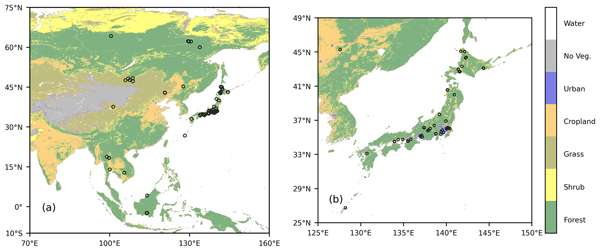
The JapanFlux2024 dataset, created through collaboration across Japan and East Asia, includes eddy covariance data from 83 sites spanning 683 site-years (1990–2023). This comprehensive dataset offers valuable insights into energy, water, and CO2 fluxes, supporting research on land–atmosphere interactions and process models; fosters global collaboration; and advances research in environmental science and regional climate dynamics.
Conor T. Doherty, Weile Wang, Hirofumi Hashimoto, and Ian G. Brosnan
Geosci. Model Dev., 18, 3003–3016, https://doi.org/10.5194/gmd-18-3003-2025, https://doi.org/10.5194/gmd-18-3003-2025, 2025
Short summary
Short summary
We present, analyze, and validate a methodology for quantifying uncertainty in gridded meteorological data products produced by spatial interpolation. In a validation case study using daily maximum near-surface air temperature (Tmax), the method works well and produces predictive distributions with closely matching theoretical versus actual coverage levels. Application of the method reveals that the magnitude of uncertainty in interpolated Tmax varies significantly in both space and time.
Mike C. Rowley, Jasquelin Pena, Matthew A. Marcus, Rachel Porras, Elaine Pegoraro, Cyrill Zosso, Nicholas O. E. Ofiti, Guido L. B. Wiesenberg, Michael W. I. Schmidt, Margaret S. Torn, and Peter S. Nico
SOIL, 11, 381–388, https://doi.org/10.5194/soil-11-381-2025, https://doi.org/10.5194/soil-11-381-2025, 2025
Short summary
Short summary
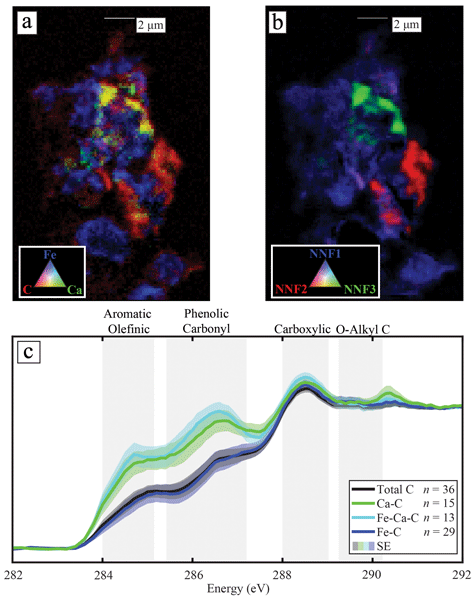
This study shows that calcium (Ca) preserves soil organic carbon (SOC) in acidic soils, challenging beliefs that their interactions were limited to near-neutral or alkaline soils. Using spectromicroscopy, we found that Ca was co-located with a specific fraction of carbon, rich in aromatic and phenolic groups. This association was disrupted when Ca was removed but was reformed during decomposition with added Ca. Overall, this suggests that Ca amendments could enhance SOC stability.
Jacob A. Nelson, Sophia Walther, Fabian Gans, Basil Kraft, Ulrich Weber, Kimberly Novick, Nina Buchmann, Mirco Migliavacca, Georg Wohlfahrt, Ladislav Šigut, Andreas Ibrom, Dario Papale, Mathias Göckede, Gregory Duveiller, Alexander Knohl, Lukas Hörtnagl, Russell L. Scott, Jiří Dušek, Weijie Zhang, Zayd Mahmoud Hamdi, Markus Reichstein, Sergio Aranda-Barranco, Jonas Ardö, Maarten Op de Beeck, Dave Billesbach, David Bowling, Rosvel Bracho, Christian Brümmer, Gustau Camps-Valls, Shiping Chen, Jamie Rose Cleverly, Ankur Desai, Gang Dong, Tarek S. El-Madany, Eugenie Susanne Euskirchen, Iris Feigenwinter, Marta Galvagno, Giacomo A. Gerosa, Bert Gielen, Ignacio Goded, Sarah Goslee, Christopher Michael Gough, Bernard Heinesch, Kazuhito Ichii, Marcin Antoni Jackowicz-Korczynski, Anne Klosterhalfen, Sara Knox, Hideki Kobayashi, Kukka-Maaria Kohonen, Mika Korkiakoski, Ivan Mammarella, Mana Gharun, Riccardo Marzuoli, Roser Matamala, Stefan Metzger, Leonardo Montagnani, Giacomo Nicolini, Thomas O'Halloran, Jean-Marc Ourcival, Matthias Peichl, Elise Pendall, Borja Ruiz Reverter, Marilyn Roland, Simone Sabbatini, Torsten Sachs, Marius Schmidt, Christopher R. Schwalm, Ankit Shekhar, Richard Silberstein, Maria Lucia Silveira, Donatella Spano, Torbern Tagesson, Gianluca Tramontana, Carlo Trotta, Fabio Turco, Timo Vesala, Caroline Vincke, Domenico Vitale, Enrique R. Vivoni, Yi Wang, William Woodgate, Enrico A. Yepez, Junhui Zhang, Donatella Zona, and Martin Jung
Biogeosciences, 21, 5079–5115, https://doi.org/10.5194/bg-21-5079-2024, https://doi.org/10.5194/bg-21-5079-2024, 2024
Short summary
Short summary
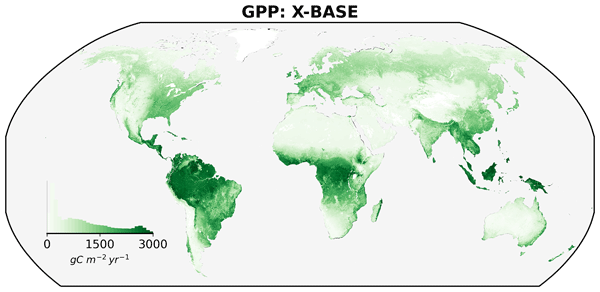
The movement of water, carbon, and energy from the Earth's surface to the atmosphere, or flux, is an important process to understand because it impacts our lives. Here, we outline a method called FLUXCOM-X to estimate global water and CO2 fluxes based on direct measurements from sites around the world. We go on to demonstrate how these new estimates of net CO2 uptake/loss, gross CO2 uptake, total water evaporation, and transpiration from plants compare to previous and independent estimates.
Ruohan Li, Dongdong Wang, Weile Wang, and Ramakrishna Nemani
Earth Syst. Sci. Data, 15, 1419–1436, https://doi.org/10.5194/essd-15-1419-2023, https://doi.org/10.5194/essd-15-1419-2023, 2023
Short summary
Short summary
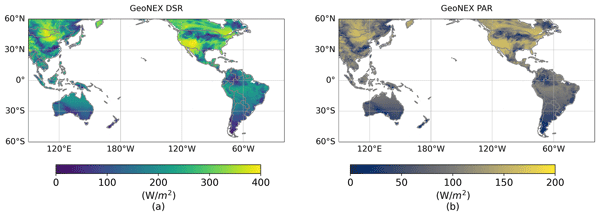
There has been an increasing need for high-spatiotemporal-resolution surface downward shortwave radiation (DSR) and photosynthetically active radiation (PAR) data for ecological, hydrological, carbon, and solar photovoltaic research. This study produced a new 1 km hourly product of land surface DSR and PAR from the enhanced GeoNEX new-generation geostationary data. Our validation indicated that the GeoNEX DSR and PAR product has a higher accuracy than other existing products.
Niel Verbrigghe, Niki I. W. Leblans, Bjarni D. Sigurdsson, Sara Vicca, Chao Fang, Lucia Fuchslueger, Jennifer L. Soong, James T. Weedon, Christopher Poeplau, Cristina Ariza-Carricondo, Michael Bahn, Bertrand Guenet, Per Gundersen, Gunnhildur E. Gunnarsdóttir, Thomas Kätterer, Zhanfeng Liu, Marja Maljanen, Sara Marañón-Jiménez, Kathiravan Meeran, Edda S. Oddsdóttir, Ivika Ostonen, Josep Peñuelas, Andreas Richter, Jordi Sardans, Páll Sigurðsson, Margaret S. Torn, Peter M. Van Bodegom, Erik Verbruggen, Tom W. N. Walker, Håkan Wallander, and Ivan A. Janssens
Biogeosciences, 19, 3381–3393, https://doi.org/10.5194/bg-19-3381-2022, https://doi.org/10.5194/bg-19-3381-2022, 2022
Short summary
Short summary
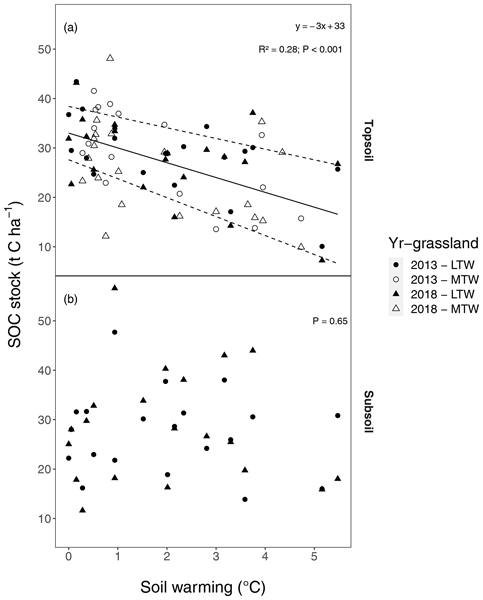
In subarctic grassland on a geothermal warming gradient, we found large reductions in topsoil carbon stocks, with carbon stocks linearly declining with warming intensity. Most importantly, however, we observed that soil carbon stocks stabilised within 5 years of warming and remained unaffected by warming thereafter, even after > 50 years of warming. Moreover, in contrast to the large topsoil carbon losses, subsoil carbon stocks remained unaffected after > 50 years of soil warming.
Cited articles
Adachi, Y., Kikuchi, R., Obata, K., and Yoshioka, H.: Relative Azimuthal-Angle Matching (RAM): A screening method for GEO-LEO reflectance comparison in middle latitude forests, Remote Sens.-Basel, 11, 1095, https://doi.org/10.3390/rs11091095, 2019.
Badgley, G., Anderegg, L. D. L., Berry, J. A., and Field, C. B.: Terrestrial gross primary production: Using NIRv to scale from site to globe, Glob. Change Biol., 25, 3731–3740, https://doi.org/10.1111/gcb.14729, 2019.
Baldocchi, D., Falge, E., Gu, L., Olson, R., Hollinger, D., Running, S., Anthoni, P., Bernhofer, C., Davis, K., Evans, R., Fuentes, J., Goldstein, A., Katul, G., Law, B., Lee, X., Malhi, Y., Meyers, T., Munger, W., Oechel, W., Paw, U. K. T., Pilegaard, K., Schmid, H. P., Valentini, R., Verma, S., Vesala, T., Wilson, K., and Wofsy, S.: FLUXNET: A new tool to study the temporal and spatial variability of ecosystem-scale carbon dioxide, water vapor, and energy flux densities, B. Am. Meteorol. Soc., 82, 2415–2434, https://doi.org/10.1175/1520-0477(2001)082<2415:FANTTS>2.3.CO;2, 2001.
Chu, H., Luo, X., Ouyang, Z., Chan, W. S., Dengel, S., Biraud, S. C., Torn, M. S., Metzger, S., Kumar, J., Arain, M. A., Arkebauer, T. J., Baldocchi, D., Bernacchi, C., Billesbach, D., Black, T. A., Blanken, P. D., Bohrer, G., Bracho, R., Brown, S., Brunsell, N. A., Chen, J., Chen, X., Clark, K., Desai, A. R., Duman, T., Durden, D., Fares, S., Forbrich, I., Gamon, J. A., Gough, C. M., Griffis, T., Helbig, M., Hollinger, D., Humphreys, E., Ikawa, H., Iwata, H., Ju, Y., Knowles, J. F., Knox, S. H., Kobayashi, H., Kolb, T., Law, B., Lee, X., Litvak, M., Liu, H., Munger, J. W., Noormets, A., Novick, K., Oberbauer, S. F., Oechel, W., Oikawa, P., Papuga, S. A., Pendall, E., Prajapati, P., Prueger, J., Quinton, W. L., Richardson, A. D., Russell, E. S., Scott, R. L., Starr, G., Staebler, R., Stoy, P. C., Stuart-Haëntjens, E., Sonnentag, O., Sullivan, R. C., Suyker, A., Ueyama, M., Vargas, R., Wood, J. D., and Zona, D.: Representativeness of Eddy-Covariance flux footprints for areas surrounding AmeriFlux sites, Agr. Forest Meteorol., 301–302, 108350, https://doi.org/10.1016/J.AGRFORMET.2021.108350, 2021.
Chu, H., Christianson, D. S., Cheah, Y. W., Pastorello, G., O'Brien, F., Geden, J., Ngo, S. T., Hollowgrass, R., Leibowitz, K., Beekwilder, N. F., Sandesh, M., Dengel, S., Chan, S. W., Santos, A., Delwiche, K., Yi, K., Buechner, C., Baldocchi, D., Papale, D., Keenan, T. F., Biraud, S. C., Agarwal, D. A., and Torn, M. S.: AmeriFlux BASE data pipeline to support network growth and data sharing, Scientific Data 2023 10:1, 10, 1–13, https://doi.org/10.1038/s41597-023-02531-2, 2023.
Hashimoto, H.: GeoNEXTools, Zenodo [code], https://doi.org/10.5281/zenodo.17731754, 2025.
Hashimoto, H., Wang, W., Dungan, J. L., Li, S., Michaelis, A. R., Takenaka, H., Higuchi, A., Myneni, R. B., and Nemani, R. R.: New generation geostationary satellite observations support seasonality in greenness of the Amazon evergreen forests, Nat. Commun., 12, 684, https://doi.org/10.1038/s41467-021-20994-y, 2021.
Hashimoto, H., Wang, W., Park, T., Guzman, A., and Brosnan, I. G.: GeoNEX Coincident Ground Observations (GeCGO), NASA Earth eXchange (NASA Ames Research Center) [data set], https://doi.org/10.25966/y5pe-xp41, 2025.
He, T., Zhang, Y., Liang, S., Yu, Y., and Wang, D.: Developing Land Surface Directional Reflectance and Albedo Products from Geostationary GOES-R and Himawari Data: Theoretical Basis, Operational Implementation, and Validation, Remote Sens.-Basel, 11, 2655, https://doi.org/10.3390/RS11222655, 2019.
Holben, B. N., Eck, T. F., Slutsker, I., Tanré, D., Buis, J. P., Setzer, A., Vermote, E., Reagan, J. A., Kaufman, Y. J., Nakajima, T., Lavenu, F., Jankowiak, I., and Smirnov, A.: AERONET—A federated instrument network and data archive for aerosol characterization, Remote Sens. Environ., 66, 1–16, https://doi.org/10.1016/S0034-4257(98)00031-5, 1998.
Hufkens, K.: bluegreen-labs/MODISTools: MODISTools v1.1.5.: BlueGreen Labs [code], https://github.com/ropensci/MODISTools, last access: 29 September 2025.
Jeong, S., Ryu, Y., Dechant, B., Li, X., Kong, J., Choi, W., Kang, M., Yeom, J., Lim, J., Jang, K., and Chun, J.: Tracking diurnal to seasonal variations of gross primary productivity using a geostationary satellite, GK-2A advanced meteorological imager, Remote Sens. Environ., 284, 113365, https://doi.org/10.1016/J.RSE.2022.113365, 2023.
Jia, A., Liang, S., and Wang, D.: Generating a 2-km, all-sky, hourly land surface temperature product from Advanced Baseline Imager data, Remote Sens. Environ., 278, 113105, https://doi.org/10.1016/J.RSE.2022.113105, 2022.
Keenan, T. F., Darby, B., Felts, E., Sonnentag, O., Friedl, M. A., Hufkens, K., O'Keefe, J., Klosterman, S., Munger, J. W., Toomey, M., and Richardson, A. D.: Tracking forest phenology and seasonal physiology using digital repeat photography: A critical assessment, Ecol. Appl., 24, 1478–1489, https://doi.org/10.1890/13-0652.1, 2014.
Khan, A. M., Stoy, P. C., Joiner, J., Baldocchi, D., Verfaillie, J., Chen, M., and Otkin, J. A.: The Diurnal Dynamics of Gross Primary Productivity Using Observations From the Advanced Baseline Imager on the Geostationary Operational Environmental Satellite-R Series at an Oak Savanna Ecosystem, J. Geophys. Res.-Biogeo., 127, e2021JG006701, https://doi.org/10.1029/2021JG006701, 2022.
Li, R., Wang, D., Wang, W., and Nemani, R.: A GeoNEX-based high-spatiotemporal-resolution product of land surface downward shortwave radiation and photosynthetically active radiation, Earth Syst. Sci. Data, 15, 1419–1436, https://doi.org/10.5194/essd-15-1419-2023, 2023a.
Li, X., Ryu, Y., Xiao, J., Dechant, B., Liu, J., Li, B., Jeong, S., and Gentine, P.: New-generation geostationary satellite reveals widespread midday depression in dryland photosynthesis during 2020 western U. S. heatwave, Sci. Adv., 9, eadi0775, https://doi.org/10.1126/SCIADV.ADI0775, 2023b.
Losos, D., Hoffman, S., and Stoy, P. C.: GOES-R land surface products at Western Hemisphere eddy covariance tower locations, Sci. Data., 11, 1–19, https://doi.org/10.1038/s41597-024-03071-z, 2024.
Lyapustin, A., Martonchik, J., Wang, Y., Laszlo, I., and Korkin, S.: Multiangle implementation of atmospheric correction (MAIAC): 1. Radiative transfer basis and look-up tables, J. Geophys. Res., 116, D03210, https://doi.org/10.1029/2010JD014985, 2011a.
Lyapustin, A., Wang, Y., Laszlo, I., Kahn, R., Korkin, S., Remer, L., Levy, R., and Reid, J. S.: Multiangle implementation of atmospheric correction (MAIAC): 2. Aerosol algorithm, J. Geophys. Res., 116, D03211, https://doi.org/10.1029/2010JD014986, 2011b.
Mallick, K., Verfaillie, J., Wang, T., Ortiz, A. A., Szutu, D., Yi, K., Kang, Y., Shortt, R., Hu, T., Sulis, M., Szantoi, Z., Boulet, G., Fisher, J. B., and Baldocchi, D.: Net fluxes of broadband shortwave and photosynthetically active radiation complement NDVI and near infrared reflectance of vegetation to explain gross photosynthesis variability across ecosystems and climate, Remote Sens. Environ., 307, 114123, https://doi.org/10.1016/J.RSE.2024.114123, 2024.
Miura, T., Nagai, S., Takeuchi, M., Ichii, K., and Yoshioka, H.: Improved characterisation of vegetation and land surface seasonal dynamics in central Japan with Himawari-8 hypertemporal data, Sci. Rep.-UK, 9, 1–12, https://doi.org/10.1038/s41598-019-52076-x, 2019.
Morton, D. C., Nagol, J., Carabajal, C. C., Rosette, J., Palace, M., Cook, B. D., Vermote, E. F., Harding, D. J., and North, P. R. J.: Amazon forests maintain consistent canopy structure and greenness during the dry season, Nature, 506, 221–224, https://doi.org/10.1038/nature13006, 2014.
Novick, K. A., Biederman, J. A., Desai, A. R., Litvak, M. E., Moore, D. J. P., Scott, R. L., and Torn, M. S.: The AmeriFlux network: A coalition of the willing, Agr. Forest Meteorol., 249, 444–456, https://doi.org/10.1016/J.AGRFORMET.2017.10.009, 2018.
ORNL DAAC: Terrestrial Ecology Subsetting & Visualization Services (TESViS) Fixed Sites Subsets, ORNL [data set], https://doi.org/10.3334/ORNLDAAC/1567, 2017.
Richardson, A. D., Hufkens, K., Milliman, T., and Frolking, S.: Intercomparison of phenological transition dates derived from the PhenoCam Dataset V1.0 and MODIS satellite remote sensing, Sci. Rep.-UK, 8, 5679, https://doi.org/10.1038/s41598-018-23804-6, 2018a.
Richardson, A. D., Hufkens, K., Milliman, T., Aubrecht, D. M., Chen, M., Gray, J. M., Johnston, M. R., Keenan, T. F., Klosterman, S. T., Kosmala, M., Melaas, E. K., Friedl, M. A., and Frolking, S.: Tracking vegetation phenology across diverse North American biomes using PhenoCam imagery, Sci. Data., 5, 180028, https://doi.org/10.1038/sdata.2018.28, 2018b.
Running, S. W., Nemani, R. R., Heinsch, F. A., Zhao, M., Reeves, M., and Hashimoto, H.: A continuous satellite-derived measure of global terrestrial primary production, BioScience, 54, 547–560, https://doi.org/10.1641/0006-3568(2004)054[0547:ACSMOG]2.0.CO;2, 2004.
Ryu, Y., Lee, G., Jeon, S., Song, Y., and Kimm, H.: Monitoring multi-layer canopy spring phenology of temperate deciduous and evergreen forests using low-cost spectral sensors, Remote Sens. Environ., 149, 227–238, https://doi.org/10.1016/J.RSE.2014.04.015, 2014.
Schmit, T. J., Griffith, P., Gunshor, M. M., Daniels, J. M., Goodman, S. J., and Lebair, W. J.: A closer look at the ABI on the GOES-R series, B. Am. Meteorol. Soc., 98, 681–698, https://doi.org/10.1175/BAMS-D-15-00230.1, 2017.
Seyednasrollah, B., Young, A. M., Hufkens, K., Milliman, T., Friedl, M. A., Frolking, S., and Richardson, A. D.: Tracking vegetation phenology across diverse biomes using Version 2.0 of the PhenoCam Dataset, Sci. Data, 6, 222, https://doi.org/10.1038/S41597-019-0229-9, 2019.
Sinyuk, A., Holben, B. N., Eck, T. F., Giles, D. M., Slutsker, I., Korkin, S., Schafer, J. S., Smirnov, A., Sorokin, M., and Lyapustin, A.: The AERONET Version 3 aerosol retrieval algorithm, associated uncertainties and comparisons to Version 2, Atmos. Meas. Tech., 13, 3375–3411, https://doi.org/10.5194/amt-13-3375-2020, 2020.
Sorek-Hamer, M., Chatfield, R., and Liu, Y.: Review: Strategies for using satellite-based products in modeling PM2.5 and short-term pollution episodes, Environ. Int., 144, 106057, https://doi.org/10.1016/J.ENVINT.2020.106057, 2020.
Stoy, P., Ranjbar, S., Hoffman, S., and Losos, D.: Estimating terrestrial carbon dioxide and water vapor fluxes from geostationary satellites in near-real time: the ALIVE framework, EGU24, https://doi.org/10.5194/egusphere-egu24-4743, 2024.
Takenaka, H., Sakashita, T., Higuchi, A., and Nakajima, T.: Geolocation correction for geostationary satellite observations by a phase-only correlation method using a visible channel, Remote Sens.-Basel, 12, 2472, https://doi.org/10.3390/rs12152472, 2020.
Tenenbaum, P. and Wohler, B.: Ziggy, NASA [data set], https://doi.org/10.5281/zenodo.7859503, 2024.
Tuck, S. L., Phillips, H. R. P., Hintzen, R. E., Scharlemann, J. P. W., Purvis, A., and Hudson, L. N.: MODISTools – downloading and processing MODIS remotely sensed data in R, Ecol. Evol., 4, 4658–4668, https://doi.org/10.1002/ECE3.1273, 2014.
Wang, W., Li, S., Hashimoto, H., Takenaka, H., Higuchi, A., Kalluri, S., and Nemani, R.: An introduction to the Geostationary-NASA Earth Exchange (GeoNEX) Products: 1. Top-of-atmosphere reflectance and brightness temperature, Remote Sens.-Basel, 12, 1267, https://doi.org/10.3390/RS12081267, 2020.
Wang, W., Wang, Y., Lyapustin, A., Hashimoto, H., Park, T., Michaelis, A., and Nemani, R.: A novel atmospheric correction algorithm to exploit the diurnal variability in hypertemporal geostationary observations, Remote Sens.-Basel, 14, 964, https://doi.org/10.3390/RS14040964, 2022.
Xiao, J., Fisher, J. B., Hashimoto, H., Ichii, K., and Parazoo, N. C.: Emerging satellite observations for diurnal cycling of ecosystem processes, Nat. Plants, 7, 877–887, https://doi.org/10.1038/s41477-021-00952-8, 2021.
Yi, K., Senay, G. B., Fisher, J. B., Wang, L., Suvočarev, K., Chu, H., Moore, G. W., Novick, K. A., Barnes, M. L., Keenan, T. F., Mallick, K., Luo, X., Missik, J. E. C., Delwiche, K. B., Nelson, J. A., Good, S. P., Xiao, X., Kannenberg, S. A., Ahmadi, A., Wang, T., Bohrer, G., Litvak, M. E., Reed, D. E., Oishi, A. C., Torn, M. S., and Baldocchi, D.: Challenges and Future Directions in Quantifying Terrestrial Evapotranspiration, Water Resour Res., 60, e2024WR037622, https://doi.org/10.1029/2024WR037622, 2024.
Short summary
We create the GeoNEX Coincident Ground Observations (GeCGO) dataset by extracting point data at observational network sites across the Americas from the gridded GeoNEX products. The GeoNEX dataset is a high-temporal-frequency dataset of the latest geostationary satellite observations. We also release the software GeoNEXTools, which helps with handling the GeCGO data. GeCGO and GeoNEXTools could help scientists use geostationary satellite data at ground observational sites of interest.
We create the GeoNEX Coincident Ground Observations (GeCGO) dataset by extracting point data at...


Altmetrics
Final-revised paper
Preprint