Articles | Volume 17, issue 12
https://doi.org/10.5194/essd-17-7101-2025
© Author(s) 2025. This work is distributed under
the Creative Commons Attribution 4.0 License.
the Creative Commons Attribution 4.0 License.
https://doi.org/10.5194/essd-17-7101-2025
© Author(s) 2025. This work is distributed under
the Creative Commons Attribution 4.0 License.
the Creative Commons Attribution 4.0 License.
Data description article
| 
11 Dec 2025
Data description article |
| 11 Dec 2025
| 11 Dec 2025
FluxHourly: global long-term hourly 9 km terrestrial water-energy-carbon fluxes
Qianqian Han
Faculty of Geo-Information Science and Earth Observation (ITC), University of Twente, 7522 NH Enschede, the Netherlands
Yijian Zeng
Faculty of Geo-Information Science and Earth Observation (ITC), University of Twente, 7522 NH Enschede, the Netherlands
Yunfei Wang
Faculty of Geo-Information Science and Earth Observation (ITC), University of Twente, 7522 NH Enschede, the Netherlands
Fakhereh Alidoost
Netherlands eScience Center, 1098 XH Amsterdam, the Netherlands
Francesco Nattino
Netherlands eScience Center, 1098 XH Amsterdam, the Netherlands
Netherlands eScience Center, 1098 XH Amsterdam, the Netherlands
Bob Su
CORRESPONDING AUTHOR

Faculty of Geo-Information Science and Earth Observation (ITC), University of Twente, 7522 NH Enschede, the Netherlands
Related authors
Yunfei Wang, Yijian Zeng, Zengjing Song, Danyang Yu, Qianqian Han, Enting Tang, Henk de Bruin, and Zhongbo Su
EGUsphere, https://doi.org/10.5194/egusphere-2024-1321, https://doi.org/10.5194/egusphere-2024-1321, 2024
Preprint archived
Short summary
Short summary
Various methods were proposed to estimate irrigation water requirements (IWR). However, the simulated IWR exhibits large differences. This study evaluates six potential evapotranspiration (PET) methods and proposes a practical approach to estimate IWR. The radiation-based methods show promise in approximating daily PET accurately, and the STEMMUS-SCOPE model can reliably estimate IWR. This research enhances our understanding of different PET methods and their implications for water management.
Qianqian Han, Yijian Zeng, Lijie Zhang, Calimanut-Ionut Cira, Egor Prikaziuk, Ting Duan, Chao Wang, Brigitta Szabó, Salvatore Manfreda, Ruodan Zhuang, and Bob Su
Geosci. Model Dev., 16, 5825–5845, https://doi.org/10.5194/gmd-16-5825-2023, https://doi.org/10.5194/gmd-16-5825-2023, 2023
Short summary
Short summary
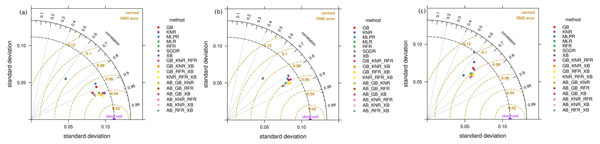
Using machine learning, we estimated global surface soil moisture (SSM) to aid in understanding water, energy, and carbon exchange. Ensemble models outperformed individual algorithms in predicting SSM under different climates. The best-performing ensemble included K-neighbours Regressor, Random Forest Regressor, and Extreme Gradient Boosting. This is important for hydrological and climatological applications such as water cycle monitoring, irrigation management, and crop yield prediction.
Shijie Jiang, Georgios Blougouras, Tuya Wulan, Yijian Zeng, and Jialiang Zhou
EGUsphere, https://doi.org/10.5194/egusphere-2026-3294, https://doi.org/10.5194/egusphere-2026-3294, 2026
Short summary
Short summary
Land surface models simulate how plants and soils exchange water and carbon with the atmosphere, but they rely on many parameters that are hard to measure. We built a model that combines physics with machine learning so these parameters can be learned from observations, checked for reliability, and mapped from a few measurement sites across whole regions. Over Europe it improved predictions and produced coherent parameter maps, offering a foundation for land models that learn from data.
Matthias Cuntz, Stephan Thober, Anne Verhoef, Yijian Zeng, Aaron Boone, Agnès Ducharne, Sujan Koirala, David M. Lawrence, Philipp de Vrese, Carsten Montzka, Sonia I. Seneviratne, Harry Vereecken, Dani Or, Salma Tafasca, Naoki Mizukami, Rich Ellis, Patrick C. McGuire, and Lukas Gudmundsson
EGUsphere, https://doi.org/10.5194/egusphere-2026-4223, https://doi.org/10.5194/egusphere-2026-4223, 2026
Preprint archived
Short summary
Short summary
Land surface models (LSMs) are essential tools to analyze future climate change. Here we pushed state-of-the-art LSMs out of their comfort zone revealing hidden connections between processes encoded into the models. The LSMs reacted differently due to complex, sometimes counter-intuitive interactions of different water fluxes. We identified surface runoff and soil evaporation as the two main reasons behind model differences, which should be improved by using more mechanistic descriptions.
Mostafa Gomaa Daoud, Fakhereh Alidoost, Yijian Zeng, Bart Schilperoort, Christiaan Van der Tol, Maciek W. Lubczynski, Mhd Suhyb Salama, Eric D. Morway, Christian D. Langevin, Prajwal Khanal, Zengjing Song, Lianyu Yu, Hong Zhao, Gualbert Oude Essink, Victor F. Bense, Michiel van der Molen, and Zhongbo Su
EGUsphere, https://doi.org/10.5194/egusphere-2025-4179, https://doi.org/10.5194/egusphere-2025-4179, 2025
Short summary
Short summary
This study investigates the groundwater role in soil-plant-atmosphere continuum. An integrated ecohydrological modelling approach was developed by coupling STEMMUS-SCOPE to MODFLOW 6 and applied at three sites over 8 years. The coupled model improved simulations of soil moisture and temperature, evapotranspiration, carbon fluxes and fluorescence. The findings highlight the groundwater critical role in ecosystem dynamics and its contribution to advancing water, energy and carbon cycle modelling.
Manuel Schlund, Bouwe Andela, Jörg Benke, Ruth Comer, Birgit Hassler, Emma Hogan, Peter Kalverla, Axel Lauer, Bill Little, Saskia Loosveldt Tomas, Francesco Nattino, Patrick Peglar, Valeriu Predoi, Stef Smeets, Stephen Worsley, Martin Yeo, and Klaus Zimmermann
Geosci. Model Dev., 18, 4009–4021, https://doi.org/10.5194/gmd-18-4009-2025, https://doi.org/10.5194/gmd-18-4009-2025, 2025
Short summary
Short summary
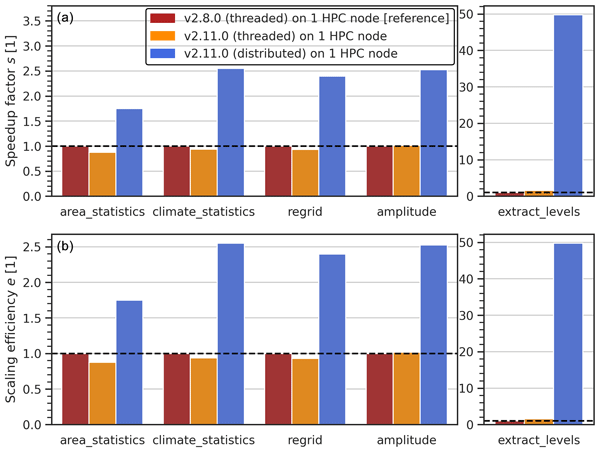
The Earth System Model Evaluation Tool (ESMValTool) is a community diagnostics and performance metrics tool for the evaluation of Earth system models. Here, we describe recent significant improvements of ESMValTool’s computational efficiency including parallel, out-of-core, and distributed computing. Evaluations with the enhanced version of ESMValTool are faster, use less computational resources, and can handle input data larger than the available memory.
Paolo Nasta, Günter Blöschl, Heye R. Bogena, Steffen Zacharias, Roland Baatz, Gabriëlle De Lannoy, Karsten H. Jensen, Salvatore Manfreda, Laurent Pfister, Ana M. Tarquis, Ilja van Meerveld, Marc Voltz, Yijian Zeng, William Kustas, Xin Li, Harry Vereecken, and Nunzio Romano
Hydrol. Earth Syst. Sci., 29, 465–483, https://doi.org/10.5194/hess-29-465-2025, https://doi.org/10.5194/hess-29-465-2025, 2025
Short summary
Short summary
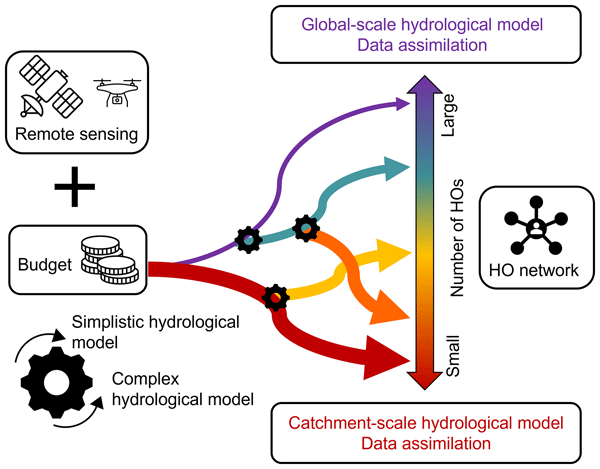
The Unsolved Problems in Hydrology (UPH) initiative has emphasized the need to establish networks of multi-decadal hydrological observatories to tackle catchment-scale challenges on a global scale. This opinion paper provocatively discusses two endmembers of possible future hydrological observatory (HO) networks for a given hypothesized community budget: a comprehensive set of moderately instrumented observatories or, alternatively, a small number of highly instrumented supersites.
Gab Abramowitz, Anna Ukkola, Sanaa Hobeichi, Jon Cranko Page, Mathew Lipson, Martin G. De Kauwe, Samuel Green, Claire Brenner, Jonathan Frame, Grey Nearing, Martyn Clark, Martin Best, Peter Anthoni, Gabriele Arduini, Souhail Boussetta, Silvia Caldararu, Kyeungwoo Cho, Matthias Cuntz, David Fairbairn, Craig R. Ferguson, Hyungjun Kim, Yeonjoo Kim, Jürgen Knauer, David Lawrence, Xiangzhong Luo, Sergey Malyshev, Tomoko Nitta, Jerome Ogee, Keith Oleson, Catherine Ottlé, Phillipe Peylin, Patricia de Rosnay, Heather Rumbold, Bob Su, Nicolas Vuichard, Anthony P. Walker, Xiaoni Wang-Faivre, Yunfei Wang, and Yijian Zeng
Biogeosciences, 21, 5517–5538, https://doi.org/10.5194/bg-21-5517-2024, https://doi.org/10.5194/bg-21-5517-2024, 2024
Short summary
Short summary
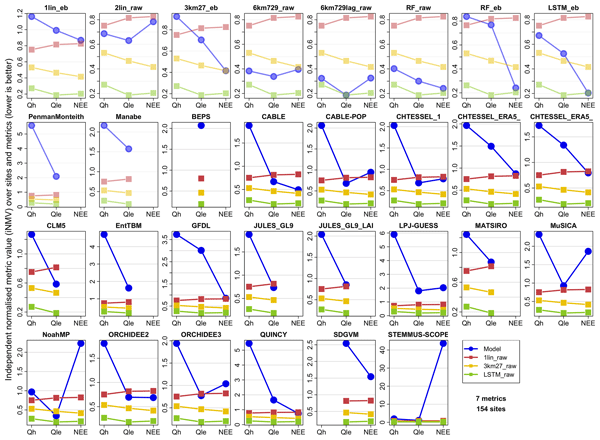
This paper evaluates land models – computer-based models that simulate ecosystem dynamics; land carbon, water, and energy cycles; and the role of land in the climate system. It uses machine learning and AI approaches to show that, despite the complexity of land models, they do not perform nearly as well as they could given the amount of information they are provided with about the prediction problem.
Zengjing Song, Yijian Zeng, Yunfei Wang, Enting Tang, Danyang Yu, Fakhereh Alidoost, Mingguo Ma, Xujun Han, Xuguang Tang, Zhongjing Zhu, Yao Xiao, Debing Kong, and Zhongbo Su
EGUsphere, https://doi.org/10.5194/egusphere-2024-2940, https://doi.org/10.5194/egusphere-2024-2940, 2024
Preprint archived
Short summary
Short summary
The exchange of water and carbon between the plant and the atmosphere is affected under water stress conditions. In this study, a leaf-water-potential-based water stress factor is considered in the STEMMUS-SCOPE (hereafter STEMMUS-SCOPE-PHS), to replace the conventional soil-moisture-based water stress factor. The results show that leaf water potential reflects the plant water stress well, and the STEMMUS-SCOPE-PHS outperforms STEMMUS-SCOPE in the dynamics of the water, energy and carbon fluxes.
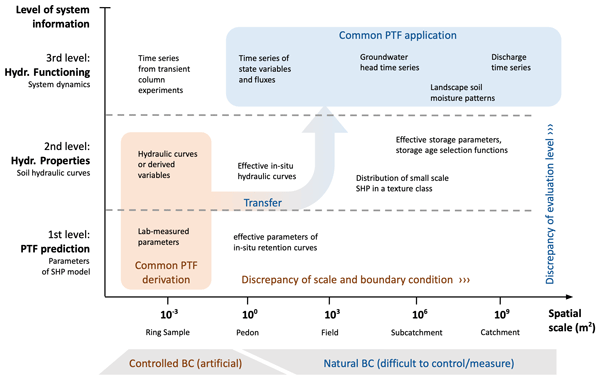
Tobias Karl David Weber, Lutz Weihermüller, Attila Nemes, Michel Bechtold, Aurore Degré, Efstathios Diamantopoulos, Simone Fatichi, Vilim Filipović, Surya Gupta, Tobias L. Hohenbrink, Daniel R. Hirmas, Conrad Jackisch, Quirijn de Jong van Lier, John Koestel, Peter Lehmann, Toby R. Marthews, Budiman Minasny, Holger Pagel, Martine van der Ploeg, Shahab Aldin Shojaeezadeh, Simon Fiil Svane, Brigitta Szabó, Harry Vereecken, Anne Verhoef, Michael Young, Yijian Zeng, Yonggen Zhang, and Sara Bonetti
Hydrol. Earth Syst. Sci., 28, 3391–3433, https://doi.org/10.5194/hess-28-3391-2024, https://doi.org/10.5194/hess-28-3391-2024, 2024
Short summary
Short summary
Pedotransfer functions (PTFs) are used to predict parameters of models describing the hydraulic properties of soils. The appropriateness of these predictions critically relies on the nature of the datasets for training the PTFs and the physical comprehensiveness of the models. This roadmap paper is addressed to PTF developers and users and critically reflects the utility and future of PTFs. To this end, we present a manifesto aiming at a paradigm shift in PTF research.
Yunfei Wang, Yijian Zeng, Zengjing Song, Danyang Yu, Qianqian Han, Enting Tang, Henk de Bruin, and Zhongbo Su
EGUsphere, https://doi.org/10.5194/egusphere-2024-1321, https://doi.org/10.5194/egusphere-2024-1321, 2024
Preprint archived
Short summary
Short summary
Various methods were proposed to estimate irrigation water requirements (IWR). However, the simulated IWR exhibits large differences. This study evaluates six potential evapotranspiration (PET) methods and proposes a practical approach to estimate IWR. The radiation-based methods show promise in approximating daily PET accurately, and the STEMMUS-SCOPE model can reliably estimate IWR. This research enhances our understanding of different PET methods and their implications for water management.
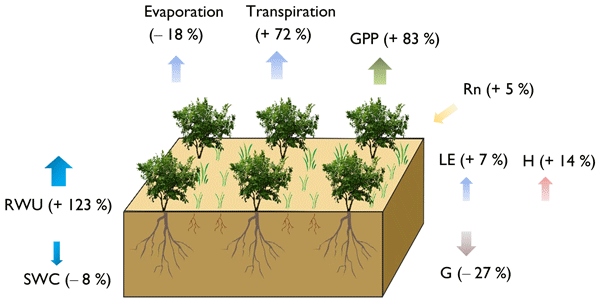
Enting Tang, Yijian Zeng, Yunfei Wang, Zengjing Song, Danyang Yu, Hongyue Wu, Chenglong Qiao, Christiaan van der Tol, Lingtong Du, and Zhongbo Su
Biogeosciences, 21, 893–909, https://doi.org/10.5194/bg-21-893-2024, https://doi.org/10.5194/bg-21-893-2024, 2024
Short summary
Short summary
Our study shows that planting shrubs in a semiarid grassland reduced the soil moisture and increased plant water uptake and transpiration. Notably, the water used by the ecosystem exceeded the rainfall received during the growing seasons, indicating an imbalance in the water cycle. The findings demonstrate the effectiveness of the STEMMUS–SCOPE model as a tool to represent ecohydrological processes and highlight the need to consider energy and water budgets for future revegetation projects.
Qianqian Han, Yijian Zeng, Lijie Zhang, Calimanut-Ionut Cira, Egor Prikaziuk, Ting Duan, Chao Wang, Brigitta Szabó, Salvatore Manfreda, Ruodan Zhuang, and Bob Su
Geosci. Model Dev., 16, 5825–5845, https://doi.org/10.5194/gmd-16-5825-2023, https://doi.org/10.5194/gmd-16-5825-2023, 2023
Short summary
Short summary
Using machine learning, we estimated global surface soil moisture (SSM) to aid in understanding water, energy, and carbon exchange. Ensemble models outperformed individual algorithms in predicting SSM under different climates. The best-performing ensemble included K-neighbours Regressor, Random Forest Regressor, and Extreme Gradient Boosting. This is important for hydrological and climatological applications such as water cycle monitoring, irrigation management, and crop yield prediction.
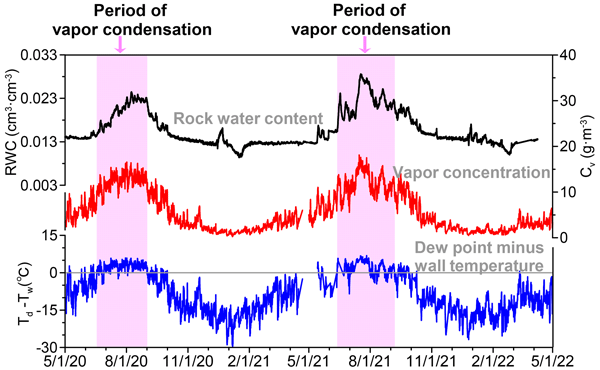
Kai-Gao Ouyang, Xiao-Wei Jiang, Gang Mei, Hong-Bin Yan, Ran Niu, Li Wan, and Yijian Zeng
Hydrol. Earth Syst. Sci., 27, 2579–2590, https://doi.org/10.5194/hess-27-2579-2023, https://doi.org/10.5194/hess-27-2579-2023, 2023
Short summary
Short summary
Our knowledge on sources and dynamics of rock moisture is limited. By using frequency domain reflectometry (FDR), we monitored rock moisture in a cave. The results of an explainable deep learning model reveal that the direct source of rock moisture responsible for weathering in the studied cave is vapour, not infiltrating precipitation. A physics-informed deep learning model, which uses variables controlling vapor condensation as model inputs, leads to accurate rock water content predictions.
Lianyu Yu, Yijian Zeng, Huanjie Cai, Mengna Li, Yuanyuan Zha, Jicai Zeng, Hui Qian, and Zhongbo Su
Geosci. Model Dev. Discuss., https://doi.org/10.5194/gmd-2022-221, https://doi.org/10.5194/gmd-2022-221, 2023
Revised manuscript not accepted
Short summary
Short summary
We developed a coupled soil water-groundwater (SW-GW) model, which is verified as physically accurate and applicable in large-scale groundwater problems. The role of vadose zone processes, coupling approach, and spatiotemporal heterogeneity of SW-GW interactions were highlighted as essential to represent the SW-GW system. Given the relevant dataset, the developed SW-GW modeling framework has the potential to portray the processes "from bedrock to atmosphere" in a physically consistent manner.
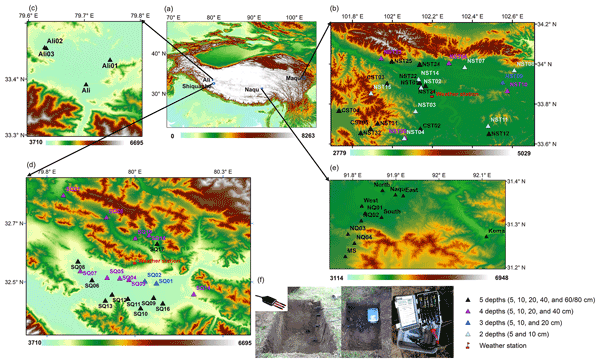
Pei Zhang, Donghai Zheng, Rogier van der Velde, Jun Wen, Yaoming Ma, Yijian Zeng, Xin Wang, Zuoliang Wang, Jiali Chen, and Zhongbo Su
Earth Syst. Sci. Data, 14, 5513–5542, https://doi.org/10.5194/essd-14-5513-2022, https://doi.org/10.5194/essd-14-5513-2022, 2022
Short summary
Short summary
Soil moisture and soil temperature (SMST) are important state variables for quantifying the heat–water exchange between land and atmosphere. Yet, long-term, regional-scale in situ SMST measurements at multiple depths are scarce on the Tibetan Plateau (TP). The presented dataset would be valuable for the evaluation and improvement of long-term satellite- and model-based SMST products on the TP, enhancing the understanding of TP hydrometeorological processes and their response to climate change.
Hong Zhao, Yijian Zeng, Jan G. Hofste, Ting Duan, Jun Wen, and Zhongbo Su
Hydrol. Earth Syst. Sci. Discuss., https://doi.org/10.5194/hess-2022-333, https://doi.org/10.5194/hess-2022-333, 2022
Revised manuscript not accepted
Short summary
Short summary
This paper demonstrated the capability of our developed platform for simulating microwave emission and backscatter signals at multi-frequency. The results of associated investigations on impacts of vegetation water (VW) and temperature (T) imply the need to first disentangle the impact of T for the use of high-frequency signals as its variation is more due to dynamic T. Estimated vegetation optical depth is frequency-dependent, while its diurnal variation depends on that of VW despite frequency.
Rolf Hut, Niels Drost, Nick van de Giesen, Ben van Werkhoven, Banafsheh Abdollahi, Jerom Aerts, Thomas Albers, Fakhereh Alidoost, Bouwe Andela, Jaro Camphuijsen, Yifat Dzigan, Ronald van Haren, Eric Hutton, Peter Kalverla, Maarten van Meersbergen, Gijs van den Oord, Inti Pelupessy, Stef Smeets, Stefan Verhoeven, Martine de Vos, and Berend Weel
Geosci. Model Dev., 15, 5371–5390, https://doi.org/10.5194/gmd-15-5371-2022, https://doi.org/10.5194/gmd-15-5371-2022, 2022
Short summary
Short summary
With the eWaterCycle platform, we are providing the hydrological community with a platform to conduct their research that is fully compatible with the principles of both open science and FAIR science. The eWatercyle platform gives easy access to well-known hydrological models, big datasets and example experiments. Using eWaterCycle hydrologists can easily compare the results from different models, couple models and do more complex hydrological computational research.
Shaoning Lv, Clemens Simmer, Yijian Zeng, Jun Wen, Yuanyuan Guo, and Zhongbo Su
The Cryosphere Discuss., https://doi.org/10.5194/tc-2021-369, https://doi.org/10.5194/tc-2021-369, 2022
Preprint withdrawn
Short summary
Short summary
The freeze-thaw of the ground is an interesting topic to climatology, hydrology, and other earth sciences. The global freeze-thaw distribution is available by passive microwave remote sensing technique. However, the remote sensing technique indirectly detects freeze-thaw states by measuring the brightness temperature difference between frozen and unfrozen soil. Thus, we present different interprets of the brightness signals to the FT-state by using its sub-daily character.
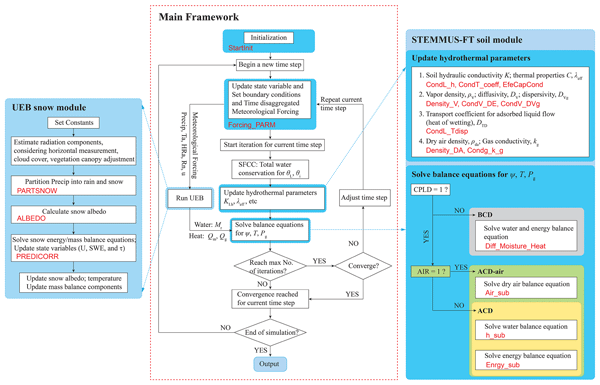
Lianyu Yu, Yijian Zeng, and Zhongbo Su
Geosci. Model Dev., 14, 7345–7376, https://doi.org/10.5194/gmd-14-7345-2021, https://doi.org/10.5194/gmd-14-7345-2021, 2021
Short summary
Short summary
We developed an integrated soil–snow–atmosphere model (STEMMUS-UEB) dedicated to the physical description of snow and soil processes with various complexities. With STEMMUS-UEB, we demonstrated that the snowpack affects not only the soil surface moisture conditions (in the liquid and ice phase) and energy-related states (albedo, LE) but also the subsurface soil water and vapor transfer, which contributes to a better understanding of the hydrothermal implications of the snowpack in cold regions.
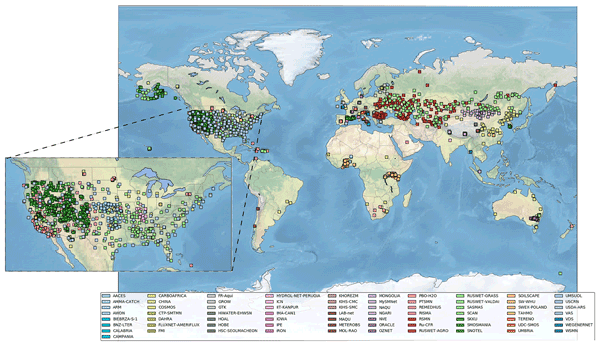
Wouter Dorigo, Irene Himmelbauer, Daniel Aberer, Lukas Schremmer, Ivana Petrakovic, Luca Zappa, Wolfgang Preimesberger, Angelika Xaver, Frank Annor, Jonas Ardö, Dennis Baldocchi, Marco Bitelli, Günter Blöschl, Heye Bogena, Luca Brocca, Jean-Christophe Calvet, J. Julio Camarero, Giorgio Capello, Minha Choi, Michael C. Cosh, Nick van de Giesen, Istvan Hajdu, Jaakko Ikonen, Karsten H. Jensen, Kasturi Devi Kanniah, Ileen de Kat, Gottfried Kirchengast, Pankaj Kumar Rai, Jenni Kyrouac, Kristine Larson, Suxia Liu, Alexander Loew, Mahta Moghaddam, José Martínez Fernández, Cristian Mattar Bader, Renato Morbidelli, Jan P. Musial, Elise Osenga, Michael A. Palecki, Thierry Pellarin, George P. Petropoulos, Isabella Pfeil, Jarrett Powers, Alan Robock, Christoph Rüdiger, Udo Rummel, Michael Strobel, Zhongbo Su, Ryan Sullivan, Torbern Tagesson, Andrej Varlagin, Mariette Vreugdenhil, Jeffrey Walker, Jun Wen, Fred Wenger, Jean Pierre Wigneron, Mel Woods, Kun Yang, Yijian Zeng, Xiang Zhang, Marek Zreda, Stephan Dietrich, Alexander Gruber, Peter van Oevelen, Wolfgang Wagner, Klaus Scipal, Matthias Drusch, and Roberto Sabia
Hydrol. Earth Syst. Sci., 25, 5749–5804, https://doi.org/10.5194/hess-25-5749-2021, https://doi.org/10.5194/hess-25-5749-2021, 2021
Short summary
Short summary
The International Soil Moisture Network (ISMN) is a community-based open-access data portal for soil water measurements taken at the ground and is accessible at https://ismn.earth. Over 1000 scientific publications and thousands of users have made use of the ISMN. The scope of this paper is to inform readers about the data and functionality of the ISMN and to provide a review of the scientific progress facilitated through the ISMN with the scope to shape future research and operations.
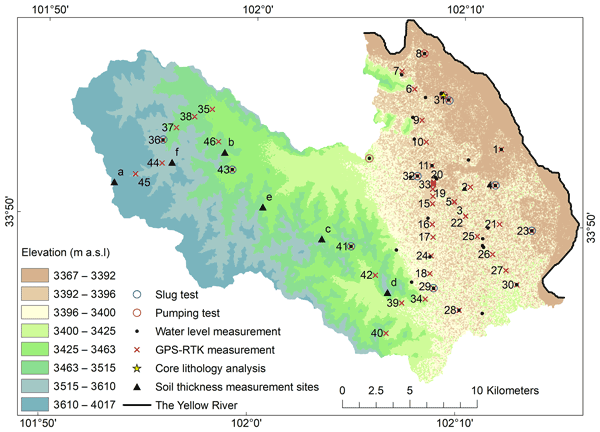
Mengna Li, Yijian Zeng, Maciek W. Lubczynski, Jean Roy, Lianyu Yu, Hui Qian, Zhenyu Li, Jie Chen, Lei Han, Han Zheng, Tom Veldkamp, Jeroen M. Schoorl, Harrie-Jan Hendricks Franssen, Kai Hou, Qiying Zhang, Panpan Xu, Fan Li, Kai Lu, Yulin Li, and Zhongbo Su
Earth Syst. Sci. Data, 13, 4727–4757, https://doi.org/10.5194/essd-13-4727-2021, https://doi.org/10.5194/essd-13-4727-2021, 2021
Short summary
Short summary
The Tibetan Plateau is the source of most of Asia's major rivers and has been called the Asian Water Tower. Due to its remoteness and the harsh environment, there is a lack of field survey data to investigate its hydrogeology. Borehole core lithology analysis, an altitude survey, soil thickness measurement, hydrogeological surveys, and hydrogeophysical surveys were conducted in the Maqu catchment within the Yellow River source region to improve a full–picture understanding of the water cycle.
Cited articles
Abramowitz, G., Ukkola, A., Hobeichi, S., Cranko Page, J., Lipson, M., De Kauwe, M. G., Green, S., Brenner, C., Frame, J., Nearing, G., Clark, M., Best, M., Anthoni, P., Arduini, G., Boussetta, S., Caldararu, S., Cho, K., Cuntz, M., Fairbairn, D., Ferguson, C. R., Kim, H., Kim, Y., Knauer, J., Lawrence, D., Luo, X., Malyshev, S., Nitta, T., Ogee, J., Oleson, K., Ottlé, C., Peylin, P., de Rosnay, P., Rumbold, H., Su, B., Vuichard, N., Walker, A. P., Wang-Faivre, X., Wang, Y., and Zeng, Y.: On the predictability of turbulent fluxes from land: PLUMBER2 MIP experimental description and preliminary results, Biogeosciences, 21, 5517–5538, https://doi.org/10.5194/bg-21-5517-2024, 2024.
Altman, N. and Krzywinski, M.: Ensemble methods: bagging and random forests, Nat. Methods, 14, 933-935, https://doi.org/10.1038/nmeth.4438, 2017.
Baldocchi, D.: `Breathing'of the terrestrial biosphere: lessons learned from a global network of carbon dioxide flux measurement systems, Australian Journal of Botany, 56, 1–26, https://doi.org/10.1071/BT07151, 2008.
Baldocchi, D.: Measuring fluxes of trace gases and energy between ecosystems and the atmosphere–the state and future of the eddy covariance method, Global change biology, 20, 3600–3609, https://doi.org/10.1111/gcb.12649, 2014.
Beck, H. E., Zimmermann, N. E., McVicar, T. R., Vergopolan, N., Berg, A., and Wood, E. F.: Present and future Köppen-Geiger climate classification maps at 1-km resolution, Sci. Data, 5, 1-12, https://doi.org/10.1038/sdata.2018.214, 2018.
Breiman, L.: Random forests, Mach. Learn., 45, 5–32, https://doi.org/10.1023/A:1010933404324, 2001.
Chen, J. M., Wang, R., Liu, Y., He, L., Croft, H., Luo, X., Wang, H., Smith, N. G., Keenan, T. F., Prentice, I. C., Zhang, Y., Ju, W., and Dong, N.: Global datasets of leaf photosynthetic capacity for ecological and earth system research, Earth Syst. Sci. Data, 14, 4077–4093, https://doi.org/10.5194/essd-14-4077-2022, 2022.
Entekhabi, D., Reichle, R. H., Koster, R. D., and Crow, W. T.: Performance metrics for soil moisture retrievals and application requirements, J. Hydrometeorol., 11, 832–840, https://doi.org/10.1175/2010JHM1223.1, 2010.
Frankenberg, C., O'Dell, C., Berry, J., Guanter, L., Joiner, J., Köhler, P., Pollock, R., and Taylor, T. E.: Prospects for chlorophyll fluorescence remote sensing from the Orbiting Carbon Observatory-2, Remote Sens. Environ., 147, 1–12, https://doi.org/10.1016/j.rse.2014.02.007, 2014.
Gao, Z., Russell, E. S., Missik, J. E., Huang, M., Chen, X., Strickland, C. E., Clayton, R., Arntzen, E., Ma, Y., and Liu, H.: A novel approach to evaluate soil heat flux calculation: An analytical review of nine methods, J. Geophys. Res. Atmos., 122, 6934–6949, https://doi.org/10.1002/2017JD027160, 2017.
Guanter, L., Bacour, C., Schneider, A., Aben, I., van Kempen, T. A., Maignan, F., Retscher, C., Köhler, P., Frankenberg, C., Joiner, J., and Zhang, Y.: The TROPOSIF global sun-induced fluorescence dataset from the Sentinel-5P TROPOMI mission, Earth Syst. Sci. Data, 13, 5423–5440, https://doi.org/10.5194/essd-13-5423-2021, 2021.
Guanter, L., Zhang, Y., Jung, M., Joiner, J., Voigt, M., Berry, J. A., Frankenberg, C., Huete, A. R., Zarco-Tejada, P., and Lee, J.-E.: Global and time-resolved monitoring of crop photosynthesis with chlorophyll fluorescence, Proceedings of the National Academy of Sciences, 111, E1327–E1333, https://doi.org/10.1073/pnas.1320008111, 2014.
Han, Q., Zeng, Y., and Su, Z.: Global long-term hourly 9 km terrestrial water-energy-carbon fluxes (FluxHourly, 2000–2020), National Tibetan Plateau Data Center [data set], https://doi.org/10.11888/Terre.tpdc.302319, 2025a.
Han, Q., Zeng, Y., Wang, Y., Alidoost, F., Nattino, F., Liu, Y., and Su, B.: FluxHourly: Global long-term hourly 9 km terrestrial water-energy-carbon fluxes, Zenodo [code], https://doi.org/10.5281/zenodo.17697920, 2025b.
Han, Q., Zeng, Y., Zhang, L., Wang, C., Prikaziuk, E., Niu, Z., and Su, B.: Global long term daily 1 km surface soil moisture dataset with physics informed machine learning, Sci. Data, 10, 101, https://doi.org/10.1038/s41597-023-02011-7, 2023.
Jung, M., Koirala, S., Weber, U., Ichii, K., Gans, F., Camps-Valls, G., Papale, D., Schwalm, C., Tramontana, G., and Reichstein, M.: The FLUXCOM ensemble of global land-atmosphere energy fluxes, Sci. Data, 6, 1–14, https://doi.org/10.1038/s41597-019-0076-8, 2019.
Jung, M., Schwalm, C., Migliavacca, M., Walther, S., Camps-Valls, G., Koirala, S., Anthoni, P., Besnard, S., Bodesheim, P., Carvalhais, N., Chevallier, F., Gans, F., Goll, D. S., Haverd, V., Köhler, P., Ichii, K., Jain, A. K., Liu, J., Lombardozzi, D., Nabel, J. E. M. S., Nelson, J. A., O'Sullivan, M., Pallandt, M., Papale, D., Peters, W., Pongratz, J., Rödenbeck, C., Sitch, S., Tramontana, G., Walker, A., Weber, U., and Reichstein, M.: Scaling carbon fluxes from eddy covariance sites to globe: synthesis and evaluation of the FLUXCOM approach, Biogeosciences, 17, 1343–1365, https://doi.org/10.5194/bg-17-1343-2020, 2020.
Lang, N., Jetz, W., Schindler, K., and Wegner, J. D.: A high-resolution canopy height model of the Earth, Nature Ecology and Evolution, 7, 1778–1789, https://doi.org/10.1038/s41559-023-02206-6, 2023.
Miralles, D. G., Bonte, O., Koppa, A., Villanueva, O. B., Tronquo, E., Zhong, F., Beck, H., Hulsman, P., Dorigo, W., and Verhoest, N. E.: GLEAM4: global land evaporation dataset at 0.1 resolution from 1980 to near present, Springer Science and Business Media LLC, https://doi.org/10.21203/rs.3.rs-5488631/v1, 2024.
Muñoz-Sabater, J., Dutra, E., Agustí-Panareda, A., Albergel, C., Arduini, G., Balsamo, G., Boussetta, S., Choulga, M., Harrigan, S., Hersbach, H., Martens, B., Miralles, D. G., Piles, M., Rodríguez-Fernández, N. J., Zsoter, E., Buontempo, C., and Thépaut, J.-N.: ERA5-Land: a state-of-the-art global reanalysis dataset for land applications, Earth Syst. Sci. Data, 13, 4349–4383, https://doi.org/10.5194/essd-13-4349-2021, 2021.
Nemani, R. R., Keeling, C. D., Hashimoto, H., Jolly, W. M., Piper, S. C., Tucker, C.J., Myneni, R. B., and Running, S.W .: Climate-driven increases in global terrestrial net primary production from 1982 to 1999, Science, 300, 1560–1563, https://doi.org/10.1126/science.1082750, 2003.
Oke, P. R., Brassington, G. B., Griffin, D. A., and Schiller, A.: Ocean data assimilation: a case for ensemble optimal interpolation, Australian Meteorological and Oceanographic Journal, 59, 67–76, https://doi.org/10.22499/2.5901.008, 2010.
Pastorello, G., Trotta, C., Canfora, E., Chu, H., Christianson, D., Cheah, Y.-W., Poindexter, C., Chen, J., Elbashandy, A., and Humphrey, M.: The FLUXNET2015 dataset and the ONEFlux processing pipeline for eddy covariance data, Sci. Data, 7, 1–27, https://doi.org/10.1038/s41597-020-0534-3, 2020.
Peng, L., Wei, Z., Zeng, Z., Lin, P., Wood, E. F., and Sheffield, J.: Reducing solar radiation forcing uncertainty and its impact on surface energy and water fluxes, J. Hydrometeorol., 22, 813–829, https://doi.org/10.1175/JHM-D-20-0052.1, 2021.
Phan, A. and Fukui, H.: FluxFormer: Upscaled Global Carbon Fluxes from Eddy Covariance Data with Multivariate Timeseries Transformer, Zenodo [data set], https://doi.org/10.5281/zenodo.10258644, 2024.
Reich, P. B.: The carbon dioxide exchange, Science, 329, 774–775, https://doi.org/10.1126/science.1194353, 2010.
Running, S. W., Nemani, R. R., Heinsch, F. A., Zhao, M., Reeves, M., and Hashimoto, H.: A continuous satellite-derived measure of global terrestrial primary production, Bioscience, 54, 547–560, https://doi.org/10.1641/0006-3568(2004)054[0547:ACSMOG]2.0.CO;2, 2004.
Sun, Y., Frankenberg, C., Wood, J. D., Schimel, D., Jung, M., Guanter, L., Drewry, D., Verma, M., Porcar-Castell, A., and Griffis, T. J.: OCO-2 advances photosynthesis observation from space via solar-induced chlorophyll fluorescence, Science, 358, eaam5747, https://doi.org/10.1126/science.aam5747, 2017.
Tang, E., Zeng, Y., Wang, Y., Song, Z., Yu, D., Wu, H., Qiao, C., van der Tol, C., Du, L., and Su, Z.: Understanding the effects of revegetated shrubs on fluxes of energy, water, and gross primary productivity in a desert steppe ecosystem using the STEMMUS–SCOPE model, Biogeosciences, 21, 893–909, https://doi.org/10.5194/bg-21-893-2024, 2024.
Tramontana, G., Jung, M., Schwalm, C. R., Ichii, K., Camps-Valls, G., Ráduly, B., Reichstein, M., Arain, M. A., Cescatti, A., Kiely, G., Merbold, L., Serrano-Ortiz, P., Sickert, S., Wolf, S., and Papale, D.: Predicting carbon dioxide and energy fluxes across global FLUXNET sites with regression algorithms, Biogeosciences, 13, 4291–4313, https://doi.org/10.5194/bg-13-4291-2016, 2016.
Ukkola, A.: PLUMBER2: forcing and evaluation datasets for a model intercomparison project for land surface models, NCI National Research Data Collection [data set], https://doi.org/10.25914/5fdb0902607e1, 2020.
Ukkola, A. M., Abramowitz, G., and De Kauwe, M. G.: A flux tower dataset tailored for land model evaluation, Earth Syst. Sci. Data, 14, 449–461, https://doi.org/10.5194/essd-14-449-2022, 2022.
van der Tol, C., Verhoef, W., Timmermans, J., Verhoef, A., and Su, Z.: An integrated model of soil-canopy spectral radiances, photosynthesis, fluorescence, temperature and energy balance, Biogeosciences, 6, 3109–3129, https://doi.org/10.5194/bg-6-3109-2009, 2009.
Wang, Y., Zeng, Y., Alidoost, F., Schilperoort, B., Song, Z., Yu, D., Tang, E., Han, Q., Liu, Z., and Peng, X.: A physically consistent dataset of water-energy-carbon fluxes across the Soil-Plant-Atmosphere Continuum, Sci. Data, 12, 1146, https://doi.org/10.1038/s41597-025-05386-x, 2025.
Wang, Y., Zeng, Y., Yu, L., Yang, P., Van der Tol, C., Yu, Q., Lü, X., Cai, H., and Su, Z.: Integrated modeling of canopy photosynthesis, fluorescence, and the transfer of energy, mass, and momentum in the soil–plant–atmosphere continuum (STEMMUS–SCOPE v1.0.0), Geosci. Model Dev., 14, 1379–1407, https://doi.org/10.5194/gmd-14-1379-2021, 2021.
Yu, L., Zeng, Y., Wen, J., and Su, Z.: Liquid-vapor-air flow in the frozen soil, J. Geophys. Res. Atmos., 123, 7393–7415, https://doi.org/10.1029/2018JD028502, 2018.
Zeng, J., Matsunaga, T., Tan, Z.-H., Saigusa, N., Shirai, T., Tang, Y., Peng, S., and Fukuda, Y.: Global terrestrial carbon fluxes of 1999–2019 estimated by upscaling eddy covariance data with a random forest, Sci. Data, 7, 313, https://doi.org/10.1038/s41597-020-00653-5, 2020.
Zeng, Y., Alidoost, F., Schilperoort, B., Liu, Y., Verhoeven, S., Grootes, M. W., Wang, Y., Song, Z., Yu, D., and Tang, E.: Towards an open soil-plant digital twin based on STEMMUS-SCOPE model following open science, Computers and Geosciences, 106013, https://doi.org/10.1016/j.cageo.2025.106013, 2025a.
Zeng, Y., Su, Z., Wan, L., and Wen, J.: Numerical analysis of air-water-heat flow in unsaturated soil: Is it necessary to consider airflow in land surface models?, J. Geophys. Res.-Atmos., 116, D20107, https://doi.org/10.1029/2011JD015835, 2011a.
Zeng, Y., Su, Z., Wan, L., and Wen, J.: A simulation analysis of the advective effect on evaporation using a two-phase heat and mass flow model, Water Resour. Res., 47, W10529, https://doi.org/10.1029/2011WR010701, 2011b.
Zeng, Y., Verhoef, A., Vereecken, H., Ben-Dor, E., Veldkamp, T., Shaw, L., Van Der Ploeg, M., Wang, Y., and Su, Z.: Monitoring and modeling the soil-plant system toward understanding soil health, Rev. Geophys., 63, e2024RG000836, https://doi.org/10.1029/2024RG000836, 2025b.
Short summary
Understanding how land interacts with the atmosphere is crucial for studying climate change, yet global high-resolution data on energy, water, and carbon exchanges remain limited. This study introduces a new dataset FluxHourly that estimates these exchanges hourly from 2000 to 2020 by combining physical process model, field measurements, and machine learning with satellite and meteorological data. Fluxhourly enables analysis of ecosystem responses to climate extremes.
Understanding how land interacts with the atmosphere is crucial for studying climate change, yet...


Altmetrics
Final-revised paper
Preprint