Articles | Volume 17, issue 12
https://doi.org/10.5194/essd-17-6993-2025
© Author(s) 2025. This work is distributed under
the Creative Commons Attribution 4.0 License.
the Creative Commons Attribution 4.0 License.
https://doi.org/10.5194/essd-17-6993-2025
© Author(s) 2025. This work is distributed under
the Creative Commons Attribution 4.0 License.
the Creative Commons Attribution 4.0 License.
Data description article
| 
10 Dec 2025
Data description article |
| 10 Dec 2025
| 10 Dec 2025
Dynamics of China's forest carbon storage: the first 30 m annual aboveground biomass mapping from 1985 to 2023
Yaotong Cai
School of Geography and Planning, Sun Yat-Sen University, Guangzhou, 510275, China
Department of Geography, The University of Hong Kong, Hong Kong SAR, 999077, China
School of Geography and Planning, Sun Yat-Sen University, Guangzhou, 510275, China
Xiaoping Liu
CORRESPONDING AUTHOR

School of Geography and Planning, Sun Yat-Sen University, Guangzhou, 510275, China
Yuhe Chen
School of Geography and Planning, Sun Yat-Sen University, Guangzhou, 510275, China
Qianhui Shen
School of Geography and Planning, Sun Yat-Sen University, Guangzhou, 510275, China
Xiaocong Xu
School of Geography and Planning, Sun Yat-Sen University, Guangzhou, 510275, China
Honghui Zhang
Guangdong Engineering Center for Intelligent Spatial Planning, Guangdong Guodi Planning Science Technology Co. Ltd, Guangzhou, 510650, China
Sheng Nie
International Research Center of Big Data for Sustainable Development Goals, Beijing 100094, China
Key Laboratory of Digital Earth Science, Aerospace Information Research Institute, Chinese Academy of Sciences, Beijing 100094, China
Cheng Wang
International Research Center of Big Data for Sustainable Development Goals, Beijing 100094, China
Key Laboratory of Digital Earth Science, Aerospace Information Research Institute, Chinese Academy of Sciences, Beijing 100094, China
Jia Wang
Beijing Key Laboratory of Precision Forestry, Beijing Forestry University, Beijing, 100094, China
Ministry of Education of Engineering Research Center for Forest and Grassland Carbon Sequestration, Beijing Forestry University, Beijing, 100094, China
Bingjie Li
School of Geography and Planning, Sun Yat-Sen University, Guangzhou, 510275, China
Changjiang Wu
School of Geography and Planning, Sun Yat-Sen University, Guangzhou, 510275, China
Haoming Zhuang
School of Geography and Planning, Sun Yat-Sen University, Guangzhou, 510275, China
Related authors
Yue Yan, Xin Jiang, Sihuan Wei, Yubin Jin, Xinyu Zou, Junwei Liu, Yaotong Cai, Jianhuai Ye, Zhilin Guo, and Zhenzhong Zeng
Earth Syst. Sci. Data, 18, 5951–5968, https://doi.org/10.5194/essd-18-5951-2026, https://doi.org/10.5194/essd-18-5951-2026, 2026
Short summary
Short summary
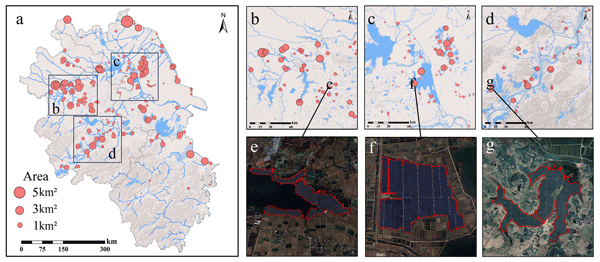
Floating solar is growing rapidly in China, but its long-term development remains poorly documented. We created a decade-long map of floating solar installations in the Yangtze River Delta using satellite observations and visual verification. The mapped area increased from 17.4 square kilometers in 2015 to 145.4 square kilometers in 2024. This dataset supports renewable energy planning and future studies of environmental changes related to floating solar expansion.
Yaotong Cai, Baoni Li, Xiaoye Liu, Xin Jiang, Yakun Zhu, Shuxin Luo, Yingzuo Qin, Shudi Xie, Jianhuai Ye, Huizhong Shen, Zhilin Guo, Xiaoping Liu, and Zhenzhong Zeng
Earth Syst. Sci. Data Discuss., https://doi.org/10.5194/essd-2026-78, https://doi.org/10.5194/essd-2026-78, 2026
Preprint under review for ESSD
Short summary
Short summary
Persistent clouds and small farm sizes in Southeast Asia have historically hindered accurate mapping. We combined satellite imagery with advanced artificial intelligence to produce the first 10-meter annual cropland map for the region (2019–2024). Achieving over 92 % accuracy, our dataset reveals three to four times more farming on steep slopes than previously reported, providing a vital baseline for monitoring food security and deforestation risks.
Bingjie Li, Xiaocong Xu, Xiaoping Liu, Qian Shi, Haoming Zhuang, Yaotong Cai, and Da He
Earth Syst. Sci. Data, 15, 2347–2373, https://doi.org/10.5194/essd-15-2347-2023, https://doi.org/10.5194/essd-15-2347-2023, 2023
Short summary
Short summary
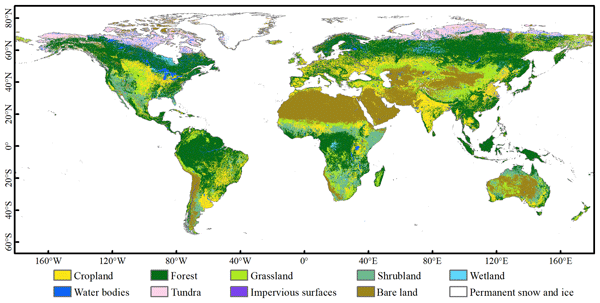
A global land cover map with fine spatial resolution is important for climate and environmental studies, food security, or biodiversity conservation. In this study, we developed an improved global land cover map in 2015 with 30 m resolution (GLC-2015) by fusing the existing land cover products based on the Dempster–Shafer theory of evidence on the Google Earth Engine platform. The GLC-2015 performed well, with an OA of 79.5 % (83.6 %) assessed with the global point-based (patch-based) samples.
Y. Cai, Q. Shi, and X. Liu
Int. Arch. Photogramm. Remote Sens. Spatial Inf. Sci., XLVIII-3-W1-2022, 1–6, https://doi.org/10.5194/isprs-archives-XLVIII-3-W1-2022-1-2022, https://doi.org/10.5194/isprs-archives-XLVIII-3-W1-2022-1-2022, 2022
Chengcheng Huang, Wei He, Brendan Byrne, Ngoc Tu Nguyen, Jingfeng Xiao, Hua Yang, Philippe Ciais, Songhan Wang, Xing Li, Han Ma, Peipei Xu, Mengyao Zhao, Hui Chen, and Weimin Ju
Earth Syst. Sci. Data, 18, 7367–7390, https://doi.org/10.5194/essd-18-7367-2026, https://doi.org/10.5194/essd-18-7367-2026, 2026
Short summary
Short summary
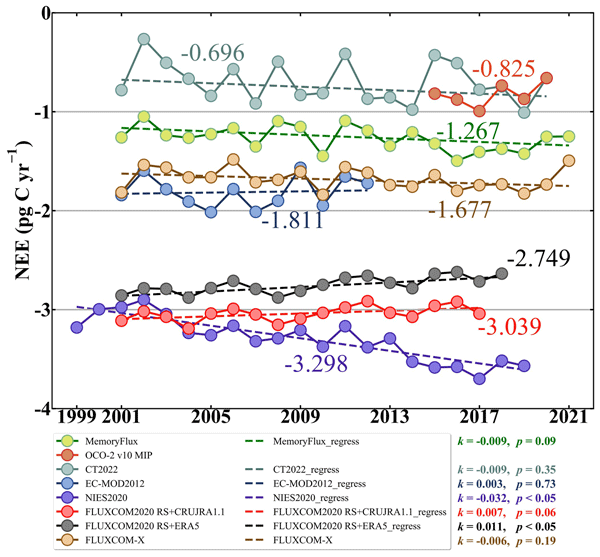
We created MemoryFlux, a new dataset that showed how ecosystems across North America absorbed and released carbon from 2001 to 2021. Using a deep-learning approach trained on historical climate and environmental conditions, we improved estimates of land carbon exchange and captured carbon anomalies associated with major droughts and floods. MemoryFlux provides a more reliable view of carbon cycling and improves our understanding of how ecosystems respond to a changing climate.
Xiaocong Xu, Shiyu He, Jinpei Ou, Yan Zhou, and Xiaoping Liu
Earth Syst. Sci. Data, 18, 6995–7019, https://doi.org/10.5194/essd-18-6995-2026, https://doi.org/10.5194/essd-18-6995-2026, 2026
Short summary
Short summary
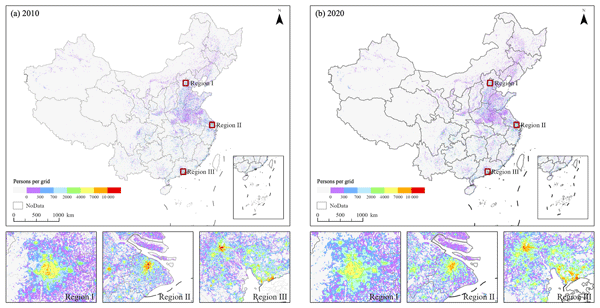
We developed annual population maps for mainland China from 1990 to 2020 at 500-metre detail. A key advance is the use of changing three-dimensional building volume, allowing the maps to distinguish densely populated areas with extensive high-rise development that conventional maps based mainly on two-dimensional built-up land may overlook. Combined with census and other data, the maps show high accuracy and can support studies of urban growth, environmental change, and disaster risk.
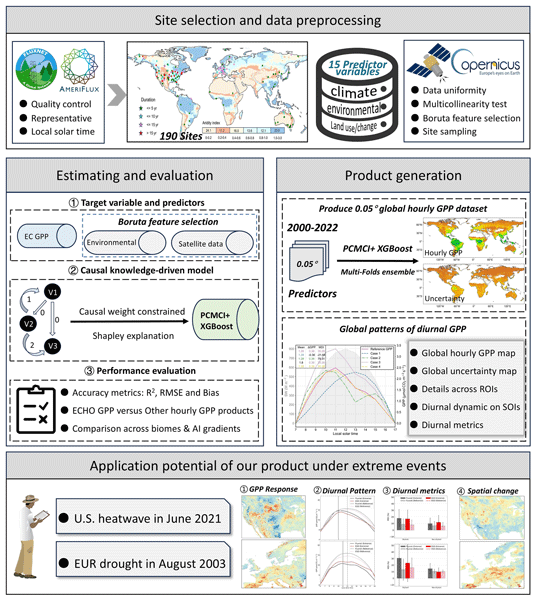
Xi Liu, Xing Li, Dalei Hao, Jingfeng Xiao, Yanan Zhou, Cenliang Zhao, Zikang Diao, Fuqiang Qu, Shangrong Lin, Xiangzhuo Liu, Zhaoying Zhang, Xinjie Liu, and Helin Zhang
Earth Syst. Sci. Data, 18, 6613–6636, https://doi.org/10.5194/essd-18-6613-2026, https://doi.org/10.5194/essd-18-6613-2026, 2026
Short summary
Short summary
Vegetation photosynthesis, quantified as Gross Primary Productivity (GPP), changes rapidly throughout the day. We developed a global hourly GPP dataset called EGO (Eddy covariance site-based Global hOurly) by combining tower observations with advanced artificial intelligence that accounts for causal effects, outperforms existing hourly GPP products and well captures diurnal photosynthesis dynamics. It will provide a reliable foundation for investigating sub-daily ecosystem processes and benchmarking Earth system models.
Yue Yan, Xin Jiang, Sihuan Wei, Yubin Jin, Xinyu Zou, Junwei Liu, Yaotong Cai, Jianhuai Ye, Zhilin Guo, and Zhenzhong Zeng
Earth Syst. Sci. Data, 18, 5951–5968, https://doi.org/10.5194/essd-18-5951-2026, https://doi.org/10.5194/essd-18-5951-2026, 2026
Short summary
Short summary
Floating solar is growing rapidly in China, but its long-term development remains poorly documented. We created a decade-long map of floating solar installations in the Yangtze River Delta using satellite observations and visual verification. The mapped area increased from 17.4 square kilometers in 2015 to 145.4 square kilometers in 2024. This dataset supports renewable energy planning and future studies of environmental changes related to floating solar expansion.
Yifeng Cui, Jinwei Dong, Chao Zhang, Nanshan You, Shuai Ren, Peng Zhu, Quan Duan, Ronggao Liu, and César Terrer
Earth Syst. Sci. Data Discuss., https://doi.org/10.5194/essd-2026-613, https://doi.org/10.5194/essd-2026-613, 2026
Preprint under review for ESSD
Short summary
Short summary
Crop residues left on fields can protect fertile soils, but their distribution across major black-soil farming regions is poorly known. We used Sentinel-2 images to create annual 10-meter maps of four regions from 2019 to 2024 and checked them against field observations. The maps show that residues were most common in intensively farmed areas and that corn was the main source. This dataset can guide soil conservation and help assess farming impacts on soil carbon, water resources, and climate.
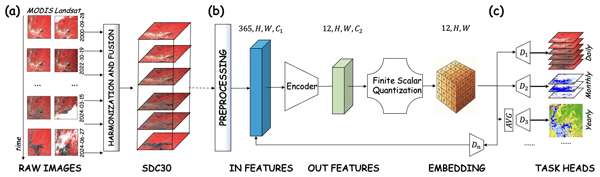
Shuang Chen, Jie Wang, Shuai Yuan, Jiayang Li, Yu Xia, Yuanhong Liao, Junbo Wei, Jincheng Yuan, Xiaoqing Xu, Xiaolin Zhu, Peng Zhu, Hongsheng Zhang, Yuyu Zhou, Haohuan Fu, Huabing Huang, Bin Chen, Fan Dai, and Peng Gong
Earth Syst. Sci. Data, 18, 5375–5398, https://doi.org/10.5194/essd-18-5375-2026, https://doi.org/10.5194/essd-18-5375-2026, 2026
Short summary
Short summary
Monitoring our planet with satellites produces massive datasets too large for researchers to handle. We created a new global database that condenses 25 years of Landsat and MODIS observations into a highly efficient format (Analysis-ready embedding vectors) using AI. By reducing data size by over 340 times while maintaining high accuracy, we allow global studies to be run on standard PC. Makes planetary research accessible to everyone and helps us better track environmental changes over time.
Yaotong Cai, Baoni Li, Xiaoye Liu, Xin Jiang, Yakun Zhu, Shuxin Luo, Yingzuo Qin, Shudi Xie, Jianhuai Ye, Huizhong Shen, Zhilin Guo, Xiaoping Liu, and Zhenzhong Zeng
Earth Syst. Sci. Data Discuss., https://doi.org/10.5194/essd-2026-78, https://doi.org/10.5194/essd-2026-78, 2026
Preprint under review for ESSD
Short summary
Short summary
Persistent clouds and small farm sizes in Southeast Asia have historically hindered accurate mapping. We combined satellite imagery with advanced artificial intelligence to produce the first 10-meter annual cropland map for the region (2019–2024). Achieving over 92 % accuracy, our dataset reveals three to four times more farming on steep slopes than previously reported, providing a vital baseline for monitoring food security and deforestation risks.
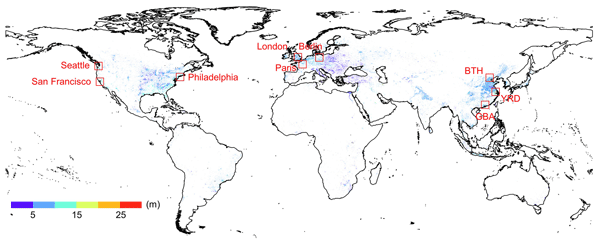
Weilin Liao, Yanman Li, Xiaoping Liu, Yuhao Wang, Yangzi Che, Ledi Shao, Guangzhao Chen, Hua Yuan, Ning Zhang, and Fei Chen
Earth Syst. Sci. Data, 17, 2535–2551, https://doi.org/10.5194/essd-17-2535-2025, https://doi.org/10.5194/essd-17-2535-2025, 2025
Short summary
Short summary
The currently available urban canopy parameter (UCP) datasets are limited to just a few cities for urban climate simulations by the Weather Research and Forecasting (WRF) model. To address this gap, we develop a global 1 km spatially continuous UCP dataset (GloUCP) which provides superior spatial coverage and higher accuracy in capturing urban morphology across diverse regions. It has great potential to support further advancements in urban climate modeling and related applications.
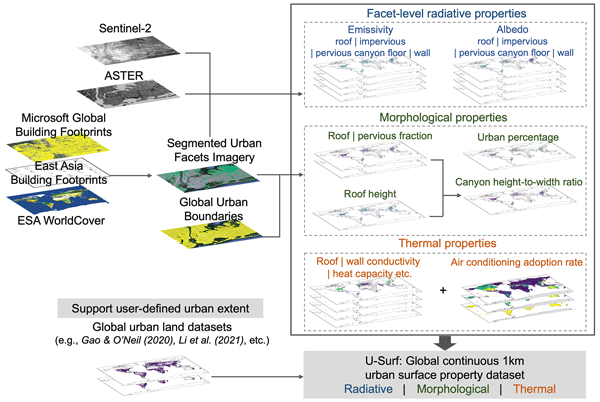
Yifan Cheng, Lei Zhao, TC Chakraborty, Keith Oleson, Matthias Demuzere, Xiaoping Liu, Yangzi Che, Weilin Liao, Yuyu Zhou, and Xinchang “Cathy” Li
Earth Syst. Sci. Data, 17, 2147–2174, https://doi.org/10.5194/essd-17-2147-2025, https://doi.org/10.5194/essd-17-2147-2025, 2025
Short summary
Short summary
The absence of globally consistent and spatially continuous urban surface input has long hindered large-scale high-resolution urban climate modeling. Using remote sensing, cloud computing, and machine learning, we developed U-Surf, a 1 km dataset providing key urban surface properties worldwide. U-Surf enhances urban representation across scales and supports kilometer-scale urban-resolving Earth system modeling unprecedentedly, with broader applications in urban studies and beyond.
Yi Liu, Jingfeng Xiao, Xing Li, and Yue Li
Hydrol. Earth Syst. Sci., 29, 1241–1258, https://doi.org/10.5194/hess-29-1241-2025, https://doi.org/10.5194/hess-29-1241-2025, 2025
Short summary
Short summary
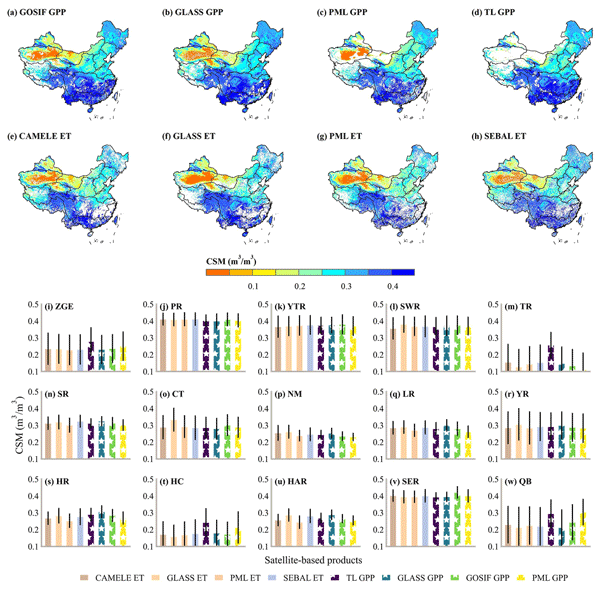
This work demonstrates that multi-source satellite-based water and carbon fluxes can capture critical soil moisture at a large spatial scale. In particular, grassland and clay with critical soil moisture higher than average soil moisture may be in a state of water limitation for long periods. Increased water demand could expose western grassland to more vulnerability.
Mana Gharun, Ankit Shekhar, Jingfeng Xiao, Xing Li, and Nina Buchmann
Biogeosciences, 21, 5481–5494, https://doi.org/10.5194/bg-21-5481-2024, https://doi.org/10.5194/bg-21-5481-2024, 2024
Short summary
Short summary
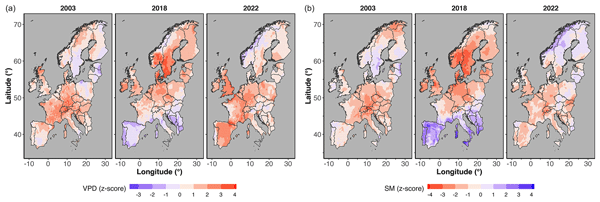
In 2022, Europe's forests faced unprecedented dry conditions. Our study aimed to understand how different forest types respond to extreme drought. Using meteorological data and satellite imagery, we compared 2022 with two previous extreme years, 2003 and 2018. Despite less severe drought in 2022, forests showed a 30 % greater decline in photosynthesis compared to 2018 and 60 % more than 2003. This suggests an alarming level of vulnerability of forests across Europe to more frequent droughts.
Yangzi Che, Xuecao Li, Xiaoping Liu, Yuhao Wang, Weilin Liao, Xianwei Zheng, Xucai Zhang, Xiaocong Xu, Qian Shi, Jiajun Zhu, Honghui Zhang, Hua Yuan, and Yongjiu Dai
Earth Syst. Sci. Data, 16, 5357–5374, https://doi.org/10.5194/essd-16-5357-2024, https://doi.org/10.5194/essd-16-5357-2024, 2024
Short summary
Short summary
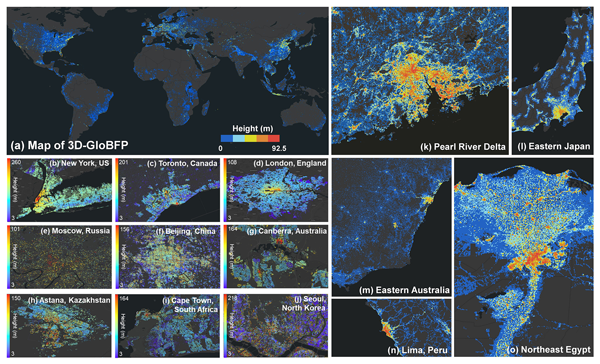
Most existing building height products are limited with respect to either spatial resolution or coverage, not to mention the spatial heterogeneity introduced by global building forms. Using Earth Observation (EO) datasets for 2020, we developed a global height dataset at the individual building scale. The dataset provides spatially explicit information on 3D building morphology, supporting both macro- and microanalysis of urban areas.
Songchao Chen, Qi Shuai, Dominique Arrouays, Zhongxing Chen, Lingju Dai, Yongsheng Hong, Bifeng Hu, Yuyang Huang, Wenjun Ji, Shuo Li, Zongzheng Liang, Yuxin Ma, Anne C. Richer-de-Forges, Calogero Schillaci, Yang Su, Hongfen Teng, Nan Wang, Xi Wang, Yanyu Wang, Zheng Wang, Zhige Wang, Dongyun Xu, Jie Xue, Su Ye, Xianglin Zhang, Yin Zhou, Peng Zhu, and Zhou Shi
Earth Syst. Sci. Data Discuss., https://doi.org/10.5194/essd-2024-373, https://doi.org/10.5194/essd-2024-373, 2024
Manuscript not accepted for further review
Short summary
Short summary
The impact of land use and land cover change (LULCC) on soil organic carbon stock (SOCS) is uncertain due to limited global data. Despite regional efforts, a comprehensive global SOCS database has been lacking. This study introduces the Global Soil Organic Carbon Stock dataset after LULCC (GSOCS-LULCC), compiled from 639 articles covering 1,206 sites and 5,982 records across five major land uses. This open-access database enables global assessment of LULCC's effects on SOCS dynamics.
Xiaoxuan Liu, Peng Zhu, Shu Liu, Le Yu, Yong Wang, Zhenrong Du, Dailiang Peng, Ece Aksoy, Hui Lu, and Peng Gong
Earth Syst. Dynam., 15, 817–828, https://doi.org/10.5194/esd-15-817-2024, https://doi.org/10.5194/esd-15-817-2024, 2024
Short summary
Short summary
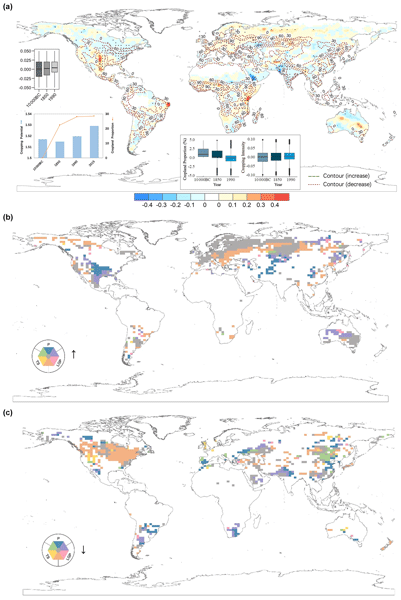
An increase of 28 % in cropland expansion since 10 000 BCE has led to a 1.2 % enhancement in the global cropping potential, with varying efficiencies across regions. The continuous expansion has altered the support for population growth and has had impacts on climate and biodiversity, highlighting the effects of climate change. It also points out the limitations of previous studies.
Wanru He, Xuecao Li, Yuyu Zhou, Zitong Shi, Guojiang Yu, Tengyun Hu, Yixuan Wang, Jianxi Huang, Tiecheng Bai, Zhongchang Sun, Xiaoping Liu, and Peng Gong
Earth Syst. Sci. Data, 15, 3623–3639, https://doi.org/10.5194/essd-15-3623-2023, https://doi.org/10.5194/essd-15-3623-2023, 2023
Short summary
Short summary
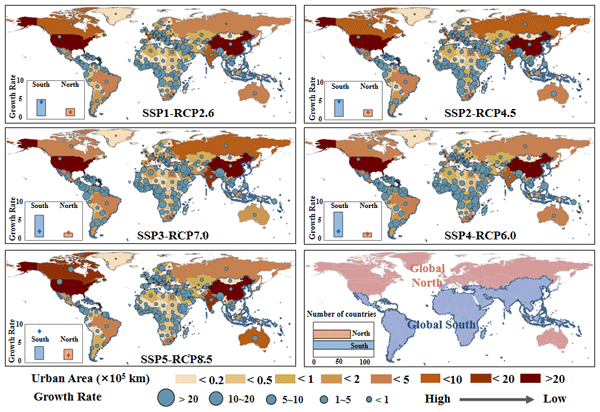
Most existing global urban products with future projections were developed in urban and non-urban categories, which ignores the gradual change of urban development at the local scale. Using annual global urban extent data from 1985 to 2015, we forecasted global urban fractional changes under eight scenarios throughout 2100. The developed dataset can provide spatially explicit information on urban fractions at 1 km resolution, which helps support various urban studies (e.g., urban heat island).
Bingjie Li, Xiaocong Xu, Xiaoping Liu, Qian Shi, Haoming Zhuang, Yaotong Cai, and Da He
Earth Syst. Sci. Data, 15, 2347–2373, https://doi.org/10.5194/essd-15-2347-2023, https://doi.org/10.5194/essd-15-2347-2023, 2023
Short summary
Short summary
A global land cover map with fine spatial resolution is important for climate and environmental studies, food security, or biodiversity conservation. In this study, we developed an improved global land cover map in 2015 with 30 m resolution (GLC-2015) by fusing the existing land cover products based on the Dempster–Shafer theory of evidence on the Google Earth Engine platform. The GLC-2015 performed well, with an OA of 79.5 % (83.6 %) assessed with the global point-based (patch-based) samples.
Qian Shi, Mengxi Liu, Andrea Marinoni, and Xiaoping Liu
Earth Syst. Sci. Data, 15, 555–577, https://doi.org/10.5194/essd-15-555-2023, https://doi.org/10.5194/essd-15-555-2023, 2023
Short summary
Short summary
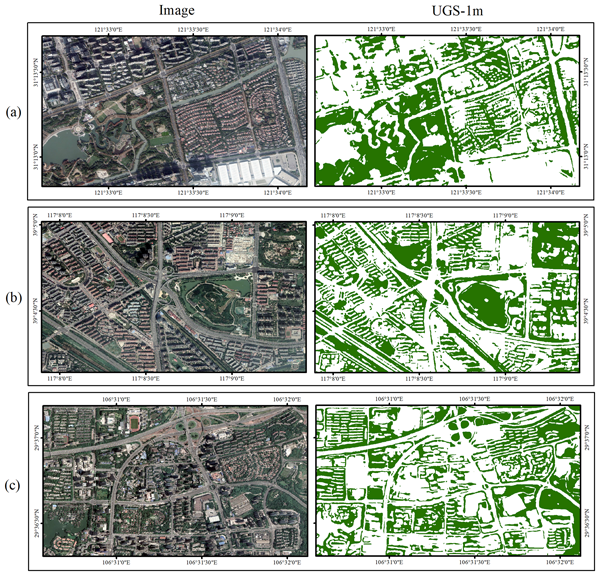
A large-scale and high-resolution urban green space (UGS) product with 1 m of 31 major cities in China (UGS-1m) is generated based on a deep learning framework to provide basic UGS information for relevant UGS research, such as distribution, area, and UGS rate. Moreover, an urban green space dataset (UGSet) with a total of 4454 samples of 512 × 512 in size are also supplied as the benchmark to support model training and algorithm comparison.
Y. Cai, Q. Shi, and X. Liu
Int. Arch. Photogramm. Remote Sens. Spatial Inf. Sci., XLVIII-3-W1-2022, 1–6, https://doi.org/10.5194/isprs-archives-XLVIII-3-W1-2022-1-2022, https://doi.org/10.5194/isprs-archives-XLVIII-3-W1-2022-1-2022, 2022
Brendan Byrne, Junjie Liu, Yonghong Yi, Abhishek Chatterjee, Sourish Basu, Rui Cheng, Russell Doughty, Frédéric Chevallier, Kevin W. Bowman, Nicholas C. Parazoo, David Crisp, Xing Li, Jingfeng Xiao, Stephen Sitch, Bertrand Guenet, Feng Deng, Matthew S. Johnson, Sajeev Philip, Patrick C. McGuire, and Charles E. Miller
Biogeosciences, 19, 4779–4799, https://doi.org/10.5194/bg-19-4779-2022, https://doi.org/10.5194/bg-19-4779-2022, 2022
Short summary
Short summary
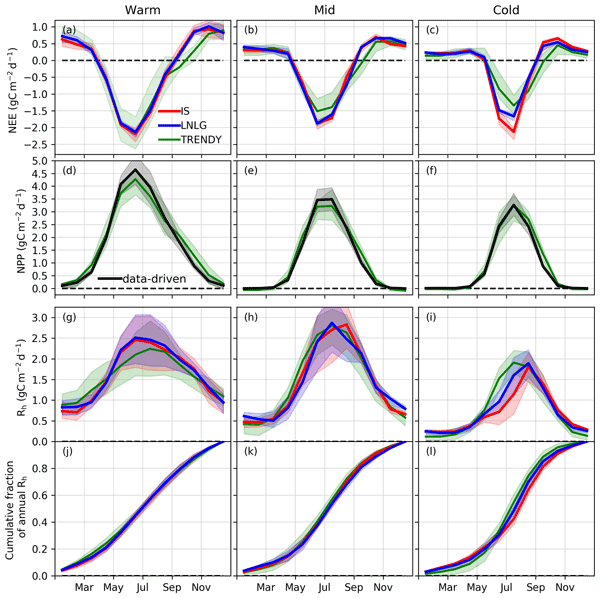
Plants draw CO2 from the atmosphere during the growing season, while respiration releases CO2 to the atmosphere throughout the year, driving seasonal variations in atmospheric CO2 that can be observed by satellites, such as the Orbiting Carbon Observatory 2 (OCO-2). Using OCO-2 XCO2 data and space-based constraints on plant growth, we show that permafrost-rich northeast Eurasia has a strong seasonal release of CO2 during the autumn, hinting at an unexpectedly large respiration signal from soils.
Jing Fang, Xing Li, Jingfeng Xiao, Xiaodong Yan, Bolun Li, and Feng Liu
Earth Syst. Sci. Data Discuss., https://doi.org/10.5194/essd-2021-452, https://doi.org/10.5194/essd-2021-452, 2022
Revised manuscript not accepted
Short summary
Short summary
The dataset provided the vegetation photosynthetic phenology instead of traditional phenology to represent plant seasonal activities. This dataset had the latest period (2001–2020) and a fine spatial resolution (0.05 degree). Our phenology metrics revealed the spatial-temporal patterns of the multiple growing seasons in the Northern Hemisphere. The dataset will facilitate various research such as developing models, evaluating phenology shifts, and monitoring climate change worldwide.
Peng Zhu and Jennifer Burney
Hydrol. Earth Syst. Sci., 26, 827–840, https://doi.org/10.5194/hess-26-827-2022, https://doi.org/10.5194/hess-26-827-2022, 2022
Short summary
Short summary
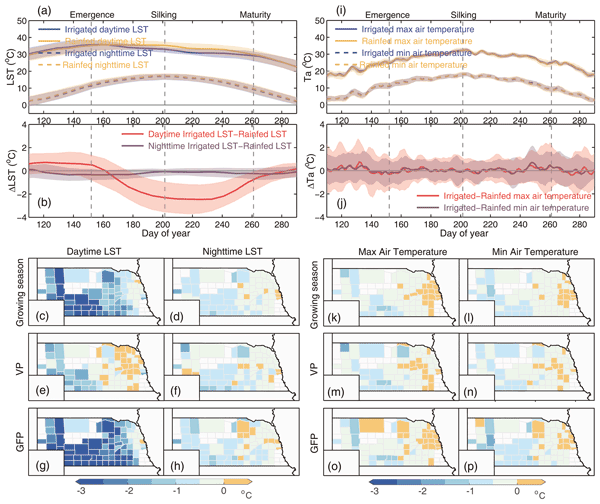
Satellite data were used to disentangle water and heat stress alleviation due to irrigation. Our findings are as follows. (1) Irrigation-induced cooling was captured by satellite LST but air temperature failed. (2) Irrigation extended maize growing season duration, especially during grain filling. (3) Water and heat stress alleviation constitutes 65 % and 35 % of the irrigation benefit. (4) The crop model simulating canopy temperature better captures the irrigation benefit.
Cited articles
Adler, P. B., Smull, D., Beard, K. H., Choi, R. T., Furniss, T., Kulmatiski, A., Meiners, J. M., Tredennick, A. T., and Veblen, K. E.: Competition and coexistence in plant communities: intraspecific competition is stronger than interspecific competition, Ecology Letters, 21, 1319–1329, https://doi.org/10.1111/ele.13098, 2018.
Araza, A., De Bruin, S., Herold, M., Quegan, S., Labriere, N., Rodriguez-Veiga, P., Avitabile, V., Santoro, M., Mitchard, E. T. A., Ryan, C. M., Phillips, O. L., Willcock, S., Verbeeck, H., Carreiras, J., Hein, L., Schelhaas, M.-J., Pacheco-Pascagaza, A. M., Da Conceição Bispo, P., Laurin, G. V., Vieilledent, G., Slik, F., Wijaya, A., Lewis, S. L., Morel, A., Liang, J., Sukhdeo, H., Schepaschenko, D., Cavlovic, J., Gilani, H., and Lucas, R.: A comprehensive framework for assessing the accuracy and uncertainty of global above-ground biomass maps, Remote Sensing of Environment, 272, 112917, https://doi.org/10.1016/j.rse.2022.112917, 2022.
Avitabile, V., Herold, M., Heuvelink, G. B. M., Lewis, S. L., Phillips, O. L., Asner, G. P., Armston, J., Ashton, P. S., Banin, L., Bayol, N., Berry, N. J., Boeckx, P., De Jong, B. H. J., DeVries, B., Girardin, C. A. J., Kearsley, E., Lindsell, J. A., Lopez-Gonzalez, G., Lucas, R., Malhi, Y., Morel, A., Mitchard, E. T. A., Nagy, L., Qie, L., Quinones, M. J., Ryan, C. M., Ferry, S. J. W., Sunderland, T., Laurin, G. V., Gatti, R. C., Valentini, R., Verbeeck, H., Wijaya, A., and Willcock, S.: An integrated pan-tropical biomass map using multiple reference datasets, Global Change Biology, 22, 1406–1420, https://doi.org/10.1111/gcb.13139, 2016.
Babcock, C., Finley, A. O., Cook, B. D., Weiskittel, A., and Woodall, C. W.: Modeling forest biomass and growth: Coupling long-term inventory and LiDAR data, Remote Sensing of Environment, 182, 1–12, https://doi.org/10.1016/j.rse.2016.04.014, 2016.
Baccini, A., Goetz, S. J., Walker, W. S., Laporte, N. T., Sun, M., Sulla-Menashe, D., Hackler, J., Beck, P. S. A., Dubayah, R., Friedl, M. A., Samanta, S., and Houghton, R. A.: Estimated carbon dioxide emissions from tropical deforestation improved by carbon-density maps, Nature Clim. Change, 2, 182–185, https://doi.org/10.1038/nclimate1354, 2012.
Bi, W., He, W., Zhou, Y., Ju, W., Liu, Y., Liu, Y., Zhang, X., Wei, X., and Cheng, N.: A global 0.05° dataset for gross primary production of sunlit and shaded vegetation canopies from 1992 to 2020, Sci. Data, 9, 213, https://doi.org/10.1038/s41597-022-01309-2, 2022.
Cai, Y., Li, X., Zhang, M., and Lin, H.: Mapping wetland using the object-based stacked generalization method based on multi-temporal optical and SAR data, International Journal of Applied Earth Observation and Geoinformation, 92, 102164, https://doi.org/10.1016/j.jag.2020.102164, 2020.
Cai, Y., Xu, X., Zhu, P., Nie, S., Wang, C., Xiong, Y., and Liu, X.: Unveiling spatiotemporal tree cover patterns in China: The first 30 m annual tree cover mapping from 1985 to 2023, ISPRS J. Photogramm. Remote Sens., https://doi.org/10.1016/j.isprsjprs.2024.08.001, 2024.
Cai, Y., Zhu, P., Xu, X., Li, X., Zhang, H., Nie, S., Wang, C., Wang, J., Shen, Q., Wu, C., Li, B., Liu, X., and Chen, Y.: CFATD: The First High-Spatiotemporal-Resolution Mapping of Forest Aboveground Biomass in China from 1985 to 2023 (Part I: 1985–1993), Zenodo [data set], https://doi.org/10.5281/zenodo.12620984, 2025a.
Cai, Y., Zhu, P., Xu, X., Li, X., Zhang, H., Nie, S., Wang, C., Wang, J., Shen, Q., Wu, C., Li, B., Liu, X., and Chen, Y.: CFATD: The First High-Spatiotemporal-Resolution Mapping of Forest Aboveground Biomass in China from 1985 to 2023 (Part II: 1994–2001), Zenodo [data set], https://doi.org/10.5281/zenodo.12637101, 2025b.
Cai, Y., Zhu, P., Xu, X., Li, X., Zhang, H., Nie, S., Wang, C., Wang, J., Shen, Q., Wu, C., Li, B., Liu, X., and Chen, Y.: CFATD: The First High-Spatiotemporal-Resolution Mapping of Forest Aboveground Biomass in China from 1985 to 2023 (Part III: 2002–2008), Zenodo [data set], https://doi.org/10.5281/zenodo.12655492, 2025c.
Cai, Y., Zhu, P., Xu, X., Li, X., Zhang, H., Nie, S., Wang, C., Wang, J., Shen, Q., Wu, C., Li, B., Liu, X., and Chen, Y.: CFATD: The First High-Spatiotemporal-Resolution Mapping of Forest Aboveground Biomass in China from 1985 to 2023 (Part IV: 2009–2015), Zenodo [data set], https://doi.org/10.5281/zenodo.12658255, 2025d.
Cai, Y., Zhu, P., Xu, X., Li, X., Zhang, H., Nie, S., Wang, C., Wang, J., Shen, Q., Wu, C., Li, B., Liu, X., and Chen, Y.: CFATD: The First High-Spatiotemporal-Resolution Mapping of Forest Aboveground Biomass in China from 1985 to 2023 (Part V: 2016–2021), Zenodo [data set], https://doi.org/10.5281/zenodo.12742210, 2025e.
Cai, Y., Zhu, P., Xu, X., Li, X., Zhang, H., Nie, S., Wang, C., Wang, J., Shen, Q., Wu, C., Li, B., Liu, X., and Chen, Y.: CFATD: The First High-Spatiotemporal-Resolution Mapping of Forest Aboveground Biomass in China from 1985 to 2023 (Part VI: 2022–2023), Zenodo [data set], https://doi.org/10.5281/zenodo.12747329, 2025f.
Cai, Y., Li, X., Zhu, P., Nie, S., Wang, C., Liu, X., and Chen, Y.: China Earth Observation Data Cube: The 30-m Seamless Annual Leaf-On Landsat Composites from 1985 to 2023, J. Remote Sens., 5, 0698, https://doi.org/10.34133/remotesensing.0698, 2025g.
Cairns, M. A., Brown, S., Helmer, E. H., and Baumgardner, G. A.: Root biomass allocation in the world's upland forests, Oecologia, 111, 1–11, https://doi.org/10.1007/s004420050201, 1997.
Chen, Y., Feng, X., Fu, B., Ma, H., Zohner, C. M., Crowther, T. W., Huang, Y., Wu, X., and Wei, F.: Maps with 1 km resolution reveal increases in above- and belowground forest biomass carbon pools in China over the past 20 years, Earth Syst. Sci. Data, 15, 897–910, https://doi.org/10.5194/essd-15-897-2023, 2023.
Chung, Y. and Neiswanger, W.: Beyond pinball loss: Quantile methods for calibrated uncertainty quantification, Advances in Neural Information Processing Systems, 34, 10971–10984, https://https://proceedings.neurips.cc/paper_files/paper/2021/file/5b168fdba5ee5ea262cc2d4c0b457697-Paper.pdf (last access: 12 June 2021.
Coops, N. C., Tompalski, P., Goodbody, T. R. H., Queinnec, M., Luther, J. E., Bolton, D. K., White, J. C., Wulder, M. A., Van Lier, O. R., and Hermosilla, T.: Modelling lidar-derived estimates of forest attributes over space and time: A review of approaches and future trends, Remote Sensing of Environment, 260, 112477, https://doi.org/10.1016/j.rse.2021.112477, 2021.
Davidson, E. A. and Janssens, I. A.: Temperature sensitivity of soil carbon decomposition and feedbacks to climate change, Nature, 440, 165–173, https://doi.org/10.1038/nature04514, 2006.
Dixon, D. J., Zhu, Y., and Jin, Y.: Canopy height estimation from PlanetScope time series with spatio-temporal deep learning, Remote Sensing of Environment, 318, 114518, https://doi.org/10.1016/j.rse.2024.114518, 2025.
Duncanson, L., Kellner, J. R., Armston, J., Dubayah, R., Minor, D. M., Hancock, S., Healey, S. P., Patterson, P. L., Saarela, S., Marselis, S., Silva, C. E., Bruening, J., Goetz, S. J., Tang, H., Hofton, M., Blair, B., Luthcke, S., Fatoyinbo, L., Abernethy, K., Alonso, A., Andersen, H.-E., Aplin, P., Baker, T. R., Barbier, N., Bastin, J. F., Biber, P., Boeckx, P., Bogaert, J., Boschetti, L., Boucher, P. B., Boyd, D. S., Burslem, D. F. R. P., Calvo-Rodriguez, S., Chave, J., Chazdon, R. L., Clark, D. B., Clark, D. A., Cohen, W. B., Coomes, D. A., Corona, P., Cushman, K. C., Cutler, M. E. J., Dalling, J. W., Dalponte, M., Dash, J., de-Miguel, S., Deng, S., Ellis, P. W., Erasmus, B., Fekety, P. A., Fernandez-Landa, A., Ferraz, A., Fischer, R., Fisher, A. G., García-Abril, A., Gobakken, T., Hacker, J. M., Heurich, M., Hill, R. A., Hopkinson, C., Huang, H., Hubbell, S. P., Hudak, A. T., Huth, A., Imbach, B., Jeffery, K. J., Katoh, M., Kearsley, E., Kenfack, D., Kljun, N., Knapp, N., Král, K., Krůček, M., Labrière, N., Lewis, S. L., Longo, M., Lucas, R. M., Main, R., Manzanera, J. A., Martínez, R. V., Mathieu, R., Memiaghe, H., Meyer, V., Mendoza, A. M., Monerris, A., Montesano, P., Morsdorf, F., Næsset, E., Naidoo, L., Nilus, R., O'Brien, M., Orwig, D. A., Papathanassiou, K., Parker, G., Philipson, C., Phillips, O. L., Pisek, J., Poulsen, J. R., Pretzsch, H., Rüdiger, C., Saatchi, S., Sanchez-Azofeifa, A., Sanchez-Lopez, N., Scholes, R., Silva, C. A., Simard, M., Skidmore, A., Stereńczak, K., Tanase, M., Torresan, C., Valbuena, R., Verbeeck, H., Vrska, T., Wessels, K., White, J. C., White, L. J. T., Zahabu, E., and Zgraggen, C.: Aboveground biomass density models for NASA's Global Ecosystem Dynamics Investigation (GEDI) lidar mission, Remote Sensing of Environment, 270, 112845, https://doi.org/10.1016/j.rse.2021.112845, 2022.
Fang, H., Fan, L., Ciais, P., Xiao, J., Fensholt, R., Chen, J., Frappart, F., Ju, W., Niu, S., Xiao, X., Yuan, W., Xia, J., Li, X., Liu, L., Qin, Y., Chang, Z., Yu, L., Dong, G., Cui, T., Li, X., and Wigneron, J.-P.: Satellite-based monitoring of China's above-ground biomass carbon sink from 2015 to 2021, Agricultural and Forest Meteorology, 356, 110172, https://doi.org/10.1016/j.agrformet.2024.110172, 2024.
Fang, J., Chen, A., Peng, C., Zhao, S., and Ci, L.: Changes in forest biomass carbon storage in China between 1949 and 1998, Science, 292, 2320–2322, https://doi.org/10.1126/science.1058629, 2001.
Fang, J., Oikawa, T., Kato, T., Mo, W., and Wang, Z.: Biomass carbon accumulation by Japan's forests from 1947 to 1995, Global Biogeochemical Cycles, 19, 2004GB002253, https://doi.org/10.1029/2004GB002253, 2005.
FAO: Global forest resources assessment 2020: Main report, Food and Agriculture Organization of the United Nations, Rome, https://doi.org/10.4060/ca9825en, 2020.
Fu, Y., Li, R., Zhu, Z., Xue, Y., Ding, H., Wang, X., Na, J., and Xia, W.: SCARF: A new algorithm for continuous prediction of biomass dynamics using machine learning and Landsat time series, Remote Sensing of Environment, 314, 114348, https://doi.org/10.1016/j.rse.2024.114348, 2024.
H. Nguyen, T., Jones, S., Soto-Berelov, M., Haywood, A., and Hislop, S.: Landsat time-series for estimating forest aboveground biomass and its dynamics across space and time: A Review, Remote Sensing, 12, 98, https://doi.org/10.3390/rs12010098, 2019.
Harris, N. L., Gibbs, D. A., Baccini, A., Birdsey, R. A., De Bruin, S., Farina, M., Fatoyinbo, L., Hansen, M. C., Herold, M., Houghton, R. A., Potapov, P. V., Suarez, D. R., Roman-Cuesta, R. M., Saatchi, S. S., Slay, C. M., Turubanova, S. A., and Tyukavina, A.: Global maps of twenty-first century forest carbon fluxes, Nat. Clim. Chang., 11, 234–240, https://doi.org/10.1038/s41558-020-00976-6, 2021.
He, K., Zhang, X., Ren, S., and Sun, J.: Deep residual learning for image recognition, in: 2016 IEEE Conference on Computer Vision and Pattern Recognition (CVPR), 2016 IEEE Conference on Computer Vision and Pattern Recognition (CVPR), Las Vegas, NV, USA, 9997 citations (Semantic Scholar/DOI) [2024-08-17], 770–778, https://doi.org/10.1109/CVPR.2016.90, 2016.
Hengeveld, G. M., Gunia, K., Didion, M., Zudin, S., Clerkx, A. P. P. M., and Schelhaas, M. J.: Global 1-degree Maps of Forest Area, Carbon Stocks, and Biomass, 1950–2010, ORNL DAAC [data set], https://doi.org/10.3334/ORNLDAAC/1296, 2015.
Hu, T., Su, Y., Xue, B., Liu, J., Zhao, X., Fang, J., and Guo, Q.: Mapping global forest aboveground biomass with spaceborne LiDAR, optical imagery, and forest inventory data, Remote Sensing, 8, 565, https://doi.org/10.3390/rs8070565, 2016.
Huy, B., Truong, N. Q., Khiem, N. Q., Poudel, K. P., and Temesgen, H.: Deep learning models for improved reliability of tree aboveground biomass prediction in the tropical evergreen broadleaf forests, Forest Ecology and Management, 508, 120031, https://doi.org/10.1016/j.foreco.2022.120031, 2022.
Kellner, J. R., Armston, J., and Duncanson, L.: Algorithm theoretical basis document for GEDI footprint aboveground biomass density, Earth and Space Science, 10, e2022EA002516, https://doi.org/10.1029/2022EA002516, 2023.
Laffitte, B., Zhou, T., Yang, Z., Ciais, P., Jian, J., Huang, N., Seyler, B. C., Pei, X., and Tang, X.: Timescale Matters: Finer Temporal Resolution Influences Driver Contributions to Global Soil Respiration, Global Change Biology, 31, e70118, https://doi.org/10.1111/gcb.70118, 2025.
Le Toan, T., Quegan, S., Davidson, M. W. J., Balzter, H., Paillou, P., Papathanassiou, K., Plummer, S., Rocca, F., Saatchi, S., Shugart, H., and Ulander, L.: The BIOMASS mission: Mapping global forest biomass to better understand the terrestrial carbon cycle, Remote Sensing of Environment, 115, 2850–2860, https://doi.org/10.1016/j.rse.2011.03.020, 2011.
Liu, J., Li, S., Ouyang, Z., Tam, C., and Chen, X.: Ecological and socioeconomic effects of China's policies for ecosystem services, Proceedings of the National Academy of Sciences, 105, 9477–9482, https://doi.org/10/fm83c9, 2008.
Liu, Y. Y., Van Dijk, A. I. J. M., De Jeu, R. A. M., Canadell, J. G., McCabe, M. F., Evans, J. P., and Wang, G.: Recent reversal in loss of global terrestrial biomass, Nature Clim. Change, 5, 470–474, https://doi.org/10.1038/nclimate2581, 2015.
Lu, D., Chen, Q., Wang, G., Liu, L., Li, G., and Moran, E.: A survey of remote sensing-based aboveground biomass estimation methods in forest ecosystems, International Journal of Digital Earth, 9, 63–105, https://doi.org/10.1080/17538947.2014.990526, 2016.
Lu, F., Hu, H., Sun, W., Zhu, J., Liu, G., Zhou, W., Zhang, Q., Shi, P., Liu, X., Wu, X., Zhang, L., Wei, X., Dai, L., Zhang, K., Sun, Y., Xue, S., Zhang, W., Xiong, D., Deng, L., Liu, B., Zhou, L., Zhang, C., Zheng, X., Cao, J., Huang, Y., He, N., Zhou, G., Bai, Y., Xie, Z., Tang, Z., Wu, B., Fang, J., Liu, G., and Yu, G.: Effects of national ecological restoration projects on carbon sequestration in China from 2001 to 2010, Proceedings of the National Academy of Sciences, 115, 4039–4044, https://doi.org/10/gdfsgr, 2018.
Luo, Y., Zhang, X., Wang, X., and Lu, F.: Biomass and its allocation of Chinese forest ecosystems: Ecological Archives E095–177, Ecology, 95, 2026–2026, https://doi.org/10.1890/13-2089.1, 2014.
Matasci, G., Hermosilla, T., Wulder, M. A., White, J. C., Coops, N. C., Hobart, G. W., and Zald, H. S. J.: Large-area mapping of Canadian boreal forest cover, height, biomass and other structural attributes using Landsat composites and lidar plots, Remote Sensing of Environment, 209, 90–106, https://doi.org/10.1016/j.rse.2017.12.020, 2018.
Moesinger, L., Dorigo, W., de Jeu, R., van der Schalie, R., Scanlon, T., Teubner, I., and Forkel, M.: The global long-term microwave Vegetation Optical Depth Climate Archive (VODCA), Earth Syst. Sci. Data, 12, 177–196, https://doi.org/10.5194/essd-12-177-2020, 2020.
Pan, Y., Birdsey, R. A., Phillips, O. L., Houghton, R. A., Fang, J., Kauppi, P. E., Keith, H., Kurz, W. A., Ito, A., Lewis, S. L., Nabuurs, G.-J., Shvidenko, A., Hashimoto, S., Lerink, B., Schepaschenko, D., Castanho, A., and Murdiyarso, D.: The enduring world forest carbon sink, Nature, 631, 563–569, https://doi.org/10.1038/s41586-024-07602-x, 2024.
Piao, S., Fang, J., Zhu, B., and Tan, K.: Forest biomass carbon stocks in China over the past 2 decades: Estimation based on integrated inventory and satellite data, J. Geophys. Res., 110, 2005JG000014, https://doi.org/10.1029/2005JG000014, 2005.
Piao, S., Fang, J., Ciais, P., Peylin, P., Huang, Y., Sitch, S., and Wang, T.: The carbon balance of terrestrial ecosystems in China, Nature, 458, 1009–1013, https://doi.org/10.1038/nature07944, 2009.
Quegan, S., Le Toan, T., Chave, J., Dall, J., Exbrayat, J.-F., Minh, D. H. T., Lomas, M., D'Alessandro, M. M., Paillou, P., Papathanassiou, K., Rocca, F., Saatchi, S., Scipal, K., Shugart, H., Smallman, T. L., Soja, M. J., Tebaldini, S., Ulander, L., Villard, L., and Williams, M.: The European Space Agency BIOMASS mission: Measuring forest above-ground biomass from space, Remote Sensing of Environment, 227, 44–60, https://doi.org/10.1016/j.rse.2019.03.032, 2019.
Réjou-Méchain, M., Barbier, N., Couteron, P., Ploton, P., Vincent, G., Herold, M., Mermoz, S., Saatchi, S., Chave, J., De Boissieu, F., Féret, J.-B., Takoudjou, S. M., and Pélissier, R.: Upscaling Forest Biomass from Field to Satellite Measurements: Sources of Errors and Ways to Reduce Them, Surv. Geophys., 40, 881–911, https://doi.org/10.1007/s10712-019-09532-0, 2019.
Rodríguez-Veiga, P., Quegan, S., Carreiras, J., Persson, H. J., Fransson, J. E. S., Hoscilo, A., Ziółkowski, D., Stereńczak, K., Lohberger, S., Stängel, M., Berninger, A., Siegert, F., Avitabile, V., Herold, M., Mermoz, S., Bouvet, A., Le Toan, T., Carvalhais, N., Santoro, M., Cartus, O., Rauste, Y., Mathieu, R., Asner, G. P., Thiel, C., Pathe, C., Schmullius, C., Seifert, F. M., Tansey, K., and Balzter, H.: Forest biomass retrieval approaches from earth observation in different biomes, International Journal of Applied Earth Observation and Geoinformation, 77, 53–68, https://doi.org/10.1016/j.jag.2018.12.008, 2019.
Roy, D. P., Kovalskyy, V., Zhang, H. K., Vermote, E. F., Yan, L., Kumar, S. S., and Egorov, A.: Characterization of Landsat-7 to Landsat-8 reflective wavelength and normalized difference vegetation index continuity, Remote Sens. Environ., 185, 57–70, https://doi.org/10.1016/j.rse.2015.12.024, 2016.
Santoro, M., Cartus, O., Carvalhais, N., Rozendaal, D. M. A., Avitabile, V., Araza, A., de Bruin, S., Herold, M., Quegan, S., Rodríguez-Veiga, P., Balzter, H., Carreiras, J., Schepaschenko, D., Korets, M., Shimada, M., Itoh, T., Moreno Martínez, Á., Cavlovic, J., Cazzolla Gatti, R., da Conceição Bispo, P., Dewnath, N., Labrière, N., Liang, J., Lindsell, J., Mitchard, E. T. A., Morel, A., Pacheco Pascagaza, A. M., Ryan, C. M., Slik, F., Vaglio Laurin, G., Verbeeck, H., Wijaya, A., and Willcock, S.: The global forest above-ground biomass pool for 2010 estimated from high-resolution satellite observations, Earth Syst. Sci. Data, 13, 3927–3950, https://doi.org/10.5194/essd-13-3927-2021, 2021.
Sen, P. K.: Estimates of the regression coefficient based on Kendall's Tau, Journal of the American Statistical Association, 63, 1379–1389, https://doi.org/10.1080/01621459.1968.10480934, 1968.
Shendryk, Y.: Fusing GEDI with earth observation data for large area aboveground biomass mapping, International Journal of Applied Earth Observation and Geoinformation, 115, 103108, https://doi.org/10.1016/j.jag.2022.103108, 2022.
Sitch, S., Huntingford, C., Gedney, N., Levy, P. E., Lomas, M., Piao, S. L., Betts, R., Ciais, P., Cox, P., Friedlingstein, P., Jones, C. D., Prentice, I. C., and Woodward, F. I.: Evaluation of the terrestrial carbon cycle, future plant geography and climate-carbon cycle feedbacks using five Dynamic Global Vegetation Models (DGVMs), Global Change Biology, 14, 2015–2039, https://doi.org/10.1111/j.1365-2486.2008.01626.x, 2008.
Su, Y., Guo, Q., Xue, B., Hu, T., Alvarez, O., Tao, S., and Fang, J.: Spatial distribution of forest aboveground biomass in China: Estimation through combination of spaceborne lidar, optical imagery, and forest inventory data, Remote Sensing of Environment, 173, 187–199, https://doi.org/10.1016/j.rse.2015.12.002, 2016.
Usoltsev, V. A.: Eurasian forest biomass and primary production data, Ural Branch of Russian Academy of Sciences, Yekaterinburg, 570 pp., https://elar.usfeu.ru/handle/123456789/3059 (last access: 3 May 2024), 2010.
Wang, J., Feng, L., Palmer, P. I., Liu, Y., Fang, S., Bösch, H., O'Dell, C. W., Tang, X., Yang, D., Liu, L., and Xia, C.: Large Chinese land carbon sink estimated from atmospheric carbon dioxide data, Nature, 586, 720–723, https://doi.org/10.1038/s41586-020-2849-9, 2020.
Wulder, M. A., Hermosilla, T., White, J. C., and Coops, N. C.: Biomass status and dynamics over Canada's forests: Disentangling disturbed area from associated aboveground biomass consequences, Environ. Res. Lett., 15, 094093, https://doi.org/10.1088/1748-9326/ab8b11, 2020.
Wulder, M. A., Roy, D. P., Radeloff, V. C., Loveland, T. R., Anderson, M. C., Johnson, D. M., Healey, S., Zhu, Z., Scambos, T. A., Pahlevan, N., Hansen, M., Gorelick, N., Crawford, C. J., Masek, J. G., Hermosilla, T., White, J. C., Belward, A. S., Schaaf, C., Woodcock, C. E., Huntington, J. L., Lymburner, L., Hostert, P., Gao, F., Lyapustin, A., Pekel, J.-F., Strobl, P., and Cook, B. D.: Fifty years of Landsat science and impacts, Remote Sens. Environ., 280, 113195, https://doi.org/10.1016/j.rse.2022.113195, 2022.
Xu, L., Saatchi, S. S., Yang, Y., Yu, Y., Pongratz, J., Bloom, A. A., Bowman, K., Worden, J., Liu, J., Yin, Y., Domke, G., McRoberts, R. E., Woodall, C., Nabuurs, G.-J., de-Miguel, S., Keller, M., Harris, N., Maxwell, S., and Schimel, D.: Changes in global terrestrial live biomass over the 21st century, Sci. Adv., 7, eabe9829, https://doi.org/10.1126/sciadv.abe9829, 2021.
Yang, J. and Huang, X.: The 30 m annual land cover dataset and its dynamics in China from 1990 to 2019, Earth Syst. Sci. Data, 13, 3907–3925, https://doi.org/10.5194/essd-13-3907-2021, 2021.
Yang, Q., Niu, C., Liu, X., Feng, Y., Ma, Q., Wang, X., Tang, H., and Guo, Q.: Mapping high-resolution forest aboveground biomass of China using multisource remote sensing data, GIScience & Remote Sensing, 60, 2203303, https://doi.org/10.1080/15481603.2023.2203303, 2023.
Yu, Z., Ciais, P., Piao, S., Houghton, R. A., Lu, C., Tian, H., Agathokleous, E., Kattel, G. R., Sitch, S., Goll, D., Yue, X., Walker, A., Friedlingstein, P., Jain, A. K., Liu, S., and Zhou, G.: Forest expansion dominates China's land carbon sink since 1980, Nat. Commun., 13, 5374, https://doi.org/10.1038/s41467-022-32961-2, 2022.
Zarin, D. J., Harris, N. L., Baccini, A., Aksenov, D., Hansen, M. C., Azevedo-Ramos, C., Azevedo, T., Margono, B. A., Alencar, A. C., Gabris, C., Allegretti, A., Potapov, P., Farina, M., Walker, W. S., Shevade, V. S., Loboda, T. V., Turubanova, S., and Tyukavina, A.: Can carbon emissions from tropical deforestation drop by 50 % in 5 years?, Global Change Biology, 22, 1336–1347, https://doi.org/10.1111/gcb.13153, 2016.
Zeng, W., Chen, X., and Yang, X.: Estimating changes of forest carbon storage in China for 70 years (1949–2018), Sci. Rep., 13, 16864, https://doi.org/10.1038/s41598-023-44097-4, 2023.
Zhang, R., Zhou, X., Ouyang, Z., Avitabile, V., Qi, J., Chen, J., and Giannico, V.: Estimating aboveground biomass in subtropical forests of China by integrating multisource remote sensing and ground data, Remote Sensing of Environment, 232, 111341, https://doi.org/10.1016/j.rse.2019.111341, 2019.
Zhu, Z., Wang, S., and Woodcock, C. E.: Improvement and expansion of the Fmask algorithm: Cloud, cloud shadow, and snow detection for Landsats 4–7, 8, and Sentinel 2 images, Remote Sens. Environ., 159, 269–277, https://doi.org/10.1016/j.rse.2014.12.014, 2015.
Zotta, R.-M., Moesinger, L., van der Schalie, R., Vreugdenhil, M., Preimesberger, W., Frederikse, T., de Jeu, R., and Dorigo, W.: VODCA v2: multi-sensor, multi-frequency vegetation optical depth data for long-term canopy dynamics and biomass monitoring, Earth Syst. Sci. Data, 16, 4573–4617, https://doi.org/10.5194/essd-16-4573-2024, 2024.
Short summary
China’s forests play a crucial role in storing carbon and mitigating climate change, yet long-term high-resolution data on their biomass have been limited. We developed a 30 m annual forest aboveground biomass dataset from 1985 to 2023 using satellite data and deep learning. Our results reveal significant biomass gains, regional variations, and the impact of forest policies. This dataset provides valuable insights for climate research, conservation planning, and sustainable forest management.
China’s forests play a crucial role in storing carbon and mitigating climate change, yet...


Altmetrics
Final-revised paper
Preprint