Articles | Volume 17, issue 12
https://doi.org/10.5194/essd-17-6889-2025
© Author(s) 2025. This work is distributed under
the Creative Commons Attribution 4.0 License.
the Creative Commons Attribution 4.0 License.
https://doi.org/10.5194/essd-17-6889-2025
© Author(s) 2025. This work is distributed under
the Creative Commons Attribution 4.0 License.
the Creative Commons Attribution 4.0 License.
Data description article
| 
08 Dec 2025
Data description article |
| 08 Dec 2025
| 08 Dec 2025
Global inventory of doubly substituted isotopologues of methane (Δ13CH3D and Δ12CH2D2)
Sara M. Defratyka
CORRESPONDING AUTHOR

School of GeoSciences, University of Edinburgh, Edinburgh, UK
National Physical Laboratory, Hampton Road, London, UK
Julianne M. Fernandez
Department of Geology, University of Maryland, College Park, Maryland, MD 20742, USA
now at: Global Monitoring Laboratory, National Oceanic and Atmospheric Administration, Boulder, CO 80305, USA
Getachew A. Adnew
Terrestrial Ecosystem Analysis Group, Institute of Geography, People and Processes, Department of Geosciences and Resource management, Science Faculty, University of Copenhagen, Øster Voldgade 10 1350 Copenhagen K, Denmark
Guannan Dong
Division of Geological and Planetary Sciences, California Institute of Technology, Pasadena, CA 91125, USA
Peter M. J. Douglas
Division of Geological and Planetary Sciences, California Institute of Technology, Pasadena, CA 91125, USA
Daniel L. Eldridge
Earth and Environmental Sciences Division, Los Alamos National Laboratory, Los Alamos, New Mexico 87545, USA
Giuseppe Etiope
Istituto Nazionale di Geofisica e Vulcanologia, Sezione Roma 2, Rome, Italy
Faculty of Environmental Science and Engineering, Babes-Bolyai University, Cluj-Napoca, Romania
Thomas Giunta
Geo-Ocean (UMR6538), University Brest, CNRS, Ifremer, Plouzané, France
Mojhgan A. Haghnegahdar
Department of Geology, University of Maryland, College Park, Maryland, MD 20742, USA
Alexander N. Hristov
Department of Animal Science, The Pennsylvania State University, Pennsylvania, PA 16803, USA
Nicole Hultquist
Department of Geology, University of Maryland, College Park, Maryland, MD 20742, USA
Iñaki Vadillo
Department of Geology, Faculty of Science, University of Malaga, Malaga, Spain
Josue Jautzy
Geological Survey of Canada – Natural Resources Canada, Ottawa, Canada
Ji-Hyun Kim
Marine Geology & Energy Division, Korea Institute of Geoscience and Mineral Resources, Daejeon, South Korea
Jabrane Labidi
Université de Paris, Institut de Physique du Globe de Paris, CNRS, 75005 Paris, France
Ellen Lalk
Department of Earth, Atmospheric, and Planetary Sciences, Massachusetts Institute of Technology, 77 Massachusetts Ave, Cambridge, MA 02139, USA
now at: U.S. Geological Survey, Woods Hole Coastal and Marine Science Center, Woods Hole, MA 02543, USA
Wil Leavitt
Department of Geology & Geophysics, University of Utah, Salt Lake City, UT 84112, USA
Department of Earth Sciences, Dartmouth College, Hanover, NH 03755, USA
Department of Chemistry, Dartmouth College, Hanover, NH 03755, USA
Jiawen Li
Department of Earth Sciences, Dartmouth College, Hanover, NH 03755, USA
Li-Hung Lin
Department of Geosciences, National Taiwan University, Taipei 106, Taiwan
Jiarui Liu
Marine Science Institute, University of California, Santa Barbara, California 93106, USA
Department of Earth, Planetary, and Space Sciences, University of California, Los Angeles, California 90095, USA
Lucía Ojeda
Department of Geology, Faculty of Science, University of Malaga, Malaga, Spain
Shuhei Ono
Department of Earth, Atmospheric, and Planetary Sciences, Massachusetts Institute of Technology, 77 Massachusetts Ave, Cambridge, MA 02139, USA
Jeemin H. Rhim
Department of Ecology, Evolution, and Marine Biology University of California, Santa Barbara, CA 93117, USA
Thomas Röckmann
Institute for Marine and Atmospheric research Utrecht (IMAU), Utrecht University, Utrecht, the Netherlands
Barbara Sherwood Lollar
Department of Earth Sciences, 22 Ursula Franklin St. University of Toronto, Toronto, ON M5S 3B1, Canada
Malavika Sivan
Institute for Marine and Atmospheric research Utrecht (IMAU), Utrecht University, Utrecht, the Netherlands
Jiayang Sun
Department of Geology, University of Maryland, College Park, Maryland, MD 20742, USA
Air Resources Laboratory, National Oceanic and Atmospheric Administration, College Park, Maryland 20740, USA
Gregory T. Ventura
Department of Geology, Saint Mary's University, Halifax, NS B3H 3C3, Canada
David T. Wang
Department of Earth, Atmospheric, and Planetary Sciences, Massachusetts Institute of Technology, 77 Massachusetts Ave, Cambridge, MA 02139, USA
now at: U.S. Department of Energy, 1000 Independence Ave SW, Washington, DC 20585, USA
Edward D. Young
Department of Earth, Planetary, and Space Sciences, University of California, Los Angeles, California 90095, USA
Naizhong Zhang
Laboratory for Air Pollution/Environmental Technology, Empa, 8600 Dübendorf, Switzerland
Tim Arnold
Department of Physical Geography and Ecosystem Science, Lund University, Lund, Sweden
School of GeoSciences, University of Edinburgh, Edinburgh, UK
Related authors
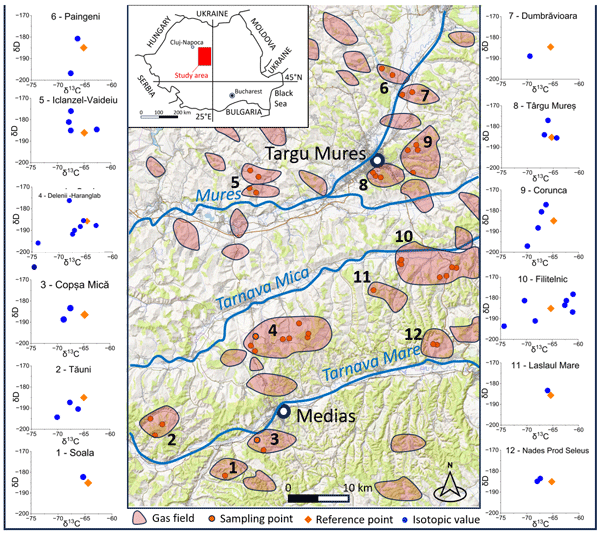
Thomas Röckmann, Malika Menoud, Jacoline van Es, Carina van der Veen, Hossein Maazallahi, Pawel Jagoda, Jaroslav M. Necki, Jakub Bartyzel, Piotr Korben, Sara Defratyka, Martina Schmidt, Marius Corbu, Sebastian Iancu, Andreea Calcan, Magdalena Ardelean, Sorin Ghemulet, Cristian Pop, Andrei Radovici, Alexandru Mereuta, Horatiu Stefanie, and Calin Baciu
Atmos. Chem. Phys., 26, 723–731, https://doi.org/10.5194/acp-26-723-2026, https://doi.org/10.5194/acp-26-723-2026, 2026
Short summary
Short summary
We report the isotopic composition of CH4 emitted from 48 installations in the gas production region of Transylvania, Romania which confirm the biogenic origin of the Transylvanian gas, produced by hydrogenotrophic CO2 reduction. This is similar to values reported previously from natural seeps and natural gas in a major city in the region. However, is more depleted in heavy isotopes than the oil-associated gas emitted in the Southern Romanian Plain, and gas leakages in the city of Bucharest.
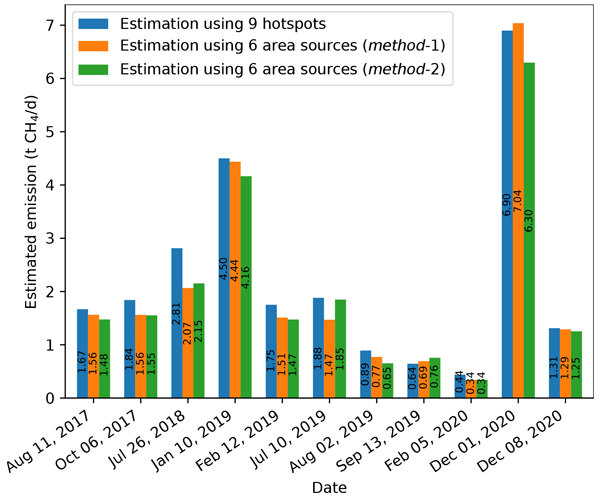
Pramod Kumar, Christopher Caldow, Grégoire Broquet, Adil Shah, Olivier Laurent, Camille Yver-Kwok, Sebastien Ars, Sara Defratyka, Susan Warao Gichuki, Luc Lienhardt, Mathis Lozano, Jean-Daniel Paris, Felix Vogel, Caroline Bouchet, Elisa Allegrini, Robert Kelly, Catherine Juery, and Philippe Ciais
Atmos. Meas. Tech., 17, 1229–1250, https://doi.org/10.5194/amt-17-1229-2024, https://doi.org/10.5194/amt-17-1229-2024, 2024
Short summary
Short summary
This study presents a series of mobile measurement campaigns to monitor the CH4 emissions from an active landfill. These measurements are processed using a Gaussian plume model and atmospheric inversion techniques to quantify the landfill CH4 emissions. The methane emission estimates range between ~0.4 and ~7 t CH4 per day, and their variations are analyzed. The robustness of the estimates is assessed depending on the distance of the measurements from the potential sources in the landfill.
Sara M. Defratyka, James L. France, Rebecca E. Fisher, Dave Lowry, Julianne M. Fernandez, Semra Bakkaloglu, Camille Yver-Kwok, Jean-Daniel Paris, Philippe Bousquet, Tim Arnold, Chris Rennick, Jon Helmore, Nigel Yarrow, and Euan G. Nisbet
EGUsphere, https://doi.org/10.5194/egusphere-2023-1490, https://doi.org/10.5194/egusphere-2023-1490, 2023
Preprint archived
Short summary
Short summary
We are focused on verification of δ13CH4 measurements in near-source conditions and we have provided an insight into the impact of chosen calculation methods for determined isotopic signatures. Our study offers a step forward for establishing an unified, robust, and reliable analytical technique to determine δ13CH4 of methane sources. Our recommended analytical approach reduces biases and uncertainties coming from measurement conditions, data clustering and various available fitting methods.
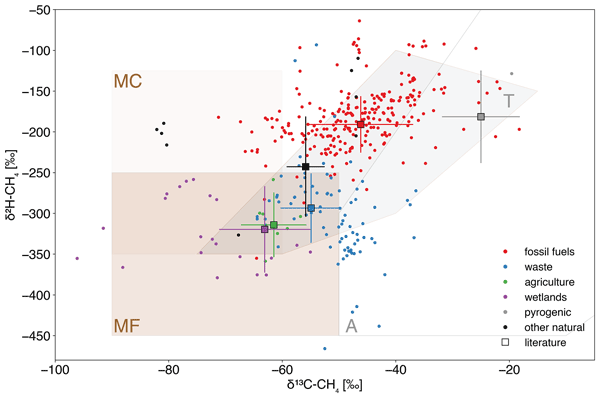
Malika Menoud, Carina van der Veen, Dave Lowry, Julianne M. Fernandez, Semra Bakkaloglu, James L. France, Rebecca E. Fisher, Hossein Maazallahi, Mila Stanisavljević, Jarosław Nęcki, Katarina Vinkovic, Patryk Łakomiec, Janne Rinne, Piotr Korbeń, Martina Schmidt, Sara Defratyka, Camille Yver-Kwok, Truls Andersen, Huilin Chen, and Thomas Röckmann
Earth Syst. Sci. Data, 14, 4365–4386, https://doi.org/10.5194/essd-14-4365-2022, https://doi.org/10.5194/essd-14-4365-2022, 2022
Short summary
Short summary
Emission sources of methane (CH4) can be distinguished with measurements of CH4 stable isotopes. We present new measurements of isotope signatures of various CH4 sources in Europe, mainly anthropogenic, sampled from 2017 to 2020. The present database also contains the most recent update of the global signature dataset from the literature. The dataset improves CH4 source attribution and the understanding of the global CH4 budget.
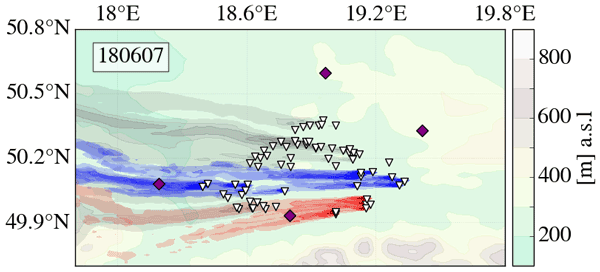
Andreas Luther, Julian Kostinek, Ralph Kleinschek, Sara Defratyka, Mila Stanisavljević, Andreas Forstmaier, Alexandru Dandocsi, Leon Scheidweiler, Darko Dubravica, Norman Wildmann, Frank Hase, Matthias M. Frey, Jia Chen, Florian Dietrich, Jarosław Nȩcki, Justyna Swolkień, Christoph Knote, Sanam N. Vardag, Anke Roiger, and André Butz
Atmos. Chem. Phys., 22, 5859–5876, https://doi.org/10.5194/acp-22-5859-2022, https://doi.org/10.5194/acp-22-5859-2022, 2022
Short summary
Short summary
Coal mining is an extensive source of anthropogenic methane emissions. In order to reduce and mitigate methane emissions, it is important to know how much and where the methane is emitted. We estimated coal mining methane emissions in Poland based on atmospheric methane measurements and particle dispersion modeling. In general, our emission estimates suggest higher emissions than expected by previous annual emission reports.
Chloe A. Brashear, Maarten M. J. W. van Herpen, Sergey Gromov, Berend van de Kraats, Carina van der Veen, Xietiancheng Yu, Matthew S. Johnson, Helder Timas, Sönke Zaehle, Armin Jordan, Heiko Moossen, Africa Barreto, Natalia Pratts, Isabel Baños, Jesús Arrieta, Dickon Young, Peter Sealy, Hella van Asperen, Simonetta Montaguti, Peter Sperlich, Rowena Moss, Sylvia Nichol, Stephen Matthew Platt, Ove Hermansen, Cathrine Lund Myhre, Gabrielle Petron, Andy Crotwell, Isaac Vimont, and Thomas Röckmann
EGUsphere, https://doi.org/10.5194/egusphere-2026-5618, https://doi.org/10.5194/egusphere-2026-5618, 2026
This preprint is open for discussion and under review for Atmospheric Chemistry and Physics (ACP).
Short summary
Short summary
This study evaluates trends in atmospheric CO between 1995–2025 and uses the isotopic composition of CO to constrain emission shifts during this time. We find that CO from fossil fuel combustion has reduced dramatically in the Northern Hemisphere during winter, linked to global air quality regulations. Conversely, a small background rise in CO is driven by increasing atmospheric CH4 and recent extreme wildfire seasons have caused large peaks in CO, counteracting reductions from fossil emissions.
Ching-Chou Fu, Sheng-Fu Hu, Li-Hung Lin, Kuo-Hang Chen, Chin-Shang Ku, Hao Kuo-Chen, Kuo-Wei Wu, and Chin-Jen Lin
EGUsphere, https://doi.org/10.5194/egusphere-2026-4934, https://doi.org/10.5194/egusphere-2026-4934, 2026
This preprint is open for discussion and under review for Biogeosciences (BG).
Short summary
Short summary
We developed a low-cost automated system for continuous monitoring of carbon dioxide released from soils. Laboratory and field tests showed good agreement with reference methods. During more than five months of field operation, the system captured both background emissions and changes caused by heavy rainfall. The system provides an accessible approach for long-term monitoring of soil carbon emissions and environmental change.
Gamra Oueslati, Elish Redshaw, Unyime Umoh, Natasha MacAdam, Patricia Granados, Jeremy Bentley, Robbie Bennett, Venus Baghalabadi, Adam MacDonald, Calvin Campbell, Martin Fowler, and Todd Ventura
EGUsphere, https://doi.org/10.5194/egusphere-2026-5038, https://doi.org/10.5194/egusphere-2026-5038, 2026
This preprint is open for discussion and under review for Biogeosciences (BG).
Short summary
Short summary
This study provides a biogeochemical, lipidomic, and sedimentological survey demonstrating deeply buried geologic structures producing cold seeps alter shallow sedimentary environments beyond ocean-floor seep structures. Three ecologically and metabolically distinct microbial assemblages were identified corresponding to discrete redox niches. Spatial alignment with an underlying salt diapir suggests that diffusive microseepage along deep faults impacts microbial activity in this region.
Alice E. Ramsden, Anita L. Ganesan, Matthew Rigby, Chris Rennick, Tim Arnold, Emmal Safi, Edward Chung, Dafina Kikaj, Cameron Yeo, Dave Lowry, Pete Levy, Simon O'Doherty, Kieran M. Stanley, Dickon Young, Joe Pitt, Damien Martin, Morgan Lopez, Michel Ramonet, Grant L. Forster, Arnoud Frumau, and Alistair J. Manning
Atmos. Chem. Phys., 26, 11421–11448, https://doi.org/10.5194/acp-26-11421-2026, https://doi.org/10.5194/acp-26-11421-2026, 2026
Short summary
Short summary
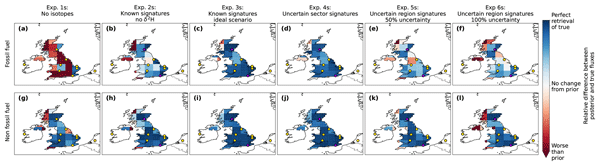
Methane is emitted from a range of anthropogenic and natural sources, each with a characteristic isotope ratio signature. We present a method for estimating emissions from multiple sources using isotopic signatures and observations of atmospheric methane isotope ratios. We show the importance of considering isotopic signature uncertainty and demonstrate how our current understanding of these signatures may be limiting this method’s ability to reduce uncertainties in emissions estimates.
Paul M. Magyar, Nico Kueter, Simone Brunamonti, Naizhong Zhang, Ivan Prokhorov, Noémy Chénier, Lukas Emmenegger, Béla Tuzson, and Joachim Mohn
Atmos. Meas. Tech., 19, 5267–5280, https://doi.org/10.5194/amt-19-5267-2026, https://doi.org/10.5194/amt-19-5267-2026, 2026
Short summary
Short summary
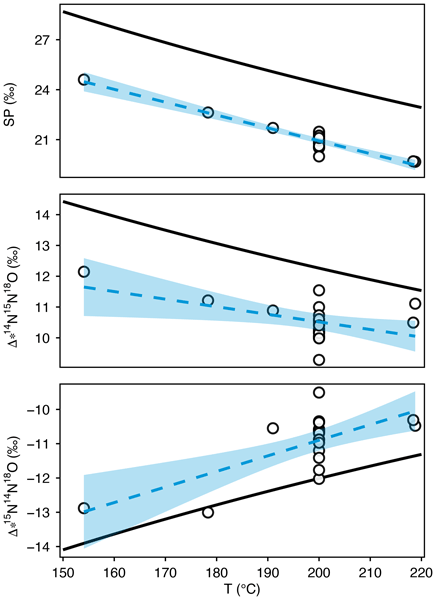
Human activity drives increases in atmospheric nitrous oxide. Stable isotopes help trace the pathways involved. We developed a reliable way to calibrate measurements of rare isotopic variants of nitrous oxide so results from different labs can be compared. By heating nitrous oxide with a catalyst, the molecules reach well-defined equilibrium patterns suitable as a reference. To measure these isotopic variants quickly and precisely, we improved a laser-based measurement approach.
Robbert P. J. Moonen, Getachew A. Adnew, Jordi Vilà-Guerau de Arellano, David J. Bonell Fontas, and Thomas Röckmann
Biogeosciences, 23, 5163–5184, https://doi.org/10.5194/bg-23-5163-2026, https://doi.org/10.5194/bg-23-5163-2026, 2026
Short summary
Short summary
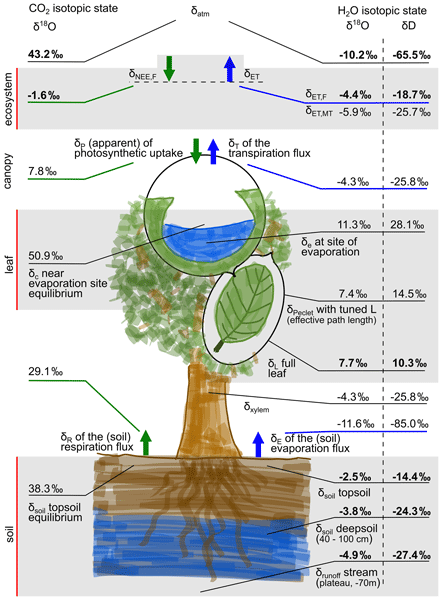
We used high-frequency H₂O and CO₂ isotope measurements taken in the Amazon Tall Tower Observatory (ATTO) to separate water vapour and carbon dioxide fluxes into their component processes. During midday, ~95 % of evapotranspiration came from plant transpiration. Isotopes also revealed the balance between photosynthesis and respiration, showing strong sensitivity to leaf CO₂ ratios. These results improve understanding of Amazon ecosystem function.
Stephen J. Harris, Sven Krautwurst, Jorg Hacker, Mark Lunt, Jakob Borchardt, Mei Bai, Hartmut Boesch, Tarra Brain, John Philip Burrows, Shakti Chakravarty, Robert A. Field, Rebecca E. Fisher, James L. France, Konstantin Gerilowski, Oke Huhs, Wolfgang Junkermann, Bryce F. J. Kelly, Martin Kumm, Mathias Lanoisellé, Wolfgang Lieff, Andrew McGrath, Adrian Murphy, Thomas Röckmann, Zoe Salmon, Josua Schindewolf, Jakob Thoböll, Carina van der Veen, and Heinrich Bovensmann
Atmos. Chem. Phys., 26, 10043–10069, https://doi.org/10.5194/acp-26-10043-2026, https://doi.org/10.5194/acp-26-10043-2026, 2026
Short summary
Short summary
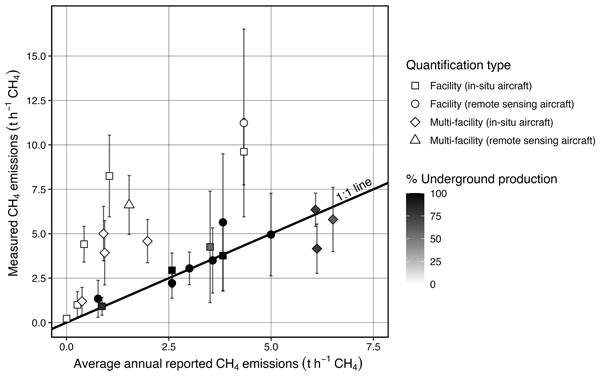
The accuracy of methods used to estimate and report fugitive methane emissions from Australian coal mines remains unclear. This study compares airborne emission rate estimates with reported estimates from 17 coal mines in the Bowen Basin, a region accounting for 45 % of national coal production. Results show good agreement for underground coal mines, but poor agreement for surface coal mines, suggesting improvements to surface coal mine reporting methods is needed to improve inventory reporting.
Celia Campa-Bousoño, Miguel Iglesias, Iñaki Vadillo, Lucía Ojeda, Jorge Pisonero, Hai Cheng, R. Lawrence Edwards, and Heather Stoll
EGUsphere, https://doi.org/10.5194/egusphere-2026-3717, https://doi.org/10.5194/egusphere-2026-3717, 2026
Short summary
Short summary
To understand how rainfall changed in southern Iberia during the shift from the Medieval Climate Anomaly to the Little Ice Age, we studied yearly layers preserved in a stalagmite from Ardales Cave, southern Spain. The record shows repeated shifts between wetter and drier periods, including major droughts around 1125, 1250, 1500, and 1560 CE. It also reveals intervals of more variable rainfall, suggesting changing influence from Atlantic and Mediterranean weather patterns.
Bibhasvata Dasgupta, Sudhanshu Pandey, Sander Houweling, Malika Menoud, Carina van der Veen, John Miller, Ben Riddell-Young, Sylvia Englund Michel, Peter Sperlich, Shinji Morimoto, Ryo Fujita, Stephen Platt, Christine Groot Zwaaftink, Ingeborg Levin, Cordelia Veidt, Cathrine Lund Myhre, Ceres Woolley Maisch, Rebecca Fisher, Euan G. Nisbet, James France, Rowena Moss, Nicola Warwick, and Thomas Röckmann
Atmos. Chem. Phys., 26, 8601–8616, https://doi.org/10.5194/acp-26-8601-2026, https://doi.org/10.5194/acp-26-8601-2026, 2026
Short summary
Short summary
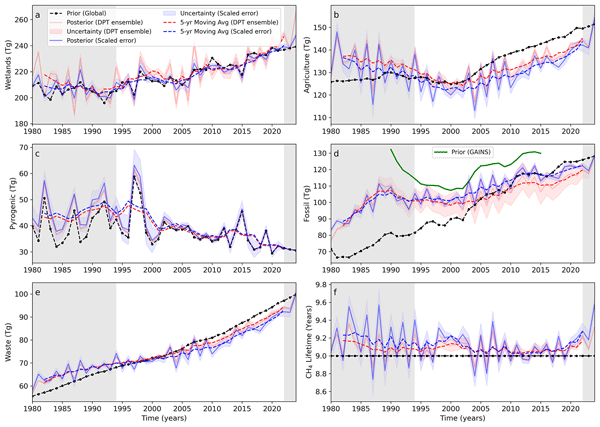
Methane is a strong greenhouse gas, and its rise since the mid-2000s is debated in terms of sources and sinks. Using top-down and bottom-up data, along with inversion models and methane isotopes (δ13C-CH4 and δD-CH4), we find that wetlands are the primary driver of post-2006 increases, followed by agriculture and fossil fuels. Methane's lifetime has decreased by about 0.1 years. We also assess how isotope signatures and sink processes influence uncertainties.
Lison Soussaintjean, Jochen Schmitt, Joël Savarino, J. Andy Menking, Edward J. Brook, Barbara Seth, Vladimir Lipenkov, Thomas Röckmann, and Hubertus Fischer
Biogeosciences, 23, 3939–3963, https://doi.org/10.5194/bg-23-3939-2026, https://doi.org/10.5194/bg-23-3939-2026, 2026
Short summary
Short summary
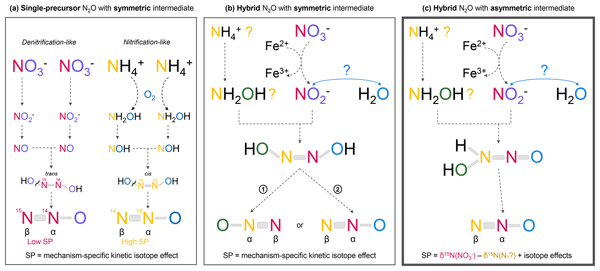
Nitrous oxide (N2O) produced in dust-rich Antarctic ice complicates the reconstruction of past atmospheric levels from ice core records. Using isotope analysis, we show that N2O forms from two nitrogen precursors, one being nitrate. For the first time, we demonstrate that the site preference (SP) of N2O reflects the isotopic difference between these precursors, not the production pathway, which challenges the common interpretation of SP.
Alexie Roy-Lafontaine, Rebecca Lee, Peter M. J. Douglas, Dustin Whalen, and André Pellerin
Biogeosciences, 23, 3777–3792, https://doi.org/10.5194/bg-23-3777-2026, https://doi.org/10.5194/bg-23-3777-2026, 2026
Short summary
Short summary
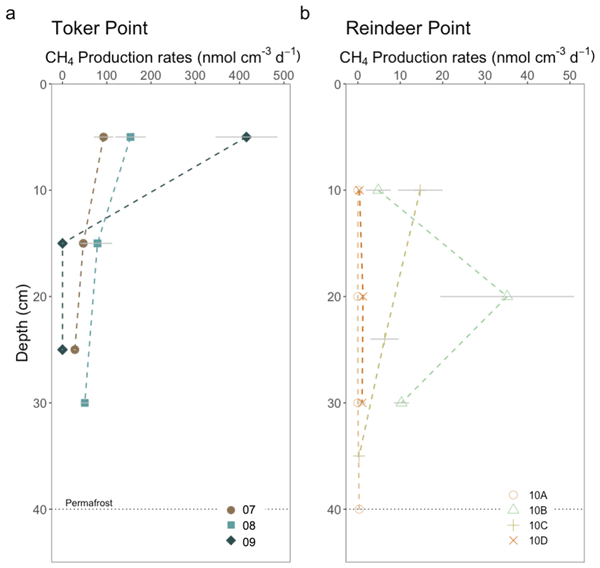
Arctic coastlines are eroding and flooding as the climate warms, but their role in releasing methane, a potent greenhouse gas, is not well understood. We collected soil and sediment samples near Tuktoyaktuk, Canada, and tested methane production when exposed to seawater in laboratory incubations. We expected seawater to suppress methane production, but coastal soils instead produced more methane than inland sites. Arctic coasts may therefore be an overlooked source of methane to the atmosphere.
Liang Feng, Paul I. Palmer, Haolin Wang, Robert Parker, Hartmut Boesch, Sébastien C. Biraud, Łukasz Chmura, Emanuel Gloor, László Haszpra, Elena Kozlova, Euan G. Nisbet, Steffen M. Noe, Thomas Röckmann, Rodrigo Augusto Ferreira de Souza, and Martin Steinbacher
EGUsphere, https://doi.org/10.5194/egusphere-2026-2662, https://doi.org/10.5194/egusphere-2026-2662, 2026
Short summary
Short summary
This study examines the relative roles of emissions and oxidation in recent rapid methane growth. Using an ensemble Kalman filter, we quantify global methane sources and sinks for 2018–2024. Emission changes dominate the increase, except in 2020 when a COVID‑19‑related OH decline strongly affected sinks. Atmospheric photochemistry—including OH and CH₄ variability and temperature‑dependent oxidation—also significantly shapes the methane budget.
Jacoline van Es, Juan Bettinelli, Jia Chen, Carina van der Veen, Stephan Henne, and Thomas Röckmann
EGUsphere, https://doi.org/10.5194/egusphere-2026-1813, https://doi.org/10.5194/egusphere-2026-1813, 2026
Short summary
Short summary
The increase in atmospheric methane needs to be reversed to mitigate ongoing global warming. To design effective mitigation strategies at the local/regional level, we need to know what the main sources in different regions. We show that in Hamburg, Germany, biogenic sources are the main contributor to local emissions, with additional contributions from waste and fossil CH4 sources. An unexpected source is the Elbe River, with spiking emissions at low tide when the river banks are exposed.
Elinor C. Tuffnell, Emma Leedham-Elvidge, William T. Sturges, Harald Bönisch, Karina E. Adcock, Paul J. Fraser, Paul B. Krummel, David E. Oram, Ray L. Langenfelds, Thomas Röckmann, Luke M. Western, Jens Mühle, and Johannes C. Laube
Atmos. Chem. Phys., 26, 4583–4599, https://doi.org/10.5194/acp-26-4583-2026, https://doi.org/10.5194/acp-26-4583-2026, 2026
Short summary
Short summary
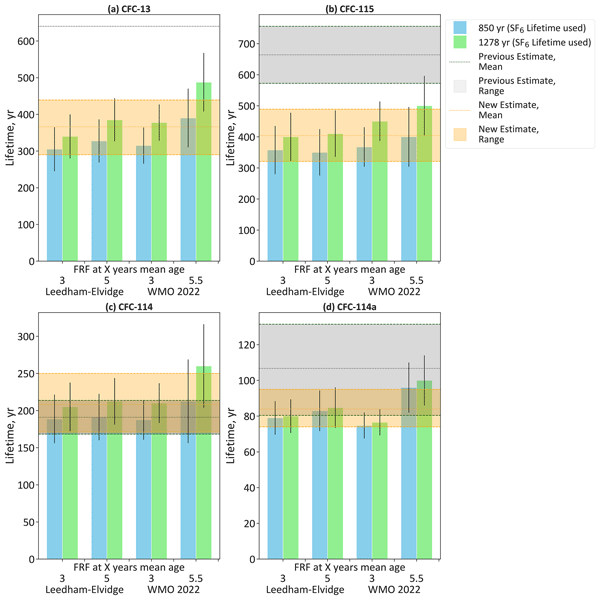
The greater the stratospheric lifetime of chlorofluorocarbons (CFCs), the longer they will deplete ozone. This paper investigates four longer-lived CFCs, and discovers two of them have much shorter lifetimes than previously believed. Demonstrating emissions of these compounds are higher than assumed, to account for their abundance. Unusually this paper uses stratospheric whole-air samples, rather than models or lab-based experiments, to derive policy-relevant metrics for these compounds.
Annalisa Delre, Thomas Röckmann, David J. Bonell Fontas, Julia C. Engelmann, and Helge Niemann
EGUsphere, https://doi.org/10.5194/egusphere-2026-1582, https://doi.org/10.5194/egusphere-2026-1582, 2026
Preprint archived
Short summary
Short summary
Estuaries are important natural sources of methane, a greenhouse gas that affects climate. We studied how methane changes along the Scheldt estuary by measuring gas concentrations, carbon isotopes and identification and quantification of methane oxidizing bacteria. We found that methane levels varied strongly and were not mainly controlled by salinity. Most methane escaped to the atmosphere, showing that estuaries may contribute more to climate change than previously thought.
Thomas Röckmann, Malika Menoud, Jacoline van Es, Carina van der Veen, Hossein Maazallahi, Pawel Jagoda, Jaroslav M. Necki, Jakub Bartyzel, Piotr Korben, Sara Defratyka, Martina Schmidt, Marius Corbu, Sebastian Iancu, Andreea Calcan, Magdalena Ardelean, Sorin Ghemulet, Cristian Pop, Andrei Radovici, Alexandru Mereuta, Horatiu Stefanie, and Calin Baciu
Atmos. Chem. Phys., 26, 723–731, https://doi.org/10.5194/acp-26-723-2026, https://doi.org/10.5194/acp-26-723-2026, 2026
Short summary
Short summary
We report the isotopic composition of CH4 emitted from 48 installations in the gas production region of Transylvania, Romania which confirm the biogenic origin of the Transylvanian gas, produced by hydrogenotrophic CO2 reduction. This is similar to values reported previously from natural seeps and natural gas in a major city in the region. However, is more depleted in heavy isotopes than the oil-associated gas emitted in the Southern Romanian Plain, and gas leakages in the city of Bucharest.
Lisa Ardoin, Catherine Larose, Jean-Louis Tison, Christoph Keuschnig, Vasileios Gkinis, Saïda El Amri, Pierre-Henry Blard, Paul Bierman, Thomas Blunier, Dorthe Dahl-Jensen, Charlotte Maistriau, Jørgen-Peder Steffensen, Thomas Röckmann, and François Fripiat
EGUsphere, https://doi.org/10.5194/egusphere-2025-6204, https://doi.org/10.5194/egusphere-2025-6204, 2026
Short summary
Short summary
We investigated gas dynamics at the ice–bed interface of two Greenland ice cores to assess methane and carbon dioxide behaviour beneath ice sheets. At Camp Century, methane diffuses into the ice and is partly oxidized. At GRIP, methane remains preserved despite oxygen. These contrasts suggest that methane oxidation is controlled by local basal conditions, including ice thickness and substrate availability.
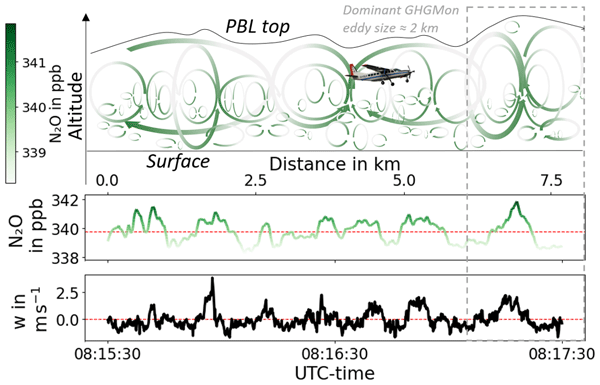
Paul Waldmann, Max Eckl, Leon Knez, Klaus-Dirk Gottschaldt, Alina Fiehn, Christian Mallaun, Michał Gałkowski, Christoph Kiemle, Ronald Hutjes, Thomas Röckmann, Huilin Chen, and Anke Roiger
Atmos. Meas. Tech., 19, 185–210, https://doi.org/10.5194/amt-19-185-2026, https://doi.org/10.5194/amt-19-185-2026, 2026
Short summary
Short summary
Nitrous oxide and methane emissions from agriculture need to be reduced, therefore emissions must be understood to effectively mitigate them. This is the first approach to measure those emissions aircraft-based, to assess their magnitude and drivers. We identified emission hotspots and temporal changes in agricultural emissions in the Netherlands. Our approach is applicable to further greenhouse gas emitters, therefore it builds a step towards more comprehensive emission quantification.
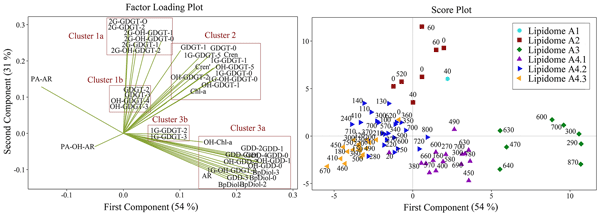
Narges Ahangarian, Unyime U. Umoh, Natasha MacAdam, Adam MacDonald, Patricia Granados, Jeremy N. Bentley, Elish Redshaw, Martin G. Fowler, Venus Baghalabadi, and G. Todd Ventura
Biogeosciences, 23, 21–38, https://doi.org/10.5194/bg-23-21-2026, https://doi.org/10.5194/bg-23-21-2026, 2026
Short summary
Short summary
This study documents previously unknown, shallow sediment stratigraphic archaeal zones that extend over a large section of the Scotian Slope of Northeastern Canada. These zones appear to be geochemically and not lithologically controlled. They are also not detectable by using traditional lipid biomarker ratios. They indicate subsurface microbial community structures to be more complex and tractable over large expanses of the continental margins.
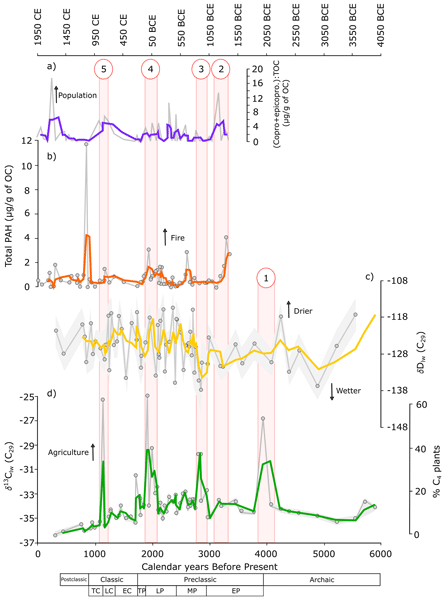
Benjamin Gwinneth, Kevin Johnston, Andy Breckenridge, and Peter M. J. Douglas
Biogeosciences, 22, 7079–7088, https://doi.org/10.5194/bg-22-7079-2025, https://doi.org/10.5194/bg-22-7079-2025, 2025
Short summary
Short summary
Over time, traces of humans, fire, and plants accumulate at the bottom of lakes. They reveal the history of how the lowland Maya, a society thought to have declined due to drought, transformed their environment over time. We show how forest was cleared, agriculture expanded, and population levels rose then declined. However, the record does not show drought even though population declines. This challenges the idea that climate was the primary cause of the societal changes.
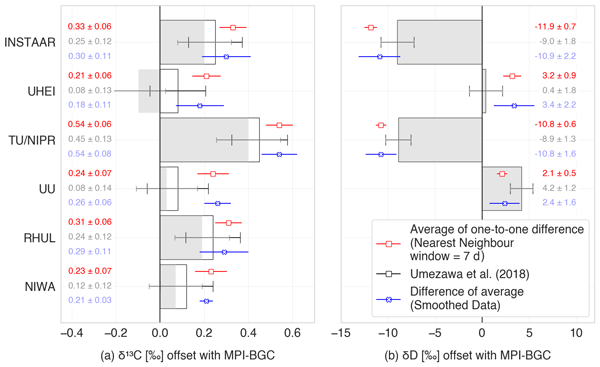
Bibhasvata Dasgupta, Malika Menoud, Carina van der Veen, Ingeborg Levin, Cordelia Veidt, Heiko Moossen, Sylvia Englund Michel, Peter Sperlich, Shinji Morimoto, Ryo Fujita, Taku Umezawa, Stephen Platt, Christine Groot Zwaaftink, Cathrine Lund Myhre, Rebecca Fisher, David Lowry, Euan G. Nisbet, James France, Ceres Woolley Maisch, Gordon Brailsford, Rowena Moss, Daisuke Goto, Sudhanshu Pandey, Sander Houweling, Nicola Warwick, and Thomas Röckmann
Atmos. Meas. Tech., 18, 6591–6607, https://doi.org/10.5194/amt-18-6591-2025, https://doi.org/10.5194/amt-18-6591-2025, 2025
Short summary
Short summary
We combined long-term methane mole fraction and isotope measurements from eight laboratories that sample high-latitude stations to compare, offset correct and harmonise the datasets into a hemisphere merged timeseries. Because each laboratory uses slightly different methods, we adjusted the data to make it directly comparable. This allowed us to create a consistent record of atmospheric methane concentration and its isotopes from 1988 to 2023.
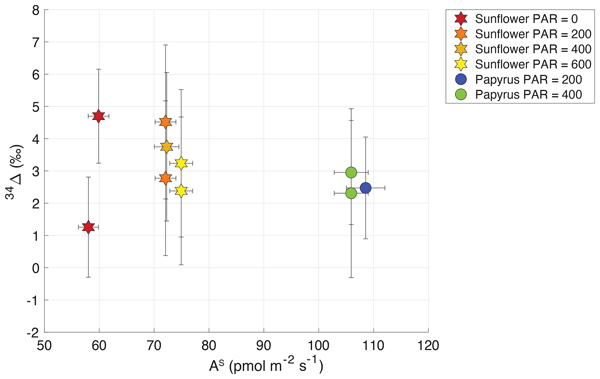
Sophie L. Baartman, Steven M. Driever, Maarten L. J. Wassenaar, Linda M. J. Kooijmans, Nerea Ubierna, Leon Mossink, Maria E. Popa, Ara Cho, Lisa Wingate, Thomas Röckmann, Steven M. A. C. van Heuven, and Maarten C. Krol
Biogeosciences, 22, 5683–5703, https://doi.org/10.5194/bg-22-5683-2025, https://doi.org/10.5194/bg-22-5683-2025, 2025
Short summary
Short summary
Carbonyl sulfide (COS) is a proposed tracer for gross primary production. For the first time, COS and carbon dioxide (CO2) uptake fluxes and isotope discrimination were jointly measured in sunflower and papyrus plants, using a flow-through plant chamber approach and varying light availability. COS isotope discrimination did not differ significantly between the species, nor with changes in light. CO2 fluxes and isotope values provided additional valuable information for data interpretation.
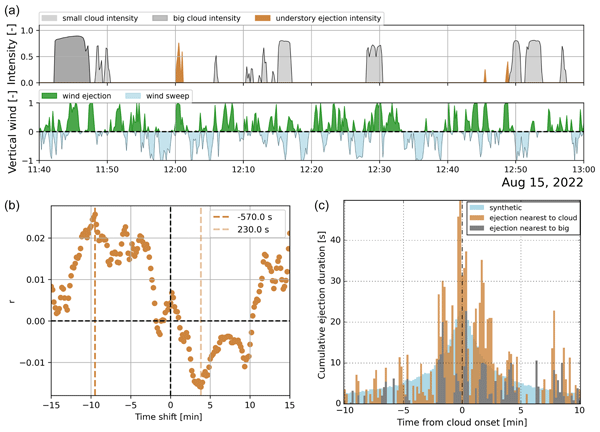
Robbert P. J. Moonen, Getachew A. Adnew, Jordi Vilà-Guerau de Arellano, Oscar K. Hartogensis, David J. Bonell Fontas, Shujiro Komiya, Sam P. Jones, and Thomas Röckmann
Atmos. Chem. Phys., 25, 12197–12212, https://doi.org/10.5194/acp-25-12197-2025, https://doi.org/10.5194/acp-25-12197-2025, 2025
Short summary
Short summary
Understory ejections are distinct turbulent features emerging in prime tall-forest ecosystems. We share a method to isolate understory ejections based on H2O–CO2 anomaly quadrants. From these, we calculate the flux contributions of understory ejections and all flux quadrants. In addition, we show that a distinctly depleted isotopic composition can be found in the ejected water vapour. Finally, we explored the role of clouds as a potential trigger for understory ejections.
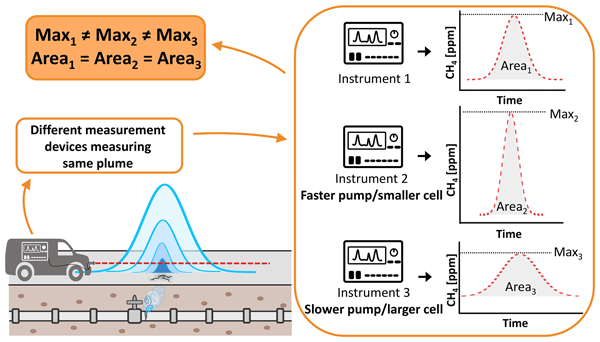
Judith Tettenborn, Daniel Zavala-Araiza, Daan Stroeken, Hossein Maazallahi, Carina van der Veen, Arjan Hensen, Ilona Velzeboer, Pim van den Bulk, Felix Vogel, Lawson Gillespie, Sebastien Ars, James France, David Lowry, Rebecca Fisher, and Thomas Röckmann
Atmos. Meas. Tech., 18, 3569–3584, https://doi.org/10.5194/amt-18-3569-2025, https://doi.org/10.5194/amt-18-3569-2025, 2025
Short summary
Short summary
Measurements of methane with vehicle-based sensors are an effective method to identify and quantify leaks from urban gas distribution systems. We deliberately released methane in different environments and calibrated the response of different methane analysers when they transected the plumes in a vehicle. We derived an improved statistical function for consistent emission estimations using different instruments. Repeated transects reduce the uncertainty in emission rate estimates.
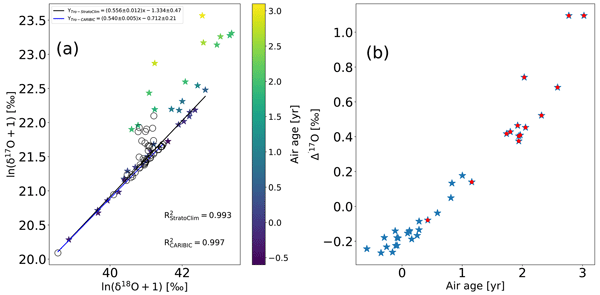
Getachew Agmuas Adnew, Gerbrand Koren, Neha Mehendale, Sergey Gromov, Maarten Krol, and Thomas Röckmann
Atmos. Meas. Tech., 18, 2701–2719, https://doi.org/10.5194/amt-18-2701-2025, https://doi.org/10.5194/amt-18-2701-2025, 2025
Short summary
Short summary
This study presents high-precision measurements of ∆′17O(CO2). Key findings include the extension of the N2O–∆′17O correlation to the upper troposphere and the identification of significant differences in the N2O–∆′17O slope in StratoClim samples. Additionally, the ∆′17O measurements are used to estimate global stratospheric production and surface removal of ∆′17O, providing an independent estimate of global vegetation CO2 exchange.
Gerrit Kuhlmann, Foteini Stavropoulou, Stefan Schwietzke, Daniel Zavala-Araiza, Andrew Thorpe, Andreas Hueni, Lukas Emmenegger, Andreea Calcan, Thomas Röckmann, and Dominik Brunner
Atmos. Chem. Phys., 25, 5371–5385, https://doi.org/10.5194/acp-25-5371-2025, https://doi.org/10.5194/acp-25-5371-2025, 2025
Short summary
Short summary
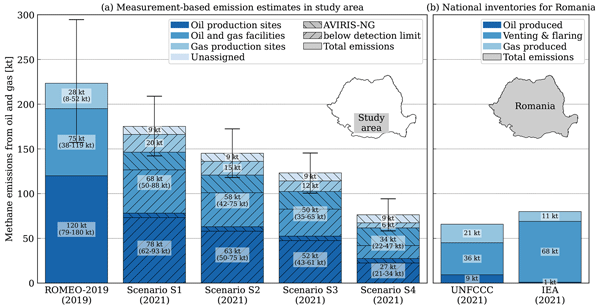
A measurement campaign in 2019 found that methane emissions from oil and gas in Romania were significantly higher than reported. In 2021, our follow-up campaign using airborne remote sensing showed a marked decreases in emissions by 20 %–60 % due to improved infrastructure. The study highlights the importance of measurement-based emission monitoring and illustrates the value of a multi-scale assessment integrating ground-based observations with large-scale airborne remote sensing campaigns.
Aelis Spiller, Cynthia M. Kallenbach, Melanie S. Burnett, David Olefeldt, Christopher Schulze, Roxane Maranger, and Peter M. J. Douglas
SOIL, 11, 371–379, https://doi.org/10.5194/soil-11-371-2025, https://doi.org/10.5194/soil-11-371-2025, 2025
Short summary
Short summary
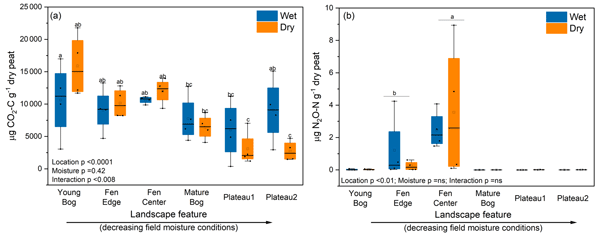
Permafrost peatlands are large reservoirs of carbon. As frozen permafrost thaws, drier peat moisture conditions can arise, affecting the microbial production of climate-warming greenhouse gases like CO2 and N2O. Our study suggests that future peat CO2 and N2O production depends on whether drier peat plateaus thaw into wetter fens or bogs and on their diverging responses of peat respiration to more moisture-limited conditions.
Marielle Saunois, Adrien Martinez, Benjamin Poulter, Zhen Zhang, Peter A. Raymond, Pierre Regnier, Josep G. Canadell, Robert B. Jackson, Prabir K. Patra, Philippe Bousquet, Philippe Ciais, Edward J. Dlugokencky, Xin Lan, George H. Allen, David Bastviken, David J. Beerling, Dmitry A. Belikov, Donald R. Blake, Simona Castaldi, Monica Crippa, Bridget R. Deemer, Fraser Dennison, Giuseppe Etiope, Nicola Gedney, Lena Höglund-Isaksson, Meredith A. Holgerson, Peter O. Hopcroft, Gustaf Hugelius, Akihiko Ito, Atul K. Jain, Rajesh Janardanan, Matthew S. Johnson, Thomas Kleinen, Paul B. Krummel, Ronny Lauerwald, Tingting Li, Xiangyu Liu, Kyle C. McDonald, Joe R. Melton, Jens Mühle, Jurek Müller, Fabiola Murguia-Flores, Yosuke Niwa, Sergio Noce, Shufen Pan, Robert J. Parker, Changhui Peng, Michel Ramonet, William J. Riley, Gerard Rocher-Ros, Judith A. Rosentreter, Motoki Sasakawa, Arjo Segers, Steven J. Smith, Emily H. Stanley, Joël Thanwerdas, Hanqin Tian, Aki Tsuruta, Francesco N. Tubiello, Thomas S. Weber, Guido R. van der Werf, Douglas E. J. Worthy, Yi Xi, Yukio Yoshida, Wenxin Zhang, Bo Zheng, Qing Zhu, Qiuan Zhu, and Qianlai Zhuang
Earth Syst. Sci. Data, 17, 1873–1958, https://doi.org/10.5194/essd-17-1873-2025, https://doi.org/10.5194/essd-17-1873-2025, 2025
Short summary
Short summary
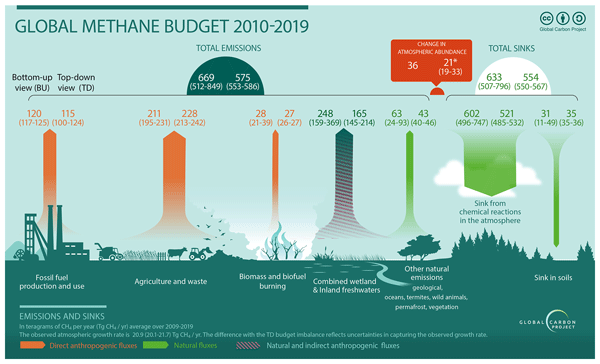
Methane (CH4) is the second most important human-influenced greenhouse gas in terms of climate forcing after carbon dioxide (CO2). A consortium of multi-disciplinary scientists synthesise and update the budget of the sources and sinks of CH4. This edition benefits from important progress in estimating emissions from lakes and ponds, reservoirs, and streams and rivers. For the 2010s decade, global CH4 emissions are estimated at 575 Tg CH4 yr-1, including ~65 % from anthropogenic sources.
Hossein Maazallahi, Foteini Stavropoulou, Samuel Jonson Sutanto, Michael Steiner, Dominik Brunner, Mariano Mertens, Patrick Jöckel, Antoon Visschedijk, Hugo Denier van der Gon, Stijn Dellaert, Nataly Velandia Salinas, Stefan Schwietzke, Daniel Zavala-Araiza, Sorin Ghemulet, Alexandru Pana, Magdalena Ardelean, Marius Corbu, Andreea Calcan, Stephen A. Conley, Mackenzie L. Smith, and Thomas Röckmann
Atmos. Chem. Phys., 25, 1497–1511, https://doi.org/10.5194/acp-25-1497-2025, https://doi.org/10.5194/acp-25-1497-2025, 2025
Short summary
Short summary
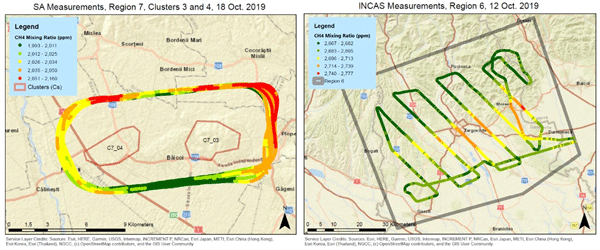
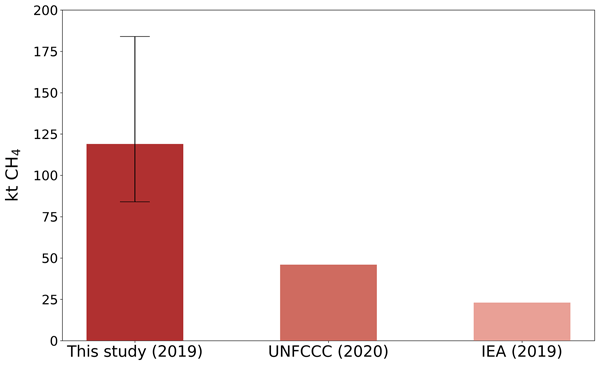
This article presents insights from airborne in situ measurements collected during the ROmanian Methane Emissions from Oil and gas (ROMEO) campaign supported by two models. Results reveal Romania's oil and gas methane emissions were significantly under-reported to the United Nations Framework Convention on Climate Change (UNFCCC) in 2019. A large underestimation was also found in the Emissions Database for Global Atmospheric Research (EDGAR) v7.0 for the study domain in the same year.
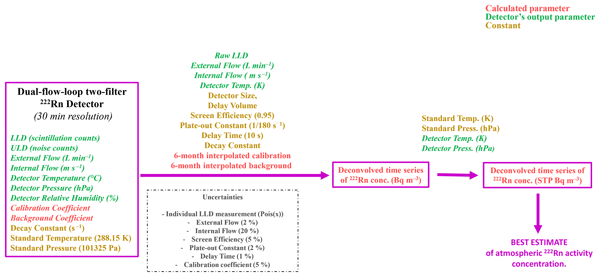
Dafina Kikaj, Edward Chung, Alan D. Griffiths, Scott D. Chambers, Grant Forster, Angelina Wenger, Penelope Pickers, Chris Rennick, Simon O'Doherty, Joseph Pitt, Kieran Stanley, Dickon Young, Leigh S. Fleming, Karina Adcock, Emmal Safi, and Tim Arnold
Atmos. Meas. Tech., 18, 151–175, https://doi.org/10.5194/amt-18-151-2025, https://doi.org/10.5194/amt-18-151-2025, 2025
Short summary
Short summary
We present a protocol to improve confidence in atmospheric radon measurements, enabling site comparisons and integration with greenhouse gas data. As a natural tracer, radon provides an independent check of transport model performance. This standardized method enhances radon’s use as a metric for model evaluation. Beyond UK observatories, it can support broader networks like ICOS and WMO/GAW, advancing global atmospheric research.
Bella J. Duncan, Robert McKay, Richard Levy, Joseph G. Prebble, Timothy Naish, Osamu Seki, Christoph Kraus, Heiko Moossen, G. Todd Ventura, Denise K. Kulhanek, and James Bendle
EGUsphere, https://doi.org/10.5194/egusphere-2024-4021, https://doi.org/10.5194/egusphere-2024-4021, 2025
Preprint archived
Short summary
Short summary
We use plant wax compound specific stable isotopes to investigate how ancient Antarctic vegetation adapted to glacial conditions 23 million years ago. We find plants became less water efficient to prioritise photosynthesis during short, harsh growing seasons. Ecosystem changes also included enhanced aridity, and a shift to a stunted, low elevation vegetation. This shows the adaptability of ancient Antarctic vegetation under atmospheric CO2 conditions comparable to modern.
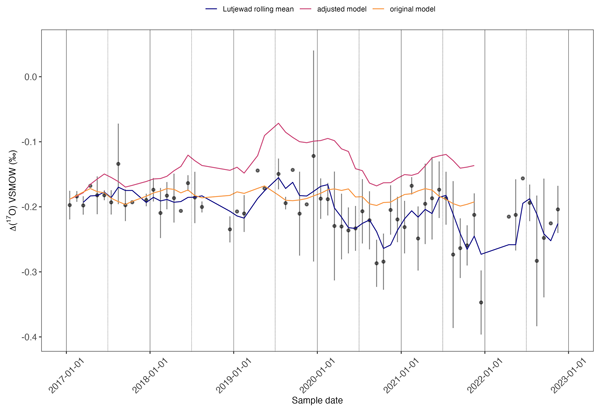
Pharahilda M. Steur, Hubertus A. Scheeren, Gerbrand Koren, Getachew A. Adnew, Wouter Peters, and Harro A. J. Meijer
Atmos. Chem. Phys., 24, 11005–11027, https://doi.org/10.5194/acp-24-11005-2024, https://doi.org/10.5194/acp-24-11005-2024, 2024
Short summary
Short summary
We present records of the triple oxygen isotope signature (Δ(17O)) of atmospheric CO2 obtained with laser absorption spectroscopy from two mid-latitude stations. Significant interannual variability is observed in both records. A model sensitivity study suggests that stratosphere–troposphere exchange, which carries high-Δ(17O) CO2 from the stratosphere into the troposphere, causes most of the variability. This makes Δ(17O) a potential tracer for stratospheric intrusions into the troposphere.
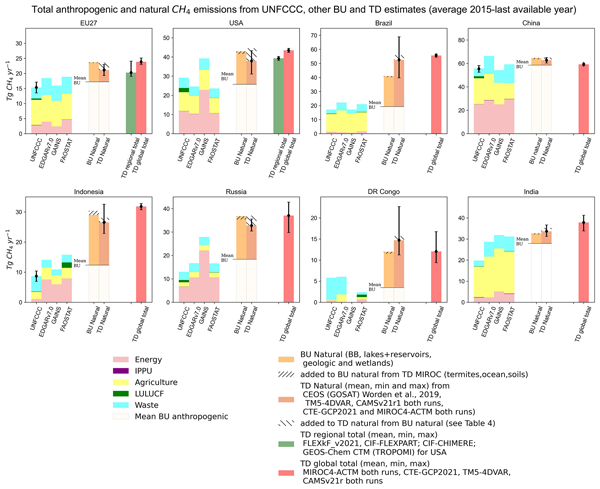
Ana Maria Roxana Petrescu, Glen P. Peters, Richard Engelen, Sander Houweling, Dominik Brunner, Aki Tsuruta, Bradley Matthews, Prabir K. Patra, Dmitry Belikov, Rona L. Thompson, Lena Höglund-Isaksson, Wenxin Zhang, Arjo J. Segers, Giuseppe Etiope, Giancarlo Ciotoli, Philippe Peylin, Frédéric Chevallier, Tuula Aalto, Robbie M. Andrew, David Bastviken, Antoine Berchet, Grégoire Broquet, Giulia Conchedda, Stijn N. C. Dellaert, Hugo Denier van der Gon, Johannes Gütschow, Jean-Matthieu Haussaire, Ronny Lauerwald, Tiina Markkanen, Jacob C. A. van Peet, Isabelle Pison, Pierre Regnier, Espen Solum, Marko Scholze, Maria Tenkanen, Francesco N. Tubiello, Guido R. van der Werf, and John R. Worden
Earth Syst. Sci. Data, 16, 4325–4350, https://doi.org/10.5194/essd-16-4325-2024, https://doi.org/10.5194/essd-16-4325-2024, 2024
Short summary
Short summary
This study provides an overview of data availability from observation- and inventory-based CH4 emission estimates. It systematically compares them and provides recommendations for robust comparisons, aiming to steadily engage more parties in using observational methods to complement their UNFCCC submissions. Anticipating improvements in atmospheric modelling and observations, future developments need to resolve knowledge gaps in both approaches and to better quantify remaining uncertainty.
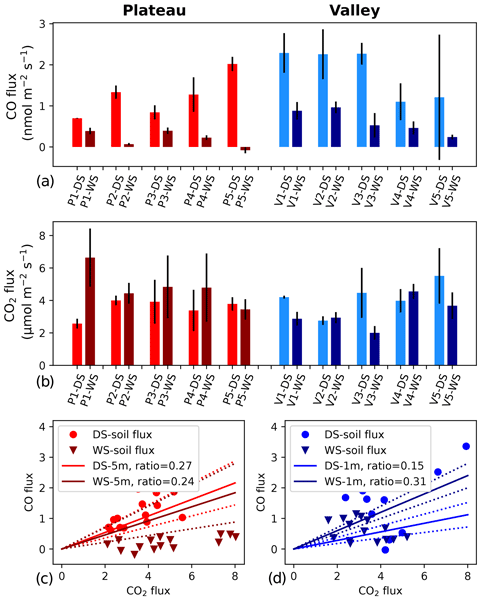
Hella van Asperen, Thorsten Warneke, Alessandro Carioca de Araújo, Bruce Forsberg, Sávio José Filgueiras Ferreira, Thomas Röckmann, Carina van der Veen, Sipko Bulthuis, Leonardo Ramos de Oliveira, Thiago de Lima Xavier, Jailson da Mata, Marta de Oliveira Sá, Paulo Ricardo Teixeira, Julie Andrews de França e Silva, Susan Trumbore, and Justus Notholt
Biogeosciences, 21, 3183–3199, https://doi.org/10.5194/bg-21-3183-2024, https://doi.org/10.5194/bg-21-3183-2024, 2024
Short summary
Short summary
Carbon monoxide (CO) is regarded as an important indirect greenhouse gas. Soils can emit and take up CO, but, until now, uncertainty remains as to which process dominates in tropical rainforests. We present the first soil CO flux measurements from a tropical rainforest. Based on our observations, we report that tropical rainforest soils are a net source of CO. In addition, we show that valley streams and inundated areas are likely additional hot spots of CO in the ecosystem.
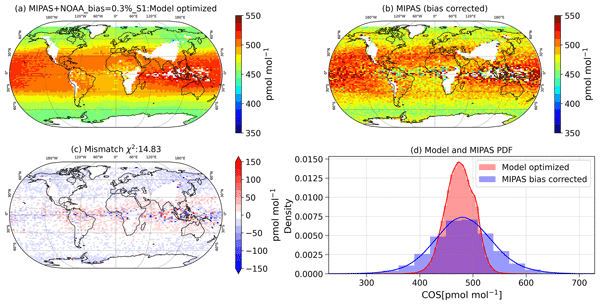
Jin Ma, Linda M. J. Kooijmans, Norbert Glatthor, Stephen A. Montzka, Marc von Hobe, Thomas Röckmann, and Maarten C. Krol
Atmos. Chem. Phys., 24, 6047–6070, https://doi.org/10.5194/acp-24-6047-2024, https://doi.org/10.5194/acp-24-6047-2024, 2024
Short summary
Short summary
The global budget of atmospheric COS can be optimised by inverse modelling using TM5-4DVAR, with the co-constraints of NOAA surface observations and MIPAS satellite data. We found reduced COS biosphere uptake from inversions and improved land and ocean separation using MIPAS satellite data assimilation. Further improvements are expected from better quantification of COS ocean and biosphere fluxes.
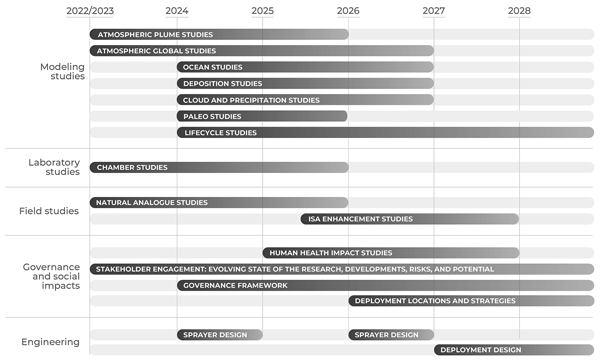
Katrine A. Gorham, Sam Abernethy, Tyler R. Jones, Peter Hess, Natalie M. Mahowald, Daphne Meidan, Matthew S. Johnson, Maarten M. J. W. van Herpen, Yangyang Xu, Alfonso Saiz-Lopez, Thomas Röckmann, Chloe A. Brashear, Erika Reinhardt, and David Mann
Atmos. Chem. Phys., 24, 5659–5670, https://doi.org/10.5194/acp-24-5659-2024, https://doi.org/10.5194/acp-24-5659-2024, 2024
Short summary
Short summary
Rapid reduction in atmospheric methane is needed to slow the rate of global warming. Reducing anthropogenic methane emissions is a top priority. However, atmospheric methane is also impacted by rising natural emissions and changing sinks. Studies of possible atmospheric methane removal approaches, such as iron salt aerosols to increase the chlorine radical sink, benefit from a roadmapped approach to understand if there may be viable and socially acceptable ways to decrease future risk.
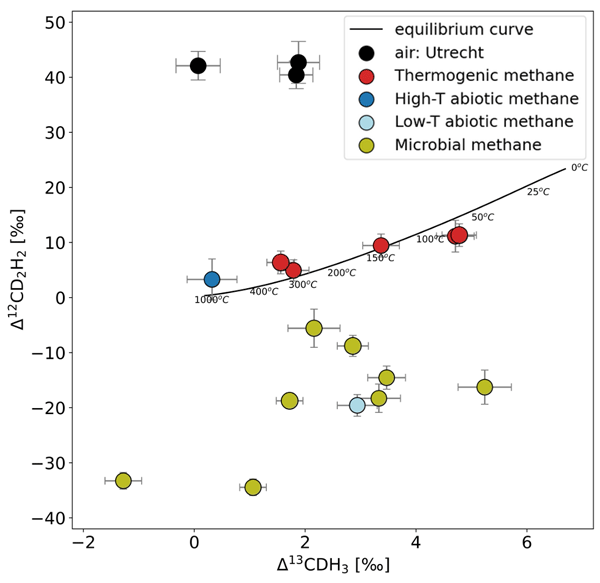
Malavika Sivan, Thomas Röckmann, Carina van der Veen, and Maria Elena Popa
Atmos. Meas. Tech., 17, 2687–2705, https://doi.org/10.5194/amt-17-2687-2024, https://doi.org/10.5194/amt-17-2687-2024, 2024
Short summary
Short summary
We have set up a measurement system for methane-clumped isotopologues. We have built an extraction and purification system to extract pure methane for these measurements, for samples of various origins, including atmospheric air, for which we need to process about 1000 L of air for one measurement. We report here the technical setup for extraction and measurements, as well as the calibration, and we give an overview of the samples measured so far.
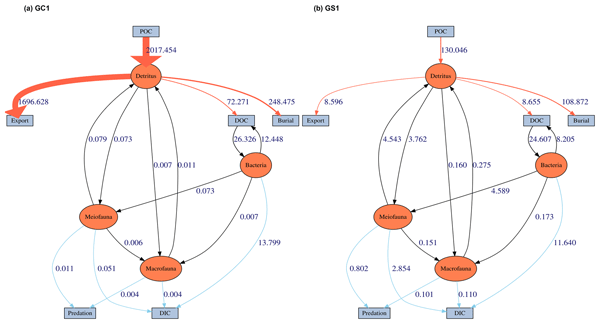
Chueh-Chen Tung, Yu-Shih Lin, Jian-Xiang Liao, Tzu-Hsuan Tu, James T. Liu, Li-Hung Lin, Pei-Ling Wang, and Chih-Lin Wei
Biogeosciences, 21, 1729–1756, https://doi.org/10.5194/bg-21-1729-2024, https://doi.org/10.5194/bg-21-1729-2024, 2024
Short summary
Short summary
This study contrasts seabed food webs between a river-fed, high-energy canyon and the nearby slope. We show higher organic carbon (OC) flows through the canyon than the slope. Bacteria dominated the canyon, while seabed fauna contributed more to the slope food web. Due to frequent perturbation, the canyon had a lower faunal stock and OC recycling. Only 4 % of the seabed OC flux enters the canyon food web, suggesting a significant role of the river-fed canyon in transporting OC to the deep sea.
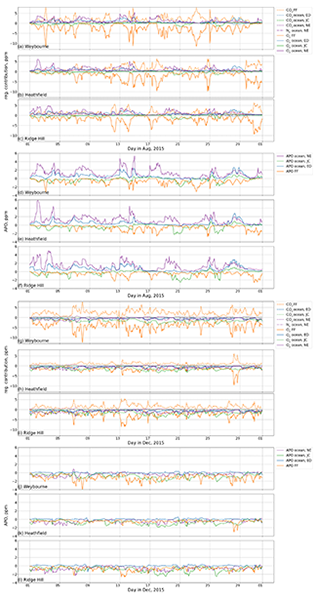
Hannah Chawner, Eric Saboya, Karina E. Adcock, Tim Arnold, Yuri Artioli, Caroline Dylag, Grant L. Forster, Anita Ganesan, Heather Graven, Gennadi Lessin, Peter Levy, Ingrid T. Luijkx, Alistair Manning, Penelope A. Pickers, Chris Rennick, Christian Rödenbeck, and Matthew Rigby
Atmos. Chem. Phys., 24, 4231–4252, https://doi.org/10.5194/acp-24-4231-2024, https://doi.org/10.5194/acp-24-4231-2024, 2024
Short summary
Short summary
The quantity of atmospheric potential oxygen (APO), derived from coincident measurements of carbon dioxide (CO2) and oxygen (O2), has been proposed as a tracer for fossil fuel CO2 emissions. In this model sensitivity study, we examine the use of APO for this purpose in the UK and compare our model to observations. We find that our model simulations are most sensitive to uncertainties relating to ocean fluxes and boundary conditions.
Pramod Kumar, Christopher Caldow, Grégoire Broquet, Adil Shah, Olivier Laurent, Camille Yver-Kwok, Sebastien Ars, Sara Defratyka, Susan Warao Gichuki, Luc Lienhardt, Mathis Lozano, Jean-Daniel Paris, Felix Vogel, Caroline Bouchet, Elisa Allegrini, Robert Kelly, Catherine Juery, and Philippe Ciais
Atmos. Meas. Tech., 17, 1229–1250, https://doi.org/10.5194/amt-17-1229-2024, https://doi.org/10.5194/amt-17-1229-2024, 2024
Short summary
Short summary
This study presents a series of mobile measurement campaigns to monitor the CH4 emissions from an active landfill. These measurements are processed using a Gaussian plume model and atmospheric inversion techniques to quantify the landfill CH4 emissions. The methane emission estimates range between ~0.4 and ~7 t CH4 per day, and their variations are analyzed. The robustness of the estimates is assessed depending on the distance of the measurements from the potential sources in the landfill.
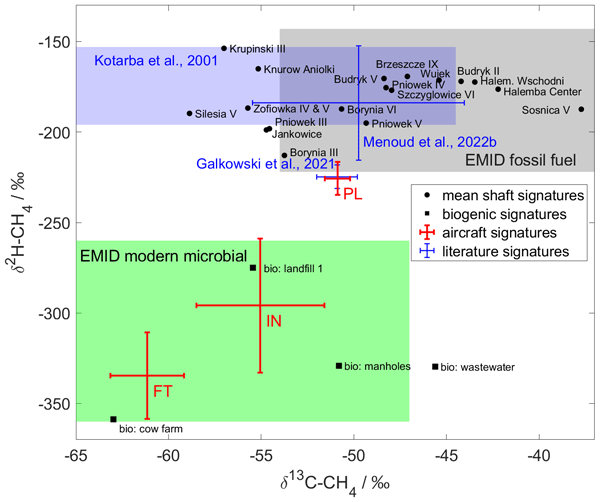
Alina Fiehn, Maximilian Eckl, Julian Kostinek, Michał Gałkowski, Christoph Gerbig, Michael Rothe, Thomas Röckmann, Malika Menoud, Hossein Maazallahi, Martina Schmidt, Piotr Korbeń, Jarosław Neçki, Mila Stanisavljević, Justyna Swolkień, Andreas Fix, and Anke Roiger
Atmos. Chem. Phys., 23, 15749–15765, https://doi.org/10.5194/acp-23-15749-2023, https://doi.org/10.5194/acp-23-15749-2023, 2023
Short summary
Short summary
During the CoMet mission in the Upper Silesian Coal Basin (USCB) ground-based and airborne air samples were taken and analyzed for the isotopic composition of CH4 to derive the mean signature of the USCB and source signatures of individual coal mines. Using δ2H signatures, the biogenic emissions from the USCB account for 15 %–50 % of total emissions, which is underestimated in common emission inventories. This demonstrates the importance of δ2H-CH4 observations for methane source apportionment.
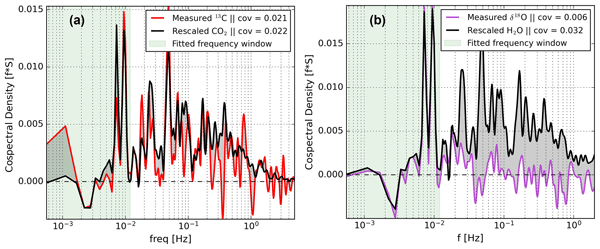
Robbert P. J. Moonen, Getachew A. Adnew, Oscar K. Hartogensis, Jordi Vilà-Guerau de Arellano, David J. Bonell Fontas, and Thomas Röckmann
Atmos. Meas. Tech., 16, 5787–5810, https://doi.org/10.5194/amt-16-5787-2023, https://doi.org/10.5194/amt-16-5787-2023, 2023
Short summary
Short summary
Isotope fluxes allow for net ecosystem gas exchange fluxes to be partitioned into sub-components like plant assimilation, respiration and transpiration, which can help us better understand the environmental drivers of each partial flux. We share the results of a field campaign isotope fluxes were derived using a combination of laser spectroscopy and eddy covariance. We found lag times and high frequency signal loss in the isotope fluxes we derived and present methods to correct for both.
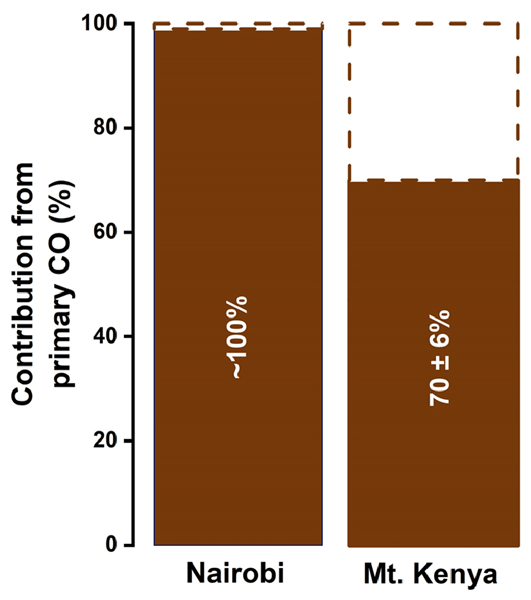
Leonard Kirago, Örjan Gustafsson, Samuel Mwaniki Gaita, Sophie L. Haslett, Michael J. Gatari, Maria Elena Popa, Thomas Röckmann, Christoph Zellweger, Martin Steinbacher, Jörg Klausen, Christian Félix, David Njiru, and August Andersson
Atmos. Chem. Phys., 23, 14349–14357, https://doi.org/10.5194/acp-23-14349-2023, https://doi.org/10.5194/acp-23-14349-2023, 2023
Short summary
Short summary
This study provides ground-observational evidence that supports earlier suggestions that savanna fires are the main emitters and modulators of carbon monoxide gas in Africa. Using isotope-based techniques, the study has shown that about two-thirds of this gas is emitted from savanna fires, while for urban areas, in this case Nairobi, primary sources approach 100 %. The latter has implications for air quality policy, suggesting primary emissions such as traffic should be targeted.
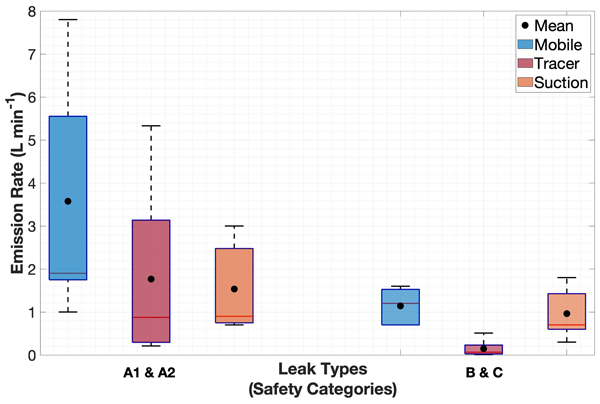
Hossein Maazallahi, Antonio Delre, Charlotte Scheutz, Anders M. Fredenslund, Stefan Schwietzke, Hugo Denier van der Gon, and Thomas Röckmann
Atmos. Meas. Tech., 16, 5051–5073, https://doi.org/10.5194/amt-16-5051-2023, https://doi.org/10.5194/amt-16-5051-2023, 2023
Short summary
Short summary
Measurement methods are increasingly deployed to verify reported methane emissions of gas leaks. This study describes unique advantages and limitations of three methods. Two methods are rapidly deployed, but uncertainties and biases exist for some leak locations. In contrast, the suction method could accurately determine leak rates in principle. However, this method, which provides data for the German emission inventory, creates an overall low bias in our study due to non-random site selection.
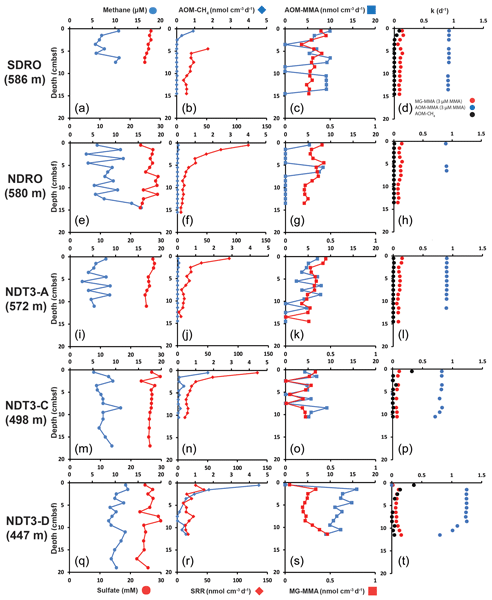
Sebastian J. E. Krause, Jiarui Liu, David J. Yousavich, DeMarcus Robinson, David W. Hoyt, Qianhui Qin, Frank Wenzhöfer, Felix Janssen, David L. Valentine, and Tina Treude
Biogeosciences, 20, 4377–4390, https://doi.org/10.5194/bg-20-4377-2023, https://doi.org/10.5194/bg-20-4377-2023, 2023
Short summary
Short summary
Methane is a potent greenhouse gas, and hence it is important to understand its sources and sinks in the environment. Here we present new data from organic-rich surface sediments below an oxygen minimum zone off the coast of California (Santa Barbara Basin) demonstrating the simultaneous microbial production and consumption of methane, which appears to be an important process preventing the build-up of methane in these sediments and the emission into the water column and atmosphere.
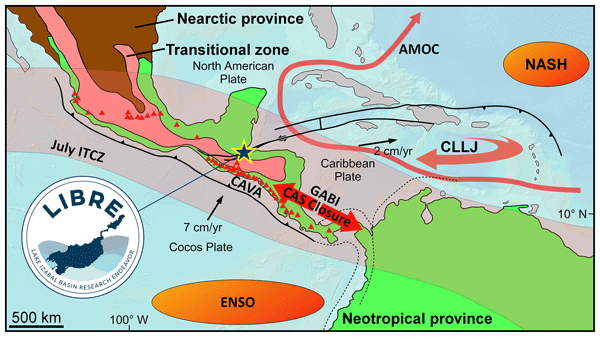
Jonathan Obrist-Farner, Andreas Eckert, Peter M. J. Douglas, Liseth Perez, Alex Correa-Metrio, Bronwen L. Konecky, Thorsten Bauersachs, Susan Zimmerman, Stephanie Scheidt, Mark Brenner, Steffen Kutterolf, Jeremy Maurer, Omar Flores, Caroline M. Burberry, Anders Noren, Amy Myrbo, Matthew Lachniet, Nigel Wattrus, Derek Gibson, and the LIBRE scientific team
Sci. Dril., 32, 85–100, https://doi.org/10.5194/sd-32-85-2023, https://doi.org/10.5194/sd-32-85-2023, 2023
Short summary
Short summary
In August 2022, 65 scientists from 13 countries gathered in Antigua, Guatemala, for a workshop, co-funded by the US National Science Foundation and the International Continental Scientific Drilling Program. This workshop considered the potential of establishing a continental scientific drilling program in the Lake Izabal Basin, eastern Guatemala, with the goals of establishing a borehole observatory and investigating one of the longest continental records from the northern Neotropics.
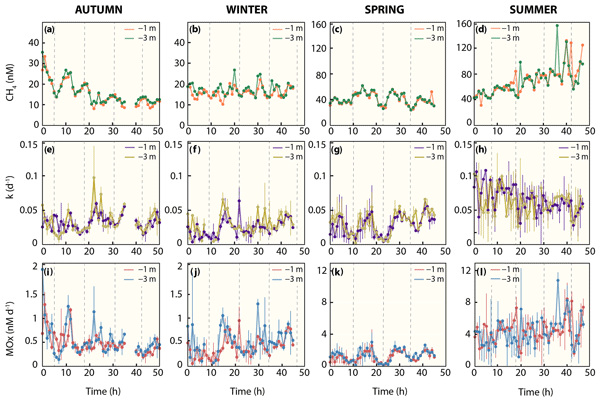
Tim René de Groot, Anne Margriet Mol, Katherine Mesdag, Pierre Ramond, Rachel Ndhlovu, Julia Catherine Engelmann, Thomas Röckmann, and Helge Niemann
Biogeosciences, 20, 3857–3872, https://doi.org/10.5194/bg-20-3857-2023, https://doi.org/10.5194/bg-20-3857-2023, 2023
Short summary
Short summary
This study investigates methane dynamics in the Wadden Sea. Our measurements revealed distinct variations triggered by seasonality and tidal forcing. The methane budget was higher in warmer seasons but surprisingly high in colder seasons. Methane dynamics were amplified during low tides, flushing the majority of methane into the North Sea or releasing it to the atmosphere. Methanotrophic activity was also elevated during low tide but mitigated only a small fraction of the methane efflux.
Foteini Stavropoulou, Katarina Vinković, Bert Kers, Marcel de Vries, Steven van Heuven, Piotr Korbeń, Martina Schmidt, Julia Wietzel, Pawel Jagoda, Jaroslav M. Necki, Jakub Bartyzel, Hossein Maazallahi, Malika Menoud, Carina van der Veen, Sylvia Walter, Béla Tuzson, Jonas Ravelid, Randulph Paulo Morales, Lukas Emmenegger, Dominik Brunner, Michael Steiner, Arjan Hensen, Ilona Velzeboer, Pim van den Bulk, Hugo Denier van der Gon, Antonio Delre, Maklawe Essonanawe Edjabou, Charlotte Scheutz, Marius Corbu, Sebastian Iancu, Denisa Moaca, Alin Scarlat, Alexandru Tudor, Ioana Vizireanu, Andreea Calcan, Magdalena Ardelean, Sorin Ghemulet, Alexandru Pana, Aurel Constantinescu, Lucian Cusa, Alexandru Nica, Calin Baciu, Cristian Pop, Andrei Radovici, Alexandru Mereuta, Horatiu Stefanie, Alexandru Dandocsi, Bas Hermans, Stefan Schwietzke, Daniel Zavala-Araiza, Huilin Chen, and Thomas Röckmann
Atmos. Chem. Phys., 23, 10399–10412, https://doi.org/10.5194/acp-23-10399-2023, https://doi.org/10.5194/acp-23-10399-2023, 2023
Short summary
Short summary
In this study, we quantify CH4 emissions from onshore oil production sites in Romania at source and facility level using a combination of ground- and drone-based measurement techniques. We show that the total CH4 emissions in our studied areas are much higher than the emissions reported to UNFCCC, and up to three-quarters of the detected emissions are related to operational venting. Our results suggest that oil and gas production infrastructure in Romania holds a massive mitigation potential.
Sara M. Defratyka, James L. France, Rebecca E. Fisher, Dave Lowry, Julianne M. Fernandez, Semra Bakkaloglu, Camille Yver-Kwok, Jean-Daniel Paris, Philippe Bousquet, Tim Arnold, Chris Rennick, Jon Helmore, Nigel Yarrow, and Euan G. Nisbet
EGUsphere, https://doi.org/10.5194/egusphere-2023-1490, https://doi.org/10.5194/egusphere-2023-1490, 2023
Preprint archived
Short summary
Short summary
We are focused on verification of δ13CH4 measurements in near-source conditions and we have provided an insight into the impact of chosen calculation methods for determined isotopic signatures. Our study offers a step forward for establishing an unified, robust, and reliable analytical technique to determine δ13CH4 of methane sources. Our recommended analytical approach reduces biases and uncertainties coming from measurement conditions, data clustering and various available fitting methods.
Alice Drinkwater, Paul I. Palmer, Liang Feng, Tim Arnold, Xin Lan, Sylvia E. Michel, Robert Parker, and Hartmut Boesch
Atmos. Chem. Phys., 23, 8429–8452, https://doi.org/10.5194/acp-23-8429-2023, https://doi.org/10.5194/acp-23-8429-2023, 2023
Short summary
Short summary
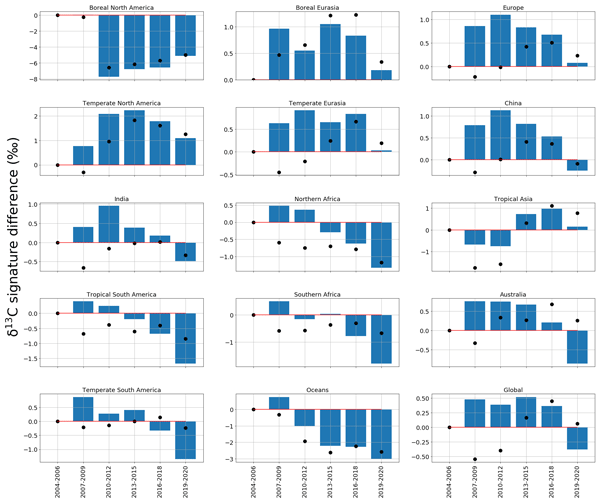
Changes in atmospheric methane over the last few decades are largely unexplained. Previous studies have proposed different hypotheses to explain short-term changes in atmospheric methane. We interpret observed changes in atmospheric methane and stable isotope source signatures (2004–2020). We argue that changes over this period are part of a large-scale shift from high-northern-latitude thermogenic energy emissions to tropical biogenic emissions, particularly from North Africa and South America.
Petr Brož, Dorothy Oehler, Adriano Mazzini, Ernst Hauber, Goro Komatsu, Giuseppe Etiope, and Vojtěch Cuřín
Earth Surf. Dynam., 11, 633–661, https://doi.org/10.5194/esurf-11-633-2023, https://doi.org/10.5194/esurf-11-633-2023, 2023
Short summary
Short summary
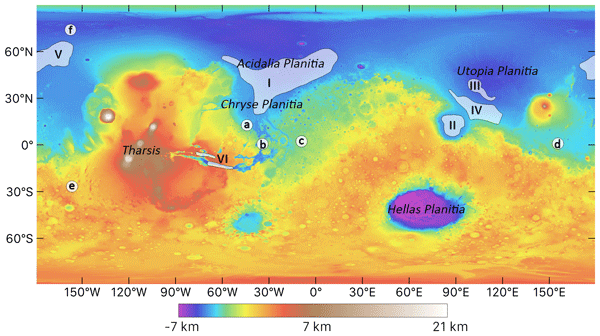
The aim of this review is to summarise the current knowledge about mud-volcano-like structures on Mars, address critical aspects of the process of sedimentary volcanism, identify key open questions, and point to areas where further research is needed to understand this phenomenon and its importance in the Red Planet's geological evolution.
Andreas Forstmaier, Jia Chen, Florian Dietrich, Juan Bettinelli, Hossein Maazallahi, Carsten Schneider, Dominik Winkler, Xinxu Zhao, Taylor Jones, Carina van der Veen, Norman Wildmann, Moritz Makowski, Aydin Uzun, Friedrich Klappenbach, Hugo Denier van der Gon, Stefan Schwietzke, and Thomas Röckmann
Atmos. Chem. Phys., 23, 6897–6922, https://doi.org/10.5194/acp-23-6897-2023, https://doi.org/10.5194/acp-23-6897-2023, 2023
Short summary
Short summary
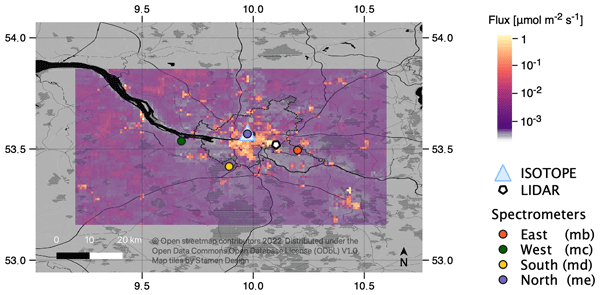
Large cities emit greenhouse gases which contribute to global warming. In this study, we measured the release of one important green house gas, methane, in Hamburg. Multiple sources that contribute to methane emissions were located and quantified. Methane sources were found to be mainly caused by human activity (e.g., by release from oil and gas refineries). Moreover, potential natural sources have been located, such as the Elbe River and lakes.
Truls Andersen, Zhao Zhao, Marcel de Vries, Jaroslaw Necki, Justyna Swolkien, Malika Menoud, Thomas Röckmann, Anke Roiger, Andreas Fix, Wouter Peters, and Huilin Chen
Atmos. Chem. Phys., 23, 5191–5216, https://doi.org/10.5194/acp-23-5191-2023, https://doi.org/10.5194/acp-23-5191-2023, 2023
Short summary
Short summary
The Upper Silesian Coal Basin, Poland, is one of the hot spots of methane emissions in Europe. Using an uncrewed aerial vehicle (UAV), we performed atmospheric measurements of methane concentrations downwind of five ventilation shafts in this region and determined the emission rates from the individual shafts. We found a strong correlation between quantified shaft-averaged emission rates and hourly inventory data, which also allows us to estimate the methane emissions from the entire region.
Ana Maria Roxana Petrescu, Chunjing Qiu, Matthew J. McGrath, Philippe Peylin, Glen P. Peters, Philippe Ciais, Rona L. Thompson, Aki Tsuruta, Dominik Brunner, Matthias Kuhnert, Bradley Matthews, Paul I. Palmer, Oksana Tarasova, Pierre Regnier, Ronny Lauerwald, David Bastviken, Lena Höglund-Isaksson, Wilfried Winiwarter, Giuseppe Etiope, Tuula Aalto, Gianpaolo Balsamo, Vladislav Bastrikov, Antoine Berchet, Patrick Brockmann, Giancarlo Ciotoli, Giulia Conchedda, Monica Crippa, Frank Dentener, Christine D. Groot Zwaaftink, Diego Guizzardi, Dirk Günther, Jean-Matthieu Haussaire, Sander Houweling, Greet Janssens-Maenhout, Massaer Kouyate, Adrian Leip, Antti Leppänen, Emanuele Lugato, Manon Maisonnier, Alistair J. Manning, Tiina Markkanen, Joe McNorton, Marilena Muntean, Gabriel D. Oreggioni, Prabir K. Patra, Lucia Perugini, Isabelle Pison, Maarit T. Raivonen, Marielle Saunois, Arjo J. Segers, Pete Smith, Efisio Solazzo, Hanqin Tian, Francesco N. Tubiello, Timo Vesala, Guido R. van der Werf, Chris Wilson, and Sönke Zaehle
Earth Syst. Sci. Data, 15, 1197–1268, https://doi.org/10.5194/essd-15-1197-2023, https://doi.org/10.5194/essd-15-1197-2023, 2023
Short summary
Short summary
This study updates the state-of-the-art scientific overview of CH4 and N2O emissions in the EU27 and UK in Petrescu et al. (2021a). Yearly updates are needed to improve the different respective approaches and to inform on the development of formal verification systems. It integrates the most recent emission inventories, process-based model and regional/global inversions, comparing them with UNFCCC national GHG inventories, in support to policy to facilitate real-time verification procedures.
Bryce F. J. Kelly, Xinyi Lu, Stephen J. Harris, Bruno G. Neininger, Jorg M. Hacker, Stefan Schwietzke, Rebecca E. Fisher, James L. France, Euan G. Nisbet, David Lowry, Carina van der Veen, Malika Menoud, and Thomas Röckmann
Atmos. Chem. Phys., 22, 15527–15558, https://doi.org/10.5194/acp-22-15527-2022, https://doi.org/10.5194/acp-22-15527-2022, 2022
Short summary
Short summary
This study explores using the composition of methane of in-flight atmospheric air samples for greenhouse gas inventory verification. The air samples were collected above one of the largest coal seam gas production regions in the world. Adjacent to these gas fields are coal mines, Australia's largest cattle feedlot, and over 1 million grazing cattle. The results are also used to identify methane mitigation opportunities.
Peter Bergamaschi, Arjo Segers, Dominik Brunner, Jean-Matthieu Haussaire, Stephan Henne, Michel Ramonet, Tim Arnold, Tobias Biermann, Huilin Chen, Sebastien Conil, Marc Delmotte, Grant Forster, Arnoud Frumau, Dagmar Kubistin, Xin Lan, Markus Leuenberger, Matthias Lindauer, Morgan Lopez, Giovanni Manca, Jennifer Müller-Williams, Simon O'Doherty, Bert Scheeren, Martin Steinbacher, Pamela Trisolino, Gabriela Vítková, and Camille Yver Kwok
Atmos. Chem. Phys., 22, 13243–13268, https://doi.org/10.5194/acp-22-13243-2022, https://doi.org/10.5194/acp-22-13243-2022, 2022
Short summary
Short summary
We present a novel high-resolution inverse modelling system, "FLEXVAR", and its application for the inverse modelling of European CH4 emissions in 2018. The new system combines a high spatial resolution of 7 km x 7 km with a variational data assimilation technique, which allows CH4 emissions to be optimized from individual model grid cells. The high resolution allows the observations to be better reproduced, while the derived emissions show overall good consistency with two existing models.
Malika Menoud, Carina van der Veen, Dave Lowry, Julianne M. Fernandez, Semra Bakkaloglu, James L. France, Rebecca E. Fisher, Hossein Maazallahi, Mila Stanisavljević, Jarosław Nęcki, Katarina Vinkovic, Patryk Łakomiec, Janne Rinne, Piotr Korbeń, Martina Schmidt, Sara Defratyka, Camille Yver-Kwok, Truls Andersen, Huilin Chen, and Thomas Röckmann
Earth Syst. Sci. Data, 14, 4365–4386, https://doi.org/10.5194/essd-14-4365-2022, https://doi.org/10.5194/essd-14-4365-2022, 2022
Short summary
Short summary
Emission sources of methane (CH4) can be distinguished with measurements of CH4 stable isotopes. We present new measurements of isotope signatures of various CH4 sources in Europe, mainly anthropogenic, sampled from 2017 to 2020. The present database also contains the most recent update of the global signature dataset from the literature. The dataset improves CH4 source attribution and the understanding of the global CH4 budget.
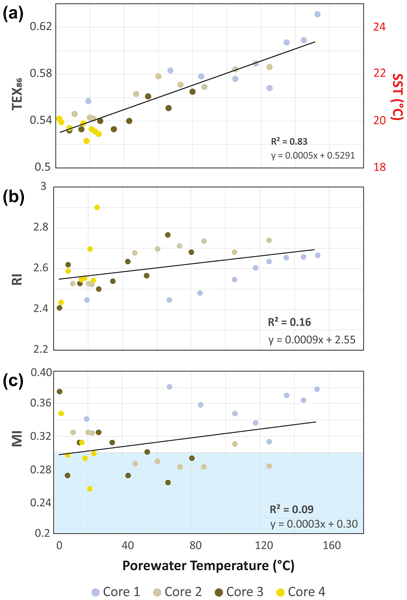
Jeremy N. Bentley, Gregory T. Ventura, Clifford C. Walters, Stefan M. Sievert, and Jeffrey S. Seewald
Biogeosciences, 19, 4459–4477, https://doi.org/10.5194/bg-19-4459-2022, https://doi.org/10.5194/bg-19-4459-2022, 2022
Short summary
Short summary
We demonstrate the TEX86 (TetraEther indeX of 86 carbon atoms) paleoclimate proxy can become heavily impacted by the ocean floor archaeal community. The impact results from source inputs, their diagenetic and catagenetic alteration, and further overprint by the additions of lipids from the ocean floor sedimentary archaeal community. We then present a method to correct the overprints by using IPLs (intact polar lipids) extracted from both water column and subsurface archaeal communities.
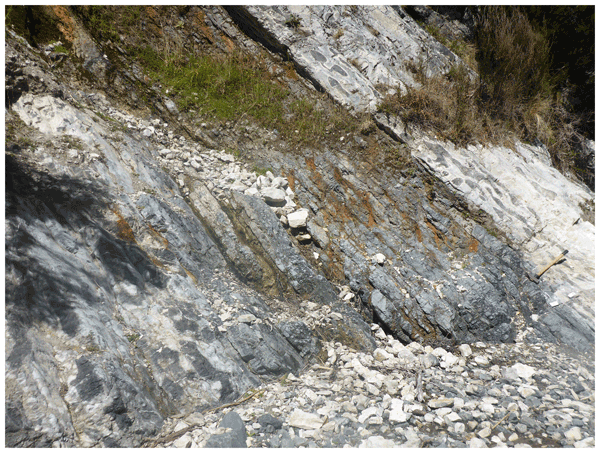
Christopher J. Hollis, Sebastian Naeher, Christopher D. Clowes, B. David A. Naafs, Richard D. Pancost, Kyle W. R. Taylor, Jenny Dahl, Xun Li, G. Todd Ventura, and Richard Sykes
Clim. Past, 18, 1295–1320, https://doi.org/10.5194/cp-18-1295-2022, https://doi.org/10.5194/cp-18-1295-2022, 2022
Short summary
Short summary
Previous studies of Paleogene greenhouse climates identified short-lived global warming events, termed hyperthermals, that provide insights into global warming scenarios. Within the same time period, we have identified a short-lived cooling event in the late Paleocene, which we term a hypothermal, that has potential to provide novel insights into the feedback mechanisms at work in a greenhouse climate.
Andreas Luther, Julian Kostinek, Ralph Kleinschek, Sara Defratyka, Mila Stanisavljević, Andreas Forstmaier, Alexandru Dandocsi, Leon Scheidweiler, Darko Dubravica, Norman Wildmann, Frank Hase, Matthias M. Frey, Jia Chen, Florian Dietrich, Jarosław Nȩcki, Justyna Swolkień, Christoph Knote, Sanam N. Vardag, Anke Roiger, and André Butz
Atmos. Chem. Phys., 22, 5859–5876, https://doi.org/10.5194/acp-22-5859-2022, https://doi.org/10.5194/acp-22-5859-2022, 2022
Short summary
Short summary
Coal mining is an extensive source of anthropogenic methane emissions. In order to reduce and mitigate methane emissions, it is important to know how much and where the methane is emitted. We estimated coal mining methane emissions in Poland based on atmospheric methane measurements and particle dispersion modeling. In general, our emission estimates suggest higher emissions than expected by previous annual emission reports.
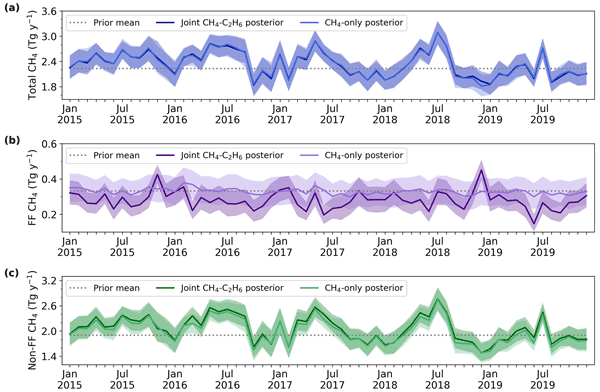
Alice E. Ramsden, Anita L. Ganesan, Luke M. Western, Matthew Rigby, Alistair J. Manning, Amy Foulds, James L. France, Patrick Barker, Peter Levy, Daniel Say, Adam Wisher, Tim Arnold, Chris Rennick, Kieran M. Stanley, Dickon Young, and Simon O'Doherty
Atmos. Chem. Phys., 22, 3911–3929, https://doi.org/10.5194/acp-22-3911-2022, https://doi.org/10.5194/acp-22-3911-2022, 2022
Short summary
Short summary
Quantifying methane emissions from different sources is a key focus of current research. We present a method for estimating sectoral methane emissions that uses ethane as a tracer for fossil fuel methane. By incorporating variable ethane : methane emission ratios into this model, we produce emissions estimates with improved uncertainty characterisation. This method will be particularly useful for studying methane emissions in areas with complex distributions of sources.
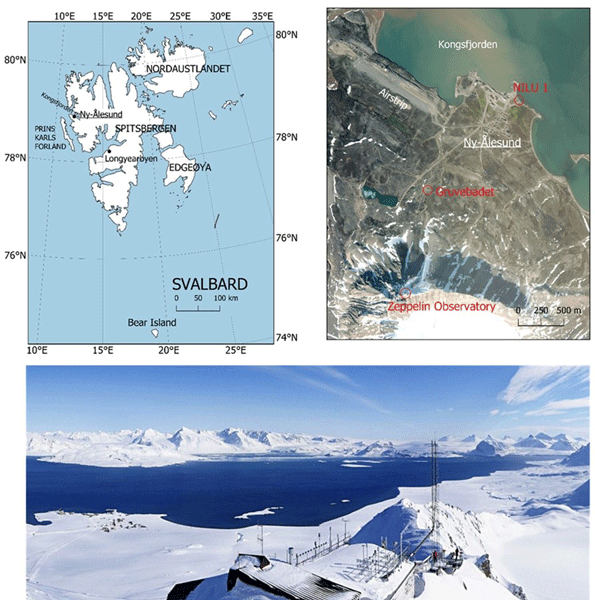
Stephen M. Platt, Øystein Hov, Torunn Berg, Knut Breivik, Sabine Eckhardt, Konstantinos Eleftheriadis, Nikolaos Evangeliou, Markus Fiebig, Rebecca Fisher, Georg Hansen, Hans-Christen Hansson, Jost Heintzenberg, Ove Hermansen, Dominic Heslin-Rees, Kim Holmén, Stephen Hudson, Roland Kallenborn, Radovan Krejci, Terje Krognes, Steinar Larssen, David Lowry, Cathrine Lund Myhre, Chris Lunder, Euan Nisbet, Pernilla B. Nizzetto, Ki-Tae Park, Christina A. Pedersen, Katrine Aspmo Pfaffhuber, Thomas Röckmann, Norbert Schmidbauer, Sverre Solberg, Andreas Stohl, Johan Ström, Tove Svendby, Peter Tunved, Kjersti Tørnkvist, Carina van der Veen, Stergios Vratolis, Young Jun Yoon, Karl Espen Yttri, Paul Zieger, Wenche Aas, and Kjetil Tørseth
Atmos. Chem. Phys., 22, 3321–3369, https://doi.org/10.5194/acp-22-3321-2022, https://doi.org/10.5194/acp-22-3321-2022, 2022
Short summary
Short summary
Here we detail the history of the Zeppelin Observatory, a unique global background site and one of only a few in the high Arctic. We present long-term time series of up to 30 years of atmospheric components and atmospheric transport phenomena. Many of these time series are important to our understanding of Arctic and global atmospheric composition change. Finally, we discuss the future of the Zeppelin Observatory and emerging areas of future research on the Arctic atmosphere.
Regina Gonzalez Moguel, Felix Vogel, Sébastien Ars, Hinrich Schaefer, Jocelyn C. Turnbull, and Peter M. J. Douglas
Atmos. Chem. Phys., 22, 2121–2133, https://doi.org/10.5194/acp-22-2121-2022, https://doi.org/10.5194/acp-22-2121-2022, 2022
Short summary
Short summary
Evaluating methane (CH4) sources in the Athabasca oil sands region (AOSR) is crucial to effectively mitigate CH4 emissions. We tested the use of carbon isotopes to estimate source contributions from key CH4 sources in the AOSR and found that 56 ± 18 % of CH4 emissions originated from surface mining and processing facilities, 34 ± 18 % from tailings ponds, and 10 ± < 1 % from wetlands, confirming previous findings and showing that this method can be successfully used to partition CH4 sources.
Tzu-Hsuan Tu, Li-Ling Chen, Yi-Ping Chiu, Li-Hung Lin, Li-Wei Wu, Francesco Italiano, J. Bruce H. Shyu, Seyed Naser Raisossadat, and Pei-Ling Wang
Biogeosciences, 19, 831–843, https://doi.org/10.5194/bg-19-831-2022, https://doi.org/10.5194/bg-19-831-2022, 2022
Short summary
Short summary
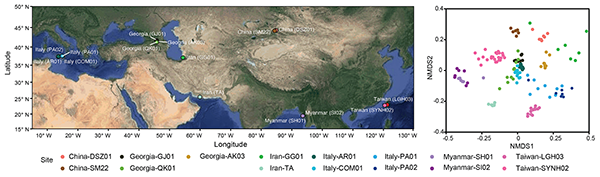
This investigation of microbial biogeography in terrestrial mud volcanoes (MVs) covers study sites over a geographic distance of up to 10 000 km across the Eurasian continent. It compares microbial community compositions' coupling with geochemical data across a 3D space. We demonstrate that stochastic processes operating at continental scales and environmental filtering at local scales drive the formation of patchy habitats and the pattern of diversification for microbes in terrestrial MVs.
Juhi Nagori, Narcisa Nechita-Bândă, Sebastian Oscar Danielache, Masumi Shinkai, Thomas Röckmann, and Maarten Krol
Atmos. Chem. Phys. Discuss., https://doi.org/10.5194/acp-2022-68, https://doi.org/10.5194/acp-2022-68, 2022
Publication in ACP not foreseen
Short summary
Short summary
The sulfur isotopes (32S and 34S) were studied to understand the sources, sinks and processes of carbonyl sulphide (COS) in the atmosphere. COS is an important source of sulfur aerosol in the stratosphere (SSA). Few measurements of COS and SSA exist, but with our 1D model, we were able to match them and show the importance of COS to sulfate formation. Moreover, we are able to highlight some important processes for the COS budget and where measurements may fill a gap in current knowledge.

Mark F. Lunt, Alistair J. Manning, Grant Allen, Tim Arnold, Stéphane J.-B. Bauguitte, Hartmut Boesch, Anita L. Ganesan, Aoife Grant, Carole Helfter, Eiko Nemitz, Simon J. O'Doherty, Paul I. Palmer, Joseph R. Pitt, Chris Rennick, Daniel Say, Kieran M. Stanley, Ann R. Stavert, Dickon Young, and Matt Rigby
Atmos. Chem. Phys., 21, 16257–16276, https://doi.org/10.5194/acp-21-16257-2021, https://doi.org/10.5194/acp-21-16257-2021, 2021
Short summary
Short summary
We present an evaluation of the UK's methane emissions between 2013 and 2020 using a network of tall tower measurement sites. We find emissions that are consistent in both magnitude and trend with the UK's reported emissions, with a declining trend driven by a decrease in emissions from England. The impact of various components of the modelling set-up on these findings are explored through a number of sensitivity studies.
Cited articles
Adnew, G. A., Rockmann, T., Blunier, T., Jørgensen, C. J., Sapper, S. E., Veen, C. van der, Sivan, M., Popa, M. E., and Christiansen, J. R.: Clumped isotope measurements reveal aerobic oxidation of methane below the Greenland ice sheet, Geochim. Cosmochim. Acta, 389, 249–264, https://doi.org/10.1016/j.gca.2024.11.009, 2025.
Ash, J. L., Egger, M., Treude, T., Kohl, I., Cragg, B., Parkes, R. J., Slomp, C. P., Sherwood Lollar, B., and Young, E. D.: Exchange catalysis during anaerobic methanotrophy revealed by 12CH2D2 and 13CH3D in methane, Geochem. Perspect. Lett., 26–30, https://doi.org/10.7185/geochemlet.1910, 2019.
Basu, S., Lan, X., Dlugokencky, E., Michel, S., Schwietzke, S., Miller, J. B., Bruhwiler, L., Oh, Y., Tans, P. P., Apadula, F., Gatti, L. V., Jordan, A., Necki, J., Sasakawa, M., Morimoto, S., Di Iorio, T., Lee, H., Arduini, J., and Manca, G.: Estimating emissions of methane consistent with atmospheric measurements of methane and δ13C of methane, Atmos. Chem. Phys., 22, 15351–15377, https://doi.org/10.5194/acp-22-15351-2022, 2022.
Beaudry, P., Stefansson, A., Fiebig, J., Rhim, J. H., and Ono, S.: High temperature generation and equilibration of methane in terrestrial geothermal systems: Evidence from clumped isotopologues, Geochim. Cosmochim. Acta, 309, 209–234, https://doi.org/10.1016/j.gca.2021.06.034, 2021.
Chen, C., Qin, S., Wang, Y., Holland, G., Wynn, P., Zhong, W., and Zhou, Z.: High temperature methane emissions from Large Igneous Provinces as contributors to late Permian mass extinctions, Nat. Commun., 13, https://doi.org/10.1038/s41467-022-34645-3, 2022.
Chowdhury, A., Ventura, G. T., Owino, Y., Lalk, E. J., MacAdam, N., Dooma, J. M., Ono, S., Fowler, M., MacDonald, A., Bennett, R., MacRae, R. A., Hubert, C. R. J., Bentley, J. N., and Kerr, M. J.: Cold seep formation from salt diapir–controlled deep biosphere oases, P. Natl. Acas. Sci. USA, 121, https://doi.org/10.1073/pnas.2316878121, 2024.
Chung, E. and Arnold, T.: Potential of Clumped Isotopes in Constraining the Global Atmospheric Methane Budget, Glob. Biogeochem. Cycles, 35, https://doi.org/10.1029/2020GB006883, 2021.
Conrad, R.: Quantification of methanogenic pathways using stable carbon isotopic signatures: a review and a proposal, Org. Geochem., 36, 739–752, 2005.
Cumming, E. A., Rietze, A., Morrissey, L. S., Cook, M. C., Rhim, J. H., Ono, S., and Morrill, P. L.: Potential sources of dissolved methane at the Tablelands, Gros Morne National Park, NL, CAN: A terrestrial site of serpentinization, Chem. Geol., 514, 42–53, https://doi.org/10.1016/j.chemgeo.2019.03.019, 2019.
Defratyka, S., Fernandez, J., and Arnold, T.: Methane doubly substituted (clumped) isotopologues database, NERC EDS Centre for Environmental Data Analysis [data set], https://doi.org/10.5285/51ae627da5fb41b8a767ee6c653f83e6, 2025.
Dong, G., Xie, H., Thiagarajan, N., Eiler, J., Zhang, N., Nakagawa, M., Yoshida, N., Eldridge, D., Stolper, D., Albrecht, N., and Kohl, I. E.: Clumped isotope analysis of methane using HR-IRMS: New insights into origin and formation mechanisms of natural gases and a potential geothermometer, 2020.
Dong, G., Xie, H., Formolo, M., Lawson, M., Sessions, A., and Eiler, J.: Clumped isotope effects of thermogenic methane formation: Insights from pyrolysis of hydrocarbons, Geochim. Cosmochim. Acta, 303, 159–183, https://doi.org/10.1016/j.gca.2021.03.009, 2021.
Douglas, P. M. J., Stolper, D. A., Smith, D. A., Walter Anthony, K. M., Paull, C. K., Dallimore, S., Wik, M., Crill, P. M., Winterdahl, M., Eiler, J. M., and Sessions, A. L.: Diverse origins of Arctic and Subarctic methane point source emissions identified with multiply-substituted isotopologues, Geochim. Cosmochim. Acta, 188, 163–188, https://doi.org/10.1016/j.gca.2016.05.031, 2016.
Douglas, P. M. J., Stolper, D. A., Eiler, J. M., Sessions, A. L., Lawson, M., Shuai, Y., Bishop, A., Podlaha, O. G., Ferreira, A. A., Santos Neto, E. V., Niemann, M., Steen, A. S., Huang, L., Chimiak, L., Valentine, D. L., Fiebig, J., Luhmann, A. J., Seyfried, W. E., Etiope, G., Schoell, M., Inskeep, W. P., Moran, J. J., and Kitchen, N.: Methane clumped isotopes: Progress and potential for a new isotopic tracer, Org. Geochem., 113, 262–282, https://doi.org/10.1016/j.orggeochem.2017.07.016, 2017.
Douglas, P. M. J., Moguel, R. G., Anthony, K. M. W., Wik, M., Crill, P. M., Dawson, K. S., Smith, D. A., Yanay, E., Lloyd, M. K., Stolper, D. A., Eiler, J. M., and Sessions, A. L.: Clumped Isotopes Link Older Carbon Substrates With Slower Rates of Methanogenesis in Northern Lakes, Geophys. Res. Lett., 47, https://doi.org/10.1029/2019GL086756, 2020.
Eiler, J. M.: “Clumped-isotope” geochemistry – The study of naturally-occurring, multiply-substituted isotopologues, Earth Planet. Sci. Lett., 262, 309–327, https://doi.org/10.1016/j.epsl.2007.08.020, 2007.
Eiler, J. M.: The Isotopic Anatomies of Molecules and Minerals, Annu. Rev. Earth Planet. Sci., 41, 411–441, https://doi.org/10.1146/annurev-earth-042711-105348, 2013.
Eldridge, D. L., Korol, R., Lloyd, M. K., Turner, A. C., Webb, M. A., Miller, T. F., and Stolper, D. A.: Comparison of Experimental vs Theoretical Abundances of 13CH3D and 12CH2D2 for Isotopically Equilibrated Systems from 1 to 500 °C, ACS Earth Space Chem., 3, 2747–2764, https://doi.org/10.1021/acsearthspacechem.9b00244, 2019.
Eldridge, D. L., Turner, A. C., Bill, M., Conrad, M. E., and Stolper, D. A.: Experimental determinations of carbon and hydrogen isotope fractionations and methane clumped isotope compositions associated with ethane pyrolysis from 550 to 600 °C, Geochim. Cosmochim. Acta, 355, 235–265, https://doi.org/10.1016/j.gca.2023.06.006, 2023.
Ellenbogen, J. B., Borton, M. A., McGivern, B. B., Cronin, D. R., Hoyt, D. W., Freire-Zapata, V., McCalley, C. K., Varner, R. K., Crill, P. M., Wehr, R. A., Chanton, J. P., Woodcroft, B. J., Tfaily, M. M., Tyson, G. W., Rich, V. I., and Wrighton, K. C.: Methylotrophy in the Mire: direct and indirect routes for methane production in thawing permafrost, mSystems, 9, https://doi.org/10.1128/msystems.00698-23, 2024.
Etiope, G. and Sherwood Lollar, B.: Abiotic Methane On Earth, Rev. Geophys., 51, 276–299, https://doi.org/10.1002/rog.20011, 2013.
Giunta, T., Young, E. D., Warr, O., Kohl, I., Ash, J. L., Martini, A., Mundle, S. O. C., Rumble, D., Pérez-Rodríguez, I., Wasley, M., LaRowe, D. E., Gilbert, A., and Sherwood Lollar, B.: Methane sources and sinks in continental sedimentary systems: New insights from paired clumped isotopologues 13CH3D and 12CH2D2, Geochim. Cosmochim. Acta, 245, 327–351, https://doi.org/10.1016/j.gca.2018.10.030, 2019.
Giunta, T., Labidi, J., Kohl, I. E., Ruffine, L., Donval, J. P., Géli, L., Çaðatay, M. N., Lu, H., and Young, E. D.: Evidence for methane isotopic bond re-ordering in gas reservoirs sourcing cold seeps from the Sea of Marmara, Earth Planet. Sci. Lett., 553, 116619, https://doi.org/10.1016/j.epsl.2020.116619, 2021.
Giunta, T., Young, E. D., Labidi, J., Sansjofre, P., Jézéquel, D., Donval, J.-P., Brandily, C., and Ruffine, L.: Extreme methane clumped isotopologue bio-signatures of aerobic and anaerobic methanotrophy: Insights from the Lake Pavin and the Black Sea sediments, Geochim. Cosmochim. Acta, 338, 34–53, https://doi.org/10.1016/j.gca.2022.09.034, 2022.
Gonzalez, Y., Nelson, D. D., Shorter, J. H., McManus, J. B., Dyroff, C., Formolo, M., Wang, D. T., Western, C. M., and Ono, S.: Precise Measurements of 12CH2D2 by Tunable Infrared Laser Direct Absorption Spectroscopy, Anal. Chem., 91, 14967–14974, https://doi.org/10.1021/acs.analchem.9b03412, 2019.
Gruen, D. S., Wang, D. T., Könneke, M., Topçuoðlu, B. D., Stewart, L. C., Goldhammer, T., Holden, J. F., Hinrichs, K.-U., and Ono, S.: Experimental investigation on the controls of clumped isotopologue and hydrogen isotope ratios in microbial methane, Geochim. Cosmochim. Acta, 237, 339–356, https://doi.org/10.1016/j.gca.2018.06.029, 2018.
Haghnegahdar, M. A., Schauble, E. A., and Young, E. D.: A model for 12CH2D2 and 13CH3D as complementary tracers for the budget of atmospheric CH4, Glob. Biogeochem. Cycles, 31, 1387–1407, https://doi.org/10.1002/2017GB005655, 2017.
Haghnegahdar, M. A., Sun, J., Hultquist, N., Hamovit, N. D., Kitchen, N., Eiler, J., Ono, S., Yarwood, S. A., Kaufman, A. J., Dickerson, R. R., Bouyon, A., Magen, C., and Farquhar, J.: Tracing sources of atmospheric methane using clumped isotopes, P. Natl. Acas. Sci. USA, 120, https://doi.org/10.1073/pnas.2305574120, 2023.
Haghnegahdar, M. A., Hultquist, N., Hamovit, N. D., Yarwood, S. A., Bouyon, A., Kaufman, A. J., Sun, J., Magen, C., and Farquhar, J.: A Better Understanding of Atmospheric Methane Sources Using 13CH3D and 12CH2D2 Clumped Isotopes, J. Geophys. Res., 129, https://doi.org/10.1029/2024JG00817, 2024.
Ijiri, A., Inagaki, F., Kubo, Y., Adhikari, R. R., Hattori, S., Hoshino, T., Imachi, H., Kawagucci, S., Morono, Y., Ohtomo, Y., Ono, S., Sakai, S., Takai, K., Toki, T., Wang, D. T., Yoshinaga, M. Y., Arnold, G. L., Ashi, J., Case, D. H., Feseker, T., Hinrichs, K.-U., Ikegawa, Y., Ikehara, M., Kallmeyer, J., Kumagai, H., Lever, M. A., Morita, S., Nakamura, K., Nakamura, Y., Nishizawa, M., Orphan, V. J., Røy, H., Schmidt, F., Tani, A., Tanikawa, W., Terada, T., Tomaru, H., Tsuji, T., Tsunogai, U., Yamaguchi, Y. T., and Yoshida, N.: Deep-biosphere methane production stimulated by geofluids in the Nankai accretionary complex, Sci. Adv., 4, eaao4631, https://doi.org/10.1126/sciadv.aao4631, 2018.
Inagaki, F., Hinrichs, K.-U., Kubo, Y., Bowles, M. W., Heuer, V. B., Hong, W.-L., Hoshino, T., Ijiri, A., Imachi, H., Ito, M., Kaneko, M., Lever, M. A., Lin, Y.-S., Methé, B. A., Morita, S., Morono, Y., Tanikawa, W., Bihan, M., Bowden, S. A., Elvert, M., Glombitza, C., Gross, D., Harrington, G. J., Hori, T., Li, K., Limmer, D., Liu, C.-H., Murayama, M., Ohkouchi, N., Ono, S., Park, Y.-S., Phillips, S. C., Prieto-Mollar, X., Purkey, M., Riedinger, N., Sanada, Y., Sauvage, J., Snyder, G., Susilawati, R., Takano, Y., Tasumi, E., Terada, T., Tomaru, H., Trembath-Reichert, E., Wang, D. T., and Yamada, Y.: Exploring deep microbial life in coal-bearing sediment down to ∼ 2.5 km below the ocean floor, Science, 349, 420–424, https://doi.org/10.1126/science.aaa6882, 2015.
IPCC 2006: IPCC Guidelines for National Greenhouse Gas Inventories, Prepared by the National Greenhouse Gas Inventories Programme, edited by: Eggleston, H. S., Buendia, L., Miwa, K., Ngara, T., and Tanabe, K., IGES, Japan, ISBN 4-88788-032-4, https://www.ipcc-nggip.iges.or.jp/public/2006gl/pdf/0_Overview/V0_0_Cover.pdf (last access: 2 December 2025), 2006.
Jautzy, J. J., M.J.Douglas, P., Xie, H., M.Eiler, J., and D.Clark, I.: CH4 isotopic ordering records ultra-slow hydrocarbon biodegradation in the deep subsurface, Earth Planet. Sci. Lett., 562, https://doi.org/10.1016/j.epsl.2021.116841, 2021.
Jiang, W., Liu, Q., Li, J., Li, Y., Liu, W., Liu, X., Zhang, H., Peng, P., and Xiong, Y.: Deciphering the origin and secondary alteration of deep natural gas in the Tarim basin through paired methane clumped isotopes, Mar. Pet. Geol., 160, https://doi.org/10.1016/j.marpetgeo.2023.106614, 2024.
Kim, J.-H., Martini, A. M., Ono, S., Lalk, E., Ferguson, G., and McIntosh, J. C.: Clumped and conventional isotopes of natural gas reveal basin burial, denudation, and biodegradation history, Geochim. Cosmochim. Acta, 361, 133–151, https://doi.org/10.1016/j.gca.2023.10.017, 2023.
Krause, S. J. E., Liu, J., D.Young, E., and Treude, T.: Δ13CH3D and Δ12CH2D2 signatures of methane aerobically oxidized by Methylosinus trichosporium with implications for deciphering the provenance of methane gases, Earth Planet. Sci. Lett., 593, https://doi.org/10.1016/j.epsl.2022.117681, 2022.
Labidi, J., Young, E. D., Giunta, T., Kohl, I. E., Seewald, J., Tang, H., Lilley, M. D., and Früh-Green, G. L.: Methane thermometry in deep-sea hydrothermal systems: Evidence for re-ordering of doubly-substituted isotopologues during fluid cooling, Geochim. Cosmochim. Acta, 288, 248–261, https://doi.org/10.1016/j.gca.2020.08.013, 2020.
Labidi, J., McCollom, T. M., Giunta, T., Sherwood Lollar, B., Leavitt, W. D., and Young, E. D.: Clumped Isotope Signatures of Abiotic Methane: The Role of the Combinatorial Isotope Effect, J. Geophys. Res., 129, https://doi.org/10.1029/2023JB028194, 2024.
Lalk, E., Pape, T., Gruen, D. S., Kaul, N., Karolewski, J. S., Bohrmann, G., and Ono, S.: Clumped methane isotopologue-based temperature estimates for sources of methane in marine gas hydrates and associated vent gases, Geochim. Cosmochim. Acta, 327, 276–297, https://doi.org/10.1016/j.gca.2022.04.013, 2022.
Lalk, E., Seewald, J. S., Bryndzia, L. T., and Ono, S.: Kilometer-scale Δ13CH3D profiles distinguish end-member mixing from methane production in deep marine sediments, Org. Geochem., 181, https://doi.org/10.1016/j.orggeochem.2023.104630, 2023.
Lalk, E., Velez, A., and Ono, S.: Methane Clumped Isotopologue Variability from Ebullition in a Mid-latitude Lake, ACS Earth Space Chem., https://doi.org/10.1021/acsearthspacechem.3c00282, 2024.
Lan, X., Basu, S., Schwietzke, S., Bruhwiler, L. M. P., Dlugokencky, E. J., Michel, S. E., Sherwood, O. A., Tans, P. P., Thoning, K., Etiope, G., Zhuang, Q., Liu, L., Oh, Y., Miller, J. B., Pétron, G., Vaughn, B. H., and Crippa, M.: Improved Constraints on Global Methane Emissions and Sinks Using δ13C-CH4, Glob. Biogeochem. Cycles, 35, https://doi.org/10.1029/2021GB007000, 2021.
Li, J., Chiu, B. K., Piasecki, A. M., Feng, X., Landis, J. D., Marcum, S., Young, E. D., and Leavitt, W. D.: The evolution of multiply substituted isotopologues of methane during microbial aerobic oxidation, Geochim. Cosmochim. Acta, 381, 223–238, https://doi.org/10.1016/j.gca.2024.06.032, 2024.
Li, J., Ash, J. L., Cobban, A., Kubik, B. C., Rizzo, G., Thompson, M., Guibourdenche, L., Berger, S., Morra, K., Lin, Y., Mueller, E. P., Masterson, A. L., Stein, R., Fogel, M., Torres, M. A., Feng, X., Holden, J. F., Martini, A., Welte, C. U., Jetten, M., Young, E. D., and Leavitt, W. D.: The clumped isotope signatures of multiple methanogenesis metabolisms, Env. Sci Technol, 59, 13798–13810, https://doi.org/10.1021/acs.est.5c03255, 2025a.
Li, J., Liu, Q., Jiang, W., Li, Y., Shuai, Y., and Xiong, Y.: Tracing the Contribution of Abiotic Methane in Deep Natural Gases From the Songliao Basin, China Using Bulk Isotopes and Methane Clumped Isotopologue 12CH2D2, Geochem. Geophys. Geosystems, 26, e2024GC011705, https://doi.org/10.1029/2024GC011705, 2025b.
Lin, Y.-T., Rumble, D., Young, E. D., Labidi, J., Tu, T.-H., Chen, J.-N., Pape, T., Bohrmann, G., Lin, S., Lin, L.-H., and Wang, P.-L.: Diverse Origins of Gases From Mud Volcanoes and Seeps in Tectonically Fragmented Terrane, Geochem. Geophys. Geosystems, 24, https://doi.org/10.1029/2022GC010791, 2023.
Liu, J., Harris, R. L., Ash, J. L., Ferry, J. G., Krause, S. J. E., Labidi, J., Prakash, D., Sherwood Lollar, B., Treude, T., Warr, O., and Young, E. D.: Reversibility controls on extreme methane clumped isotope signatures from anaerobic oxidation of methane, Geochim. Cosmochim. Acta, 348, 165–186, https://doi.org/10.1016/j.gca.2023.02.022, 2023.
Liu, J., Treude, T., Abbasov, O. R., Baloglanov, E. E., Aliyev, A. A., Harris, C. M., Leavitt, W. D., and Young, E. D.: Clumped isotope evidence for microbial alteration of thermogenic methane in terrestrial mud volcanoes, Geology, 52, 22–26, https://doi.org/10.1130/G51667.1, 2024a.
Liu, Q. and Liu, Y.: Clumped-isotope signatures at equilibrium of CH4, NH3, H2O, H2S and SO2, Geochim. Cosmochim. Acta, 175, 252–270, https://doi.org/10.1016/j.gca.2015.11.040, 2016.
Liu, Q., Li, J., Jiang, W., Li, Y., Lin, M., Liu, W., Shuai, Y., Zhang, H., Peng, P., and Xiong, Y.: Application of an absolute reference frame for methane clumped-isotope analyses, Chem. Geol., 646, https://doi.org/10.1016/j.chemgeo.2024.121922, 2024b.
Lopes, J. C., Matos, L. F. de, Harper, M. T., Giallongo, F., Oh, J., Gruen, D., Ono, S., Kindermann, M., Duval, S., and Hristov, A. N.: Effect of 3-nitrooxypropanol on methane and hydrogen emissions, methane isotopic signature, and ruminal fermentation in dairy cows, J. Dairy Sci., 99, 5335–5344, https://doi.org/10.3168/jds.2015-10832, 2016.
Ma, Q., Wu, S., and Tang, Y.: Formation and abundance of doubly-substituted methane isotopologues (13CH3D) in natural gas systems, Geochim. Cosmochim. Acta, 72, 5446–5456, https://doi.org/10.1016/j.gca.2008.08.014, 2008.
Menoud, M., Veen, C. van der, Fernandez, J., Semra, B., Lowry, D., France, J., Fisher, R., Maazallahi, H., Korbeñ, P., Schmidt, M., Stanisavljeviæ, M., Necki, J., Łakomiec, P., Rinne, J., Defratyka, S., Yver-Kwok, C., Vinkovic, K., Andersen, T., Chen, H., and Röckmann, T.: European Methane Isotope Database Coupled with a Global Inventory of Fossil and Non-Fossil ä13C- and ä2H-CH4 Source Signature Measurements: V2.0.0, Utrecht Univ. [data set], https://doi.org/10.24416/UU01-YP43IN, 2022a.
Menoud, M., van der Veen, C., Lowry, D., Fernandez, J. M., Bakkaloglu, S., France, J. L., Fisher, R. E., Maazallahi, H., Stanisavljević, M., Nęcki, J., Vinkovic, K., Łakomiec, P., Rinne, J., Korbeń, P., Schmidt, M., Defratyka, S., Yver-Kwok, C., Andersen, T., Chen, H., and Röckmann, T.: New contributions of measurements in Europe to the global inventory of the stable isotopic composition of methane, Earth Syst. Sci. Data, 14, 4365–4386, https://doi.org/10.5194/essd-14-4365-2022, 2022b.
Mroz, E. J., Alei, M., Cappis, J. H., Guthals, P. R., Mason, A. S., and Rokop, D. J.: Detection of multiply deuterated methane in the atmosphere, Geophys. Res. Lett., 16, 677–678, https://doi.org/10.1029/GL016i007p00677, 1989.
Nisbet, E. G., Manning, M. R., Dlugokencky, E. J., Fisher, R. E., Lowry, D., Michel, S. E., Myhre, C. L., Platt, S. M., Allen, G., Bousquet, P., Brownlow, R., Cain, M., France, J. L., Hermansen, O., Hossaini, R., Jones, A. E., Levin, I., Manning, A. C., Myhre, G., Pyle, J. A., Vaughn, B. H., Warwick, N. J., and White, J. W. C.: Very Strong Atmospheric Methane Growth in the 4 Years 2014–2017: Implications for the Paris Agreement, Glob. Biogeochem. Cycles, 33, 318–342, https://doi.org/10.1029/2018GB006009, 2019.
Nothaft, D. B., Templeton, A. S., Rhim, J. H., Wang, D. T., Labidi, J., Miller, H. M., Boyd, E. S., Matter, J. M., Ono, S., Young, E. D., Kopf, S. H., Kelemen, P. B., and Conrad, M. E.: Geochemical, Biological, and Clumped Isotopologue Evidence for Substantial Microbial Methane Production Under Carbon Limitation in Serpentinites of the Samail Ophiolite, Oman, J. Geophys. Res., 126, https://doi.org/10.1029/2020JG006025, 2021.
Ojeda, L., Etiope, G., Jimenez-Gavilan, P., Martonos, I. M., Rockmann, T., Popa, M. E., Sivan, M., Castro-Gamez, A. F., Benavente, J., and Vadillo, I.: Combining methane clumped and bulk isotopes, temporal variations in molecular and isotopic composition, and hydrochemical and geological proxies to understand methane's origin in the Ronda peridotite massifs (Spain), Chem. Geol., 642, https://doi.org/10.1016/j.chemgeo.2023.121799, 2023.
Ono, S., Wang, D. T., Gruen, D. S., Sherwood Lollar, B., Zahniser, M. S., McManus, B. J., and Nelson, D. D.: Measurement of a Doubly Substituted Methane Isotopologue, 13CH3D, by Tunable Infrared Laser Direct Absorption Spectroscopy, Anal. Chem., 86, 6487–6494, https://doi.org/10.1021/ac5010579, 2014.
Ono, S., Jeemin H. Rhim, Danielle S. Gruen, Heidi Taubner, Martin Kolling, and Gunter Wegener: Clumped isotopologue fractionation by microbial cultures performing the anaerobic oxidation of methane, Geochim. Cosmochim. Acta, 293, 70–85, https://doi.org/10.1016/j.gca.2020.10.015, 2021.
Pataki, D. E.: Seasonal cycle of carbon dioxide and its isotopic composition in an urban atmosphere: Anthropogenic and biogenic effects, J. Geophys. Res., 108, 4735, https://doi.org/10.1029/2003JD003865, 2003.
Prokhorov, I. and Mohn, J.: CleanEx: A Versatile Automated Methane Preconcentration Device for High-Precision Analysis of 13CH4, 12CH3D, and 13CH3D, Anal. Chem., 94, 9981–9986, https://doi.org/10.1021/acs.analchem.2c01949, 2022.
Rhim, J. H. and Ono, S.: Combined carbon, hydrogen, and clumped isotope fractionations reveal differential reversibility of hydrogenotrophic methanogenesis in laboratory cultures, Geochim. Cosmochim. Acta, 335, 383–399, https://doi.org/10.1016/j.gca.2022.07.027, 2022.
Röckmann, T., Popa, M. E., Krol, M. C., and Hofmann, M. E. G.: Statistical clumped isotope signatures, Sci. Rep., 6, https://doi.org/10.1038/srep31947, 2016.
Rumble, D., Ash, J. L., Wang, P.-L., Lin, L.-H., Lin, Y.-T., and Tu, T.-H.: Resolved measurements of 13CDH3 and 12CD2H2 from a mud volcano in Taiwan, J. Asian Earth Sci., 167, 218–221, https://doi.org/10.1016/j.jseaes.2018.03.007, 2018.
Safi, E., Arnold, T., and Rennick, C.: Fractionation of Methane Isotopologues during Preparation for Analysis from Ambient Air, Anal. Chem., 96, 6139–6147, https://doi.org/10.1021/acs.analchem.3c04891, 2024.
Saunois, M., Martinez, A., Poulter, B., Zhang, Z., Raymond, P. A., Regnier, P., Canadell, J. G., Jackson, R. B., Patra, P. K., Bousquet, P., Ciais, P., Dlugokencky, E. J., Lan, X., Allen, G. H., Bastviken, D., Beerling, D. J., Belikov, D. A., Blake, D. R., Castaldi, S., Crippa, M., Deemer, B. R., Dennison, F., Etiope, G., Gedney, N., Höglund-Isaksson, L., Holgerson, M. A., Hopcroft, P. O., Hugelius, G., Ito, A., Jain, A. K., Janardanan, R., Johnson, M. S., Kleinen, T., Krummel, P. B., Lauerwald, R., Li, T., Liu, X., McDonald, K. C., Melton, J. R., Mühle, J., Müller, J., Murguia-Flores, F., Niwa, Y., Noce, S., Pan, S., Parker, R. J., Peng, C., Ramonet, M., Riley, W. J., Rocher-Ros, G., Rosentreter, J. A., Sasakawa, M., Segers, A., Smith, S. J., Stanley, E. H., Thanwerdas, J., Tian, H., Tsuruta, A., Tubiello, F. N., Weber, T. S., van der Werf, G. R., Worthy, D. E. J., Xi, Y., Yoshida, Y., Zhang, W., Zheng, B., Zhu, Q., Zhu, Q., and Zhuang, Q.: Global Methane Budget 2000–2020, Earth Syst. Sci. Data, 17, 1873–1958, https://doi.org/10.5194/essd-17-1873-2025, 2025.
Schoell, M.: Multiple origins of methane in the earth, Chem. Geol., 71, 1–10, https://doi.org/10.1016/0009-2541(88)90101-5, 1988.
Schuit, B. J., Maasakkers, J. D., Bijl, P., Mahapatra, G., van den Berg, A.-W., Pandey, S., Lorente, A., Borsdorff, T., Houweling, S., Varon, D. J., McKeever, J., Jervis, D., Girard, M., Irakulis-Loitxate, I., Gorroño, J., Guanter, L., Cusworth, D. H., and Aben, I.: Automated detection and monitoring of methane super-emitters using satellite data, Atmos. Chem. Phys., 23, 9071–9098, https://doi.org/10.5194/acp-23-9071-2023, 2023.
Sherwood, O. A., Schwietzke, S., Arling, V. A., and Etiope, G.: Global Inventory of Gas Geochemistry Data from Fossil Fuel, Microbial and Burning Sources, version 2017, Earth Syst. Sci. Data, 9, 639–656, https://doi.org/10.5194/essd-9-639-2017, 2017.
Sherwood, O. A., Schwietzke, S., and Lan, X.: Global Inventory of Fossil and Non-fossil ä13C-CH4 Source Signature Measurements for Improved Atmospheric Modeling, version 2020, Earth Syst. Res. Lab., https://doi.org/10.15138/qn55-e011, 2021.
Shuai, Y., Douglas, P. M. J., Zhang, S., Stolper, D. A., Ellis, G. S., Lawson, M., Lewan, M. D., Formolo, M., Mi, J., He, K., Hu, G., and Eiler, J. M.: Equilibrium and non-equilibrium controls on the abundances of clumped isotopologues of methane during thermogenic formation in laboratory experiments: Implications for the chemistry of pyrolysis and the origins of natural gases, Geochim. Cosmochim. Acta, 223, 159–174, https://doi.org/10.1016/j.gca.2017.11.024, 2018a.
Shuai, Y., Etiope, G., Zhang, S., Douglas, P. M. J., Huang, L., and Eiler, J. M.: Methane clumped isotopes in the Songliao Basin (China): New insights into abiotic vs. biotic hydrocarbon formation, Earth Planet. Sci. Lett., 482, 213–221, https://doi.org/10.1016/j.epsl.2017.10.057, 2018b.
Shuai, Y., Xie, H., Zhang, S., Zhang, Y., and Eiler, J. M.: Recognizing the pathways of microbial methanogenesis through methane isotopologues in the subsurface biosphere, Earth Planet. Sci. Lett., 566, https://doi.org/10.1016/j.epsl.2021.116960, 2021.
Sivan, M., Röckmann, T., van der Veen, C., and Popa, M. E.: Extraction, purification, and clumped isotope analysis of methane (Δ13CDH3 and Δ12CD2H2) from sources and the atmosphere, Atmos. Meas. Tech., 17, 2687–2705, https://doi.org/10.5194/amt-17-2687-2024, 2024.
Stolper, D. A., Sessions, A. L., Ferreira, A. A., Santos Neto, E. V., Schimmelmann, A., Shusta, S. S., Valentine, D. L., and Eiler, J. M.: Combined 13C–D and D–D clumping in methane: Methods and preliminary results, Geochim. Cosmochim. Acta, 126, 169–191, https://doi.org/10.1016/j.gca.2013.10.045, 2014a.
Stolper, D. A., Lawson, M., Davis, C. L., Ferreira, A. A., Neto, E. V. S., Ellis, G. S., Lewan, M. D., Martini, A. M., Tang, Y., Schoell, M., Sessions, A. L., and Eiler, J. M.: Formation temperatures of thermogenic and biogenic methane, Science, 344, 1500–1503, https://doi.org/10.1126/science.1254509, 2014b.
Stolper, D. A., Martini, A. M., Clog, M., Douglas, P. M., Shusta, S. S., Valentine, D. L., Sessions, A. L., and Eiler, J. M.: Distinguishing and understanding thermogenic and biogenic sources of methane using multiply substituted isotopologues, Geochim. Cosmochim. Acta, 161, 219–247, https://doi.org/10.1016/j.gca.2015.04.015, 2015.
Stolper, D. A., Lawson, M., Formolo, M. J., Davis, C. L., Douglas, P. M. J., and Eiler, J. M.: The utility of methane clumped isotopes to constrain the origins of methane in natural gas accumulations, Geol. Soc. Lond. Spec. Publ., 468, 23–52, https://doi.org/10.1144/SP468.3, 2018.
Suda, K., Aze, T., Miyairi, Y., Yokoyama, Y., Matsui, Y., Ueda, H., Saito, T., Sato, T., Sawaki, Y., Nakai, R., Tamaki, H., Takahashi, H. A., Morikawa, N., and Ono, S.: The origin of methane in serpentinite-hosted hyperalkaline hot spring at Hakuba Happo, Japan: Radiocarbon, methane isotopologue and noble gas isotope approaches, Earth Planet. Sci. Lett., 585, https://doi.org/10.1016/j.epsl.2022.117510, 2022.
Sun, J., Magen, C., Haghnegahdar, M. A., Liu, J., Fernandez, J. M., and Farquhar, J.: Constraining Wetland and Landfill Methane Emission Signatures Through Atmospheric Methane Clumped Isotopologue Measurements, J. Geophys. Res., 130, https://doi.org/10.1029/2024JG008249, 2025a.
Sun, J., Haghnegahdar, M. A., Fernandez, J. M., Magen, C., and Farquhar, J.: Controls on concentrations and clumped isotopologues of vehicle exhaust methane, PLOS ONE, 20, e0315304, https://doi.org/10.1371/journal.pone.0315304, 2025b.
Sun, T., Cao, J., Qiu, H., Fu, P., Lu, H., Ning, Z., Chen, D., Deng, Y., and Yang, S.: Investigation and optimization of methane purification method for natural gas by two-column gas chromatography: A preliminary test for doubly substituted isotopologue (13CH3D) measurements, Front. Mar. Sci., 10, https://doi.org/10.3389/fmars.2023.969567, 2023.
Taenzer, L., Labidi, J., Masterson, A. L., Feng, X., Rumble, D., Young, E. D., and Leavitt, W. D.: Low Δ12CH2D2 values in microbialgenic methane result from combinatorial isotope effects, Geochim. Cosmochim. Acta, 285, 225–236, https://doi.org/10.1016/j.gca.2020.06.026, 2020.
Thauer, R. K.: Biochemistry of methanogenesis:a tribute to Marjory Stephenson, Microbiology, 144, 2377–2406, 1998.
Thiagarajan, N., Kitchen, N., Xie, H., Ponton, C., Lawson, M., Formolo, M., and Eiler, J.: Identifying thermogenic and microbial methane in deep water Gulf of Mexico Reservoirs, Geochim. Cosmochim. Acta, 275, 188–208, https://doi.org/10.1016/j.gca.2020.02.016, 2020.
Thiagarajan, N., Pedersen, J. H., Brunstad, H., Rinna, J., Lepland, A., and Eiler, J.: Clumped isotope constraints on the origins of reservoir methane from the Barents Sea, Pet. Geosci., 28, https://doi.org/10.1144/petgeo2021-037, 2022.
Tsuji, K., Teshima, H., Sasada, H., and Yoshida, N.: Spectroscopic isotope ratio measurement of doubly-substituted methane, Spectrochim. Acta. A. Mol. Biomol. Spectrosc., 98, 43–46, https://doi.org/10.1016/j.saa.2012.08.028, 2012.
Turner, A. J., Frankenberg, C., and Kort, E. A.: Interpreting contemporary trends in atmospheric methane, Proc. Natl. Acad. Sci., 116, 2805–2813, https://doi.org/10.1073/pnas.1814297116, 2019.
Tyne, R. L., Barry, P. H., Lawson, M., Byrne, D. J., Warr, O., Xie, H., Hillegonds, D. J., Formolo, M., Summers, Z. M., Skinner, B., Eiler, J. M., and Ballentine, C. J.: Rapid microbial methanogenesis during CO2 storage in hydrocarbon reservoirs, Nature, 600, 670–674, https://doi.org/10.1038/s41586-021-04153-3, 2021.
Walter Anthony, K. M., Anthony, P., and Hasson, N.: Upland Yedoma taliks are an unpredicted source of atmospheric methane, Nat. Commun., 15, https://doi.org/10.1038/s41467-024-50346-5, 2024.
Wang, D. T., Gruen, D. S., Sherwood Lollar, B., Hinrichs, K.-U., Stewart, L. C., Holden, J. F., Hristov, A. N., Pohlman, J. W., Morrill, P. L., Könneke, M., Delwiche, K. B., Reeves, E. P., Sutcliffe, C. N., Ritter, D. J., Seewald, J. S., McIntosh, J. C., Hemond, H. F., Kubo, M. D., Cardace, D., Hoehler, T. M., and Ono, S.: Nonequilibrium clumped isotope signals in microbial methane, Science, 348, 428–431, https://doi.org/10.1126/science.aaa4326, 2015.
Wang, D. T., Welander, P. V., and Ono, S.: Fractionation of the methane isotopologues 13CH4, 12CH3D, and 13CH3D during aerobic oxidation of methane by Methylococcus capsulatus (Bath), Geochim. Cosmochim. Acta, 192, 186–202, https://doi.org/10.1016/j.gca.2016.07.031, 2016.
Wang, D. T., Reeves, E. P., McDermott, J. M., Seewald, J. S., and Ono, S.: Clumped isotopologue constraints on the origin of methane at seafloor hot springs, Geochim. Cosmochim. Acta, 223, 141–158, https://doi.org/10.1016/j.gca.2017.11.030, 2018.
Wang, D. T., Sattler, A., Paccagnini, M., and Chen, F. G.: Method for calibrating methane clumped isotope measurements via catalytic equilibration of methane isotopologues on ã-alumina, Rapid Commun. Mass Spectrom., 34, https://doi.org/10.1002/rcm.8555, 2019.
Wang, X., Cong-Qiang Liu, Naizhong Zhang, Sheng Xu, Zhiyong Pang, Si-Liang Li, Hu Ding, Jianfa Chen, Zengye Xie, and Rob M. Ellama: Clumped methane isotopologues (13CH3D and 12CH2D2) of natural samples measured using a high-resolution mass spectrometer with an improved pretreatment system, J. Anal. At. Spectrom., https://doi.org/10.1039/d2ja00315e, 2023a.
Wang, X., Liu, C.-Q., Yi, Y., Zeng, M., Li, S.-L., and Niu, X.: Machine Learning Predicts the Methane Clumped Isotopologue (12CH2D2) Distributions Constrain Biogeochemical Processes and Estimates the Potential Budget, Environ. Sci., 57, 17876–17888, https://doi.org/10.1021/acs.est.3c00184, 2023b.
Wang, X., Chen, B., Chen, L., Dong, G., Csernica, T., Zhang, N., Liu, J., Shuai, Y., Liu, C.-Q., Xu, Z., Li, S.-L., and Xu, S.: Biogenic methane clumped isotope signatures: Insights from microbially enhanced coal bed methane, Fuel, 365, https://doi.org/10.1016/j.fuel.2024.131307, 2024a.
Wang, X., Biying Chen, Hui Nai, Cong-Qiang Liu, Guannan Dong, Naizhong Zhang, Si-Liang Li, Jonathan Gropp, Jennifer McIntosh, Rob M. Ellam, John M. Eiler, and Sheng Xu: Clumped isotopes constrain thermogenic and secondary microbial methane origins in coal bed methane, Earth Planet. Sci. Lett., 647, 119023, https://doi.org/10.1016/j.epsl.2024.119023, 2024b.
Wang, X., Chen, B., Dong, G., Zhang, N., Liu, W., Han, J., Liu, C.-Q., Li, S.-L., Eiler, J. M., and Xu, S.: Microbial contribution estimated by clumped isotopologues (13CH3D and 12CH2D2) characteristics in a CO2 enhanced coal bed methane reservoir, Sci. Total Environ., 922, 170926, https://doi.org/10.1016/j.scitotenv.2024.170926, 2024c.
Wang, Z., Schauble, E. A., and Eiler, J. M.: Equilibrium thermodynamics of multiply substituted isotopologues of molecular gases, Geochim. Cosmochim. Acta, 68, 4779–4797, https://doi.org/10.1016/j.gca.2004.05.039, 2004.
Warr, O., Young, E. D., Giunta, T., Kohl, I. E., Ash, J. L., and Sherwood Lollar, B.: High-resolution, long-term isotopic and isotopologue variation identifies the sources and sinks of methane in a deep subsurface carbon cycle, Geochim. Cosmochim. Acta, 294, 315–334, https://doi.org/10.1016/j.gca.2020.12.002, 2021.
Webb, M. A. and Miller, T. F.: Position-Specific and Clumped Stable Isotope Studies: Comparison of the Urey and Path-Integral Approaches for Carbon Dioxide, Nitrous Oxide, Methane, and Propane, J. Phys. Chem. A, 118, 467–474, https://doi.org/10.1021/jp411134v, 2014.
Whitehill, A. R., Joelsson, L. M. T., Schmidt, J. A., Wang, D. T., Johnson, M. S., and Ono, S.: Clumped isotope effects during OH and Cl oxidation of methane, Geochim. Cosmochim. Acta, 196, 307–325, https://doi.org/10.1016/j.gca.2016.09.012, 2017.
Whiticar, M. J.: Carbon and hydrogen isotope systematics of bacterial formation and oxidation of methane, Chem. Geol., 161, 291–314, https://doi.org/10.1016/S0009-2541(99)00092-3, 1999.
Xia, X. and Gao, Y.: Kinetic clumped isotope fractionation during the thermal generation and hydrogen exchange of methane, Geochim. Cosmochim. Acta, 248, 252–273, https://doi.org/10.1016/j.gca.2019.01.004, 2019.
Xie, H., Dong, G., Formolo, M., Lawson, M., Liu, J., Cong, F., Mangenot, X., Shuai, Y., Ponton, C., and Eiler, J.: The evolution of intra- and inter-molecular isotope equilibria in natural gases with thermal maturation, Geochim. Cosmochim. Acta, 307, 22–41, https://doi.org/10.1016/j.gca.2021.05.012, 2021.
Yeung, L. Y.: Combinatorial effects on clumped isotopes and their significance in biogeochemistry, Geochim. Cosmochim. Acta, 172, 22–38, https://doi.org/10.1016/j.gca.2015.09.020, 2016.
Young, E. D.: A Two-Dimensional Perspective on CH4 Isotope Clumping: Distinguishing Process from Source, in: Deep Carbon, edited by: Orcutt, B. N., Daniel, I., and Dasgupta, R., Cambridge University Press, 388–414, https://doi.org/10.1017/9781108677950.013, 2019.
Young, E. D., Rumble, D., Freedman, P., and Mills, M.: A large-radius high-mass-resolution multiple-collector isotope ratio mass spectrometer for analysis of rare isotopologues of O2, N2, CH4 and other gases, Int. J. Mass Spectrom., 401, 1–10, https://doi.org/10.1016/j.ijms.2016.01.006, 2016.
Young, E. D., Kohl, I. E., Sherwood Lollar, B., Etiope, G., Rumble, D., Li, S., Haghnegahdar, M. A., Schauble, E. A., McCain, K. A., Foustoukos, D. I., Sutclife, C., Warr, O., Ballentine, C. J., Onstott, T. C., Hosgormez, H., Neubeck, A., Marques, J. M., Pérez-Rodríguez, I., Rowe, A. R., LaRowe, D. E., Magnabosco, C., Yeung, L. Y., Ash, J. L., and Bryndzia, L. T.: The relative abundances of resolved 12CH2D2 and 13CH3D and mechanisms controlling isotopic bond ordering in abiotic and biotic methane gases, Geochim. Cosmochim. Acta, 203, 235–264, https://doi.org/10.1016/j.gca.2016.12.041, 2017.
Young, E. D., Labidi, J., and Kohl, I. E.: Advances in measuring multiply-substituted isotopologues of gas molecules with geochemical applications, in: Treatise on Geochemistr, Elsevier, 645–670, ISBN 978-0-323-99763-8, https://doi.org/10.1016/B978-0-323-99762-1.00141-8, 2025.
Zhang, N., Snyder, G. T., Lin, M., Nakagawa, M., Gilbert, A., Yoshida, N., Matsumoto, R., and Sekine, Y.: Doubly substituted isotopologues of methane hydrate (13CH3D and 12CH2D2): Implications for methane clumped isotope effects, source apportionments and global hydrate reservoirs, Geochim. Cosmochim. Acta, 315, 127–151, https://doi.org/10.1016/j.gca.2021.08.027, 2021.
Zhang, N., Prokhorov, I., Kueter, N., Li, G., Tuzson, B., Magyar, P. M., Ebert, V., Sivan, M., Nakagawa, M., Gilbert, A., Ueno, Y., Yoshida, N., Röckmann, T., Bernasconi, S. M., Emmenegger, L., and Mohn, J.: Rapid High-Sensitivity Analysis of Methane Clumped Isotopes (Δ13CH3D and Δ12CH2D2) Using Mid-Infrared Laser Spectroscopy, Anal. Chem., https://doi.org/10.1021/acs.analchem.4c05406, 2025.
Short summary
Measurement of methane’s doubly substituted isotopologues at natural abundances holds promise for better constraining the Earth’s atmospheric CH4 budget. We compiled 1475 measurements from field samples and laboratory experiments, conducted since 2014, to facilitate the differentiation of CH4 formation pathways and processes, to identify existing gaps limiting application of Δ13CH3D and Δ12CH2D2, and to develop isotope ratio source signature inputs for global CH4 flux modelling.
Measurement of methane’s doubly substituted isotopologues at natural abundances holds promise...


Altmetrics
Final-revised paper
Preprint