Articles | Volume 17, issue 12
https://doi.org/10.5194/essd-17-6703-2025
© Author(s) 2025. This work is distributed under
the Creative Commons Attribution 4.0 License.
the Creative Commons Attribution 4.0 License.
https://doi.org/10.5194/essd-17-6703-2025
© Author(s) 2025. This work is distributed under
the Creative Commons Attribution 4.0 License.
the Creative Commons Attribution 4.0 License.
Data description article
| 
03 Dec 2025
Data description article |
| 03 Dec 2025
| 03 Dec 2025
CropLayer: a 2 m resolution cropland map of China for 2020 from Mapbox and Google satellite imagery
Hao Jiang
Guangdong Engineering Technology Research Center of Remote Sensing Big Data Application, Key Lab of Guangdong for Utilization of Remote Sensing and Geographical Information System, Guangzhou Institute of Geography, Guangdong Academy of Sciences, Guangzhou 510070, China
Mengjun Ku
Guangdong Engineering Technology Research Center of Remote Sensing Big Data Application, Key Lab of Guangdong for Utilization of Remote Sensing and Geographical Information System, Guangzhou Institute of Geography, Guangdong Academy of Sciences, Guangzhou 510070, China
Xia Zhou
CORRESPONDING AUTHOR

Guangdong Engineering Technology Research Center of Remote Sensing Big Data Application, Key Lab of Guangdong for Utilization of Remote Sensing and Geographical Information System, Guangzhou Institute of Geography, Guangdong Academy of Sciences, Guangzhou 510070, China
Qiong Zheng
Department of Geomatics Engineering, School of Traffic & Transportation Engineering, Changsha University of Science & Technology, Changsha 410114, China
Yangxiaoyue Liu
State Key Laboratory of Resources and Environmental Information Systems, Institute of Geographic Sciences and Natural Resources Research, Chinese Academy of Sciences, Beijing, China
Jianhui Xu
Guangdong Engineering Technology Research Center of Remote Sensing Big Data Application, Key Lab of Guangdong for Utilization of Remote Sensing and Geographical Information System, Guangzhou Institute of Geography, Guangdong Academy of Sciences, Guangzhou 510070, China
Dan Li
Guangdong Engineering Technology Research Center of Remote Sensing Big Data Application, Key Lab of Guangdong for Utilization of Remote Sensing and Geographical Information System, Guangzhou Institute of Geography, Guangdong Academy of Sciences, Guangzhou 510070, China
Chongyang Wang
Guangdong Engineering Technology Research Center of Remote Sensing Big Data Application, Key Lab of Guangdong for Utilization of Remote Sensing and Geographical Information System, Guangzhou Institute of Geography, Guangdong Academy of Sciences, Guangzhou 510070, China
Jiayi Wei
Guangdong Engineering Technology Research Center of Remote Sensing Big Data Application, Key Lab of Guangdong for Utilization of Remote Sensing and Geographical Information System, Guangzhou Institute of Geography, Guangdong Academy of Sciences, Guangzhou 510070, China
Jing Zhang
Guangdong Engineering Technology Research Center of Remote Sensing Big Data Application, Key Lab of Guangdong for Utilization of Remote Sensing and Geographical Information System, Guangzhou Institute of Geography, Guangdong Academy of Sciences, Guangzhou 510070, China
Shuisen Chen
Guangdong Engineering Technology Research Center of Remote Sensing Big Data Application, Key Lab of Guangdong for Utilization of Remote Sensing and Geographical Information System, Guangzhou Institute of Geography, Guangdong Academy of Sciences, Guangzhou 510070, China
Jianxi Huang
Faculty of Geosciences and Engineering, Southwest Jiaotong University, Chengdu, China
College of Land Science and Technology, China Agricultural University, Beijing, China
Related authors

Chongyang Wang, Li Wang, Danni Wang, Dan Li, Chenghu Zhou, Hao Jiang, Qiong Zheng, Shuisen Chen, Kai Jia, Yangxiaoyue Liu, Ji Yang, Xia Zhou, and Yong Li
Geosci. Model Dev., 14, 6833–6846, https://doi.org/10.5194/gmd-14-6833-2021, https://doi.org/10.5194/gmd-14-6833-2021, 2021
Short summary
Short summary
The turbidity maximum zone (TMZ) is a special phenomenon in estuaries worldwide. However, the extraction methods and criteria used to describe the TMZ vary significantly both spatially and temporally. This study proposes an new index, the turbidity maximum zone index, based on the corresponding relationship of total suspended solid concentration and Chl a concentration, which could better extract TMZs in different estuaries and on different dates.
Yanan Wen, Tuo Chen, Xuecao Li, Tiecheng Bai, Ke Yao, Liheng Zhong, Han Chen, Meiling Liu, Xieqin Huang, Shunlin Liang, Shuangxi Miao, and Jianxi Huang
Earth Syst. Sci. Data Discuss., https://doi.org/10.5194/essd-2026-347, https://doi.org/10.5194/essd-2026-347, 2026
Revised manuscript under review for ESSD
Short summary
Short summary
We developed a new method to track winter wheat growth across the world from 2001 to 2020. Using satellite data, we produced high-resolution maps (1 km) that show exactly where and how much winter wheat was planted over the last two decades. The results proved to be highly accurate when compared against international agricultural records. As the first long-term, global view of its kind, this map series is a vital tool for scientists and policymakers working to eliminate hunger.
Kaiqi Du, Guilong Xiao, Jianxi Huang, Xiaoyan Kang, Xuecao Li, Yelu Zeng, Quandi Niu, Haixiang Guan, and Jianjian Song
Earth Syst. Sci. Data Discuss., https://doi.org/10.5194/essd-2024-432, https://doi.org/10.5194/essd-2024-432, 2025
Manuscript not accepted for further review
Short summary
Short summary
In this manuscript, we developed a 500-m spatial resolution monthly SIF dataset for the China region (CNSIF) from 2003 to 2022 based on high-resolution apparent reflectance and thermal infrared data. The comparison of CNSIF with tower-based SIF observations, tower-based GPP observations, MODIS GPP products, and other SIF datasets has validated CNSIF's ability to capture photosynthetic activity across different vegetation types and its potential for estimating carbon fluxes.
Wanru He, Xuecao Li, Yuyu Zhou, Zitong Shi, Guojiang Yu, Tengyun Hu, Yixuan Wang, Jianxi Huang, Tiecheng Bai, Zhongchang Sun, Xiaoping Liu, and Peng Gong
Earth Syst. Sci. Data, 15, 3623–3639, https://doi.org/10.5194/essd-15-3623-2023, https://doi.org/10.5194/essd-15-3623-2023, 2023
Short summary
Short summary
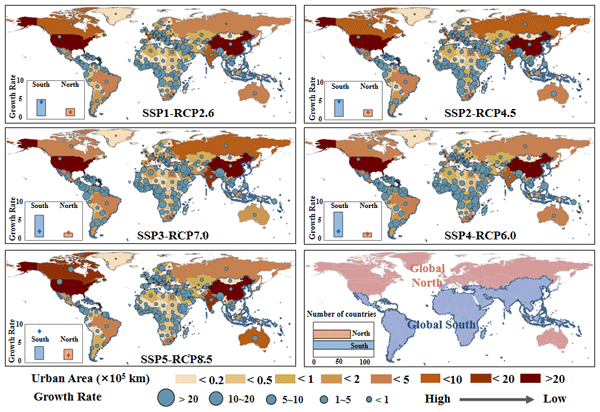
Most existing global urban products with future projections were developed in urban and non-urban categories, which ignores the gradual change of urban development at the local scale. Using annual global urban extent data from 1985 to 2015, we forecasted global urban fractional changes under eight scenarios throughout 2100. The developed dataset can provide spatially explicit information on urban fractions at 1 km resolution, which helps support various urban studies (e.g., urban heat island).
Ruoque Shen, Baihong Pan, Qiongyan Peng, Jie Dong, Xuebing Chen, Xi Zhang, Tao Ye, Jianxi Huang, and Wenping Yuan
Earth Syst. Sci. Data, 15, 3203–3222, https://doi.org/10.5194/essd-15-3203-2023, https://doi.org/10.5194/essd-15-3203-2023, 2023
Short summary
Short summary
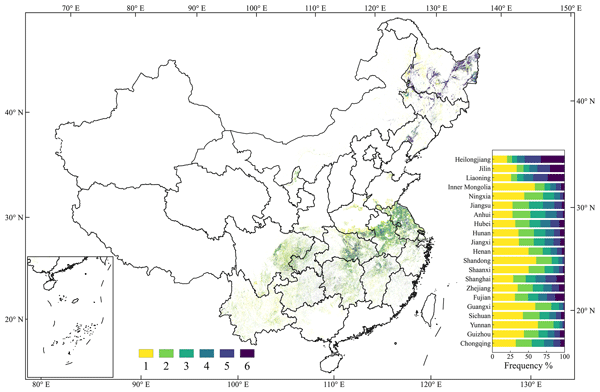
Paddy rice is the second-largest grain crop in China and plays an important role in ensuring global food security. This study developed a new rice-mapping method and produced distribution maps of single-season rice in 21 provincial administrative regions of China from 2017 to 2022 at a 10 or 20 m resolution. The accuracy was examined using 108 195 survey samples and county-level statistical data, and we found that the distribution maps have good accuracy.
Quandi Niu, Xuecao Li, Jianxi Huang, Hai Huang, Xianda Huang, Wei Su, and Wenping Yuan
Earth Syst. Sci. Data, 14, 2851–2864, https://doi.org/10.5194/essd-14-2851-2022, https://doi.org/10.5194/essd-14-2851-2022, 2022
Short summary
Short summary
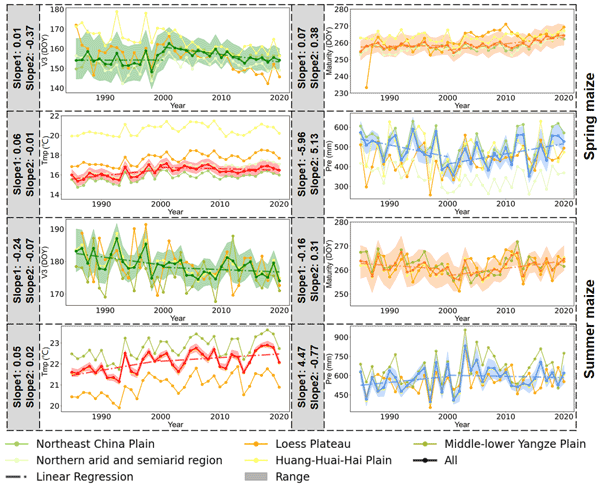
In this paper we generated the first national maize phenology product with a fine spatial resolution (30 m) and a long temporal span (1985–2020) in China, using Landsat images. The derived phenological indicators agree with in situ observations and provide more spatial details than moderate resolution phenology products. The extracted maize phenology dataset can support precise yield estimation and deepen our understanding of the response of agroecosystem to global warming in the future.
Chongyang Wang, Li Wang, Danni Wang, Dan Li, Chenghu Zhou, Hao Jiang, Qiong Zheng, Shuisen Chen, Kai Jia, Yangxiaoyue Liu, Ji Yang, Xia Zhou, and Yong Li
Geosci. Model Dev., 14, 6833–6846, https://doi.org/10.5194/gmd-14-6833-2021, https://doi.org/10.5194/gmd-14-6833-2021, 2021
Short summary
Short summary
The turbidity maximum zone (TMZ) is a special phenomenon in estuaries worldwide. However, the extraction methods and criteria used to describe the TMZ vary significantly both spatially and temporally. This study proposes an new index, the turbidity maximum zone index, based on the corresponding relationship of total suspended solid concentration and Chl a concentration, which could better extract TMZs in different estuaries and on different dates.
Cited articles
Bhosale, Y. H., Zanwar, S. R., Ali, S. S., Vaidya, N. S., Auti, R. A., and Patil, D. H.: Multi-plant and multi-crop leaf disease detection and classification using deep neural networks, machine learning, image processing with precision agriculture-A review, International Conference on Computer Communication and Informatics (ICCCI), 1–7, https://doi.org/10.1109/ICCCI56745.2023.10128246, 2023.
Bontemps, S., Arias, M., Cara, C., Dedieu, G., Guzzonato, E., Hagolle, O., Inglada, J., Morin, D., Rabaute, T., and Savinaud, M.: “Sentinel-2 for agriculture”: Supporting global agriculture monitoring, 2015 IEEE International Geoscience and Remote Sensing Symposium (IGARSS), 4185–4188, https://doi.org/10.1109/IGARSS.2015.7326748, 2015.
Burt, P. J., Hong, T.-H., and Rosenfeld, A.: Segmentation and estimation of image region properties through cooperative hierarchial computation, IEEE Transactions on Systems Man and Cybernetics, 11, 802–809, https://doi.org/10.1109/TSMC.1981.4308619, 1981.
Chen, T. and Guestrin, C.: Xgboost: A scalable tree boosting system, Proceedings of the 22nd ACM SIGKDD international conference on knowledge discovery and data mining, 785–794, https://doi.org/10.1145/2939672.2939785, 2016.
Chen, X., Yu, L., Du, Z., Liu, Z., Qi, Y., Liu, T., and Gong, P.: Toward sustainable land use in China: A perspective on China's national land surveys, Land Use Policy, 123, 106428, https://doi.org/10.1016/j.landusepol.2022.106428, 2022.
Cheng, B., Misra, I., Schwing, A. G., Kirillov, A., and Girdhar, R.: Masked-attention mask transformer for universal image segmentation, Proceedings of the IEEE/CVF conference on computer vision and pattern recognition, 1290–1299, https://doi.org/10.48550/arXiv.2112.01527, 2022.
Cui, Y., Liu, R., Li, Z., Zhang, C., Song, X.-P., Yang, J., Yu, L., Chen, M., and Dong, J.: Decoding the inconsistency of six cropland maps in China, Crop Journal, 12, 281–294, https://doi.org/10.1016/j.cj.2023.11.011, 2024a.
Cui, Y., Dong, J., Zhang, C., Yang, J., Chen, N., Guo, P., Di, Y., Chen, M., Li, A., and Liu, R.: Validation and refinement of cropland map in southwestern China by harnessing ten contemporary datasets, Scientific Data, 11, 671, https://doi.org/10.1038/s41597-024-03508-5, 2024b.
Dong, J., Fu, Y., Wang, J., Tian, H., Fu, S., Niu, Z., Han, W., Zheng, Y., Huang, J., and Yuan, W.: Early-season mapping of winter wheat in China based on Landsat and Sentinel images, Earth Syst. Sci. Data, 12, 3081–3095, https://doi.org/10.5194/essd-12-3081-2020, 2020.
Gao, G., Li, L., Chen, H., Jiang, N., Li, S., Bian, Q., Bao, H., and Rao, C.: No-Reference Quality Assessment of Extended Target Adaptive Optics Images Using Deep Neural Network, Sensors, 24, 1, https://doi.org/10.3390/s24010001, 2024.
Gong, P., Liu, H., Zhang, M., Li, C., Wang, J., Huang, H., Clinton, N., Ji, L., Li, W., and Bai, Y.: Stable classification with limited sample: Transferring a 30-m resolution sample set collected in 2015 to mapping 10-m resolution global land cover in 2017, Science Bulletin, 64, 370–373, https://doi.org/10.1016/j.scib.2019.03.002, 2019.
Hansen, M. C. and Loveland, T. R.: A review of large area monitoring of land cover change using Landsat data, Remote Sensing of Environment, 122, 66–74, https://doi.org/10.1016/j.rse.2011.08.024, 2012.
He, K., Zhang, X., Ren, S., and Sun, J.: Deep residual learning for image recognition, Proceedings of the IEEE conference on computer vision and pattern recognition, 770–778, https://doi.org/10.1109/CVPR.2016.90, 2016.
Jiang, H., Xu, J., Zhang, X., Zhou, X., Liu, Y., Ku, M., Jia, K., Dai, X., Sun, Y., and Chen, S.: Cropland inundation mapping in a mountain dominated region based on multi-resolution remotely sensed imagery and active learning for semantic segmentation, Journal of Hydrology, 639, 131609, https://doi.org/10.1016/j.jhydrol.2024.131609, 2024.
Jiang, H., Zhou, X., and Ku, M.: CropLayer: 2-meter resolution cropland mapping dataset for China in 2020 (v1.0), Zenodo [data set], https://doi.org/10.5281/zenodo.14726428, 2025.
Jun, C., Ban, Y., and Li, S.: Open access to Earth land-cover map, Nature, 514, 434–434, https://doi.org/10.1038/514434c, 2014.
Kang, S. and Eltahir, E. A. B.: North China Plain threatened by deadly heatwaves due to climate change and irrigation, Nature Communications, 9, 2894, https://doi.org/10.1038/s41467-018-05252-y, 2018.
Karra, K., Kontgis, C., Statman-Weil, Z., Mazzariello, J. C., Mathis, M., and Brumby, S. P.: Global land use/land cover with Sentinel 2 and deep learning, 2021 IEEE international geoscience and remote sensing symposium IGARSS, 4704–4707, https://doi.org/10.1109/IGARSS47720.2021.9553499, 2021.
Kuang, W., Liu, J., Tian, H., Shi, H., Dong, J., Song, C., Li, X., Du, G., Hou, Y., and Lu, D.: Cropland redistribution to marginal lands undermines environmental sustainability, National Science Review, 9, nwab091, https://doi.org/10.1093/nsr/nwab091, 2022.
Li, J., Xu, M., Xiang, L., Chen, D., Zhuang, W., Yin, X., and Li, Z.: Foundation models in smart agriculture: Basics, opportunities, and challenges, Computers and Electronics in Agriculture, 222, 109032, https://doi.org/10.1016/j.compag.2024.109032, 2024.
Li, X., Fang, B., Li, Y., Li, D., and He, S.: Spatio-temporal coupling evolution and zoning regulation of grain-to-arable value ratio and cropping structures in China, Acta Geographia Sinica, 77, 2721–2737, https://doi.org/10.11821/dlxb202211003, 2022.
Li, Z., He, W., Cheng, M., Hu, J., Yang, G., and Zhang, H.: SinoLC-1: the first 1 m resolution national-scale land-cover map of China created with a deep learning framework and open-access data, Earth Syst. Sci. Data, 15, 4749–4780, https://doi.org/10.5194/essd-15-4749-2023, 2023.
Liu, L., Xiao, X., Qin, Y., Wang, J., Xu, X., Hu, Y., and Qiao, Z.: Mapping cropping intensity in China using time series Landsat and Sentinel-2 images and Google Earth Engine, Remote Sensing of Environment, 239, 111624, https://doi.org/10.1016/j.rse.2019.111624, 2020.
Liu, S., Wang, L., and Zhang, J.: The dataset of main grain land changes in China over 1985–2020, Scientific Data, 11, 1430, https://doi.org/10.1038/s41597-024-04292-y, 2024.
Maryada, S. K., Devegowda, D., Rai, C., Curtis, M. , Ebert, D., and Danala, G.: An improved data-driven method for the prediction of elastic properties in unconventional shales from SEM images, Geoenergy Science and Engineering, 254, 214043, https://doi.org/10.1016/j.geoen.2025.214043, 2025.
Mittal, S., Niemeijer, J., Schafer, J. P., and Brox, T.: Best Practices in Active Learning for Semantic Segmentation, DAGM German Conference on Pattern Recognition, 427–442, https://doi.org/10.48550/arXiv.2302.04075, 2023.
Piao, S., Ciais, P., Huang, Y., Shen, Z., Peng, S., Li, J., Zhou, L., Liu, H., Ma, Y., Ding, Y., Friedlingstein, P., Liu, C., Tan, K., Yu, Y., Zhang, T., and Fang, J.: The impacts of climate change on water resources and agriculture in China, Nature, 467, 43–51, https://doi.org/10.1038/nature09364, 2010.
Qiu, B., Lin, D., Chen, C., Yang, P., Tang, Z., Jin, Z., Ye, Z., Zhu, X., Duan, M., and Huang, H.: From cropland to cropped field: A robust algorithm for national-scale mapping by fusing time series of Sentinel-1 and Sentinel-2, International Journal of Applied Earth Observation and Geoinformation, 113, 103006, https://doi.org/10.1016/j.jag.2022.103006, 2022.
Qiu, B., Liu, B., Tang, Z., Dong, J., Xu, W., Liang, J., Chen, N., Chen, J., Wang, L., Zhang, C., Li, Z., and Wu, F.: National-scale 10-m maps of cropland use intensity in China during 2018–2023, Scientific Data, 11, 691, https://doi.org/10.1038/s41597-024-03456-0, 2024.
Radford, A., Kim, J. W., Hallacy, C., Ramesh, A., Goh, G., Agarwal, S., Sastry, G., Askell, A., Mishkin, P., and Clark, J.: Learning transferable visual models from natural language supervision, International conference on machine learning, 139, 8748–8763, https://doi.org/10.48550/arXiv.2103.00020, 2021.
Safonova, A., Ghazaryan, G., Stiller, S., Main-Knorn, M., Nendel, C., and Ryo, M.: Ten deep learning techniques to address small data problems with remote sensing, International Journal of Applied Earth Observation and Geoinformation, 125, 103569, https://doi.org/10.1016/j.jag.2023.103569, 2023.
Salmon, J. M., Friedl, M. A., Frolking, S., Wisser, D., and Douglas, E. M.: Global rain-fed, irrigated, and paddy croplands: A new high resolution map derived from remote sensing, crop inventories and climate data, International Journal of Applied Earth Observation and Geoinformation, 38, 321–334, https://doi.org/10.1016/j.jag.2015.01.014, 2015.
Settles, B.: Active learning literature survey, Technical Report, University of Wisconsin-Madison. Department of Computer Sciences, https://minds.wisconsin.edu/handle/1793/60660 (last access: 26 November 2025), 2009.
Tu, Y., Wu, S., Chen, B., Weng, Q., Bai, Y., Yang, J., Yu, L., and Xu, B.: A 30 m annual cropland dataset of China from 1986 to 2021, Earth Syst. Sci. Data, 16, 2297–2316, https://doi.org/10.5194/essd-16-2297-2024, 2024.
Wu, B., Zhang, M., Zeng, H., Tian, F., Potgieter, A. B., Qin, X., Yan, N., Chang, S., Zhao, Y., and Dong, Q.: Challenges and opportunities in remote sensing-based crop monitoring: A review, National Science Review, 10, nwac290, https://doi.org/10.1093/nsr/nwac290, 2023.
Xian, G., Homer, C., and Fry, J.: Updating the 2001 National Land Cover Database land cover classification to 2006 by using Landsat imagery change detection methods, Remote Sensing of Environment, 113, 1133–1147, https://doi.org/10.1016/j.rse.2009.02.004, 2009.
Xie, E., Wang, W., Yu, Z., Anandkumar, A., Alvarez, J. M., and Luo, P.: SegFormer: Simple and efficient design for semantic segmentation with transformers, Advances in Neural Information Processing Systems, 34, 12077–12090, https://doi.org/10.48550/arXiv.2105.15203, 2021.
Xu, J., Xiong, Z., and Bhattacharyya, S. P.: PIDNet: A real-time semantic segmentation network inspired by PID controllers, Proceedings of the IEEE/CVF conference on computer vision and pattern recognition, 19529–19539, https://doi.org/10.1109/CVPR52729.2023.01871, 2023.
Yang, J. and Huang, X.: The 30 m annual land cover dataset and its dynamics in China from 1990 to 2019, Earth Syst. Sci. Data, 13, 3907–3925, https://doi.org/10.5194/essd-13-3907-2021, 2021.
Yang, N., Liu, D., Feng, Q., Xiong, Q., Zhang, L., Ren, T., Zhao, Y., Zhu, D., and Huang, J.: Large-Scale Crop Mapping Based on Machine Learning and Parallel Computation with Grids, Remote Sensing, 11, 1500, https://doi.org/10.3390/rs11121500, 2019.
Yang, X., Gao, J., Xue, W., and Alexandersson, E.: Pllama: An open-source large language model for plant science, arXiv [preprint], https://doi.org/10.48550/arXiv.2401.01600, 2024.
Zanaga, D., Van De Kerchove, R., De Keersmaecker, W., Souverijns, N., Brockmann, C., Quast, R., Wevers, J., Grosu, A., Paccini, A., and Vergnaud, S.: ESA WorldCover 10 m 2020 v100 (Version v100), Zenodo [data set], https://doi.org/10.5281/zenodo.5571936, 2021.
Zhang, C., Dong, J., and Ge, Q.: Quantifying the accuracies of six 30-m cropland datasets over China: A comparison and evaluation analysis, Computers and Electronics in Agriculture, 197, 106946, https://doi.org/10.1016/j.compag.2022.106946, 2022.
Zhang, D., Pan, Y., Zhang, J., Hu, T., Zhao, J., Li, N., and Chen, Q.: A generalized approach based on convolutional neural networks for large area cropland mapping at very high resolution, Remote Sensing of Environment, 247, 111912, https://doi.org/10.1016/j.rse.2020.111912, 2020.
Zhang, L., Xie, Y., Zhu, X., Ma, Q., and Brocca, L.: CIrrMap250: annual maps of China's irrigated cropland from 2000 to 2020 developed through multisource data integration, Earth Syst. Sci. Data, 16, 5207–5226, https://doi.org/10.5194/essd-16-5207-2024, 2024.
Zhang, X., Liu, L., Chen, X., Gao, Y., Xie, S., and Mi, J.: GLC_FCS30: global land-cover product with fine classification system at 30 m using time-series Landsat imagery, Earth Syst. Sci. Data, 13, 2753–2776, https://doi.org/10.5194/essd-13-2753-2021, 2021.
Zhao, H., Shi, J., Qi, X., Wang, X., and Jia, J.: Pyramid scene parsing network, Proceedings of the IEEE conference on computer vision and pattern recognition, 2881–2890, https://doi.org/10.1109/CVPR.2017.660, 2017.
Zhu, H., Li, L., Wu, J., Dong, W., and Shi, G.: MetaIQA: Deep meta-learning for no-reference image quality assessment, Proceedings of the IEEE/CVF conference on computer vision and pattern recognition, 14143–14152, https://doi.org/10.1109/CVPR42600.2020.01415, 2020.
Short summary
Existing cropland datasets in China show significant discrepancies. We created a high-resolution cropland map of China for 2020, using imagery from Mapbox and Google. By combining image quality assessments, active learning for semantic segmentation, and results integration. The accuracy achieved to 88.73 %, with 30 out of 32 provincial units reporting area estimates within ±10 % of official statistics. In contrast, only 9 to 1 provinces from 7 existing datasets meet the same accuracy standard.
Existing cropland datasets in China show significant discrepancies. We created a high-resolution...


Altmetrics
Final-revised paper
Preprint