Articles | Volume 18, issue 10
https://doi.org/10.5194/essd-18-7417-2026
© Author(s) 2026. This work is distributed under
the Creative Commons Attribution 4.0 License.
the Creative Commons Attribution 4.0 License.
https://doi.org/10.5194/essd-18-7417-2026
© Author(s) 2026. This work is distributed under
the Creative Commons Attribution 4.0 License.
the Creative Commons Attribution 4.0 License.
Data description article
| 
09 Oct 2026
Data description article |
| 09 Oct 2026
| 09 Oct 2026
A global base temperature dataset for residential building energy demand modelling
Xiujuan He
Department of Geography, The University of Hong Kong, Hong Kong, PR China
Jiyong Eom
School of Business & Technology Management, Korea Advanced Institute of Science and Technology (KAIST), Daejeon, Republic of Korea
Sha Yu
Center for Global Sustainability, School of Public Policy, University of Maryland, College Park, MD, USA
Shu Liu
Department of Geography, The University of Hong Kong, Hong Kong, PR China
Wenru Xu
CAS Key Laboratory of Forest Ecology and Management, Institute of Applied Ecology, Chinese Academy of Sciences, Shenyang, China
Yuyu Zhou
CORRESPONDING AUTHOR

Department of Geography, The University of Hong Kong, Hong Kong, PR China
Institute for Climate and Carbon Neutrality, The University of Hong Kong, Hong Kong, PR China
Related authors
No articles found.
Dinoo Gunasekera, Zhongchang Sun, Wenjie Du, Jian Gao, Yunpeng Zhang, Yuyu Zhou, Robert Ndugwa, and Huadong Guo
Earth Syst. Sci. Data Discuss., https://doi.org/10.5194/essd-2026-381, https://doi.org/10.5194/essd-2026-381, 2026
Preprint under review for ESSD
Short summary
Short summary
Urban areas are expanding rapidly worldwide, but inconsistent definitions make cities hard to compare. This study created a new dataset mapping urban built-up areas for 1,611 cities from 2000 to 2025 using satellite imagery and population data. A unified definition of urban settlements allows fair comparisons across countries and time. The results show how land consumption and population growth are linked across regions, supporting global monitoring of sustainable development.
Shuang Chen, Jie Wang, Shuai Yuan, Jiayang Li, Yu Xia, Yuanhong Liao, Junbo Wei, Jincheng Yuan, Xiaoqing Xu, Xiaolin Zhu, Peng Zhu, Hongsheng Zhang, Yuyu Zhou, Haohuan Fu, Huabing Huang, Bin Chen, Fan Dai, and Peng Gong
Earth Syst. Sci. Data, 18, 5375–5398, https://doi.org/10.5194/essd-18-5375-2026, https://doi.org/10.5194/essd-18-5375-2026, 2026
Short summary
Short summary
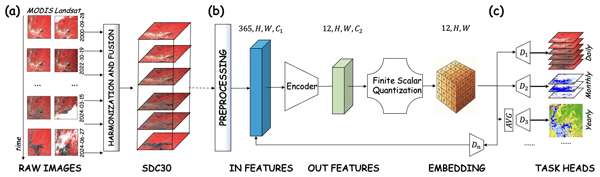
Monitoring our planet with satellites produces massive datasets too large for researchers to handle. We created a new global database that condenses 25 years of Landsat and MODIS observations into a highly efficient format (Analysis-ready embedding vectors) using AI. By reducing data size by over 340 times while maintaining high accuracy, we allow global studies to be run on standard PC. Makes planetary research accessible to everyone and helps us better track environmental changes over time.
Yu Liang, Tianxiao Ma, Bo Liu, Zhihua Liu, Hong S. He, Jian Yang, Yude Pan, Chao Yue, Xianli Wang, Mia Wu, Wenru Xu, and Jiaojun Zhu
EGUsphere, https://doi.org/10.5194/egusphere-2026-2906, https://doi.org/10.5194/egusphere-2026-2906, 2026
Preprint archived
Short summary
Short summary
Wildfire CO2 emissions are a major but uncertain part of the global carbon cycle. We reviewed satellite emission datasets, fire-enabled models, future projections, and paleo-archives to assess global wildfire CO2 emissions from 1700 to 2100. Annual estimates differ by up to 40 % because of uncertainties in fire detection, fuel consumption, and emission factors. Tropical fires dominate global CO2 wildfire emissions, while extreme wildfire seasons increasingly shape year-to-year variability.
Shuling Xu, Yang Liu, Sha Yu, Weidong Jia, Yongye Jiang, Yuqin Li, Zeyuan Liu, Andy Miller, Jianxiang Shen, Jingyang Song, Can Wang, Huaxuan Wang, Rui Wang, Fan Wu, Hongzhi Zhang, Mengting Zhu, Rongqi Zhu, Jenna Behrendt, Matthew Binsted, Jing Cheng, Robert Dahowski, Casie Davidson, Shiyu Deng, Jay Fuhrman, Matthew Gidden, Chaoyi Guo, Jill Horing, Hanwoong Kim, Chaojun Li, Bo Liu, Xunzhang Pan, Pralit Patel, Meiyin Qian, Yang Qiu, Tianming Shao, Yisheng Sun, Lining Wang, Yuyao Yang, Brinda Yarlagadda, Zihua Yin, Jian Zang, Qianzhi Zhang, Wenjia Cai, Wenying Chen, Leon Clarke, Ryna Cui, Nathan Hultman, Bengang Li, Jiashuo Li, Xi Lu, Haewon McJeon, Bo Wang, Can Wang, Peng Wang, Shuxiao Wang, Zhaohua Wang, Lixiao Zhang, Qiang Zhang, and Yang Ou
EGUsphere, https://doi.org/10.5194/egusphere-2026-1919, https://doi.org/10.5194/egusphere-2026-1919, 2026
Short summary
Short summary
This study introduces a new open-source model GCAM-China-v8, developed by the community to better understand China’s energy and emissions at both national and provincial levels. The model links detailed regional systems with global trends, allowing users to explore how economic growth, technology, and policy choices shape future pathways. It provides a transparent and flexible tool to support research and decision making on energy and climate issues.
Hongquan Cheng, Mengqing Geng, Xuecao Li, Shijie Li, Min Zhao, Chen Lin, Jie Wang, Peng Gong, and Yuyu Zhou
Earth Syst. Sci. Data, 18, 3449–3479, https://doi.org/10.5194/essd-18-3449-2026, https://doi.org/10.5194/essd-18-3449-2026, 2026
Short summary
Short summary
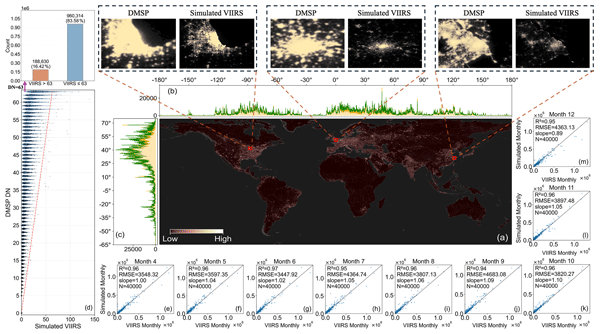
Monthly records of nighttime light are scarce, especially over long periods, yet they are vital for tracking short-term economic shifts and seasonal urban change. This study provides a temporally consistent global 500 m-resolution monthly VIIRS (Visible Infrared Imaging Radiometer Suite)-like nighttime light dataset (1992–2024). By combining DMSP (Defense Meteorological Satellite Program) and VIIRS through reconstruction and correction, a consistent long-term record is created. The dataset supports improved analysis of urban growth and economic activity worldwide.
Fengxiang Guo, Fan Dai, Peng Gong, and Yuyu Zhou
Earth Syst. Sci. Data, 17, 4799–4819, https://doi.org/10.5194/essd-17-4799-2025, https://doi.org/10.5194/essd-17-4799-2025, 2025
Short summary
Short summary
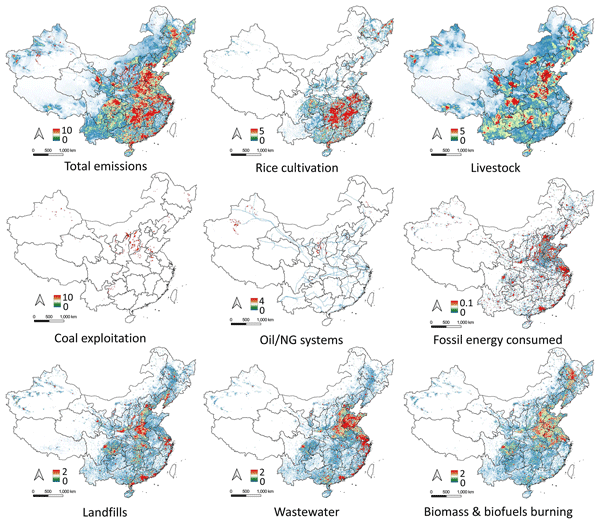
China, the world’s largest methane emitter, faces challenges in accurately tracking. CHN-CH4, a map of anthropogenic methane emissions was created by combining satellite data, national statistics, and climate guidelines. Over 30 years, China emitted about 1157 Tg of methane, peaking in the 2010s. Shanxi province had the highest emissions. CHN-CH4 helps improve tracking, informs global climate models, and strengthens collaboration between science and policy to combat climate change.
Yishuo Cui, Shouzhi Chen, Yufeng Gong, Mingwei Li, Zitong Jia, Yuyu Zhou, and Yongshuo H. Fu
Earth Syst. Sci. Data, 17, 4005–4022, https://doi.org/10.5194/essd-17-4005-2025, https://doi.org/10.5194/essd-17-4005-2025, 2025
Short summary
Short summary
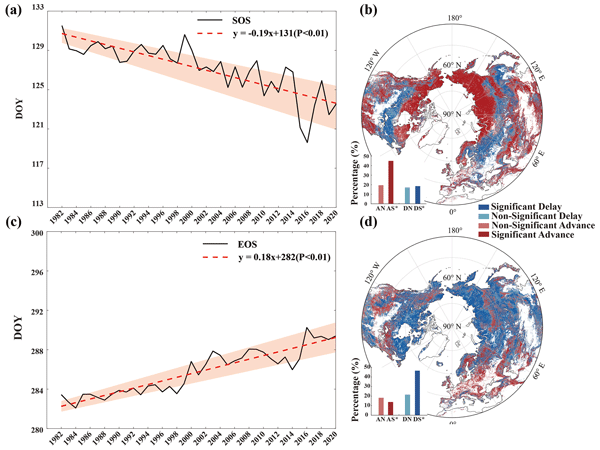
Global changes have significantly altered vegetation phenology, affecting terrestrial carbon cycles. While various remote-sensing-based phenology datasets exist, they often suffer from inconsistencies and uncertainties. To address this, we developed a new phenology dataset spanning 1982–2020 using a reliability ensemble averaging method. Validated against ground data, our dataset demonstrates substantially improved accuracy, providing a novel and reliable source for global ecological studies.
Yifan Cheng, Lei Zhao, TC Chakraborty, Keith Oleson, Matthias Demuzere, Xiaoping Liu, Yangzi Che, Weilin Liao, Yuyu Zhou, and Xinchang “Cathy” Li
Earth Syst. Sci. Data, 17, 2147–2174, https://doi.org/10.5194/essd-17-2147-2025, https://doi.org/10.5194/essd-17-2147-2025, 2025
Short summary
Short summary
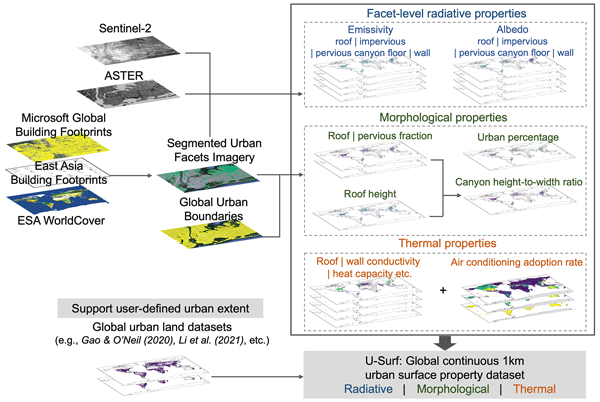
The absence of globally consistent and spatially continuous urban surface input has long hindered large-scale high-resolution urban climate modeling. Using remote sensing, cloud computing, and machine learning, we developed U-Surf, a 1 km dataset providing key urban surface properties worldwide. U-Surf enhances urban representation across scales and supports kilometer-scale urban-resolving Earth system modeling unprecedentedly, with broader applications in urban studies and beyond.
Wanru He, Xuecao Li, Yuyu Zhou, Zitong Shi, Guojiang Yu, Tengyun Hu, Yixuan Wang, Jianxi Huang, Tiecheng Bai, Zhongchang Sun, Xiaoping Liu, and Peng Gong
Earth Syst. Sci. Data, 15, 3623–3639, https://doi.org/10.5194/essd-15-3623-2023, https://doi.org/10.5194/essd-15-3623-2023, 2023
Short summary
Short summary
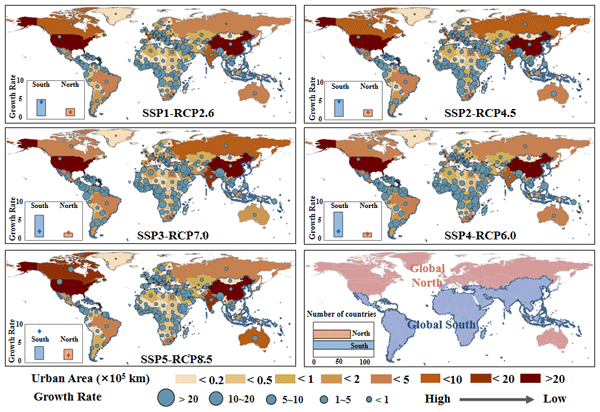
Most existing global urban products with future projections were developed in urban and non-urban categories, which ignores the gradual change of urban development at the local scale. Using annual global urban extent data from 1985 to 2015, we forecasted global urban fractional changes under eight scenarios throughout 2100. The developed dataset can provide spatially explicit information on urban fractions at 1 km resolution, which helps support various urban studies (e.g., urban heat island).
Cited articles
Abajian, A. C., Carleton, T., Meng, K. C., and Deschênes, O.: Quantifying the global climate feedback from energy-based adaptation, Nat. Commun., 16, https://doi.org/10.1038/s41467-025-59201-7, 2025.
AECOM Building Engineering: Energy Demand Research Project: early smart meter trials, 2007–2010, UK Data Service [data set], https://doi.org/10.5255/UKDA-SN-7591-1, 2014.
AEMO – Australian Energy Market Operator: Electricity price and demand [data set], https://www.aemo.com.au/energy-systems/electricity/national-electricity-market-nem/data-nem/aggregated-data (last access: 2 September 2025), 2025.
Afroz: Swiss smart meter data, Kaggle [data set], https://www.kaggle.com/datasets/pythonafroz/swiss-smart-meter-data (last access: 6 April 2025), 2023.
Agency for Natural Resources and Energy: Electric power survey statistics: historical data, Ministry of Economy, Trade and Industry [data set], https://www.enecho.meti.go.jp/statistics/electric_power/ep002/results_archive.html, last access: 12 November 2025.
Agrawal, S., Mani, S., Ganesan, K., and Jain, A.: High frequency smart meter data from two districts in India (Mathura and Bareilly), version 2, Harvard Dataverse [data set], https://doi.org/10.7910/DVN/GOCHJH, 2021.
Aguirre-Fraire, B., Beltrán, J., and Soto-Mendoza, V.: A comprehensive dataset integrating household energy consumption and weather conditions in a north-eastern Mexican urban city, Data in Brief, 54, 110452, https://doi.org/10.1016/j.dib.2024.110452, 2024.
Ahmad, T., Chen, H., Guo, Y., and Wang, J.: A comprehensive overview on the data driven and large scale based approaches for forecasting of building energy demand: A review, Energy Build., 165, 301–320, https://doi.org/10.1016/j.enbuild.2018.01.017, 2018.
Anderson, B., Eyers, D., Ford, R., Giraldo Ocampo, D., Peniamina, R., Stephenson, J., Suomalainen, K., Wilcocks, L., and Jack, M.: New Zealand GREEN Grid household electricity demand study 2014–2018, UK Data Service [data set], https://doi.org/10.5255/UKDA-SN-853334, 2018.
Anjomshoaa, A. and Salmanzadeh, M.: Estimation of the changeover times and degree-days balance point temperatures of a city using energy signatures, Sustain. Cities Soc., 35, 538–543, https://doi.org/10.1016/j.scs.2017.08.028, 2017.
ASHRAE: 2009 ASHRAE Handbook – Fundamentals, American Society of Heating, Refrigerating and Air-Conditioning Engineers, Atlanta, Georgia, USA, ISBN 978-1-933742-54-0, 2009.
Bae, C., Lee, H., and Chun, C.: Beyond the thermostat: A behavioral study of residential cooling practices, Build. Environ., 282, https://doi.org/10.1016/j.buildenv.2025.113250, 2025.
Bhatnagar, M., Mathur, J., and Garg, V.: Determining base temperature for heating and cooling degree-days for India, Journal of Building Engineering, 18, 270–280, https://doi.org/10.1016/j.jobe.2018.03.020, 2018.
Borah, P., Singh, M. K., and Mahapatra, S.: Estimation of degree-days for different climatic zones of North-East India, Sustain. Cities Soc., 14, 70–81, https://doi.org/10.1016/j.scs.2014.08.001, 2015.
Broomandi, P., Satyanaga, A., Bagheri, M., Hadei, M., Galán-Madruga, D., Fard, A. M., Roshani, A., Fathian, A., Nourian, A., Leuchner, M., Reicherter, K., Hamidi, M., Kumar, P., and Kim, J. R.: Extreme temperature events in Kazakhstan and their impacts on public health and energy demand, Global Challenges, 9, 2400207, https://doi.org/10.1002/gch2.202400207, 2025.
Burguillo, M. and Juez-Martel, P.: Just energy heating transitions: lessons from characteristics of households using different heating sources, Energ. Effic., 17, https://doi.org/10.1007/s12053-024-10241-w, 2024.
Camarasa, C., Mata, É., Navarro, J. P. J., Reyna, J., Bezerra, P., Angelkorte, G. B., Feng, W., Filippidou, F., Forthuber, S., Harris, C., Sandberg, N. H., Ignatiadou, S., Kranzl, L., Langevin, J., Liu, X., Müller, A., Soria, R., Villamar, D., Dias, G. P., Wanemark, J., and Yaramenka, K.: A global comparison of building decarbonization scenarios by 2050 towards 1.5–2 °C targets, Nat. Commun., 13, https://doi.org/10.1038/s41467-022-29890-5, 2022.
CAMMESA: Base Demanda Diaria 2017–2025, Compañía Administradora del Mercado Mayorista Eléctrico (CAMMESA) [data set], https://cammesaweb.cammesa.com/informes-y-estadisticas/, last access: 7 November 2025.
Canadian Centre for Energy Information: High-frequency electricity data (HFED), Canadian Centre for Energy Information, in collaboration with Natural Resources Canada and the Canada Energy Regulator [data set], https://energy-information.canada.ca/en/resources/high-frequency-electricity-data, last access: 4 February 2025.
Central Electricity Authority: Power supply position, Open Government Data Platform India [data set], https://www.data.gov.in/catalog/power-supply-position (last access: 12 November 2025), 2024.
Chambers, J. D. and Oreszczyn, T.: Deconstruct: A scalable method of as-built heat power loss coefficient inference for UK dwellings using smart meter data, Energ. Buildings, 183, 443–453, https://doi.org/10.1016/j.enbuild.2018.11.016, 2019.
Chen, J., Chen, J., Zhang, X. J., Peng, P., and Risi, C.: A century and a half precipitation oxygen isoscape for China generated using data fusion and bias correction, Sci. Data, 10, https://doi.org/10.1038/s41597-023-02095-1, 2023.
Choi, S., Pellen, A., and Masson, V.: How does daylight saving time affect electricity demand? An answer using aggregate data from a natural experiment in Western Australia, Energ. Econ., 66, 247–260, https://doi.org/10.1016/j.eneco.2017.06.018, 2017.
Cholewa, T., Siuta-Olcha, A., Smolarz, A., Muryjas, P., Wolszczak, P., Anasiewicz, R., and Balaras, C. A.: A simple building energy model in form of an equivalent outdoor temperature, Energ. Buildings, 236, https://doi.org/10.1016/j.enbuild.2021.110766, 2021.
CIBSE: Degree-days: theory and application, Technical Memorandum 41, The Chartered Institution of Building Services Engineers, London, UK, ISBN 978-1-903287-76-7, 2006.
City of Austin: Residential average monthly kWh and bills, Austin Energy [data set], https://web.archive.org/web/2020/https://catalog.data.gov/dataset/residential-average-monthly-kwh-and-bills (last access: 28 June 2025), 2019.
Clarke, L., Eom, J., Marten, E. H., Horowitz, R., Kyle, P., Link, R., Mignone, B. K., Mundra, A., and Zhou, Y.: Effects of long-term climate change on global building energy expenditures, Energ. Econ., 72, 667–677, https://doi.org/10.1016/j.eneco.2018.01.003, 2018.
Cohen, E., Torbey, H., Waite, M., Piccirilli, M., Tian, Y., and Modi, V.: Global trends in urban energy use, Working Paper of the Sustainable Engineering Lab, Columbia University, New York, USA, http://ecohen4.github.io/Energy/Global_Trends_v4.html (last access: 10 June 2024), 2015.
Cong, S., Nock, D., Qiu, Y. L., and Xing, B.: Unveiling hidden energy poverty using the energy equity gap, Nat. Commun., 13, https://doi.org/10.1038/s41467-022-30146-5, 2022.
Corrales-Suastegui, A., Ruiz-Alvarez, O., Torres-Alavez, J. A., and Pavia, E. G.: Analysis of cooling and heating degree days over mexico in present and future climate, Atmosphere-Basel, 12, https://doi.org/10.3390/atmos12091131, 2021.
Day, A. R., Knight, I., Dunn, G., and Gaddas, R.: Improved methods for evaluating base temperature for use in building energy performance lines, Build. Serv. Eng. Res. T., 24, 221–228, https://doi.org/10.1191/0143624403bt073oa, 2004.
De Rosa, M., Bianco, V., Scarpa, F., and Tagliafico, L. A.: Historical trends and current state of heating and cooling degree days in Italy, Energ. Convers. Manage., 90, 323–335, https://doi.org/10.1016/j.enconman.2014.11.022, 2015.
Deroubaix, A., Labuhn, I., Camredon, M., Gaubert, B., Monerie, P. A., Popp, M., Ramarohetra, J., Ruprich-Robert, Y., Silvers, L. G., and Siour, G.: Large uncertainties in trends of energy demand for heating and cooling under climate change, Nat. Commun., 12, https://doi.org/10.1038/s41467-021-25504-8, 2021.
Dicko, K., Umaru, E. T., Sanogo, S., Okhimamhe, A. A., and Loewner, R.: A Trend Analysis of Changes in Cooling Degree Days in West Africa Under Global Warming, Atmosphere-Basel, 15, https://doi.org/10.3390/atmos15111376, 2024.
Duan, H., Ming, X., Zhang, X.-B., Sterner, T., and Wang, S.: China's adaptive response to climate change through air-conditioning, iScience, 26, 106178, https://doi.org/10.1016/j.isci.2023.106178, 2023.
Ember: Monthly electricity data, Ember [data set], https://ember-energy.org/data/monthly-electricity-data/ (last access: 12 March 2025), 2025.
EPE – Empresa de Pesquisa Energética: Consumo de energia elétrica – Sistema SIMPLES, Empresa de Pesquisa Energética (EPE) [data set], https://www.epe.gov.br/pt/publicacoes-dados-abertos/dados-abertos/dados-do-consumo-mensal-de-energia-eletrica (last access: 26 March 2025), 2024.
Falchetta, G., Cian, E. De, Pavanello, F., and Wing, I. S.: Inequalities in global residential cooling energy use to 2050, Nat. Commun., 15, https://doi.org/10.1038/s41467-024-52028-8, 2024.
Feng, Y., Duan, Q., Chen, X., Yakkali, S. S., and Wang, J.: Space cooling energy usage prediction based on utility data for residential buildings using machine learning methods, Appl. Energ., 291, https://doi.org/10.1016/j.apenergy.2021.116814, 2021.
Filahi, H., Omrani, H., Claudel, S., and Drobinski, P.: Temporal fragmentation of the energy demand in Europe: Impact of climate change on the maneuverability of energy system, Clim. Serv., 34, https://doi.org/10.1016/j.cliser.2024.100469, 2024.
Filahi, H., Drobinski, P., Oueslati, B., Claudel, S., and Laurent, M. H.: Rising power system strains despite decreasing heating demand in a warming climate, Sci. Rep.-UK, 15, https://doi.org/10.1038/s41598-025-96174-5, 2025.
Fung, W. Y., Lam, K. S., Hung, W. T., Pang, S. W., and Lee, Y. L.: Impact of urban temperature on energy consumption of Hong Kong, Energy, https://doi.org/10.1016/j.energy.2005.12.009, 2006.
Gupta, V., Sarkar, A., Saxena, A., Jana, A., and Bandyopadhyay, S.: Appliance utility in low-income housing: On the relation between socio-economic characteristics, thermal comfort and appliance usage pattern, Energ. Buildings, 323, https://doi.org/10.1016/j.enbuild.2024.114849, 2024.
Hao, Z., Zhang, X., Xie, J., Yin, K., and Liu, J.: Balance point temperature and heating degree-days in different climate conditions for building energy efficiency applications, Build. Environ., 216, https://doi.org/10.1016/j.buildenv.2022.109013, 2022.
He, J., Zhang, S., Yu, M., Liang, Q., Cao, M., Xu, H., Liu, Z., and Liu, J.: Predicting indoor PM2.5 levels in shared office using LSTM method, J. Build. Eng., 104, 112407, https://doi.org/10.1016/j.jobe.2025.112407, 2025a.
He, X., Eom, J., Yu, S., Liu, S., Xu, W., and Zhou, Y.: A global base temperature dataset for building energy demand modeling, figshare [data set], https://doi.org/10.6084/m9.figshare.30646376.v2, 2025b.
Hirth, L., Khanna, T. M., and Ruhnau, O.: How aggregate electricity demand responds to hourly wholesale price fluctuations, Energ. Econ., 135, https://doi.org/10.1016/j.eneco.2024.107652, 2024.
Hochreiter, S. and Schmidhuber, J.: Long Short-Term Memory, Neural Comput., 9, 1735–1780, https://doi.org/10.1162/neco.1997.9.8.1735, 1997.
Hofmann, M., Bjarghov, S., and Nessa, S.: Norwegian hourly residential electricity demand data with consumer characteristics during the European energy crisis, Data in Brief, 51, 109687, https://doi.org/10.1016/j.dib.2023.109687, 2023.
Hu, J. X., Zhuo, Y. L., He, G. H., Liu, J. M., Guo, Y. F., Li, T. T., Gong, W. W., Zeng, F. F., Duan, H. L., Meng, R. L., Zhou, C. L., Xiao, Y. Z., Yu, M., Huang, B., Zhou, M. G., Ma, W. J., and Liu, T.: National mortality burden attributable to the unprecedented heatwave in 2022 in China, Mil. Med. Res., 12, 92, https://doi.org/10.1186/s40779-025-00676-2, 2025.
Huang, J. and Gurney, K. R.: The variation of climate change impact on building energy consumption to building type and spatiotemporal scale, Energy, 111, 137–153, https://doi.org/10.1016/j.energy.2016.05.118, 2016.
Huang, L. and Kang, J.: Thermal comfort in winter incorporating solar radiation effects at high altitudes and performance of improved passive solar design – Case of Lhasa, Build. Simul., 14, 1633–1650, https://doi.org/10.1007/s12273-020-0743-x, 2021.
IEA – International Energy Agency: World Energy Outlook 2024, International Energy Agency, Paris, France, https://www.iea.org/reports/world-energy-outlook-2024 (last access: 10 December 2024), 2024.
Ihara, T., Genchi, Y., Sato, T., Yamaguchi, K., and Endo, Y.: City-block-scale sensitivity of electricity consumption to air temperature and air humidity in business districts of Tokyo, Japan, Energy, 33, 1634–1645, https://doi.org/10.1016/j.energy.2008.06.005, 2008.
Kennard, H., Oreszczyn, T., Mistry, M., and Hamilton, I.: Population-weighted degree-days: The global shift between heating and cooling, Energ. Buildings, 271, https://doi.org/10.1016/j.enbuild.2022.112315, 2022.
Kim, H. G., Kim, S. S., and Ahn, H.: Data-driven analysis of heating and cooling base temperatures for buildings: Case studies in South Korea, Energ. Buildings, 322, https://doi.org/10.1016/j.enbuild.2024.114709, 2024a.
Kim, S., Nathaniel, J., Hou, Z., Zheng, T., and Gentine, P.: Spatiotemporal upscaling of sparse air-sea pCO2 data via physics-informed transfer learning, Sci. Data, 11, https://doi.org/10.1038/s41597-024-03959-w, 2024b.
Kozarcanin, S., Andresen, G. B., and Staffell, I.: Estimating country-specific space heating threshold temperatures from national gas and electricity consumption data, Energ. Buildings, 199, 368–380, https://doi.org/10.1016/j.enbuild.2019.07.013, 2019.
Kummu, M., Kosonen, M., and Masoumzadeh Sayyar, S.: Downscaled gridded global dataset for gross domestic product (GDP) per capita PPP over 1990–2022, Sci. Data, 12, 178, https://doi.org/10.1038/s41597-025-04487-x, 2025.
Lebakula, V., Epting, J., Moehl, J., Stipek, C., Adams, D., Reith, A., Kaufman, J., Gonzales, J., Reynolds, B., Basford, S., Martin, A., Buck, W., Faxon, A., Cunningham, A., Roy, A., Barbose, Z., Massaro, J., Walters, S., Woody, C., Iman, A., Wilkins, A., Powell, E., and Urban, M.: LandScan Silver Edition, Oak Ridge National Laboratory [data set], https://doi.org/10.48690/1531770, 2024.
Li, B., Yu, R., Gan, K., Ruan, G., Liu, S., Yang, M., Xie, D., Dai, W., and Zhong, H.: A large-scale residential load dataset in a southern province of China, Sci. Data, 12, 450, https://doi.org/10.1038/s41597-025-04766-7, 2025.
Li, J., Yang, L., and Long, H.: Climatic impacts on energy consumption: Intensive and extensive margins, Energ. Econ., 71, 332–343, https://doi.org/10.1016/j.eneco.2018.03.010, 2018.
Li, X. X.: Linking residential electricity consumption and outdoor climate in a tropical city, Energy, 157, 734–743, https://doi.org/10.1016/j.energy.2018.05.192, 2018.
Liao, W., Jin, X., Ran, Y., Xiao, F., Gao, W., and Li, Y.: A twenty-year dataset of hourly energy generation and consumption from district campus building energy systems, Sci. Data, 11, 1400, https://doi.org/10.1038/s41597-024-04244-6, 2024.
Livada, I., Pyrgou, A., Haddad, S., Sadeghi, M., and Santamouris, M.: Recent climatic trends and analysis of monthly heating and cooling degree hours in Sydney, Climate, 9, https://doi.org/10.3390/cli9070114, 2021.
Mahdavinejad, M., Bazazzadeh, H., Mehrvarz, F., Berardi, U., Nasr, T., Pourbagher, S., and Hoseinzadeh, S.: The impact of facade geometry on visual comfort and energy consumption in an office building in different climates, Energy Reports, 11, 1–17, https://doi.org/10.1016/j.egyr.2023.11.021, 2024.
Makonin, S.: HUE: The hourly usage of energy dataset for buildings in British Columbia, Data in Brief, 23, 103744, https://doi.org/10.1016/j.dib.2019.103744, 2019.
Mansouri, A., Abolmasoumi, A. H., and Ghadimi, A. A.: Weather sensitive short term load forecasting using dynamic mode decomposition with control, Electr. Pow. Syst. Res., 221, https://doi.org/10.1016/j.epsr.2023.109387, 2023.
Martinopoulos, G., Alexandru, A., and Papakostas, K. T.: Mapping temperature variation and degree-days in metropolitan areas with publicly available sensors, Urban Clim., 28, https://doi.org/10.1016/j.uclim.2019.100464, 2019.
Meng, Q., Mourshed, M., and Wei, S.: Going beyond the Mean: Distributional Degree-Day Base Temperatures for Building Energy Analytics Using Change Point Quantile Regression, IEEE Access, 6, 39532–39540, https://doi.org/10.1109/ACCESS.2018.2852478, 2018.
Miller, C., Kathirgamanathan, A., Picchetti, B., Arjunan, P., Park, J. Y., Nagy, Z., Raftery, P., Hobson, B. W., Shi, Z., and Meggers, F.: The Building Data Genome Project 2, energy meter data from the ASHRAE Great Energy Predictor III competition, Sci. Data, 7, 368, https://doi.org/10.1038/s41597-020-00712-x, 2020.
Mishra, A., Lone, H. R., and Mishra, A.: DECODE: Data-driven energy consumption prediction leveraging historical data and environmental factors in buildings, Energ. Buildings, 307, https://doi.org/10.1016/j.enbuild.2024.113950, 2024.
Muñoz-Sabater, J., Dutra, E., Agustí-Panareda, A., Albergel, C., Arduini, G., Balsamo, G., Boussetta, S., Choulga, M., Harrigan, S., Hersbach, H., Martens, B., Miralles, D. G., Piles, M., Rodríguez-Fernández, N. J., Zsoter, E., Buontempo, C., and Thépaut, J.-N.: ERA5-Land: a state-of-the-art global reanalysis dataset for land applications, Earth Syst. Sci. Data, 13, 4349–4383, https://doi.org/10.5194/essd-13-4349-2021, 2021.
Nadeem, A. and Arshad, N.: PRECON: Pakistan residential electricity consumption dataset, in: Proc. 10th ACM International Conference on Future Energy Systems (e-Energy '19), ACM, 52–57, https://doi.org/10.1145/3307772.3328317, 2019.
Open Power System Data: Data package household data, version 2020-04-15, Open Power System Data [data set], https://data.open-power-system-data.org/household_data/2020-04-15/ (last access: 1 June 2025), 2020.
Palazzoli, I., Ceola, S., and Gentine, P.: GRAiCE: reconstructing terrestrial water storage anomalies with recurrent neural networks, Sci. Data, 12, https://doi.org/10.1038/s41597-025-04403-3, 2025.
Papada, L. and Kaliampakos, D.: Developing the energy profile of mountainous areas, Energy, 107, 205–214, https://doi.org/10.1016/j.energy.2016.04.011, 2016.
Pawlak, J., Faghih Imani, A., and Sivakumar, A.: How do household activities drive electricity demand? Applying activity-based modelling in the context of the United Kingdom, Energy Res. Soc. Sci., 82, https://doi.org/10.1016/j.erss.2021.102318, 2021.
Perera, A. T. D., Javanroodi, K., Mauree, D., Nik, V. M., Florio, P., Hong, T., and Chen, D.: Challenges resulting from urban density and climate change for the EU energy transition, Nat. Energy, 8, 397–412, https://doi.org/10.1038/s41560-023-01232-9, 2023.
Petri, Y. and Caldeira, K.: Impacts of global warming on residential heating and cooling degree-days in the United States, Sci. Rep.-UK, 5, 12427, https://doi.org/10.1038/srep12427, 2015.
Prataviera, E., Romano, P., Carnieletto, L., Pirotti, F., Vivian, J., and Zarrella, A.: EUReCA: An open-source urban building energy modelling tool for the efficient evaluation of cities energy demand, Renew. Energ., 173, 544–560, https://doi.org/10.1016/j.renene.2021.03.144, 2021.
Ramon, D., Allacker, K., De Troyer, F., Wouters, H., and van Lipzig, N. P. M.: Future heating and cooling degree days for Belgium under a high-end climate change scenario, Energ. Buildings, 216, https://doi.org/10.1016/j.enbuild.2020.109935, 2020.
Rastogi, K.: SEWA energy demand forecasting, Kaggle [data set], https://www.kaggle.com/datasets/kaustubhrastogi17/sewa-energy-demand-forecasting (last access: 1 June 2025), 2024.
Rode, A., Carleton, T., Delgado, M., Greenstone, M., Houser, T., Hsiang, S., Hultgren, A., Jina, A., Kopp, R. E., McCusker, K. E., Nath, I., Rising, J., and Yuan, J.: Estimating a social cost of carbon for global energy consumption, Nature, 598, 308–314, https://doi.org/10.1038/s41586-021-03883-8, 2021.
RTE: Regional electricity data, RTE (Réseau de Transport d'Électricité) [data set], https://analysesetdonnees.rte-france.com/en/regions/overview-region (last access: 3 June 2025), 2025.
Salam, A. R. and El Hibaoui, A.: Comparison of machine learning algorithms for the power consumption prediction: case study of Tetouan city, in: Proc. 2018 6th International Renewable and Sustainable Energy Conference (IRSEC), IEEE, 1–5, https://doi.org/10.1109/irsec.2018.8703007, 2018.
Schlemminger, M., Ohrdes, T., Schneider, E., and Knoop, M.: Dataset on electrical single-family house and heat pump load profiles in Germany, Sci. Data, 9, 56, https://doi.org/10.1038/s41597-022-01156-1, 2022.
Schuster, M. and Paliwal, K. K.: Bidirectional recurrent neural networks, IEEE T. Signal Proces., 45, 2673–2681, https://doi.org/10.1109/78.650093, 1997.
Scoccimarro, E., Cattaneo, O., Gualdi, S., Mattion, F., Bizeul, A., Risquez, A. M., and Quadrelli, R.: Country-level energy demand for cooling has increased over the past two decades, Commun. Earth Environ., 4, https://doi.org/10.1038/s43247-023-00878-3, 2023.
Sharma, V., Haque, M. H., and Aziz, S. M.: PV generation and load profile data of net zero energy homes in South Australia, Data in Brief, 25, 104235, https://doi.org/10.1016/j.dib.2019.104235, 2019.
Shi, H., Wang, B., Deng, N., Xu, S., and Wang, Z.: Examining energy poverty under high temperatures in China, Renew. Sust. Energ. Rev., 215, https://doi.org/10.1016/j.rser.2025.115575, 2025.
Spinoni, J., Vogt, J. V., Barbosa, P., Dosio, A., McCormick, N., Bigano, A., and Füssel, H.-M.: Changes of heating and cooling degree-days in Europe from 1981 to 2100, Int. J. Climatol., 38, e191–e208, https://doi.org/10.1002/joc.5362, 2018.
Srinuti: Residential power usage 3 years data – timeseries, Kaggle [data set], https://www.kaggle.com/datasets/srinuti/residential-power-usage-3years-data-timeseries (last access: 3 April 2025), 2020.
Staffell, I., Pfenninger, S., and Johnson, N.: A global model of hourly space heating and cooling demand at multiple spatial scales, Nat. Energy, 8, 1328–1344, https://doi.org/10.1038/s41560-023-01341-5, 2023.
Statistics Canada: Electric power generation, monthly generation by type of electricity, Table 25-10-0015-01, Statistics Canada [data set], https://doi.org/10.25318/2510001501-eng, 2026.
UK Climate Projections: How have cooling degree days (CDD) and heating degree days (HDD) been calculated in UKCP09?, UK Climate Projections, http://web.archive.org/web/20181110204933/http://ukclimateprojections.metoffice.gov.uk/22715 (last access: 1 August 2026), 2014.
United Nations Environment Programme: 2019 Global Status Report for Buildings and Construction: Towards a zero-emission, efficient and resilient buildings and construction sector, UNEP, Nairobi, Kenya, ISBN 978-92-807-3768-4, https://www.unep.org/resources/publication/2019-global-status-report-buildings-and-construction-sector (last access: 10 December 2024), 2019.
van Ruijven, B. J., De Cian, E., and Sue Wing, I.: Amplification of future energy demand growth due to climate change, Nat. Commun., 10, https://doi.org/10.1038/s41467-019-10399-3, 2019.
Velázquez, G., Morales, F., García-Torres, M., Gómez-Vela, F., Divina, F., Vázquez Noguera, J. L., Daumas-Ladouce, F., Sauer Ayala, C., Pinto-Roa, D. P., Gardel-Sotomayor, P. E., and Mello Román, J. C.: Distribution level electric current consumption and meteorological data set of the east region of Paraguay, Data in Brief, 40, 107699, https://doi.org/10.1016/j.dib.2021.107699, 2022.
Wang, C., Song, J., Shi, D., Reyna, J. L., Horsey, H., Feron, S., Zhou, Y., Ouyang, Z., Li, Y., and Jackson, R. B.: Impacts of climate change, population growth, and power sector decarbonization on urban building energy use, Nat. Commun., 14, https://doi.org/10.1038/s41467-023-41458-5, 2023.
Wenz, L., Levermann, A., and Auffhammer, M.: North-south polarization of European electricity consumption under future warming, P. Natl. Acad. Sci. USA, 114, e1704339114, https://doi.org/10.1073/pnas.1704339114, 2017.
Woods, J. and Fuller, C.: Estimating base temperatures in econometric models that include degree days, Energ. Econ., 45, 166–171, https://doi.org/10.1016/j.eneco.2014.06.006, 2014.
Xu, X., Hu, Y., Atamturktur, S., Chen, L., and Wang, J.: Systematic review on uncertainty quantification in machine learning-based building energy modeling, Renew. Sust. Energ. Rev., 218, 115817, https://doi.org/10.1016/j.rser.2025.115817, 2025.
Yang, S., Jahanger, A., and Awan, A.: Temperature variation and urban electricity consumption in China: Implications for demand management and planning, Util. Policy, 90, https://doi.org/10.1016/j.jup.2024.101782, 2024.
Yilmaz, S. and Canan, F.: Establishing the thresholds for outdoor thermal comfort in cold climate urban areas, Energ. Buildings, 342, https://doi.org/10.1016/j.enbuild.2025.115861, 2025.
Yu, S., Eom, J., Zhou, Y., Evans, M., and Clarke, L.: Scenarios of building energy demand for China with a detailed regional representation, Energy, 67, 284–297, https://doi.org/10.1016/j.energy.2013.12.072, 2014.
Yuan, J., Jiao, Z., Xiao, X., Emura, K., and Farnham, C.: Impact of future climate change on energy consumption in residential buildings: A case study for representative cities in Japan, Energy Reports, 11, 1675–1692, https://doi.org/10.1016/j.egyr.2024.01.042, 2024.
Zarco-Periñán, P. J., Zarco-Soto, I. M., and Zarco-Soto, F. J.: Influence of the population density of cities on energy consumption of their households, Sustainability-Basel, 13, https://doi.org/10.3390/su13147542, 2021.
Zhang, T., Li, M., Wang, Y., Zhou, J., Li, Y., Zhang, F., Cao, J., Chen, X., and He, B. J.: Refined building thermal climate zoning scheme in regions with mountainous terrain for accurate building energy-saving potential estimation, Energ. Buildings, 313, 114228, https://doi.org/10.1016/j.enbuild.2024.114228, 2024a.
Zhang, W., Liu, D., Tian, H., Pan, N., Yang, R., Tang, W., Yang, J., Lu, F., Dayananda, B., Mei, H., Wang, S., and Shi, H.: Parsimonious estimation of hourly surface ozone concentration across China during 2015–2020, Sci. Data, 11, https://doi.org/10.1038/s41597-024-03302-3, 2024b.
Zhao, Y., Ding, X., Wu, Z., Yin, S., Fan, Y., and Ge, J.: Impact of urban form on building energy consumption in different climate zones of China, Energ. Buildings, 320, https://doi.org/10.1016/j.enbuild.2024.114579, 2024.
Zhou, K., Hu, D., Hu, R., and Zhou, J.: High-resolution electric power load data of an industrial park with multiple types of buildings in China, Sci. Data, 10, 870, https://doi.org/10.1038/s41597-023-02786-9, 2023.
Zhou, Y., Eom, J., and Clarke, L.: The effect of global climate change, population distribution, and climate mitigation on building energy use in the U. S. and China, Climatic Change, 119, 979–992, https://doi.org/10.1007/s10584-013-0772-x, 2013.
Short summary
Buildings use large amounts of energy for heating and cooling. Cutting carbon emissions requires accurate forecasts of that demand, which depends on knowing the outdoor temperature at which buildings switch on heating or cooling. We combined energy use records with climate information and applied machine learning to create the first global dataset of these thresholds across many regions. It improves energy demand predictions by about 10 %, supporting smarter energy planning and climate policy.
Buildings use large amounts of energy for heating and cooling. Cutting carbon emissions requires...


Altmetrics
Final-revised paper
Preprint