Articles | Volume 18, issue 10
https://doi.org/10.5194/essd-18-7319-2026
© Author(s) 2026. This work is distributed under
the Creative Commons Attribution 4.0 License.
the Creative Commons Attribution 4.0 License.
https://doi.org/10.5194/essd-18-7319-2026
© Author(s) 2026. This work is distributed under
the Creative Commons Attribution 4.0 License.
the Creative Commons Attribution 4.0 License.
Data description article
| 
06 Oct 2026
Data description article |
| 06 Oct 2026
| 06 Oct 2026
A decade of monthly frontal ablation at 147 tidewater glaciers in Svalbard

Department of Geography and Earth Sciences, Institut für Geographie, Friedrich-Alexander-Universität Erlangen-Nürnberg, Erlangen, Germany
Marcel Dreier
Computer Science Department, Pattern Recognition Lab, Friedrich-Alexander-Universität Erlangen-Nürnberg, Erlangen, Germany
Anna Wendleder
Microwaves and Radar Institute, German Aerospace Center (DLR), Weßling, Germany
Will Kochtitzky
School of Marine and Environmental Programs, University of New England, Biddeford, ME, USA
Nora Gourmelon
Computer Science Department, Pattern Recognition Lab, Friedrich-Alexander-Universität Erlangen-Nürnberg, Erlangen, Germany
Vincent Christlein
Computer Science Department, Pattern Recognition Lab, Friedrich-Alexander-Universität Erlangen-Nürnberg, Erlangen, Germany
Thorsten Seehaus
Department of Geography and Earth Sciences, Institut für Geographie, Friedrich-Alexander-Universität Erlangen-Nürnberg, Erlangen, Germany
Related authors
No articles found.
Thorsten Seehaus, Alex S. Gardner, and Johan Nilsson
The Cryosphere, 20, 6107–6130, https://doi.org/10.5194/tc-20-6107-2026, https://doi.org/10.5194/tc-20-6107-2026, 2026
Short summary
Short summary
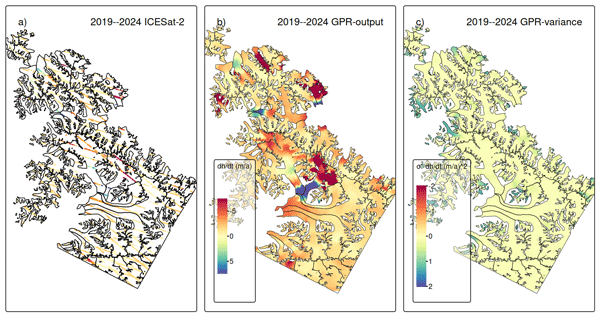
Satellite altimeters only sample surface heights at scattered points. We developed a method to turn these measurements into maps of glacier height change while also estimating how reliable the results are. Applying this approach to glaciers in Svalbard and Antarctica shows strong ice loss and clearly captures short-lived events such as glacier surges. Our results improve the ability to monitor glacier change in difficult terrain and help better assess future contributions to sea level rise.
Akash M. Patil, Christoph Mayer, Theo M. Jenk, Astrid Lambrecht, Thorsten Seehaus, Alexander R. Groos, and Michelle Worek
The Cryosphere, 20, 4927–4955, https://doi.org/10.5194/tc-20-4927-2026, https://doi.org/10.5194/tc-20-4927-2026, 2026
Short summary
Short summary
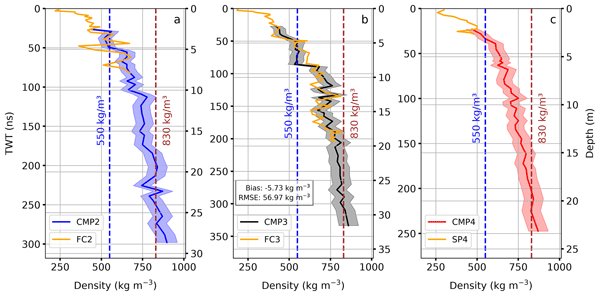
Our study focused on understanding how a warming climate affects the Aletsch Glacier accumulation area. We used multi-year radar measurements and direct firn‑core analyses to estimate changes in density and compaction rate of snow-to-ice over a year. Our results show that the upper layers of the glacier are changing faster due to stronger summer melt in the lower parts of the accumulation zone. Our findings help to improve firn densification models and glacier mass-balance estimation.
Theresa Dobler, Wilfried Hagg, Martin Rückamp, Thorsten Seehaus, and Christoph Mayer
The Cryosphere, 20, 2531–2555, https://doi.org/10.5194/tc-20-2531-2026, https://doi.org/10.5194/tc-20-2531-2026, 2026
Short summary
Short summary
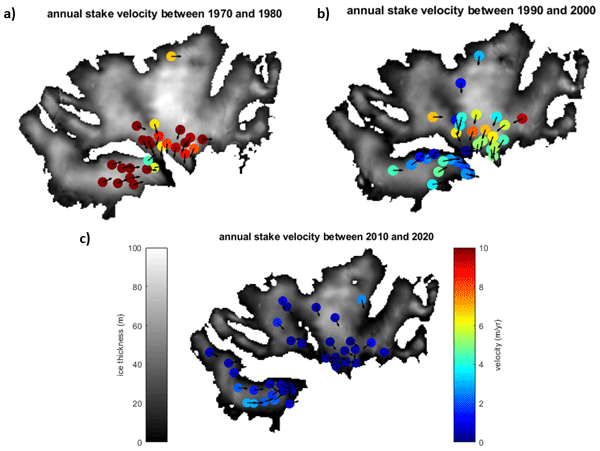
We studied how a glacier in the Austrian Alps moves more slowly over time due to climate change. By combining long-term field data with recent aerial images, we show how thinning reduce glacier flow. Our findings help understand changes in glacier behavior in a warming climate.
Jakob Steiner, William Armstrong, Will Kochtitzky, Robert McNabb, Rodrigo Aguayo, Tobias Bolch, Fabien Maussion, Vibhor Agarwal, Iestyn Barr, Nathaniel R. Baurley, Mike Cloutier, Katelyn DeWater, Frank Donachie, Yoann Drocourt, Siddhi Garg, Gunjan Joshi, Byron Guzman, Stanislav Kutuzov, Thomas Loriaux, Caleb Mathias, Brian Menounos, Evan Miles, Aleksandra Osika, Kaleigh Potter, Adina Racoviteanu, Brianna Rick, Miles Sterner, Guy D. Tallentire, Levan Tielidze, Rebecca White, Kunpeng Wu, and Whyjay Zheng
Earth Syst. Sci. Data, 18, 1665–1681, https://doi.org/10.5194/essd-18-1665-2026, https://doi.org/10.5194/essd-18-1665-2026, 2026
Short summary
Short summary
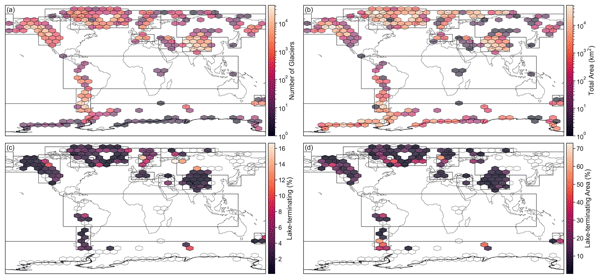
Many mountain glaciers around the world flow into lakes – exactly how many however, has never been mapped. Across a large team of experts we have now identified all glaciers that end in lakes. Only about 1% do so, but they are generally larger than those which end on land. This is important to understand, as lakes can influence the behaviour of glacier ice, including how fast it disappears. This new dataset allows us to better model glaciers at a global scale, accounting for the effect of lakes.
Vijaya Kumar Thota, Thorsten Seehaus, Friedrich Knuth, Amaury Dehecq, Christian Salewski, David Farías-Barahona, and Matthias H. Braun
Earth Syst. Sci. Data, 18, 597–615, https://doi.org/10.5194/essd-18-597-2026, https://doi.org/10.5194/essd-18-597-2026, 2026
Short summary
Short summary
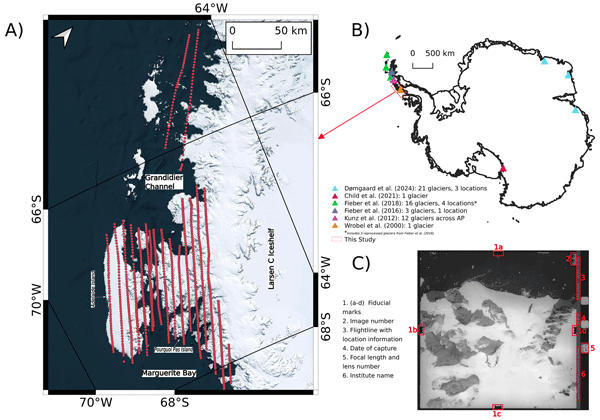
We reconstruct historical topography for a rapidly warming Antarctic region with limited existing data. Using approximately 2000 aerial photographs from the year 1989 over the western Antarctic Peninsula and nearby islands, we created detailed elevation models and orthoimages that have high accuracy compared to recent satellite data. This open dataset aids tracking historical ice loss and its role in sea level rise.
Akash M. Patil, Christoph Mayer, Thorsten Seehaus, Alexander R. Groos, and Andreas Bauder
The Cryosphere, 19, 5547–5577, https://doi.org/10.5194/tc-19-5547-2025, https://doi.org/10.5194/tc-19-5547-2025, 2025
Short summary
Short summary
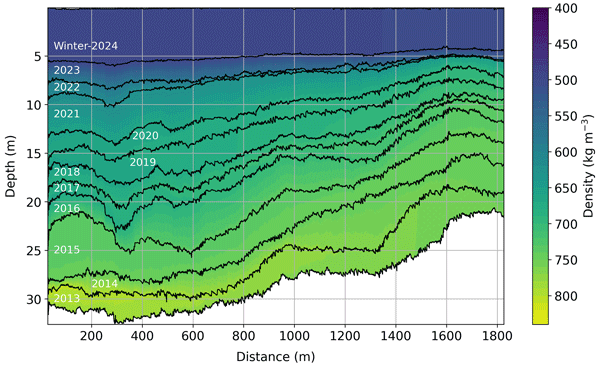
We studied how the density of snow to ice transition varies with depth in the Aletsch glacier using radar-based field measurements and some simple models. We showed that it is possible to track how much snow has accumulated in the last 10–14 years. This helps improve the uncertainties in glacier mass balance estimates. Overall, by utilising non-invasive radar techniques and models, we provide a novel approach to understanding the evolution of glaciers under regional climate conditions.
Marcel Dreier, Moritz Koch, Nora Gourmelon, Norbert Blindow, Daniel Steinhage, Fei Wu, Thorsten Seehaus, Matthias Braun, Andreas Maier, and Vincent Christlein
The Cryosphere, 19, 5337–5359, https://doi.org/10.5194/tc-19-5337-2025, https://doi.org/10.5194/tc-19-5337-2025, 2025
Short summary
Short summary
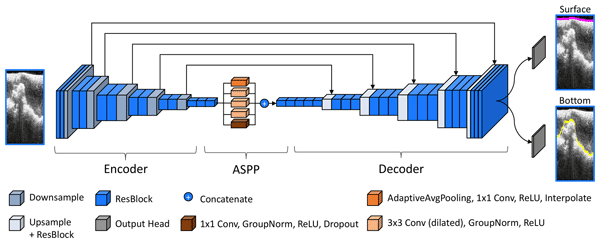
In this paper, we present a ready-to-use benchmark dataset to train machine learning approaches for detecting ice thickness from radar data. It includes radargrams of glaciers and ice sheets alongside annotations for their air–ice and ice–bedrock boundary. Furthermore, we introduce a baseline model and evaluate the influence of several geographical and glaciological factors on the performance of our model.
Shfaqat A. Khan, Helene Seroussi, Mathieu Morlighem, William Colgan, Veit Helm, Gong Cheng, Danjal Berg, Valentina R. Barletta, Nicolaj K. Larsen, William Kochtitzky, Michiel van den Broeke, Kurt H. Kjær, Andy Aschwanden, Brice Noël, Jason E. Box, Joseph A. MacGregor, Robert S. Fausto, Kenneth D. Mankoff, Ian M. Howat, Kuba Oniszk, Dominik Fahrner, Anja Løkkegaard, Eigil Y. H. Lippert, Alicia Bråtner, and Javed Hassan
Earth Syst. Sci. Data, 17, 3047–3071, https://doi.org/10.5194/essd-17-3047-2025, https://doi.org/10.5194/essd-17-3047-2025, 2025
Short summary
Short summary
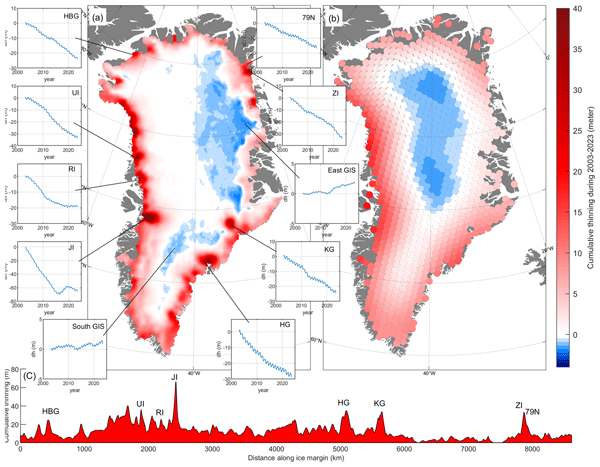
The surface elevation of the Greenland Ice Sheet is changing due to surface mass balance processes and ice dynamics, each exhibiting distinct spatiotemporal patterns. Here, we employ satellite and airborne altimetry data with fine spatial (1 km) and temporal (monthly) resolutions to document this spatiotemporal evolution from 2003 to 2023. This dataset of fine-resolution altimetry data in both space and time will support studies of ice mass loss and be useful for GIS ice sheet modeling.
Dorota Medrzycka, Luke Copland, Laura Thomson, William Kochtitzky, and Braden Smeda
Geosci. Instrum. Method. Data Syst., 14, 69–90, https://doi.org/10.5194/gi-14-69-2025, https://doi.org/10.5194/gi-14-69-2025, 2025
Short summary
Short summary
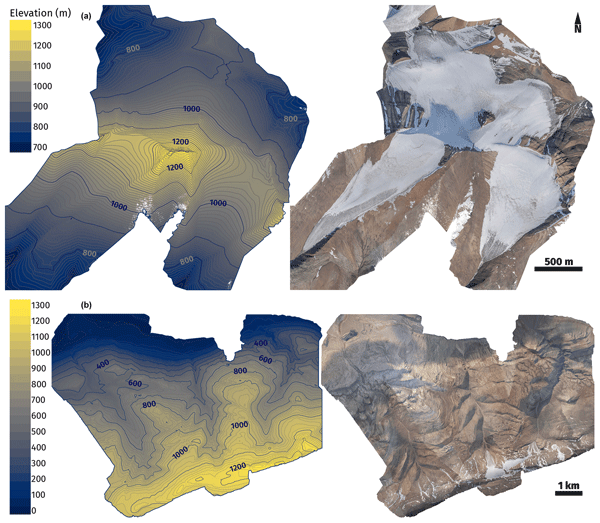
This work explores the use of aerial photography surveys for mapping glaciers, specifically in challenging environments. Using examples from two glaciers in Arctic Canada, we discuss the main factors which can affect data collection and review methods for capturing and processing images to create accurate topographic maps. Key recommendations include choosing the right camera and positioning equipment and adapting survey design to maximise data quality, even under less-than-ideal conditions.
Kaian Shahateet, Johannes J. Fürst, Francisco Navarro, Thorsten Seehaus, Daniel Farinotti, and Matthias Braun
The Cryosphere, 19, 1577–1597, https://doi.org/10.5194/tc-19-1577-2025, https://doi.org/10.5194/tc-19-1577-2025, 2025
Short summary
Short summary
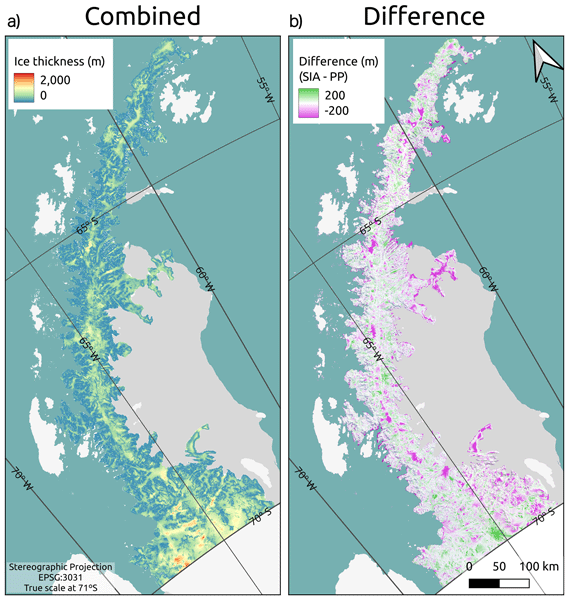
In the present work, we provide a new ice thickness reconstruction of the Antarctic Peninsula Ice Sheet north of 70º S using inversion modeling. This model consists of two steps: the first uses basic assumptions of the rheology of the glacier, and the second uses mass conservation to improve the reconstruction where the assumptions made previously are expected to fail. Validation with independent data showed that our reconstruction improved compared to other reconstructions that are available.
Katrina Lutz, Lily Bever, Christian Sommer, Thorsten Seehaus, Angelika Humbert, Mirko Scheinert, and Matthias Braun
The Cryosphere, 18, 5431–5449, https://doi.org/10.5194/tc-18-5431-2024, https://doi.org/10.5194/tc-18-5431-2024, 2024
Short summary
Short summary
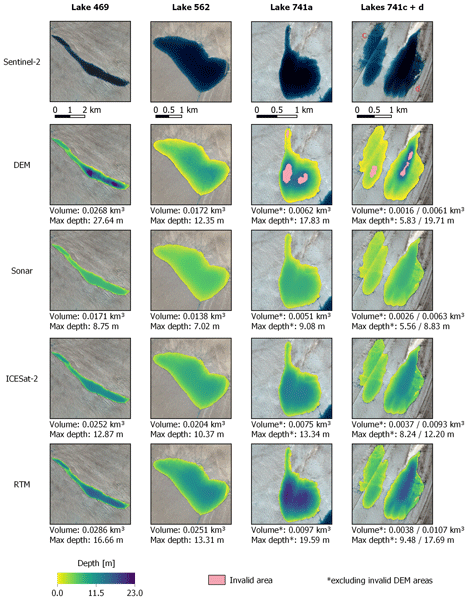
The estimation of the amount of water found within supraglacial lakes is important for understanding how much water is lost from glaciers each year. Here, we develop two new methods for estimating supraglacial lake volume that can be easily applied on a large scale. Furthermore, we compare these methods to two previously developed methods in order to determine when it is best to use each method. Finally, three of these methods are applied to peak melt dates over an area in Northeast Greenland.
Benoit Montpetit, Joshua King, Julien Meloche, Chris Derksen, Paul Siqueira, J. Max Adam, Peter Toose, Mike Brady, Anna Wendleder, Vincent Vionnet, and Nicolas R. Leroux
The Cryosphere, 18, 3857–3874, https://doi.org/10.5194/tc-18-3857-2024, https://doi.org/10.5194/tc-18-3857-2024, 2024
Short summary
Short summary
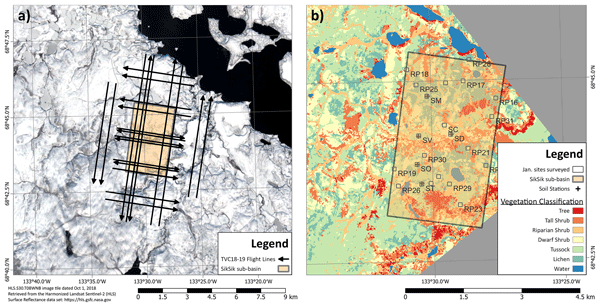
This paper validates the use of free open-source models to link distributed snow measurements to radar measurements in the Canadian Arctic. Using multiple radar sensors, we can decouple the soil from the snow contribution. We then retrieve the "microwave snow grain size" to characterize the interaction between the snow mass and the radar signal. This work supports future satellite mission development to retrieve snow mass information such as the future Canadian Terrestrial Snow Mass Mission.
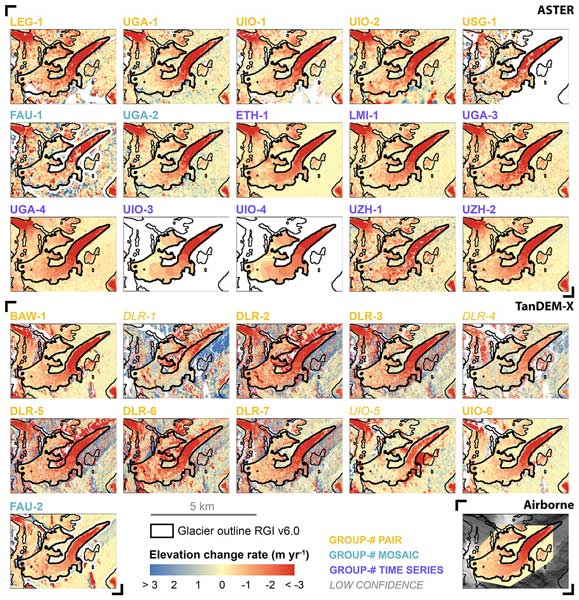
Livia Piermattei, Michael Zemp, Christian Sommer, Fanny Brun, Matthias H. Braun, Liss M. Andreassen, Joaquín M. C. Belart, Etienne Berthier, Atanu Bhattacharya, Laura Boehm Vock, Tobias Bolch, Amaury Dehecq, Inés Dussaillant, Daniel Falaschi, Caitlyn Florentine, Dana Floricioiu, Christian Ginzler, Gregoire Guillet, Romain Hugonnet, Matthias Huss, Andreas Kääb, Owen King, Christoph Klug, Friedrich Knuth, Lukas Krieger, Jeff La Frenierre, Robert McNabb, Christopher McNeil, Rainer Prinz, Louis Sass, Thorsten Seehaus, David Shean, Désirée Treichler, Anja Wendt, and Ruitang Yang
The Cryosphere, 18, 3195–3230, https://doi.org/10.5194/tc-18-3195-2024, https://doi.org/10.5194/tc-18-3195-2024, 2024
Short summary
Short summary
Satellites have made it possible to observe glacier elevation changes from all around the world. In the present study, we compared the results produced from two different types of satellite data between different research groups and against validation measurements from aeroplanes. We found a large spread between individual results but showed that the group ensemble can be used to reliably estimate glacier elevation changes and related errors from satellite data.
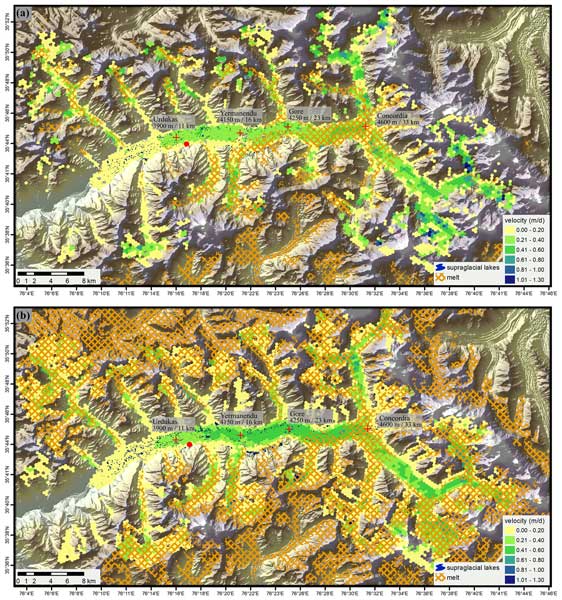
Anna Wendleder, Jasmin Bramboeck, Jamie Izzard, Thilo Erbertseder, Pablo d'Angelo, Andreas Schmitt, Duncan J. Quincey, Christoph Mayer, and Matthias H. Braun
The Cryosphere, 18, 1085–1103, https://doi.org/10.5194/tc-18-1085-2024, https://doi.org/10.5194/tc-18-1085-2024, 2024
Short summary
Short summary
This study analyses the basal sliding and the hydrological drainage of Baltoro Glacier, Pakistan. The surface velocity was characterized by a spring speed-up, summer peak, and autumn speed-up. Snow melt has the largest impact on the spring speed-up, summer velocity peak, and the transition from inefficient to efficient drainage. Drainage from supraglacial lakes contributed to the fall speed-up. Increased summer temperatures will intensify the magnitude of meltwater and thus surface velocities.
Oskar Herrmann, Nora Gourmelon, Thorsten Seehaus, Andreas Maier, Johannes J. Fürst, Matthias H. Braun, and Vincent Christlein
The Cryosphere, 17, 4957–4977, https://doi.org/10.5194/tc-17-4957-2023, https://doi.org/10.5194/tc-17-4957-2023, 2023
Short summary
Short summary
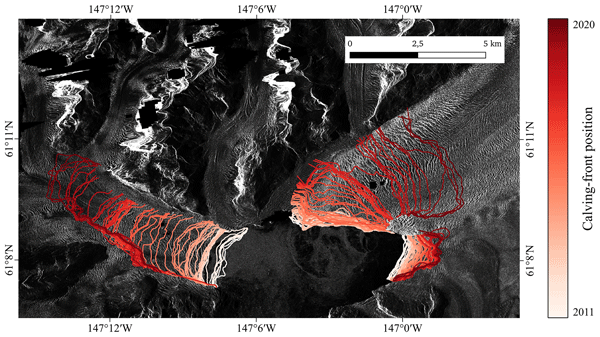
Delineating calving fronts of marine-terminating glaciers in satellite images is a labour-intensive task. We propose a method based on deep learning that automates this task. We choose a deep learning framework that adapts to any given dataset without needing deep learning expertise. The method is evaluated on a benchmark dataset for calving-front detection and glacier zone segmentation. The framework can beat the benchmark baseline without major modifications.
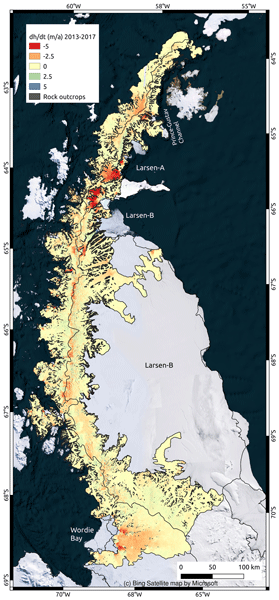
Thorsten Seehaus, Christian Sommer, Thomas Dethinne, and Philipp Malz
The Cryosphere, 17, 4629–4644, https://doi.org/10.5194/tc-17-4629-2023, https://doi.org/10.5194/tc-17-4629-2023, 2023
Short summary
Short summary
Existing mass budget estimates for the northern Antarctic Peninsula (>70° S) are affected by considerable limitations. We carried out the first region-wide analysis of geodetic mass balances throughout this region (coverage of 96.4 %) for the period 2013–2017 based on repeat pass bi-static TanDEM-X acquisitions. A total mass budget of −24.1±2.8 Gt/a is revealed. Imbalanced high ice discharge, particularly at former ice shelf tributaries, is the main driver of overall ice loss.
Alexandra M. Zuhr, Erik Loebel, Marek Muchow, Donovan Dennis, Luisa von Albedyll, Frigga Kruse, Heidemarie Kassens, Johanna Grabow, Dieter Piepenburg, Sören Brandt, Rainer Lehmann, Marlene Jessen, Friederike Krüger, Monika Kallfelz, Andreas Preußer, Matthias Braun, Thorsten Seehaus, Frank Lisker, Daniela Röhnert, and Mirko Scheinert
Polarforschung, 91, 73–80, https://doi.org/10.5194/polf-91-73-2023, https://doi.org/10.5194/polf-91-73-2023, 2023
Short summary
Short summary
Polar research is an interdisciplinary and multi-faceted field of research. Its diversity ranges from history to geology and geophysics to social sciences and education. This article provides insights into the different areas of German polar research. This was made possible by a seminar series, POLARSTUNDE, established in the summer of 2020 and organized by the German Society of Polar Research and the German National Committee of the Association of Polar Early Career Scientists (APECS Germany).
Whyjay Zheng, Shashank Bhushan, Maximillian Van Wyk De Vries, William Kochtitzky, David Shean, Luke Copland, Christine Dow, Renette Jones-Ivey, and Fernando Pérez
The Cryosphere, 17, 4063–4078, https://doi.org/10.5194/tc-17-4063-2023, https://doi.org/10.5194/tc-17-4063-2023, 2023
Short summary
Short summary
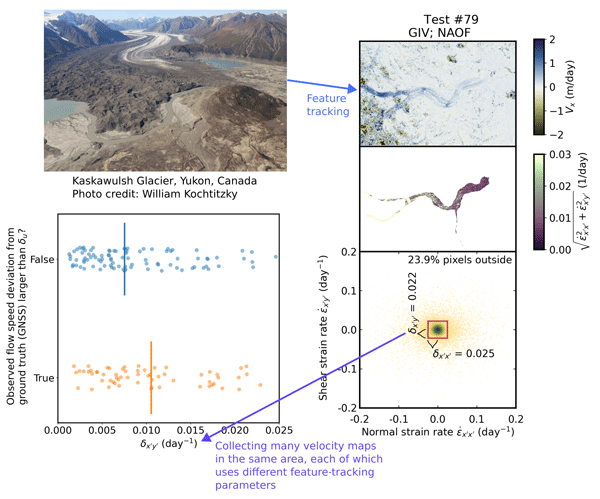
We design and propose a method that can evaluate the quality of glacier velocity maps. The method includes two numbers that we can calculate for each velocity map. Based on statistics and ice flow physics, velocity maps with numbers close to the recommended values are considered to have good quality. We test the method using the data from Kaskawulsh Glacier, Canada, and release an open-sourced software tool called GLAcier Feature Tracking testkit (GLAFT) to help users assess their velocity maps.
Franziska Temme, David Farías-Barahona, Thorsten Seehaus, Ricardo Jaña, Jorge Arigony-Neto, Inti Gonzalez, Anselm Arndt, Tobias Sauter, Christoph Schneider, and Johannes J. Fürst
The Cryosphere, 17, 2343–2365, https://doi.org/10.5194/tc-17-2343-2023, https://doi.org/10.5194/tc-17-2343-2023, 2023
Short summary
Short summary
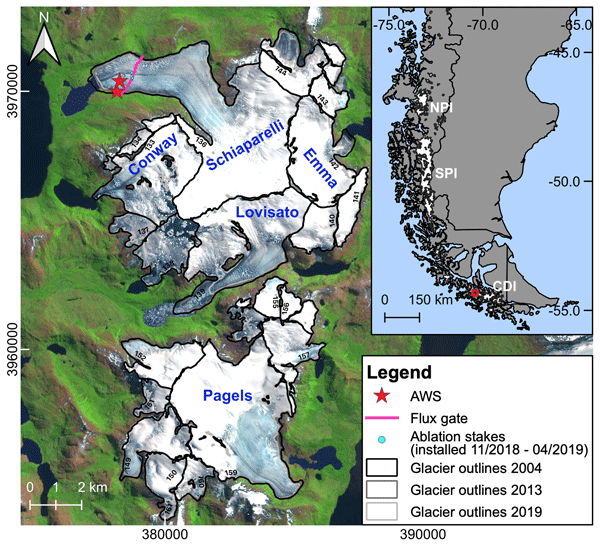
Calibration of surface mass balance (SMB) models on regional scales is challenging. We investigate different calibration strategies with the goal of achieving realistic simulations of the SMB in the Monte Sarmiento Massif, Tierra del Fuego. Our results show that the use of regional observations from satellite data can improve the model performance. Furthermore, we compare four melt models of different complexity to understand the benefit of increasing the processes considered in the model.
Nora Gourmelon, Thorsten Seehaus, Matthias Braun, Andreas Maier, and Vincent Christlein
Earth Syst. Sci. Data, 14, 4287–4313, https://doi.org/10.5194/essd-14-4287-2022, https://doi.org/10.5194/essd-14-4287-2022, 2022
Short summary
Short summary
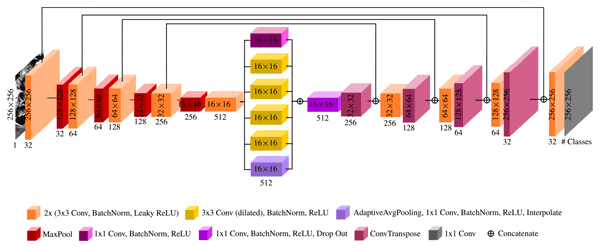
Ice loss of glaciers shows in retreating calving fronts (i.e., the position where icebergs break off the glacier and drift into the ocean). This paper presents a benchmark dataset for calving front delineation in synthetic aperture radar (SAR) images. The dataset can be used to train and test deep learning techniques, which automate the monitoring of the calving front. Provided example models achieve front delineations with an average distance of 887 m to the correct calving front.
Joëlle Voglimacci-Stephanopoli, Anna Wendleder, Hugues Lantuit, Alexandre Langlois, Samuel Stettner, Andreas Schmitt, Jean-Pierre Dedieu, Achim Roth, and Alain Royer
The Cryosphere, 16, 2163–2181, https://doi.org/10.5194/tc-16-2163-2022, https://doi.org/10.5194/tc-16-2163-2022, 2022
Short summary
Short summary
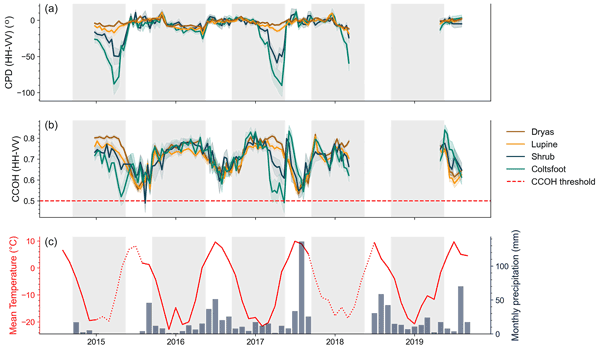
Changes in the state of the snowpack in the context of observed global warming must be considered to improve our understanding of the processes within the cryosphere. This study aims to characterize an arctic snowpack using the TerraSAR-X satellite. Using a high-spatial-resolution vegetation classification, we were able to quantify the variability in snow depth, as well as the topographic soil wetness index, which provided a better understanding of the electromagnetic wave–ground interaction.
Christian Sommer, Thorsten Seehaus, Andrey Glazovsky, and Matthias H. Braun
The Cryosphere, 16, 35–42, https://doi.org/10.5194/tc-16-35-2022, https://doi.org/10.5194/tc-16-35-2022, 2022
Short summary
Short summary
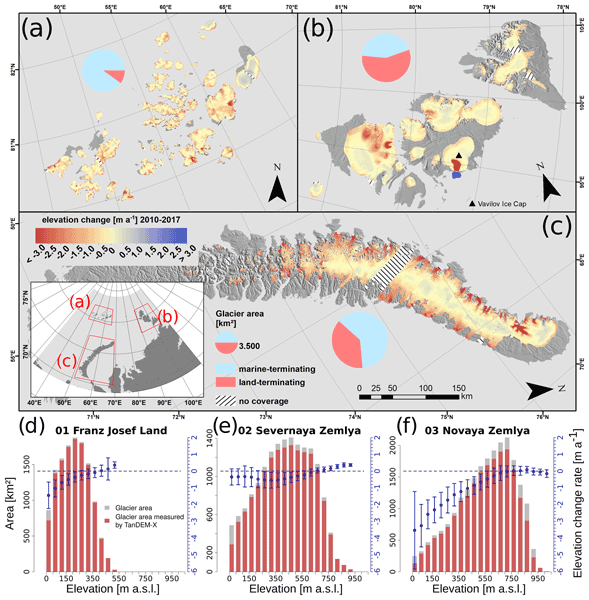
Arctic glaciers have been subject to extensive warming due to global climate change, yet their contribution to sea level rise has been relatively small in the past. In this study we provide mass changes of most glaciers of the Russian High Arctic (Franz Josef Land, Severnaya Zemlya, Novaya Zemlya). We use TanDEM-X satellite measurements to derive glacier surface elevation changes. Our results show an increase in glacier mass loss and a sea level rise contribution of 0.06 mm/a (2010–2017).
Cited articles
Albinet, C., Albright, W., Eberle, J., Friedl, P., Hogenson, K., Meyer, F., Molch, K., Pinheiro, M., Roth, A., Truckenbrodt, J., Valentino, A., and Wendleder, A.: ESA-DLR-NASA collaboration around a harmonised Sentinel-1 NRB ARD product, in: CEOS SAR Workshop on Calibration and Validation (CEOS SAR CalVal), https://elib.dlr.de/189683/ (last access: April 2026), 2022.
Bamber, J. L. and Dowdeswell, J. A.: Remote-Sensing Studies of Kvitøyjøkulen, an Ice Cap on Kvitøya, North-East Svalbard, J. Glaciol., 36, 75–81, https://doi.org/10.3189/S002214300000558X, 1990.
Bartholomaus, T. C., Larsen, C. F., and O'Neel, S.: Does calving matter? Evidence for significant submarine melt, Earth Planet. Sc. Lett., 380, 21–30, https://doi.org/10.1016/j.epsl.2013.08.014, 2013.
Błaszczyk, M., Hagen, J. O., and Jania, J. A.: Tidewater glaciers of Svalbard: Recent changes and estimates of calving fluxes, Polish Polar Res., 30, 85–142, 2009.
Catania, G. A., Stearns, L. A., Moon, T. A., Enderlin, E. M., and Jackson, R. H.: Future Evolution of Greenland's Marine‐Terminating Outlet Glaciers, J. Geophys. Res.-Earth, 125, e2018JF004873, https://doi.org/10.1029/2018JF004873, 2020.
Cogley, J. G., Hock, R., Rasmussen, L. A., Arendt, A. A., Bauder, A., and Braithwaite, R. J.: Glossary of Glacier Mass Balance and Related Terms, IHP-VII Technical Documents in Hydrology, UNESCO-IHP, Paris, https://wgms.ch/downloads/Cogley_etal_2011.pdf (last access: April 2026), 2011.
Cuffey, K. M. and Paterson, W. S. B.: The physics of glaciers, in: 4th Edn., Elsevier, San Diego, p. 1, ISBN 9780123694614, 2010.
Dowdeswell, J. A., Hamilton, G. S., and Hagen, J. O.: The duration of the active phase on surge-type glaciers: contrasts between Svalbard and other regions, J. Glaciol., 37, 388–400, https://doi.org/10.3189/S0022143000005827, 1991.
Dowdeswell, J. A., Benham, T. J., Strozzi, T., and Hagen, J. O.: Iceberg calving flux and mass balance of the Austfonna ice cap on Nordaustlandet, Svalbard, J. Geophys. Res., 113, 2007JF000905, https://doi.org/10.1029/2007JF000905, 2008.
Dreier, M., Gourmelon, N., Pyles, D., Seehaus, T., Braun, M. H., Maier, A., and Christlein, V.: Few-Shot Domain Adaptation with Temporal References and Static Priors for Glacier Calving Front Delineation, in: 2026 IEEE International Conference on Image Processing (ICIP), 1–6, https://doi.org/10.1109/ICIP61757.2026.11630261, 2026a.
Dreier, M., Gourmelon, N., Pyles, D., Wu, F., Braun, M., Seehaus, T., Maier, A., and Christlein, V.: Multi-temporal calving front segmentation, ISPRS J. Photogram. Remote Sens. 239, 276–290, https://doi.org/10.1016/j.isprsjprs.2026.05.053, 2026b.
Dunse, T., Schellenberger, T., Hagen, J. O., Kääb, A., Schuler, T. V., and Reijmer, C. H.: Glacier-surge mechanisms promoted by a hydro-thermodynamic feedback to summer melt, The Cryosphere, 9, 197–215, https://doi.org/10.5194/tc-9-197-2015, 2015.
European Space Agency and Airbus: Copernicus DEM, https://doi.org/10.5270/ESA-c5d3d65, 2022.
Fahrner, D., Slater, D. A., Kc, A., Cenedese, C., Sutherland, D. A., Enderlin, E., De Jong, M. F., Kjeldsen, K. K., Wood, M., Nienow, P., Nowicki, S., and Wagner, T. J. W.: A Frontal Ablation Dataset for 49 Tidewater Glaciers in Greenland, Sci. Data, 12, 601, https://doi.org/10.1038/s41597-025-04948-3, 2025.
Farinotti, D., Huss, M., Fürst, J. J., Landmann, J., Machguth, H., Maussion, F., and Pandit, A.: A consensus estimate for the ice thickness distribution of all glaciers on Earth, Nat. Geosci., 12, 168–173, https://doi.org/10.1038/s41561-019-0300-3, 2019.
Farnsworth, W. R., Ingólfsson, Ó., Retelle, M., and Schomacker, A.: Over 400 previously undocumented Svalbard surge-type glaciers identified, Geomorphology, 264, 52–60, https://doi.org/10.1016/j.geomorph.2016.03.025, 2016.
Felzenszwalb, P. F. and Huttenlocher, D. P.: Distance Transforms of Sampled Functions, Theory Comput., 8, 415–428, https://doi.org/10.4086/toc.2012.v008a019, 2012.
Fettweis, X. and Grailet, J.-F.: MAR (Modèle Atmosphérique Régional) version 3.14 (3.14.0), Zenodo [data set], https://doi.org/10.5281/ZENODO.13151275, 2024.
Foss, Ø., Maton, J., Moholdt, G., Schmidt, L. S., Sutherland, D. A., Fer, I., Nilsen, F., Kohler, J., and Sundfjord, A.: Ocean warming drives immediate mass loss from calving glaciers in the high Arctic, Nat. Commun., 15, 10460, https://doi.org/10.1038/s41467-024-54825-7, 2024.
Fried, M. J., Catania, G. A., Bartholomaus, T. C., Duncan, D., Davis, M., Stearns, L. A., Nash, J., Shroyer, E., and Sutherland, D.: Distributed subglacial discharge drives significant submarine melt at a Greenland tidewater glacier, Geophys. Res. Lett., 42, 9328–9336, https://doi.org/10.1002/2015GL065806, 2015.
Fürst, J. J., Gillet-Chaulet, F., Benham, T. J., Dowdeswell, J. A., Grabiec, M., Navarro, F., Pettersson, R., Moholdt, G., Nuth, C., Sass, B., Aas, K., Fettweis, X., Lang, C., Seehaus, T., and Braun, M.: Application of a two-step approach for mapping ice thickness to various glacier types on Svalbard, The Cryosphere, 11, 2003–2032, https://doi.org/10.5194/tc-11-2003-2017, 2017.
Fürst, J. J., Navarro, F., Gillet-Chaulet, F., Huss, M., Moholdt, G., Fettweis, X., Lang, C., Seehaus, T., Ai, S., Benham, T. J., Benn, D. I., Bjornsson, H., Dowdeswell, J. A., Grabiec, M., Kohler, J., Lavrentiev, I., Lindbäck, K., Melvold, K., Pettersson, R., Rippin, D., Saintenoy, A., Sanchez-Gamez, P., Schuler, T. V., Sevestre, H., Vasilenko, E., Braun, M. H., and Fürst, J. J.: SVIFT – The Svalbard ice-free topography, Norwegian Polar Institute, https://doi.org/10.21334/NPOLAR.2018.57FD0DB4, 2018a.
Fürst, J. J., Navarro, F., Gillet‐Chaulet, F., Huss, M., Moholdt, G., Fettweis, X., Lang, C., Seehaus, T., Ai, S., Benham, T. J., Benn, D. I., Björnsson, H., Dowdeswell, J. A., Grabiec, M., Kohler, J., Lavrentiev, I., Lindbäck, K., Melvold, K., Pettersson, R., Rippin, D., Saintenoy, A., Sánchez‐Gámez, P., Schuler, T. V., Sevestre, H., Vasilenko, E., and Braun, M. H.: The Ice‐Free Topography of Svalbard, Geophys. Res. Lett., 45, https://doi.org/10.1029/2018GL079734, 2018b.
Gardner, A. S., Greene, C. A., Kennedy, J. H., Fahnestock, M. A., Liukis, M., López, L. A., Lei, Y., Scambos, T. A., and Dehecq, A.: ITS_LIVE global glacier velocity data in near-real time, The Cryosphere, 19, 3517–3533, https://doi.org/10.5194/tc-19-3517-2025, 2025.
Geyman, E., van Pelt, W., Maloof, A., Aas, H. F., Kohler, J., and Kohler, J.: 1936/1938 DEM of Svalbard, Norwegian Polar Institute, https://doi.org/10.21334/NPOLAR.2021.F6AFCA5C, 2021.
Gourmelon, N., Seehaus, T., Braun, M., Maier, A., and Christlein, V.: Calving fronts and where to find them: a benchmark dataset and methodology for automatic glacier calving front extraction from synthetic aperture radar imagery, Earth Syst. Sci. Data, 14, 4287–4313, https://doi.org/10.5194/essd-14-4287-2022, 2022a.
Gourmelon, N., Seehaus, T., Braun, M. H., Maier, A., and Christlein, V.: CaFFe (CAlving Fronts and where to Find thEm: a benchmark dataset and methodology for automatic glacier calving front extraction from sar imagery) [dataset], PANGAEA [data set], https://doi.org/10.1594/PANGAEA.940950, 2022b.
Gourmelon, N., Dreier, M., Mayr, M., Seehaus, T., Pyles, D., Braun, M., Maier, A., and Christlein, V.: SSL4SAR: Self-Supervised Learning for Glacier Calving Front Extraction From SAR Imagery, IEEE T. Geosci. Remote, 63, 1–12, https://doi.org/10.1109/TGRS.2025.3580945, 2025.
Haacker, J., Wouters, B., Fettweis, X., Glissenaar, I. A., and Box, J. E.: Atmospheric-river-induced foehn events drain glaciers on Novaya Zemlya, Nat. Commun., 15, 7021, https://doi.org/10.1038/s41467-024-51404-8, 2024.
Haga, O. N., McNabb, R., Nuth, C., Altena, B., Schellenberger, T., and Kääb, A.: From high friction zone to frontal collapse: dynamics of an ongoing tidewater glacier surge, Negribreen, Svalbard, J. Glaciol., 66, 742–754, https://doi.org/10.1017/jog.2020.43, 2020.
Hagen, J. O., Melvold, K., and Dowdeswellt, J. A.: On the Net Mass Balance of the Glaciers and Ice Caps in Svalbard, Norwegian Arctic, Arct. Antarct. Alp. Res., 35, 264–270, 2003.
Herrmann, O., Gourmelon, N., Seehaus, T., Maier, A., Fürst, J. J., Braun, M. H., and Christlein, V.: Out-of-the-box calving-front detection method using deep learning, The Cryosphere, 17, 4957–4977, https://doi.org/10.5194/tc-17-4957-2023, 2023.
Hersbach, H., Bell, B., Berrisford, P., Hirahara, S., Horányi, A., Muñoz‐Sabater, J., Nicolas, J., Peubey, C., Radu, R., Schepers, D., Simmons, A., Soci, C., Abdalla, S., Abellan, X., Balsamo, G., Bechtold, P., Biavati, G., Bidlot, J., Bonavita, M., De Chiara, G., Dahlgren, P., Dee, D., Diamantakis, M., Dragani, R., Flemming, J., Forbes, R., Fuentes, M., Geer, A., Haimberger, L., Healy, S., Hogan, R. J., Hólm, E., Janisková, M., Keeley, S., Laloyaux, P., Lopez, P., Lupu, C., Radnoti, G., De Rosnay, P., Rozum, I., Vamborg, F., Villaume, S., and Thépaut, J.: The ERA5 global reanalysis, Q. J. Roy. Meteorool. Soc., 146, 1999–2049, https://doi.org/10.1002/qj.3803, 2020.
Holmes, F. A., Kirchner, N., Kuttenkeuler, J., Krützfeldt, J., and Noormets, R.: Relating ocean temperatures to frontal ablation rates at Svalbard tidewater glaciers: Insights from glacier proximal datasets, Sci. Rep., 9, 9442, https://doi.org/10.1038/s41598-019-45077-3, 2019.
Holmes, F. A., Van Dongen, E., Noormets, R., Pętlicki, M., and Kirchner, N.: Impact of tides on calving patterns at Kronebreen, Svalbard – insights from three-dimensional ice dynamical modelling, The Cryosphere, 17, 1853–1872, https://doi.org/10.5194/tc-17-1853-2023, 2023.
Hugonnet, R., McNabb, R., Berthier, E., Menounos, B., Nuth, C., Girod, L., Farinotti, D., Huss, M., Dussaillant, I., Brun, F., and Kääb, A.: Accelerated global glacier mass loss in the early twenty-first century, Nature, 592, 726–731, https://doi.org/10.1038/s41586-021-03436-z, 2021.
Huss, M. and Hock, R.: A new model for global glacier change and sea-level rise, Front. Earth Sci., 3, https://doi.org/10.3389/feart.2015.00054, 2015.
ITS_LIVE team: Inter-mission Time Series of Land Ice Velocity and Elevation (ITS_LIVE), https://registry.opendata.aws/its-live-data (last access: April 2026), 2026.
Jiskoot, H., Boyle, P., and Murray, T.: The incidence of glacier surging in Svalbard: evidence from multivariate statistics, Comput. Geosci., 24, 387–399, https://doi.org/10.1016/S0098-3004(98)00033-8, 1998.
Kochtitzky, W., Copland, L., Van Wychen, W., Hock, R., Rounce, D. R., Jiskoot, H., Scambos, T. A., Morlighem, M., King, M., Cha, L., Gould, L., Merrill, P.-M., Glazovsky, A., Hugonnet, R., Strozzi, T., Noël, B., Navarro, F., Millan, R., Dowdeswell, J. A., Cook, A., Dalton, A., Khan, S., and Jania, J.: Progress toward globally complete frontal ablation estimates of marine-terminating glaciers, Ann. Glaciol., 63, 143–152, https://doi.org/10.1017/aog.2023.35, 2022a.
Kochtitzky, W., Copland, L., Van Wychen, W., Hugonnet, R., Hock, R., Dowdeswell, J. A., Benham, T., Strozzi, T., Glazovsky, A., Lavrentiev, I., Rounce, D. R., Millan, R., Cook, A., Dalton, A., Jiskoot, H., Cooley, J., Jania, J., and Navarro, F.: The unquantified mass loss of Northern Hemisphere marine-terminating glaciers from 2000–2020, Nat. Commun., 13, 5835, https://doi.org/10.1038/s41467-022-33231-x, 2022b.
Kolmogorov, A.: Sulla determinazione empirica di una legge didistribuzione, Giorn. Dell'inst. Ital. Degli. Att., 4, 89–91, 1933.
Li, T., Heidler, K., Mou, L., Ignéczi, Á., Zhu, X. X., and Bamber, J. L.: A high-resolution calving front data product for marine-terminating glaciers in Svalbard, Earth Syst. Sci. Data, 16, 919–939, https://doi.org/10.5194/essd-16-919-2024, 2024.
Li, T., Hofer, S., Moholdt, G., Igneczi, A., Heidler, K., Zhu, X. X., and Bamber, J.: Pervasive glacier retreats across Svalbard from 1985 to 2023, Nat. Commun., 16, 705, https://doi.org/10.1038/s41467-025-55948-1, 2025.
Luckman, A., Benn, D. I., Cottier, F., Bevan, S., Nilsen, F., and Inall, M.: Calving rates at tidewater glaciers vary strongly with ocean temperature, Nat. Commun., 6, 8566, https://doi.org/10.1038/ncomms9566, 2015.
Ma, Y. and Bassis, J. N.: The Effect of Submarine Melting on Calving From Marine Terminating Glaciers, J. Geopys. Res.-Earth, 124, 334–346, https://doi.org/10.1029/2018JF004820, 2019.
Malles, J.-H., Maussion, F., Ultee, L., Kochtitzky, W., Copland, L., and Marzeion, B.: Exploring the impact of a frontal ablation parameterization on projected 21st-century mass change for Northern Hemisphere glaciers, J. Glaciol., 69, 1317–1332, https://doi.org/10.1017/jog.2023.19, 2023.
Malz, P., Sommer, C., Seehaus, T., Farias-Barahona, D., and Braun, M.: Global Glacier Surface Elevation Change and Geodetic Mass Balance Estimations, in: EUSAR 2021; 13th European Conference on Synthetic Aperture Radar, 1–3, https://ieeexplore.ieee.org/abstract/document/9472627 (last access: April 2026), 2021.
Mankoff, K. D., Fettweis, X., Langen, P. L., Stendel, M., Kjeldsen, K. K., Karlsson, N. B., Noël, B., Van Den Broeke, M. R., Solgaard, A., Colgan, W., Box, J. E., Simonsen, S. B., King, M. D., Ahlstrøm, A. P., Andersen, S. B., and Fausto, R. S.: Greenland ice sheet mass balance from 1840 through next week, Earth Syst. Sci. Data, 13, 5001–5025, https://doi.org/10.5194/essd-13-5001-2021, 2021.
McNabb, R. W., Hock, R., and Huss, M.: Variations in Alaska tidewater glacier frontal ablation, 1985–2013, J. Geophys. Res.-Earth, 120, 120–136, https://doi.org/10.1002/2014JF003276, 2015.
Middleton, R., Herzfeld, U., and Trantow, T.: Mapping Supraglacial Water as a Window into Surge Hydrology: Linking Surface Water, Drainage Efficiency, and Surge Dynamics on Negribreen, Svalbard, arXiv [preprint], https://doi.org/10.48550/arXiv.2601.00137, 2025.
Millan, R., Mouginot, J., Rabatel, A., and Morlighem, M.: Ice velocity and thickness of the world's glaciers, Nat. Geosci., 15, 124–129, https://doi.org/10.1038/s41561-021-00885-z, 2022.
Minowa, M., Schaefer, M., Sugiyama, S., Sakakibara, D., and Skvarca, P.: Frontal ablation and mass loss of the Patagonian icefields, Earth Planet. Sc. Lett., 561, 116811, https://doi.org/10.1016/j.epsl.2021.116811, 2021.
Mohajerani, Y., Wood, M., Velicogna, I., and Rignot, E.: Detection of Glacier Calving Margins with Convolutional Neural Networks: A Case Study, Remote Sens., 11, 74, https://doi.org/10.3390/rs11010074, 2019.
Moholdt, G., Nuth, C., Hagen, J. O., and Kohler, J.: Recent elevation changes of Svalbard glaciers derived from ICESat laser altimetry, Remote Sens. Environ., 114, 2756–2767, https://doi.org/10.1016/j.rse.2010.06.008, 2010.
Nanni, U., Bouchayer, C., Åkesson, H., Lefeuvre, P.-M., Mannerfelt, E. S., Köhler, A., Gagliardini, O., Kohler, J., Schmidt, L. S., Hult, J., Renard, F., and Schuler, T. V.: Observed positive feedback between surface ablation and crevasse formation drives glacier acceleration and potential surge, Nat. Commun., 16, 11227, https://doi.org/10.1038/s41467-025-66349-9, 2025.
OpenStreetMap Contributors: OpenSteetMap, https://osmdata.openstreetmap.de/data/coastlines.html (last access: April 2026), 2024.
Osmanoğlu, B., Braun, M., Hock, R., and Navarro, F. J.: Surface velocity and ice discharge of the ice cap on King George Island, Antarctica, Ann. Glaciol., 54, 111–119, https://doi.org/10.3189/2013AoG63A517, 2013.
Osmanoğlu, B., Navarro, F. J., Hock, R., Braun, M., and Corcuera, M. I.: Surface velocity and mass balance of Livingston Island ice cap, Antarctica, The Cryosphere, 8, 1807–1823, https://doi.org/10.5194/tc-8-1807-2014, 2014.
Pyles, D., Dreier, M., Wendleder, A., Kochtitzky, W., Gourmelon, N., Christlein, V., and Seehaus, T.: Monthly Frontal Ablation at 147 Tidewater Glaciers in Svalbard (2015–2024), Zenodo [data set], https://doi.org/10.5281/zenodo.19481461, 2026.
Recinos, B., Maussion, F., and Marzeion, B.: Advances in data availability to constrain and evaluate frontal ablation of ice-dynamical models of Greenland's tidewater peripheral glaciers, Ann. Glaciol., 63, 55–61, https://doi.org/10.1017/aog.2023.11, 2022.
RGI Consortium: Randolph Glacier Inventory – A Dataset of Global Glacier Outlines, Version 6, https://doi.org/10.7265/4M1F-GD79, 2017.
Rounce, D. R., Hock, R., Maussion, F., Hugonnet, R., Kochtitzky, W., Huss, M., Berthier, E., Brinkerhoff, D., Compagno, L., Copland, L., Farinotti, D., Menounos, B., and McNabb, R. W.: Global glacier change in the 21st century: Every increase in temperature matters, Science, 379, 78–83, https://doi.org/10.1126/science.abo1324, 2023.
Savitzky, A. and Golay, M. J. E.: Smoothing and Differentiation of Data by Simplified Least Squares Procedures, Anal. Chem., 36, 1627–1639, https://doi.org/10.1021/ac60214a047, 1964.
Schellenberger, T., Dunse, T., Kääb, A., Schuler, T. V., Hagen, J. O., and Reijmer, C. H.: Multi-year surface velocities and sea-level rise contribution of the Basin-3 and Basin-2 surges, Austfonna, Svalbard, The Cryosphere Discuss. [preprint], https://doi.org/10.5194/tc-2017-5, 2017.
Schuler, T. V., Kohler, J., Elagina, N., Hagen, J. O. M., Hodson, A. J., Jania, J. A., Kääb, A. M., Luks, B., Małecki, J., Moholdt, G., Pohjola, V. A., Sobota, I., and Van Pelt, W. J. J.: Reconciling Svalbard Glacier Mass Balance, Front. Earth Sci., 8, 156, https://doi.org/10.3389/feart.2020.00156, 2020.
Shannon, C. E.: A Mathematical Theory of Communication, Bell Syst. Tech. J., 27, 379–423, https://doi.org/10.1002/j.1538-7305.1948.tb01338.x, 1948.
Slater, D. A., Straneo, F., Das, S. B., Richards, C. G., Wagner, T. J. W., and Nienow, P. W.: Localized Plumes Drive Front‐Wide Ocean Melting of A Greenlandic Tidewater Glacier, Geophys. Res. Lett., 45, https://doi.org/10.1029/2018GL080763, 2018.
Sochor, L., Seehaus, T., and Braun, M. H.: Increased Ice Thinning over Svalbard Measured by ICESat/ICESat-2 Laser Altimetry, Remote Sens., 13, 2089, https://doi.org/10.3390/rs13112089, 2021.
Strozzi, T., Mannerfelt, E. S., Cartus, O., Santoro, M., Schellenberger, T., and Kääb, A.: Glacier surge activity over Svalbard from 1992 to 2025 interpreted using heritage satellite radar missions and Sentinel-1, The Cryosphere, 20, 1679–1697, https://doi.org/10.5194/tc-20-1679-2026, 2026.
Sutherland, D. A., Jackson, R. H., Kienholz, C., Amundson, J. M., Dryer, W. P., Duncan, D., Eidam, E. F., Motyka, R. J., and Nash, J. D.: Direct observations of submarine melt and subsurface geometry at a tidewater glacier, Science, 365, 369–374, https://doi.org/10.1126/science.aax3528, 2019.
Szafraniec, J. E.: Ice-Cliff Morphometry in Identifying the Surge Phenomenon of Tidewater Glaciers (Spitsbergen, Svalbard), Geosciences, 10, 328, https://doi.org/10.3390/geosciences10090328, 2020.
Temme, F., Sommer, C., Schaefer, M., Jaña, R., Arigony-Neto, J., Gonzalez, I., Izagirre, E., Giesecke, R., Tetzner, D., and Fürst, J. J.: Climate's firm grip on glacier ablation in the Cordillera Darwin Icefield, Tierra del Fuego, Nat. Commun., 16, 2677, https://doi.org/10.1038/s41467-025-57698-6, 2025.
Truckenbrodt, J., Wolsza, M., Valentino, A., Albinet, C., Wendleder, A., Eberle, J., and Molch, K.: The ESA Sentinel-1 Normalized Radar Backscatter Product, PV2023, https://elib.dlr.de/196781/ (last access: April 2026), 2023.
Truffer, M. and Motyka, R. J.: Where glaciers meet water: Subaqueous melt and its relevance to glaciers in various settings, Rev. Geophys., 54, 220–239, https://doi.org/10.1002/2015RG000494, 2016.
Wagner, T. J. W., Straneo, F., Richards, C. G., Slater, D. A., Stevens, L. A., Das, S. B., and Singh, H.: Large spatial variations in the flux balance along the front of a Greenland tidewater glacier, The Cryosphere, 13, 911–925, https://doi.org/10.5194/tc-13-911-2019, 2019.
Wang, J., Yang, Y., Wang, C., and Li, L.: Accelerated Glacier Mass Loss over Svalbard Derived from ICESat-2 in 2019–2021, Atmosphere, 13, 1255, https://doi.org/10.3390/atmos13081255, 2022.
Wu, F., Gourmelon, N., Seehaus, T., Zhang, J., Braun, M., Maier, A., and Christlein, V.: Contextual HookFormer for Glacier Calving Front Segmentation, IEEE T. Geosci. Remote, 62, 1–15, https://doi.org/10.1109/TGRS.2024.3368215, 2024.
Zekollari, H., Huss, M., Schuster, L., Maussion, F., Rounce, D. R., Aguayo, R., Champollion, N., Compagno, L., Hugonnet, R., Marzeion, B., Mojtabavi, S., and Farinotti, D.: Twenty-first century global glacier evolution under CMIP6 scenarios and the role of glacier-specific observations, The Cryosphere, 18, 5045–5066, https://doi.org/10.5194/tc-18-5045-2024, 2024.
Zhang, E., Liu, L., Huang, L., and Ng, K. S.: An automated, generalized, deep-learning-based method for delineating the calving fronts of Greenland glaciers from multi-sensor remote sensing imagery, Remote Sens. Environ., 254, 112265, https://doi.org/10.1016/j.rse.2020.112265, 2021.
Zheng, W.: Glacier geometry and flow speed determine how Arctic marine-terminating glaciers respond to lubricated beds, The Cryosphere, 16, 1431–1445, https://doi.org/10.5194/tc-16-1431-2022, 2022.
Short summary
Monthly frontal ablation is quantified at 147 Svalbard tidewater glaciers from 2015–2024 using terminus positions derived from a deep-learning segmentation model's predictions of the calving fronts on satellite radar images. Our high spatio-temporal resolution results will improve the process understanding of frontal ablation, provide reference data for the modeling community, and deliver an ideal dataset for studying controls of frontal ablation.
Monthly frontal ablation is quantified at 147 Svalbard tidewater glaciers from 2015–2024 using...


Altmetrics
Final-revised paper
Preprint