Articles | Volume 18, issue 9
https://doi.org/10.5194/essd-18-7097-2026
© Author(s) 2026. This work is distributed under
the Creative Commons Attribution 4.0 License.
the Creative Commons Attribution 4.0 License.
https://doi.org/10.5194/essd-18-7097-2026
© Author(s) 2026. This work is distributed under
the Creative Commons Attribution 4.0 License.
the Creative Commons Attribution 4.0 License.
Data description article
| 
28 Sep 2026
Data description article |
| 28 Sep 2026
| 28 Sep 2026
Daily snow depth in the Southern Andes (2010–2024): a quality-controlled dataset from Chile and Argentina
Alexis Caro
CORRESPONDING AUTHOR

Department of Geography, Universidad de Concepción, Concepción, Chile
Laboratorio de Teledetección Ambiental, Facultad de Ciencias Naturales y Exactas, Universidad de Playa Ancha, Valparaíso, Chile
Javier Medina
Laboratorio de Teledetección Ambiental, Facultad de Ciencias Naturales y Exactas, Universidad de Playa Ancha, Valparaíso, Chile
HUB Ambiental, Universidad de Playa Ancha, Valparaíso, Chile
Laboratorio de Teledetección Ambiental, Facultad de Ciencias Naturales y Exactas, Universidad de Playa Ancha, Valparaíso, Chile
HUB Ambiental, Universidad de Playa Ancha, Valparaíso, Chile
Fernando Gimeno
Doctorado en Ciencias de Recursos Naturales, Universidad de la Frontera, Temuco, Chile
Center for Climate and Resilience Research, Universidad de Chile, Santiago, Chile
Jorge Huenante
Dirección General de Aguas, Ministerio de Obras Públicas, Santiago, Chile
Mariano Masiokas
Instituto Argentino de Nivología, Glaciología y Ciencias Ambientales (IANIGLA), CCT CONICET Mendoza, Mendoza, Argentina
Cristian Orrego
Centro de Estudios Avanzados en Zonas Áridas (CEAZA), La Serena, Chile
Ana Hernández
Laboratorio de Teledetección Ambiental, Facultad de Ciencias Naturales y Exactas, Universidad de Playa Ancha, Valparaíso, Chile
HUB Ambiental, Universidad de Playa Ancha, Valparaíso, Chile
James McPhee
Department of Civil Engineering, University of Chile, Santiago, Chile
Advanced Mining Technology Center, University of Chile, Santiago, Chile
Pierre Pitte
Instituto Argentino de Nivología, Glaciología y Ciencias Ambientales (IANIGLA), CCT CONICET Mendoza, Mendoza, Argentina
Sebastián Krogh
Departamento de Recursos Hídricos, Universidad de Concepción, Campus Chillán, Chillán, Chile
David Farías-Barahona
Department of Geography, Universidad de Concepción, Concepción, Chile
Nevenka Bulovic
Sustainable Minerals Institute, The University of Queensland, Brisbane, Australia
Iñigo Irarrázaval
Centro de Investigación en Ecosistemas de la Patagonia, Coyhaique, Chile
Shelley MacDonell
Centro de Estudios Avanzados en Zonas Áridas (CEAZA), La Serena, Chile
Waterways Centre, University of Canterbury, Christchurch, New Zealand
Mauricio Zambrano-Bigiarini
Center for Climate and Resilience Research, Universidad de Chile, Santiago, Chile
Department of Civil Engineering, Universidad de la Frontera, Temuco, Chile
Carlos Romero
Laboratorio de Teledetección Ambiental, Facultad de Ciencias Naturales y Exactas, Universidad de Playa Ancha, Valparaíso, Chile
Related authors
Rodrigo Aguayo, Fabien Maussion, Lilian Schuster, Marius Schaefer, Alexis Caro, Patrick Schmitt, Jonathan Mackay, Lizz Ultee, Jorge Leon-Muñoz, and Mauricio Aguayo
The Cryosphere, 18, 5383–5406, https://doi.org/10.5194/tc-18-5383-2024, https://doi.org/10.5194/tc-18-5383-2024, 2024
Short summary
Short summary
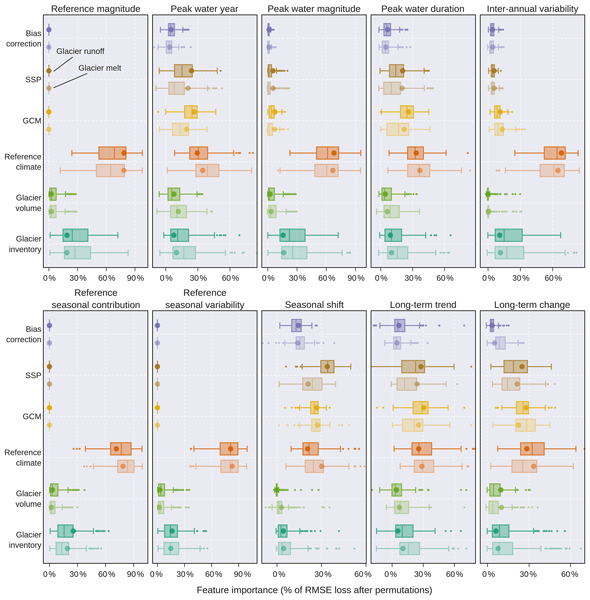
Predicting how much water will come from glaciers in the future is a complex task, and there are many factors that make it uncertain. Using a glacier model, we explored 1920 scenarios for each glacier in the Patagonian Andes. We found that the choice of the historical climate data was the most important factor, while other factors such as different data sources, climate models and emission scenarios played a smaller role.
Alexis Caro, Thomas Condom, Antoine Rabatel, Nicolas Champollion, Nicolás García, and Freddy Saavedra
The Cryosphere, 18, 2487–2507, https://doi.org/10.5194/tc-18-2487-2024, https://doi.org/10.5194/tc-18-2487-2024, 2024
Short summary
Short summary
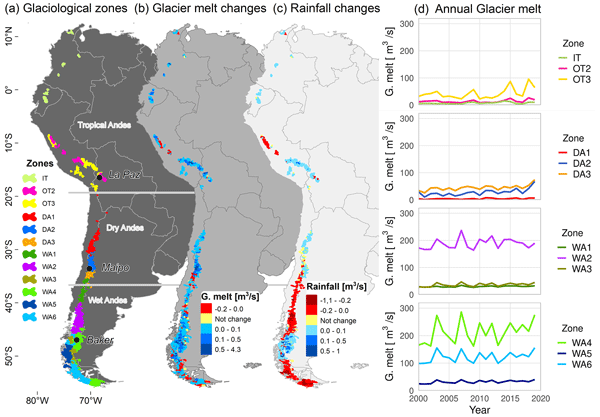
The glacier runoff changes are still unknown in most of the Andean catchments, thereby increasing uncertainties in estimating water availability, especially during the dry season. Here, we simulate glacier evolution and related glacier runoff changes across the Andes between 2000 and 2019. Our results indicate a glacier reduction in 93 % of the catchments, leading to a 12 % increase in glacier melt. These results can be downloaded and integrated with discharge measurements in each catchment.
Christopher Ulloa, Ayon García, Hans Fernández-Navarro, Jorge Berkhoff, José Luis Rodriguez, and Pierre Pitte
EGUsphere, https://doi.org/10.5194/egusphere-2026-3669, https://doi.org/10.5194/egusphere-2026-3669, 2026
This preprint is open for discussion and under review for The Cryosphere (TC).
Short summary
Short summary
Mountain glaciers in Chile's dry Central Andes are critical water sources for millions downstream. We tracked ice movement at Universidad Glacier, the region's largest valley glacier, using satellite radar over two summers, validated against field GPS. We found the glacier now flows far slower than in past decades, and that brief, meltwater-driven speed-ups each summer are too short-lived for existing global satellite monitoring, which only resolves year-to-year change.
Alexander Brenning, Guillermo F. Azócar, Pablo Iribarren Anacona, Kenji Yoshikawa, Gino Casassa, Pedro Straub-Bustamante, Duilio Fonseca-Gallardo, and Jorge Huenante
The Cryosphere, 20, 4681–4699, https://doi.org/10.5194/tc-20-4681-2026, https://doi.org/10.5194/tc-20-4681-2026, 2026
Short summary
Short summary
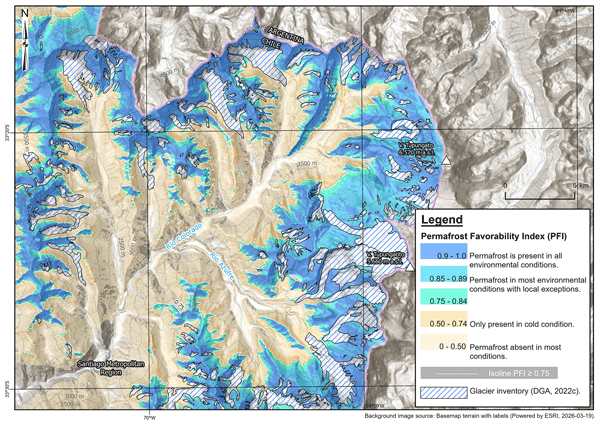
We created the first empirically calibrated high-resolution map of mountain permafrost distribution in mainland Chile. Using field evidence from rock glaciers and boreholes with climate and terrain data, we found that more than 8000 km², mainly in the dry Andes of northern and central Chile, offer suitable conditions. Permafrost affects water resources, slope stability, and infrastructure, and our model provides a baseline for planning and future research under climate change.
Carlos Eduardo Romero, Freddy Alejandro Saavedra, and Paula Soledad María Celis-Plá
EGUsphere, https://doi.org/10.5194/egusphere-2026-3887, https://doi.org/10.5194/egusphere-2026-3887, 2026
This preprint is open for discussion and under review for The Cryosphere (TC).
Short summary
Short summary
Seasonal snow in the Andes is the primary freshwater source for millions of people in Chile and Argentina. Rising temperatures push the snow boundary to higher elevations, threatening water supply. We systematically reviewed 26 studies comparing satellite methods to monitor this boundary. Results are hard to compare because studies use inconsistent definitions and approaches. We identify four priorities to standardize methods and enable more reliable snowline monitoring for water security.
Matías Moreno, Pablo Mendoza, Eduardo Muñoz-Castro, Mauricio Zambrano-Bigiarini, and Alonso Pizarro
EGUsphere, https://doi.org/10.5194/egusphere-2026-2912, https://doi.org/10.5194/egusphere-2026-2912, 2026
Short summary
Short summary
We developed a new method called SPEAK to better evaluate how well hydrological models reproduce spatial patterns such as evapotranspiration across different regions. We tested it in 99 Chilean catchments with different climates and terrain types. Compared with existing methods, SPEAK more accurately represented spatial patterns and was less affected by map resolution or catchment characteristics. This could help improve water resource modelling and planning across diverse local conditions.
Daniel A. Núñez-Ibarra, Mauricio Zambrano-Bigiarini, and Mauricio Galleguillos
Hydrol. Earth Syst. Sci., 30, 1813–1847, https://doi.org/10.5194/hess-30-1813-2026, https://doi.org/10.5194/hess-30-1813-2026, 2026
Short summary
Short summary
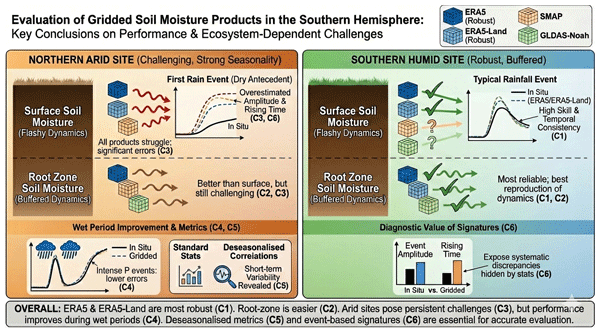
Soil moisture plays a key role in how land and climate interact, yet it remains difficult to measure in remote or natural areas. This study compared four state-of-the-art soil moisture datasets against ground data from ten sites in Chile. Results show that some products perform better in humid areas, while others do better in dry regions. The work highlights which datasets are most reliable and suggests new ways to assess how well they track changes after precipitation events.
Francesca Pellicciotti, Adrià Fontrodona-Bach, David R. Rounce, Catriona L. Fyffe, Leif S. Anderson, Álvaro Ayala, Ben W. Brock, Pascal Buri, Stefan Fugger, Koji Fujita, Prateek Gantayat, Alexander R. Groos, Walter Immerzeel, Marin Kneib, Christoph Mayer, Shelley MacDonell, Michael McCarthy, James McPhee, Evan Miles, Heather Purdie, Ekaterina Rets, Akiko Sakai, Thomas E. Shaw, Jakob Steiner, Patrick Wagnon, and Alex Winter-Billington
The Cryosphere, 20, 1895–1928, https://doi.org/10.5194/tc-20-1895-2026, https://doi.org/10.5194/tc-20-1895-2026, 2026
Short summary
Short summary
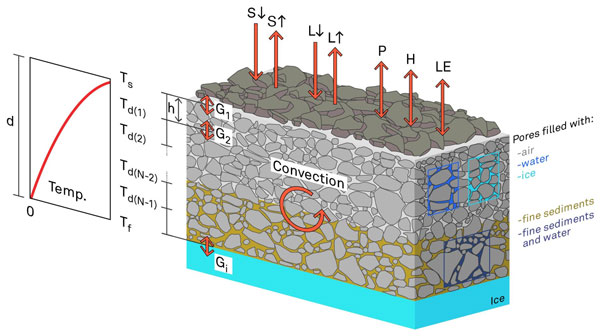
Rock debris covers many of the world glaciers, modifying the transfer of atmospheric energy to the debris and into the ice. Models of different complexity simulate this process, and we compare 15 models at 9 sites to show that the most complex models at the debris-atmosphere interface have the highest performance. However, we lack debris properties and their derivation from measurements is ambiguous, hindering global modelling and calling for both model development and data collection.
Vijaya Kumar Thota, Thorsten Seehaus, Friedrich Knuth, Amaury Dehecq, Christian Salewski, David Farías-Barahona, and Matthias H. Braun
Earth Syst. Sci. Data, 18, 597–615, https://doi.org/10.5194/essd-18-597-2026, https://doi.org/10.5194/essd-18-597-2026, 2026
Short summary
Short summary
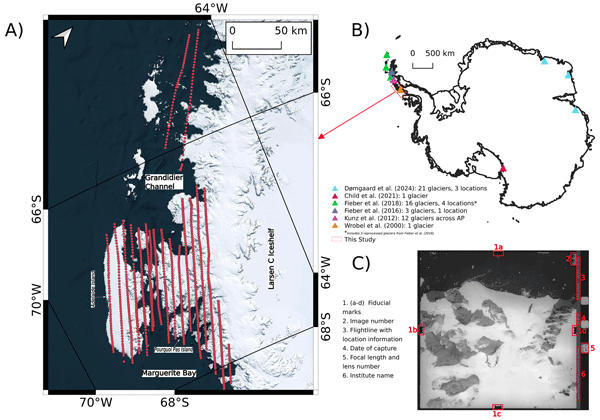
We reconstruct historical topography for a rapidly warming Antarctic region with limited existing data. Using approximately 2000 aerial photographs from the year 1989 over the western Antarctic Peninsula and nearby islands, we created detailed elevation models and orthoimages that have high accuracy compared to recent satellite data. This open dataset aids tracking historical ice loss and its role in sea level rise.
Cristóbal Soto-Escobar, Mauricio Zambrano-Bigiarini, Violeta Tolorza, and René Garreaud
Hydrol. Earth Syst. Sci., 30, 91–117, https://doi.org/10.5194/hess-30-91-2026, https://doi.org/10.5194/hess-30-91-2026, 2026
Short summary
Short summary
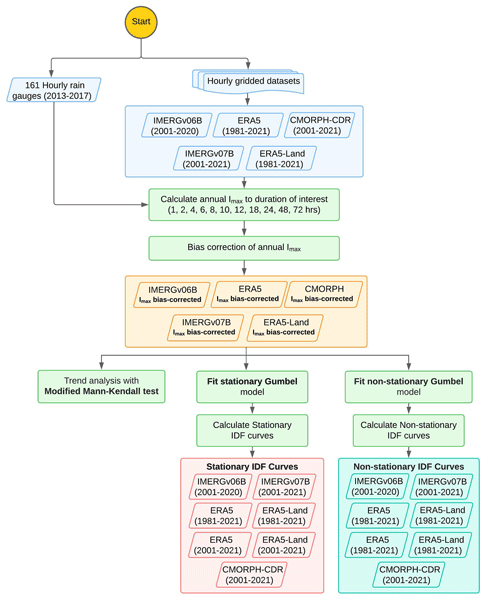
This study assesses how spatial patterns, temporal trends, and record length in hourly precipitation data affect annual maximum intensities estimated with stationary and non-stationary models across a climatically and topographically diverse region. Comparing five gridded datasets, we find consistent spatial patterns but notable differences in intensities, with non-stationary estimates generally slightly lower.
Moritz Koch, Jorge Berkhoff, Norbert Blindow, David Farías-Barahona, Pedro Skvarca, Johannes J. Fürst, and Matthias Braun
Earth Syst. Sci. Data Discuss., https://doi.org/10.5194/essd-2025-678, https://doi.org/10.5194/essd-2025-678, 2026
Preprint under review for ESSD
Short summary
Short summary
The Southern Patagonian Icefield is losing glacier area and ice volume rapidly. Although its glaciers share the same plateau, they retreat at different speeds and times. One reason for these differences lies in the unknown landscape beneath the ice. To reveal it, we used helicopter-based radar to measure the ice thickness and map the bedrock of Viedma, Upsala, and Perito Moreno Glaciers.
René Garreaud, Juan Pablo Boisier, Camila Alvarez-Garreton, Duncan A. Christie, Tomás Carrasco-Escaff, Iván Vergara, Roberto O. Chávez, Paulina Aldunce, Pablo Camus, Manuel Suazo-Álvarez, Mariano Masiokas, Gabriel Castro, Ariel Muñoz, Mauricio Zambrano-Bigiarini, Rodrigo Fuster, and Lintsiee Godoy
Hydrol. Earth Syst. Sci., 29, 5347–5369, https://doi.org/10.5194/hess-29-5347-2025, https://doi.org/10.5194/hess-29-5347-2025, 2025
Short summary
Short summary
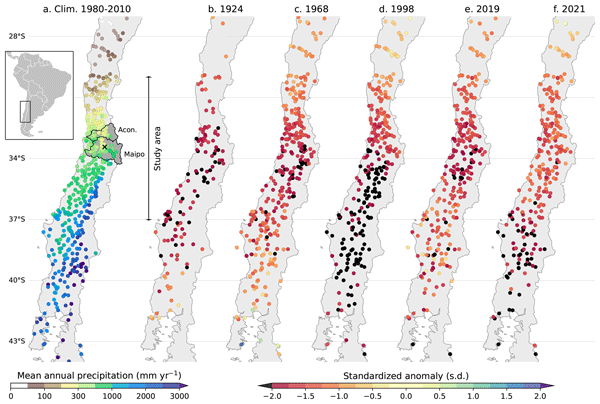
This study focuses on hyperdroughts (HDs) in central Chile, defined as years with a regional rainfall deficit exceeding 75 %. Only five HDs occurred in the last century (1924, 1968, 1998, 2019, 2021), but they caused disproportionate environmental and social impacts. In some systems, the effects were larger than expected from those considering moderate droughts and dependent on the antecedent conditions. HDs have analogs from the remote past, and they are expected to increase in the near future.
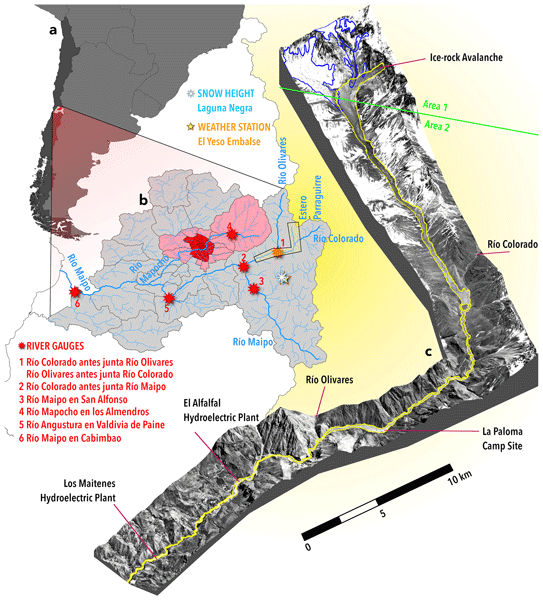
Johannes J. Fürst, David Farías-Barahona, Thomas Bruckner, Lucia Scaff, Martin Mergili, Santiago Montserrat, and Humberto Peña
Nat. Hazards Earth Syst. Sci., 25, 3559–3579, https://doi.org/10.5194/nhess-25-3559-2025, https://doi.org/10.5194/nhess-25-3559-2025, 2025
Short summary
Short summary
The 1987 Parraguirre ice–rock avalanche developed into a devastating debris flow, causing the loss of many lives and inflicting severe damage near Santiago, Chile. Here, we revise this event, combining various observational records with modelling techniques. In that year, important snow cover coincided with persistent warm periods in spring. We also put forward upward corrections for the trigger and flood volumes involved in this debris flow. Finally, temporary river damming was key for the flow ferocity.
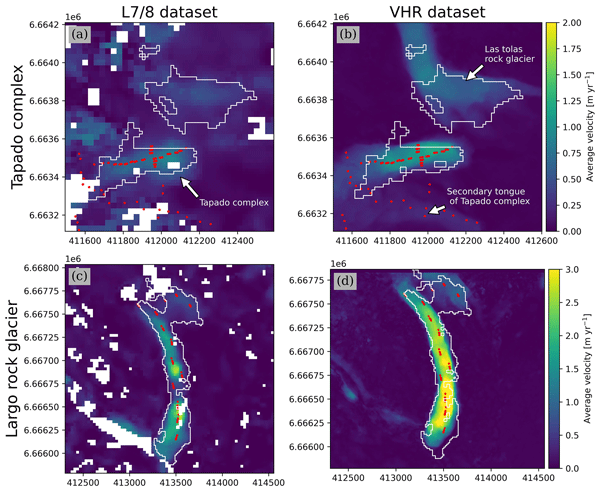
Diego Cusicanqui, Pascal Lacroix, Xavier Bodin, Benjamin Aubrey Robson, Andreas Kääb, and Shelley MacDonell
The Cryosphere, 19, 2559–2581, https://doi.org/10.5194/tc-19-2559-2025, https://doi.org/10.5194/tc-19-2559-2025, 2025
Short summary
Short summary
This study presents a robust methodological approach to detect and analyse rock glacier kinematics using Landsat 7/Landsat 8 imagery. In the semiarid Andes, 382 landforms were monitored, showing an average velocity of 0.37 ± 0.07 m yr⁻¹ over 24 years, with rock glaciers moving 23 % faster. Results demonstrate the feasibility of using medium-resolution optical imagery, combined with radar interferometry, to monitor rock glacier kinematics with widely available satellite datasets.
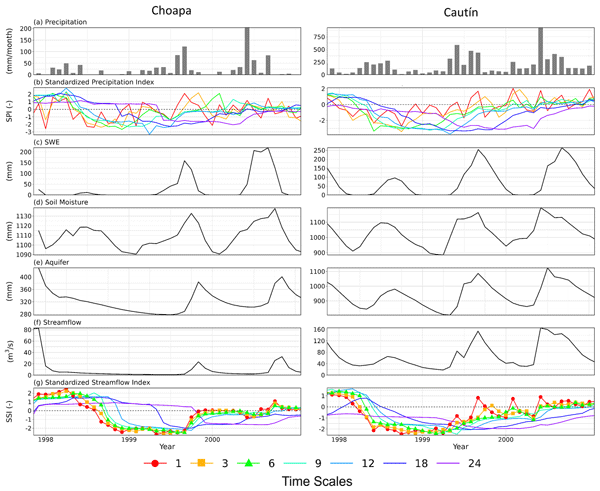
Fabián Lema, Pablo A. Mendoza, Nicolás A. Vásquez, Naoki Mizukami, Mauricio Zambrano-Bigiarini, and Ximena Vargas
Hydrol. Earth Syst. Sci., 29, 1981–2002, https://doi.org/10.5194/hess-29-1981-2025, https://doi.org/10.5194/hess-29-1981-2025, 2025
Short summary
Short summary
Hydrological droughts affect ecosystems and socioeconomic activities worldwide. Despite the fact that they are commonly described with the Standardized Streamflow Index (SSI), there is limited understanding of what they truly reflect in terms of water cycle processes. Here, we used state-of-the-art hydrological models in Andean basins to examine drivers of SSI fluctuations. The results highlight the importance of careful selection of indices and timescales for accurate drought characterization and monitoring.
Rodrigo Aguayo, Fabien Maussion, Lilian Schuster, Marius Schaefer, Alexis Caro, Patrick Schmitt, Jonathan Mackay, Lizz Ultee, Jorge Leon-Muñoz, and Mauricio Aguayo
The Cryosphere, 18, 5383–5406, https://doi.org/10.5194/tc-18-5383-2024, https://doi.org/10.5194/tc-18-5383-2024, 2024
Short summary
Short summary
Predicting how much water will come from glaciers in the future is a complex task, and there are many factors that make it uncertain. Using a glacier model, we explored 1920 scenarios for each glacier in the Patagonian Andes. We found that the choice of the historical climate data was the most important factor, while other factors such as different data sources, climate models and emission scenarios played a smaller role.
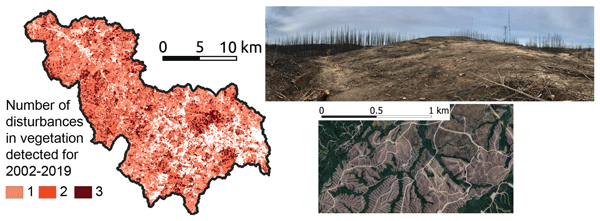
Violeta Tolorza, Christian H. Mohr, Mauricio Zambrano-Bigiarini, Benjamín Sotomayor, Dagoberto Poblete-Caballero, Sebastien Carretier, Mauricio Galleguillos, and Oscar Seguel
Earth Surf. Dynam., 12, 841–861, https://doi.org/10.5194/esurf-12-841-2024, https://doi.org/10.5194/esurf-12-841-2024, 2024
Short summary
Short summary
We calculated disturbances and landscape-lowering rates across various timescales in a ~ 406 km2 catchment in the Chilean Coastal Range. Intensive management of exotic tree plantations involves short rotational cycles (planting and harvesting by replanting clear-cuts) lasting 9–25 years, dense forestry road networks (increasing connectivity), and a recent increase in wildfires. Concurrently, persistent drought conditions and the high water demand of fast-growing trees reduce water availability.
Alexis Caro, Thomas Condom, Antoine Rabatel, Nicolas Champollion, Nicolás García, and Freddy Saavedra
The Cryosphere, 18, 2487–2507, https://doi.org/10.5194/tc-18-2487-2024, https://doi.org/10.5194/tc-18-2487-2024, 2024
Short summary
Short summary
The glacier runoff changes are still unknown in most of the Andean catchments, thereby increasing uncertainties in estimating water availability, especially during the dry season. Here, we simulate glacier evolution and related glacier runoff changes across the Andes between 2000 and 2019. Our results indicate a glacier reduction in 93 % of the catchments, leading to a 12 % increase in glacier melt. These results can be downloaded and integrated with discharge measurements in each catchment.
Bastian Morales, Marcelo Somos-Valenzuela, Mario Lillo, Iñigo Irarrazaval, David Farias, Elizabet Lizama, Diego Rivera, and Alfonso Fernández
EGUsphere, https://doi.org/10.5194/egusphere-2024-1053, https://doi.org/10.5194/egusphere-2024-1053, 2024
Preprint archived
Short summary
Short summary
Through a physical model, we explored how lacier geometry and topography configuration constrains glacier thinning in the Patagonian Icefields, the world's main glacial freshwater reservoir after Antarctica and Greenland. Our results indicate that about 53 % of the Patagonian Icefield ice flow is susceptible to thinning. Our findings allow for identifying priority glaciers for future research considering climate change projections.
Camila Alvarez-Garreton, Juan Pablo Boisier, René Garreaud, Javier González, Roberto Rondanelli, Eugenia Gayó, and Mauricio Zambrano-Bigiarini
Hydrol. Earth Syst. Sci., 28, 1605–1616, https://doi.org/10.5194/hess-28-1605-2024, https://doi.org/10.5194/hess-28-1605-2024, 2024
Short summary
Short summary
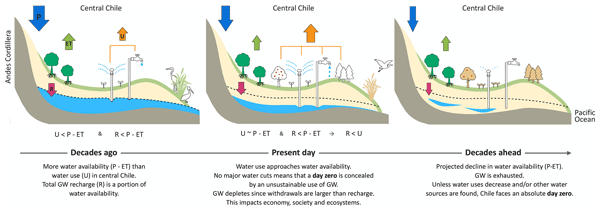
This opinion paper reflects on the risks of overusing groundwater savings to supply permanent water use requirements. Using novel data recently developed for Chile, we reveal how groundwater is being overused, causing ecological and socioeconomic impacts and concealing a Day Zero
scenario. Our argument underscores the need for reformed water allocation rules and sustainable management, shifting from a perception of groundwater as an unlimited source to a finite and vital one.
Oscar M. Baez-Villanueva, Mauricio Zambrano-Bigiarini, Diego G. Miralles, Hylke E. Beck, Jonatan F. Siegmund, Camila Alvarez-Garreton, Koen Verbist, René Garreaud, Juan Pablo Boisier, and Mauricio Galleguillos
Hydrol. Earth Syst. Sci., 28, 1415–1439, https://doi.org/10.5194/hess-28-1415-2024, https://doi.org/10.5194/hess-28-1415-2024, 2024
Short summary
Short summary
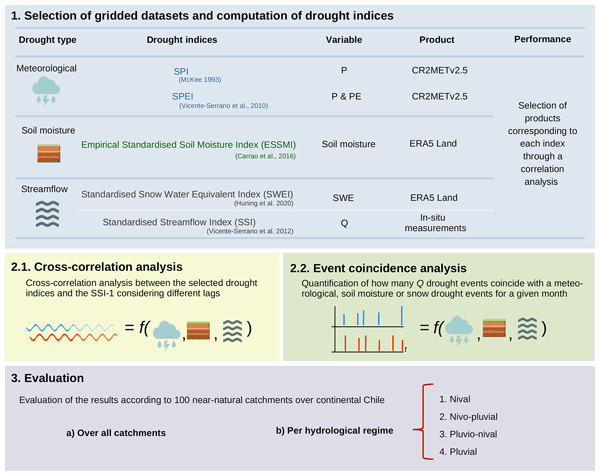
Various drought indices exist, but there is no consensus on which index to use to assess streamflow droughts. This study addresses meteorological, soil moisture, and snow indices along with their temporal scales to assess streamflow drought across hydrologically diverse catchments. Using data from 100 Chilean catchments, findings suggest that there is not a single drought index that can be used for all catchments and that snow-influenced areas require drought indices with larger temporal scales.
Diego Araya, Pablo A. Mendoza, Eduardo Muñoz-Castro, and James McPhee
Hydrol. Earth Syst. Sci., 27, 4385–4408, https://doi.org/10.5194/hess-27-4385-2023, https://doi.org/10.5194/hess-27-4385-2023, 2023
Short summary
Short summary
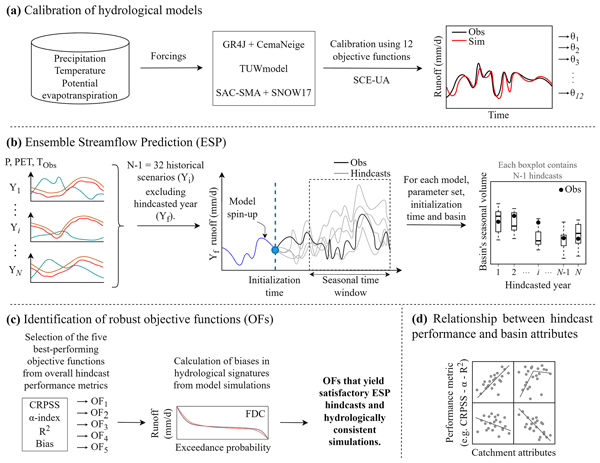
Dynamical systems are used by many agencies worldwide to produce seasonal streamflow forecasts, which are critical for decision-making. Such systems rely on hydrology models, which contain parameters that are typically estimated using a target performance metric (i.e., objective function). This study explores the effects of this decision across mountainous basins in Chile, illustrating tradeoffs between seasonal forecast quality and the models' capability to simulate streamflow characteristics.
Julio Salcedo-Castro, Antonio Olita, Freddy Saavedra, Gonzalo S. Saldías, Raúl C. Cruz-Gómez, and Cristian D. De la Torre Martínez
Ocean Sci., 19, 1687–1703, https://doi.org/10.5194/os-19-1687-2023, https://doi.org/10.5194/os-19-1687-2023, 2023
Short summary
Short summary
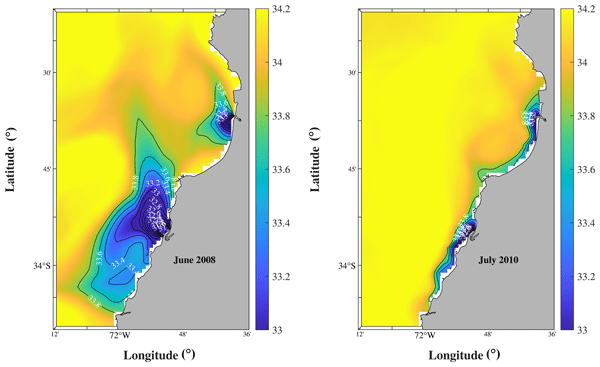
Considering the relevance and impact of river discharges on the coastal environment, it is necessary to understand the processes associated with river plume dynamics in different regions and at different scales. Modeling studies focused on the eastern Pacific coast under the influence of the Humboldt Current are scarce. Here, we conduct for the first time an interannual modeling study of two river plumes off central Chile and discuss their characteristics.
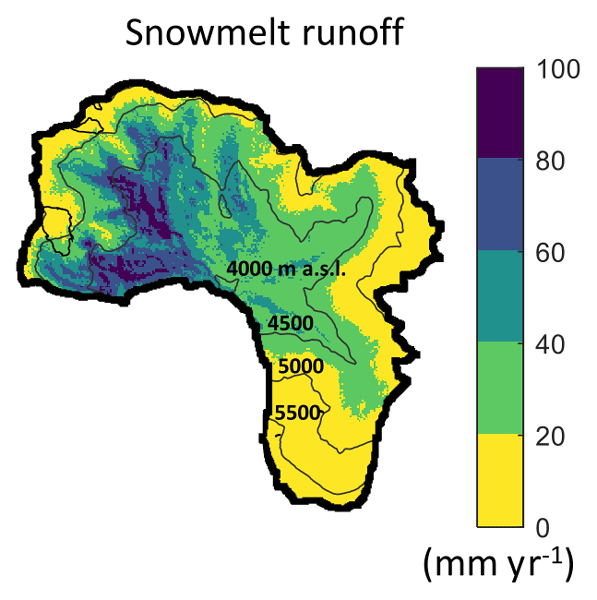
Álvaro Ayala, Simone Schauwecker, and Shelley MacDonell
Hydrol. Earth Syst. Sci., 27, 3463–3484, https://doi.org/10.5194/hess-27-3463-2023, https://doi.org/10.5194/hess-27-3463-2023, 2023
Short summary
Short summary
As the climate of the semiarid Andes is very dry, much of the seasonal snowpack is lost to the atmosphere through sublimation. We propose that snowmelt runoff originates from specific areas that we define as snowmelt hotspots. We estimate that snowmelt hotspots produce half of the snowmelt runoff in a small study catchment but represent about a quarter of the total area. Snowmelt hotspots may be important for groundwater recharge, rock glaciers, and mountain peatlands.
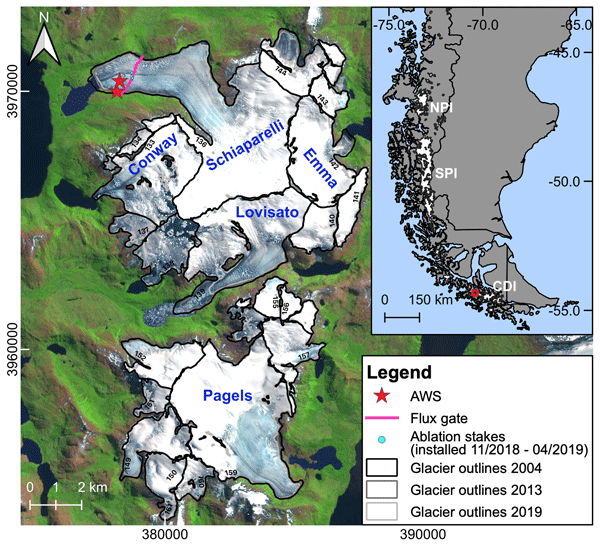
Franziska Temme, David Farías-Barahona, Thorsten Seehaus, Ricardo Jaña, Jorge Arigony-Neto, Inti Gonzalez, Anselm Arndt, Tobias Sauter, Christoph Schneider, and Johannes J. Fürst
The Cryosphere, 17, 2343–2365, https://doi.org/10.5194/tc-17-2343-2023, https://doi.org/10.5194/tc-17-2343-2023, 2023
Short summary
Short summary
Calibration of surface mass balance (SMB) models on regional scales is challenging. We investigate different calibration strategies with the goal of achieving realistic simulations of the SMB in the Monte Sarmiento Massif, Tierra del Fuego. Our results show that the use of regional observations from satellite data can improve the model performance. Furthermore, we compare four melt models of different complexity to understand the benefit of increasing the processes considered in the model.
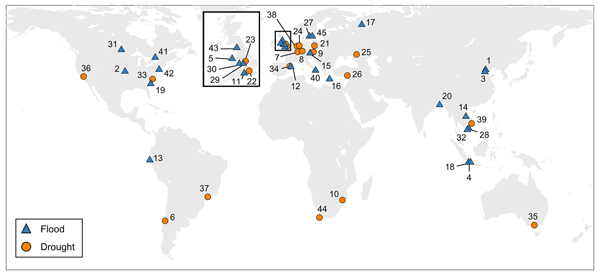
Heidi Kreibich, Kai Schröter, Giuliano Di Baldassarre, Anne F. Van Loon, Maurizio Mazzoleni, Guta Wakbulcho Abeshu, Svetlana Agafonova, Amir AghaKouchak, Hafzullah Aksoy, Camila Alvarez-Garreton, Blanca Aznar, Laila Balkhi, Marlies H. Barendrecht, Sylvain Biancamaria, Liduin Bos-Burgering, Chris Bradley, Yus Budiyono, Wouter Buytaert, Lucinda Capewell, Hayley Carlson, Yonca Cavus, Anaïs Couasnon, Gemma Coxon, Ioannis Daliakopoulos, Marleen C. de Ruiter, Claire Delus, Mathilde Erfurt, Giuseppe Esposito, Didier François, Frédéric Frappart, Jim Freer, Natalia Frolova, Animesh K. Gain, Manolis Grillakis, Jordi Oriol Grima, Diego A. Guzmán, Laurie S. Huning, Monica Ionita, Maxim Kharlamov, Dao Nguyen Khoi, Natalie Kieboom, Maria Kireeva, Aristeidis Koutroulis, Waldo Lavado-Casimiro, Hong-Yi Li, Maria Carmen LLasat, David Macdonald, Johanna Mård, Hannah Mathew-Richards, Andrew McKenzie, Alfonso Mejia, Eduardo Mario Mendiondo, Marjolein Mens, Shifteh Mobini, Guilherme Samprogna Mohor, Viorica Nagavciuc, Thanh Ngo-Duc, Huynh Thi Thao Nguyen, Pham Thi Thao Nhi, Olga Petrucci, Nguyen Hong Quan, Pere Quintana-Seguí, Saman Razavi, Elena Ridolfi, Jannik Riegel, Md Shibly Sadik, Nivedita Sairam, Elisa Savelli, Alexey Sazonov, Sanjib Sharma, Johanna Sörensen, Felipe Augusto Arguello Souza, Kerstin Stahl, Max Steinhausen, Michael Stoelzle, Wiwiana Szalińska, Qiuhong Tang, Fuqiang Tian, Tamara Tokarczyk, Carolina Tovar, Thi Van Thu Tran, Marjolein H. J. van Huijgevoort, Michelle T. H. van Vliet, Sergiy Vorogushyn, Thorsten Wagener, Yueling Wang, Doris E. Wendt, Elliot Wickham, Long Yang, Mauricio Zambrano-Bigiarini, and Philip J. Ward
Earth Syst. Sci. Data, 15, 2009–2023, https://doi.org/10.5194/essd-15-2009-2023, https://doi.org/10.5194/essd-15-2009-2023, 2023
Short summary
Short summary
As the adverse impacts of hydrological extremes increase in many regions of the world, a better understanding of the drivers of changes in risk and impacts is essential for effective flood and drought risk management. We present a dataset containing data of paired events, i.e. two floods or two droughts that occurred in the same area. The dataset enables comparative analyses and allows detailed context-specific assessments. Additionally, it supports the testing of socio-hydrological models.
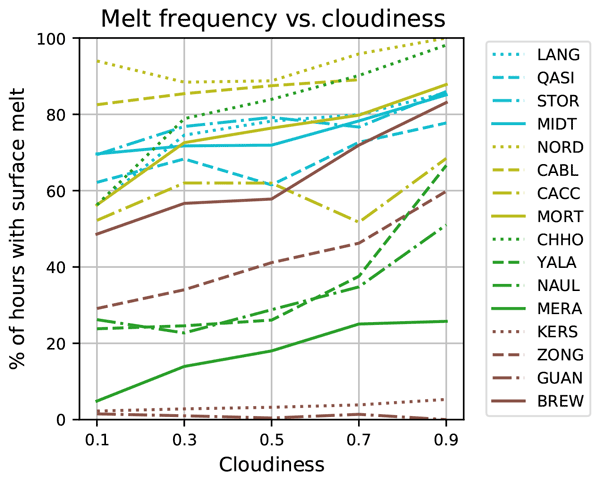
Jonathan P. Conway, Jakob Abermann, Liss M. Andreassen, Mohd Farooq Azam, Nicolas J. Cullen, Noel Fitzpatrick, Rianne H. Giesen, Kirsty Langley, Shelley MacDonell, Thomas Mölg, Valentina Radić, Carleen H. Reijmer, and Jean-Emmanuel Sicart
The Cryosphere, 16, 3331–3356, https://doi.org/10.5194/tc-16-3331-2022, https://doi.org/10.5194/tc-16-3331-2022, 2022
Short summary
Short summary
We used data from automatic weather stations on 16 glaciers to show how clouds influence glacier melt in different climates around the world. We found surface melt was always more frequent when it was cloudy but was not universally faster or slower than under clear-sky conditions. Also, air temperature was related to clouds in opposite ways in different climates – warmer with clouds in cold climates and vice versa. These results will help us improve how we model past and future glacier melt.
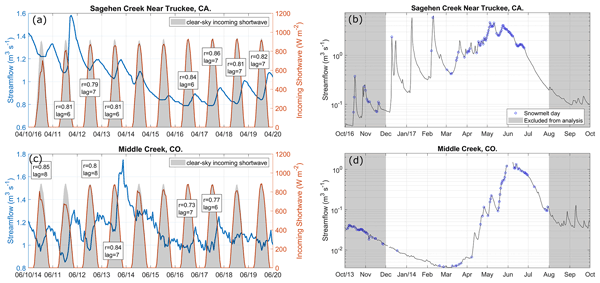
Sebastian A. Krogh, Lucia Scaff, James W. Kirchner, Beatrice Gordon, Gary Sterle, and Adrian Harpold
Hydrol. Earth Syst. Sci., 26, 3393–3417, https://doi.org/10.5194/hess-26-3393-2022, https://doi.org/10.5194/hess-26-3393-2022, 2022
Short summary
Short summary
We present a new way to detect snowmelt using daily cycles in streamflow driven by solar radiation. Results show that warmer sites have earlier and more intermittent snowmelt than colder sites, and the timing of early snowmelt events is strongly correlated with the timing of streamflow volume. A space-for-time substitution shows greater sensitivity of streamflow timing to climate change in colder rather than in warmer places, which is then contrasted with land surface simulations.
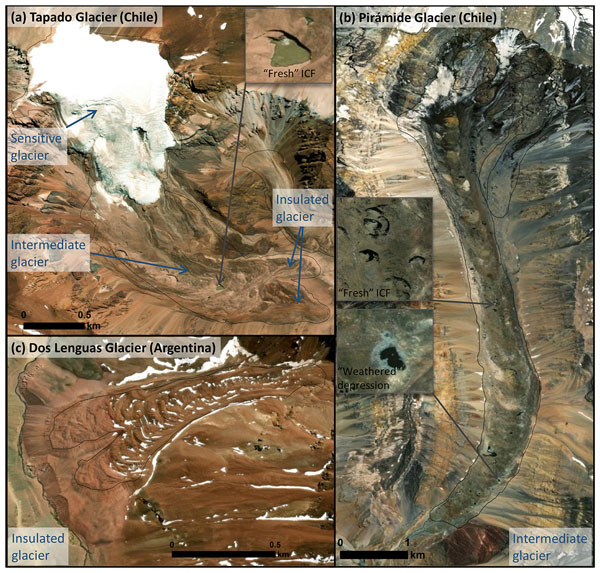
Nicole Schaffer and Shelley MacDonell
The Cryosphere, 16, 1779–1791, https://doi.org/10.5194/tc-16-1779-2022, https://doi.org/10.5194/tc-16-1779-2022, 2022
Short summary
Short summary
Over the last 2 decades the importance of Andean glaciers, particularly as water resources, has been recognized in both scientific literature and the public sphere. This has led to the inclusion of glaciers in environmental impact assessment and the development of glacier protection laws. We propose three categories that group glaciers based on their environmental sensitivity to hopefully help facilitate the effective application of these measures and evaluation of water resources in general.
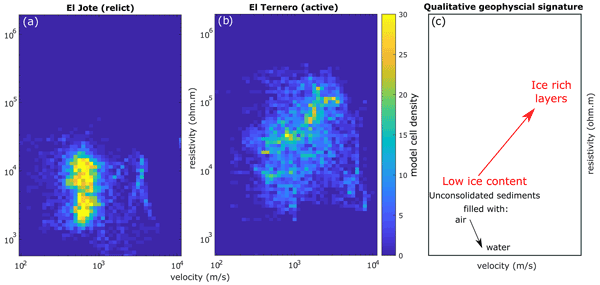
Giulia de Pasquale, Rémi Valois, Nicole Schaffer, and Shelley MacDonell
The Cryosphere, 16, 1579–1596, https://doi.org/10.5194/tc-16-1579-2022, https://doi.org/10.5194/tc-16-1579-2022, 2022
Short summary
Short summary
We presented a geophysical study of one intact and one relict rock glacier in semi-arid Chile. The interpretation of the collected data through different methods identifies geophysical signature differences between the two rock glaciers and characterizes their subsurface structure and composition. This is of great importance because of rock glaciers' relevant role in freshwater production, transfer and storage, especially in this area of increasing human pressure and high rainfall variability.

Benjamin Aubrey Robson, Shelley MacDonell, Álvaro Ayala, Tobias Bolch, Pål Ringkjøb Nielsen, and Sebastián Vivero
The Cryosphere, 16, 647–665, https://doi.org/10.5194/tc-16-647-2022, https://doi.org/10.5194/tc-16-647-2022, 2022
Short summary
Short summary
This work uses satellite and aerial data to study glaciers and rock glacier changes in La Laguna catchment within the semi-arid Andes of Chile, where ice melt is an important factor in river flow. The results show the rate of ice loss of Tapado Glacier has been increasing since the 1950s, which possibly relates to a dryer, warmer climate over the previous decades. Several rock glaciers show high surface velocities and elevation changes between 2012 and 2020, indicating they may be ice-rich.
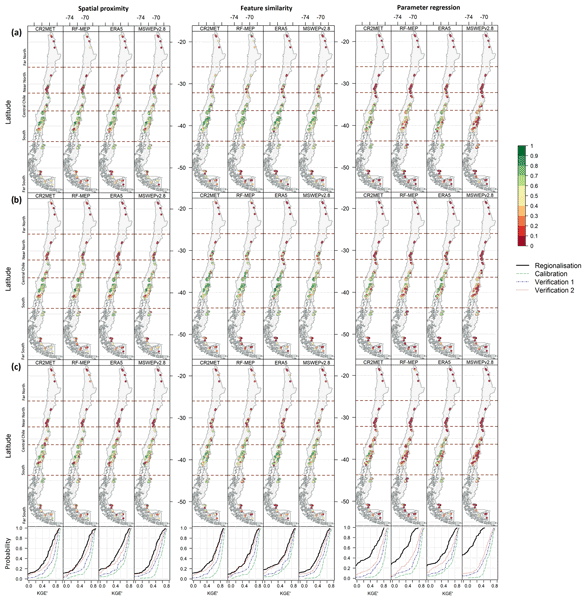
Oscar M. Baez-Villanueva, Mauricio Zambrano-Bigiarini, Pablo A. Mendoza, Ian McNamara, Hylke E. Beck, Joschka Thurner, Alexandra Nauditt, Lars Ribbe, and Nguyen Xuan Thinh
Hydrol. Earth Syst. Sci., 25, 5805–5837, https://doi.org/10.5194/hess-25-5805-2021, https://doi.org/10.5194/hess-25-5805-2021, 2021
Short summary
Short summary
Most rivers worldwide are ungauged, which hinders the sustainable management of water resources. Regionalisation methods use information from gauged rivers to estimate streamflow over ungauged ones. Through hydrological modelling, we assessed how the selection of precipitation products affects the performance of three regionalisation methods. We found that a precipitation product that provides the best results in hydrological modelling does not necessarily perform the best for regionalisation.
Cited articles
Aguayo, R., León-Muñoz, J., Aguayo, M., Baez-Villanueva, O., Fernandez, A., Zambrano-Bigiarini, M., Fernández, A., and Jacques-Coper, M.: PatagoniaMet: A multi-source hydrometeorological dataset for Western Patagonia, Sci. Data., 11, 6, https://doi.org/10.1038/s41597-023-02828-2, 2024.
Alvarez-Garreton, C., Boisier, J. P., Garreaud, R., Seibert, J., and Vis, M.: Progressive water deficits during multiyear droughts in basins with long hydrological memory in Chile, Hydrol. Earth Syst. Sci., 25, 429–446, https://doi.org/10.5194/hess-25-429-2021, 2021.
Alvial Vásquez, F.-J., Abarca-del-Río, R., and Ávila, A. I.: High-Resolution Precipitation Gridded Dataset on the South-Central Zone (34° S–41° S) of Chile, Front. Earth Sci., 8, 519975, https://doi.org/10.3389/feart.2020.519975, 2020.
Ayala, Á., Pellicciotti, F., Peleg, N., and Burlando, P.: Melt and surface sublimation across a glacier in a dry environment: distributed energy-balance modelling of Juncal Norte Glacier, Chile, J. Glaciol., 63, 803–822, https://doi.org/10.1017/jog.2017.46, 2017.
Ayala, Á., Farías-Barahona, D., Huss, M., Pellicciotti, F., McPhee, J., and Farinotti, D.: Glacier runoff variations since 1955 in the Maipo River basin, in the semiarid Andes of central Chile, The Cryosphere, 14, 2005–2027, https://doi.org/10.5194/tc-14-2005-2020, 2020.
Ayala, Á., Muñoz-Castro, E., Farinotti, D., Farías-Barahona, D., Mendoza, P. A., MacDonell, S., McPhee, J., Vargas, X., and Pellicciotti, F.: Less water from glaciers during future megadroughts in the Southern Andes, Commun. Earth Environ., 6, 860, https://doi.org/10.1038/s43247-025-02845-6, 2025.
Bulovic, N., Johnson, F., Lievens, H., Shaw, T. E., McPhee, J., Gascoin, S., Demuzere, M., and McIntyre, N.: Evaluating the performance of Sentinel-1 SAR derived snow depth retrievals over the extratropical Andes Cordillera, Water Resour. Res., 61, https://doi.org/10.1029/2024WR037766, 2025.
Burger, F., Ayala, Á., Farías, D., Shaw, T. E., MacDonell, S., Brock, B., McPhee, J., and Pellicciotti, F.: Interannual variability in glacier contribution to runoff from a high-elevation Andean catchment: Understanding the role of debris cover in glacier hydrology, Hydrol. Process., 33, 214–229, https://doi.org/10.1002/hyp.13354, 2019.
Caro, A., Condom, T., and Rabatel, A.: Climatic and morphometric explanatory variables of glacier changes in the Andes (8–55° S): New insights from machine learning approaches, Front. Earth Sci., 9, 713011, https://doi.org/10.3389/feart.2021.713011, 2021.
Caro, A., Condom, T., Rabatel, A., Champollion, N., García, N., and Saavedra, F.: Hydrological response of Andean catchments to recent glacier mass loss, The Cryosphere, 18, 2487–2507, https://doi.org/10.5194/tc-18-2487-2024, 2024.
Caro, A., Condom, T., Rabatel, A., Aguayo, R., and Champollion, N.: Future glacio–hydrological changes in the Andes: a focus on near-future projections up to 2050, Sci. Rep., 15, 10991, https://doi.org/10.1038/s41598-025-88069-2, 2025.
Cordero, R. R., Feron, S., Damiani, A., MacDonell, S., Carrasco, J., Pizarro, J., Karas, C., Jorquera, J., Sepulveda, E., Cabello, F., Fernandoy, F., Wang, C., Khan, A. L., and Casassa, G.: Rapid decline in extratropical Andean snow cover driven by the poleward migration of the Southern Hemisphere westerlies, Sci. Rep., 14, 26365, https://doi.org/10.1038/s41598-024-78014-0, 2024.
Cornwell, E., Molotch, N. P., and McPhee, J.: Spatio-temporal variability of snow water equivalent in the extra-tropical Andes Cordillera from distributed energy balance modeling and remotely sensed snow cover, Hydrol. Earth Syst. Sci., 20, 411–430, https://doi.org/10.5194/hess-20-411-2016, 2016.
Cortés, G. and Margulis, S.: Impacts of El Niño and La Niña on interannual snow accumulation in the Andes: Results from a high-resolution 31-year reanalysis, Geophys. Res. Lett., 44, 6859–6867, https://doi.org/10.1002/2017GL073826, 2017.
Durre, I., Menne, M. J., Gleason, B. E., Houston, T. G., and Vose, R. S.: Comprehensive automated quality assurance of daily surface observations, J. Appl. Meteorol. Clim., 49, 1615–1633, https://doi.org/10.1175/2010JAMC2375.1, 2010.
Dussaillant, A., Buytaert, W., Meier, C., and Espinoza, F.: Hydrological regime of remote catchments with extreme gradients under accelerated change: the Baker basin in Patagonia, Hydrolog. Sci. J., 57, 1530–1542, https://doi.org/10.1080/02626667.2012.726993, 2012.
Farr, T. G., Rosen, P. A., Caro, E., Crippen, R., Duren, R., Hensley, S., Kobrick, M., Paller, M., Rodriguez, E., Roth, L., Seal, D., Shaffer, S., Shimada, J., Umland, J., Werner, M., Oskin, M., Burbank, D., and Alsdorf, D.: The Shuttle Radar Topography Mission, Rev. Geophys., 45, RG2004, https://doi.org/10.1029/2005RG000183, 2007.
Garreaud, R. D., Alvarez-Garreton, C., Barichivich, J., Boisier, J. P., Christie, D., Galleguillos, M., LeQuesne, C., McPhee, J., and Zambrano-Bigiarini, M.: The 2010–2015 megadrought in central Chile: impacts on regional hydroclimate and vegetation, Hydrol. Earth Syst. Sci., 21, 6307–6327, https://doi.org/10.5194/hess-21-6307-2017, 2017.
Garreaud, R. D., Boisier, J. P., Rondanelli, R., Montecinos, A., Sepúlveda, H. H., and Veloso-Aguila, D.: The central Chile mega drought (2010–2018): A climate dynamics perspective, Int. J. Climatol., 40, 421–439, https://doi.org/10.1002/joc.6219, 2020.
Garreaud, R., Boisier, J. P., Alvarez-Garreton, C., Christie, D. A., Carrasco-Escaff, T., Vergara, I., Chávez, R. O., Aldunce, P., Camus, P., Suazo-Álvarez, M., Masiokas, M., Castro, G., Muñoz, A., Zambrano-Bigiarini, M., Fuster, R., and Godoy, L.: Hyperdroughts in central Chile: drivers, impacts, and projections, Hydrol. Earth Syst. Sci., 29, 5347–5369, https://doi.org/10.5194/hess-29-5347-2025, 2025.
Grünewald, T., Bühler, Y., and Lehning, M.: Elevation dependency of mountain snow depth, The Cryosphere, 8, 2381–2394, https://doi.org/10.5194/tc-8-2381-2014, 2014.
Huerta, M. L., Molotch N. P., and McPhee J.: Snowfall interception in a deciduous Nothofagus forest and implications for spatial snowpack distribution, Hydrol. Process., 33, 1818–1834, https://doi.org/10.1002/hyp.13439, 2019.
Instituto Nacional de Estadísticas (INE): Gráficas nacionales – Resultados del VIII Censo Nacional Agropecuario y Forestal, https://www.ine.gob.cl/censoagropecuario/resultados-finales/graficas-nacionales (last access: 10 December 2025), 2022.
Instituto Nacional de Estadísticas (INE): Resultados Censo 2024, https://censo2024.ine.gob.cl/resultados/ (last access: 10 December 2025), 2024.
Krogh, S. A., Pomeroy, J. W., and McPhee, J.: Physically based mountain hydrological modeling using reanalysis data in Patagonia, J. Hydrometeorol., 16, 172–193, https://doi.org/10.1175/JHM-D-13-0178.1, 2015.
MacDonell, S., Kinnard, C., Mölg, T., Nicholson, L., and Abermann, J.: Meteorological drivers of ablation processes on a cold glacier in the semi-arid Andes of Chile, The Cryosphere, 7, 1513–1526, https://doi.org/10.5194/tc-7-1513-2013, 2013.
Masiokas, M. H., Christie, D. A., Le Quesne, C., Pitte, P., Ruiz, L., Villalba, R., Luckman, B. H., Berthier, E., Nussbaumer, S. U., González-Reyes, Á., McPhee, J., and Barcaza, G.: Reconstructing the annual mass balance of the Echaurren Norte glacier (Central Andes, 33.5° S) using local and regional hydroclimatic data, The Cryosphere, 10, 927–940, https://doi.org/10.5194/tc-10-927-2016, 2016.
Masiokas, M. H., Cara, L., Villalba, R., Pitte, P., Luckman, B. H., Toum, E., Christie, D. A., Le Quesne, C., and Mauget, S.: Streamflow variations across the Andes (18°–55° S) during the instrumental era, Sci. Rep., 9, 17879, https://doi.org/10.1038/s41598-019-53981-x, 2019.
Masiokas, M. H., Rabatel, A., Rivera, A., Ruiz, L., Pitte, P., Ceballos, J. L., Barcaza, G., Soruco, A., Bown, F., Berthier, E., Dussaillant, I., and MacDonell, S.: A review of the current state and recent changes of the Andean cryosphere, Front. Earth Sci., 8, 99, https://doi.org/10.3389/feart.2020.00099, 2020.
Medina, J. : javiermedinamen-art/hidromet: July 25, 2026 (v4) Dataset Open The Southern Andes Daily Snow Depth Dataset (2010–2024): Quality-Controlled Dataset from Chile and Argentina, Zenodo [data set], https://doi.org/10.5281/zenodo.22918463, 2026.
Medina, J. and Caro, A.: The Southern Andes Daily Snow Depth Dataset (2010–2024): quality-controlled dataset from Chile and Argentina, Zenodo [data set], https://doi.org/10.5281/zenodo.21577171, 2026.
Mendoza, P. A., Shaw, T. E., McPhee, J., Musselman, K. N., Revuelto, J., and MacDonell, S.: Spatial distribution and scaling properties of lidar-derived snow depth in the extratropical Andes, Water Resour. Res., 56, e2020WR028480, https://doi.org/10.1029/2020WR028480, 2020.
Ntokas, K. F. F., Odry, J., Boucher, M.-A., and Garnaud, C.: Investigating ANN architectures and training to estimate snow water equivalent from snow depth, Hydrol. Earth Syst. Sci., 25, 3017–3040, https://doi.org/10.5194/hess-25-3017-2021, 2021.
Perkins, R. M. and Jones, J. A.: Climate variability, snow, and physiographic controls on storm hydrographs in small forested basins, western Cascades, Oregon, Hydrol. Process., 22, 4949–4964, https://doi.org/10.1002/hyp.7117, 2008.
Rivera, D., Godoy-Faúndez, A., Lillo, M., Alvez, A., Delgado, V., Gonzalo-Martín, C., Menasalvas, E., Costumero, R., and García-Pedrero, Á.: Legal disputes as a proxy for regional conflicts over water rights in Chile, J. Hydrol., 535, 36–45, https://doi.org/10.1016/j.jhydrol.2016.01.057, 2016.
Rousseeuw, P. J. and Croux, C.: Alternatives to the Median Absolute Deviation, J. Am. Stat. Assoc., 88, 1273–1283, https://doi.org/10.1080/01621459.1993.10476408, 1993.
Saavedra, F. A., Kampf, S. K., Fassnacht, S. R., and Sibold, J. S.: A snow climatology of the Andes Mountains from MODIS snow cover data, Int. J. Climatol., 37, 1526–1539, https://doi.org/10.1002/joc.4795, 2017.
Saavedra, F. A., Kampf, S. K., Fassnacht, S. R., and Sibold, J. S.: Changes in Andes snow cover from MODIS data, 2000–2016, The Cryosphere, 12, 1027–1046, https://doi.org/10.5194/tc-12-1027-2018, 2018.
Saavedra, F., Hernández-Duarte, A., Caro, A., Rabatel, A., Fassnacht, S., Condom, T., Kampf, S., Masiokas, M., Romero, C., Aguirre, Y., González, D., Contreras, V., Medina, J., and Arancibia, P.: Spatial and temporal variability of snow in the Andes using MODIS snow product 2000–2025, Front. Earth Sci., 14, 1564035, https://doi.org/10.3389/feart.2026.1564035, 2026.
Sarricolea, P., Herrera-Ossandon, M., and Meseguer-Ruiz, Ó.: Climatic regionalisation of continental Chile, J. Maps, 13, 66–73, https://doi.org/10.1080/17445647.2016.1259592, 2017.
Scaff, L., Rutllant, J. A., Rahn, D., Gascoin, S., and Rondanelli, R.: Meteorological interpretation of orographic precipitation gradients along an andes west slope basin at 30° S (Elqui valley, Chile), J. Hydrometeorol., 18, 713–727, https://doi.org/10.1175/JHM-D-16-0073.1, 2017.
Schaefer, M., Fonseca-Gallardo, D., Farías-Barahona, D., and Casassa, G.: Surface energy fluxes on Chilean glaciers: measurements and models, The Cryosphere, 14, 2545–2565, https://doi.org/10.5194/tc-14-2545-2020, 2020.
Shaw, T. E., Caro, A., Mendoza, P., Ayala, Á., Pellicciotti, F., Gascoin, S., and McPhee, J.: The utility of optical satellite winter snow depths for initializing a glacio-hydrological model of a high-elevation Andean catchment, Water Resour. Res., 56, e2020WR027188, https://doi.org/10.1029/2020WR027188, 2020a.
Shaw, T. E., Gascoin, S., Mendoza, P. A., Pellicciotti, F., and McPhee, J.: Snow Depth Patterns in a High Mountain Andean Catchment from Satellite Optical Tristereoscopic Remote Sensing, Water Resour. Res., 56, https://doi.org/10.1029/2019wr024880, 2020b.
Stewart, I. T.: Changes in snowpack and snowmelt runoff for key mountain regions, Hydrol. Process., 23, 78–94,https://doi.org/10.1002/hyp.7128, 2009.
The pandas development team: pandas-dev/pandas: Pandas (version 2.3.0), Zenodo [code], https://doi.org/10.5281/zenodo.15597513, 2025.
Viale, M. and Nuñez, M. N.: Climatology of Winter Orographic Precipitation over the Subtropical Central Andes and Associated Synoptic and Regional Characteristics, J. Hydrometeorol., 12, 481–507, https://doi.org/10.1175/2010JHM1284.1, 2011.
Voordendag, A., Réveillet, M., MacDonell, S., and Lhermitte, S.: Snow model comparison to simulate snow depth evolution and sublimation at point scale in the semi-arid Andes of Chile, The Cryosphere, 15, 4241–4259, https://doi.org/10.5194/tc-15-4241-2021, 2021.
Short summary
Snowpack dynamics in the Southern Andes remain poorly quantified due to sparse and inconsistent in situ data, limiting hydrological modeling. We compile and quality-control daily snow depth observations from 81 stations (21–54° S, 2010–2024). The resulting dataset improves the Physical Consistency Index (up to 95 %) despite reduced data availability, reveals a north–south increase in snow depth but no consistent positive relationship with elevation across river basins.
Snowpack dynamics in the Southern Andes remain poorly quantified due to sparse and inconsistent...


Altmetrics
Final-revised paper
Preprint