Articles | Volume 18, issue 9
https://doi.org/10.5194/essd-18-6945-2026
© Author(s) 2026. This work is distributed under
the Creative Commons Attribution 4.0 License.
the Creative Commons Attribution 4.0 License.
https://doi.org/10.5194/essd-18-6945-2026
© Author(s) 2026. This work is distributed under
the Creative Commons Attribution 4.0 License.
the Creative Commons Attribution 4.0 License.
Data description article
| 
22 Sep 2026
Data description article |
| 22 Sep 2026
| 22 Sep 2026
Improving global and regional ocean heat content by consistently combining GRACE gravity, satellite altimetry and Argo profile observations in a joint inversion framework

Institute for Geodesy and Geoinformation, University of Bonn, Bonn, Germany
Kristin Vielberg
Institute for Geodesy and Geoinformation, University of Bonn, Bonn, Germany
Roelof Rietbroek
Faculty of Geo-Information Science and Earth Observation (ITC), Department of Geosciences, University of Twente, Twente, the Netherlands
Bene Aschenneller
Faculty of Geo-Information Science and Earth Observation (ITC), Department of Geosciences, University of Twente, Twente, the Netherlands
Armin Köhl
Institute of Oceanography, University of Hamburg, Hamburg, Germany
Jürgen Kusche
Institute for Geodesy and Geoinformation, University of Bonn, Bonn, Germany
Related authors

Lara Börger, Michael Schindelegger, Mengnan Zhao, Rui M. Ponte, Anno Löcher, Bernd Uebbing, Jean-Marc Molines, and Thierry Penduff
Earth Syst. Dynam., 16, 75–90, https://doi.org/10.5194/esd-16-75-2025, https://doi.org/10.5194/esd-16-75-2025, 2025
Short summary
Short summary
Flows in the ocean are driven either by atmospheric forces or by small-scale internal disturbances that are inherently chaotic. We use computer simulation results to show that these chaotic oceanic disturbances can attain spatial scales large enough to alter the motion of Earth's pole of rotation. Given their size and unpredictable nature, the chaotic signals are a source of uncertainty when interpreting observed year-to-year polar motion changes in terms of other processes in the Earth system.
Matthias O. Willen, Martin Horwath, Eric Buchta, Mirko Scheinert, Veit Helm, Bernd Uebbing, and Jürgen Kusche
The Cryosphere, 18, 775–790, https://doi.org/10.5194/tc-18-775-2024, https://doi.org/10.5194/tc-18-775-2024, 2024
Short summary
Short summary
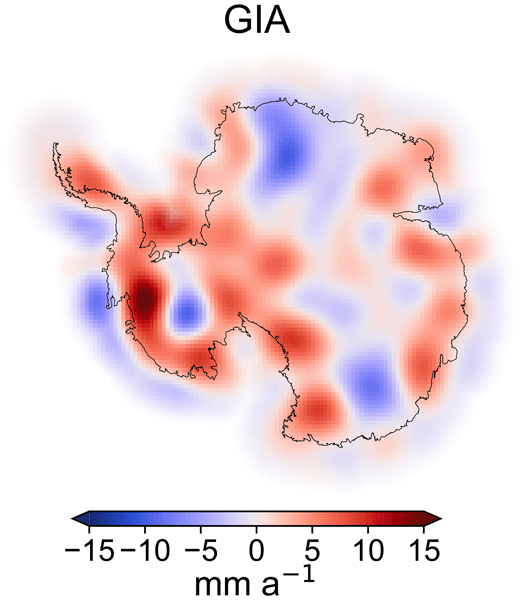
Shrinkage of the Antarctic ice sheet (AIS) leads to sea level rise. Satellite gravimetry measures AIS mass changes. We apply a new method that overcomes two limitations: low spatial resolution and large uncertainties due to the Earth's interior mass changes. To do so, we additionally include data from satellite altimetry and climate and firn modelling, which are evaluated in a globally consistent way with thoroughly characterized errors. The results are in better agreement with independent data.
Loudi Yap, Jürgen Kusche, Bamidele Oloruntoba, Helena Gerdener, and Harrie-Jan Hendricks Franssen
Hydrol. Earth Syst. Sci., 30, 5023–5047, https://doi.org/10.5194/hess-30-5023-2026, https://doi.org/10.5194/hess-30-5023-2026, 2026
Short summary
Short summary
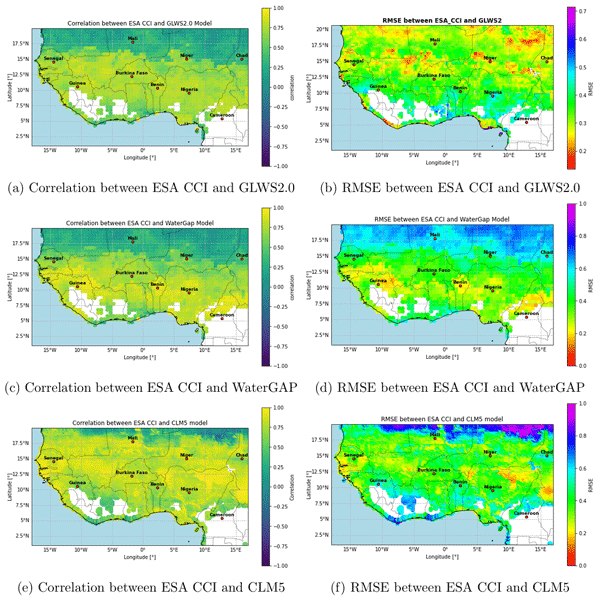
Rainfall shifts in West Africa affects agricultural productivity, highlighting how much water is stored in the soil. Soil moisture from 2003 to 2019 was assessed using satellite, model, and in-situ data. The European Space Agency Climate Change Initiative Soil Moisture dataset best tracked local conditions, while the Gravity Recovery and Climate Experiment Follow-On (GRACE-/FO)-based Global Land Water Storage version 2.0 captured regional variability, improving understanding of root-zone water.
Julia Pfeffer, Benoît Meyssignac, Rory Bingham, Alejandro Blazquez, Marie Bouih, Carla Braitenberg, Luca Brocca, Henryk Dobslaw, Ramiro Ferrari, Ehsan Forootan, Helena Gerdener, Muhammad Tahir Javed, Laura Jensen, Volker Klemann, Anna Kremer, Jürgen Kusche, Gilles Larnicol, Muhammad Usman Liaqat, Francesco Leopardi, Elisavet-Maria Mamagiannou, Gerardo Maurizio, Roland Pail, Isabelle Panet, Thomas Papanikolaou, Peyman Saemian, Ingo Sasgen, Maike Schumacher, Marius Schlaak, Linus Shihora, Alireza Sobouti, Nico Sneeuw, Mohammad Javad Tourian, Dimitrios Tsoulis, Georgios Vergos, Bert Wouters, Fan Yang, and Ilias Daras
EGUsphere, https://doi.org/10.5194/egusphere-2026-4642, https://doi.org/10.5194/egusphere-2026-4642, 2026
This preprint is open for discussion and under review for Earth Observation (EO).
Short summary
Short summary
The ESA SING project demonstrates how the future satellite gravity missions NGGM and MAGIC will improve observations of continental water storage, oceans, glaciers, sea level, earthquakes, and climate change. Their more accurate, higher-resolution gravity measurements will enhance Earth system monitoring, improve climate and hazard assessments, and strengthen operational services for water management, disaster preparedness, and environmental decision-making.
Anna Klos, Jürgen Kusche, Anne Springer, Artur Lenczuk, Yorck Ewerdwalbesloh, Christian Mielke, Susanna Werth, Jan Mikocki, Kinga Klos, Jakub Rados, Malgorzata Sieczak, and Janusz Bogusz
Earth Syst. Sci. Data Discuss., https://doi.org/10.5194/essd-2026-469, https://doi.org/10.5194/essd-2026-469, 2026
Preprint under review for ESSD
Short summary
Short summary
We provide long, daily displacement time series from thousands of stations across Europe, which have been carefully preselected to study hydrospheric changes in long-term, seasonal and short-term temporal scales. These changes correlate well with precipitation, dry and wet periods. This dataset provides a more detailed picture of regional changes in hydrosphere than previously available datasets.
Viola Steidl, Jürgen Kusche, Fupeng Li, and Xiao Xiang Zhu
EGUsphere, https://doi.org/10.5194/egusphere-2026-2312, https://doi.org/10.5194/egusphere-2026-2312, 2026
Short summary
Short summary
Terrestrial water storage is an indicator of water availability, but forecasting its changes is difficult as it depends on processes acting at varying spatial and temporal scales. We introduce a hierarchical machine learning model that represents the Earth at two scales, the grid scale and the hydrological basin scale, to forecast global water storage changes up to six months ahead. We identify where model skill fades and which challenges to address to improve its forecasts.
Charlotte Hacker, Benjamin D. Gutknecht, Anno Löcher, and Jürgen Kusche
Earth Syst. Sci. Data, 18, 1747–1781, https://doi.org/10.5194/essd-18-1747-2026, https://doi.org/10.5194/essd-18-1747-2026, 2026
Short summary
Short summary
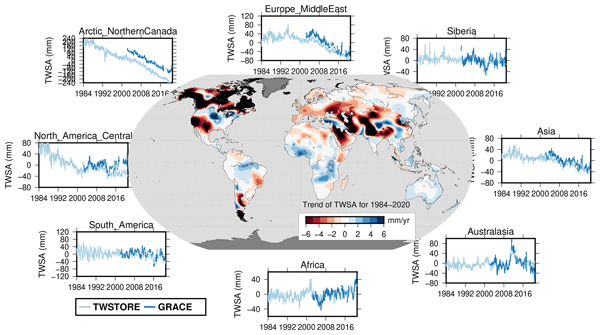
Terrestrial water storage anomalies (TWSA) enable the study of changes in water storage. However, observational records of TWSA are limited to 2002 onwards. To overcome this limitation, we provide a long-term TWSA data set for the global land from 1984 to 2020 by combining a data-driven approach with time‑variable gravity observations from geodetic tracking data. The data set retains seasonal consistency and adds reliable long‑term signals due to the data combination.
Anne Springer, Gabriëlle De Lannoy, Matthew Rodell, Yorck Ewerdwalbesloh, Helena Gerdener, Mehdi Khaki, Bailing Li, Fupeng Li, Maike Schumacher, Natthachet Tangdamrongsub, Mohammad J. Tourian, Wanshu Nie, and Jürgen Kusche
Hydrol. Earth Syst. Sci., 30, 985–1022, https://doi.org/10.5194/hess-30-985-2026, https://doi.org/10.5194/hess-30-985-2026, 2026
Short summary
Short summary
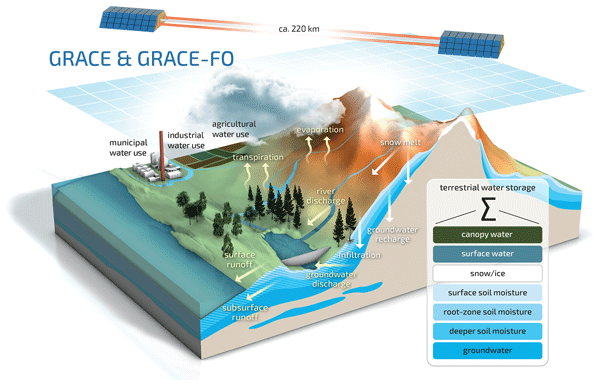
The GRACE (Gravity Recovery and Climate Experiment) and GRACE Follow-On satellites monitor changes in Earth's water storage by observing gravity variations. By integrating these observations into hydrological models through data assimilation, estimates of groundwater, soil moisture, and hydrological trends are improved, helping to monitor droughts, floods, and human water use. This review highlights recent advances in GRACE data assimilation, identifies key challenges, and discusses future directions with upcoming satellite missions.
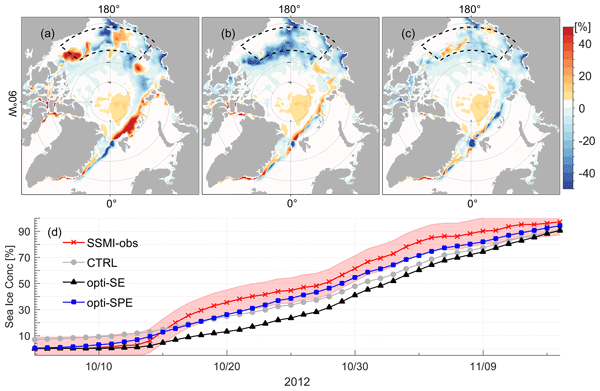
Guokun Lyu, Longjiang Mu, Armin Koehl, Ruibo Lei, Xi Liang, and Chuanyu Liu
Geosci. Model Dev., 18, 9451–9468, https://doi.org/10.5194/gmd-18-9451-2025, https://doi.org/10.5194/gmd-18-9451-2025, 2025
Short summary
Short summary
In the sea ice-ocean models, errors in the parameters and missing spatiotemporal variations contribute to the deviations between the simulations and the observations. We extended an adjoint method to optimize spatiotemporally varying parameters together with the atmosphere forcing and the initial conditions using satellite and in-situ observations. Seasonally, this scheme demonstrates a more prominent advantage in mid-autumn and show great potential for accurately reproducing the Arctic changes.
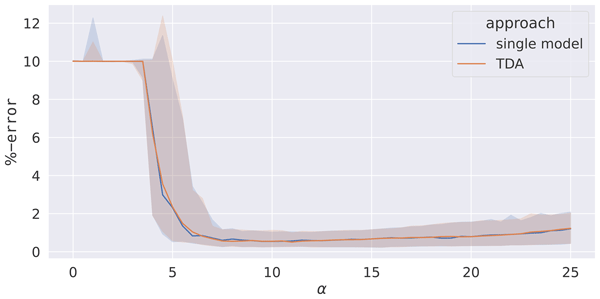
Philip David Kennedy, Abhirup Banerjee, Armin Köhl, and Detlef Stammer
Nonlin. Processes Geophys., 32, 353–365, https://doi.org/10.5194/npg-32-353-2025, https://doi.org/10.5194/npg-32-353-2025, 2025
Short summary
Short summary
This work introduces and evaluates two new tandem data assimilation techniques. The first uses two synchronised forward model runs before a single adjoint model run to consistently increase the precision of the parameter estimation. The second uses a lower-resolution model with adjoint equations to drive a higher-resolution target model through data assimilation with no loss in precision compared to data assimilation without tandem methods.
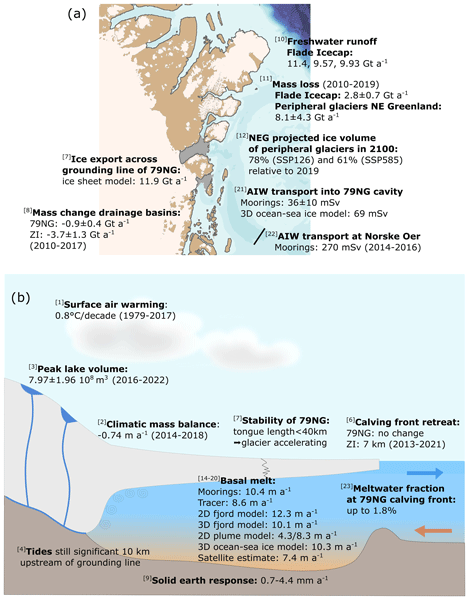
Torsten Kanzow, Angelika Humbert, Thomas Mölg, Mirko Scheinert, Matthias Braun, Hans Burchard, Francesca Doglioni, Philipp Hochreuther, Martin Horwath, Oliver Huhn, Maria Kappelsberger, Jürgen Kusche, Erik Loebel, Katrina Lutz, Ben Marzeion, Rebecca McPherson, Mahdi Mohammadi-Aragh, Marco Möller, Carolyne Pickler, Markus Reinert, Monika Rhein, Martin Rückamp, Janin Schaffer, Muhammad Shafeeque, Sophie Stolzenberger, Ralph Timmermann, Jenny Turton, Claudia Wekerle, and Ole Zeising
The Cryosphere, 19, 1789–1824, https://doi.org/10.5194/tc-19-1789-2025, https://doi.org/10.5194/tc-19-1789-2025, 2025
Short summary
Short summary
The Greenland Ice Sheet represents the second-largest contributor to global sea-level rise. We quantify atmosphere, ice and ocean processes related to the mass balance of glaciers in northeast Greenland, focusing on Greenland’s largest floating ice tongue, the 79° N Glacier. We find that together, the different in situ and remote sensing observations and model simulations reveal a consistent picture of a coupled atmosphere–ice sheet–ocean system that has entered a phase of major change.
Lara Börger, Michael Schindelegger, Mengnan Zhao, Rui M. Ponte, Anno Löcher, Bernd Uebbing, Jean-Marc Molines, and Thierry Penduff
Earth Syst. Dynam., 16, 75–90, https://doi.org/10.5194/esd-16-75-2025, https://doi.org/10.5194/esd-16-75-2025, 2025
Short summary
Short summary
Flows in the ocean are driven either by atmospheric forces or by small-scale internal disturbances that are inherently chaotic. We use computer simulation results to show that these chaotic oceanic disturbances can attain spatial scales large enough to alter the motion of Earth's pole of rotation. Given their size and unpredictable nature, the chaotic signals are a source of uncertainty when interpreting observed year-to-year polar motion changes in terms of other processes in the Earth system.
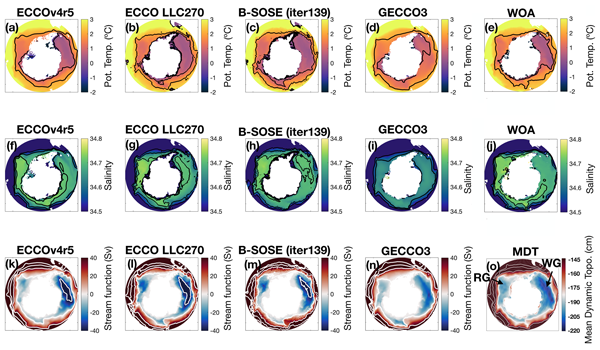
Yoshihiro Nakayama, Alena Malyarenko, Hong Zhang, Ou Wang, Matthis Auger, Yafei Nie, Ian Fenty, Matthew Mazloff, Armin Köhl, and Dimitris Menemenlis
Geosci. Model Dev., 17, 8613–8638, https://doi.org/10.5194/gmd-17-8613-2024, https://doi.org/10.5194/gmd-17-8613-2024, 2024
Short summary
Short summary
Global- and basin-scale ocean reanalyses are becoming easily accessible. However, such ocean reanalyses are optimized for their entire model domains and their ability to simulate the Southern Ocean requires evaluation. We conduct intercomparison analyses of Massachusetts Institute of Technology General Circulation Model (MITgcm)-based ocean reanalyses. They generally perform well for the open ocean, but open-ocean temporal variability and Antarctic continental shelves require improvements.
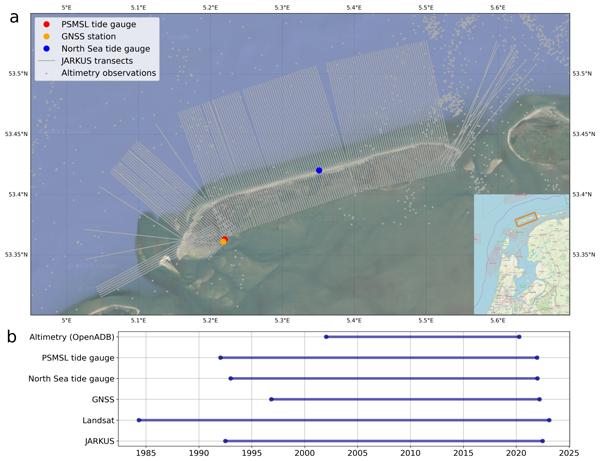
Benedikt Aschenneller, Roelof Rietbroek, and Daphne van der Wal
Nat. Hazards Earth Syst. Sci., 24, 4145–4177, https://doi.org/10.5194/nhess-24-4145-2024, https://doi.org/10.5194/nhess-24-4145-2024, 2024
Short summary
Short summary
Shorelines retreat or advance in response to sea level changes, subsidence or uplift of the ground, and morphological processes (sedimentation and erosion). We show that the geometrical influence of each of these drivers on shoreline movements can be quantified by combining different remote sensing observations, including radar altimetry, lidar and optical satellite images. The focus here is to illustrate the uncertainties of these observations by comparing datasets that cover similar processes.
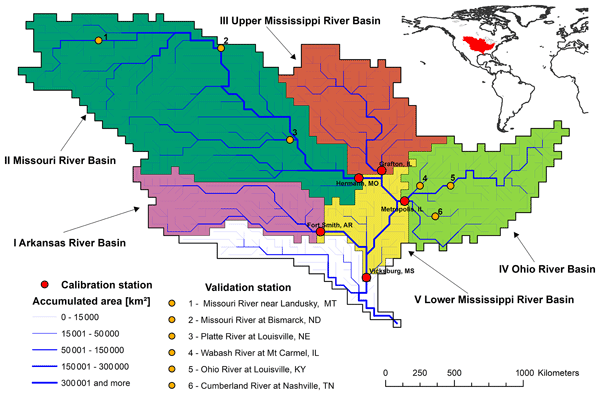
Petra Döll, Howlader Mohammad Mehedi Hasan, Kerstin Schulze, Helena Gerdener, Lara Börger, Somayeh Shadkam, Sebastian Ackermann, Seyed-Mohammad Hosseini-Moghari, Hannes Müller Schmied, Andreas Güntner, and Jürgen Kusche
Hydrol. Earth Syst. Sci., 28, 2259–2295, https://doi.org/10.5194/hess-28-2259-2024, https://doi.org/10.5194/hess-28-2259-2024, 2024
Short summary
Short summary
Currently, global hydrological models do not benefit from observations of model output variables to reduce and quantify model output uncertainty. For the Mississippi River basin, we explored three approaches for using both streamflow and total water storage anomaly observations to adjust the parameter sets in a global hydrological model. We developed a method for considering the observation uncertainties to quantify the uncertainty of model output and provide recommendations.
Matthias O. Willen, Martin Horwath, Eric Buchta, Mirko Scheinert, Veit Helm, Bernd Uebbing, and Jürgen Kusche
The Cryosphere, 18, 775–790, https://doi.org/10.5194/tc-18-775-2024, https://doi.org/10.5194/tc-18-775-2024, 2024
Short summary
Short summary
Shrinkage of the Antarctic ice sheet (AIS) leads to sea level rise. Satellite gravimetry measures AIS mass changes. We apply a new method that overcomes two limitations: low spatial resolution and large uncertainties due to the Earth's interior mass changes. To do so, we additionally include data from satellite altimetry and climate and firn modelling, which are evaluated in a globally consistent way with thoroughly characterized errors. The results are in better agreement with independent data.
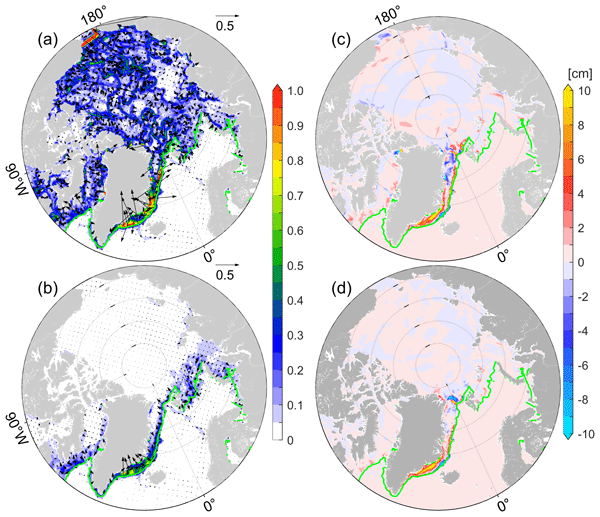
Guokun Lyu, Armin Koehl, Xinrong Wu, Meng Zhou, and Detlef Stammer
Ocean Sci., 19, 305–319, https://doi.org/10.5194/os-19-305-2023, https://doi.org/10.5194/os-19-305-2023, 2023
Short summary
Short summary
Data assimilation techniques are important for combining observations with numerical models. Here, we approximate the adjoint of viscous-plastic dynamics (adjoint-VP) to replace the adjoint of free-drift dynamics (adjoint-FD) for developing an advanced Arctic Ocean and sea ice modeling and adjoint-based assimilation system. We find that adjoint-VP provides a better ocean and sea ice estimation than adjoint-FD, considering the residual errors and adjustments of the atmospheric states.
Cited articles
Amaya, D. J., Jacox, M. G., Alexander, M. A., Scott, J. D., Deser, C., Capotondi, A., and Phillips, A. S.: Bottom Marine Heatwaves along the Continental Shelves of North America, Nat. Commun., 14, 1038, https://doi.org/10.1038/s41467-023-36567-0, 2023. a
Argo: Argo Float Data and Metadata from Global Data Assembly Centre (Argo GDAC), SEANOE [data set], https://doi.org/10.17882/42182, 2000. a, b, c
Balmaseda, M. A., Mogensen, K., and Weaver, A. T.: Evaluation of the ECMWF Ocean Reanalysis System ORAS4, Q. J. Roy. Meteor. Soc., 139, 1132–1161, https://doi.org/10.1002/qj.2063, 2013. a
Barnoud, A., Pfeffer, J., Guérou, A., Frery, M.-L., Siméon, M., Cazenave, A., Chen, J., Llovel, W., Thierry, V., Legeais, J.-F., and Ablain, M.: Contributions of Altimetry and Argo to Non-Closure of the Global Mean Sea Level Budget Since 2016, Geophys. Res. Lett., 48, e2021GL092824, https://doi.org/10.1029/2021GL092824, 2021. a
Binder, K. and Heermann, D.: Monte Carlo Simulation in Statistical Physics: An Introduction, Graduate Texts in Physics, 5th Edn., Springer-Verlag, Berlin Heidelberg, https://doi.org/10.1007/978-3-642-03163-2, 2010. a
Bond, N. A., Cronin, M. F., Freeland, H., and Mantua, N.: Causes and Impacts of the 2014 Warm Anomaly in the NE Pacific, Geophys. Res. Lett., 42, 3414–3420, https://doi.org/10.1002/2015GL063306, 2015. a
Bouih, M., Barnoud, A., Yang, C., Storto, A., Blazquez, A., Llovel, W., Fraudeau, R., and Cazenave, A.: Regional sea level trend budget over 2004–2022, Ocean Sci., 21, 1425–1440, https://doi.org/10.5194/os-21-1425-2025, 2025. a, b
Bryden, H. and Imawaki, S.: Ocean Heat Transport, in: Ocean Circulation and Climate, vol. 77, edited by: Siedler, G., Church, J., and Gould, J., Academic Press, 317–336, ISBN 0126413517, 2001. a
Caesar, L., Rahmstorf, S., Robinson, A., Feulner, G., and Saba, V.: Observed Fingerprint of a Weakening Atlantic Ocean Overturning Circulation, Nature, 556, 191–196, https://doi.org/10.1038/s41586-018-0006-5, 2018. a
Carillo, A., Sannino, G., Artale, V., Ruti, P. M., Calmanti, S., and Dell'Aquila, A.: Steric Sea Level Rise over the Mediterranean Sea: Present Climate and Scenario Simulations, Clim. Dynam., 39, 2167–2184, https://doi.org/10.1007/s00382-012-1369-1, 2012. a
Chen, H.-H., Wang, Y., Xiu, P., Yu, Y., Ma, W., and Chai, F.: Combined Oceanic and Atmospheric Forcing of the 2013/14 Marine Heatwave in the Northeast Pacific, npj Clim. Atmos. Sci., 6, 1–10, https://doi.org/10.1038/s41612-023-00327-0, 2023. a
Cheng, L., Zhu, J., Cowley, R., Boyer, T., and Wijffels, S.: Time, Probe Type, and Temperature Variable Bias Corrections to Historical Expendable Bathythermograph Observations, J. Atmos. Ocean. Tech., 31, 1793–1825, https://doi.org/10.1175/JTECH-D-13-00197.1, 2014. a
Cheng, L., Trenberth, K. E., Fasullo, J., Boyer, T., Abraham, J., and Zhu, J.: Improved Estimates of Ocean Heat Content from 1960 to 2015, Sci. Adv., 3, e1601545, https://doi.org/10.1126/sciadv.1601545, 2017. a
Cheng, L., von Schuckmann, K., Abraham, J. P., Trenberth, K. E., Mann, M. E., Zanna, L., England, M. H., Zika, J. D., Fasullo, J. T., Yu, Y., Pan, Y., Zhu, J., Newsom, E. R., Bronselaer, B., and Lin, X.: Past and Future Ocean Warming, Nat. Rev. Earth Environ., 3, 776–794, https://doi.org/10.1038/s43017-022-00345-1, 2022. a
CMEMS: Global Ocean Ensemble Physics Reanalysis, Marine Data Store (MDS) [data set], https://doi.org/10.48670/moi-00024, 2024a. a, b
CMEMS: Global Ocean Gridded L 4 Sea Surface Heights And Derived Variables Reprocessed 1993 Ongoing, Marine Data Store (MDS) [data set], https://doi.org/10.48670/moi-00148, 2024b. a, b
Copernicus Climate Change Service: ORAS5 Global Ocean Reanalysis Monthly Data from 1958 to Present, Marine Data Store (MDS) [data set], https://doi.org/10.24381/CDS.67E8EEB7, 2021. a
Copernicus Climate Change Service: ERA5 Monthly Averaged Data on Single Levels from 1940 to Present, Marine Data Store (MDS) [data set], https://doi.org/10.24381/cds.f17050d7, 2023. a, b
Dias, F. B., Fiedler, R., Marsland, S. J., Domingues, C. M., Clément, L., Rintoul, S. R., Mcdonagh, E. L., Mata, M. M., and Savita, A.: Ocean Heat Storage in Response to Changing Ocean Circulation Processes, J. Climate, 33, 9065–9082, https://doi.org/10.1175/JCLI-D-19-1016.1, 2020. a
Dobslaw, H., Bergmann-Wolf, I., Dill, R., Poropat, L., Thomas, M., Dahle, C., Esselborn, S., König, R., and Flechtner, F.: A New High-Resolution Model of Non-Tidal Atmosphere and Ocean Mass Variability for de-Aliasing of Satellite Gravity Observations: AOD1B RL06, Geophys. J. Int., 211, 263–269, https://doi.org/10.1093/gji/ggx302, 2017. a
Durack, P., Gleckler, P., Purkey, S., Johnson, G., Lyman, J., and Boywe, T.: Ocean Warming: From the Surface to the Deep in Observations and Models, Oceanography, 31, 41–51, https://doi.org/10.5670/oceanog.2018.227, 2018. a, b, c, d
Durack, P. J., Wijffels, S. E., and Gleckler, P. J.: Long-Term Sea-Level Change Revisited: The Role of Salinity, Environ. Res. Lett., 9, 114017, https://doi.org/10.1088/1748-9326/9/11/114017, 2014. a
Farrell, W. E.: Deformation of the Earth by Surface Loads, Rev. Geophys., 10, 761–797, https://doi.org/10.1029/RG010i003p00761, 1972. a
Felden, J., Möller, L., Schindler, U., Huber, R., Schumacher, S., Koppe, R., Diepenbroek, M., and Glöckner, F. O.: PANGAEA – Data Publisher for Earth & Environmental Science, Scientific Data, 10, 347, https://doi.org/10.1038/s41597-023-02269-x, 2023. a
Ferrari, R. and Ferreira, D.: What Processes Drive the Ocean Heat Transport?, Ocean Model., 38, 171–186, https://doi.org/10.1016/j.ocemod.2011.02.013, 2011. a
Forget, G., Campin, J.-M., Heimbach, P., Hill, C. N., Ponte, R. M., and Wunsch, C.: ECCO version 4: an integrated framework for non-linear inverse modeling and global ocean state estimation, Geosci. Model Dev., 8, 3071–3104, https://doi.org/10.5194/gmd-8-3071-2015, 2015. a
Garcia, H. E., Boyer, T. P., Baranova, O. K., Locarini, R. A., Mishonov, A. V., and Grodsky, A.: World Ocean Atlas 2018: Product Documentation, Tech. rep., Ocean Climate Laboratory NCEI/NESDIS/NOAA, https://www.ncei.noaa.gov/data/oceans/woa/WOA18/DOC/woa18documentation.pdf (last access: 16 September 2026), 2019. a
Gill, A. E. and Niller, P. P.: The Theory of the Seasonal Variability in the Ocean, Deep Sea Research and Oceanographic Abstracts, 20, 141–177, https://doi.org/10.1016/0011-7471(73)90049-1, 1973. a
Gleckler, P. J., Durack, P. J., Stouffer, R. J., Johnson, G. C., and Forest, C. E.: Industrial-Era Global Ocean Heat Uptake Doubles in Recent Decades, Nat. Clim. Change, 6, 394–398, https://doi.org/10.1038/nclimate2915, 2016. a
Good, S. A., Martin, M. J., and Rayner, N. A.: EN4: Quality Controlled Ocean Temperature and Salinity Profiles and Monthly Objective Analyses with Uncertainty Estimates, J. Geophys. Res.-Oceans, 118, 6704–6716, https://doi.org/10.1002/2013JC009067, 2013. a, b, c
Gouretski, V. and Cheng, L.: Correction for Systematic Errors in the Global Dataset of Temperature Profiles from Mechanical Bathythermographs, J. Atmos. Ocean. Tech., 37, 841–855, https://doi.org/10.1175/JTECH-D-19-0205.1, 2020. a, b
Gouretski, V. and Reseghetti, F.: On Depth and Temperature Biases in Bathythermograph Data: Development of a New Correction Scheme Based on Analysis of a Global Ocean Database, Deep-Sea Res. Pt. I, 57, 812–833, https://doi.org/10.1016/j.dsr.2010.03.011, 2010. a
Hansen, J., Sato, M., Kharecha, P., and von Schuckmann, K.: Earth's energy imbalance and implications, Atmos. Chem. Phys., 11, 13421–13449, https://doi.org/10.5194/acp-11-13421-2011, 2011. a
Holbrook, N. J., Scannell, H. A., Sen Gupta, A., Benthuysen, J. A., Feng, M., Oliver, E. C. J., Alexander, L. V., Burrows, M. T., Donat, M. G., Hobday, A. J., Moore, P. J., Perkins-Kirkpatrick, S. E., Smale, D. A., Straub, S. C., and Wernberg, T.: A Global Assessment of Marine Heatwaves and Their Drivers, Nat. Commun., 10, 2624, https://doi.org/10.1038/s41467-019-10206-z, 2019. a
Horwath, M., Gutknecht, B. D., Cazenave, A., Palanisamy, H. K., Marti, F., Marzeion, B., Paul, F., Le Bris, R., Hogg, A. E., Otosaka, I., Shepherd, A., Döll, P., Cáceres, D., Müller Schmied, H., Johannessen, J. A., Nilsen, J. E. Ø., Raj, R. P., Forsberg, R., Sandberg Sørensen, L., Barletta, V. R., Simonsen, S. B., Knudsen, P., Andersen, O. B., Ranndal, H., Rose, S. K., Merchant, C. J., Macintosh, C. R., von Schuckmann, K., Novotny, K., Groh, A., Restano, M., and Benveniste, J.: Global sea-level budget and ocean-mass budget, with a focus on advanced data products and uncertainty characterisation, Earth Syst. Sci. Data, 14, 411–447, https://doi.org/10.5194/essd-14-411-2022, 2022. a, b, c
Hosoda, S., Ohira, T., and Nakamura, T.: A Monthly Mean Dataset of Global Oceanic Temperature and Salinity Derived from Argo Float Observations, JAMSTEC Report of Research and Development, 8, 47–59, https://doi.org/10.5918/jamstecr.8.47, 2008. a
Intergovernmental Panel on Climate Change (IPCC): Climate Change 2014 – Impacts, Adaptation and Vulnerability: Part A: Global and Sectoral Aspects: Working Group II Contribution to the IPCC Fifth Assessment Report, Cambridge University Press, Cambridge, https://doi.org/10.1017/CBO9781107415379, 2014. a
Intergovernmental Panel on Climate Change (IPCC): The Ocean and Cryosphere in a Changing Climate: Special Report of the Intergovernmental Panel on Climate Change, Cambridge University Press, Cambridge, https://doi.org/10.1017/9781009157964, 2022. a, b
International-Altimetry-Team: Altimetry for the Future: Building on 25 Years of Progress, Adv. Space Res., 68, 319–363, https://doi.org/10.1016/j.asr.2021.01.022, 2021. a, b
IPRC: Near-Real Time Gridded Data on Standard Levels, International Pacific Research Center (IPRC), School of Ocean and Earth Science and Technology (SOEST) [data set], University of Hawai'i at Mānoa, http://apdrc.soest.hawaii.edu/projects/Argo/ (last access: 16 September 2026), 2020. a
Jeon, T., Seo, K.-W., Kim, B.-H., Kim, J.-S., Chen, J., and Wilson, C. R.: Sea Level Fingerprints and Regional Sea Level Change, Earth Planet. Sc. Lett., 567, 116985, https://doi.org/10.1016/j.epsl.2021.116985, 2021. a, b
Jia, Y.: Ocean Heat Transport and Its Relationship to Ocean Circulation in the CMIP Coupled Models, Clim. Dynam., 20, 153–174, https://doi.org/10.1007/s00382-002-0261-9, 2003. a
Johnson, G. C. and Lyman, J. M.: Warming Trends Increasingly Dominate Global Ocean, Nat. Clim. Change, 10, 757–761, https://doi.org/10.1038/s41558-020-0822-0, 2020. a
Jolliffe, I. T. and Cadima, J.: Principal Component Analysis: A Review and Recent Developments, Philos. T. Roy. Soc. A, 374, 20150202, https://doi.org/10.1098/rsta.2015.0202, 2016. a
Kato, S., Rose, F. G., Rutan, D. A., Thorsen, T. J., Loeb, N. G., Doelling, D. R., Huang, X., Smith, W. L., Su, W., and Ham, S.-H.: Surface Irradiances of Edition 4.0 Clouds and the Earth's Radiant Energy System (CERES) Energy Balanced and Filled (EBAF) Data Product, J. Climate, 31, 4501–4527, https://doi.org/10.1175/JCLI-D-17-0523.1, 2018. a, b
Kobayashi, S., Ota, Y., Harada, Y., Ebita, A., Moriya, M., Onoda, H., Onogi, K., Kamahori, H., Kobayashi, C., Endo, H., Miyaoka, K., and Takahashi, K.: The JRA-55 Reanalysis: General Specifications and Basic Characteristics, J. Meteorol. Soc. Jpn. Ser. II, 93, 5–48, https://doi.org/10.2151/jmsj.2015-001, 2015. a, b
Koch, K.-R. and Kusche, J.: Regularization of Geopotential Determination from Satellite Data by Variance Components, J. Geodesy, 76, 259–268, https://doi.org/10.1007/s00190-002-0245-x, 2002. a
Kornfeld, R. P., Arnold, B. W., Gross, M. A., Dahya, N. T., Klipstein, W. M., Gath, P. F., and Bettadpur, S.: GRACE-FO: The Gravity Recovery and Climate Experiment Follow-On Mission, J. Spacecraft Rockets, 56, 931–951, https://doi.org/10.2514/1.A34326, 2019. a
Kvas, A., Behzadpour, S., Ellmer, M., Klinger, B., Strasser, S., Zehentner, N., and Mayer-Gürr, T.: ITSG-Grace2018: Overview and Evaluation of a New GRACE-Only Gravity Field Time Series, J. Geophys. Res.-Sol. Ea., 124, 9332–9344, https://doi.org/10.1029/2019JB017415, 2019. a, b
Landerer, F. W., Jungclaus, J. H., and Marotzke, J.: Regional Dynamic and Steric Sea Level Change in Response to the IPCC-A1B Scenario, J. Phys. Oceanogr., 37, 296–312, https://doi.org/10.1175/JPO3013.1, 2007. a
Lee, S., L'Heureux, M., Wittenberg, A. T., Seager, R., O'Gorman, P. A., and Johnson, N. C.: On the Future Zonal Contrasts of Equatorial Pacific Climate: Perspectives from Observations, Simulations, and Theories, npj Climate and Atmospheric Science, 5, 1–15, https://doi.org/10.1038/s41612-022-00301-2, 2022. a
Lee, S.-K., Park, W., Baringer, M. O., Gordon, A. L., Huber, B., and Liu, Y.: Pacific Origin of the Abrupt Increase in Indian Ocean Heat Content during the Warming Hiatus, Nat. Geosci., 8, 445–449, https://doi.org/10.1038/ngeo2438, 2015. a
Lellouche, J.-M., Le Galloudec, O., Drévillon, M., Régnier, C., Greiner, E., Garric, G., Ferry, N., Desportes, C., Testut, C.-E., Bricaud, C., Bourdallé-Badie, R., Tranchant, B., Benkiran, M., Drillet, Y., Daudin, A., and De Nicola, C.: Evaluation of global monitoring and forecasting systems at Mercator Océan, Ocean Sci., 9, 57–81, https://doi.org/10.5194/os-9-57-2013, 2013. a
Levitus, S., Antonov, J. I., Boyer, T. P., Baranova, O. K., Garcia, H. E., Locarnini, R. A., Mishonov, A. V., Reagan, J. R., Seidov, D., Yarosh, E. S., and Zweng, M. M.: World Ocean Heat Content and Thermosteric Sea Level Change (0–2000 m), 1955–2010, Geophys. Res. Lett., 39, https://doi.org/10.1029/2012GL051106, 2012. a
Li, G., Cheng, L., Zhu, J., Trenberth, K. E., Mann, M. E., and Abraham, J. P.: Increasing Ocean Stratification over the Past Half-Century, Nat. Clim. Change, 10, 1116–1123, https://doi.org/10.1038/s41558-020-00918-2, 2020. a
Li, Z., England, M. H., and Groeskamp, S.: Recent Acceleration in Global Ocean Heat Accumulation by Mode and Intermediate Waters, Nat. Commun., 14, 6888, https://doi.org/10.1038/s41467-023-42468-z, 2023. a
Llovel, W. and Lee, T.: Importance and Origin of Halosteric Contribution to Sea Level Change in the Southeast Indian Ocean during 2005–2013, Geophys. Res. Lett., 42, 1148–1157, https://doi.org/10.1002/2014GL062611, 2015. a
Loeb, N. G., Wielicki, B. A., Doelling, D. R., Smith, G. L., Keyes, D. F., Kato, S., Manalo-Smith, N., and Wong, T.: Toward Optimal Closure of the Earth's Top-of-Atmosphere Radiation Budget, J. Climate, 22, 748–766, https://doi.org/10.1175/2008JCLI2637.1, 2009. a, b
Loeb, N. G., Doelling, D. R., Wang, H., Su, W., Nguyen, C., Corbett, J. G., Liang, L., Mitrescu, C., Rose, F. G., and Kato, S.: Clouds and the Earth's Radiant Energy System (CERES) Energy Balanced and Filled (EBAF) Top-of-Atmosphere (TOA) Edition-4.0 Data Product, J. Climate, 31, 895–918, https://doi.org/10.1175/JCLI-D-17-0208.1, 2018a. a, b, c, d, e
Loeb, N. G., Thorsen, T. J., Norris, J. R., Wang, H., and Su, W.: Changes in Earth's Energy Budget during and after the “Pause” in Global Warming: An Observational Perspective, Climate, 6, 62, https://doi.org/10.3390/cli6030062, 2018b. a, b
Loeb, N. G., Johnson, G. C., Thorsen, T. J., Lyman, J. M., Rose, F. G., and Kato, S.: Satellite and Ocean Data Reveal Marked Increase in Earth's Heating Rate, Geophys. Res. Lett., 48, e2021GL093047, https://doi.org/10.1029/2021GL093047, 2021. a, b, c
Loeb, N. G., Doelling, D. R., Kato, S., Su, W., Mlynczak, P. E., and Wilkins, J. C.: Continuity in Top-of-Atmosphere Earth Radiation Budget Observations, J. Climate, 37, 6093–6108, https://doi.org/10.1175/JCLI-D-24-0180.1, 2024. a, b, c
Lück, C., Kusche, J., Rietbroek, R., and Löcher, A.: Time-variable gravity fields and ocean mass change from 37 months of kinematic Swarm orbits, Solid Earth, 9, 323–339, https://doi.org/10.5194/se-9-323-2018, 2018. a
Margirier, F., Testor, P., Heslop, E., Mallil, K., Bosse, A., Houpert, L., Mortier, L., Bouin, M.-N., Coppola, L., D'Ortenzio, F., Durrieu de Madron, X., Mourre, B., Prieur, L., Raimbault, P., and Taillandier, V.: Abrupt Warming and Salinification of Intermediate Waters Interplays with Decline of Deep Convection in the Northwestern Mediterranean Sea, Sci. Rep.-UK, 10, 20923, https://doi.org/10.1038/s41598-020-77859-5, 2020. a
Marti, F., Blazquez, A., Meyssignac, B., Ablain, M., Barnoud, A., Fraudeau, R., Jugier, R., Chenal, J., Larnicol, G., Pfeffer, J., Restano, M., and Benveniste, J.: Monitoring the ocean heat content change and the Earth energy imbalance from space altimetry and space gravimetry, Earth Syst. Sci. Data, 14, 229–249, https://doi.org/10.5194/essd-14-229-2022, 2022. a, b, c, d, e, f, g, h, i, j
Marti, F., Meyssignac, B., Rousseau, V., Ablain, M., Fraudeau, R., Blazquez, A., and Fourest, S.: Monitoring global ocean heat content from space geodetic observations to estimate the Earth energy imbalance, in: 8th edition of the Copernicus Ocean State Report (OSR8), edited by: von Schuckmann, K., Moreira, L., Grégoire, M., Marcos, M., Staneva, J., Brasseur, P., Garric, G., Lionello, P., Karstensen, J., and Neukermans, G., Copernicus Publications, State Planet, 4-osr8, 3, https://doi.org/10.5194/sp-4-osr8-3-2024, 2024. a, b, c, d
Mayer-Gürr, T., Behzadpour, S., Ellmer, M., Kvas, A., Klinger, B., Strasser, S., and Zehentner, N.: ITSG-Grace2018 – Monthly, Daily and Static Gravity Field Solutions from GRACE, GFZ Data Services, GFZ Data Services [data set], https://doi.org/10.5880/ICGEM.2018.003, 2018. a, b
Meyssignac, B., Boyer, T., Zhao, Z., Hakuba, M. Z., Landerer, F. W., Stammer, D., Köhl, A., Kato, S., L'Ecuyer, T., Ablain, M., Abraham, J. P., Blazquez, A., Cazenave, A., Church, J. A., Cowley, R., Cheng, L., Domingues, C. M., Giglio, D., Gouretski, V., Ishii, M., Johnson, G. C., Killick, R. E., Legler, D., Llovel, W., Lyman, J., Palmer, M. D., Piotrowicz, S., Purkey, S. G., Roemmich, D., Roca, R., Savita, A., von Schuckmann, K., Speich, S., Stephens, G., Wang, G., Wijffels, S. E., and Zilberman, N.: Measuring Global Ocean Heat Content to Estimate the Earth Energy Imbalance, Front. Mar. Sci., 6, https://doi.org/10.3389/fmars.2019.00432, 2019. a, b, c, d, e, f, g
Meyssignac, B., Ablain, M., Guérou, A., Prandi, P., Barnoud, A., Blazquez, A., Fourest, S., Rousseau, V., Bonnefond, P., Cazenave, A., Chenal, J., Dibarboure, G., Donlon, C., Benveniste, J., Sylvestre-Baron, A., and Vinogradova, N.: How Accurate Is Accurate Enough for Measuring Sea-Level Rise and Variability, Nat. Clim. Change, 13, 796–803, https://doi.org/10.1038/s41558-023-01735-z, 2023. a, b
Mu, D., Church, J. A., King, M., Ludwigsen, C. B., and Xu, T.: Contrasting Discrepancy in the Sea Level Budget Between the North and South Atlantic Ocean Since 2016, Earth Space Sci., 11, e2023EA003133, https://doi.org/10.1029/2023EA003133, 2024. a
Müller Schmied, H., Trautmann, T., Ackermann, S., Cáceres, D., Flörke, M., Gerdener, H., Kynast, E., Peiris, T. A., Schiebener, L., Schumacher, M., and Döll, P.: The global water resources and use model WaterGAP v2.2e: description and evaluation of modifications and new features, Geosci. Model Dev., 17, 8817–8852, https://doi.org/10.5194/gmd-17-8817-2024, 2024. a
Nerem, R. S., Beckley, B. D., Fasullo, J. T., Hamlington, B. D., Masters, D., and Mitchum, G. T.: Climate-Change–Driven Accelerated Sea-Level Rise Detected in the Altimeter Era, P. Natl. Acad. Sci. USA, 201717312, https://doi.org/10.1073/pnas.1717312115, 2018. a
Newman, M., Alexander, M. A., Ault, T. R., Cobb, K. M., Deser, C., Lorenzo, E. D., Mantua, N. J., Miller, A. J., Minobe, S., Nakamura, H., Schneider, N., Vimont, D. J., Phillips, A. S., Scott, J. D., and Smith, C. A.: The Pacific Decadal Oscillation, Revisited, J. Climate, 29, 4399–4427, https://doi.org/10.1175/JCLI-D-15-0508.1, 2016. a, b
Nian, D., Willeit, M., Wunderling, N., Ganopolski, A., and Rockström, J.: Collapse of the Atlantic Meridional Overturning Circulation Would Lead to Substantial Oceanic Carbon Release and Additional Global Warming, Commun. Earth Environ., 7, 295, https://doi.org/10.1038/s43247-026-03427-w, 2026. a
Palmer, M. D.: Reconciling Estimates of Ocean Heating and Earth's Radiation Budget, Current Climate Change Reports, 3, 78–86, https://doi.org/10.1007/s40641-016-0053-7, 2017. a
Palmer, M. D., Roberts, C. D., Balmaseda, M., Chang, Y.-S., Chepurin, G., Ferry, N., Fujii, Y., Good, S. A., Guinehut, S., Haines, K., Hernandez, F., Köhl, A., Lee, T., Martin, M. J., Masina, S., Masuda, S., Peterson, K. A., Storto, A., Toyoda, T., Valdivieso, M., Vernieres, G., Wang, O., and Xue, Y.: Ocean Heat Content Variability and Change in an Ensemble of Ocean Reanalyses, Clim. Dynam., 49, 909–930, https://doi.org/10.1007/s00382-015-2801-0, 2017. a
Pan, Y., Minière, A., von Schuckmann, K., Li, Z., Li, Y., Cheng, L., and Zhu, J.: Ocean Heat Content in 2024, Nat. Rev. Earth Environ., 6, 249–251, https://doi.org/10.1038/s43017-025-00655-0, 2025. a
Portilho-Ramos, R. d. C., Titschack, J., Wienberg, C., Rojas, M. G. S., Yokoyama, Y., and Hebbeln, D.: Major Environmental Drivers Determining Life and Death of Cold-Water Corals through Time, PLOS Biol., 20, e3001628, https://doi.org/10.1371/journal.pbio.3001628, 2022. a
Preisendorfer, R.: Principal Component Analysis in Meteorology and Oceanography, Elsevier, Amsterdam, ISBN 0444430148, 1988. a
Rahmstorf, S., Box, J. E., Feulner, G., Mann, M. E., Robinson, A., Rutherford, S., and Schaffernicht, E. J.: Exceptional Twentieth-Century Slowdown in Atlantic Ocean Overturning Circulation, Nat. Clim. Change, 5, 475–480, https://doi.org/10.1038/nclimate2554, 2015. a
Resplandy, L., Keeling, R. F., Eddebbar, Y., Brooks, M., Wang, R., Bopp, L., Long, M. C., Dunne, J. P., Koeve, W., and Oschlies, A.: Quantification of Ocean Heat Uptake from Changes in Atmospheric O2 and CO2 Composition, Sci. Rep.-UK, 9, 20244, https://doi.org/10.1038/s41598-019-56490-z, 2019. a
RGI Consortium: Randolph Glacier Inventory – A Dataset of Global Glacier Outlines: Version 6.0, Technical Report, Global Land Ice Measurements from Space, Digital Media, Colorado, USA, https://doi.org/10.7265/N5-RGI-60, 2017. a
Roemmich, D. and Gilson, J.: The 2004–2008 Mean and Annual Cycle of Temperature, Salinity, and Steric Height in the Global Ocean from the Argo Program, Prog. Oceanogr., 82, 81–100, https://doi.org/10.1016/j.pocean.2009.03.004, 2009. a
Roemmich, D., Belbéoch, M., Freeland, H., Garzoli, S., Gould, W. J., Grant, F., Ignaszewski, M., King, B., Klein, B., Le Traon, P.-Y., Mork, K., Owens, W. B., Pouliquen, S., Ravichandran, M., Riser, S., Sterl, A., Suga, T., Suk, M.-S., Sutton, P., Thierry, V., Vélez-Belchí, P., Wijffels, S., and Xu, J.: Argo: The Challenge of Continuing 10 Years of Progress, Oceanography, 22, 46–55, https://doi.org/10.5670/oceanog.2009.65, 2009. a, b, c, d
Rousseau, V., Fraudeau, R., Hammond, M., Houndegnonto, O. J., Ablain, M., Blazquez, A., Calafat, F. M., Desbruyères, D., Foti, G., Llovel, W., Marti, F., Meyssignac, B., Restano, M., and Benveniste, J.: Monitoring the regional Ocean Heat Content change over the Atlantic Ocean with the space geodetic approach, Earth Syst. Sci. Data Discuss. [preprint], https://doi.org/10.5194/essd-2023-236, 2023. a, b
Royston, S., Vishwakarma, B. D., Westaway, R., Rougier, J., Sha, Z., and Bamber, J.: Can We Resolve the Basin-Scale Sea Level Trend Budget From GRACE Ocean Mass?, J. Geophys. Res.-Oceans, 125, e2019JC015535, https://doi.org/10.1029/2019JC015535, 2020. a
Russell, G. L., Gornitz, V., and Miller, J. R.: Regional Sea Level Changes Projected by the NASA/GISS Atmosphere-Ocean Model, Clim. Dynam., 16, 789–797, https://doi.org/10.1007/s003820000090, 2000. a, b, c
Saji, N. H. and Yamagata, T.: Possible Impacts of Indian Ocean Dipole Mode Events on Global Climate, Clim. Res., 25, 151–169, https://doi.org/10.3354/cr025151, 2003. a, b
Schröder, L., Horwath, M., Dietrich, R., Helm, V., van den Broeke, M. R., and Ligtenberg, S. R. M.: Four decades of Antarctic surface elevation changes from multi-mission satellite altimetry, The Cryosphere, 13, 427–449, https://doi.org/10.5194/tc-13-427-2019, 2019. a
Sharma, S., Ha, K.-J., Yamaguchi, R., Rodgers, K. B., Timmermann, A., and Chung, E.-S.: Future Indian Ocean Warming Patterns, Nat. Commun., 14, 1789, https://doi.org/10.1038/s41467-023-37435-7, 2023. a, b
Sreenivas, P., Gnanaseelan, C., and Prasad, K. V. S. R.: Influence of El Niño and Indian Ocean Dipole on Sea Level Variability in the Bay of Bengal, Global Planet. Change, 80–81, 215–225, https://doi.org/10.1016/j.gloplacha.2011.11.001, 2012. a, b
Storto, A. and Masina, S.: C-GLORSv5: an improved multipurpose global ocean eddy-permitting physical reanalysis, Earth Syst. Sci. Data, 8, 679–696, https://doi.org/10.5194/essd-8-679-2016, 2016. a
Strößenreuther, U., Horwath, M., and Schröder, L.: How Different Analysis and Interpolation Methods Affect the Accuracy of Ice Surface Elevation Changes Inferred from Satellite Altimetry, Math. Geosci., 52, 499–525, https://doi.org/10.1007/s11004-019-09851-3, 2020. a
Szekely, T., Gourrion, J., Pouliquen, S., and Reverdin, G.: The CORA 5.2 dataset for global in situ temperature and salinity measurements: data description and validation, Ocean Sci., 15, 1601–1614, https://doi.org/10.5194/os-15-1601-2019, 2019. a
Tapley, B. D., Bettadpur, S., Watkins, M., and Reigber, C.: The Gravity Recovery and Climate Experiment: Mission Overview and Early Results, Geophys. Res. Lett., 31, https://doi.org/10.1029/2004GL019920, 2004. a
Timmermann, R., Danilov, S., Schröter, J., Böning, C., Sidorenko, D., and Rollenhagen, K.: Ocean Circulation and Sea Ice Distribution in a Finite Element Global Sea Ice–Ocean Model, Ocean Model., 27, 114–129, https://doi.org/10.1016/j.ocemod.2008.10.009, 2009. a
Trenberth, K. E. and Caron, J. M.: Estimates of Meridional Atmosphere and Ocean Heat Transports, J. Climate, 14, 3433–3443, https://doi.org/10.1175/1520-0442(2001)014<3433:EOMAAO>2.0.CO;2, 2001. a
Trenberth, K. E., Fasullo, J. T., and Balmaseda, M. A.: Earth's Energy Imbalance, J. Climate, 27, 3129–3144, https://doi.org/10.1175/JCLI-D-13-00294.1, 2014. a
Trenberth, K. E., Fasullo, J. T., von Schuckmann, K., and Cheng, L.: Insights into Earth's Energy Imbalance from Multiple Sources, J. Climate, 29, 7495–7505, https://doi.org/10.1175/JCLI-D-16-0339.1, 2016. a
Uebbing, B. and Kusche, J.: Gridded (0.25 Deg) Monthly Ocean Heat Content from Consistently Combining GRACE(-FO) Satellite Gravimerty, in Situ Argo Profiles and Satellite Altimetry, PANGAEA [data set], https://doi.org/10.1594/PANGAEA.994058, 2026. a, b, c
von Schuckmann, K., Cheng, L., Palmer, M. D., Hansen, J., Tassone, C., Aich, V., Adusumilli, S., Beltrami, H., Boyer, T., Cuesta-Valero, F. J., Desbruyères, D., Domingues, C., García-García, A., Gentine, P., Gilson, J., Gorfer, M., Haimberger, L., Ishii, M., Johnson, G. C., Killick, R., King, B. A., Kirchengast, G., Kolodziejczyk, N., Lyman, J., Marzeion, B., Mayer, M., Monier, M., Monselesan, D. P., Purkey, S., Roemmich, D., Schweiger, A., Seneviratne, S. I., Shepherd, A., Slater, D. A., Steiner, A. K., Straneo, F., Timmermans, M.-L., and Wijffels, S. E.: Heat stored in the Earth system: where does the energy go?, Earth Syst. Sci. Data, 12, 2013–2041, https://doi.org/10.5194/essd-12-2013-2020, 2020. a, b, c, d, e, f
von Schuckmann, K., Minière, A., Gues, F., Cuesta-Valero, F. J., Kirchengast, G., Adusumilli, S., Straneo, F., Allan, R., Barker, P. M., Beltrami, H., Boyer, T., Cheng, L., Church, J., Desbruyeres, D., Dolman, H., Domingues, C., García-García, A., Giglio, D., Gilson, J., Gorfer, M., Haimberger, L., Hendricks, S., Hosoda, S., Johnson, G. C., Killick, R., King, B. A., Kolodziejczyk, N., Korosov, A., Krinner, G., Kuusela, M., Langer, M., Lavergne, T., Li, Y., Lyman, J., Marzeion, B., Mayer, M., MacDougall, A., Lawrence, I., McDougall, T., Monselesan, D. P., Nitzbon, J., Otosaka, I., Peng, J., Purkey, S., Roemmich, D., Sato, K., Sato, K., Savita, A., Schweiger, A., Shepherd, A., Seneviratne, S. I., Simons, L., Slater, D. A., Slater, T., Smith, N., Steiner, A. K., Suga, T., Szekely, T., Thiery, W., Timmermanns, M.-L., Vanderkelen, I., Wijffels, S. E., Wu, T., and Zemp, M.: Heat Stored in the Earth System 1960-2020: Where Does the Energy Go?, https://hdl.handle.net/21.14106/279f535efb48324f4f604bb390f74deadf268812 (last acces: 16 September 2026), 2022. a
von Schuckmann, K., Minière, A., Gues, F., Cuesta-Valero, F. J., Kirchengast, G., Adusumilli, S., Straneo, F., Ablain, M., Allan, R. P., Barker, P. M., Beltrami, H., Blazquez, A., Boyer, T., Cheng, L., Church, J., Desbruyeres, D., Dolman, H., Domingues, C. M., García-García, A., Giglio, D., Gilson, J. E., Gorfer, M., Haimberger, L., Hakuba, M. Z., Hendricks, S., Hosoda, S., Johnson, G. C., Killick, R., King, B., Kolodziejczyk, N., Korosov, A., Krinner, G., Kuusela, M., Landerer, F. W., Langer, M., Lavergne, T., Lawrence, I., Li, Y., Lyman, J., Marti, F., Marzeion, B., Mayer, M., MacDougall, A. H., McDougall, T., Monselesan, D. P., Nitzbon, J., Otosaka, I., Peng, J., Purkey, S., Roemmich, D., Sato, K., Sato, K., Savita, A., Schweiger, A., Shepherd, A., Seneviratne, S. I., Simons, L., Slater, D. A., Slater, T., Steiner, A. K., Suga, T., Szekely, T., Thiery, W., Timmermans, M.-L., Vanderkelen, I., Wjiffels, S. E., Wu, T., and Zemp, M.: Heat stored in the Earth system 1960–2020: where does the energy go?, Earth Syst. Sci. Data, 15, 1675–1709, https://doi.org/10.5194/essd-15-1675-2023, 2023. a
Wielicki, B. A., Barkstrom, B. R., Harrison, E. F., Lee, R. B., Smith, G. L., and Cooper, J. E.: Clouds and the Earth's Radiant Energy System (CERES): An Earth Observing System Experiment, B. Am. Meteorol. Soc., 77, 853–868, https://doi.org/10.1175/1520-0477(1996)077<0853:CATERE>2.0.CO;2, 1996. a
Willen, M. O., Uebbing, B., Horwath, M., and Kusche, J.: Improving the Representation of the Ice-Sheet Contribution to Sea Level within a Global Inversion Framework, Geophys. J. Int., 245, ggag059, https://doi.org/10.1093/gji/ggag059, 2026. a
Wong, A. P. S., Wijffels, S. E., Riser, S. C., Pouliquen, S., Hosoda, S., Roemmich, D., Gilson, J., Johnson, G. C., Martini, K., Murphy, D. J., Scanderbeg, M., Bhaskar, T. V. S. U., Buck, J. J. H., Merceur, F., Carval, T., Maze, G., Cabanes, C., André, X., Poffa, N., Yashayaev, I., Barker, P. M., Guinehut, S., Belbéoch, M., Ignaszewski, M., Baringer, M. O., Schmid, C., Lyman, J. M., McTaggart, K. E., Purkey, S. G., Zilberman, N., Alkire, M. B., Swift, D., Owens, W. B., Jayne, S. R., Hersh, C., Robbins, P., West-Mack, D., Bahr, F., Yoshida, S., Sutton, P. J. H., Cancouët, R., Coatanoan, C., Dobbler, D., Juan, A. G., Gourrion, J., Kolodziejczyk, N., Bernard, V., Bourlès, B., Claustre, H., D'Ortenzio, F., Le Reste, S., Le Traon, P.-Y., Rannou, J.-P., Saout-Grit, C., Speich, S., Thierry, V., Verbrugge, N., Angel-Benavides, I. M., Klein, B., Notarstefano, G., Poulain, P.-M., Vélez-Belchí, P., Suga, T., Ando, K., Iwasaska, N., Kobayashi, T., Masuda, S., Oka, E., Sato, K., Nakamura, T., Sato, K., Takatsuki, Y., Yoshida, T., Cowley, R., Lovell, J. L., Oke, P. R., van Wijk, E. M., Carse, F., Donnelly, M., Gould, W. J., Gowers, K., King, B. A., Loch, S. G., Mowat, M., Turton, J., Rama Rao, E. P., Ravichandran, M., Freeland, H. J., Gaboury, I., Gilbert, D., Greenan, B. J. W., Ouellet, M., Ross, T., Tran, A., Dong, M., Liu, Z., Xu, J., Kang, K., Jo, H., Kim, S.-D., and Park, H.-M.: Argo Data 1999–2019: Two Million Temperature-Salinity Profiles and Subsurface Velocity Observations From a Global Array of Profiling Floats, Front. Mar. Sci., 7, https://doi.org/10.3389/fmars.2020.00700, 2020. a
Wong, A. P. S., Gilson, J., and Cabanes, C.: Argo salinity: bias and uncertainty evaluation, Earth Syst. Sci. Data, 15, 383–393, https://doi.org/10.5194/essd-15-383-2023, 2023. a
Woodward, R. S.: On the Form and Position of the Sea Level with Special References to Its Dependence on Superficial Masses Symmetrically Disposed about a Normal to the Earth's Surface, Tech. Rep. 48, Govt. Print. Off., https://doi.org/10.3133/b48, 1888. a
Wouters, B., Chambers, D., and Schrama, E. J. O.: GRACE Observes Small-Scale Mass Loss in Greenland, Geophys. Res. Lett., 35, https://doi.org/10.1029/2008GL034816, 2008. a
Xi, H., Zhang, Z., Lu, Y., and Li, Y.: Long-Term and Interannual Variation of the Steric Sea Level in the South China Sea and the Connection with ENSO, J. Coastal Res., 35, 489–498, 2019. a
Zhang, C., Wang, D., Liu, Z., Lu, S., Sun, C., Wei, Y., and Zhang, M.: Global Gridded Argo Dataset Based on Gradient-Dependent Optimal Interpolation, Journal of Marine Science and Engineering, 10, 650, https://doi.org/10.3390/jmse10050650, 2022. a
Zhang, R.: Coherent Surface-Subsurface Fingerprint of the Atlantic Meridional Overturning Circulation, Geophys. Res. Lett., 35, https://doi.org/10.1029/2008GL035463, 2008. a
Zwally, H. J. and Giovinetto, M. B.: Overview and Assessment of Antarctic Ice-Sheet Mass Balance Estimates: 1992–2009, Surv. Geophys., 32, 351–376, https://doi.org/10.1007/s10712-011-9123-5, 2011. a
Short summary
About 90% of the excess heat in the Earth system is stored within the oceans leading to significant ocean warming and corresponding (volumetric) sea level change. We quantify global and regional ocean heat content change (OHC) by consistently combining space-geodetic altimetry, gravity and in situ temperature profile observations. Our results agree well with published estimates and highlight the benefit of consistently processing space-geodetic datasets for deriving high quality OHC estimates.
About 90% of the excess heat in the Earth system is stored within the oceans leading to...


Altmetrics
Final-revised paper
Preprint