Articles | Volume 18, issue 9
https://doi.org/10.5194/essd-18-6741-2026
© Author(s) 2026. This work is distributed under
the Creative Commons Attribution 4.0 License.
the Creative Commons Attribution 4.0 License.
https://doi.org/10.5194/essd-18-6741-2026
© Author(s) 2026. This work is distributed under
the Creative Commons Attribution 4.0 License.
the Creative Commons Attribution 4.0 License.
Data description article
| 
11 Sep 2026
Data description article |
| 11 Sep 2026
| 11 Sep 2026
Global and national lime process emissions and carbonation sink from 1930 to 2024
Longfei Bing
Key Laboratory of Forest Ecology and Silviculture, Institute of Applied Ecology, Chinese Academy of Sciences, Shenyang 110016, China
Key Laboratory of Terrestrial Ecosystem Carbon Neutrality, Shenyang 110016, China
National-Local Joint Engineering Laboratory of Contaminated Soil Remediation by Bio-physicochemical Synergistic Process, Shenyang 110016, China
Xiaoyu Zhang
Key Laboratory of Forest Ecology and Silviculture, Institute of Applied Ecology, Chinese Academy of Sciences, Shenyang 110016, China
University of Chinese Academy of Sciences, Beijing 100049, China
Le Niu
Key Laboratory of Forest Ecology and Silviculture, Institute of Applied Ecology, Chinese Academy of Sciences, Shenyang 110016, China
University of Chinese Academy of Sciences, Beijing 100049, China
Institute of Surface-Earth System Science, School of Earth System Science, Tianjin University, Tianjin 300072, China
Zhi Cao
Institute of Surface-Earth System Science, School of Earth System Science, Tianjin University, Tianjin 300072, China

Key Laboratory of Forest Ecology and Silviculture, Institute of Applied Ecology, Chinese Academy of Sciences, Shenyang 110016, China
Key Laboratory of Terrestrial Ecosystem Carbon Neutrality, Shenyang 110016, China
National-Local Joint Engineering Laboratory of Contaminated Soil Remediation by Bio-physicochemical Synergistic Process, Shenyang 110016, China
Jiajie Li
Institute of Mineral Resources, University of Science and Technology Beijing, Beijing 100083, China
Xue Jiang
Institute of Mineral Resources, University of Science and Technology Beijing, Beijing 100083, China
Baowu Resources Co., Ltd., Shanghai 201206, China
Fengming Xi
CORRESPONDING AUTHOR
Key Laboratory of Forest Ecology and Silviculture, Institute of Applied Ecology, Chinese Academy of Sciences, Shenyang 110016, China
Institute of Mineral Resources, University of Science and Technology Beijing, Beijing 100083, China
Key Laboratory of Terrestrial Ecosystem Carbon Neutrality, Shenyang 110016, China
National-Local Joint Engineering Laboratory of Contaminated Soil Remediation by Bio-physicochemical Synergistic Process, Shenyang 110016, China
Related authors
Zi Huang, Jiaoyue Wang, Longfei Bing, Yijiao Qiu, Rui Guo, Ying Yu, Mingjing Ma, Le Niu, Dan Tong, Robbie M. Andrew, Pierre Friedlingstein, Josep G. Canadell, Fengming Xi, and Zhu Liu
Earth Syst. Sci. Data, 15, 4947–4958, https://doi.org/10.5194/essd-15-4947-2023, https://doi.org/10.5194/essd-15-4947-2023, 2023
Short summary
Short summary
This is about global and regional cement process carbon emissions and CO2 uptake calculations from 1930 to 2019. The global cement production is rising to 4.4 Gt, causing processing carbon emission of 1.81 Gt (95% CI: 1.75–1.88 Gt CO2) in 2021. Plus, in 2021, cement’s carbon accumulated uptake (22.9 Gt, 95% CI: 19.6–22.6 Gt CO2) has offset 55.2% of cement process CO2 emissions (41.5 Gt, 95% CI: 38.7–47.1 Gt CO2) since 1930.
Longfei Bing, Mingjing Ma, Lili Liu, Jiaoyue Wang, Le Niu, and Fengming Xi
Earth Syst. Sci. Data, 15, 2431–2444, https://doi.org/10.5194/essd-15-2431-2023, https://doi.org/10.5194/essd-15-2431-2023, 2023
Short summary
Short summary
We provided CO2 uptake inventory for global lime materials from 1930–2020, The majority of CO2 uptake was from the lime in China.
Our dataset and the accounting mathematical model may serve as a set of tools to improve the CO2 emission inventories and provide data support for policymakers to formulate scientific and reasonable policies under
carbon neutraltarget.
Le Niu, Songbin Wu, Robbie M. Andrew, Zi Shao, Jiaoyue Wang, and Fengming Xi
Earth Syst. Sci. Data, 17, 2231–2247, https://doi.org/10.5194/essd-17-2231-2025, https://doi.org/10.5194/essd-17-2231-2025, 2025
Short summary
Short summary
This study provides an accurate bottom-up quantification of cement carbonation sinks at national and global levels. It shows that the global CO2 uptake by cement materials increased from 7.74 Mt yr-1 in 1928 to 0.84 Gt yr-1 in 2023; for 2024, this value is projected to be 0.86 Gt yr-1. The accumulated CO2 uptake offsets about 46 % of cement process emissions. Dominance with respect to cement carbon uptake has shifted from the USA, Japan, and some European countries to emerging economies such as China and India.
Zi Huang, Jiaoyue Wang, Longfei Bing, Yijiao Qiu, Rui Guo, Ying Yu, Mingjing Ma, Le Niu, Dan Tong, Robbie M. Andrew, Pierre Friedlingstein, Josep G. Canadell, Fengming Xi, and Zhu Liu
Earth Syst. Sci. Data, 15, 4947–4958, https://doi.org/10.5194/essd-15-4947-2023, https://doi.org/10.5194/essd-15-4947-2023, 2023
Short summary
Short summary
This is about global and regional cement process carbon emissions and CO2 uptake calculations from 1930 to 2019. The global cement production is rising to 4.4 Gt, causing processing carbon emission of 1.81 Gt (95% CI: 1.75–1.88 Gt CO2) in 2021. Plus, in 2021, cement’s carbon accumulated uptake (22.9 Gt, 95% CI: 19.6–22.6 Gt CO2) has offset 55.2% of cement process CO2 emissions (41.5 Gt, 95% CI: 38.7–47.1 Gt CO2) since 1930.
Longfei Bing, Mingjing Ma, Lili Liu, Jiaoyue Wang, Le Niu, and Fengming Xi
Earth Syst. Sci. Data, 15, 2431–2444, https://doi.org/10.5194/essd-15-2431-2023, https://doi.org/10.5194/essd-15-2431-2023, 2023
Short summary
Short summary
We provided CO2 uptake inventory for global lime materials from 1930–2020, The majority of CO2 uptake was from the lime in China.
Our dataset and the accounting mathematical model may serve as a set of tools to improve the CO2 emission inventories and provide data support for policymakers to formulate scientific and reasonable policies under
carbon neutraltarget.
Cited articles
Andrew, R. M.: Global CO2 emissions from cement production, 1928–2018, Earth Syst. Sci. Data, 11, 1675–1710, https://doi.org/10.5194/essd-11-1675-2019, 2019.
Annuaire Statistique de la France (ASF): Annuaire Statistique de la France archives, https://onlinebooks.library.upenn.edu/webbin/serial?id=annstatfr (last access: 18 January 2026), 2026.
Australian Bureau of Statistics (ABS): Year Book Australia archive, annual issues 1930–1958, Australian Bureau of Statistics, Canberra, Australia, https://www.abs.gov.au/ (last access: 18 January 2026), 1930–1958.
Bing, L., Ma, M., Liu, L., Wang, J., Niu, L., and Xi, F.: An investigation of the global uptake of CO2 by lime from 1930 to 2020, Earth Syst. Sci. Data, 15, 2431–2444, https://doi.org/10.5194/essd-15-2431-2023, 2023.
Bing, L., Zhang, X., Niu, L., Xi, F., and Wang, J.: Global and National CO2 Emission from Lime Production Process and Carbonation Sink from 1930 to 2024, version 1, Science Data Bank [data set], https://doi.org/10.57760/sciencedb.45314, 2026.
Brazilian Institute of Geography and Statistics (IBGE): Physical Production Tables, Economic Activities, Produção de cal, https://seculoxx.ibge.gov.br/economicas/atividades-economicas/tabelas-de-producao-fisica.html (last access: 18 January 2026), 2026.
British Geological Survey (BGS): World Mineral Statistics archive, https://www.bgs.ac.uk/mineralsuk/statistics/world-mineral-statistics/world-mineral-statistics-archive/ (last access: 18 January 2026), 2026.
Cai, Z., Liu, Q., and Cao, S.: Real estate supports rapid development of China's urbanization, Land Use Policy, 95, 104582, https://doi.org/10.1016/j.landusepol.2020.104582, 2020.
Campo, F. P., Tua, C., Biganzoli, L., Pantini, S., and Grosso, M.: Natural and enhanced carbonation of lime in its different applications: a review, Environ. Technol. Rev., 10, 224–237, https://doi.org/10.1080/21622515.2021.1982023, 2021.
Cao, Z., Liu, G., Duan, H., Xi, F., Liu, G., and Yang, W.: Unravelling the mystery of Chinese building lifetime: A calibration and verification based on dynamic material flow analysis, Appl. Energy, 238, 442–452, https://doi.org/10.1016/j.apenergy.2019.01.106, 2019.
Chen, C., Xu, R., Tong, D., Qin, X., Cheng, J., Liu, J., and Zhang, Q.: A striking growth of CO2 emissions from the global cement industry driven by new facilities in emerging countries, Environ. Res. Lett., 17, 044007, https://doi.org/10.1088/1748-9326/ac48b5, 2022.
China Building Materials Federation (CBMF): Carbon Emission Report of China's Building Materials Industry (2020), https://www.cfia.xin/page67?article_id=1652 (last access: 18 January 2026), 2021.
Chukwuma, J. S., Pullin, H., and Renforth, P.: Assessing the carbon capture capacity of South Wales' legacy iron and steel slag, Miner. Eng., 173, 107232, https://doi.org/10.1016/j.mineng.2021.107232, 2021.
Crippa, M., Guizzardi, D., Pagani, F., Schiavina, M., Melchiorri, M., Pisoni, E., Graziosi, F., Muntean, M., Maes, J., Dijkstra, L., Van Damme, M., Clarisse, L., and Coheur, P.: Insights into the spatial distribution of global, national, and subnational greenhouse gas emissions in the Emissions Database for Global Atmospheric Research (EDGAR v8.0), Earth Syst. Sci. Data, 16, 2811–2830, https://doi.org/10.5194/essd-16-2811-2024, 2024.
Davis, S. J., Lewis, N. S., Shaner, M., Aggarwal, S., Arent, D., Azevedo, I. L., Benson, S. M., Bradley, T., Brouwer, J., Chiang, Y.-M., Clack, C. T. M., Cohen, A., Doig, S., Edmonds, J., Fennell, P., Field, C. B., Hannegan, B., Hodge, B.-M., Hoffert, M. I., Ingersoll, E., Jaramillo, P., Lackner, K. S., Mach, K. J., Mastrandrea, M., Ogden, J., Peterson, P. F., Sanchez, D. L., Sperling, D., Stagner, J., Trancik, J. E., Yang, C.-J., and Caldeira, K.: Net-zero emissions energy systems, Science, 360, eaas9793, https://doi.org/10.1126/science.aas9793, 2018.
Dolphin, G., Pahle, M., Burtraw, D., and Kosch, M.: A net-zero target compels a backward induction approach to climate policy, Nat. Clim. Change, 13, 1033–1041, https://doi.org/10.1038/s41558-023-01798-y, 2023.
Dominion Bureau of Statistics (DBS), Mining, Metallurgical and Chemical Branch: The lime industry in Canada, Dominion Bureau of Statistics, Ottawa, Canada, https://publications.gc.ca/site/eng/9.847247/publication.html (last access: 18 January 2026), 1934–1959.
Ellis, L. D., Badel, A. F., Chiang, M. L., Park, R. J.-Y., and Chiang, Y.-M.: Toward electrochemical synthesis of cement – An electrolyzer-based process for decarbonating CaCO3 while producing useful gas streams, P. Natl. Acad. Sci. USA, 117, 12584–12591, https://doi.org/10.1073/pnas.1821673116, 2020.
Elyasi Gomari, K., Rezaei Gomari, S., Hughes, D., and Ahmed, T.: Exploring the potential of steel slag waste for carbon sequestration through mineral carbonation: a comparative study of blast-furnace slag and ladle slag, J. Environ. Manage., 351, 119835, https://doi.org/10.1016/j.jenvman.2023.119835, 2024.
European Commission: Best available techniques (BAT) reference document for the production of cement, lime and magnesium oxide: Industrial Emissions Directive 2010/75/EU (integrated pollution prevention and control), Joint Research Centre, Institute for Prospective Technological Studies, Publications Office, LU, https://doi.org/10.2788/12850, 2013.
European Lime Association (EuLA): A pathway to negative CO2 emissions by 2050, https://eula.eu/wp-content/uploads/2023/09/WEB_EULA-2030-Climate-Roadmap_Lime-Acts_A4_v19.pdf (last access: 18 January 2026), 2026.
Food and Agriculture Organization of the United Nations (FAO): Forestry production and trade statistics, https://www.fao.org/forestry-fao/statistics/80570/en/ (last access: 18 January 2026), 2026.
Gao, W., Zhou, W., Lyu, X., Liu, X., Su, H., Li, C., and Wang, H.: Comprehensive utilization of steel slag: A review, Powder Technol., 422, 118449, https://doi.org/10.1016/j.powtec.2023.118449, 2023.
Gilfillan, D. and Marland, G.: CDIAC-FF: global and national CO2 emissions from fossil fuel combustion and cement manufacture: 1751–2017, Earth Syst. Sci. Data, 13, 1667–1680, https://doi.org/10.5194/essd-13-1667-2021, 2021.
Guo, J., Bao, Y., and Wang, M.: Steel slag in China: Treatment, recycling, and management, Waste Manage., 78, 318–330, 2018.
Han, R., Wang, Y., Xing, S., Pang, C., Hao, Y., Song, C., and Liu, Q.: Progress in reducing calcination reaction temperature of Calcium-Looping CO2 capture technology: A critical review, Chem. Eng. J., 450, 137952, https://doi.org/10.1016/j.cej.2022.137952, 2022.
Hanein, T., Simoni, M., Woo, C. L., Provis, J. L., and Kinoshita, H.: Decarbonisation of calcium carbonate at atmospheric temperatures and pressures, with simultaneous CO2 capture, through production of sodium carbonate, Energy Environ. Sci., 14, 6595–6604, 2021.
Heraiz, H., Li, J., Pan, Z., Zhang, D., Hu, Y., Mu, X., Baras, A., Liu, J., Ni, W., and Hitch, M.: The utilization of slag, steel slag, and desulfurization gypsum as binder systems in UHPC with iron tailings and steel fibers: A review, Minerals, 15, 538, https://doi.org/10.3390/min15050538, 2025.
Horii, K., Tsutsumi, N., Kato, T., Kitano, Y., and Sugahara, K.: Overview of iron/steel slag application and development of new utilization technologies, Nippon Steel Sumitomo Met. Tech. Rep., 109, 5–11, 2015.
Huang, Z., Wang, J., Bing, L., Qiu, Y., Guo, R., Yu, Y., Ma, M., Niu, L., Tong, D., Andrew, R. M., Friedlingstein, P., Canadell, J. G., Xi, F., and Liu, Z.: Global carbon uptake of cement carbonation accounts 1930–2021, Earth Syst. Sci. Data, 15, 4947–4958, https://doi.org/10.5194/essd-15-4947-2023, 2023.
IPCC: IPCC guidelines for national greenhouse gas inventories, Institute for Global Environmental Strategies (IGES), Hayama (Japan), https://www.ipcc-nggip.iges.or.jp/public/2006gl/ (last access: 18 January 2026), 2006.
Johannesson, B. and Utgenannt, P.: Microstructural changes caused by carbonation of cement mortar, Cem. Concr. Res., 31, 925–931, 2001.
Kantokyoku Kanbo Bunshoka, Manchukoku Keizaibu Komushi, and Minami Manshu Tetsudo Kabushiki Kaisha Shinkyo Shisha Chosashitsu (Eds.): Manshu kojo tokei sokuho: Showa 15-nen (Kotoku 7-nen) [Manchurian factory statistics bulletin: 1940], Kantokyoku, Lushun, 83 pp., https://doi.org/10.11501/1878645, 1941.
Laveglia, A., Ukrainczyk, N., De Belie, N., and Koenders, E.: Cradle-to-grave environmental and economic sustainability of lime-based plasters manufactured with upcycled materials, J. Clean. Prod., 452, 142088, https://doi.org/10.1016/j.jclepro.2024.142088, 2024.
Li, L., Ling, T.-C., and Pan, S.-Y.: Environmental benefit assessment of steel slag utilization and carbonation: a systematic review, Sci. Total Environ., 806, 150280, https://doi.org/10.1016/j.scitotenv.2021.150280, 2022.
Liao, Y. and Yin, B.: Current status and future development goals of China's lime industry, New Build. Mater., 8, 2–5, 1995.
Liu, L. L., Wang, J. Y., Bing, L. F., Ling, J. H., Xu, M., and Xi, F. M.: Analysis of carbon sink of steel slag in China, J. Appl. Ecol., 29, 3385–3390, 2018.
Liu, Z., Guan, D., Wei, W., Davis, S. J., Ciais, P., Bai, J., Peng, S., Zhang, Q., Hubacek, K., and Marland, G.: Reduced carbon emission estimates from fossil fuel combustion and cement production in China, Nature, 524, 335–338, 2015.
Makino, F. and Guan, Q.: Senzen Chūgoku ni okeru kōgyō seisan no hatten [Development of mining production in prewar China], Bulletin of Tokyo Gakugei University, Division of Humanities and Social Sciences II, 58, 103–116, https://hdl.handle.net/2309/65576 (last access: 18 January 2026), 2007.
Manzoor, S. O. and Yousuf, A.: Stabilisation of soils with lime: A review, J. Mater. Environ. Sci., 11, 1538–1551, 2020.
Ministry of Industry and Information Technology (MIIT): Implementation plan for achieving the carbon peak in the building materials industry, https://www.gov.cn/zhengce/zhengceku/2022-11/08/content_5725353.htm (last access: 18 January 2026), 2026.
Muriithi, G. N., Petrik, L. F., Fatoba, O., Gitari, W. M., Doucet, F. J., Nel, J., Nyale, S. M., and Chuks, P. E.: Comparison of CO2 capture by ex situ accelerated carbonation and in situ naturally weathered coal fly ash, J. Environ. Manage., 127, 212–220, https://doi.org/10.1016/j.jenvman.2013.05.027, 2013.
Naito, M., Takeda, K., and Matsui, Y.: Ironmaking technology for the last 100 years: deployment to advanced technologies from introduction of technological know-how, and evolution to next-generation process, ISIJ Int., 55, 7–35, 2015.
National Lime Association (NLA): A Roadmap to Carbon Neutrality for the U.S. Lime Industry, https://www.lime.org/wp-content/uploads/nla_lime_roadmap_final_01_july_24_cc.pdf (last access: 18 January 2026), 2026.
Niu, L., Wu, S., Andrew, R. M., Shao, Z., Wang, J., and Xi, F.: Global and national CO2 uptake by cement carbonation from 1928 to 2024, Earth Syst. Sci. Data, 17, 2231–2247, https://doi.org/10.5194/essd-17-2231-2025, 2025.
O'Connor, J., Nguyen, T. B. T., Honeyands, T., Monaghan, B., O'Dea, D., Rinklebe, J., Vinu, A., Hoang, S. A., Singh, G., and Kirkham, M. B.: Production, characterisation, utilisation, and beneficial soil application of steel slag: A review, J. Hazard. Mater., 419, 126478, https://doi.org/10.1016/j.jhazmat.2021.126478, 2021.
Ordnance Survey: Limestone, Planning Maps: Explanatory Texts No. 4, Ordnance Survey, Chessington, Surrey, UK, https://maps.nls.uk/os/ten-mile/info.html (last access: 18 January 2026), 1957.
Pan, S.-Y., Chung, T.-C., Ho, C.-C., Hou, C.-J., Chen, Y.-H., and Chiang, P.-C.: CO2 mineralization and utilization using steel slag for establishing a waste-to-resource supply chain, Sci. Rep., 7, 17227, https://doi.org/10.1038/s41598-017-17648-9, 2017.
Papadakis, V. G., Vayenas, C. G., and Fardis, M. N.: Experimental investigation and mathematical modeling of the concrete carbonation problem, Chem. Eng. Sci., 46, 1333–1338, 1991.
Pullin, H., Bray, A. W., Burke, I. T., Muir, D. D., Sapsford, D. J., Mayes, W. M., and Renforth, P.: Atmospheric carbon capture performance of legacy iron and steel waste, Environ. Sci. Technol., 53, 9502–9511, https://doi.org/10.1021/acs.est.9b01265, 2019.
Ren, S., Aldahri, T., Liu, W., and Liang, B.: CO2 mineral sequestration by using blast furnace slag: From batch to continuous experiments, Energy, 214, 118975, https://doi.org/10.1016/j.energy.2020.118975, 2021.
Revuelta, M. B.: Construction Materials: Geology, Production and Applications, Springer Nature, 602 pp., https://doi.org/10.1007/978-3-030-65207-4, 2021.
Shimanishi, T.: A history of the limestone mining industry in the postwar period, based on LIMESTONE, a trade journal published by the Limestone Association of Japan, Mita Bus. Rev., 47, 115–138, 2004.
Simoni, M., Wilkes, M. D., Brown, S., Provis, J. L., Kinoshita, H., and Hanein, T.: Decarbonising the lime industry: State-of-the-art, Renew. Sustain. Energy Rev., 168, 112765, https://doi.org/10.1016/j.rser.2022.112765, 2022.
Spring, C. R. and Cirella, G. T.: Fostering Sustainable Development: Green Energy Policy in the European Union and the United States, in: Human Settlements, edited by: Cirella, G. T., Springer Singapore, Singapore, 101–137, https://doi.org/10.1007/978-981-16-4031-5_7, 2022.
United States Geological Survey (USGS): Lime Statistics and Information, U.S. Geological Survey, https://www.usgs.gov/centers/national-minerals-information-center/lime-statistics-and-information, last access: 18 January 2026a.
United States Geological Survey (USGS): Iron and Steel Slag Statistics and Information, U.S. Geological Survey, https://www.usgs.gov/centers/national-minerals-information-center/iron-and-steel-slag-statistics-and-information, last access: 18 January 2026b.
United States Geological Survey (USGS): Bauxite and Alumina Statistics and Information, U.S. Geological Survey, https://www.usgs.gov/centers/national-minerals-information-center/bauxite-and-alumina-statistics-and-information, last access: 18 January 2026c.
United Nations Human Settlements Programme (UN-Habitat): World Cities Report 2022: Envisaging the Future of Cities, Nairobi, UN-Habitat, 2022, 422 pp., https://unhabitat.org/wcr/2022, last access: 18 January 2026.
United Nations Statistics Division (UNSD): Statistical Yearbook, https://unstats.un.org/UNSDWebsite/Publications/StatisticalYearbook/ (last access: 18 January 2026), 2026.
Upravlenie S. U. T. statisticheskoe: National economy of the USSR: statistical yearbook, U.S. Joint Publications Research Service, Washington, DC, USA, 866 pp., https://books.google.com/books?id=QeEnAAAAMAAJ (last access: 18 January 2026), 1961.
Verein Deutscher Zementwerke e.V. (VDZ): Environmental data of the German cement industry 2021, Düsseldorf, Germany, https://www.vdz-online.de/en/knowledge-base/publications/environmental-data-of-the-german-cement-industry-2021 (last access: 18 January 2026), 2022.
Wang, Q.-L. and Shen, F.-E.: Progress and application of calcium carbonate produced by the precipitation method, Mater. Sci. Eng. (Hangzhou), 20, 306–312, 2002.
Wu, S., Shao, Z., Andrew, R. M., Bing, L., Wang, J., Niu, L., Liu, Z., and Xi, F.: Global CO2 uptake by cement materials accounts 1930–2023, Sci. Data, 11, 1409, https://doi.org/10.1038/s41597-024-04234-8, 2024.
Xi, F., Davis, S. J., Ciais, P., Crawford-Brown, D., Guan, D., Pade, C., Shi, T., Syddall, M., Lv, J., and Ji, L.: Substantial global carbon uptake by cement carbonation, Nat. Geosci., 9, 880–883, 2016.
Xi, F., Ma, M., Davis, S. J., Bing, L., Wang, J., Niu, L., Liu, G., Shao, A., Gu, W., and Liu, Z.: Natural carbonation of alkaline industrial wastes: A large-scale, unaccounted sink for CO2, Research Square [preprint], https://doi.org/10.21203/rs.3.rs-5763182/v1, 2025.
Xu, R., Tong, D., Xiao, Q., Qin, X., Chen, C., Yan, L., Cheng, J., Cui, C., Hu, H., Liu, W., Yan, X., Wang, H., Liu, X., Geng, G., Lei, Y., Guan, D., He, K., and Zhang, Q.: MEIC-global-CO2: A new global CO2 emission inventory with highly resolved source-category and sub-country information, Sci. China Earth Sci., 67, 450–465, https://doi.org/10.1007/s11430-023-1230-3, 2024.
Yang, Y., Holappa, L., Saxen, H., and van der Stel, J.: Ironmaking, in: Treatise on process metallurgy, Elsevier, 7–88, https://doi.org/10.1016/B978-0-323-85373-6.00001-6, 2024.
Yi, H., Xu, G., Cheng, H., Wang, J., Wan, Y., and Chen, H.: An overview of utilization of steel slag, Procedia Environ. Sci., 16, 791–801, 2012.
Zhao, Q., Liu, C., Mei, X., Saxén, H., and Zevenhoven, R.: Research progress of steel slag-based carbon sequestration, Fundam. Res., 5, 282–287, 2025.
Short summary
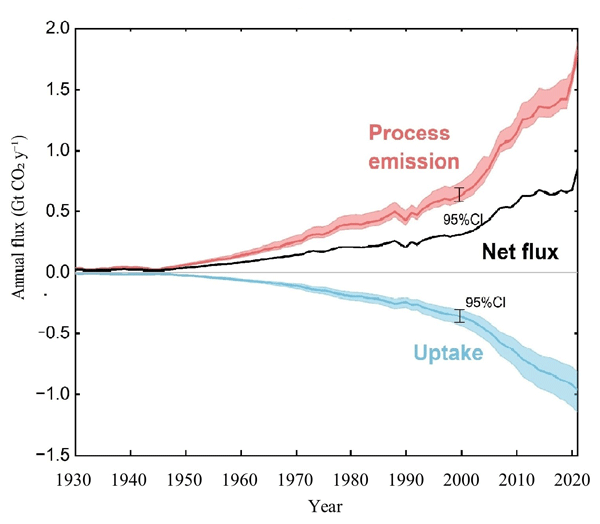
This study provides a clearer understanding of how lime production affects the climate by simultaneously assessing the carbon dioxide released during production and the amount subsequently reabsorbed. Based on historical data from 1930 to 2024 across major producing countries, we developed a comprehensive global dataset.
This study provides a clearer understanding of how lime production affects the climate by...


Altmetrics
Final-revised paper
Preprint