Articles | Volume 18, issue 1
https://doi.org/10.5194/essd-18-597-2026
© Author(s) 2026. This work is distributed under
the Creative Commons Attribution 4.0 License.
the Creative Commons Attribution 4.0 License.
https://doi.org/10.5194/essd-18-597-2026
© Author(s) 2026. This work is distributed under
the Creative Commons Attribution 4.0 License.
the Creative Commons Attribution 4.0 License.
Data description article
| 
23 Jan 2026
Data description article |
| 23 Jan 2026
| 23 Jan 2026
Digital Elevation Models and Orthomosaics of 1989 aerial imagery of the Western Antarctic Peninsula and surrounding islands between 66–68° S
Vijaya Kumar Thota
CORRESPONDING AUTHOR

Institut für Geographie, Friedrich-Alexander-Universität Erlangen-Nürnberg, Erlangen, Germany
Thorsten Seehaus
Institut für Geographie, Friedrich-Alexander-Universität Erlangen-Nürnberg, Erlangen, Germany
Friedrich Knuth
Laboratory of Hydraulics, Hydrology and Glaciology (VAW), ETH Zurich, Zurich, Switzerland
Swiss Federal Institute for Forest, Snow and Landscape Research (WSL), bâtiment ALPOLE, Sion, Switzerland
Amaury Dehecq
Univ. Grenoble Alpes, IRD, CNRS, INRAE, Grenoble INP, IGE, 38000 Grenoble, France
Christian Salewski
Archiv für deutsche Polarforschung, Alfred-Wegener-Institut, Bremerhaven, Germany
David Farías-Barahona
Department of Geography, Universidad de Concepción, Concepción, Chile
Matthias H. Braun
Institut für Geographie, Friedrich-Alexander-Universität Erlangen-Nürnberg, Erlangen, Germany
Related authors
No articles found.
Dakota Pyles, Marcel Dreier, Anna Wendleder, Will Kochtitzky, Nora Gourmelon, Vincent Christlein, and Thorsten Seehaus
Earth Syst. Sci. Data, 18, 7319–7344, https://doi.org/10.5194/essd-18-7319-2026, https://doi.org/10.5194/essd-18-7319-2026, 2026
Short summary
Short summary
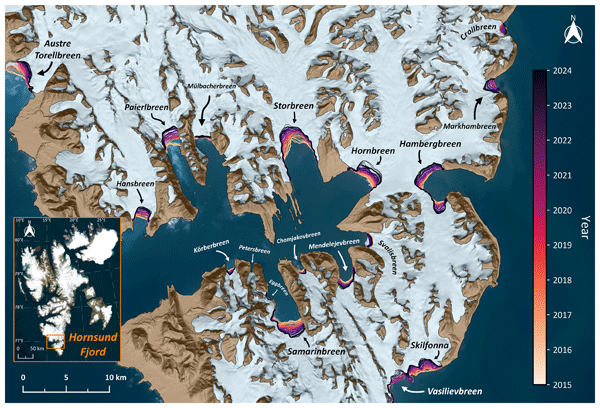
Monthly frontal ablation is quantified at 147 Svalbard tidewater glaciers from 2015–2024 using terminus positions derived from a deep-learning segmentation model's predictions of the calving fronts on satellite radar images. Our high spatio-temporal resolution results will improve the process understanding of frontal ablation, provide reference data for the modeling community, and deliver an ideal dataset for studying controls of frontal ablation.
Alexis Caro, Javier Medina, Freddy Saavedra, Fernando Gimeno, Jorge Huenante, Mariano Masiokas, Cristian Orrego, Ana Hernández, James McPhee, Pierre Pitte, Sebastián Krogh, David Farías-Barahona, Nevenka Bulovic, Iñigo Irarrázaval, Shelley MacDonell, Mauricio Zambrano-Bigiarini, and Carlos Romero
Earth Syst. Sci. Data, 18, 7097–7123, https://doi.org/10.5194/essd-18-7097-2026, https://doi.org/10.5194/essd-18-7097-2026, 2026
Short summary
Short summary
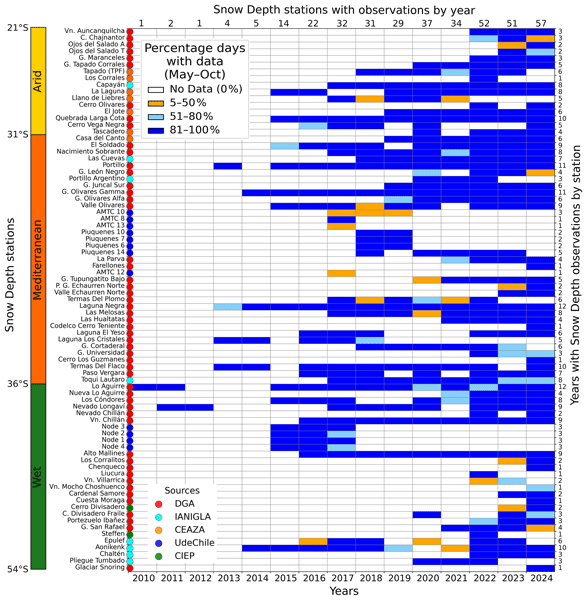
Snowpack dynamics in the Southern Andes remain poorly quantified due to sparse and inconsistent in situ data, limiting hydrological modeling. We compile and quality-control daily snow depth observations from 81 stations (21–54° S, 2010–2024). The resulting dataset improves the Physical Consistency Index (up to 95 %) despite reduced data availability, reveals a north–south increase in snow depth but no consistent positive relationship with elevation across river basins.
Marin Kneib, Patrick Wagnon, Laurent Arnaud, Louise Balmas, Olivier Laarman, Bruno Jourdain, Amaury Dehecq, Emmanuel Lemeur, Fanny Brun, Andrea Kneib-Walter, Ilaria Santin, Laurane Charrier, Thierry Faug, Giulia Mazzotti, Antoine Rabatel, Delphine Six, and Daniel Farinotti
The Cryosphere, 20, 5327–5344, https://doi.org/10.5194/tc-20-5327-2026, https://doi.org/10.5194/tc-20-5327-2026, 2026
Short summary
Short summary
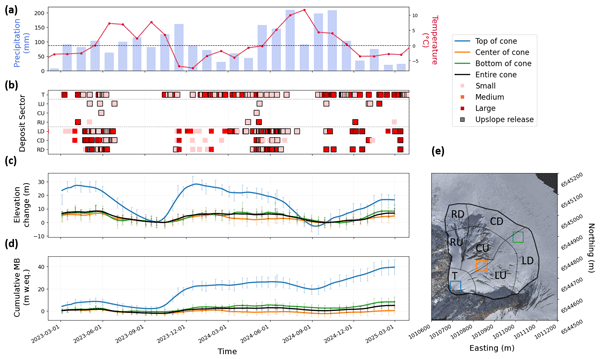
Avalanches are vital for glacier survival, yet their impact is difficult to quantify. We used low-cost cameras and drones to monitor an avalanche cone in the French Alps for two years. By accounting for ice flow, we found that avalanches can deposit 30 meters of snow annually – 50 times more than normal snowfall. This high-frequency data reveals that these cones fill until reaching a specific steepness, after which new snow slides further down to the base.
Marius Schaefer, Ralf Greve, Ilaria Tabone, Johannes J. Fürst, and Matthias Braun
The Cryosphere, 20, 5115–5130, https://doi.org/10.5194/tc-20-5115-2026, https://doi.org/10.5194/tc-20-5115-2026, 2026
Short summary
Short summary
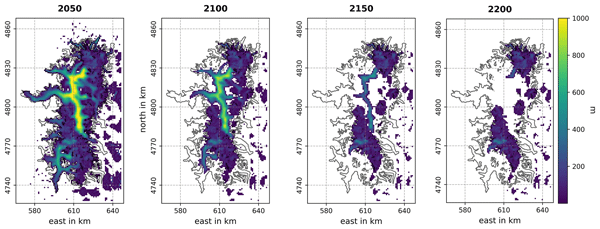
The Northern Patagonian Icefield is the second largest ice mass of South America, located at moderate latitudes. Using an ice-flow model which uses available atmosphere data as input and explicitly models iceberg discharge, we assess its evolution. With present climate, it will lose about 36 % until the year 2200. Climate change strongly accelerates losses and under Paris Agreement compliance it is between 38% and 75% and between 81% and 94% under a business-as-usual fossil fuel scenario.
Akash M. Patil, Christoph Mayer, Theo M. Jenk, Astrid Lambrecht, Thorsten Seehaus, Alexander R. Groos, and Michelle Worek
The Cryosphere, 20, 4927–4955, https://doi.org/10.5194/tc-20-4927-2026, https://doi.org/10.5194/tc-20-4927-2026, 2026
Short summary
Short summary
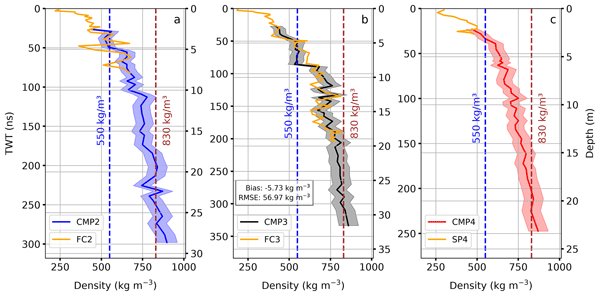
Our study focused on understanding how a warming climate affects the Aletsch Glacier accumulation area. We used multi-year radar measurements and direct firn‑core analyses to estimate changes in density and compaction rate of snow-to-ice over a year. Our results show that the upper layers of the glacier are changing faster due to stronger summer melt in the lower parts of the accumulation zone. Our findings help to improve firn densification models and glacier mass-balance estimation.
Valentine Bellet, Romain Hugonnet, Amaury Dehecq, Alice de Bardonneche-Richard, Marine Bouchet, Valentin Schaffner, and Emmanuel Dubois
Int. Arch. Photogramm. Remote Sens. Spatial Inf. Sci., XLIX-B5-2026, 63–69, https://doi.org/10.5194/isprs-archives-XLIX-B5-2026-63-2026, https://doi.org/10.5194/isprs-archives-XLIX-B5-2026-63-2026, 2026
Amaury Dehecq, Friedrich Knuth, Joaquín M. C. Belart, Livia Piermattei, Camillo Ressl, Adina Racoviteanu, Robert McNabb, David Shean, and Luc Godin
Int. Arch. Photogramm. Remote Sens. Spatial Inf. Sci., XLIX-B2-2026, 9–16, https://doi.org/10.5194/isprs-archives-XLIX-B2-2026-9-2026, https://doi.org/10.5194/isprs-archives-XLIX-B2-2026-9-2026, 2026
Yacouba Nouhou Chaweye, Guillaume Favreau, Amaury Dehecq, Marie Boucher, Boukari Issoufou Ousmane, Rabilou Abdou Mahaman, and Yahaya Nazoumou
EGUsphere, https://doi.org/10.5194/egusphere-2026-4118, https://doi.org/10.5194/egusphere-2026-4118, 2026
Short summary
Short summary
This study provides an empirical yet finely documented example highlighting a significant but often overlooked or misunderstood trade-off between land restoration strategies and groundwater sustainability in drylands at a global scale. It emphasizes that interventions to achieve climate change adaptation and land restoration goals may inadvertently compromise fragile water resources when hydrological feedbacks are not sufficiently considered.
Jing Zhang, Yang Lei, Laurane Charrier, Amaury Dehecq, Alex S. Gardner, Luke Copland, and Christine Dow
EGUsphere, https://doi.org/10.5194/egusphere-2026-2541, https://doi.org/10.5194/egusphere-2026-2541, 2026
This preprint is open for discussion and under review for The Cryosphere (TC).
Short summary
Short summary
Satellites can measure how fast glaciers move, which helps scientists understand ice loss and rising sea levels. However, these measurements have rarely been checked against ground-based observations on small mountain glaciers. We compared satellite-derived glacier speeds against precise ground measurements. The satellite data generally agreed well with ground observations. Our results help scientists use satellite glacier velocity data more reliably.
Maud Bernat, Etienne Berthier, Amaury Dehecq, Romain Hugonnet, Joaquin M. C. Belart, Naomi Ochwat, Peter Kuipers Munneke, Elizabeth Case, Ted Scambos, Louis-Marie Gauer, and David Youssefi
The Cryosphere, 20, 3025–3049, https://doi.org/10.5194/tc-20-3025-2026, https://doi.org/10.5194/tc-20-3025-2026, 2026
Short summary
Short summary
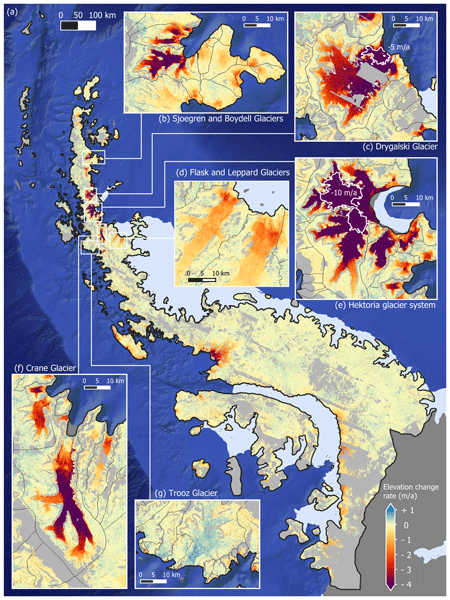
The Antarctic Peninsula is a mountainous region containing an ice sheet and peripheral glaciers. Differences remain between the methods used to estimate its mass changes. We use thousands of digital elevation models derived from high resolution stereoscopic images to calculate a new estimate of mass changes. We find that between 2007 and 2021, the ice sheet lost -28±6Gt/a and its peripheral glaciers -14±3Gt/a. We highlight the importance of resolving fine-scale changes in complex coastal areas.
Theresa Dobler, Wilfried Hagg, Martin Rückamp, Thorsten Seehaus, and Christoph Mayer
The Cryosphere, 20, 2531–2555, https://doi.org/10.5194/tc-20-2531-2026, https://doi.org/10.5194/tc-20-2531-2026, 2026
Short summary
Short summary
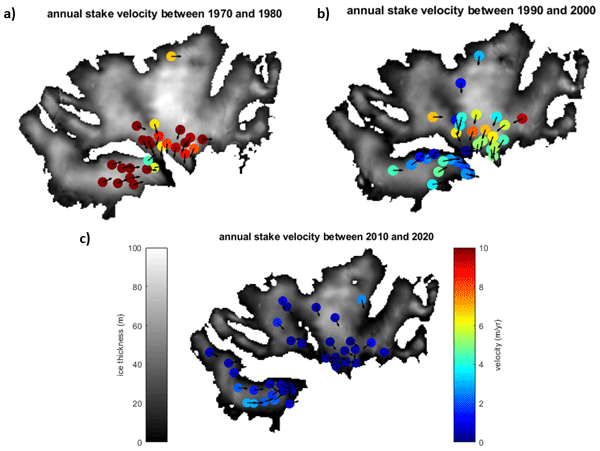
We studied how a glacier in the Austrian Alps moves more slowly over time due to climate change. By combining long-term field data with recent aerial images, we show how thinning reduce glacier flow. Our findings help understand changes in glacier behavior in a warming climate.
Christian Sommer, Alexander Raphael Groos, Johannes Fürst, and Matthias Braun
Earth Syst. Sci. Data Discuss., https://doi.org/10.5194/essd-2026-35, https://doi.org/10.5194/essd-2026-35, 2026
Preprint under review for ESSD
Short summary
Short summary
Measurements of glacier snow line altitudes (transition between ice and snow) provide information to constrain surface mass balance modelling. This study presents a database of ~200,000 snow lines from glaciers in the European Alps (2000–2025). Exposed ice and snow are automatically classified using adaptive thresholding of surface reflectance in visible and infrared spectra. Since 2000, we observe an increase in late summer snow lines of ~150 m, indicating widespread melt at high altitudes.
Laurane Charrier, Nathan Lioret, Fanny Brun, Amaury Dehecq, Romain Millan, Anuar Togaibekov, Andrea Walpersdorf, Diego Cusicanqui, and Antoine Rabatel
EGUsphere, https://doi.org/10.5194/egusphere-2026-946, https://doi.org/10.5194/egusphere-2026-946, 2026
Short summary
Short summary
Sub-annual glacier surface velocity derived from remote sensing images are receiving increasing attention. In the meantime, systematic seasonal errors (i.e. biases) have been reported in time series derived from optical images on various landforms, such as landslides or dunes. The extent to which such biases affect glacier velocity maps remains poorly investigated. Here, we propose characterizing the amplitude and spatial distribution of these seasonal biases.
Thorsten Seehaus, Alex S. Gardner, and Johan Nilsson
EGUsphere, https://doi.org/10.5194/egusphere-2025-6417, https://doi.org/10.5194/egusphere-2025-6417, 2026
Short summary
Short summary
Satellite altimeters only sample surface heights at scattered points. We developed a method to turn these measurements into maps of glacier height change while also estimating how reliable the results are. Applying this approach to glaciers in Svalbard and Antarctica shows strong ice loss and clearly captures short-lived events such as glacier surges. Our results improve the ability to monitor glacier change in difficult terrain and help better assess future contributions to sea level rise.
Moritz Koch, Jorge Berkhoff, Norbert Blindow, David Farías-Barahona, Pedro Skvarca, Johannes J. Fürst, and Matthias Braun
Earth Syst. Sci. Data Discuss., https://doi.org/10.5194/essd-2025-678, https://doi.org/10.5194/essd-2025-678, 2026
Preprint under review for ESSD
Short summary
Short summary
The Southern Patagonian Icefield is losing glacier area and ice volume rapidly. Although its glaciers share the same plateau, they retreat at different speeds and times. One reason for these differences lies in the unknown landscape beneath the ice. To reveal it, we used helicopter-based radar to measure the ice thickness and map the bedrock of Viedma, Upsala, and Perito Moreno Glaciers.
Akash M. Patil, Christoph Mayer, Thorsten Seehaus, Alexander R. Groos, and Andreas Bauder
The Cryosphere, 19, 5547–5577, https://doi.org/10.5194/tc-19-5547-2025, https://doi.org/10.5194/tc-19-5547-2025, 2025
Short summary
Short summary
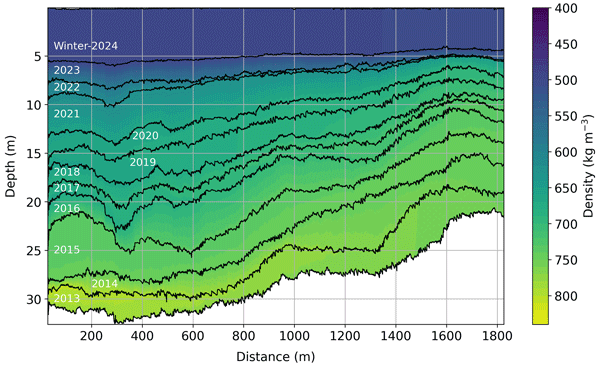
We studied how the density of snow to ice transition varies with depth in the Aletsch glacier using radar-based field measurements and some simple models. We showed that it is possible to track how much snow has accumulated in the last 10–14 years. This helps improve the uncertainties in glacier mass balance estimates. Overall, by utilising non-invasive radar techniques and models, we provide a novel approach to understanding the evolution of glaciers under regional climate conditions.
Marcel Dreier, Moritz Koch, Nora Gourmelon, Norbert Blindow, Daniel Steinhage, Fei Wu, Thorsten Seehaus, Matthias Braun, Andreas Maier, and Vincent Christlein
The Cryosphere, 19, 5337–5359, https://doi.org/10.5194/tc-19-5337-2025, https://doi.org/10.5194/tc-19-5337-2025, 2025
Short summary
Short summary
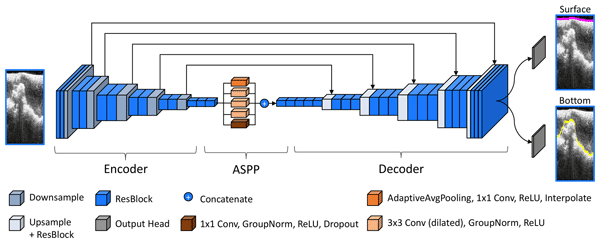
In this paper, we present a ready-to-use benchmark dataset to train machine learning approaches for detecting ice thickness from radar data. It includes radargrams of glaciers and ice sheets alongside annotations for their air–ice and ice–bedrock boundary. Furthermore, we introduce a baseline model and evaluate the influence of several geographical and glaciological factors on the performance of our model.
Luc Beraud, Fanny Brun, Amaury Dehecq, Romain Hugonnet, and Prashant Shekhar
The Cryosphere, 19, 5075–5094, https://doi.org/10.5194/tc-19-5075-2025, https://doi.org/10.5194/tc-19-5075-2025, 2025
Short summary
Short summary
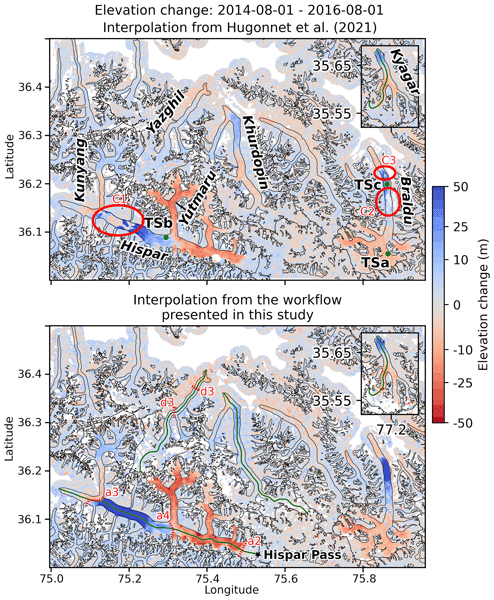
This study introduces a new workflow to process the elevation time series of glacier surges, an ice flow instability. Applied to a dense, 20-year satellite dataset of glacier surface elevation, the method filters and interpolates these changes on a monthly scale, revealing detailed patterns and estimates of mass transport. The dataset produced by this method allows for a more accurate and a remarkably detailed description of glacier surges at the scale of a large region.
Laurane Charrier, Amaury Dehecq, Lei Guo, Fanny Brun, Romain Millan, Nathan Lioret, Luke Copland, Nathan Maier, Christine Dow, and Paul Halas
The Cryosphere, 19, 4555–4583, https://doi.org/10.5194/tc-19-4555-2025, https://doi.org/10.5194/tc-19-4555-2025, 2025
Short summary
Short summary
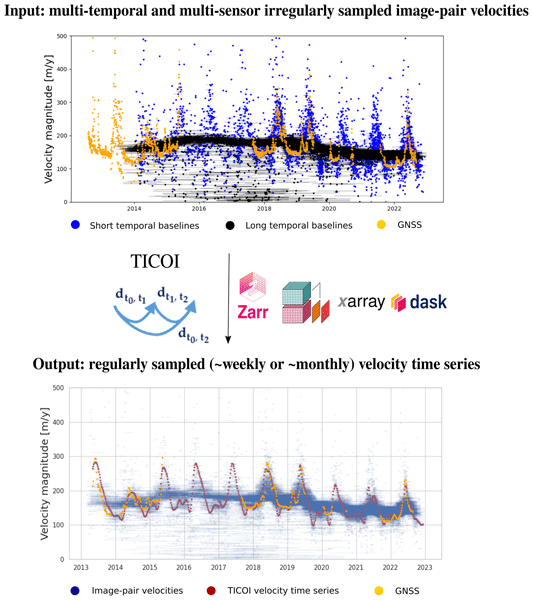
While global annual glacier velocities are openly accessible, sub-annual velocity time series are still lacking. This hinders our ability to understand flow processes and the integration of these observations in numerical models. We introduce an open source Python package called TICOI (Temporal Inversion using linear Combinations of Observations, and Interpolation) to fuse multi-temporal and multi-sensor image-pair velocities produced by different processing chains to produce standardized sub-annual velocity products.
Johannes J. Fürst, David Farías-Barahona, Thomas Bruckner, Lucia Scaff, Martin Mergili, Santiago Montserrat, and Humberto Peña
Nat. Hazards Earth Syst. Sci., 25, 3559–3579, https://doi.org/10.5194/nhess-25-3559-2025, https://doi.org/10.5194/nhess-25-3559-2025, 2025
Short summary
Short summary
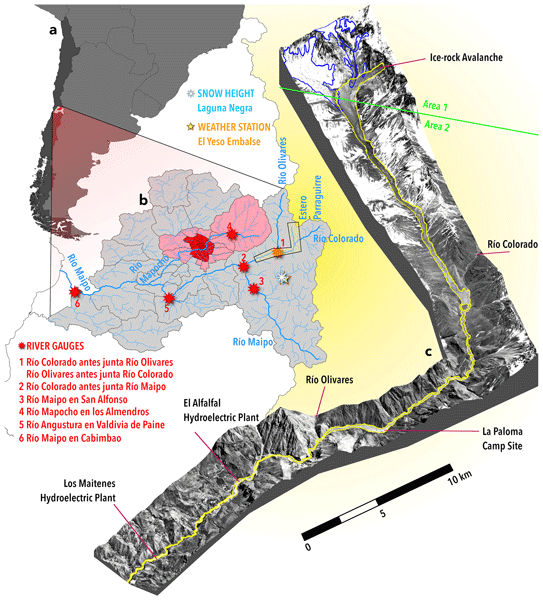
The 1987 Parraguirre ice–rock avalanche developed into a devastating debris flow, causing the loss of many lives and inflicting severe damage near Santiago, Chile. Here, we revise this event, combining various observational records with modelling techniques. In that year, important snow cover coincided with persistent warm periods in spring. We also put forward upward corrections for the trigger and flood volumes involved in this debris flow. Finally, temporary river damming was key for the flow ferocity.
Alex S. Gardner, Chad A. Greene, Joseph H. Kennedy, Mark A. Fahnestock, Maria Liukis, Luis A. López, Yang Lei, Ted A. Scambos, and Amaury Dehecq
The Cryosphere, 19, 3517–3533, https://doi.org/10.5194/tc-19-3517-2025, https://doi.org/10.5194/tc-19-3517-2025, 2025
Short summary
Short summary
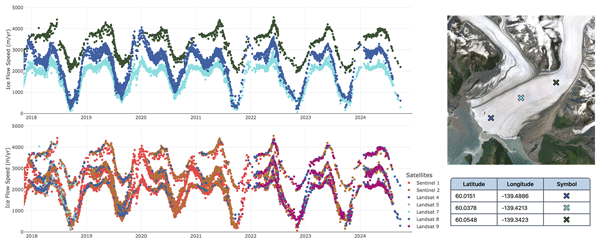
The NASA MEaSUREs Inter-mission Time Series of Land Ice Velocity and Elevation (ITS_LIVE) project provides glacier and ice sheet velocity products for the full Landsat, Sentinel-1, and Sentinel-2 satellite archives and will soon include data from the NISAR satellite. This paper describes the ITS_LIVE processing chain and gives guidance for working with the cloud-optimized glacier and ice sheet velocity products.
Angelika Humbert, Veit Helm, Ole Zeising, Niklas Neckel, Matthias H. Braun, Shfaqat Abbas Khan, Martin Rückamp, Holger Steeb, Julia Sohn, Matthias Bohnen, and Ralf Müller
The Cryosphere, 19, 3009–3032, https://doi.org/10.5194/tc-19-3009-2025, https://doi.org/10.5194/tc-19-3009-2025, 2025
Short summary
Short summary
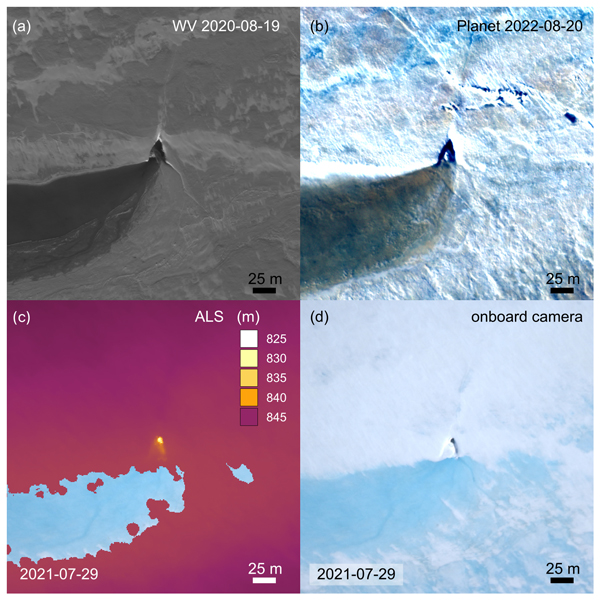
We study the evolution of a massive lake on the Greenland Ice Sheet using satellite and airborne data and some modelling. The lake is emptying rapidly. Water flows to the glacier's base through cracks and triangular-shaped moulins that remain visible over the years. Some of them become reactivated. We find features inside the glacier that stem from drainage events with a width of even 1 km. These features are persistent over the years, although they are changing in shape.
Katrina Lutz, Ilaria Tabone, Angelika Humbert, and Matthias Braun
The Cryosphere, 19, 2601–2614, https://doi.org/10.5194/tc-19-2601-2025, https://doi.org/10.5194/tc-19-2601-2025, 2025
Short summary
Short summary
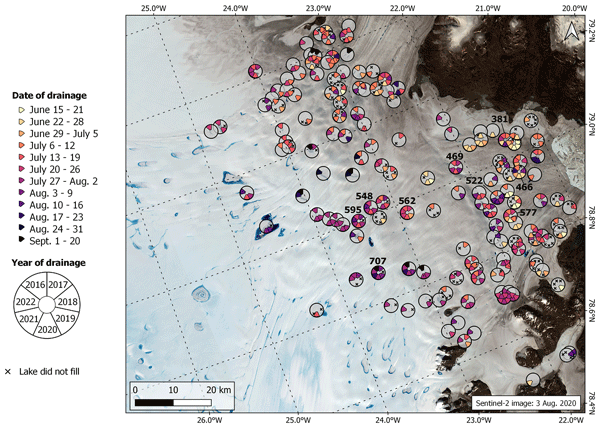
Supraglacial lakes develop from meltwater collecting on the surface of glaciers. These lakes can drain rapidly, discharging meltwater to the glacier bed. In this study, we assess the spatial and temporal distribution of rapid drainages in Northeast Greenland using optical satellite images. After comparing rapid drainage occurrence with several environmental and geophysical parameters, little indication of the influencing conditions for a rapid drainage was found.
Torsten Kanzow, Angelika Humbert, Thomas Mölg, Mirko Scheinert, Matthias Braun, Hans Burchard, Francesca Doglioni, Philipp Hochreuther, Martin Horwath, Oliver Huhn, Maria Kappelsberger, Jürgen Kusche, Erik Loebel, Katrina Lutz, Ben Marzeion, Rebecca McPherson, Mahdi Mohammadi-Aragh, Marco Möller, Carolyne Pickler, Markus Reinert, Monika Rhein, Martin Rückamp, Janin Schaffer, Muhammad Shafeeque, Sophie Stolzenberger, Ralph Timmermann, Jenny Turton, Claudia Wekerle, and Ole Zeising
The Cryosphere, 19, 1789–1824, https://doi.org/10.5194/tc-19-1789-2025, https://doi.org/10.5194/tc-19-1789-2025, 2025
Short summary
Short summary
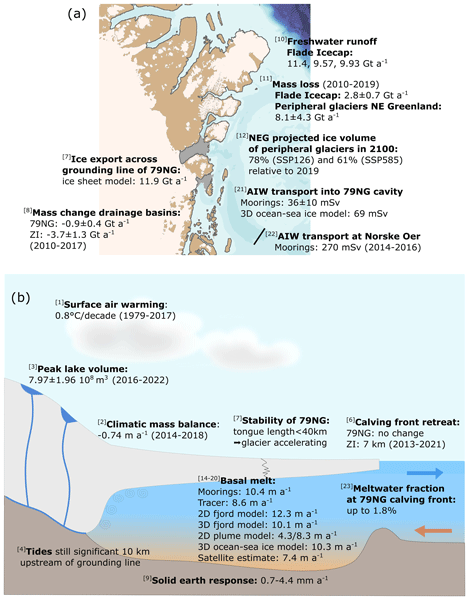
The Greenland Ice Sheet represents the second-largest contributor to global sea-level rise. We quantify atmosphere, ice and ocean processes related to the mass balance of glaciers in northeast Greenland, focusing on Greenland’s largest floating ice tongue, the 79° N Glacier. We find that together, the different in situ and remote sensing observations and model simulations reveal a consistent picture of a coupled atmosphere–ice sheet–ocean system that has entered a phase of major change.
Kaian Shahateet, Johannes J. Fürst, Francisco Navarro, Thorsten Seehaus, Daniel Farinotti, and Matthias Braun
The Cryosphere, 19, 1577–1597, https://doi.org/10.5194/tc-19-1577-2025, https://doi.org/10.5194/tc-19-1577-2025, 2025
Short summary
Short summary
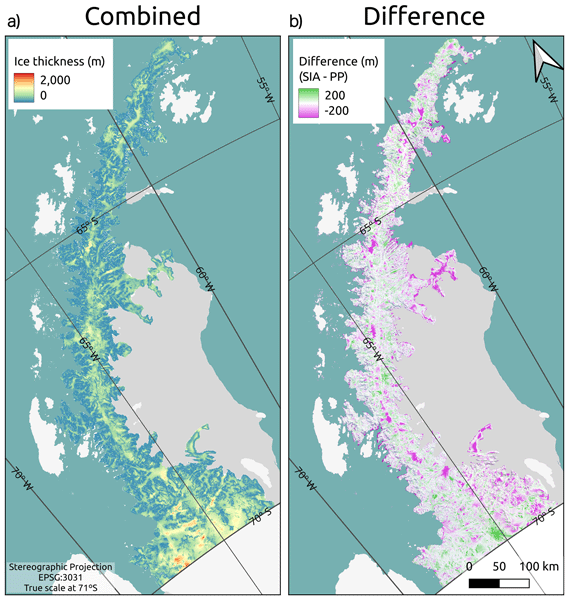
In the present work, we provide a new ice thickness reconstruction of the Antarctic Peninsula Ice Sheet north of 70º S using inversion modeling. This model consists of two steps: the first uses basic assumptions of the rheology of the glacier, and the second uses mass conservation to improve the reconstruction where the assumptions made previously are expected to fail. Validation with independent data showed that our reconstruction improved compared to other reconstructions that are available.
Natalie Lützow, Bretwood Higman, Martin Truffer, Bodo Bookhagen, Friedrich Knuth, Oliver Korup, Katie E. Hughes, Marten Geertsema, John J. Clague, and Georg Veh
The Cryosphere, 19, 1085–1102, https://doi.org/10.5194/tc-19-1085-2025, https://doi.org/10.5194/tc-19-1085-2025, 2025
Short summary
Short summary
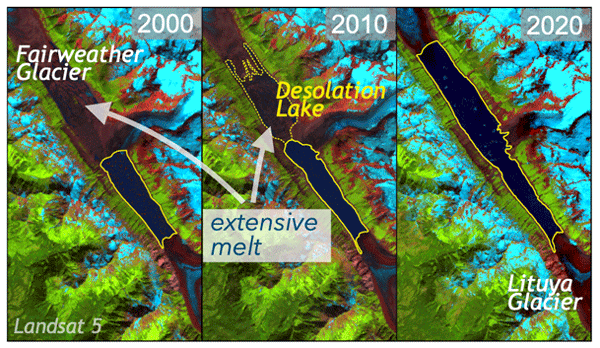
As the atmosphere warms, thinning glacier dams impound smaller lakes at their margins. Yet, some lakes deviate from this trend and have instead grown over time, increasing the risk of glacier floods to downstream populations and infrastructure. In this article, we examine the mechanisms behind the growth of an ice-dammed lake in Alaska. We find that the growth in size and outburst volumes is more controlled by glacier front downwaste than by overall mass loss over the entire glacier surface.
Enrico Mattea, Etienne Berthier, Amaury Dehecq, Tobias Bolch, Atanu Bhattacharya, Sajid Ghuffar, Martina Barandun, and Martin Hoelzle
The Cryosphere, 19, 219–247, https://doi.org/10.5194/tc-19-219-2025, https://doi.org/10.5194/tc-19-219-2025, 2025
Short summary
Short summary
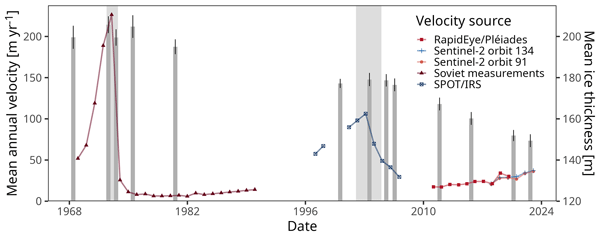
We reconstruct the evolution of terminus position, ice thickness, and surface flow velocity of the reference Abramov glacier (Kyrgyzstan) from 1968 to present. We describe a front pulsation in the early 2000s and the multi-annual present-day buildup of a new pulsation. Such dynamic instabilities can challenge the representativity of Abramov as a reference glacier. For our work we used satellite‑based optical remote sensing from multiple platforms, including recently declassified archives.
Marin Kneib, Amaury Dehecq, Adrien Gilbert, Auguste Basset, Evan S. Miles, Guillaume Jouvet, Bruno Jourdain, Etienne Ducasse, Luc Beraud, Antoine Rabatel, Jérémie Mouginot, Guillem Carcanade, Olivier Laarman, Fanny Brun, and Delphine Six
The Cryosphere, 18, 5965–5983, https://doi.org/10.5194/tc-18-5965-2024, https://doi.org/10.5194/tc-18-5965-2024, 2024
Short summary
Short summary
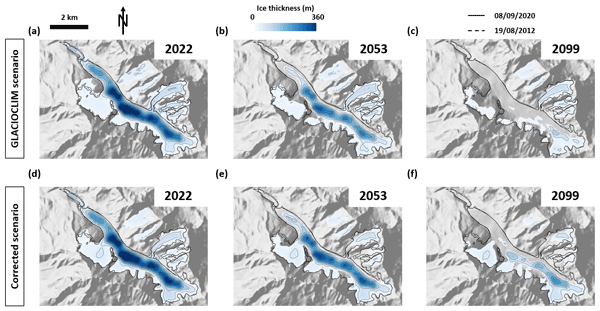
Avalanches contribute to increasing the accumulation on mountain glaciers by redistributing snow from surrounding mountains slopes. Here we quantified the contribution of avalanches to the mass balance of Argentière Glacier in the French Alps, by combining satellite and field observations to model the glacier dynamics. We show that the contribution of avalanches locally increases the accumulation by 60–70 % and that accounting for this effect results in less ice loss by the end of the century.
Katrina Lutz, Lily Bever, Christian Sommer, Thorsten Seehaus, Angelika Humbert, Mirko Scheinert, and Matthias Braun
The Cryosphere, 18, 5431–5449, https://doi.org/10.5194/tc-18-5431-2024, https://doi.org/10.5194/tc-18-5431-2024, 2024
Short summary
Short summary
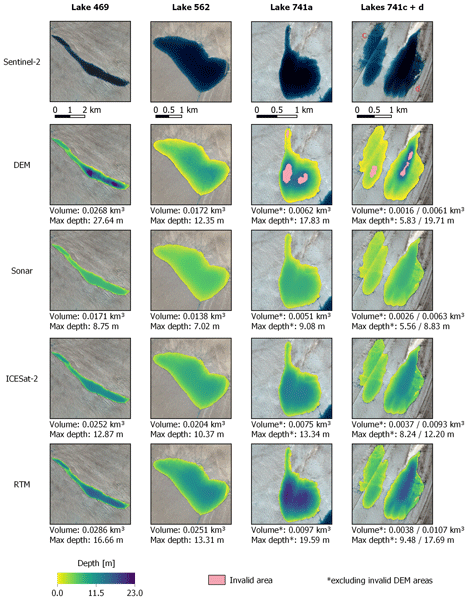
The estimation of the amount of water found within supraglacial lakes is important for understanding how much water is lost from glaciers each year. Here, we develop two new methods for estimating supraglacial lake volume that can be easily applied on a large scale. Furthermore, we compare these methods to two previously developed methods in order to determine when it is best to use each method. Finally, three of these methods are applied to peak melt dates over an area in Northeast Greenland.
Livia Piermattei, Michael Zemp, Christian Sommer, Fanny Brun, Matthias H. Braun, Liss M. Andreassen, Joaquín M. C. Belart, Etienne Berthier, Atanu Bhattacharya, Laura Boehm Vock, Tobias Bolch, Amaury Dehecq, Inés Dussaillant, Daniel Falaschi, Caitlyn Florentine, Dana Floricioiu, Christian Ginzler, Gregoire Guillet, Romain Hugonnet, Matthias Huss, Andreas Kääb, Owen King, Christoph Klug, Friedrich Knuth, Lukas Krieger, Jeff La Frenierre, Robert McNabb, Christopher McNeil, Rainer Prinz, Louis Sass, Thorsten Seehaus, David Shean, Désirée Treichler, Anja Wendt, and Ruitang Yang
The Cryosphere, 18, 3195–3230, https://doi.org/10.5194/tc-18-3195-2024, https://doi.org/10.5194/tc-18-3195-2024, 2024
Short summary
Short summary
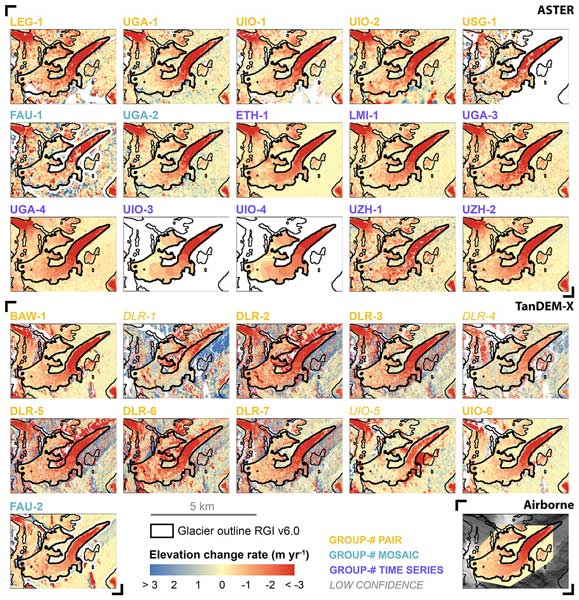
Satellites have made it possible to observe glacier elevation changes from all around the world. In the present study, we compared the results produced from two different types of satellite data between different research groups and against validation measurements from aeroplanes. We found a large spread between individual results but showed that the group ensemble can be used to reliably estimate glacier elevation changes and related errors from satellite data.
Marin Kneib, Amaury Dehecq, Fanny Brun, Fatima Karbou, Laurane Charrier, Silvan Leinss, Patrick Wagnon, and Fabien Maussion
The Cryosphere, 18, 2809–2830, https://doi.org/10.5194/tc-18-2809-2024, https://doi.org/10.5194/tc-18-2809-2024, 2024
Short summary
Short summary
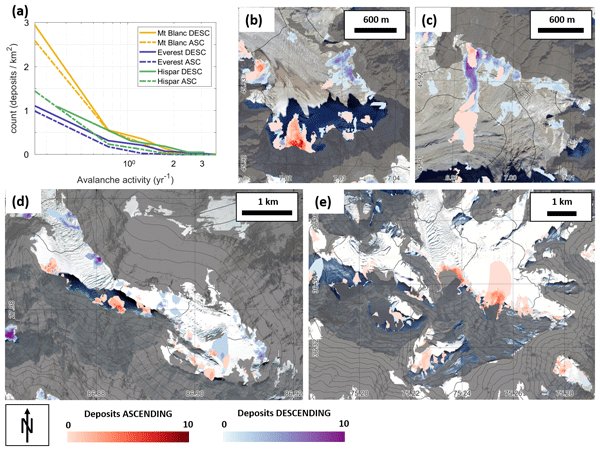
Avalanches are important for the mass balance of mountain glaciers, but few data exist on where and when they occur and which glaciers they affect the most. We developed an approach to map avalanches over large glaciated areas and long periods of time using satellite radar data. The application of this method to various regions in the Alps and High Mountain Asia reveals the variability of avalanches on these glaciers and provides key data to better represent these processes in glacier models.
Bastian Morales, Marcelo Somos-Valenzuela, Mario Lillo, Iñigo Irarrazaval, David Farias, Elizabet Lizama, Diego Rivera, and Alfonso Fernández
EGUsphere, https://doi.org/10.5194/egusphere-2024-1053, https://doi.org/10.5194/egusphere-2024-1053, 2024
Preprint archived
Short summary
Short summary
Through a physical model, we explored how lacier geometry and topography configuration constrains glacier thinning in the Patagonian Icefields, the world's main glacial freshwater reservoir after Antarctica and Greenland. Our results indicate that about 53 % of the Patagonian Icefield ice flow is susceptible to thinning. Our findings allow for identifying priority glaciers for future research considering climate change projections.
Anna Wendleder, Jasmin Bramboeck, Jamie Izzard, Thilo Erbertseder, Pablo d'Angelo, Andreas Schmitt, Duncan J. Quincey, Christoph Mayer, and Matthias H. Braun
The Cryosphere, 18, 1085–1103, https://doi.org/10.5194/tc-18-1085-2024, https://doi.org/10.5194/tc-18-1085-2024, 2024
Short summary
Short summary
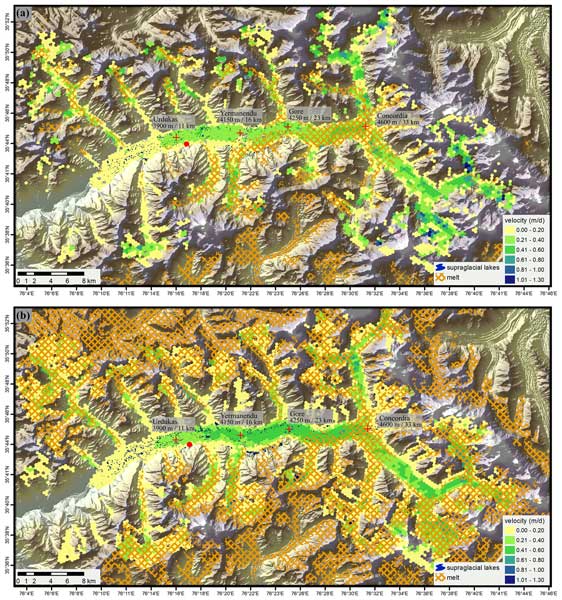
This study analyses the basal sliding and the hydrological drainage of Baltoro Glacier, Pakistan. The surface velocity was characterized by a spring speed-up, summer peak, and autumn speed-up. Snow melt has the largest impact on the spring speed-up, summer velocity peak, and the transition from inefficient to efficient drainage. Drainage from supraglacial lakes contributed to the fall speed-up. Increased summer temperatures will intensify the magnitude of meltwater and thus surface velocities.
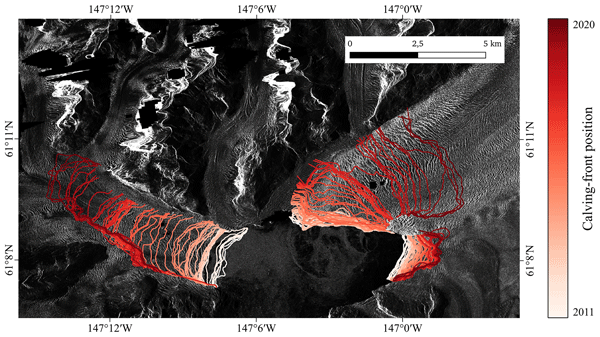
Oskar Herrmann, Nora Gourmelon, Thorsten Seehaus, Andreas Maier, Johannes J. Fürst, Matthias H. Braun, and Vincent Christlein
The Cryosphere, 17, 4957–4977, https://doi.org/10.5194/tc-17-4957-2023, https://doi.org/10.5194/tc-17-4957-2023, 2023
Short summary
Short summary
Delineating calving fronts of marine-terminating glaciers in satellite images is a labour-intensive task. We propose a method based on deep learning that automates this task. We choose a deep learning framework that adapts to any given dataset without needing deep learning expertise. The method is evaluated on a benchmark dataset for calving-front detection and glacier zone segmentation. The framework can beat the benchmark baseline without major modifications.
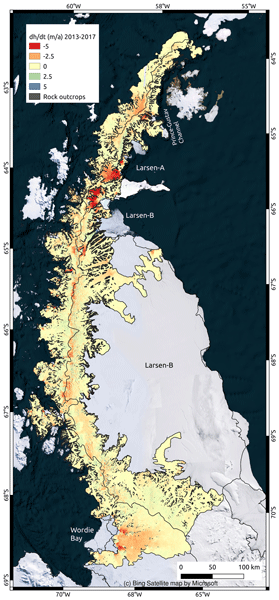
Thorsten Seehaus, Christian Sommer, Thomas Dethinne, and Philipp Malz
The Cryosphere, 17, 4629–4644, https://doi.org/10.5194/tc-17-4629-2023, https://doi.org/10.5194/tc-17-4629-2023, 2023
Short summary
Short summary
Existing mass budget estimates for the northern Antarctic Peninsula (>70° S) are affected by considerable limitations. We carried out the first region-wide analysis of geodetic mass balances throughout this region (coverage of 96.4 %) for the period 2013–2017 based on repeat pass bi-static TanDEM-X acquisitions. A total mass budget of −24.1±2.8 Gt/a is revealed. Imbalanced high ice discharge, particularly at former ice shelf tributaries, is the main driver of overall ice loss.
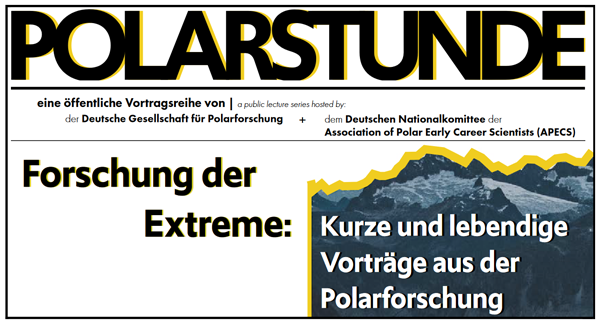
Alexandra M. Zuhr, Erik Loebel, Marek Muchow, Donovan Dennis, Luisa von Albedyll, Frigga Kruse, Heidemarie Kassens, Johanna Grabow, Dieter Piepenburg, Sören Brandt, Rainer Lehmann, Marlene Jessen, Friederike Krüger, Monika Kallfelz, Andreas Preußer, Matthias Braun, Thorsten Seehaus, Frank Lisker, Daniela Röhnert, and Mirko Scheinert
Polarforschung, 91, 73–80, https://doi.org/10.5194/polf-91-73-2023, https://doi.org/10.5194/polf-91-73-2023, 2023
Short summary
Short summary
Polar research is an interdisciplinary and multi-faceted field of research. Its diversity ranges from history to geology and geophysics to social sciences and education. This article provides insights into the different areas of German polar research. This was made possible by a seminar series, POLARSTUNDE, established in the summer of 2020 and organized by the German Society of Polar Research and the German National Committee of the Association of Polar Early Career Scientists (APECS Germany).
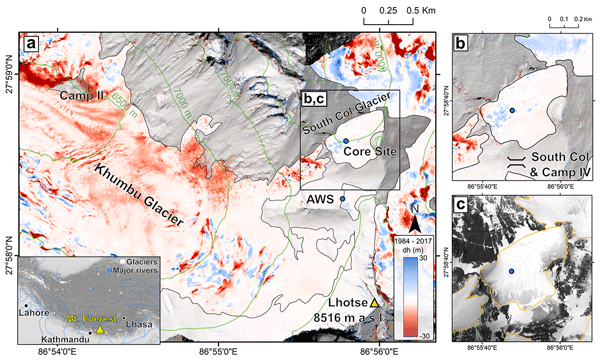
Fanny Brun, Owen King, Marion Réveillet, Charles Amory, Anton Planchot, Etienne Berthier, Amaury Dehecq, Tobias Bolch, Kévin Fourteau, Julien Brondex, Marie Dumont, Christoph Mayer, Silvan Leinss, Romain Hugonnet, and Patrick Wagnon
The Cryosphere, 17, 3251–3268, https://doi.org/10.5194/tc-17-3251-2023, https://doi.org/10.5194/tc-17-3251-2023, 2023
Short summary
Short summary
The South Col Glacier is a small body of ice and snow located on the southern ridge of Mt. Everest. A recent study proposed that South Col Glacier is rapidly losing mass. In this study, we examined the glacier thickness change for the period 1984–2017 and found no thickness change. To reconcile these results, we investigate wind erosion and surface energy and mass balance and find that melt is unlikely a dominant process, contrary to previous findings.
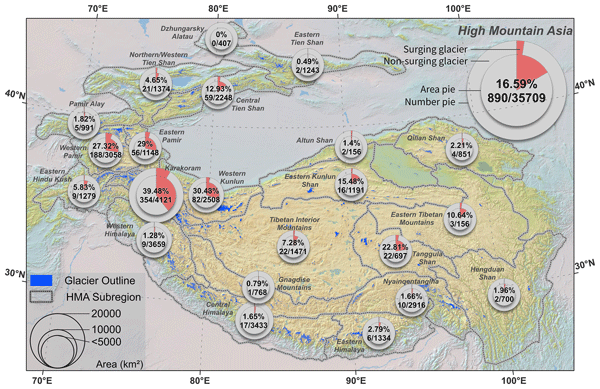
Lei Guo, Jia Li, Amaury Dehecq, Zhiwei Li, Xin Li, and Jianjun Zhu
Earth Syst. Sci. Data, 15, 2841–2861, https://doi.org/10.5194/essd-15-2841-2023, https://doi.org/10.5194/essd-15-2841-2023, 2023
Short summary
Short summary
We established a new inventory of surging glaciers across High Mountain Asia based on glacier elevation changes and morphological changes during 1970s–2020. A total of 890 surging and 336 probably or possibly surging glaciers were identified. Compared to the most recent inventory, this one incorporates 253 previously unidentified surging glaciers. Our results demonstrate a more widespread surge behavior in HMA and find that surging glaciers are prone to have steeper slopes than non-surging ones.
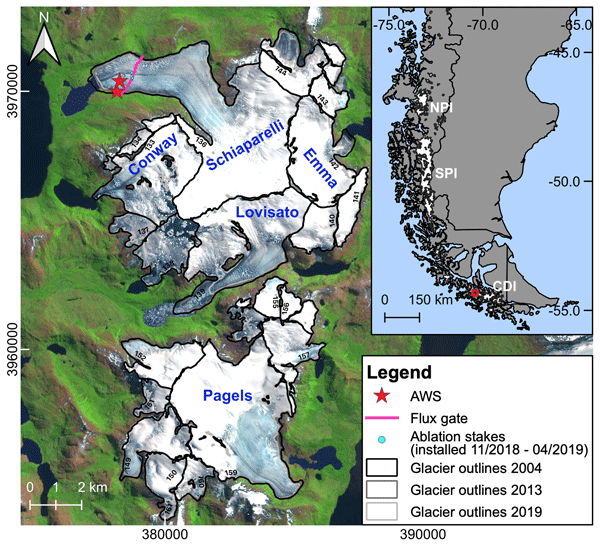
Franziska Temme, David Farías-Barahona, Thorsten Seehaus, Ricardo Jaña, Jorge Arigony-Neto, Inti Gonzalez, Anselm Arndt, Tobias Sauter, Christoph Schneider, and Johannes J. Fürst
The Cryosphere, 17, 2343–2365, https://doi.org/10.5194/tc-17-2343-2023, https://doi.org/10.5194/tc-17-2343-2023, 2023
Short summary
Short summary
Calibration of surface mass balance (SMB) models on regional scales is challenging. We investigate different calibration strategies with the goal of achieving realistic simulations of the SMB in the Monte Sarmiento Massif, Tierra del Fuego. Our results show that the use of regional observations from satellite data can improve the model performance. Furthermore, we compare four melt models of different complexity to understand the benefit of increasing the processes considered in the model.
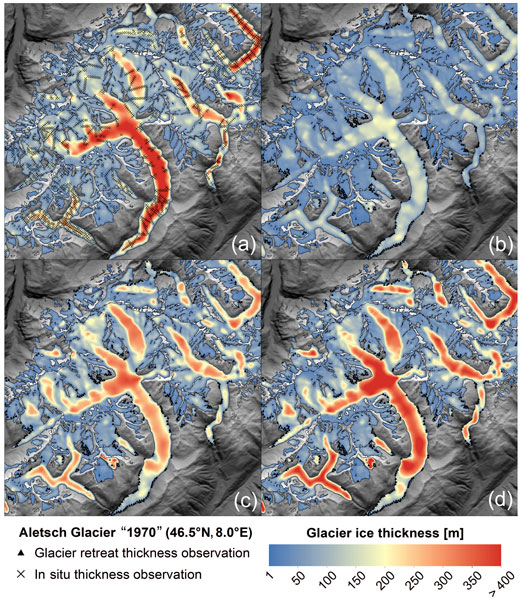
Christian Sommer, Johannes J. Fürst, Matthias Huss, and Matthias H. Braun
The Cryosphere, 17, 2285–2303, https://doi.org/10.5194/tc-17-2285-2023, https://doi.org/10.5194/tc-17-2285-2023, 2023
Short summary
Short summary
Knowledge on the volume of glaciers is important to project future runoff. Here, we present a novel approach to reconstruct the regional ice thickness distribution from easily available remote-sensing data. We show that past ice thickness, derived from spaceborne glacier area and elevation datasets, can constrain the estimated ice thickness. Based on the unique glaciological database of the European Alps, the approach will be most beneficial in regions without direct thickness measurements.
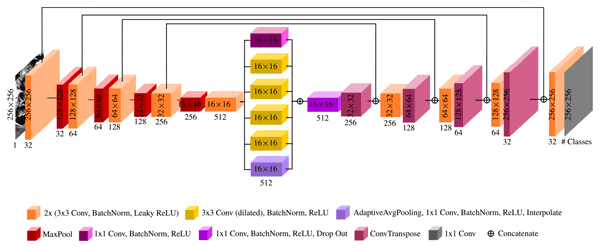
Nora Gourmelon, Thorsten Seehaus, Matthias Braun, Andreas Maier, and Vincent Christlein
Earth Syst. Sci. Data, 14, 4287–4313, https://doi.org/10.5194/essd-14-4287-2022, https://doi.org/10.5194/essd-14-4287-2022, 2022
Short summary
Short summary
Ice loss of glaciers shows in retreating calving fronts (i.e., the position where icebergs break off the glacier and drift into the ocean). This paper presents a benchmark dataset for calving front delineation in synthetic aperture radar (SAR) images. The dataset can be used to train and test deep learning techniques, which automate the monitoring of the calving front. Provided example models achieve front delineations with an average distance of 887 m to the correct calving front.
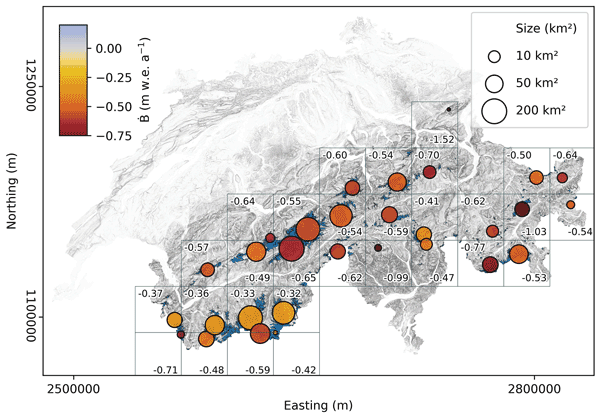
Erik Schytt Mannerfelt, Amaury Dehecq, Romain Hugonnet, Elias Hodel, Matthias Huss, Andreas Bauder, and Daniel Farinotti
The Cryosphere, 16, 3249–3268, https://doi.org/10.5194/tc-16-3249-2022, https://doi.org/10.5194/tc-16-3249-2022, 2022
Short summary
Short summary
How glaciers have responded to climate change over the last 20 years is well-known, but earlier data are much more scarce. We change this in Switzerland by using 22 000 photographs taken from mountain tops between the world wars and find a halving of Swiss glacier volume since 1931. This was done through new automated processing techniques that we created. The data are interesting for more than just glaciers, such as mapping forest changes, landslides, and human impacts on the terrain.

Loris Compagno, Matthias Huss, Evan Stewart Miles, Michael James McCarthy, Harry Zekollari, Amaury Dehecq, Francesca Pellicciotti, and Daniel Farinotti
The Cryosphere, 16, 1697–1718, https://doi.org/10.5194/tc-16-1697-2022, https://doi.org/10.5194/tc-16-1697-2022, 2022
Short summary
Short summary
We present a new approach for modelling debris area and thickness evolution. We implement the module into a combined mass-balance ice-flow model, and we apply it using different climate scenarios to project the future evolution of all glaciers in High Mountain Asia. We show that glacier geometry, volume, and flow velocity evolve differently when modelling explicitly debris cover compared to glacier evolution without the debris-cover module, demonstrating the importance of accounting for debris.
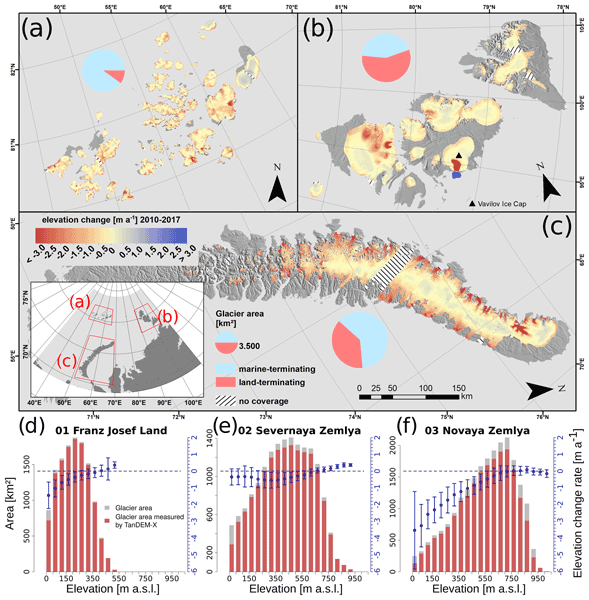
Christian Sommer, Thorsten Seehaus, Andrey Glazovsky, and Matthias H. Braun
The Cryosphere, 16, 35–42, https://doi.org/10.5194/tc-16-35-2022, https://doi.org/10.5194/tc-16-35-2022, 2022
Short summary
Short summary
Arctic glaciers have been subject to extensive warming due to global climate change, yet their contribution to sea level rise has been relatively small in the past. In this study we provide mass changes of most glaciers of the Russian High Arctic (Franz Josef Land, Severnaya Zemlya, Novaya Zemlya). We use TanDEM-X satellite measurements to derive glacier surface elevation changes. Our results show an increase in glacier mass loss and a sea level rise contribution of 0.06 mm/a (2010–2017).

Peter Friedl, Thorsten Seehaus, and Matthias Braun
Earth Syst. Sci. Data, 13, 4653–4675, https://doi.org/10.5194/essd-13-4653-2021, https://doi.org/10.5194/essd-13-4653-2021, 2021
Short summary
Short summary
Consistent and continuous data on glacier surface velocity are important inputs to time series analyses, numerical ice dynamic modeling and glacier mass flux computations. We present a new data set of glacier surface velocities derived from Sentinel-1 radar satellite data that covers 12 major glaciated regions outside the polar ice sheets. The data comprise continuously updated scene-pair velocity fields, as well as monthly and annually averaged velocity mosaics at 200 m spatial resolution.
Cited articles
Berthier, E., Cabot, V., Vincent, C., and Six, D.: Decadal region-wide and glacier-wide mass balances derived from multi-temporal ASTER satellite digital elevation models. Validation over the Mont-Blanc area, Frontiers in Earth Science, 4, 63, https://doi.org/10.3389/feart.2016.00063, 2016. a
Beyer, R. A., Alexandrov, O., and McMichael, S.: The Ames Stereo Pipeline: NASA's Open Source Software for Deriving and Processing Terrain Data, Earth and Space Science, 5, 537–548, https://doi.org/10.1029/2018EA000409, 2018. a
Braun, M. H., Malz, P., Sommer, C., Farías-Barahona, D., Sauter, T., Casassa, G., Soruco, A., Skvarca, P., and Seehaus, T. C.: Constraining glacier elevation and mass changes in South America, Nature Climate Change, 9, 130–136, 2019. a
Child, S. F., Stearns, L. A., Girod, L., and Brecher, H. H.: Structure-from-motion photogrammetry of antarctic historical aerial photographs in conjunction with ground control derived from satellite data, Remote Sensing, 13, 21, https://doi.org/10.3390/rs13010021, 2020. a
Clarke, G. K.: Fast glacier flow: Ice streams, surging, and tidewater glaciers, Journal of Geophysical Research: Solid Earth, 92, 8835–8841, 1987. a
Cziferszky, A., Fleming, A., and Fox, A.: An assessment of ASTER elevation data over glaciated terrain on Pourquois Pas Island, Antarctic Peninsula, Geological Society, London, Special Publications, https://doi.org/10.1144/SP345, 2010. a
Dahle, F., Lindenbergh, R., and Wouters, B.: Polar perspectives: a deep dive into geo-referencing historical Antarctic photos, International Journal of Digital Earth, 17, 2406384, https://doi.org/10.1080/17538947.2024.2406384, 2024. a
Dehecq, A., Gardner, A. S., Alexandrov, O., McMichael, S., Hugonnet, R., Shean, D., and Marty, M.: Automated processing of declassified KH-9 hexagon satellite images for global elevation change analysis since the 1970s, Frontiers in Earth Science, 8, 566802, https://doi.org/10.3389/feart.2020.566802, 2020. a, b
Dodds, K.: To Photograph the Antarctic: British Polar Exploration and the Falkland Islands and Dependencies Aerial Survey Expedition (FIDASE), Ecumene, 3, 63–89, 1996. a
Dømgaard, M., Schomacker, A., Isaksson, E., Millan, R., Huiban, F., Dehecq, A., Fleischer, A., Moholdt, G., Andersen, J. K., and Bjørk, A. A.: Early aerial expedition photos reveal 85 years of glacier growth and stability in East Antarctica, Nature Communications, 15, 4466, https://doi.org/10.1038/s41467-024-48886-x, 2024. a
Duane, C. B.: Close-range camera calibration, Photogramm. Eng., 37, 855–866, 1971. a
Dussaillant, I., Hugonnet, R., Huss, M., Berthier, E., Bannwart, J., Paul, F., and Zemp, M.: Annual mass change of the world's glaciers from 1976 to 2024 by temporal downscaling of satellite data with in situ observations, Earth Syst. Sci. Data, 17, 1977–2006, https://doi.org/10.5194/essd-17-1977-2025, 2025. a
Gerrish, L., Fretwell, P., and Cooper, P.: High resolution vector polygons of Antarctic rock outcrop (7.3), Cambridge, UK: UK Polar Data Centre, Natural Environment Research Council, UK Research & Innovation [data set], https://doi.org/10.5285/cbacce42-2fdc-4f06-bdc2-73b6c66aa641, 2020. a
Gerrish, L., Ireland, L., Fretwell, P., and Cooper, P.: High resolution vector polygons of the Antarctic coastline (7.8), BAS Data Catalogue [data set], https://doi.org/10.5285/c7fe759d-e042-479a-9ecf-274255b4f0a1, 2023. a, b, c
Howat, I., Porter, C., Noh, M.-J., Husby, E., Khuvis, S., Danish, E., Tomko, K., Gardiner, J., Negrete, A., Yadav, B., Klassen, J., Kelleher, C., Cloutier, M., Bakker, J., Enos, J., Arnold, G., Bauer, G., and Morin, P.: The Reference Elevation Model of Antarctica – Mosaics, Version 2, Harvard Dataverse [data set], https://doi.org/10.7910/DVN/EBW8UC, 2022. a
Howat, I. M., Porter, C., Smith, B. E., Noh, M.-J., and Morin, P.: The Reference Elevation Model of Antarctica, The Cryosphere, 13, 665–674, https://doi.org/10.5194/tc-13-665-2019, 2019. a, b
Hugonnet, R., McNabb, R., Berthier, E., Menounos, B., Nuth, C., Girod, L., Farinotti, D., Huss, M., Dussaillant, I., Brun, F., and Kääb, A.: Accelerated global glacier mass loss in the early twenty-first century, Nature, 592, 726–731, 2021. a
Knuth, F., Schwat, E., Shean, D., Bhushan, S., and Alexandrov, O.: Historical Structure from Motion (HSfM) pre- release v0.1, Zenodo [code], https://doi.org/10.5281/zenodo.5510870, 2021a. a
Knuth, F., Schwat, E., Shean, D., and McNeil, C.: Historical Image Pre-Processing (HIPP) pre-release v0.1, Zenodo [code], https://doi.org/10.5281/zenodo.5510876, 2021b. a, b
Knuth, F., Shean, D., Bhushan, S., Schwat, E., Alexandrov, O., McNeil, C., Dehecq, A., Florentine, C., and O’Neel, S.: Historical Structure from Motion (HSfM): Automated processing of historical aerial photographs for long-term topographic change analysis, Remote Sensing of Environment, 285, 113379, https://doi.org/10.1016/j.rse.2022.113379, 2023. a, b, c
Korsgaard, N. J., Nuth, C., Khan, S. A., Kjeldsen, K. K., Bjørk, A. A., Schomacker, A., and Kjær, K. H.: Digital elevation model and orthophotographs of Greenland based on aerial photographs from 1978–1987, Scientific Data, 3, 1–15, 2016. a
Kunz, M., King, M. A., Mills, J. P., Miller, P. E., Fox, A. J., Vaughan, D. G., and Marsh, S. H.: Multi-decadal glacier surface lowering in the Antarctic Peninsula, Geophysical Research Letters, 39, https://doi.org/10.1029/2012GL052823, 2012. a
Li, P., Wang, R., Wang, Y., and Tao, W.: Evaluation of the ICP algorithm in 3D point cloud registration, IEEE Access, 8, 68030–68048, 2020. a
McNabb, R., Girod, L., Nuth, C., and Kääb, A.: An open-source toolset for automated processing of historic spy photos: sPyMicMac, EGU General Assembly 2020, Online, 4–8 May 2020, EGU2020-11150, https://doi.org/10.5194/egusphere-egu2020-11150, 2020. a
Mott, P. and Wiggins, W.: Falkland Islands and Dependencies Aerial Survey Expedition 1955-57, The Geographical Journal, 131, 430–432, 1965. a
North, R. and Barrows, T. T.: High-resolution elevation models of Larsen B glaciers extracted from 1960s imagery, Scientific Reports, 14, 14536, https://doi.org/10.1038/s41598-024-65081-6, 2024. a, b
Nuth, C. and Kääb, A.: Co-registration and bias corrections of satellite elevation data sets for quantifying glacier thickness change, The Cryosphere, 5, 271–290, https://doi.org/10.5194/tc-5-271-2011, 2011. a, b, c
Oerlemans, J.: Extracting a climate signal from 169 glacier records, Science, 308, 675–677, 2005. a
Oliva, M., Navarro, F., Hrbáček, F., Hernandéz, A., Nỳvlt, D., Pereira, P., Ruiz-Fernandéz, J., and Trigo, R.: Recent regional climate cooling on the Antarctic Peninsula and associated impacts on the cryosphere, Science of the Total Environment, 580, 210–223, 2017. a
Over, J.-S. R., Ritchie, A. C., Kranenburg, C. J., Brown, J. A., Buscombe, D. D., Noble, T., Sherwood, C. R., Warrick, J. A., and Wernette, P. A.: Processing coastal imagery with Agisoft Metashape Professional Edition, version 1.6 – Structure from motion workflow documentation, Tech. rep., US Geological Survey, https://doi.org/10.3133/ofr20211039, 2021. a
Seehaus, T., Malz, P., Sommer, C., Lippl, S., Cochachin, A., and Braun, M.: Changes of the tropical glaciers throughout Peru between 2000 and 2016 – mass balance and area fluctuations, The Cryosphere, 13, 2537–2556, https://doi.org/10.5194/tc-13-2537-2019, 2019. a
Seehaus, T., Sommer, C., Dethinne, T., and Malz, P.: Mass changes of the northern Antarctic Peninsula Ice Sheet derived from repeat bi-static synthetic aperture radar acquisitions for the period 2013–2017, The Cryosphere, 17, 4629–4644, https://doi.org/10.5194/tc-17-4629-2023, 2023. a
Shean, D., Bhushan, S., Lilien, D., Knuth, F., Schwat, E., Meyer, J., Sharp, M., and Hu, M.: dshean/demcoreg: v1.1.0, Zenodo [code], https://doi.org/10.5281/zenodo.5733347, 2021. a
Shean, D. E., Alexandrov, O., Moratto, Z. M., Smith, B. E., Joughin, I. R., Porter, C., and Morin, P.: An automated, open-source pipeline for mass production of digital elevation models (DEMs) from very-high-resolution commercial stereo satellite imagery, ISPRS Journal of Photogrammetry and Remote Sensing, 116, 101–117, 2016. a, b
Shen, X., Ke, C.-Q., Fan, Y., and Drolma, L.: A new digital elevation model (DEM) dataset of the entire Antarctic continent derived from ICESat-2, Earth Syst. Sci. Data, 14, 3075–3089, https://doi.org/10.5194/essd-14-3075-2022, 2022. a
Silva, A. B., Arigony-Neto, J., Braun, M. H., Espinoza, J. M. A., Costi, J., and Jaña, R.: Spatial and temporal analysis of changes in the glaciers of the Antarctic Peninsula, Global and Planetary Change, 184, 103079, https://doi.org/10.1016/j.gloplacha.2019.103079, 2020. a, b, c
Sommer, C., Malz, P., Seehaus, T. C., Lippl, S., Zemp, M., and Braun, M. H.: Rapid glacier retreat and downwasting throughout the European Alps in the early 21st century, Nature Communications, 11, 3209, https://doi.org/10.1038/s41467-020-16818-0, 2020. a
The GlaMBIE Team: Community estimate of global glacier mass changes from 2000 to 2023, Nature, 1–7, https://doi.org/10.1038/s41586-024-08545-z, 2025. a
Thota, V. K., Seehaus, T., Knuth, F., Dehecq, A., Salewski, C. R., Farías-Barahona, D., and Braun, M.: Digital Elevation Models and Orthomosaics of Institut für Angewandte Geodäsie (IfAG) Aerial Imagery from 1989, Zenodo [data set], https://doi.org/10.5281/zenodo.17949026, 2025. a, b
Turner, J., Lu, H., White, I., King, J. C., Phillips, T., Hosking, J. S., Bracegirdle, T. J., Marshall, G. J., Mulvaney, R., and Deb, P.: Absence of 21st century warming on Antarctic Peninsula consistent with natural variability, Nature, 535, 411–415, 2016. a
Wrobel, B. P., Walter, H., Friehl, M., Hoppe, U., and Schlüter, M.: A topographical data set of the glacier region at San Martin, Marguerite Bay, Antarctic Peninsula, generated by digital photogrammetry, Polarforschung, 67, 53–63, 2000. a
Zemp, M., Frey, H., Gärtner-Roer, I., Nussbaumer, S. U., Hoelzle, M., Paul, F., Haeberli, W., Denzinger, F., Ahlstrøm, A. P., Anderson, B., Bajracharya, S., Baroni, C., Braun, L. N., Cáceres, B. E., Casassa, G., Cobos, G., Dávila, L. R., Delgado Granados, H., Demuth, M. N., Espizua, L., Fischer, A., Fujita, K., Gadek, B., Ghazanfar, A., Hagen, J. O., Holmlund, P., Karimi, N., Li, Z., Pelto, M., Pitte, P., Popovnin, V. V., Portocarrero, C. A., Prinz, R., Sangewar, C. V., Severskiy, I., Sigurđsson, O., Soruco, A., Usubaliev, R., and Vincent, C.: Historically unprecedented global glacier decline in the early 21st century, Journal of Glaciology, 61, 745–762, 2015. a, b, c
Short summary
We reconstruct historical topography for a rapidly warming Antarctic region with limited existing data. Using approximately 2000 aerial photographs from the year 1989 over the western Antarctic Peninsula and nearby islands, we created detailed elevation models and orthoimages that have high accuracy compared to recent satellite data. This open dataset aids tracking historical ice loss and its role in sea level rise.
We reconstruct historical topography for a rapidly warming Antarctic region with limited...


Altmetrics
Final-revised paper
Preprint