Articles | Volume 18, issue 7
https://doi.org/10.5194/essd-18-5485-2026
© Author(s) 2026. This work is distributed under
the Creative Commons Attribution 4.0 License.
the Creative Commons Attribution 4.0 License.
https://doi.org/10.5194/essd-18-5485-2026
© Author(s) 2026. This work is distributed under
the Creative Commons Attribution 4.0 License.
the Creative Commons Attribution 4.0 License.
Data description article
| 
27 Jul 2026
Data description article |
| 27 Jul 2026
| 27 Jul 2026
EARLS: a runoff reconstruction dataset for Europe

Department of Compound Environmental Risks, Helmholtz Centre for Environmental Research – UFZ, Leipzig, Germany
Google Research, Vienna, Austria
Interdisciplinary Transformation University Austria, Linz, Austria
Peter Miersch
Department of Compound Environmental Risks, Helmholtz Centre for Environmental Research – UFZ, Leipzig, Germany
Thiago V. M. do Nascimento
Eawag: Swiss Federal Institute of Aquatic Science and Technology, Dübendorf, Switzerland
Department of Geography, University of Zurich, Zurich, Switzerland
Fabrizio Fenicia
Eawag: Swiss Federal Institute of Aquatic Science and Technology, Dübendorf, Switzerland
Corinna Frank
Institute for Atmospheric and Climate Science, ETH Zurich, Zurich, Switzerland
WSL Institute for Snow and Avalanche Research SLF, Davos Dorf, Switzerland
Climate Change, Extremes and Natural Hazards in Alpine Regions Research Center CERC, Davos Dorf, Switzerland
Martin Gauch
Google Research, Zürich, Switzerland
Jakob Zscheischler
Department of Compound Environmental Risks, Helmholtz Centre for Environmental Research – UFZ, Leipzig, Germany
Department of Hydro Sciences, TUD Dresden University of Technology, Dresden, Germany
Center for Scalable Data Analytics and Artificial Intelligence (ScaDS.AI), Dresden/Leipzig, Germany
Related authors
Sanika Baste, Sebastian Lerch, Daniel Klotz, and Ralf Loritz
Hydrol. Earth Syst. Sci., 30, 6339–6358, https://doi.org/10.5194/hess-30-6339-2026, https://doi.org/10.5194/hess-30-6339-2026, 2026
Short summary
Short summary
Probabilistic runoff predictions capture the likelihood of rare, high-stakes events that deterministic models – which predict only the conditional expectation – tend to underestimate. This added information can improve flood warning communication by learning reward-based rules for selecting predictive quantiles suited to specific hydrological and societal contexts.
Eduardo Jose Acuna Espinoza, Manuel Álvarez Chaves, Frederik Kratzert, Daniel Klotz, Martin Gauch, Robert Lang, Dominik Elfgang, Alexander Dolich, Ralf Loritz, and Uwe Ehret
EGUsphere, https://doi.org/10.5194/egusphere-2026-4885, https://doi.org/10.5194/egusphere-2026-4885, 2026
This preprint is open for discussion and under review for Hydrology and Earth System Sciences (HESS).
Short summary
Short summary
We present the Multi-Frequency Masked-Forecasting LSTM (MF2LSTM), a pipeline unifying multi-frequency modeling, missing-data handling, and real-time data assimilation for hourly streamflow forecasting. Forced with ICON-D2 weather data, MF2LSTM yields higher performance than LARSIM, the operational model used in Baden-Württemberg, Germany. Using a single-cell baseline, this work proves that simple deep learning models can deliver high-level operational performance without extra complexity.
Ulrike Proske, John Hillier, Stefan Gaillard, Theresa Blume, Eduardo Queiroz Alves, Susanne Buiter, Ken S. Carslaw, Kirsten von Elverfeldt, Tim H. M. van Emmerik, Barbara Ervens, Rolf Hut, Sam Illingworth, Daniel Klotz, and Jonas Pyschik
Geosci. Commun., 9, 371–383, https://doi.org/10.5194/gc-9-371-2026, https://doi.org/10.5194/gc-9-371-2026, 2026
Short summary
Short summary
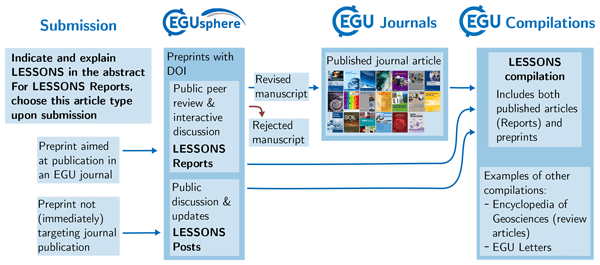
We explain a new article type that is being introduced in participating EGU publications. "LESSONS" articles describe the Limitations, Errors, Surprises, Shortcomings and Opportunities for New Science emerging from the scientific process. The publication of non-positive results and associated learnings aims to complete an unbiased record of the research effort, contributes to open and transparent science, allows the authors and others to learn, and may open opportunities for new science.
Deborah Cohen, Rony Amira, Rom Aschner, Yuval Carny, Ben Feinstein, Hadas Fester, Shmulik Fronman, Martin Gauch, Oren Gilon, Rotem Green, Avinatan Hassidim, Daniel Klotz, Frederik Kratzert, Dan Korenfeld, Gila Loike, Amit Markel, Yossi Matias, Rotem Mayo, Asher Metzger, Benny Mosheyev, Aviel Niego, Stephanie Rees, Emily Reinstein, Amitay Sicherman, Guy Shalev, Omri Shefi, Yuval Shildan, Ido Zemach, Oleg Zlydenko, and Grey Nearing
EGUsphere, https://doi.org/10.5194/egusphere-2026-2283, https://doi.org/10.5194/egusphere-2026-2283, 2026
Short summary
Short summary
We improved our global river model to provide earlier, more reliable streamflow predictions. Testing over approximately 1,000 watersheds, we found it predicts river flows up to six days further into the future for monitored rivers, and one day further for unmonitored ones. Releasing our code publicly empowers the science community to improve global water forecasting.
Martin Gauch, Frederik Kratzert, Daniel Klotz, Grey Nearing, Deborah Cohen, and Oren Gilon
Hydrol. Earth Syst. Sci., 29, 6221–6235, https://doi.org/10.5194/hess-29-6221-2025, https://doi.org/10.5194/hess-29-6221-2025, 2025
Short summary
Short summary
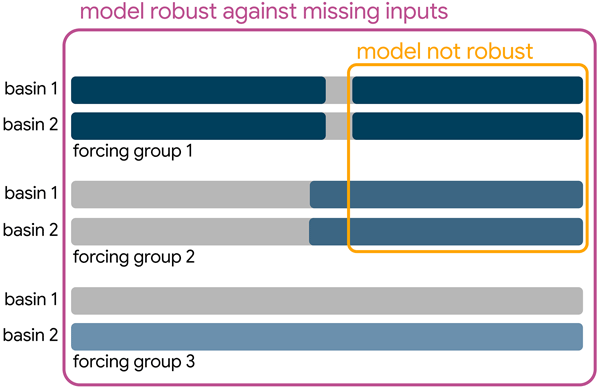
Missing input data are one of the most common challenges when building deep learning hydrological models. We present and analyze different methods that can produce predictions when certain inputs are missing during training or inference. Our proposed strategies provide high accuracy while allowing for more flexible data handling and being robust to outages in operational scenarios.
Sanika Baste, Daniel Klotz, Eduardo Acuña Espinoza, Andras Bardossy, and Ralf Loritz
Hydrol. Earth Syst. Sci., 29, 5871–5891, https://doi.org/10.5194/hess-29-5871-2025, https://doi.org/10.5194/hess-29-5871-2025, 2025
Short summary
Short summary
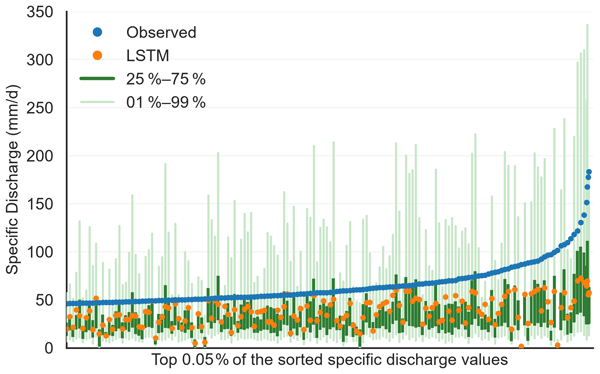
This study evaluates the extrapolation performance of long short-term memory (LSTM) networks in rainfall–runoff modeling, specifically under extreme precipitation conditions. The findings reveal that the LSTM cannot predict discharge values beyond a theoretical limit and that this limit is well below the extremity of its training data. This behavior results from the LSTM's gating structures rather than saturation of the cell states alone.
Eduardo Acuña Espinoza, Frederik Kratzert, Daniel Klotz, Martin Gauch, Manuel Álvarez Chaves, Ralf Loritz, and Uwe Ehret
Hydrol. Earth Syst. Sci., 29, 1749–1758, https://doi.org/10.5194/hess-29-1749-2025, https://doi.org/10.5194/hess-29-1749-2025, 2025
Short summary
Short summary
Long short-term memory (LSTM) networks have demonstrated state-of-the-art performance for rainfall-runoff hydrological modelling. However, most studies focus on predictions at a daily scale, limiting the benefits of sub-daily (e.g. hourly) predictions in applications like flood forecasting. In this study, we introduce a new architecture, multi-frequency LSTM (MF-LSTM), designed to use inputs of various temporal frequencies to produce sub-daily (e.g. hourly) predictions at a moderate computational cost.
Eduardo Acuña Espinoza, Ralf Loritz, Frederik Kratzert, Daniel Klotz, Martin Gauch, Manuel Álvarez Chaves, and Uwe Ehret
Hydrol. Earth Syst. Sci., 29, 1277–1294, https://doi.org/10.5194/hess-29-1277-2025, https://doi.org/10.5194/hess-29-1277-2025, 2025
Short summary
Short summary
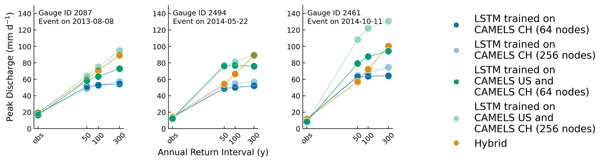
Data-driven techniques have shown the potential to outperform process-based models in rainfall–runoff simulations. Hybrid models, combining both approaches, aim to enhance accuracy and maintain interpretability. Expanding the set of test cases to evaluate hybrid models under different conditions, we test their generalization capabilities for extreme hydrological events.
Frederik Kratzert, Martin Gauch, Daniel Klotz, and Grey Nearing
Hydrol. Earth Syst. Sci., 28, 4187–4201, https://doi.org/10.5194/hess-28-4187-2024, https://doi.org/10.5194/hess-28-4187-2024, 2024
Short summary
Short summary
Recently, a special type of neural-network architecture became increasingly popular in hydrology literature. However, in most applications, this model was applied as a one-to-one replacement for hydrology models without adapting or rethinking the experimental setup. In this opinion paper, we show how this is almost always a bad decision and how using these kinds of models requires the use of large-sample hydrology data sets.
Andreas Auer, Martin Gauch, Frederik Kratzert, Grey Nearing, Sepp Hochreiter, and Daniel Klotz
Hydrol. Earth Syst. Sci., 28, 4099–4126, https://doi.org/10.5194/hess-28-4099-2024, https://doi.org/10.5194/hess-28-4099-2024, 2024
Short summary
Short summary
This work examines the impact of temporal and spatial information on the uncertainty estimation of streamflow forecasts. The study emphasizes the importance of data updates and global information for precise uncertainty estimates. We use conformal prediction to show that recent data enhance the estimates, even if only available infrequently. Local data yield reasonable average estimations but fall short for peak-flow events. The use of global data significantly improves these predictions.
Daniel Klotz, Martin Gauch, Frederik Kratzert, Grey Nearing, and Jakob Zscheischler
Hydrol. Earth Syst. Sci., 28, 3665–3673, https://doi.org/10.5194/hess-28-3665-2024, https://doi.org/10.5194/hess-28-3665-2024, 2024
Short summary
Short summary
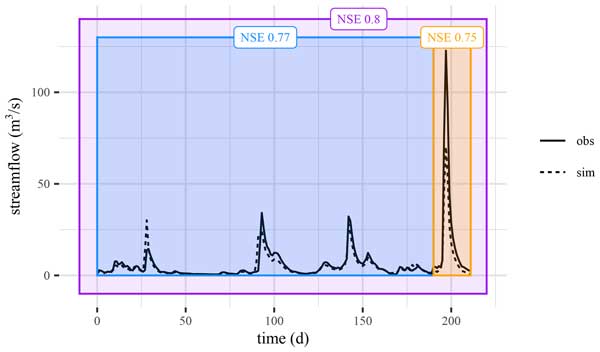
The evaluation of model performance is essential for hydrological modeling. Using performance criteria requires a deep understanding of their properties. We focus on a counterintuitive aspect of the Nash–Sutcliffe efficiency (NSE) and show that if we divide the data into multiple parts, the overall performance can be higher than all the evaluations of the subsets. Although this follows from the definition of the NSE, the resulting behavior can have unintended consequences in practice.
Grey S. Nearing, Daniel Klotz, Jonathan M. Frame, Martin Gauch, Oren Gilon, Frederik Kratzert, Alden Keefe Sampson, Guy Shalev, and Sella Nevo
Hydrol. Earth Syst. Sci., 26, 5493–5513, https://doi.org/10.5194/hess-26-5493-2022, https://doi.org/10.5194/hess-26-5493-2022, 2022
Short summary
Short summary
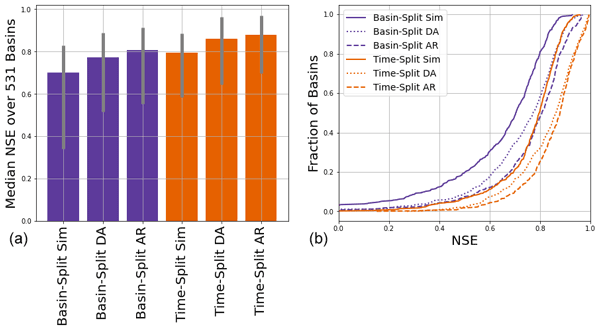
When designing flood forecasting models, it is necessary to use all available data to achieve the most accurate predictions possible. This manuscript explores two basic ways of ingesting near-real-time streamflow data into machine learning streamflow models. The point we want to make is that when working in the context of machine learning (instead of traditional hydrology models that are based on
bio-geophysics), it is not necessary to use complex statistical methods for injecting sparse data.
Juliane Mai, Hongren Shen, Bryan A. Tolson, Étienne Gaborit, Richard Arsenault, James R. Craig, Vincent Fortin, Lauren M. Fry, Martin Gauch, Daniel Klotz, Frederik Kratzert, Nicole O'Brien, Daniel G. Princz, Sinan Rasiya Koya, Tirthankar Roy, Frank Seglenieks, Narayan K. Shrestha, André G. T. Temgoua, Vincent Vionnet, and Jonathan W. Waddell
Hydrol. Earth Syst. Sci., 26, 3537–3572, https://doi.org/10.5194/hess-26-3537-2022, https://doi.org/10.5194/hess-26-3537-2022, 2022
Short summary
Short summary
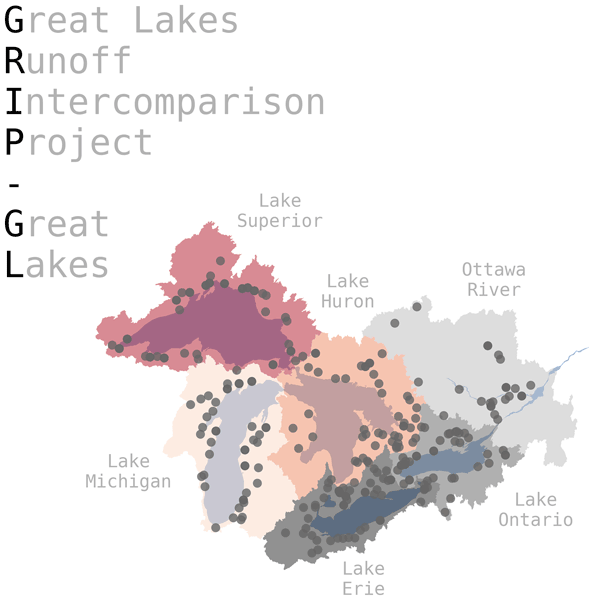
Model intercomparison studies are carried out to test various models and compare the quality of their outputs over the same domain. In this study, 13 diverse model setups using the same input data are evaluated over the Great Lakes region. Various model outputs – such as streamflow, evaporation, soil moisture, and amount of snow on the ground – are compared using standardized methods and metrics. The basin-wise model outputs and observations are made available through an interactive website.

Jonathan M. Frame, Frederik Kratzert, Daniel Klotz, Martin Gauch, Guy Shalev, Oren Gilon, Logan M. Qualls, Hoshin V. Gupta, and Grey S. Nearing
Hydrol. Earth Syst. Sci., 26, 3377–3392, https://doi.org/10.5194/hess-26-3377-2022, https://doi.org/10.5194/hess-26-3377-2022, 2022
Short summary
Short summary
The most accurate rainfall–runoff predictions are currently based on deep learning. There is a concern among hydrologists that deep learning models may not be reliable in extrapolation or for predicting extreme events. This study tests that hypothesis. The deep learning models remained relatively accurate in predicting extreme events compared with traditional models, even when extreme events were not included in the training set.
Thomas Lees, Steven Reece, Frederik Kratzert, Daniel Klotz, Martin Gauch, Jens De Bruijn, Reetik Kumar Sahu, Peter Greve, Louise Slater, and Simon J. Dadson
Hydrol. Earth Syst. Sci., 26, 3079–3101, https://doi.org/10.5194/hess-26-3079-2022, https://doi.org/10.5194/hess-26-3079-2022, 2022
Short summary
Short summary
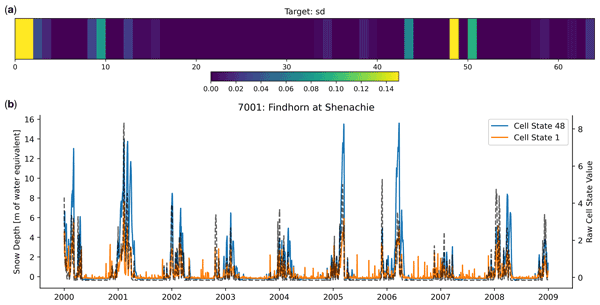
Despite the accuracy of deep learning rainfall-runoff models, we are currently uncertain of what these models have learned. In this study we explore the internals of one deep learning architecture and demonstrate that the model learns about intermediate hydrological stores of soil moisture and snow water, despite never having seen data about these processes during training. Therefore, we find evidence that the deep learning approach learns a physically realistic mapping from inputs to outputs.
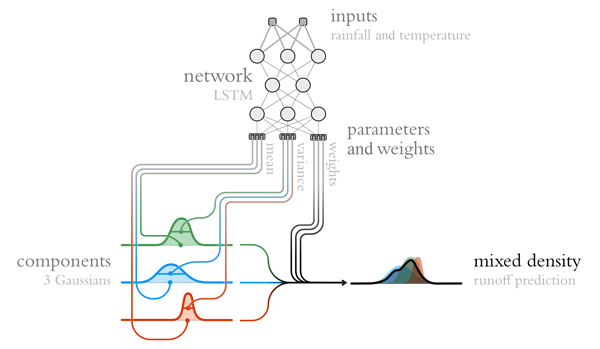
Daniel Klotz, Frederik Kratzert, Martin Gauch, Alden Keefe Sampson, Johannes Brandstetter, Günter Klambauer, Sepp Hochreiter, and Grey Nearing
Hydrol. Earth Syst. Sci., 26, 1673–1693, https://doi.org/10.5194/hess-26-1673-2022, https://doi.org/10.5194/hess-26-1673-2022, 2022
Short summary
Short summary
This contribution evaluates distributional runoff predictions from deep-learning-based approaches. We propose a benchmarking setup and establish four strong baselines. The results show that accurate, precise, and reliable uncertainty estimation can be achieved with deep learning.
Sanika Baste, Sebastian Lerch, Daniel Klotz, and Ralf Loritz
Hydrol. Earth Syst. Sci., 30, 6339–6358, https://doi.org/10.5194/hess-30-6339-2026, https://doi.org/10.5194/hess-30-6339-2026, 2026
Short summary
Short summary
Probabilistic runoff predictions capture the likelihood of rare, high-stakes events that deterministic models – which predict only the conditional expectation – tend to underestimate. This added information can improve flood warning communication by learning reward-based rules for selecting predictive quantiles suited to specific hydrological and societal contexts.
Eduardo Jose Acuna Espinoza, Manuel Álvarez Chaves, Frederik Kratzert, Daniel Klotz, Martin Gauch, Robert Lang, Dominik Elfgang, Alexander Dolich, Ralf Loritz, and Uwe Ehret
EGUsphere, https://doi.org/10.5194/egusphere-2026-4885, https://doi.org/10.5194/egusphere-2026-4885, 2026
This preprint is open for discussion and under review for Hydrology and Earth System Sciences (HESS).
Short summary
Short summary
We present the Multi-Frequency Masked-Forecasting LSTM (MF2LSTM), a pipeline unifying multi-frequency modeling, missing-data handling, and real-time data assimilation for hourly streamflow forecasting. Forced with ICON-D2 weather data, MF2LSTM yields higher performance than LARSIM, the operational model used in Baden-Württemberg, Germany. Using a single-cell baseline, this work proves that simple deep learning models can deliver high-level operational performance without extra complexity.
Ulrike Proske, John Hillier, Stefan Gaillard, Theresa Blume, Eduardo Queiroz Alves, Susanne Buiter, Ken S. Carslaw, Kirsten von Elverfeldt, Tim H. M. van Emmerik, Barbara Ervens, Rolf Hut, Sam Illingworth, Daniel Klotz, and Jonas Pyschik
Geosci. Commun., 9, 371–383, https://doi.org/10.5194/gc-9-371-2026, https://doi.org/10.5194/gc-9-371-2026, 2026
Short summary
Short summary
We explain a new article type that is being introduced in participating EGU publications. "LESSONS" articles describe the Limitations, Errors, Surprises, Shortcomings and Opportunities for New Science emerging from the scientific process. The publication of non-positive results and associated learnings aims to complete an unbiased record of the research effort, contributes to open and transparent science, allows the authors and others to learn, and may open opportunities for new science.
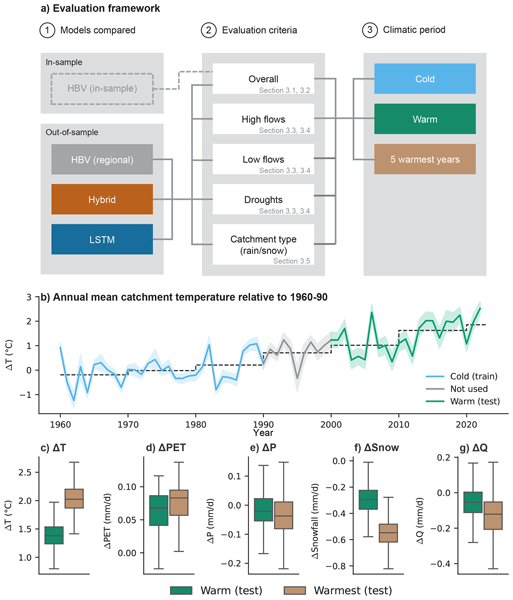
Jan P. Bohl, Raul R. Wood, Corinna Frank, Paul C. Astagneau, Jonas Peters, and Manuela I. Brunner
Hydrol. Earth Syst. Sci., 30, 4667–4698, https://doi.org/10.5194/hess-30-4667-2026, https://doi.org/10.5194/hess-30-4667-2026, 2026
Short summary
Short summary
To assess climate impacts on streamflow, we need models that can predict streamflow under future conditions. This study compares three model types: data-driven (LSTM - long short-term memory), conceptual (HBV - Hydrologiska Byråns Vattenbalansavdelning), and hybrid (LSTM-HBV). LSTMs perform best overall, but HBV and hybrid models generalize better to warmer climates. Hybrid models are a promising tool for climate impact assessments, combining LSTMs accuracy with better generalizability of traditional models. In snowy regions, all models struggle to generalize.
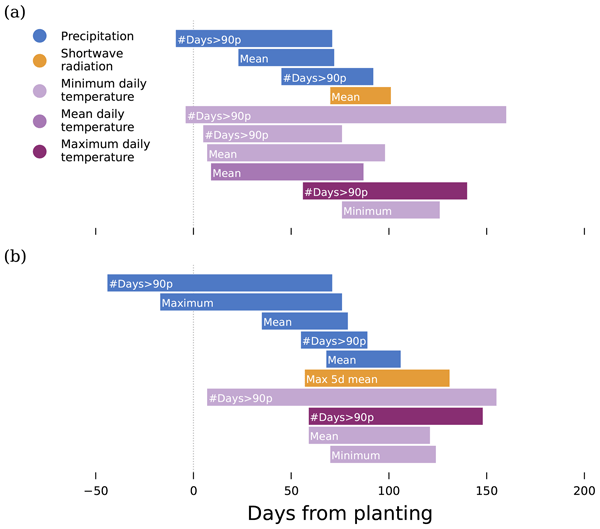
Lily-belle Sweet, Christoph Müller, Jonas Jägermeyr, and Jakob Zscheischler
Geosci. Model Dev., 19, 6687–6735, https://doi.org/10.5194/gmd-19-6687-2026, https://doi.org/10.5194/gmd-19-6687-2026, 2026
Short summary
Short summary
This study presents a method to identify climate drivers of an impact, such as agricultural yield failure, from high-resolution weather data. The approach systematically generates, selects and combines predictors that generalise across different environments. Tested on crop model simulations, the identified drivers are used to create parsimonious models that achieve high predictive performance over long time horizons, offering a more interpretable alternative to black-box models.
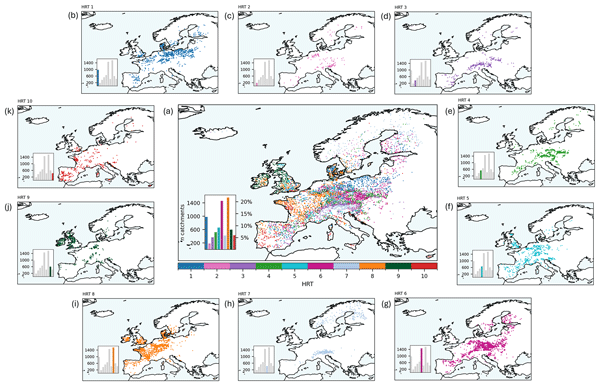
Julia M. Rudlang, Thiago V. M. do Nascimento, Ruud van der Ent, Fabrizio Fenicia, and Markus Hrachowitz
Hydrol. Earth Syst. Sci., 30, 4481–4508, https://doi.org/10.5194/hess-30-4481-2026, https://doi.org/10.5194/hess-30-4481-2026, 2026
Short summary
Short summary
River flow (streamflow) behaviour varies across Europe and is shaped by climate and landscape. Using data from more than 7000 European catchments, we identified 10 hydrological response types based on flow magnitude, timing, and seasonality. At the continental scale, streamflow behaviour is mainly driven by climate, but landscape features are equally or more influential in several regions. These results show that streamflow behaviour emerges from the combined effects of climate and landscape.
Jonathan Wider and Jakob Zscheischler
EGUsphere, https://doi.org/10.5194/egusphere-2026-2325, https://doi.org/10.5194/egusphere-2026-2325, 2026
Short summary
Short summary
unseen-awg, a novel approach for generating multivariate spatiotemporal weather data, operates by resampling a large dataset of historical weather forecasts. The method uses block sampling of days and a parameter-tuning strategy to improve the realism of the generated European weather. It holds great potential for assessing weather-related risks across sectors such as water, agriculture, or forestry that require simulating multiple variables and spatial dependencies across numerous locations.
Andreia F. S. Ribeiro, Maik Biling, Kirsten Thonicke, Werner von Bloh, Jakob Wessel, Sabine Undorf, Matthias Forkel, and Jakob Zscheischler
EGUsphere, https://doi.org/10.5194/egusphere-2026-2952, https://doi.org/10.5194/egusphere-2026-2952, 2026
Short summary
Short summary
Wildfires are becoming more extreme, yet our state-of-the-art tools fail to capture the full risk. We simulate a large ensemble of wildfire simulations capturing a broader range of physically plausible extreme wildfire events beyond what observations alone can reveal. Extreme fire danger alone does not explain the worst impacts: ignitions, fuel and vegetation-fire feedback need to be incorporated. This modelling framework is transferable to other climate-impact sectors beyond wildfires.

Ni Li, Wim Thiery, Shorouq Zahra, Mariana Madruga de Brito, Koffi Worou, Murathan Kurfalı, Seppe Lampe, Paul Muñoz, Clare Flynn, Camila Trigoso, Joakim Nivre, Jakob Zscheischler, and Gabriele Messori
Nat. Hazards Earth Syst. Sci., 26, 2609–2636, https://doi.org/10.5194/nhess-26-2609-2026, https://doi.org/10.5194/nhess-26-2609-2026, 2026
Short summary
Short summary
Climate extremes threaten society and ecosystems, making impact understanding critical. Wikimpacts 1.0 provides an automated pipeline processing Wikipedia texts with underexploited information on climate impacts, yielding comprehensive socio-economic impact data for 2726 climate events from 1034–2024. It offers broader storm-related impacts and finer spatial resolution than established databases, showcasing natural language processing's potential to advance climate impact data.
Deborah Cohen, Rony Amira, Rom Aschner, Yuval Carny, Ben Feinstein, Hadas Fester, Shmulik Fronman, Martin Gauch, Oren Gilon, Rotem Green, Avinatan Hassidim, Daniel Klotz, Frederik Kratzert, Dan Korenfeld, Gila Loike, Amit Markel, Yossi Matias, Rotem Mayo, Asher Metzger, Benny Mosheyev, Aviel Niego, Stephanie Rees, Emily Reinstein, Amitay Sicherman, Guy Shalev, Omri Shefi, Yuval Shildan, Ido Zemach, Oleg Zlydenko, and Grey Nearing
EGUsphere, https://doi.org/10.5194/egusphere-2026-2283, https://doi.org/10.5194/egusphere-2026-2283, 2026
Short summary
Short summary
We improved our global river model to provide earlier, more reliable streamflow predictions. Testing over approximately 1,000 watersheds, we found it predicts river flows up to six days further into the future for monitored rivers, and one day further for unmonitored ones. Releasing our code publicly empowers the science community to improve global water forecasting.
Cristina Prieto, Dmitri Kavetski, Fabrizio Fenicia, James Kirchner, David McInerney, Mark Thyer, and César Álvarez
EGUsphere, https://doi.org/10.5194/egusphere-2026-483, https://doi.org/10.5194/egusphere-2026-483, 2026
Short summary
Short summary
Hourly streamflow data are increasingly available and can improve streamflow predictions. We tested simple ways to describe uncertainty by transforming flow values and by accounting for how errors persist from hour to hour, using seven catchments in Spain, Switzerland and the United States. Simple transformations and short-term error memory improve the reliability of probabilistic predictions and help combine hourly results into longer time scales for practical operational contexts.
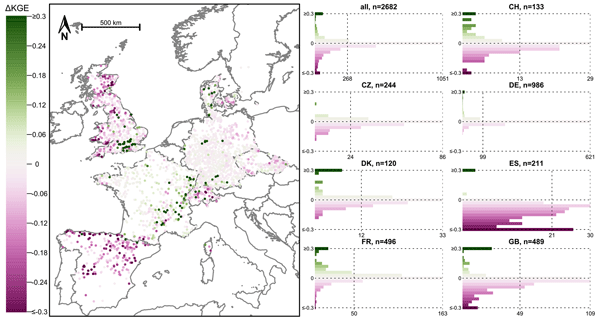
Franziska Clerc-Schwarzenbach and Thiago V. M. do Nascimento
Hydrol. Earth Syst. Sci., 30, 119–140, https://doi.org/10.5194/hess-30-119-2026, https://doi.org/10.5194/hess-30-119-2026, 2026
Short summary
Short summary
This study provides the first assessment of an European meteorological dataset (E-OBS) for hydrological applications. We compared the dataset to meteorological datasets developed at a country level, and tested how the different data influenced the simulation of streamflow with hydrological model. Our findings show that, despite some limitations, the European dataset offers a reasonable basis for hydrological modelling in most river catchments across Europe.
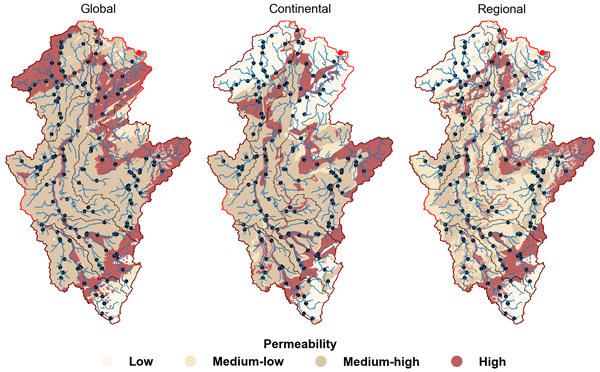
Thiago V. M. do Nascimento, Julia Rudlang, Sebastian Gnann, Jan Seibert, Markus Hrachowitz, and Fabrizio Fenicia
Hydrol. Earth Syst. Sci., 29, 7173–7200, https://doi.org/10.5194/hess-29-7173-2025, https://doi.org/10.5194/hess-29-7173-2025, 2025
Short summary
Short summary
We show that geological maps with varying levels of detail may influence the identification of geology–streamflow relationships across European catchments at multiple scales. At the large scale, controls varied between basins, with no map consistently superior. At the intermediate and small scales, however, higher geological detail consistently strengthened correlations, particularly for baseflow signatures, with the regional map highlighting controls more consistent with process understanding.
Martin Gauch, Frederik Kratzert, Daniel Klotz, Grey Nearing, Deborah Cohen, and Oren Gilon
Hydrol. Earth Syst. Sci., 29, 6221–6235, https://doi.org/10.5194/hess-29-6221-2025, https://doi.org/10.5194/hess-29-6221-2025, 2025
Short summary
Short summary
Missing input data are one of the most common challenges when building deep learning hydrological models. We present and analyze different methods that can produce predictions when certain inputs are missing during training or inference. Our proposed strategies provide high accuracy while allowing for more flexible data handling and being robust to outages in operational scenarios.
Sanika Baste, Daniel Klotz, Eduardo Acuña Espinoza, Andras Bardossy, and Ralf Loritz
Hydrol. Earth Syst. Sci., 29, 5871–5891, https://doi.org/10.5194/hess-29-5871-2025, https://doi.org/10.5194/hess-29-5871-2025, 2025
Short summary
Short summary
This study evaluates the extrapolation performance of long short-term memory (LSTM) networks in rainfall–runoff modeling, specifically under extreme precipitation conditions. The findings reveal that the LSTM cannot predict discharge values beyond a theoretical limit and that this limit is well below the extremity of its training data. This behavior results from the LSTM's gating structures rather than saturation of the cell states alone.
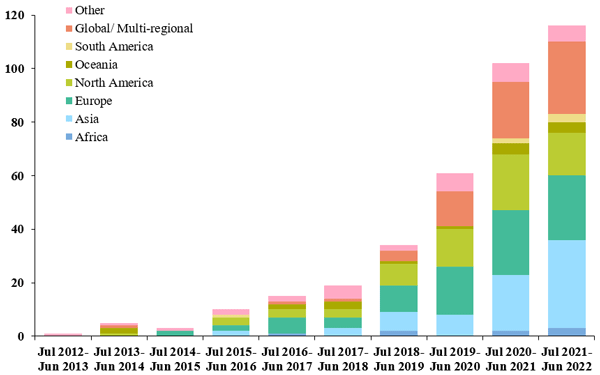
Lou Brett, Christopher J. White, Daniela I. V. Domeisen, Bart van den Hurk, Philip Ward, and Jakob Zscheischler
Nat. Hazards Earth Syst. Sci., 25, 2591–2611, https://doi.org/10.5194/nhess-25-2591-2025, https://doi.org/10.5194/nhess-25-2591-2025, 2025
Short summary
Short summary
Compound events, where multiple weather or climate hazards occur together, pose significant risks to both society and the environment. These events, like simultaneous wind and rain, can have more severe impacts than single hazards. Our review of compound event research from 2012–2022 reveals a rise in studies, especially on events that occur concurrently, hot and dry events, and compounding flooding. The review also highlights opportunities for research in the coming years.
Eduardo Acuña Espinoza, Frederik Kratzert, Daniel Klotz, Martin Gauch, Manuel Álvarez Chaves, Ralf Loritz, and Uwe Ehret
Hydrol. Earth Syst. Sci., 29, 1749–1758, https://doi.org/10.5194/hess-29-1749-2025, https://doi.org/10.5194/hess-29-1749-2025, 2025
Short summary
Short summary
Long short-term memory (LSTM) networks have demonstrated state-of-the-art performance for rainfall-runoff hydrological modelling. However, most studies focus on predictions at a daily scale, limiting the benefits of sub-daily (e.g. hourly) predictions in applications like flood forecasting. In this study, we introduce a new architecture, multi-frequency LSTM (MF-LSTM), designed to use inputs of various temporal frequencies to produce sub-daily (e.g. hourly) predictions at a moderate computational cost.
Eduardo Acuña Espinoza, Ralf Loritz, Frederik Kratzert, Daniel Klotz, Martin Gauch, Manuel Álvarez Chaves, and Uwe Ehret
Hydrol. Earth Syst. Sci., 29, 1277–1294, https://doi.org/10.5194/hess-29-1277-2025, https://doi.org/10.5194/hess-29-1277-2025, 2025
Short summary
Short summary
Data-driven techniques have shown the potential to outperform process-based models in rainfall–runoff simulations. Hybrid models, combining both approaches, aim to enhance accuracy and maintain interpretability. Expanding the set of test cases to evaluate hybrid models under different conditions, we test their generalization capabilities for extreme hydrological events.
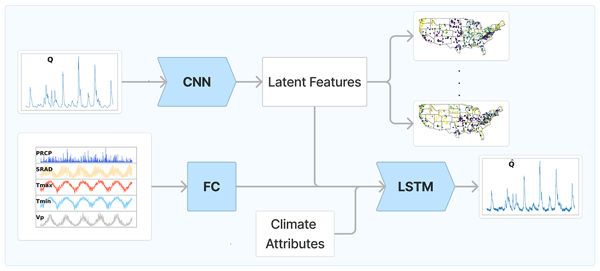
Alberto Bassi, Marvin Höge, Antonietta Mira, Fabrizio Fenicia, and Carlo Albert
Hydrol. Earth Syst. Sci., 28, 4971–4988, https://doi.org/10.5194/hess-28-4971-2024, https://doi.org/10.5194/hess-28-4971-2024, 2024
Short summary
Short summary
The goal is to remove the impact of meteorological drivers in order to uncover the unique landscape fingerprints of a catchment from streamflow data. Our results reveal an optimal two-feature summary for most catchments, with a third feature associated with aridity and intermittent flow that is needed for challenging cases. Baseflow index, aridity, and soil or vegetation attributes strongly correlate with learnt features, indicating their importance for streamflow prediction.
Hongkai Gao, Markus Hrachowitz, Lan Wang-Erlandsson, Fabrizio Fenicia, Qiaojuan Xi, Jianyang Xia, Wei Shao, Ge Sun, and Hubert H. G. Savenije
Hydrol. Earth Syst. Sci., 28, 4477–4499, https://doi.org/10.5194/hess-28-4477-2024, https://doi.org/10.5194/hess-28-4477-2024, 2024
Short summary
Short summary
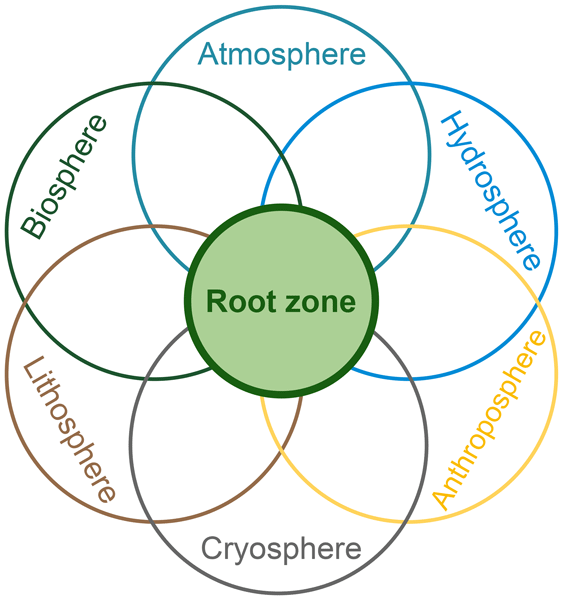
The concept of the root zone is widely used but lacks a precise definition. Its importance in Earth system science is not well elaborated upon. Here, we clarified its definition with several similar terms to bridge the multi-disciplinary gap. We underscore the key role of the root zone in the Earth system, which links the biosphere, hydrosphere, lithosphere, atmosphere, and anthroposphere. To better represent the root zone, we advocate for a paradigm shift towards ecosystem-centred modelling.
Frederik Kratzert, Martin Gauch, Daniel Klotz, and Grey Nearing
Hydrol. Earth Syst. Sci., 28, 4187–4201, https://doi.org/10.5194/hess-28-4187-2024, https://doi.org/10.5194/hess-28-4187-2024, 2024
Short summary
Short summary
Recently, a special type of neural-network architecture became increasingly popular in hydrology literature. However, in most applications, this model was applied as a one-to-one replacement for hydrology models without adapting or rethinking the experimental setup. In this opinion paper, we show how this is almost always a bad decision and how using these kinds of models requires the use of large-sample hydrology data sets.
Andreas Auer, Martin Gauch, Frederik Kratzert, Grey Nearing, Sepp Hochreiter, and Daniel Klotz
Hydrol. Earth Syst. Sci., 28, 4099–4126, https://doi.org/10.5194/hess-28-4099-2024, https://doi.org/10.5194/hess-28-4099-2024, 2024
Short summary
Short summary
This work examines the impact of temporal and spatial information on the uncertainty estimation of streamflow forecasts. The study emphasizes the importance of data updates and global information for precise uncertainty estimates. We use conformal prediction to show that recent data enhance the estimates, even if only available infrequently. Local data yield reasonable average estimations but fall short for peak-flow events. The use of global data significantly improves these predictions.
Beijing Fang, Emanuele Bevacqua, Oldrich Rakovec, and Jakob Zscheischler
Hydrol. Earth Syst. Sci., 28, 3755–3775, https://doi.org/10.5194/hess-28-3755-2024, https://doi.org/10.5194/hess-28-3755-2024, 2024
Short summary
Short summary
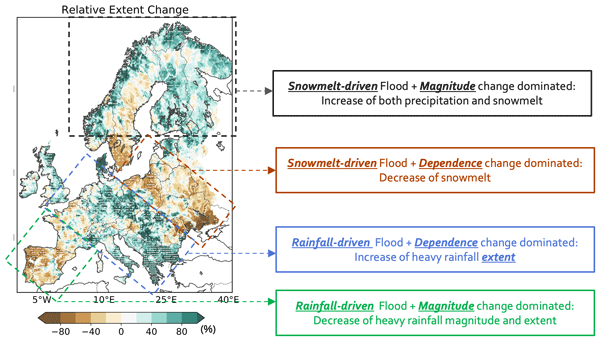
We use grid-based runoff from a hydrological model to identify large spatiotemporally connected flood events in Europe, assess extent trends over the last 70 years, and attribute the trends to different drivers. Our findings reveal a general increase in flood extent, with regional variations driven by diverse factors. The study not only enables a thorough examination of flood events across multiple basins but also highlights the potential challenges arising from changing flood extents.
Daniel Klotz, Martin Gauch, Frederik Kratzert, Grey Nearing, and Jakob Zscheischler
Hydrol. Earth Syst. Sci., 28, 3665–3673, https://doi.org/10.5194/hess-28-3665-2024, https://doi.org/10.5194/hess-28-3665-2024, 2024
Short summary
Short summary
The evaluation of model performance is essential for hydrological modeling. Using performance criteria requires a deep understanding of their properties. We focus on a counterintuitive aspect of the Nash–Sutcliffe efficiency (NSE) and show that if we divide the data into multiple parts, the overall performance can be higher than all the evaluations of the subsets. Although this follows from the definition of the NSE, the resulting behavior can have unintended consequences in practice.
Peter Reichert, Kai Ma, Marvin Höge, Fabrizio Fenicia, Marco Baity-Jesi, Dapeng Feng, and Chaopeng Shen
Hydrol. Earth Syst. Sci., 28, 2505–2529, https://doi.org/10.5194/hess-28-2505-2024, https://doi.org/10.5194/hess-28-2505-2024, 2024
Short summary
Short summary
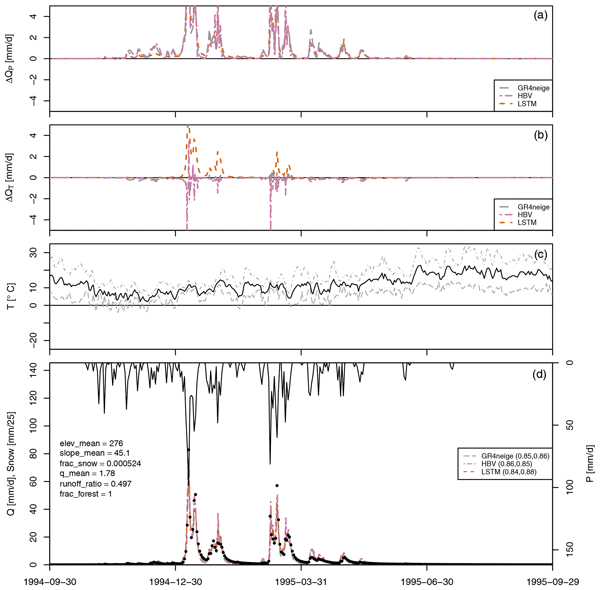
We compared the predicted change in catchment outlet discharge to precipitation and temperature change for conceptual and machine learning hydrological models. We found that machine learning models, despite providing excellent fit and prediction capabilities, can be unreliable regarding the prediction of the effect of temperature change for low-elevation catchments. This indicates the need for caution when applying them for the prediction of the effect of climate change.
Derrick Muheki, Axel A. J. Deijns, Emanuele Bevacqua, Gabriele Messori, Jakob Zscheischler, and Wim Thiery
Earth Syst. Dynam., 15, 429–466, https://doi.org/10.5194/esd-15-429-2024, https://doi.org/10.5194/esd-15-429-2024, 2024
Short summary
Short summary
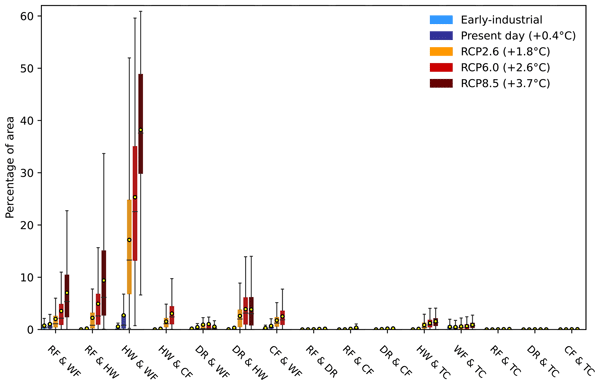
Climate change affects the interaction, dependence, and joint occurrence of climate extremes. Here we investigate the joint occurrence of pairs of river floods, droughts, heatwaves, crop failures, wildfires, and tropical cyclones in East Africa under past and future climate conditions. Our results show that, across all future warming scenarios, the frequency and spatial extent of these co-occurring extremes will increase in this region, particularly in areas close to the Nile and Congo rivers.
Jiaxing Liang, Hongkai Gao, Fabrizio Fenicia, Qiaojuan Xi, Yahui Wang, and Hubert H. G. Savenije
EGUsphere, https://doi.org/10.5194/egusphere-2024-550, https://doi.org/10.5194/egusphere-2024-550, 2024
Preprint archived
Short summary
Short summary
The root zone storage capacity (Sumax) is a key element in hydrology and land-atmospheric interaction. In this study, we utilized a hydrological model and a dynamic parameter identification method, to quantify the temporal trends of Sumax for 497 catchments in the USA. We found that 423 catchments (85 %) showed increasing Sumax, which averagely increased from 178 to 235 mm between 1980 and 2014. The increasing trend was also validated by multi-sources data and independent methods.
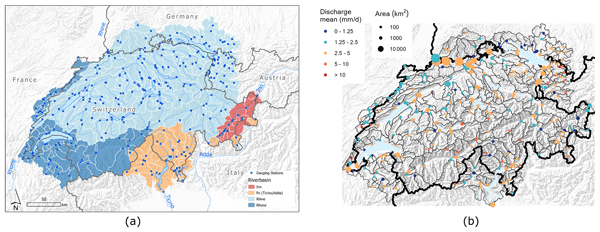
Marvin Höge, Martina Kauzlaric, Rosi Siber, Ursula Schönenberger, Pascal Horton, Jan Schwanbeck, Marius Günter Floriancic, Daniel Viviroli, Sibylle Wilhelm, Anna E. Sikorska-Senoner, Nans Addor, Manuela Brunner, Sandra Pool, Massimiliano Zappa, and Fabrizio Fenicia
Earth Syst. Sci. Data, 15, 5755–5784, https://doi.org/10.5194/essd-15-5755-2023, https://doi.org/10.5194/essd-15-5755-2023, 2023
Short summary
Short summary
CAMELS-CH is an open large-sample hydro-meteorological data set that covers 331 catchments in hydrologic Switzerland from 1 January 1981 to 31 December 2020. It comprises (a) daily data of river discharge and water level as well as meteorologic variables like precipitation and temperature; (b) yearly glacier and land cover data; (c) static attributes of, e.g, topography or human impact; and (d) catchment delineations. CAMELS-CH enables water and climate research and modeling at catchment level.
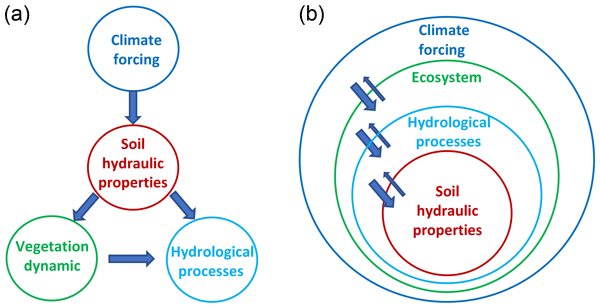
Hongkai Gao, Fabrizio Fenicia, and Hubert H. G. Savenije
Hydrol. Earth Syst. Sci., 27, 2607–2620, https://doi.org/10.5194/hess-27-2607-2023, https://doi.org/10.5194/hess-27-2607-2023, 2023
Short summary
Short summary
It is a deeply rooted perception that soil is key in hydrology. In this paper, we argue that it is the ecosystem, not the soil, that is in control of hydrology. Firstly, in nature, the dominant flow mechanism is preferential, which is not particularly related to soil properties. Secondly, the ecosystem, not the soil, determines the land–surface water balance and hydrological processes. Moving from a soil- to ecosystem-centred perspective allows more realistic and simpler hydrological models.
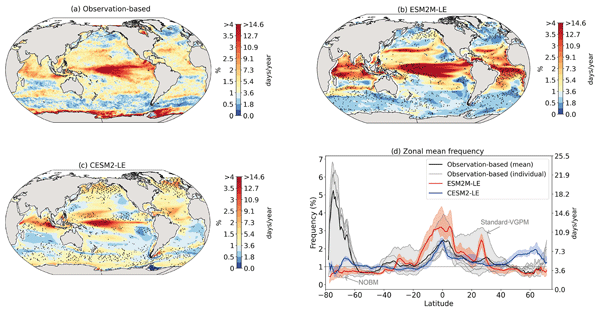
Natacha Le Grix, Jakob Zscheischler, Keith B. Rodgers, Ryohei Yamaguchi, and Thomas L. Frölicher
Biogeosciences, 19, 5807–5835, https://doi.org/10.5194/bg-19-5807-2022, https://doi.org/10.5194/bg-19-5807-2022, 2022
Short summary
Short summary
Compound events threaten marine ecosystems. Here, we investigate the potentially harmful combination of marine heatwaves with low phytoplankton productivity. Using satellite-based observations, we show that these compound events are frequent in the low latitudes. We then investigate the drivers of these compound events using Earth system models. The models share similar drivers in the low latitudes but disagree in the high latitudes due to divergent factors limiting phytoplankton production.
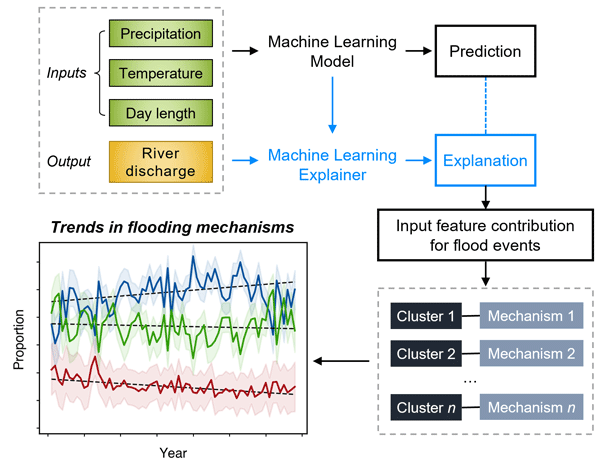
Shijie Jiang, Emanuele Bevacqua, and Jakob Zscheischler
Hydrol. Earth Syst. Sci., 26, 6339–6359, https://doi.org/10.5194/hess-26-6339-2022, https://doi.org/10.5194/hess-26-6339-2022, 2022
Short summary
Short summary
Using a novel explainable machine learning approach, we investigated the contributions of precipitation, temperature, and day length to different peak discharges, thereby uncovering three primary flooding mechanisms widespread in European catchments. The results indicate that flooding mechanisms have changed in numerous catchments over the past 70 years. The study highlights the potential of artificial intelligence in revealing complex changes in extreme events related to climate change.
Grey S. Nearing, Daniel Klotz, Jonathan M. Frame, Martin Gauch, Oren Gilon, Frederik Kratzert, Alden Keefe Sampson, Guy Shalev, and Sella Nevo
Hydrol. Earth Syst. Sci., 26, 5493–5513, https://doi.org/10.5194/hess-26-5493-2022, https://doi.org/10.5194/hess-26-5493-2022, 2022
Short summary
Short summary
When designing flood forecasting models, it is necessary to use all available data to achieve the most accurate predictions possible. This manuscript explores two basic ways of ingesting near-real-time streamflow data into machine learning streamflow models. The point we want to make is that when working in the context of machine learning (instead of traditional hydrology models that are based on
bio-geophysics), it is not necessary to use complex statistical methods for injecting sparse data.
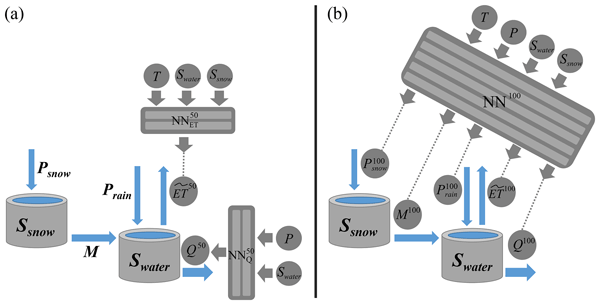
Marvin Höge, Andreas Scheidegger, Marco Baity-Jesi, Carlo Albert, and Fabrizio Fenicia
Hydrol. Earth Syst. Sci., 26, 5085–5102, https://doi.org/10.5194/hess-26-5085-2022, https://doi.org/10.5194/hess-26-5085-2022, 2022
Short summary
Short summary
Neural ODEs fuse physics-based models with deep learning: neural networks substitute terms in differential equations that represent the mechanistic structure of the system. The approach combines the flexibility of machine learning with physical constraints for inter- and extrapolation. We demonstrate that neural ODE models achieve state-of-the-art predictive performance while keeping full interpretability of model states and processes in hydrologic modelling over multiple catchments.
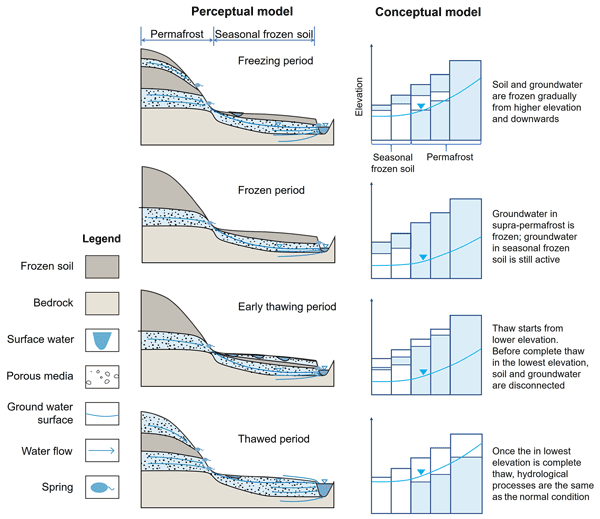
Hongkai Gao, Chuntan Han, Rensheng Chen, Zijing Feng, Kang Wang, Fabrizio Fenicia, and Hubert Savenije
Hydrol. Earth Syst. Sci., 26, 4187–4208, https://doi.org/10.5194/hess-26-4187-2022, https://doi.org/10.5194/hess-26-4187-2022, 2022
Short summary
Short summary
Frozen soil hydrology is one of the 23 unsolved problems in hydrology (UPH). In this study, we developed a novel conceptual frozen soil hydrological model, FLEX-Topo-FS. The model successfully reproduced the soil freeze–thaw process, and its impacts on hydrologic connectivity, runoff generation, and groundwater. We believe this study is a breakthrough for the 23 UPH, giving us new insights on frozen soil hydrology, with broad implications for predicting cold region hydrology in future.
Juliane Mai, Hongren Shen, Bryan A. Tolson, Étienne Gaborit, Richard Arsenault, James R. Craig, Vincent Fortin, Lauren M. Fry, Martin Gauch, Daniel Klotz, Frederik Kratzert, Nicole O'Brien, Daniel G. Princz, Sinan Rasiya Koya, Tirthankar Roy, Frank Seglenieks, Narayan K. Shrestha, André G. T. Temgoua, Vincent Vionnet, and Jonathan W. Waddell
Hydrol. Earth Syst. Sci., 26, 3537–3572, https://doi.org/10.5194/hess-26-3537-2022, https://doi.org/10.5194/hess-26-3537-2022, 2022
Short summary
Short summary
Model intercomparison studies are carried out to test various models and compare the quality of their outputs over the same domain. In this study, 13 diverse model setups using the same input data are evaluated over the Great Lakes region. Various model outputs – such as streamflow, evaporation, soil moisture, and amount of snow on the ground – are compared using standardized methods and metrics. The basin-wise model outputs and observations are made available through an interactive website.
Jonathan M. Frame, Frederik Kratzert, Daniel Klotz, Martin Gauch, Guy Shalev, Oren Gilon, Logan M. Qualls, Hoshin V. Gupta, and Grey S. Nearing
Hydrol. Earth Syst. Sci., 26, 3377–3392, https://doi.org/10.5194/hess-26-3377-2022, https://doi.org/10.5194/hess-26-3377-2022, 2022
Short summary
Short summary
The most accurate rainfall–runoff predictions are currently based on deep learning. There is a concern among hydrologists that deep learning models may not be reliable in extrapolation or for predicting extreme events. This study tests that hypothesis. The deep learning models remained relatively accurate in predicting extreme events compared with traditional models, even when extreme events were not included in the training set.
Thomas Lees, Steven Reece, Frederik Kratzert, Daniel Klotz, Martin Gauch, Jens De Bruijn, Reetik Kumar Sahu, Peter Greve, Louise Slater, and Simon J. Dadson
Hydrol. Earth Syst. Sci., 26, 3079–3101, https://doi.org/10.5194/hess-26-3079-2022, https://doi.org/10.5194/hess-26-3079-2022, 2022
Short summary
Short summary
Despite the accuracy of deep learning rainfall-runoff models, we are currently uncertain of what these models have learned. In this study we explore the internals of one deep learning architecture and demonstrate that the model learns about intermediate hydrological stores of soil moisture and snow water, despite never having seen data about these processes during training. Therefore, we find evidence that the deep learning approach learns a physically realistic mapping from inputs to outputs.
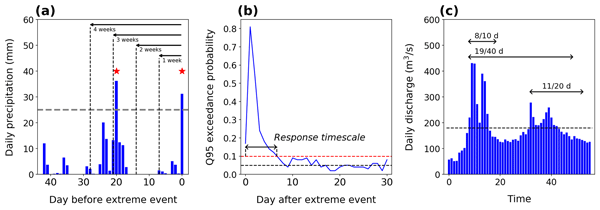
Alexandre Tuel, Bettina Schaefli, Jakob Zscheischler, and Olivia Martius
Hydrol. Earth Syst. Sci., 26, 2649–2669, https://doi.org/10.5194/hess-26-2649-2022, https://doi.org/10.5194/hess-26-2649-2022, 2022
Short summary
Short summary
River discharge is strongly influenced by the temporal structure of precipitation. Here, we show how extreme precipitation events that occur a few days or weeks after a previous event have a larger effect on river discharge than events occurring in isolation. Windows of 2 weeks or less between events have the most impact. Similarly, periods of persistent high discharge tend to be associated with the occurrence of several extreme precipitation events in close succession.
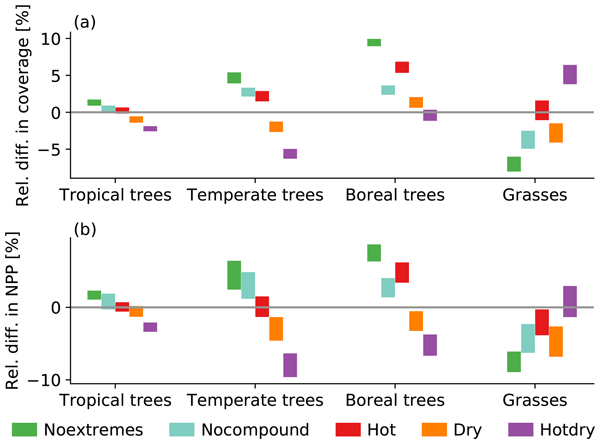
Elisabeth Tschumi, Sebastian Lienert, Karin van der Wiel, Fortunat Joos, and Jakob Zscheischler
Biogeosciences, 19, 1979–1993, https://doi.org/10.5194/bg-19-1979-2022, https://doi.org/10.5194/bg-19-1979-2022, 2022
Short summary
Short summary
Droughts and heatwaves are expected to occur more often in the future, but their effects on land vegetation and the carbon cycle are poorly understood. We use six climate scenarios with differing extreme occurrences and a vegetation model to analyse these effects. Tree coverage and associated plant productivity increase under a climate with no extremes. Frequent co-occurring droughts and heatwaves decrease plant productivity more than the combined effects of single droughts or heatwaves.
Daniel Klotz, Frederik Kratzert, Martin Gauch, Alden Keefe Sampson, Johannes Brandstetter, Günter Klambauer, Sepp Hochreiter, and Grey Nearing
Hydrol. Earth Syst. Sci., 26, 1673–1693, https://doi.org/10.5194/hess-26-1673-2022, https://doi.org/10.5194/hess-26-1673-2022, 2022
Short summary
Short summary
This contribution evaluates distributional runoff predictions from deep-learning-based approaches. We propose a benchmarking setup and establish four strong baselines. The results show that accurate, precise, and reliable uncertainty estimation can be achieved with deep learning.

Marco Dal Molin, Dmitri Kavetski, and Fabrizio Fenicia
Geosci. Model Dev., 14, 7047–7072, https://doi.org/10.5194/gmd-14-7047-2021, https://doi.org/10.5194/gmd-14-7047-2021, 2021
Short summary
Short summary
This paper introduces SuperflexPy, an open-source Python framework for building flexible conceptual hydrological models. SuperflexPy is available as open-source code and can be used by the hydrological community to investigate improved process representations, for model comparison, and for operational work.
Cited articles
Addor, N., Newman, A. J., Mizukami, N., and Clark, M. P.: The CAMELS data set: catchment attributes and meteorology for large-sample studies, Hydrol. Earth Syst. Sci., 21, 5293–5313, https://doi.org/10.5194/hess-21-5293-2017, 2017. a
Addor, N., Nearing, G., Prieto, C., Newman, A. J., Le Vine, N., and Clark, M. P.: A Ranking of Hydrological Signatures Based on Their Predictability in Space, Water Resour. Res., 54, 8792–8812, https://doi.org/10.1029/2018WR022606, 2018. a
Almagro, A., Oliveira, P. T. S., Meira Neto, A. A., Roy, T., and Troch, P.: CABra: a novel large-sample dataset for Brazilian catchments, Hydrol. Earth Syst. Sci., 25, 3105–3135, https://doi.org/10.5194/hess-25-3105-2021, 2021. a
Alvarez-Garreton, C., Mendoza, P. A., Boisier, J. P., Addor, N., Galleguillos, M., Zambrano-Bigiarini, M., Lara, A., Puelma, C., Cortes, G., Garreaud, R., McPhee, J., and Ayala, A.: The CAMELS-CL dataset: catchment attributes and meteorology for large sample studies – Chile dataset, Hydrol. Earth Syst. Sci., 22, 5817–5846, https://doi.org/10.5194/hess-22-5817-2018, 2018. a
Arino, O., Ramos Perez, J. J., Kalogirou, V., Bontemps, S., Defourny, P., and Van Bogaert, E.: Global Land Cover Map for 2009 (GlobCover 2009), PANGAEA [data set], https://doi.org/10.1594/PANGAEA.787668, 2012. a
Arjovsky, M., Chintala, S., and Bottou, L.: Wasserstein Generative Adversarial Networks, in: Proceedings of the 34th International Conference on Machine Learning, edited by: Precup, D. and Teh, Y. W., vol. 70 of Proceedings of Machine Learning Research, 214–223, https://proceedings.mlr.press/v70/arjovsky17a.html (last access: 13 July 2026), 2017. a
Beck, H. E., de Roo, A., and van Dijk, A. I. J. M.: Global Maps of Streamflow Characteristics Based on Observations from Several Thousand Catchments, J. Hydrometeorol., 16, 1478–1501, https://doi.org/10.1175/JHM-D-14-0155.1, 2015. a
Bertola, M., Blöschl, G., Bohac, M., Borga, M., Castellarin, A., Chirico, G. B., Claps, P., Dallan, E., Danilovich, I., Ganora, D., Gorbachova, L., Ledvinka, O., Mavrova-Guirguinova, M., Montanari, A., Ovcharuk, V., Viglione, A., Volpi, E., Arheimer, B., Aronica, G. T., Bonacci, O., Čanjevac, I., Csik, A., Frolova, N., Gnandt, B., Gribovszki, Z., Gül, A., Günther, K., Guse, B., Hannaford, J., Harrigan, S., Kireeva, M., Kohnová, S., Komma, J., Kriauciuniene, J., Kronvang, B., Lawrence, D., Lüdtke, S., Mediero, L., Merz, B., Molnar, P., Murphy, C., Oskoruš, D., Osuch, M., Parajka, J., Pfister, L., Radevski, I., Sauquet, E., Schröter, K., Šraj, M., Szolgay, J., Turner, S., Valent, P., Veijalainen, N., Ward, P. J., Willems, P., and Zivkovic, N.: Megafloods in Europe can be anticipated from observations in hydrologically similar catchments, Nat. Geosci., 16, 982–988, https://doi.org/10.1038/s41561-023-01300-5, 2023. a, b, c
Blöschl, G., Hall, J., Parajka, J., Perdigão, R. A. P., Merz, B., Arheimer, B., Aronica, G. T., Bilibashi, A., Bonacci, O., Borga, M., Čanjevac, I., Castellarin, A., Chirico, G. B., Claps, P., Fiala, K., Frolova, N., Gorbachova, L., Gül, A., Hannaford, J., Harrigan, S., Kireeva, M., Kiss, A., Kjeldsen, T. R., Kohnová, S., Koskela, J. J., Ledvinka, O., Macdonald, N., Mavrova-Guirguinova, M., Mediero, L., Merz, R., Molnar, P., Montanari, A., Murphy, C., Osuch, M., Ovcharuk, V., Radevski, I., Rogger, M., Salinas, J. L., Sauquet, E., Šraj, M., Szolgay, J., Viglione, A., Volpi, E., Wilson, D., Zaimi, K., and Živković, N.: Changing climate shifts timing of European floods, Science, 357, 588–590, https://doi.org/10.1126/science.aan2506, 2017. a, b, c, d, e, f, g, h, i, j, k, l, m, n, o, p, q, r, s, t, u, v, w
Blöschl, G., Hall, J., Viglione, A., Perdigão, R. A. P., Parajka, J., Merz, B., Lun, D., Arheimer, B., Aronica, G. T., Bilibashi, A., Boháč, M., Bonacci, O., Borga, M., Čanjevac, I., Castellarin, A., Chirico, G. B., Claps, P., Frolova, N., Ganora, D., Gorbachova, L., Gül, A., Hannaford, J., Harrigan, S., Kireeva, M., Kiss, A., Kjeldsen, T. R., Kohnová, S., Koskela, J. J., Ledvinka, O., Macdonald, N., Mavrova-Guirguinova, M., Mediero, L., Merz, R., Molnar, P., Montanari, A., Murphy, C., Osuch, M., Ovcharuk, V., Radevski, I., Salinas, J., Sauquet, E., Šraj, M., Szolgay, J., Volpi, E., Wilson, D., Zaimi, K., and Živković, N.: Changing climate both increases and decreases European river floods, Nature, 573, 108–111, https://doi.org/10.1038/s41586-019-1495-6, 2019. a, b, c, d, e, f, g, h, i, j, k, l, m, n, o, p, q, r
Bundesanstalt für Gewässerkunde (BfG): GRDC – Global Runoff Data Center, https://www.bafg.de/GRDC/EN/02_srvcs/21_tmsrs/210_prtl/prtl_node.html (last access: 1 December 2023), 2023. a
Chagas, V. B. P., Chaffe, P. L. B., Addor, N., Fan, F. M., Fleischmann, A. S., Paiva, R. C. D., and Siqueira, V. A.: CAMELS-BR: hydrometeorological time series and landscape attributes for 897 catchments in Brazil, Earth Syst. Sci. Data, 12, 2075–2096, https://doi.org/10.5194/essd-12-2075-2020, 2020. a
Coxon, G., Addor, N., Bloomfield, J. P., Freer, J., Fry, M., Hannaford, J., Howden, N. J. K., Lane, R., Lewis, M., Robinson, E. L., Wagener, T., and Woods, R.: CAMELS-GB: hydrometeorological time series and landscape attributes for 671 catchments in Great Britain, Earth Syst. Sci. Data, 12, 2459–2483, https://doi.org/10.5194/essd-12-2459-2020, 2020. a
Danielson, J. J. and Gesch, D. B.: Global Multi-Resolution Terrain Elevation Data 2010 (GMTED2010), U.S. Geological Survey Open-File Report 2011–1073, 26 pp., https://doi.org/10.3133/ofr20111073, 2011. a
Do, H. X., Gudmundsson, L., Leonard, M., and Westra, S.: The Global Streamflow Indices and Metadata Archive (GSIM) – Part 1: The production of a daily streamflow archive and metadata, Earth Syst. Sci. Data, 10, 765–785, https://doi.org/10.5194/essd-10-765-2018, 2018. a, b, c, d
do Nascimento, T. V. M., Rudlang, J., Höge, M., van der Ent, R., Chappon, M., Seibert, J., Hrachowitz, M., and Fenicia, F.: EStreams: An integrated dataset and catalogue of streamflow, hydro-climatic and landscape variables for Europe, Sci. Data, 11, 879, https://doi.org/10.1038/s41597-024-03706-1, 2024. a, b, c, d, e, f, g
Duan, Q., Schaake, J., Andréassian, V., Franks, S., Goteti, G., Gupta, H., Gusev, Y., Habets, F., Hall, A., Hay, L., Hogue, T., Huang, M., Leavesley, G., Liang, X., Nasonova, O., Noilhan, J., Oudin, L., Sorooshian, S., Wagener, T., and Wood, E.: Model Parameter Estimation Experiment (MOPEX): An overview of science strategy and major results from the second and third workshops, J. Hydrol., 320, 3–17, https://doi.org/10.1016/j.jhydrol.2005.07.031, 2006. a
Duc, L. and Sawada, Y.: A signal-processing-based interpretation of the Nash–Sutcliffe efficiency, Hydrol. Earth Syst. Sci., 27, 1827–1839, https://doi.org/10.5194/hess-27-1827-2023, 2023. a
Fang, B., Bevacqua, E., Rakovec, O., and Zscheischler, J.: An increase in the spatial extent of European floods over the last 70 years, Hydrol. Earth Syst. Sci., 28, 3755–3775, https://doi.org/10.5194/hess-28-3755-2024, 2024. a
Färber, C., Plessow, H., Kratzert, F., Addor, N., Shalev, G., and Looser, U.: GRDC-Caravan: extending the original dataset with data from the Global Runoff Data Centre, Zenodo [data set], https://doi.org/10.5281/zenodo.8425587, 2023. a, b
Fowler, K. J. A., Acharya, S. C., Addor, N., Chou, C., and Peel, M. C.: CAMELS-AUS: hydrometeorological time series and landscape attributes for 222 catchments in Australia, Earth Syst. Sci. Data, 13, 3847–3867, https://doi.org/10.5194/essd-13-3847-2021, 2021. a
Ghiggi, G., Humphrey, V., Seneviratne, S. I., and Gudmundsson, L.: GRUN: an observation-based global gridded runoff dataset from 1902 to 2014, Earth Syst. Sci. Data, 11, 1655–1674, https://doi.org/10.5194/essd-11-1655-2019, 2019. a
Gudmundsson, L., Do, H. X., Leonard, M., and Westra, S.: The Global Streamflow Indices and Metadata Archive (GSIM) – Part 2: Quality control, time-series indices and homogeneity assessment, Earth Syst. Sci. Data, 10, 787–804, https://doi.org/10.5194/essd-10-787-2018, 2018. a
Hargreaves, G. H. and Samani, Z. A.: Reference Crop Evapotranspiration from Temperature, Appl. Eng. Agr., 1, 96–99, https://doi.org/10.13031/2013.26773, 1985. a
Haylock, M. R., Hofstra, N., Klein Tank, A. M. G., Klok, E. J., Jones, P. D., and New, M.: A European daily high-resolution gridded data set of surface temperature and precipitation for 1950–2006, J. Geophys. Res.-Atmos., 113, https://doi.org/10.1029/2008JD010201, 2008. a
Helgason, H. B. and Nijssen, B.: LamaH-Ice: LArge-SaMple DAta for Hydrology and Environmental Sciences for Iceland, Earth Syst. Sci. Data, 16, 2741–2771, https://doi.org/10.5194/essd-16-2741-2024, 2024. a
Hengl, T., de Jesus, J. M., Heuvelink, G. B. M., Gonzalez, M. R., Kilibarda, M., Blagotić, A., Shangguan, W., Wright, M. N., Geng, X., Bauer-Marschallinger, B., Guevara, M. A., Vargas, R., MacMillan, R. A., Batjes, N. H., Leenaars, J. G. B., Ribeiro, E., Wheeler, I., Mantel, S., and Kempen, B.: SoilGrids250m: Global Gridded Soil Information Based on Machine Learning, PLOS ONE, 12, e0169748, https://doi.org/10.1371/journal.pone.0169748, 2017. a
Hochreiter, S. and Schmidhuber, J.: Long Short-Term Memory, Neural Comput., 9, 1735–1780, https://doi.org/10.1162/neco.1997.9.8.1735, 1997. a
Höge, M., Kauzlaric, M., Siber, R., Schönenberger, U., Horton, P., Schwanbeck, J., Floriancic, M. G., Viviroli, D., Wilhelm, S., Sikorska-Senoner, A. E., Addor, N., Brunner, M., Pool, S., Zappa, M., and Fenicia, F.: CAMELS-CH: hydro-meteorological time series and landscape attributes for 331 catchments in hydrologic Switzerland, Earth Syst. Sci. Data, 15, 5755–5784, https://doi.org/10.5194/essd-15-5755-2023, 2023. a
Hrachowitz, M., Savenije, H., Blöschl, G., McDonnell, J., Sivapalan, M., Pomeroy, J., Arheimer, B., Blume, T., Clark, M., Ehret, U., Fenicia, F., Freer, J., Gelfan, A., Gupta, H., Hughes, D., Hut, R., Montanari, A., Pande, S., Tetzlaff, D., Troch, P., Uhlenbrook, S., Wagener, T., Winsemius, H., Woods, R.A. Zehe, E., and Cudennec, C.: A decade of Predictions in Ungauged Basins (PUB) – a review, Hydrolog. Sci. J., 58, 1198–1255, https://doi.org/10.1080/02626667.2013.803183, 2013. a
Jiang, S., Bevacqua, E., and Zscheischler, J.: River flooding mechanisms and their changes in Europe revealed by explainable machine learning, Hydrol. Earth Syst. Sci., 26, 6339–6359, https://doi.org/10.5194/hess-26-6339-2022, 2022. a
Jiang, S., Tarasova, L., Yu, G., and Zscheischler, J.: Compounding effects in flood drivers challenge estimates of extreme river floods, Sci. Adv., 10, eadl4005, https://doi.org/10.1126/sciadv.adl4005, 2024. a
Klein Tank, A. M. G., Wijngaard, J. B., Können, G. P., Böhm, R., Demarée, G., Gocheva, A., Mileta, M., Pashiardis, S., Hejkrlik, L., Kern-Hansen, C., Heino, R., Bessemoulin, P., Müller-Westermeier, G., Tzanakou, M., Szalai, S., Pálsdóttir, T., Fitzgerald, D., Rubin, S., Capaldo, M., Maugeri, M., Leitass, A., Bukantis, A., Aberfeld, R., van Engelen, A. F. V., Forland, E., Mietus, M., Coelho, F., Mares, C., Razuvaev, V., Nieplova, E., Cegnar, T., Antonio López, J., Dahlström, B., Moberg, A., Kirchhofer, W., Ceylan, A., Pachaliuk, O., Alexander, L. V., and Petrovic, P.: Daily dataset of 20th-century surface air temperature and precipitation series for the European Climate Assessment, Int. J. Climatol., 22, 1441–1453, https://doi.org/10.1002/joc.773, 2002. a, b
Klingler, C., Schulz, K., and Herrnegger, M.: LamaH-CE: LArge-SaMple DAta for Hydrology and Environmental Sciences for Central Europe, Earth Syst. Sci. Data, 13, 4529–4565, https://doi.org/10.5194/essd-13-4529-2021, 2021. a
Klotz, D., Gauch, M., Kratzert, F., Nearing, G., and Zscheischler, J.: Technical Note: The divide and measure nonconformity – how metrics can mislead when we evaluate on different data partitions, Hydrol. Earth Syst. Sci., 28, 3665–3673, https://doi.org/10.5194/hess-28-3665-2024, 2024. a
Klotz, D., Miersch, P., do Nascimento, T. V. M., Fenicia, F., Gauch, M., and Zscheischler, J.: EARLS: Code and Weights, Zenodo [code], https://doi.org/10.5281/zenodo.19107554, 2026a. a, b
Klotz, D., Miersch, P., do Nascimento, T. V. M., Fenicia, F., Gauch, M., and Zscheischler, J.: EARLS: European aggregated reconstruction for large-sample studies, Zenodo [data set], https://doi.org/10.5281/zenodo.13864842, 2026b. a, b
Klotz, D., Miersch, P., Nascimento, T., Fenicia, F., Gauch, M., and Zscheischler, J.: EARLS: Code and Weights, Zenodo [code], https://doi.org/10.5281/zenodo.19107555, 2026c. a
Knoben, W. J. M.: Setting expectations for hydrologic model performance with an ensemble of simple benchmarks, Hydrol. Process., 38, e15288, https://doi.org/10.1002/hyp.15288, 2024. a
Kraft, B., Schirmer, M., Aeberhard, W. H., Zappa, M., Seneviratne, S. I., and Gudmundsson, L.: CH-RUN: a deep-learning-based spatially contiguous runoff reconstruction for Switzerland, Hydrol. Earth Syst. Sci., 29, 1061–1082, https://doi.org/10.5194/hess-29-1061-2025, 2025. a, b
Kratzert, F., Klotz, D., Herrnegger, M., Sampson, A. K., Hochreiter, S., and Nearing, G. S.: Toward Improved Predictions in Ungauged Basins: Exploiting the Power of Machine Learning, Water Resour. Res., 55, 11344–11354, https://doi.org/10.1029/2019WR026065, 2019a. a, b, c, d
Kratzert, F., Klotz, D., Shalev, G., Klambauer, G., Hochreiter, S., and Nearing, G.: Towards learning universal, regional, and local hydrological behaviors via machine learning applied to large-sample datasets, Hydrol. Earth Syst. Sci., 23, 5089–5110, https://doi.org/10.5194/hess-23-5089-2019, 2019b. a, b, c, d, e, f
Kratzert, F., Klotz, D., Hochreiter, S., and Nearing, G. S.: A note on leveraging synergy in multiple meteorological data sets with deep learning for rainfall–runoff modeling, Hydrol. Earth Syst. Sci., 25, 2685–2703, https://doi.org/10.5194/hess-25-2685-2021, 2021. a, b, c
Kratzert, F., Nearing, G., Addor, N., Erickson, T., Gauch, M., Gilon, O., Gudmundsson, L., Hassidim, A., Klotz, D., Nevo, S., Shalev, G., and Matias, Y.: Caravan – A global community dataset for large-sample hydrology, Sci. Data, 10, 61, https://doi.org/10.1038/s41597-023-01975-w, 2023. a, b, c
Kratzert, F., Gauch, M., Klotz, D., and Nearing, G.: HESS Opinions: Never train a Long Short-Term Memory (LSTM) network on a single basin, Hydrol. Earth Syst. Sci., 28, 4187–4201, https://doi.org/10.5194/hess-28-4187-2024, 2024. a, b
Kumar, R., Samaniego, L., and Attinger, S.: Implications of distributed hydrologic model parameterization on water fluxes at multiple scales and locations, Water Resour. Res., 49, 360–379, https://doi.org/10.1029/2012WR012195, 2013. a, b
Linke, S., Lehner, B., Ouellet Dallaire, C., Ariwi, J., Grill, G., Anand, M., Beames, P., Burchard-Levine, V., Maxwell, S., Moidu, H., Tan, F., and Thieme, M.: Global hydro-environmental sub-basin and river reach characteristics at high spatial resolution, Sci. Data, 6, 283, https://doi.org/10.1038/s41597-019-0300-6, 2019. a, b
Loritz, R., Dolich, A., Acuña Espinoza, E., Ebeling, P., Guse, B., Götte, J., Hassler, S. K., Hauffe, C., Heidbüchel, I., Kiesel, J., Mälicke, M., Müller-Thomy, H., Stölzle, M., and Tarasova, L.: CAMELS-DE: hydro-meteorological time series and attributes for 1582 catchments in Germany, Earth Syst. Sci. Data, 16, 5625–5642, https://doi.org/10.5194/essd-16-5625-2024, 2024. a
Mai, J., Shen, H., Tolson, B. A., Gaborit, É., Arsenault, R., Craig, J. R., Fortin, V., Fry, L. M., Gauch, M., Klotz, D., Kratzert, F., O'Brien, N., Princz, D. G., Rasiya Koya, S., Roy, T., Seglenieks, F., Shrestha, N. K., Temgoua, A. G. T., Vionnet, V., and Waddell, J. W.: The Great Lakes Runoff Intercomparison Project Phase 4: the Great Lakes (GRIP-GL), Hydrol. Earth Syst. Sci., 26, 3537–3572, https://doi.org/10.5194/hess-26-3537-2022, 2022. a, b, c
Mayr, A., Klambauer, G., Unterthiner, T., Steijaert, M., Wegner, J. K., Ceulemans, H., Clevert, D.-A., and Hochreiter, S.: Large-scale comparison of machine learning methods for drug target prediction on ChEMBL, Chem. Sci., 9, 5441–5451, 2018. a
Mitchell, M., Wu, S., Zaldivar, A., Barnes, P., Vasserman, L., Hutchinson, B., Spitzer, E., Raji, I. D., and Gebru, T.: Model Cards for Model Reporting, in: Proceedings of the Conference on Fairness, Accountability, and Transparency, FAT* '19, Association for Computing Machinery, New York, NY, USA, 220–229, ISBN 9781450361255, https://doi.org/10.1145/3287560.3287596, 2019. a
Muñoz-Sabater, J., Dutra, E., Agustí-Panareda, A., Albergel, C., Arduini, G., Balsamo, G., Boussetta, S., Choulga, M., Harrigan, S., Hersbach, H., Martens, B., Miralles, D. G., Piles, M., Rodríguez-Fernández, N. J., Zsoter, E., Buontempo, C., and Thépaut, J.-N.: ERA5-Land: a state-of-the-art global reanalysis dataset for land applications, Earth Syst. Sci. Data, 13, 4349–4383, https://doi.org/10.5194/essd-13-4349-2021, 2021. a
Nasreen, S., Součková, M., Vargas Godoy, M. R., Singh, U., Markonis, Y., Kumar, R., Rakovec, O., and Hanel, M.: A 500-year annual runoff reconstruction for 14 selected European catchments, Earth Syst. Sci. Data, 14, 4035–4056, https://doi.org/10.5194/essd-14-4035-2022, 2022. a, b
Nearing, G., Cohen, D., Dube, V., Gauch, M., Gilon, O., Harrigan, S., Hassidim, A., Klotz, D., Kratzert, F., Metzger, A., Nevo, S., Pappenberger, F., Prudhomme, C., Shalev, G., Shenzis, S., Tekalign, T. Y., Weitzner, D., and Matias, Y.: Global prediction of extreme floods in ungauged watersheds, Nature, 627, 559–563, https://doi.org/10.1038/s41586-024-07145-1, 2024. a, b, c
Nevo, S., Morin, E., Gerzi Rosenthal, A., Metzger, A., Barshai, C., Weitzner, D., Voloshin, D., Kratzert, F., Elidan, G., Dror, G., Begelman, G., Nearing, G., Shalev, G., Noga, H., Shavitt, I., Yuklea, L., Royz, M., Giladi, N., Peled Levi, N., Reich, O., Gilon, O., Maor, R., Timnat, S., Shechter, T., Anisimov, V., Gigi, Y., Levin, Y., Moshe, Z., Ben-Haim, Z., Hassidim, A., and Matias, Y.: Flood forecasting with machine learning models in an operational framework, Hydrol. Earth Syst. Sci., 26, 4013–4032, https://doi.org/10.5194/hess-26-4013-2022, 2022. a
O, S. and Orth, R.: Global soil moisture data derived through machine learning trained with in-situ measurements, Sci. Data, 8, 170, https://doi.org/10.1038/s41597-021-00964-1, 2021. a, b, c
O, S., Orth, R., Weber, U., and Park, S. K.: High-resolution European daily soil moisture derived with machine learning (2003–2020), Sci. Data, 9, 701, https://doi.org/10.1038/s41597-022-01785-6, 2022. a, b
Peters-Lidard, C. D., Clark, M., Samaniego, L., Verhoest, N. E. C., van Emmerik, T., Uijlenhoet, R., Achieng, K., Franz, T. E., and Woods, R.: Scaling, similarity, and the fourth paradigm for hydrology, Hydrol. Earth Syst. Sci., 21, 3701–3713, https://doi.org/10.5194/hess-21-3701-2017, 2017. a
Salwey, S., Coxon, G., Pianosi, F., Lane, R., Hutton, C., Bliss Singer, M., McMillan, H., and Freer, J.: Developing water supply reservoir operating rules for large-scale hydrological modelling, Hydrol. Earth Syst. Sci., 28, 4203–4218, https://doi.org/10.5194/hess-28-4203-2024, 2024. a
Samaniego, L., Kumar, R., and Attinger, S.: Multiscale parameter regionalization of a grid-based hydrologic model at the mesoscale, Water Resour. Res., 46, https://doi.org/10.1029/2008WR007327, 2010. a
Sawicz, K., Wagener, T., Sivapalan, M., Troch, P. A., and Carrillo, G.: Catchment classification: empirical analysis of hydrologic similarity based on catchment function in the eastern USA, Hydrol. Earth Syst. Sci., 15, 2895–2911, https://doi.org/10.5194/hess-15-2895-2011, 2011. a
Sen, P. K.: Estimates of the Regression Coefficient Based on Kendall's Tau, J. Am. Stat. Assoc., 63, 1379–1389, https://doi.org/10.1080/01621459.1968.10480934, 1968. a
Senent-Aparicio, J., Castellanos-Osorio, G., Segura-Méndez, F., López-Ballesteros, A., Jimeno-Sáez, P., and Pérez-Sánchez, J.: BULL Database – Spanish Basin attributes for Unravelling Learning in Large-sample hydrology, Sci. Data, 11, 737, https://doi.org/10.1038/s41597-024-03594-5, 2024. a
Shen, J., Qu, Y., Zhang, W., and Yu, Y.: Wasserstein Distance Guided Representation Learning for Domain Adaptation, Proceedings of the AAAI Conference on Artificial Intelligence, 32, https://doi.org/10.1609/aaai.v32i1.11784, 2018. a
Sweet, L.-b., Müller, C., Anand, M., and Zscheischler, J.: Cross-Validation Strategy Impacts the Performance and Interpretation of Machine Learning Models, Artificial Intelligence for the Earth Systems, 2, e230026, https://doi.org/10.1175/AIES-D-23-0026.1, 2023. a
Theil, H.: A rank-invariant method of linear and polynomial regression analysis, Indagat. Math., 12, 173, https://ir.cwi.nl/pub/18446/18446A.pdf (last access: 13 July 2026), 1950. a
Tolson, B. A. and Shoemaker, C. A.: Dynamically dimensioned search algorithm for computationally efficient watershed model calibration, Water Resour. Res., 43, https://doi.org/10.1029/2005WR004723, 2007. a
Tolstikhin, I., Bousquet, O., Gelly, S., and Schoelkopf, B.: Wasserstein auto-encoders, arXiv [preprint], https://doi.org/10.48550/arXiv.1711.01558, 2017. a
Torres, L. C., Pereira, L. M., and Amini, M. H.: A survey on optimal transport for machine learning: Theory and applications, arXiv [preprint], https://doi.org/10.48550/arXiv.2106.01963, 2021. a
Tucker, C. J., Pinzon, J. E., Brown, M. E., Slayback, D. A., Pak, E. W., Mahoney, R., Vermote, E. F., and El Saleous, N.: An Extended AVHRR 8-km NDVI Dataset Compatible with MODIS and SPOT Vegetation NDVI Data, Int. J. Remote Sens., 26, 4485–4498, https://doi.org/10.1080/01431160500168686, 2005. a
Zomer, R. J., Xu, J., and Trabucco, A.: Version 3 of the global aridity index and potential evapotranspiration database, Sci. Data, 9, 409, https://doi.org/10.1038/s41597-022-01493-1, 2022. a, b
Short summary
Data availability is central to hydrological science. It is the basis for advancing our understanding of hydrological processes, building prediction models, and anticipatory water management. We present a data-driven daily runoff reconstruction product for natural streamflow. We name it EARLS: European aggregated reconstruction for large-sample studies. The reconstructions represent daily simulations of natural streamflow across Europe and cover the period from 1953 to 2020.
Data availability is central to hydrological science. It is the basis for advancing our...


Altmetrics
Final-revised paper
Preprint