Articles | Volume 18, issue 7
https://doi.org/10.5194/essd-18-4563-2026
© Author(s) 2026. This work is distributed under
the Creative Commons Attribution 4.0 License.
the Creative Commons Attribution 4.0 License.
https://doi.org/10.5194/essd-18-4563-2026
© Author(s) 2026. This work is distributed under
the Creative Commons Attribution 4.0 License.
the Creative Commons Attribution 4.0 License.
Data description article
| Highlight paper
| 
03 Jul 2026
Data description article | Highlight paper |
| 03 Jul 2026
| 03 Jul 2026
NZ-BeachTopo30: a national-scale and full-coverage 30 m beach topography dataset for New Zealand reconstructed by fusing ICESat-2 and Sentinel-2
Yuhao Wang
School of Earth Sciences and Engineering, Hohai University, Nanjing 210098, China
Hao Xu
School of Earth Sciences and Engineering, Hohai University, Nanjing 210098, China
Nan Xu
CORRESPONDING AUTHOR

Key Laboratory for Geo-Environmental Monitoring of Great Bay Area, Ministry of Natural Resources, Guangdong Key Laboratory of Urban Informatics & Shenzhen Key Laboratory of Spatial Smart Sensing and Service, Shenzhen University, Shenzhen 518060, China
School of Architecture and Urban Planning, Shenzhen University, Shenzhen 518060, China
Edward Park
National Institute of Education, Earth Observatory of Singapore and Asian School of the Environment, Nanyang Technological University, Singapore
Xuejiao Hou
School of Geospatial Engineering and Science, Sun Yat-Sen University, Guangzhou, China
Jiayi Fang
Institute of Remote Sensing and Earth Sciences, Hangzhou Normal University, Hangzhou, 311121, China
Zhen Zhang
Department of Earth and Environmental Sciences, Tulane University, New Orleans, LA, 70118, USA
Yongjing Mao
Water Research Laboratory, School of Civil and Environmental Engineering, UNSW Sydney, Australia
Huichao Xin
School of Earth Sciences and Engineering, Hohai University, Nanjing 210098, China
Chunpeng Chen
State Key Laboratory of Estuarine and Coastal Research, East China Normal University, Shanghai 200241, China
Yinxia Cao
State Key Laboratory of Resources and Environmental Information System, Institute of Geographic Sciences and Natural Resources Research, Chinese Academy of Sciences, Beijing 100101, China
Yifu Ou
School of Energy, Geoscience, Infrastructure and Society, Heriot-Watt University, Edinburgh, UK
Xinyue Gu
Department of Land Surveying and Geo-Informatics, Hong Kong Polytechnic University, 11 Yuk Choi Rd, Hung Hom, Hong Kong, China
Wenyu Li
Department of Geography and Planning, University of Toronto, Toronto, ON M5S 3G3, Canada
Xiaojuan Liu
Key Laboratory for Geo-Environmental Monitoring of Great Bay Area, Ministry of Natural Resources, Guangdong Key Laboratory of Urban Informatics & Shenzhen Key Laboratory of Spatial Smart Sensing and Service, Shenzhen University, Shenzhen 518060, China
School of Architecture and Urban Planning, Shenzhen University, Shenzhen 518060, China
Conghong Huang
College of Land Management, Nanjing Agricultural University, Nanjing, 210095, China
Qingquan Li
Key Laboratory for Geo-Environmental Monitoring of Great Bay Area, Ministry of Natural Resources, Guangdong Key Laboratory of Urban Informatics & Shenzhen Key Laboratory of Spatial Smart Sensing and Service, Shenzhen University, Shenzhen 518060, China
School of Architecture and Urban Planning, Shenzhen University, Shenzhen 518060, China
Guangdong Laboratory of Artificial Intelligence and Digital Economy (SZ), Shenzhen 518107, China
Related authors
Yunqiu Wang, Jiapeng Huang, Yue Zhang, Yuhao Wang, Chunpeng Chen, Hongsheng Zhang, Bohao He, Jihong Chen, Qingquan Li, and Nan Xu
Earth Syst. Sci. Data Discuss., https://doi.org/10.5194/essd-2026-356, https://doi.org/10.5194/essd-2026-356, 2026
Preprint under review for ESSD
Short summary
Short summary
Mangroves protect coasts and store carbon, but their thick leaves hide the ground from satellites, making it hard to map the land beneath. We created the first detailed map of New Zealand’s mangrove floor using free satellite data and a smart learning model. By combining laser measurements with radar that "sees" through branches, we achieved high accuracy. This tool helps coastal communities predict flooding from rising seas and better understand how these vital forests fight climate change.
Jiangxue Yu, Yueling Liao, San Jiang, Xing Zhang, Zhijun Wang, and Qingquan Li
ISPRS Ann. Photogramm. Remote Sens. Spatial Inf. Sci., XI-2-2026, 403–409, https://doi.org/10.5194/isprs-annals-XI-2-2026-403-2026, https://doi.org/10.5194/isprs-annals-XI-2-2026-403-2026, 2026
Azfar Hussain, Huizing Liu, Abolfazl Rezaei, Ping Zhu, Daniele Visioni, Guanglang Xu, Chao Yang, Yan Ma, Tianye Cao, and Qingquan Li
EGUsphere, https://doi.org/10.5194/egusphere-2026-3008, https://doi.org/10.5194/egusphere-2026-3008, 2026
Short summary
Short summary
Central–South Asia and the Tibetan Plateau depend on fragile water systems shaped by rain, snow, ice, and heat. We used future climate model results to test how warming and sunlight-reflecting climate intervention could affect water, plants, snow, and seasonal timing. Warming greatly increases water extremes and shifts seasons earlier. Intervention reduces heat and some extremes, but cannot fully prevent water stress, and its effects vary strongly by region and design.
Yu Zhang, Huizeng Liu, Cong Liu, Nan Xu, Lin Yan, Chao Yang, Yongquan Wang, Guofeng Wu, and Qingquan Li
Earth Syst. Sci. Data Discuss., https://doi.org/10.5194/essd-2026-453, https://doi.org/10.5194/essd-2026-453, 2026
Preprint under review for ESSD
Short summary
Short summary
This work presents GGFD-POM, the first global gap-free daily 4 km dataset covering particulate organic carbon (POC), particulate organic nitrogen (PON), and their ratio (POC:PON) from 1998 to 2023. The dataset provides continuous high-resolution data, enhancing studies of particulate organic matter (POM) dynamics in relation to the carbon cycle and biogeochemical stoichiometry.
Yunqiu Wang, Jiapeng Huang, Yue Zhang, Yuhao Wang, Chunpeng Chen, Hongsheng Zhang, Bohao He, Jihong Chen, Qingquan Li, and Nan Xu
Earth Syst. Sci. Data Discuss., https://doi.org/10.5194/essd-2026-356, https://doi.org/10.5194/essd-2026-356, 2026
Preprint under review for ESSD
Short summary
Short summary
Mangroves protect coasts and store carbon, but their thick leaves hide the ground from satellites, making it hard to map the land beneath. We created the first detailed map of New Zealand’s mangrove floor using free satellite data and a smart learning model. By combining laser measurements with radar that "sees" through branches, we achieved high accuracy. This tool helps coastal communities predict flooding from rising seas and better understand how these vital forests fight climate change.
Anbang Liang, Yirong Pan, Yuelong Huo, Qingquan Li, Baoding Zhou, and Zhipeng Chen
Int. Arch. Photogramm. Remote Sens. Spatial Inf. Sci., XLVIII-G-2025, 937–943, https://doi.org/10.5194/isprs-archives-XLVIII-G-2025-937-2025, https://doi.org/10.5194/isprs-archives-XLVIII-G-2025-937-2025, 2025
Mengran Yang, San Jiang, Wanshou Jiang, and Qingquan Li
ISPRS Ann. Photogramm. Remote Sens. Spatial Inf. Sci., X-G-2025, 995–1002, https://doi.org/10.5194/isprs-annals-X-G-2025-995-2025, https://doi.org/10.5194/isprs-annals-X-G-2025-995-2025, 2025
Xu He, Mengran Yang, San Jiang, Wanshou Jiang, and Qingquan Li
ISPRS Ann. Photogramm. Remote Sens. Spatial Inf. Sci., X-G-2025, 357–364, https://doi.org/10.5194/isprs-annals-X-G-2025-357-2025, https://doi.org/10.5194/isprs-annals-X-G-2025-357-2025, 2025
Xinlong Zhang, Jiayi Fang, Yue Qin, Weiping Wang, and Ping Shen
EGUsphere, https://doi.org/10.5194/egusphere-2024-3799, https://doi.org/10.5194/egusphere-2024-3799, 2025
Preprint archived
Short summary
Short summary
Compound coastal extreme weather like strong winds and heavy rain can induce sea level rise. We studied global data and found that these extreme weather events are linked especially in colder regions. They happen more often and with greater impact than thought. The increased sea levels during these events heighten the risk of coastal flooding. Our research predicts these conditions will worsen throughout this century, emphasizing the need to prepare for more frequent and severe coastal weather.
Yuansheng Hua, Jiasong Zhu, and Qingquan Li
Int. Arch. Photogramm. Remote Sens. Spatial Inf. Sci., XLVIII-1-2024, 265–270, https://doi.org/10.5194/isprs-archives-XLVIII-1-2024-265-2024, https://doi.org/10.5194/isprs-archives-XLVIII-1-2024-265-2024, 2024
Ruizhe Chen, Wei Tu, Qingquan Li, Zhipeng Chen, and Bochen Zhang
Int. Arch. Photogramm. Remote Sens. Spatial Inf. Sci., XLVIII-1-2024, 91–96, https://doi.org/10.5194/isprs-archives-XLVIII-1-2024-91-2024, https://doi.org/10.5194/isprs-archives-XLVIII-1-2024-91-2024, 2024
Wei Jing Ang, Edward Park, Yadu Pokhrel, Dung Duc Tran, and Ho Huu Loc
Earth Syst. Sci. Data, 16, 1209–1228, https://doi.org/10.5194/essd-16-1209-2024, https://doi.org/10.5194/essd-16-1209-2024, 2024
Short summary
Short summary
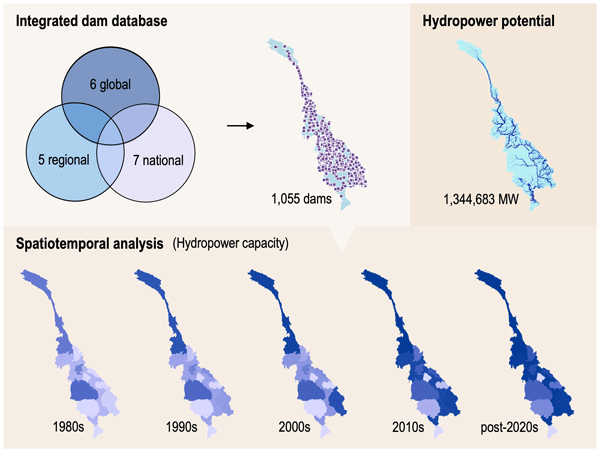
Dams have burgeoned in the Mekong, but information on dams is scattered and inconsistent. Up-to-date evaluation of dams is unavailable, and basin-wide hydropower potential has yet to be systematically assessed. We present a comprehensive database of 1055 dams, a spatiotemporal analysis of the dams, and a total hydropower potential of 1 334 683 MW. Considering projected dam development and hydropower potential, the vulnerability and the need for better dam management may be highest in Laos.
X. He, S. Jiang, S. He, Q. Li, W. Jiang, and L. Wang
Int. Arch. Photogramm. Remote Sens. Spatial Inf. Sci., XLVIII-1-W2-2023, 1635–1642, https://doi.org/10.5194/isprs-archives-XLVIII-1-W2-2023-1635-2023, https://doi.org/10.5194/isprs-archives-XLVIII-1-W2-2023-1635-2023, 2023
J. Liu, Y. Ma, S. Jiang, Q. Li, W. Jiang, and L. Wang
Int. Arch. Photogramm. Remote Sens. Spatial Inf. Sci., XLVIII-1-W2-2023, 1059–1065, https://doi.org/10.5194/isprs-archives-XLVIII-1-W2-2023-1059-2023, https://doi.org/10.5194/isprs-archives-XLVIII-1-W2-2023-1059-2023, 2023
Jingyu Wang, Xianfeng Wang, Edward Park, and Yun Lin
Nat. Hazards Earth Syst. Sci. Discuss., https://doi.org/10.5194/nhess-2023-100, https://doi.org/10.5194/nhess-2023-100, 2023
Manuscript not accepted for further review
Short summary
Short summary
Building upon the findings in a preceding study by the authors (Wang et al., 2023), this brief communication successfully applied the soil moisture-based tornado damage track detection method to the 24–25 March 2023 Mississippi outbreak. This study also found that the notable discrepancies between spotter reports and ground survey assessments at the tornado early stage can be reconciled using the new method.
Enner Alcântara, José A. Marengo, José Mantovani, Luciana R. Londe, Rachel Lau Yu San, Edward Park, Yunung Nina Lin, Jingyu Wang, Tatiana Mendes, Ana Paula Cunha, Luana Pampuch, Marcelo Seluchi, Silvio Simões, Luz Adriana Cuartas, Demerval Goncalves, Klécia Massi, Regina Alvalá, Osvaldo Moraes, Carlos Souza Filho, Rodolfo Mendes, and Carlos Nobre
Nat. Hazards Earth Syst. Sci., 23, 1157–1175, https://doi.org/10.5194/nhess-23-1157-2023, https://doi.org/10.5194/nhess-23-1157-2023, 2023
Short summary
Short summary
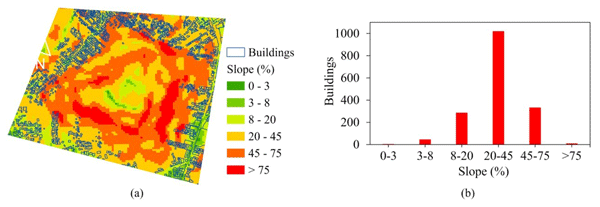
The municipality of Petrópolis (approximately 305 687 inhabitants) is nestled in the mountains 68 km outside the city of Rio de Janeiro. On 15 February 2022, the city of Petrópolis in Rio de Janeiro, Brazil, received an unusually high volume of rain within 3 h (258 mm). This resulted in flash floods and subsequent landslides that caused 231 fatalities, the deadliest landslide disaster recorded in Petrópolis. This work shows how the disaster was triggered.
Qinke Sun, Jiayi Fang, Xuewei Dang, Kepeng Xu, Yongqiang Fang, Xia Li, and Min Liu
Nat. Hazards Earth Syst. Sci., 22, 3815–3829, https://doi.org/10.5194/nhess-22-3815-2022, https://doi.org/10.5194/nhess-22-3815-2022, 2022
Short summary
Short summary
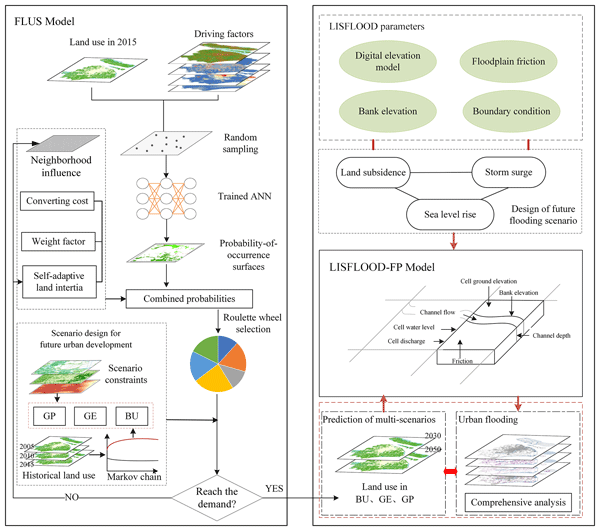
Flooding by extreme weather events and human activities can lead to catastrophic impacts in coastal areas. The research illustrates the importance of assessing the performance of different future urban development scenarios in response to climate change, and the simulation study of urban risks will prove to decision makers that incorporating disaster prevention measures into urban development plans will help reduce disaster losses and improve the ability of urban systems to respond to floods.
B. Fang, W. Tu, M. Li, J. Cao, W. Gao, Y. Yue, and Q. Li
Int. Arch. Photogramm. Remote Sens. Spatial Inf. Sci., XLIII-B4-2022, 521–528, https://doi.org/10.5194/isprs-archives-XLIII-B4-2022-521-2022, https://doi.org/10.5194/isprs-archives-XLIII-B4-2022-521-2022, 2022
Cited articles
Amani, M., Ghorbanian, A., Ahmadi, S. A., Kakooei, M., Moghimi, A., Mirmazloumi, S. M., Moghaddam, S. H. A., Mahdavi, S., Ghahremanloo, M., Parsian, S., Wu, Q., and Brisco, B.: Google Earth Engine Cloud Computing Platform for Remote Sensing Big Data Applications: A Comprehensive Review, IEEE J. Sel. Top. Appl. Earth Obs., 13, 5326–5350, https://doi.org/10.1109/JSTARS.2020.3021052, 2020.
Baetens, L., Desjardins, C., and Hagolle, O.: Validation of Copernicus Sentinel-2 Cloud Masks Obtained from MAJA, Sen2Cor, and FMask Processors Using Reference Cloud Masks Generated with a Supervised Active Learning Procedure, Remote Sens., 11, https://doi.org/10.3390/rs11040433, 2019.
Bishop-Taylor, R., Sagar, S., Lymburner, L., and Beaman, R. J.: Between the tides: Modelling the elevation of Australia's exposed intertidal zone at continental scale, Estuar. Coast. Shelf S., 223, 115–128, https://doi.org/10.1016/j.ecss.2019.03.006, 2019.
Branco, P., Torgo, L., and Ribeiro, R. P.: SMOGN: a Pre-processing Approach for Imbalanced Regression, in: Proceedings of Machine Learning Research, 74, 36–50, https://proceedings.mlr.press/v74/branco17a.html (last access: 29 June 2026), 2017.
Brown, C. F., Brumby, S. P., Guzder-Williams, B., Birch, T., Hyde, S. B., Mazzariello, J., Czerwinski, W., Pasquarella, V. J., Haertel, R., Ilyushchenko, S., Schwehr, K., Weisse, M., Stolle, F., Hanson, C., Guinan, O., Moore, R., and Tait, A. M.: Dynamic World, Near real-time global 10 m land use land cover mapping, Sci. Data, 9, 251, https://doi.org/10.1038/s41597-022-01307-4, 2022.
Burvingt, O., Castelle, B., Marieu, V., Lubac, B., Nicolae Lerma, A., and Robin, N.: Using Pleiades Satellite Imagery to Monitor Multi-Annual Coastal Dune Morphological Changes, Remote Sens., 17, https://doi.org/10.3390/rs17091522, 2025.
Caffyn, A., Prosser, B., and Jobbins, G.: Socio-economic framework – A framework for the analysis of socio-economic impacts on beach environments, in: Baseline research for the integrated sustainable management of Mediterranean sensitive coastal ecosystems: a manual for coastal managers, scientists and all those studying coastal processes and management in the Mediterranean, edited by: Scapini, F., Istituto Agronomico per l'Oltremare, Florence, Italy, 37–50, https://www.bio.unifi.it/upload/sub/progetti/meco/MECO_manual.pdf (last access: 29 June 2026), 2002.
Casella, E., Drechsel, J., Winter, C., Benninghoff, M., and Rovere, A.: Accuracy of sand beach topography surveying by drones and photogrammetry, Geo-Mar. Lett., 40, 255–268, https://doi.org/10.1007/s00367-020-00638-8, 2020.
Chawla, N., Bowyer, K., Hall, L., and Kegelmeyer, W.: SMOTE: Synthetic Minority Over-sampling Technique, arXiv [preprint], https://doi.org/10.1613/jair.953, 2002.
Chen, C., Zhang, C., Tian, B., Wu, W., and Zhou, Y.: Tide2Topo: A new method for mapping intertidal topography accurately in complex estuaries and bays with time-series Sentinel-2 images, ISPRS J. Photogramm., 200, 55–72, https://doi.org/10.1016/j.isprsjprs.2023.05.004, 2023.
Chen, T. and Guestrin, C.: XGBoost: A Scalable Tree Boosting System, in: Proceedings of the 22nd ACM SIGKDD International Conference on Knowledge Discovery and Data Mining, San Francisco, CA, USA785–794, https://doi.org/10.1145/2939672.2939785, 2016.
Defeo, O., McLachlan, A., Armitage, D., Elliott, M., and Pittman, J.: Sandy beach social–ecological systems at risk: regime shifts, collapses, and governance challenges, Front. Ecol. Environ., 19, 564–573, https://doi.org/10.1002/fee.2406, 2021.
Dusseau, D., Zobel, Z., and Schwalm, C. R.: DiluviumDEM: Enhanced accuracy in global coastal digital elevation models, Remote Sens. Environ., 298, 113812, https://doi.org/10.1016/j.rse.2023.113812, 2023.
ESA: Copernicus Global Digital Elevation Model, European Space Agency [data set], https://doi.org/10.5270/ESA-c5d3d65, 2024.
Farr, T. G., Rosen, P. A., Caro, E., Crippen, R., Duren, R., Hensley, S., Kobrick, M., Paller, M., Rodriguez, E., Roth, L., Seal, D., Shaffer, S., Shimada, J., Umland, J., Werner, M., Oskin, M., Burbank, D., and Alsdorf, D.: The Shuttle Radar Topography Mission, Rev. Geophys., 45, https://doi.org/10.1029/2005RG000183, 2007.
Fitton, J. M., Rennie, A. F., Hansom, J. D., and Muir, F. M. E.: Remotely sensed mapping of the intertidal zone: A Sentinel-2 and Google Earth Engine methodology, Remote Sens. Appl.: Soc. Environ., 22, 100499, https://doi.org/10.1016/j.rsase.2021.100499, 2021.
Graffin, M., Touzé, T., Bergsma, E. W. J., and Almar, R.: Towards a global assessment of sandy shorelines: Systematic extraction and validation of optical satellite-derived coastal indicators at various sites, Remote Sens. Environ., 331, 115033, https://doi.org/10.1016/j.rse.2025.115033, 2025.
Hamling, I. J., Wright, T. J., Hreinsdóttir, S., and Wallace, L. M.: A Snapshot of New Zealand's Dynamic Deformation Field From Envisat InSAR and GNSS Observations Between 2003 and 2011, Geophys. Res. Lett., 49, e2021GL096465, https://doi.org/10.1029/2021GL096465, 2022.
Hanley, M. E., Hoggart, S. P. G., Simmonds, D. J., Bichot, A., Colangelo, M. A., Bozzeda, F., Heurtefeux, H., Ondiviela, B., Ostrowski, R., Recio, M., Trude, R., Zawadzka-Kahlau, E., and Thompson, R. C.: Shifting sands? Coastal protection by sand banks, beaches and dunes, Coast. Eng., 87, 136–146, https://doi.org/10.1016/j.coastaleng.2013.10.020, 2014.
Hawker, L., Uhe, P., Paulo, L., Sosa, J., Savage, J., Sampson, C., and Neal, J.: A 30 m global map of elevation with forests and buildings removed, Environ. Res. Lett., 17, 024016, https://doi.org/10.1088/1748-9326/ac4d4f, 2022.
He, H. and Garcia, E. A.: Learning from Imbalanced Data, IEEE T. Knowl. Data En., 21, 1263–1284, https://doi.org/10.1109/TKDE.2008.239, 2009.
IPCC: Ocean, Cryosphere and Sea Level Change, Climate Change 2021 – The Physical Science Basis: Working Group I Contribution to the Sixth Assessment Report of the Intergovernmental Panel on Climate Change, Cambridge University Press, Cambridge, 1211–1362, ISBN 9781009157889, 2023.
Jacoby, W. G.: Loess:: a nonparametric, graphical tool for depicting relationships between variables, Elect. Stud., 19, 577–613, https://doi.org/10.1016/S0261-3794(99)00028-1, 2000.
Kroon, A., Davidson, M. A., Aarninkhof, S. G. J., Archetti, R., Armaroli, C., Gonzalez, M., Medri, S., Osorio, A., Aagaard, T., Holman, R. A., and Spanhoff, R.: Application of remote sensing video systems to coastline management problems, Coast. Eng., 54, 493–505, https://doi.org/10.1016/j.coastaleng.2007.01.004, 2007.
Kulp, S. A. and Strauss, B. H.: CoastalDEM: A global coastal digital elevation model improved from SRTM using a neural network, Remote Sens. Environ., 206, 231–239, https://doi.org/10.1016/j.rse.2017.12.026, 2018.
Lao, J., Wang, C., Zhu, X., Xi, X., Nie, S., Wang, J., Cheng, F., and Zhou, G.: Retrieving building height in urban areas using ICESat-2 photon-counting LiDAR data, Int. J. Appl. Earth Obs., 104, 102596, https://doi.org/10.1016/j.jag.2021.102596, 2021.
Li, M., Chen, B., Webster, C., Gong, P., and Xu, B.: The land-sea interface mapping: China's coastal land covers at 10 m for 2020, Sci. Bull., 67, 1750–1754, https://doi.org/10.1016/j.scib.2022.07.012, 2022.
Luijendijk, A., Hagenaars, G., Ranasinghe, R., Baart, F., Donchyts, G., and Aarninkhof, S.: The State of the World's Beaches, Sci. Rep., 8, 6641, https://doi.org/10.1038/s41598-018-24630-6, 2018.
Lundberg, S., Erion, G., Chen, H., DeGrave, A., Prutkin, J., Nair, B., Katz, R., Himmelfarb, J., Bansal, N., and Lee, S.-I.: From local explanations to global understanding with explainable AI for trees, Nat. Mach. Intell., 2, 56–67, https://doi.org/10.1038/s42256-019-0138-9, 2020.
Lundberg, S. M.: A Unified Approach to Interpreting Model Predictions, arXiv [preprint], https://doi.org/10.48550/arXiv.1705.07874, 2017.
Ma, Y., Wang, L., Xu, N., Zhang, S., Hua Wang, X., and Li, S.: Estimating coastal slope of sandy beach from ICESat-2: a case study in Texas, Environ. Res. Lett., 18, 044039, https://doi.org/10.1088/1748-9326/acc87d, 2023.
Mao, Y., Harris, D. L., Xie, Z., and Phinn, S.: Efficient measurement of large-scale decadal shoreline change with increased accuracy in tide-dominated coastal environments with Google Earth Engine, ISPRS J. Photogramm., 181, 385–399, https://doi.org/10.1016/j.isprsjprs.2021.09.021, 2021.
Markus, T., Neumann, T., Martino, A., Abdalati, W., Brunt, K., Csatho, B., Farrell, S., Fricker, H., Gardner, A., Harding, D., Jasinski, M., Kwok, R., Magruder, L., Lubin, D., Luthcke, S., Morison, J., Nelson, R., Neuenschwander, A., Palm, S., Popescu, S., Shum, C. K., Schutz, B. E., Smith, B., Yang, Y., and Zwally, J.: The Ice, Cloud, and land Elevation Satellite-2 (ICESat-2): Science requirements, concept, and implementation, Remote Sens. Environ., 190, 260–273, https://doi.org/10.1016/j.rse.2016.12.029, 2017.
Meng, J., Xu, D., Tao, Z., and Ge, Q.: Sandy Beach Extraction Method Based on Multi-Source Data and Feature Optimization: A Case in Fujian Province, China, Remote Sens., 17, https://doi.org/10.3390/rs17162754, 2025.
NASA: NASADEM Merged DEM Global 1 arc second V001, NASA Land Processes Distributed Active Archive Center [data set], https://doi.org/10.5067/MEASURES/NASADEM/NASADEM _HGT.001, 2020.
Nel, R., Campbell, E. E., Harris, L., Hauser, L., Schoeman, D. S., McLachlan, A., du Preez, D. R., Bezuidenhout, K., and Schlacher, T. A.: The status of sandy beach science: Past trends, progress, and possible futures, Estuar. Coast. Shelf S., 150, 1–10, https://doi.org/10.1016/j.ecss.2014.07.016, 2014.
Ni, M., Xu, N., Ou, Y., Yao, J., Li, Z., Mo, F., Huang, C., Xin, H., and Xu, H.: The first 10-m China's national-scale sandy beach map in 2022 derived from Sentinel-2 imagery, Int. J. Digit. Earth, 17, 2425163, https://doi.org/10.1080/17538947.2024.2425163, 2024.
Prakash Mohanty, M., Nithya, S., Nair, A. S., Indu, J., Ghosh, S., Mohan Bhatt, C., Srinivasa Rao, G., and Karmakar, S.: Sensitivity of various topographic data in flood management: Implications on inundation mapping over large data-scarce regions, J. Hydrol., 590, 125523, https://doi.org/10.1016/j.jhydrol.2020.125523, 2020.
Pronk, M.: DeltaDTM v1.1: A global coastal digital terrain model (Version 4), 4TU.ResearchData [data set], https://doi.org/10.4121/21997565.v4, 2024.
Pronk, M., Hooijer, A., Eilander, D., Haag, A., de Jong, T., Vousdoukas, M., Vernimmen, R., Ledoux, H., and Eleveld, M.: DeltaDTM: A global coastal digital terrain model, Sci. Data, 11, 273, https://doi.org/10.1038/s41597-024-03091-9, 2024.
Salameh, E., Frappart, F., Almar, R., Baptista, P., Heygster, G., Lubac, B., Raucoules, D., Almeida, L. P., Bergsma, E. W. J., Capo, S., De Michele, M., Idier, D., Li, Z., Marieu, V., Poupardin, A., Silva, P. A., Turki, I., and Laignel, B.: Monitoring Beach Topography and Nearshore Bathymetry Using Spaceborne Remote Sensing: A Review, Remote Sens., 11, https://doi.org/10.3390/rs11192212, 2019.
Salameh, E., Desroches, D., Deloffre, J., Fjørtoft, R., Mendoza, E. T., Turki, I., Froideval, L., Levaillant, R., Déchamps, S., Picot, N., Laignel, B., and Frappart, F.: Evaluating SWOT's interferometric capabilities for mapping intertidal topography, Remote Sens. Environ., 314, 114401, https://doi.org/10.1016/j.rse.2024.114401, 2024.
Schmelz, W. J. and Psuty, N. P.: Application of geomorphological maps and LiDAR to volumetrically measure coastal geomorphological change from Hurricane Sandy at Fire Island National Seashore, Geomorphology, 408, 108262, https://doi.org/10.1016/j.geomorph.2022.108262, 2022.
Shwartz-Ziv, R. and Armon, A.: Tabular data: Deep learning is not all you need, Inform. Fusion, 81, 84–90, https://doi.org/10.1016/j.inffus.2021.11.011, 2022.
Snyder, J. P.: Map projections: a working manual, U.S. Geological Survey Professional Paper 1395, U.S. Government Printing Office, Washington, D.C., https://doi.org/10.3133/pp1395, 1987.
Stockdon, H. F., Holman, R. A., Howd, P. A., and Sallenger, A. H.: Empirical parameterization of setup, swash, and runup, Coast. Eng., 53, 573–588, https://doi.org/10.1016/j.coastaleng.2005.12.005, 2006.
Takaku, J., Tadono, T., Tsutsui, K., and Ichikawa, M.: VALIDATION OF ”AW3D” GLOBAL DSM GENERATED FROM ALOS PRISM, ISPRS Ann. Photogramm. Remote Sens. Spatial Inf. Sci., III-4, 25–31, https://doi.org/10.5194/isprs-annals-III-4-25-2016, 2016.
Turner, I. L., Harley, M. D., Short, A. D., Simmons, J. A., Bracs, M. A., Phillips, M. S., and Splinter, K. D.: A multi-decade dataset of monthly beach profile surveys and inshore wave forcing at Narrabeen, Australia, Sci. Data, 3, 160024, https://doi.org/10.1038/sdata.2016.24, 2016.
Vernimmen, R. and Hooijer, A.: New LiDAR-Based Elevation Model Shows Greatest Increase in Global Coastal Exposure to Flooding to Be Caused by Early-Stage Sea-Level Rise, Earth's Future, 11, e2022EF002880, https://doi.org/10.1029/2022EF002880, 2023.
Vitousek, S., Buscombe, D., Vos, K., Barnard, P. L., Ritchie, A. C., and Warrick, J. A.: The future of coastal monitoring through satellite remote sensing, Cambridge Prisms: Coastal Futures, 1, e10, https://doi.org/10.1017/cft.2022.4, 2023.
Vos, K., Harley, M. D., Splinter, K. D., Simmons, J. A., and Turner, I. L.: Sub-annual to multi-decadal shoreline variability from publicly available satellite imagery, Coast. Eng., 150, 160–174, https://doi.org/10.1016/j.coastaleng.2019.04.004, 2019.
Vos, K., Harley, M. D., Splinter, K. D., Walker, A., and Turner, I. L.: Beach Slopes From Satellite-Derived Shorelines, Geophys. Res. Lett., 47, e2020GL088365, https://doi.org/10.1029/2020GL088365, 2020.
Vousdoukas, M. I., Ranasinghe, R., Mentaschi, L., Plomaritis, T. A., Athanasiou, P., Luijendijk, A., and Feyen, L.: Sandy coastlines under threat of erosion, Nat. Clim. Change, 10, 260–263, https://doi.org/10.1038/s41558-020-0697-0, 2020.
Wang, Y.: New Zealand National-Scale Beach Topography Dataset (30 m): A Fusion of ICESat-2 and Sentinel-2, Zenodo [data set], https://doi.org/10.5281/zenodo.17785546, 2025.
Wang, Y. and Sherry Ni, X.: A XGBoost Risk Model via Feature Selection and Bayesian Hyper-Parameter Optimization, International Journal of Database Management Systems, 11, 1–17, https://doi.org/10.5121/ijdms.2019.11101, 2019.
Wang, Y., Huang, C., Ma, Y., Ma, X., Ou, Y., Chen, C., Li, B., Zhou, S., Jia, D., Wang, Z., Li, Q., and Xu, N.: Combining Airborne LiDAR Data and Optical Imagery for Improved National-Scale Beach Topography Estimation: A Case Study in New Zealand, IEEE T. Geosci. Remote, 63, 1–23, https://doi.org/10.1109/TGRS.2025.3635047, 2025.
Wen, Z., Wang, Q., Ma, Y., Jacinthe, P. A., Liu, G., Li, S., Shang, Y., Tao, H., Fang, C., Lyu, L., Zhang, B., and Song, K.: Remote estimates of suspended particulate matter in global lakes using machine learning models, Int. Soil Water Conserv. Res., 12, 200–216, https://doi.org/10.1016/j.iswcr.2023.07.002, 2024.
Xu, N. and Gong, P.: Significant coastline changes in China during 1991–2015 tracked by Landsat data, Sci. Bull., 63, 883–886, https://doi.org/10.1016/j.scib.2018.05.032, 2018.
Xu, N., Zhou, C., and Zhang, S.: Inferring coastal slope of sandy beaches from remote sensing imagery and tidal level data, Geocarto Int., 39, 2405141, https://doi.org/10.1080/10106049.2024.2405141, 2024a.
Xu, N., Wang, L., Xu, H., Ma, Y., Li, Y., and Wang, X. H.: Deriving Accurate Intertidal Topography for Sandy Beaches Using ICESat-2 Data and Sentinel-2 Imagery, J. Remote Sens., 4, https://doi.org/10.34133/remotesensing.0305, 2024b.
Xu, N., Wang, L., Ma, Y., Ma, X., and Wang, X. H.: Constructing intertidal topography for sandy beaches by combining Sentinel-2 imagery and water level data, Geo-Spatial Inf. Sci., 1–15, https://doi.org/10.1080/10095020.2024.2449453, 2025.
Yamazaki, D., Ikeshima, D., Tawatari, R., Yamaguchi, T., O'Loughlin, F., Neal, J. C., Sampson, C. C., Kanae, S., and Bates, P. D.: A high-accuracy map of global terrain elevations, Geophys. Res. Lett., 44, 5844–5853, https://doi.org/10.1002/2017GL072874, 2017.
Yao, S., Tan, K., Wang, Y., Zhang, W., Liu, S., and Yang, J.: Estimating terrain elevations at 10 m resolution by Integrating random forest machine learning model and ICESat-2, Sentinel-1, and Sentinel-2 satellite remotely sensed data, Int. J. Appl. Earth Obs., 132, 104010, https://doi.org/10.1016/j.jag.2024.104010, 2024.
Yao, S., Zhu, J., Zhang, W., Tian, B., Sun, W., Zhang, W., Xie, W., Tao, P., Chen, C., and Tan, K.: Integrating Temporal Vegetation and Inundation Dynamics for Elevation Mapping Across the Entire Turbid Estuarine Intertidal Zones Using ICESat-2 and Sentinel-2 Data, IEEE J. Sel. Top. Appl. Earth Obs., 18, 14517–14534, https://doi.org/10.1109/JSTARS.2025.3571791, 2025.
Ye, M., Yang, C., Zhang, X., Li, S., Peng, X., Li, Y., and Chen, T.: Shallow Water Bathymetry Inversion Based on Machine Learning Using ICESat-2 and Sentinel-2 Data, Remote Sens., 16, https://doi.org/10.3390/rs16234603, 2024.
Zhang, S., Xu, N., Zhang, R., Xing, J., and Xiao, X.: Global-scale analysis of coastline expansion in the era of rising sea levels, J. Oper. Oceanogr., 18, 164–182, https://doi.org/10.1080/1755876X.2025.2531716, 2025.
Zhang, W., Xu, Y., Hoitink, A. J. F., Sassi, M. G., Zheng, J., Chen, X., and Zhang, C.: Morphological change in the Pearl River Delta, China, Mar. Geol., 363, 202–219, https://doi.org/10.1016/j.margeo.2015.02.012, 2015.
Zhang, Z., Xu, N., Li, Y., and Li, Y.: Sub-continental-scale mapping of tidal wetland composition for East Asia: A novel algorithm integrating satellite tide-level and phenological features, Remote Sens. Environ., 269, 112799, https://doi.org/10.1016/j.rse.2021.112799, 2022.
Zhao, C., Qin, C.-Z., and Teng, J.: Mapping large-area tidal flats without the dependence on tidal elevations: A case study of Southern China, ISPRS J. Photogramm., 159, 256–270, https://doi.org/10.1016/j.isprsjprs.2019.11.022, 2020.
Editorial statement
Although the study has a narrow focus on New Zealand's shores, it stands as an exemplary paper in identifying a clear research gap and motivating the need for this data set. It effectively demonstrates how applying a rigorous methodology can corroborate physical realism while utilizing indirect observations with remote sensing and machine learning. This, coupled with the discussion on strengths and weaknesses, underscores the relevance of the data set for the target community and a potential broader audience.
Although the study has a narrow focus on New Zealand's shores, it stands as an exemplary paper...
Short summary
We developed NZ-BeachTopo30, a full-coverage 30 m beach topography dataset for New Zealand, by integrating Ice, Cloud, and land Elevation Satellite-2 (ICESat-2) and Sentinel-2 data with extreme gradient boosting (XGBoost). It expands valid intertidal coverage by 145.8 % and achieves a 0.94 m root mean square error against airborne light detection and ranging (airborne LiDAR) data, supporting sea-level rise and coastal erosion planning.
We developed NZ-BeachTopo30, a full-coverage 30 m beach topography dataset for New Zealand, by...


Altmetrics
Final-revised paper
Preprint