Articles | Volume 18, issue 6
https://doi.org/10.5194/essd-18-3833-2026
© Author(s) 2026. This work is distributed under
the Creative Commons Attribution 4.0 License.
the Creative Commons Attribution 4.0 License.
https://doi.org/10.5194/essd-18-3833-2026
© Author(s) 2026. This work is distributed under
the Creative Commons Attribution 4.0 License.
the Creative Commons Attribution 4.0 License.
Data description article
| 
04 Jun 2026
Data description article |
| 04 Jun 2026
| 04 Jun 2026
The GSFC Lidar Observation and Validation Experiment (GLOVE) field campaign
John E. Yorks
CORRESPONDING AUTHOR

NASA Goddard Space Flight Center, Greenbelt, MD, USA
Edward P. Nowottnick
NASA Goddard Space Flight Center, Greenbelt, MD, USA
NASA Headquarters, Washington, DC, USA
Steven Platnick
NASA Goddard Space Flight Center, Greenbelt, MD, USA
Kerry G. Meyer
NASA Goddard Space Flight Center, Greenbelt, MD, USA
Matthew Walker McLinden
NASA Goddard Space Flight Center, Greenbelt, MD, USA
Meloe S. F. Kacenelenbogen
NASA Goddard Space Flight Center, Greenbelt, MD, USA
Kenneth E. Christian
Earth System Science Interdisciplinary Center, University of Maryland College Park, College Park, MD, USA
Joseph A. Finlon
Earth System Science Interdisciplinary Center, University of Maryland College Park, College Park, MD, USA
Natalie A. Midzak
NASA Goddard Space Flight Center, Greenbelt, MD, USA
Natalia Roldán-Henao
Department of Atmospheric and Oceanic Sciences, University of Maryland College Park, College Park, MD, USA
Patrick A. Selmer
Earth System Science Interdisciplinary Center, University of Maryland College Park, College Park, MD, USA
Matthew J. McGill
Department of Chemical and Biochemical Engineering, University of Iowa, Iowa City, IA, USA
Erica K. Dolinar
US Naval Research Laboratory, Marine Meteorology Division, Monterey, CA, USA
Charles N. Helms
Earth System Science Interdisciplinary Center, University of Maryland College Park, College Park, MD, USA
Robert Koopman
European Space Agency, ESA – ESTEC, Noordwijk, the Netherlands
Jonas von Bismark
European Space Agency, ESA – ESTEC, Noordwijk, the Netherlands
Montserrat Pińol Solé
European Space Agency, ESA – ESTEC, Noordwijk, the Netherlands
Related authors
Vincent Noel, Hélène Chepfer, Christelle Barthe, and John Yorks
Atmos. Chem. Phys., 26, 5603–5615, https://doi.org/10.5194/acp-26-5603-2026, https://doi.org/10.5194/acp-26-5603-2026, 2026
Short summary
Short summary
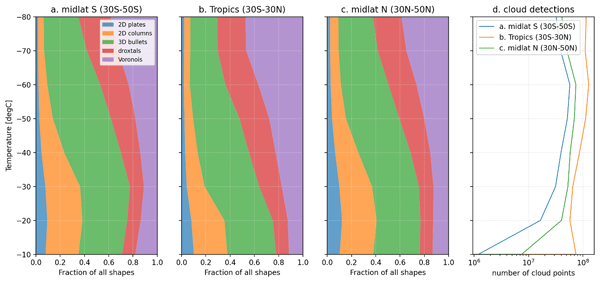
The shape of crystals in ice clouds drives their impact on the earth energy balance. These shapes are very variable and hard to categorize. In this paper, we use a recently developed method to classify clouds in categories of crystal shape. We apply this method to 33 months of measurements from a lidar in space. We discuss how the importance of shape categories changes with the time of the day. These results could be useful for people who try to simulate clouds in atmospheric models.
Anthony La Luna, Zhibo Zhang, Qianqian Song, Hongbin Yu, John E. Yorks, and Ping Yang
EGUsphere, https://doi.org/10.22541/au.177368350.03675968/v1, https://doi.org/10.22541/au.177368350.03675968/v1, 2026
Short summary
Short summary
Mineral dust blown from deserts affects air quality and climate worldwide. Scientists use laser instruments on satellites to detect and measure dust. We discovered that very large, iron-rich dust particles produce signals that fool these instruments into misidentifying them as pollution or smoke. Using light scattering theory, we showed this confusion follows universal physical laws regardless of dust shape – helping scientists better interpret next-generation satellite measurements.
Zhipeng Qu, Cuong Nguyen, Paloma Borque, Alexei Korolev, Howard W. Barker, Keyvan Ranjbar, Lei Liu, Zen Mariani, Meriem Kacimi, Melissa Cholette, Ivan Heckman, Kenny Bala, Natalia Bliankinshtein, Leonid Nichman, Benjamin Riot-Bretêcher, Yi Huang, Jason N. S. Cole, Raphaël Peroni, Stephen Holden, Robert Reed, Robert Crawford, Daniel Michelson, Eve Bigras, Michael Wheeler, John Gyakum, Jason A. Milbrandt, Julie M. Thériault, Kaley A. Walker, Mengistu Wolde, Jean-Pierre Blanchet, Yann Blanchard, Jonas von Bismark, Rob Koopman, Montserrat Piñol Solé, Bernat Puigdomènech Treserras, Robin J. Hogan, and Shannon L. Mason
EGUsphere, https://doi.org/10.5194/egusphere-2026-5347, https://doi.org/10.5194/egusphere-2026-5347, 2026
This preprint is open for discussion and under review for Atmospheric Measurement Techniques (AMT).
Short summary
Short summary
The ECALOT campaign brought together aircraft and ground-based observations in the Ottawa–Montreal region to help evaluate the European Space Agency’s EarthCARE satellite, which studies clouds, aerosols, radiation, and their interactions. By comparing satellite measurements with multi-platform remote-sensing and in situ observations collected during the campaign, ECALOT provides an integrated approach to evaluating EarthCARE products at different stages of the data processing chain.
Jie Gong, Yuli Liu, Joseph A. Finlon, Ian S. Adams, Rachael A. Kroodsma, Dong L. Wu, and Ralf Bennartz
Atmos. Chem. Phys., 26, 12457–12477, https://doi.org/10.5194/acp-26-12457-2026, https://doi.org/10.5194/acp-26-12457-2026, 2026
Short summary
Short summary
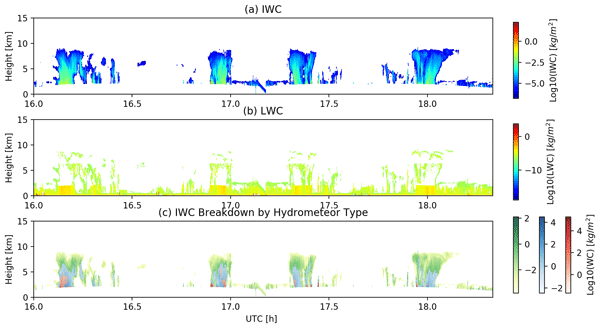
This is a closure and polarimetric study using a variety of airborne observations to disentangle hydrometeor microphysical properties and their vertical distribution. This work paves a concrete step in assuring timely delivery of high-quality science products for several future sub-mm radiometer missions as well as possibilities of new science products beyond the mission requirements.
Adeleke S. Ademakinwa, Zhibo Zhang, Daniel Miller, Kerry G. Meyer, Steven Platnick, Zahid H. Tushar, Sanjay Purushotham, and Jianwu Wang
Atmos. Chem. Phys., 26, 11449–11471, https://doi.org/10.5194/acp-26-11449-2026, https://doi.org/10.5194/acp-26-11449-2026, 2026
Short summary
Short summary
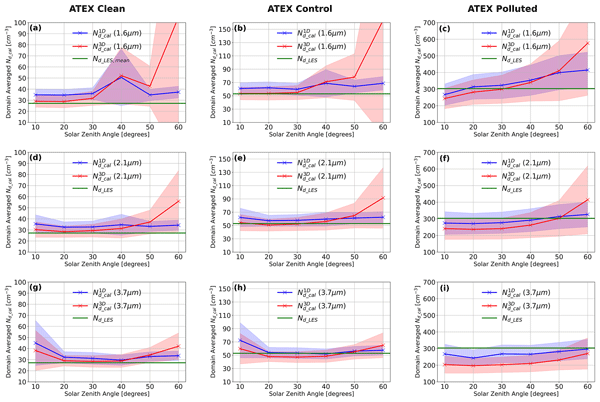
Many satellites measure cloud properties using reflected light from droplets, but most assume simple cloud structures, which can reduce accuracy. Using cloud simulations, we tested how these errors affect droplet number in a given volume and climate studies. We found that while they strongly affect small-scales, at the larger-scales used by satellites the errors mostly cancel out at low- to moderate-liquid water path (LWP) and cloud optical depth regimes, meaning satellite data remain reliable for climate research.
Patrick C. Taylor, Armin Sorooshian, Rei Ueyama, Sebastian Schmidt, Ihab Abboud, Quincy Allison, Kevin Barry, Sebastian Becker, Holly A. Bender, Joseph R. Bennett, James B. Blair, Niklas Bohn, Linette Boisvert, Matthew D. Brown, Roelof Bruintjes, Anthony Bucholtz, Megan Buzanowicz, Brian Cairns, Filippo Calì Quaglia, Eduard Chemyakin, Bo Chen, Gao Chen, Hong Chen, Yu-Wen Chen, Zezhen Cheng, Swarup China, Dan Chirica, Yonghoon Choi, Peter Colarco, Brian Collister, Ewan Crosbie, Maurice J. Cross, Janet Daniels, Paul DeMott, Joshua P. DiGangi, Alcide Giorgio di Sarra, Glenn S. Diskin, Erica K. Dolinar, Eva-Lou Edwards, Samuel Ephraim, Nikolaos Evangeliou, Romanos Foskinis, Francesca Gallo, Lan Gao, José Luis Gómez-Amo, Daisy Gonzalez, Christine Groot Zwaaftink, Pawan Gupta, Ivan Heckman, Michael Hendrickson, Miguel Ricardo A. Hilario, Ken Hirata, Michelle Hofton, Andrew L. Holen, Ulas Im, Alia L. Khan, Ralph Kahn, Alexei V. Korolev, Sonia Kreidenweis, Thomas Krumpen, Nathan Kurtz, Leslie Lait, Bradley Lamkin, Jack Landy, Nurun Nahar Lata, Paul Lawson, Samuel LeBlanc, Sean Leavor, Jing Li, Thorsten Markus, Hal Maring, Andreas H. Massling, Camille Mavis, Flynn McGinnity, Kerry Meyer, Gabriel Mojica, Richard H. Moore, Parker Morris, Giovanni Muscari, Vikas Nataraja, Amin R. Nehrir, Athanasios Nenes, Edward P. Nowottnick, Matteo Ottaviani, Chelsea Parker, Ryan Patnaude, Michael Perez, Russell J. Perkins, Colten Peterson, Alek Petty, Stevie Phothisane, Chris Polashenski, Kerri A. Pratt, Kayla M. Preisler, John Prytherch, David Rabine, Jens Redemann, Ju-Mee Ryoo, Joseph S. Schlosser, Vanessa Selimovic, Michael A. Shook, Morgan Silverman, Henrik Skov, Alexander Smirnov, Cassidy Soloff, Amy Solomon, Snorre Stamnes, Azusa Takeishi, David R. Thompson, K. Lee Thornhill, Rachel Tilling, Michael Tjernström, Monica Tosco, Pedro C. Valdelomar, David Van Gilst, Jian Wang, Zhien Wang, Andrzej Wasilewski, Manfred Wendisch, Brent Wilder, Edward L. Winstead, Albert Wu, Peng Xian, Lauren M. Zamora, Jiaoshi Zhang, Lei Zhang, Lu Zhang, Luke Ziemba, and Paquita Zuidema
Earth Syst. Sci. Data Discuss., https://doi.org/10.5194/essd-2026-241, https://doi.org/10.5194/essd-2026-241, 2026
Preprint under review for ESSD
Short summary
Short summary
This article summarizes the data sets collected during the Arctic Radiation Cloud aerosol Sea ice Interaction eXperiment (ARCSIX), NASA's most comprehensive Arctic field campaign to date. The overarching goal was to quantify the contributions of surface, clouds, aerosol particles, and precipitation to summer sea ice melt. This paper describes the ARCSIX implementation including the flight strategy, instruments, complementary data sets, access, and usage details.
Matthew L. Walker McLinden, Bing Lin, Nikki Prive, Gerald M. Heymsfield, Lihua Li, Steven Harrah, Peter Pantina, Kevin Horgan, and Skylar Hoffert
EGUsphere, https://doi.org/10.5194/egusphere-2026-1186, https://doi.org/10.5194/egusphere-2026-1186, 2026
This preprint is open for discussion and under review for Atmospheric Measurement Techniques (AMT).
Short summary
Short summary
Accurate atmospheric pressure measurements are critical for weather forecasting, but there is no operational method to measure it remotely. The Microwave Barometric Radar and Sounder (MBARS) is a new radar that uses the absorption of microwave signals by atmospheric oxygen to retrieve sea level pressure from aircraft. Data from flights on NASA’s ER-2 aircraft demonstrate successful retrievals, showing this technique could be deployed through airborne campaigns and future satellite missions.
Silke Groß, Florian Ewald, Bjorn Stevens, Martin Wirth, Georgios Dekoutsidis, André Ehrlich, Dimitra Kouklaki, Konstantin Krüger, Sophie Rosenburg, Lea Volkmer, Jonas von Bismark, Lutz Hirsch, Anna E. Luebke, Eleni Marinou, Bernhard Mayer, Montserrat Pinol Sole, Manfred Wendisch, Julia Windmiller, Vassilis Amiridis, Rob Koopman, Takuji Kubota, and Markus Rapp
Atmos. Meas. Tech., 19, 3933–3959, https://doi.org/10.5194/amt-19-3933-2026, https://doi.org/10.5194/amt-19-3933-2026, 2026
Short summary
Short summary
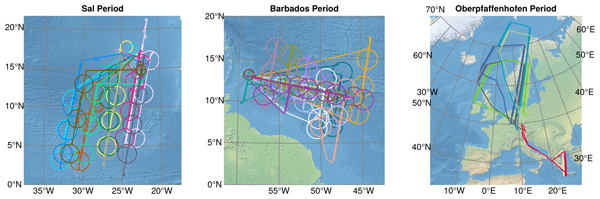
In May 2024 the joint European Space Agency (ESA) and the Japan Aerospace Exploration Agency (JAXA) mission EarthCARE was launched. A similar payload as on the satellite was set up on the German research aircraft HALO, and deployed during an extensive measurement campaign to validated the satellite. We present our instrumentation, the measurements, and its potential for the validation of EarthCARE. We show first validation results and assessments of the EarthCARE data quality.
Sebastian Becker, Konrad Sebastian Schmidt, Hong Chen, Yu-Wen Chen, Kerry G. Meyer, Colten A. Peterson, and Manfred Wendisch
EGUsphere, https://doi.org/10.5194/egusphere-2026-2210, https://doi.org/10.5194/egusphere-2026-2210, 2026
Short summary
Short summary
The melt of Arctic sea ice depends on the radiation budget at the surface, which is largely controlled by the presence of clouds. This cloud radiative effect depends on both cloud properties and surface reflection. Comparing cloud properties from a satellite retrieval and surface reflection data assumed for this retrieval to aircraft measurements, it is found that the assumed surface reflection is too low, leading to a cooling effect of clouds on the surface although a warming effect is present.
Vincent Noel, Hélène Chepfer, Christelle Barthe, and John Yorks
Atmos. Chem. Phys., 26, 5603–5615, https://doi.org/10.5194/acp-26-5603-2026, https://doi.org/10.5194/acp-26-5603-2026, 2026
Short summary
Short summary
The shape of crystals in ice clouds drives their impact on the earth energy balance. These shapes are very variable and hard to categorize. In this paper, we use a recently developed method to classify clouds in categories of crystal shape. We apply this method to 33 months of measurements from a lidar in space. We discuss how the importance of shape categories changes with the time of the day. These results could be useful for people who try to simulate clouds in atmospheric models.
Zhuocan Xu, Pavlos Kollias, Susmitha Sasikumar, Alessandro Battaglia, Bernat Puigdomènech Treserras, and Matthew L. Walker McLinden
Atmos. Chem. Phys., 26, 4619–4632, https://doi.org/10.5194/acp-26-4619-2026, https://doi.org/10.5194/acp-26-4619-2026, 2026
Short summary
Short summary
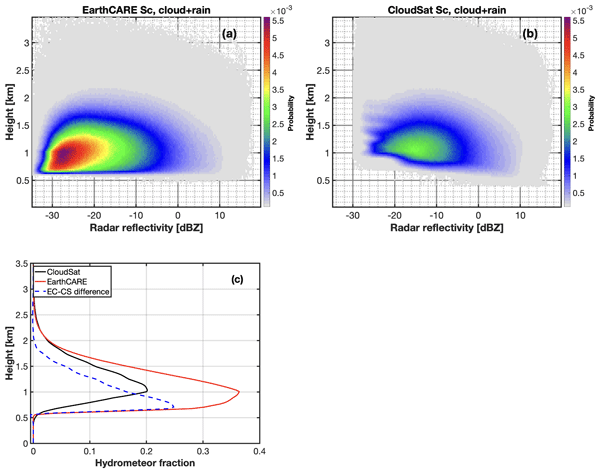
It has been a challenge to observe marine low-level clouds from space. A comparison with CloudSat climatology in this study shows a greatly improved detection of marine stratocumulus clouds and drizzle occurrence by the EarthCARE radar due to the enhanced sensitivity and full suppression of ground clutter above 0.5 km. A more accurate observational constraint on marine low clouds is now available on global scale.
Anthony La Luna, Zhibo Zhang, Qianqian Song, Hongbin Yu, John E. Yorks, and Ping Yang
EGUsphere, https://doi.org/10.22541/au.177368350.03675968/v1, https://doi.org/10.22541/au.177368350.03675968/v1, 2026
Short summary
Short summary
Mineral dust blown from deserts affects air quality and climate worldwide. Scientists use laser instruments on satellites to detect and measure dust. We discovered that very large, iron-rich dust particles produce signals that fool these instruments into misidentifying them as pollution or smoke. Using light scattering theory, we showed this confusion follows universal physical laws regardless of dust shape – helping scientists better interpret next-generation satellite measurements.
Athena Augusta Floutsi, Konstantinos Rizos, Dimitri Trapon, Ronny Engelmann, Dietrich Althausen, Eleni Marinou, Peristera Paschou, Julian Hofer, Emmanouil Proestakis, Henriette Gebauer, Annett Skupin, Albert Ansmann, Thorsten Fehr, Timon Hummel, Rob Koopman, Vassilis Amiridis, Ulla Wandinger, and Holger Baars
Atmos. Meas. Tech., 19, 1901–1925, https://doi.org/10.5194/amt-19-1901-2026, https://doi.org/10.5194/amt-19-1901-2026, 2026
Short summary
Short summary
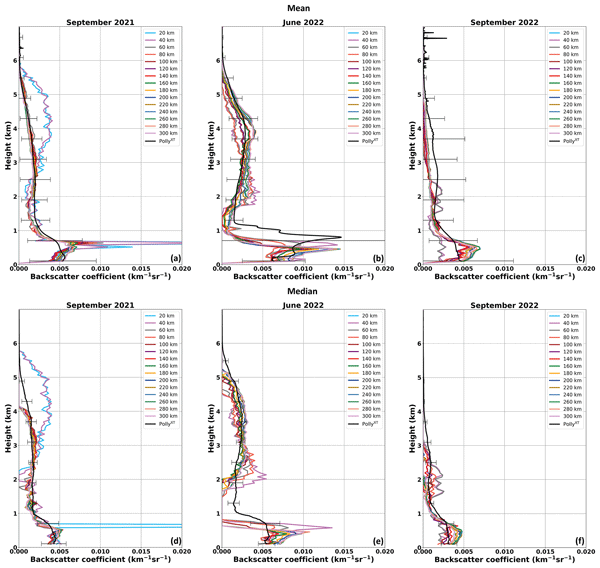
We assess the representativeness of a remote ground-based station in Mindelo, Cabo Verde by utilizing continuous observations of a ground-based multiwavelength polarization Raman lidar and the LIdar climatology of Vertical Aerosol Structure (LIVAS) products. Based on a statistical analysis of the optical properties at different radii around Mindelo and case studies, we conclude that overall, the ground-based station in Mindelo can be considered conditionally representative.
Simone Lolli, Erica K. Dolinar, Jasper R. Lewis, Andreu Salcedo-Bosch, James R. Campbell, and Ellsworth J. Welton
Atmos. Chem. Phys., 26, 411–426, https://doi.org/10.5194/acp-26-411-2026, https://doi.org/10.5194/acp-26-411-2026, 2026
Short summary
Short summary
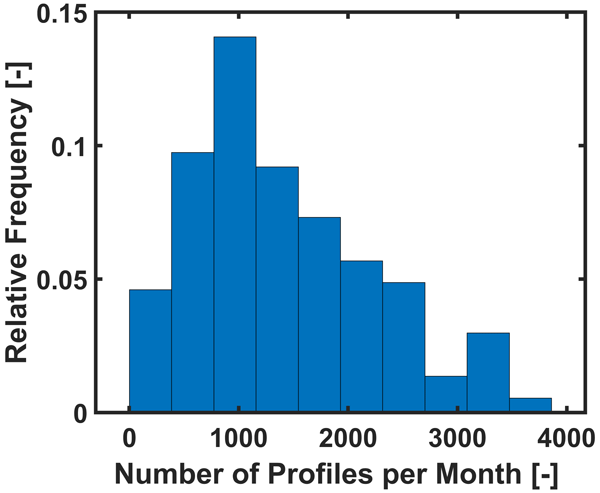
Over the past twenty years, continuous lidar observations at NASA's Goddard Space Flight Center have assessed the radiative impact of cirrus clouds on the Earth–atmosphere system. Findings show these clouds increasingly trap heat as surface reflectivity drops with less snow and ice, contributing to local warming. Continued cirrus monitoring is crucial to refine climate forecasts and support effective climate action.
Meloë S. F. Kacenelenbogen, Ralph Kuehn, Nandana D. Amarasinghe, Kerry G. Meyer, Edward P. Nowottnick, Mark A. Vaughan, Hong Chen, Sebastian Schmidt, Richard A. Ferrare, Johnathan W. Hair, Robert C. Levy, Hongbin Yu, Paquita Zuidema, Robert Holz, and Willem Marais
Atmos. Chem. Phys., 25, 15875–15911, https://doi.org/10.5194/acp-25-15875-2025, https://doi.org/10.5194/acp-25-15875-2025, 2025
Short summary
Short summary
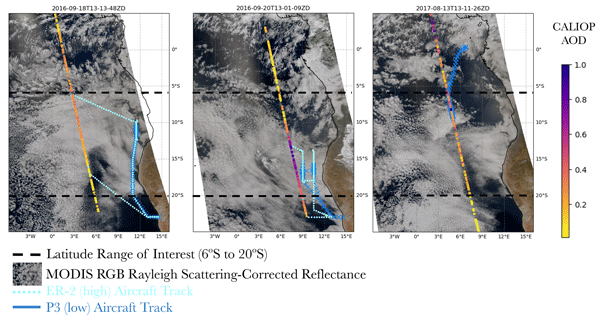
Aerosols perturb the radiation balance of the Earth–atmosphere system. To reduce the uncertainty in quantifying present-day climate change, we combine two satellite sensors and a model to assess the aerosol effects on radiation in all-sky conditions. Satellite-based and coincident aircraft measurements of aerosol radiative effects agree well over the southeast Atlantic. This constitutes a crucial first evaluation before we apply our method to more years and more regions of the world.
Brian C. Filipiak, David B. Wolff, Aaron Spaulding, Ali Tokay, Charles N. Helms, Adrian M. Loftus, Alexey V. Chibisov, Carl Schirtzinger, Mick J. Boulanger, Charanjit S. Pabla, Larry Bliven, EunYeol Kim, Francesc Junyent, V. Chandrasekar, Hein Thant, Branislav M. Notaros, Gustavo Britto Hupsel de Azevedo, and Diego Cerrai
Earth Syst. Sci. Data, 17, 5783–5810, https://doi.org/10.5194/essd-17-5783-2025, https://doi.org/10.5194/essd-17-5783-2025, 2025
Short summary
Short summary
A GPM (Global Precipitation Measurement) Ground Validation field campaign in Connecticut collected high-resolution microphysical and radar observations of winter precipitation. This field campaign was unique because there was a wide-ranging suite of instruments capable of observing all phases of precipitation co-located with comparable measurements. The observations provide an opportunity to verify and understand complex winter precipitation events through satellite data, microphysical processes, and numerical model simulations.
Peristera Paschou, Nikolaos Siomos, Eleni Marinou, Antonis Gkikas, Samira M. Idrissa, Daniel T. Quaye, Désiré D. Fiogbe Attannon, Kalliopi Artemis Voudouri, Charikleia Meleti, David P. Donovan, George Georgoussis, Tommaso Parrinello, Thorsten Fehr, Jonas von Bismarck, and Vassilis Amiridis
Atmos. Meas. Tech., 18, 4731–4754, https://doi.org/10.5194/amt-18-4731-2025, https://doi.org/10.5194/amt-18-4731-2025, 2025
Short summary
Short summary
This study presents the results from a validation study on the Level 2A products (aerosol optical properties) of the ESA's (European Space Agency) Aeolus mission. Measurements from the eVe lidar, a combined linear/circular polarization and Raman lidar and ESA's ground reference system, that have been collected during the Joint Aeolus Tropical Atlantic Campaign are compared with collocated Aeolus Level 2A profiles obtained from the latest version (Baseline 16) of the Aeolus algorithms.
Laura M. Tomkins, Sandra E. Yuter, Matthew A. Miller, Mariko Oue, and Charles N. Helms
Atmos. Chem. Phys., 25, 9999–10026, https://doi.org/10.5194/acp-25-9999-2025, https://doi.org/10.5194/acp-25-9999-2025, 2025
Short summary
Short summary
This study investigates how radar-detected snow bands relate to snowfall rates during winter storms in the northeastern United States. Using over a decade of data, we found that snow bands are not consistently linked to heavy snowfall at the surface, as snow particles are often dispersed by wind before reaching the ground. These findings highlight limitations of using radar reflectivity for predicting snow rates and suggest focusing on radar echo duration to better understand snowfall patterns.

Damao Zhang, Jennifer Comstock, Chitra Sivaraman, Kefei Mo, Raghavendra Krishnamurthy, Jingjing Tian, Tianning Su, Zhanqing Li, and Natalia Roldán-Henao
Atmos. Meas. Tech., 18, 3453–3475, https://doi.org/10.5194/amt-18-3453-2025, https://doi.org/10.5194/amt-18-3453-2025, 2025
Short summary
Short summary
Planetary boundary layer height (PBLHT) is an important parameter in atmospheric process studies and numerical model simulations. We use machine learning methods to produce a best-estimate planetary boundary layer height (PBLHT-BE-ML) by integrating four PBLHT estimates derived from remote sensing measurements. We demonstrated that PBLHT-BE-ML greatly improved the comparisons against sounding-derived PBLHT.
Kerry Meyer, Steven Platnick, G. Thomas Arnold, Nandana Amarasinghe, Daniel Miller, Jennifer Small-Griswold, Mikael Witte, Brian Cairns, Siddhant Gupta, Greg McFarquhar, and Joseph O'Brien
Atmos. Meas. Tech., 18, 981–1011, https://doi.org/10.5194/amt-18-981-2025, https://doi.org/10.5194/amt-18-981-2025, 2025
Short summary
Short summary
Satellite remote sensing retrievals of cloud droplet size are used to understand clouds and their interactions with aerosols and radiation but require many simplifying assumptions. Evaluation of these retrievals is typically done by comparing against direct measurements of droplets from airborne cloud probes. This paper details an evaluation of proxy airborne remote sensing droplet size retrievals against several cloud probes and explores the impact of key assumptions on retrieval agreement.
Kristina Pistone, Eric M. Wilcox, Paquita Zuidema, Marco Giordano, James Podolske, Samuel E. LeBlanc, Meloë Kacenelenbogen, Steven G. Howell, and Steffen Freitag
Atmos. Chem. Phys., 24, 7983–8005, https://doi.org/10.5194/acp-24-7983-2024, https://doi.org/10.5194/acp-24-7983-2024, 2024
Short summary
Short summary
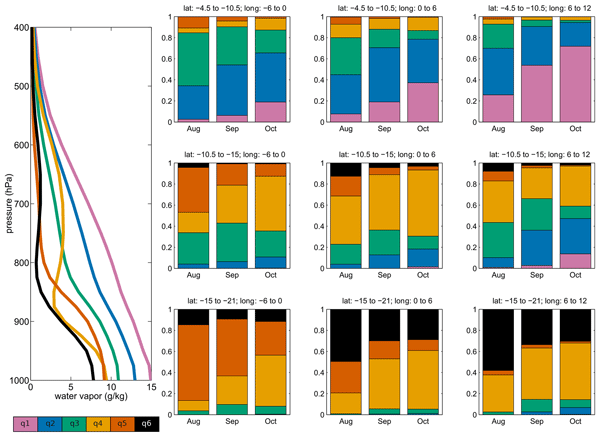
The springtime southeast Atlantic atmosphere contains lots of smoke from continental fires. This smoke travels with water vapor; more smoke means more humidity. We use aircraft observations and models to describe how the values change through the season and over the region. We sort the atmosphere into different types by vertical structure and amount of smoke and humidity. Since our work shows how frequently these components coincide, it helps to better quantify heating effects over this region.
Adriana Rocha-Lima, Peter R. Colarco, Anton S. Darmenov, Edward P. Nowottnick, Arlindo M. da Silva, and Luke D. Oman
Atmos. Chem. Phys., 24, 2443–2464, https://doi.org/10.5194/acp-24-2443-2024, https://doi.org/10.5194/acp-24-2443-2024, 2024
Short summary
Short summary
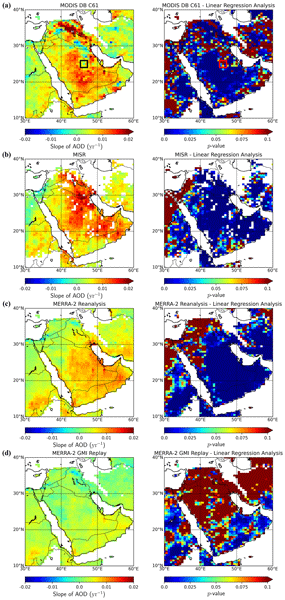
Observations show an increasing aerosol optical depth trend in the Middle East between 2003–2012. We evaluate the NASA Goddard Earth Observing System (GEOS) model's ability to capture these trends and examine the meteorological and surface parameters driving dust emissions. Our results highlight the importance of data assimilation for long-term trends of atmospheric aerosols and support the hypothesis that vegetation cover loss may have contributed to increasing dust emissions in the period.
Tobias Wehr, Takuji Kubota, Georgios Tzeremes, Kotska Wallace, Hirotaka Nakatsuka, Yuichi Ohno, Rob Koopman, Stephanie Rusli, Maki Kikuchi, Michael Eisinger, Toshiyuki Tanaka, Masatoshi Taga, Patrick Deghaye, Eichi Tomita, and Dirk Bernaerts
Atmos. Meas. Tech., 16, 3581–3608, https://doi.org/10.5194/amt-16-3581-2023, https://doi.org/10.5194/amt-16-3581-2023, 2023
Short summary
Short summary
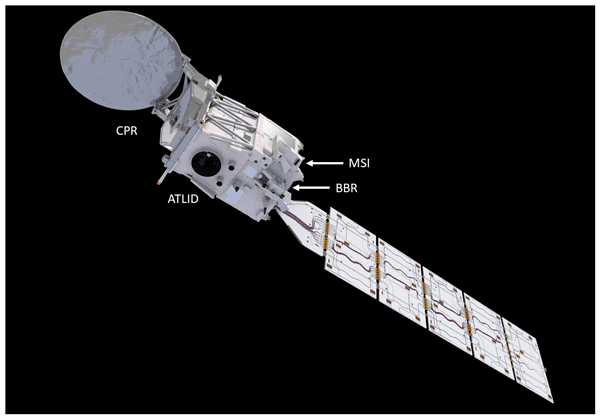
The EarthCARE satellite is due for launch in 2024. It includes four scientific instruments to measure global vertical profiles of aerosols, clouds and precipitation properties together with radiative fluxes and derived heating rates. The mission's scientific requirements, the satellite and the ground segment are described. In particular, the four scientific instruments and their performance are described at the level of detail required by mission data users.
Nikolas Ovaskainen, Pietari Skyttä, Nicklas Nordbäck, and Jon Engström
Solid Earth, 14, 603–624, https://doi.org/10.5194/se-14-603-2023, https://doi.org/10.5194/se-14-603-2023, 2023
Short summary
Short summary
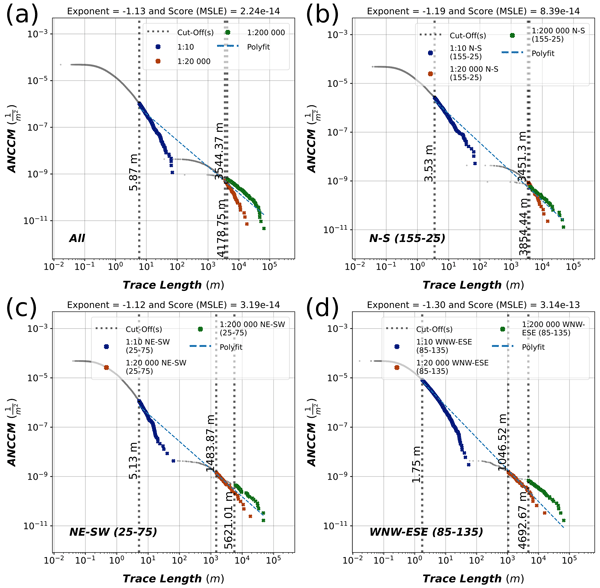
We studied bedrock fracturing at Åland Islands from bedrock outcrops,
digital elevation models and geophysics using multiple scales of observation.
Using the results we can compare properties of the fractures of different sizes
to find similarities and differences; e.g. we found that glacial erosion has a
probable effect on the study of larger bedrock structures. Furthermore, we
collected data from 100 to 500 m long fractures, which have previously
proved to be difficult to sample.
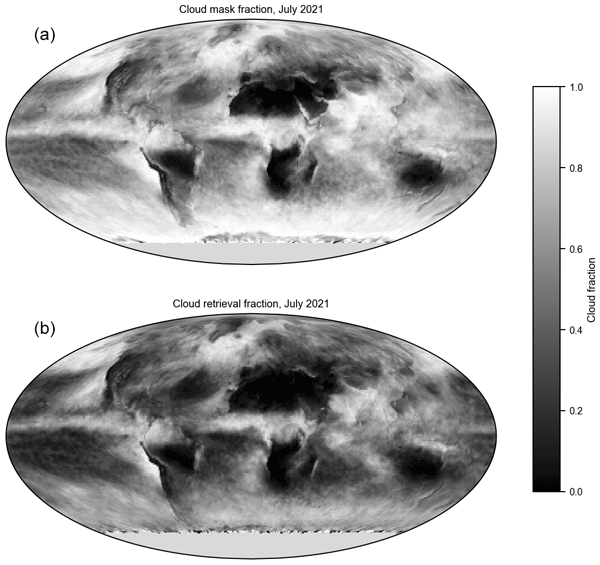
Robert Pincus, Paul A. Hubanks, Steven Platnick, Kerry Meyer, Robert E. Holz, Denis Botambekov, and Casey J. Wall
Earth Syst. Sci. Data, 15, 2483–2497, https://doi.org/10.5194/essd-15-2483-2023, https://doi.org/10.5194/essd-15-2483-2023, 2023
Short summary
Short summary
This paper describes a new global dataset of cloud properties observed by a specific satellite program created to facilitate comparison with a matching observational proxy used in climate models. Statistics are accumulated over daily and monthly timescales on an equal-angle grid. Statistics include cloud detection, cloud-top pressure, and cloud optical properties. Joint histograms of several variable pairs are also available.
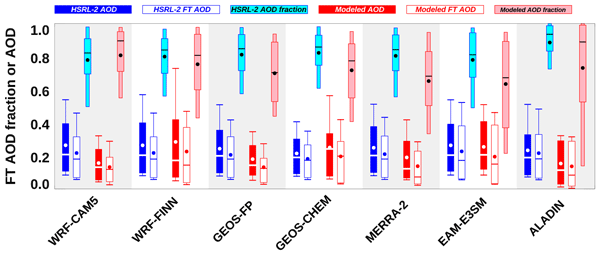
Ian Chang, Lan Gao, Connor J. Flynn, Yohei Shinozuka, Sarah J. Doherty, Michael S. Diamond, Karla M. Longo, Gonzalo A. Ferrada, Gregory R. Carmichael, Patricia Castellanos, Arlindo M. da Silva, Pablo E. Saide, Calvin Howes, Zhixin Xue, Marc Mallet, Ravi Govindaraju, Qiaoqiao Wang, Yafang Cheng, Yan Feng, Sharon P. Burton, Richard A. Ferrare, Samuel E. LeBlanc, Meloë S. Kacenelenbogen, Kristina Pistone, Michal Segal-Rozenhaimer, Kerry G. Meyer, Ju-Mee Ryoo, Leonhard Pfister, Adeyemi A. Adebiyi, Robert Wood, Paquita Zuidema, Sundar A. Christopher, and Jens Redemann
Atmos. Chem. Phys., 23, 4283–4309, https://doi.org/10.5194/acp-23-4283-2023, https://doi.org/10.5194/acp-23-4283-2023, 2023
Short summary
Short summary
Abundant aerosols are present above low-level liquid clouds over the southeastern Atlantic during late austral spring. The model simulation differences in the proportion of aerosol residing in the planetary boundary layer and in the free troposphere can greatly affect the regional aerosol radiative effects. This study examines the aerosol loading and fractional aerosol loading in the free troposphere among various models and evaluates them against measurements from the NASA ORACLES campaign.

Allison B. Marquardt Collow, Virginie Buchard, Peter R. Colarco, Arlindo M. da Silva, Ravi Govindaraju, Edward P. Nowottnick, Sharon Burton, Richard Ferrare, Chris Hostetler, and Luke Ziemba
Atmos. Chem. Phys., 22, 16091–16109, https://doi.org/10.5194/acp-22-16091-2022, https://doi.org/10.5194/acp-22-16091-2022, 2022
Short summary
Short summary
Biomass burning aerosol impacts aspects of the atmosphere and Earth system through radiative forcing, serving as cloud condensation nuclei, and air quality. Despite its importance, the representation of biomass burning aerosol is not always accurate in models. Field campaign observations from CAMP2Ex are used to evaluate the mass and extinction of aerosols in the GEOS model. Notable biases in the model illuminate areas of future development with GEOS and the underlying GOCART aerosol module.
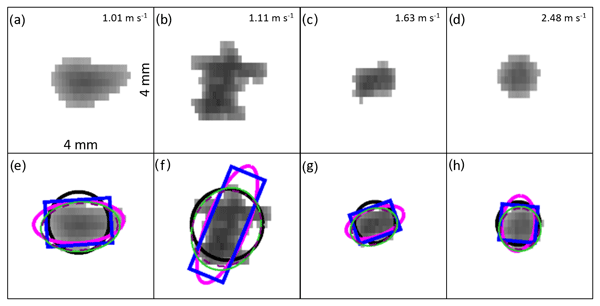
Charles Nelson Helms, Stephen Joseph Munchak, Ali Tokay, and Claire Pettersen
Atmos. Meas. Tech., 15, 6545–6561, https://doi.org/10.5194/amt-15-6545-2022, https://doi.org/10.5194/amt-15-6545-2022, 2022
Short summary
Short summary
This study compares the techniques used to measure snowflake shape by three instruments: PIP, MASC, and 2DVD. Our findings indicate that the MASC technique produces reliable shape measurements; the 2DVD technique performs better than expected considering the instrument was designed to measure raindrops; and the PIP technique does not produce reliable snowflake shape measurements. We also demonstrate that the PIP images can be reprocessed to correct the shape measurement issues.
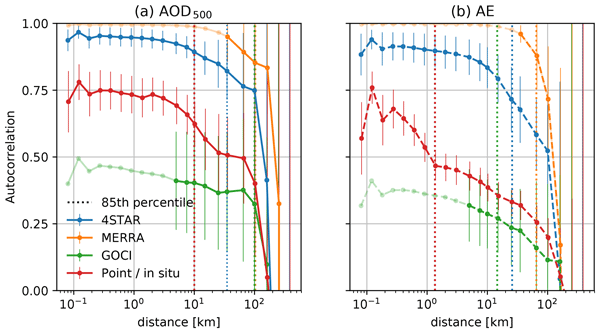
Samuel E. LeBlanc, Michal Segal-Rozenhaimer, Jens Redemann, Connor Flynn, Roy R. Johnson, Stephen E. Dunagan, Robert Dahlgren, Jhoon Kim, Myungje Choi, Arlindo da Silva, Patricia Castellanos, Qian Tan, Luke Ziemba, Kenneth Lee Thornhill, and Meloë Kacenelenbogen
Atmos. Chem. Phys., 22, 11275–11304, https://doi.org/10.5194/acp-22-11275-2022, https://doi.org/10.5194/acp-22-11275-2022, 2022
Short summary
Short summary
Airborne observations of atmospheric particles and pollution over Korea during a field campaign in May–June 2016 showed that the smallest atmospheric particles are present in the lowest 2 km of the atmosphere. The aerosol size is more spatially variable than optical thickness. We show this with remote sensing (4STAR), in situ (LARGE) observations, satellite measurements (GOCI), and modeled properties (MERRA-2), and it is contrary to the current understanding.

Peristera Paschou, Nikolaos Siomos, Alexandra Tsekeri, Alexandros Louridas, George Georgoussis, Volker Freudenthaler, Ioannis Binietoglou, George Tsaknakis, Alexandros Tavernarakis, Christos Evangelatos, Jonas von Bismarck, Thomas Kanitz, Charikleia Meleti, Eleni Marinou, and Vassilis Amiridis
Atmos. Meas. Tech., 15, 2299–2323, https://doi.org/10.5194/amt-15-2299-2022, https://doi.org/10.5194/amt-15-2299-2022, 2022
Short summary
Short summary
The eVe lidar delivers quality-assured aerosol and cloud optical properties according to the standards of ACTRIS. It is a mobile reference system for the validation of the ESA's Aeolus satellite mission (L2 aerosol and cloud products). eVe provides linear and circular polarisation measurements with Raman capabilities. Here, we describe the system design, the polarisation calibration techniques, and the software for the retrieval of the optical products.

Qing Yue, Eric J. Fetzer, Likun Wang, Brian H. Kahn, Nadia Smith, John M. Blaisdell, Kerry G. Meyer, Mathias Schreier, Bjorn Lambrigtsen, and Irina Tkatcheva
Atmos. Meas. Tech., 15, 2099–2123, https://doi.org/10.5194/amt-15-2099-2022, https://doi.org/10.5194/amt-15-2099-2022, 2022
Short summary
Short summary
The self-consistency and continuity of cloud retrievals from infrared sounders and imagers aboard Aqua and SNPP (Suomi National Polar-orbiting Partnership) are examined at the pixel scale. Cloud products are found to be consistent with each other. Differences between sounder products are mainly due to cloud clearing and the treatment of clouds in scenes with unsuccessful atmospheric retrievals. The impact of algorithm and instrument differences is clearly seen in the imager cloud retrievals.
Meloë S. F. Kacenelenbogen, Qian Tan, Sharon P. Burton, Otto P. Hasekamp, Karl D. Froyd, Yohei Shinozuka, Andreas J. Beyersdorf, Luke Ziemba, Kenneth L. Thornhill, Jack E. Dibb, Taylor Shingler, Armin Sorooshian, Reed W. Espinosa, Vanderlei Martins, Jose L. Jimenez, Pedro Campuzano-Jost, Joshua P. Schwarz, Matthew S. Johnson, Jens Redemann, and Gregory L. Schuster
Atmos. Chem. Phys., 22, 3713–3742, https://doi.org/10.5194/acp-22-3713-2022, https://doi.org/10.5194/acp-22-3713-2022, 2022
Short summary
Short summary
The impact of aerosols on Earth's radiation budget and human health is important and strongly depends on their composition. One desire of our scientific community is to derive the composition of the aerosol from satellite sensors. However, satellites observe aerosol optical properties (and not aerosol composition) based on remote sensing instrumentation. This study assesses how much aerosol optical properties can tell us about aerosol composition.
S. Joseph Munchak, Robert S. Schrom, Charles N. Helms, and Ali Tokay
Atmos. Meas. Tech., 15, 1439–1464, https://doi.org/10.5194/amt-15-1439-2022, https://doi.org/10.5194/amt-15-1439-2022, 2022
Short summary
Short summary
The ability to measure snowfall with weather radar has greatly advanced with the development of techniques that utilize dual-polarization measurements, which provide information about the snow particle shape and orientation, and multi-frequency measurements, which provide information about size and density. This study combines these techniques with the NASA D3R radar, which provides dual-frequency polarimetric measurements, with data that were observed during the 2018 Winter Olympics.
Sabrina P. Cochrane, K. Sebastian Schmidt, Hong Chen, Peter Pilewskie, Scott Kittelman, Jens Redemann, Samuel LeBlanc, Kristina Pistone, Michal Segal Rozenhaimer, Meloë Kacenelenbogen, Yohei Shinozuka, Connor Flynn, Rich Ferrare, Sharon Burton, Chris Hostetler, Marc Mallet, and Paquita Zuidema
Atmos. Meas. Tech., 15, 61–77, https://doi.org/10.5194/amt-15-61-2022, https://doi.org/10.5194/amt-15-61-2022, 2022
Short summary
Short summary
This work presents heating rates derived from aircraft observations from the 2016 and 2017 field campaigns of ORACLES (ObseRvations of Aerosols above CLouds and their intEractionS). We separate the total heating rates into aerosol and gas (primarily water vapor) absorption and explore some of the co-variability of heating rate profiles and their primary drivers, leading to the development of a new concept: the heating rate efficiency (HRE; the heating rate per unit aerosol extinction).

Galina Wind, Arlindo M. da Silva, Kerry G. Meyer, Steven Platnick, and Peter M. Norris
Geosci. Model Dev., 15, 1–14, https://doi.org/10.5194/gmd-15-1-2022, https://doi.org/10.5194/gmd-15-1-2022, 2022
Short summary
Short summary
This is the third paper in series about the Multi-sensor Cloud and Aerosol Retrieval Simulator (MCARS). In this paper we use MCARS to create a set of constraints that might be used to assimilate a new above-cloud aerosol retrieval product developed for the MODIS instrument into a general circulation model. We executed the above-cloud aerosol retrieval over a series of synthetic MODIS granules and found the product to be of excellent quality.
Sarah J. Doherty, Pablo E. Saide, Paquita Zuidema, Yohei Shinozuka, Gonzalo A. Ferrada, Hamish Gordon, Marc Mallet, Kerry Meyer, David Painemal, Steven G. Howell, Steffen Freitag, Amie Dobracki, James R. Podolske, Sharon P. Burton, Richard A. Ferrare, Calvin Howes, Pierre Nabat, Gregory R. Carmichael, Arlindo da Silva, Kristina Pistone, Ian Chang, Lan Gao, Robert Wood, and Jens Redemann
Atmos. Chem. Phys., 22, 1–46, https://doi.org/10.5194/acp-22-1-2022, https://doi.org/10.5194/acp-22-1-2022, 2022
Short summary
Short summary
Between July and October, biomass burning smoke is advected over the southeastern Atlantic Ocean, leading to climate forcing. Model calculations of forcing by this plume vary significantly in both magnitude and sign. This paper compares aerosol and cloud properties observed during three NASA ORACLES field campaigns to the same in four models. It quantifies modeled biases in properties key to aerosol direct radiative forcing and evaluates how these biases propagate to biases in forcing.
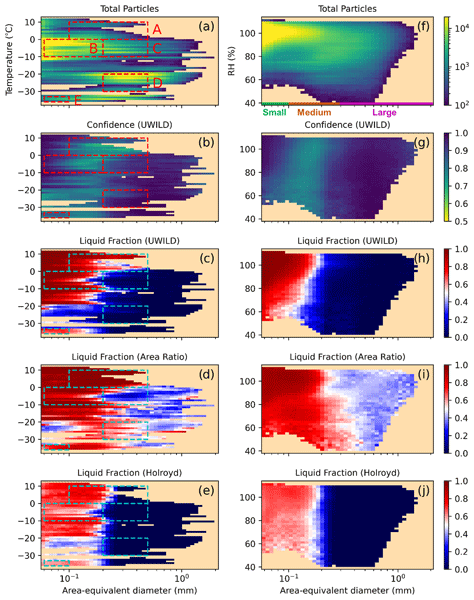
Rachel Atlas, Johannes Mohrmann, Joseph Finlon, Jeremy Lu, Ian Hsiao, Robert Wood, and Minghui Diao
Atmos. Meas. Tech., 14, 7079–7101, https://doi.org/10.5194/amt-14-7079-2021, https://doi.org/10.5194/amt-14-7079-2021, 2021
Short summary
Short summary
Many clouds with temperatures between 0 °C and −40 °C contain both liquid and ice particles, and the ratio of liquid to ice particles influences how the clouds interact with radiation and moderate Earth's climate. We use a machine learning method called random forest to classify images of individual cloud particles as either liquid or ice. We apply our algorithm to images captured by aircraft within clouds overlying the Southern Ocean, and we find that it outperforms two existing algorithms.
Cited articles
Ackerman, A. S., Toon, O. B., Stevens, D. E., Heymsfield, A. J., Ramanathan, V., and Welton, E. J: Reduction of tropical cloudiness by soot, Science, 288, 1042–1047, 2000.
Ackerman, T. P., Kuo, N.-L., Valero, F. P. J., and Pfister, L.: Heating rates in tropical anvils, J. Atmos. Sci., 45, 1606–1623, 1988.
Albrecht, B. A.: Aerosols, cloud microphysics, and fractional cloudiness, Science, 245, 1227–1230, 1989.
Bruegge, C. J., Arnold, G. T., Czapla-Myers, J., Dominguez, R., Helmlinger, M. C., Thompson, D. R., Van den Bosch, J., and Wenny, B. N.: Vicarious Calibration of eMAS, AirMSPI, and AVIRIS Sensors During FIREX-AQ, IEEE T. Geosci. Remote Sens., 59, 10286–10297, https://doi.org/10.1109/TGRS.2021.3066997, 2021.
Chiriaco, M., Chepfer, H., Minnis, P., Haeffelin, M., Platnick, S., Baumgardner, D., Dubuisson, P., McGill, M., Noël, V., Pelon, J., Spangenberg, D., Sun-Mack, S., and Wind, G.: Comparison of CALIPSO-Like, LaRC, and MODIS Retrievals of Ice-Cloud Properties over SIRTA in France and Florida during CRYSTAL-FACE, J. Atmos. Ocean. Tech., https://doi.org/10.1175/JAM2435.1, 2007.
Christian, K. E., Palm, S. P., Yorks, J. E., and Nowottnick, E. P.: Evaluation of ICESat-2 ATL09 Atmospheric Products Using CALIOP and MODIS Space-Based Observations, Remote Sens., 17, 482, https://doi.org/10.3390/rs17030482, 2025.
Colette, A., Favez, O., Meleux, F., Chiappini, L., Haeffelin, M., Morille, Y., and Rouïl, L.: Assessing in near real time the impact of the April 2010 Eyjafjallajökull ash plume on air quality, Atmos. Environ., 45, 1217–1221, 2011.
Donovan, D. P., van Zadelhoff, G.-J., and Wang, P.: The EarthCARE lidar cloud and aerosol profile processor (A-PRO): the A-AER, A-EBD, A-TC, and A-ICE products, Atmos. Meas. Tech., 17, 5301–5340, https://doi.org/10.5194/amt-17-5301-2024, 2024.
European Space Agency: EarthCARE ATLID ICE Level 2A (version BA), Earth Online [data set], https://doi.org/10.57780/eca-e25465f, 2025a.
European Space Agency: EarthCARE CPR CLD Level 2A (version BA), Earth Online [data set], https://doi.org/10.57780/eca-7d84adf, 2025b.
European Space Agency: EarthCARE BBR MSI RAD Level 2B (version BA), Earth Online [data set], https://doi.org/10.57780/eca-176429f, 2025c.
Finlon, J., McDonald, V., McMurdie, L., Garcia, V., DeLaFrance, A., and Maherndl, N.: IMPACTS Tools (v1.0.0), Zenodo [code], https://doi.org/10.5281/zenodo.15310597, 2025.
Gomes, J., McGill, M. J., Selmer, P. A., and Kuang, S.: A Deep Learning Approach to Lidar Signal Denoising and Atmospheric Feature Detection, Remote Sensing., 17, 4060, https://doi.org/10.3390/rs17244060, 2025.
Haywood, J. M. and Boucher, O.: Estimates of the direct and indirect radiative forcing due to tropospheric aerosols: A review, Rev. Geophys., 38, 513–543, 2000.
Hlavka, D. L., Yorks, J. E., Young, S. A., Vaughan, M. A., Kuehn, R. E., McGill, M. J., and Rodier, S. D.: Airborne validation of cirrus cloud properties derived from CALIPSO lidar measurements: Optical properties, J. Geophys. Res., 117, D09207, https://doi.org/10.1029/2011JD017053, 2012.
Illingworth, A. J., Barker, H. W., Beljaars, A., Ceccaldi, M., Chepfer, H., Clerbaux, N., Cole, J., Delanoë, J., Domenech, C., Donovan, D. P., and Fukuda, S.: The EarthCARE Satellite: The Next Step Forward in Global Measurements of Clouds, Aerosols, Precipitation, and Radiation, B. Am. Meteorol. Soc., 96, 1311–1332, 2015.
Jensen, E. J., Lawson, P., Baker, B., Pilson, B., Mo, Q., Heymsfield, A. J., Bansemer, A., Bui, T. P., McGill, M., Hlavka, D., Heymsfield, G., Platnick, S., Arnold, G. T., and Tanelli, S.: On the importance of small ice crystals in tropical anvil cirrus, Atmos. Chem. Phys., 9, 5519–5537, https://doi.org/10.5194/acp-9-5519-2009, 2009.
King, M. D., Menzel, W. P., Grant, P. S., Myers, J. S., Arnold, G. T., Platnick, S. E., Gumley, L. E., Tsay, S.-C., Moeller, C. C., Fitzgerald, M., Brown, K. S., and Osterwisch, F. G.: Airborne Scanning Spectrometer for Remote Sensing of Cloud, Aerosol, Water Vapor, and Surface Properties, J. Atmos. Ocean. Tech., 13, 777–794, https://doi.org/10.1175/1520-0426(1996)013<0777:ASSFRS>2.0.CO;2, 1996.
King, M. D., Tsay, S.-C., Ackerman, S. A., and Larsen, N. F.: Discriminating heavy aerosol, clouds, and fires during SCAR-B: Application of airborne multispectral MAS data, J. Geophys. Res.-Atmos., 103, 31989–31999, https://doi.org/10.1029/98JD01043, 1998.
King, M. D., Platnick, S., Moeller, C. C., Revercomb, H. E., and Chu, D. A.: Remote sensing of smoke, land, and clouds from the NASA ER-2 during SAFARI 2000, J. Geophys. Res.-Atmos., 108, https://doi.org/10.1029/2002JD003207, 2003.
King, M. D., Platnick, S., Yang, P., Arnold, G. T., Gray, M. A., Riedi, J. C., Ackerman, S. A., and Liou, K.-N.: Remote Sensing of Liquid Water and Ice Cloud Optical Thickness and Effective Radius in the Arctic: Application of Airborne Multispectral MAS Data, J. Atmos. Ocean. Tech., 21, 857–875, https://doi.org/10.1175/1520-0426(2004)021<0857:RSOLWA>2.0.CO;2, 2004.
King, M. D., Platnick, S., Wind, G., Arnold, G. T., and Dominguez, R. T.: Remote sensing of radiative and microphysical properties of clouds during TC4: Results from MAS, MASTER, MODIS, and MISR, J. Geophys. Res., 115, 2009JD013277, https://doi.org/10.1029/2009JD013277, 2010.
Li, L., Heymsfield, G. M., Racette, P. E., Tian, L., and Zenker, E.: A 94-GHz cloud radar system on a NASA high-altitude ER-2 aircraft, J. Atmos. Ocean. Tech., 21, 1378–1388, 2004.
Li, L., Heymsfield, G. M., Tian, L., and Racette, P. E.: Measurements of Ocean Surface Backscattering Using an Airborne 94-GHz Cloud Radar – Implication for Calibration of Airborne and Spaceborne W-Band Radars, J. Atmos. Ocean. Tech., 22, 1033–1045, https://doi.org/10.1175/JTECH1722.1, 2005.
Liu, Z., McGill, M., Hu, Y., Hostetler, C. A., Vaughan, M., and Winker, D.: Validating lidar depolarization calibration using solar radiation scattered by ice clouds, Geoscience Remote Sens. Lett., 1, https://doi.org/10.1109/LGRS.2004.829613, 2004.
Markus, T., Neumann, T., Martino, A., Abdalati, W., Brunt, K., Csatho, B., Farrell, S., Fricker, H., Gardner, A., Harding, D., and Jasinski, M.: The Ice, Cloud, and land Elevation Satellite-2 (ICESat-2): Science requirements, concept, and implementation, Remote Sens. Environ., 190, 260–273, 2017.
Mason, S. L., Barker, H. W., Cole, J. N. S., Docter, N., Donovan, D. P., Hogan, R. J., Hünerbein, A., Kollias, P., Puigdomènech Treserras, B., Qu, Z., Wandinger, U., and van Zadelhoff, G.-J.: An intercomparison of EarthCARE cloud, aerosol, and precipitation retrieval products, Atmos. Meas. Tech., 17, 875–898, https://doi.org/10.5194/amt-17-875-2024, 2024.
Mathur, R.: Estimating the impact of the 2004 Alaskan forest fires on episodic particulate matter pollution over the eastern United States through assimilation of satellite-derived aerosol optical depths in a regional air quality model, J. Geophys. Res.-Atmos., 113, https://doi.org/10.1029/2007JD009767, 2008.
McCorkel, J., Cairns, B., and Wasilewski, A.: Imager-to-radiometer in-flight cross calibration: RSP radiometric comparison with airborne and satellite sensors, Atmos. Meas. Tech., 9, 955–962, https://doi.org/10.5194/amt-9-955-2016, 2016.
McFarquhar, G. M., Heymsfield, A. J., Spinhirne, J., and Hart, B.: Thin and Subvisual Tropopause Tropical Cirrus: Observations and Radiative Impacts, J. Atmos. Sci., 57, 1841–1853, 2000.
McGill, M., Hlavka, D., Hart, W., Scott, V. S., Spinhirne, J., and Schmid, B.: Cloud physics lidar: Instrument description and initial measurement results, Appl. Optics, 41, 3725–3734, 2002.
McGill, M. J., Hlavka, D. L., Hart, W. D., Welton, E. J., and Campbell, J. R.: Airborne lidar measurements of aerosol optical properties during SAFARI-2000, J. Geophys. Res.-Atmos., 108, https://doi.org/10.1029/2002JD002370, 2003.
McGill, M. J., Vaughan, M. A., Trepte, C. R., Hart, W. D., Hlavka, D. L., Winker, D. M., and Kuehn, R.: Airborne validation of spatial properties measured by the CALIPSO lidar, J. Geophys. Res.-Atmos., 112, https://doi.org/10.1029/2007JD008768, 2007.
Meyer, K., Platnick, S., Arnold, G. T., Holz, R. E., Veglio, P., Yorks, J., and Wang, C.: Cirrus cloud optical and microphysical property retrievals from eMAS during SEAC4RS using bi-spectral reflectance measurements within the 1.88 µm water vapor absorption band, Atmos. Meas. Tech., 9, 1743–1753, https://doi.org/10.5194/amt-9-1743-2016, 2016.
Meyer, K., Platnick, S., Arnold, G. T., Amarasinghe, N., Miller, D., Small-Griswold, J., Witte, M., Cairns, B., Gupta, S., McFarquhar, G., and O'Brien, J.: Evaluating spectral cloud effective radius retrievals from the Enhanced MODIS Airborne Simulator (eMAS) during ORACLES, Atmos. Meas. Tech., 18, 981–1011, https://doi.org/10.5194/amt-18-981-2025, 2025a.
Meyer, K., Platnick, S., Jacobson, J., Dominguez, R., Hildum, T., Gibson, N., Grose, J., Fraim, E., Arnold, G. T., and Yorks, J.: GSFC Lidar Observation and Validation Experiment (GLOVE) Enhanced MODIS Airborne Simulator (eMAS) Level-1B Version 2.0, NASA Level-1 and Atmosphere Archive & Distribution System (LAADS) Distributed Active Archive Center (DAAC) [data set], https://doi.org/10.5067/GLOVE/EMAS/EMASL1B.002, 2025b.
Miller, D. J., Sun, K., Zondlo, M. A., Kanter, D., Dubovik, O., Welton, E. J., and Ginoux, P.: Assessing boreal forest fire smoke aerosol impacts on US air quality: A case study using multiple data sets, J. Geophys. Res.-Atmos., 116, https://doi.org/10.1029/2011JD016170, 2011.
Nowottnick, E. P., Christian, K. E., Yorks, J. E., Midzak, N., Selmer, P. A., McGill, M. J., Lu, Z., Wang, J., and Salinas, S. V.: Aerosol Detection from the Cloud Aerosol Transport System on the International Space Station: Algorithm Overview and Implications for Diurnal Sampling, Atmosphere, 13, 1439, https://doi.org/10.3390/atmos13091439, 2022.
Oladipo, B., Gomes, J., McGill, M., and Selmer, P.: Leveraging Deep Learning as a New Approach to Layer Detection and Cloud–Aerosol Classification Using ICESat-2 Atmospheric Data, Remote Sens., 16, 2344, https://doi.org/10.3390/rs16132344, 2024.
Palm, S. P., Yang, Y., Herzfeld, U. C., Hancock, D., Barbieri, K. A., and Wimert, J.: ATLAS/ICESat-2 L3A Calibrated Backscatter Profiles and Atmospheric Layer Characteristics (ATL09, Version 1), NASA National Snow and Ice Data Center Distributed Active Archive Center [data set], https://doi.org/10.5067/ATLAS/ATL09.001, 2019.
Palm, S. P., Yang, Y., Herzfeld, U., Hancock, D., Hayes, A., Selmer, P., Hart, W., and Hlavka, D.: ICESat-2 Atmospheric Channel Description, Data Processing and First Results, Earth Space Sci., 8, e2020EA001470, https://doi.org/10.1029/2020EA001470, 2021.
Pauly, R. M., Yorks, J. E., Hlavka, D. L., McGill, M. J., Amiridis, V., Palm, S. P., Rodier, S. D., Vaughan, M. A., Selmer, P. A., Kupchock, A. W., Baars, H., and Gialitaki, A.: Cloud-Aerosol Transport System (CATS) 1064 nm calibration and validation, Atmos. Meas. Tech., 12, 6241–6258, https://doi.org/10.5194/amt-12-6241-2019, 2019.
Platnick, S., Durkee, P. A., Nielsen, K., Taylor, J. P., Tsay, S. C., King, M. D., Ferek, R. J., Hobbs, P. V., and Rottman, J. W.: The role of background cloud microphysics in the radiative formation of ship tracks, J. Atmos. Sci., 57, 2607–2624, 2000.
Platnick, S., Li, J. Y., King, M. D., Gerber, H., and Hobbs, P. V.: A solar reflectance method for retrieving the optical thickness and droplet size of liquid water clouds over snow and ice surfaces, J. Geophys. Res.-Atmos., 106, 15185–15199, 2001.
Rajeevan, M. and Srinivasan, J.: Net cloud radiative forcing at the top of the atmosphere in the Asian region, J. Climate, 13, 650–657, 2000.
Rosenfeld, D., Rudich, Y., and Lahav, R.: Desert dust suppressing precipitation: A possible desertification feedback loop, P. Natl. Acad. Sci. USA, 98, 5975–5980, 2001.
Schmid, B., Redemann, J., Russell, P. B., Hobbs, P. V., Hlavka, D. L., McGill, M. J., Holben, B. N., Welton, E. J., Campbell, J. R., Torres, O., and Kahn, R. A.: Coordinated airborne, spaceborne, and ground‐based measurements of massive thick aerosol layers during the dry season in southern Africa, J. Geophys. Res.-Atmos., 108, https://doi.org/10.1029/2002JD002297, 2003.
Selmer, P., Yorks, J. E., Nowottnick, E. P., Cresanti, A., and Christian, K. E.: A Deep Learning Lidar Denoising Approach for Improving Atmospheric Feature Detection, Remote Sens., 16, 2735, https://doi.org/10.3390/rs16152735, 2024.
Shi, Y. R., Levy, R. C., Remer, L. A., Mattoo, S., and Arnold, G. T.: Investigating the Spatial and Temporal Limitations for Remote Sensing of Wildfire Smoke Using Satellite and Airborne Imagers During FIREX-AQ, J. Geophys. Res.-Atmos., 129, e2023JD039085, https://doi.org/10.1029/2023JD039085, 2024.
Stephens, G. L.: Cloud feedbacks in the climate system: A critical review, J. Climate, 18, 237–273, 2005.
Twomey, S.: The influence of pollution on the shortwave albedo of clouds, J. Atmos. Sci., 34, 1149–1152, 1977.
Vaughan, M., Powell, K. A., Winker, D. M., Hostetler, C. A., Kuehn, R. E., Hunt, W. H., Getzewich, B. J., Young, S. A., Liu, Z., and McGill, M. J.: Fully automated detection of cloud and aerosol layers in the CALIPSO lidar measurements, J. Atmos. Ocean. Tech., 26, 2034–2050, https://doi.org/10.1175/2009JTECHA1228.1, 2009.
Walker McLinden, M. L., Li, L., Heymsfield, G. M., Coon, M., and Emory, A.: The NASA GSFC 94-GHz airborne solid-state cloud radar system (CRS), J. Atmos. Ocean. Tech., 38, 1001–1017, 2021.
Walker McLinden, M., Li, L., Heymsfield, G., Helms, C., Pantina, P., Hoffert, S., Coon, M., and Yorks, J.: Cloud Radar System (CRS) Radar Level 1B Data Products from the GLOVE Field Campaign (Level 1B Initial Release), Zenodo [data set], https://doi.org/10.5281/zenodo.17179580, 2025.
Wehr, T. (Ed.): EarthCARE Mission Requirements Document. Earth and Mission Science Division, European Space Agency, https://doi.org/10.5270/esa.earthcare-mrd.2006, 2006.
Wehr, T., Kubota, T., Tzeremes, G., Wallace, K., Nakatsuka, H., Ohno, Y., Koopman, R., Rusli, S., Kikuchi, M., Eisinger, M., Tanaka, T., Taga, M., Deghaye, P., Tomita, E., and Bernaerts, D.: The EarthCARE mission – science and system overview, Atmos. Meas. Tech., 16, 3581–3608, https://doi.org/10.5194/amt-16-3581-2023, 2023.
Yorks, J. E., Hlavka, D. L., Hart, W. D., and McGill, M. J.: Statistics of cloud optical properties from airborne lidar measurements, J. Atmos. Ocean. Tech., 28, 869–883, https://doi.org/10.1175/2011JTECHA1507.1, 2011a.
Yorks, J. E., Hlavka, D. L., Vaughan, M. A., McGill, M. J., Hart, W. D., Rodier, S., and Kuehn, R.: Airborne validation of cirrus cloud properties derived from CALIPSO lidar measurements: Spatial properties, J. Geophys. Res., 116, D19207, https://doi.org/10.1029/2011JD015942, 2011b.
Yorks, J. E., McGill, M. J., Palm, S. P., Hlavka, D. L., Selmer, P. A., Nowottnick, E., Vaughan, M. A., Rodier, S., and Hart, W. D.: An Overview of the CATS Level 1 Data Products and Processing Algorithms, Geophys. Res. Lett., 43, https://doi.org/10.1002/2016GL068006, 2016.
Yorks, J. E., Selmer, P. A., Kupchock, A., Nowottnick, E. P., Christian, K. E., Rusinek, D., Dacic, N., and McGill, M. J.: Aerosol and Cloud Detection Using Machine Learning Algorithms and Space-Based Lidar Data, Atmosphere, 12, 606, https://doi.org/10.3390/atmos12050606, 2021.
Yorks, J., Selmer, P., Moore, J., Christian, K., Midzak, N., Finlon, J., Cresanti, A., Kuang, S., Finneman, G., Begolka, J., McGill, M., and Nowottnick, E.: Cloud Physics Lidar Level 1 & 2 Data Products from the GLOVE Field Campaign (Version 1), Zenodo [data set], https://doi.org/10.5281/zenodo.16807221, 2025.
Short summary
The Goddard Space Flight Center's Lidar Observation and Validation Experiment (GLOVE) was a NASA field campaign from January–February 2025 that used a special airplane with scientific instruments to check if satellites measuring Earth's atmosphere were working correctly. The plane flew under two key satellites to compare measurements of clouds, dust, and other particles in the air. Data from 8 flights help scientists better understand how well these space-based instruments perform, especially for detecting different types of clouds and atmospheric conditions.
The Goddard Space Flight Center's Lidar Observation and Validation Experiment (GLOVE) was a NASA...


Altmetrics
Final-revised paper
Preprint