Articles | Volume 18, issue 6
https://doi.org/10.5194/essd-18-3757-2026
© Author(s) 2026. This work is distributed under
the Creative Commons Attribution 4.0 License.
the Creative Commons Attribution 4.0 License.
https://doi.org/10.5194/essd-18-3757-2026
© Author(s) 2026. This work is distributed under
the Creative Commons Attribution 4.0 License.
the Creative Commons Attribution 4.0 License.
Data description article
| 
03 Jun 2026
Data description article |
| 03 Jun 2026
| 03 Jun 2026
Global monthly ocean dissolved oxygen (1960–2023) reconstructed to 5902 m with BLENDR, a Bayesian-optimized ensemble learning framework
Mingyu Han
State Key Laboratory of Submarine Geoscience and School of Oceanography, Shanghai Jiao Tong University, Shanghai, China
Xiaogang Xing
State Key Laboratory of Satellite Ocean Environment Dynamics (SOED), Second Institute of Oceanography, Ministry of Natural Resources, Hangzhou, China

State Key Laboratory of Submarine Geoscience and School of Oceanography, Shanghai Jiao Tong University, Shanghai, China
Related authors
Mingyu Han and Yuntao Zhou
Earth Syst. Sci. Data Discuss., https://doi.org/10.5194/essd-2025-273, https://doi.org/10.5194/essd-2025-273, 2025
Manuscript not accepted for further review
Short summary
Short summary
In recent decades, ocean oxygen levels have fallen steadily, threatening marine life and ecosystem health. To fill gaps in sparse observations, we used an advanced ensemble of six machine learning models to reconstruct monthly oxygen maps from the surface down to 5902 m, covering 1960–2023. Our dataset reveals where and how fast oxygen loss is occurring, especially in deeper waters, and provides a reliable resource for studying climate impacts on oceans and guiding conservation efforts.
Aoran Sun, Chunling Zhang, Huangxin Yang, and Yuntao Zhou
EGUsphere, https://doi.org/10.5194/egusphere-2026-4384, https://doi.org/10.5194/egusphere-2026-4384, 2026
This preprint is open for discussion and under review for Ocean Science (OS).
Short summary
Short summary
Temperature and chlorophyll-a fronts in the northwestern Pacific are modulated by ocean eddies. Analysis of daily satellite data from 2014 to 2023 shows that eddy polarity and strength control frontal coupling intensity, while chlorophyll-a fronts respond several days later than temperature fronts. This time lag indicates that biological responses to eddy forcing are inherently slower than physical adjustments.
Juan Du, Lijing Cheng, Takamitsu Ito, Hernan E. Garcia, Zhankun Wang, Jonathan D. Sharp, Christopher J. Roach, Shoshiro Minobe, Yuntao Zhou, Bin Lu, Gian Giacomo Navarra, and Seth M. Bushinsky
Ocean Sci., 22, 1483–1499, https://doi.org/10.5194/os-22-1483-2026, https://doi.org/10.5194/os-22-1483-2026, 2026
Short summary
Short summary
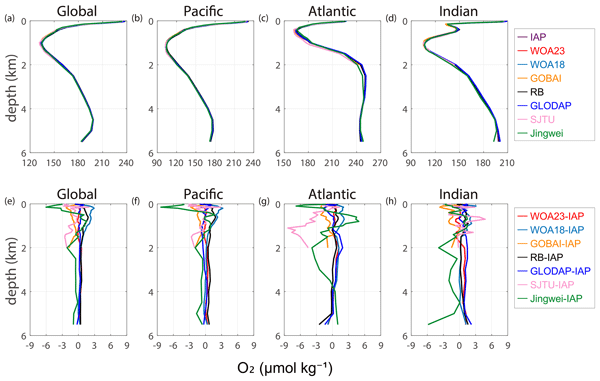
This study assesses the spread of mean state and annual cycle of ocean dissolved oxygen by multiple observational gridded data products. A good consistency is validated globally, although substantial local differences exist in areas of strong spatial gradient. Quantifying the discrepancies could give an insight into regions relatively more sensitive to data reconstruction processes and further advance the improvement of oxygen data products.
Mingyu Han and Yuntao Zhou
Earth Syst. Sci. Data Discuss., https://doi.org/10.5194/essd-2025-273, https://doi.org/10.5194/essd-2025-273, 2025
Manuscript not accepted for further review
Short summary
Short summary
In recent decades, ocean oxygen levels have fallen steadily, threatening marine life and ecosystem health. To fill gaps in sparse observations, we used an advanced ensemble of six machine learning models to reconstruct monthly oxygen maps from the surface down to 5902 m, covering 1960–2023. Our dataset reveals where and how fast oxygen loss is occurring, especially in deeper waters, and provides a reliable resource for studying climate impacts on oceans and guiding conservation efforts.
Viktor Gouretski, Lijing Cheng, Juan Du, Xiaogang Xing, Fei Chai, and Zhetao Tan
Earth Syst. Sci. Data, 16, 5503–5530, https://doi.org/10.5194/essd-16-5503-2024, https://doi.org/10.5194/essd-16-5503-2024, 2024
Short summary
Short summary
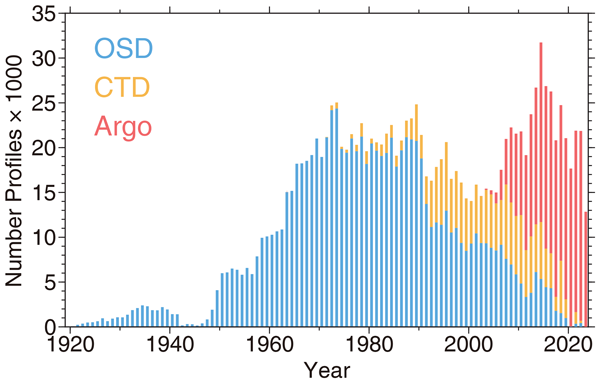
High-quality observations are crucial to understanding ocean oxygen changes and their impact on marine biota. We developed a quality control procedure to ensure the high quality of the heterogeneous ocean oxygen data archive and to prove data consistency. Oxygen data obtained by means of oxygen sensors on autonomous Argo floats were compared with reference data based on the chemical analysis, and estimates of the residual offsets were obtained.
Cited articles
Acharya, S. S. and Panigrahi, M. K.: Eastward shift and maintenance of Arabian Sea oxygen minimum zone: Understanding the paradox, Deep-Sea Res. Pt. I, 115, 240–252, https://doi.org/10.1016/j.dsr.2016.07.004, 2016.
Akiba, T., Sano, S., Yanase, T., Ohta, T., and Koyama, M.: Optuna: A Next-generation Hyperparameter Optimization Framework, in: Proceedings of the 25th ACM SIGKDD International Conference on Knowledge Discovery & Data Mining, 2623–2631, https://doi.org/10.1145/3292500.3330701, 2019.
Bergmeir, C. and Benítez, J. M.: On the use of cross-validation for time series predictor evaluation, Inform. Sciences, 191, 192–213, https://doi.org/10.1016/j.ins.2011.12.028, 2012.
Berman-Frank, I., Chen, Y.-B., Gao, Y., Fennel, K., Follows, M. J., Milligan, A. J., and Falkowski, P. G.: Feedbacks Between the Nitrogen, Carbon and Oxygen Cycles, in: Nitrogen in the Marine Environment, Elsevier, 1537–1563, https://doi.org/10.1016/B978-0-12-372522-6.00035-9, 2008.
Bittig, H. C. and Körtzinger, A.: Technical note: Update on response times, in-air measurements, and in situ drift for oxygen optodes on profiling platforms, Ocean Sci., 13, 1–11, https://doi.org/10.5194/os-13-1-2017, 2017.
Bittig, H. C., Körtzinger, A., Neill, C., Van Ooijen, E., Plant, J. N., Hahn, J., Johnson, K. S., Yang, B., and Emerson, S. R.: Oxygen Optode Sensors: Principle, Characterization, Calibration, and Application in the Ocean, Front. Mar. Sci., 4, 429, https://doi.org/10.3389/fmars.2017.00429, 2018.
Bopp, L., Resplandy, L., Orr, J. C., Doney, S. C., Dunne, J. P., Gehlen, M., Halloran, P., Heinze, C., Ilyina, T., Séférian, R., Tjiputra, J., and Vichi, M.: Multiple stressors of ocean ecosystems in the 21st century: projections with CMIP5 models, Biogeosciences, 10, 6225–6245, https://doi.org/10.5194/bg-10-6225-2013, 2013.
Breiman, L.: Random Forests, Mach. Learn., 45, 5–32, https://doi.org/10.1023/A:1010933404324, 2001.
Breitburg, D., Levin, L. A., Oschlies, A., Grégoire, M., Chavez, F. P., Conley, D. J., Garçon, V., Gilbert, D., Gutiérrez, D., Isensee, K., Jacinto, G. S., Limburg, K. E., Montes, I., Naqvi, S. W. A., Pitcher, G. C., Rabalais, N. N., Roman, M. R., Rose, K. A., Seibel, B. A., Telszewski, M., Yasuhara, M., and Zhang, J.: Declining oxygen in the global ocean and coastal waters, Science, 359, eaam7240, https://doi.org/10.1126/science.aam7240, 2018.
Brunsdon, C., Fotheringham, A. S., and Charlton, M. E.: Geographically Weighted Regression: A Method for Exploring Spatial Nonstationarity, Geogr. Anal., 28, 281–298, https://doi.org/10.1111/j.1538-4632.1996.tb00936.x, 1996.
Busecke, J. J. M., Resplandy, L., and Dunne, J. P.: The Equatorial Undercurrent and the Oxygen Minimum Zone in the Pacific, Geophys. Res. Lett., 46, 6716–6725, https://doi.org/10.1029/2019GL082692, 2019.
Carstensen, J., Andersen, J. H., Gustafsson, B. G., and Conley, D. J.: Deoxygenation of the Baltic Sea during the last century, P. Natl. Acad. Sci. USA, 111, 5628–5633, https://doi.org/10.1073/pnas.1323156111, 2014.
Chen, T. and Guestrin, C.: XGBoost: A Scalable Tree Boosting System, in: Proceedings of the 22nd ACM SIGKDD International Conference on Knowledge Discovery and Data Mining, 785–794, https://doi.org/10.1145/2939672.2939785, 2016.
Cocco, V., Joos, F., Steinacher, M., Frölicher, T. L., Bopp, L., Dunne, J., Gehlen, M., Heinze, C., Orr, J., Oschlies, A., Schneider, B., Segschneider, J., and Tjiputra, J.: Oxygen and indicators of stress for marine life in multi-model global warming projections, Biogeosciences, 10, 1849–1868, https://doi.org/10.5194/bg-10-1849-2013, 2013.
Deutsch, C., Brix, H., Ito, T., Frenzel, H., and Thompson, L.: Climate-Forced Variability of Ocean Hypoxia, Science, 333, 336–339, https://doi.org/10.1126/science.1202422, 2011.
Dietterich, T. G.: Ensemble Methods in Machine Learning, in: Multiple Classifier Systems, vol. 1857, Springer Berlin Heidelberg, Berlin, Heidelberg, 15 pp., https://doi.org/10.1007/3-540-45014-9_1, 2000.
Duteil, O., Frenger, I., and Getzlaff, J.: The riddle of eastern tropical Pacific Ocean oxygen levels: the role of the supply by intermediate-depth waters, Ocean Sci., 17, 1489–1507, https://doi.org/10.5194/os-17-1489-2021, 2021.
Espinoza-Morriberón, D., Echevin, V., Colas, F., Tam, J., Gutierrez, D., Graco, M., Ledesma, J., and Quispe-Ccalluari, C.: Oxygen Variability During ENSO in the Tropical South Eastern Pacific, Front. Mar. Sci., 5, 526, https://doi.org/10.3389/fmars.2018.00526, 2019.
Frajka-Williams, E., Rhines, P. B., and Eriksen, C. C.: Physical controls and mesoscale variability in the Labrador Sea spring phytoplankton bloom observed by Seaglider, Deep-Sea Res. Pt. I, 56, 2144–2161, https://doi.org/10.1016/j.dsr.2009.07.008, 2009.
Friedman, J. H.: Greedy function approximation: A gradient boosting machine, Ann. Stat., 29, https://doi.org/10.1214/aos/1013203451, 2001.
Gade, K.: A Non-singular Horizontal Position Representation, J. Navigation, 63, 395–417, https://doi.org/10.1017/S0373463309990415, 2010.
Garcia, H. E., Wang, Z., Bouchard, C., Cross, S. L., Paver, C. R., Reagan, J. R., Boyer, T. P., Locarnini, R. A., Mishonov, A. V., Baranova, O. K., Seidov, D., and Dukhovskoy, D.: World Ocean Atlas 2023, Vol. 3, Dissolved Oxygen, Apparent Oxygen Utilization, and Dissolved Oxygen Saturation, NOAA Atlas NESDIS 91, NOAA, https://doi.org/10.25923/RB67-NS53, 2024.
Geurts, P., Ernst, D., and Wehenkel, L.: Extremely randomized trees, Mach. Learn., 63, 3–42, https://doi.org/10.1007/s10994-006-6226-1, 2006.
Giglio, D., Lyubchich, V., and Mazloff, M. R.: Estimating Oxygen in the Southern Ocean Using Argo Temperature and Salinity, J. Geophys. Res.-Oceans, 123, 4280–4297, https://doi.org/10.1029/2017JC013404, 2018.
Gouretski, V., Cheng, L., Du, J., Xing, X., Chai, F., and Tan, Z.: A consistent ocean oxygen profile dataset with new quality control and bias assessment, Earth Syst. Sci. Data, 16, 5503–5530, https://doi.org/10.5194/essd-16-5503-2024, 2024.
Gruber, N.: The Dynamics of the Marine Nitrogen Cycle and its Influence on Atmospheric CO2 Variations, in: The Ocean Carbon Cycle and Climate, edited by: Follows, M. and Oguz, T., Springer Netherlands, Dordrecht, 97–148, https://doi.org/10.1007/978-1-4020-2087-2_4, 2004.
Gruber, N.: Warming up, turning sour, losing breath: ocean biogeochemistry under global change, Philos. T. R. Soc. A., 369, 1980–1996, https://doi.org/10.1098/rsta.2011.0003, 2011.
Guryanov, A.: Histogram-Based Algorithm for Building Gradient Boosting Ensembles of Piecewise Linear Decision Trees, in: Analysis of Images, Social Networks and Texts, vol. 11832, edited by: Van Der Aalst, W. M. P., Batagelj, V., Ignatov, D. I., Khachay, M., Kuskova, V., Kutuzov, A., Kuznetsov, S. O., Lomazova, I. A., Loukachevitch, N., Napoli, A., Pardalos, P. M., Pelillo, M., Savchenko, A. V., and Tutubalina, E., Springer International Publishing, Cham, 39–50, https://doi.org/10.1007/978-3-030-37334-4_4, 2019.
Han, M. and Zhou, Y.: Global Monthly Dissolved Oxygen Reconstruction via Bayesian Ensemble Machine Learning, Zenodo [data set], https://doi.org/10.5281/zenodo.19705526, 2026.
Helm, K. P., Bindoff, N. L., and Church, J. A.: Observed decreases in oxygen content of the global ocean, Geophys. Res. Lett., 38, https://doi.org/10.1029/2011GL049513, 2011.
Huang, S., Shao, J., Chen, Y., Qi, J., Wu, S., Zhang, F., He, X., and Du, Z.: Reconstruction of dissolved oxygen in the Indian Ocean from 1980 to 2019 based on machine learning techniques, Front. Mar. Sci., 10, 1291232, https://doi.org/10.3389/fmars.2023.1291232, 2023.
Iida, T., Odate, T., and Fukuchi, M.: Long-Term Trends of Nutrients and Apparent Oxygen Utilization South of the Polar Front in Southern Ocean Intermediate Water from 1965 to 2008, PLoS ONE, 8, e71766, https://doi.org/10.1371/journal.pone.0071766, 2013.
Ito, T., Cervania, A., Cross, K., Ainchwar, S., and Delawalla, S.: Mapping Dissolved Oxygen Concentrations by Combining Shipboard and Argo Observations Using Machine Learning Algorithms, J. Geophys. Res.: Machine Learning and Computation, 1, e2024JH000272, https://doi.org/10.1029/2024JH000272, 2024.
Jain, V., Shankar, D., Vinayachandran, P. N., Kankonkar, A., Chatterjee, A., Amol, P., Almeida, A. M., Michael, G. S., Mukherjee, A., Chatterjee, M., Fernandes, R., Luis, R., Kamble, A., Hegde, A. K., Chatterjee, S., Das, U., and Neema, C. P.: Evidence for the existence of Persian Gulf Water and Red Sea Water in the Bay of Bengal, Clim. Dynam., 48, 3207–3226, https://doi.org/10.1007/s00382-016-3259-4, 2017.
Karstensen, J., Stramma, L., and Visbeck, M.: Oxygen minimum zones in the eastern tropical Atlantic and Pacific oceans, Prog. Oceanogr., 77, 331–350, https://doi.org/10.1016/j.pocean.2007.05.009, 2008.
Ke, G., Meng, Q., Finley, T., Wang, T., Chen, W., Ma, W., Ye, Q., and Liu, T.-Y.: LightGBM: A Highly Efficient Gradient Boosting Decision Tree, Adv. Neur. In., 30, 3149–3157, 2017.
Keeling, R. F., Körtzinger, A., and Gruber, N.: Ocean Deoxygenation in a Warming World, Annu. Rev. Mar. Sci., 2, 199–229, https://doi.org/10.1146/annurev.marine.010908.163855, 2010.
Kleiber, W., Raftery, A. E., Baars, J., Gneiting, T., Mass, C. F., and Grimit, E.: Locally Calibrated Probabilistic Temperature Forecasting Using Geostatistical Model Averaging and Local Bayesian Model Averaging, Mon. Weather Rev., 139, 2630–2649, https://doi.org/10.1175/2010MWR3511.1, 2011.
Kolber, Z. S., Van Dover, C. L., Niederman, R. A., and Falkowski, P. G.: Bacterial photosynthesis in surface waters of the open ocean, Nature, 407, 177–179, https://doi.org/10.1038/35025044, 2000.
Kwiatkowski, L., Torres, O., Bopp, L., Aumont, O., Chamberlain, M., Christian, J. R., Dunne, J. P., Gehlen, M., Ilyina, T., John, J. G., Lenton, A., Li, H., Lovenduski, N. S., Orr, J. C., Palmieri, J., Santana-Falcón, Y., Schwinger, J., Séférian, R., Stock, C. A., Tagliabue, A., Takano, Y., Tjiputra, J., Toyama, K., Tsujino, H., Watanabe, M., Yamamoto, A., Yool, A., and Ziehn, T.: Twenty-first century ocean warming, acidification, deoxygenation, and upper-ocean nutrient and primary production decline from CMIP6 model projections, Biogeosciences, 17, 3439–3470, https://doi.org/10.5194/bg-17-3439-2020, 2020.
Long, M. C., Deutsch, C., and Ito, T.: Finding forced trends in oceanic oxygen, Global Biogeochem. Cy., 30, 381–397, https://doi.org/10.1002/2015GB005310, 2016.
Mao, Z., Mao, Z., Jamet, C., Linderman, M., Wang, Y., and Chen, X.: Seasonal Cycles of Phytoplankton Expressed by Sine Equations Using the Daily Climatology from Satellite-Retrieved Chlorophyll-a Concentration (1997–2019) Over Global Ocean, Remote Sens., 12, 2662, https://doi.org/10.3390/rs12162662, 2020.
Matear, R. J. and Hirst, A. C.: Long-term changes in dissolved oxygen concentrations in the ocean caused by protracted global warming, Global Biogeochem. Cy., 17, 2002GB001997, https://doi.org/10.1029/2002GB001997, 2003.
Mishonov, A. V., Boyer, T. P., Baranova, O. K., Bouchard, C. N., Cross, S. L., Garcia, H. E., Locarnini, R. A., Paver, C. R., Reagan, J. R., Wang, Z., Seidov, D., Grodsky, A. I., and Beauchamp, J. G.: World Ocean Database 2023, NOAA Atlas NESDIS 97, NOAA, https://doi.org/10.25923/z885-h264, 2024.
Morrison, A. K., Waugh, D. W., Hogg, A. McC., Jones, D. C., and Abernathey, R. P.: Ventilation of the Southern Ocean Pycnocline, Annu. Rev. Mar. Sci., 14, 405–430, https://doi.org/10.1146/annurev-marine-010419-011012, 2022.
Naqvi, S. W. A., Naik, H., Pratihary, A., D'Souza, W., Narvekar, P. V., Jayakumar, D. A., Devol, A. H., Yoshinari, T., and Saino, T.: Coastal versus open-ocean denitrification in the Arabian Sea, Biogeosciences, 3, 621–633, https://doi.org/10.5194/bg-3-621-2006, 2006.
Narvekar, J., Kesserkar, P., Sreejith, K. S., Fernandes, L., and Prasanna Kumar, S.: Recent oxygenation of oxygen minimum zone in the Arabian Sea and possible causes, Prog. Oceanogr., 240, 103600, https://doi.org/10.1016/j.pocean.2025.103600, 2025.
Nayak, A. A., Vinayachandran, P. N., and George, J. V.: Arabian Sea high salinity core supplies oxygen to the Bay of Bengal, Deep-Sea Res. Pt. II, 221, 105477, https://doi.org/10.1016/j.dsr2.2025.105477, 2025.
Olsen, A., Key, R. M., van Heuven, S., Lauvset, S. K., Velo, A., Lin, X., Schirnick, C., Kozyr, A., Tanhua, T., Hoppema, M., Jutterström, S., Steinfeldt, R., Jeansson, E., Ishii, M., Pérez, F. F., and Suzuki, T.: The Global Ocean Data Analysis Project version 2 (GLODAPv2) – an internally consistent data product for the world ocean, Earth Syst. Sci. Data, 8, 297–323, https://doi.org/10.5194/essd-8-297-2016, 2016.
Oschlies, A., Brandt, P., Stramma, L., and Schmidtko, S.: Drivers and mechanisms of ocean deoxygenation, Nat. Geosci., 11, 467–473, https://doi.org/10.1038/s41561-018-0152-2, 2018.
Pathak, R., Dasari, H. P., Ashok, K., and Hoteit, I.: Effects of multi-observations uncertainty and models similarity on climate change projections, npj Clim. Atmos. Sci., 6, 144, https://doi.org/10.1038/s41612-023-00473-5, 2023.
Paulmier, A. and Ruiz-Pino, D.: Oxygen minimum zones (OMZs) in the modern ocean, Prog. Oceanogr., 80, 113–128, https://doi.org/10.1016/j.pocean.2008.08.001, 2009.
Prokhorenkova, L., Gusev, G., Vorobev, A., Dorogush, A. V., and Gulin, A.: CatBoost: unbiased boosting with categorical features, Adv. Neur. In., 31, 6639–6649, 2018.
Raftery, A. E., Gneiting, T., Balabdaoui, F., and Polakowski, M.: Using Bayesian Model Averaging to Calibrate Forecast Ensembles, Mon. Weather Rev., 133, 1155–1174, https://doi.org/10.1175/MWR2906.1, 2005.
Reichstein, M., Camps-Valls, G., Stevens, B., Jung, M., Denzler, J., Carvalhais, N., and Prabhat: Deep learning and process understanding for data-driven Earth system science, Nature, 566, 195–204, https://doi.org/10.1038/s41586-019-0912-1, 2019.
Rippeth, T., Shen, S., Lincoln, B., Scannell, B., Meng, X., Hopkins, J., and Sharples, J.: The deepwater oxygen deficit in stratified shallow seas is mediated by diapycnal mixing, Nat. Commun., 15, 3136, https://doi.org/10.1038/s41467-024-47548-2, 2024.
Roach, C. J. and Bindoff, N. L.: Developing a New Oxygen Atlas of the World's Oceans Using Data Interpolating Variational Analysis, J. Atmos. Ocean. Tech., 40, 1475–1491, https://doi.org/10.1175/JTECH-D-23-0007.1, 2023.
Roberts, D. R., Bahn, V., Ciuti, S., Boyce, M. S., Elith, J., Guillera-Arroita, G., Hauenstein, S., Lahoz-Monfort, J. J., Schröder, B., Thuiller, W., Warton, D. I., Wintle, B. A., Hartig, F., and Dormann, C. F.: Cross-validation strategies for data with temporal, spatial, hierarchical, or phylogenetic structure, Ecography, 40, 913–929, https://doi.org/10.1111/ecog.02881, 2017.
Roch, M., Brandt, P., and Schmidtko, S.: Recent large-scale mixed layer and vertical stratification maxima changes, Front. Mar. Sci., 10, 1277316, https://doi.org/10.3389/fmars.2023.1277316, 2023.
Ryther, J. H.: Photosynthesis in the Ocean as a Function of Light Intensity1, Limnol. Oceanogr., 1, 61–70, https://doi.org/10.4319/lo.1956.1.1.0061, 1956.
Sampaio, E., Santos, C., Rosa, I. C., Ferreira, V., Pörtner, H.-O., Duarte, C. M., Levin, L. A., and Rosa, R.: Impacts of hypoxic events surpass those of future ocean warming and acidification, Nat. Ecol. Evol., 5, 311–321, https://doi.org/10.1038/s41559-020-01370-3, 2021.
Sarma, V. V. S. S. and Udaya Bhaskar, T. V. S.: Ventilation of Oxygen to Oxygen Minimum Zone Due to Anticyclonic Eddies in the Bay of Bengal, J. Geophys. Res.-Biogeo., 123, 2145–2153, https://doi.org/10.1029/2018JG004447, 2018.
Schmidtko, S., Stramma, L., and Visbeck, M.: Decline in global oceanic oxygen content during the past five decades, Nature, 542, 335–339, https://doi.org/10.1038/nature21399, 2017.
Shao, J., Huang, S., Chen, Y., Qi, J., Wang, Y., Wu, S., Liu, R., and Du, Z.: Satellite-Based Global Sea Surface Oxygen Mapping and Interpretation with Spatiotemporal Machine Learning, Environ. Sci. Technol., 58, 498–509, https://doi.org/10.1021/acs.est.3c08833, 2023.
Sharp, J. D., Fassbender, A. J., Carter, B. R., Johnson, G. C., Schultz, C., and Dunne, J. P.: GOBAI-O2: temporally and spatially resolved fields of ocean interior dissolved oxygen over nearly 2 decades, Earth Syst. Sci. Data, 15, 4481–4518, https://doi.org/10.5194/essd-15-4481-2023, 2023.
Shen, C.: A Transdisciplinary Review of Deep Learning Research and Its Relevance for Water Resources Scientists, Water Resour. Res., 54, 8558–8593, https://doi.org/10.1029/2018WR022643, 2018.
Solomon, A., Heuzé, C., Rabe, B., Bacon, S., Bertino, L., Heimbach, P., Inoue, J., Iovino, D., Mottram, R., Zhang, X., Aksenov, Y., McAdam, R., Nguyen, A., Raj, R. P., and Tang, H.: Freshwater in the Arctic Ocean 2010–2019, Ocean Sci., 17, 1081–1102, https://doi.org/10.5194/os-17-1081-2021, 2021.
Stramma, L., Johnson, G. C., Sprintall, J., and Mohrholz, V.: Expanding Oxygen-Minimum Zones in the Tropical Oceans, Science, 320, 655–658, https://doi.org/10.1126/science.1153847, 2008.
Stramma, L., Schmidtko, S., Levin, L. A., and Johnson, G. C.: Ocean oxygen minima expansions and their biological impacts, Deep-Sea Res. Pt. I, 57, 587–595, https://doi.org/10.1016/j.dsr.2010.01.005, 2010.
Stramma, L., Prince, E. D., Schmidtko, S., Luo, J., Hoolihan, J. P., Visbeck, M., Wallace, D. W. R., Brandt, P., and Körtzinger, A.: Expansion of oxygen minimum zones may reduce available habitat for tropical pelagic fishes, Nat. Clim. Change, 2, 33–37, https://doi.org/10.1038/nclimate1304, 2012.
Talley, L.: Closure of the Global Overturning Circulation Through the Indian, Pacific, and Southern Oceans: Schematics and Transports, Oceanography, 26, 80–97, https://doi.org/10.5670/oceanog.2013.07, 2013.
Tang, W., Li, Z., and Cassar, N.: Machine Learning Estimates of Global Marine Nitrogen Fixation, J. Geophys. Res.-Biogeo., 124, 717–730, https://doi.org/10.1029/2018JG004828, 2019.
Wang, Z., Garcia, H. E., Boyer, T. P., Reagan, J. R., Maurer, T., Ito, T., Sharp, J. D., Cross, S., and Bouchard, C.: Bias Evaluation for Sensor-Based Dissolved Oxygen from CTD and Profiling Floats in the World Ocean Database, J. Atmos. Ocean. Tech., 42, 1263–1280, https://doi.org/10.1175/JTECH-D-25-0027.1, 2025.
Wong, A. P. S., Wijffels, S. E., Riser, S. C., Pouliquen, S., Hosoda, S., Roemmich, D., Gilson, J., Johnson, G. C., Martini, K., Murphy, D. J., Scanderbeg, M., Bhaskar, T. V. S. U., Buck, J. J. H., Merceur, F., Carval, T., Maze, G., Cabanes, C., André, X., Poffa, N., Yashayaev, I., Barker, P. M., Guinehut, S., Belbéoch, M., Ignaszewski, M., Baringer, M. O., Schmid, C., Lyman, J. M., McTaggart, K. E., Purkey, S. G., Zilberman, N., Alkire, M. B., Swift, D., Owens, W. B., Jayne, S. R., Hersh, C., Robbins, P., West-Mack, D., Bahr, F., Yoshida, S., Sutton, P. J. H., Cancouët, R., Coatanoan, C., Dobbler, D., Juan, A. G., Gourrion, J., Kolodziejczyk, N., Bernard, V., Bourlès, B., Claustre, H., D'Ortenzio, F., Le Reste, S., Le Traon, P.-Y., Rannou, J.-P., Saout-Grit, C., Speich, S., Thierry, V., Verbrugge, N., Angel-Benavides, I. M., Klein, B., Notarstefano, G., Poulain, P.-M., Vélez-Belchí, P., Suga, T., Ando, K., Iwasaska, N., Kobayashi, T., Masuda, S., Oka, E., Sato, K., Nakamura, T., Sato, K., Takatsuki, Y., Yoshida, T., Cowley, R., Lovell, J. L., Oke, P. R., Van Wijk, E. M., Carse, F., Donnelly, M., Gould, W. J., Gowers, K., King, B. A., Loch, S. G., Mowat, M., Turton, J., Rama Rao, E. P., Ravichandran, M., Freeland, H. J., Gaboury, I., Gilbert, D., Greenan, B. J. W., Ouellet, M., Ross, T., Tran, A., Dong, M., Liu, Z., Xu, J., Kang, K., Jo, H., Kim, S., and Park, H.: Argo Data 1999–2019: Two Million Temperature-Salinity Profiles and Subsurface Velocity Observations From a Global Array of Profiling Floats, Front. Mar. Sci., 7, 700, https://doi.org/10.3389/fmars.2020.00700, 2020.
Wu, Y., Zheng, Z., Chen, X., Zhong, W., Yuan, X., Zhong, W., Lei, R., Li, C., Zhuang, Y., Gao, X., Li, X., Lin, H., Chen, L., Cai, W.-J., and Qi, D.: Amplified warming accelerates deoxygenation in the Arctic Ocean, Nat. Clim. Change, 15, 859–865, https://doi.org/10.1038/s41558-025-02376-0, 2025.
Zhang, Z., Ma, W., and Chai, F.: Role of ocean circulation and settling of particulate organic matter in the decoupling between the oxygen minimum zone and the phytoplankton productive zone in the Arabian Sea: A modeling study, Front. Mar. Sci., 9, 927921, https://doi.org/10.3389/fmars.2022.927921, 2022.
Zhou, Y., Gong, H., and Zhou, F.: Responses of Horizontally Expanding Oceanic Oxygen Minimum Zones to Climate Change Based on Observations, Geophys. Res. Lett., 49, e2022GL097724, https://doi.org/10.1029/2022GL097724, 2022.
Short summary
We combined ship and float measurements with machine learning to reconstruct monthly dissolved oxygen in the global ocean from 1960 to 2023, from the surface to 5902 m. The results reveal a persistent loss of oxygen, strongest below the surface and in major low-oxygen zones, with recent acceleration in several ocean regions. This open dataset supports climate research and assessments of risks for marine ecosystems.
We combined ship and float measurements with machine learning to reconstruct monthly dissolved...


Altmetrics
Final-revised paper
Preprint