Articles | Volume 18, issue 1
https://doi.org/10.5194/essd-18-371-2026
© Author(s) 2026. This work is distributed under
the Creative Commons Attribution 4.0 License.
the Creative Commons Attribution 4.0 License.
https://doi.org/10.5194/essd-18-371-2026
© Author(s) 2026. This work is distributed under
the Creative Commons Attribution 4.0 License.
the Creative Commons Attribution 4.0 License.
Data description article
| 
14 Jan 2026
Data description article |
| 14 Jan 2026
| 14 Jan 2026
An hourly 0.02° total precipitable water dataset for all-weather conditions over the Tibetan Plateau through the fusion of observations of geostationary and multi-source microwave satellites
Qixiang Sun
State Key Laboratory of Remote Sensing and Digital Earth, Aerospace Information Research Institute, Chinese Academy of Sciences, Beijing 100101, China
University of Chinese Academy of Sciences, Beijing 100049, China

State Key Laboratory of Remote Sensing and Digital Earth, Aerospace Information Research Institute, Chinese Academy of Sciences, Beijing 100101, China
Yongqian Wang
College of Resources and Environment, Chengdu University of Information Technology, Chengdu 610225, China
Peng Zhang
Meteorological Observation Center, China Meteorological Administration, Beijing, 100081, China
State Key Laboratory of Environment Characteristics and Effects for Near-space, Beijing 10081, China
Hong Liang
Meteorological Observation Center, China Meteorological Administration, Beijing, 100081, China
Chong Shi
State Key Laboratory of Remote Sensing and Digital Earth, Aerospace Information Research Institute, Chinese Academy of Sciences, Beijing 100101, China
Shuai Yin
State Key Laboratory of Remote Sensing and Digital Earth, Aerospace Information Research Institute, Chinese Academy of Sciences, Beijing 100101, China
Jiancheng Shi
National Space Science Center, Chinese Academy of Sciences, Beijing 100190, China
State Key Laboratory of Remote Sensing and Digital Earth, Aerospace Information Research Institute, Chinese Academy of Sciences, Beijing 100101, China
Related authors
No articles found.
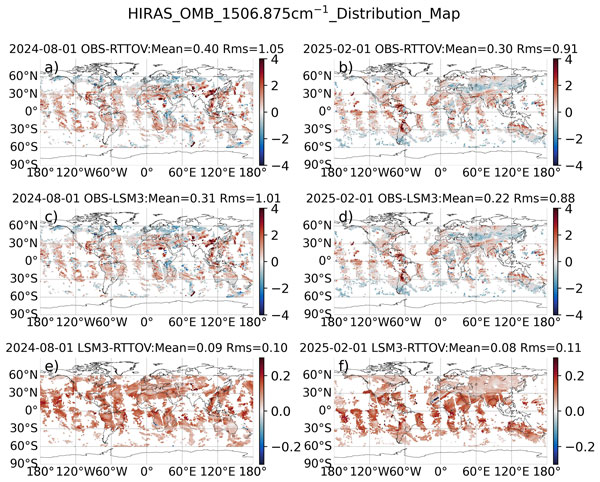
Panxiang Zhang, Peng Zhang, Gang Ma, Rui Li, Lu Lee, Wenguang Bai, and Chengli Qi
Geosci. Model Dev., 19, 10077–10101, https://doi.org/10.5194/gmd-19-10077-2026, https://doi.org/10.5194/gmd-19-10077-2026, 2026
Short summary
Short summary
To enhance atmospheric transmittance accuracy in strong water vapor absorption bands, this study proposes an optimized scheme for the fast transmittance algorithm applied to the Hyperspectral Infrared Atmospheric Sounder-II. It introduces a transmittance threshold for sample selection and a weighted least squares regression with transmittance weighting. Validation against line-by-line models and observations shows significant improvements in forward model accuracy and stability at 6.7 μm.
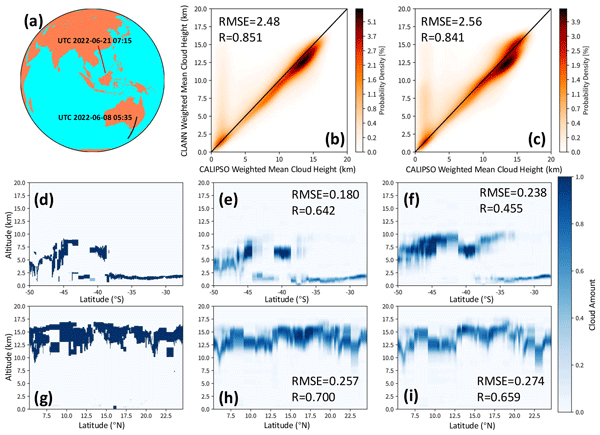
Min Min, Qiang Yu, Jun Li, Han Lin, Yunheng Xue, Xinran Xia, Di Di, Bo Li, and Peng Zhang
Atmos. Chem. Phys., 26, 14205–14228, https://doi.org/10.5194/acp-26-14205-2026, https://doi.org/10.5194/acp-26-14205-2026, 2026
Short summary
Short summary
A physics‑constrained transfer learning framework enables accurate radiance transformation across satellite sensors with different spectral response functions (SRFs). It integrates a Spectral‑Fidelity‑Preserving model from radiative transfer. Tests confirm robustness to calibration uncertainties and define SRF constraints. FY‑4A/B application improves cloud and precipitation retrievals, enabling operational algorithm transfer.
Ruijie Zhang, Lu Zhang, Xingying Zhang, Peng Zhang, Minqiang Zhou, Xifeng Cao, Chonghui Cheng, and Huirong Yang
EGUsphere, https://doi.org/10.5194/egusphere-2026-3007, https://doi.org/10.5194/egusphere-2026-3007, 2026
Short summary
Short summary
Measuring carbon dioxide from individual power plants is important for checking emissions, but satellite observations face a trade-off: sharper views are often noisier, while averaging many measurements can blur the plume. We used China’s Daqi-1 satellite data, simulations, and real power plant cases to test how much averaging is useful. We found that no single setting is best. Reliable estimates must balance noise reduction, plume detail, and the number of useful observations.
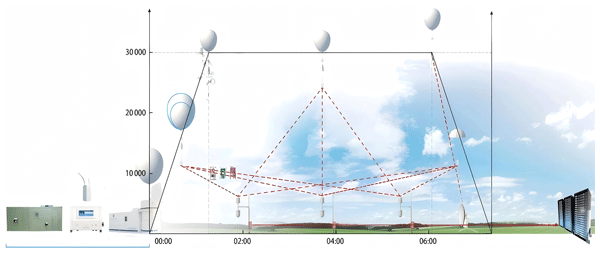
Xiaozhong Cao, Qiyun Guo, Haowen Luo, Jincheng Wang, Rongkang Yang, Die Xiao, Yinfeng Liu, Zhongliang Sun, Shijun Liu, Sijie Chen, Anfan Huang, Guo Jianping, and Peng Zhang
Atmos. Meas. Tech., 19, 3231–3251, https://doi.org/10.5194/amt-19-3231-2026, https://doi.org/10.5194/amt-19-3231-2026, 2026
Short summary
Short summary
The Ascent-Drift-Descent Radiosonde System (ADDRS) represents an emerging cost-effective technology for upper-air measurements, Its 'Internet cloud + instrument terminal' design enables targeted observations for extreme weather research. Initial data application shows high potential for numerical weather prediction, The pilot application of ADDRS is list in the World Meteorological Organization Region II Coordination 2025-2027 demonstration project (No.RA II-18-I-DP-2).
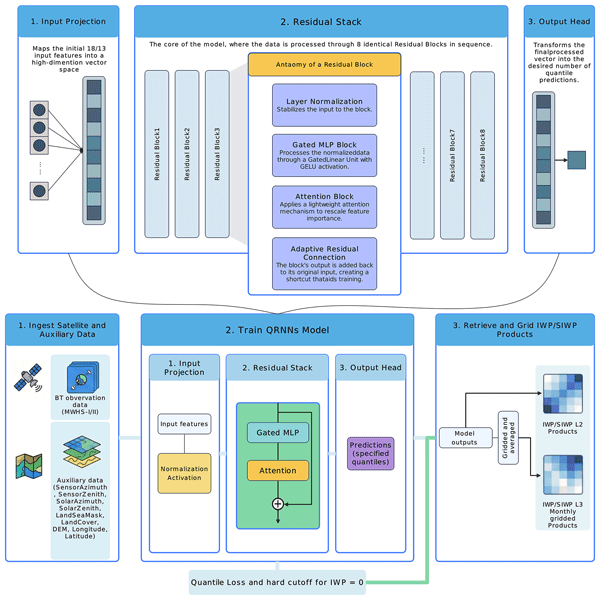
Yifan Yang, Tingfeng Dou, Gaojie Xu, Rui Zhou, Bo Li, Letu Husi, Wenyu Wang, and Cunde Xiao
Earth Syst. Sci. Data, 18, 1287–1305, https://doi.org/10.5194/essd-18-1287-2026, https://doi.org/10.5194/essd-18-1287-2026, 2026
Short summary
Short summary
We developed "FYAI" (Fengyun Satellite-Based Dataset for Atmospheric Ice Water Path), a fifteen-year dataset (2010–2024) derived from Chinese Fengyun satellites. Using artificial intelligence, we mapped global atmospheric ice. This continuous record fills critical gaps in observation. It provides scientists with a vital tool to improve weather forecasts and better understand how atmospheric ice interacts with the global climate system.
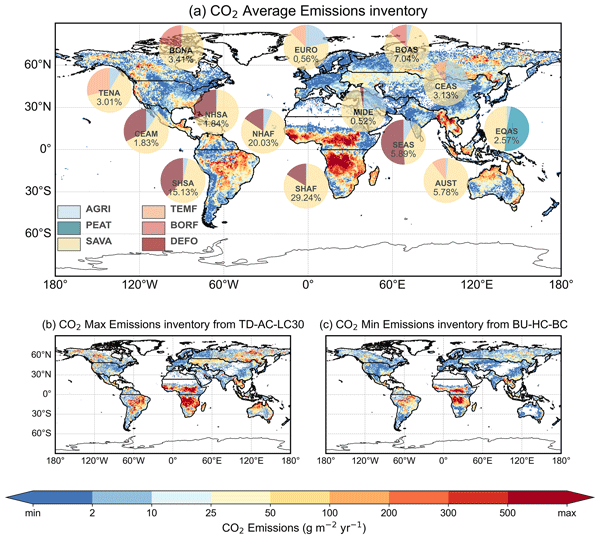
Xinlu Liu, Zhongyi Sun, Chong Shi, Peng Wang, Tangzhe Nie, Qingnan Chu, Huazhe Shang, Lu Sun, Dabin Ji, Meng Guo, Kunpeng Yi, Zhenghong Tan, Lan Wu, Xinchun Lu, and Shuai Yin
Earth Syst. Sci. Data, 18, 1203–1224, https://doi.org/10.5194/essd-18-1203-2026, https://doi.org/10.5194/essd-18-1203-2026, 2026
Short summary
Short summary
Estimates of global biomass burning emissions differ, posing a challenge for environment and climate change research. In response to this challenge, our new 2003–2023 dataset integrates top-down and bottom-up methods with multi-source data. This provides a plausible emissions range to quantify uncertainty, revealing that the greatest uncertainty is not in traditional hotspots but in regions with infrequent, extreme fires. This work offers vital data for more robust climate models.
Zhengxin Jiang, Yubao Qiu, Matti Leppäranta, Xiaoting Li, Peng Yao, Guoqiang Jia, and Jiancheng Shi
Earth Syst. Sci. Data Discuss., https://doi.org/10.5194/essd-2025-721, https://doi.org/10.5194/essd-2025-721, 2026
Preprint under review for ESSD
Short summary
Short summary
Lake ice profoundly impacts regional climate and ecosystems in cold climate regions. The long-term daily lake ice coverage, annual ice phenology, and the probability of complete ice-cover occurrence were produced for 32800 global lakes using gap-filled MODIS data from 2002 to 2024. Patterns and trends of ice phenology and ice-cover status quantitatively revealed that how lakes respond to the climate change. The dataset provides a valuable resource for hydrology, ecology and climate research.
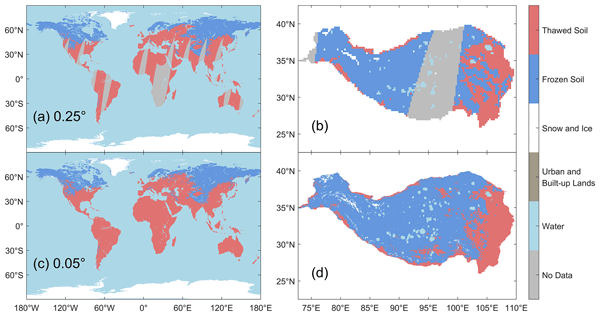
Defeng Feng, Tianjie Zhao, Jingyao Zheng, Yu Bai, Youhua Ran, Xiaokang Kou, Lingmei Jiang, Ziqian Zhang, Pei Yu, Jinbiao Zhu, Jie Pan, Jiancheng Shi, and Yuei-An Liou
Earth Syst. Sci. Data, 17, 6273–6293, https://doi.org/10.5194/essd-17-6273-2025, https://doi.org/10.5194/essd-17-6273-2025, 2025
Short summary
Short summary
This study introduces a downscaling approach integrating passive microwave and optical satellite data to generate a long-term (2002–2023), high-resolution (0.05°) global near-surface freeze-thaw (FT) state dataset with daily seamless continuity. The dataset attains 83.78 % overall accuracy, consistent with the microwave-based products but with finer spatial detail. This detailed FT record provides valuable information to enhance the understanding of global hydrological and ecological impacts.
Yutong Wang, Huazhe Shang, Chenqian Tang, Jian Xu, Tianyang Ji, Wenwu Wang, Lesi Wei, Yonghui Lei, Jiancheng Shi, and Husi Letu
Atmos. Chem. Phys., 25, 16167–16187, https://doi.org/10.5194/acp-25-16167-2025, https://doi.org/10.5194/acp-25-16167-2025, 2025
Short summary
Short summary
By analyzing global CloudSat data, we identified that most liquid cloud profiles have triangle-shaped or steadily decreasing structures, and we developed a new method using pattern recognition, fitting techniques, and machine learning to accurately estimate these profiles. This research advances our understanding of cloud life cycle and improves the ability to characterize cloud profiles, which is crucial for enhancing weather forecast and climate change research.
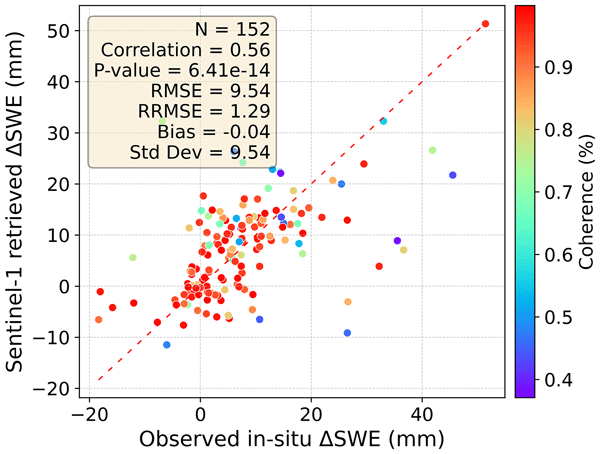
Jingtian Zhou, Yang Lei, Jinmei Pan, Cunren Liang, Zhang Yunjun, Weiliang Li, Chuan Xiong, Jiancheng Shi, and Wei Ma
The Cryosphere, 19, 5361–5388, https://doi.org/10.5194/tc-19-5361-2025, https://doi.org/10.5194/tc-19-5361-2025, 2025
Short summary
Short summary
Understanding how much water is stored in snow is important for tracking climate change and managing water supply. This study used satellite radar data from 2019 to 2021 to measure snow water changes in a mountain region of China. The results matched ground data well, especially in cold, dry conditions without heavy snowfall. A new phase calibration method helped improve accuracy, offering a useful reference for global snow monitoring using widely available satellite data.
Zhenhao Wu, Jian Shang, Chunguan Cui, Peng Zhang, Songyan Gu, Lin Chen, and Yunfei Fu
Earth Syst. Sci. Data, 17, 5137–5148, https://doi.org/10.5194/essd-17-5137-2025, https://doi.org/10.5194/essd-17-5137-2025, 2025
Short summary
Short summary
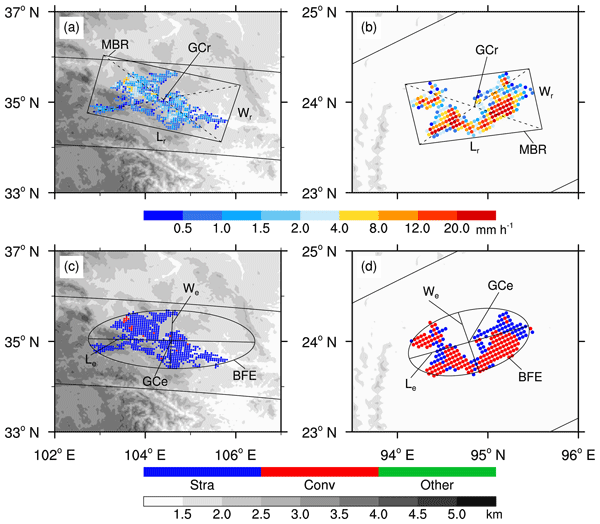
We have established a new dataset of rain cell precipitation parameters and visible-infrared and microwave signals by combining multi-instrument observation data from the Tropical Rainfall Measuring Mission (TRMM). The purpose of this dataset is to promote the three-dimensional studies of rain cell precipitation systems and to reveal the spatial and temporal variations in their scale, morphology, and intensity.
Yixiao Fu, Cheng-Zhi Zou, Peng Zhang, Banghai Wu, Shengli Wu, Shi Liu, and Yu Wang
Earth Syst. Sci. Data, 17, 4651–4670, https://doi.org/10.5194/essd-17-4651-2025, https://doi.org/10.5194/essd-17-4651-2025, 2025
Short summary
Short summary
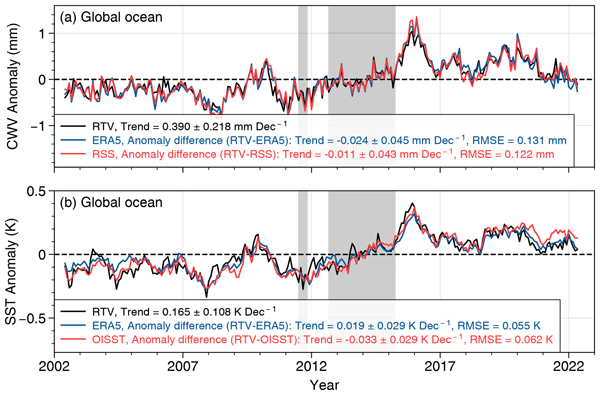
This study presents a climate data record (CDR) of atmospheric column water vapor and sea surface temperature using over two decades of stable-orbit satellite-based passive microwave imagery observations. The evaluation results show that the CDR has long-term consistency and continuity, and is more accurate than other similar products in climate covariability, suggesting that the CDR is suitable for climate change research and for constraining climate model simulations.
Yanghai Yu, Yang Lei, Paul Siqueira, Xiaotong Liu, Denuo Gu, Anmin Fu, Yong Pang, Wenli Huang, and Jiancheng Shi
Earth Syst. Sci. Data, 17, 4397–4429, https://doi.org/10.5194/essd-17-4397-2025, https://doi.org/10.5194/essd-17-4397-2025, 2025
Short summary
Short summary
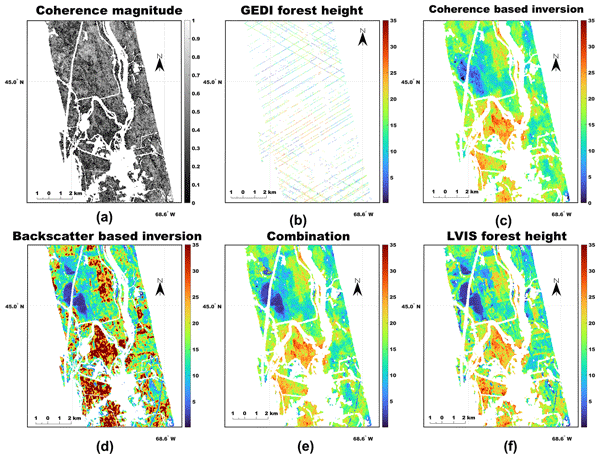
This study proposes a global-to-local approach for estimating forest height by fusing repeat-pass synthetic aperture radar interferometry and Global Ecosystem Dynamics Investigation (GEDI) data. Using Advanced Land Observing Satellite (ALOS-1) data and a twofold strategy to address temporal gaps, the method produced 30 m gridded forest height mosaics for the northeastern United States and China, demonstrating promising accuracies and offering potential for fusing data from future missions.
Xinran Xia, Rubin Jiang, Min Min, Shengli Wu, Peng Zhang, and Xiangao Xia
Earth Syst. Sci. Data Discuss., https://doi.org/10.5194/essd-2024-395, https://doi.org/10.5194/essd-2024-395, 2024
Revised manuscript not accepted
Short summary
Short summary
Based on the MicroWave Radiation Imager aboard FY-3 series satellites, we developed a global terrestrial precipitable water vapor dataset from 2012 to 2020. This dataset overcomes the limitations of infrared observations and provides accurate, all-weather PWV data ,spanning all types of land surface. Researchers are expected to leverage it to explore the role of water vapor in weather patterns, refine precipitation forecasting, and validate climate simulations.
Ziming Wang, Husi Letu, Huazhe Shang, and Luca Bugliaro
Atmos. Chem. Phys., 24, 7559–7574, https://doi.org/10.5194/acp-24-7559-2024, https://doi.org/10.5194/acp-24-7559-2024, 2024
Short summary
Short summary
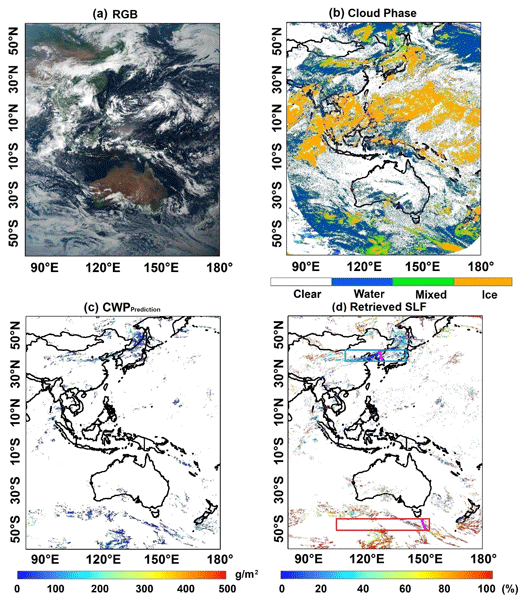
The supercooled liquid fraction (SLF) in mixed-phase clouds is retrieved for the first time using passive geostationary satellite observations based on differences in liquid droplet and ice particle radiative properties. The retrieved results are comparable to global distributions observed by active instruments, and the feasibility of the retrieval method to analyze the observed trends of the SLF has been validated.
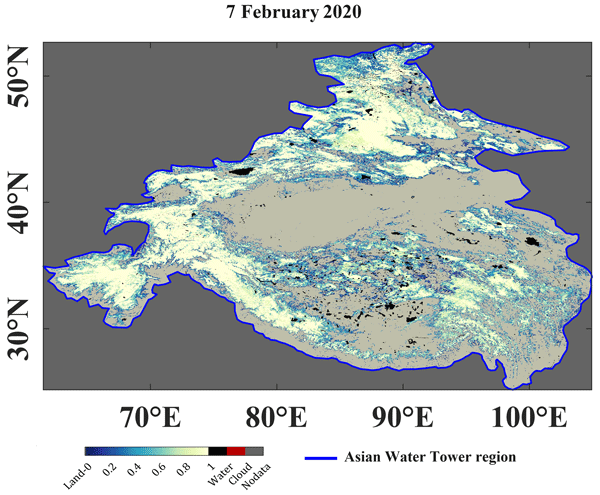
Fangbo Pan, Lingmei Jiang, Gongxue Wang, Jinmei Pan, Jinyu Huang, Cheng Zhang, Huizhen Cui, Jianwei Yang, Zhaojun Zheng, Shengli Wu, and Jiancheng Shi
Earth Syst. Sci. Data, 16, 2501–2523, https://doi.org/10.5194/essd-16-2501-2024, https://doi.org/10.5194/essd-16-2501-2024, 2024
Short summary
Short summary
It is important to strengthen the continuous monitoring of snow cover as a key indicator of imbalance in the Asian Water Tower (AWT) region. We generate long-term daily gap-free fractional snow cover products over the AWT at 0.005° resolution from 2000 to 2022 based on the multiple-endmember spectral mixture analysis algorithm and the gap-filling algorithm. They can provide highly accurate, quantitative fractional snow cover information for subsequent studies on hydrology and climate.
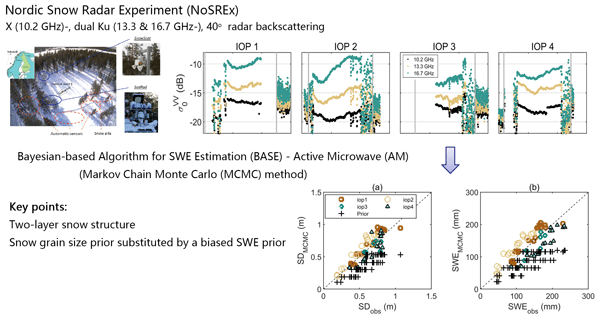
Jinmei Pan, Michael Durand, Juha Lemmetyinen, Desheng Liu, and Jiancheng Shi
The Cryosphere, 18, 1561–1578, https://doi.org/10.5194/tc-18-1561-2024, https://doi.org/10.5194/tc-18-1561-2024, 2024
Short summary
Short summary
We developed an algorithm to estimate snow mass using X- and dual Ku-band radar, and tested it in a ground-based experiment. The algorithm, the Bayesian-based Algorithm for SWE Estimation (BASE) using active microwaves, achieved an RMSE of 30 mm for snow water equivalent. These results demonstrate the potential of radar, a highly promising sensor, to map snow mass at high spatial resolution.
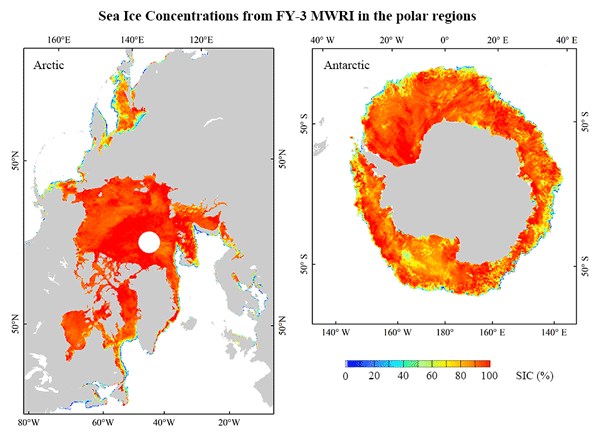
Ying Chen, Ruibo Lei, Xi Zhao, Shengli Wu, Yue Liu, Pei Fan, Qing Ji, Peng Zhang, and Xiaoping Pang
Earth Syst. Sci. Data, 15, 3223–3242, https://doi.org/10.5194/essd-15-3223-2023, https://doi.org/10.5194/essd-15-3223-2023, 2023
Short summary
Short summary
The sea ice concentration product derived from the Microwave Radiation Image sensors on board the FengYun-3 satellites can reasonably and independently identify the seasonal and long-term changes of sea ice, as well as extreme cases of annual maximum and minimum sea ice extent in polar regions. It is comparable with other sea ice concentration products and applied to the studies of climate and marine environment.

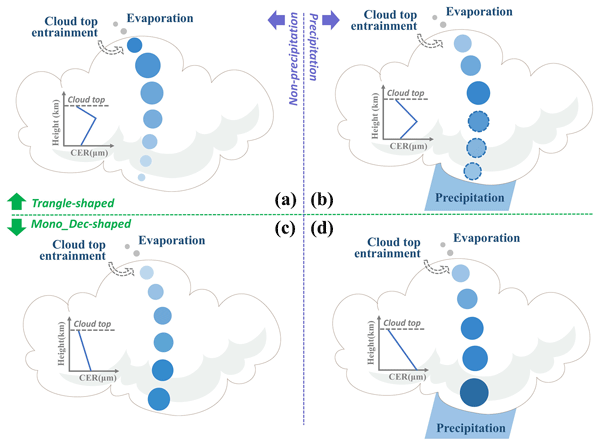
Huazhe Shang, Souichiro Hioki, Guillaume Penide, Céline Cornet, Husi Letu, and Jérôme Riedi
Atmos. Chem. Phys., 23, 2729–2746, https://doi.org/10.5194/acp-23-2729-2023, https://doi.org/10.5194/acp-23-2729-2023, 2023
Short summary
Short summary
We find that cloud profiles can be divided into four prominent patterns, and the frequency of these four patterns is related to intensities of cloud-top entrainment and precipitation. Based on these analyses, we further propose a cloud profile parameterization scheme allowing us to represent these patterns. Our results shed light on how to facilitate the representation of cloud profiles and how to link them to cloud entrainment or precipitating status in future remote-sensing applications.
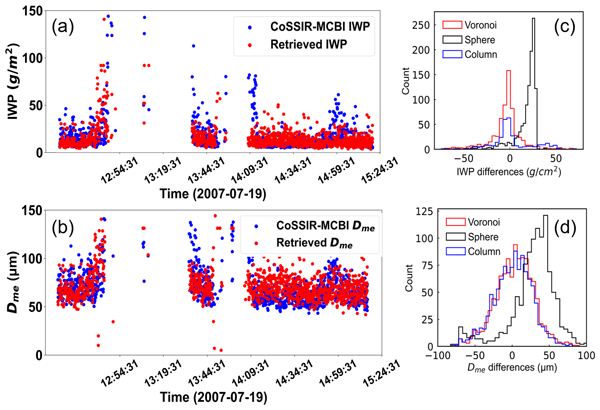
Ming Li, Husi Letu, Hiroshi Ishimoto, Shulei Li, Lei Liu, Takashi Y. Nakajima, Dabin Ji, Huazhe Shang, and Chong Shi
Atmos. Meas. Tech., 16, 331–353, https://doi.org/10.5194/amt-16-331-2023, https://doi.org/10.5194/amt-16-331-2023, 2023
Short summary
Short summary
Influenced by the representativeness of ice crystal scattering models, the existing terahertz ice cloud remote sensing inversion algorithms still have significant uncertainties. We developed an ice cloud remote sensing retrieval algorithm of the ice water path and particle size from aircraft-based terahertz radiation measurements based on the Voronoi model. Validation revealed that the Voronoi model performs better than the sphere and hexagonal column models.
Wei Wan, Jie Zhang, Liyun Dai, Hong Liang, Ting Yang, Baojian Liu, Zhizhou Guo, Heng Hu, and Limin Zhao
Earth Syst. Sci. Data, 14, 3549–3571, https://doi.org/10.5194/essd-14-3549-2022, https://doi.org/10.5194/essd-14-3549-2022, 2022
Short summary
Short summary
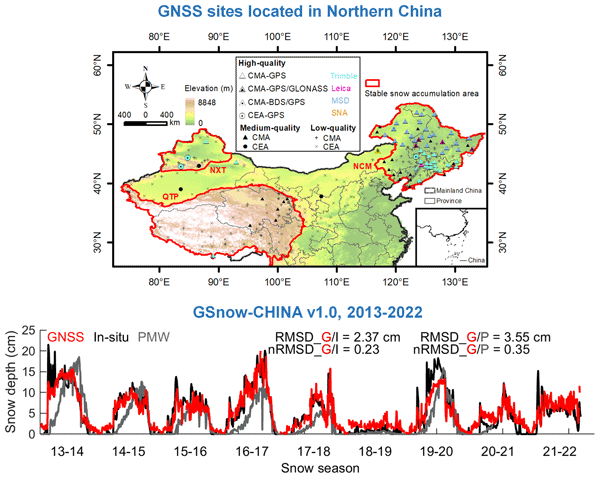
The GSnow-CHINA data set is a snow depth data set developed using the two Global Navigation Satellite System station networks in China. It includes snow depth of 24, 12, and 2/3/6 h records, if possible, for 80 sites from 2013–2022 over northern China (25–55° N, 70–140° E). The footprint of the data set is ~ 1000 m2, and it can be used as an independent data source for validation purposes. It is also useful for regional climate research and other meteorological and hydrological applications.
Haoran Zhang, Nan Li, Keqin Tang, Hong Liao, Chong Shi, Cheng Huang, Hongli Wang, Song Guo, Min Hu, Xinlei Ge, Mindong Chen, Zhenxin Liu, Huan Yu, and Jianlin Hu
Atmos. Chem. Phys., 22, 5495–5514, https://doi.org/10.5194/acp-22-5495-2022, https://doi.org/10.5194/acp-22-5495-2022, 2022
Short summary
Short summary
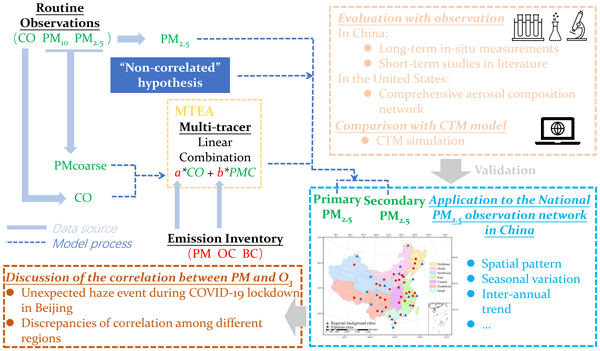
We developed a new algorithm with low economic/technique costs to identify primary and secondary components of PM2.5. Our model was shown to be reliable by comparison with different observation datasets. We systematically explored the patterns and changes in the secondary PM2.5 pollution in China at large spatial and time scales. We believe that this method is a promising tool for efficiently estimating primary and secondary PM2.5, and has huge potential for future PM mitigation.
Ming Li, Husi Letu, Yiran Peng, Hiroshi Ishimoto, Yanluan Lin, Takashi Y. Nakajima, Anthony J. Baran, Zengyuan Guo, Yonghui Lei, and Jiancheng Shi
Atmos. Chem. Phys., 22, 4809–4825, https://doi.org/10.5194/acp-22-4809-2022, https://doi.org/10.5194/acp-22-4809-2022, 2022
Short summary
Short summary
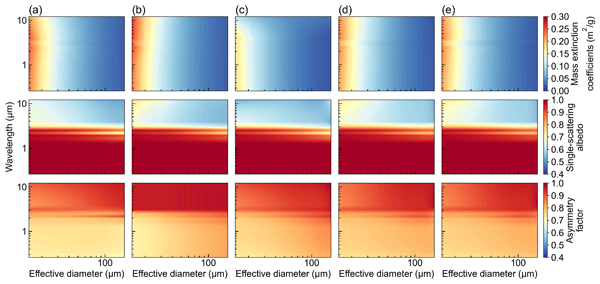
To build on the previous investigations of the Voronoi model in the remote sensing retrievals of ice cloud products, this paper developed an ice cloud parameterization scheme based on the single-scattering properties of the Voronoi model and evaluate it through simulations with the Community Integrated Earth System Model (CIESM). Compared with four representative ice cloud schemes, results show that the Voronoi model has good capabilities of ice cloud modeling in the climate model.
Pradeep Khatri, Tadahiro Hayasaka, Hitoshi Irie, Husi Letu, Takashi Y. Nakajima, Hiroshi Ishimoto, and Tamio Takamura
Atmos. Meas. Tech., 15, 1967–1982, https://doi.org/10.5194/amt-15-1967-2022, https://doi.org/10.5194/amt-15-1967-2022, 2022
Short summary
Short summary
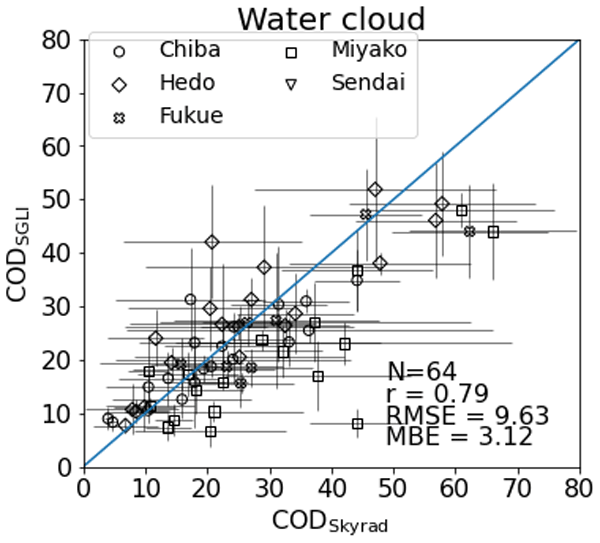
Cloud properties observed by the Second-generation Global Imager (SGLI) onboard the Global Change Observation Mission – Climate (GCOM-C) satellite are evaluated using surface observation data. The study finds that SGLI-observed cloud properties are qualitative enough, although water cloud properties are suggested to be more qualitative, and both water and ice cloud properties can reproduce surface irradiance quite satisfactorily. Thus, SGLI cloud products are very useful for different studies.
Shu Fang, Kebiao Mao, Xueqi Xia, Ping Wang, Jiancheng Shi, Sayed M. Bateni, Tongren Xu, Mengmeng Cao, Essam Heggy, and Zhihao Qin
Earth Syst. Sci. Data, 14, 1413–1432, https://doi.org/10.5194/essd-14-1413-2022, https://doi.org/10.5194/essd-14-1413-2022, 2022
Short summary
Short summary
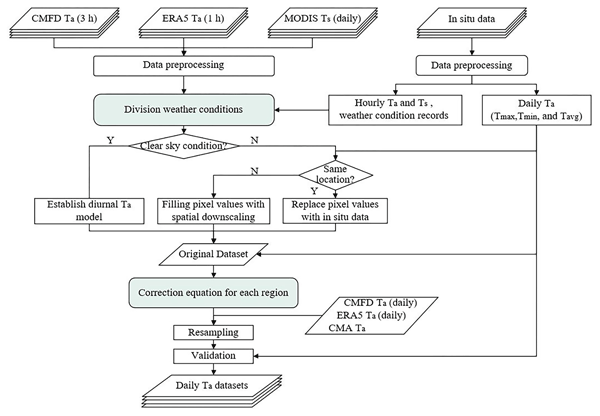
Air temperature is an important parameter reflecting climate change, and the current method of obtaining daily temperature is affected by many factors. In this study, we constructed a temperature model based on weather conditions and established a correction equation. The dataset of daily air temperature (Tmax, Tmin, and Tavg) in China from 1979 to 2018 was obtained with a spatial resolution of 0.1°. Accuracy verification shows that the dataset has reliable accuracy and high spatial resolution.
Yungang Wang, Liping Fu, Fang Jiang, Xiuqing Hu, Chengbao Liu, Xiaoxin Zhang, Jiawei Li, Zhipeng Ren, Fei He, Lingfeng Sun, Ling Sun, Zhongdong Yang, Peng Zhang, Jingsong Wang, and Tian Mao
Atmos. Meas. Tech., 15, 1577–1586, https://doi.org/10.5194/amt-15-1577-2022, https://doi.org/10.5194/amt-15-1577-2022, 2022
Short summary
Short summary
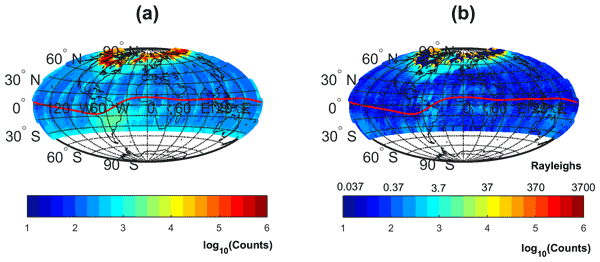
Far-ultraviolet (FUV) airglow radiation is particularly well suited for space-based remote sensing. The Ionospheric Photometer (IPM) instrument carried aboard the Feng Yun 3-D satellite measures the spectral radiance of the Earth FUV airglow. IPM is a tiny, highly sensitive, and robust remote sensing instrument. Initial results demonstrate that the performance of IPM meets the designed requirement and therefore can be used to study the thermosphere and ionosphere in the future.
Cited articles
Abbasi, B., Qin, Z., Du, W., Fan, J., Zhao, C., Hang, Q., Zhao, S., and Li, S.: An algorithm to retrieve total precipitable water vapor in the atmosphere from FengYun 3D Medium Resolution Spectral Imager 2 (FY-3D MERSI-2) data, Remote Sensing, 12, 3469, https://doi.org/10.3390/rs12213469, 2020.
Alshawaf, F., Fersch, B., Hinz, S., Kunstmann, H., Mayer, M., and Meyer, F. J.: Water vapor mapping by fusing InSAR and GNSS remote sensing data and atmospheric simulations, Hydrol. Earth Syst. Sci., 19, 4747–4764, https://doi.org/10.5194/hess-19-4747-2015, 2015.
Bao, F., Letu, H., Shang, H., Ri, X., Chen, D., Yao, T., Wei, L., Tang, C., Yin, S., Ji, D., Lei, Y., Shi, C., Peng, Y., and Shi, J.: Advancing cloud classification over the Tibetan Plateau: A new algorithm reveals seasonal and diurnal variations, Geophysical Research Letters, 51, e2024GL109590, https://doi.org/10.1029/2024GL109590, 2024.
Bao, S., Letu, H., Zhao, J., Shang, H., Lei, Y., Duan, A., Chen, B., Bao, Y., He, J., Wang, T., Ji, D., Tana, G., and Shi, J.: Spatiotemporal distributions of cloud parameters and their response to meteorological factors over the Tibetan Plateau during 2003–2015 based on MODIS data, International Journal of Climatology, 39, 532–543, https://doi.org/10.1002/joc.5826, 2019.
Bonafoni, S., Mattioli, V., Basili, P., Ciotti, P., and Pierdicca, N.: Satellite-based retrieval of precipitable water vapor over land by using a neural network approach, IEEE Transactions on Geoscience and Remote Sensing, 49, 3236–3248, https://doi.org/10.1109/TGRS.2011.2114870, 2011.
Boukabara, S. A., Garrett, K., and Chen, W.: Global coverage of total precipitable water using a microwave variational algorithm, IEEE Transactions on Geoscience and Remote Sensing, 48, 3608–3621, https://doi.org/10.1109/TGRS.2010.2048035, 2010.
Boukabara, S. A., Garrett, K., Chen, W. C., Iturbide-Sanchez, F., Grassotti, C., Kongoli, C., Chen, R. Y., Liu, Q. H., Yan, B. H., Weng, F. Z., Ferraro, R., Kleespies, T. J., and Meng, H.: MiRS: An All-Weather 1DVAR Satellite Data Assimilation and Retrieval System, IEEE Transactions on Geoscience and Remote Sensing, 49, 3249–3272, https://doi.org/10.1109/TGRS.2011.2158438, 2011.
Breiman, L.: Random forests, Machine Learning, 45, 5–32, https://doi.org/10.1023/A:1010933404324, 2001.
Chen, M. and Yao, X.: The characteristics and mechanisms on diurnal variation of summer precipitation over the Tibetan Plateau, Climate Dynamics, 60, 2405–2418, https://doi.org/10.1007/s00382-022-06423-w, 2023.
Chen, X. and Ma, Y.: TP-PROFILE monitoring of the troposphere over the Tibetan Plateau (2021–2022), National Tibetan Plateau/Third Pole Environment Data Center [data set], https://doi.org/10.11888/Atmos.tpdc.272995, 2022.
Chen, X., Liu, Y., Ma, Y., Xu, X., Xu, X., Li, L., Cao, D., Zhang, Q., Wang, G., Li, M., Luo, S., and Wang, X.: Research progress on the water vapor channel within the Yarlung Zsangbo Grand Canyon, China, Atmospheric and Oceanic Science Letters, 17, 100462, https://doi.org/10.1016/j.aosl.2024.100462, 2024a.
Chen, X., Liu, Y., Ma, Y., Ma, W., Xu, X., Cheng, X., and Wang, B.: TP-PROFILE monitoring the thermodynamical structure of the troposphere over the Third Pole, Advances in Atmospheric Sciences, https://doi.org/10.1007/s00376-023-3199-y, 2024b.
Chen, Y., Zhang, A., Zhang, Y., Cui, C., Wan, R., Wang, B., and Fu, Y.: A heavy precipitation event in the Yangtze River Basin led by an eastward moving Tibetan Plateau cloud system in the summer of 2016, Journal of Geophysical Research: Atmospheres, 125, e2020JD032429, https://doi.org/10.1029/2020JD032429, 2020.
Cui, M., Jia, L., Lu, J., Zheng, C., and Ji, D.: D-PRA: A dynamic two-step real-time precipitation retrieval algorithm based on geostationary satellite observation, IEEE Transactions on Geoscience and Remote Sensing, https://doi.org/10.1109/TGRS.2025.3614229, 2025.
Dalu, G.: Satellite remote sensing of atmospheric water vapour, International Journal of Remote Sensing, 7, 1089–1097, https://doi.org/10.1080/01431168608948911, 1986.
Dong, N., Xu, X., Zhang, R., Sun, C., Cai, W., and Zhao, R.: Mechanism underlying the correlation between the warming-wetting of the Qinghai-Tibet Plateau and atmospheric energy changes in high-impact oceanic areas, npj Climate and Atmospheric Science, 7, 324, https://doi.org/10.1038/s41612-024-00849-1, 2024.
Du, J., Kimball, J. S., and Jones, L. A.: Satellite microwave retrieval of total precipitable water vapor and surface air temperature over land from AMSR2, IEEE Transactions on Geoscience and Remote Sensing, 53, 2520–2531, https://doi.org/10.1109/TGRS.2014.2361344, 2015.
Du, Z., Zhang, B., Yao, Y., Zhao, Q., and Zhang, L.: Integrating near-infrared, thermal infrared, and microwave satellite observations to retrieve high-resolution precipitable water vapor, Remote Sensing of Environment, 318, 114611, https://doi.org/10.1016/j.rse.2025.114611, 2025.
Durre, I., Vose, R. S., and Wuertz, D. B.: Overview of the Integrated Global Radiosonde Archive, Journal of Climate, 19, 53–68, https://doi.org/10.1175/JCLI3594.1, 2006.
Ermakov, D. M., Sharkov, E. A., and Chernushich, A. P.: A multisensory algorithm of satellite radiothermovision, Izvestiya, Atmospheric and Oceanic Physics, 52, 1172–1180, https://doi.org/10.1134/S0001433816090115, 2016.
Feng, L. and Zhou, T.: Water vapor transport for summer precipitation over the Tibetan Plateau: Multidata set analysis, Journal of Geophysical Research: Atmospheres, 117, D20116, https://doi.org/10.1029/2011JD017012, 2012.
Gao, B.-C. and Kaufman, Y. J.: Water vapor retrievals using Moderate Resolution Imaging Spectroradiometer (MODIS) near-infrared channels, Journal of Geophysical Research: Atmospheres, 108, 4389, https://doi.org/10.1029/2002JD003023, 2003.
Gao, Z., Jiang, N., Xu, Y., Xu, T., and Liu, Y.: Precipitable water vapor retrieval over land from GCOM-W/AMSR2 based on a new integrated method, IEEE Transactions on Geoscience and Remote Sensing, 60, 1–12, https://doi.org/10.1109/TGRS.2022.3151384, 2022.
Guillory, A. R., Jedlovec, G. J., and Fuelberg, H. E.: A technique for deriving column-integrated water content using VAS split-window data, Journal of Applied Meteorology and Climatology, 32, 1226–1241, https://doi.org/10.1175/1520-0450(1993)032<1226:ATFDCI>2.0.CO;2, 1993.
Hersbach, H., Bell, B., Berrisford, P., Hirahara, S., Horányi, A., Muñoz-Sabater, J., Nicolas, J., Peubey, C., Radu, R., Schepers, D., Simmons, A., Soci, C., Abdalla, S., Abellan, X., Balsamo, G., Bechtold, P., Biavati, G., Bidlot, J., Bonavita, M., Chiara, G. D., Dahlgren, P., Dee, D., Diamantakis, M., Dragani, R., Flemming, J., Forbes, R., Fuentes, M., Geer, A., Haimberger, L., Healy, S., Hogan, R. J., Hólm, E., Janisková, M., Keeley, S., Laloyaux, P., Lopez, P., Lupu, C., Radnoti, G., de Rosnay, P., Rozum, I., Vamborg, F., Villaume, S., and Thépaut, J. N.: The ERA5 global reanalysis, Quarterly Journal of the Royal Meteorological Society, 146, 1999–2049, https://doi.org/10.1002/qj.3803, 2020.
Immerzeel, W. W., van Beek, L. P. H., and Bierkens, M. F. P.: Climate change will affect the Asian water towers, Science, 328, 1382–1385, https://doi.org/10.1126/science.1183188, 2010.
Ji, D., Shi, J., Xiong, C., Wang, T., and Zhang, Y.: A total precipitable water retrieval method over land using the combination of passive microwave and optical remote sensing, Remote Sensing of Environment, 191, 313–327, https://doi.org/10.1016/j.rse.2017.01.028, 2017.
Ji, D., Shi, J., Letu, H., Li, W., Zhang, H., and Shang, H.: A total precipitable water product and its trend analysis in recent years based on passive microwave radiometers, IEEE Journal of Selected Topics in Applied Earth Observations and Remote Sensing, 14, 7324–7335, https://doi.org/10.1109/JSTARS.2021.3092623, 2021.
Ji, D., Shi, J., Letu, H., Li, W., and Zhang, H.: Global daily total precipitable water dataset in all weather condition based on AMSR-E and AMSR2 (2002–2017), National Tibetan Plateau Data Center [data set], https://doi.org/10.11888/Atmos.tpdc.272832, 2022.
Ji, D., Letu, H., Ri, X., Xu, N., Li, X., Li, X., Zhang, G., Wang, Y., and Shi, J.: A new dynamically updated geostationary satellite precipitation estimation algorithm for near real-time condition, IEEE Transactions on Geoscience and Remote Sensing, 63, 1–22, https://doi.org/10.1109/TGRS.2025.3583904, 2025a.
Ji, D., Sun, Q., Wang, Y., and Shi, J.: Hourly total precipitable water dataset for the Tibetan Plateau at 0.02° resolution (2016–2022), National Tibetan Plateau Data Center [data set], https://doi.org/10.11888/Atmos.tpdc.301518, 2025b.
Jiang, J., Liu, H., Wang, Y., and Zhang, S.: Precipitable water vapor retrieval using Himawari-8 satellite observations over Tibetan Plateau, Journal of Chengdu University of Information Technology, 37, 494–500, https://doi.org/10.16836/j.cnki.jcuit.2022.05.002, 2022a.
Jiang, N., Xu, Y., Xu, T., Li, S., and Gao, Z.: Land water vapor retrieval for AMSR2 using a deep learning method, IEEE Transactions on Geoscience and Remote Sensing, 60, 1–11, https://doi.org/10.1109/TGRS.2022.3162222, 2022b.
Kidder, S. Q. and Jones, A. S.: A blended satellite total precipitable water product for operational forecasting, Journal of Atmospheric and Oceanic Technology, 24, 74–81, https://doi.org/10.1175/JTECH1960.1, 2007.
Labbi, A. and Mokhnache, A.: Estimating of total atmospheric water vapor content from MSG1-SEVIRI observations, Atmos. Meas. Tech. Discuss., 8, 8903–8923, https://doi.org/10.5194/amtd-8-8903-2015, 2015.
Letu, H., Ma, R., Nakajima, T. Y., Shi, C., Hashimoto, M., Nagao, T. M., Baran, A. J., Nakajima, T., Xu, J., Wang, T., Tana, G., Bilige, S., Shang, H., Chen, L., Ji, D., Lei, Y., Wei, L., Zhang, P., Li, J., Li, L., Zheng, Y., Khatri, P., and Shi, J.: Surface solar radiation compositions observed from Himawari-8/9 and Fengyun-4 series, Bulletin of the American Meteorological Society, 104, E1772–E1789, https://doi.org/10.1175/BAMS-D-22-0154.1, 2023.
Li, X. and Long, D.: An improvement in accuracy and spatiotemporal continuity of the MODIS precipitable water vapor product based on a data fusion approach, Remote Sensing of Environment, 248, 111966, https://doi.org/10.1016/j.rse.2020.111966, 2020.
Li, Z.: Production of regional 1 km × 1 km water vapor fields through the integration of GPS and MODIS data, Proc. 17th Int. Tech. Meet. Satellite Division of The Institute of Navigation (ION GNSS 2004), Long Beach, CA, 2396–2403, 2004.
Liu, H., Tang, S., Hu, J., Zhang, S., and Deng, X.: An improved physical split-window algorithm for precipitable water vapor retrieval exploiting the water vapor channel observations, Remote Sensing of Environment, 194, 366–378, https://doi.org/10.1016/j.rse.2017.03.031, 2017.
Liu, Q. and Weng, F.: One-dimensional variational retrieval algorithm of temperature, water vapor, and cloud water profiles from advanced microwave sounding unit (AMSU), IEEE Transactions on Geoscience and Remote Sensing, 43, 1087–1095, https://doi.org/10.1109/TGRS.2004.843211, 2005.
Lu, C., Zhang, Y., Zheng, Y., Wu, Z., and Wang, Q.: Precipitable water vapor fusion of MODIS and ERA5 based on convolutional neural network, GPS Solutions, 27, 15, https://doi.org/10.1007/s10291-022-01357-6, 2022.
Ma, X., Yao, Y., Zhang, B., Yang, M., and Liu, H.: Improving the accuracy and spatial resolution of precipitable water vapor dataset using a neural network-based downscaling method, Atmospheric Environment, 269, 118850, https://doi.org/10.1016/j.atmosenv.2021.118850, 2022a.
Ma, X., Yao, Y., Zhang, B., Qin, Y., Zhang, Q., and Zhu, H.: An improved MODIS NIR PWV retrieval algorithm based on an artificial neural network considering the land-cover types, IEEE Transactions on Geoscience and Remote Sensing, 60, 1–12, https://doi.org/10.1109/TGRS.2022.3170078, 2022b.
Ma, X., Yao, Y., Zhang, B., and He, C.: Retrieval of high spatial resolution precipitable water vapor maps using heterogeneous Earth observation data, Remote Sensing of Environment, 278, 113100, https://doi.org/10.1016/j.rse.2022.113100, 2022c.
Ma, Y., Liu, T., Yu, Z., Jiang, C., Xu, G., and Lu, Z.: All-weather precipitable water vapor map reconstruction using data fusion and machine learning-based spatial downscaling, Atmospheric Research, 296, 107068, https://doi.org/10.1016/j.atmosres.2023.107068, 2023.
NOAA National Centers for Environmental Information: ETOPO 2022 15 arc-second global relief model, NOAA National Centers for Environmental Information [data set], https://doi.org/10.25921/fd45-gt74, 2022.
Shang, H., Letu, H., Xu, R., Wei, L., Wu, L., Shao, J., Nagao, T. M., Nakajima, T. Y., Riedi, J., He, J., and Chen, L.: A hybrid cloud detection and cloud phase classification algorithm using classic threshold-based tests and extra randomized tree model, Remote Sens. Environ., 302, 113957, https://doi.org/10.1016/j.rse.2023.113957, 2024.
Shen, S., Xiao, H., Yang, H., Fu, D., and Shu, W.: Variations of water vapor transport and water vapor-hydrometeor-precipitation conversions during a heavy rainfall event in the Three-River-Headwater region of the Tibetan Plateau, Atmos. Res., 264, 105874, https://doi.org/10.1016/j.atmosres.2021.105874, 2021.
Shi, C., Zhao, Q., Geng, J., Lou, Y., Ge, M., and Liu, J.: Recent development of PANDA software in GNSS data processing, Proc. Int. Conf. Earth Obs. Data Process. Anal. (ICEODPA), 72851S, https://doi.org/10.1117/12.816261, 2008.
Shi, C., Hashimoto, M., Shiomi, K., and Nakajima, T.: Development of an algorithm to retrieve aerosol optical properties over water using an artificial neural network radiative transfer scheme: First result from GOSAT-2/CAI-2, IEEE Trans. Geosci. Remote Sens., 59, 9861–9872, https://doi.org/10.1109/TGRS.2021.3071995, 2021.
Shi, C., Letu, H., Nakajima, T. Y., Nakajima, T., Wei, L., Xu, R., Lu, F., Riedi, J., Ichii, K., Zeng, J., Shang, H., Ma, R., Yin, S., Shi, J., Baran, A. J., Xu, J., Li, A., Tana, G., Wang, W., Na, Q., Sun, Q., Yang, W., Chen, L., and Shi, G.: Near-global monitoring of surface solar radiation through the construction of a geostationary satellite network observation system, The Innovation, 6, 100876, https://doi.org/10.1016/j.xinn.2025.100876, 2025.
Sun, L., Yang, Y., Fu, Y., Zhang, X., Zhong, L., Zhao, C., and Ma, M.: Summertime atmospheric water vapor transport between Tibetan Plateau and its surrounding regions during 1990–2019: Boundary discrepancy and interannual variation, Atmos. Res., 275, 106237, https://doi.org/10.1016/j.atmosres.2022.106237, 2022.
Sun, Q., Ji, D., Letu, H., Ni, X., Zhang, H., Wang, Y., Li, B., and Shi, J.: A method for estimating high spatial resolution total precipitable water in all-weather condition by fusing satellite near-infrared and microwave observations, Remote Sens. Environ., 302, 113952, https://doi.org/10.1016/j.rse.2023.113952, 2024.
Sun, W., Wang, J., Li, Y., Meng, J., Zhao, Y., and Wu, P.: New gridded product for the total columnar atmospheric water vapor over ocean surface constructed from microwave radiometer satellite data, Remote Sens., 13, 12402, https://doi.org/10.3390/rs13122402, 2021.
Tang, C., Shi, C., Letu, H., Yin, S., Nakajima, T., Sekiguchi, M., Xu, J., Zhao, M., Ma, R., and Wang, W.: Development of a hybrid algorithm for the simultaneous retrieval of aerosol optical thickness and fine-mode fraction from multispectral satellite observation combining radiative transfer and transfer learning approaches, Remote Sens. Environ., 319, 114619, https://doi.org/10.1016/j.rse.2022.114619, 2025.
Tana, G., Ri, X., Shi, C., Ma, R., Letu, H., Xu, J., and Shi, J.: Retrieval of cloud microphysical properties from Himawari-8/AHI infrared channels and its application in surface shortwave downward radiation estimation in the sun glint region, Remote Sens. Environ., 290, 113548, https://doi.org/10.1016/j.rse.2022.113548, 2023.
Tana, G., Lesi, W., Shang, H., Xu, J., Ji, D., Shi, J., Letu, H., and Shi, C.: A new cloud water path retrieval method based on geostationary satellite infrared measurements, IEEE Trans. Geosci. Remote Sens., 63, 1–10, https://doi.org/10.1109/TGRS.2025.3526262, 2025.
Trenberth, K. E. and Guillemot, C. J.: Evaluation of the atmospheric moisture and hydrological cycle in the NCEP/NCAR reanalyses, Clim. Dyn., 14, 213–231, https://doi.org/10.1007/s003820050219, 1998.
Wang, L., Hu, X., Xu, N., and Chen, L.: Water vapor retrievals from near-infrared channels of the Advanced Medium Resolution Spectral Imager instrument onboard the Fengyun-3D satellite, Adv. Atmos. Sci., 38, 1351–1366, https://doi.org/10.1007/s00376-020-0174-8, 2021.
Wang, Y. and Liu, H.: Hourly clear sky atmospheric water vapor total dataset of Himawari-8 geostationary meteorological satellite in the Qinghai-Tibet Plateau region (2016–2022), National Tibetan Plateau/Third Pole Environment Data Center [data set], https://doi.org/10.11888/Atmos.tpdc.301522, 2024.
Wang, Y., Yang, K., Zhou, X., Wang, B., Chen, D., Lu, H., Lin, C., and Zhang, F.: The formation of a dry-belt in the north side of central Himalaya Mountains, Geophysical Research Letters, 46, 2993–3000, https://doi.org/10.1029/2018GL081061, 2019.
Ware, R. H., Fulker, D. W., Stein, S. A., Anderson, D. N., Avery, S. K., Clark, R. D., Droegemeier, K. K., Kuettner, J. P., Minster, J. B., and Sorooshian, S.: SuomiNet: A real-time national GPS network for atmospheric research and education, Bull. Am. Meteorol. Soc., 81, 677–694, 2000.
Wimmers, A. J. and Velden, C. S.: Seamless advective blending of total precipitable water retrievals from polar-orbiting satellites, J. Appl. Meteorol. Climatol., 50, 1024–1036, https://doi.org/10.1175/2010JAMC2589.1, 2011.
Wu, P., Liu, Y.-J., Wang, J., and Ding, Y.-H.: Revisiting the variations of precipitation and water vapour budget over the Tibetan Plateau, Adv. Clim. Change Res., 14, 77–84, https://doi.org/10.1016/j.accre.2022.12.002, 2023.
Xia, X., Fu, D., Shao, W., Jiang, R., Wu, S., Zhang, P., Yang, D., and Xia, X.: Retrieving precipitable water vapor over land from satellite passive microwave radiometer measurements using automated machine learning, Geophys. Res. Lett., 50, e2023GL105197, https://doi.org/10.1029/2023GL105197, 2023.
Xiong, Z., Zhang, B., Sang, J., Sun, X., and Wei, X.: Fusing precipitable water vapor data in China at different timescales using an artificial neural network, Remote Sens., 13, 91720, https://doi.org/10.3390/rs13091720, 2021.
Xu, J. and Liu, Z.: A back propagation neural network-based algorithm for retrieving all-weather precipitable water vapor from MODIS NIR measurements, IEEE Trans. Geosci. Remote Sens., 60, 1–14, https://doi.org/10.1109/TGRS.2022.3219405, 2022.
Xu, X., Lu, C., Shi, X., and Gao, S.: World water tower: An atmospheric perspective, Geophys. Res. Lett., 35, L20815, https://doi.org/10.1029/2008GL035867, 2008.
Yang, K.: The GPS PWV in central Himalayas (2015–2019), National Tibetan Plateau/Third Pole Environment Data Center [data set], https://doi.org/10.11888/Atmos.tpdc.300577, 2023.
Yang, K., Ding, B., Qin, J., Tang, W., Lu, N., and Lin, C.: Can aerosol loading explain the solar dimming over the Tibetan Plateau?, Geophys. Res. Lett., 39, L20710, https://doi.org/10.1029/2012GL053733, 2012.
Yao, T., Thompson, L., Yang, W., Yu, W., Gao, Y., Guo, X., Yang, X., Duan, K., Zhao, H., Xu, B., Pu, J., Lu, A., Xiang, Y., Kattel, D. B., and Joswiak, D.: Different glacier status with atmospheric circulations in Tibetan Plateau and surroundings, Nat. Clim. Change, 2, 663–667, https://doi.org/10.1038/nclimate1580, 2012.
Yao, T., Wu, G., Xu, B., Wang, W., Gao, J., and An, B.: Asian water tower change and its impacts, Bull. Chin. Acad. Sci., 34, Article 1, https://doi.org/10.16418/j.issn.1000-3045.2019.11.003, 2019.
Zhang, B. and Yao, Y.: Precipitable water vapor fusion based on a generalized regression neural network, J. Geod., 95, 36, https://doi.org/10.1007/s00190-021-01482-z, 2021.
Zhang, B., Yao, Y., Xin, L., and Xu, X.: Precipitable water vapor fusion: an approach based on spherical cap harmonic analysis and Helmert variance component estimation, J. Geod., 93, 2605–2620, https://doi.org/10.1007/s00190-019-01322-1, 2019a.
Zhang, C., Zhang, X., Tang, Q., Chen, D., Huang, J., Wu, S., and Liu, Y.: Quantifying precipitation moisture contributed by different atmospheric circulations across the Tibetan Plateau, J. Hydrol., 628, 130517, https://doi.org/10.1016/j.jhydrol.2023.130517, 2024.
Zhang, H., Yuan, Y., Li, W., and Zhang, B.: A real-time precipitable water vapor monitoring system using the national GNSS network of China: Method and preliminary results, IEEE J. Sel. Top. Appl. Earth Obs. Remote Sens., 12, 1587–1598, https://doi.org/10.1109/JSTARS.2019.2906950, 2019b.
Zhang, H., Yuan, Y., Li, W., Ji, D., and Lv, M.: Implementation of ready-made hydrostatic delay products for timely GPS precipitable water vapor retrieval over complex topography: A case study in the Tibetan Plateau, IEEE J. Sel. Top. Appl. Earth Obs. Remote Sens., 14, 9462–9474, https://doi.org/10.1109/JSTARS.2021.3111910, 2021a.
Zhang, Y.: Integration dataset of Tibet Plateau boundary [data set], National Tibetan Plateau/Third Pole Environment Data Center, https://doi.org/10.11888/Geogra.tpdc.270099, 2019c
Zhao, Q., Du, Z., Li, Z., Yao, W., and Yao, Y.: Two-step precipitable water vapor fusion method, IEEE Trans. Geosci. Remote Sens., 60, 1–10, https://doi.org/10.1109/TGRS.2021.3120742, 2022.
Short summary
The Tibetan Plateau plays a vital role in Asia’s water cycle, but tracking water vapor in this mountainous region is difficult, especially under cloudy conditions. We developed a new satellite-based method to generate hourly water vapor data at 0.02-degree resolution from 2016 to 2022, now available at https://doi.org/10.11888/Atmos.tpdc.301518, which improves accuracy and reveals fine-scale moisture transport critical for understanding rainfall and extreme weather.
The Tibetan Plateau plays a vital role in Asia’s water cycle, but tracking water vapor in this...


Altmetrics
Final-revised paper
Preprint