Articles | Volume 18, issue 5
https://doi.org/10.5194/essd-18-3525-2026
© Author(s) 2026. This work is distributed under
the Creative Commons Attribution 4.0 License.
the Creative Commons Attribution 4.0 License.
https://doi.org/10.5194/essd-18-3525-2026
© Author(s) 2026. This work is distributed under
the Creative Commons Attribution 4.0 License.
the Creative Commons Attribution 4.0 License.
Data description article
| 
22 May 2026
Data description article |
| 22 May 2026
| 22 May 2026
Thermo-hydrological river valley observatory in Yedoma permafrost from 2012 through 2022 in Syrdakh, Central Yakutia

Department of Geosciences, University of Fribourg, 1700 Fribourg, Switzerland
Christophe Grenier
Laboratoire des Sciences du Climat et de l’Environnement (LSCE/IPSL), UMR 8212 CEA CNRS UVSQ, Université Paris-Saclay, 91190 Gif-sur-Yvette, France
deceased
Antoine Séjourné
Laboratoire Geosciences Paris-Saclay, Université Paris-Saclay, CNRS, GEOPS, 91405 Orsay, France
Frédéric Bouchard
Department of Applied Geomatics, Université de Sherbrooke, Sherbrooke, Canada
Emmanuel Léger
Laboratoire Geosciences Paris-Saclay, Université Paris-Saclay, CNRS, GEOPS, 91405 Orsay, France
Albane Saintenoy
Laboratoire Geosciences Paris-Saclay, Université Paris-Saclay, CNRS, GEOPS, 91405 Orsay, France
Pavel Konstantinov
Melnikov Permafrost Institute, Siberian Branch Russian Academy of Science, Yakutsk, Russia
Amélie Cuynet
Laboratoire des Sciences du Climat et de l’Environnement (LSCE/IPSL), UMR 8212 CEA CNRS UVSQ, Université Paris-Saclay, 91190 Gif-sur-Yvette, France
Catherine Ottlé
Laboratoire des Sciences du Climat et de l’Environnement (LSCE/IPSL), UMR 8212 CEA CNRS UVSQ, Université Paris-Saclay, 91190 Gif-sur-Yvette, France
Christine Hatté
Institute of Physics, Silesian University of Technology, 44-100 Gliwice, Poland
Laboratoire des Sciences du Climat et de l’Environnement (LSCE/IPSL), UMR 8212 CEA CNRS UVSQ, Université Paris-Saclay, 91190 Gif-sur-Yvette, France
Aurélie Noret
Laboratoire Geosciences Paris-Saclay, Université Paris-Saclay, CNRS, GEOPS, 91405 Orsay, France
Kensheri Danilov
Melnikov Permafrost Institute, Siberian Branch Russian Academy of Science, Yakutsk, Russia
Kirill Bazhin
Melnikov Permafrost Institute, Siberian Branch Russian Academy of Science, Yakutsk, Russia
Ivan Khristoforov
Melnikov Permafrost Institute, Siberian Branch Russian Academy of Science, Yakutsk, Russia
Daniel Fortier
Department of Geography, Université de Montréal, Montréal, Canada
Alexander Fedorov
Melnikov Permafrost Institute, Siberian Branch Russian Academy of Science, Yakutsk, Russia
Emmanuel Mouche
Laboratoire des Sciences du Climat et de l’Environnement (LSCE/IPSL), UMR 8212 CEA CNRS UVSQ, Université Paris-Saclay, 91190 Gif-sur-Yvette, France
Related authors
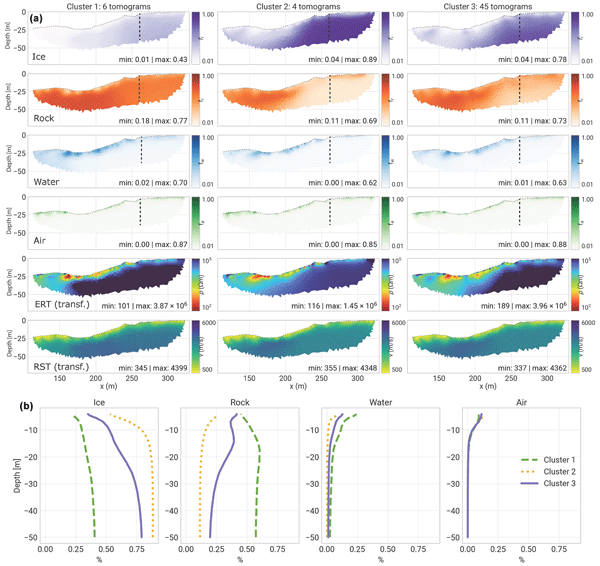
Tamara Mathys, Muslim Azimshoev, Zhoodarbeshim Bektursunov, Christian Hauck, Christin Hilbich, Murataly Duishonakunov, Abdulhamid Kayumov, Nikolay Kassatkin, Vassily Kapitsa, Leo C. P. Martin, Coline Mollaret, Hofiz Navruzshoev, Eric Pohl, Tomas Saks, Intizor Silmonov, Timur Musaev, Ryskul Usubaliev, and Martin Hoelzle
The Cryosphere, 19, 6591–6628, https://doi.org/10.5194/tc-19-6591-2025, https://doi.org/10.5194/tc-19-6591-2025, 2025
Short summary
Short summary
This study provides a comprehensive geophysical dataset on permafrost in the data-scarce Tien Shan and Pamir mountain regions of Central Asia. It also introduces a novel modeling method to quantify ground ice content across different landforms. The findings indicate that this approach is well suited for characterizing ice-rich permafrost, which is crucial for evaluating future water availability and assessing risks associated with thawing permafrost.
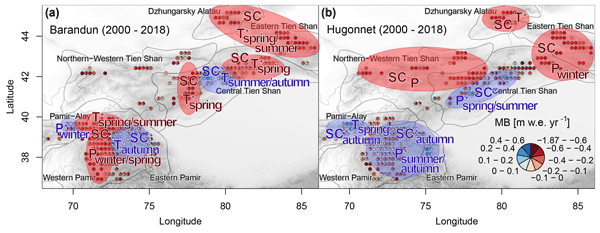
Martina Barandun and Eric Pohl
The Cryosphere, 17, 1343–1371, https://doi.org/10.5194/tc-17-1343-2023, https://doi.org/10.5194/tc-17-1343-2023, 2023
Short summary
Short summary
Meteorological and glacier mass balance data scarcity introduces large uncertainties about drivers of heterogeneous glacier mass balance response in Central Asia. We investigate the consistency of interpretations derived from various datasets through a systematic correlation analysis between climatic and static drivers with mass balance estimates. Our results show in particular that even supposedly similar datasets lead to different and partly contradicting assumptions on dominant drivers.
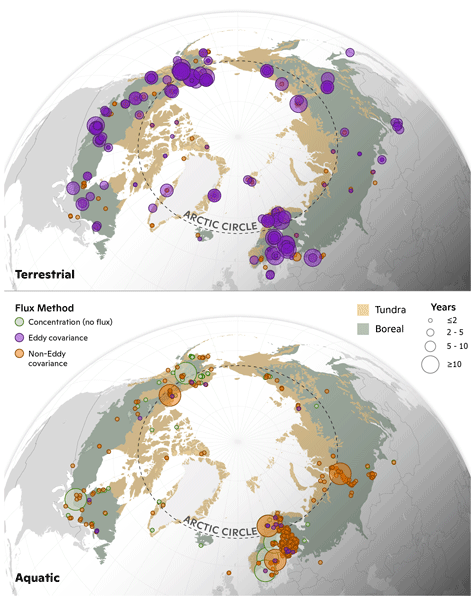
Anna-Maria Virkkala, Isabel Wargowsky, Judith Vogt, McKenzie A. Kuhn, Simran Madaan, Tiffany Windholz, Kyle A. Arndt, Gerard Rocher-Ros, Mathias Göckede, David Olefeldt, Edward A. G. Schuur, David Bastviken, Richard O'Keefe, Brendan M. Rogers, Jennifer D. Watts, Kelcy Kent, Kristoffer Aalstad, Kelly Aho, Joonatan Ala-Könni, Haley Alcock, Inge Althuizen, Christopher D. Arp, Jun Asanuma, Mika Aurela, Sivakiruthika Balathandayuthabani, Katrin Attermeyer, Alan Barr, Maialen Barret, Ochirbat Batkhishig, Christina Biasi, Mats P. Björkman, Andrew Black, Elena Blanc-Betes, Pascal Bodmer, Julia Boike, Abdullah Bolek, Frédéric Bouchard, Ingeborg Bussmann, Lea Cabrol, Eleonora Canfora, Sean Carey, Karel Castro-Morales, Namyi Chae, Andreas Christen, Torben R. Christensen, Casper T. Christiansen, Housen Chu, Graham Clark, Francois Clayer, Patrick Crill, Christopher Cunada, Scott J. Davidson, Joshua F. Dean, Sigrid Dengel, Matteo Detto, Catherine Dieleman, Florent Domine, Egor Dyukarev, Colin Edgar, Bo Elberling, Craig A. Emmerton, Eugenie Euskirchen, Grant Falvo, Thomas Friborg, Michelle Garneau, Mariasilvia Giamberini, Mikhail V. Glagolev, Miquel A. Gonzalez-Meler, Gustaf Granath, Jón Guðmundsson, Konsta Happonen, Yoshinobu Harazono, Lorna Harris, Josh Hashemi, Nicholas Hasson, Janna Heerah, Liam Heffernan, Manuel Helbig, Warren Helgason, Michal Heliasz, Greg Henry, Geert Hensgens, Tetsuya Hiyama, Beth Holmes, Macall Hock, David Holl, Jutta Holst, Thomas Holst, Gabriel Hould-Gosselin, Elyn Humphreys, Jacqueline Hung, Jussi Huotari, Hiroki Ikawa, Danil V. Ilyasov, Mamoru Ishikawa, Go Iwahana, Hiroki Iwata, Marcin Antoni Jackowicz-Korczynski, Joachim Jansen, Järvi Järveoja, Vincent E. J. Jassey, Rasmus Jensen, Katharina Jentzsch, Robert G. Jespersen, Carl-Fredrik Johannesson, Cheristy P. Jones, Anders Jonsson, Ji Young Jung, Sari Juutinen, Evan Kane, Jan Karlsson, Sergey Karsanaev, Kuno Kasak, Julia Kelly, Kasha Kempton, Marcus Klaus, George W. Kling, Natascha Kljun, Jacqueline Knutson, Hideki Kobayashi, John Kochendorfer, Kukka-Maaria Kohonen, Pasi Kolari, Mika Korkiakoski, Aino Korrensalo, Pirkko Kortelainen, Egle Koster, Kajar Koster, Ayumi Kotani, Praveena Krishnan, Juliya Kurbatova, Lars Kutzbach, Min Jung Kwon, Ethan D. Kyzivat, Jessica Lagroix, Theodore Langhorst, Elena Lapshina, Tuula Larmola, Klaus S. Larsen, Isabelle Laurion, Justin Ledman, Hanna Lee, A. Joshua Leffler, Lance Lesack, Anders Lindroth, David Lipson, Annalea Lohila, Efrén López-Blanco, Vincent L. St. Louis, Erik Lundin, Miska Luoto, Takashi Machimura, Marta Magnani, Avni Malhotra, Marja Maljanen, Ivan Mammarella, Elisa Männistö, Luca Belelli Marchesini, Phil Marsh, Pertti J. Martikainen, Maija E. Marushchak, Mikhail Mastepanov, Alex Mavrovic, Trofim Maximov, Christina Minions, Daniel F. Nadeau, Marco Montemayor, Tomoaki Morishita, Patrick Murphy, Erin Nicholls, Mats B. Nilsson, Anastasia Niyazova, Jenni Nordén, Koffi Dodji Noumonvi, Hannu Nykänen, Walter Oechel, Anne Ojala, Tomohiro Okadera, Sujan Pal, Alexey V. Panov, Tim Papakyriakou, Dario Papale, Sang-Jong Park, Frans-Jan W. Parmentier, Gilberto Pastorello, Mike Peacock, Matthias Peichl, Roman Petrov, Kyra St. Pierre, Norbert Pirk, Jessica Plein, Vilmantas Preskienis, Anatoly Prokushkin, Jukka Pumpanen, Hilary A. Rains, Niklas Rakos, Aleksi Räsänen, Helena Rautakoski, Riikka Rinnan, Janne Rinne, Adrian Rocha, Nigel Roulet, Alexandre Roy, Anna Rutgersson, Aleksandr F. Sabrekov, Torsten Sachs, Erik Sahlée, Alejandro Salazar, Henrique Oliveira Sawakuchi, Christopher Schulze, Roger Seco, Armando Sepulveda-Jauregui, Svetlana Serikova, Abbey Serrone, Hanna M. Silvennoinen, Sofie Sjogersten, June Skeeter, Jo Snöälv, Sebastian Sobek, Oliver Sonnentag, Emily H. Stanley, Maria Strack, Lena Strom, Patrick Sullivan, Ryan Sullivan, Anna Sytiuk, Torbern Tagesson, Pierre Taillardat, Julie Talbot, Suzanne E. Tank, Mario Tenuta, Irina Terenteva, Frederic Thalasso, Antoine Thiboult, Halldor Thorgeirsson, Fenix Garcia Tigreros, Margaret Torn, Amy Townsend-Small, Claire Treat, Alain Tremblay, Carlo Trotta, Eeva-Stiina Tuittila, Merritt Turetsky, Masahito Ueyama, Muhammad Umair, Aki Vähä, Lona van Delden, Maarten van Hardenbroek, Andrej Varlagin, Ruth K. Varner, Tarmo Virtanen, Elena Veretennikova, Timo Vesala, Carolina Voigt, Jorien E. Vonk, Robert Wagner, Katey Walter Anthony, Qinxue Wang, Masataka Watanabe, Hailey Webb, Jeffrey M. Welker, Andreas Westergaard-Nielsen, Sebastian Westermann, Jeffrey R. White, Christian Wille, Scott N. Williamson, Scott Zolkos, Donatella Zona, and Susan M. Natali
Earth Syst. Sci. Data, 18, 6357–6409, https://doi.org/10.5194/essd-18-6357-2026, https://doi.org/10.5194/essd-18-6357-2026, 2026
Short summary
Short summary
This dataset includes monthly measurements of carbon dioxide and methane exchange between land, water, and the atmosphere from over 1000 sites in Arctic and boreal regions. It combines measurements from a variety of ecosystems, including wetlands, forests, tundra, lakes, and rivers, gathered by over 260 researchers from 1984–2024. This dataset can be used to improve and reduce uncertainty in carbon budgets in order to strengthen our understanding of climate feedbacks in a warming world.
Lucia Pérez-Serrano, Sergey V. Loiko, Artem Lim, Laure Gandois, Christine Hatté, Jean-Luc Rols, and Oleg S. Pokrovsky
EGUsphere, https://doi.org/10.5194/egusphere-2026-3058, https://doi.org/10.5194/egusphere-2026-3058, 2026
Short summary
Short summary
Permafrost peatlands under climate change are likely to release elements trapped in frozen layers. We sampled a highly ice-enriched thaw gradient in the arctic tundra. Frozen layers are characterized by a labile, microbial signature opposed to active layer porewaters homogenized through the freeze-thaw seasonal cycles. Permafrost degradation may result into the mobilization of carbon and nutrients through phosphorous consumption before hydrological export.
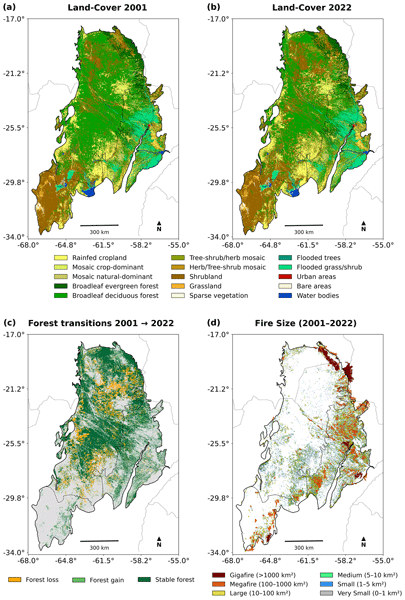
Rodrigo San Martín, Catherine Ottlé, Anna Sörensson, Pradeebane Vaittinada Ayar, Florent Mouillot, and Marielle Malfante
Nat. Hazards Earth Syst. Sci., 26, 1479–1513, https://doi.org/10.5194/nhess-26-1479-2026, https://doi.org/10.5194/nhess-26-1479-2026, 2026
Short summary
Short summary
We studied wildfires in the Gran Chaco, one of the world’s largest dry forests, to understand why some fires become much larger than others. By analyzing thousands of fires together with environmental and landscape data, we found that fire size is mainly shaped by topography and vegetation structure, which determine how continuous fuels are across the landscape. Weather and human factors play a secondary role in explaining final fire size.
Olivia Meier-Legault, Nicholas Brown, Larry Adjun, Michel Allard, Alejandro Alvarez, Maude Auclair, Alex Bevington, Samuel Bilodeau, William Cable, Olivia Carpino, Ariane Castagner, Lin Chen, Alexandre Chiasson, Ryan Connon, Stephanie Coulombe, Jeffrey Crompton, Derek Cronmiller, Gautier Davesne, Mason Dominico, Marc-André Ducharme, Timothy Ensom, Louise Farquharson, Vanessa Foord, Daniel Fortier, Philippe Fortier, Duane Froese, Samuel Gagnon, Francis Gauthier, Marten Geertsema, Etienne Godin, Galina Jonat, Steven V. Kokelj, Michelle Landry, Antoni Lewkowicz, Panya Lipovsky, Emmanual L’Hérault, Hannah Macdonell, Lancelot Massé, Dmitry Nicolsky, Moya Painter, Leesee Papatsie, Victor Pozsgay, William Quinton, Vladimir Romanovsky, Ashley C.A. Rudy, Denis Sarrazin, Emilie Stewart-Jones, Donald Walker, Thomas Wright, Joseph Young, and Stephan Gruber
Earth Syst. Sci. Data Discuss., https://doi.org/10.5194/essd-2026-96, https://doi.org/10.5194/essd-2026-96, 2026
Revised manuscript accepted for ESSD
Short summary
Short summary
Ground temperature data is vital for permafrost and climate research yet data is often fragmented. We created a standardized collection of ground temperatures from over 900 sites across Canada. From 42 published and unpublished sources, we manually verified, cleaned and standardized data with a new software tool. This dataset supports permafrost research on a nationwide scale and can help improve models by acting as a reliable benchmark.

Jon Cranko Page, Martin G. De Kauwe, Andy J. Pitman, Isaac R. Towers, Gabriele Arduini, Martin J. Best, Craig R. Ferguson, Jürgen Knauer, Hyungjun Kim, David M. Lawrence, Tomoko Nitta, Keith W. Oleson, Catherine Ottlé, Anna Ukkola, Nicholas Vuichard, Xiaoni Wang-Faivre, and Gab Abramowitz
Biogeosciences, 23, 263–282, https://doi.org/10.5194/bg-23-263-2026, https://doi.org/10.5194/bg-23-263-2026, 2026
Short summary
Short summary
This paper used a large dataset of observations, machine learning predictions, and computer model simulations to test how well land surface models represent the water, energy, and carbon cycles. We found that the models work well under "normal" weather but do not meet performance expectations during coinciding extreme conditions. Since these extremes are relatively rare, targeted model improvements could deliver major performance gains.
Tamara Mathys, Muslim Azimshoev, Zhoodarbeshim Bektursunov, Christian Hauck, Christin Hilbich, Murataly Duishonakunov, Abdulhamid Kayumov, Nikolay Kassatkin, Vassily Kapitsa, Leo C. P. Martin, Coline Mollaret, Hofiz Navruzshoev, Eric Pohl, Tomas Saks, Intizor Silmonov, Timur Musaev, Ryskul Usubaliev, and Martin Hoelzle
The Cryosphere, 19, 6591–6628, https://doi.org/10.5194/tc-19-6591-2025, https://doi.org/10.5194/tc-19-6591-2025, 2025
Short summary
Short summary
This study provides a comprehensive geophysical dataset on permafrost in the data-scarce Tien Shan and Pamir mountain regions of Central Asia. It also introduces a novel modeling method to quantify ground ice content across different landforms. The findings indicate that this approach is well suited for characterizing ice-rich permafrost, which is crucial for evaluating future water availability and assessing risks associated with thawing permafrost.
Zacharie Titus, Amélie Cuynet, Elodie Salmon, and Catherine Ottlé
The Cryosphere, 19, 2105–2114, https://doi.org/10.5194/tc-19-2105-2025, https://doi.org/10.5194/tc-19-2105-2025, 2025
Short summary
Short summary
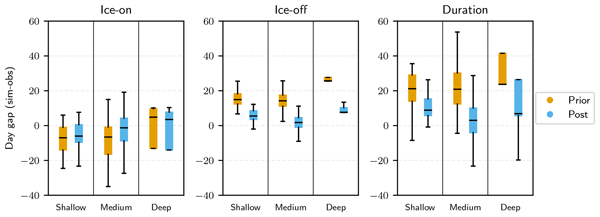
The representation of lake ice dynamics is key to model water–atmosphere energy and mass transfers in cold environments. The use of albedo satellite products to constrain the modeling of ice coverage appears to be very suitable and valuable. In this work, we show how the modeling of lake albedo and ice phenology in the land surface model ORCHIDEE was improved by accounting for fractional ice cover calibrated against lake surface albedo data.
Emmanuel Léger, François Costard, Rémi Lambert, Albane Saintenoy, Antoine Séjourné, and Maxime Leblanc
The Cryosphere, 19, 2037–2044, https://doi.org/10.5194/tc-19-2037-2025, https://doi.org/10.5194/tc-19-2037-2025, 2025
Short summary
Short summary
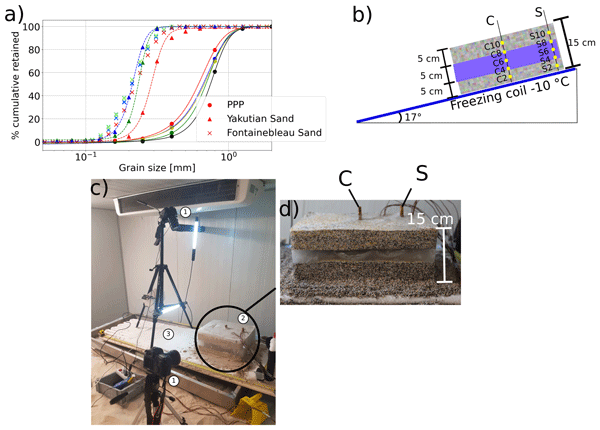
This study explores the use of lightweight plastic particles to reproduce cryo-induced terrestrial geomorphologic features at the laboratory scale within an experiment on permafrost and active-layer thawing. We show that, due to their low density and peculiar hydrodynamic parameters, these lightweight particles, originally designed for river sediment deposition and erosion, are suitable for reproducing cryo-induced 3D geomorphological features found in terrestrial retrogressive thaw slumps.
Luis-Enrique Olivera-Guerra, Catherine Ottlé, Nina Raoult, and Philippe Peylin
Hydrol. Earth Syst. Sci., 29, 261–290, https://doi.org/10.5194/hess-29-261-2025, https://doi.org/10.5194/hess-29-261-2025, 2025
Short summary
Short summary
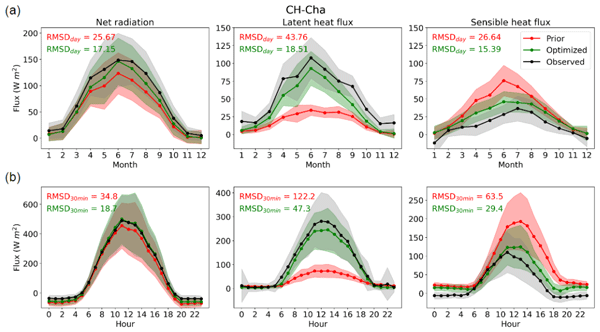
We assimilate the recent ESA-CCI land surface temperature (LST) product to optimize parameters of a land surface model (ORCHIDEE). We test different assimilation strategies to evaluate the best strategy over various in situ stations across Europe. We also provide advice on how to assimilate this LST product to better simulate LST and surface energy fluxes. Finally, we demonstrate the effectiveness of this optimization, which is essential to better simulate future projections.
Gab Abramowitz, Anna Ukkola, Sanaa Hobeichi, Jon Cranko Page, Mathew Lipson, Martin G. De Kauwe, Samuel Green, Claire Brenner, Jonathan Frame, Grey Nearing, Martyn Clark, Martin Best, Peter Anthoni, Gabriele Arduini, Souhail Boussetta, Silvia Caldararu, Kyeungwoo Cho, Matthias Cuntz, David Fairbairn, Craig R. Ferguson, Hyungjun Kim, Yeonjoo Kim, Jürgen Knauer, David Lawrence, Xiangzhong Luo, Sergey Malyshev, Tomoko Nitta, Jerome Ogee, Keith Oleson, Catherine Ottlé, Phillipe Peylin, Patricia de Rosnay, Heather Rumbold, Bob Su, Nicolas Vuichard, Anthony P. Walker, Xiaoni Wang-Faivre, Yunfei Wang, and Yijian Zeng
Biogeosciences, 21, 5517–5538, https://doi.org/10.5194/bg-21-5517-2024, https://doi.org/10.5194/bg-21-5517-2024, 2024
Short summary
Short summary
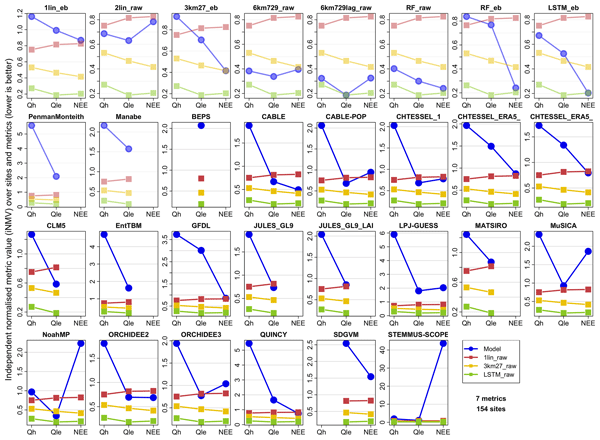
This paper evaluates land models – computer-based models that simulate ecosystem dynamics; land carbon, water, and energy cycles; and the role of land in the climate system. It uses machine learning and AI approaches to show that, despite the complexity of land models, they do not perform nearly as well as they could given the amount of information they are provided with about the prediction problem.
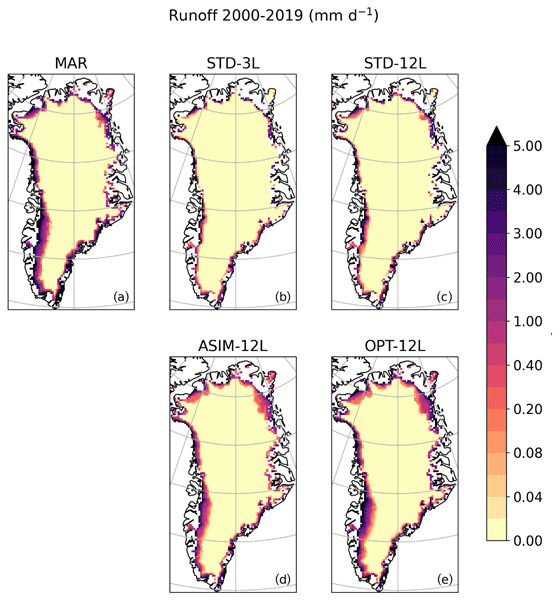
Sylvie Charbit, Christophe Dumas, Fabienne Maignan, Catherine Ottlé, Nina Raoult, Xavier Fettweis, and Philippe Conesa
The Cryosphere, 18, 5067–5099, https://doi.org/10.5194/tc-18-5067-2024, https://doi.org/10.5194/tc-18-5067-2024, 2024
Short summary
Short summary
The evolution of the Greenland ice sheet is highly dependent on surface melting and therefore on the processes operating at the snow–atmosphere interface and within the snow cover. Here we present new developments to apply a snow model to the Greenland ice sheet. The performance of this model is analysed in terms of its ability to simulate ablation processes. Our analysis shows that the model performs well when compared with the MAR regional polar atmospheric model.
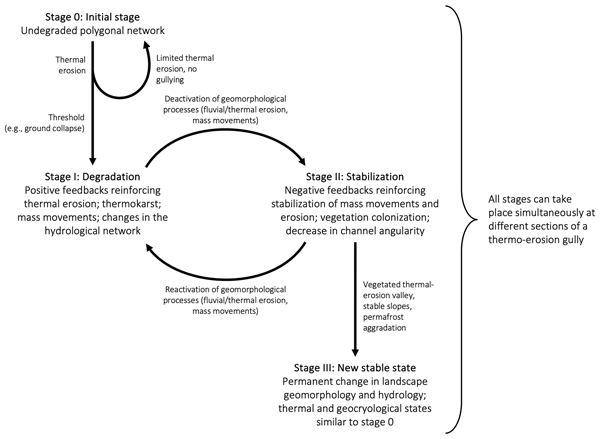
Samuel Gagnon, Daniel Fortier, Étienne Godin, and Audrey Veillette
The Cryosphere, 18, 4743–4763, https://doi.org/10.5194/tc-18-4743-2024, https://doi.org/10.5194/tc-18-4743-2024, 2024
Short summary
Short summary
Thermo-erosion gullies (TEGs) are one of the most common forms of abrupt permafrost degradation. While their inception has been examined in several studies, the processes of their stabilization remain poorly documented. For this study, we investigated two TEGs in the Canadian High Arctic. We found that, while the formation of a TEG leaves permanent geomorphological scars in landscapes, in the long term, permafrost can recover to conditions similar to those pre-dating the initial disturbance.
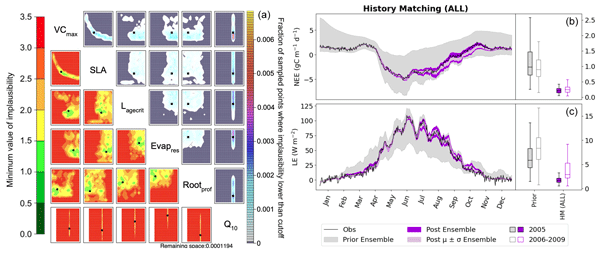
Nina Raoult, Simon Beylat, James M. Salter, Frédéric Hourdin, Vladislav Bastrikov, Catherine Ottlé, and Philippe Peylin
Geosci. Model Dev., 17, 5779–5801, https://doi.org/10.5194/gmd-17-5779-2024, https://doi.org/10.5194/gmd-17-5779-2024, 2024
Short summary
Short summary
We use computer models to predict how the land surface will respond to climate change. However, these complex models do not always simulate what we observe in real life, limiting their effectiveness. To improve their accuracy, we use sophisticated statistical and computational techniques. We test a technique called history matching against more common approaches. This method adapts well to these models, helping us better understand how they work and therefore how to make them more realistic.
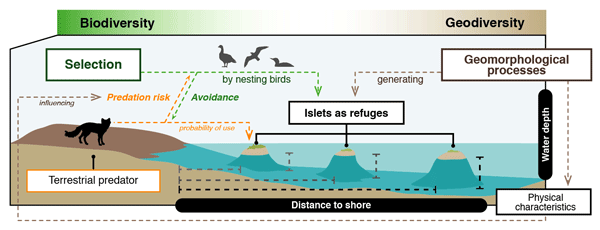
Madeleine-Zoé Corbeil-Robitaille, Éliane Duchesne, Daniel Fortier, Christophe Kinnard, and Joël Bêty
Biogeosciences, 21, 3401–3423, https://doi.org/10.5194/bg-21-3401-2024, https://doi.org/10.5194/bg-21-3401-2024, 2024
Short summary
Short summary
In the Arctic tundra, climate change is transforming the landscape, and this may impact wildlife. We focus on three nesting bird species and the islets they select as refuges from their main predator, the Arctic fox. A geomorphological process, ice-wedge polygon degradation, was found to play a key role in creating these refuges. This process is likely to affect predator–prey dynamics in the Arctic tundra, highlighting the connections between nature's physical and ecological systems.
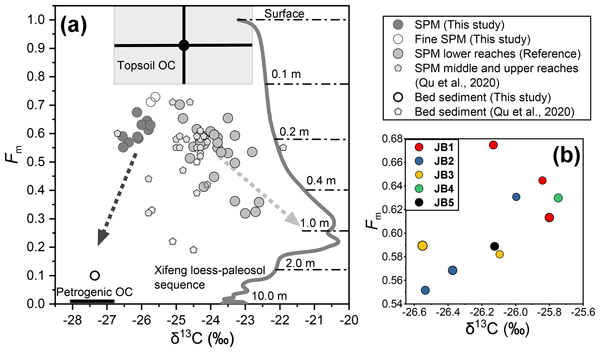
Yutian Ke, Damien Calmels, Julien Bouchez, Marc Massault, Benjamin Chetelat, Aurélie Noret, Hongming Cai, Jiubin Chen, Jérôme Gaillardet, and Cécile Quantin
Earth Surf. Dynam., 12, 347–365, https://doi.org/10.5194/esurf-12-347-2024, https://doi.org/10.5194/esurf-12-347-2024, 2024
Short summary
Short summary
Through a river cross-section, we show that fluvial organic carbon in the lower Huanghe has clear vertical and lateral heterogeneity in elemental and isotopic signals. Bank erosion supplies terrestrial organic carbon to the fluvial transport. Physical erosion of aged and refractory organic carbon, including radiocarbon-dead organic carbon source from the biosphere, from relatively deep soil horizons of the Chinese Loess Plateau contributes to fluvial particulate organic carbon in the Huanghe.
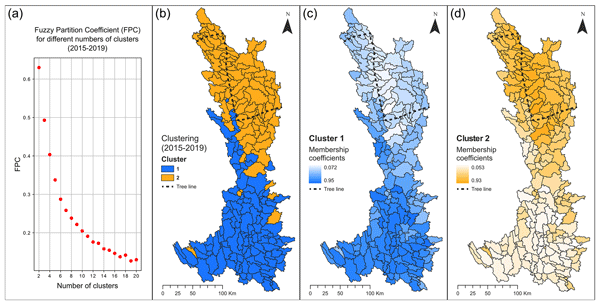
Eliot Sicaud, Daniel Fortier, Jean-Pierre Dedieu, and Jan Franssen
Hydrol. Earth Syst. Sci., 28, 65–86, https://doi.org/10.5194/hess-28-65-2024, https://doi.org/10.5194/hess-28-65-2024, 2024
Short summary
Short summary
For vast northern watersheds, hydrological data are often sparse and incomplete. Our study used remote sensing and clustering to produce classifications of the George River watershed (GRW). Results show two types of subwatersheds with different hydrological behaviors. The GRW experienced a homogenization of subwatershed types likely due to an increase in vegetation productivity, which could explain the measured decline of 1 % (~0.16 km3 y−1) in the George River’s discharge since the mid-1970s.
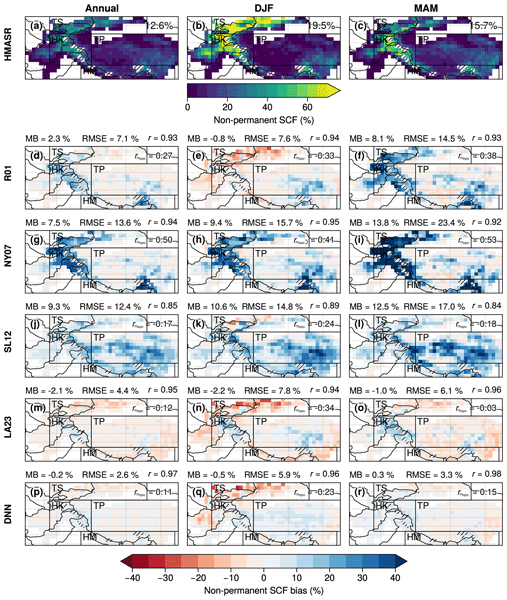
Mickaël Lalande, Martin Ménégoz, Gerhard Krinner, Catherine Ottlé, and Frédérique Cheruy
The Cryosphere, 17, 5095–5130, https://doi.org/10.5194/tc-17-5095-2023, https://doi.org/10.5194/tc-17-5095-2023, 2023
Short summary
Short summary
This study investigates the impact of topography on snow cover parameterizations using models and observations. Parameterizations without topography-based considerations overestimate snow cover. Incorporating topography reduces snow overestimation by 5–10 % in mountains, in turn reducing cold biases. However, some biases remain, requiring further calibration and more data. Assessing snow cover parameterizations is challenging due to limited and uncertain data in mountainous regions.
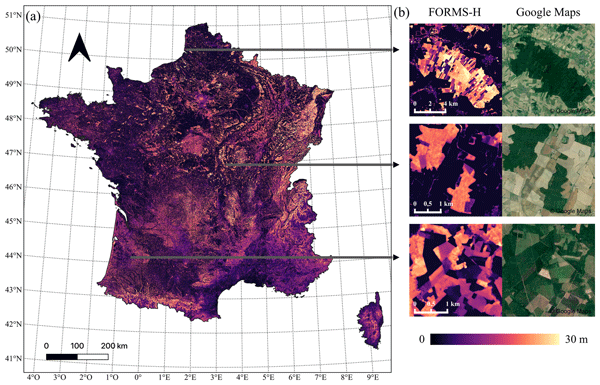
Martin Schwartz, Philippe Ciais, Aurélien De Truchis, Jérôme Chave, Catherine Ottlé, Cedric Vega, Jean-Pierre Wigneron, Manuel Nicolas, Sami Jouaber, Siyu Liu, Martin Brandt, and Ibrahim Fayad
Earth Syst. Sci. Data, 15, 4927–4945, https://doi.org/10.5194/essd-15-4927-2023, https://doi.org/10.5194/essd-15-4927-2023, 2023
Short summary
Short summary
As forests play a key role in climate-related issues, their accurate monitoring is critical to reduce global carbon emissions effectively. Based on open-access remote-sensing sensors, and artificial intelligence methods, we created high-resolution tree height, wood volume, and biomass maps of metropolitan France that outperform previous products. This study, based on freely available data, provides essential information to support climate-efficient forest management policies at a low cost.
Nina Raoult, Sylvie Charbit, Christophe Dumas, Fabienne Maignan, Catherine Ottlé, and Vladislav Bastrikov
The Cryosphere, 17, 2705–2724, https://doi.org/10.5194/tc-17-2705-2023, https://doi.org/10.5194/tc-17-2705-2023, 2023
Short summary
Short summary
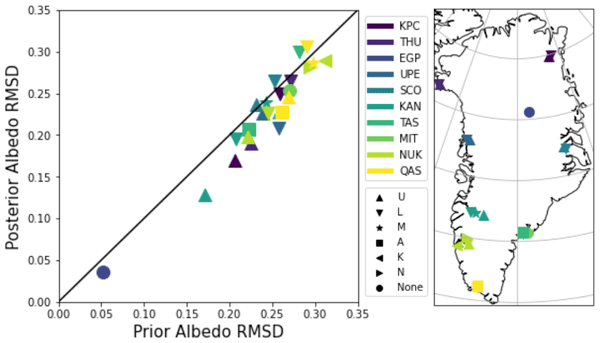
Greenland ice sheet melting due to global warming could significantly impact global sea-level rise. The ice sheet's albedo, i.e. how reflective the surface is, affects the melting speed. The ORCHIDEE computer model is used to simulate albedo and snowmelt to make predictions. However, the albedo in ORCHIDEE is lower than that observed using satellites. To correct this, we change model parameters (e.g. the rate of snow decay) to reduce the difference between simulated and observed values.
Jan Polcher, Anthony Schrapffer, Eliott Dupont, Lucia Rinchiuso, Xudong Zhou, Olivier Boucher, Emmanuel Mouche, Catherine Ottlé, and Jérôme Servonnat
Geosci. Model Dev., 16, 2583–2606, https://doi.org/10.5194/gmd-16-2583-2023, https://doi.org/10.5194/gmd-16-2583-2023, 2023
Short summary
Short summary
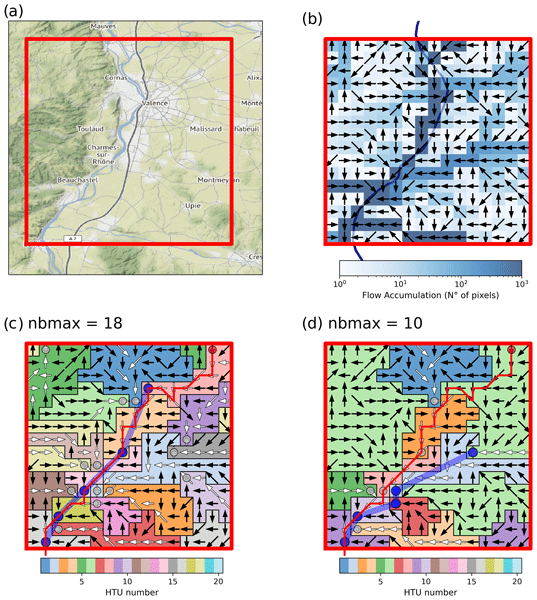
The proposed graphs of hydrological sub-grid elements for atmospheric models allow us to integrate the topographical elements needed in land surface models for a realistic representation of horizontal water and energy transport. The study demonstrates the numerical properties of the automatically built graphs and the simulated water flows.
Kandice L. Harper, Céline Lamarche, Andrew Hartley, Philippe Peylin, Catherine Ottlé, Vladislav Bastrikov, Rodrigo San Martín, Sylvia I. Bohnenstengel, Grit Kirches, Martin Boettcher, Roman Shevchuk, Carsten Brockmann, and Pierre Defourny
Earth Syst. Sci. Data, 15, 1465–1499, https://doi.org/10.5194/essd-15-1465-2023, https://doi.org/10.5194/essd-15-1465-2023, 2023
Short summary
Short summary
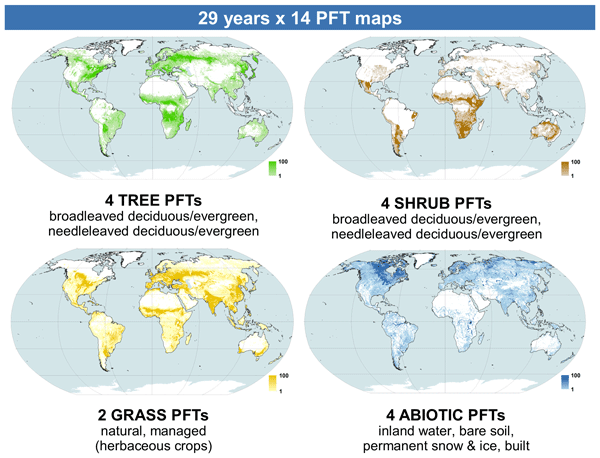
We built a spatially explicit annual plant-functional-type (PFT) dataset for 1992–2020 exhibiting intra-class spatial variability in PFT fractional cover at 300 m. For each year, 14 maps of percentage cover are produced: bare soil, water, permanent snow/ice, built, managed grasses, natural grasses, and trees and shrubs, each split into leaf type and seasonality. Model simulations indicate significant differences in simulated carbon, water, and energy fluxes in some regions using this new set.
Martina Barandun and Eric Pohl
The Cryosphere, 17, 1343–1371, https://doi.org/10.5194/tc-17-1343-2023, https://doi.org/10.5194/tc-17-1343-2023, 2023
Short summary
Short summary
Meteorological and glacier mass balance data scarcity introduces large uncertainties about drivers of heterogeneous glacier mass balance response in Central Asia. We investigate the consistency of interpretations derived from various datasets through a systematic correlation analysis between climatic and static drivers with mass balance estimates. Our results show in particular that even supposedly similar datasets lead to different and partly contradicting assumptions on dominant drivers.
Emmanuel Léger, Albane Saintenoy, Mohammed Serhir, François Costard, and Christophe Grenier
The Cryosphere, 17, 1271–1277, https://doi.org/10.5194/tc-17-1271-2023, https://doi.org/10.5194/tc-17-1271-2023, 2023
Short summary
Short summary
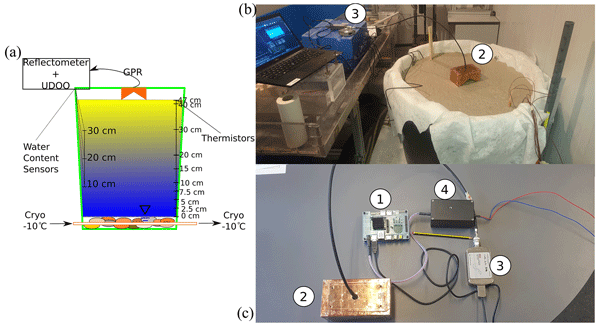
This study presents the laboratory test of a low-cost ground-penetrating radar (GPR) system within a laboratory experiment of active layer freezing and thawing monitoring. The system is an in-house-built low-power monostatic GPR antenna coupled with a reflectometer piloted by a single-board computer and was tested prior to field deployment.

Jan Mudler, Andreas Hördt, Dennis Kreith, Madhuri Sugand, Kirill Bazhin, Lyudmila Lebedeva, and Tino Radić
The Cryosphere, 16, 4727–4744, https://doi.org/10.5194/tc-16-4727-2022, https://doi.org/10.5194/tc-16-4727-2022, 2022
Short summary
Short summary
The spectral electrical signal of ice exhibits a strong characteristic behaviour in the frequency range from 100 Hz to 100 kHz, due to polarization effects. With our geophysical method, we can analyse this characteristic to detect subsurface ice. Moreover, we use a model to quantify 2-D ground ice content based on our data. The potential of our new measurement device is showed up. Data were taken on a permafrost site in Yakutia, and the results are in agreement with other existing field data.
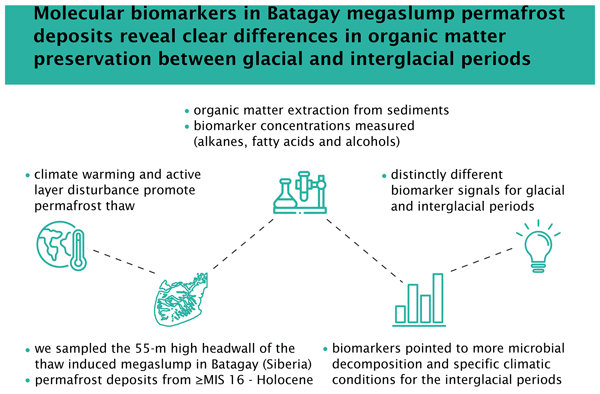
Loeka L. Jongejans, Kai Mangelsdorf, Cornelia Karger, Thomas Opel, Sebastian Wetterich, Jérémy Courtin, Hanno Meyer, Alexander I. Kizyakov, Guido Grosse, Andrei G. Shepelev, Igor I. Syromyatnikov, Alexander N. Fedorov, and Jens Strauss
The Cryosphere, 16, 3601–3617, https://doi.org/10.5194/tc-16-3601-2022, https://doi.org/10.5194/tc-16-3601-2022, 2022
Short summary
Short summary
Large parts of Arctic Siberia are underlain by permafrost. Climate warming leads to permafrost thaw. At the Batagay megaslump, permafrost sediments up to ~ 650 kyr old are exposed. We took sediment samples and analysed the organic matter (e.g. plant remains). We found distinct differences in the biomarker distributions between the glacial and interglacial deposits with generally stronger microbial activity during interglacial periods. Further permafrost thaw enhances greenhouse gas emissions.
Solène Quéro, Christine Hatté, Sophie Cornu, Adrien Duvivier, Nithavong Cam, Floriane Jamoteau, Daniel Borschneck, and Isabelle Basile-Doelsch
SOIL, 8, 517–539, https://doi.org/10.5194/soil-8-517-2022, https://doi.org/10.5194/soil-8-517-2022, 2022
Short summary
Short summary
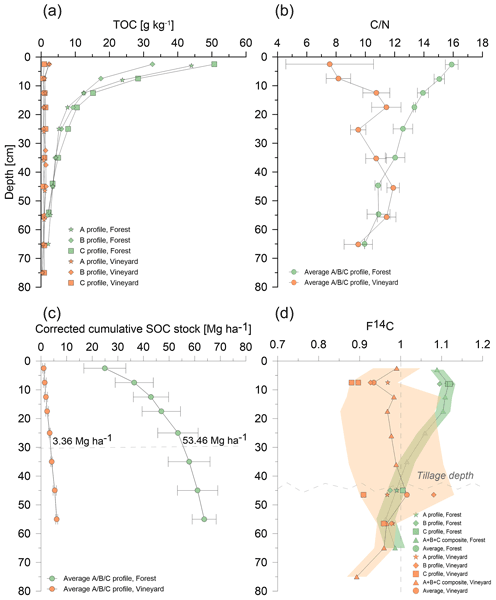
Although present in food security key areas, Arenosols carbon stocks are barely studied. A 150-year-old land use change in a Mediterranean Arenosol showed a loss from 50 Gt C ha-1 to 3 Gt C ha-1 after grape cultivation. 14C showed that deep ploughing in a vineyard plot redistributed the remaining microbial carbon both vertically and horizontally. Despite the drastic degradation of the organic matter pool, Arenosols would have a high carbon storage potential, targeting the 4 per 1000 initiative.

Stéphanie Coulombe, Daniel Fortier, Frédéric Bouchard, Michel Paquette, Simon Charbonneau, Denis Lacelle, Isabelle Laurion, and Reinhard Pienitz
The Cryosphere, 16, 2837–2857, https://doi.org/10.5194/tc-16-2837-2022, https://doi.org/10.5194/tc-16-2837-2022, 2022
Short summary
Short summary
Buried glacier ice is widespread in Arctic regions that were once covered by glaciers and ice sheets. In this study, we investigated the influence of buried glacier ice on the formation of Arctic tundra lakes on Bylot Island, Nunavut. Our results suggest that initiation of deeper lakes was triggered by the melting of buried glacier ice. Given future climate projections, the melting of glacier ice permafrost could create new aquatic ecosystems and strongly modify existing ones.
Anthony Bernus and Catherine Ottlé
Geosci. Model Dev., 15, 4275–4295, https://doi.org/10.5194/gmd-15-4275-2022, https://doi.org/10.5194/gmd-15-4275-2022, 2022
Short summary
Short summary
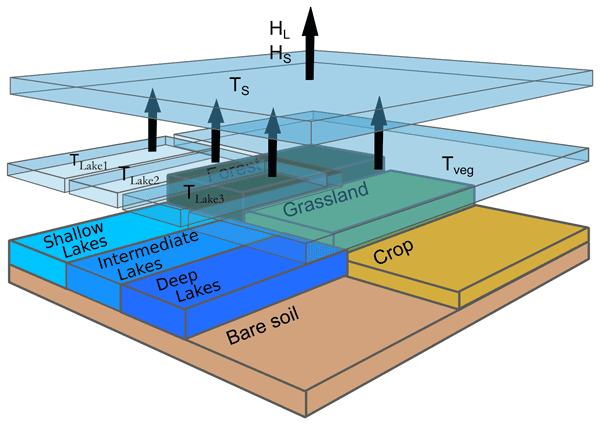
The lake model FLake was coupled to the ORCHIDEE land surface model to simulate lake energy balance at global scale with a multi-tile approach. Several simulations were performed with various atmospheric reanalyses and different lake depth parameterizations. The simulated lake surface temperature showed good agreement with observations (RMSEs of the order of 3 °C). We showed the large impact of the atmospheric forcing on lake temperature. We highlighted systematic errors on ice cover phenology.
Papa Mamadou Sitor Ndour, Christine Hatté, Wafa Achouak, Thierry Heulin, and Laurent Cournac
SOIL, 8, 49–57, https://doi.org/10.5194/soil-8-49-2022, https://doi.org/10.5194/soil-8-49-2022, 2022
Short summary
Short summary
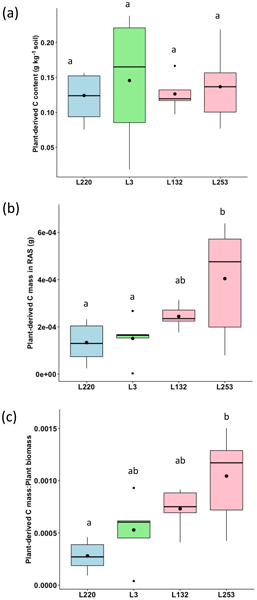
Unravelling relationships between plant rhizosheath, root exudation and soil C dynamic may bring interesting perspectives in breeding for sustainable agriculture. Using four pearl millet lines with contrasting rhizosheaths, we found that δ13C and F14C of root-adhering soil differed from those of bulk and control soil, indicating C exudation in the rhizosphere. This C exudation varied according to the genotype, and conceptual modelling performed with data showed a genotypic effect on the RPE.
Cited articles
Aas, K. S., Martin, L., Nitzbon, J., Langer, M., Boike, J., Lee, H., Berntsen, T. K., and Westermann, S.: Thaw processes in ice-rich permafrost landscapes represented with laterally coupled tiles in a land surface model, The Cryosphere, 13, 591–609, https://doi.org/10.5194/tc-13-591-2019, 2019. a
Akima, H. and Gebhardt, A.: akima: Interpolation of Irregularly and Regularly Spaced Data, r package version 0.6-3.4, https://CRAN.R-project.org/package=akima (last access: 27 April 2027), 2022. a
Amante, C. and Eakins, B. W.: ETOPO1 arc-minute global relief model: procedures, data sources and analysis, Tech. rep., NOAA, National Geophysical Data Center, https://repository.library.noaa.gov/view/noaa/1163/noaa_1163_DS1.pdf (last access: 27 April 2026), 2009. a
Amatulli, G., Domisch, S., Tuanmu, M.-N., Parmentier, B., Ranipeta, A., Malczyk, J., and Jetz, W.: A suite of global, cross-scale topographic variables for environmental and biodiversity modeling, Scientific Data, 5, 180040, https://doi.org/10.1038/sdata.2018.40, 2018. a
American Society for Testing and Materials (ASTM): D2216-19; Standard Test Methods for Laboratory Determination of Water (Moisture) Content of Soil and Rock by Mass, ASTM, West Conshohocken, PA, USA, https://store.astm.org/standards/d2216 (last access: 27 April 2026), 2019. a
Biskaborn, B. K., Smith, S. L., Noetzli, J., Matthes, H., Vieira, G., Streletskiy, D. A., Schoeneich, P., Romanovsky, V. E., Lewkowicz, A. G., Abramov, A., Allard, M., Boike, J., Cable, W. L., Christiansen, H. H., Delaloye, R., Diekmann, B., Drozdov, D., Etzelmüller, B., Grosse, G., Guglielmin, M., Ingeman-Nielsen, T., Isaksen, K., Ishikawa, M., Johansson, M., Johannsson, H., Joo, A., Kaverin, D., Kholodov, A., Konstantinov, P., Kröger, T., Lambiel, C., Lanckman, J.-P., Luo, D., Malkova, G., Meiklejohn, I., Moskalenko, N., Oliva, M., Phillips, M., Ramos, M., Sannel, A. B. K., Sergeev, D., Seybold, C., Skryabin, P., Vasiliev, A., Wu, Q., Yoshikawa, K., Zheleznyak, M., and Lantuit, H.: Permafrost is warming at a global scale, Nat. Commun., 10, 264, https://doi.org/10.1038/s41467-018-08240-4, 2019. a
Boike, J., Nitzbon, J., Anders, K., Grigoriev, M., Bolshiyanov, D., Langer, M., Lange, S., Bornemann, N., Morgenstern, A., Schreiber, P., Wille, C., Chadburn, S., Gouttevin, I., Burke, E., and Kutzbach, L.: A 16-year record (2002–2017) of permafrost, active-layer, and meteorological conditions at the Samoylov Island Arctic permafrost research site, Lena River delta, northern Siberia: an opportunity to validate remote-sensing data and land surface, snow, and permafrost models, Earth Syst. Sci. Data, 11, 261–299, https://doi.org/10.5194/essd-11-261-2019, 2019. a, b
Decagon Devices Inc.: KD2 Pro Thermal Properties Analyzer: Operator's Manual, Decagon Devices, Inc., Pullman, WA, USA, http://publications.metergroup.com/Manuals/13351_KD2%20Pro_Print.pdf (last access: 23 February 2016), 2016. a
Desyatkin, R., Fedorov, A., Desyatkin, A., and Konstantinov, P.: Air temperature changes and their impact on permafrost ecosystems in Eastern Siberia, Therm. Sci., 19, 351–360, https://doi.org/10.2298/TSCI150320102D, 2015. a
Desyatkin, R. V., Lessovaia, S. N., Okoneshnikova, M. V., and Ivanova, A. Z.: Cryosols from Tundra and Taiga Zones of Yakutia: Properties, Clay Mineralogy, and Problems of Classification, Eurasian Soil Sci., 54, 1783–1794, https://doi.org/10.1134/S1064229321120048, 2021. a
Fedorov, A., Ivanova, R., Park, H., Hiyama, T., and Iijima, Y.: Recent air temperature changes in the permafrost landscapes of northeastern Eurasia, Polar Sci., 8, 114–128, https://doi.org/10.1016/j.polar.2014.02.001, 2014. a, b
Fedorov, A. N. and Konstantinov, P. Y.: Recent changes in ground temperature and the effect on permafrost landscapes in Central Yakutia, in: Proceedings of the Ninth International Conference on Permafrost, edited by: Kane, D. L. and Hinkel, K. M., Institute of Northern Engineering, University of Alaska Fairbanks, Fairbanks, Alaska, 433–438, https://doi.org/10.1016/j.polar.2014.02.001, 2008. a, b
French, H. M.: Thermokarst, Chap. 8, Wiley-Blackwell, 169–191, https://doi.org/10.1002/9781118684931.ch8, 2017. a
Gautier, E., Dépret, T., Costard, F., Virmoux, C., Fedorov, A., Grancher, D., Konstantinov, P., Brunstein, D., Cavero, J., Costard, F., Virmoux, C., Fedorov, A., Konstantinov, P., Jammet, M., and Brunstein, D.: Going with the flow: Hydrologic response of middle Lena River (Siberia) to the climate variability and change, J. Hydrol., 557, 475–488, https://doi.org/10.1016/j.jhydrol.2017.12.034, 2018. a
Google: Google Earth imagery of Syrdakh, Central Yakutia, https://earth.google.com/ (last access: 15 January 2026), 2026. a
Gorokhov, A. N. and Fedorov, A. N.: Current Trends in Climate Change in Yakutia, Geography and Natural Resources, 39, 153–161, https://doi.org/10.1134/s1875372818020087, 2018. a, b, c
Grenier, C., Anbergen, H., Bense, V., Chanzy, Q., Coon, E., Collier, N., Costard, F., Ferry, M., Frampton, A., Frederick, J., Gonçalvès, J., Holmén, J., Jost, A., Kokh, S., Kurylyk, B., McKenzie, J., Molson, J., Mouche, E., Orgogozo, L., Pannetier, R., Rivière, A., Roux, N., Rühaak, W., Scheidegger, J., Selroos, J. O., Therrien, R., Vidstrand, P., and Voss, C.: Groundwater flow and heat transport for systems undergoing freeze-thaw: Intercomparison of numerical simulators for 2D test cases, Adv. Water Resour., 114, 196–218, https://doi.org/10.1016/j.advwatres.2018.02.001, 2018. a
Grosse, G., Jones, B., and Arp, C.: 8.21 Thermokarst Lakes, Drainage, and Drained Basins, in: Treatise on Geomorphology, edited by: Shroder, J. F. B. T. T. O. G., Elsevier, San Diego, 325–353, ISBN 978-0-08-088522-3, https://doi.org/10.1016/B978-0-12-374739-6.00216-5, 2013. a
Hatté, C., Arnold, M., Dapoigny, A., Daux, V., Delibrias, G., Du Boisgueheneuc, D., Fontugne, M., Gauthier, C., Guillier, M.-T., Jacob, J., Jaudon, M., Kaltnecker, É., Labeyrie, J., Noury, C., Paterne, M., Pierre, M., Phouybanhdyt, B., Poupeau, J.-J., Tannau, J.-F., Thil, F., Tisnérat-Laborde, N., and Valladas, H.: Radiocarbon dating on ECHOMICADAS, LSCE, Gif-Sur-Yvette, France: new and updated chemical procedures, Radiocarbon, 66, 1166–1181, 2024. a, b
Heberger, M.: Global Watersheds (web application), https://mghydro.com/watersheds (last access: 27 April 2026), 2022. a
Hjort, J., Streletskiy, D., Doré, G., Wu, Q., Bjella, K., and Luoto, M.: Impacts of permafrost degradation on infrastructure, Nature Reviews Earth & Environment, 3, 24–38, https://doi.org/10.1038/s43017-021-00247-8, 2022. a
Hope, C. and Schaefer, K.: Economic impacts of carbon dioxide and methane released from thawing permafrost, Nat. Clim. Change, 6, 56–59, https://doi.org/10.1038/nclimate2807, 2016. a
Hugelius, G., Strauss, J., Zubrzycki, S., Harden, J. W., Schuur, E. A. G., Ping, C.-L., Schirrmeister, L., Grosse, G., Michaelson, G. J., Koven, C. D., O'Donnell, J. A., Elberling, B., Mishra, U., Camill, P., Yu, Z., Palmtag, J., and Kuhry, P.: Estimated stocks of circumpolar permafrost carbon with quantified uncertainty ranges and identified data gaps, Biogeosciences, 11, 6573–6593, https://doi.org/10.5194/bg-11-6573-2014, 2014. a
Hughes-Allen, L., Bouchard, F., Laurion, I., Séjourné, A., Marlin, C., Hatté, C., Costard, F., Fedorov, A., and Desyatkin, A.: Seasonal patterns in greenhouse gas emissions from thermokarst lakes in Central Yakutia (Eastern Siberia), Limnol. Oceanogr., 66, S98–S116, https://doi.org/10.1002/lno.11665, 2021. a, b, c, d, e, f, g, h
Ichiyanagi, K., Sugimoto, A., Numaguti, A., Kurita, N., Ishii, Y., and Ohata, T.: Seasonal variation in stable isotopic composition of alas lake water near Yakutsk, Eastern Siberia, Geochem. J., 37, 519–530, 2003. a
Iijima, Y., Fedorov, A. N., Park, H., Suzuki, K., Yabuki, H., Maximov, T. C., and Ohata, T.: Abrupt increases in soil temperatures following increased precipitation in a permafrost region, central Lena River basin, Russia, Permafrost Periglac., 21, 30–41, https://doi.org/10.1002/ppp.662, 2010. a, b
Ivanov, M.: Cryogenic composition of quaternary depositions of Lena-Aldan depression, Nauka, Siberian Branch, Novosibirsk, USSR, 1–125, 1984 (in Russian). a
Jan, A., Coon, E. T., and Painter, S. L.: Evaluating integrated surface/subsurface permafrost thermal hydrology models in ATS (v0.88) against observations from a polygonal tundra site, Geosci. Model Dev., 13, 2259–2276, https://doi.org/10.5194/gmd-13-2259-2020, 2020. a
Koven, C. D., Riley, W. J., and Stern, A.: Analysis of permafrost thermal dynamics and response to climate change in the CMIP5 earth system models, J. Climate, 26, 1877–1900, https://doi.org/10.1175/JCLI-D-12-00228.1, 2013. a
Kurylyk, B. L. and Walvoord, M. A.: Permafrost Hydrogeology, in: Arctic Hydrology, Permafrost and Ecosystems, edited by: Yang, D. and Kane, D., Springer Nature Switzerland AG, Cham, 1st edn., 493–523, ISBN 978-3-030-50928-6, 2021. a
Léger, E., Saintenoy, A., Grenier, C., Séjourné, A., Pohl, E., Bouchard, F., Pessel, M., Bazhin, K., Danilov, K., Costard, F., Mugler, C., Fedorov, A., Khristoforov, I., and Konstantinov, P.: Comparing Thermal Regime Stages along a Small Yakutian Fluvial Valley with Point Scale Measurements, Thermal Modeling, and Near Surface Geophysics, Remote Sens., 15, 2524, https://doi.org/10.3390/rs15102524, 2023. a, b, c, d, e, f, g, h
Liu, W., Fortier, R., Molson, J., and Lemieux, J. M.: Three-Dimensional Numerical Modeling of Cryo-Hydrogeological Processes in a River-Talik System in a Continuous Permafrost Environment, Water Resour. Res., 58, https://doi.org/10.1029/2021WR031630, 2022. a
Lütjen, M., Overduin, P. P., Juhls, B., Boike, J., Morgenstern, A., and Meyer, H.: Drivers of winter ice formation on Arctic water bodies in the Lena Delta, Siberia, Arct. Antarct. Alp. Res., 56, 2350546, https://doi.org/10.1080/15230430.2024.2350546, 2024. a
Melnikov, V. P., Osipov, V. I., Brouchkov, A. V., Falaleeva, A. A., Badina, S. V., Zheleznyak, M. N., Sadurtdinov, M. R., Ostrakov, N. A., Drozdov, D. S., Osokin, A. B., Sergeev, D. O., Dubrovin, V. A., and Fedorov, R. Y.: Climate warming and permafrost thaw in the Russian Arctic: potential economic impacts on public infrastructure by 2050, Nat. Hazards, 112, 231–251, https://doi.org/10.1007/s11069-021-05179-6, 2022. a
Meredith, M., Sommerkorn, M., Cassotta, S., Derksen, C., Ekaykin, A., Hollowed, A., Kofinas, G., Mackintosh, A., Muelbert, M., Melbourne-Thomas, J., Ottersen, G., Pritchard, H., and Schuur, E.: Chapter 3 – Polar Regions, in: IPCC Special Report on the Ocean and Cryosphere in a Changing Climate, edited by: Pörtner, H.-O., Roberts, D. C., Masson-Delmotte, V., Zhai, P., Tignor, M., Poloczanska, E., Mintenbeck, K., Alegría, A., Nicolai, M., Okem, A., Petzold, J., Rama, B., and Weyer, N. M., Cambridge University Press, Cambridge, UK and New York, NY, USA, 203–320, https://doi.org/10.1017/9781009157964.005, 2019. a
METER Group Inc.: EC-5 Soil Moisture Sensor Manual, METER Group, Inc., https://publications.metergroup.com/Manuals/20431_EC-5_Manual_Web.pdf (last access: 27 April 2026), 2023. a
Miller, B. A. and Schaetzl, R. J.: Precision of soil particle size analysis using laser diffractometry, Soil Sci. Soc. Am. J., 76, 1719–1727, https://doi.org/10.2136/sssaj2011.0303, 2012. a
Miner, K. R., D'Andrilli, J., Mackelprang, R., Edwards, A., Malaska, M. J., Waldrop, M. P., and Miller, C. E.: Emergent biogeochemical risks from Arctic permafrost degradation, Nat. Clim. Change, 11, 809–819, https://doi.org/10.1038/s41558-021-01162-y, 2021. a
Miner, K. R., Turetsky, M. R., Malina, E., Bartsch, A., Tamminen, J., McGuire, A. D., Fix, A., Sweeney, C., Elder, C. D., and Miller, C. E.: Permafrost carbon emissions in a changing Arctic, Nature Reviews Earth and Environment, 3, 55–67, https://doi.org/10.1038/s43017-021-00230-3, 2022. a, b
Mishra, U., Hugelius, G., Shelef, E., Yang, Y., Strauss, J., Lupachev, A., Harden, J. W., Jastrow, J. D., Ping, C. L., Riley, W. J., Schuur, E. A., Matamala, R., Siewert, M., Nave, L. E., Koven, C. D., Fuchs, M., Palmtag, J., Kuhry, P., Treat, C. C., Zubrzycki, S., Hoffman, F. M., Elberling, B., Camill, P., Veremeeva, A., and Orr, A.: Spatial heterogeneity and environmental predictors of permafrost region soil organic carbon stocks, Science Advances, 7, 5236–5260, https://doi.org/10.1126/sciadv.aaz5236, 2021. a
Morgenstern, A., Grosse, G., Günther, F., Fedorova, I., and Schirrmeister, L.: Spatial analyses of thermokarst lakes and basins in Yedoma landscapes of the Lena Delta, The Cryosphere, 5, 849–867, https://doi.org/10.5194/tc-5-849-2011, 2011. a, b
NOAA National Geophysical Data Center: ETOPO1 1 Arc-Minute Global Relief Model, NOAA National Geophysical Data Center [data set], https://doi.org/10.7289/V5C8276M, 2009. a
Pohl, E., Grenier, C., Séjourné, A., Bouchard, F., Leger, E., Saintenoy, A., Konstantinov, P., Cuynet, A., Ottlé, C., Hatté, C., Noret, A., Danilov, K., Bazhin, K., Khristoforov, I., Fortier, D., Fedorov, A., and Mouche, E.: Thermo-hydrological observatory in a permafrost river valley landscape in Syrdakh, Central Yakutia, Zenodo [data set], https://doi.org/10.5281/zenodo.14619854, 2025. a, b, c, d
QGIS Development Team: QGIS Geographic Information System, QGIS Association, https://www.qgis.org (last access: 27 April 2026), 2024. a
Ruff, M., Fahrni, S., Gäggeler, H. W., Hajdas, I., Suter, M., Synal, H.-A., Szidat, S., and Wacker, L.: On-line radiocarbon measurements of small samples using elemental analyzer and MICADAS gas ion source, Radiocarbon, 52, 1645–1656, 2010. a
Schuur, E. A., McGuire, A. D., Schädel, C., Grosse, G., Harden, J. W., Hayes, D. J., Hugelius, G., Koven, C. D., Kuhry, P., Lawrence, D. M., Natali, S. M., Olefeldt, D., Romanovsky, V. E., Schaefer, K., Turetsky, M. R., Treat, C. C., and Vonk, J. E.: Climate change and the permafrost carbon feedback, Nature, 520, 171–179, https://doi.org/10.1038/nature14338, 2015. a
Séjourné, A., Costard, F., Fedorov, A., Gargani, J., Skorve, J., Massé, M., and Mège, D.: Evolution of the banks of thermokarst lakes in Central Yakutia (Central Siberia) due to retrogressive thaw slump activity controlled by insolation, Geomorphology, 241, 31–40, 2015. a
Song, C., Wang, G., Mao, T., Dai, J., and Yang, D.: Linkage between permafrost distribution and river runoff changes across the Arctic and the Tibetan Plateau, Science China Earth Sciences, 63, 292–302, https://doi.org/10.1007/s11430-018-9383-6, 2020. a
Steinert, N. J., González-Rouco, J. F., de Vrese, P., García-Bustamante, E., Hagemann, S., Melo-Aguilar, C., Jungclaus, J. H., and Lorenz, S. J.: Increasing the Depth of a Land Surface Model. Part II: Temperature Sensitivity to Improved Subsurface Thermodynamics and Associated Permafrost Response, J. Hydrometeorol., 22, 3231–3254, https://doi.org/10.1175/JHM-D-21-0023.1, 2021. a
Strauss, J., Laboor, S., Schirrmeister, L., Fedorov, A. N., Fortier, D., Froese, D., Fuchs, M., Günther, F., Grigoriev, M., Harden, J., Hugelius, G., Jongejans, L. L., Kanevskiy, M., Kholodov, A., Kunitsky, V., Kraev, G., Lozhkin, A., Rivkina, E., Shur, Y., Siegert, C., Spektor, V., Streletskaya, I., Ulrich, M., Vartanyan, S., Veremeeva, A., Anthony, K. W., Wetterich, S., Zimov, N., and Grosse, G.: Circum-Arctic Map of the Yedoma Permafrost Domain, Front. Earth Sci., 9, https://doi.org/10.3389/feart.2021.758360, 2021. a, b
Tananaev, N. and Lotsari, E.: Defrosting northern catchments: Fluvial effects of permafrost degradation, Earth-Sci. Rev., 228, 103996, https://doi.org/10.1016/j.earscirev.2022.103996, 2022. a, b, c
Thil, F., Tisnérat-Laborde, N., Hatté, C., Kader, E., Noury, C., Paterne, M., Phouybanhdyt, B., and Wacker, L.: 14C microsample analysis with ECHoMICADAS facilities: current state of play, Radiocarbon, 66, 1379–1394, 2024. a
Tisnérat-Laborde, N., Thil, F., Synal, H., Cersoy, S., Hatté, C., Gauthier, C., Massault, M., Michelot, J., Noret, A., Siani, G., Tombret, O., Vigne, J.-D., and Zazzo, A.: ECHoMICADAS: A new compact AMS system to measuring 14C for Environment, Climate and Human Sciences, in: 22nd International Radiocarbon Conference, Dakar, Senegal, November 2015. a
Vonder Mühll, D., Nötzli, J., Makowski, K., and Delaloye, R.: Permafrost in Switzerland 2000/2001 and 2001/2002, Glaciological Report (Permafrost), https://doi.org/10.13093/permos-rep-2004-2-3, 2004. a
Wacker, L., Christl, M., and Synal, H.-A.: Bats: A new tool for AMS data reduction, Nucl. Instrum. Meth. B, 268, 976–979, 2010a. a
Wacker, L., Němec, M., and Bourquin, J.: A revolutionary graphitisation system: fully automated, compact and simple, Nucl. Instrum. Meth. B, 268, 931–934, 2010b. a
Walvoord, M. A. and Kurylyk, B. L.: Hydrologic Impacts of Thawing Permafrost – A Review, Vadose Zone J., 15, https://doi.org/10.2136/vzj2016.01.0010, 2016. a, b
Westermann, S., Langer, M., Boike, J., Heikenfeld, M., Peter, M., Etzelmüller, B., and Krinner, G.: Simulating the thermal regime and thaw processes of ice-rich permafrost ground with the land-surface model CryoGrid 3, Geosci. Model Dev., 9, 523–546, https://doi.org/10.5194/gmd-9-523-2016, 2016. a
Westermann, S., Peter, M., Langer, M., Schwamborn, G., Schirrmeister, L., Etzelmüller, B., and Boike, J.: Transient modeling of the ground thermal conditions using satellite data in the Lena River delta, Siberia, The Cryosphere, 11, 1441–1463, https://doi.org/10.5194/tc-11-1441-2017, 2017. a
Yamazaki, D., Ikeshima, D., Tawatari, R., Yamaguchi, T., O'Loughlin, F., Neal, J. C., Sampson, C. C., Kanae, S., and Bates, P. D.: A high‐accuracy map of global terrain elevations, Geophys. Res. Lett., 44, 5844–5853, https://doi.org/10.1002/2017GL072874, 2017. a
Zhang, Y. and Schaap, M. G.: Weighted recalibration of the Rosetta pedotransfer model with improved estimates of hydraulic parameter distributions and summary statistics (Rosetta3), J. Hydrol., 547, 39–53, https://doi.org/10.1016/j.jhydrol.2017.01.004, 2017. a, b
Zhirkov, A., Permyakov, P., Wen, Z., and Kirillin, A.: Influence of rainfall changes on the temperature regime of permafrost in Central Yakutia, Land, 10, 1230, https://doi.org/10.3390/land10111230, 2021. a, b
Short summary
Permafrost is widespread in the Northern Hemisphere and is thawing due to climate warming, impacting energy and mass transfers. Small streams emerge alongside lakes when ice in the ground melts away, potentially accelerating thawing and biogeochemical activity in a positive feedback cycle. This study provides a comprehensive dataset on such a little-studied stream, including thermally and hydrologically important variables essential for improving numerical models.
Permafrost is widespread in the Northern Hemisphere and is thawing due to climate warming,...


Altmetrics
Final-revised paper
Preprint