Articles | Volume 18, issue 4
https://doi.org/10.5194/essd-18-2951-2026
© Author(s) 2026. This work is distributed under
the Creative Commons Attribution 4.0 License.
https://doi.org/10.5194/essd-18-2951-2026
© Author(s) 2026. This work is distributed under
the Creative Commons Attribution 4.0 License.
A historical nutrient dataset (1895–2024) for the North Pacific: reconstructed from machine learning and hydrographic observations

Chuanjun Du
CORRESPONDING AUTHOR
School of Marine Sciences, Hainan University, Haikou 570228, China
Naiwen Zheng
School of Marine Sciences, Hainan University, Haikou 570228, China
Shuh-Ji Kao
School of Marine Sciences, Hainan University, Haikou 570228, China
Minhan Dai
State Key Laboratory of Marine Environmental Science, College of Ocean and Earth Sciences, Xiamen University, Xiamen 361102, China
Zhimian Cao
State Key Laboratory of Marine Environmental Science, College of Ocean and Earth Sciences, Xiamen University, Xiamen 361102, China
Dalin Shi
State Key Laboratory of Marine Environmental Science, College of Ocean and Earth Sciences, Xiamen University, Xiamen 361102, China
Qiancheng Li
School of Marine Sciences, Hainan University, Haikou 570228, China
Hao Wang
School of Marine Sciences, Hainan University, Haikou 570228, China
Xunlan Luo
School of Marine Sciences, Hainan University, Haikou 570228, China
State Key Laboratory of Marine Environmental Science, College of Ocean and Earth Sciences, Xiamen University, Xiamen 361102, China
Related authors
No articles found.
Jialu Huang, Moriaki Yasuhara, He Wang, Pedro Julião Jimenez, Jiying Li, and Minhan Dai
Biogeosciences, 22, 4763–4777, https://doi.org/10.5194/bg-22-4763-2025, https://doi.org/10.5194/bg-22-4763-2025, 2025
Short summary
Short summary
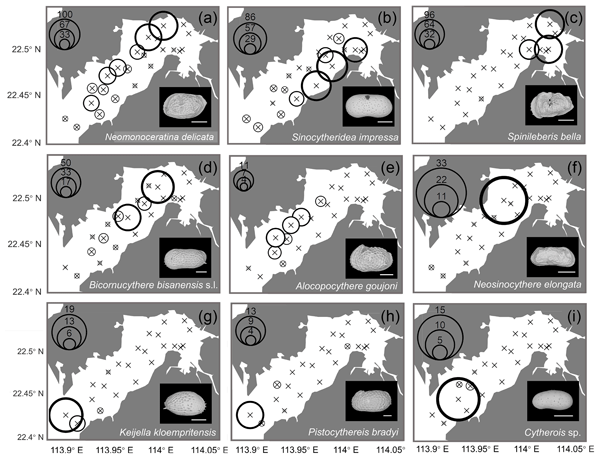
We investigated the abundance, diversity, composition, and distribution of ostracods (a meiobenthic group) and their interactions with eutrophication and pollution through high-resolution sampling of surface sediment in Deep Bay, a small semi-enclosed riverine bay adjacent to two of the world’s most populated cities: Hong Kong and Shenzhen. The results support the idea that ostracods are a useful bioindicator of coastal benthic ecosystems shaped by distinct environmental problems.
Yuye Han, Zvi Steiner, Zhimian Cao, Di Fan, Junhui Chen, Jimin Yu, and Minhan Dai
Biogeosciences, 22, 3681–3697, https://doi.org/10.5194/bg-22-3681-2025, https://doi.org/10.5194/bg-22-3681-2025, 2025
Short summary
Short summary
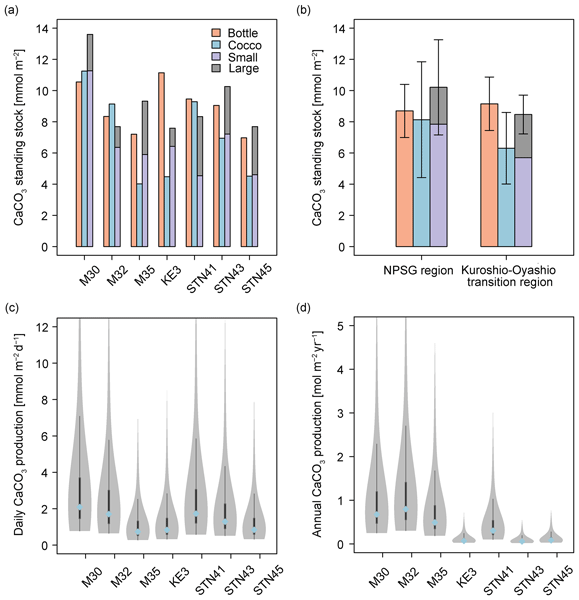
Our results suggest coccolithophore calcite accounts for a major fraction of PIC (particulate inorganic carbon) standing stocks in the western North Pacific, with a markedly higher contribution in the oligotrophic subtropical gyre than in the Kuroshio–Oyashio transition region, which highlights the importance of coccolithophores for PIC production in the pelagic ocean, particularly in oligotrophic ocean waters.
Yongkai Chang, Ehui Tan, Dengzhou Gao, Cheng Liu, Zongxiao Zhang, Zhixiong Huang, Jianan Liu, Yu Han, Zifu Xu, Bin Chen, and Shuh-Ji Kao
Earth Syst. Sci. Data, 17, 3521–3540, https://doi.org/10.5194/essd-17-3521-2025, https://doi.org/10.5194/essd-17-3521-2025, 2025
Short summary
Short summary
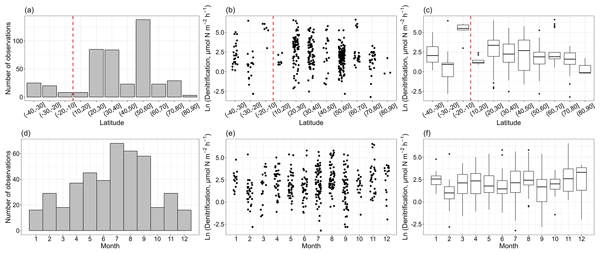
Denitrification and anaerobic ammonium oxidation (anammox) are two important nitrogen removal pathways that convert reactive nitrogen into dinitrogen gas. Here, we construct a global database on actual nitrogen loss rates, covering over 30 years of observations, measured in coastal and marine sediments. This work provides a global overview of the biogeography and potential controlling factors of denitrification and anammox and highlights the potential applications of this database.
Zuozhu Wen, Ruotong Jiang, Tianli He, Thomas Browning, Haizheng Hong, and Dalin Shi
EGUsphere, https://doi.org/10.5194/egusphere-2024-775, https://doi.org/10.5194/egusphere-2024-775, 2024
Preprint withdrawn
Short summary
Short summary
The isotope effect of biological N2 fixation is a key parameter for understanding the nitrogen cycle, however, little is known about its regulatory mechanisms. Here we show for the first time that CO2 exerts important controls on the N isotopic composition in diazotrophic cyanobacteria Trichodesmium and Crocosphaera, through the controls on nitrogenase enzyme efficiency. This study provides insights into understanding the fluctuations of δ15N records, and thus the past nitrogen cycle.
Yanmin Wang, Xianghui Guo, Guizhi Wang, Lifang Wang, Tao Huang, Yan Li, Zhe Wang, and Minhan Dai
EGUsphere, https://doi.org/10.5194/egusphere-2023-3155, https://doi.org/10.5194/egusphere-2023-3155, 2024
Preprint archived
Short summary
Short summary
This study reports higher nutrient release in fish farming system compared to river inputs and other sources with implications for coastal environment. DIN and DIP variation in Sansha Bay are dominated by mariculture activity relative to river input during spring. The N/P budget shows that 52.8 ± 4.7 % of DIN and 33.0 ± 3.7 % of DIP released from fish feeds exceeded other nutrient inputs. Co-culture strategies (e.g., of fish, kelp and oysters) allow effective mitigation of environmental impacts.
Zhibo Shao, Yangchun Xu, Hua Wang, Weicheng Luo, Lice Wang, Yuhong Huang, Nona Sheila R. Agawin, Ayaz Ahmed, Mar Benavides, Mikkel Bentzon-Tilia, Ilana Berman-Frank, Hugo Berthelot, Isabelle C. Biegala, Mariana B. Bif, Antonio Bode, Sophie Bonnet, Deborah A. Bronk, Mark V. Brown, Lisa Campbell, Douglas G. Capone, Edward J. Carpenter, Nicolas Cassar, Bonnie X. Chang, Dreux Chappell, Yuh-ling Lee Chen, Matthew J. Church, Francisco M. Cornejo-Castillo, Amália Maria Sacilotto Detoni, Scott C. Doney, Cecile Dupouy, Marta Estrada, Camila Fernandez, Bieito Fernández-Castro, Debany Fonseca-Batista, Rachel A. Foster, Ken Furuya, Nicole Garcia, Kanji Goto, Jesús Gago, Mary R. Gradoville, M. Robert Hamersley, Britt A. Henke, Cora Hörstmann, Amal Jayakumar, Zhibing Jiang, Shuh-Ji Kao, David M. Karl, Leila R. Kittu, Angela N. Knapp, Sanjeev Kumar, Julie LaRoche, Hongbin Liu, Jiaxing Liu, Caroline Lory, Carolin R. Löscher, Emilio Marañón, Lauren F. Messer, Matthew M. Mills, Wiebke Mohr, Pia H. Moisander, Claire Mahaffey, Robert Moore, Beatriz Mouriño-Carballido, Margaret R. Mulholland, Shin-ichiro Nakaoka, Joseph A. Needoba, Eric J. Raes, Eyal Rahav, Teodoro Ramírez-Cárdenas, Christian Furbo Reeder, Lasse Riemann, Virginie Riou, Julie C. Robidart, Vedula V. S. S. Sarma, Takuya Sato, Himanshu Saxena, Corday Selden, Justin R. Seymour, Dalin Shi, Takuhei Shiozaki, Arvind Singh, Rachel E. Sipler, Jun Sun, Koji Suzuki, Kazutaka Takahashi, Yehui Tan, Weiyi Tang, Jean-Éric Tremblay, Kendra Turk-Kubo, Zuozhu Wen, Angelicque E. White, Samuel T. Wilson, Takashi Yoshida, Jonathan P. Zehr, Run Zhang, Yao Zhang, and Ya-Wei Luo
Earth Syst. Sci. Data, 15, 3673–3709, https://doi.org/10.5194/essd-15-3673-2023, https://doi.org/10.5194/essd-15-3673-2023, 2023
Short summary
Short summary
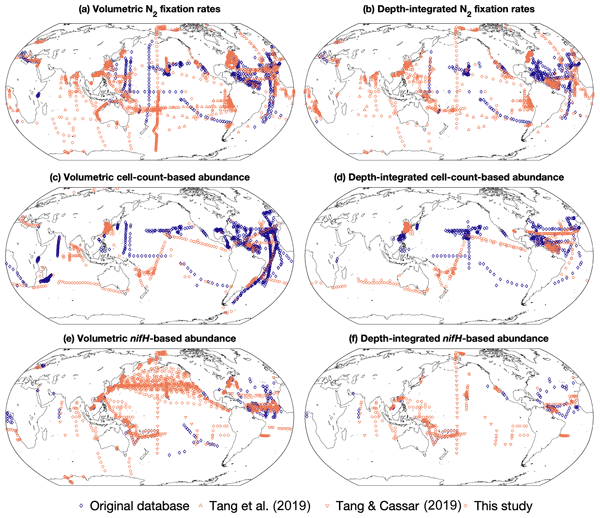
N2 fixation by marine diazotrophs is an important bioavailable N source to the global ocean. This updated global oceanic diazotroph database increases the number of in situ measurements of N2 fixation rates, diazotrophic cell abundances, and nifH gene copy abundances by 184 %, 86 %, and 809 %, respectively. Using the updated database, the global marine N2 fixation rate is estimated at 223 ± 30 Tg N yr−1, which triplicates that using the original database.
Yifan Ma, Kuanbo Zhou, Weifang Chen, Junhui Chen, Jin-Yu Terence Yang, and Minhan Dai
Biogeosciences, 20, 2013–2030, https://doi.org/10.5194/bg-20-2013-2023, https://doi.org/10.5194/bg-20-2013-2023, 2023
Short summary
Short summary
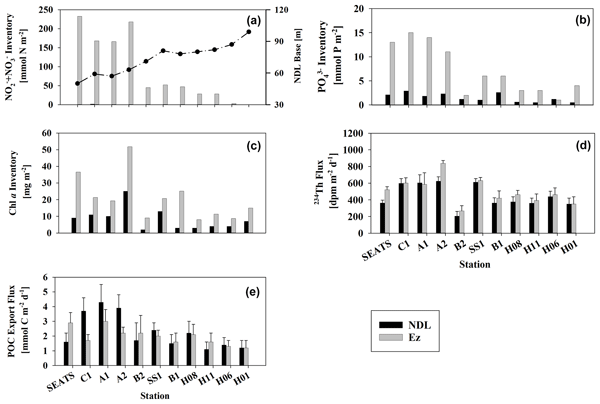
We distinguished particulate organic carbon (POC) export fluxes out of the nutrient-depleted layer (NDL) and the euphotic zone. The amount of POC export flux at the NDL base suggests that the NDL could be a hotspot of particle export. The substantial POC export flux at the NDL base challenges traditional concepts that the NDL was limited in terms of POC export. The dominant nutrient source for POC export fluxes should be subsurface nutrients, which was determined by 15N isotopic mass balance.
Zhixuan Wang, Guizhi Wang, Xianghui Guo, Yan Bai, Yi Xu, and Minhan Dai
Earth Syst. Sci. Data, 15, 1711–1731, https://doi.org/10.5194/essd-15-1711-2023, https://doi.org/10.5194/essd-15-1711-2023, 2023
Short summary
Short summary
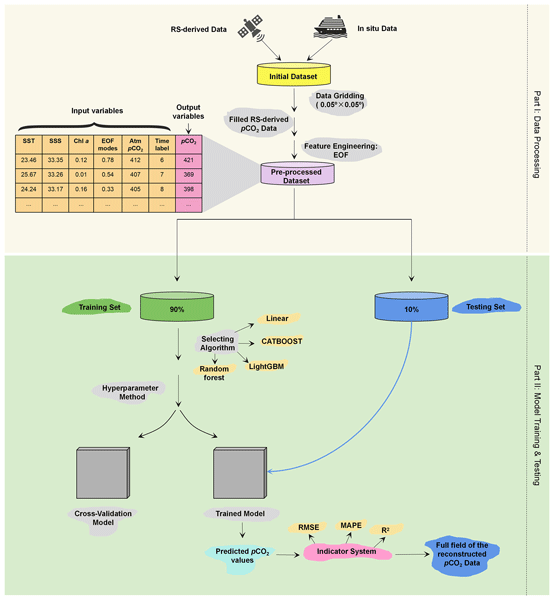
We reconstructed monthly sea surface pCO2 data with a high spatial resolution in the South China Sea (SCS) from 2003 to 2020. We validate our reconstruction with three independent testing datasets and present a new method to assess the uncertainty of the data. The results strongly suggest that our reconstruction effectively captures the main features of the spatiotemporal patterns of pCO2 in the SCS. Using this dataset, we found that the SCS is overall a weak source of atmospheric CO2.
Zuozhu Wen, Thomas J. Browning, Rongbo Dai, Wenwei Wu, Weiying Li, Xiaohua Hu, Wenfang Lin, Lifang Wang, Xin Liu, Zhimian Cao, Haizheng Hong, and Dalin Shi
Biogeosciences, 19, 5237–5250, https://doi.org/10.5194/bg-19-5237-2022, https://doi.org/10.5194/bg-19-5237-2022, 2022
Short summary
Short summary
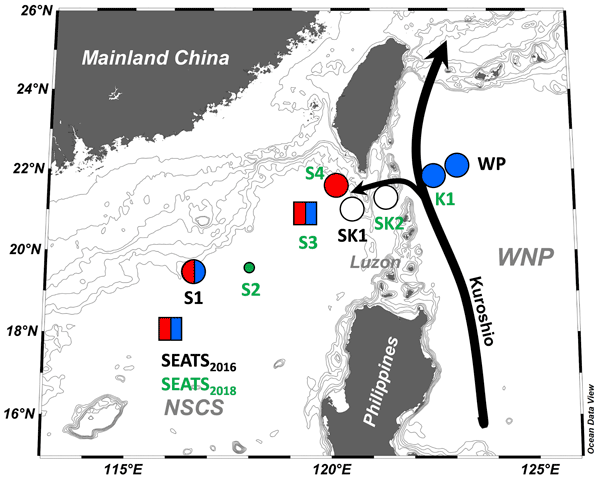
Fe and P are key factors controlling the biogeography and activity of marine N2-fixing microorganisms. We found lower abundance and activity of N2 fixers in the northern South China Sea than around the western boundary of the North Pacific, and N2 fixation rates switched from Fe–P co-limitation to P limitation. We hypothesize the Fe supply rates and Fe utilization strategies of each N2 fixer are important in regulating spatial variability in community structure across the study area.
Yangyang Zhao, Khanittha Uthaipan, Zhongming Lu, Yan Li, Jing Liu, Hongbin Liu, Jianping Gan, Feifei Meng, and Minhan Dai
Biogeosciences, 18, 2755–2775, https://doi.org/10.5194/bg-18-2755-2021, https://doi.org/10.5194/bg-18-2755-2021, 2021
Short summary
Short summary
In situ oxygen consumption rates were estimated for the first time during destruction of coastal hypoxia as disturbed by a typhoon and its reinstatement in the South China Sea off the Pearl River estuary. The reinstatement of summer hypoxia was rapid with a comparable timescale with that of its initial disturbance from frequent tropical cyclones, which has important implications for better understanding the intermittent nature of coastal hypoxia and its prediction in a changing climate.
Cited articles
Arteaga, L., Pahlow, M., and Oschlies, A.: Global monthly sea surface nitrate fields estimated from remotely sensed sea surface temperature, chlorophyll, and modeled mixed layer depth, Geophys. Res. Lett., 42, 1130–1138, https://doi.org/10.1002/2014GL062937, 2015.
Ascani, F., Richards, K. J., Firing, E., Grant, S., Johnson, K. S., Jia, Y., Lukas, R., and Karl, D. M.: Physical and biological controls of nitrate concentrations in the upper subtropical North Pacific Ocean, Deep-Sea Res. Pt. II, 93, 119–134, https://doi.org/10.1016/j.dsr2.2013.01.034, 2013.
Barone, B., Church, M. J., Dugenne, M., Hawco, N. J., Jahn, O., White, A. E., John, S. G., Follows, M. J., DeLong, E. F., and Karl, D. M.: Biogeochemical dynamics in adjacent mesoscale eddies of opposite polarity, Global Biogeochem. Cy., 36, e2021GB007115, https://doi.org/10.1029/2021GB007115, 2022.
Benitez-Nelson, C. R., Bidigare, R. R., Dickey, T. D., Landry, M. R., Leonard, C. L., Brown, S. L., Nencioli, F., Rii, Y. M., Maiti, K., Becker, J. W., Bibby, T. S., Black, W., Cai, W. J., Carlson, C. A., Chen, F., Kuwahara, V. S., Mahaffey, C., McAndrew, P. M., Quay, P. D., Rappé, M. S., Selph, K. E., Simmons, M. P., and Yang, E. J.: Mesoscale Eddies Drive Increased Silica Export in the Subtropical Pacific Ocean, Science, 316, 1017–1021, https://doi.org/10.1126/science.1136221, 2007.
Bidigare, R. R., Chai, F., Landry, M. R., Lukas, R., Hannides, C. C. S., Christensen, S. J., Karl, D. M., Shi, L., and Chao, Y.: Subtropical ocean ecosystem structure changes forced by North Pacific climate variations, J. Plankton Res., 31, 1131–1139, https://doi.org/10.1093/plankt/fbp064, 2009.
Bonnet, S., Caffin, M., Berthelot, H., and Moutin, T.: Hot spot of N2 fixation in the western tropical South Pacific pleads for a spatial decoupling between N2 fixation and denitrification, P. Natl. Acad. Sci. USA, 114, E2800–E2801, https://doi.org/10.1073/pnas.1619514114, 2017.
Browning, T. J. and Moore, C. M.: Global analysis of ocean phytoplankton nutrient limitation reveals high prevalence of co-limitation, Nat. Commun., 14, 5014, https://doi.org/10.1038/s41467-023-40774-0, 2023.
Browning, T. J., Liu, X., Zhang, R., Wen, Z., Liu, J., Zhou, Y., Xu, F., Cai, Y., Zhou, K., Cao, Z., Zhu, Y., Shi, D., Achterberg, E. P., and Dai, M.: Nutrient co-limitation in the subtropical Northwest Pacific, Limnol. Oceanogr. Lett., 7, 52–61, https://doi.org/10.1002/lol2.10205, 2022.
Chelton, D. B., Schlax, M. G., Samelson, R. M., and de Szoeke, R. A.: Global observations of large oceanic eddies, Geophys. Res. Lett., 34, L15606, https://doi.org/10.1029/2007GL030812, 2007.
Chen, S., Hu, C., Barnes, B. B., Wanninkhof, R., Cai, W., Barbero, L., and Pierrot, D.: A machine learning approach to estimate surface ocean pCO2 from satellite measurements, Remote Sens. Environ., 228, 203–226, https://doi.org/10.1016/j.rse.2019.04.019, 2019.
Chen, S., Meng, Y., Lin, S., Yu, Y., and Xi, J.: Estimation of sea surface nitrate from space: Current status and future potential, Sci. Total Environ., 899, 165690, https://doi.org/10.1016/j.scitotenv.2023.165690, 2023.
Chen, S., Meng, Y., Shang, S., Zheng, M., Wang, Y., and Chai, F.: Remote estimates of sea surface nitrate and its trends from ocean color in the northwest Pacific, J. Geophys. Res., 129, e2023JC019846, https://doi.org/10.1029/2023JC019846, 2024.
Dai, M., Luo, Y., Achterberg, E. P., Browning, T. J., Cai, Y., Cao, Z., Chai, F., Chen, B., Church, M. J., Ci, D., Du, C., Gao, K., Guo, X., Hu, Z., Kao, S., Laws, E. A., Lee, Z., Lin, H., Liu, Q., Liu, X., Luo, W., Meng, F., Shang, S., Shi, D., Saito, H., Song, L., Wan, X. S., Wang, Y., Wang, W.-L., Wen, Z., Xiu, P., Zhang, J., Zhang, R., and Zhou, K.: Upper Ocean biogeochemistry of the oligotrophic North Pacific subtropical gyre: From nutrient sources to carbon export, Rev. Geophys., 61, e2022RG000800, https://doi.org/10.1029/2022RG000800, 2023.
Dave, A. C. and Lozier, M. S.: Local stratification control of marine productivity in the subtropical North Pacific, J. Geophys. Res., 115, C12032, https://doi.org/10.1029/2010JC006519, 2010.
Deutsch, C. and Weber, T.: Nutrient Ratios as a Tracer and Driver of Ocean Biogeochemistry, Annu. Rev. Mar. Sci., 4, 113–138, https://doi.org/10.1146/annurev-marine-120710-100912, 2012.
Dong, L., Qi, J., Yin, B., Zhi, H., Li, D., Yang, S., Wang, W., Cai, H., and Xie, B.: Reconstruction of subsurface salinity structure in the South China Sea using satellite observations: a LightGBM-Based Deep forest method, Remote Sens., 14, 3494, https://doi.org/10.3390/rs14143494, 2022.
Du, C., He, R., Liu, Z., Huang, T., Wang, L., Yuan, Z., Xu, Y., Wang, Z., and Dai, M.: Climatology of nutrient distributions in the South China Sea based on a large data set derived from a new algorithm, Prog. Oceanogr., 195, 102586, https://doi.org/10.1016/j.pocean.2021.102586, 2021.
Du, C., Zheng, N., Kao, S.-J., Dai, M., Cao, Z., Shi, D., Li, Q., Wang, H., and Li, X.: Validated temperature and salinity data, and reconstructed nutrient concentrations in the North Pacific (1895–2024) (Version 2), Zenodo [data set], https://doi.org/10.5281/zenodo.17451417, 2025.
Dugdale, R. C., Morel, A., Bricaud, A., and Wilkerson, F. P.: Modeling new production in upwelling centers: A case study of modeling new production from remotely-sensed temperature and color, J. Geophys. Res., 94, 18119–18132, https://doi.org/10.1029/JC094iC12p18119, 1989.
Eugster, O. and Gruber, N.: A probabilistic estimate of global marine N-fixation and denitrification, Global Biogeochem. Cy., 26, GB4013, https://doi.org/10.1029/2012GB004300, 2012.
Fuhr, M., Laukert, G., Yu, Y., Nürnberg, D., and Frank, M.: Tracing water mass mixing from the Equatorial to the North Pacific Ocean with dissolved neodymium isotopes and concentrations, Front. Mar. Sci., 7, 603761, https://doi.org/10.3389/fmars.2020.603761, 2021.
Gan, M., Pan, S., Chen, Y., Cheng, C., Pan, H., and Zhu, X.: Application of the Machine Learning LightGBM model to the prediction of the water levels of the Lower Columbia River, J. Mar. Sci. Eng., 9, 496, https://doi.org/10.3390/jmse9050496, 2021.
Garcia, H. E., Boyer, T. P., Locarnini, R. A., Reagan, J. R., Mishonov, A. V., Baranova, O. K., Paver, C. R., Wang, Z., Bouchard, C. N., Cross, S. L., Seidov, D., and Dukhovskoy, D.: World Ocean Database 2023: User's Manual, edited by: Mishonov, A. V., NOAA Atlas NESDIS 98, NOAA, 129 pp., https://doi.org/10.25923/j8gq-ee82, 2024.
Goes, J. I., Saino, T., Oaku, H., and Jiang, D. L.: A Method for Estimating Sea Surface Nitrate Concentrations from Remotely Sensed SST and Chlorophyll – A Case Study for the North Pacific Ocean Using OCTS/ADEOS Data, IEEE T. Geosci. Remote, 37, 1633–1644, https://doi.org/10.1109/36.774702, 1999.
Hu, C., Feng, L., and Guan, Q.: A machine learning approach to estimate surface chlorophyll a concentrations in global oceans from satellite measurements, IEEE T. Geosci. Remote, 59, 4590–4607, https://doi.org/10.1109/TGRS.2020.3016473, 2021.
Huang, Y., Nicholson, D., Huang, B., and Cassar, N.: Global estimates of marine gross primary production based on machine learning upscaling of field observations, Global Biogeochem. Cy., 35, e2020GB006718, https://doi.org/10.3389/fmars.2022.837183, 2021.
Huang, Y., Tagliabue, A., and Cassar, N.: Data-Driven Modeling of Dissolved Iron in the Global Ocean, Front. Mar. Sci., 9, 837183, https://doi.org/10.3389/fmars.2022.837183, 2022.
Kamykowski, D.: A preliminary model of the relationship between temperature and plant nutrients in the upper ocean, Deep-Sea Res., 34, 1067–1079, https://doi.org/10.1016/0198-0149(87)90064-1, 1987.
Kamykowski, D.: Estimating upper ocean phosphate concentrations using ARGO float temperature profiles, Deep-Sea Res. Pt. I, 55, 1580–1589, https://doi.org/10.1016/j.dsr.2008.05.005, 2008.
Kamykowski, D., Zentara, S.-J., Morrison, J. M., and Switzer, A. C.: Dynamic global patterns of nitrate, phosphate, silicate, and iron availability and phytoplankton community composition from remote sensing data, Global Biogeochem. Cy., 16, 1077, https://doi.org/10.1029/2001GB001640, 2002.
Karl, D. M. and Church, M. J.: Ecosystem structure and dynamics in the North Pacific Subtropical Gyre: new views of an old ocean, Ecosystems, 20, 433–457, https://doi.org/10.1007/s10021-017-0117-0, 2017.
Karl, D. M., Letelier, R. M., Bidigare, R. R., Björkman, K. M., Church, M. J., Dore, J. E., and White, A. E.: Seasonal-to-decadal scale variability in primary production and particulate matter export at Station ALOHA, Prog. Oceanogr., 195, 102563, https://doi.org/10.1016/j.pocean.2021.102563, 2021.
Ke, G., Meng, Q., Finley, T., Wang, T., Chen, W., Ma, W., Ye, Q., and Liu, T.-Y.: Lightgbm: A highly efficient gradient boosting decision tree, Adv. Neural Inf. Process. Syst., 30, 3147–3155, https://doi.org/10.48550/arXiv.1706.08357, 2017.
Lee, G. S., Lee, J. H., and Cho, H. Y.: Spatiotemporal estimation of nutrient data from the northwest pacific and east Asian seas, Sci. Data, 10, 354, https://doi.org/10.1038/s41597-023-02602-4, 2023.
Liaw, A. and Wiener, M.: Classification and regression by randomForest, R News, 2, 18–22, 2002.
Lipschultz, F., Bates, N. R., Carlson, C. A., and Hansell, D. A.: New production in the Sargasso Sea: History and current status, Global Biogeochem. Cy., 16, 1001, https://doi.org/10.1029/2000GB001320, 2002.
Liu, H., Lin, L., Wang, Y., Du, L., Wang, S., Zhou, P., Yu, Y., Gong, X., and Lu, X.: Reconstruction of Monthly Surface Nutrient Concentrations in the Yellow and Bohai Seas from 2003–2019 Using Machine Learning, Remote Sens., 14, 5021, https://doi.org/10.3390/rs14195021, 2022.
Madani, N., Parazoo, N. C., Manizza, M., Chatterjee, A., Carroll, D., Menemenlis, D., Fouest, V. L., Matsuoka, A., Luis, K. M., Serra-Pompei, C., and Miller, C. E.: A machine learning approach to produce a continuous Solar-Induced chlorophyll fluorescence over the Arctic Ocean, J. Geophys. Res.-Mach. Learn. Comput., 1, e2024JH000310, https://doi.org/10.1029/2024JH000215, 2024.
Martino, M., Hamilton, D. S., Baker, A. R., Jickells, T., Bromley, T., Nojiri, Y., Quack, B., and Boyd, P. W.: Western Pacific atmospheric nutrient deposition fluxes, their impact on surface ocean productivity, Global Biogeochem. Cy., 28, 712–728, https://doi.org/10.1002/2013GB004794, 2014.
Mishonov, A. V., Boyer, T. P., Baranova, O. K., Bouchard, C. N., Cross, S. L., Garcia, H. E., Locarnini, R. A., Paver, C. R., Reagan, J. R., Wang, Z., Seidov, D., Grodsky, A. I., and Beauchamp, J. G.: World Ocean Database 2023, edited by: Bouchard, C., NOAA Atlas NESDIS 97, NOAA, https://doi.org/10.25923/z885-h264, 2024.
Moore, C. M., Mills, M. M., Arrigo, K. R., Berman-Frank, I., Bopp, L., Boyd, P. W., Galbraith, E. D., Geider, R. J., Guieu, C., Jaccard, S. L., Jickells, T. D., Lenton, T. M., Mahowald, N. M., Marañón, E., Marinov, I., Moore, J. K., Nakatsuka, T., Oschlies, A., Saito, M. A., Thingstad, T., Tsuda, A., and Ulloa, O.: Processes and patterns of oceanic nutrient limitation, Nat. Geosci., 6, 701–710, https://doi.org/10.1038/ngeo1765, 2013.
Możejko, J. and Gniot, R.: Application of Neural Networks for the Prediction of Total Phosphorus Concentrations in Surface Waters, Pol. J. Environ. Stud., 17, 363–368, 2008.
Palacios, D. M., Hazen, E. L., Schroeder, I. D., and Bograd, S. J.: Modeling the temperature-nitrate relationship in the coastal upwelling domain of the California Current, J. Geophys. Res.-Oceans, 118, 1–17, https://doi.org/10.1002/jgrc.20216, 2013.
Qi, J., Yu, Y., Yao, X., Yuan, G., and Gao, H.: Dry deposition fluxes of inorganic nitrogen and phosphorus in atmospheric aerosols over the Marginal Seas and Northwest Pacific, Atmos. Res., 245, 105076, https://doi.org/10.1016/j.atmosres.2020.105076, 2020.
Reagan, J. R., Boyer, T. P., García, H. E., Locarnini, R. A., Baranova, O. K., Bouchard, C., Cross, S. L., Mishonov, A. V., Paver, C. R., Seidov, D., Wang, Z., and Dukhovskoy, D.: World Ocean Atlas 2023, NOAA National Centers for Environmental Information, Dataset, NCEI Accession 0270533, NCEI, https://doi.org/10.25921/va26-hv25, 2024.
Sarangi, P. K., Thangaradjou, T., Saravanakumar, A., and Balasubramanian, T.: Development of nitrate algorithm for the southwest bay of bengal water and its implication using remote sensing satellite datasets, IEEE J. Select. Top. Appl. Earth Obs. Remote Sens., 4, 983–991, https://doi.org/10.1109/JSTARS.2011.2165204, 2011.
Sigman, D. M. and Hain, M. P.: The Biological Productivity of the Ocean, Nat. Educ. Knowl., 3, 1–16, 2012.
Steinhoff, T., Friedrich, T., Hartman, S. E., Oschlies, A., Wallace, D. W. R., and Körtzinger, A.: Estimating mixed layer nitrate in the North Atlantic Ocean, Biogeosciences, 7, 795–807, https://doi.org/10.5194/bg-7-795-2010, 2010.
Su, H., Lu, X., Chen, Z., Zhang, H., Lu, W., and Wu, W.: Estimating Coastal Chlorophyll-A Concentration from Time-Series OLCI Data Based on Machine Learning, Remote Sens., 13, 576, https://doi.org/10.3390/rs13040576, 2021.
Sundararaman, H. K. K. and Shanmugam, P.: Estimates of the global ocean surface dissolved oxygen and macronutrients from satellite data, Remote Sens. Environ., 311, 114243, https://doi.org/10.1016/j.rse.2024.114243, 2024.
Switzer, A. C., Kamykowski, D., and Zentara, S.-J.: Mapping nitrate in the global ocean using remotely sensed sea surface temperature, J. Geophys. Res., 108, 345–359, https://doi.org/10.1029/2001JC000833, 2003.
Talley, L. D., Pickard, G. L., Emery, W. J., and Swift, J. H.: Descriptive Physical Oceanography, An Introduction, in: 6th Edn., Academic Press, 350–362, https://doi.org/10.1016/B978-0-7506-4552-2.10010-1, 2011.
Wang, C., Su, B., Sun, J., Hu, X., and Liu, J.: A regional ocean database for the Coastal China Sea, Sci. Data, 12, 1550, https://doi.org/10.1038/s41597-025-05840-w, 2025.
Wang, L., Xu, Z., Gong, X., Zhang, P., Hao, Z., You, J., Zhao, X., and Guo, X.: Estimation of nitrate concentration and its distribution in the northwestern Pacific Ocean by a deep neural network model, Deep-Sea Res. Pt. I, 195, 104005, https://doi.org/10.1016/j.dsr.2023.104005, 2023.
Wang, W.-L., Moore, J. K., Martiny, A. C., and Primeau, F. W.: Convergent estimates of marine nitrogen fixation, Nature, 566, 205–211, https://doi.org/10.1038/s41586-019-0911-2, 2019.
Wang, Z., Wang, G., Guo, X., Hu, J., and Dai, M.: Reconstruction of High-Resolution Sea Surface Salinity over 2003–2020 in the South China Sea Using the Machine Learning Algorithm LightGBM Model, Remote Sens., 14, 6147, https://doi.org/10.3390/rs14236147, 2022.
Yang, G. G., Wang, Q., Feng, J., He, L., Li, R., Lu, W., Liao, E., and Lai, Z.: Can three-dimensional nitrate structure be reconstructed from surface information with artificial intelligence? – A proof-of-concept study, Sci. Total Environ., 924, 171365, https://doi.org/10.1016/j.scitotenv.2024.171365, 2024.
Yasunaka, S., Nojiri, Y., Nakaoka, S., Ono, T., Whitney, F. A., and Telszewski, M.: Mapping of sea surface nutrients in the North Pacific: Basin-wide distribution and seasonal to interannual variability, J. Geophys. Res.-Oceans, 119, 7756–7771, https://doi.org/10.1002/2014JC010318, 2014.
Yasunaka, S., Ono, T., Nojiri, Y., Whitney, F. A., Wada, C., Murata, A., Nakaoka, S., and Hosoda, S.: Long-term variability of surface nutrient concentrations in the North Pacific, Geophys. Res. Lett., 43, 3389–3397, https://doi.org/10.1002/2016GL068097, 2016.
Yasunaka, S., Mitsudera, H., Whitney, F., and Nakaoka, S.: Nutrient and dissolved inorganic carbon variability in the North Pacific, J. Oceanogr., 77, 3–16, https://doi.org/10.1007/s10872-020-00561-7, 2021.
Yu, X. R., Wen, Z., Jiang, R., Yang, J.-Y. T., Cao, Z., Hong, H., Zhou, Y., and Shi, D.: Assessing N2 fixation flux and its controlling factors in the (sub)tropical western North Pacific through high-resolution observations, Limnol. Oceanogr. Lett., 9, 716–724, https://doi.org/10.1002/lol2.10390, 2024.
Zhong, A., Wang, D., Gong, F., Zhu, W., Fu, D., Zheng, Z., Huang, J., He, X., and Bai, Y.: Remote sensing estimates of global sea surface nitrate: Methodology and validation, Sci. Total Environ., 950, 175362, https://doi.org/10.1016/j.scitotenv.2024.175362, 2024.
Short summary
Nutrient levels govern oceanic primary production, but measuring them is labor-intensive and costly. To address this, we used machine learning models to learn the hidden relationships between easy-to-measure ocean properties (like temperature and salinity) and nutrient levels. Applying this model, we created ~ 470 million nutrient data points across the North Pacific from 1895 to 2024. This data will help to understand nutrient dynamics and marine ecosystem variability under climate change.
Nutrient levels govern oceanic primary production, but measuring them is labor-intensive and...
Altmetrics
Final-revised paper
Preprint