Articles | Volume 18, issue 4
https://doi.org/10.5194/essd-18-2653-2026
© Author(s) 2026. This work is distributed under
the Creative Commons Attribution 4.0 License.
the Creative Commons Attribution 4.0 License.
https://doi.org/10.5194/essd-18-2653-2026
© Author(s) 2026. This work is distributed under
the Creative Commons Attribution 4.0 License.
the Creative Commons Attribution 4.0 License.
Data description article
| 
15 Apr 2026
Data description article |
| 15 Apr 2026
| 15 Apr 2026
A 28-year-long (1997–2024) hydrographic dataset from the southern Baltic Sea
Daniel Rak
CORRESPONDING AUTHOR

Physical Oceanography Department, Observational Oceanography Laboratory, Institute of Oceanology PAN, Sopot, Poland
Anna Izabela Bulczak
Physical Oceanography Department, Observational Oceanography Laboratory, Institute of Oceanology PAN, Sopot, Poland
Waldemar Walczowski
Physical Oceanography Department, Observational Oceanography Laboratory, Institute of Oceanology PAN, Sopot, Poland
Piotr Wieczorek
Physical Oceanography Department, Observational Oceanography Laboratory, Institute of Oceanology PAN, Sopot, Poland
Małgorzata Merchel
Physical Oceanography Department, Observational Oceanography Laboratory, Institute of Oceanology PAN, Sopot, Poland
Robert Osiński
Physical Oceanography Department, Observational Oceanography Laboratory, Institute of Oceanology PAN, Sopot, Poland
Ilona Goszczko
Physical Oceanography Department, Observational Oceanography Laboratory, Institute of Oceanology PAN, Sopot, Poland
Agnieszka Beszczynska-Möller
Physical Oceanography Department, Observational Oceanography Laboratory, Institute of Oceanology PAN, Sopot, Poland
Agnieszka Strzelewicz
Physical Oceanography Department, Observational Oceanography Laboratory, Institute of Oceanology PAN, Sopot, Poland
Małgorzata Kitowska
Physical Oceanography Department, Observational Oceanography Laboratory, Institute of Oceanology PAN, Sopot, Poland
Related authors
Taavi Liblik, Daniel Rak, Enriko Siht, Germo Väli, Johannes Karstensen, Laura Tuomi, Louise C. Biddle, Madis-Jaak Lilover, Māris Skudra, Michael Naumann, Urmas Lips, and Volker Mohrholz
EGUsphere, https://doi.org/10.5194/egusphere-2024-2272, https://doi.org/10.5194/egusphere-2024-2272, 2024
Preprint archived
Short summary
Short summary
Eight current meters were deployed to the seafloor across the Baltic to enhance knowledge about circulation and currents. The experiment was complemented by autonomous vehicles. Stable circulation patterns were observed at the sea when weather was steady. Strong and quite persistent currents were observed at the key passage for the deep-water renewal of the Northern Baltic Sea. Deep water renewal mostly occurs during spring and summer periods in the northern Baltic Sea.
Lukasz Stachnik, Meri Korhonen, Jonathan R. Hawkings, Marlena Szeligowska, Katarzyna Koziorowska, Emilia Trudnowska, Karol Kuliński, Beata Szymczycha, Oskar Głowacki, Małgorzata Kitowska, Katarzyna Dragańska-Deja, Marcin Syczewski, Liane G. Benning, Pablo Forjanes, and Mateusz Moskalik
EGUsphere, https://doi.org/10.5194/egusphere-2026-4466, https://doi.org/10.5194/egusphere-2026-4466, 2026
This preprint is open for discussion and under review for Biogeosciences (BG).
Short summary
Short summary
By comparing two glacier-fed bays in an Arctic fjord, we found that larger glaciers ending in the sea deliver far more sediment and essential micronutrients (Fe, Mn) to coastal waters than smaller glaciers ending on land. We showed that many of these nutrients are transported in particles that can travel farther offshore. As glaciers continue to shrink and surrounding landscapes become more stable, the supply of these nutrients is likely to decline, potentially affecting productivity.
Emilia Trudnowska, Katarzyna Koziorowska, Anna M. Dąbrowska, Rafał Boehnke, Beata Szymczycha, Katarzyna Draganska-Deja, Łukasz Stachnik, Jon Hawkings, Meri Korhonen, Małgorzata Kitowska, Karol Kuliński, and Mateusz Moskalik
EGUsphere, https://doi.org/10.5194/egusphere-2026-2515, https://doi.org/10.5194/egusphere-2026-2515, 2026
Short summary
Short summary
Glacier retreat in Svalbard alters marine ecosystems, with marine snow linking chemistry, particles, and biota while driving carbon export. This study examines fine-scale variability in fjord waters, revealing strong seasonal and local differences in biogeochemistry, nutrients, plankton, and particles. Results highlight local heterogeneity in coupled physical–biogeochemical–ecological processes near retreating glaciers.
Piotr Markuszewski, E. Douglas Nilsson, Julika Zinke, E. Monica Mårtensson, Matthew Salter, Przemysław Makuch, Małgorzata Kitowska, Iwona Niedźwiecka-Wróbel, Violetta Drozdowska, Dominik Lis, Tomasz Petelski, Luca Ferrero, and Jacek Piskozub
Atmos. Chem. Phys., 24, 11227–11253, https://doi.org/10.5194/acp-24-11227-2024, https://doi.org/10.5194/acp-24-11227-2024, 2024
Short summary
Short summary
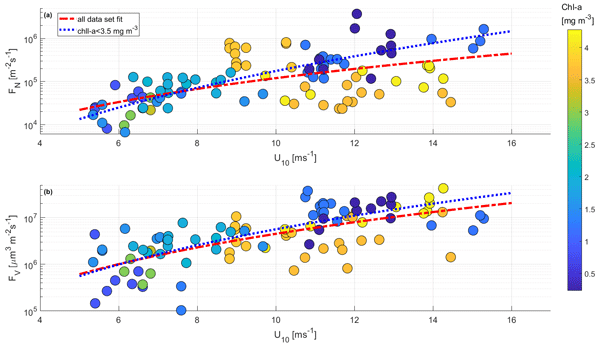
Our research provides new insights into the study of sea spray aerosol (SSA) emissions in the Baltic Sea and North Atlantic. We observed that SSA flux is suppressed during increased marine biological activity in the Baltic Sea. At the same time, the influence of wave age showed higher SSA emissions in the Baltic Sea for younger waves compared to the Atlantic Ocean. These insights underscore the complex interplay between biological activity and physical dynamics in regulating SSA emissions.
Taavi Liblik, Daniel Rak, Enriko Siht, Germo Väli, Johannes Karstensen, Laura Tuomi, Louise C. Biddle, Madis-Jaak Lilover, Māris Skudra, Michael Naumann, Urmas Lips, and Volker Mohrholz
EGUsphere, https://doi.org/10.5194/egusphere-2024-2272, https://doi.org/10.5194/egusphere-2024-2272, 2024
Preprint archived
Short summary
Short summary
Eight current meters were deployed to the seafloor across the Baltic to enhance knowledge about circulation and currents. The experiment was complemented by autonomous vehicles. Stable circulation patterns were observed at the sea when weather was steady. Strong and quite persistent currents were observed at the key passage for the deep-water renewal of the Northern Baltic Sea. Deep water renewal mostly occurs during spring and summer periods in the northern Baltic Sea.
Younjoo J. Lee, Wieslaw Maslowski, John J. Cassano, Jaclyn Clement Kinney, Anthony P. Craig, Samy Kamal, Robert Osinski, Mark W. Seefeldt, Julienne Stroeve, and Hailong Wang
The Cryosphere, 17, 233–253, https://doi.org/10.5194/tc-17-233-2023, https://doi.org/10.5194/tc-17-233-2023, 2023
Short summary
Short summary
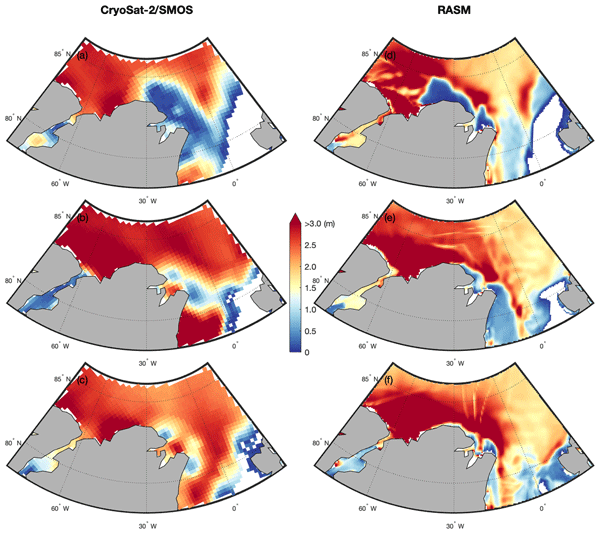
During 1979–2020, four winter polynyas occurred in December 1986 and February 2011, 2017, and 2018 north of Greenland. Instead of ice melting due to the anomalous warm air intrusion, the extreme wind forcing resulted in greater ice transport offshore. Based on the two ensemble runs, representing a 1980s thicker ice vs. a 2010s thinner ice, a dominant cause of these winter polynyas stems from internal variability of atmospheric forcing rather than from the forced response to a warming climate.
Milena Veneziani, Wieslaw Maslowski, Younjoo J. Lee, Gennaro D'Angelo, Robert Osinski, Mark R. Petersen, Wilbert Weijer, Anthony P. Craig, John D. Wolfe, Darin Comeau, and Adrian K. Turner
Geosci. Model Dev., 15, 3133–3160, https://doi.org/10.5194/gmd-15-3133-2022, https://doi.org/10.5194/gmd-15-3133-2022, 2022
Short summary
Short summary
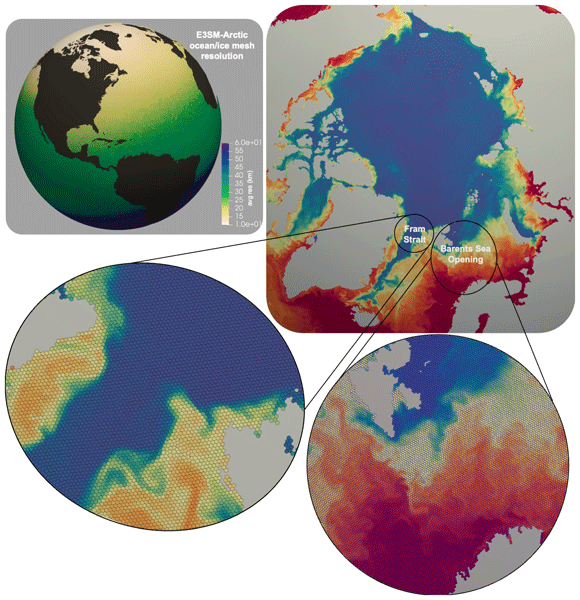
We present an Earth system model (ESM) simulation, E3SM-Arctic-OSI, with a refined grid to better resolve the Arctic ocean and sea-ice system and low spatial resolution elsewhere. The configuration satisfactorily represents many aspects of the Arctic system and its interactions with the sub-Arctic, while keeping computational costs at a fraction of those necessary for global high-resolution ESMs. E3SM-Arctic can thus be an efficient tool to study Arctic processes on climate-relevant timescales.
Jaclyn Clement Kinney, Karen M. Assmann, Wieslaw Maslowski, Göran Björk, Martin Jakobsson, Sara Jutterström, Younjoo J. Lee, Robert Osinski, Igor Semiletov, Adam Ulfsbo, Irene Wåhlström, and Leif G. Anderson
Ocean Sci., 18, 29–49, https://doi.org/10.5194/os-18-29-2022, https://doi.org/10.5194/os-18-29-2022, 2022
Short summary
Short summary
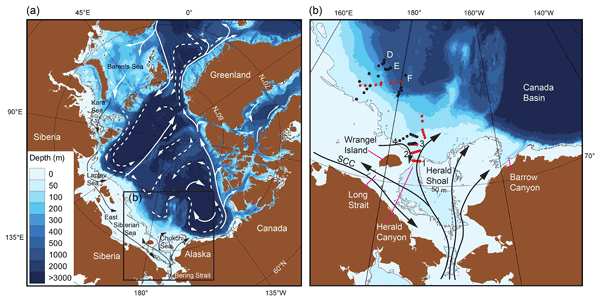
We use data crossing Herald Canyon in the Chukchi Sea collected in 2008 and 2014 together with numerical modelling to investigate the circulation in the western Chukchi Sea. A large fraction of water from the Chukchi Sea enters the East Siberian Sea south of Wrangel Island and circulates in an anticyclonic direction around the island. To assess the differences between years, we use numerical modelling results, which show that high-frequency variability dominates the flow in Herald Canyon.
Cited articles
Bulczak, A. I. and Rak, D.: Propagation and mixing of the 2023/24 inflow: impacts on stratification and deep-water ventilation in the Southern Baltic Sea, Front. Mar. Sci., 13, 1629491, https://doi.org/10.3389/fmars.2026.1629491, 2026.
Bulczak, A. I., Nowak, K., Jakacki, J., Muzyka, M., Rak, D., and Walczowski, W.: Seasonal variability and long-term winter shoaling of the upper mixed layer in the southern Baltic Sea, Cont. Shelf Res., 276, 105232, https://doi.org/10.1016/j.csr.2024.105232, 2024.
Burchard, H., Lass, H.-U., Mohrholz, V., Umlauf, L., Sellschopp, J., Fiekas, V., Bolding, K., and Arneborg, L.: Dynamics of medium-intensity dense water plumes in the Arkona Basin, Western Baltic Sea, Ocean Dynam., 55, 391–402, https://doi.org/10.1007/s10236-005-0025-2, 2005.
Feistel, R., Nausch, G., and Wasmund, N. (Eds.): State and Evolution of the Baltic Sea, 1952–2005: A detailed 50-year survey of meteorology and climate, physics, chemistry, biology, and marine environment, Wiley, Hoboken, NJ, USA, https://doi.org/10.1002/9780470283134, 2008.
Fischer, H. and Matthäus, W.: The importance of the Drogden Sill in the Sound for major Baltic inflows, J. Mar. Syst., 9, 137–157, https://doi.org/10.1016/S0924-7963(96)00046-2, 1996.
Gröger, M., Dieterich, C., Haapala, J., Ho-Hagemann, H. T. M., Hagemann, S., Jakacki, J., May, W., Meier, H. E. M., Miller, P. A., Rutgersson, A., and Wu, L.: Coupled regional Earth system modeling in the Baltic Sea region, Earth Syst. Dynam., 12, 939–973, https://doi.org/10.5194/esd-12-939-2021, 2021.
Leppäranta, M. and Myrberg, K.: Physical Oceanography of the Baltic Sea, Springer, Berlin, Heidelberg, https://doi.org/10.1007/978-3-540-79703-6, 2009.
Matthäus, W. and Franck, H.: Characteristics of major Baltic inflows – A statistical analysis, Cont. Shelf Res., 12, 1375–1400, https://doi.org/10.1016/0278-4343(92)90060-W, 1992.
Mohrholz, V.: Major Baltic inflow statistics – Revised, Front. Mar. Sci., 5, 384, https://doi.org/10.3389/fmars.2018.00384, 2018.
Mohrholz, V., Naumann, M., Nausch, G., Krüger, S., and Gräwe, U.: Fresh oxygen for the Baltic Sea – An exceptional saline inflow after a decade of stagnation, J. Mar. Syst., 148, 152–166, https://doi.org/10.1016/j.jmarsys.2015.03.005, 2015.
Omstedt, A., Elken, J., Lehmann, A., Leppäranta, M., Meier, H. E. M., Myrberg, K., and Rutgersson, A.: Progress in physical oceanography of the Baltic Sea during the 2003–2014 period, Prog. Oceanogr., 128, 139–171, https://doi.org/10.1016/j.pocean.2014.08.010, 2014.
Rak, D.: The inflow in the Baltic Proper as recorded in January–February 2015, Oceanologia, 58, 241–247, https://doi.org/10.1016/j.oceano.2016.04.001, 2016.
Rak, D.: IOPAN Baltic CTD processing and CF-1.8 NetCDF export (MATLAB) (Version 1.0.0), Zenodo [code], https://doi.org/10.5281/zenodo.17814769, 2025a.
Rak, D.: Southern Baltic Sea hydrographic CTD profiles along the Arkona–Bornholm–Słupsk–Gdańsk transect (1997–2024), IOPAN GeoNetwork [data set], https://doi.org/10.48457/IOPAN.2025.531, 2025b.
Rak, D. and Wieczorek, P.: Variability of temperature and salinity over the last decade in selected regions of the southern Baltic Sea, Oceanologia, 54, 339–354, https://doi.org/10.5697/oc.54-3.339, 2012.
Rak, D., Walczowski, W., Dzierzbicka-Głowacka, L., and Shchuka, S.: Dissolved oxygen variability in the southern Baltic Sea in 2013–2018, Oceanologia, 62, 525–537, https://doi.org/10.1016/j.oceano.2020.08.005, 2020.
Rak, D., Przyborska, A., Bulczak, A. I., and Dzierzbicka-Głowacka, L.: Energy fluxes and vertical heat transfer in the Southern Baltic Sea, Front. Mar. Sci., 11, 1365759, https://doi.org/10.3389/fmars.2024.1365759, 2024.
Reissmann, J. H., Burchard, H., Feistel, R., Hagen, E., Lass, H.-U., Mohrholz, V., Nausch, G., Umlauf, L., and Wieczorek, G.: Vertical mixing in the Baltic Sea and consequences for eutrophication – A review, Prog. Oceanogr., 82, 47–80, https://doi.org/10.1016/j.pocean.2007.10.004, 2009.
Stigebrandt, A. and Gustafsson, B.: The response of the Baltic Sea to climate change – Theory and observations, J. Sea Res., 49, 243–256, https://doi.org/10.1016/S1385-1101(03)00021-2, 2003.
Walczowski, W., Merchel, M., Rak, D., Wieczorek, P., and Goszczko, I.: Argo floats in the southern Baltic Sea, Oceanologia, 62, 478–488, https://doi.org/10.1016/j.oceano.2020.07.001, 2020.
Short summary
This 28-year study collects vital oceanographic data from the southern Baltic. We used specialized instruments on a vessel to measure water temperature and saltiness along a repeated route, covering four major sea basins. This unique, long-term record is now publicly available and crucial for improving sea models and monitoring the health and dynamics of this important European Sea.
This 28-year study collects vital oceanographic data from the southern Baltic. We used...


Altmetrics
Final-revised paper
Preprint