Articles | Volume 18, issue 3
https://doi.org/10.5194/essd-18-2469-2026
© Author(s) 2026. This work is distributed under
the Creative Commons Attribution 4.0 License.
the Creative Commons Attribution 4.0 License.
https://doi.org/10.5194/essd-18-2469-2026
© Author(s) 2026. This work is distributed under
the Creative Commons Attribution 4.0 License.
the Creative Commons Attribution 4.0 License.
Data description article
| 
02 Apr 2026
Data description article |
| 02 Apr 2026
| 02 Apr 2026
A first approach towards dual-hemisphere sea ice reference measurements from multiple data sources repurposed for evaluation and product intercomparison of satellite altimetry

Department of Geodesy and Earth Observation, National Space Institute, Technical University of Denmark (DTU Space), Elektrovej Building 327, 2800 Kgs. Lyngby, Denmark
National Center for Climate Research (NCKF), Danish Meteorological Institute, Copenhagen, 2100, Denmark
Henriette Skourup
Department of Geodesy and Earth Observation, National Space Institute, Technical University of Denmark (DTU Space), Elektrovej Building 327, 2800 Kgs. Lyngby, Denmark
Heidi Sallila
Marine Research, Finnish Meteorological Institute (FMI), Helsinki, Finland
Stefan Hendricks
Alfred Wegener Institute (AWI), Helmholtz Centre for Polar and Marine Research, Bremerhaven, Germany
Renée Mie Fredensborg Hansen
Department of Geodesy and Earth Observation, National Space Institute, Technical University of Denmark (DTU Space), Elektrovej Building 327, 2800 Kgs. Lyngby, Denmark
Department of Civil and Environmental Engineering, Norwegian University of Science and Technology (NTNU), Trondheim, Norway
Stefan Kern
Integrated Climate Data Center (ICDC), Center for Earth System Research and Sustainability (CEN), University of Hamburg, Hamburg, Germany
Stephan Paul
Alfred Wegener Institute (AWI), Helmholtz Centre for Polar and Marine Research, Bremerhaven, Germany
Marion Bocquet
Université de Toulouse, LEGOS (CNES/CNRS/IRD/UT3), Toulouse, France
Sara Fleury
Université de Toulouse, LEGOS (CNES/CNRS/IRD/UT3), Toulouse, France
Dmitry Divine
Norwegian Polar Institute (NPI), Tromsø, Norway
Eero Rinne
Arctic Geophysics, University Centre in Svalbard (UNIS), Longyearbyen, Svalbard, Norway
Related authors
No articles found.
Anne Braakmann Folgmann, Jack C. Landy, Stefan Hendricks, Clara Vydra, Robert Ricker, and Alessandro Di Bella
EGUsphere, https://doi.org/10.5194/egusphere-2026-5997, https://doi.org/10.5194/egusphere-2026-5997, 2026
This preprint is open for discussion and under review for The Cryosphere (TC).
Short summary
Short summary
This study is the first to assess snow depth on Arctic sea ice year-round, i.e. including the more challenging summer melt season, which is the key season for marine operations and biological production. Our study shows that considerable snow remains in summer (May–Sep). A first test of altimetry-derived snow estimates year-round yields promising results, but higher snow north of Greenland could point at biases in the input altimetry data.
Hannah Bailey, Jason E. Box, Ben G. Kopec, Valtteri Hyöky, Hannu Marttila, Jeffrey M. Welker, Jack Kohler, Dmitry V. Divine, and Alun Hubbard
The Cryosphere, 20, 4421–4436, https://doi.org/10.5194/tc-20-4421-2026, https://doi.org/10.5194/tc-20-4421-2026, 2026
Short summary
Short summary
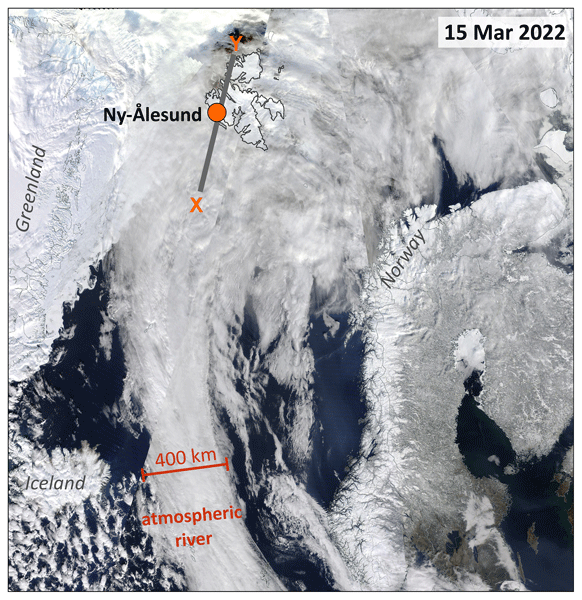
Atmospheric rivers (ARs) are narrow corridors of intense heat and moisture that can deliver extreme weather to the Arctic. We investigate a record March 2022 event in Svalbard using measurements of air and precipitation to track its origin and evolution. While the AR brought unusual winter rain and snow melt, it also delivered substantial snowfall that partially offset glacier mass loss. These findings show that the impacts of ARs on Arctic glaciers are more complex than typically reported.
Loris Danjou, Eero Rinne, and Erik Schytt Mannerfelt
The Cryosphere, 20, 4133–4155, https://doi.org/10.5194/tc-20-4133-2026, https://doi.org/10.5194/tc-20-4133-2026, 2026
Short summary
Short summary
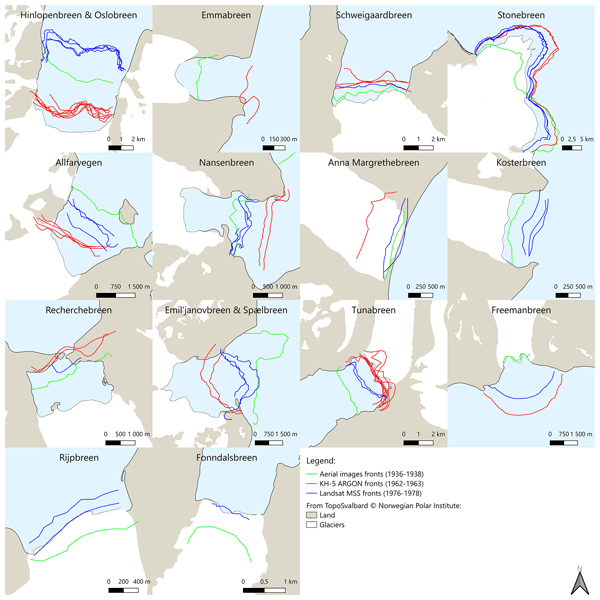
We retrieved front locations for 171 Svalbard tidewater glaciers in the 1960s and 1970s, from Landsat images and – for the first time in this region – declassified intelligence satellite photographs. We compared our results to aerial photographs from the 1930s and calculated that these glaciers retreated by about 1 km between 1936 and 1978. We also discovered one undocumented glacier surge (a rapid front advance), precised the time frames of two others, and documented two other glacier advances.
Marion Bocquet, Robert Ricker, Torbjörn Kagel, Stefan Kern, Thomas Lavergne, Emily Down, and Stefan Hendricks
EGUsphere, https://doi.org/10.5194/egusphere-2026-4063, https://doi.org/10.5194/egusphere-2026-4063, 2026
Short summary
Short summary
Antarctic sea ice has changed dramatically in recent years, highlighting the need for better information on ice and snow thickness. We combined measurements from several satellites with ice motion data to create a daily updated record spanning from 2018 to 2025. By considering the ice drift in the sea-ice thickness gridding process, we captured finer spatial detail and produced more consistent estimates. The results provide a stronger basis for monitoring ongoing changes in the Southern Ocean.
Andreas Wernecke, Thomas Lavergne, Stefan Kern, and Dirk Notz
The Cryosphere, 20, 3783–3793, https://doi.org/10.5194/tc-20-3783-2026, https://doi.org/10.5194/tc-20-3783-2026, 2026
Short summary
Short summary
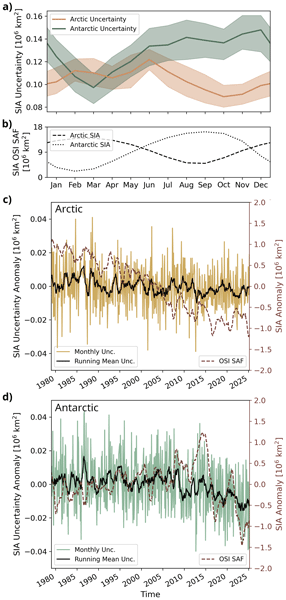
We analyse the types and size of uncertainties in satellite measurements of the global sea ice cover. These measurements give insights into the state of the climate system and quality of climate models. We derive uncertainties for one satellite product and compare it with other products. We find that offsets do play a role for measurements of the total sea ice cover, but also for estimates of its change. This calls for further investigations into the reasons for these offsets.
Luisa von Albedyll, Robert Ricker, Frank Kauker, Daniel Krogmann, and Stefan Hendricks
EGUsphere, https://doi.org/10.5194/egusphere-2026-3122, https://doi.org/10.5194/egusphere-2026-3122, 2026
Short summary
Short summary
Using satellite observations and model simulations, we studied winter Arctic sea ice thickness change. Separating thickening from ridging and thinning from lead opening showed that dynamic processes contribute nearly as much to winter ice growth as freezing. Between 2002 and 2020, dynamic thickness change increased linked to stronger sea ice deformation. This is consistent with the idea that sea ice dynamics partly counteract thinning of Arctic sea ice during ongoing climate warming.
Gwenael Jestin, Sara Fleury, Matthias Raynal, Marta Alves, Fanny Piras, Anaëlle Treboutte, François Boy, Inès Benabdillah, Louise Yu, and Gérald Dibarboure
EGUsphere, https://doi.org/10.5194/egusphere-2026-2569, https://doi.org/10.5194/egusphere-2026-2569, 2026
This preprint is open for discussion and under review for The Cryosphere (TC).
Short summary
Short summary
With its wide swath of 120 km, the SWOT altimeter offers unrivalled spatial and temporal coverage of the polar oceans. But frozen oceans are difficult to study because the ice cover only reveals the open ocean through cracks and polynyas. Whether studying the ice or the ocean, leads and floes must be distinguished. This classification is now available in the CNES L3 product at a resolution of 250 m. This paper outlines the methodology and improvements of the derived ice concentration maps.
Stefan Kern
The Cryosphere, 20, 527–534, https://doi.org/10.5194/tc-20-527-2026, https://doi.org/10.5194/tc-20-527-2026, 2026
Short summary
Short summary
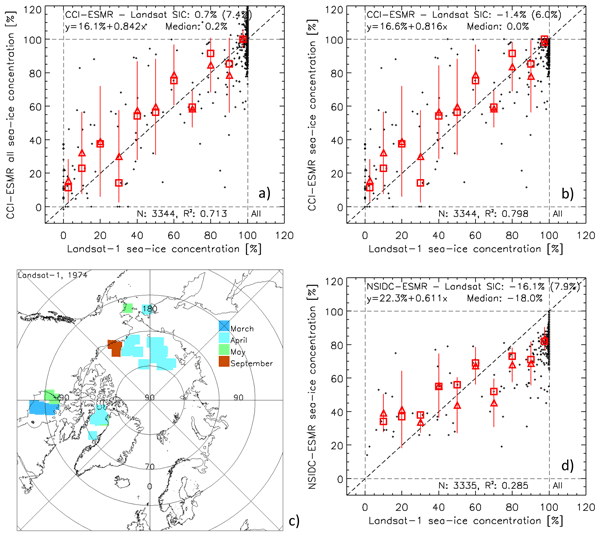
I evaluated a novel sea-ice concentration data product based on satellite microwave observations during December 1972 to May 1977. I used Landsat-1 satellite images obtained in 1974 in the Arctic, classified into water and ice. My evaluation provides results very similar to evaluations carried out for sea-ice concentration data products based on more recent satellite observations. I suggest that the novel sea-ice concentration data product is a useful extension back in time.
Remon Sadikni and Stefan Kern
Earth Syst. Sci. Data Discuss., https://doi.org/10.5194/essd-2025-757, https://doi.org/10.5194/essd-2025-757, 2026
Revised manuscript accepted for ESSD
Short summary
Short summary
Melt ponds form during summer on Arctic sea ice. They impact the amount of solar energy entering the sea ice-ocean system. We describe the retrieval method of a new data set of the daily melt-pond coverage on Arctic sea ice north of 60 degrees latitude North for June to August of years 2000 to 2024 based on satellite remote sensing. The results of the quality assessment against independent observations demonstrate the data set’s credibility and usefulness for Arctic climate system studies.
Valentin Ludwig, Caroline Ribere, Sara Fleury, Christian Haas, Michel Tsamados, Mahmoud El Hajj, Jerome Bouffard, Michele Scagliola, Marion Bocquet, Eric de Boisseson, Vincent Boulenger, Guillaume Boutin, Laurence Connor, Léo Edel, Stefan Hendricks, Ferran Hernández Macià, Marcus Huntemann, Lars Kaleschke, Frank Kauker, Jack Landy, Tom Megain, Alek Petty, Till Soya Rasmussen, Mads Hvid Ribergaard, Robert Ricker, Axel Schweiger, Hoyeon Shi, Xiangshan Tian-Kunze, Donghui Yi, and Alessandro Di Bella
EGUsphere, https://doi.org/10.5194/egusphere-2025-6201, https://doi.org/10.5194/egusphere-2025-6201, 2026
Short summary
Short summary
Our paper compares Arctic sea-ice thickness datasets from models, reanalyses, satellite-only, and multi-product sources. We validate them against Beaufort Sea reference data, compare large-scale products, and analyse time series. Cross-product biases range from 0.2–0.4 m, RMSDs from 0.4–0.9 m, and correlations from 0.5–0.8. We find no 2010–2023 trend, but 1995–2023 thinning of ~ 0.5 m in November and ~ 0.3 m in March.
Jack C. Landy, Claude de Rijke-Thomas, Carmen Nab, Isobel Lawrence, Isolde A. Glissenaar, Robbie D. C. Mallett, Renée M. Fredensborg Hansen, Alek Petty, Michel Tsamados, Amy R. Macfarlane, and Anne Braakmann-Folgmann
The Cryosphere, 20, 183–208, https://doi.org/10.5194/tc-20-183-2026, https://doi.org/10.5194/tc-20-183-2026, 2026
Short summary
Short summary
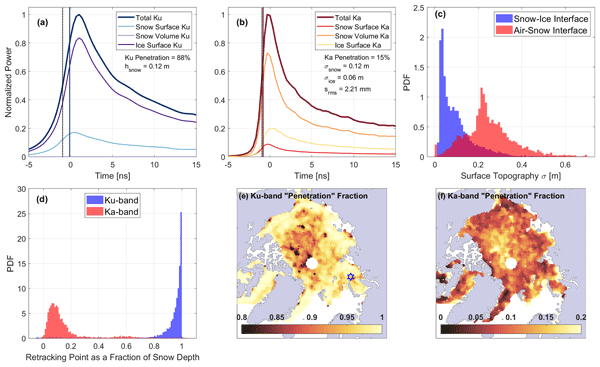
In this study, we use three satellites to test the planned remote sensing approach of the upcoming mission Copernicus Polar Ice and Snow Topography Altimeter (CRISTAL) over sea ice and that its dual radars will accurately measure the heights of the top and base of snow sitting atop floating sea ice floes. Our results suggest that CRISTAL's dual radars will not necessarily measure the snow top and base under all conditions. We find that accurate height measurements depend more on surface roughness than on snow properties, as is commonly assumed.
Polona Itkin, Evgenii Salganik, Dmitry V. Divine, Arttu Jutila, Christian Katlein, Mara Neudert, Ian A. Raphael, and Robert Ricker
EGUsphere, https://doi.org/10.5194/egusphere-2025-6081, https://doi.org/10.5194/egusphere-2025-6081, 2025
Short summary
Short summary
We studied how Arctic ice ridges grow and change through winter and spring using a sensor that measures ice thickness without drilling. By comparing these measurements with data from aircraft, underwater surveys, and field work, we show that the sensor can detect both the full ridge thickness and its solid inner core. Our results reveal slow winter strengthening of ridges and highlight this method's value for understanding ice conditions and ecosystems.
Dmitry V. Divine, Sebastian Gerland, and Mats A. Granskog
EGUsphere, https://doi.org/10.5194/egusphere-2025-5511, https://doi.org/10.5194/egusphere-2025-5511, 2025
Short summary
Short summary
We present seven years of sea-ice draft measurements from sonar instruments in the Fram Strait, the region between Svalbard and Greenland where most of Arctic sea-ice export occurs. The data show that smooth, level ice makes up about half of ice cover, while ridges – formed when ice floes collide – are frequent and can contain up to half of the total ice volume. Ridges are becoming fewer and shallower, with smaller ridges growing in importance as Arctic ice thins.
Renée Mie Fredensborg Hansen, Henriette Skourup, Eero Rinne, Arttu Jutila, Isobel R. Lawrence, Andrew Shepherd, Knut Vilhelm Høyland, Jilu Li, Fernando Rodriguez-Morales, Sebastian Bjerregaaard Simonsen, Jeremy Wilkinson, Gaelle Veyssiere, Donghui Yi, René Forsberg, and Taniâ Gil Duarte Casal
The Cryosphere, 19, 4193–4209, https://doi.org/10.5194/tc-19-4193-2025, https://doi.org/10.5194/tc-19-4193-2025, 2025
Short summary
Short summary
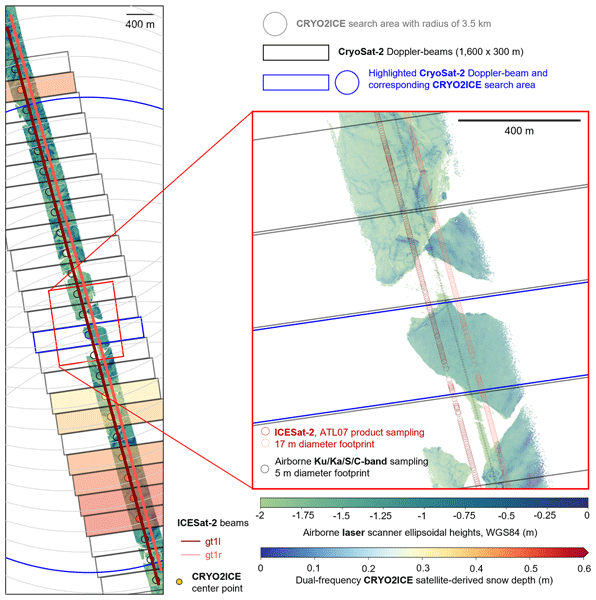
An airborne campaign collected unprecedented coincident multi-frequency radar and lidar data over sea ice along a CryoSat-2 and ICESat-2 (CRYO2ICE) orbit in the Weddell Sea, useful for evaluating microwave snow penetration. Ka-band and Ku-band had limited penetration with significant contributions from the air–snow interface, contradicting traditional assumptions with discrepancies between commonly used C/S-band "snow-radar" methodologies, all challenging comparisons of airborne and spaceborne estimates.
Renée Mie Fredensborg Hansen, Henriette Skourup, Eero Rinne, Arttu Jutila, Isobel R. Lawrence, Andrew Shepherd, Knut Vilhelm Høyland, Jilu Li, Fernando Rodriguez-Morales, Sebastian Bjerregaaard Simonsen, Jeremy Wilkinson, Gaelle Veyssiere, Donghui Yi, René Forsberg, and Taniâ Gil Duarte Casal
The Cryosphere, 19, 4167–4192, https://doi.org/10.5194/tc-19-4167-2025, https://doi.org/10.5194/tc-19-4167-2025, 2025
Short summary
Short summary
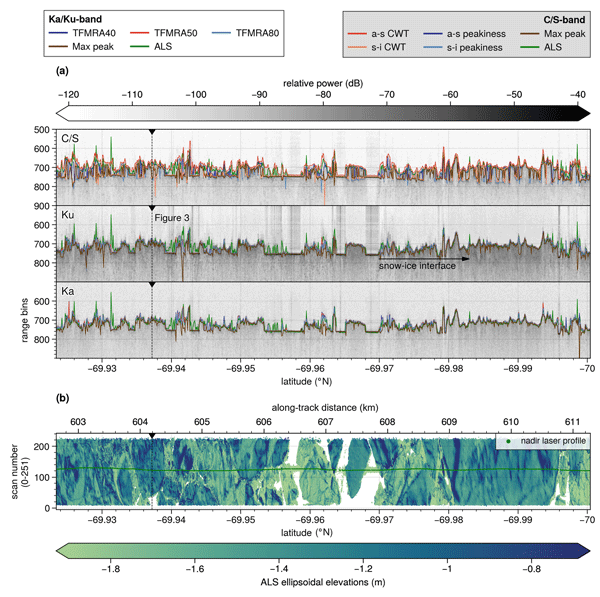
An airborne campaign collected unprecedented coincident multi-frequency radar and lidar data over sea ice along a CryoSat-2 and ICESat-2 (CRYO2ICE) orbit in the Weddell Sea, useful for evaluating microwave snow penetration. Ka-band and Ku-band had limited penetration with significant contributions from the air–snow interface, contradicting traditional assumptions with discrepancies between commonly used C/S-band "snow-radar" methodologies, all challenging comparisons of airborne and spaceborne estimates.
Robert Ricker, Thomas Lavergne, Stefan Hendricks, Stephan Paul, Emily Down, Mari Anne Killie, and Marion Bocquet
The Cryosphere, 19, 3785–3803, https://doi.org/10.5194/tc-19-3785-2025, https://doi.org/10.5194/tc-19-3785-2025, 2025
Short summary
Short summary
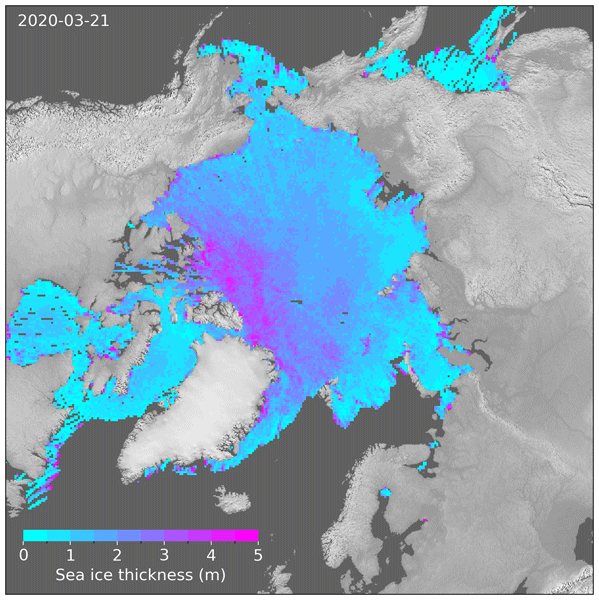
We developed a new method to map Arctic sea ice thickness daily using satellite measurements. We address a problem similar to motion blur in photography. Traditional methods collect satellite data over 1 month to get a full picture of Arctic sea ice thickness. But in the same way as in photos of moving objects, long exposure leads to motion blur, making it difficult to identify certain features in the sea ice maps. Our method corrects for this motion blur, providing a sharper view of the evolving sea ice.
Lena Happ, Sonali Patil, Stefan Hendricks, Riccardo Fellegara, Lars Kaleschke, and Andreas Gerndt
ISPRS Ann. Photogramm. Remote Sens. Spatial Inf. Sci., X-G-2025, 333–340, https://doi.org/10.5194/isprs-annals-X-G-2025-333-2025, https://doi.org/10.5194/isprs-annals-X-G-2025-333-2025, 2025
Imke Sievers, Henriette Skourup, and Till A. S. Rasmussen
The Cryosphere, 18, 5985–6004, https://doi.org/10.5194/tc-18-5985-2024, https://doi.org/10.5194/tc-18-5985-2024, 2024
Short summary
Short summary
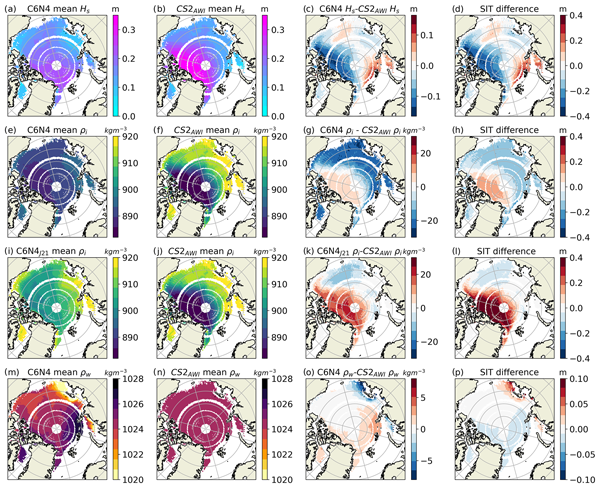
To derive sea ice thickness (SIT) from satellite freeboard (FB) observations, assumptions about snow thickness, snow density, sea ice density and water density are needed. These parameters are impossible to observe alongside FB, so many existing products use empirical values. In this study, modeled values are used instead. The modeled values and otherwise commonly used empirical values are evaluated against in situ observations. In a further analysis, the influence on SIT is quantified.
Yi Zhou, Xianwei Wang, Ruibo Lei, Arttu Jutila, Donald K. Perovich, Luisa von Albedyll, Dmitry V. Divine, Yu Zhang, and Christian Haas
EGUsphere, https://doi.org/10.5194/egusphere-2024-2821, https://doi.org/10.5194/egusphere-2024-2821, 2024
Preprint archived
Short summary
Short summary
This study examines how the bulk density of Arctic sea ice varies seasonally, a factor often overlooked in satellite measurements of sea ice thickness. From October to April, we found significant seasonal variations in sea ice bulk density at different spatial scales using direct observations as well as airborne and satellite data. New models were then developed to indirectly predict sea ice bulk density. This advance can improve our ability to monitor changes in Arctic sea ice.
Lars Kaleschke, Xiangshan Tian-Kunze, Stefan Hendricks, and Robert Ricker
Earth Syst. Sci. Data, 16, 3149–3170, https://doi.org/10.5194/essd-16-3149-2024, https://doi.org/10.5194/essd-16-3149-2024, 2024
Short summary
Short summary
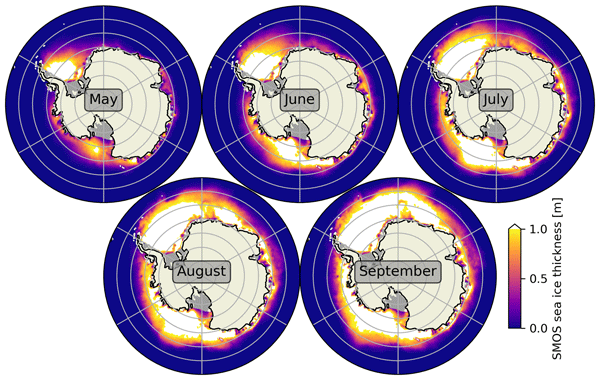
We describe a sea ice thickness dataset based on SMOS satellite measurements, initially designed for the Arctic but adapted for Antarctica. We validated it using limited Antarctic measurements. Our findings show promising results, with a small difference in thickness estimation and a strong correlation with validation data within the valid thickness range. However, improvements and synergies with other sensors are needed, especially for sea ice thicker than 1 m.

Andreas Wernecke, Dirk Notz, Stefan Kern, and Thomas Lavergne
The Cryosphere, 18, 2473–2486, https://doi.org/10.5194/tc-18-2473-2024, https://doi.org/10.5194/tc-18-2473-2024, 2024
Short summary
Short summary
The total Arctic sea-ice area (SIA), which is an important climate indicator, is routinely monitored with the help of satellite measurements. Uncertainties in observations of sea-ice concentration (SIC) partly cancel out when summed up to the total SIA, but the degree to which this is happening has been unclear. Here we find that the uncertainty daily SIA estimates, based on uncertainties in SIC, are about 300 000 km2. The 2002 to 2017 September decline in SIA is approx. 105 000 ± 9000 km2 a−1.
Luisa von Albedyll, Stefan Hendricks, Nils Hutter, Dmitrii Murashkin, Lars Kaleschke, Sascha Willmes, Linda Thielke, Xiangshan Tian-Kunze, Gunnar Spreen, and Christian Haas
The Cryosphere, 18, 1259–1285, https://doi.org/10.5194/tc-18-1259-2024, https://doi.org/10.5194/tc-18-1259-2024, 2024
Short summary
Short summary
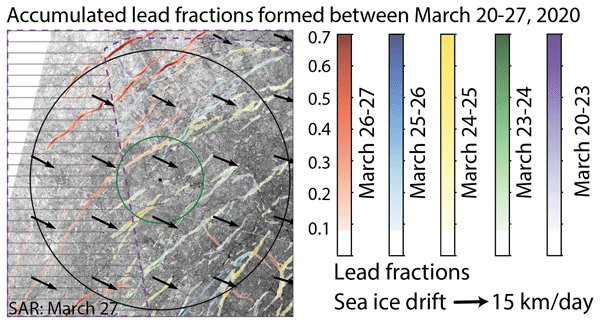
Leads (openings in sea ice cover) are created by sea ice dynamics. Because they are important for many processes in the Arctic winter climate, we aim to detect them with satellites. We present two new techniques to detect lead widths of a few hundred meters at high spatial resolution (700 m) and independent of clouds or sun illumination. We use the MOSAiC drift 2019–2020 in the Arctic for our case study and compare our new products to other existing lead products.
Andrea Spolaor, Federico Scoto, Catherine Larose, Elena Barbaro, Francois Burgay, Mats P. Bjorkman, David Cappelletti, Federico Dallo, Fabrizio de Blasi, Dmitry Divine, Giuliano Dreossi, Jacopo Gabrieli, Elisabeth Isaksson, Jack Kohler, Tonu Martma, Louise S. Schmidt, Thomas V. Schuler, Barbara Stenni, Clara Turetta, Bartłomiej Luks, Mathieu Casado, and Jean-Charles Gallet
The Cryosphere, 18, 307–320, https://doi.org/10.5194/tc-18-307-2024, https://doi.org/10.5194/tc-18-307-2024, 2024
Short summary
Short summary
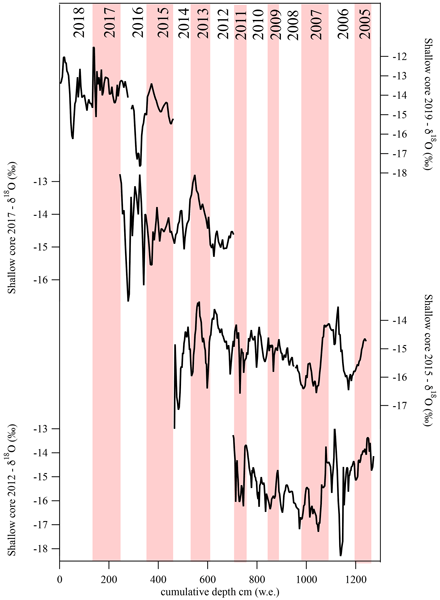
We evaluate the impact of the increased snowmelt on the preservation of the oxygen isotope (δ18O) signal in firn records recovered from the top of the Holtedahlfonna ice field located in the Svalbard archipelago. Thanks to a multidisciplinary approach we demonstrate a progressive deterioration of the isotope signal in the firn core. We link the degradation of the δ18O signal to the increased occurrence and intensity of melt events associated with the rapid warming occurring in the archipelago.
Emma Nilsson, Carmen Paulina Vega, Dmitry Divine, Anja Eichler, Tonu Martma, Robert Mulvaney, Elisabeth Schlosser, Margit Schwikowski, and Elisabeth Isaksson
EGUsphere, https://doi.org/10.5194/egusphere-2023-3156, https://doi.org/10.5194/egusphere-2023-3156, 2024
Preprint withdrawn
Short summary
Short summary
To project future climate change it is necessary to understand paleoclimate including past sea ice conditions. We have investigated methane sulphonic acid (MSA) in Antarctic firn and ice cores to reconstruct sea ice extent (SIE) and found that the MSA – SIE as well as the MSA – phytoplankton biomass relationship varies across the different firn and ice cores. These inconsistencies in correlations across records suggest that MSA in Fimbul Ice Shelf cores does not reliably indicate regional SIE.
Lukrecia Stulic, Ralph Timmermann, Stephan Paul, Rolf Zentek, Günther Heinemann, and Torsten Kanzow
Ocean Sci., 19, 1791–1808, https://doi.org/10.5194/os-19-1791-2023, https://doi.org/10.5194/os-19-1791-2023, 2023
Short summary
Short summary
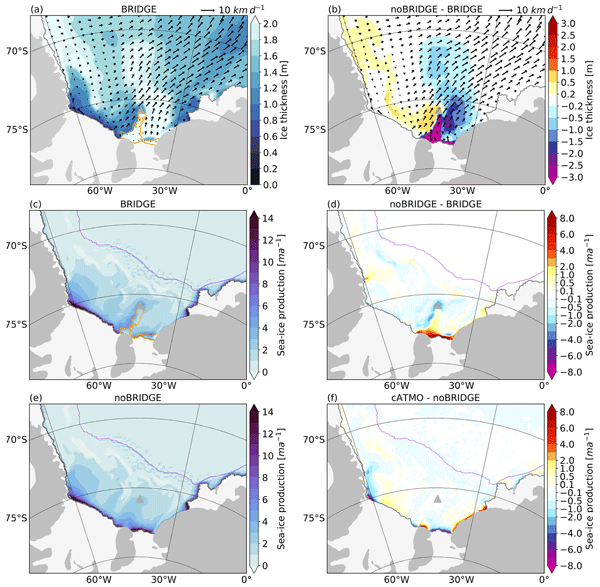
In the southern Weddell Sea, the strong sea ice growth in coastal polynyas drives formation of dense shelf water. By using a sea ice–ice shelf–ocean model with representation of the changing icescape based on satellite data, we find that polynya sea ice growth depends on both the regional atmospheric forcing and the icescape. Not just strength but also location of the sea ice growth in polynyas affects properties of the dense shelf water and the basal melting of the Filchner–Ronne Ice Shelf.
Ole Baltazar Andersen, Stine Kildegaard Rose, Adili Abulaitijiang, Shengjun Zhang, and Sara Fleury
Earth Syst. Sci. Data, 15, 4065–4075, https://doi.org/10.5194/essd-15-4065-2023, https://doi.org/10.5194/essd-15-4065-2023, 2023
Short summary
Short summary
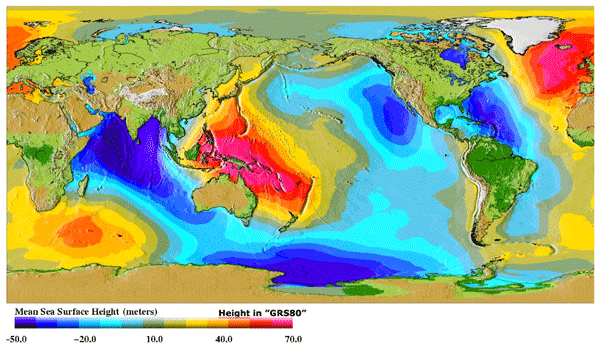
The mean sea surface (MSS) is an important reference for mapping sea-level changes across the global oceans. It is widely used by space agencies in the definition of sea-level anomalies as mapped by satellite altimetry from space. Here a new fully global high-resolution mean sea surface called DTU21MSS is presented, and a suite of evaluations are performed to demonstrate its performance.
Marion Bocquet, Sara Fleury, Fanny Piras, Eero Rinne, Heidi Sallila, Florent Garnier, and Frédérique Rémy
The Cryosphere, 17, 3013–3039, https://doi.org/10.5194/tc-17-3013-2023, https://doi.org/10.5194/tc-17-3013-2023, 2023
Short summary
Short summary
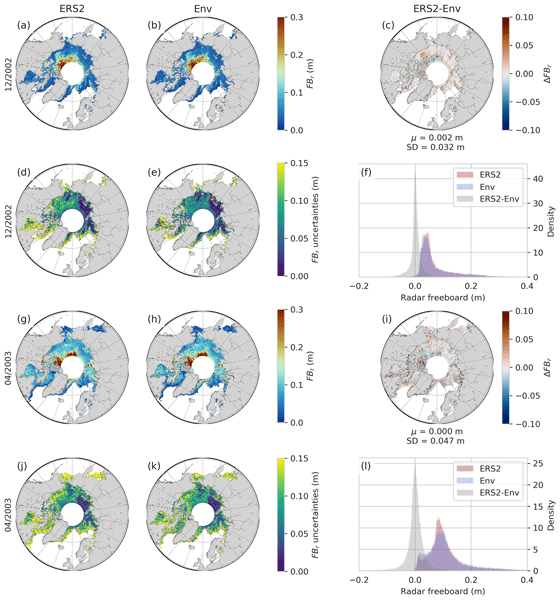
Sea ice has a large interannual variability, and studying its evolution requires long time series of observations. In this paper, we propose the first method to extend Arctic sea ice thickness time series to the ERS-2 altimeter. The developed method is based on a neural network to calibrate past missions on the current one by taking advantage of their differences during the mission-overlap periods. Data are available as monthly maps for each year during the winter period between 1995 and 2021.

Vishnu Nandan, Rosemary Willatt, Robbie Mallett, Julienne Stroeve, Torsten Geldsetzer, Randall Scharien, Rasmus Tonboe, John Yackel, Jack Landy, David Clemens-Sewall, Arttu Jutila, David N. Wagner, Daniela Krampe, Marcus Huntemann, Mallik Mahmud, David Jensen, Thomas Newman, Stefan Hendricks, Gunnar Spreen, Amy Macfarlane, Martin Schneebeli, James Mead, Robert Ricker, Michael Gallagher, Claude Duguay, Ian Raphael, Chris Polashenski, Michel Tsamados, Ilkka Matero, and Mario Hoppmann
The Cryosphere, 17, 2211–2229, https://doi.org/10.5194/tc-17-2211-2023, https://doi.org/10.5194/tc-17-2211-2023, 2023
Short summary
Short summary
We show that wind redistributes snow on Arctic sea ice, and Ka- and Ku-band radar measurements detect both newly deposited snow and buried snow layers that can affect the accuracy of snow depth estimates on sea ice. Radar, laser, meteorological, and snow data were collected during the MOSAiC expedition. With frequent occurrence of storms in the Arctic, our results show that
wind-redistributed snow needs to be accounted for to improve snow depth estimates on sea ice from satellite radars.
Karina von Schuckmann, Audrey Minière, Flora Gues, Francisco José Cuesta-Valero, Gottfried Kirchengast, Susheel Adusumilli, Fiammetta Straneo, Michaël Ablain, Richard P. Allan, Paul M. Barker, Hugo Beltrami, Alejandro Blazquez, Tim Boyer, Lijing Cheng, John Church, Damien Desbruyeres, Han Dolman, Catia M. Domingues, Almudena García-García, Donata Giglio, John E. Gilson, Maximilian Gorfer, Leopold Haimberger, Maria Z. Hakuba, Stefan Hendricks, Shigeki Hosoda, Gregory C. Johnson, Rachel Killick, Brian King, Nicolas Kolodziejczyk, Anton Korosov, Gerhard Krinner, Mikael Kuusela, Felix W. Landerer, Moritz Langer, Thomas Lavergne, Isobel Lawrence, Yuehua Li, John Lyman, Florence Marti, Ben Marzeion, Michael Mayer, Andrew H. MacDougall, Trevor McDougall, Didier Paolo Monselesan, Jan Nitzbon, Inès Otosaka, Jian Peng, Sarah Purkey, Dean Roemmich, Kanako Sato, Katsunari Sato, Abhishek Savita, Axel Schweiger, Andrew Shepherd, Sonia I. Seneviratne, Leon Simons, Donald A. Slater, Thomas Slater, Andrea K. Steiner, Toshio Suga, Tanguy Szekely, Wim Thiery, Mary-Louise Timmermans, Inne Vanderkelen, Susan E. Wjiffels, Tonghua Wu, and Michael Zemp
Earth Syst. Sci. Data, 15, 1675–1709, https://doi.org/10.5194/essd-15-1675-2023, https://doi.org/10.5194/essd-15-1675-2023, 2023
Short summary
Short summary
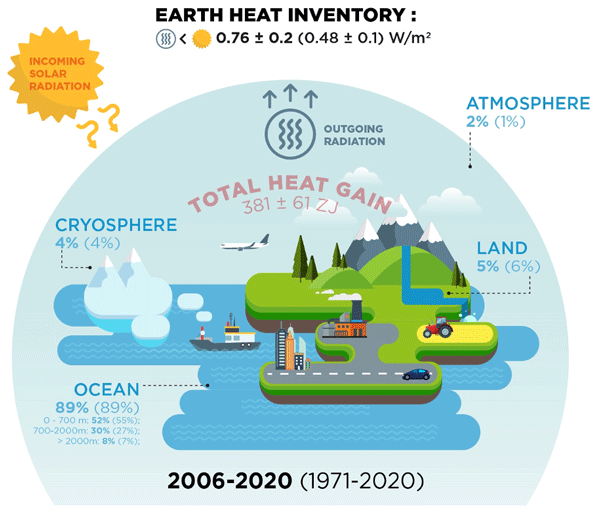
Earth's climate is out of energy balance, and this study quantifies how much heat has consequently accumulated over the past decades (ocean: 89 %, land: 6 %, cryosphere: 4 %, atmosphere: 1 %). Since 1971, this accumulated heat reached record values at an increasing pace. The Earth heat inventory provides a comprehensive view on the status and expectation of global warming, and we call for an implementation of this global climate indicator into the Paris Agreement’s Global Stocktake.
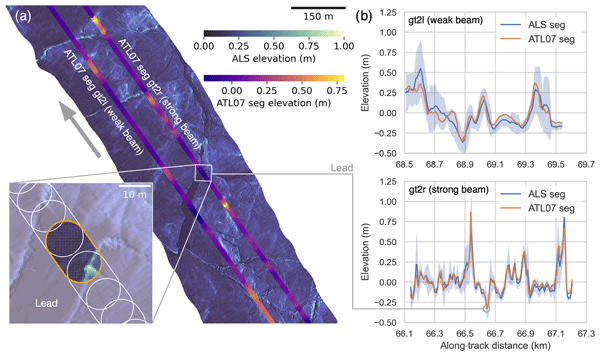
Robert Ricker, Steven Fons, Arttu Jutila, Nils Hutter, Kyle Duncan, Sinead L. Farrell, Nathan T. Kurtz, and Renée Mie Fredensborg Hansen
The Cryosphere, 17, 1411–1429, https://doi.org/10.5194/tc-17-1411-2023, https://doi.org/10.5194/tc-17-1411-2023, 2023
Short summary
Short summary
Information on sea ice surface topography is important for studies of sea ice as well as for ship navigation through ice. The ICESat-2 satellite senses the sea ice surface with six laser beams. To examine the accuracy of these measurements, we carried out a temporally coincident helicopter flight along the same ground track as the satellite and measured the sea ice surface topography with a laser scanner. This showed that ICESat-2 can see even bumps of only few meters in the sea ice cover.
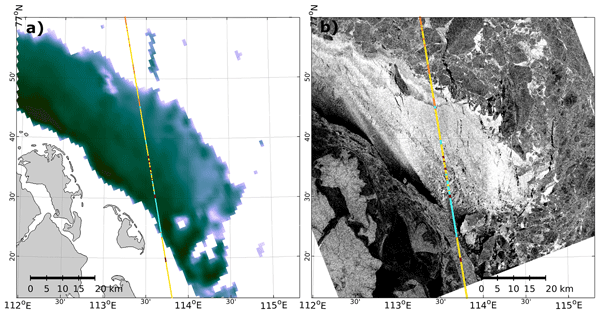
Felix L. Müller, Stephan Paul, Stefan Hendricks, and Denise Dettmering
The Cryosphere, 17, 809–825, https://doi.org/10.5194/tc-17-809-2023, https://doi.org/10.5194/tc-17-809-2023, 2023
Short summary
Short summary
Thinning sea ice has significant impacts on the energy exchange between the atmosphere and the ocean. In this study we present visual and quantitative comparisons of thin-ice detections obtained from classified Cryosat-2 radar reflections and thin-ice-thickness estimates derived from MODIS thermal-infrared imagery. In addition to good comparability, the results of the study indicate the potential for a deeper understanding of sea ice in the polar seas and improved processing of altimeter data.
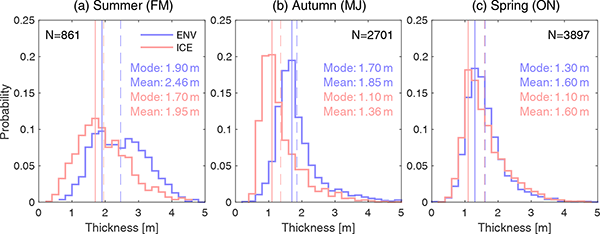
Jinfei Wang, Chao Min, Robert Ricker, Qian Shi, Bo Han, Stefan Hendricks, Renhao Wu, and Qinghua Yang
The Cryosphere, 16, 4473–4490, https://doi.org/10.5194/tc-16-4473-2022, https://doi.org/10.5194/tc-16-4473-2022, 2022
Short summary
Short summary
The differences between Envisat and ICESat sea ice thickness (SIT) reveal significant temporal and spatial variations. Our findings suggest that both overestimation of Envisat sea ice freeboard, potentially caused by radar backscatter originating from inside the snow layer, and the AMSR-E snow depth biases and sea ice density uncertainties can possibly account for the differences between Envisat and ICESat SIT.
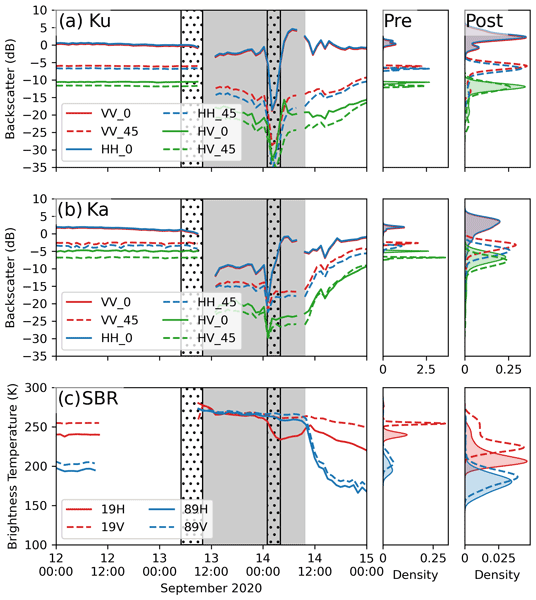
Julienne Stroeve, Vishnu Nandan, Rosemary Willatt, Ruzica Dadic, Philip Rostosky, Michael Gallagher, Robbie Mallett, Andrew Barrett, Stefan Hendricks, Rasmus Tonboe, Michelle McCrystall, Mark Serreze, Linda Thielke, Gunnar Spreen, Thomas Newman, John Yackel, Robert Ricker, Michel Tsamados, Amy Macfarlane, Henna-Reetta Hannula, and Martin Schneebeli
The Cryosphere, 16, 4223–4250, https://doi.org/10.5194/tc-16-4223-2022, https://doi.org/10.5194/tc-16-4223-2022, 2022
Short summary
Short summary
Impacts of rain on snow (ROS) on satellite-retrieved sea ice variables remain to be fully understood. This study evaluates the impacts of ROS over sea ice on active and passive microwave data collected during the 2019–20 MOSAiC expedition. Rainfall and subsequent refreezing of the snowpack significantly altered emitted and backscattered radar energy, laying important groundwork for understanding their impacts on operational satellite retrievals of various sea ice geophysical variables.
David N. Wagner, Matthew D. Shupe, Christopher Cox, Ola G. Persson, Taneil Uttal, Markus M. Frey, Amélie Kirchgaessner, Martin Schneebeli, Matthias Jaggi, Amy R. Macfarlane, Polona Itkin, Stefanie Arndt, Stefan Hendricks, Daniela Krampe, Marcel Nicolaus, Robert Ricker, Julia Regnery, Nikolai Kolabutin, Egor Shimanshuck, Marc Oggier, Ian Raphael, Julienne Stroeve, and Michael Lehning
The Cryosphere, 16, 2373–2402, https://doi.org/10.5194/tc-16-2373-2022, https://doi.org/10.5194/tc-16-2373-2022, 2022
Short summary
Short summary
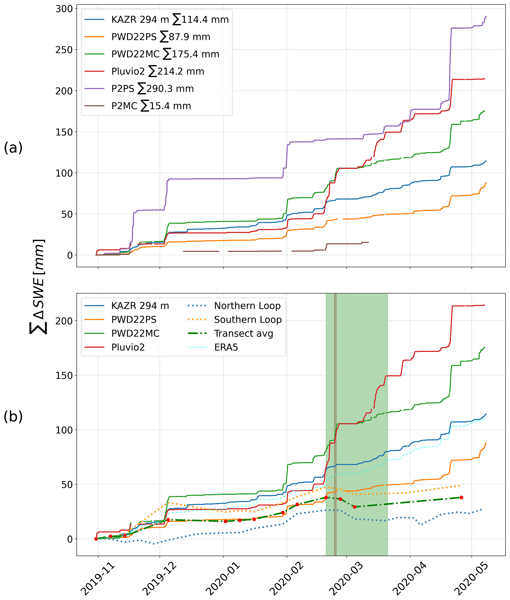
Based on measurements of the snow cover over sea ice and atmospheric measurements, we estimate snowfall and snow accumulation for the MOSAiC ice floe, between November 2019 and May 2020. For this period, we estimate 98–114 mm of precipitation. We suggest that about 34 mm of snow water equivalent accumulated until the end of April 2020 and that at least about 50 % of the precipitated snow was eroded or sublimated. Further, we suggest explanations for potential snowfall overestimation.

Juha Karvonen, Eero Rinne, Heidi Sallila, Petteri Uotila, and Marko Mäkynen
The Cryosphere, 16, 1821–1844, https://doi.org/10.5194/tc-16-1821-2022, https://doi.org/10.5194/tc-16-1821-2022, 2022
Short summary
Short summary
We propose a method to provide sea ice thickness (SIT) estimates over a test area in the Arctic utilizing radar altimeter (RA) measurement lines and C-band SAR imagery. The RA data are from CryoSat-2, and SAR imagery is from Sentinel-1. By combining them we get a SIT grid covering the whole test area instead of only narrow measurement lines from RA. This kind of SIT estimation can be extended to cover the whole Arctic (and Antarctic) for operational SIT monitoring.
Klaus Dethloff, Wieslaw Maslowski, Stefan Hendricks, Younjoo J. Lee, Helge F. Goessling, Thomas Krumpen, Christian Haas, Dörthe Handorf, Robert Ricker, Vladimir Bessonov, John J. Cassano, Jaclyn Clement Kinney, Robert Osinski, Markus Rex, Annette Rinke, Julia Sokolova, and Anja Sommerfeld
The Cryosphere, 16, 981–1005, https://doi.org/10.5194/tc-16-981-2022, https://doi.org/10.5194/tc-16-981-2022, 2022
Short summary
Short summary
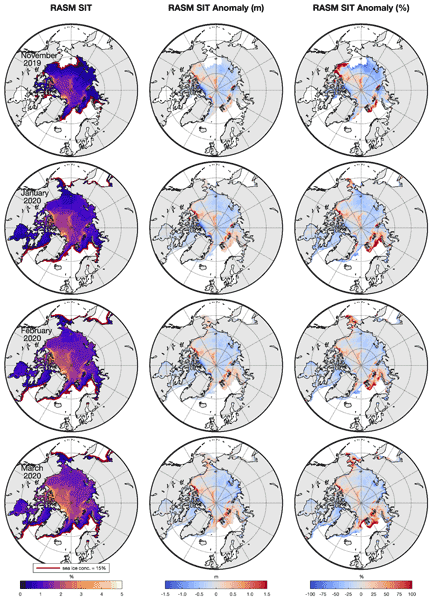
Sea ice thickness anomalies during the MOSAiC (Multidisciplinary drifting Observatory for the Study of Arctic Climate) winter in January, February and March 2020 were simulated with the coupled Regional Arctic climate System Model (RASM) and compared with CryoSat-2/SMOS satellite data. Hindcast and ensemble simulations indicate that the sea ice anomalies are driven by nonlinear interactions between ice growth processes and wind-driven sea-ice transports, with dynamics playing a dominant role.
Alexandru Gegiuc, Juha Karvonen, Jouni Vainio, Eero Rinne, Roman Bednarik, and Marko Mäkynen
The Cryosphere Discuss., https://doi.org/10.5194/tc-2022-8, https://doi.org/10.5194/tc-2022-8, 2022
Publication in TC not foreseen
Short summary
Short summary
Current users of operational ice charts call for quantitative uncertainty information, which the current ice charts lack. In this work we demonstrate for the first time the use of eye tracking methodology as a non-invasive way to identify elements behind uncertainties typically introduced during the process of visual mapping of sea ice information in satellite radar imagery. Uncertainty information would increase reliability of the manually produced ice charts and increase navigation safety.
Stefan Kern, Thomas Lavergne, Leif Toudal Pedersen, Rasmus Tage Tonboe, Louisa Bell, Maybritt Meyer, and Luise Zeigermann
The Cryosphere, 16, 349–378, https://doi.org/10.5194/tc-16-349-2022, https://doi.org/10.5194/tc-16-349-2022, 2022
Short summary
Short summary
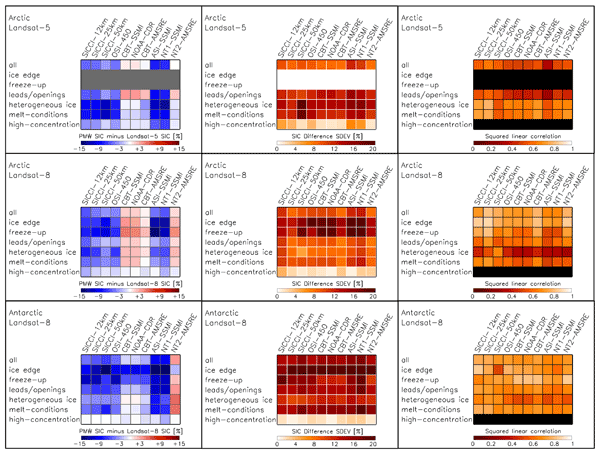
High-resolution clear-sky optical satellite imagery has rarely been used to evaluate satellite passive microwave sea-ice concentration products beyond case-study level. By comparing 10 such products with sea-ice concentration estimated from > 350 such optical images in both hemispheres, we expand results of earlier evaluation studies for these products. Results stress the need to look beyond precision and accuracy and to discuss the evaluation data’s quality and filters applied in the products.
Arttu Jutila, Stefan Hendricks, Robert Ricker, Luisa von Albedyll, Thomas Krumpen, and Christian Haas
The Cryosphere, 16, 259–275, https://doi.org/10.5194/tc-16-259-2022, https://doi.org/10.5194/tc-16-259-2022, 2022
Short summary
Short summary
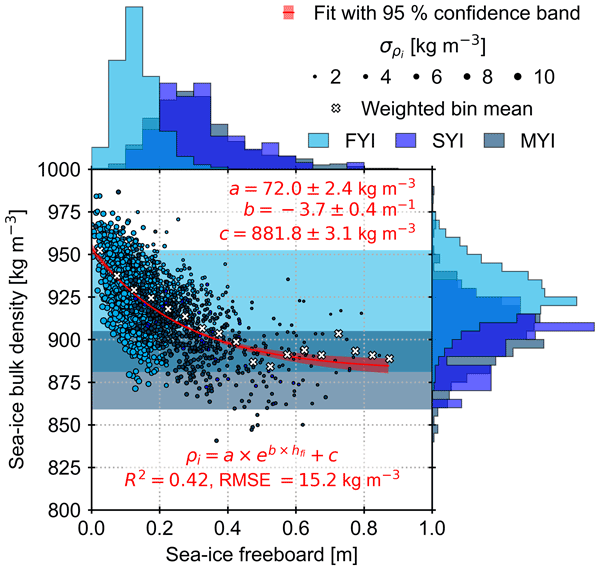
Sea-ice thickness retrieval from satellite altimeters relies on assumed sea-ice density values because density cannot be measured from space. We derived bulk densities for different ice types using airborne laser, radar, and electromagnetic induction sounding measurements. Compared to previous studies, we found high bulk density values due to ice deformation and younger ice cover. Using sea-ice freeboard, we derived a sea-ice bulk density parameterisation that can be applied to satellite data.
Florent Garnier, Sara Fleury, Gilles Garric, Jérôme Bouffard, Michel Tsamados, Antoine Laforge, Marion Bocquet, Renée Mie Fredensborg Hansen, and Frédérique Remy
The Cryosphere, 15, 5483–5512, https://doi.org/10.5194/tc-15-5483-2021, https://doi.org/10.5194/tc-15-5483-2021, 2021
Short summary
Short summary
Snow depth data are essential to monitor the impacts of climate change on sea ice volume variations and their impacts on the climate system. For that purpose, we present and assess the altimetric snow depth product, computed in both hemispheres from CryoSat-2 and SARAL satellite data. The use of these data instead of the common climatology reduces the sea ice thickness by about 30 cm over the 2013–2019 period. These data are also crucial to argue for the launch of the CRISTAL satellite mission.
Cited articles
Andersen, O. B., Rose, S. K., Abulaitijiang, A., Zhang, S., and Fleury, S.: The DTU21 global mean sea surface and first evaluation, Earth System Science Data, 15, 4065–4075, https://doi.org/10.5194/essd-15-4065-2023, 2023. a
Arndt, S., Maaß, N., Rossmann, L., and Nicolaus, M.: From snow accumulation to snow depth distributions by quantifying meteoric ice fractions in the Weddell Sea, The Cryosphere, 18, 2001–2015, https://doi.org/10.5194/tc-18-2001-2024, 2024. a, b, c
ASSIST: Ice Watch ASSIST Data Network, Norwegian Metrological Institute [data set], https://cryo.met.no/en/icewatch (last access: 1 May 2025), 2006. a
Behrendt, A., Dierking, W., Fahrbach, E., and Witte, H.: Sea ice draft measured by upward looking sonars in the Weddell Sea (Antarctica) [dataset publication series], PANGAEA [data set], https://doi.org/10.1594/PANGAEA.785565, 2013b. a
Belter, H. J., Janout, M. A., Krumpen, T., Ross, E., Hölemann, J. A., Timokhov, L., Novikhin, A., Kassens, H., Wyatt, G., Rousseau, S., and Sadowy, D.: Daily mean sea ice draft from moored Upward-Looking Sonars in the Laptev Sea between 2013 and 2015, PANGAEA [data set], https://doi.org/10.1594/PANGAEA.899275, 2019. a
Belter, H. J., Janout, M. A., Hölemann, J. A., and Krumpen, T.: Daily mean sea ice draft from moored upward-looking Acoustic Doppler Current Profilers (ADCPs) in the Laptev Sea from 2003 to 2016, PANGAEA [data set], https://doi.org/10.1594/PANGAEA.912927, 2020a. a
Belter, H. J., Krumpen, T., Hendricks, S., Hoelemann, J., Janout, M. A., Ricker, R., and Haas, C.: Satellite-based sea ice thickness changes in the Laptev Sea from 2002 to 2017: comparison to mooring observations, The Cryosphere, 14, 2189–2203, https://doi.org/10.5194/tc-14-2189-2020, 2020b. a, b, c
Belter, H. J., Krumpen, T., Janout, M. A., Ross, E., and Haas, C.: An Adaptive Approach to Derive Sea Ice Draft from Upward-Looking Acoustic Doppler Current Profilers (ADCPs), Validated by Upward-Looking Sonar (ULS) Data, Remote Sensing, 13, https://doi.org/10.3390/rs13214335, 2021. a, b
BGEP: The data were collected and made available by the Beaufort Gyre Exploration Program based at the Woods Hole Oceanographic Institution in collaboration with researchers from Fisheries and Oceans Canada at the Institute of Ocean Sciences, https://www2.whoi.edu/site/beaufortgyre/data/mooring-data/ (last access: 1 May 2025), 2003. a, b
Bocquet, M. and Fleury, S.: Arctic and Antarctic sea ice thickness climate data record (ERS-1, ERS-2, Envisat, CryoSat-2), CTOH [data set], https://doi.org/10.6096/ctoh_sit_2023_01, 2023. a
Bocquet, M., Fleury, S., Piras, F., Rinne, E., Sallila, H., Garnier, F., and Rémy, F.: Arctic sea ice radar freeboard retrieval from the European Remote-Sensing Satellite (ERS-2) using altimetry: toward sea ice thickness observation from 1995 to 2021, The Cryosphere, 17, 3013–3039, https://doi.org/10.5194/tc-17-3013-2023, 2023. a, b, c
Bocquet, M., Fleury, S., Rémy, F., and Piras, F.: Arctic and Antarctic Sea Ice Thickness and Volume Changes From Observations Between 1994 and 2023, Journal of Geophysical Research: Oceans, 129, e2023JC020848, https://doi.org/10.1029/2023JC020848, 2024. a
Boggs, P. T. and Rogers, J. E.: Orthogonal Distance Regression, in: Statistical analysis of measurement error models and applications: proceedings of the AMS-IMS-SIAM Joint Summer Research Conference, 10–16 June 1989, Contemporary Mathematics, 112, 186, https://www.mechanicalkern.com/static/odr_ams.pdf (last access: 15 January 2026), 1990. a
Brodzik, M., Billingsley, B., Haran, T., Raup, B., and Savoie, M.: EASE-Grid 2.0: Incremental but Significant Improvements for Earth-Gridded Data Sets, International Journal of Geo-Information, 1, 32–45, https://doi.org/10.3390/ijgi1010032, 2012. a
Carret, A., Fleury, S., Di Bella, A., Landy, J., Lawrence, I., Kurtz, N., Laforge, A., Bouffard, J., and Parrinello, T.: A multi-frequency altimetry snow depth product over Arctic sea ice, Scientific Data, 12, https://doi.org/10.1038/s41597-024-04343-4, 2025. a
Cavalieri, D. J., Markus, T., and Comiso, J. C.: AMSR-E/Aqua Daily L3 12.5 km Brightness Temperature, Sea Ice Concentration, & Snow Depth Polar Grids, Version 3, NSDIC [data set], https://doi.org/10.5067/AMSR-E/AE_SI12.003, 2014. a
Cheng, Y., Cheng, B., Zheng, F., Vihma, T., Kontu, A., Yang, Q., and Liao, Z.: Air/snow, snow/ice and ice/water interfaces detection from high-resolution vertical temperature profiles measured by ice mass-balance buoys on an Arctic lake, Annals of Glaciology, 61, 309–319, https://doi.org/10.1017/aog.2020.51, 2020. a
Cristea, A., Gerland, S., and Bratrein, M.: Results of regional scale sea ice and snow thickness surveys during Nansen Legacy/Synoptic Arctic Survey Joint Cruise 2 (JC2-2) in August–September 2021 using helicopter-borne electromagnetic induction sounding instrument (EM-bird), Norwegian Polar Institute [data set], https://doi.org/10.21334/NPOLAR.2023.C1CFD5DD, 2023. a
Da Silva, E., Woolliams, E. R., Picot, N., Poisson, J.-C., Skourup, H., Moholdt, G., Fleury, S., Behnia, S., Favier, V., Arnaud, L., Aublanc, J., Fouqueau, V., Taburet, N., Renou, J., Yesou, H., Tarpanelli, A., Camici, S., Fredensborg Hansen, R. M., Nielsen, K., Vivier, F., Boy, F., Fjørtoft, R., Cancet, M., Ferrari, R., Picard, G., Tourian, M. J., Sneeuw, N., Munesa, E., Calzas, M., Paris, A., Le Meur, E., Rabatel, A., Valladeau, G., Bonnefond, P., Labroue, S., Andersen, O., El Hajj, M., Catapano, F., and Féménias, P.: Towards Operational Fiducial Reference Measurement (FRM) Data for the Calibration and Validation of the Sentinel-3 Surface Topography Mission over Inland Waters, Sea Ice, and Land Ice, Remote Sensing, 15, https://doi.org/10.3390/rs15194826, 2023. a, b, c
Divine, D., Bratrein, M., Jacobsen, J. A., and Gerland, S.: Results of regional scale sea ice and snow thickness surveys during Nansen Legacy Q1 research cruise in March 2021 using helicopter-borne electromagnetic induction sounding instrument (EM-bird), Norwegian Polar Institute [data set], https://doi.org/10.21334/NPOLAR.2023.1A9CC2DF, 2023. a
Fons, S., Kurtz, N., and Bagnardi, M.: A decade-plus of Antarctic sea ice thickness and volume estimates from CryoSat-2 using a physical model and waveform fitting, The Cryosphere, 17, 2487–2508, https://doi.org/10.5194/tc-17-2487-2023, 2023. a, b
Fredensborg Hansen, R. M.: cryo2iceant22-airborne-cryo2ice-weddell-sea-ice, Zenodo [code], https://doi.org/10.5281/zenodo.13749342, 2024. a
Giles, K. A. and Hvidegaard, S. M.: Comparison of space borne radar altimetry and airborne laser altimetry over sea ice in the Fram Strait, International Journal of Remote Sensing, 27, 3105–3113, https://doi.org/10.1080/01431160600563273, 2006. a
Grosfeld, K., Treffeisen, R., Asseng, J., Bartsch, A., Bräuer, B., Fritzsch, B., Gerdes, R., Hendricks, S., Hiller, W., Heygster, G., Krumpen, T., Lemke, P., Melsheimer, C., Nicolaus, M., Ricker, R., and Weigelt, M.: Online Sea-Ice Knowledge and Data Platform <https://www.meereisportal.de>, Alfred Wegener Institute for Polar and Marine Research & German Society of Polar Research [data set], https://doi.org/10.2312/polfor.2016.011, 2016. a
Guerreiro, K., Fleury, S., Zakharova, E., Rémy, F., and Kouraev, A.: Potential for estimation of snow depth on Arctic sea ice from CryoSat-2 and SARAL/AltiKa missions, Remote Sensing of Environment, 186, 339–349, https://doi.org/10.1016/j.rse.2016.07.013, 2016. a
Guerreiro, K., Fleury, S., Zakharova, E., Kouraev, A., Rémy, F., and Maisongrande, P.: Comparison of CryoSat-2 and ENVISAT radar freeboard over Arctic sea ice: toward an improved Envisat freeboard retrieval, The Cryosphere, 11, 2059–2073, https://doi.org/10.5194/tc-11-2059-2017, 2017. a
Haas, C.: Sea Ice, third edition, Chapter 2: sea ice thickness distribution, Wiley Blackwell, https://doi.org/10.1002/9781118778371, 2016. a
Haas, C., Lobach, J., Hendricks, S., Rabenstein, L., and Pfaffling, A.: Helicopter-borne measurements of sea ice thickness, using a small and lightweight, digital EM system, Journal of Applied Geophysics, 67, 234–241, https://doi.org/10.1016/j.jappgeo.2008.05.005, 2009. a, b
Hendricks, S., Paul, S., and Rinne, E.: ESA Sea Ice Climate Change Initiative (Sea_Ice_cci): Northern hemisphere sea ice thickness from CryoSat-2 on the satellite swath (L2P), v3.0, CEDA Archive [data set], https://catalogue.ceda.ac.uk/uuid/c6504378f78c4ecd9f839b0434023eff (last access: 9 August 2024), 2024a. a, b, c
Hendricks, S., Paul, S., and Rinne, E.: ESA Sea Ice Climate Change Initiative (Sea_Ice_cci): Northern hemisphere sea ice thickness from Envisat on the satellite swath (L2P), v3.0, CEDA Archive [data set], https://catalogue.ceda.ac.uk/uuid/92eb2ba942074bec804af6a8b5436bee (last access: 9 August 2024), 2024b. a, b
Hendricks, S., Paul, S., and Rinne, E.: ESA Sea Ice Climate Change Initiative (Sea_Ice_cci): Southern hemisphere sea ice thickness from CryoSat-2 on the satellite swath (L2P), v3.0, CEDA Archive [data set], https://catalogue.ceda.ac.uk/uuid/861ad3c7f3a34ebd8be6f618a92bd8e3 (last access: 9 August 2024), 2024c. a, b, c
Hendricks, S., Paul, S., and Rinne, E.: ESA Sea Ice Climate Change Initiative (Sea_Ice_cci): Southern hemisphere sea ice thickness from Envisat on the satellite swath (L2P), v3.0, CEDA Archive [data set], https://catalogue.ceda.ac.uk/uuid/af96a1ec493f49caa39dc912d15f2b17 (last access: 9 August 2024), 2024d. a, b
Jutila, A., Hendricks, S., Ricker, R., von Albedyll, L., Krumpen, T., and Haas, C.: Retrieval and parameterisation of sea-ice bulk density from airborne multi-sensor measurements, The Cryosphere, 16, 259–275, https://doi.org/10.5194/tc-16-259-2022, 2022a. a, b
Jutila, A., King, J., Paden, J., Ricker, R., Hendricks, S., Polashenski, C., Helm, V., Binder, T., and Haas, C.: High-Resolution Snow Depth on Arctic Sea Ice From Low-Altitude Airborne Microwave Radar Data, IEEE Transactions on Geoscience and Remote Sensing, 60, 1–16, https://doi.org/10.1109/TGRS.2021.3063756, 2022b. a, b, c
Jutila, A., Hendricks, S., Ricker, R., von Albedyll, L., and Haas, C.: Airborne sea ice parameters during the PAMARCMIP2017 campaign in the Arctic Ocean, Version 2, PANGAEA [data set], https://doi.org/10.1594/PANGAEA.966009, 2024a. a, b
Jutila, A., Hendricks, S., Ricker, R., von Albedyll, L., and Haas, C.: Airborne sea ice parameters during the IceBird Winter 2019 campaign in the Arctic Ocean, Version 2, PANGAEA [data set], https://doi.org/10.1594/PANGAEA.966057, 2024b. a, b
Kern, M., Cullen, R., Berruti, B., Bouffard, J., Casal, T., Drinkwater, M. R., Gabriele, A., Lecuyot, A., Ludwig, M., Midthassel, R., Navas Traver, I., Parrinello, T., Ressler, G., Andersson, E., Martin-Puig, C., Andersen, O., Bartsch, A., Farrell, S., Fleury, S., Gascoin, S., Guillot, A., Humbert, A., Rinne, E., Shepherd, A., van den Broeke, M. R., and Yackel, J.: The Copernicus Polar Ice and Snow Topography Altimeter (CRISTAL) high-priority candidate mission, The Cryosphere, 14, 2235–2251, https://doi.org/10.5194/tc-14-2235-2020, 2020. a
Kern, S.: ESA-CCI_Phase2_Standardized_Manual_Visual_Ship-Based_SeaIceObservations_v02, WDC Climate [data set], https://doi.org/10.26050/WDCC/ESACCIPSMVSBSIOV2, 2020. a, b
Kern, S., Lavergne, T., Notz, D., Pedersen, L. T., Tonboe, R. T., Saldo, R., and Sørensen, A. M.: Satellite passive microwave sea-ice concentration data set intercomparison: closed ice and ship-based observations, The Cryosphere, 13, 3261–3307, https://doi.org/10.5194/tc-13-3261-2019, 2019. a
King, J., Howell, S., Derksen, C., Rutter, N., Toose, P., Beckers, J. F., Haas, C., Kurtz, N., and Richter-Menge, J.: Evaluation of Operation IceBridge quick-look snow depth estimates on sea ice, Geophysical Research Letters, 42, 9302–9310, https://doi.org/10.1002/2015GL066389, 2015. a, b
King, J., Gerland, S., Spreen, G., Bratrein, M., and Institute, N. P.: N-ICE2015 sea-ice thickness measurements from helicopter-borne electromagnetic induction sounding, Norwegian Polar Institute [data set], https://doi.org/10.21334/NPOLAR.2016.AA3A5232, 2016. a
Kurtz, N., Studinger, M., Harbeck, J., Onana, V., and Yi., and D.: IceBridge L4 Sea Ice Freeboard, Snow Depth, and Thickness, Version 1, NSDIC [data set], https://doi.org/10.5067/G519SHCKWQV6, 2015. a, b
Kurtz, N., Studinger, M., Harbeck, J., Onana, V., and Yi, D.: IceBridge Sea Ice Freeboard, Snow Depth, and Thickness Quick Look, Version 1, NSDIC [data set], https://doi.org/10.5067/GRIXZ91DE0L9, 2016. a, b, c
Kurtz, N. T., Farrell, S. L., Studinger, M., Galin, N., Harbeck, J. P., Lindsay, R., Onana, V. D., Panzer, B., and Sonntag, J. G.: Sea ice thickness, freeboard, and snow depth products from Operation IceBridge airborne data, The Cryosphere, 7, 1035–1056, https://doi.org/10.5194/tc-7-1035-2013, 2013. a, b, c, d
Kurtz, N. T., Galin, N., and Studinger, M.: An improved CryoSat-2 sea ice freeboard retrieval algorithm through the use of waveform fitting, The Cryosphere, 8, 1217–1237, https://doi.org/10.5194/tc-8-1217-2014, 2014. a
Kwok, R. and Kacimi, S.: Three years of sea ice freeboard, snow depth, and ice thickness of the Weddell Sea from Operation IceBridge and CryoSat-2, The Cryosphere, 12, 2789–2801, https://doi.org/10.5194/tc-12-2789-2018, 2018. a
Kwok, R. and Markus, T.: Potential basin-scale estimates of Arctic snow depth with sea ice freeboards from CryoSat-2 and ICESat-2: An exploratory analysis, Advances in Space Research, 62, 1243–1250, https://doi.org/10.1016/j.asr.2017.09.007, 2018. a
Kwok, R., Kurtz, N. T., Brucker, L., Ivanoff, A., Newman, T., Farrell, S. L., King, J., Howell, S., Webster, M. A., Paden, J., Leuschen, C., MacGregor, J. A., Richter-Menge, J., Harbeck, J., and Tschudi, M.: Intercomparison of snow depth retrievals over Arctic sea ice from radar data acquired by Operation IceBridge, The Cryosphere, 11, 2571–2593, https://doi.org/10.5194/tc-11-2571-2017, 2017. a, b, c, d
Landy, J. C., Dawson, G. J., Tsamados, M., Bushuk, M., Stroeve, J. C., Howell, S. E. L., Krumpen, T., Babb, D. G., Komarov, A. S., Heorton, H. D. B. S., Belter, H. J., and Aksenov, Y.: A year-round satellite sea-ice thickness record from CryoSat-2, Nature, 609, 517–522, https://doi.org/10.1038/s41586-022-05058-5, 2022. a
Langsdale, M., Verhoelst, T., Povey, A., Schutgens, N., Dowling, T., Lambert, J.-C., Compernolle, S., and Kern, S.: The Challenges and Limitations of Validating Satellite-Derived Datasets Using Independent Measurements: Lessons Learned from Essential Climate Variables, Surv. Geophys., 2025, 1–38, https://doi.org/10.1007/s10712-025-09898-4, 2025. a
Laxon, S., Peacock, N., and Smith, D.: High interannual variability of sea ice thickness in the Arctic region, Nature, 947–950, https://doi.org/10.1038/nature020505, 2003. a
Laxon, S. W., Giles, K. A., Ridout, A. L., Wingham, D. J., Willatt, R., Cullen, R., Kwok, R., Schweiger, A., Zhang, J., Haas, C., Hendricks, S., Krishfield, R., Kurtz, N., Farrell, S., and Davidson, M.: CryoSat-2 estimates of Arctic sea ice thickness and volume, Geophysical Research Letters, 40, 732–737, https://doi.org/10.1002/grl.50193, 2013. a
Lee, J.-E., Lee, G. W., Earle, M., and Nitu, R.: Uncertainty analysis for evaluating the accuracy of snow depth measurements, Hydrology and Earth System Sciences Discussions, 12, 4157–4190, https://doi.org/10.5194/hessd-12-4157-2015, 2015. a, b, c
Lei, R., Cheng, B., Hoppmann, M., and Zuo, G.: Snow depth and sea ice thickness derived from the measurements of SIMBA buoys deployed in the Arctic Ocean during the Legs 1a, 1, and 3 of the MOSAiC campaign in 2019–2020, PANGAEA [data set], https://doi.org/10.1594/PANGAEA.938244, 2021. a, b, c
Liao, Z., Cheng, B., Zhao, J., Vihma, T., Jackson, K., Yang, Q., Yang, Y., Zhang, L., Li, Z., Qiu, Y., and Cheng, X.: Snow depth and ice thickness derived from SIMBA ice mass balance buoy data using an automated algorithm, International Journal of Digital Earth, 12, 962–979, https://doi.org/10.1080/17538947.2018.1545877, 2019. a
MacGregor, J. A., Boisvert, L. N., Medley, B., Petty, A. A., Harbeck, J. P., Bell, R. E., Blair, J. B., Blanchard-Wrigglesworth, E., Buckley, E. M., Christoffersen, M. S., Cochran, J. R., Csathó, B. M., De Marco, E. L., Dominguez, R. T., Fahnestock, M. A., Farrell, S. L., Gogineni, S. P., Greenbaum, J. S., Hansen, C. M., Hofton, M. A., Holt, J. W., Jezek, K. C., Koenig, L. S., Kurtz, N. T., Kwok, R., Larsen, C. F., Leuschen, C. J., Locke, C. D., Manizade, S. S., Martin, S., Neumann, T. A., Nowicki, S. M., Paden, J. D., Richter-Menge, J. A., Rignot, E. J., Rodríguez-Morales, F., Siegfried, M. R., Smith, B. E., Sonntag, J. G., Studinger, M., Tinto, K. J., Truffer, M., Wagner, T. P., Woods, J. E., Young, D. A., and Yungel, J. K.: The Scientific Legacy of NASA’s Operation IceBridge, Reviews of Geophysics, 59, e2020RG000712, https://doi.org/10.1029/2020RG000712, 2021. a, b, c
Mahoney, A. R., Eicken, H., Fukamachi, Y., Ohshima, K. I., Simizu, D., Kambhamettu, C., Rohith, M. V., Hendricks, S., and Jones, J.: Taking a look at both sides of the ice: Comparison of ice thickness and drift speed as observed from moored, airborne and shore-based instruments near Barrow, Alaska, Annals of Glaciology, 56, 363–372, https://doi.org/10.3189/2015AoG69A565, 2015. a
Maksym, T., Stammerjohn, S. E., Ackley, S., and Massom, R.: Antarctic Sea Ice: A Polar Opposite?, Oceanography, 25, 140–151, http://www.jstor.org/stable/24861407 (last access: 31 July 2023), 2012. a
Mallett, R. D. C., Lawrence, I. R., Stroeve, J. C., Landy, J. C., and Tsamados, M.: Brief communication: Conventional assumptions involving the speed of radar waves in snow introduce systematic underestimates to sea ice thickness and seasonal growth rate estimates, The Cryosphere, 14, 251–260, https://doi.org/10.5194/tc-14-251-2020, 2020. a
Melling, H., Johnston, P., and Riedel, D. A.: Measurements of the Underside Topography of Sea Ice by Moored Subsea Sonar, Journal of Atmospheric and Oceanic Technology, 12, 589–602, https://api.semanticscholar.org/CorpusID:140548130 (last access: 19 January 2026), 1995. a
Morison, J. H., Aagaard, Dr, K., Moritz, R., McPhee, M., Heiberg, A., Steele, M., and Andersen, R.: North Pole Environmental Observatory (NPEO) Oceanographic Mooring Data, Arctic Data Center [data set], https://doi.org/10.5065/D6P84921, 2016. a, b, c
Nicolaus, M. and Katlein, C.: Observations of the Snow Depth on Arctic Sea Ice, Journal of Geophysical Research: Oceans, 122, 7167–7183, https://doi.org/10.1002/2017JC012838, 2017. a, b
Nicolaus, M., Hoppmann, M., Arndt, S., Hendricks, S., Katlein, C., König-Langlo, G., Nicolaus, A., Rossmann, L., Schiller, M., Schwegmann, S., Langevin, D., and Bartsch, A.: Snow height and air temperature on sea ice from Snow Buoy measurements, PANGAEA [data set], https://doi.org/10.1594/PANGAEA.875638, 2017. a, b
Nicolaus, M., Hoppmann, M., Arndt, S., Hendricks, S., Katlein, C., Nicolaus, A., Rossmann, L., Schiller, M., and Schwegmann, S.: Snow Depth and Air Temperature Seasonality on Sea Ice Derived From Snow Buoy Measurements, Frontiers in Marine Science, 8, 377, https://doi.org/10.3389/FMARS.2021.655446, 2021. a, b
NSIDC: Submarine Upward Looking Sonar Ice Draft Profile Data and Statistics, Version 1, National Snow and Ice Data Center [data set], https://doi.org/10.7265/N54Q7RWK, 1998. a
NSIDC: Submarine Upward Looking Sonar Ice Draft Profile Data and Statistics, Version 1 USER GUIDE, National Snow and Ice Data Center [data set], https://nsidc.org/sites/default/files/g01360-v001-userguide_1_0.pdf (last access: 19 January 2026), 2006. a
Olsen, I. L. and Skourup, H.: ESA-CCI-RRDP-code, Zenodo [code], https://doi.org/10.5281/zenodo.14808968, 2026b. a, b, c, d
Øyvind, F. and Sundfjord, A.: Sea ice draft and sea ice and upper ocean velocity from mooring observations in the northwestern Barents Sea from 2018 onward, Norwegian Polar Institute [data set], https://doi.org/10.21334/NPOLAR.2024.C19E8A7D, 2025. a
Paul, S., Hendricks, S., Skourup, H., Sallila, H., Rinne, E., and Lavergne, T.: The ESA CCI Sea-Ice Thickness CDR: Current State and Evolutions, in: ESA Living Planet Symposium 2022, Bonn, https://epic.awi.de/id/eprint/56170/ (last access: 17 March 2026), 2022. a
Petty, A. A., Keeney, N., Cabaj, A., Kushner, P., and Bagnardi, M.: Winter Arctic sea ice thickness from ICESat-2: upgrades to freeboard and snow loading estimates and an assessment of the first three winters of data collection, The Cryosphere, 17, 127–156, https://doi.org/10.5194/tc-17-127-2023, 2023. a, b
Planck, C., Perovich, D., and Light, B.: A Synthesis of Observations and Models to Assess the Time Series of Sea Ice Mass Balance in the Beaufort Sea, Journal of Geophysical Research: Oceans, 125, https://doi.org/10.1029/2019JC015833, 2020. a
Polashenski, C., Perovich, D., Richter-Menge, J., and Elder, B.: Seasonal ice mass-balance buoys: adapting tools to the changing Arctic, Annals of Glaciology, 52, 18–26, https://doi.org/10.3189/172756411795931516, 2011. a
Quartly, G. D., Rinne, E., Passaro, M., Andersen, O. B., Dinardo, S., Fleury, S., Guillot, A., Hendricks, S., Kurekin, A. A., Müller, F. L., Ricker, R., Skourup, H., and Tsamados, M.: Retrieving Sea Level and Freeboard in the Arctic: A Review of Current Radar Altimetry Methodologies and Future Perspectives, Remote Sensing, 11, https://doi.org/10.3390/rs11070881, 2019. a
Richter-Menge, J., Gascard, J.-C., and Andersen, S.: State of the Arctic Sea Ice Cover, EOS Transactions American Geophysical Union, 87, 253–260, https://doi.org/10.1029/2006EO250002, 2006a. a, b, c
Richter-Menge, J. A., Perovich, D. K., Elder, B. C., Claffey, K., Rigor, I., and Ortmeyer, M.: Ice mass-balance buoys: a tool for measuring and attributing changes in the thickness of the Arctic sea-ice cover, Annals of Glaciology, 44, 205–210, https://doi.org/10.3189/172756406781811727, 2006b. a
Rothrock, D. A. and Wensnahan, M.: The Accuracy of Sea Ice Drafts Measured from U.S. Navy Submarines, Journal of Atmospheric and Oceanic Technology, 24, 1936–1949, https://doi.org/10.1175/JTECH2097.1, 2007. a, b, c
Sallila, H., Farrell, S. L., McCurry, J., and Rinne, E.: Assessment of contemporary satellite sea ice thickness products for Arctic sea ice, The Cryosphere, 13, 1187–1213, https://doi.org/10.5194/tc-13-1187-2019, 2019. a, b
SCICEX Science Advisory Comittee: SCICEX: Submarine Arctic Science Program, National Snow and Ice Data Center [data set], https://doi.org/10.7265/N5930R3Z, 2009. a, b, c
Stroeve, J., Liston, G. E., Buzzard, S., Zhou, L., Mallett, R., Barrett, A., Tschudi, M., Tsamados, M., Itkin, P., and Stewart, J. S.: A Lagrangian Snow Evolution System for Sea Ice Applications (SnowModel-LG): Part II – Analyses, Journal of Geophysical Research: Oceans, 125, e2019JC015900, https://doi.org/10.1029/2019JC015900, 2020. a, b, c
Sumata, H.: Monthly sea ice thickness distribution in Fram Strait, Norwegian Polar Institute [data set], https://doi.org/10.21334/npolar.2022.b94cb848, 2022. a, b, c
Sumata, H., Divine, D., and de Steur, L.: Monthly mean sea ice draft from the Fram Strait Arctic Outflow Observatory since 1990, Norwegian Polar Institute [data set], https://doi.org/10.21334/npolar.2021.5b717274, 2021. a
Tilling, R. L., Ridout, A., and Shepherd, A.: Estimating Arctic sea ice thickness and volume using CryoSat-2 radar altimeter data, Advances in Space Research, 62, 1203–1225, https://doi.org/10.1016/j.asr.2017.10.051, 2018. a, b
U.S. Fleet: Polar Icebreakers in a Changing World, Chap. 7, Icebreaking Environments and Challenges to U.S. Fleet, National Academies of Sciences, Engineering, and Medicine, https://doi.org/10.17226/11753, 2007. a
von Abedyll, L., Kubiczek, J. M., von Bock und Polach, F., and Haas, C.: Sea ice thickness, ice loads, and navigability during the North Pole cruise CC110823 of Le Commandant Charcot in August 2023, Cruise report, Alfred Wegener Institute, Helmholtz Centre for Polar and Marine Research, Bremerhaven, Germany, https://epic.awi.de/id/eprint/58238 (last access: 25 January 2026), 2024. a
von Albedyll, L., Haas, C., and Grodofzig, R.: EM-Bird ice thickness measurements in the Transpolar Drift during MOSAiC 2019/2020, part 1, PANGAEA [data set], https://doi.org/10.1594/PANGAEA.934578, 2021. a, b
Warren, S. G., Rigor, I. G., Untersteiner, N., Radionov, V. F., Bryazgin, N. N., Aleksandrov, Y. I., and Colony, R.: Snow Depth on Arctic Sea Ice, Journal of Climate, 12, 1814–1829, https://doi.org/10.1175/1520-0442(1999)012<1814:SDOASI>2.0.CO;2, 1999. a, b
Willatt, R., Laxon, S., Giles, K., Cullen, R., Haas, C., and Helm, V.: Ku-band radar penetration into snow cover on Arctic sea ice using airborne data, Annals of Glaciology, 52, 197–205, https://doi.org/10.3189/172756411795931589, 2011. a
Worby, A. and Allison, I.: A technique for making ship-based observations of Antarctic sea ice thickness and characteristics. Part I. Observational techniques and results, Sect. 2.3, Antarct. CRC Res. Rep., https://www.researchgate.net/publication/292603529_A_technique_for_making_ship-based_observations_of_Antarctic_sea_ice_thickness_and_characteristics_Part_I_Observational_techniques_and_1265results#fullTextFileContent (last access: 25 January 2026), 1999. a, b
Worby, A. P.: ASPECT – Antarctic sea ice thickness distribution from ship observations collected between 1980–2004, Ver. 1, Australian Antarctic Data Centre [data set], https://data.aad.gov.au/metadata/ASPECT (last access: 26 January 2026), 2008b. a
Xu, S., Zhou, L., and Wang, B.: Variability scaling and consistency in airborne and satellite altimetry measurements of Arctic sea ice, The Cryosphere, 14, 751–767, https://doi.org/10.5194/tc-14-751-2020, 2020. a, b, c
Short summary
Discover the latest advancements in sea ice research with our comprehensive Climate Change Initiative (CCI) sea ice thickness (SIT) Round Robin Data Package (RRDP). This pioneering collection contains reference measurements from 1960 to 2024 from airborne sensors, buoys, visual observations and sonar and covers the polar regions from 1993 to 2024, providing crucial reference measurements for validating satellite-derived sea ice thickness.
Discover the latest advancements in sea ice research with our comprehensive Climate Change...


Altmetrics
Final-revised paper
Preprint