Articles | Volume 18, issue 3
https://doi.org/10.5194/essd-18-1969-2026
© Author(s) 2026. This work is distributed under
the Creative Commons Attribution 4.0 License.
the Creative Commons Attribution 4.0 License.
https://doi.org/10.5194/essd-18-1969-2026
© Author(s) 2026. This work is distributed under
the Creative Commons Attribution 4.0 License.
the Creative Commons Attribution 4.0 License.
Data description article
| 
17 Mar 2026
Data description article |
| 17 Mar 2026
| 17 Mar 2026
The ISLAS2020 field campaign: studying the near-surface exchange process of stable water isotopes during the arctic wintertime

Geophysical Institute, University of Bergen, Bergen, Norway
Bjerknes Centre for Climate Research, Bergen, Norway
Aina Johannessen
Geophysical Institute, University of Bergen, Bergen, Norway
Bjerknes Centre for Climate Research, Bergen, Norway
Alena Dekhtyareva
Geophysical Institute, University of Bergen, Bergen, Norway
Bjerknes Centre for Climate Research, Bergen, Norway
Jannis M. Huss
Micrometeorology Group, University of Bayreuth, Bayreuth, Germany
Bayreuth Center of Ecology and Environmental Research, BayCEER, University of Bayreuth, Bayreuth, Germany
Marius O. Jonassen
Geophysical Institute, University of Bergen, Bergen, Norway
The University Centre in Svalbard, Longyearbyen, Norway
Alexander Schulz
Alfred Wegener Institute, Helmholtz Centre for Polar and Marine Research, Potsdam, Germany
Ove Hermansen
NILU – Norwegian Institute for Air Research, Kjeller, Norway
Christoph K. Thomas
Micrometeorology Group, University of Bayreuth, Bayreuth, Germany
Bayreuth Center of Ecology and Environmental Research, BayCEER, University of Bayreuth, Bayreuth, Germany
Harald Sodemann
Geophysical Institute, University of Bergen, Bergen, Norway
Bjerknes Centre for Climate Research, Bergen, Norway
Related authors
Alena Dekhtyareva, Harald Sodemann, Tim Carlsen, Iris Thurnherr, Aina Johannessen, Andrew Seidl, David M. Chandler, Daniele Zannoni, Alexandra Touzeau, Marvin Kähnert, Astrid B. Gjelsvik, Franziska Hellmuth, Britta Schäfer, and Robert O. David
Earth Syst. Sci. Data, 18, 2573–2607, https://doi.org/10.5194/essd-18-2573-2026, https://doi.org/10.5194/essd-18-2573-2026, 2026
Short summary
Short summary
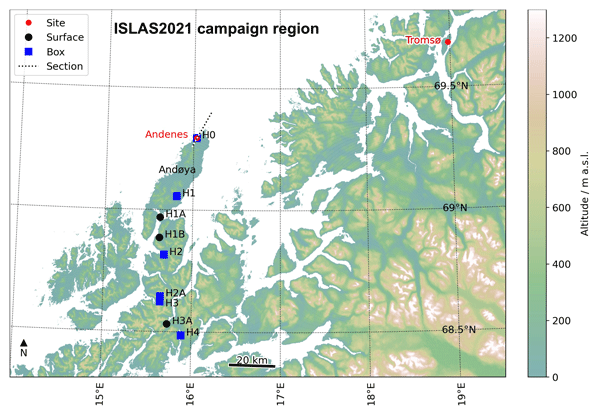
During a recent field campaign from 15 to 30 March 2021 at Andenes, Norway, we collected a set of observations that allows to better constrain how clouds and precipitation processes work. Frequent alternations between mid-latitude and arctic weather systems were encountered during the campaign. Our dataset is unique in combining measurements in both vapour and precipitation, aerosols, ice nucleating particles, and was made simultaneously at different elevations at a high latitude location.
Harald Sodemann, Alena Dekhtyareva, Alvaro Fernandez, Andrew Seidl, and Jenny Maccali
Atmos. Meas. Tech., 16, 5181–5203, https://doi.org/10.5194/amt-16-5181-2023, https://doi.org/10.5194/amt-16-5181-2023, 2023
Short summary
Short summary
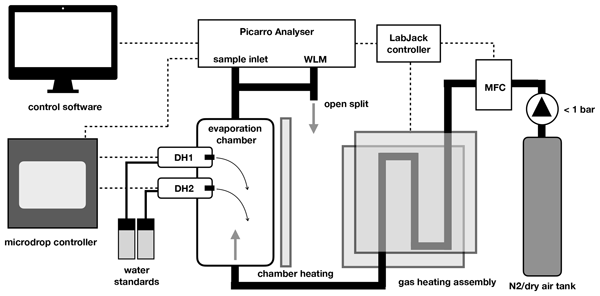
We describe a device that allows one to produce a continuous stream of water vapour with a specified level of humidity. As a main innovation, we can mix waters with different water isotope composition. Through a series of tests we show that the performance characteristics of the device are in line with specifications. We present two laboratory applications where the device proves useful, first in characterizing instruments, and second for the analysis of water contained in stalagmites.
Andrew W. Seidl, Harald Sodemann, and Hans Christian Steen-Larsen
Atmos. Meas. Tech., 16, 769–790, https://doi.org/10.5194/amt-16-769-2023, https://doi.org/10.5194/amt-16-769-2023, 2023
Short summary
Short summary
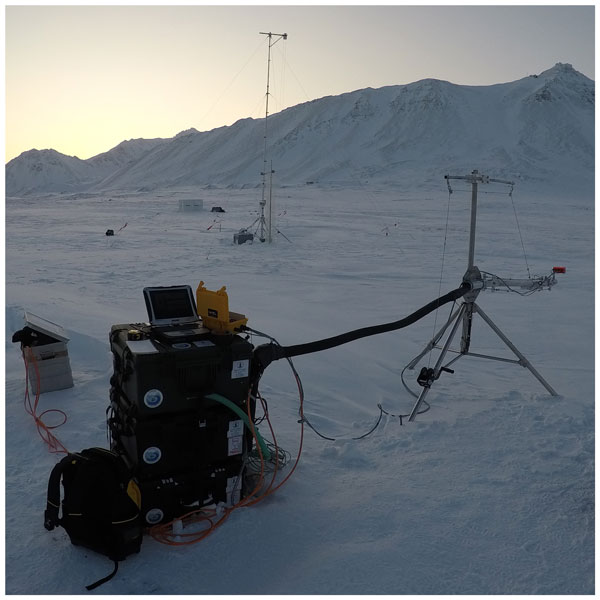
It is challenging to make field measurements of stable water isotopes in the Arctic. To this end, we present a modular stable-water-isotope analyzer profiling system. The system operated for a 2-week field campaign on Svalbard during the Arctic winter. We evaluate the system’s performance and analyze any potential impact that the field conditions might have had on the isotopic measurements and the system's ability to resolve isotope gradients in the lowermost layer of the atmosphere.
Jonas Hamperl, Clément Capitaine, Jean-Baptiste Dherbecourt, Myriam Raybaut, Patrick Chazette, Julien Totems, Bruno Grouiez, Laurence Régalia, Rosa Santagata, Corinne Evesque, Jean-Michel Melkonian, Antoine Godard, Andrew Seidl, Harald Sodemann, and Cyrille Flamant
Atmos. Meas. Tech., 14, 6675–6693, https://doi.org/10.5194/amt-14-6675-2021, https://doi.org/10.5194/amt-14-6675-2021, 2021
Short summary
Short summary
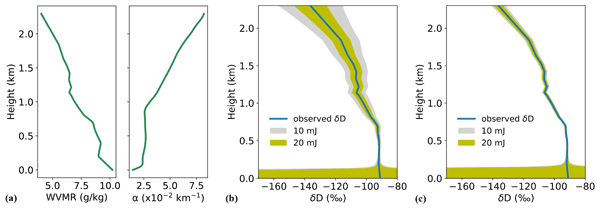
Laser active remote sensing of tropospheric water vapor is a promising technology for enhancing our understanding of processes governing the global hydrological cycle. We investigate the potential of a ground-based lidar to monitor the main water vapor isotopes at high spatio-temporal resolutions in the lower troposphere. Using a realistic end-to-end simulator, we show that high-precision measurements can be achieved within a range of 1.5 km, in mid-latitude or tropical environments.
Fiona Paulus, Joshua J. Müller, Benjamin Kirbus, Harald Sodemann, Lars van Gelder, Andreas Walbröl, Manfred Wendisch, and Roel A. J. Neggers
Atmos. Chem. Phys., 26, 13983–14014, https://doi.org/10.5194/acp-26-13983-2026, https://doi.org/10.5194/acp-26-13983-2026, 2026
Short summary
Short summary
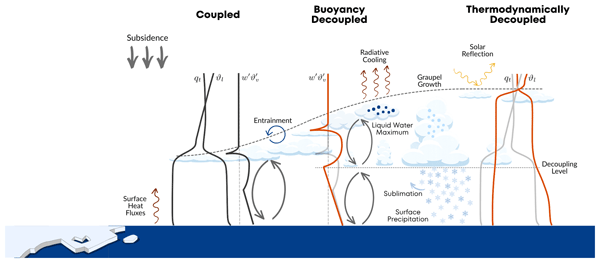
Cold Arctic air flowing from sea ice onto the warmer ocean waters rapidly warms, moistens, and forms clouds and precipitation. These events shape the Arctic climate but are difficult to observe and model. Particularly the role of large-scale sinking motion during these events is not fully understood. Using rare aircraft data and simulations to track an air mass for two days, we show that strong downward motion suppresses cloud growth, limits and delays precipitation, and reduces cloud lifetimes.
Janne Liburd, Kristof Tomej, Ann Eileen Lennert, Benjamin Fischer, Andrea L. Popp, Mahaut de Vareilles, Costijn Zwart, and Harald Sodemann
EGUsphere, https://doi.org/10.5194/egusphere-2026-5504, https://doi.org/10.5194/egusphere-2026-5504, 2026
This preprint is open for discussion and under review for Geoscience Communication (GC).
Short summary
Short summary
As scientists increasingly work with citizens and other stakeholders, collaboration becomes more valuable, but also more challenging. The example of the ISOSCAN research project on water forecasting shows how co-designing research activities can foster learning, trust, and new ways of thinking about scientific work, thereby benefiting research outcomes and the scientists involved. Tensions between different perspectives can become opportunities for reflection, learning and innovation.
Joseph R. Pitt, Dominique Rust, Anita Ganesan, Luke M. Western, Martin K. Vollmer, Jens Mühle, Tobias Bühlmann, Christina M. Harth, Stephen A. Montzka, Brad D. Hall, Isaac J. Vimont, Alistair J. Manning, Alison L. Redington, Stephan Henne, Daniela B. Melo, Saurabh Annadate, Lionel Constantin, Brendan M. Murphy, Matthew Rigby, Dickon Young, Simon O'Doherty, Angelina Wenger, Chris R. Lunder, Ove Hermansen, Thomas Wagenhäuser, Andreas Engel, Jgor Arduini, Michela Maione, Jaegeun Yun, Blagoj Mitrevski, Paul B. Krummel, Paul J. Fraser, Jooil Kim, Ray H. J. Wang, Tae Siek Rhee, Peter K. Salameh, T. Gerard Spain, Stefan Reimann, Ronald G. Prinn, Ray F. Weiss, and Kieran M. Stanley
Atmos. Chem. Phys., 26, 10167–10195, https://doi.org/10.5194/acp-26-10167-2026, https://doi.org/10.5194/acp-26-10167-2026, 2026
Short summary
Short summary
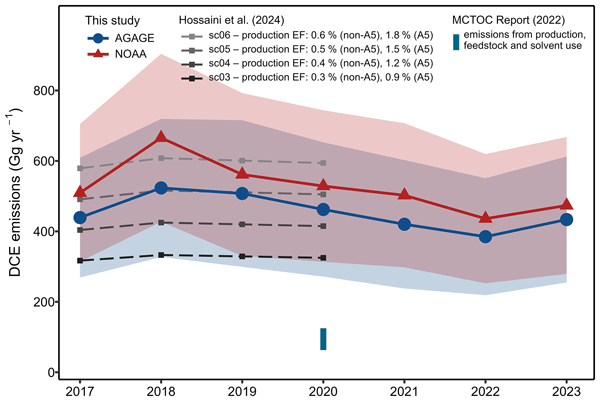
1,2‑Dichloroethane (DCE) can contribute to the depletion of the stratospheric ozone layer. Whether DCE reaches the stratosphere depends on where and when it is emitted. We present the ongoing measurements of DCE from the Advanced Global Atmospheric Gases Experiment (AGAGE) and National Oceanic and Atmospheric Administration (NOAA) global monitoring networks. For the period 2017–2023, our modelled average global emissions based on these observations align with another study, while regional estimates differ. This suggests remaining uncertainty in the geographical distribution of emissions.

Rafael K. Horota, Christian H. Eide, Kim Senger, Marius O. Jonassen, and Marie A. Vander Kloet
Geosci. Commun., 9, 311–329, https://doi.org/10.5194/gc-9-311-2026, https://doi.org/10.5194/gc-9-311-2026, 2026
Short summary
Short summary
We explored how virtual tools can help students prepare for and reflect on outdoor learning in the Arctic. Using surveys from university courses in Svalbard, we found that digital field visits helped students feel more confident, better understand the landscape, and learn more effectively. These tools do not replace real fieldwork but make it more accessible and inclusive. Our research shows how technology can support hands-on learning in remote environments.
Bashir Olasunkanmi Ayinde, Wolfgang Babel, Johannes Olesch, Daniel Wagner, Seema Agarwal, Christian Laforsch, Julian Brehm, Anke Nölscher, and Christoph Karl Thomas
Aerosol Research, 4, 345–372, https://doi.org/10.5194/ar-4-345-2026, https://doi.org/10.5194/ar-4-345-2026, 2026
Short summary
Short summary
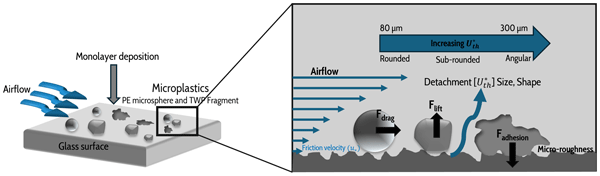
The dynamics of how tyre wear particles behave prior to their entrainment are still poorly understood. In wind tunnel experiments, the particle detachment from an idealized glass substrate was monitored. For particle sizes above 80 μm, smaller and more rounded particles were mobilized by wind shear first, whereas larger and more angular particles require stronger wind shear, highlighting strong surface adhesion and particle morphology as the major factors influencing microplastic detachment.
Nina Elisabeth Larsgård, Tim Carlsen, Robert Oscar David, Filip Severin von der Lippe, Alfons Schwarzenboek, Harald Sodemann, and Trude Storelvmo
EGUsphere, https://doi.org/10.5194/egusphere-2026-1650, https://doi.org/10.5194/egusphere-2026-1650, 2026
Short summary
Short summary
In-situ data from multiple research flights are combined to investigate the cloud evolution of Arctic marine cold air outbreaks during the ISLAS2022 campaign. We observe a cloud development similar to what other studies have shown: More liquid at cloud top close to the sea ice, and increased glaciation as clouds mature and deepen. This composite approach can be used by the community to further understand mCAO cloud evolution with increased confidence compared to single-flight analysis.
Alena Dekhtyareva, Harald Sodemann, Tim Carlsen, Iris Thurnherr, Aina Johannessen, Andrew Seidl, David M. Chandler, Daniele Zannoni, Alexandra Touzeau, Marvin Kähnert, Astrid B. Gjelsvik, Franziska Hellmuth, Britta Schäfer, and Robert O. David
Earth Syst. Sci. Data, 18, 2573–2607, https://doi.org/10.5194/essd-18-2573-2026, https://doi.org/10.5194/essd-18-2573-2026, 2026
Short summary
Short summary
During a recent field campaign from 15 to 30 March 2021 at Andenes, Norway, we collected a set of observations that allows to better constrain how clouds and precipitation processes work. Frequent alternations between mid-latitude and arctic weather systems were encountered during the campaign. Our dataset is unique in combining measurements in both vapour and precipitation, aerosols, ice nucleating particles, and was made simultaneously at different elevations at a high latitude location.
Luke M. Western, Matthew Rigby, Jens Mühle, Paul B. Krummel, Chris R. Lunder, Simon O'Doherty, Stefan Reimann, Martin K. Vollmer, Dickon Young, Ben Adam, Paul J. Fraser, Anita L. Ganesan, Christina M. Harth, Ove Hermansen, Jooil Kim, Ray L. Langenfelds, Zoë M. Loh, Blagoj Mitrevski, Joseph R. Pitt, Peter K. Salameh, Roland Schmidt, Kieran Stanley, Ann R. Stavert, Hsiang-Jui Wang, Ray F. Weiss, and Ronald G. Prinn
Earth Syst. Sci. Data, 17, 6557–6582, https://doi.org/10.5194/essd-17-6557-2025, https://doi.org/10.5194/essd-17-6557-2025, 2025
Short summary
Short summary
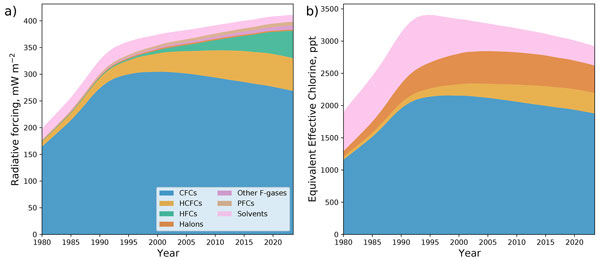
We used global measurements and an atmospheric model to estimate how emissions and abundances of 42 chemically and radiatively important trace gases have changed over time. These gases affect the Earth's radiative balance and the ozone layer. Our data sets help track progress in reducing emissions of these gases to the atmosphere. This work supports international efforts to protect the environment by providing clear, long-term, consistent data on how these gases are changing in the atmosphere.
Harald Sodemann
Geosci. Model Dev., 18, 8887–8926, https://doi.org/10.5194/gmd-18-8887-2025, https://doi.org/10.5194/gmd-18-8887-2025, 2025
Short summary
Short summary
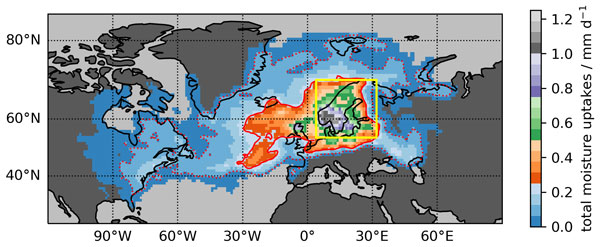
The WaterSip software locates regions where precipitation comes from. WaterSip evaluates of the water budget of the air masses, providing information on the conditions during evaporation, transport, and arrival at the target area. WaterSip can be easily configured and writes gridded output files. Guidance is given on where uncertainties arise using a case study, and best practices are recommended. This manuscript supports the comparison of different methods to find precipitation sources.
Mohammad Abdoli, Reza Pirkhoshghiyafeh, and Christoph K. Thomas
Atmos. Meas. Tech., 18, 6417–6433, https://doi.org/10.5194/amt-18-6417-2025, https://doi.org/10.5194/amt-18-6417-2025, 2025
Short summary
Short summary
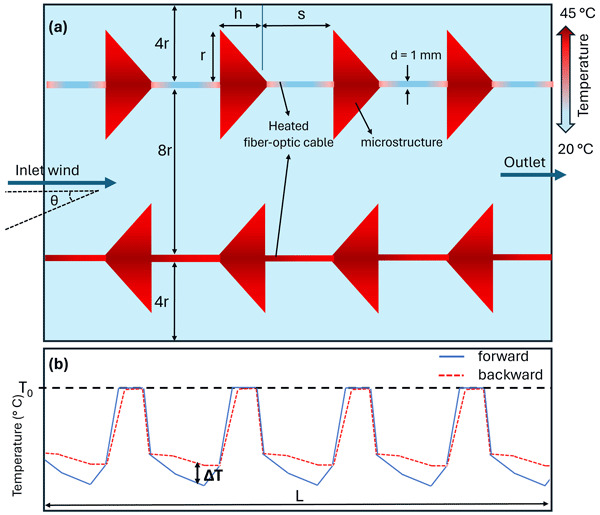
We used computer simulations to improve how fiber-optic cables measure wind direction. These heated cables have small cones attached to sense how air moves around them. We found that hollow cone designs detect airflow more accurately than earlier versions. This helps us better understand air movement near the ground and could improve the physical foundations of weather and climate models.
Manfred Wendisch, Benjamin Kirbus, Davide Ori, Matthew D. Shupe, Susanne Crewell, Harald Sodemann, and Vera Schemann
Atmos. Chem. Phys., 25, 15047–15076, https://doi.org/10.5194/acp-25-15047-2025, https://doi.org/10.5194/acp-25-15047-2025, 2025
Short summary
Short summary
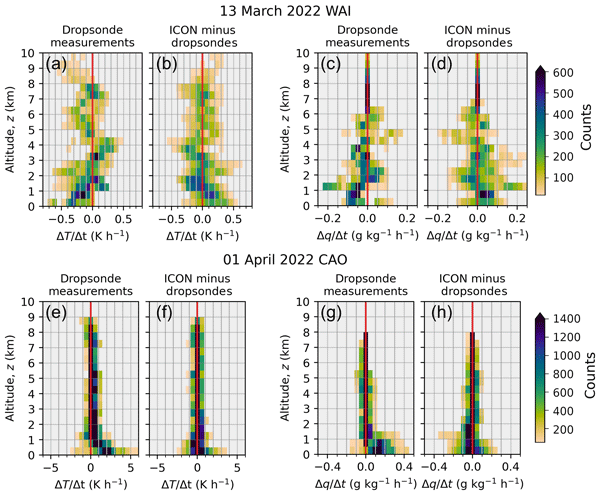
Aircraft observations of air parcels moving into and out of the Arctic are reported. From the data, heating and cooling as well as drying and moistening of the air masses along their way into and out of the Arctic could be measured for the first time. These data are used to evaluate if weather prediction models are able to accurately represent these air mass transformations. This work helps to model the future Arctic climate changes, which may have an impact for mid-latitude weather as well.
Liang Feng, Paul I. Palmer, Luke Smallman, Jingfeng Xiao, Paolo Cristofanelli, Ove Hermansen, John Lee, Casper Labuschagne, Simonetta Montaguti, Steffen M. Noe, Stephen M. Platt, Xinrong Ren, Martin Steinbacher, and Irène Xueref-Remy
Atmos. Chem. Phys., 25, 13053–13076, https://doi.org/10.5194/acp-25-13053-2025, https://doi.org/10.5194/acp-25-13053-2025, 2025
Short summary
Short summary
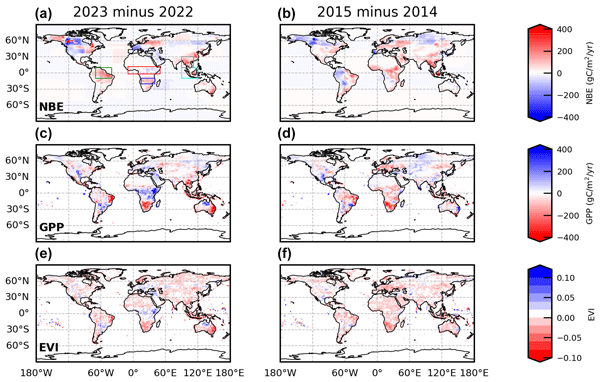
The year 2023 saw unexpectedly large global atmospheric CO2 growth. Satellite data reveal a role for increased tropical emissions. Larger emissions over eastern Brazil can be explained by warmer temperatures, which has led to exceptional drought, while hydrological changes play more of a role in emission increases elsewhere in the tropics. Broadly, we find that this situation continues into 2024.
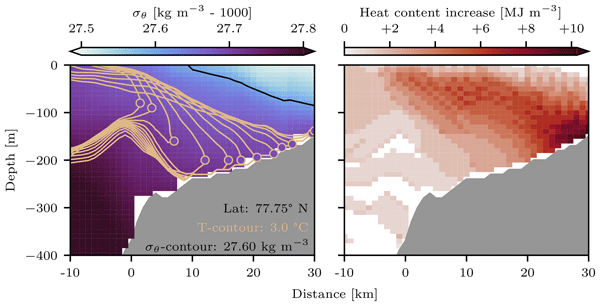
Lukas Frank, Jon Albretsen, Ragnheid Skogseth, Frank Nilsen, and Marius O. Jonassen
Ocean Sci., 21, 2419–2442, https://doi.org/10.5194/os-21-2419-2025, https://doi.org/10.5194/os-21-2419-2025, 2025
Short summary
Short summary
West of Svalbard, warm Atlantic Water frequently deviates from the West Spitsbergen Current onto shallow shelf areas, with significant implications for the regional climate system. The intrusions can be triggered by different processes, but their depths ultimately depend on the density difference between the intruding water and the ambient shelf water. These findings are an important step toward a better understanding of how warm Atlantic Water eventually reaches the fjords of Svalbard.
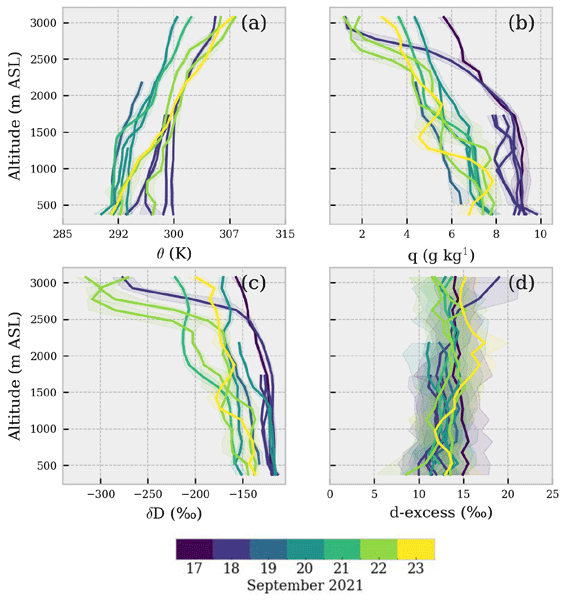
Daniele Zannoni, Hans Christian Steen-Larsen, Harald Sodemann, Iris Thurnherr, Cyrille Flamant, Patrick Chazette, Julien Totems, Martin Werner, and Myriam Raybaut
Atmos. Chem. Phys., 25, 9471–9495, https://doi.org/10.5194/acp-25-9471-2025, https://doi.org/10.5194/acp-25-9471-2025, 2025
Short summary
Short summary
High-resolution airborne observations reveal that mixing between the free troposphere and surface evapotranspiration flux primarily modulates the water vapor isotopic composition in the lower troposphere. Water vapor isotope structure variations occur on the scale of hundreds of meters, underlining the utility of stable isotopes for studying microscale atmospheric dynamics. This study also provides the basis for better validation of water vapor isotope remote sensing retrievals with surface observations.
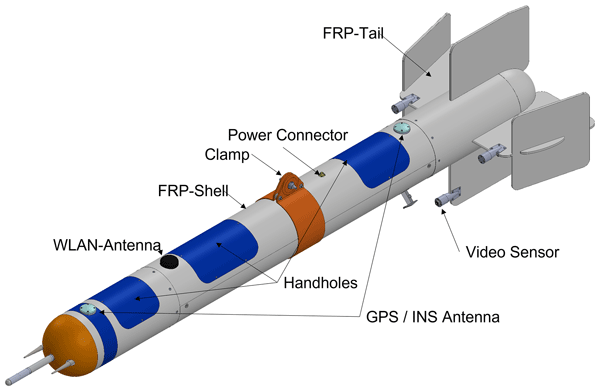
Zsófia Jurányi, Christof Lüpkes, Frank Stratmann, Jörg Hartmann, Jonas Schaefer, Anna-Marie Jörss, Alexander Schulz, Bruno Wetzel, David Simon, Eduard Gebhard, Maximilian Stöhr, Paula Hofmann, Dirk Kalmbach, Sarah Grawe, Manfred Wendisch, and Andreas Herber
Atmos. Meas. Tech., 18, 3477–3494, https://doi.org/10.5194/amt-18-3477-2025, https://doi.org/10.5194/amt-18-3477-2025, 2025
Short summary
Short summary
Understanding the lowest layers of the atmosphere is crucial for climate research, especially in the Arctic. Our study introduces the T-Bird, an aircraft-towed platform designed to measure turbulence and aerosol properties at extremely low altitudes. Traditional aircraft cannot access this region, making the T-Bird a breakthrough for capturing critical atmospheric data. Its first deployment over the Arctic demonstrated its potential to improve our understanding of polar processes.
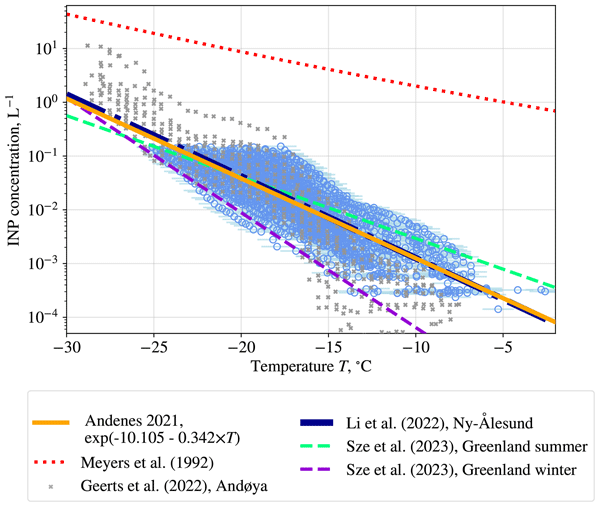
Astrid B. Gjelsvik, Robert O. David, Tim Carlsen, Franziska Hellmuth, Stefan Hofer, Zachary McGraw, Harald Sodemann, and Trude Storelvmo
Atmos. Chem. Phys., 25, 1617–1637, https://doi.org/10.5194/acp-25-1617-2025, https://doi.org/10.5194/acp-25-1617-2025, 2025
Short summary
Short summary
Ice formation in clouds has a substantial impact on radiation and precipitation and must be realistically simulated in order to understand present and future Arctic climate. Rare aerosols known as ice-nucleating particles can play an important role in cloud ice formation, but their representation in global climate models is not well suited for the Arctic. In this study, the simulation of cloud phase is improved when the representation of these particles is constrained by Arctic observations.
Manfred Wendisch, Susanne Crewell, André Ehrlich, Andreas Herber, Benjamin Kirbus, Christof Lüpkes, Mario Mech, Steven J. Abel, Elisa F. Akansu, Felix Ament, Clémantyne Aubry, Sebastian Becker, Stephan Borrmann, Heiko Bozem, Marlen Brückner, Hans-Christian Clemen, Sandro Dahlke, Georgios Dekoutsidis, Julien Delanoë, Elena De La Torre Castro, Henning Dorff, Regis Dupuy, Oliver Eppers, Florian Ewald, Geet George, Irina V. Gorodetskaya, Sarah Grawe, Silke Groß, Jörg Hartmann, Silvia Henning, Lutz Hirsch, Evelyn Jäkel, Philipp Joppe, Olivier Jourdan, Zsofia Jurányi, Michail Karalis, Mona Kellermann, Marcus Klingebiel, Michael Lonardi, Johannes Lucke, Anna E. Luebke, Maximilian Maahn, Nina Maherndl, Marion Maturilli, Bernhard Mayer, Johanna Mayer, Stephan Mertes, Janosch Michaelis, Michel Michalkov, Guillaume Mioche, Manuel Moser, Hanno Müller, Roel Neggers, Davide Ori, Daria Paul, Fiona M. Paulus, Christian Pilz, Felix Pithan, Mira Pöhlker, Veronika Pörtge, Maximilian Ringel, Nils Risse, Gregory C. Roberts, Sophie Rosenburg, Johannes Röttenbacher, Janna Rückert, Michael Schäfer, Jonas Schaefer, Vera Schemann, Imke Schirmacher, Jörg Schmidt, Sebastian Schmidt, Johannes Schneider, Sabrina Schnitt, Anja Schwarz, Holger Siebert, Harald Sodemann, Tim Sperzel, Gunnar Spreen, Bjorn Stevens, Frank Stratmann, Gunilla Svensson, Christian Tatzelt, Thomas Tuch, Timo Vihma, Christiane Voigt, Lea Volkmer, Andreas Walbröl, Anna Weber, Birgit Wehner, Bruno Wetzel, Martin Wirth, and Tobias Zinner
Atmos. Chem. Phys., 24, 8865–8892, https://doi.org/10.5194/acp-24-8865-2024, https://doi.org/10.5194/acp-24-8865-2024, 2024
Short summary
Short summary
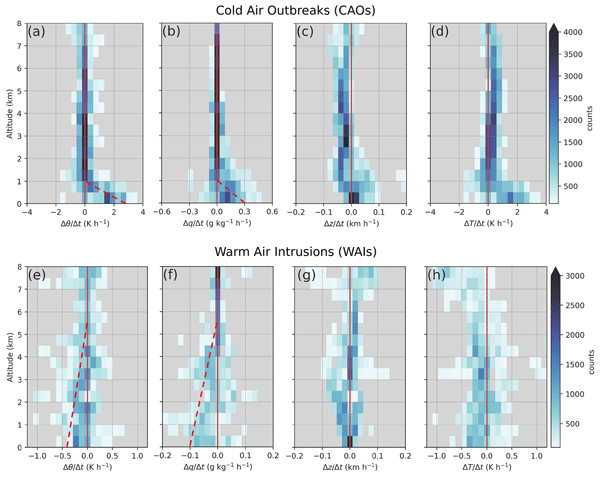
The Arctic is warming faster than the rest of the globe. Warm-air intrusions (WAIs) into the Arctic may play an important role in explaining this phenomenon. Cold-air outbreaks (CAOs) out of the Arctic may link the Arctic climate changes to mid-latitude weather. In our article, we describe how to observe air mass transformations during CAOs and WAIs using three research aircraft instrumented with state-of-the-art remote-sensing and in situ measurement devices.
Eike Maximilian Esders, Christoph Georgi, Wolfgang Babel, Andreas Held, and Christoph Karl Thomas
Aerosol Research, 2, 235–243, https://doi.org/10.5194/ar-2-235-2024, https://doi.org/10.5194/ar-2-235-2024, 2024
Short summary
Short summary
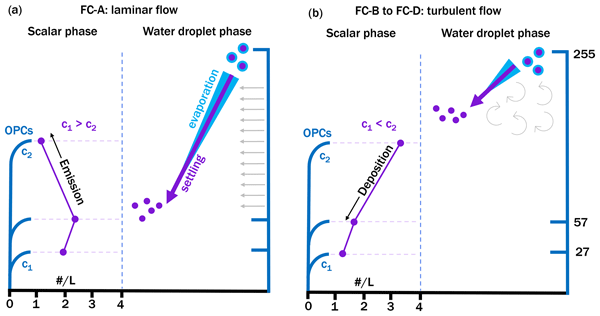
Our study explores how tiny plastic particles, known as microplastics (MPs), move through the air. We focus on their journey in a wind tunnel to mimic atmospheric transport. Depending on the air speed and the height of their release, they move downwards or upwards. These results suggest that MPs behave like mineral particles and that we can expect MPs to accumulate where natural dust also accumulates in the environment, offering insights for predicting the spread and impacts of MPs.
Julius Seidler, Markus N. Friedrich, Christoph K. Thomas, and Anke C. Nölscher
Atmos. Chem. Phys., 24, 137–153, https://doi.org/10.5194/acp-24-137-2024, https://doi.org/10.5194/acp-24-137-2024, 2024
Short summary
Short summary
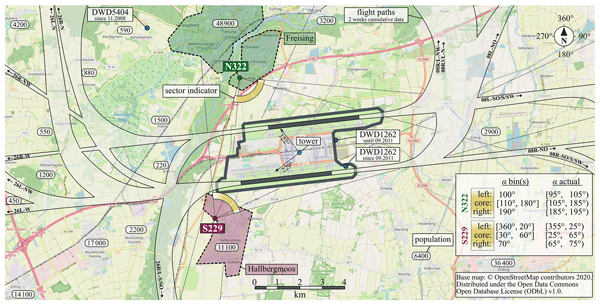
Here, we study the transport of ultrafine particles (UFPs) from an airport to two new adjacent measuring sites for 1 year. The number of UFPs in the air and the diurnal variation are typical urban. Winds from the airport show increased number concentrations. Additionally, considering wind frequencies, we estimate that, from all UFPs measured at the two sites, 10 %–14 % originate from the airport and/or other UFP sources from between the airport and site.
Eike Maximilian Esders, Sebastian Sittl, Inka Krammel, Wolfgang Babel, Georg Papastavrou, and Christoph Karl Thomas
Atmos. Chem. Phys., 23, 15835–15851, https://doi.org/10.5194/acp-23-15835-2023, https://doi.org/10.5194/acp-23-15835-2023, 2023
Short summary
Short summary
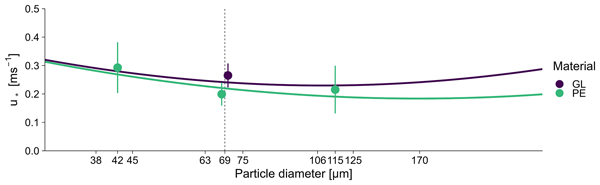
Do microplastics behave differently from mineral particles when they are exposed to wind? We observed plastic and mineral particles in a wind tunnel and measured at what wind speeds the particles start to move. The results indicate that microplastics start to move at smaller wind speeds as they weigh less and are less sticky. Hence, we think that microplastics also move more easily in the environment.
Harald Sodemann, Alena Dekhtyareva, Alvaro Fernandez, Andrew Seidl, and Jenny Maccali
Atmos. Meas. Tech., 16, 5181–5203, https://doi.org/10.5194/amt-16-5181-2023, https://doi.org/10.5194/amt-16-5181-2023, 2023
Short summary
Short summary
We describe a device that allows one to produce a continuous stream of water vapour with a specified level of humidity. As a main innovation, we can mix waters with different water isotope composition. Through a series of tests we show that the performance characteristics of the device are in line with specifications. We present two laboratory applications where the device proves useful, first in characterizing instruments, and second for the analysis of water contained in stalagmites.
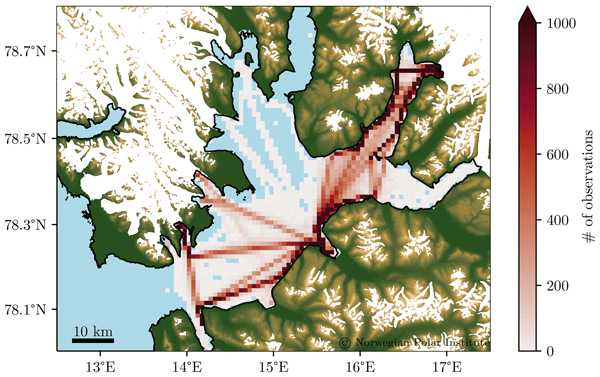
Lukas Frank, Marius Opsanger Jonassen, Teresa Remes, Florina Roana Schalamon, and Agnes Stenlund
Earth Syst. Sci. Data, 15, 4219–4234, https://doi.org/10.5194/essd-15-4219-2023, https://doi.org/10.5194/essd-15-4219-2023, 2023
Short summary
Short summary
The Isfjorden Weather Information Network (IWIN) provides continuous meteorological near-surface observations from Isfjorden in Svalbard. The network combines permanent automatic weather stations on lighthouses along the coast line with mobile stations on board small tourist cruise ships regularly trafficking the fjord during spring to autumn. All data are available online in near-real time. Besides their scientific value, IWIN data crucially enhance the safety of field activities in the region.
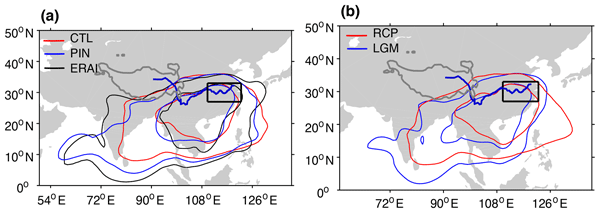
Astrid Fremme, Paul J. Hezel, Øyvind Seland, and Harald Sodemann
Weather Clim. Dynam., 4, 449–470, https://doi.org/10.5194/wcd-4-449-2023, https://doi.org/10.5194/wcd-4-449-2023, 2023
Short summary
Short summary
We study the atmospheric moisture transport into eastern China for past, present, and future climate. Hence, we use different climate and weather prediction model data with a moisture source identification method. We find that while the moisture to first order originates mostly from similar regions, smaller changes consistently point to differences in the recycling of precipitation over land between different climates. Some differences are larger between models than between different climates.
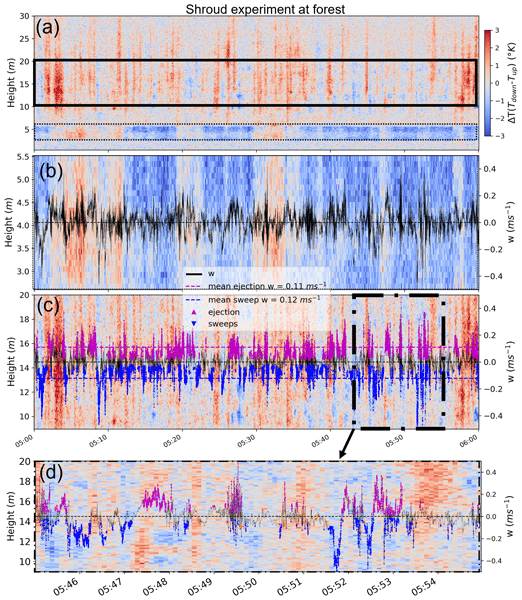
Mohammad Abdoli, Karl Lapo, Johann Schneider, Johannes Olesch, and Christoph K. Thomas
Atmos. Meas. Tech., 16, 809–824, https://doi.org/10.5194/amt-16-809-2023, https://doi.org/10.5194/amt-16-809-2023, 2023
Short summary
Short summary
In this study, we compute the distributed sensible heat flux using a distributed temperature sensing technique, whose magnitude, sign, and temporal dynamics compare reasonably well to estimates from classical eddy covariance measurements from sonic anemometry. Despite the remaining uncertainty in computed fluxes, the results demonstrate the potential of the novel method to compute spatially resolving sensible heat flux measurement and encourage further research.
Andrew W. Seidl, Harald Sodemann, and Hans Christian Steen-Larsen
Atmos. Meas. Tech., 16, 769–790, https://doi.org/10.5194/amt-16-769-2023, https://doi.org/10.5194/amt-16-769-2023, 2023
Short summary
Short summary
It is challenging to make field measurements of stable water isotopes in the Arctic. To this end, we present a modular stable-water-isotope analyzer profiling system. The system operated for a 2-week field campaign on Svalbard during the Arctic winter. We evaluate the system’s performance and analyze any potential impact that the field conditions might have had on the isotopic measurements and the system's ability to resolve isotope gradients in the lowermost layer of the atmosphere.

Alena Dekhtyareva, Mark Hermanson, Anna Nikulina, Ove Hermansen, Tove Svendby, Kim Holmén, and Rune Grand Graversen
Atmos. Chem. Phys., 22, 11631–11656, https://doi.org/10.5194/acp-22-11631-2022, https://doi.org/10.5194/acp-22-11631-2022, 2022
Short summary
Short summary
Despite decades of industrial activity in Svalbard, there is no continuous air pollution monitoring in the region’s settlements except Ny-Ålesund. The NOx and O3 observations from the three-station network have been compared for the first time in this study. It has been shown how the large-scale weather regimes control the synoptic meteorological conditions and determine the atmospheric long-range transport pathways and efficiency of local air pollution dispersion.
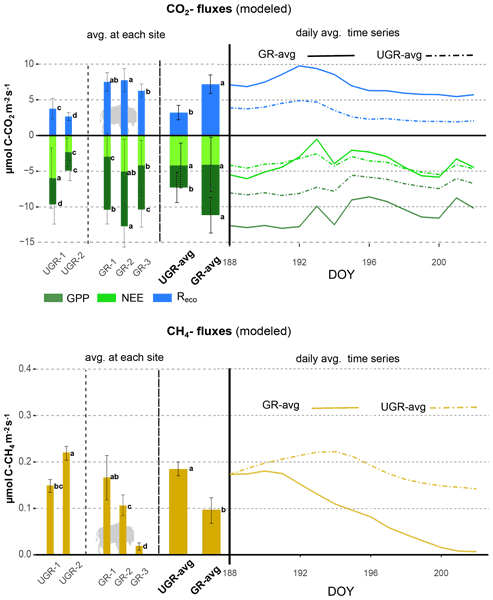
Wolfgang Fischer, Christoph K. Thomas, Nikita Zimov, and Mathias Göckede
Biogeosciences, 19, 1611–1633, https://doi.org/10.5194/bg-19-1611-2022, https://doi.org/10.5194/bg-19-1611-2022, 2022
Short summary
Short summary
Arctic permafrost ecosystems may release large amounts of carbon under warmer future climates and may therefore accelerate global climate change. Our study investigated how long-term grazing by large animals influenced ecosystem characteristics and carbon budgets at a Siberian permafrost site. Our results demonstrate that such management can contribute to stabilizing ecosystems to keep carbon in the ground, particularly through drying soils and reducing methane emissions.
Stephen M. Platt, Øystein Hov, Torunn Berg, Knut Breivik, Sabine Eckhardt, Konstantinos Eleftheriadis, Nikolaos Evangeliou, Markus Fiebig, Rebecca Fisher, Georg Hansen, Hans-Christen Hansson, Jost Heintzenberg, Ove Hermansen, Dominic Heslin-Rees, Kim Holmén, Stephen Hudson, Roland Kallenborn, Radovan Krejci, Terje Krognes, Steinar Larssen, David Lowry, Cathrine Lund Myhre, Chris Lunder, Euan Nisbet, Pernilla B. Nizzetto, Ki-Tae Park, Christina A. Pedersen, Katrine Aspmo Pfaffhuber, Thomas Röckmann, Norbert Schmidbauer, Sverre Solberg, Andreas Stohl, Johan Ström, Tove Svendby, Peter Tunved, Kjersti Tørnkvist, Carina van der Veen, Stergios Vratolis, Young Jun Yoon, Karl Espen Yttri, Paul Zieger, Wenche Aas, and Kjetil Tørseth
Atmos. Chem. Phys., 22, 3321–3369, https://doi.org/10.5194/acp-22-3321-2022, https://doi.org/10.5194/acp-22-3321-2022, 2022
Short summary
Short summary
Here we detail the history of the Zeppelin Observatory, a unique global background site and one of only a few in the high Arctic. We present long-term time series of up to 30 years of atmospheric components and atmospheric transport phenomena. Many of these time series are important to our understanding of Arctic and global atmospheric composition change. Finally, we discuss the future of the Zeppelin Observatory and emerging areas of future research on the Arctic atmosphere.
Karl Lapo, Anita Freundorfer, Antonia Fritz, Johann Schneider, Johannes Olesch, Wolfgang Babel, and Christoph K. Thomas
Earth Syst. Sci. Data, 14, 885–906, https://doi.org/10.5194/essd-14-885-2022, https://doi.org/10.5194/essd-14-885-2022, 2022
Short summary
Short summary
The layer of air near the surface is poorly understood during conditions with weak winds. Further, it is even difficult to observe. In this experiment we used distributed temperature sensing to observe air temperature and wind speed at thousands of points simultaneously every couple of seconds. This incredibly rich data set can be used to examine and understand what drives the mixing between the atmosphere and surface during these weak-wind periods.
Jonas Hamperl, Clément Capitaine, Jean-Baptiste Dherbecourt, Myriam Raybaut, Patrick Chazette, Julien Totems, Bruno Grouiez, Laurence Régalia, Rosa Santagata, Corinne Evesque, Jean-Michel Melkonian, Antoine Godard, Andrew Seidl, Harald Sodemann, and Cyrille Flamant
Atmos. Meas. Tech., 14, 6675–6693, https://doi.org/10.5194/amt-14-6675-2021, https://doi.org/10.5194/amt-14-6675-2021, 2021
Short summary
Short summary
Laser active remote sensing of tropospheric water vapor is a promising technology for enhancing our understanding of processes governing the global hydrological cycle. We investigate the potential of a ground-based lidar to monitor the main water vapor isotopes at high spatio-temporal resolutions in the lower troposphere. Using a realistic end-to-end simulator, we show that high-precision measurements can be achieved within a range of 1.5 km, in mid-latitude or tropical environments.
Cited articles
Aemisegger, F., Sturm, P., Graf, P., Sodemann, H., Pfahl, S., Knohl, A., and Wernli, H.: Measuring variations of δ18O and δ2H in atmospheric water vapour using two commercial laser-based spectrometers: an instrument characterisation study, Atmos. Meas. Tech., 5, 1491–1511, https://doi.org/10.5194/amt-5-1491-2012, 2012. a, b
Aemisegger, F., Trachsel, J., Sadowski, Y., Eichler, A., Lehning, M., Avak, S., and Schneebeli, M.: Fingerprints of Frontal Passages and Post-Depositional Effects in the Stable Water Isotope Signal of Seasonal Alpine Snow, Journal of Geophysical Research: Atmospheres, 127, e2022JD037469, https://doi.org/10.1029/2022JD037469, 2022. a
Bailey, A., Aemisegger, F., Villiger, L., Los, S. A., Reverdin, G., Quiñones Meléndez, E., Acquistapace, C., Baranowski, D. B., Böck, T., Bony, S., Bordsdorff, T., Coffman, D., de Szoeke, S. P., Diekmann, C. J., Dütsch, M., Ertl, B., Galewsky, J., Henze, D., Makuch, P., Noone, D., Quinn, P. K., Rösch, M., Schneider, A., Schneider, M., Speich, S., Stevens, B., and Thompson, E. J.: Isotopic measurements in water vapor, precipitation, and seawater during EUREC4A, Earth Syst. Sci. Data, 15, 465–495, https://doi.org/10.5194/essd-15-465-2023, 2023. a
Barkan, E. and Luz, B.: Diffusivity fractionations of H
Berkelhammer, M., Noone, D. C., Steen-Larsen, H. C., Bailey, A., Cox, C. J., O'Neill, M. S., Schneider, D., Steffen, K., and White, J. W.: Surface-atmosphere decoupling limits accumulation at Summit, Greenland, Science Advances, 2, 1–10, https://doi.org/10.1126/sciadv.1501704, 2016. a
Bonne, J.-L., Masson-Delmotte, V., Cattani, O., Delmotte, M., Risi, C., Sodemann, H., and Steen-Larsen, H. C.: The isotopic composition of water vapour and precipitation in Ivittuut, southern Greenland, Atmos. Chem. Phys., 14, 4419–4439, https://doi.org/10.5194/acp-14-4419-2014, 2014. a
Brady, E., Stevenson, S., Bailey, D., Liu, Z., Noone, D., Nusbaumer, J., Otto‐Bliesner, B. L., Tabor, C., Tomas, R., Wong, T., Zhang, J., and Zhu, J.: The Connected Isotopic Water Cycle in the Community Earth System Model Version 1, Journal of Advances in Modeling Earth Systems, 11, 2547–2566, https://doi.org/10.1029/2019MS001663, 2019. a
Brunello, C., Gebhardt, F., Rinke, A., Dütsch, M., Bucci, S., Meyer, H., Mellat, M., and Werner, M.: Moisture Transformation in Warm Air Intrusions Into the Arctic: Process Attribution With Stable Water Isotopes, Geophysical Research Letters, 51, e2024GL111013, https://doi.org/10.1029/2024GL111013, 2024. a, b, c
Brunello, C. F., Meyer, H., Mellat, M., Casado, M., Bucci, S., Dütsch, M., and Werner, M.: Contrasting Seasonal Isotopic Signatures of Near‐Surface Atmospheric Water Vapor in the Central Arctic During the MOSAiC Campaign, Journal of Geophysical Research: Atmospheres, 128, https://doi.org/10.1029/2022JD038400, 2023. a, b, c
Cappa, C. D.: Isotopic fractionation of water during evaporation, Journal of Geophysical Research, 108, 4525, https://doi.org/10.1029/2003JD003597, 2003. a, b
Casado, M., Landais, A., Picard, G., Arnaud, L., Dreossi, G., Stenni, B., and Prié, F.: Water Isotopic Signature of Surface Snow Metamorphism in Antarctica, Geophysical Research Letters, 48, e2021GL093382, https://doi.org/10.1029/2021GL093382, 2021. a, b
Craig, H.: Isotopic Variations in Meteoric Waters, Science, 133, 1702–1703, 1961. a
Craig, H. and Gordon, L. I. L.: Deuterium and oxygen 18 variations in the ocean and the marine atmosphere, Laboratorio di geologia nucleare, Consiglio Nazionale delle Ricerche (CNR), Pisa, 122, 9–130, 1965. a
Dahlke, S., Solbès, A., and Maturilli, M.: Cold Air Outbreaks in Fram Strait: Climatology, Trends, and Observations During an Extreme Season in 2020, Journal of Geophysical Research: Atmospheres, 127, 1–18, https://doi.org/10.1029/2021JD035741, 2022. a
Dansgaard, W.: Stable isotopes in precipitation, Tellus, 16, 436–468, https://doi.org/10.3402/tellusa.v16i4.8993, 1964. a
Divine, D. V., Sjolte, J., Isaksson, E., Meijer, H. A. J., van de Wal, R. S. W., Martma, T., Pohjola, V., Sturm, C., and Godtliebsen, F.: Modelling the regional climate and isotopic composition of Svalbard precipitation using REMOiso : a comparison with available GNIP and ice core data, Hydrological Processes, 25, 3748–3759, https://doi.org/10.1002/hyp.8100, 2011. a
Dunn, M. F. and Grice, G. K.: Warm Air Intrusion Into the Arctic, Monthly Weather Review, 103, 1137–1139, https://doi.org/10.1175/1520-0493(1975)103<1137:WAIITA>2.0.CO;2, 1975. a
Ellehoj, M. D., Steen-Larsen, H. C., Johnsen, S. J., and Madsen, M. B.: Ice-vapor equilibrium fractionation factor of hydrogen and oxygen isotopes: Experimental investigations and implications for stable water isotope studies, Rapid Communications in Mass Spectrometry, 27, 2149–2158, https://doi.org/10.1002/rcm.6668, 2013. a, b
Geerts, B., McFarquhar, G., Xue, L., Jensen, M., Kollias, P., Ovchinnikov, M., Shupe, M., DeMott, P., Wang, Y., Tjernstrom, M., Field, P., Abel, S., Spengler, T., Neggers, R., Crewell, S., Wendisch, M., and Lupkes, C.: Cold-Air Outbreaks in the Marine Boundary Layer Experiment (COMBLE) Field Campaign Report, Tech. rep., Oak Ridge National Lab. (ORNL), Oak Ridge, TN (United States), Oak Ridge National Laboratory (ORNL), Oak Ridge, TN (US), https://doi.org/10.2172/1763013, 2021. a
Gerland, S., Pavlova, O., Divine, D., Negrel, J., Dahlke, S., Johansson, A. M., Maturilli, M., and Semmling, M.: Long-term monitoring of landfast sea ice extent and thickness in Kongsfjorden, and related applications. In SESS report 2019 - The State of Environmental Science in Svalbard – an annual report (pp. 160–167), Svalbard Integrated Arctic Earth Observing System, Zenodo [report], https://doi.org/10.5281/zenodo.4707148, 2020. a
Hu, J., Yan, Y., Yeung, L. Y., and Dee, S. G.: Sublimation Origin of Negative Deuterium Excess Observed in Snow and Ice Samples From McMurdo Dry Valleys and Allan Hills Blue Ice Areas, East Antarctica, Journal of Geophysical Research: Atmospheres, 127, e2021JD035950, https://doi.org/10.1029/2021JD035950, 2022. a
Hughes, A. G., Wahl, S., Jones, T. R., Zuhr, A., Hörhold, M., White, J. W. C., and Steen-Larsen, H. C.: The role of sublimation as a driver of climate signals in the water isotope content of surface snow: laboratory and field experimental results, The Cryosphere, 15, 4949–4974, https://doi.org/10.5194/tc-15-4949-2021, 2021. a
Huss, J. M., Zeller, M. L., Pfister, L., Lapo, K. E., Littmann, D., Schneider, J., Schulz, A., and Thomas, C. K.: NYTEFOX – The NY-Ålesund TurbulencE Fiber Optic eXperiment investigating the Arctic boundary layer, Svalbard, Zenodo [data set], https://doi.org/10.5281/zenodo.4756836, 2021. a, b
IAEA: Reference sheet for international measurement standards: VSMOW2-SLAP2, https://www.sedgeochem.uni-bremen.de/pdfs/VSMOW2_SLAP2.pdf (last access: 5 June 2024), 2009. a
Jocher, G., Karner, F., Ritter, C., Neuber, R., Dethloff, K., Obleitner, F., Reuder, J., and Foken, T.: The Near-Surface Small-Scale Spatial and Temporal Variability of Sensible and Latent Heat Exchange in the Svalbard Region: A Case Study, ISRN Meteorology, 2012, 1–14, https://doi.org/10.5402/2012/357925, 2012. a
Jouzel, J. and Merlivat, L.: Deuterium and oxygen 18 in precipitation: Modeling of the isotopic effects during snow formation, Journal of Geophysical Research, 89, 11749, https://doi.org/10.1029/JD089iD07p11749, 1984. a
Kirbus, B., Schirmacher, I., Klingebiel, M., Schäfer, M., Ehrlich, A., Slättberg, N., Lucke, J., Moser, M., Müller, H., and Wendisch, M.: Thermodynamic and cloud evolution in a cold-air outbreak during HALO-(AC)3: quasi-Lagrangian observations compared to the ERA5 and CARRA reanalyses, Atmos. Chem. Phys., 24, 3883–3904, https://doi.org/10.5194/acp-24-3883-2024, 2024. a
Klein, E. S., Cherry, J. E., Young, J., Noone, D., Leffler, A. J., and Welker, J. M.: Arctic cyclone water vapor isotopes support past sea ice retreat recorded in Greenland ice, Scientific Reports, 5, 1–9, https://doi.org/10.1038/srep10295, 2015. a
Klein, E. S., Baltensperger, A. P., and Welker, J. M.: Complexity of Arctic Ocean water isotope (δ18O, δ2H) spatial and temporal patterns revealed with machine learning, Elementa: Science of the Anthropocene, 12, 00127, https://doi.org/10.1525/elementa.2022.00127, 2024. a
Kopec, B. G., Feng, X., Michel, F. A., and Posmentier, E. S.: Influence of sea ice on Arctic precipitation, Proceedings of the National Academy of Sciences, 113, 46–51, https://doi.org/10.1073/pnas.1504633113, 2016. a
Leroy‐Dos Santos, C., Masson‐Delmotte, V., Casado, M., Fourré, E., Steen‐Larsen, H. C., Maturilli, M., Orsi, A., Berchet, A., Cattani, O., Minster, B., Gherardi, J., and Landais, A.: A 4.5 Year‐Long Record of Svalbard Water Vapor Isotopic Composition Documents Winter Air Mass Origin, Journal of Geophysical Research: Atmospheres, 125, 1–18, https://doi.org/10.1029/2020JD032681, 2020. a
Maturilli, M.: Continuous meteorological observations at station Ny-Ålesund (2011-08 et seq), PANGAEA – Data Publisher for Earth & Environmental Science [data set], https://doi.org/10.1594/pangaea.914979, 2020. a, b, c, d
Maturilli, M., Herber, A., and König-Langlo, G.: Continuous meteorological observations at station Ny-Ålesund, 1993-08 to 2011-07, PANGAEA – Data Publisher for Earth & Environmental Science [data set], https://doi.org/10.1594/pangaea.793046, 2013a. a, b, c, d
Maturilli, M., Herber, A., and König-Langlo, G.: Climatology and time series of surface meteorology in Ny-Ålesund, Svalbard, Earth Syst. Sci. Data, 5, 155–163, https://doi.org/10.5194/essd-5-155-2013, 2013b. a
May, R. M., Goebbert, K. H., Thielen, J. E., Leeman, J. R., Camron, M. D., Bruick, Z., Bruning, E. C., Manser, R. P., Arms, S. C., and Marsh, P. T.: MetPy: A Meteorological Python Library for Data Analysis and Visualization, Bulletin of the American Meteorological Society, 103, E2273–E2284, https://doi.org/10.1175/BAMS-D-21-0125.1, 2022. a, b
Papritz, L. and Pfahl, S.: Importance of Latent Heating in Mesocyclones for the Decay of Cold Air Outbreaks: A Numerical Process Study from the Pacific Sector of the Southern Ocean, Monthly Weather Review, 144, 315–336, https://doi.org/10.1175/MWR-D-15-0268.1, 2016. a
Papritz, L., Rouges, E., Aemisegger, F., and Wernli, H.: On the Thermodynamic Preconditioning of Arctic Air Masses and the Role of Tropopause Polar Vortices for Cold Air Outbreaks From Fram Strait, Journal of Geophysical Research: Atmospheres, 124, 11033–11050, https://doi.org/10.1029/2019JD030570, 2019. a
Pfahl, S., Wernli, H., and Yoshimura, K.: The isotopic composition of precipitation from a winter storm – a case study with the limited-area model COSMOiso, Atmos. Chem. Phys., 12, 1629–1648, https://doi.org/10.5194/acp-12-1629-2012, 2012. a
Pisso, I., Sollum, E., Grythe, H., Kristiansen, N. I., Cassiani, M., Eckhardt, S., Arnold, D., Morton, D., Thompson, R. L., Groot Zwaaftink, C. D., Evangeliou, N., Sodemann, H., Haimberger, L., Henne, S., Brunner, D., Burkhart, J. F., Fouilloux, A., Brioude, J., Philipp, A., Seibert, P., and Stohl, A.: The Lagrangian particle dispersion model FLEXPART version 10.4, Geosci. Model Dev., 12, 4955–4997, https://doi.org/10.5194/gmd-12-4955-2019, 2019. a
Seidl, A. W., Sodemann, H., and Steen-Larsen, H. C.: A modular field system for near-surface, vertical profiling of the atmospheric composition in harsh environments using cavity ring-down spectroscopy, Atmos. Meas. Tech., 16, 769–790, https://doi.org/10.5194/amt-16-769-2023, 2023. a, b, c, d, e, f, g, h, i, j, k, l, m, n
Seidl, A. W., Sodemann, H., Dekhtyareva, A., Huss, J. M., Thomas, C. K., Schulz, A., and Hermansen, O.: ISLAS2020: Calibrated stable water isotope measurements from Svalbard and coastal Norway during February and March 2020, PANGAEA [data set], https://doi.org/10.1594/PANGAEA.971241, 2024. a, b
Shupe, M. D., Rex, M., Blomquist, B., Persson, P. O. G., Schmale, J., Uttal, T., Althausen, D., Angot, H., Archer, S., Bariteau, L., Beck, I., Bilberry, J., Bucci, S., Buck, C., Boyer, M., Brasseur, Z., Brooks, I. M., Calmer, R., Cassano, J., Castro, V., Chu, D., Costa, D., Cox, C. J., Creamean, J., Crewell, S., Dahlke, S., Damm, E., de Boer, G., Deckelmann, H., Dethloff, K., Dütsch, M., Ebell, K., Ehrlich, A., Ellis, J., Engelmann, R., Fong, A. A., Frey, M. M., Gallagher, M. R., Ganzeveld, L., Gradinger, R., Graeser, J., Greenamyer, V., Griesche, H., Griffiths, S., Hamilton, J., Heinemann, G., Helmig, D., Herber, A., Heuzé, C., Hofer, J., Houchens, T., Howard, D., Inoue, J., Jacobi, H.-W., Jaiser, R., Jokinen, T., Jourdan, O., Jozef, G., King, W., Kirchgaessner, A., Klingebiel, M., Krassovski, M., Krumpen, T., Lampert, A., Landing, W., Laurila, T., Lawrence, D., Lonardi, M., Loose, B., Lüpkes, C., Maahn, M., Macke, A., Maslowski, W., Marsay, C., Maturilli, M., Mech, M., Morris, S., Moser, M., Nicolaus, M., Ortega, P., Osborn, J., Pätzold, F., Perovich, D. K., Petäjä, T., Pilz, C., Pirazzini, R., Posman, K., Powers, H., Pratt, K. A., Preußer, A., Quéléver, L., Radenz, M., Rabe, B., Rinke, A., Sachs, T., Schulz, A., Siebert, H., Silva, T., Solomon, A., Sommerfeld, A., Spreen, G., Stephens, M., Stohl, A., Svensson, G., Uin, J., Viegas, J., Voigt, C., von der Gathen, P., Wehner, B., Welker, J. M., Wendisch, M., Werner, M., Xie, Z., and Yue, F.: Overview of the MOSAiC expedition: Atmosphere, Elem. Sci. Anth., 10, https://doi.org/10.1525/elementa.2021.00060, 2022. a
Sodemann, H., Dekhtyareva, A., Seidl, A., and Johannessen, A.: COMBLE-Isotopic Links to Atmospheric Waters Sources (ISLAS) Snow Sampling 2020 Field Campaign Report, Tech. rep., Oak Ridge National Lab. (ORNL), Oak Ridge, TN (United States), Oak Ridge National Laboratory (ORNL), Oak Ridge, TN (US), https://doi.org/10.2172/1721761, 2020. a, b
Sodemann, H., Dekhtyareva, A., Fernandez, A., Seidl, A., and Maccali, J.: A flexible device to produce a gas stream with a precisely controlled water vapour mixing ratio and isotope composition based on microdrop dispensing technology, Atmos. Meas. Tech., 16, 5181–5203, https://doi.org/10.5194/amt-16-5181-2023, 2023a. a, b, c
Sodemann, H., Mørkved, P. T., and Wahl, S.: FLIIMP – a community software for the processing, calibration, and reporting of liquid water isotope measurements on cavity-ring down spectrometers, MethodsX, 11, 102297, https://doi.org/10.1016/j.mex.2023.102297, 2023b. a
Sodemann, H., Weng, Y., Touzeau, A., Jeansson, E., Thurnherr, I., Barrell, C., Renfrew, I. A., Semper, S., Våge, K., and Werner, M.: The Cumulative Effect of Wintertime Weather Systems on the Ocean Mixed-Layer Stable Isotope Composition in the Iceland and Greenland Seas, Journal of Geophysical Research: Atmospheres, 129, e2024JD041138, https://doi.org/10.1029/2024JD041138, 2024. a
Solomon, A., Shupe, M. D., Svensson, G., Barton, N. P., Batrak, Y., Bazile, E., Day, J. J., Doyle, J. D., Frank, H. P., Keeley, S., Remes, T., and Tolstykh, M.: The winter central Arctic surface energy budget: A model evaluation using observations from the MOSAiC campaign, Elementa: Science of the Anthropocene, 11, 00104, https://doi.org/10.1525/elementa.2022.00104, 2023. a
Steen-Larsen, H. C., Johnsen, S. J., Masson-Delmotte, V., Stenni, B., Risi, C., Sodemann, H., Balslev-Clausen, D., Blunier, T., Dahl-Jensen, D., Ellehøj, M. D., Falourd, S., Grindsted, A., Gkinis, V., Jouzel, J., Popp, T., Sheldon, S., Simonsen, S. B., Sjolte, J., Steffensen, J. P., Sperlich, P., Sveinbjörnsdóttir, A. E., Vinther, B. M., and White, J. W. C.: Continuous monitoring of summer surface water vapor isotopic composition above the Greenland Ice Sheet, Atmos. Chem. Phys., 13, 4815–4828, https://doi.org/10.5194/acp-13-4815-2013, 2013. a
Thomas, C. K., Huss, J. M., Abdoli, M., Huttarsch, T., and Schneider, J.: Solid-Phase Reference Baths for Fiber-Optic Distributed Sensing, Sensors, 22, 4244, https://doi.org/10.3390/s22114244, 2022. a, b
Thurnherr, I. and Aemisegger, F.: Disentangling the impact of air–sea interaction and boundary layer cloud formation on stable water isotope signals in the warm sector of a Southern Ocean cyclone, Atmos. Chem. Phys., 22, 10353–10373, https://doi.org/10.5194/acp-22-10353-2022, 2022. a, b
Thurnherr, I., Hartmuth, K., Jansing, L., Gehring, J., Boettcher, M., Gorodetskaya, I., Werner, M., Wernli, H., and Aemisegger, F.: The role of air–sea fluxes for the water vapour isotope signals in the cold and warm sectors of extratropical cyclones over the Southern Ocean, Weather and Climate Dynamics, 2, 331–357, https://doi.org/10.5194/wcd-2-331-2021, 2021. a, b
Valkonen, T., Stoll, P., Batrak, Y., Køltzow, M., Schneider, T. M., Stigter, E. E., Aashamar, O. B., Støylen, E., and Jonassen, M. O.: Evaluation of a sub-kilometre NWP system in an Arctic fjord-valley system in winter, Tellus A: Dynamic Meteorology and Oceanography, 72, 1–21, https://doi.org/10.1080/16000870.2020.1838181, 2020. a
Wahl, S., Steen‐Larsen, H. C., Reuder, J., and Hörhold, M.: Quantifying the Stable Water Isotopologue Exchange Between the Snow Surface and Lower Atmosphere by Direct Flux Measurements, Journal of Geophysical Research: Atmospheres, 126, 1–24, https://doi.org/10.1029/2020JD034400, 2021. a
Wahl, S., Walter, B., Aemisegger, F., Bianchi, L., and Lehning, M.: Identifying airborne snow metamorphism with stable water isotopes, The Cryosphere, 18, 4493–4515, https://doi.org/10.5194/tc-18-4493-2024, 2024. a, b, c
Weng, Y., Touzeau, A., and Sodemann, H.: Correcting the impact of the isotope composition on the mixing ratio dependency of water vapour isotope measurements with cavity ring-down spectrometers, Atmospheric Measurement Techniques, 13, 3167–3190, https://doi.org/10.5194/amt-13-3167-2020, 2020. a, b
Wolff, M. A., Isaksen, K., Petersen-Øverleir, A., Ødemark, K., Reitan, T., and Brækkan, R.: Derivation of a new continuous adjustment function for correcting wind-induced loss of solid precipitation: results of a Norwegian field study, Hydrol. Earth Syst. Sci., 19, 951–967, https://doi.org/10.5194/hess-19-951-2015, 2015. a
Zeller, M.-L., Huss, J.-M., Pfister, L., Lapo, K. E., Littmann, D., Schneider, J., Schulz, A., and Thomas, C. K.: The NY-Ålesund TurbulencE Fiber Optic eXperiment (NYTEFOX): investigating the Arctic boundary layer, Svalbard, Earth Syst. Sci. Data, 13, 3439–3452, https://doi.org/10.5194/essd-13-3439-2021, 2021. a, b, c, d, e
Short summary
ISLAS2020 set out to measure the stable water isotopic composition of Arctic moisture. By not only measuring at different sites around Ny-Ålesund, Svalbard, but also measuring at variable heights above surface level, we aim to characterize processes that produce or modify the isotopic composition. We also collect precipitation samples from sites that were typically downstream of Ny-Ålesund, so as to capture the isotopic composition during removal from the atmospheric water cycle.
ISLAS2020 set out to measure the stable water isotopic composition of Arctic moisture. By not...


Altmetrics
Final-revised paper
Preprint