Articles | Volume 18, issue 3
https://doi.org/10.5194/essd-18-1877-2026
© Author(s) 2026. This work is distributed under
the Creative Commons Attribution 4.0 License.
the Creative Commons Attribution 4.0 License.
https://doi.org/10.5194/essd-18-1877-2026
© Author(s) 2026. This work is distributed under
the Creative Commons Attribution 4.0 License.
the Creative Commons Attribution 4.0 License.
Data description article
| 
11 Mar 2026
Data description article |
| 11 Mar 2026
| 11 Mar 2026
Phytoplankton coastal-offshore monitoring by the Strait of Dover at high spatial resolution: the DYPHYRAD surveys

Université Littoral Côte d'Opale, Université de Lille, CNRS, IRD, UMR 8187, LOG, Laboratoire d'Océanologie et de Géosciences, 62930, Wimereux, France
Aurélie Libeau
CORRESPONDING AUTHOR
Université Littoral Côte d'Opale, Université de Lille, CNRS, IRD, UMR 8187, LOG, Laboratoire d'Océanologie et de Géosciences, 62930, Wimereux, France
Unité d′Appui et de Recherche Stella Mare 3514, CNRS, Università di Corsica Pasquale Paoli, Cordon Lagunaire de la Marana, lieu-dit U Casone, Biguglia 20620, France
Clémentine Gallot
Université Littoral Côte d'Opale, Université de Lille, CNRS, IRD, UMR 8187, LOG, Laboratoire d'Océanologie et de Géosciences, 62930, Wimereux, France
Mediterranean Institute of Oceanography (MIO), Campus de Luminy, 163 Av. de Luminy, 13288 Marseille CEDEX 9, France
Vincent Cornille
Université Littoral Côte d'Opale, Université de Lille, CNRS, IRD, UMR 8187, LOG, Laboratoire d'Océanologie et de Géosciences, 62930, Wimereux, France
Ifremer, Unité Littoral, Laboratoire Environnement et Ressources, 150 quai Gambetta, 62321 Boulogne-sur-Mer, France
Muriel Crouvoisier
Université Littoral Côte d'Opale, Université de Lille, CNRS, IRD, UMR 8187, LOG, Laboratoire d'Océanologie et de Géosciences, 62930, Wimereux, France
Éric Lécuyer
Université Littoral Côte d'Opale, Université de Lille, CNRS, IRD, UMR 8187, LOG, Laboratoire d'Océanologie et de Géosciences, 62930, Wimereux, France
Luis Felipe Artigas
CORRESPONDING AUTHOR
Université Littoral Côte d'Opale, Université de Lille, CNRS, IRD, UMR 8187, LOG, Laboratoire d'Océanologie et de Géosciences, 62930, Wimereux, France
Related authors
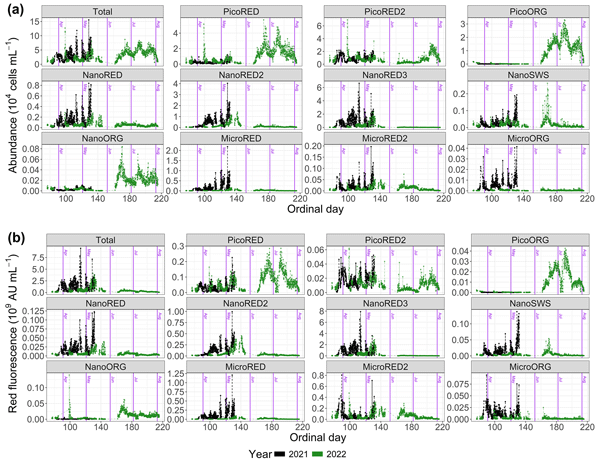
Kévin Robache, Zéline Hubert, Clémentine Gallot, Alexandre Epinoux, Arnaud P. Louchart, Jean-Valéry Facq, Alain Lefebvre, Michel Répécaud, Vincent Cornille, Florine Verhaeghe, Yann Audinet, Laurent Brutier, François G. Schmitt, and Luis Felipe Artigas
Ocean Sci., 21, 1787–1811, https://doi.org/10.5194/os-21-1787-2025, https://doi.org/10.5194/os-21-1787-2025, 2025
Short summary
Short summary
By deploying an automated flow cytometer at a coastal monitoring station in France, we tracked phytoplankton changes every 2 h during spring (2021 and 2022) and summer (2022). Our study revealed distinct seasonal shifts, e.g., with diatoms and haptophytes in spring. Rare weather events rapidly altered community composition. We found that most variability occurred on short timescales, underscoring the importance of high-frequency monitoring for understanding marine phytoplankton dynamics.
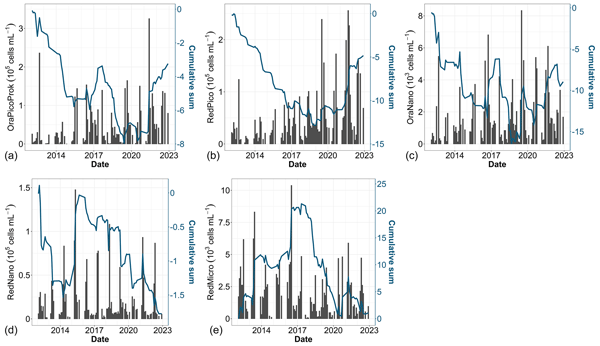
Zéline Hubert, Arnaud P. Louchart, Kévin Robache, Alexandre Epinoux, Clémentine Gallot, Vincent Cornille, Muriel Crouvoisier, Sébastien Monchy, and Luis Felipe Artigas
Ocean Sci., 21, 679–700, https://doi.org/10.5194/os-21-679-2025, https://doi.org/10.5194/os-21-679-2025, 2025
Short summary
Short summary
This study provides the first assessment of decadal changes in the whole phytoplankton community, addressed by flow cytometry, in the highly productive waters of the Strait of Dover. A significant surface seawater temperature increase of 1°C, associated with an important change in the nutrient concentration and balance, has triggered a change in the phytoplankton communities, characterized by a higher total abundance and an increasing proportion of the smallest cells (picroeukaryotes and picocyanobacteria).
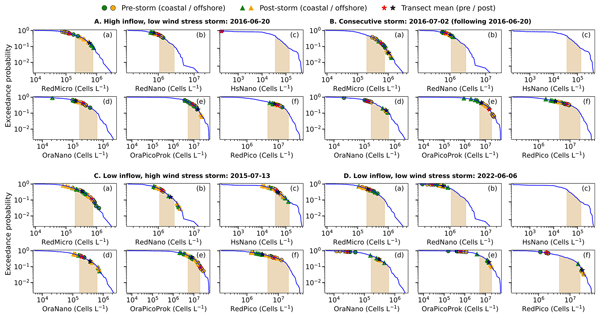
Harshal Chavan, Urania Christaki, Luis Felipe Artigas, and Francois G. Schmitt
Ocean Sci., 22, 2743–2777, https://doi.org/10.5194/os-22-2743-2026, https://doi.org/10.5194/os-22-2743-2026, 2026
Short summary
Short summary
We found that fluctuations in the marine environment during summer can trigger bloom formation in the nutrient-depleted eastern English Channel. Different storm impacts played various roles in promoting the growth of certain phytoplankton. Surplus nutrients supplied by rivers caused diatom blooms, while wind-driven storms supported the growth of pico- and nano-sized phytoplankton.
Kévin Robache, Zéline Hubert, Clémentine Gallot, Alexandre Epinoux, Arnaud P. Louchart, Jean-Valéry Facq, Alain Lefebvre, Michel Répécaud, Vincent Cornille, Florine Verhaeghe, Yann Audinet, Laurent Brutier, François G. Schmitt, and Luis Felipe Artigas
Ocean Sci., 21, 1787–1811, https://doi.org/10.5194/os-21-1787-2025, https://doi.org/10.5194/os-21-1787-2025, 2025
Short summary
Short summary
By deploying an automated flow cytometer at a coastal monitoring station in France, we tracked phytoplankton changes every 2 h during spring (2021 and 2022) and summer (2022). Our study revealed distinct seasonal shifts, e.g., with diatoms and haptophytes in spring. Rare weather events rapidly altered community composition. We found that most variability occurred on short timescales, underscoring the importance of high-frequency monitoring for understanding marine phytoplankton dynamics.
Zéline Hubert, Arnaud P. Louchart, Kévin Robache, Alexandre Epinoux, Clémentine Gallot, Vincent Cornille, Muriel Crouvoisier, Sébastien Monchy, and Luis Felipe Artigas
Ocean Sci., 21, 679–700, https://doi.org/10.5194/os-21-679-2025, https://doi.org/10.5194/os-21-679-2025, 2025
Short summary
Short summary
This study provides the first assessment of decadal changes in the whole phytoplankton community, addressed by flow cytometry, in the highly productive waters of the Strait of Dover. A significant surface seawater temperature increase of 1°C, associated with an important change in the nutrient concentration and balance, has triggered a change in the phytoplankton communities, characterized by a higher total abundance and an increasing proportion of the smallest cells (picroeukaryotes and picocyanobacteria).
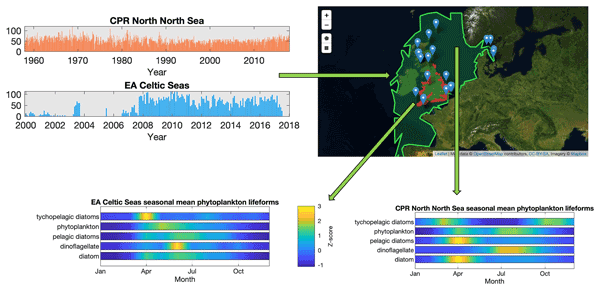
Clare Ostle, Kevin Paxman, Carolyn A. Graves, Mathew Arnold, Luis Felipe Artigas, Angus Atkinson, Anaïs Aubert, Malcolm Baptie, Beth Bear, Jacob Bedford, Michael Best, Eileen Bresnan, Rachel Brittain, Derek Broughton, Alexandre Budria, Kathryn Cook, Michelle Devlin, George Graham, Nick Halliday, Pierre Hélaouët, Marie Johansen, David G. Johns, Dan Lear, Margarita Machairopoulou, April McKinney, Adam Mellor, Alex Milligan, Sophie Pitois, Isabelle Rombouts, Cordula Scherer, Paul Tett, Claire Widdicombe, and Abigail McQuatters-Gollop
Earth Syst. Sci. Data, 13, 5617–5642, https://doi.org/10.5194/essd-13-5617-2021, https://doi.org/10.5194/essd-13-5617-2021, 2021
Short summary
Short summary
Plankton form the base of the marine food web and are sensitive indicators of environmental change. The Plankton Lifeform Extraction Tool brings together disparate plankton datasets into a central database from which it extracts abundance time series of plankton functional groups, called
lifeforms, according to shared biological traits. This tool has been designed to make complex plankton datasets accessible and meaningful for policy, public interest, and scientific discovery.
Cited articles
Auber, A., Gohin, F., Goascoz, N., and Schlaich, I.: Decline of cold-water fish species in the Bay of Somme (English Channel, France) in response to ocean warming, Estuarine, Coastal and Shelf Science, 189, 189–202, 2017. a
Berglund, J., Müren, U., Båmstedt, U., and Andersson, A.: Efficiency of a Phytoplankton-Based and a Bacterial-Based Food Web in a Pelagic Marine System, Limnology and Oceanography, 52, 121–131, https://doi.org/10.4319/lo.2007.52.1.0121, 2007. a
Bierman, P., Lewis, M., Ostendorf, B., and Tanner, J.: A Review of Methods for Analysing Spatial and Temporal Patterns in Coastal Water Quality, Ecological Indicators, 11, 103–114, https://doi.org/10.1016/j.ecolind.2009.11.001, 2011. a
Bonato, S., Christaki, U., Lefebvre, A., Lizon, F., Thyssen, M., and Artigas, L. F.: High Spatial Variability of Phytoplankton Assessed by Flow Cytometry, in a Dynamic Productive Coastal Area, in Spring: The Eastern English Channel, Estuarine, Coastal and Shelf Science, 154, 214–223, https://doi.org/10.1016/j.ecss.2014.12.037, 2015. a, b
Bonato, S., Breton, E., Didry, M., Lizon, F., Cornille, V., Lécuyer, E., Christaki, U., and Artigas, L. F.: Spatio-temporal patterns in phytoplankton assemblages in inshore–offshore gradients using flow cytometry: A case study in the eastern English Channel, Journal of Marine Systems, 156, 76–85, 2016. a, b, c
Breton, E., Brunet, C., Sautour, B., and Brylinski, J.-M.: Annual Variations of Phytoplankton Biomass in the Eastern English Channel: Comparison by Pigment Signatures and Microscopic Counts, Journal of Plankton Research, 22, 1423–1440, https://doi.org/10.1093/plankt/22.8.1423, 2000. a, b, c, d, e, f
Breton, E., Goberville, E., Sautour, B., Ouadi, A., Skouroliakou, D.-I., Seuront, L., Beaugrand, G., Kléparski, L., Crouvoisier, M., Pecqueur, D., Salmeron, C., Cauvin, A., Poquet, A., Garcia, N., Gohin, F., and Christaki, U.: Multiple Phytoplankton Community Responses to Environmental Change in a Temperate Coastal System: A Trait-Based Approach, Frontiers in Marine Science, 9, https://doi.org/10.3389/fmars.2022.914475, 2022. a, b
Brunet, C., Brylinski, J., Bodineau, L., Thoumelin, G., Bentley, D., and Hilde, D.: Phytoplankton dynamics during the spring bloom in the south-eastern English Channel, Estuarine, Coastal and Shelf Science, 43, 469–483, 1996. a
Cadée, G. C. and Hegeman, J.: Phytoplankton in the Marsdiep at the end of the 20th century; 30 years monitoring biomass, primary production, and Phaeocystis blooms, Journal of Sea Research, 48, 97–110, 2002. a
Chai, X., Zheng, L., Liu, J., Zhan, J., and Song, L.: Comparison of Photosynthetic Responses between Haptophyte Phaeocystis Globosa and Diatom Skeletonema Costatum under Phosphorus Limitation, Frontiers in Microbiology, 14, https://doi.org/10.3389/fmicb.2023.1085176, 2023. a
Christaki, U., Kormas, K. A., Genitsaris, S., Georges, C., Sime-Ngando, T., Viscogliosi, E., and Monchy, S.: Winter–summer succession of unicellular eukaryotes in a meso-eutrophic coastal system, Microbial Ecology, 67, 13–23, 2014. a
Cotonnec, G., Brunet, C., Sautour, B., and Thoumelin, G.: Nutritive value and selection of food particles by copepods during a spring bloom of Phaeocystis sp. in the English Channel, as determined by pigment and fatty acid analyses, Journal of Plankton Research, 23, 693–703, 2001. a
Desmit, X., Nohe, A., Borges, A. V., Prins, T., De Cauwer, K., Lagring, R., Van der Zande, D., and Sabbe, K.: Changes in chlorophyll concentration and phenology in the North Sea in relation to de-eutrophication and sea surface warming, Limnology and Oceanography, 65, 828–847, 2020. a
Dulière, V., Gypens, N., Lancelot, C., Luyten, P., and Lacroix, G.: Origin of nitrogen in the English Channel and Southern Bight of the North Sea ecosystems, Hydrobiologia, 845, 13–33, 2019. a
Falkowski, P. G. and Raven, J. A.: Aquatic Photosynthesis, Princeton University Press, ISBN 978-0-6911-1551-1, 2007. a
Fontana, S., Jokela, J., and Pomati, F.: Opportunities and Challenges in Deriving Phytoplankton Diversity Measures from Individual Trait-Based Data Obtained by Scanning Flow-Cytometry, Frontiers in Microbiology, 5, https://doi.org/10.3389/fmicb.2014.00324, 2014. a
Fragoso, G. M., Poulton, A. J., Pratt, N. J., Johnsen, G., and Purdie, D. A.: Trait-Based Analysis of Subpolar North Atlantic Phytoplankton and Plastidic Ciliate Communities Using Automated Flow Cytometer, Limnology and Oceanography, 64, 1763–1778, https://doi.org/10.1002/lno.11189, 2019. a, b, c
Gallot, C., Hubert, Z., Haraguchi, L., Aardema, H., Artigas, L. F., Bellaaj Zouari, A., Cauvin, A., Casotti, R., Créach, V., Dubelaar, G., Epinoux, A., Grégori, G., Grosso, O., Kolasinki, J., Kools, H., Lievaart, R., Louchart, A. P., Moreira Fragoso, G., Palazot, M., Rijkeboer, M., Robache, K., Rolland, J., Rutten, T., and Thyssen, M.: Best Practices for Optimization of Phytoplankton Analysis in Natural Waters Using CytoSense Flow Cytometers, Cytometry Part A, https://doi.org/10.1002/cyto.a.24964, 2025. a
Galvin, J.: The storms of February 2020 in the channel islands and south west England, Weather, 77, 43–48, 2022. a
Gentilhomme, V. and Lizon, F.: Seasonal cycle of nitrogen and phytoplankton biomass in a well-mixed coastal system (Eastern English Channel), Hydrobiologia, 361, 191–199, 1997. a
Giering, S. and Humphreys, M.: Biological Pump, in: Encyclopedia of Earth Sciences Series, Springer, https://doi.org/10.1007/978-3-319-39193-9_154-1, 2017. a
Girardin, R., Vermard, Y., Thébaud, O., Tidd, A., and Marchal, P.: Predicting fisher response to competition for space and resources in a mixed demersal fishery, Ocean & Coastal Management, 106, 124–135, 2015. a
Grattepanche, J.-D., Breton, E., Brylinski, J.-M., Lecuyer, E., and Christaki, U.: Succession of Primary Producers and Micrograzers in a Coastal Ecosystem Dominated by Phaeocystis Globosa Blooms, Journal of Plankton Research, 33, 37–50, https://doi.org/10.1093/plankt/fbq097, 2011. a, b, c, d
Guinaldo, T., Voldoire, A., Waldman, R., Saux Picart, S., and Roquet, H.: Response of the sea surface temperature to heatwaves during the France 2022 meteorological summer, Ocean Science, 19, 629–647, https://doi.org/10.5194/os-19-629-2023, 2023. a
Haraguchi, L., Jakobsen, H. H., Lundholm, N., and Carstensen, J.: Monitoring Natural Phytoplankton Communities: A Comparison between Traditional Methods and Pulse-Shape Recording Flow Cytometry, Aquatic Microbial Ecology, 80, 77–92, https://doi.org/10.3354/ame01842, 2017. a
Hernandez Farinas, T., Menet-Nedelec, F., M Zari, L., Courtay, G., and Lampert, L.: Etude de la dynamique et de la composition du phytoplancton via l'approche des pigments appliquée au littoral normand, Tech. rep., Ifremer, https://archimer.ifremer.fr/doc/00687/79903/ (last access: 28 January 2026), 2020. a
Holm-Hansen, O., Lorenzen, C. J., Holmes, R. W., and Strickland, J. D. H.: Fluorometric Determination of Chlorophyll, ICES Journal of Marine Science, 30, 3–15, https://doi.org/10.1093/icesjms/30.1.3, 1965. a
Houliez, E., Lizon, F., Thyssen, M., Artigas, L. F., and Schmitt, F. G.: Spectral Fluorometric Characterization of Haptophyte Dynamics Using the FluoroProbe: An Application in the Eastern English Channel for Monitoring Phaeocystis Globosa, Journal of Plankton Research, 34, 136–151, https://doi.org/10.1093/plankt/fbr091, 2012. a, b, c
Hubert, Z., Artigas, L. F., Li, L.-L., Dédécker, C., and Monchy, S.: Exploring the Regional Diversity of Eukaryotic Phytoplankton in the English Channel by Combining High-Throughput Approaches, MicrobiologyOpen, 14, e70097, https://doi.org/10.1002/mbo3.70097, 2025a. a, b
Hubert, Z., Libeau, A., Gallot, C., and Artigas, L. F.: Dynamics of Phytoplankton on RADiale of the Saint-Jean Bay (DYPHYRAD) Surveys, SEANOE [data set], https://doi.org/10.17882/104524, 2025b. a, b
Hubert, Z., Louchart, A. P., Robache, K., Epinoux, A., Gallot, C., Cornille, V., Crouvoisier, M., Monchy, S., and Artigas, L. F.: Decadal changes in phytoplankton functional composition in the Eastern English Channel: possible upcoming major effects of climate change, Ocean Science, 21, 679–700, https://doi.org/10.5194/os-21-679-2025, 2025c. a, b
Kang, Y., Moon, C.-H., Kim, H.-J., Yoon, Y. H., and Kang, C.-K.: Water quality improvement shifts the dominant phytoplankton group from cryptophytes to diatoms in a coastal ecosystem, Frontiers in Marine Science, 8, 710891, https://doi.org/10.3389/fmars.2021.710891, 2021. a
Laane, R., Groeneveld, G., Devries, A., Vanbennekom, J., and Sydow, S.: Nutrients (P, N, Si) in the channel and the dover strait-seasonal and year-to-year variation and fluxes to the north-sea, in: Oceanologica Acta, vol. 16, Gauthier-Villars, 607–616, https://archimer.ifremer.fr/doc/00100/21125/ (last access: 28 January 2026) 1993. a
Lamy, D., Obernosterer, I., Laghdass, M., Artigas, L., Breton, E., Grattepanche, J., Lecuyer, E., Degros, N., Lebaron, P., and Christaki, U.: Temporal changes of major bacterial groups and bacterial heterotrophic activity during a Phaeocystis globosa bloom in the eastern English Channel, Aquatic Microbial Ecology, 58, 95–107, 2009. a, b, c
Lancelot, C., Spitz, Y., Gypens, N., Ruddick, K., Becquevort, S., Rousseau, V., Lacroix, G., and Billen, G.: Modelling Diatom and Phaeocystis Blooms and Nutrient Cycles in the Southern Bight of the North Sea: The MIRO Model, Marine Ecology Progress Series, 289, 63–78, https://doi.org/10.3354/meps289063, 2005. a
Lefebvre, A. and Delpech, J.-P.: Le bloom de Phaeocystis en Manche orientale. Nuisances socio-économiques et/ou écologiques?, Ifremer, https://archimer.ifremer.fr/doc/00326/43756/ (last access: 28 January 2026), 2004. a
Lefebvre, A. and Poisson-Caillault, E.: High resolution overview of phytoplankton spectral groups and hydrological conditions in the eastern English Channel using unsupervised clustering, Marine Ecology Progress Series, 608, 73–92, 2019. a
Lefebvre, A., Guiselin, N., Barbet, F., and Artigas, F. L.: Long-Term Hydrological and Phytoplankton Monitoring (1992–2007) of Three Potentially Eutrophic Systems in the Eastern English Channel and the Southern Bight of the North Sea, ICES Journal of Marine Science, 68, 2029–2043, https://doi.org/10.1093/icesjms/fsr149, 2011. a, b, c, d, e
Lorenzen, C. J.: Determination of Chlorophyll and Pheo-Pigments: Spectrophotometric Equations1, Limnology and Oceanography, 12, 343–346, https://doi.org/10.4319/lo.1967.12.2.0343, 1967. a
Louchart, A., Holland, M., Mcquatters-Gollop, A., and Artigas, L. F.: Changes in Plankton diversity common indicator assessment changes in Plankton diversity, OSPAR, 2023: The 2023 Quality Status Report for the Northeast Atlantic, p. 38, OSPAR Commission, https://hal.science/hal-04404168/ (last access: 28 January 2026), 2023. a
Lundholm, N., Bernard, C., Churro, C., Escalera, L., Hoppenrath, M., Iwataki, M., Larsen, J., Mertens, K., Moestrup, Ø., Murray, S., Salas, R., Tillmann, U., and Zingone, A.: IOC-UNESCO Taxonomic Reference List of Harmful Micro Algae, WORMS, https://doi.org/10.14284/362, 2025. a
Marie, D., Shi, X. L., Rigaut-Jalabert, F., and Vaulot, D.: Use of Flow Cytometric Sorting to Better Assess the Diversity of Small Photosynthetic Eukaryotes in the English Channel, FEMS Microbiology Ecology, 72, 165–178, https://doi.org/10.1111/j.1574-6941.2010.00842.x, 2010. a
Masquelier, S., Foulon, E., Jouenne, F., Ferréol, M., Brussaard, C. P. D., and Vaulot, D.: Distribution of Eukaryotic Plankton in the English Channel and the North Sea in Summer, Journal of Sea Research, 66, 111–122, https://doi.org/10.1016/j.seares.2011.05.004, 2011. a
Monchy, S., Grattepanche, J.-D., Breton, E., Meloni, D., Sanciu, G., Chabe, M., Delhaes, L., Viscogliosi, E., Sime-Ngando, T., and Christaki, U.: Microplanktonic community structure in a coastal system relative to a Phaeocystis bloom inferred from morphological and tag pyrosequencing methods, PLoS One, 7, e39924, https://doi.org/10.1371/journal.pone.0039924, 2012. a
Passow, U., Rocha, C. L. D. L., Arnosti, C., Grossart, H.-P., Murray, A. E., and Engel, A.: Microbial Dynamics in Autotrophic and Heterotrophic Seawater Mesocosms. I. Effect of Phytoplankton on the Microbial Loop, Aquatic Microbial Ecology, 49, 109–121, https://doi.org/10.3354/ame01138, 2007. a
Peperzak, L. and van Wezel, R.: Human Fatalities Related to a Phaeocystis Harmful Algal Bloom in the North Sea, Harmful Algae, 130, 102545, https://doi.org/10.1016/j.hal.2023.102545, 2023. a
Peperzak, L., Colijn, F., Gieskes, W., and Peeters, J.: Development of the diatom-Phaeocystis spring bloom in the Dutch coastal zone of the North Sea: the silicon depletion versus the daily irradiance threshold hypothesis, Journal of Plankton Research, 20, 517–537, 1998. a
Pittera, J., Humily, F., Thorel, M., Grulois, D., Garczarek, L., and Six, C.: Connecting Thermal Physiology and Latitudinal Niche Partitioning in Marine Synechococcus, The ISME Journal, 8, 1221–1236, https://doi.org/10.1038/ismej.2013.228, 2014. a
Rachik, S., Christaki, U., Li, L. L., Genitsaris, S., Breton, E., and Monchy, S.: Diversity and potential activity patterns of planktonic eukaryotic microbes in a mesoeutrophic coastal area (eastern English Channel), PLoS One, 13, e0196987, https://doi.org/10.1371/journal.pone.0196987, 2018. a
Reynolds, C. S.: The ecology of phytoplankton, Cambridge University Press, https://doi.org/10.1017/CBO9780511542145, 2006. a
Robache, K., Hubert, Z., Gallot, C., Epinoux, A., Louchart, A. P., Facq, J.-V., Lefebvre, A., Répécaud, M., Cornille, V., Verhaeghe, F., Audinet, Y., Brutier, L., Schmitt, F. G., and Artigas, L. F.: Multiscale phytoplankton dynamics in a coastal system of the eastern English Channel: the Boulogne-sur-Mer coastal area, Ocean Science, 21, 1787–1811, https://doi.org/10.5194/os-21-1787-2025, 2025. a
Rombouts, I., Simon, N., Aubert, A., Cariou, T., Feunteun, E., Guérin, L., Hoebeke, M., McQuatters-Gollop, A., Rigaut-Jalabert, F., and Artigas, L. F.: Changes in Marine Phytoplankton Diversity: Assessment under the Marine Strategy Framework Directive, Ecological Indicators, 102, 265–277, https://doi.org/10.1016/j.ecolind.2019.02.009, 2019. a, b
Rousseau, V., Becquevort, S., Parent, J.-Y., Gasparini, S., Daro, M.-H., Tackx, M., and Lancelot, C.: Trophic efficiency of the planktonic food web in a coastal ecosystem dominated by Phaeocystis colonies, Journal of Sea Research, 43, 357–372, 2000. a
Rousseaux, C. S. and Gregg, W. W.: Interannual Variation in Phytoplankton Primary Production at A Global Scale, Remote Sensing, 6, 1–19, https://doi.org/10.3390/rs6010001, 2014. a
Roy, S., Sathyendranath, S., Bouman, H., and Platt, T.: The global distribution of phytoplankton size spectrum and size classes from their light-absorption spectra derived from satellite data, Remote Sensing of Environment, 139, 185–197, 2013. a
Ruela, R., Sousa, M., DeCastro, M., and Dias, J.: Global and regional evolution of sea surface temperature under climate change, Global and Planetary Change, 190, 103190, https://doi.org/10.1016/j.gloplacha.2020.103190, 2020. a
Rutten, T. P. A., Sandee, B., and Hofman, A. R. T.: Phytoplankton Monitoring by High Performance Flow Cytometry: A Successful Approach?, Cytometry Part A, 64A, 16–26, https://doi.org/10.1002/cyto.a.20106, 2005. a, b
Salmaso, N. and Tolotti, M.: Phytoplankton and anthropogenic changes in pelagic environments, Hydrobiologia, 848, 251–284, 2021. a
Saulquin, B. and Gohin, F.: Mean seasonal cycle and evolution of the sea surface temperature from satellite and in situ data in the English Channel for the period 1986–2006, International Journal of Remote Sensing, 31, 4069–4093, 2010. a
Schapira, M., Vincent, D., Gentilhomme, V., and Seuront, L.: Temporal Patterns of Phytoplankton Assemblages, Size Spectra and Diversity during the Wane of a Phaeocystis Globosa Spring Bloom in Hydrologically Contrasted Coastal Waters, Journal of the Marine Biological Association of the United Kingdom, 88, 649–662, https://doi.org/10.1017/S0025315408001306, 2008. a, b
Seuront, L.: Hydrodynamic and tidal controls of small-scale phytoplankton patchiness, Marine Ecology Progress Series, 302, 93–101, 2005. a
Skouroliakou, D.-I., Breton, E., Irion, S., Artigas, L. F., and Christaki, U.: Stochastic and Deterministic Processes Regulate Phytoplankton Assemblages in a Temperate Coastal Ecosystem, Microbiology Spectrum, 10, e02427-22, https://doi.org/10.1128/spectrum.02427-22, 2022. a, b, c
Skouroliakou, D.-I., Breton, E., and Christaki, U.: Phaeocystis globosa and Diatom Blooms Promote Distinct Bacterial Communities and Associations in a Coastal Ecosystem, Environmental Microbiology Reports, 16, e13313, https://doi.org/10.1111/1758-2229.13313, 2024. a, b
Smith Jr., W. O. and Trimborn, S.: Phaeocystis: A global enigma, Annual Review of Marine Science, 16, 417–441, 2024. a
Taylor, A., Reid, P., Marsh, T., Jonas, T., and Stephens, J.: Year-to-year changes in the salinity of the eastern English Channel, 1948–1973: a budget, Journal of the Marine Biological Association of the United Kingdom, 61, 489–507, 1981. a
Thiébaut, M. and Sentchev, A.: Tidal Stream Resource Assessment in the Dover Strait (Eastern English Channel), International Journal of Marine Energy, 16, 262–278, https://doi.org/10.1016/j.ijome.2016.08.004, 2016. a
Thyssen, M., Alvain, S., Lefèbvre, A., Dessailly, D., Rijkeboer, M., Guiselin, N., Creach, V., and Artigas, L.-F.: High-resolution analysis of a North Sea phytoplankton community structure based on in situ flow cytometry observations and potential implication for remote sensing, Biogeosciences, 12, 4051–4066, https://doi.org/10.5194/bg-12-4051-2015, 2015. a
Thyssen, M., Grégori, G., Créach, V., Lahbib, S., Dugenne, M., Aardema, H. M., Artigas, L.-F., Huang, B., Barani, A., Beaugeard, L., Bellaaj-Zouari, A., Beran, A., Casotti, R., Del Amo, Y., Denis, M., Dubelaar, G. B. J., Endres, S., Haraguchi, L., Karlson, B., Lambert, C., Louchart, A., Marie, D., Moncoiffé, G., Pecqueur, D., Ribalet, F., Rijkeboer, M., Silovic, T., Silva, R., Marro, S., Sosik, H. M., Sourisseau, M., Tarran, G., Van Oostende, N., Zhao, L., and Zheng, S.: Interoperable Vocabulary for Marine Microbial Flow Cytometry, Frontiers in Marine Science, 9, https://doi.org/10.3389/fmars.2022.975877, 2022. a
van Boekel, W. H. M., Hansen, F. C., Riegman, R., and Bak, R. P. M.: Lysis-Induced Decline of a Phaeocystis Spring Bloom and Coupling with the Microbial Foodweb, Marine Ecology Progress Series, 81, 269–276, 1992. a
Von Dassow, P., van Den Engh, G., Iglesias-Rodriguez, D., and Gittins, J. R.: Calcification state of coccolithophores can be assessed by light scatter depolarization measurements with flow cytometry, Journal of Plankton Research, 34, 1011–1027, https://doi.org/10.1093/plankt/fbs061, 2012. a
Wang, X., Du, D., and Peng, Y.: Assessing the Importance of the Marine Chokepoint: Evidence from Tracking the Global Marine Traffic, Sustainability, 16, 384, https://doi.org/10.3390/su16010384, 2023. a
Wong, A., Keeley, R., Carval, T., and Argo Data Management Team: Argo Quality Control Manual for CTD and Trajectory Data, 2019. a
Short summary
Long-term phytoplankton monitoring is key to understanding marine systems. This study presents a decade of observations along a coastal-offshore transect in the Strait of Dover using automated in vivo methods. Since 2012, phytoplankton groups have been analyzed via multi-spectral fluorometry and flow cytometry, alongside biogeochemical and hydrological measurements. This dataset offers valuable insights into phytoplankton dynamics and environmental drivers in a temperate coastal system.
Long-term phytoplankton monitoring is key to understanding marine systems. This study presents a...


Altmetrics
Final-revised paper
Preprint