Articles | Volume 18, issue 3
https://doi.org/10.5194/essd-18-1703-2026
© Author(s) 2026. This work is distributed under
the Creative Commons Attribution 4.0 License.
the Creative Commons Attribution 4.0 License.
https://doi.org/10.5194/essd-18-1703-2026
© Author(s) 2026. This work is distributed under
the Creative Commons Attribution 4.0 License.
the Creative Commons Attribution 4.0 License.
Data description article
| 
05 Mar 2026
Data description article |
| 05 Mar 2026
| 05 Mar 2026
The Potsdam Soil Moisture Observatory: high-coverage reference observations at kilometer scale
Peter M. Grosse
Institute of Environmental Science and Geography, University of Potsdam, Karl-Liebknecht-Straße 24–25, 14476 Potsdam, Germany
UFZ – Helmholtz Centre for Environmental Research GmbH, Dep. Monitoring and Exploration Technologies, Permoserstr. 15, 04318 Leipzig, Germany
Elodie Marret
Institute of Environmental Science and Geography, University of Potsdam, Karl-Liebknecht-Straße 24–25, 14476 Potsdam, Germany
Lena Scheiffele
CORRESPONDING AUTHOR

Institute of Environmental Science and Geography, University of Potsdam, Karl-Liebknecht-Straße 24–25, 14476 Potsdam, Germany
now at: UFZ – Helmholtz Centre for Environmental Research GmbH, Dep. Computational Hydrosystems, Permoserstr. 15, 04318 Leipzig, Germany
Katya Dimitrova Petrova
Institute of Environmental Science and Geography, University of Potsdam, Karl-Liebknecht-Straße 24–25, 14476 Potsdam, Germany
Till Francke
Institute of Environmental Science and Geography, University of Potsdam, Karl-Liebknecht-Straße 24–25, 14476 Potsdam, Germany
Daniel Altdorff
Institute of Environmental Science and Geography, University of Potsdam, Karl-Liebknecht-Straße 24–25, 14476 Potsdam, Germany
UFZ – Helmholtz Centre for Environmental Research GmbH, Dep. Computational Hydrosystems, Permoserstr. 15, 04318 Leipzig, Germany
Maik Heistermann
Institute of Environmental Science and Geography, University of Potsdam, Karl-Liebknecht-Straße 24–25, 14476 Potsdam, Germany
Merlin Schiel
Institute of Environmental Science and Geography, University of Potsdam, Karl-Liebknecht-Straße 24–25, 14476 Potsdam, Germany
Carsten Neumann
GFZ Helmholtz Centre for Geosciences, Section Remote Sensing and Geoinformatics, Telegrafenberg, 14473 Potsdam, Germany
Daniel Scheffler
GFZ Helmholtz Centre for Geosciences, Section Remote Sensing and Geoinformatics, Telegrafenberg, 14473 Potsdam, Germany
Mehdi Saberioon
GFZ Helmholtz Centre for Geosciences, Section Remote Sensing and Geoinformatics, Telegrafenberg, 14473 Potsdam, Germany
Matthias Kunz
GFZ Helmholtz Centre for Geosciences, Section Remote Sensing and Geoinformatics, Telegrafenberg, 14473 Potsdam, Germany
Jonas Marach
Physikalisch-Technische Bundesanstalt (PTB), Bundesallee 100, 38116 Braunschweig, Germany
Marcel Reginatto
Physikalisch-Technische Bundesanstalt (PTB), Bundesallee 100, 38116 Braunschweig, Germany
Miroslav Zboril
Physikalisch-Technische Bundesanstalt (PTB), Bundesallee 100, 38116 Braunschweig, Germany
Anna Balenzano
National Research Council of Italy (CNR), Institute for Electromagnetic Sensing of the Environment (IREA), UOS Bari, Via G. Amendola 122 D-I, 70126, Bari, Italy
Daniel Rasche
GFZ Helmholtz Centre for Geosciences, Section Hydrology, Telegrafenberg, 14473 Potsdam, Germany
Christine Stumpp
BOKU University, Soil Physics and Rural Water Management, Muthgasse 18, 1190 Vienna, Austria
Benjamin Trost
Leibniz Institute for Agricultural Engineering and Bioeconomy (ATB), Max-Eyth-Allee 100, 14469 Potsdam, Germany
Sascha E. Oswald
CORRESPONDING AUTHOR
Institute of Environmental Science and Geography, University of Potsdam, Karl-Liebknecht-Straße 24–25, 14476 Potsdam, Germany
Related authors
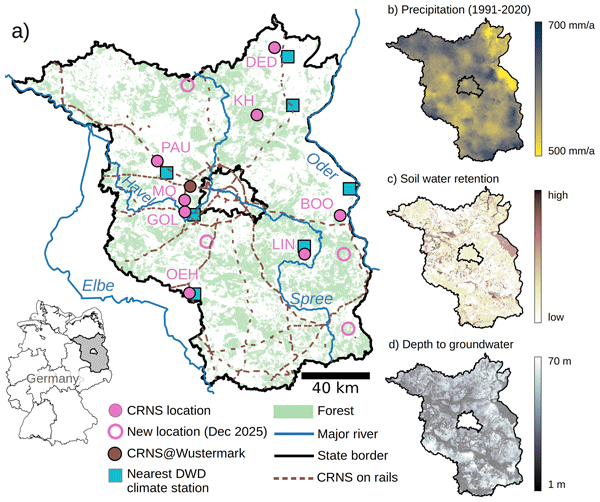
Maik Heistermann, Daniel Altdorff, Till Francke, Martin Schrön, Peter M. Grosse, Arvid Markert, Albrecht Bauriegel, Peter Biró, Sabine Attinger, Frank Beyrich, Peter Dietrich, Rebekka Eichstädt, Jakob Terschlüsen, Ariane Walz, Steffen Zacharias, and Sascha E. Oswald
Nat. Hazards Earth Syst. Sci., 26, 465–486, https://doi.org/10.5194/nhess-26-465-2026, https://doi.org/10.5194/nhess-26-465-2026, 2026
Short summary
Short summary
The German federal state of Brandenburg is particularly prone to soil moisture droughts. To support the management of related risks, we introduce a novel soil moisture monitoring network based on cosmic-ray neutron sensing technology. The resulting observations can be particularly helpful to evaluate and improve soil moisture products from modelling or remote sensing.
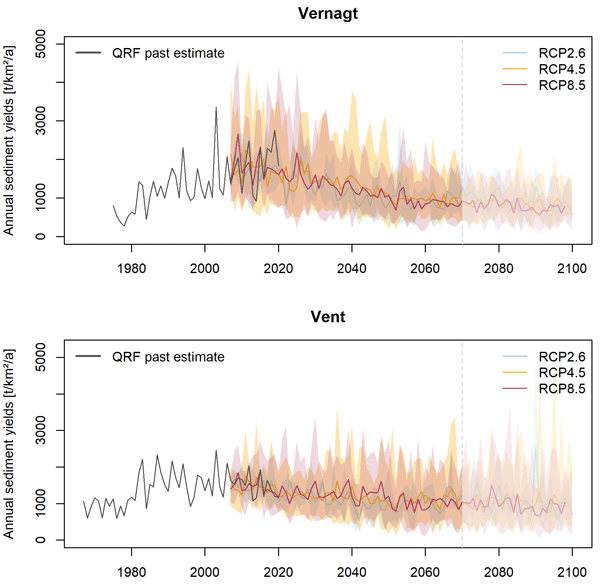
Lena Katharina Schmidt, Till Francke, Peter Martin Grosse, and Axel Bronstert
Hydrol. Earth Syst. Sci., 28, 139–161, https://doi.org/10.5194/hess-28-139-2024, https://doi.org/10.5194/hess-28-139-2024, 2024
Short summary
Short summary
How suspended sediment export from glacierized high-alpine areas responds to future climate change is hardly assessable as many interacting processes are involved, and appropriate physical models are lacking. We present the first study, to our knowledge, exploring machine learning to project sediment export until 2100 in two high-alpine catchments. We find that uncertainties due to methodological limitations are small until 2070. Negative trends imply that peak sediment may have already passed.

Lena Katharina Schmidt, Till Francke, Peter Martin Grosse, Christoph Mayer, and Axel Bronstert
Hydrol. Earth Syst. Sci., 27, 1841–1863, https://doi.org/10.5194/hess-27-1841-2023, https://doi.org/10.5194/hess-27-1841-2023, 2023
Short summary
Short summary
We present a suitable method to reconstruct sediment export from decadal records of hydroclimatic predictors (discharge, precipitation, temperature) and shorter suspended sediment measurements. This lets us fill the knowledge gap on how sediment export from glacierized high-alpine areas has responded to climate change. We find positive trends in sediment export from the two investigated nested catchments with step-like increases around 1981 which are linked to crucial changes in glacier melt.
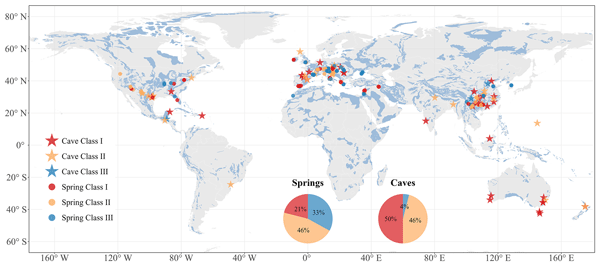
Yining Zang, Pauline C. Treble, Kei Yoshimura, Jayson Gabriel Pinza, Fengbo Zhang, Kübra Özdemir Çallı, Xiaojun Mei, Admin Husic, Alena Gessert, Andrej Stroj, Bartolomé Andreo, Bernard Ladouche, Christine Stumpp, Diana Mance, Eleni Zagana, Fen Huang, Giuseppe Sappa, Harald Kunstmann, Heike Brielmann, Hong Zhou, Huaying Wu, Jakob Garvelmann, James Berglund, Jean-Baptiste Charlier, Jens Lange, Juan Antonio Barberá Fornell, Junbing Pu, Konstantina Katsanou, Kun Ren, Laura Toran, Laurence Gill, Maria Filippini, Martin Kralik, Matías Mudarra Martínez, Min Zhao, Mingming Luo, Nico Goldscheider, Nikolaos Lambrakis, Pantaleone De Vita, Qiong Xiao, Shi Yu, Silvia Iacurto, Silvio Coda, Ted McCormack, Vincenzo Allocca, W. George Darling, Walter D'Alessandro, Xulei Guo, Yundi Hu, Zhijun Wang, Eva Kaminsky, Jiří Faimon, Marek Lang, Pavel Pracný, Aurel Persoiu, and Andreas Hartmann
Earth Syst. Sci. Data, 18, 7199–7225, https://doi.org/10.5194/essd-18-7199-2026, https://doi.org/10.5194/essd-18-7199-2026, 2026
Short summary
Short summary
We developed the first global database of water from karst springs and cave drips that records different forms of oxygen and hydrogen, which naturally trace how rainwater moves through rocks. By gathering and checking thousands of measurements from around the globe and linking them with flow and rainfall data, the database provides a comprehensive view of water movement, allows scientists to compare regions, understand groundwater processes, and support sustainable water management worldwide.
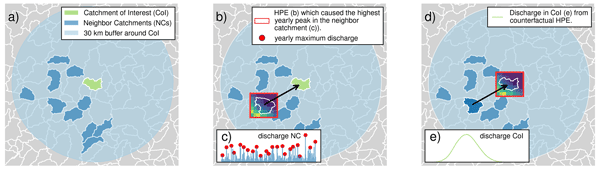
Paul Voit, Felix Fauer, and Maik Heistermann
Nat. Hazards Earth Syst. Sci., 26, 2189–2201, https://doi.org/10.5194/nhess-26-2189-2026, https://doi.org/10.5194/nhess-26-2189-2026, 2026
Short summary
Short summary
Reliable flood estimates are vital for effective flood risk management, yet short observation records often limit accuracy. We present a new approach that adds realistic "what if" flood scenarios from nearby similar catchments. Applied to thousands of small German basins, our method improves flood frequency estimates, reducing uncertainty and supporting more robust planning for extreme events.
Paul Voit, Marie Hundhausen, Larisa Seregina, Hendrik Feldmann, Bodo Ahrens, and Maik Heistermann
EGUsphere, https://doi.org/10.5194/egusphere-2026-1229, https://doi.org/10.5194/egusphere-2026-1229, 2026
Short summary
Short summary
Extreme rainfall is expected to increase with a warming climate. However, it remains unclear how this will impact future floods. This study utilizes an ensemble of 6 new datasets, containing the future projected rainfall, and compares the simulated flash floods of the past (1971–2000) and future (2071–2100) under the RCP8.5 scenario for the German part of the Danube catchment. Our results indicate an increase of 100-yr flood return levels of 30 % across all subcatchments under this scenario.
Hatice Türk, Christine Stumpp, Markus Hrachowitz, Peter Strauss, Günter Blöschl, and Michael Stockinger
Hydrol. Earth Syst. Sci., 30, 1053–1076, https://doi.org/10.5194/hess-30-1053-2026, https://doi.org/10.5194/hess-30-1053-2026, 2026
Short summary
Short summary
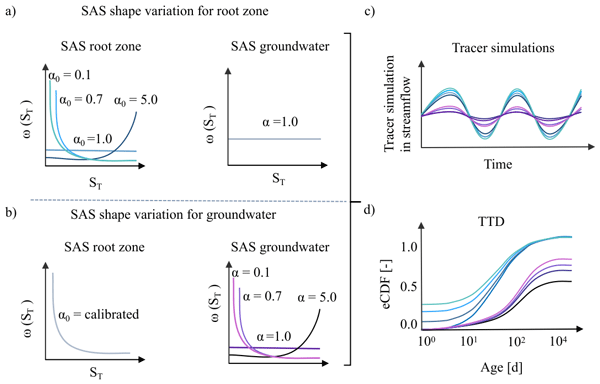
This study shows that streamflow isotope data in a catchment-scale isotope-based transport model were sufficient to isolate preferential flow in the unsaturated zone but insufficient to isolate the preferential release of young groundwater, as isotope signals were strongly damped by large passive groundwater storage. As a result, groundwater age-selection assumptions affected estimates of long transit times, making it difficult to quantify the fraction of stream water older than 100 days.

Nazaré Suziane Soares, Carlos Alexandre Gomes Costa, Till Francke, Christian Mohr, Wolfgang Schwanghart, and Pedro Henrique Augusto Medeiros
Hydrol. Earth Syst. Sci., 30, 849–875, https://doi.org/10.5194/hess-30-849-2026, https://doi.org/10.5194/hess-30-849-2026, 2026
Short summary
Short summary
We use drone surveys to map river intermittency in reaches and classify them into "Wet", "Transition", "Dry" or "Not Determined". We train Random Forest models with 40 candidate predictors, and select altitude, drainage area, distance from dams and dynamic predictors. We separate different models based on dynamic predictors: satellite indices (a) and (b); or (c) antecedent precipitation index (30 days). Model (a) is the most successful in simulating intermittency both temporally and spatially.
Maik Heistermann, Daniel Altdorff, Till Francke, Martin Schrön, Peter M. Grosse, Arvid Markert, Albrecht Bauriegel, Peter Biró, Sabine Attinger, Frank Beyrich, Peter Dietrich, Rebekka Eichstädt, Jakob Terschlüsen, Ariane Walz, Steffen Zacharias, and Sascha E. Oswald
Nat. Hazards Earth Syst. Sci., 26, 465–486, https://doi.org/10.5194/nhess-26-465-2026, https://doi.org/10.5194/nhess-26-465-2026, 2026
Short summary
Short summary
The German federal state of Brandenburg is particularly prone to soil moisture droughts. To support the management of related risks, we introduce a novel soil moisture monitoring network based on cosmic-ray neutron sensing technology. The resulting observations can be particularly helpful to evaluate and improve soil moisture products from modelling or remote sensing.
M. Ángeles Millán-Callado, Roberto Méndez Villafañe, Buthaina A. S. Adam, Pavol Blahušiak, Augusto Di Chicco, Mirco Dietz, Markus Köhli, Benjamin Lutz, Marcel Reginatto, Zdenek Vykydal, Jannis Weimar, and Miroslav Zbořil
EGUsphere, https://doi.org/10.5194/egusphere-2025-4825, https://doi.org/10.5194/egusphere-2025-4825, 2025
Short summary
Short summary
This work explores how soil moisture can be measured more reliably using detectors that sense cosmic-ray neutrons, which are influenced by water in the soil. To characterize these detectors, experiments at two reference metrology laboratories, combined with computer simulations, provided the first benchmark data under controlled conditions. These results pave the way for international calibration standards, ensuring consistent monitoring to support farming, water management, and climate studies.
Marie-Therese Schmehl, Yojana Adhikari, Cathrina Balthasar, Anja Binder, Danica Clerc, Sophia Dobkowitz, Werner Gerwin, Kristin Günther, Heinrich Hartong, Thilo Heinken, Carsten Hess, Pierre L. Ibisch, Florent Jouy, Loretta Leinen, Thomas Raab, Frank Repmann, Susanne Rönnefarth, Lilly Rohlfs, Marina Schirrmacher, Jens Schröder, Maren Schüle, Andrea Vieth-Hillebrand, and Till Francke
Earth Syst. Sci. Data, 17, 6295–6313, https://doi.org/10.5194/essd-17-6295-2025, https://doi.org/10.5194/essd-17-6295-2025, 2025
Short summary
Short summary
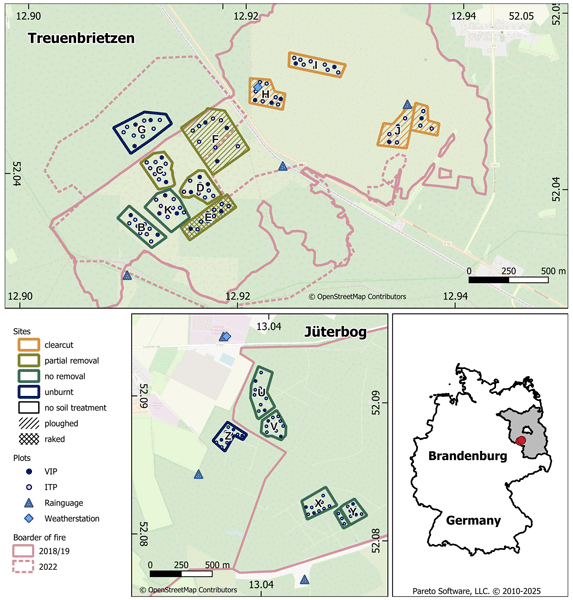
We present data recorded by eight institutions within the PYROPHOB project, running from 2020 to 2024 at two forest research sites in northeastern Germany. The aim of the project was to monitor abiotic and biotic parameters of forest regrowth under different management regimes on former wildfire sites. The multitude of collected data allows for detailed analyses of the observables separately, as well as their interaction for a more multidisciplinary view on forest recovery after a wildfire.
Marco M. Lehmann, Josie Geris, Ilja van Meerveld, Daniele Penna, Youri Rothfuss, Matteo Verdone, Pertti Ala-Aho, Matyas Arvai, Alise Babre, Philippe Balandier, Fabian Bernhard, Lukrecija Butorac, Simon D. Carrière, Natalie C. Ceperley, Zuosinan Chen, Alicia Correa, Haoyu Diao, David Dubbert, Maren Dubbert, Fabio Ercoli, Marius G. Floriancic, Alligin Ghazoul, Teresa E. Gimeno, Damien Gounelle, Frank Hagedorn, Christophe Hissler, Frédéric Huneau, Alberto Iraheta, Tamara Jakovljević, Nerantzis Kazakis, Zoltan Kern, Laura Kinzinger, Karl Knaebel, Johannes Kobler, Jiri Kocum, Charlotte Koeber, Gerbrand Koren, Angelika Kübert, Dawid Kupka, Samuel Le Gall, Aleksi Lehtonen, Thomas Leydier, Philippe Malagoli, Francesca Sofia Manca di Villahermosa, Chiara Marchina, Núria Martínez-Carreras, Nicolas Martin-StPaul, Hannu Marttila, Aline Meyer Oliveira, Gael Monvoisin, Natalie Orlowski, Kadi Palmik-Das, Aurel Persoiu, Andrei Popa, Egor Prikaziuk, Cécile Quantin, Katja T. Rinne-Garmston, Clara Rohde, Martin Sanda, Matthias Saurer, Daniel Schulz, Michael P. Stockinger, Christine Stumpp, Jean-Stéphane Vénisse, Lukas Vlcek, Stylianos Voudouris, Björn Weeser, Mark E. Wilkinson, Giulia Zuecco, and Katrin Meusburger
Earth Syst. Sci. Data, 17, 6129–6147, https://doi.org/10.5194/essd-17-6129-2025, https://doi.org/10.5194/essd-17-6129-2025, 2025
Short summary
Short summary
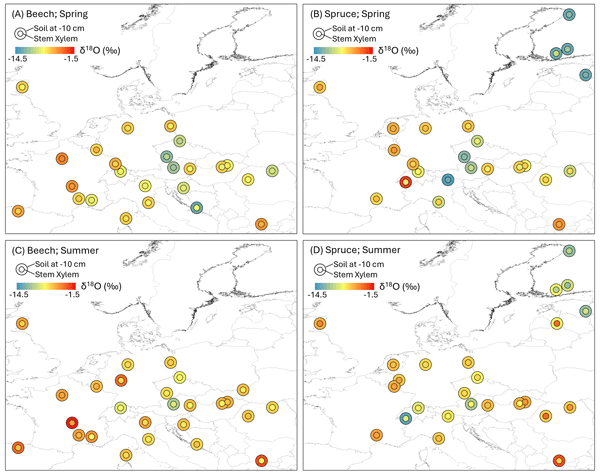
This study describes a unique large-scale isotope dataset to study water dynamics in European forests. Researchers collected data from 40 beech and spruce forest sites in spring and summer 2023, using a standardized method to ensure consistency. The results show that water sources for trees change between seasons and vary by tree species. This large dataset offers valuable information for understanding plant water use, improving ecohydrological models, and mapping water cycles across Europe.
Gerd Bürger and Maik Heistermann
EGUsphere, https://doi.org/10.5194/egusphere-2025-3584, https://doi.org/10.5194/egusphere-2025-3584, 2025
Short summary
Short summary
For four regions of Germany we project future extreme rainfall events from GCM projections. The fields are linked to the local events by classifying observed fields. Classifiers are conventional procedures along with modern schemes. Positive trends are identified for two antagonists model fields, causing large uncertainties of the local trends. Uncertainty is analyzed using the factors of event severity, emissions, GCMs, classifiers, and region. Positive trends outweigh the negative ones.
Xiaoxiang Guan, Viet Dung Nguyen, Paul Voit, Bruno Merz, Maik Heistermann, and Sergiy Vorogushyn
Nat. Hazards Earth Syst. Sci., 25, 3075–3086, https://doi.org/10.5194/nhess-25-3075-2025, https://doi.org/10.5194/nhess-25-3075-2025, 2025
Short summary
Short summary
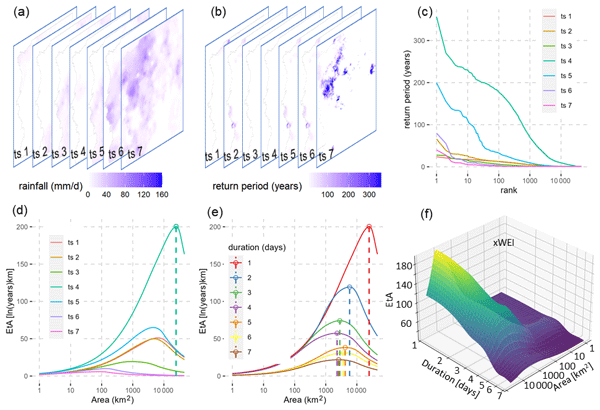
We evaluated a multi-site stochastic regional weather generator (nsRWG) for its ability to capture the cross-scale extremity of heavy-precipitation events (HPEs) in Germany. We generated 100 realizations of 72 years of daily synthetic precipitation data. The performance was assessed using WEI and xWEI indices, which measure event extremity across spatiotemporal scales. The results show that nsRWG simulates the extremity patterns of HPEs well, although it overestimates short-duration small-extent events.
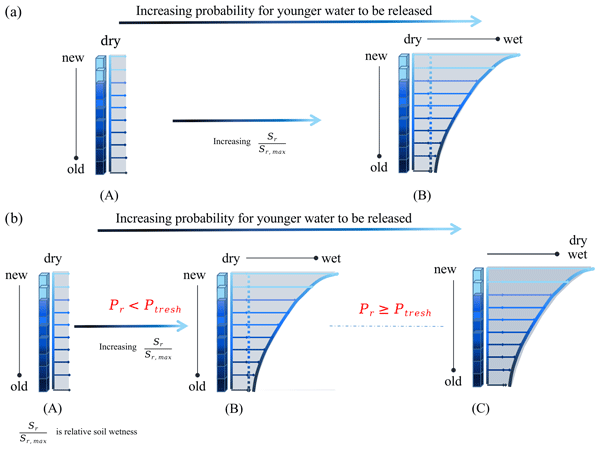
Hatice Türk, Christine Stumpp, Markus Hrachowitz, Karsten Schulz, Peter Strauss, Günter Blöschl, and Michael Stockinger
Hydrol. Earth Syst. Sci., 29, 3935–3956, https://doi.org/10.5194/hess-29-3935-2025, https://doi.org/10.5194/hess-29-3935-2025, 2025
Short summary
Short summary
Using advances in transit time estimation and tracer data, we tested if fast-flow transit times are controlled solely by soil moisture or if they are also controlled by precipitation intensity. We used soil-moisture-dependent and precipitation-intensity-conditional transfer functions. We showed that a significant portion of event water bypasses the soil matrix through fast flow paths (overland flow, tile drains, preferential-flow paths) in dry soil conditions for both low- and high-intensity precipitation.
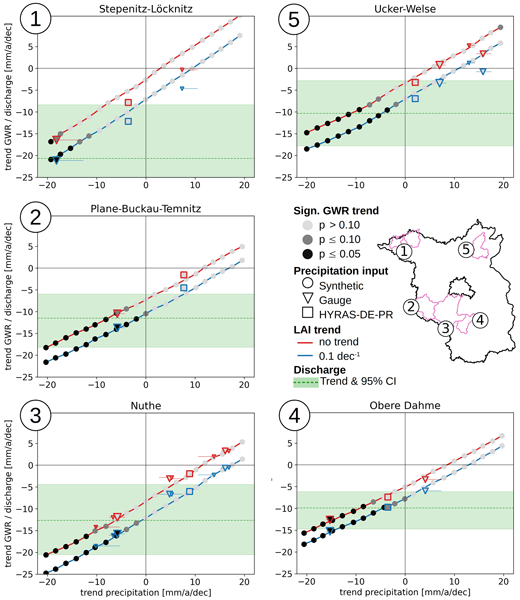
Till Francke and Maik Heistermann
Nat. Hazards Earth Syst. Sci., 25, 2783–2802, https://doi.org/10.5194/nhess-25-2783-2025, https://doi.org/10.5194/nhess-25-2783-2025, 2025
Short summary
Short summary
Brandenburg is among the driest federal states in Germany. The low groundwater recharge (GWR) is fundamental to both water supply and the support of natural ecosystems. In this study, we show that the decline of observed discharge and groundwater tables since 1980 can be explained by climate change in combination with an increasing leaf area index. Still, simulated GWR rates remain highly uncertain due to the uncertainty in precipitation trends.
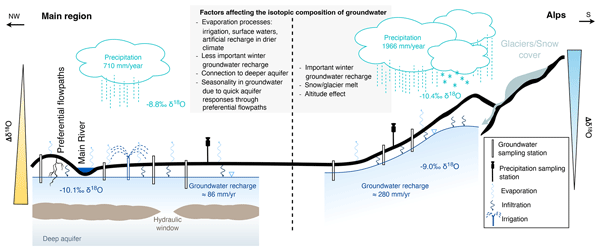
Aixala Gaillard, Robert van Geldern, Johannes Arthur Christopher Barth, and Christine Stumpp
Hydrol. Earth Syst. Sci., 29, 3853–3863, https://doi.org/10.5194/hess-29-3853-2025, https://doi.org/10.5194/hess-29-3853-2025, 2025
Short summary
Short summary
We produced a new interpolated map of stable isotopes in groundwater in southern Germany and compared it to local precipitation. Interestingly, discrepancies were found between two components of the hydrological cycle, highlighting different recharge patterns and evaporation processes in the northern and southern part of the study area. This research provides insights into understanding different groundwater recharge patterns on a large scale and eventually for groundwater management.
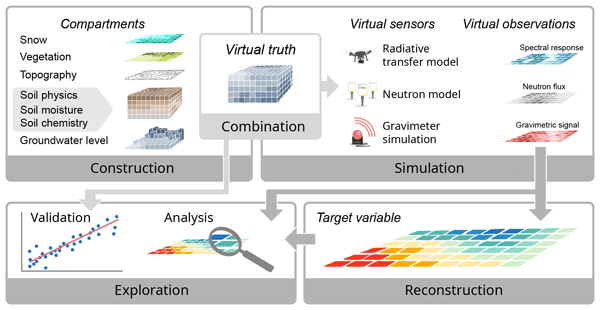
Till Francke, Cosimo Brogi, Alby Duarte Rocha, Michael Förster, Maik Heistermann, Markus Köhli, Daniel Rasche, Marvin Reich, Paul Schattan, Lena Scheiffele, and Martin Schrön
Geosci. Model Dev., 18, 819–842, https://doi.org/10.5194/gmd-18-819-2025, https://doi.org/10.5194/gmd-18-819-2025, 2025
Short summary
Short summary
Multiple methods for measuring soil moisture beyond the point scale exist. Their validation is generally hindered by not knowing the truth. We propose a virtual framework in which this truth is fully known and the sensor observations for cosmic ray neutron sensing, remote sensing, and hydrogravimetry are simulated. This allows for the rigorous testing of these virtual sensors to understand their effectiveness and limitations.
Sascha E. Oswald
EGUsphere, https://doi.org/10.5194/egusphere-2024-4141, https://doi.org/10.5194/egusphere-2024-4141, 2025
Preprint archived
Short summary
Short summary
The observation of soil moisture can be achieved non-invasively at landscape scale by cosmic ray neutron sensing. A different approach than usual is presented and exemplified providing options for a more straightforward understanding and broader use in applied research or practical applications. Starting point is a mathematical reformulation of the standard calibration equation as used so far, then implications and pragmatic options for its application are presented and discussed.
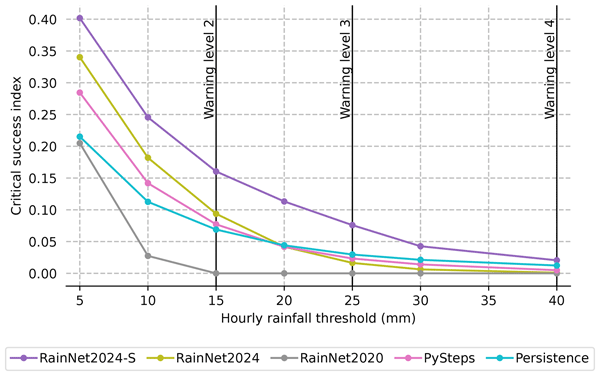
Georgy Ayzel and Maik Heistermann
Nat. Hazards Earth Syst. Sci., 25, 41–47, https://doi.org/10.5194/nhess-25-41-2025, https://doi.org/10.5194/nhess-25-41-2025, 2025
Short summary
Short summary
Forecasting rainfall over the next hour is an essential feature of early warning systems. Deep learning (DL) has emerged as a powerful alternative to conventional nowcasting technologies, but it still struggles to adequately predict impact-relevant heavy rainfall. We think that DL could do much better if the training tasks were defined more specifically and that such specification presents an opportunity to better align the output of nowcasting models with actual user requirements.
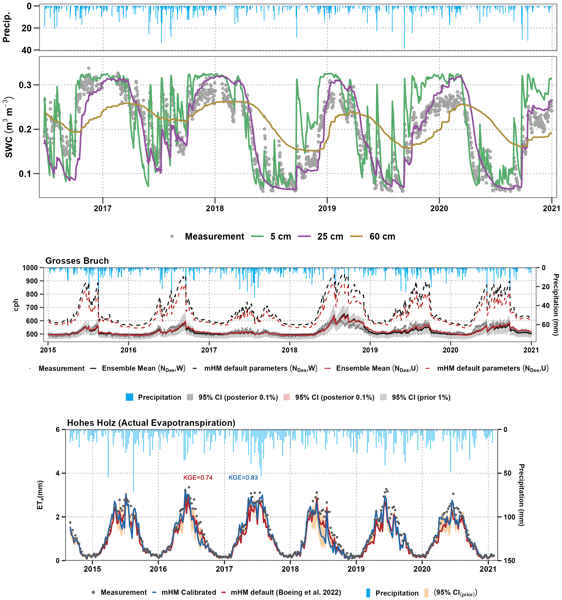
Eshrat Fatima, Rohini Kumar, Sabine Attinger, Maren Kaluza, Oldrich Rakovec, Corinna Rebmann, Rafael Rosolem, Sascha E. Oswald, Luis Samaniego, Steffen Zacharias, and Martin Schrön
Hydrol. Earth Syst. Sci., 28, 5419–5441, https://doi.org/10.5194/hess-28-5419-2024, https://doi.org/10.5194/hess-28-5419-2024, 2024
Short summary
Short summary
This study establishes a framework to incorporate cosmic-ray neutron measurements into the mesoscale Hydrological Model (mHM). We evaluate different approaches to estimate neutron counts within the mHM using the Desilets equation, with uniformly and non-uniformly weighted average soil moisture, and the physically based code COSMIC. The data improved not only soil moisture simulations but also the parameterisation of evapotranspiration in the model.
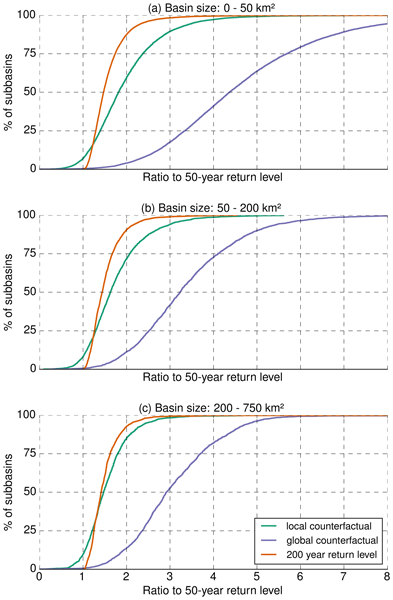
Paul Voit and Maik Heistermann
Nat. Hazards Earth Syst. Sci., 24, 4609–4615, https://doi.org/10.5194/nhess-24-4609-2024, https://doi.org/10.5194/nhess-24-4609-2024, 2024
Short summary
Short summary
Floods have caused significant damage in the past. To prepare for such events, we rely on historical data but face issues due to rare rainfall events, lack of data and climate change. Counterfactuals, or
what ifscenarios, simulate historical rainfall in different locations to estimate flood levels. Our new study refines this by deriving more-plausible local scenarios, using the June 2024 Bavaria flood as a case study. This method could improve preparedness for future floods.
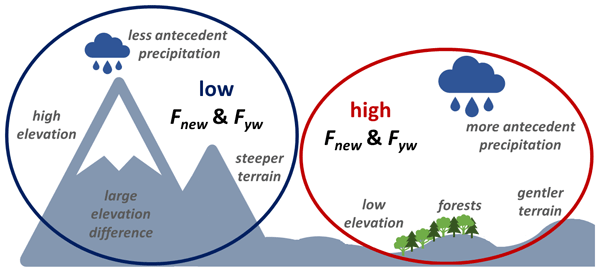
Marius G. Floriancic, Michael P. Stockinger, James W. Kirchner, and Christine Stumpp
Hydrol. Earth Syst. Sci., 28, 3675–3694, https://doi.org/10.5194/hess-28-3675-2024, https://doi.org/10.5194/hess-28-3675-2024, 2024
Short summary
Short summary
The Alps are a key water resource for central Europe, providing water for drinking, agriculture, and hydropower production. To assess water availability in streams, we need to understand how much streamflow is derived from old water stored in the subsurface versus more recent precipitation. We use tracer data from 32 Alpine streams and statistical tools to assess how much recent precipitation can be found in Alpine rivers and how this amount is related to catchment properties and climate.
Paul Voit and Maik Heistermann
Nat. Hazards Earth Syst. Sci., 24, 2147–2164, https://doi.org/10.5194/nhess-24-2147-2024, https://doi.org/10.5194/nhess-24-2147-2024, 2024
Short summary
Short summary
To identify flash flood potential in Germany, we shifted the most extreme rainfall events from the last 22 years systematically across Germany and simulated the consequent runoff reaction. Our results show that almost all areas in Germany have not seen the worst-case scenario of flood peaks within the last 22 years. With a slight spatial change of historical rainfall events, flood peaks of a factor of 2 or more would be achieved for most areas. The results can aid disaster risk management.
Maik Heistermann, Till Francke, Martin Schrön, and Sascha E. Oswald
Hydrol. Earth Syst. Sci., 28, 989–1000, https://doi.org/10.5194/hess-28-989-2024, https://doi.org/10.5194/hess-28-989-2024, 2024
Short summary
Short summary
Cosmic-ray neutron sensing (CRNS) is a non-invasive technique used to obtain estimates of soil water content (SWC) at a horizontal footprint of around 150 m and a vertical penetration depth of up to 30 cm. However, typical CRNS applications require the local calibration of a function which converts neutron counts to SWC. As an alternative, we propose a generalized function as a way to avoid the use of local reference measurements of SWC and hence a major source of uncertainty.
Stefano Gianessi, Matteo Polo, Luca Stevanato, Marcello Lunardon, Till Francke, Sascha E. Oswald, Hami Said Ahmed, Arsenio Toloza, Georg Weltin, Gerd Dercon, Emil Fulajtar, Lee Heng, and Gabriele Baroni
Geosci. Instrum. Method. Data Syst., 13, 9–25, https://doi.org/10.5194/gi-13-9-2024, https://doi.org/10.5194/gi-13-9-2024, 2024
Short summary
Short summary
Soil moisture monitoring is important for many applications, from improving weather prediction to supporting agriculture practices. Our capability to measure this variable is still, however, limited. In this study, we show the tests conducted on a new soil moisture sensor at several locations. The results show that the new sensor is a valid and compact alternative to more conventional, non-invasive soil moisture sensors that can pave the way for a wide range of applications.
Lena Katharina Schmidt, Till Francke, Peter Martin Grosse, and Axel Bronstert
Hydrol. Earth Syst. Sci., 28, 139–161, https://doi.org/10.5194/hess-28-139-2024, https://doi.org/10.5194/hess-28-139-2024, 2024
Short summary
Short summary
How suspended sediment export from glacierized high-alpine areas responds to future climate change is hardly assessable as many interacting processes are involved, and appropriate physical models are lacking. We present the first study, to our knowledge, exploring machine learning to project sediment export until 2100 in two high-alpine catchments. We find that uncertainties due to methodological limitations are small until 2070. Negative trends imply that peak sediment may have already passed.
Laura Charlotte Storch, Katharina Schulz, Jana Marie Kraft, Annette Prochnow, Liliane Ruess, Benjamin Trost, and Susanne Theuerl
EGUsphere, https://doi.org/10.5194/egusphere-2023-2277, https://doi.org/10.5194/egusphere-2023-2277, 2023
Preprint archived
Short summary
Short summary
N2O emissions are affected by agricultural practices. Therefore the effects of irrigation and fertilization on the potential bacterial N2O production were investigated over an entire season in sandy soil. Highest N2O fluxes occurred along first half of the season with greater influence of irrigation. Functional gene analysis identified nitrifier denitrification as predominant N2O source. An adapted application of water and N, considering the different growth stages might reduce N2O emissions.
Gerd Bürger and Maik Heistermann
Nat. Hazards Earth Syst. Sci., 23, 3065–3077, https://doi.org/10.5194/nhess-23-3065-2023, https://doi.org/10.5194/nhess-23-3065-2023, 2023
Short summary
Short summary
Our subject is a new catalogue of radar-based heavy rainfall events (CatRaRE) over Germany and how it relates to the concurrent atmospheric circulation. We classify reanalyzed daily atmospheric fields of convective indices according to CatRaRE, using conventional statistical and more recent machine learning algorithms, and apply them to present and future atmospheres. Increasing trends are projected for CatRaRE-type probabilities, from reanalyzed as well as from simulated atmospheric fields.
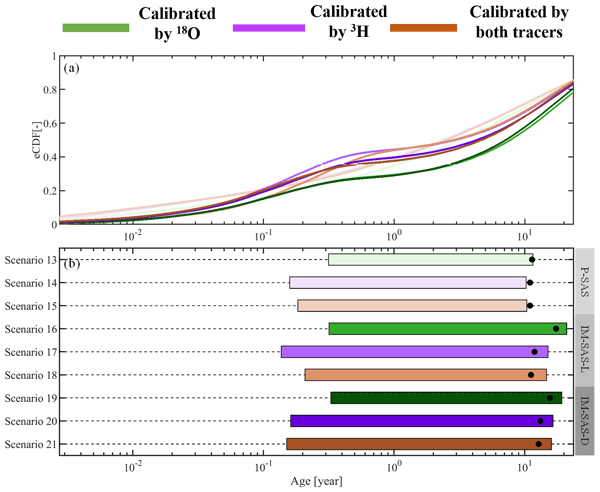
Siyuan Wang, Markus Hrachowitz, Gerrit Schoups, and Christine Stumpp
Hydrol. Earth Syst. Sci., 27, 3083–3114, https://doi.org/10.5194/hess-27-3083-2023, https://doi.org/10.5194/hess-27-3083-2023, 2023
Short summary
Short summary
This study shows that previously reported underestimations of water ages are most likely not due to the use of seasonally variable tracers. Rather, these underestimations can be largely attributed to the choices of model approaches which rely on assumptions not frequently met in catchment hydrology. We therefore strongly advocate avoiding the use of this model type in combination with seasonally variable tracers and instead adopting StorAge Selection (SAS)-based or comparable model formulations.
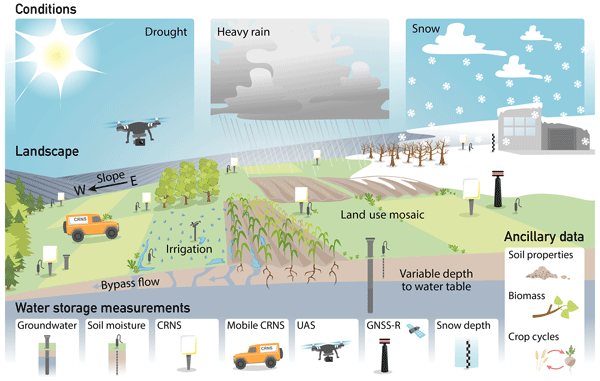
Maik Heistermann, Till Francke, Lena Scheiffele, Katya Dimitrova Petrova, Christian Budach, Martin Schrön, Benjamin Trost, Daniel Rasche, Andreas Güntner, Veronika Döpper, Michael Förster, Markus Köhli, Lisa Angermann, Nikolaos Antonoglou, Manuela Zude-Sasse, and Sascha E. Oswald
Earth Syst. Sci. Data, 15, 3243–3262, https://doi.org/10.5194/essd-15-3243-2023, https://doi.org/10.5194/essd-15-3243-2023, 2023
Short summary
Short summary
Cosmic-ray neutron sensing (CRNS) allows for the non-invasive estimation of root-zone soil water content (SWC). The signal observed by a single CRNS sensor is influenced by the SWC in a radius of around 150 m (the footprint). Here, we have put together a cluster of eight CRNS sensors with overlapping footprints at an agricultural research site in north-east Germany. That way, we hope to represent spatial SWC heterogeneity instead of retrieving just one average SWC estimate from a single sensor.
Lena Katharina Schmidt, Till Francke, Peter Martin Grosse, Christoph Mayer, and Axel Bronstert
Hydrol. Earth Syst. Sci., 27, 1841–1863, https://doi.org/10.5194/hess-27-1841-2023, https://doi.org/10.5194/hess-27-1841-2023, 2023
Short summary
Short summary
We present a suitable method to reconstruct sediment export from decadal records of hydroclimatic predictors (discharge, precipitation, temperature) and shorter suspended sediment measurements. This lets us fill the knowledge gap on how sediment export from glacierized high-alpine areas has responded to climate change. We find positive trends in sediment export from the two investigated nested catchments with step-like increases around 1981 which are linked to crucial changes in glacier melt.
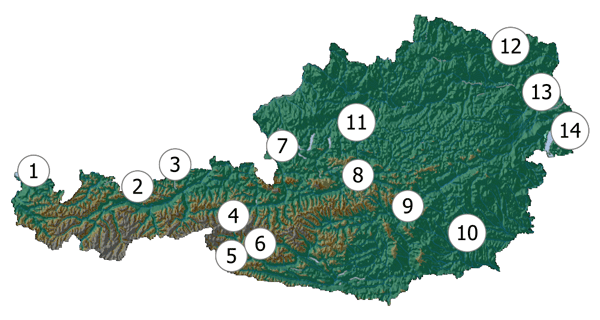
Marleen Schübl, Giuseppe Brunetti, Gabriele Fuchs, and Christine Stumpp
Hydrol. Earth Syst. Sci., 27, 1431–1455, https://doi.org/10.5194/hess-27-1431-2023, https://doi.org/10.5194/hess-27-1431-2023, 2023
Short summary
Short summary
Estimating groundwater recharge through the unsaturated zone is a difficult task that is fundamentally associated with uncertainties. One of the few methods available is inverse modeling based on soil water measurements. Here, we used a nested sampling algorithm within a Bayesian probabilistic framework to assess model uncertainties at 14 sites in Austria. Further, we analyzed simulated recharge rates to identify factors influencing groundwater recharge rates and their temporal variability.

Katharina Lengfeld, Paul Voit, Frank Kaspar, and Maik Heistermann
Nat. Hazards Earth Syst. Sci., 23, 1227–1232, https://doi.org/10.5194/nhess-23-1227-2023, https://doi.org/10.5194/nhess-23-1227-2023, 2023
Short summary
Short summary
Estimating the severity of a rainfall event based on the damage caused is easy but highly depends on the affected region. A less biased measure for the extremeness of an event is its rarity combined with its spatial extent. In this brief communication, we investigate the sensitivity of such measures to the underlying dataset and highlight the importance of considering multiple spatial and temporal scales using the devastating rainfall event in July 2021 in central Europe as an example.
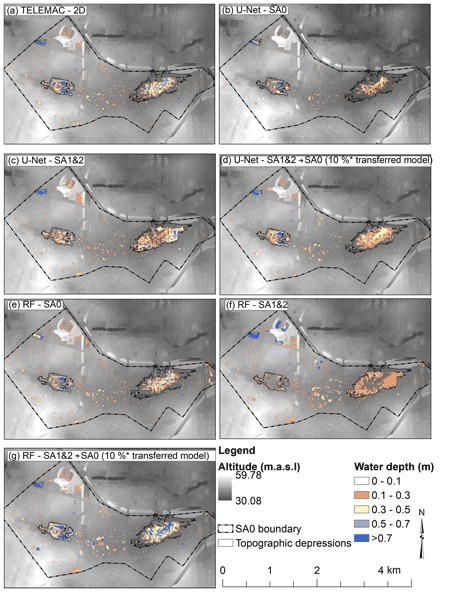
Omar Seleem, Georgy Ayzel, Axel Bronstert, and Maik Heistermann
Nat. Hazards Earth Syst. Sci., 23, 809–822, https://doi.org/10.5194/nhess-23-809-2023, https://doi.org/10.5194/nhess-23-809-2023, 2023
Short summary
Short summary
Data-driven models are becoming more of a surrogate that overcomes the limitations of the computationally expensive 2D hydrodynamic models to map urban flood hazards. However, the model's ability to generalize outside the training domain is still a major challenge. We evaluate the performance of random forest and convolutional neural networks to predict urban floodwater depth and investigate their transferability outside the training domain.
Alberto Caldas-Alvarez, Markus Augenstein, Georgy Ayzel, Klemens Barfus, Ribu Cherian, Lisa Dillenardt, Felix Fauer, Hendrik Feldmann, Maik Heistermann, Alexia Karwat, Frank Kaspar, Heidi Kreibich, Etor Emanuel Lucio-Eceiza, Edmund P. Meredith, Susanna Mohr, Deborah Niermann, Stephan Pfahl, Florian Ruff, Henning W. Rust, Lukas Schoppa, Thomas Schwitalla, Stella Steidl, Annegret H. Thieken, Jordis S. Tradowsky, Volker Wulfmeyer, and Johannes Quaas
Nat. Hazards Earth Syst. Sci., 22, 3701–3724, https://doi.org/10.5194/nhess-22-3701-2022, https://doi.org/10.5194/nhess-22-3701-2022, 2022
Short summary
Short summary
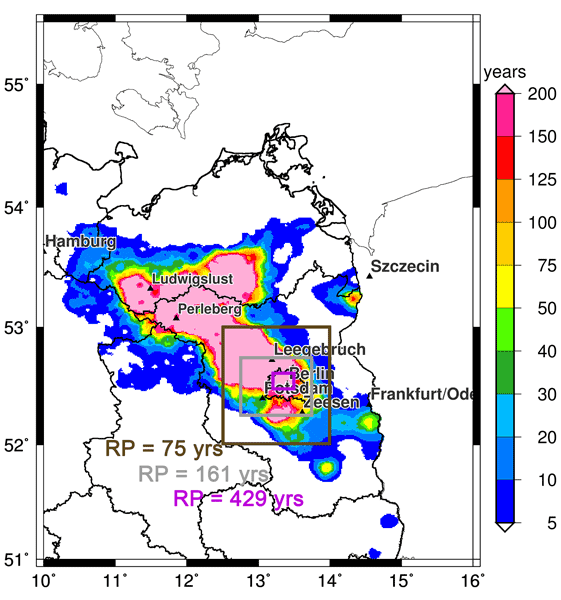
In a warming climate, extreme precipitation events are becoming more frequent. To advance our knowledge on such phenomena, we present a multidisciplinary analysis of a selected case study that took place on 29 June 2017 in the Berlin metropolitan area. Our analysis provides evidence of the extremeness of the case from the atmospheric and the impacts perspectives as well as new insights on the physical mechanisms of the event at the meteorological and climate scales.
Paul Voit and Maik Heistermann
Nat. Hazards Earth Syst. Sci., 22, 2791–2805, https://doi.org/10.5194/nhess-22-2791-2022, https://doi.org/10.5194/nhess-22-2791-2022, 2022
Short summary
Short summary
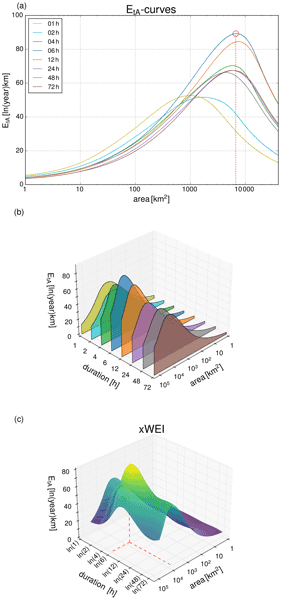
To better understand how the frequency and intensity of heavy precipitation events (HPEs) will change with changing climate and to adapt disaster risk management accordingly, we have to quantify the extremeness of HPEs in a reliable way. We introduce the xWEI (cross-scale WEI) and show that this index can reveal important characteristics of HPEs that would otherwise remain hidden. We conclude that the xWEI could be a valuable instrument in both disaster risk management and research.
Lena Katharina Schmidt, Till Francke, Erwin Rottler, Theresa Blume, Johannes Schöber, and Axel Bronstert
Earth Surf. Dynam., 10, 653–669, https://doi.org/10.5194/esurf-10-653-2022, https://doi.org/10.5194/esurf-10-653-2022, 2022
Short summary
Short summary
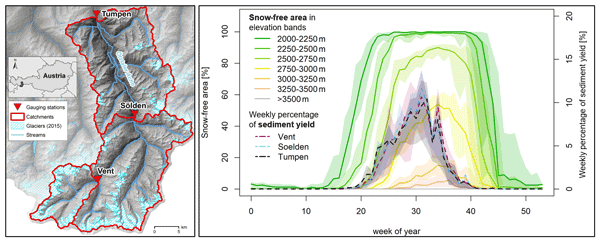
Climate change fundamentally alters glaciated high-alpine areas, but it is unclear how this affects riverine sediment transport. As a first step, we aimed to identify the most important processes and source areas in three nested catchments in the Ötztal, Austria, in the past 15 years. We found that areas above 2500 m were crucial and that summer rainstorms were less influential than glacier melt. These findings provide a baseline for studies on future changes in high-alpine sediment dynamics.
Maik Heistermann, Heye Bogena, Till Francke, Andreas Güntner, Jannis Jakobi, Daniel Rasche, Martin Schrön, Veronika Döpper, Benjamin Fersch, Jannis Groh, Amol Patil, Thomas Pütz, Marvin Reich, Steffen Zacharias, Carmen Zengerle, and Sascha Oswald
Earth Syst. Sci. Data, 14, 2501–2519, https://doi.org/10.5194/essd-14-2501-2022, https://doi.org/10.5194/essd-14-2501-2022, 2022
Short summary
Short summary
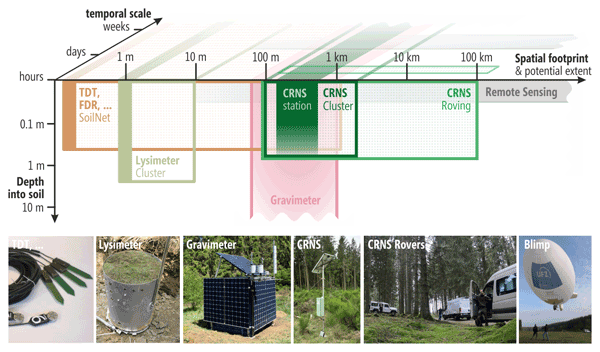
This paper presents a dense network of cosmic-ray neutron sensing (CRNS) to measure spatio-temporal soil moisture patterns during a 2-month campaign in the Wüstebach headwater catchment in Germany. Stationary, mobile, and airborne CRNS technology monitored the root-zone water dynamics as well as spatial heterogeneity in the 0.4 km2 area. The 15 CRNS stations were supported by a hydrogravimeter, biomass sampling, and a wireless soil sensor network to facilitate holistic hydrological analysis.
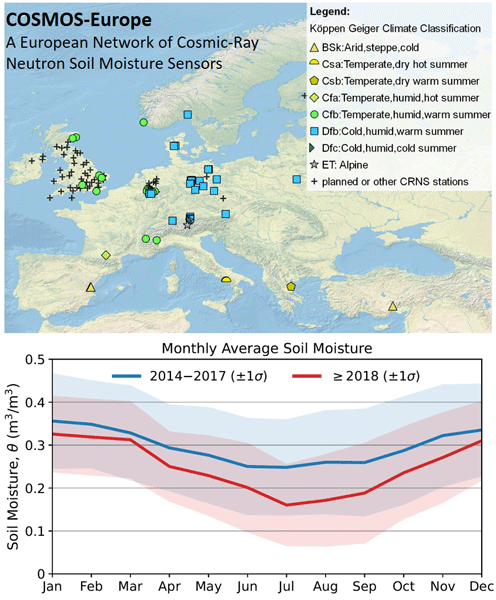
Heye Reemt Bogena, Martin Schrön, Jannis Jakobi, Patrizia Ney, Steffen Zacharias, Mie Andreasen, Roland Baatz, David Boorman, Mustafa Berk Duygu, Miguel Angel Eguibar-Galán, Benjamin Fersch, Till Franke, Josie Geris, María González Sanchis, Yann Kerr, Tobias Korf, Zalalem Mengistu, Arnaud Mialon, Paolo Nasta, Jerzy Nitychoruk, Vassilios Pisinaras, Daniel Rasche, Rafael Rosolem, Hami Said, Paul Schattan, Marek Zreda, Stefan Achleitner, Eduardo Albentosa-Hernández, Zuhal Akyürek, Theresa Blume, Antonio del Campo, Davide Canone, Katya Dimitrova-Petrova, John G. Evans, Stefano Ferraris, Félix Frances, Davide Gisolo, Andreas Güntner, Frank Herrmann, Joost Iwema, Karsten H. Jensen, Harald Kunstmann, Antonio Lidón, Majken Caroline Looms, Sascha Oswald, Andreas Panagopoulos, Amol Patil, Daniel Power, Corinna Rebmann, Nunzio Romano, Lena Scheiffele, Sonia Seneviratne, Georg Weltin, and Harry Vereecken
Earth Syst. Sci. Data, 14, 1125–1151, https://doi.org/10.5194/essd-14-1125-2022, https://doi.org/10.5194/essd-14-1125-2022, 2022
Short summary
Short summary
Monitoring of increasingly frequent droughts is a prerequisite for climate adaptation strategies. This data paper presents long-term soil moisture measurements recorded by 66 cosmic-ray neutron sensors (CRNS) operated by 24 institutions and distributed across major climate zones in Europe. Data processing followed harmonized protocols and state-of-the-art methods to generate consistent and comparable soil moisture products and to facilitate continental-scale analysis of hydrological extremes.
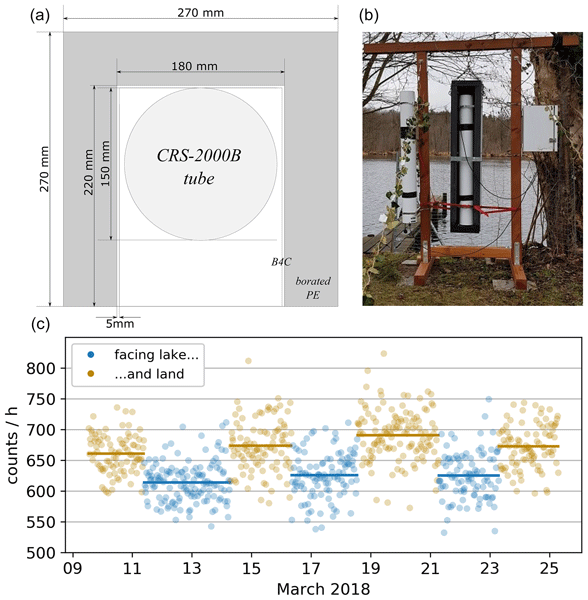
Till Francke, Maik Heistermann, Markus Köhli, Christian Budach, Martin Schrön, and Sascha E. Oswald
Geosci. Instrum. Method. Data Syst., 11, 75–92, https://doi.org/10.5194/gi-11-75-2022, https://doi.org/10.5194/gi-11-75-2022, 2022
Short summary
Short summary
Cosmic-ray neutron sensing (CRNS) is a non-invasive tool for measuring hydrogen pools like soil moisture, snow, or vegetation. This study presents a directional shielding approach, aiming to measure in specific directions only. The results show that non-directional neutron transport blurs the signal of the targeted direction. For typical instruments, this does not allow acceptable precision at a daily time resolution. However, the mere statistical distinction of two rates is feasible.
Cited articles
Abioye, E. A., Abidin, M. S. Z., Mahmud, M. S. A., Buyamin, S., Ishak, M. H. I., Rahman, M. K. I. A., Otuoze, A. O., Onotu, P., and Ramli, M. S. A.: A Review on Monitoring and Advanced Control Strategies for Precision Irrigation, Computers and Electronics in Agriculture, 173, 105441, https://doi.org/10.1016/j.compag.2020.105441, 2020. a
Amoozegar, A.: Comparison of the Glover Solution with the Simultaneous-Equations Approach for Measuring Hydraulic Conductivity, Soil Science Society of America Journal, 53, 1362–1367, https://doi.org/10.2136/sssaj1989.03615995005300050010x, 1989. a
Arnault, J., Fersch, B., Schrön, M., Bogena, H. R., Franssen, H.-J. H., and Kunstmann, H.: Role of Infiltration on Land–Atmosphere Feedbacks in Central Europe: Fully Coupled WRF-Hydro Simulations Evaluated with Cosmic-Ray Neutron Soil Moisture Measurements, Journal of Hydrometeorology, 26, 129–153, https://doi.org/10.1175/JHM-D-24-0049.1, 2025. a
Baatz, R., Bogena, H. R., Hendricks-Franssen, H.-J., Huisman, J. A., Montzka, C., and Vereecken, H.: An empirical vegetation correction for soil water content quantification using cosmic ray probes, Water Resour. Res., 51, 2030–2046, https://doi.org/10.1002/2014wr016443, 2015. a, b, c
Baatz, R., Hendricks Franssen, H.-J., Han, X., Hoar, T., Bogena, H. R., and Vereecken, H.: Evaluation of a cosmic-ray neutron sensor network for improved land surface model prediction, Hydrol. Earth Syst. Sci., 21, 2509–2530, https://doi.org/10.5194/hess-21-2509-2017, 2017. a
Babaeian, E., Sadeghi, M., Franz, T. E., Jones, S., and Tuller, M.: Mapping soil moisture with the OPtical TRApezoid Model (OPTRAM) based on long-term MODIS observations, Remote Sens. Environ., 211, 425–440, https://doi.org/10.1016/j.rse.2018.04.029, 2018. a
Barbosa, L. R., Coelho, V. H. R., Scheiffele, L. M., Baroni, G., Filho, G. M. R., Montenegro, S. M., das N. Almeida, C., and Oswald, S. E.: Dynamic groundwater recharge simulations based on cosmic-ray neutron sensing in a tropical wet experimental basin, Vadose Zone J., e20145, https://doi.org/10.1002/vzj2.20145, 2021. a
Baroni, G. and Oswald, S.: A scaling approach for the assessment of biomass changes and rainfall interception using cosmic-ray neutron sensing, J. Hydrol., 525, 264–276, https://doi.org/10.1016/j.jhydrol.2015.03.053, 2015. a
Baroni, G., Scheiffele, L. M., Schrön, M., Ingwersen, J., and Oswald, S. E.: Uncertainty, sensitivity and improvements in soil moisture estimation with cosmic-ray neutron sensing, J. Hydrol., 564, 873–887, https://doi.org/10.1016/j.jhydrol.2018.07.053, 2018. a, b
Bauer-Marschallinger, B., Freeman, V., Cao, S., Paulik, C., Schaufler, S., Stachl, T., Modanesi, S., Massari, C., Ciabatta, L., Brocca, L., and Wagner, W.: Toward Global Soil Moisture Monitoring With Sentinel-1: Harnessing Assets and Overcoming Obstacles, IEEE Transactions on Geoscience and Remote Sensing, 57, 520–539, https://doi.org/10.1109/TGRS.2018.2858004, 2019. a
Beale, J., Waine, T., Evans, J., and Corstanje, R.: A Method to Assess the Performance of SAR-Derived Surface Soil Moisture Products, IEEE Journal of Selected Topics in Applied Earth Observations and Remote Sensing, 14, 4504–4516, https://doi.org/10.1109/JSTARS.2021.3071380, 2021. a
Blanchy, G., Saneiyan, S., Boyd, J., McLachlan, P., and Binley, A.: ResIPy, an Intuitive Open Source Software for Complex Geoelectrical Inversion/Modeling, Computers & Geosciences, 137, 104423, https://doi.org/10.1016/j.cageo.2020.104423, 2020. a
Bogena, H. R., Herrmann, F., Jakobi, J., Brogi, C., Ilias, A., Huisman, J. A., Panagopoulos, A., and Pisinaras, V.: Monitoring of Snowpack Dynamics With Cosmic-Ray Neutron Probes: A Comparison of Four Conversion Methods, Frontiers in Water, 2, https://doi.org/10.3389/frwa.2020.00019, 2020. a
Bogena, H. R., Schrön, M., Jakobi, J., Ney, P., Zacharias, S., Andreasen, M., Baatz, R., Boorman, D., Duygu, M. B., Eguibar-Galán, M. A., Fersch, B., Franke, T., Geris, J., González Sanchis, M., Kerr, Y., Korf, T., Mengistu, Z., Mialon, A., Nasta, P., Nitychoruk, J., Pisinaras, V., Rasche, D., Rosolem, R., Said, H., Schattan, P., Zreda, M., Achleitner, S., Albentosa-Hernández, E., Akyürek, Z., Blume, T., del Campo, A., Canone, D., Dimitrova-Petrova, K., Evans, J. G., Ferraris, S., Frances, F., Gisolo, D., Güntner, A., Herrmann, F., Iwema, J., Jensen, K. H., Kunstmann, H., Lidón, A., Looms, M. C., Oswald, S., Panagopoulos, A., Patil, A., Power, D., Rebmann, C., Romano, N., Scheiffele, L., Seneviratne, S., Weltin, G., and Vereecken, H.: COSMOS-Europe: a European network of cosmic-ray neutron soil moisture sensors, Earth Syst. Sci. Data, 14, 1125–1151, https://doi.org/10.5194/essd-14-1125-2022, 2022. a, b
Bojinski, S., Verstraete, M., Peterson, T. C., Richter, C., Simmons, A., and Zemp, M.: The Concept of Essential Climate Variables in Support of Climate Research, Applications, and Policy, Bulletin of the American Meteorological Society, 95, 1431–1443, https://doi.org/10.1175/BAMS-D-13-00047.1, 2014. a
Brocca, L., Ciabatta, L., Massari, C., Camici, S., and Tarpanelli, A.: Soil Moisture for Hydrological Applications: Open Questions and New Opportunities, Water, 9, 140, https://doi.org/10.3390/w9020140, 2017. a
Brogi, C., Bogena, H. R., Köhli, M., Huisman, J. A., Hendricks Franssen, H.-J., and Dombrowski, O.: Feasibility of irrigation monitoring with cosmic-ray neutron sensors, Geosci. Instrum. Method. Data Syst., 11, 451–469, https://doi.org/10.5194/gi-11-451-2022, 2022. a
Brogi, C., Jakobi, J., Huisman, J. A., Schmidt, M., Montzka, C., Bates, J. S., Akter, S., and Bogena, H. R.: Cosmic-Ray Neutron Sensors Provide Scale-Appropriate Soil Water Content and Vegetation Observations for Eddy Covariance Stations in Agricultural Ecosystems, Agricultural and Forest Meteorology, 373, 110731, https://doi.org/10.1016/j.agrformet.2025.110731, 2025. a, b
Canet-Martí, A., Morales-Santos, A., Nolz, R., Langergraber, G., and Stumpp, C.: Quantification of water fluxes and soil water balance in agricultural fields under different tillage and irrigation systems using water stable isotopes, Soil and Tillage Research, 231, 105732, https://doi.org/10.1016/j.still.2023.105732, 2023. a
Cooper, H. M., Bennett, E., Blake, J., Blyth, E., Boorman, D., Cooper, E., Evans, J., Fry, M., Jenkins, A., Morrison, R., Rylett, D., Stanley, S., Szczykulska, M., Trill, E., Antoniou, V., Askquith-Ellis, A., Ball, L., Brooks, M., Clarke, M. A., Cowan, N., Cumming, A., Farrand, P., Hitt, O., Lord, W., Scarlett, P., Swain, O., Thornton, J., Warwick, A., and Winterbourn, B.: COSMOS-UK: national soil moisture and hydrometeorology data for environmental science research, Earth Syst. Sci. Data, 13, 1737–1757, https://doi.org/10.5194/essd-13-1737-2021, 2021. a
De Vis, A., Goyens, C., Gaultier, L., Giardino, C., Vansteenwegen, J., Harpole, S., and Sterckx, S.: HYPERNETS: An autonomous, uncertainty-quantified reference network for validating satellite-derived surface reflectance over land and water, Frontiers in Remote Sensing, 5, 1347230, https://doi.org/10.3389/frsen.2024.1347230, 2024. a
Denager, T., Looms, M. C., Sonnenborg, T. O., and Jensen, K. H.: Comparison of Evapotranspiration Estimates Using the Water Balance and the Eddy Covariance Methods, Vadose Zone Journal, 19, e20032, https://doi.org/10.1002/vzj2.20032, 2020. a
Desilets, D., Zreda, M., and Ferré, T. P. A.: Nature's neutron probe: Land surface hydrology at an elusive scale with cosmic rays, Water Resources Research, 46, https://doi.org/10.1029/2009WR008726, 2010. a, b
Dorigo, W., Himmelbauer, I., Aberer, D., Schremmer, L., Petrakovic, I., Zappa, L., Preimesberger, W., Xaver, A., Annor, F., Ardö, J., Baldocchi, D., Bitelli, M., Blöschl, G., Bogena, H., Brocca, L., Calvet, J.-C., Camarero, J. J., Capello, G., Choi, M., Cosh, M. C., van de Giesen, N., Hajdu, I., Ikonen, J., Jensen, K. H., Kanniah, K. D., de Kat, I., Kirchengast, G., Kumar Rai, P., Kyrouac, J., Larson, K., Liu, S., Loew, A., Moghaddam, M., Martínez Fernández, J., Mattar Bader, C., Morbidelli, R., Musial, J. P., Osenga, E., Palecki, M. A., Pellarin, T., Petropoulos, G. P., Pfeil, I., Powers, J., Robock, A., Rüdiger, C., Rummel, U., Strobel, M., Su, Z., Sullivan, R., Tagesson, T., Varlagin, A., Vreugdenhil, M., Walker, J., Wen, J., Wenger, F., Wigneron, J. P., Woods, M., Yang, K., Zeng, Y., Zhang, X., Zreda, M., Dietrich, S., Gruber, A., van Oevelen, P., Wagner, W., Scipal, K., Drusch, M., and Sabia, R.: The International Soil Moisture Network: serving Earth system science for over a decade, Hydrol. Earth Syst. Sci., 25, 5749–5804, https://doi.org/10.5194/hess-25-5749-2021, 2021. a, b
Durner, W.: Hydraulic Conductivity Estimation for Soils with Heterogeneous Pore Structure, Water Resources Research, 30, 211–223, https://doi.org/10.1029/93WR02676, 1994. a
DWD: CDC (Climate Data Center) Deutscher Wetterdienst, https://opendata.dwd.de/climate_environment/CDC/observations_germany/climate/hourly/ (last access: 20 January 2025), 2025. a
Elrick, D. E. and Reynolds, W. D.: Methods for analyzing constant-head well permeameter data, Soil Science Society of America Journal, 56, 320–323, https://doi.org/10.2136/sssaj1992.03615995005600010052x, 1992. a
Entekhabi, D., Njoku, E. G., O'Neill, P. E., Kellogg, K. H., Crow, W. T., Edelstein, W. N., Entin, J. K., Goodman, S. D., Jackson, T. J., Johnson, J., Kimball, J., Piepmeier, J. R., Koster, R. D., Martin, N., McDonald, K. C., Moghaddam, M., Moran, S., Reichle, R., Shi, J. C., Spencer, M. W., Thurman, S. W., Tsang, L., and Van Zyl, J.: The Soil Moisture Active Passive (SMAP) Mission, Proceedings of the IEEE, 98, 704–716, https://doi.org/10.1109/JPROC.2010.2043918, 2010. a
European Space Agency: Fiducial Reference Measurements for Soil Moisture (FRM4SM): Executive Summary Report, Tech. Rep. ESA Contract No. 4000135204/21/I-BG, European Space Agency, Paris, France, Prepared by AWST, CESBIO, TU Wien https://earth.esa.int/eogateway/documents/d/earth-online/frm4sm_executive_summary_report_v2-0 (last access: 21 November 2025), 2024. a
Fan, D., Zhao, T., Jiang, X., García-García, A., Schmidt, T., Samaniego, L., Attinger, S., Wu, H., Jiang, Y., Shi, J., Fan, L., Tang, B.-H., Wagner, W., Dorigo, W., Gruber, A., Mattia, F., Balenzano, A., Brocca, L., Jagdhuber, T., Wigneron, J.-P., Montzka, C., and Peng, J.: A Sentinel-1 SAR-based global 1-km resolution soil moisture data product: Algorithm and preliminary assessment, Remote Sensing of Environment, 318, 114579, https://doi.org/10.1016/j.rse.2024.114579, 2025. a
Fatima, E., Kumar, R., Attinger, S., Kaluza, M., Rakovec, O., Rebmann, C., Rosolem, R., Oswald, S. E., Samaniego, L., Zacharias, S., and Schrön, M.: Improved representation of soil moisture processes through incorporation of cosmic-ray neutron count measurements in a large-scale hydrologic model, Hydrol. Earth Syst. Sci., 28, 5419–5441, https://doi.org/10.5194/hess-28-5419-2024, 2024. a, b
Fatima, E., Kumar, R., Altdorff, D., Attinger, S., Boeing, F., Oswald, S. E., Rakovec, O., Samaniego, L., Zacharias, S., and Schrön, M.: On the value of mobile cosmic-ray neutron measurements for spatio-temporal soil moisture simulations, Frontiers in Water, 7, https://doi.org/10.3389/frwa.2025.1630051, 2025. a
Fersch, B., Francke, T., Heistermann, M., Schrön, M., Döpper, V., Jakobi, J., Baroni, G., Blume, T., Bogena, H., Budach, C., Gränzig, T., Förster, M., Güntner, A., Hendricks Franssen, H.-J., Kasner, M., Köhli, M., Kleinschmit, B., Kunstmann, H., Patil, A., Rasche, D., Scheiffele, L., Schmidt, U., Szulc-Seyfried, S., Weimar, J., Zacharias, S., Zreda, M., Heber, B., Kiese, R., Mares, V., Mollenhauer, H., Völksch, I., and Oswald, S.: A dense network of cosmic-ray neutron sensors for soil moisture observation in a highly instrumented pre-Alpine headwater catchment in Germany, Earth Syst. Sci. Data, 12, 2289–2309, https://doi.org/10.5194/essd-12-2289-2020, 2020. a, b, c, d
Foolad, F., Franz, T. E., Wang, T., Gibson, J., Kilic, A., Allen, R. G., and Suyker, A.: Feasibility analysis of using inverse modeling for estimating field-scale evapotranspiration in maize and soybean fields from soil water content monitoring networks, Hydrol. Earth Syst. Sci., 21, 1263–1277, https://doi.org/10.5194/hess-21-1263-2017, 2017. a
Franz, T. E., Wahbi, A., Zhang, J., Vreugdenhil, M., Heng, L., Dercon, G., Strauss, P., Brocca, L., and Wagner, W.: Practical Data Products From Cosmic-Ray Neutron Sensing for Hydrological Applications, Front. Water, 2, 1–9, https://doi.org/10.3389/frwa.2020.00009, 2020. a, b
Gianessi, S., Polo, M., Stevanato, L., Lunardon, M., Francke, T., Oswald, S. E., Said Ahmed, H., Toloza, A., Weltin, G., Dercon, G., Fulajtar, E., Heng, L., and Baroni, G.: Testing a novel sensor design to jointly measure cosmic-ray neutrons, muons and gamma rays for non-invasive soil moisture estimation, Geosci. Instrum. Method. Data Syst., 13, 9–25, https://doi.org/10.5194/gi-13-9-2024, 2024. a, b
Gorelick, N., Hancher, M., Dixon, M., Ilyushchenko, S., Thau, D., and Moore, R.: Google Earth Engine: Planetary-scale geospatial analysis for everyone, Remote Sensing of Environment, https://doi.org/10.1016/j.rse.2017.06.031, 2017. a
Goyens, C., De Vis, A., Giardino, C., Harpole, S., and Sterckx, S.: The HYPERNETS Project: A New Hyperspectral Radiometer and Network for Satellite Validation, in: 2021 IEEE International Geoscience and Remote Sensing Symposium IGARSS, 1117–1120, https://doi.org/10.1109/IGARSS47720.2021.9553361, 2021. a
Grosse, P. M., Marret, E., Scheiffele, L., Dimitrova Petrova, K., Francke, T., Altdorff, D., Heistermann, M., Schiel, M., Neumann, C., Scheffler, D., Saberioon, M., Kunz, M., Zboril, M., Marach, J., Reginatto, M., Balenzano, A., Stumpp, C., Trost, B., and Oswald, S. E.: The Potsdam Soil Moisture Observatory: High-coverage reference observations at kilometer scale, b2share EUDAT [data set], https://doi.org/10.23728/b2share.bxamy-4zh85, 2025. a, b
Gruber, A., De Lannoy, G., Albergel, C., Al-Yaari, A., Brocca, L., Calvet, J.-C., Colliander, A., Cosh, M., Crow, W., Dorigo, W., Draper, C., Hirschi, M., Kerr, Y., Konings, A., Lahoz, W., McColl, K., Montzka, C., Muñoz-Sabater, J., Peng, J., Reichle, R., Richaume, P., Rüdiger, C., Scanlon, T., van der Schalie, R., Wigneron, J.-P., and Wagner, W.: Validation practices for satellite soil moisture retrievals: What are (the) errors?, Remote Sensing of Environment, 244, 111806, https://doi.org/10.1016/j.rse.2020.111806, 2020. a
Hanuš, J., Slezák, L., Fabiánek, T., Fajmon, L., Hanousek, T., Janoutová, R., Kopkáně, D., Novotný, J., Pavelka, K., Pikl, M., Zemek, F., and Homolová, L.: Flying Laboratory of Imaging Systems: Fusion of Airborne Hyperspectral and Laser Scanning for Ecosystem Research, Remote Sensing, https://doi.org/10.3390/rs15123130, 2023. a
Hawdon, A., McJannet, D., and Wallace, J.: Calibration and correction procedures for cosmic-ray neutron soil moisture probes located across Australia, Water Resources Research, 50, 5029–5043, https://doi.org/10.1002/2013WR015138, 2014. a, b, c
Heistermann, M., Francke, T., Schrön, M., and Oswald, S. E.: Spatio-temporal soil moisture retrieval at the catchment scale using a dense network of cosmic-ray neutron sensors, Hydrol. Earth Syst. Sci., 25, 4807–4824, https://doi.org/10.5194/hess-25-4807-2021, 2021. a
Heistermann, M., Bogena, H., Francke, T., Güntner, A., Jakobi, J., Rasche, D., Schrön, M., Döpper, V., Fersch, B., Groh, J., Patil, A., Pütz, T., Reich, M., Zacharias, S., Zengerle, C., and Oswald, S.: Soil moisture observation in a forested headwater catchment: combining a dense cosmic-ray neutron sensor network with roving and hydrogravimetry at the TERENO site Wüstebach, Earth Syst. Sci. Data, 14, 2501–2519, https://doi.org/10.5194/essd-14-2501-2022, 2022. a, b, c
Heistermann, M., Francke, T., Scheiffele, L., Dimitrova Petrova, K., Budach, C., Schrön, M., Trost, B., Rasche, D., Güntner, A., Döpper, V., Förster, M., Köhli, M., Angermann, L., Antonoglou, N., Zude-Sasse, M., and Oswald, S. E.: Three years of soil moisture observations by a dense cosmic-ray neutron sensing cluster at an agricultural research site in north-east Germany, Earth Syst. Sci. Data, 15, 3243–3262, https://doi.org/10.5194/essd-15-3243-2023, 2023. a, b, c, d, e, f, g, h
Heistermann, M., Francke, T., Schrön, M., and Oswald, S. E.: Technical Note: Revisiting the general calibration of cosmic-ray neutron sensors to estimate soil water content, Hydrol. Earth Syst. Sci., 28, 989–1000, https://doi.org/10.5194/hess-28-989-2024, 2024. a, b
Hertle, L., Zacharias, S., Larsen, N., Rasche, D., McJannet, D., and Schrön, M.: Neutron Monitor Based Incoming Flux Correction for Cosmic-Ray Neutron Sensing of Environmental Water, Water Resources Research, 61, e2025WR040527, https://doi.org/10.1029/2025WR040527, 2025. a
Hohenbrink, T. L., Jackisch, C., Durner, W., Germer, K., Iden, S. C., Kreiselmeier, J., Leuther, F., Metzger, J. C., Naseri, M., and Peters, A.: Soil water retention and hydraulic conductivity measured in a wide saturation range, Earth Syst. Sci. Data, 15, 4417–4432, https://doi.org/10.5194/essd-15-4417-2023, 2023. a
Hövel, A., Stumpp, C., Bogena, H., Lücke, A., Strauss, P., Blöschl, G., and Stockinger, M.: Hydro-Meteorological Drivers of Event Runoff Characteristics Under Analogous Soil Moisture Patterns in Three Small-Scale Headwater Catchments, Hydrological Processes, 39, e70173, https://doi.org/10.1002/hyp.70173, 2025. a
Jackisch, C., Germer, K., Graeff, T., Andrä, I., Schulz, K., Schiedung, M., Haller-Jans, J., Schneider, J., Jaquemotte, J., Helmer, P., Lotz, L., Bauer, A., Hahn, I., Šanda, M., Kumpan, M., Dorner, J., de Rooij, G., Wessel-Bothe, S., Kottmann, L., Schittenhelm, S., and Durner, W.: Soil moisture and matric potential – an open field comparison of sensor systems, Earth Syst. Sci. Data, 12, 683–697, https://doi.org/10.5194/essd-12-683-2020, 2020. a
Jakobi, J., Huisman, J. A., Vereecken, H., Diekkruger, B., and Bogena, H. R.: Cosmic Ray Neutron Sensing for Simultaneous Soil Water Content and Biomass Quantification in Drought Conditions, Water Resour. Res., 54, 7383–7402, https://doi.org/10.1029/2018wr022692, 2018. a, b
Jakobi, J., Huisman, J. A., Fuchs, H., Vereecken, H., and Bogena, H. R.: Potential of Thermal Neutrons to Correct Cosmic-Ray Neutron Soil Moisture Content Measurements for Dynamic Biomass Effects, Water Resour. Res., 58, e2022WR031972, https://doi.org/10.1029/2022WR031972, 2022. a
Kerr, Y., Waldteufel, P., Wigneron, J.-P., Martinuzzi, J., Font, J., and Berger, M.: Soil moisture retrieval from space: the Soil Moisture and Ocean Salinity (SMOS) mission, IEEE Transactions on Geoscience and Remote Sensing, 39, 1729–1735, https://doi.org/10.1109/36.942551, 2001. a
Koeniger, P., Gaj, M., Beyer, M., and Himmelsbach, T.: Review on soil water isotope-based groundwater recharge estimations, Hydrological Processes, 30, 2817–2834, https://doi.org/10.1002/hyp.10775, 2016. a
Köhli, M., Schrön, M., Zreda, M., Schmidt, U., Dietrich, P., and Zacharias, S.: Footprint Characteristics Revised for Field-Scale Soil Moisture Monitoring with Cosmic-Ray Neutrons, Water Resources Research, 51, 5772–5790, https://doi.org/10.1002/2015WR017169, 2015. a
Köhli, M., Weimar, J., Schrön, M., Baatz, R., and Schmidt, U.: Soil Moisture and Air Humidity Dependence of the Above-Ground Cosmic-Ray Neutron Intensity, Frontiers in Water, 2, https://doi.org/10.3389/frwa.2020.544847, 2021. a, b
Krebs, N., Schattan, P., Premier, V., Mejia-Aguilar, A., Fey, C., Bremer, M., and Rutzinger, M.: Evaluating Sentinel-1/-2 and MODIS fractional snow cover products for applications in alpine cosmic ray neutron snow monitoring, Remote Sensing Applications: Society and Environment, 40, 101812, https://doi.org/10.1016/j.rsase.2025.101812, 2025. a
Kühn, D. (Ed.): Bodenübersichtskarte des Landes Brandenburg 1 : 300 000 (BÜK 300) – Grundkarte Bodengeologie, in: Brandenburgische Geowissenschaftliche Beiträge; 2002; Band 9; Heft 1/2, Landesamt für Bergbau, Geologie und Rohstoffe Brandenburg, https://doi.org/10.23689/fidgeo-11709, 2002. a
Lachenmeier, E., Mahmood, R., Phillips, C., Nair, U., Rappin, E., Pielke, R. A., Brown, W., Oncley, S., Wurman, J., Kosiba, K., Kaulfus, A., Santanello, J., Kim, E., Lawston-Parker, P., Hayes, M., and Franz, T. E.: Irrigated Agriculture Significantly Modifies Seasonal Boundary Layer Atmosphere and Lower-Tropospheric Convective Environment, Journal of Applied Meteorology and Climatology, 63, 245–262, https://doi.org/10.1175/JAMC-D-23-0020.1, 2024. a
Levi, M. R. and Bestelmeyer, B. T.: Digital Soil Mapping for Fire Prediction and Management in Rangelands, Fire Ecology, 14, 11, https://doi.org/10.1186/s42408-018-0018-4, 2018. a
McJannet, D., Rasche, D., Marano, J., Hawdon, A., Stenson, M., and Schrön, M.: Over-Water Low-Energy Neutron Observations for Intensity Corrections Across Cosmic-Ray Soil Moisture Sensor Networks, Water Resources Research, 61, e2024WR039727, https://doi.org/10.1029/2024WR039727, 2025. a
McJannet, D. L. and Desilets, D.: Incoming Neutron Flux Corrections for Cosmic-Ray Soil and Snow Sensors Using the Global Neutron Monitor Network, Water Resources Research, 59, e2022WR033889, https://doi.org/10.1029/2022WR033889, 2023. a, b, c
Mengen, D., Jagdhuber, T., Balenzano, A., Mattia, F., Vereecken, H., and Montzka, C.: High Spatial and Temporal Soil Moisture Retrieval in Agricultural Areas Using Multi-Orbit and Vegetation Adapted Sentinel-1 SAR Time Series, Remote Sensing, 15, https://doi.org/10.3390/rs15092282, 2023. a
Meyer, R., Zhang, W., Kragh, S. J., Andreasen, M., Jensen, K. H., Fensholt, R., Stisen, S., and Looms, M. C.: Exploring the combined use of SMAP and Sentinel-1 data for downscaling soil moisture beyond the 1 km scale, Hydrol. Earth Syst. Sci., 26, 3337–3357, https://doi.org/10.5194/hess-26-3337-2022, 2022. a
Molenaar, R. E., Kleidorfer, M., Kohl, B., Teuling, A. J., and Achleitner, S.: Does Afforestation Increase Soil Water Buffering? A Demonstrator Study on Soil Moisture Variability in the Alpine Geroldsbach Catchment, Austria, Journal of Hydrology, 131984, https://doi.org/10.1016/j.jhydrol.2024.131984, 2024. a
Moragoda, N., Kumar, M., and Cohen, S.: Representing the Role of Soil Moisture on Erosion Resistance in Sediment Models: Challenges and Opportunities, Earth-Science Reviews, 229, 104032, https://doi.org/10.1016/j.earscirev.2022.104032, 2022. a
Oswald, S. E., Angermann, L., Bogena, H., Förster, M., García-García, A., Lischeid, G., Paton, E. N., Altdorff, D., Attinger, S., Güntner, A., Hartmann, A., Franssen, H.-J. H., Hildebrandt, A., Kleinschmit, B., Orth, R., Peng, J., Ryo, M., Schrön, M., Wagner, W., and Wagener, T.: Integration is key to closing knowledge gaps concerning landscape subsurface water storage dynamics, Hydrological Processes, 38, e15320, https://doi.org/10.1002/hyp.15320, 2024. a
Patil, A., Fersch, B., Hendricks-Franssen, H.-J., and Kunstmann, H.: Assimilation of cosmogenic neutron counts for improved soil moisture prediction in a distributed land surface model, Frontiers in Water, 3, https://doi.org/10.3389/frwa.2021.729592, 2021. a
Patrignani, A., Ochsner, T. E., Montag, B., and Bellinger, S.: A Novel Lithium Foil Cosmic-Ray Neutron Detector for Measuring Field-Scale Soil Moisture, Frontiers in Water, 3, https://doi.org/10.3389/frwa.2021.673185, 2021. a
Pendergrass, A. G., Meehl, G. A., Pulwarty, R., Hobbins, M., Hoell, A., AghaKouchak, A., Bonfils, C. J. W., Gallant, A. J. E., Hoerling, M., Hoffmann, D., Kaatz, L., Lehner, F., Llewellyn, D., Mote, P., Neale, R. B., Overpeck, J. T., Sheffield, A., Stahl, K., Svoboda, M., Wheeler, M. C., Wood, A. W., and Woodhouse, C. A.: Flash Droughts Present a New Challenge for Subseasonal-to-Seasonal Prediction, Nature Climate Change, 10, 191–199, https://doi.org/10.1038/s41558-020-0709-0, 2020. a
Peng, J., Albergel, C., Balenzano, A., Brocca, L., Cartus, O., Cosh, M. H., Crow, W. T., Dabrowska-Zielinska, K., Dadson, S., Davidson, M. W., de Rosnay, P., Dorigo, W., Gruber, A., Hagemann, S., Hirschi, M., Kerr, Y. H., Lovergine, F., Mahecha, M. D., Marzahn, P., Mattia, F., Musial, J. P., Preuschmann, S., Reichle, R. H., Satalino, G., Silgram, M., van Bodegom, P. M., Verhoest, N. E., Wagner, W., Walker, J. P., Wegmüller, U., and Loew, A.: A roadmap for high-resolution satellite soil moisture applications – confronting product characteristics with user requirements, Remote Sensing of Environment, 252, 112162, https://doi.org/10.1016/j.rse.2020.112162, 2021. a
Power, D., Rico-Ramirez, M. A., Desilets, S., Desilets, D., and Rosolem, R.: Cosmic-Ray neutron Sensor PYthon tool (crspy 1.2.1): an open-source tool for the processing of cosmic-ray neutron and soil moisture data, Geosci. Model Dev., 14, 7287–7307, https://doi.org/10.5194/gmd-14-7287-2021, 2021. a
Power, D., Schrön, M., Erxleben, F., Rosolem, R., and Zacharias, S.: Neptoon, Zenodo [code], https://doi.org/10.5281/zenodo.17209375, 2025. a, b
Rasche, D., Köhli, M., Schrön, M., Blume, T., and Güntner, A.: Towards disentangling heterogeneous soil moisture patterns in cosmic-ray neutron sensor footprints, Hydrol. Earth Syst. Sci., 25, 6547–6566, https://doi.org/10.5194/hess-25-6547-2021, 2021. a
Rasche, D., Blume, T., and Güntner, A.: Depth extrapolation of field-scale soil moisture time series derived with cosmic-ray neutron sensing (CRNS) using the soil moisture analytical relationship (SMAR) model, SOIL, 10, 655–677, https://doi.org/10.5194/soil-10-655-2024, 2024. a, b
Reginatto, M.: Overview of spectral unfolding techniques and uncertainty estimation, Radiation Measurements, 45, 1323–1329, https://doi.org/10.1016/j.radmeas.2010.06.016, 2010. a
Reynolds, W. D., Bowman, B. T., Brunke, R. R., Drury, C. F., and Tan, C. S.: Comparison of Tension Infiltrometer, Pressure Infiltrometer, and Soil Core Estimates of Saturated Hydraulic Conductivity, Soil Science Society of America Journal, 64, 478–484, https://doi.org/10.2136/sssaj2000.642478x, 2000. a
Richter, R. and Schläpfer, D.: Atmospheric/topographic correction for airborne imagery, Tech. Rep. 565-02, ReSe Applications LLC, Wil, Switzerland, ATCOR-4 user guide, https://www.rese.ch/pdf/atcor4_manual.pdf (last access: 19 February 2026), 2011. a
Rivera Villarreyes, C. A., Baroni, G., and Oswald, S. E.: Integral quantification of seasonal soil moisture changes in farmland by cosmic-ray neutrons, Hydrol. Earth Syst. Sci., 15, 3843–3859, https://doi.org/10.5194/hess-15-3843-2011, 2011. a
Robinson, D. A., Campbell, C. S., Hopmans, J. W., Hornbuckle, B. K., Jones, S. B., Knight, R., Ogden, F., Selker, J., and Wendroth, O.: Soil Moisture Measurement for Ecological and Hydrological Watershed-Scale Observatories: A Review, Vadose Zone Journal, 7, 358–389, https://doi.org/10.2136/vzj2007.0143, 2008. a
Rosenbaum, U., Bogena, H. R., Herbst, M., Huisman, J. A., Peterson, T. J., Weuthen, A., Western, A. W., and Vereecken, H.: Seasonal and Event Dynamics of Spatial Soil Moisture Patterns at the Small Catchment Scale, Water Resources Research, 48, https://doi.org/10.1029/2011WR011518, 2012. a
Rosolem, R., Shuttleworth, W. J., Zreda, M., Franz, T. E., Zeng, X., and Kurc, S. A.: The effect of atmospheric water vapor on neutron count in the cosmic-ray soil moisture observing system, Journal of Hydrometeorology, 14, 1659–1671, https://doi.org/10.1175/JHM-D-12-0120.1, 2013. a
Scandellari, F., Attou, T., Barbeta, A., Bernhard, F., D'Amato, C., Dimitrova-Petrova, K., Donaldson, A., Durodola, O., Ferraris, S., Floriancic, M. G., Fontenla-Razzetto, G., Gerchow, M., Han, Q., Khalil, I., Kirchner, J. W., Kühnhammer, K., Liu, Q., Llorens, P., Magh, R.-K., Marshall, J., Meusburger, K., Oliveira, A. M., Muñoz-Villers, L., Pires, S. S., Todini-Zicavo, D., van Meerveld, I., Voigt, C., Wirsig, L., Beyer, M., Geris, J., Hopp, L., Penna, D., and Sprenger, M.: Using stable isotopes to inform water resource management in forested and agricultural ecosystems, Journal of Environmental Management, 365, 121381, https://doi.org/10.1016/j.jenvman.2024.121381, 2024. a
Schattan, P., Baroni, G., Oswald, S. E., Schöber, J., Fey, C., Kormann, C., Huttenlau, M., and Achleitner, S.: Continuous Monitoring of Snowpack Dynamics in Alpine Terrain by Aboveground Neutron Sensing, Water Resources Research, 53, 3615–3634, https://doi.org/10.1002/2016WR020234, 2017. a
Schattan, P., Schwaizer, G., Schöber, J., and Achleitner, S.: The complementary value of cosmic-ray neutron sensing and snow covered area products for snow hydrological modelling, Remote Sens. Environ., 239, https://doi.org/10.1016/j.rse.2019.111603, 2020. a
Scheffler, D., Hollstein, A., Diedrich, H., Segl, K., and Hostert, P.: AROSICS: An Automated and Robust Open-Source Image Co-Registration Software for Multi-Sensor Satellite Data, Remote Sensing, 9, https://doi.org/10.3390/rs9070676, 2017. a
Scheiffele, L. M., Baroni, G., Franz, T. E., Jakobi, J., and Oswald, S. E.: A profile shape correction to reduce the vertical sensitivity of cosmic-ray neutron sensing of soil moisture, Vadose Zone J., 19, e20083, https://doi.org/10.1002/vzj2.20083, 2020. a, b
Scheiffele, L. M., Munz, M., Francke, T., Baroni, G., and Oswald, S. E.: Enhancing Hectare-Scale Groundwater Recharge Estimation by Integrating Data From Cosmic-Ray Neutron Sensing Into Soil Hydrological Modeling, Water Resources Research, 61, e2024WR037641, https://doi.org/10.1029/2024WR037641, 2025. a
Schenk, H. J. and Jackson, R. B.: Rooting Depths, Lateral Root Spreads and below-Ground/above-Ground Allometries of Plants in Water-Limited Ecosystems, Journal of Ecology, 90, 480–494, https://doi.org/10.1046/j.1365-2745.2002.00682.x, 2002. a
Schmidt, T., Schrön, M., Li, Z., Francke, T., Zacharias, S., Hildebrandt, A., and Peng, J.: Comprehensive quality assessment of satellite- and model-based soil moisture products against the COSMOS network in Germany, Remote Sens. Environ., 301, 113930, https://doi.org/10.1016/j.rse.2023.113930, 2024. a
Schrön, M.: CORNish PASDy – cosmic-ray neutron flavored PASDy – processing and analysis of sensor data in python, version 0.2, https://git.ufz.de/CRNS/cornish_pasdy (last access: 20 January 2025), 2025. a
Schrön, M., Köhli, M., Scheiffele, L., Iwema, J., Bogena, H. R., Lv, L., Martini, E., Baroni, G., Rosolem, R., Weimar, J., Mai, J., Cuntz, M., Rebmann, C., Oswald, S. E., Dietrich, P., Schmidt, U., and Zacharias, S.: Improving calibration and validation of cosmic-ray neutron sensors in the light of spatial sensitivity, Hydrol. Earth Syst. Sci., 21, 5009–5030, https://doi.org/10.5194/hess-21-5009-2017, 2017. a, b, c, d, e
Schrön, M., Rosolem, R., Köhli, M., Piussi, L., Schröter, I., Iwema, J., Kögler, S., Oswald, S. E., Wollschläger, U., Samaniego, L., Dietrich, P., and Zacharias, S.: Cosmic-ray Neutron Rover Surveys of Field Soil Moisture and the Influence of Roads, Water Resour. Res., 54, 6441–6459, https://doi.org/10.1029/2017wr021719, 2018. a
Schrön, M., Köhli, M., and Zacharias, S.: Signal contribution of distant areas to cosmic-ray neutron sensors – implications for footprint and sensitivity, Hydrol. Earth Syst. Sci., 27, 723–738, https://doi.org/10.5194/hess-27-723-2023, 2023. a
Schrön, M., Rasche, D., Weimar, J., Köhli, M., Herbst, K., Boehrer, B., Hertle, L., Kögler, S., and Zacharias, S.: Buoy-Based Detection of Low-Energy Cosmic-Ray Neutrons to Monitor the Influence of Atmospheric, Geomagnetic, and Heliospheric Effects, Earth and Space Science, 11, e2023EA003483, https://doi.org/10.1029/2023EA003483, 2024. a
Shuttleworth, J., Rosolem, R., Zreda, M., and Franz, T.: The COsmic-ray Soil Moisture Interaction Code (COSMIC) for use in data assimilation, Hydrol. Earth Syst. Sci., 17, 3205–3217, https://doi.org/10.5194/hess-17-3205-2013, 2013. a
Sprenger, M., Stumpp, C., Weiler, M., Aeschbach, W., Allen, S. T., Benettin, P., Dubbert, M., Hartmann, A., Hrachowitz, M., Kirchner, J. W., McDonnell, J. J., Orlowski, N., Penna, D., Pfahl, S., Rinderer, M., Rodriguez, N., Schmidt, M., and Werner, C.: The demographics of water: A review of water ages in the critical zone, Reviews of Geophysics, 57, 800–834, https://doi.org/10.1029/2018RG000633, 2019. a
Srivastava, P. K.: Satellite Soil Moisture: Review of Theory and Applications in Water Resources, Water Resources Management, 31, 3161–3176, https://doi.org/10.1007/s11269-017-1722-6, 2017. a
Stevanato, L., Baroni, G., Oswald, S. E., Lunardon, M., Mares, V., Marinello, F., Moretto, S., Polo, M., Sartori, P., Schattan, P., and Ruehm, W.: An Alternative Incoming Correction for Cosmic-Ray Neutron Sensing Observations Using Local Muon Measurement, Geophys. Res. Lett., 49, e2021GL095383, https://doi.org/10.1029/2021GL095383, 2022. a
Strebel, L., Bogena, H., Vereecken, H., Andreasen, M., Aranda-Barranco, S., and Hendricks Franssen, H.-J.: Evapotranspiration prediction for European forest sites does not improve with assimilation of in situ soil water content data, Hydrol. Earth Syst. Sci., 28, 1001–1026, https://doi.org/10.5194/hess-28-1001-2024, 2024. a
Stumpp, C., Brüggemann, N., and Wingate, L.: Stable Isotope Approaches in Vadose Zone Research, Vadose Zone Journal, 17, 180096, https://doi.org/10.2136/vzj2018.05.0096, 2018. a
Szilagyi, J. and Franz, T. E.: Anthropogenic Hydrometeorological Changes at a Regional Scale: Observed Irrigation–Precipitation Feedback (1979–2015) in Nebraska, USA, Sustainable Water Resources Management, 6, https://doi.org/10.1007/s40899-020-00368-w, 2020. a
Vereecken, H., Huisman, J. A., Bogena, H., Vanderborght, J., Vrugt, J. A., and Hopmans, J. W.: On the Value of Soil Moisture Measurements in Vadose Zone Hydrology: A Review, Water Resources Research, 44, W00D06, https://doi.org/10.1029/2008WR006829, 2008. a
Wang, S., Hrachowitz, M., Schoups, G., and Stumpp, C.: Stable water isotopes and tritium tracers tell the same tale: no evidence for underestimation of catchment transit times inferred by stable isotopes in StorAge Selection (SAS)-function models, Hydrol. Earth Syst. Sci., 27, 3083–3114, https://doi.org/10.5194/hess-27-3083-2023, 2023. a
Wassenaar, L., Hendry, M., Chostner, V., and Lis, G.: High Resolution Pore Water δ2H and δ18O Measurements by H2O(liquid)−H2O(vapor) Equilibration Laser Spectroscopy, Environmental Science & Technology, 42, 9262–9267, https://doi.org/10.1021/es802065s, 2008. a
Weber, T. K. D., Weihermüller, L., Nemes, A., Bechtold, M., Degré, A., Diamantopoulos, E., Fatichi, S., Filipović, V., Gupta, S., Hohenbrink, T. L., Hirmas, D. R., Jackisch, C., de Jong van Lier, Q., Koestel, J., Lehmann, P., Marthews, T. R., Minasny, B., Pagel, H., van der Ploeg, M., Shojaeezadeh, S. A., Svane, S. F., Szabó, B., Vereecken, H., Verhoef, A., Young, M., Zeng, Y., Zhang, Y., and Bonetti, S.: Hydro-pedotransfer functions: a roadmap for future development, Hydrol. Earth Syst. Sci., 28, 3391–3433, https://doi.org/10.5194/hess-28-3391-2024, 2024. a
Wiegel, B. and Alevra, A.: NEMUS – the PTB Neutron Multisphere Spectrometer: Bonner spheres and more, Nuclear Instruments and Methods in Physics Research Section A: Accelerators, Spectrometers, Detectors and Associated Equipment, 476, 36–41, https://doi.org/10.1016/S0168-9002(01)01385-7, 2002. a
Zhao, Y., Ling, D.-S., Wang, Y.-L., Huang, B., and Wang, H.-L.: Study on a calibration equation for soil water content in field tests using time domain reflectometry, Journal of Zhejiang University-Science A, 17, 240–252, https://doi.org/10.1631/jzus.A1500065, WOS:000372318500006, 2016. a
Zreda, M., Desilets, D., Ferré, T. P. A., and Scott, R. L.: Measuring Soil Moisture Content Non-Invasively at Intermediate Spatial Scale Using Cosmic-Ray Neutrons, Geophysical Research Letters, 35, https://doi.org/10.1029/2008GL035655, 2008. a
Zreda, M., Shuttleworth, W. J., Zeng, X., Zweck, C., Desilets, D., Franz, T., and Rosolem, R.: COSMOS: the COsmic-ray Soil Moisture Observing System, Hydrol. Earth Syst. Sci., 16, 4079–4099, https://doi.org/10.5194/hess-16-4079-2012, 2012. a, b, c, d
Short summary
This data paper describes a comprehensive collection of soil moisture and related data from an extensive cosmic-ray neutron sensing (CRNS) network at an agricultural research site in north-east Germany. The data set comprises not only soil moisture observations at different spatio-temporal scales, but also a wealth of accompanying data that provide the context to interpret soil moisture dynamics within a broader hydrological and environmental framework.
This data paper describes a comprehensive collection of soil moisture and related data from an...


Altmetrics
Final-revised paper
Preprint