Articles | Volume 18, issue 1
https://doi.org/10.5194/essd-18-17-2026
© Author(s) 2026. This work is distributed under
the Creative Commons Attribution 4.0 License.
the Creative Commons Attribution 4.0 License.
https://doi.org/10.5194/essd-18-17-2026
© Author(s) 2026. This work is distributed under
the Creative Commons Attribution 4.0 License.
the Creative Commons Attribution 4.0 License.
Data description article
| 
05 Jan 2026
Data description article |
| 05 Jan 2026
| 05 Jan 2026
Evaluation of annual maximum snow depth data estimation from the European-wide reanalysis C3S MTMSI (Copernicus Climate Change Service – Mountain Tourism Meteorological and Snow Indicators) against in-situ observations
Elisa Kamir
Météo-France, CNRS, Univ. Grenoble Alpes, Université de Toulouse, CNRM, Centre d'Études de la Neige, Grenoble and Toulouse, France
Univ. Grenoble Alpes, INRAE, CNRS, IRD, Grenoble INP, IGE, Grenoble, France

Météo-France, CNRS, Univ. Grenoble Alpes, Université de Toulouse, CNRM, Centre d'Études de la Neige, Grenoble and Toulouse, France
Guillaume Evin
Univ. Grenoble Alpes, INRAE, CNRS, IRD, Grenoble INP, IGE, Grenoble, France
Penelope Gehring
Deutscher Wetterdienst, Regionales Klimabüro Potsdam, Germany
Bodo Wichura
Deutscher Wetterdienst, Regionales Klimabüro Potsdam, Germany
Ali Nadir Arslan
Arctic Space Centre, Finnish Meteorological Institute, Helsinki, Finland
School of Technology and Innovations, University of Vaasa, Vaasa, Finland
Related authors
No articles found.
Markus Drüke, Alice Künzel, Uwe Böhm, Fabiana Castino, Thomas Deutschländer, Anett Fiedler, Ines Höschel, Grit Machui-Schwanitz, Monika Rauthe, Gerold Schneider, and Bodo Wichura
EGUsphere, https://doi.org/10.5194/egusphere-2026-5507, https://doi.org/10.5194/egusphere-2026-5507, 2026
This preprint is open for discussion and under review for Hydrology and Earth System Sciences (HESS).
Short summary
Short summary
Snow cover is changing across Germany, but not everywhere at the same pace. We created the first detailed nationwide record of daily snow depth at a 1 × 1 km resolution from 1950 to 2026. Applying an optimal interpolation scheme on station data, we found strong declines in snow cover indices, especially in lowland and mid-elevation areas. The dataset can help assess the impacts of changing snow cover on water availability, ecosystems, winter tourism, and the likelihood of a White Christmas.
Matthieu Lafaysse, Marie Dumont, Basile De Fleurian, Mathieu Fructus, Rafife Nheili, Léo Viallon-Galinier, Matthieu Baron, Aaron Boone, Axel Bouchet, Julien Brondex, Carlo Carmagnola, Bertrand Cluzet, Kévin Fourteau, Ange Haddjeri, Pascal Hagenmuller, Giulia Mazzotti, Marie Minvielle, Samuel Morin, Louis Quéno, Léon Roussel, Pierre Spandre, François Tuzet, and Vincent Vionnet
Geosci. Model Dev., 19, 6273–6334, https://doi.org/10.5194/gmd-19-6273-2026, https://doi.org/10.5194/gmd-19-6273-2026, 2026
Short summary
Short summary
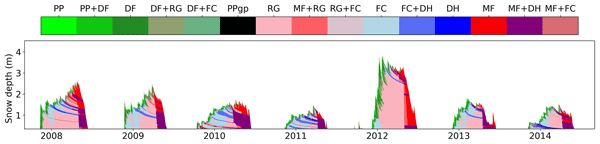
This article is a comprehensive description of the 3.0.2 stable release of the Crocus snowpack model. It describes various new implementations since the last reference article in 2012 and a review of the available scientific evaluations and applications of the model. This provides guidance for the future of numerical snow modelling.
Valentin Dura, Guillaume Evin, Anne-Catherine Favre, and David Penot
Hydrol. Earth Syst. Sci., 30, 2953–2971, https://doi.org/10.5194/hess-30-2953-2026, https://doi.org/10.5194/hess-30-2953-2026, 2026
Short summary
Short summary
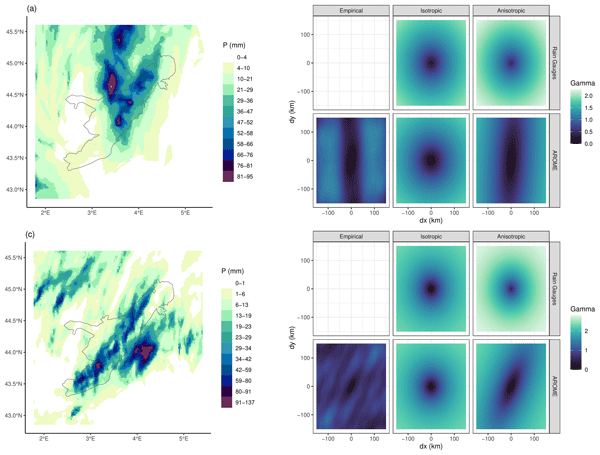
Traditional precipitation analyses often misrepresent intense rainfall's spatial variability. This study evaluates different spatial covariances to capture this variability in a geostatistical framework. The best covariance includes anisotropy derived from daily climate model simulations, offering a reliable alternative to anisotropy estimation using rain gauges. These findings highlight the importance of including anisotropy when generating precipitation inputs for hydrological modeling.
Eleni Kritidou, Martina Kauzlaric, Maria Staudinger, Guillaume Evin, Marc Vis, and Daniel Viviroli
EGUsphere, https://doi.org/10.5194/egusphere-2026-2338, https://doi.org/10.5194/egusphere-2026-2338, 2026
Short summary
Short summary
In mountain regions, precipitation varies with elevation, but models often simplify this relationship. We used simulations combining a weather generator and a hydrological model to explore how different precipitation different lapse rates affect runoff and floods in Switzerland. We found that they impact yearly and seasonal river flow and flood behavior. Higher-elevation catchments were less sensitive, and higher lapse rates increased summer floods, while lower rates increased winter floods.
Eric Sauquet, Guillaume Evin, Sonia Siauve, Ryma Aissat, Patrick Arnaud, Maud Bérel, Jérémie Bonneau, Flora Branger, Yvan Caballero, François Colléoni, Agnès Ducharne, Joël Gailhard, Florence Habets, Frédéric Hendrickx, Louis Héraut, Benoît Hingray, Peng Huang, Tristan Jaouen, Alexis Jeantet, Sandra Lanini, Matthieu Le Lay, Claire Magand, Louise Mimeau, Céline Monteil, Simon Munier, Charles Perrin, Olivier Robelin, Fabienne Rousset, Jean-Michel Soubeyroux, Laurent Strohmenger, Guillaume Thirel, Flore Tocquer, Yves Tramblay, Jean-Pierre Vergnes, and Jean-Philippe Vidal
Hydrol. Earth Syst. Sci., 30, 2277–2300, https://doi.org/10.5194/hess-30-2277-2026, https://doi.org/10.5194/hess-30-2277-2026, 2026
Short summary
Short summary
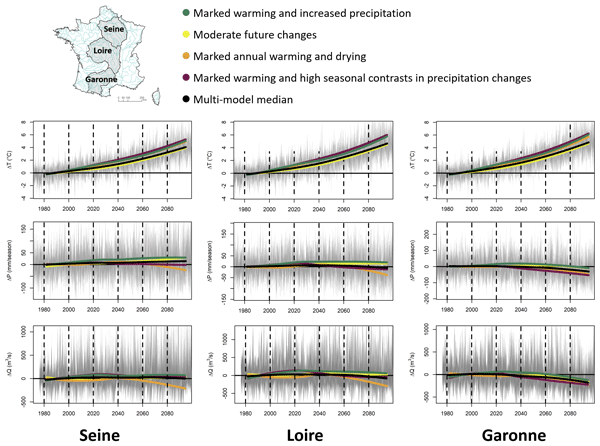
The Explore2 project has provided an unprecedented set of hydrological projections in terms of the number of hydrological models used and the spatial and temporal resolution. The results have been made available through various media. Under the high-emission scenario, the hydrological models mostly agree on the decrease in seasonal flows in the south of France, confirming its hotspot status, and on the decrease in summer flows throughout France, with the exception of the northern part of France.

Abubakar Haruna, Juliette Blanchet, Guillaume Evin, and Emmanuel Paquet
Adv. Stat. Clim. Meteorol. Oceanogr., 12, 87–109, https://doi.org/10.5194/ascmo-12-87-2026, https://doi.org/10.5194/ascmo-12-87-2026, 2026
Short summary
Short summary
This study advances nonstationary precipitation modeling by using single, flexible distributions to analyze trends across the full daily spectrum. We demonstrate that evolving shape parameters are critical for accurately capturing observed differential changes in low, medium, and extreme quantiles. This method ensures statistical consistency, providing reliable trend assessments over the two-component framework common in climate impact analysis.
Guillaume Evin, Benoit Hingray, Guillaume Thirel, Agnès Ducharne, Laurent Strohmenger, Lola Corre, Yves Tramblay, Jean-Philippe Vidal, Jérémie Bonneau, François Colleoni, Joël Gailhard, Florence Habets, Frédéric Hendrickx, Louis Héraut, Peng Huang, Matthieu Le Lay, Claire Magand, Paola Marson, Céline Monteil, Simon Munier, Alix Reverdy, Jean-Michel Soubeyroux, Yoann Robin, Jean-Pierre Vergnes, Mathieu Vrac, and Eric Sauquet
Hydrol. Earth Syst. Sci., 30, 1023–1051, https://doi.org/10.5194/hess-30-1023-2026, https://doi.org/10.5194/hess-30-1023-2026, 2026
Short summary
Short summary
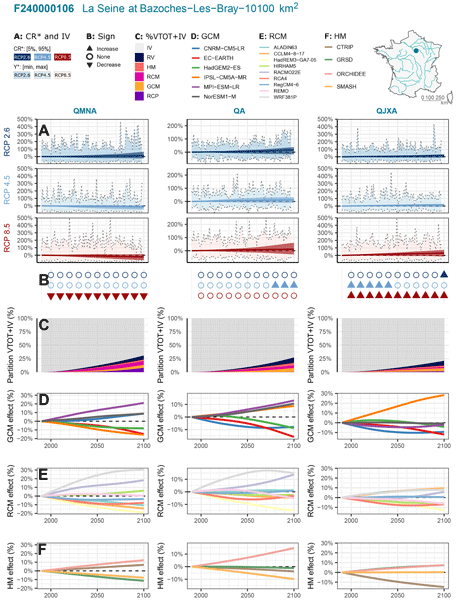
Explore2 provides hydrological projections for 1,735 French catchments. Using QUALYPSO (Quasi-Ergodic Analysis of Climate Projections Using Data Augmentation), this study assesses uncertainties, including internal variability. By the end of the century, low flows are projected to decline in southern France under high emissions, while other indicators remain uncertain. Emission scenarios and regional climate models are key uncertainty sources. Internal variability is often as large as climate-driven changes.
Yves Tramblay, Guillaume Thirel, Laurent Strohmenger, Guillaume Evin, Lola Corre, Louis Heraut, and Eric Sauquet
Hydrol. Earth Syst. Sci., 29, 7023–7039, https://doi.org/10.5194/hess-29-7023-2025, https://doi.org/10.5194/hess-29-7023-2025, 2025
Short summary
Short summary
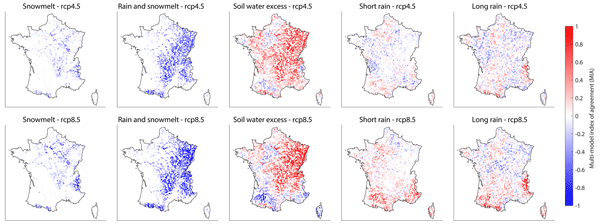
How does climate change impact floods in France? Using simulations for 3727 rivers with climate projections, results show that flood trends vary depending on the region. In the north, floods may become more severe, but in the south, the trends are mixed. Floods from intense rainfall are becoming more frequent, while snowmelt floods are strongly decreasing. Overall, the study shows that understanding what causes floods is key to predicting how they are likely to change with the climate.
Valentin Dura, Guillaume Evin, Anne-Catherine Favre, and David Penot
EGUsphere, https://doi.org/10.5194/egusphere-2025-5679, https://doi.org/10.5194/egusphere-2025-5679, 2025
Preprint archived
Short summary
Short summary
Traditional precipitation analysis often misrepresent seasonal totals and spatial variability of intense rainfall in mountains. This study introduces a reproducible workflow to generate a daily precipitation ensembles, conditioned on rain gauges. It outperforms standard products by better capturing seasonal totals. It also quantifies interpolation uncertainty, improving flood modeling. The open-source workflow is transferable to regions with sparse rain-gauge networks or limited radar coverage.
Ali Hosingholizade, Yousef Erfanifard, Seyed Kazem Alavipanah, Virginia García Millan, Saied Pirasteh, and Ali Nadir Arslan
Int. Arch. Photogramm. Remote Sens. Spatial Inf. Sci., XLVIII-G-2025, 611–617, https://doi.org/10.5194/isprs-archives-XLVIII-G-2025-611-2025, https://doi.org/10.5194/isprs-archives-XLVIII-G-2025-611-2025, 2025
Jung Jun Lin and Ali Nadir Arslan
Int. Arch. Photogramm. Remote Sens. Spatial Inf. Sci., XLVIII-M-6-2025, 207–212, https://doi.org/10.5194/isprs-archives-XLVIII-M-6-2025-207-2025, https://doi.org/10.5194/isprs-archives-XLVIII-M-6-2025-207-2025, 2025
Ali Nadir Arslan and Cemal Melih Tanis
Int. Arch. Photogramm. Remote Sens. Spatial Inf. Sci., XLVIII-M-6-2025, 53–59, https://doi.org/10.5194/isprs-archives-XLVIII-M-6-2025-53-2025, https://doi.org/10.5194/isprs-archives-XLVIII-M-6-2025-53-2025, 2025
Maria Staudinger, Martina Kauzlaric, Alexandre Mas, Guillaume Evin, Benoit Hingray, and Daniel Viviroli
Nat. Hazards Earth Syst. Sci., 25, 247–265, https://doi.org/10.5194/nhess-25-247-2025, https://doi.org/10.5194/nhess-25-247-2025, 2025
Short summary
Short summary
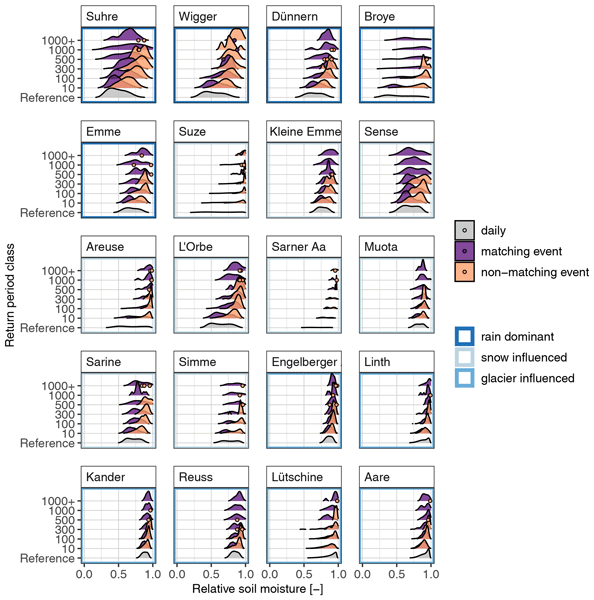
Various combinations of antecedent conditions and precipitation result in floods of varying degrees. Antecedent conditions played a crucial role in generating even large ones. The key predictors and spatial patterns of antecedent conditions leading to flooding at the basin's outlet were distinct. Precipitation and soil moisture from almost all sub-catchments were important for more frequent floods. For rarer events, only the predictors of specific sub-catchments were important.
Diego Monteiro, Cécile Caillaud, Matthieu Lafaysse, Adrien Napoly, Mathieu Fructus, Antoinette Alias, and Samuel Morin
Geosci. Model Dev., 17, 7645–7677, https://doi.org/10.5194/gmd-17-7645-2024, https://doi.org/10.5194/gmd-17-7645-2024, 2024
Short summary
Short summary
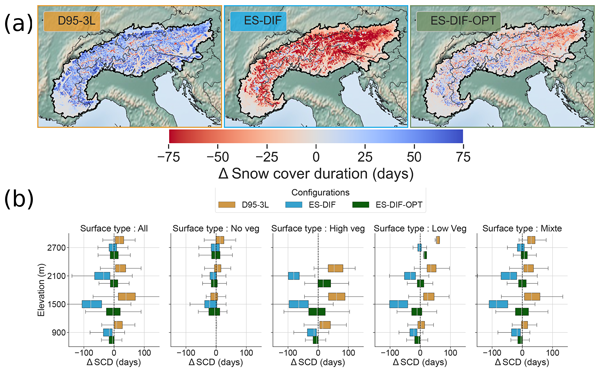
Modeling snow cover in climate and weather forecasting models is a challenge even for high-resolution models. Recent simulations with CNRM-AROME have shown difficulties when representing snow in the European Alps. Using remote sensing data and in situ observations, we evaluate modifications of the land surface configuration in order to improve it. We propose a new surface configuration, enabling a more realistic simulation of snow cover, relevant for climate and weather forecasting applications.
Valentin Dura, Guillaume Evin, Anne-Catherine Favre, and David Penot
Hydrol. Earth Syst. Sci., 28, 2579–2601, https://doi.org/10.5194/hess-28-2579-2024, https://doi.org/10.5194/hess-28-2579-2024, 2024
Short summary
Short summary
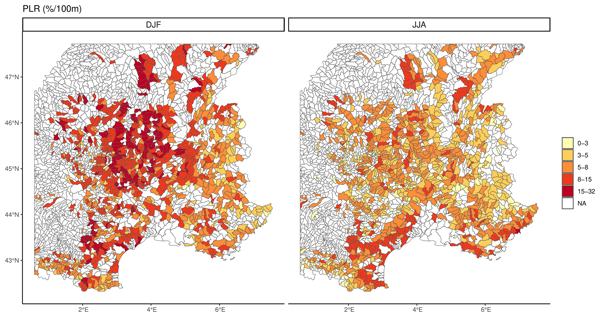
The increase in precipitation as a function of elevation is poorly understood in areas with complex topography. In this article, the reproduction of these orographic gradients is assessed with several precipitation products. The best product is a simulation from a convection-permitting regional climate model. The corresponding seasonal gradients vary significantly in space, with higher values for the first topographical barriers exposed to the dominant air mass circulations.
Guillaume Evin, Matthieu Le Lay, Catherine Fouchier, David Penot, Francois Colleoni, Alexandre Mas, Pierre-André Garambois, and Olivier Laurantin
Hydrol. Earth Syst. Sci., 28, 261–281, https://doi.org/10.5194/hess-28-261-2024, https://doi.org/10.5194/hess-28-261-2024, 2024
Short summary
Short summary
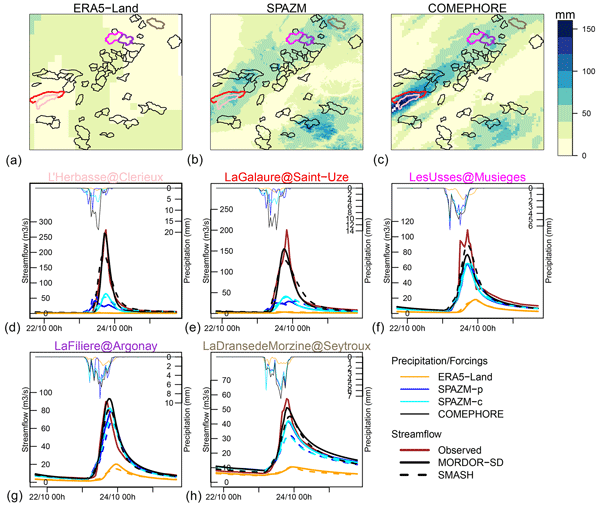
Hydrological modelling of mountainous catchments is challenging for many reasons, the main one being the temporal and spatial representation of precipitation forcings. This study presents an evaluation of the hydrological modelling of 55 small mountainous catchments of the northern French Alps, focusing on the influence of the type of precipitation reanalyses used as inputs. These evaluations emphasize the added value of radar measurements, in particular for the reproduction of flood events.
Samuel Morin, Hugues François, Marion Réveillet, Eric Sauquet, Louise Crochemore, Flora Branger, Étienne Leblois, and Marie Dumont
Hydrol. Earth Syst. Sci., 27, 4257–4277, https://doi.org/10.5194/hess-27-4257-2023, https://doi.org/10.5194/hess-27-4257-2023, 2023
Short summary
Short summary
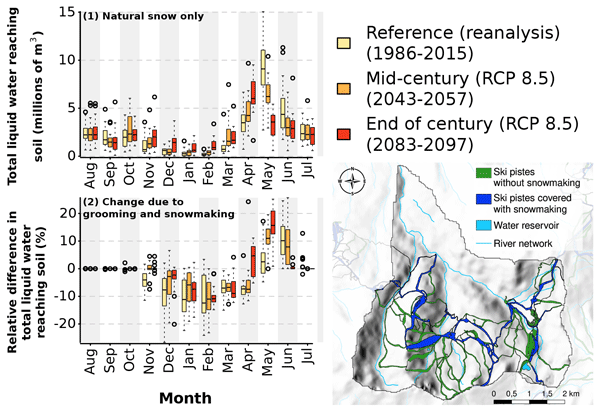
Ski resorts are a key socio-economic asset of several mountain areas. Grooming and snowmaking are routinely used to manage the snow cover on ski pistes, but despite vivid debate, little is known about their impact on water resources downstream. This study quantifies, for the pilot ski resort La Plagne in the French Alps, the impact of grooming and snowmaking on downstream river flow. Hydrological impacts are mostly apparent at the seasonal scale and rather neutral on the annual scale.
Isabelle Ousset, Guillaume Evin, Damien Raynaud, and Thierry Faug
Nat. Hazards Earth Syst. Sci., 23, 3509–3523, https://doi.org/10.5194/nhess-23-3509-2023, https://doi.org/10.5194/nhess-23-3509-2023, 2023
Short summary
Short summary
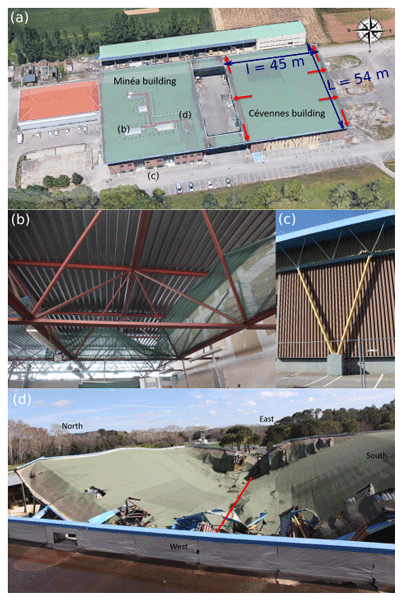
This paper deals with an exceptional snow and rain event in a Mediterranean region of France which is usually not prone to heavy snowfall and its consequences on a particular building that collapsed completely. Independent analyses of the meteorological episode are carried out, and the response of the building to different snow and rain loads is confronted to identify the main critical factors that led to the collapse.
Erwan Le Roux, Guillaume Evin, Raphaëlle Samacoïts, Nicolas Eckert, Juliette Blanchet, and Samuel Morin
The Cryosphere, 17, 4691–4704, https://doi.org/10.5194/tc-17-4691-2023, https://doi.org/10.5194/tc-17-4691-2023, 2023
Short summary
Short summary
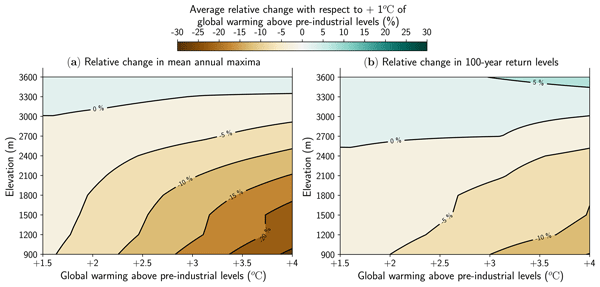
We assess projected changes in snowfall extremes in the French Alps as a function of elevation and global warming level for a high-emission scenario. On average, heavy snowfall is projected to decrease below 3000 m and increase above 3600 m, while extreme snowfall is projected to decrease below 2400 m and increase above 3300 m. At elevations in between, an increase is projected until +3 °C of global warming and then a decrease. These results have implications for the management of risks.
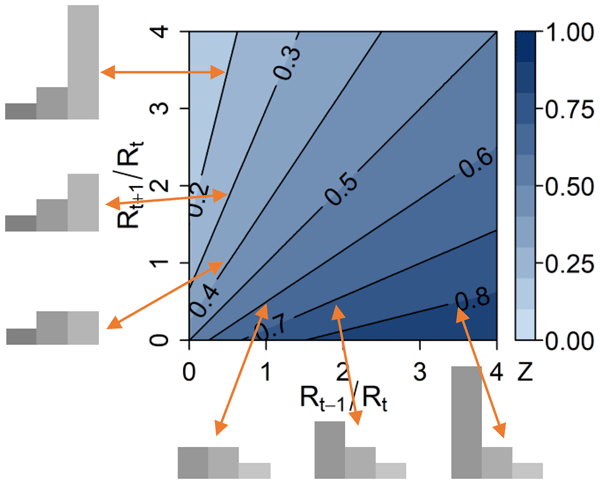
Kaltrina Maloku, Benoit Hingray, and Guillaume Evin
Hydrol. Earth Syst. Sci., 27, 3643–3661, https://doi.org/10.5194/hess-27-3643-2023, https://doi.org/10.5194/hess-27-3643-2023, 2023
Short summary
Short summary
High-resolution precipitation data, needed for many applications in hydrology, are typically rare. Such data can be simulated from daily precipitation with stochastic disaggregation. In this work, multiplicative random cascades are used to disaggregate time series of 40 min precipitation from daily precipitation for 81 Swiss stations. We show that very relevant statistics of precipitation are obtained when precipitation asymmetry is accounted for in a continuous way in the cascade generator.
Juliette Blanchet, Alix Reverdy, Antoine Blanc, Jean-Dominique Creutin, Périne Kiennemann, and Guillaume Evin
Hydrol. Earth Syst. Sci. Discuss., https://doi.org/10.5194/hess-2023-197, https://doi.org/10.5194/hess-2023-197, 2023
Revised manuscript not accepted
Short summary
Short summary
The Alpine region is strongly affected by torrential floods, sometimes leading to severe negative impacts on society, economy, and the environment. Understanding such natural hazards and their drivers is essential to mitigate related risks. In this article we study the atmospheric conditions at the origin of damaging torrential events in the Northern French Alps over the long run, using a database of reported occurrence of damaging torrential flooding in the Grenoble conurbation since 1851.
Laurent Strohmenger, Eric Sauquet, Claire Bernard, Jérémie Bonneau, Flora Branger, Amélie Bresson, Pierre Brigode, Rémy Buzier, Olivier Delaigue, Alexandre Devers, Guillaume Evin, Maïté Fournier, Shu-Chen Hsu, Sandra Lanini, Alban de Lavenne, Thibault Lemaitre-Basset, Claire Magand, Guilherme Mendoza Guimarães, Max Mentha, Simon Munier, Charles Perrin, Tristan Podechard, Léo Rouchy, Malak Sadki, Myriam Soutif-Bellenger, François Tilmant, Yves Tramblay, Anne-Lise Véron, Jean-Philippe Vidal, and Guillaume Thirel
Hydrol. Earth Syst. Sci., 27, 3375–3391, https://doi.org/10.5194/hess-27-3375-2023, https://doi.org/10.5194/hess-27-3375-2023, 2023
Short summary
Short summary
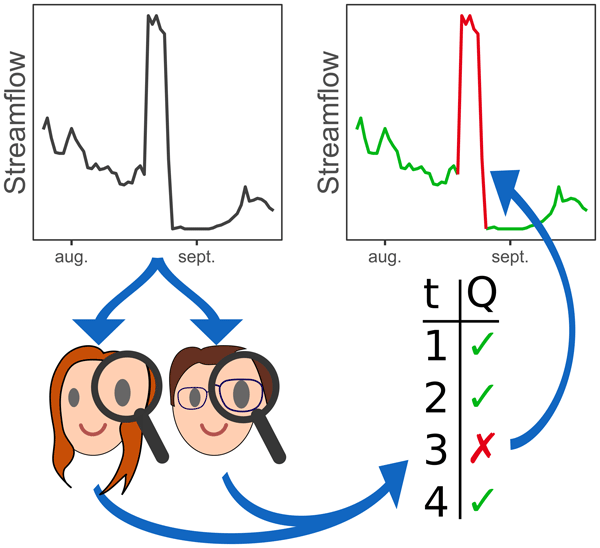
We present the results of a large visual inspection campaign of 674 streamflow time series in France. The objective was to detect non-natural records resulting from instrument failure or anthropogenic influences, such as hydroelectric power generation or reservoir management. We conclude that the identification of flaws in flow time series is highly dependent on the objectives and skills of individual evaluators, and we raise the need for better practices for data cleaning.
Diego Monteiro and Samuel Morin
The Cryosphere, 17, 3617–3660, https://doi.org/10.5194/tc-17-3617-2023, https://doi.org/10.5194/tc-17-3617-2023, 2023
Short summary
Short summary
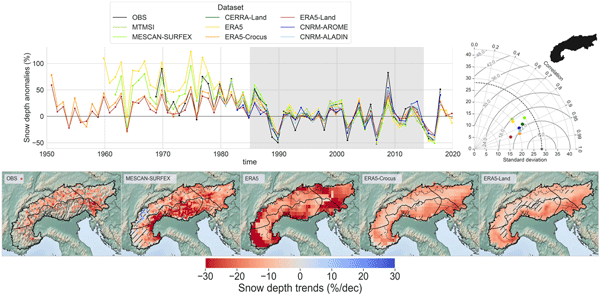
Beyond directly using in situ observations, often sparsely available in mountain regions, climate model simulations and so-called reanalyses are increasingly used for climate change impact studies. Here we evaluate such datasets in the European Alps from 1950 to 2020, with a focus on snow cover information and its main drivers: air temperature and precipitation. In terms of variability and trends, we identify several limitations and provide recommendations for future use of these datasets.
Marie Dumont, Simon Gascoin, Marion Réveillet, Didier Voisin, François Tuzet, Laurent Arnaud, Mylène Bonnefoy, Montse Bacardit Peñarroya, Carlo Carmagnola, Alexandre Deguine, Aurélie Diacre, Lukas Dürr, Olivier Evrard, Firmin Fontaine, Amaury Frankl, Mathieu Fructus, Laure Gandois, Isabelle Gouttevin, Abdelfateh Gherab, Pascal Hagenmuller, Sophia Hansson, Hervé Herbin, Béatrice Josse, Bruno Jourdain, Irene Lefevre, Gaël Le Roux, Quentin Libois, Lucie Liger, Samuel Morin, Denis Petitprez, Alvaro Robledano, Martin Schneebeli, Pascal Salze, Delphine Six, Emmanuel Thibert, Jürg Trachsel, Matthieu Vernay, Léo Viallon-Galinier, and Céline Voiron
Earth Syst. Sci. Data, 15, 3075–3094, https://doi.org/10.5194/essd-15-3075-2023, https://doi.org/10.5194/essd-15-3075-2023, 2023
Short summary
Short summary
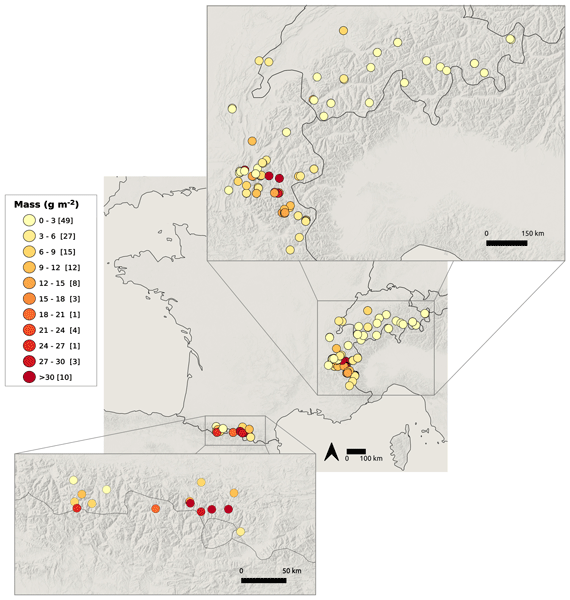
Saharan dust outbreaks have profound effects on ecosystems, climate, health, and the cryosphere, but the spatial deposition pattern of Saharan dust is poorly known. Following the extreme dust deposition event of February 2021 across Europe, a citizen science campaign was launched to sample dust on snow over the Pyrenees and the European Alps. This campaign triggered wide interest and over 100 samples. The samples revealed the high variability of the dust properties within a single event.
Maxime Morel, Guillaume Piton, Damien Kuss, Guillaume Evin, and Caroline Le Bouteiller
Nat. Hazards Earth Syst. Sci., 23, 1769–1787, https://doi.org/10.5194/nhess-23-1769-2023, https://doi.org/10.5194/nhess-23-1769-2023, 2023
Short summary
Short summary
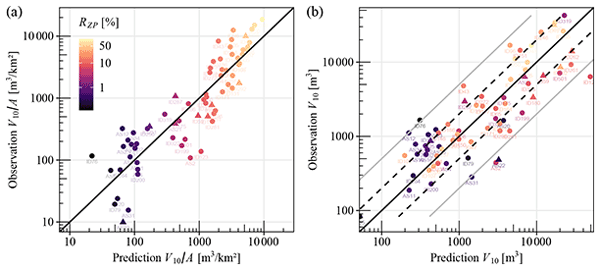
In mountain catchments, damage during floods is generally primarily driven by the supply of a massive amount of sediment. Predicting how much sediment can be delivered by frequent and infrequent events is thus important in hazard studies. This paper uses data gathered during the maintenance operation of about 100 debris retention basins to build simple equations aiming at predicting sediment supply from simple parameters describing the upstream catchment.
Cécile Duvillier, Nicolas Eckert, Guillaume Evin, and Michael Deschâtres
Nat. Hazards Earth Syst. Sci., 23, 1383–1408, https://doi.org/10.5194/nhess-23-1383-2023, https://doi.org/10.5194/nhess-23-1383-2023, 2023
Short summary
Short summary
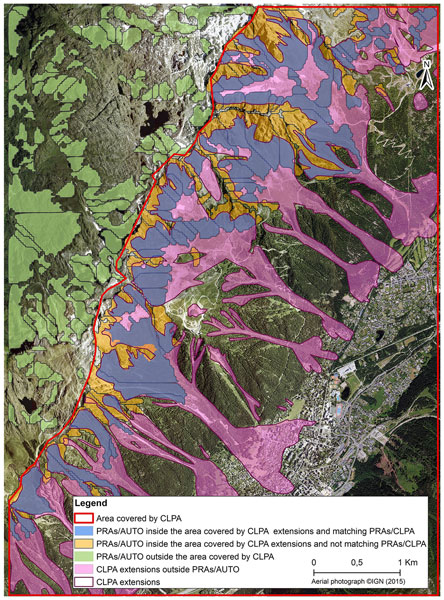
This study develops a method that identifies individual potential release areas (PRAs) of snow avalanches based on terrain analysis and watershed delineation and demonstrates its efficiency in the French Alps context using an extensive cadastre of past avalanche limits. Results may contribute to better understanding local avalanche hazard. The work may also foster the development of more efficient PRA detection methods based on a rigorous evaluation scheme.
Juliette Blanchet, Alix Reverdy, Antoine Blanc, Jean-Dominique Creutin, Périne Kiennemann, and Guillaume Evin
Nat. Hazards Earth Syst. Sci. Discuss., https://doi.org/10.5194/nhess-2022-276, https://doi.org/10.5194/nhess-2022-276, 2023
Manuscript not accepted for further review
Short summary
Short summary
We study the atmospheric conditions at the origin of damaging torrential events in the Northern French Alps over the long run. We consider seven atmospheric variables that describe the nature of the air masses involved and the possible triggers of precipitation and we try to isolate the most discriminating variables. The results show that humidity and particularly humidity transport plays the greatest role under westerly flows while instability potential is mostly at play under southerly flows.
Maiju Linkosalmi, Juha-Pekka Tuovinen, Olli Nevalainen, Mikko Peltoniemi, Cemal M. Taniş, Ali N. Arslan, Juuso Rainne, Annalea Lohila, Tuomas Laurila, and Mika Aurela
Biogeosciences, 19, 4747–4765, https://doi.org/10.5194/bg-19-4747-2022, https://doi.org/10.5194/bg-19-4747-2022, 2022
Short summary
Short summary
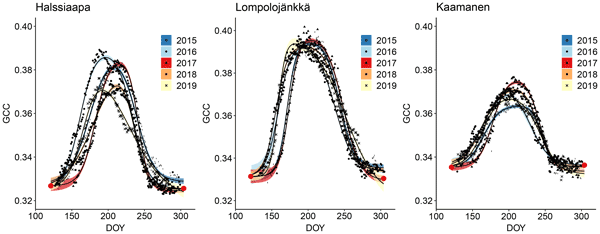
Vegetation greenness was monitored with digital cameras in three northern peatlands during five growing seasons. The greenness index derived from the images was highest at the most nutrient-rich site. Greenness indicated the main phases of phenology and correlated with CO2 uptake, though this was mainly related to the common seasonal cycle. The cameras and Sentinel-2 satellite showed consistent results, but more frequent satellite data are needed for reliable detection of phenological phases.
Daniel Viviroli, Anna E. Sikorska-Senoner, Guillaume Evin, Maria Staudinger, Martina Kauzlaric, Jérémy Chardon, Anne-Catherine Favre, Benoit Hingray, Gilles Nicolet, Damien Raynaud, Jan Seibert, Rolf Weingartner, and Calvin Whealton
Nat. Hazards Earth Syst. Sci., 22, 2891–2920, https://doi.org/10.5194/nhess-22-2891-2022, https://doi.org/10.5194/nhess-22-2891-2022, 2022
Short summary
Short summary
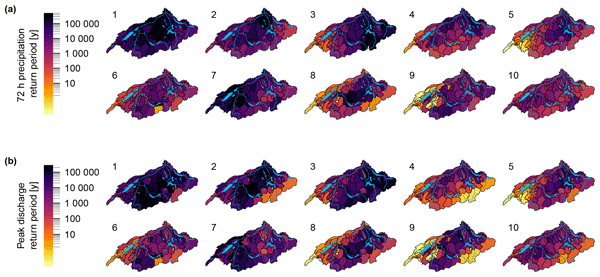
Estimating the magnitude of rare to very rare floods is a challenging task due to a lack of sufficiently long observations. The challenge is even greater in large river basins, where precipitation patterns and amounts differ considerably between individual events and floods from different parts of the basin coincide. We show that a hydrometeorological model chain can provide plausible estimates in this setting and can thus inform flood risk and safety assessments for critical infrastructure.
Erwan Le Roux, Guillaume Evin, Nicolas Eckert, Juliette Blanchet, and Samuel Morin
Earth Syst. Dynam., 13, 1059–1075, https://doi.org/10.5194/esd-13-1059-2022, https://doi.org/10.5194/esd-13-1059-2022, 2022
Short summary
Short summary
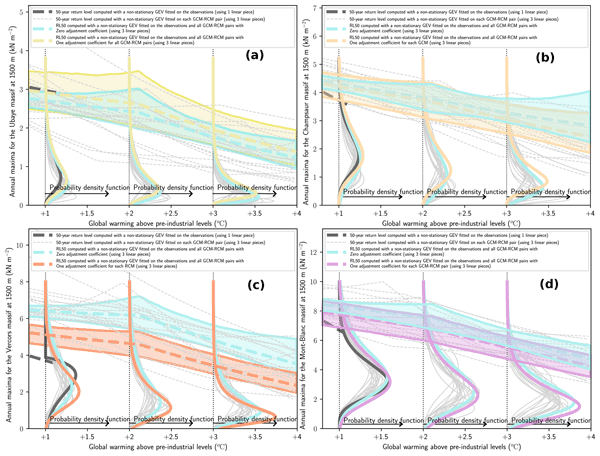
Anticipating risks related to climate extremes is critical for societal adaptation to climate change. In this study, we propose a statistical method in order to estimate future climate extremes from past observations and an ensemble of climate change simulations. We apply this approach to snow load data available in the French Alps at 1500 m elevation and find that extreme snow load is projected to decrease by −2.9 kN m−2 (−50 %) between 1986–2005 and 2080–2099 for a high-emission scenario.

Matthieu Vernay, Matthieu Lafaysse, Diego Monteiro, Pascal Hagenmuller, Rafife Nheili, Raphaëlle Samacoïts, Deborah Verfaillie, and Samuel Morin
Earth Syst. Sci. Data, 14, 1707–1733, https://doi.org/10.5194/essd-14-1707-2022, https://doi.org/10.5194/essd-14-1707-2022, 2022
Short summary
Short summary
This paper introduces the latest version of the freely available S2M dataset which provides estimates of both meteorological and snow cover variables, as well as various avalanche hazard diagnostics at different elevations, slopes and aspects for the three main French high-elevation mountainous regions. A complete description of the system and the dataset is provided, as well as an overview of the possible uses of this dataset and an objective assessment of its limitations.
Lucas Berard-Chenu, Hugues François, Emmanuelle George, and Samuel Morin
The Cryosphere, 16, 863–881, https://doi.org/10.5194/tc-16-863-2022, https://doi.org/10.5194/tc-16-863-2022, 2022
Short summary
Short summary
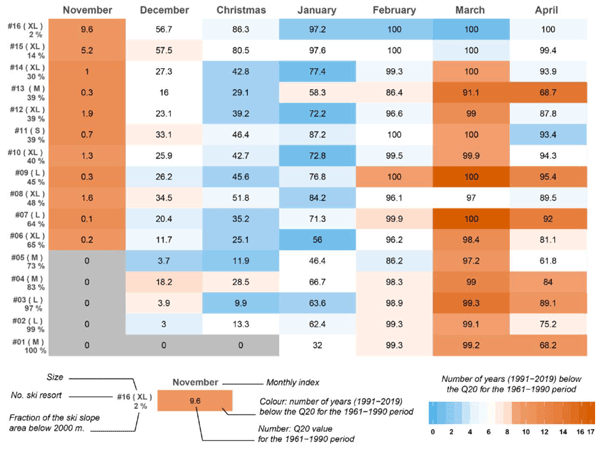
This study investigates the past snow reliability (1961–2019) of 16 ski resorts in the French Alps using state-of-the-art snowpack modelling. We used snowmaking investment figures to infer the evolution of snowmaking coverage at the individual ski resort level. Snowmaking improved snow reliability for the core of the winter season for the highest-elevation ski resorts. However it did not counterbalance the decreasing trend in snow cover reliability for lower-elevation ski resorts and in spring.
Guillaume Evin, Samuel Somot, and Benoit Hingray
Earth Syst. Dynam., 12, 1543–1569, https://doi.org/10.5194/esd-12-1543-2021, https://doi.org/10.5194/esd-12-1543-2021, 2021
Short summary
Short summary
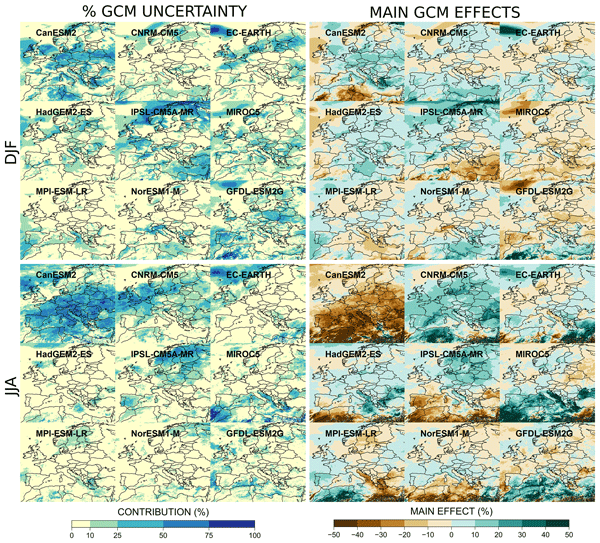
This research paper proposes an assessment of mean climate change responses and related uncertainties over Europe for mean seasonal temperature and total seasonal precipitation. An advanced statistical approach is applied to a large ensemble of 87 high-resolution EURO-CORDEX projections. For the first time, we provide a comprehensive estimation of the relative contribution of GCMs and RCMs, RCP scenarios, and internal variability to the total variance of a very large ensemble.
Zacharie Barrou Dumont, Simon Gascoin, Olivier Hagolle, Michaël Ablain, Rémi Jugier, Germain Salgues, Florence Marti, Aurore Dupuis, Marie Dumont, and Samuel Morin
The Cryosphere, 15, 4975–4980, https://doi.org/10.5194/tc-15-4975-2021, https://doi.org/10.5194/tc-15-4975-2021, 2021
Short summary
Short summary
Since 2020, the Copernicus High Resolution Snow & Ice Monitoring Service has distributed snow cover maps at 20 m resolution over Europe in near-real time. These products are derived from the Sentinel-2 Earth observation mission, with a revisit time of 5 d or less (cloud-permitting). Here we show the good accuracy of the snow detection over a wide range of regions in Europe, except in dense forest regions where the snow cover is hidden by the trees.
Cited articles
Baez-Villanueva, O. M., Zambrano-Bigiarini, M., Ribbe, L., Nauditt, A., Giraldo-Osorio, J. D., and Thinh, N. X.: Temporal and spatial evaluation of satellite rainfall estimates over different regions in Latin-America, Atmos. Res., 213, 34–50, https://doi.org/10.1016/j.atmosres.2018.05.011, 2018. a
Croce, P., Formichi, P., Landi, F., and Marsili, F.: Harmonized European ground snow load map: Analysis and comparison of national provisions, Cold Reg. Sci. Technol., 168, 102875, https://doi.org/10.1016/j.coldregions.2019.102875, 2019. a
Croce, P., Formichi, P., and Landi, F.: Extreme Ground Snow Loads in Europe from 1951 to 2100, Climate, 9, 133, https://doi.org/10.3390/cli9090133, 2021. a
Dierickx, F.: Chapter 10 Regional reanalysis (UERRA-HARMONIE) & Surface Reanalysis (MESCAN-SURFEX)|Copernicus Climate Change Programme: User Learning Service Content, Tech. rep., ECMWF, https://bookdown.org/floriandierickx/bookdown-demo/regional-reanalysis-uerra-harmonie-surface-reanalysis-mescan (last access: 25 November 2025), 2019. a, b
EUROSTAT: Regions in the European Union: nomenclature of territorial units for statistics, NUTS 2013/EU-28, Tech. rep., Publications Office, https://doi.org/10.2785/53498, 2015. a
Evin, G., Le Roux, E., Kamir, E., and Morin, S.: Estimating changes in extreme snow load in Europe as a function of global warming levels, Cold Reg. Sci. Technol., 231, 104424, https://doi.org/10.1016/j.coldregions.2025.104424, 2025. a, b, c, d
François, H., Samacoïts, R., Bird, D. N., Köberl, J., Prettenthaler, F., and Morin, S.: Climate change exacerbates snow-water-energy challenges for European ski tourism, Nat. Clim. Change, 13, 935–942, https://doi.org/10.1038/s41558-023-01759-5, 2023. a
Gomis-Cebolla, J., Rattayova, V., Salazar-Galán, S., and Francés, F.: Evaluation of ERA5 and ERA5-Land reanalysis precipitation datasets over Spain (1951–2020), Atmos. Res., 284, 106606, https://doi.org/10.1016/j.atmosres.2023.106606, 2023. a
Gupta, H. V., Kling, H., Yilmaz, K. K., and Martinez, G. F.: Decomposition of the mean squared error and NSE performance criteria: Implications for improving hydrological modelling, J. Hydrol., 377, 80–91, https://doi.org/10.1016/j.jhydrol.2009.08.003, 2009. a
Kamir, E., Morin, S., Evin, G., Samacoïts, R., Gehring, P., Wichura, B., and Arslan, A. N.: The European-wide Mountain Tourism Meteorological and Snow Indicators (MTMSI) dataset: annual snow depth maxima, Zenodo [data set], https://doi.org/10.5281/zenodo.15181401, 2025 (data also available at: https://github.com/elisakmr/MTMSI-evaluation, last access: 25 November 2025). a, b, c, d
Klein Tank, A. M. G., Wijngaard, J. B., Können, G. P., Böhm, R., Demarée, G., Gocheva, A., Mileta, M., Pashiardis, S., Hejkrlik, L., Kern-Hansen, C., Heino, R., Bessemoulin, P., Müller-Westermeier, G., Tzanakou, M., Szalai, S., Pálsdóttir, T., Fitzgerald, D., Rubin, S., Capaldo, M., Maugeri, M., Leitass, A., Bukantis, A., Aberfeld, R., van Engelen, A. F. V., Forland, E., Mietus, M., Coelho, F., Mares, C., Razuvaev, V., Nieplova, E., Cegnar, T., Antonio López, J., Dahlström, B., Moberg, A., Kirchhofer, W., Ceylan, A., Pachaliuk, O., Alexander, L. V., and Petrovic, P.: Daily dataset of 20th-century surface air temperature and precipitation series for the European Climate Assessment, Int. J. Climatol., 22, 1441–1453, https://doi.org/10.1002/joc.773, 2002. a, b
Kling, H., Fuchs, M., and Paulin, M.: Runoff conditions in the upper Danube basin under an ensemble of climate change scenarios, J. Hydrol., 424–425, 264–277, https://doi.org/10.1016/j.jhydrol.2012.01.011, 2012. a
Klok, E. J. and Klein Tank, A. M. G.: Updated and extended European dataset of daily climate observations, Int. J. Climatol., 29, 1182–1191, https://doi.org/10.1002/joc.1779, 2009. a, b
Knoben, W. J. M., Freer, J. E., and Woods, R. A.: Technical note: Inherent benchmark or not? Comparing Nash–Sutcliffe and Kling–Gupta efficiency scores, Hydrol. Earth Syst. Sci., 23, 4323–4331, https://doi.org/10.5194/hess-23-4323-2019, 2019. a
Kochendorfer, J., Earle, M. E., Hodyss, D., Reverdin, A., Roulet, Y.-A., Nitu, R., Rasmussen, R., Landolt, S., Buisán, S., and Laine, T.: Undercatch Adjustments for Tipping-Bucket Gauge Measurements of Solid Precipitation, J. Hydrometeorol., 21, 1193–1205, https://doi.org/10.1175/JHM-D-19-0256.1, 2020. a, b, c
Krinner, G., Derksen, C., Essery, R., Flanner, M., Hagemann, S., Clark, M., Hall, A., Rott, H., Brutel-Vuilmet, C., Kim, H., Ménard, C. B., Mudryk, L., Thackeray, C., Wang, L., Arduini, G., Balsamo, G., Bartlett, P., Boike, J., Boone, A., Chéruy, F., Colin, J., Cuntz, M., Dai, Y., Decharme, B., Derry, J., Ducharne, A., Dutra, E., Fang, X., Fierz, C., Ghattas, J., Gusev, Y., Haverd, V., Kontu, A., Lafaysse, M., Law, R., Lawrence, D., Li, W., Marke, T., Marks, D., Ménégoz, M., Nasonova, O., Nitta, T., Niwano, M., Pomeroy, J., Raleigh, M. S., Schaedler, G., Semenov, V., Smirnova, T. G., Stacke, T., Strasser, U., Svenson, S., Turkov, D., Wang, T., Wever, N., Yuan, H., Zhou, W., and Zhu, D.: ESM-SnowMIP: assessing snow models and quantifying snow-related climate feedbacks, Geosci. Model Dev., 11, 5027–5049, https://doi.org/10.5194/gmd-11-5027-2018, 2018. a, b
López-Moreno, J., Fassnacht, S., Heath, J., Musselman, K., Revuelto, J., Latron, J., Morán-Tejeda, E., and Jonas, T.: Small scale spatial variability of snow density and depth over complex alpine terrain: Implications for estimating snow water equivalent, Adv. Water Resour., 55, 40–52, https://doi.org/10.1016/j.advwatres.2012.08.010, 2013. a
Masson, V., Le Moigne, P., Martin, E., Faroux, S., Alias, A., Alkama, R., Belamari, S., Barbu, A., Boone, A., Bouyssel, F., Brousseau, P., Brun, E., Calvet, J.-C., Carrer, D., Decharme, B., Delire, C., Donier, S., Essaouini, K., Gibelin, A.-L., Giordani, H., Habets, F., Jidane, M., Kerdraon, G., Kourzeneva, E., Lafaysse, M., Lafont, S., Lebeaupin Brossier, C., Lemonsu, A., Mahfouf, J.-F., Marguinaud, P., Mokhtari, M., Morin, S., Pigeon, G., Salgado, R., Seity, Y., Taillefer, F., Tanguy, G., Tulet, P., Vincendon, B., Vionnet, V., and Voldoire, A.: The SURFEXv7.2 land and ocean surface platform for coupled or offline simulation of earth surface variables and fluxes, Geosci. Model Dev., 6, 929–960, https://doi.org/10.5194/gmd-6-929-2013, 2013. a
Matiu, M., Crespi, A., Bertoldi, G., Carmagnola, C. M., Marty, C., Morin, S., Schöner, W., Cat Berro, D., Chiogna, G., De Gregorio, L., Kotlarski, S., Majone, B., Resch, G., Terzago, S., Valt, M., Beozzo, W., Cianfarra, P., Gouttevin, I., Marcolini, G., Notarnicola, C., Petitta, M., Scherrer, S. C., Strasser, U., Winkler, M., Zebisch, M., Cicogna, A., Cremonini, R., Debernardi, A., Faletto, M., Gaddo, M., Giovannini, L., Mercalli, L., Soubeyroux, J.-M., Sušnik, A., Trenti, A., Urbani, S., and Weilguni, V.: Observed snow depth trends in the European Alps: 1971 to 2019, The Cryosphere, 15, 1343–1382, https://doi.org/10.5194/tc-15-1343-2021, 2021. a, b, c
Morin, S., Samacoït, R., François, H., and Abegg, B.:: Mountain tourism meteorological and snow indicators for Europe from 1950 to 2100 derived from reanalysis and climate projection, Copernicus Climate Change Service (C3S) Climate Data Store (CDS) [data set], https://doi.org/10.24381/cds.2fe6a082, 2020. a
Morin, S., Samacoïts, R., François, H., Carmagnola, C. M., Abegg, B., Demiroglu, O. C., Pons, M., Soubeyroux, J.-M., Lafaysse, M., Franklin, S., Griffiths, G., Kite, D., Hoppler, A. A., George, E., Buontempo, C., Almond, S., Dubois, G., and Cauchy, A.: Pan-European meteorological and snow indicators of climate change impact on ski tourism, Clim. Serv., 22, 100215, https://doi.org/10.1016/j.cliser.2021.100215, 2021. a, b, c, d, e, f, g, h, i, j, k
Olsson, T., Luomaranta, A., Nyman, H., and Jylhä, K.: Climatology of sea-effect snow in Finland, Int. J. Climatol., 43, 650–667, https://doi.org/10.1002/joc.7801, 2023. a
Ridal, M., Bazile, E., Le Moigne, P., Randriamampianina, R., Schimanke, S., Andrae, U., Berggren, L., Brousseau, P., Dahlgren, P., Edvinsson, L., El-Said, A., Glinton, M., Hagelin, S., Hopsch, S., Isaksson, L., Medeiros, P., Olsson, E., Unden, P., and Wang, Z. Q.: CERRA, the Copernicus European Regional Reanalysis system, Q. J. Roy. Meteorol. Soc., 150, 3385–3411, https://doi.org/10.1002/qj.4764, 2024. a
Soci, C., Bazile, E., Besson, F., and Landelius, T.: High-resolution precipitation re-analysis system for climatological purposes, Tellus A, 68, 29879, https://doi.org/10.3402/tellusa.v68.29879, 2016. a
van der Schot, J., Abermann, J., Silva, T., Rasmussen, K., Winkler, M., Langley, K., and Schöner, W.: Seasonal snow cover indicators in coastal Greenland from in situ observations, a climate model, and reanalysis, The Cryosphere, 18, 5803–5823, https://doi.org/10.5194/tc-18-5803-2024, 2024. a
Vernay, M., Lafaysse, M., Monteiro, D., Hagenmuller, P., Nheili, R., Samacoïts, R., Verfaillie, D., and Morin, S.: The S2M meteorological and snow cover reanalysis over the French mountainous areas: description and evaluation (1958–2021), Earth Syst. Sci. Data, 14, 1707–1733, https://doi.org/10.5194/essd-14-1707-2022, 2022. a
Vionnet, V., Brun, E., Morin, S., Boone, A., Faroux, S., Le Moigne, P., Martin, E., and Willemet, J.-M.: The detailed snowpack scheme Crocus and its implementation in SURFEX v7.2, Geosci. Model Dev., 5, 773–791, https://doi.org/10.5194/gmd-5-773-2012, 2012. a
WMO: Guide to Instruments and Methods of Observation, WMO-No. 8, Tech. rep., World Meteorological Organization, Geneva, https://library.wmo.int/idurl/4/41650 (last access: 25 November 2025), 2021. a
Short summary
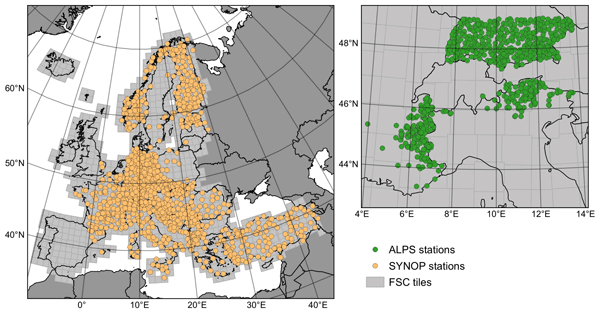
This article describes a dataset of annual snow depth maximum across Europe, from 1961 to 2015, based on a regional reanalysis. It evaluates the performance of the dataset, against in-situ snow depth observations. This dataset is found to perform well in most environments, with challenges at high elevation and some coastal areas. Assessing the quality of this dataset is necessary in order to use it as a baseline to infer future changes of extreme snow loads under climate change.
This article describes a dataset of annual snow depth maximum across Europe, from 1961 to 2015,...


Altmetrics
Final-revised paper
Preprint