Articles | Volume 18, issue 2
https://doi.org/10.5194/essd-18-1203-2026
© Author(s) 2026. This work is distributed under
the Creative Commons Attribution 4.0 License.
the Creative Commons Attribution 4.0 License.
https://doi.org/10.5194/essd-18-1203-2026
© Author(s) 2026. This work is distributed under
the Creative Commons Attribution 4.0 License.
the Creative Commons Attribution 4.0 License.
Data description article
| 
12 Feb 2026
Data description article |
| 12 Feb 2026
| 12 Feb 2026
The newly developed Multi-ensemble Biomass-burning Emissions Inventory (MBEI): characterizing and unraveling spatiotemporal uncertainty in global biomass burning emissions
Xinlu Liu
State Key Laboratory of Remote Sensing and Digital Earth, Aerospace Information Research Institute, Chinese Academy of Sciences, Beijing 100101, China
School of Ecology, Hainan University, Haikou 570228, China
Zhongyi Sun
CORRESPONDING AUTHOR

School of Ecology, Hainan University, Haikou 570228, China
Chong Shi
State Key Laboratory of Remote Sensing and Digital Earth, Aerospace Information Research Institute, Chinese Academy of Sciences, Beijing 100101, China
Peng Wang
Department of Atmospheric and Oceanic Sciences, Fudan University, Shanghai, 200438, China
Tangzhe Nie
School of Water Conservancy and Electric Power, Heilongjiang University, Harbin 150006, China
Qingnan Chu
Centro de Biotecnologia y Genómica de Planta (UPM-INIA). Universidad Politécnica de Madrid, Campus de Montegancedo, Madrid, Spain
Huazhe Shang
State Key Laboratory of Remote Sensing and Digital Earth, Aerospace Information Research Institute, Chinese Academy of Sciences, Beijing 100101, China
Lu Sun
School of Human Settlements and Civil Engineering, Xi’an Jiaotong University, Xi’an, 710049, China
State Key Laboratory of Remote Sensing and Digital Earth, Aerospace Information Research Institute, Chinese Academy of Sciences, Beijing 100101, China
Meng Guo
School of Geographical Sciences, Northeast Normal University, Changchun 130024, China
Kunpeng Yi
State Key Laboratory of Urban and Regional Ecology, Research Center for Eco-Environmental Sciences, Chinese Academy of Sciences, Beijing 100085, China
Zhenghong Tan
School of Ecology and Environmental Science, Yunnan University, Kunming 650500, China
Lan Wu
School of Ecology, Hainan University, Haikou 570228, China
Xinchun Lu
State Key Laboratory of Remote Sensing and Digital Earth, Aerospace Information Research Institute, Chinese Academy of Sciences, Beijing 100101, China
School of Water Conservancy and Electric Power, Heilongjiang University, Harbin 150006, China
Shuai Yin
CORRESPONDING AUTHOR
State Key Laboratory of Remote Sensing and Digital Earth, Aerospace Information Research Institute, Chinese Academy of Sciences, Beijing 100101, China
main correspondence author
Related authors
No articles found.
Peng Wang, Wenxuan Yu, Zhaolei Zhang, Jianyan Lu, Shenxin Li, and Hongliang Zhang
Atmos. Chem. Phys., 26, 10789–10800, https://doi.org/10.5194/acp-26-10789-2026, https://doi.org/10.5194/acp-26-10789-2026, 2026
Short summary
Short summary
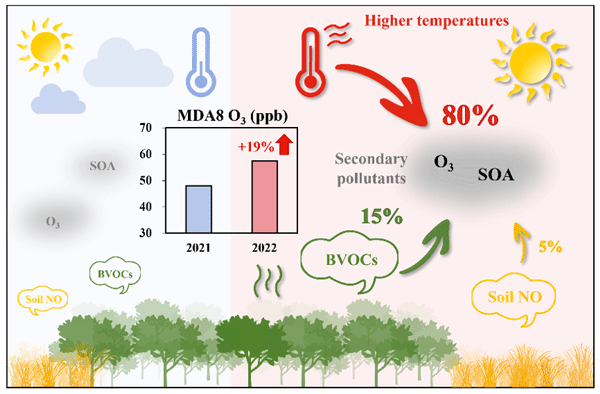
Heatwaves worsen ozone and secondary organic aerosol pollution. We quantified how much comes from heat speeding up chemical reactions versus increasing natural emissions in China. High temperatures drive over 80 % of the pollution increase nationwide by making the atmosphere more chemically reactive. The effect was strongest in the Yangtze River Delta and Pearl River Delta. Limiting climate change is essential for controlling future pollution and protecting health.
Yutong Lin, Bo Zhang, Haoqi Suo, and Meng Guo
EGUsphere, https://doi.org/10.5194/egusphere-2026-841, https://doi.org/10.5194/egusphere-2026-841, 2026
Short summary
Short summary
Active layer thickness varies across 785 permafrost monitoring sites, with permafrost layers thickening at 60 % of sites and the Qinghai-Tibet Plateau showing the fastest rate. Soil properties outweigh air temperature effects on thaw depth, while precipitation and vegetation are key drivers in discontinuous permafrost regions.
Bo Zhang, Tiantian Liao, Haitian Lu, Jianuo Li, Ziyan Huang, Jiuhui Li, and Meng Guo
EGUsphere, https://doi.org/10.5194/egusphere-2026-1772, https://doi.org/10.5194/egusphere-2026-1772, 2026
Short summary
Short summary
To reveal how climate and humans alter water resources, we analyzed 36 years of satellite data at the Eurasian permafrost margin using explainable artificial intelligence. We found surface water expanded rapidly after 2012, driven by human activities in permafrost zones and natural factors in seasonally frozen areas. Crucially, this surface water boom masks severe groundwater depletion, warning that visible water expansion does not equal true water security without integrated management.
Qixiang Sun, Husi Letu, Yongqian Wang, Peng Zhang, Hong Liang, Chong Shi, Shuai Yin, Jiancheng Shi, and Dabin Ji
Earth Syst. Sci. Data, 18, 371–395, https://doi.org/10.5194/essd-18-371-2026, https://doi.org/10.5194/essd-18-371-2026, 2026
Short summary
Short summary
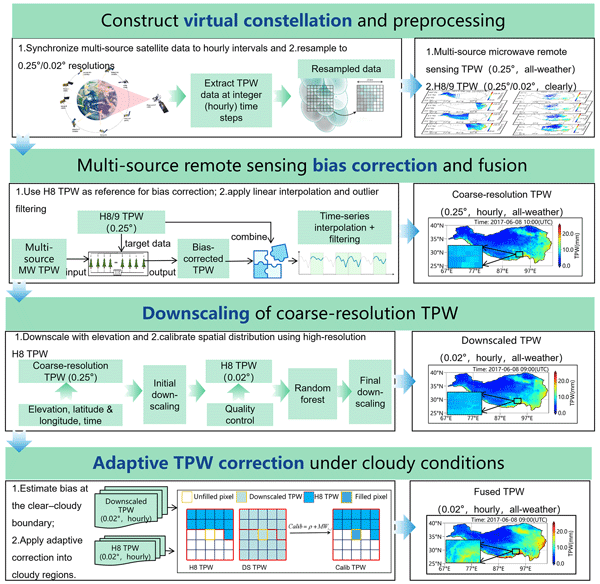
The Tibetan Plateau plays a vital role in Asia’s water cycle, but tracking water vapor in this mountainous region is difficult, especially under cloudy conditions. We developed a new satellite-based method to generate hourly water vapor data at 0.02-degree resolution from 2016 to 2022, now available at https://doi.org/10.11888/Atmos.tpdc.301518, which improves accuracy and reveals fine-scale moisture transport critical for understanding rainfall and extreme weather.
Yutong Wang, Huazhe Shang, Chenqian Tang, Jian Xu, Tianyang Ji, Wenwu Wang, Lesi Wei, Yonghui Lei, Jiancheng Shi, and Husi Letu
Atmos. Chem. Phys., 25, 16167–16187, https://doi.org/10.5194/acp-25-16167-2025, https://doi.org/10.5194/acp-25-16167-2025, 2025
Short summary
Short summary
By analyzing global CloudSat data, we identified that most liquid cloud profiles have triangle-shaped or steadily decreasing structures, and we developed a new method using pattern recognition, fitting techniques, and machine learning to accurately estimate these profiles. This research advances our understanding of cloud life cycle and improves the ability to characterize cloud profiles, which is crucial for enhancing weather forecast and climate change research.
Long-Xiao Luo, Jun Lei, and Zheng-Hong Tan
EGUsphere, https://doi.org/10.5194/egusphere-2025-4325, https://doi.org/10.5194/egusphere-2025-4325, 2025
Preprint archived
Short summary
Short summary
The purpose of this study is to evaluate the performance of the Evapotranspiration (ET) model in tropical forests. Compared to previous studies, this evaluation focuses more on the components of the model, which are also components of ET. Furthermore, one of the models being evaluated is still under development. This study can provide unique insights into the ET model.
Yichen Zhang, Fubao Sun, Wenbin Liu, Jie Zhang, Wenli Lai, Jiquan Lin, Wenchao Sun, Wenjie Liu, Zhongyi Sun, and Peng Wang
EGUsphere, https://doi.org/10.5194/egusphere-2025-4213, https://doi.org/10.5194/egusphere-2025-4213, 2025
Short summary
Short summary
Multiyear droughts (MYDs) cause long-lasting impacts on agriculture, ecosystems, and human life. Using 351 MYD events across China (1991–2020) and numerical experiments, we assessed how rainfall replenishment timing affects MYD mitigation. Our findings show that replenishment in the first month after onset is generally most effective, though in drier regions or longer MYDs, the second or third month may be better. These insights highlight the importance of targeted and timely drought management.
Shuai Wang, Mengyuan Zhang, Hui Zhao, Peng Wang, Sri Harsha Kota, Qingyan Fu, Cong Liu, and Hongliang Zhang
Earth Syst. Sci. Data, 16, 3565–3577, https://doi.org/10.5194/essd-16-3565-2024, https://doi.org/10.5194/essd-16-3565-2024, 2024
Short summary
Short summary
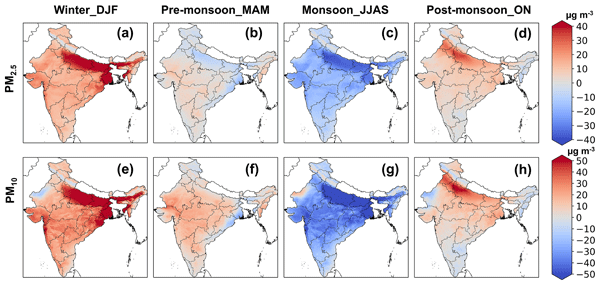
Long-term, open-source, gap-free daily ground-level PM2.5 and PM10 datasets for India (LongPMInd) were reconstructed using a robust machine learning model to support health assessment and air quality management.
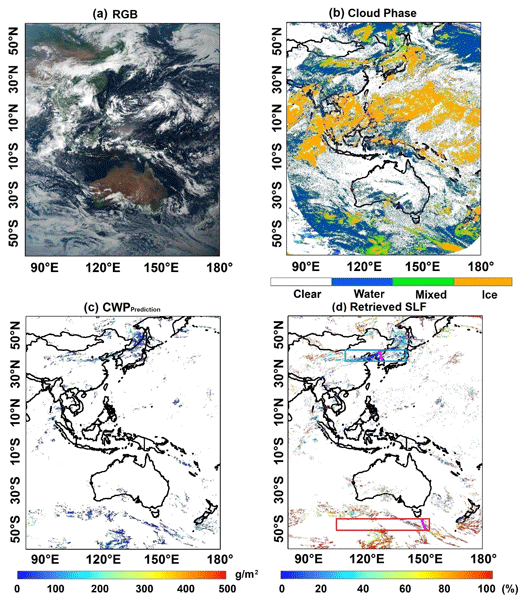
Ziming Wang, Husi Letu, Huazhe Shang, and Luca Bugliaro
Atmos. Chem. Phys., 24, 7559–7574, https://doi.org/10.5194/acp-24-7559-2024, https://doi.org/10.5194/acp-24-7559-2024, 2024
Short summary
Short summary
The supercooled liquid fraction (SLF) in mixed-phase clouds is retrieved for the first time using passive geostationary satellite observations based on differences in liquid droplet and ice particle radiative properties. The retrieved results are comparable to global distributions observed by active instruments, and the feasibility of the retrieval method to analyze the observed trends of the SLF has been validated.
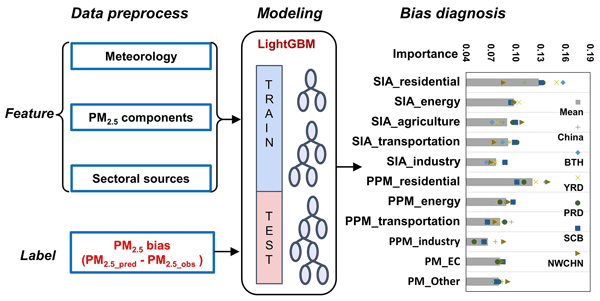
Shuai Wang, Mengyuan Zhang, Yueqi Gao, Peng Wang, Qingyan Fu, and Hongliang Zhang
Geosci. Model Dev., 17, 3617–3629, https://doi.org/10.5194/gmd-17-3617-2024, https://doi.org/10.5194/gmd-17-3617-2024, 2024
Short summary
Short summary
Numerical models are widely used in air pollution modeling but suffer from significant biases. The machine learning model designed in this study shows high efficiency in identifying such biases. Meteorology (relative humidity and cloud cover), chemical composition (secondary organic components and dust aerosols), and emission sources (residential activities) are diagnosed as the main drivers of bias in modeling PM2.5, a typical air pollutant. The results will help to improve numerical models.
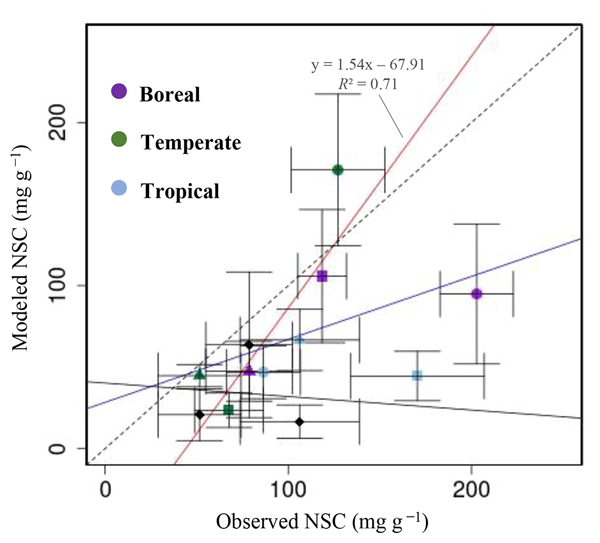
Hideki Ninomiya, Tomomichi Kato, Lea Végh, and Lan Wu
Geosci. Model Dev., 16, 4155–4170, https://doi.org/10.5194/gmd-16-4155-2023, https://doi.org/10.5194/gmd-16-4155-2023, 2023
Short summary
Short summary
Non-structural carbohydrates (NSCs) play a crucial role in plants to counteract the effects of climate change. We added a new NSC module into the SEIB-DGVM, an individual-based ecosystem model. The simulated NSC levels and their seasonal patterns show a strong agreement with observed NSC data at both point and global scales. The model can be used to simulate the biotic effects resulting from insufficient NSCs, which are otherwise difficult to measure in terrestrial ecosystems globally.
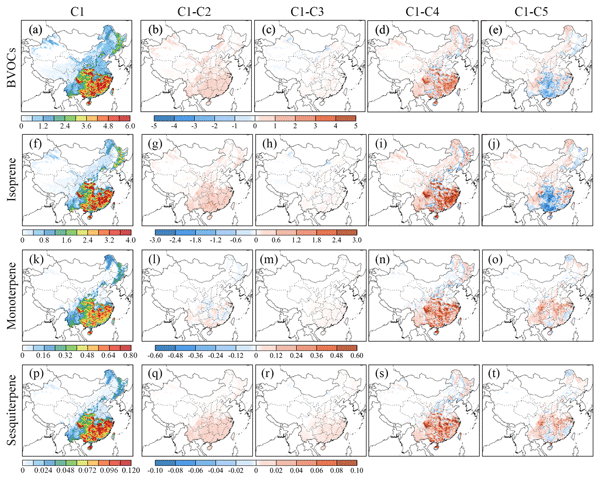
Jinlong Ma, Shengqiang Zhu, Siyu Wang, Peng Wang, Jianmin Chen, and Hongliang Zhang
Atmos. Chem. Phys., 23, 4311–4325, https://doi.org/10.5194/acp-23-4311-2023, https://doi.org/10.5194/acp-23-4311-2023, 2023
Short summary
Short summary
An updated version of the CMAQ model with biogenic volatile organic compound (BVOC) emissions from MEGAN was applied to study the impacts of different land cover inputs on O3 and secondary organic aerosol (SOA) in China. The estimated BVOC emissions ranged from 25.42 to 37.39 Tg using different leaf area index (LAI) and land cover (LC) inputs. Those differences further induced differences of 4.8–6.9 ppb in O3 concentrations and differences of 5.3–8.4 µg m−3 in SOA concentrations in China.
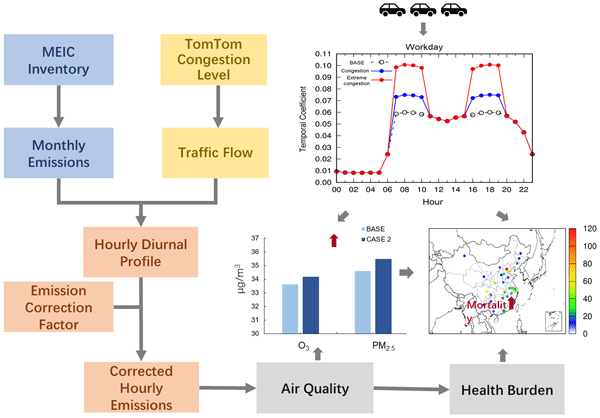
Peng Wang, Ruhan Zhang, Shida Sun, Meng Gao, Bo Zheng, Dan Zhang, Yanli Zhang, Gregory R. Carmichael, and Hongliang Zhang
Atmos. Chem. Phys., 23, 2983–2996, https://doi.org/10.5194/acp-23-2983-2023, https://doi.org/10.5194/acp-23-2983-2023, 2023
Short summary
Short summary
In China, the number of vehicles has jumped significantly in the last decade. This caused severe traffic congestion and aggravated air pollution. In this study, we developed a new temporal allocation approach to quantify the impacts of traffic congestion. We found that traffic congestion worsens air quality and the health burden across China, especially in the urban clusters. More effective and comprehensive vehicle emission control policies should be implemented to improve air quality in China.

Huazhe Shang, Souichiro Hioki, Guillaume Penide, Céline Cornet, Husi Letu, and Jérôme Riedi
Atmos. Chem. Phys., 23, 2729–2746, https://doi.org/10.5194/acp-23-2729-2023, https://doi.org/10.5194/acp-23-2729-2023, 2023
Short summary
Short summary
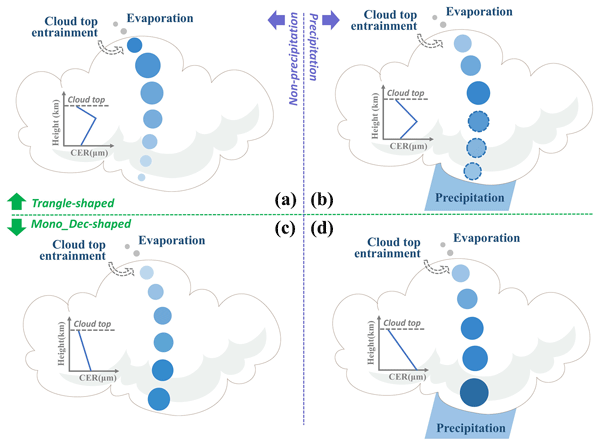
We find that cloud profiles can be divided into four prominent patterns, and the frequency of these four patterns is related to intensities of cloud-top entrainment and precipitation. Based on these analyses, we further propose a cloud profile parameterization scheme allowing us to represent these patterns. Our results shed light on how to facilitate the representation of cloud profiles and how to link them to cloud entrainment or precipitating status in future remote-sensing applications.
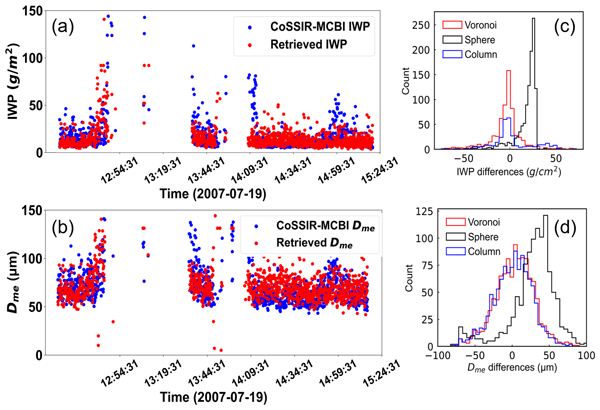
Ming Li, Husi Letu, Hiroshi Ishimoto, Shulei Li, Lei Liu, Takashi Y. Nakajima, Dabin Ji, Huazhe Shang, and Chong Shi
Atmos. Meas. Tech., 16, 331–353, https://doi.org/10.5194/amt-16-331-2023, https://doi.org/10.5194/amt-16-331-2023, 2023
Short summary
Short summary
Influenced by the representativeness of ice crystal scattering models, the existing terahertz ice cloud remote sensing inversion algorithms still have significant uncertainties. We developed an ice cloud remote sensing retrieval algorithm of the ice water path and particle size from aircraft-based terahertz radiation measurements based on the Voronoi model. Validation revealed that the Voronoi model performs better than the sphere and hexagonal column models.
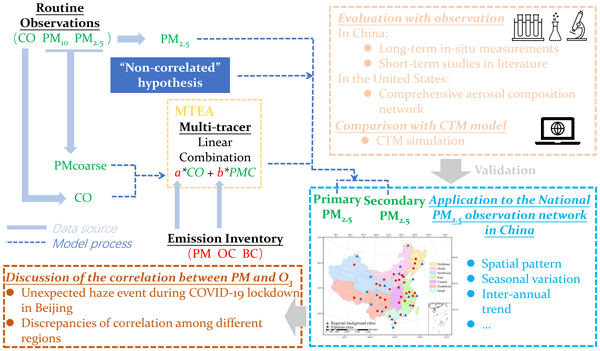
Haoran Zhang, Nan Li, Keqin Tang, Hong Liao, Chong Shi, Cheng Huang, Hongli Wang, Song Guo, Min Hu, Xinlei Ge, Mindong Chen, Zhenxin Liu, Huan Yu, and Jianlin Hu
Atmos. Chem. Phys., 22, 5495–5514, https://doi.org/10.5194/acp-22-5495-2022, https://doi.org/10.5194/acp-22-5495-2022, 2022
Short summary
Short summary
We developed a new algorithm with low economic/technique costs to identify primary and secondary components of PM2.5. Our model was shown to be reliable by comparison with different observation datasets. We systematically explored the patterns and changes in the secondary PM2.5 pollution in China at large spatial and time scales. We believe that this method is a promising tool for efficiently estimating primary and secondary PM2.5, and has huge potential for future PM mitigation.
Chang Chang, Yu Chang, Zaiping Xiong, Xiaoying Ping, Heng Zhang, Meng Guo, and Yuanman Hu
Nat. Hazards Earth Syst. Sci. Discuss., https://doi.org/10.5194/nhess-2022-72, https://doi.org/10.5194/nhess-2022-72, 2022
Preprint withdrawn
Short summary
Short summary
Random forest model had the highest fitting goodness to Inner Mongolia grassland fires from 2000 to 2018. The influence of 9 drivers on grassland fire was spatially unbalanced. Meteorological factors were of great importance to grassland fire. In Inner Mongolia, different areas had different sensitivities to different drivers. Thus, the grassland fire management strategy based on local conditions should be advocated.
Cited articles
Andela, N., Kaiser, J. W., van der Werf, G. R., and Wooster, M. J.: New fire diurnal cycle characterizations to improve fire radiative energy assessments made from MODIS observations, Atmospheric Chemistry and Physics, 15, 8831–8846, https://doi.org/10.5194/acp-15-8831-2015, 2015.
Andela, N., Morton, D. C., Giglio, L., Chen, Y., van der Werf, G. R., Kasibhatla, P. S., DeFries, R. S., Collatz, G. J., Hantson, S., Kloster, S., Bachelet, D., Forrest, M., Lasslop, G., Li, F., Mangeon, S., Melton, J. R., Yue, C., and Randerson, J. T.: A human-driven decline in global burned area, Science, 356, 1356–1362, https://doi.org/10.1126/science.aal4108, 2017.
Andreae, M. O.: Emission of trace gases and aerosols from biomass burning – an updated assessment, Atmospheric Chemistry and Physics, 19, 8523–8546, https://doi.org/10.5194/acp-19-8523-2019, 2019.
Andreae, M. O. and Merlet, P.: Emission of trace gases and aerosols from biomass burning, Global Biogeochemical Cycles, 15, 955–966, https://doi.org/10.1029/2000GB001382, 2001.
Ballhorn, U., Siegert, F., Mason, M., and Limin, S.: Derivation of burn scar depths and estimation of carbon emissions with LIDAR in Indonesian peatlands, Proceedings of the National Academy of Sciences, 106, 21213–21218, https://doi.org/10.1073/pnas.0906457106, 2009.
Binte Shahid, S., Lacey, F. G., Wiedinmyer, C., Yokelson, R. J., and Barsanti, K. C.: NEIVAv1.0: Next-generation Emissions InVentory expansion of Akagi et al. (2011) version 1.0, Geoscientific Model Development, 17, 7679–7711, https://doi.org/10.5194/gmd-17-7679-2024, 2024.
Bowman, D. M. J. S., Balch, J. K., Artaxo, P., Bond, W. J., Carlson, J. M., Cochrane, M. A., D'Antonio, C. M., DeFries, R. S., Doyle, J. C., Harrison, S. P., Johnston, F. H., Keeley, J. E., Krawchuk, M. A., Kull, C. A., Marston, J. B., Moritz, M. A., Prentice, I. C., Roos, C. I., Scott, A. C., Swetnam, T. W., van der Werf, G. R., and Pyne, S. J.: Fire in the earth system, Science, 324, 481–484, https://doi.org/10.1126/science.1163886, 2009.
Bowman, D. M. J. S., Kolden, C. A., Abatzoglou, J. T., Johnston, F. H., van der Werf, G. R., and Flannigan, M.: Vegetation fires in the Anthropocene, Nature Reviews Earth & Environment, 1, 500–515, https://doi.org/10.1038/s43017-020-0085-3, 2020.
Bray, C. D., Battye, W. H., Aneja, V. P., and Schlesinger, W. H.: Global emissions of NH3, NOx, and N2O from biomass burning and the impact of climate change, Journal of the Air & Waste Management Association, 71, 102–114, https://doi.org/10.1080/10962247.2020.1842822, 2021.
Cao, L., Coops, N. C., Innes, J. L., Sheppard, S. R. J., Fu, L., Ruan, H., and She, G.: Estimation of forest biomass dynamics in subtropical forests using multi-temporal airborne LiDAR data, Remote Sensing of Environment, 178, 158–171, https://doi.org/10.1016/j.rse.2016.03.012, 2016.
Chen, Y., Morton, D. C., Andela, N., van der Werf, G. R., Giglio, L., and Randerson, J. T.: A pan-tropical cascade of fire driven by el niño/southern oscillation, Nature Climate Change, 7, 906–911, https://doi.org/10.1038/s41558-017-0014-8, 2017.
Cunningham, C. X., Williamson, G. J., and Bowman, D. M. J. S.: Increasing frequency and intensity of the most extreme wildfires on earth, Nature Ecology & Evolution, 8, 1420–1425, https://doi.org/10.1038/s41559-024-02452-2, 2024.
Filonchyk, M., Peterson, M. P., Zhang, L., Hurynovich, V., and He, Y.: Greenhouse gases emissions and global climate change: Examining the influence of CO2, CH4, and N2O, Science of The Total Environment, 935, 173359, https://doi.org/10.1016/j.scitotenv.2024.173359, 2024.
Friedl, M. and Sulla-Menashe, D.: MODIS/terra + aqua land cover type yearly L3 global 500 m SIN grid V061, NASA LP DAAC [data set], https://doi.org/10.5067/MODIS/MCD12Q1.061, 2022.
East, A., Hansen, A., Armenteras, D., Jantz, P., and Roberts, D. W.: Measuring understory fire effects from space: Canopy change in response to tropical understory fire and what this means for applications of GEDI to tropical forest fire, Remote Sensing, 15, 696, https://doi.org/10.3390/rs15030696, 2023.
Giglio, L., van der Werf, G. R., Randerson, J. T., Collatz, G. J., and Kasibhatla, P.: Global estimation of burned area using MODIS active fire observations, Atmospheric Chemistry and Physics, 6, 957–974, https://doi.org/10.5194/acp-6-957-2006, 2006.
Giglio, L., Schroeder, W., and Hall, J. V.: MODIS collection 6 active fire product user's guide revision C, NASA, https://www.earthdata.nasa.gov/s3fs-public/2023-09/MODIS_C6_C6.1_Fire_User_Guide_1.0.pdf (last access: 15 August 2025), 2020.
Hantson, S., Padilla, M., Corti, D., and Chuvieco, E.: Strengths and weaknesses of MODIS hotspots to characterize global fire occurrence, Remote Sensing of Environment, 131, 152–159, https://doi.org/10.1016/j.rse.2012.12.004, 2013.
Hoelzemann, J. J., Schultz, M. G., Brasseur, G. P., Granier, C., and Simon, M.: Global wildland fire emission model (GWEM): Evaluating the use of global area burnt satellite data, Journal of Geophysical Research: Atmospheres, 109, https://doi.org/10.1029/2003JD003666, 2004.
Ichoku, C. and Ellison, L.: Global top-down smoke-aerosol emissions estimation using satellite fire radiative power measurements, Atmospheric Chemistry and Physics, 14, 6643–6667, https://doi.org/10.5194/acp-14-6643-2014, 2014.
Ichoku, C. and Kaufman, Y. J.: A method to derive smoke emission rates from MODIS fire radiative energy measurements, IEEE Transactions on Geoscience and Remote Sensing, 43, 2636–2649, https://doi.org/10.1109/TGRS.2005.857328, 2005.
Ito, A. and Penner, J. E.: Global estimates of biomass burning emissions based on satellite imagery for the year 2000, Journal of Geophysical Research: Atmospheres, 109, https://doi.org/10.1029/2003JD004423, 2004.
Jain, P., Barber, Q. E., Taylor, S. W., Whitman, E., Castellanos Acuna, D., Boulanger, Y., Chavardès, R. D., Chen, J., Englefield, P., Flannigan, M., Girardin, M. P., Hanes, C. C., Little, J., Morrison, K., Skakun, R. S., Thompson, D. K., Wang, X., and Parisien, M.-A.: Drivers and impacts of the record-breaking 2023 wildfire season in canada, Nature Communications, 15, 6764, https://doi.org/10.1038/s41467-024-51154-7, 2024.
Jen, C. N., Hatch, L. E., Selimovic, V., Yokelson, R. J., Weber, R., Fernandez, A. E., Kreisberg, N. M., Barsanti, K. C., and Goldstein, A. H.: Speciated and total emission factors of particulate organics from burning western US wildland fuels and their dependence on combustion efficiency, Atmospheric Chemistry and Physics, 19, 1013–1026, https://doi.org/10.5194/acp-19-1013-2019, 2019.
Jones, M. W., Abatzoglou, J. T., Veraverbeke, S., Andela, N., Lasslop, G., Forkel, M., Smith, A. J. P., Burton, C., Betts, R. A., van der Werf, G. R., Sitch, S., Canadell, J. G., Santín, C., Kolden, C., Doerr, S. H., and Le Quéré, C.: Global and regional trends and drivers of fire under climate change, Reviews of Geophysics, 60, e2020RG000726, https://doi.org/10.1029/2020RG000726, 2022.
Justice, C. O., Giglio, L., Korontzi, S., Owens, J., Morisette, J. T., Roy, D., Descloitres, J., Alleaume, S., Petitcolin, F., and Kaufman, Y.: The MODIS fire products, Remote Sensing of Environment, 83, 244–262, https://doi.org/10.1016/S0034-4257(02)00076-7, 2002.
Kaiser, J. W., Heil, A., Andreae, M. O., Benedetti, A., Chubarova, N., Jones, L., Morcrette, J.-J., Razinger, M., Schultz, M. G., Suttie, M., and van der Werf, G. R.: Biomass burning emissions estimated with a global fire assimilation system based on observed fire radiative power, Biogeosciences, 9, 527–554, https://doi.org/10.5194/bg-9-527-2012, 2012.
Kaiser, J. W., Holmedal, D. G., Ytre-Eide, M. A., and de Jong, M.: GFAS4HTAP vegetation fire emissions 2003–2023, Zenodo [data set], https://doi.org/10.5281/zenodo.15721463, 2023.
Karanasiou, A., Alastuey, A., Amato, F., Renzi, M., Stafoggia, M., Tobias, A., Reche, C., Forastiere, F., Gumy, S., Mudu, P., and Querol, X.: Short-term health effects from outdoor exposure to biomass burning emissions: A review, Science of The Total Environment, 781, 146739, https://doi.org/10.1016/j.scitotenv.2021.146739, 2021.
Keeling, H. C. and Phillips, O. L.: The global relationship between forest productivity and biomass, Global Ecology and Biogeography, 16, 618–631, https://doi.org/10.1111/j.1466-8238.2007.00314.x, 2007.
Koss, A. R., Sekimoto, K., Gilman, J. B., Selimovic, V., Coggon, M. M., Zarzana, K. J., Yuan, B., Lerner, B. M., Brown, S. S., Jimenez, J. L., Krechmer, J., Roberts, J. M., Warneke, C., Yokelson, R. J., and de Gouw, J.: Non-methane organic gas emissions from biomass burning: identification, quantification, and emission factors from PTR-ToF during the FIREX 2016 laboratory experiment, Atmospheric Chemistry and Physics, 18, 3299–3319, https://doi.org/10.5194/acp-18-3299-2018, 2018.
Koster, R. D., Darmenov, A. S., and da Silva, A. M.: The quick fire emissions dataset (QFED): Documentation of versions 2.1, 2.2 and 2.4: technical report series on global modeling and data assimilation – volume 38, NASA, https://ntrs.nasa.gov/citations/20180005253 (last access: 15 August 2025), 2015.
Letu, H., Ma, R., Nakajima, T. Y., Shi, C., Hashimoto, M., Nagao, T. M., Baran, A. J., Nakajima, T., Xu, J., Wang, T., Tana, G., Bilige, S., Shang, H., Chen, L., Ji, D., Lei, Y., Wei, L., Zhang, P., Li, J., Li, L., Zheng, Y., Khatri, P., and Shi, J.: Surface solar radiation compositions observed from himawari-8/9 and fengyun-4 series, Bulletin of the American Meteorological Society, 104, E1839–E1856, https://doi.org/10.1175/BAMS-D-22-0154.1, 2023.
Li, K., Zheng, F., Cheng, L., Zhang, T., and Zhu, J.: Record-breaking global temperature and crises with strong El Niño in 2023–2024, The Innovation Geoscience, 1, 100030, https://doi.org/10.59717/j.xinn-geo.2023.100030, 2023.
Liu, T., Mickley, L. J., Marlier, M. E., DeFries, R. S., Khan, M. F., Latif, M. T., and Karambelas, A.: Diagnosing spatial biases and uncertainties in global fire emissions inventories: Indonesia as regional case study, Remote Sensing of Environment, 237, 111557, https://doi.org/10.1016/j.rse.2019.111557, 2020.
Liu, X. and Yin, S.: Multi-ensemble Biomass-burning Emissions Inventory (MBEI)_v1.0, Zenodo [data set], https://doi.org/10.5281/zenodo.18104830, 2025.
Liu, Y., Gong, W., Xing, Y., Hu, X., and Gong, J.: Estimation of the forest stand mean height and aboveground biomass in northeast China using SAR sentinel-1B, multispectral sentinel-2A, and DEM imagery, ISPRS Journal of Photogrammetry and Remote Sensing, 151, 277–289, https://doi.org/10.1016/j.isprsjprs.2019.03.016, 2019.
Liu, Y., Chen, J., Shi, Y., Zheng, W., Shan, T., and Wang, G.: Global Emissions Inventory from Open Biomass Burning (GEIOBB): utilizing Fengyun-3D global fire spot monitoring data, Earth System Science Data, 16, 3495–3515, https://doi.org/10.5194/essd-16-3495-2024, 2024.
Longo, K. M., Freitas, S. R., Andreae, M. O., Setzer, A., Prins, E., and Artaxo, P.: The Coupled Aerosol and Tracer Transport model to the Brazilian developments on the Regional Atmospheric Modeling System (CATT-BRAMS) – Part 2: Model sensitivity to the biomass burning inventories, Atmospheric Chemistry and Physics, 10, 5785–5795, https://doi.org/10.5194/acp-10-5785-2010, 2010.
Luo, B., Xiao, C., Luo, D., Fu, Q., Chen, D., Zhang, Q., Ge, Y., and Diao, Y.: Atmospheric and oceanic drivers behind the 2023 canadian wildfires, Communications Earth & Environment, 6, 446, https://doi.org/10.1038/s43247-025-02387-x, 2025.
Mann, H. B.: Nonparametric tests against trend, Econometrica, 13, 245–259, https://doi.org/10.2307/1907187, 1945.
Mariani, M., Fletcher, M.-S., Holz, A., and Nyman, P.: ENSO controls interannual fire activity in southeast australia, Geophysical Research Letters, 43, 10891–10900, https://doi.org/10.1002/2016GL070572, 2016.
Matthias, V., Arndt, J. A., Aulinger, A., Bieser, J., Denier van der Gon, H., Kranenburg, R., Kuenen, J., Neumann, D., Pouliot, G., and Quante, M.: Modeling emissions for three-dimensional atmospheric chemistry transport models, Journal of the Air & Waste Management Association, 68, 763–800, https://doi.org/10.1080/10962247.2018.1424057, 2018.
Mieville, A., Granier, C., Liousse, C., Guillaume, B., Mouillot, F., Lamarque, J.-F., Grégoire, J.-M., and Pétron, G.: Emissions of gases and particles from biomass burning during the 20th century using satellite data and an historical reconstruction, Atmospheric Environment, 44, 1469–1477, https://doi.org/10.1016/j.atmosenv.2010.01.011, 2010.
Morton, D. C., Le Page, Y., DeFries, R., Collatz, G. J., and Hurtt, G. C.: Understorey fire frequency and the fate of burned forests in southern Amazonia, Philosophical Transactions of the Royal Society B: Biological Sciences, 368, 20120163, https://doi.org/10.1098/rstb.2012.0163, 2013.
N'Datchoh, T. E., Liousse, C., Roblou, L., and N'Dri, A. B.: Biomass burning over africa: How to explain the differences observed between the different emission inventories?, Atmosphere, 16, 440, https://doi.org/10.3390/atmos16040440, 2025.
NASA VIIRS Land Science Team: VIIRS (NOAA-21/JPSS-2) I band 375 m active fire product NRT (vector data), NASA FIRMS [data set], https://doi.org/10.5067/FIRMS/MODIS/MCD14DL.NRT.0061, 2021.
Pan, X., Ichoku, C., Chin, M., Bian, H., Darmenov, A., Colarco, P., Ellison, L., Kucsera, T., da Silva, A., Wang, J., Oda, T., and Cui, G.: Six global biomass burning emission datasets: intercomparison and application in one global aerosol model, Atmospheric Chemistry and Physics, 20, 969–994, https://doi.org/10.5194/acp-20-969-2020, 2020.
Pellegrini, A. F. A., Ahlström, A., Hobbie, S. E., Reich, P. B., Nieradzik, L. P., Staver, A. C., Scharenbroch, B. C., Jumpponen, A., Anderegg, W. R. L., Randerson, J. T., and Jackson, R. B.: Fire frequency drives decadal changes in soil carbon and nitrogen and ecosystem productivity, Nature, 553, 194–198, https://doi.org/10.1038/nature24668, 2018.
Pereira, G., Siqueira, R., Rosário, N. E., Longo, K. L., Freitas, S. R., Cardozo, F. S., Kaiser, J. W., and Wooster, M. J.: Assessment of fire emission inventories during the South American Biomass Burning Analysis (SAMBBA) experiment, Atmospheric Chemistry and Physics, 16, 6961–6975, https://doi.org/10.5194/acp-16-6961-2016, 2016.
Raich, J. W., Russell, A. E., Kitayama, K., Parton, W. J., and Vitousek, P. M.: Temperature influences carbon accumulation in moist tropical forests, Ecology, 87, 76–87, https://doi.org/10.1890/05-0023, 2006.
Ramanathan, V. and Carmichael, G.: Global and regional climate changes due to black carbon, Nature Geoscience, 1, 221–227, https://doi.org/10.1038/ngeo156, 2008.
Reid, J. S., Koppmann, R., Eck, T. F., and Eleuterio, D. P.: A review of biomass burning emissions part II: intensive physical properties of biomass burning particles, Atmospheric Chemistry and Physics, 5, 799–825, https://doi.org/10.5194/acp-5-799-2005, 2005.
Rein, G. and Huang, X.: Smouldering wildfires in peatlands, forests and the Arctic: Challenges and perspectives, Current Opinion in Environmental Science & Health, 24, 100296, https://doi.org/10.1016/j.coesh.2021.100296, 2021.
Rodríguez-Fernández, N. J., Mialon, A., Mermoz, S., Bouvet, A., Richaume, P., Al Bitar, A., Al-Yaari, A., Brandt, M., Kaminski, T., Le Toan, T., Kerr, Y. H., and Wigneron, J.-P.: An evaluation of SMOS L-band vegetation optical depth (L-VOD) data sets: high sensitivity of L-VOD to above-ground biomass in Africa, Biogeosciences, 15, 4627–4645, https://doi.org/10.5194/bg-15-4627-2018, 2018.
Running, S. and Zhao, M.: MODIS/aqua net primary production gap-filled yearly L4 global 500m SIN grid V061, NASA Land Processes Distributed Active Archive Center (LP DAAC) [data set], https://doi.org/10.5067/MODIS/MYD17A3HGF.061, 2021.
Santoro, M.: GlobBiomass – global datasets of forest biomass, PANGAEA [data set], https://doi.org/10.1594/PANGAEA.894711, 2018.
Santoro, M. and Cartus, O.: ESA biomass climate change initiative (biomass_cci): Global datasets of forest above-ground biomass for the years 2010, 2015, 2016, 2017, 2018, 2019, 2020 and 2021, v5.01 (5.01), Centre for Environmental Data Analysis (CEDA) [data set], https://doi.org/10.5285/bf535053562141c6bb7ad831f5998d77, 2024.
Seiler, W. and Crutzen, P. J.: Estimates of gross and net fluxes of carbon between the biosphere and the atmosphere from biomass burning, Climatic Change, 2, 207–247, https://doi.org/10.1007/BF00137988, 1980.
Sen, P. K.: Estimates of the regression coefficient based on kendall's tau, Journal of the American Statistical Association, 63, 1379–1389, https://doi.org/10.1080/01621459.1968.10480934, 1968.
Senande-Rivera, M., Insua-Costa, D., and Miguez-Macho, G.: Spatial and temporal expansion of global wildland fire activity in response to climate change, Nature Communications, 13, 1208, https://doi.org/10.1038/s41467-022-28835-2, 2022.
Shi, C., Letu, H., Nakajima, T. Y., Nakajima, T., Wei, L., Xu, R., Lu, F., Riedi, J., Ichii, K., Zeng, J., Shang, H., Ma, R., Yin, S., Shi, J., Baran, A. J., Xu, J., Li, A., Tana, G., Wang, W., Na, Q., Sun, Q., Yang, W., Chen, L., and Shi, G.: Near-global monitoring of surface solar radiation through the construction of a geostationary satellite network observation system, The Innovation, 6, 100876, https://doi.org/10.1016/j.xinn.2025.100876, 2025.
Shi, Y. and Matsunaga, T.: Temporal comparison of global inventories of CO2 emissions from biomass burning during 2002–2011 derived from remotely sensed data, Environmental Science and Pollution Research, 24, 16905–16916, https://doi.org/10.1007/s11356-017-9141-z, 2017.
Shi, Y., Matsunaga, T., Saito, M., Yamaguchi, Y., and Chen, X.: Comparison of global inventories of CO2 emissions from biomass burning during 2002–2011 derived from multiple satellite products, Environmental Pollution, 206, 479–487, https://doi.org/10.1016/j.envpol.2015.08.009, 2015.
Shi, C., Letu, H., Nakajima, T. Y., Nakajima, T., Wei, L., Xu, R., Lu, F., Riedi, J., Ichii, K., Zeng, J., Shang, H., Ma, R., Yin, S., Shi, J., Baran, A. J., Xu, J., Li, A., Tana, G., Wang, W., Na, Q., Sun, Q., Yang, W., Chen, L., and Shi, G.: Near-Global Monitoring of Surface Solar Radiation through the Construction of a Geostationary Satellite Network Observation System, The Innovation, 6, 100876, https://doi.org/10.1016/j.xinn.2025.100876, 2025.
Sofan, P., Bruce, D., Jones, E., and Marsden, J.: Detection and validation of tropical peatland flaming and smouldering using Landsat-8 SWIR and TIRS bands, Remote Sensing, 11, 465, https://doi.org/10.3390/rs11040465, 2019.
Stroppiana, D., Brivio, P. A., Grégoire, J.-M., Liousse, C., Guillaume, B., Granier, C., Mieville, A., Chin, M., and Pétron, G.: Comparison of global inventories of CO emissions from biomass burning derived from remotely sensed data, Atmospheric Chemistry and Physics, 10, 12173–12189, https://doi.org/10.5194/acp-10-12173-2010, 2010.
Su, M., Shi, Y., Yang, Y., and Guo, W.: Impacts of different biomass burning emission inventories: Simulations of atmospheric CO2 concentrations based on GEOS-chem, Science of The Total Environment, 876, 162825, https://doi.org/10.1016/j.scitotenv.2023.162825, 2023.
Teets, A., Moore, D., Alexander, M., Blanken, P., Bohrer, G., Burns, S., Carbone, M., Ducey, M., Fraver, S., Gough, C., Hollinger, D., Koch, G., Kolb, T., Munger, J., Novick, K., Ollinger, S., Ouimette, A., Pederson, N., Ricciuto, D., and Richardson, A.: Coupling of tree growth and photosynthetic carbon uptake across six North American forests, Journal of Geophysical Research: Biogeosciences, 127, e2021JG006690, https://doi.org/10.1029/2021JG006690, 2022.
Touma, D., Stevenson, S., Lehner, F., and Coats, S.: Human-driven greenhouse gas and aerosol emissions cause distinct regional impacts on extreme fire weather, Nature Communications, 12, 212, https://doi.org/10.1038/s41467-020-20570-w, 2021.
Tyukavina, A., Potapov, P., Hansen, M. C., Pickens, A. H., Stehman, S. V., Turubanova, S., Parker, D., Zalles, V., Lima, A., Kommareddy, I., Song, X.-P., Wang, L., and Harris, N.: Global trends of forest loss due to fire from 2001 to 2019, Frontiers in Remote Sensing, 3, 825190, https://doi.org/10.3389/frsen.2022.825190, 2022.
Vadrevu, K. and Lasko, K.: Intercomparison of MODIS AQUA and VIIRS I-band fires and emissions in an agricultural landscape – implications for air pollution research, Remote Sensing, 10, 978, https://doi.org/10.3390/rs10070978, 2018.
van der Velde, I. R., van der Werf, G. R., Houweling, S., Eskes, H. J., Veefkind, J. P., Borsdorff, T., and Aben, I.: Biomass burning combustion efficiency observed from space using measurements of CO and NO2 by the TROPOspheric Monitoring Instrument (TROPOMI), Atmospheric Chemistry and Physics, 21, 597–616, https://doi.org/10.5194/acp-21-597-2021, 2021.
van der Werf, G. R., Randerson, J. T., Giglio, L., Collatz, G. J., Kasibhatla, P. S., and Arellano Jr., A. F.: Interannual variability in global biomass burning emissions from 1997 to 2004, Atmospheric Chemistry and Physics, 6, 3423–3441, https://doi.org/10.5194/acp-6-3423-2006, 2006.
van der Werf, G. R., Randerson, J. T., Giglio, L., van Leeuwen, T. T., Chen, Y., Rogers, B. M., Mu, M., van Marle, M. J. E., Morton, D. C., Collatz, G. J., Yokelson, R. J., and Kasibhatla, P. S.: Global fire emissions estimates during 1997–2016, Earth System Science Data, 9, 697–720, https://doi.org/10.5194/essd-9-697-2017, 2017.
van Leeuwen, T. T., Peters, W., Krol, M. C., and van der Werf, G. R.: Dynamic biomass burning emission factors and their impact on atmospheric CO mixing ratios, Journal of Geophysical Research: Atmospheres, 118, 6797–6815, https://doi.org/10.1002/jgrd.50478, 2013.
van Wees, D., van der Werf, G. R., Randerson, J. T., Andela, N., Chen, Y., and Morton, D. C.: The role of fire in global forest loss dynamics, Global Change Biology, 27, 2377–2391, https://doi.org/10.1111/gcb.15591, 2021.
Vermote, E., Ellicott, E., Dubovik, O., Lapyonok, T., Chin, M., Giglio, L., and Roberts, G. J.: An approach to estimate global biomass burning emissions of organic and black carbon from MODIS fire radiative power, Journal of Geophysical Research: Atmospheres, 114, D18205, https://doi.org/10.1029/2008JD011188, 2009.
Vernooij, R., Eames, T., Russell-Smith, J., Yates, C., Beatty, R., Evans, J., Edwards, A., Ribeiro, N., Wooster, M., Strydom, T., Giongo, M. V., Borges, M. A., Menezes Costa, M., Barradas, A. C. S., van Wees, D., and Van der Werf, G. R.: Dynamic savanna burning emission factors based on satellite data using a machine learning approach, Earth System Dynamics, 14, 1039–1064, https://doi.org/10.5194/esd-14-1039-2023, 2023.
Wang, M., Shao, M., Chen, W., Yuan, B., Lu, S., Zhang, Q., Zeng, L., and Wang, Q.: A temporally and spatially resolved validation of emission inventories by measurements of ambient volatile organic compounds in Beijing, China, Atmos. Chem. Phys., 14, 5871–5891, https://doi.org/10.5194/acp-14-5871-2014, 2014.
Wang, F., Harindintwali, J. D., Wei, K., Shan, Y., Mi, Z., Costello, M. J., Grunwald, S., Feng, Z., Wang, F., Guo, Y., Wu, X., Kumar, P., Kästner, M., Feng, X., Kang, S., Liu, Z., Fu, Y., Zhao, W., Ouyang, C., Shen, J., Wang, H., Chang, S. X., Evans, D. L., Wang, R., Zhu, C., Xiang, L., Rinklebe, J., Du, M., Huang, L., Bai, Z., Li, S., Lal, R., Elsner, M., Wigneron, J.-P., Florindo, F., Jiang, X., Shaheen, S. M., Zhong, X., Bol, R., Vasques, G. M., Li, X., Pfautsch, S., Wang, M., He, X., Agathokleous, E., Du, H., Yan, H., Kengara, F. O., Brahushi, F., Long, X.-E., Pereira, P., Ok, Y. S., Rillig, M. C., Jeppesen, E., Barceló, D., Yan, X., Jiao, N., Han, B., Schäffer, A., Chen, J. M., Zhu, Y., Cheng, H., Amelung, W., Spötl, C., Zhu, J., and Tiedje, J. M.: Climate change: strategies for mitigation and adaptation, The Innovation Geoscience, 1, 100015, https://doi.org/10.59717/j.xinn-geo.2023.100015, 2023.
Whitburn, S., Van Damme, M., Kaiser, J. W., van der Werf, G. R., Turquety, S., Hurtmans, D., Clarisse, L., Clerbaux, C., and Coheur, P.-F.: Ammonia emissions in tropical biomass burning regions: Comparison between satellite-derived emissions and bottom-up fire inventories, Atmos. Environ., 121, 42–54, https://doi.org/10.1016/j.atmosenv.2015.03.015, 2015.
Whitburn, S., Damme, M. V., Clarisse, L., Turquety, S., Clerbaux, C., and Coheur, P.-F.: Doubling of annual ammonia emissions from the peat fires in indonesia during the 2015 el niño, Geophysical Research Letters, 43, 11007–11014, https://doi.org/10.1002/2016GL070620, 2016.
Whittaker, R. H. and Likens, G. E.: Carbon in the biota, in: Carbon and the Biosphere; Proceedings of the 24th Brookhaven Symposium in Biology, edited by: Woodwell, G. M. and Pecan, E. V., Technical Information Center, U.S. Atomic Energy Commission, Washington, D.C., 281–302, https://doi.org/10.5962/bhl.title.4036, ISBN 0870790064, 1973.
Wiedinmyer, C., Quayle, B., Geron, C., Belote, A., McKenzie, D., Zhang, X., O'Neill, S., and Wynne, K. K.: Estimating emissions from fires in north America for air quality modeling, Atmospheric Environment, 40, 3419–3432, https://doi.org/10.1016/j.atmosenv.2006.02.010, 2006.
Wiedinmyer, C., Kimura, Y., McDonald-Buller, E. C., Emmons, L. K., Buchholz, R. R., Tang, W., Seto, K., Joseph, M. B., Barsanti, K. C., Carlton, A. G., and Yokelson, R.: The Fire Inventory from NCAR version 2.5: an updated global fire emissions model for climate and chemistry applications, Geoscientific Model Development, 16, 3873–3891, https://doi.org/10.5194/gmd-16-3873-2023, 2023.
Wiggins, E. B., Czimczik, C. I., Santos, G. M., Chen, Y., Xu, X., Holden, S. R., Randerson, J. T., Harvey, C. F., Kai, F. M., and Yu, L. E.: Smoke radiocarbon measurements from Indonesian fires provide evidence for burning of millennia-aged peat, Proceedings of the National Academy of Sciences, 115, 12419–12424, https://doi.org/10.1073/pnas.1806003115, 2018.
Wiggins, E. B., Andrews, A., Sweeney, C., Miller, J. B., Miller, C. E., Veraverbeke, S., Commane, R., Wofsy, S., Henderson, J. M., and Randerson, J. T.: Boreal forest fire CO and CH4 emission factors derived from tower observations in Alaska during the extreme fire season of 2015, Atmos. Chem. Phys., 21, 8557–8574, https://doi.org/10.5194/acp-21-8557-2021, 2021.
Williams, J. E., Weele, M. van, Velthoven, P. F. J. van, Scheele, M. P., Liousse, C., and Werf, G. R. van der: The impact of uncertainties in african biomass burning emission estimates on modeling global air quality, long range transport and tropospheric chemical lifetimes, Atmosphere, 3, 132–163, https://doi.org/10.3390/atmos3010132, 2012.
Wooster, M. J., Roberts, G., Perry, G. L. W., and Kaufman, Y. J.: Retrieval of biomass combustion rates and totals from fire radiative power observations: FRP derivation and calibration relationships between biomass consumption and fire radiative energy release, Journal of Geophysical Research: Atmospheres, 110, D24310, https://doi.org/10.1029/2005JD006318, 2005.
Yin, S.: Decadal trends of MERRA-estimated PM2.5 concentrations in East Asia and potential exposure from 1990 to 2019, Atmospheric Environment, 264, 118690, https://doi.org/10.1016/j.atmosenv.2021.118690, 2021.
Yin, S.: Effect of biomass burning on premature mortality associated with long-term exposure to PM2.5 in Equatorial Asia, Journal of Environmental Management, 330, 117154, https://doi.org/10.1016/j.jenvman.2022.117154, 2023.
Yin, S., Shi, C., Letu, H., Ito, A., Shang, H., Ji, D., Li, L., Bilige, S., Nie, T., Yi, K., Guo, M., Sun, Z., and Li, A.: Reconstruction of PM2.5 concentrations in east asia on the basis of a wide–deep ensemble machine learning framework and estimation of the potential exposure level from 1981 to 2020, Engineering, 49, 225–237, https://doi.org/10.1016/j.eng.2024.09.025, 2025.
Yin, S., Wang, X., Guo, M., Santoso, H., and Guan, H.: The abnormal change of air quality and air pollutants induced by the forest fire in sumatra and borneo in 2015, Atmospheric Research, 243, 105027, https://doi.org/10.1016/j.atmosres.2020.105027, 2020a.
Yin, S.: Exploring the relationships between ground-measured particulate matter and satellite-retrieved aerosol parameters in China, Environmental Science and Pollution Research, 29, 44348–44363, https://doi.org/10.1007/s11356-022-19049-6, 2022.
Yin, Y., Bloom, A. A., Worden, J., Saatchi, S., Yang, Y., Williams, M., Liu, J., Jiang, Z., Worden, H., Bowman, K., Frankenberg, C., and Schimel, D.: Fire decline in dry tropical ecosystems enhances decadal land carbon sink, Nature Communications, 11, 1900, https://doi.org/10.1038/s41467-020-15852-2, 2020b.
Zhang, F., Wang, J., Ichoku, C., Hyer, E. J., Yang, Z., Ge, C., Su, S., Zhang, X., Kondragunta, S., and Kaiser, J. W.: Sensitivity of mesoscale modeling of smoke direct radiative effect to the emission inventory: A case study in northern sub-saharan african region, Environmental Research Letters, 9, 075002, https://doi.org/10.1088/1748-9326/9/7/075002, 2014.
Zhang, Y., Albinet, A., Petit, J.-E., Jacob, V., Chevrier, F., Gille, G., Pontet, S., Chrétien, E., Dominik-Sègue, M., Levigoureux, G., Močnik, G., Gros, V., Jaffrezo, J.-L., and Favez, O.: Substantial brown carbon emissions from wintertime residential wood burning over france, Science of The Total Environment, 743, 140752, https://doi.org/10.1016/j.scitotenv.2020.140752, 2020.
Zheng, B., Ciais, P., Chevallier, F., Chuvieco, E., Chen, Y., and Yang, H.: Increasing forest fire emissions despite the decline in global burned area, Science Advances, 7, eabh2646, https://doi.org/10.1126/sciadv.abh2646, 2021.
Zheng, B., Ciais, P., Chevallier, F., Yang, H., Canadell, J. G., Chen, Y., van der Velde, I. R., Aben, I., Chuvieco, E., Davis, S. J., Deeter, M., Hong, C., Kong, Y., Li, H., Li, H., Lin, X., He, K., and Zhang, Q.: Record-high CO2 emissions from boreal fires in 2021, Science, 379, 912–917, https://doi.org/10.1126/science.ade0805, 2023.
Short summary
Estimates of global biomass burning emissions differ, posing a challenge for environment and climate change research. In response to this challenge, our new 2003–2023 dataset integrates top-down and bottom-up methods with multi-source data. This provides a plausible emissions range to quantify uncertainty, revealing that the greatest uncertainty is not in traditional hotspots but in regions with infrequent, extreme fires. This work offers vital data for more robust climate models.
Estimates of global biomass burning emissions differ, posing a challenge for environment and...


Altmetrics
Final-revised paper
Preprint