Articles | Volume 18, issue 11
https://doi.org/10.5194/essd-18-8497-2026
© Author(s) 2026. This work is distributed under
the Creative Commons Attribution 4.0 License.
the Creative Commons Attribution 4.0 License.
https://doi.org/10.5194/essd-18-8497-2026
© Author(s) 2026. This work is distributed under
the Creative Commons Attribution 4.0 License.
the Creative Commons Attribution 4.0 License.
Data description article
| Highlight paper
| 
18 Nov 2026
Data description article | Highlight paper |
| 18 Nov 2026
| 18 Nov 2026
MacroTraits: a global trait data and information system for marine benthic ecology
Olivier Beauchard
CORRESPONDING AUTHOR

Department of Estuarine and Delta Systems, Royal Netherlands Institute for Sea Research, Yerseke, the Netherlands
Karline Soetaert
Department of Estuarine and Delta Systems, Royal Netherlands Institute for Sea Research, Yerseke, the Netherlands
Related authors
No articles found.
Emil De Borger, Karline Soetaert, Esther Cepeda Gamella, Arthur Capet, Jan Vanaverbeke, and Ulrike Braeckman
EGUsphere, https://doi.org/10.5194/egusphere-2026-3576, https://doi.org/10.5194/egusphere-2026-3576, 2026
This preprint is open for discussion and under review for Biogeosciences (BG).
Short summary
Short summary
We developed a new computer model to better understand how sandy seabed sediments process organic matter. Then, we used field measurements around an offshore wind turbine in the North Sea to guide model simulations. It showed that sediments closest to turbines receive more organic material throughout the year, that is efficiently processed. This modelling approach improves our ability to quantify seabed carbon cycling in dynamic coastal environments.
Qi Liu, Karline Soetaert, Lucille Hoogerdijk, Valle Perez-Rodriguez, and Lubos Polerecky
EGUsphere, https://doi.org/10.5194/egusphere-2026-4452, https://doi.org/10.5194/egusphere-2026-4452, 2026
Short summary
Short summary
Coastal mudflats store carbon and recycle nutrients, but their functioning is strongly affected by changing environmental conditions. We developed a computer model, supported by laboratory measurements, to predict how oxygen changes under different light, temperature, and tidal conditions. Our results identify the main processes controlling oxygen cycling and provide an open-source tool for predicting how coastal ecosystems may respond to environmental change.
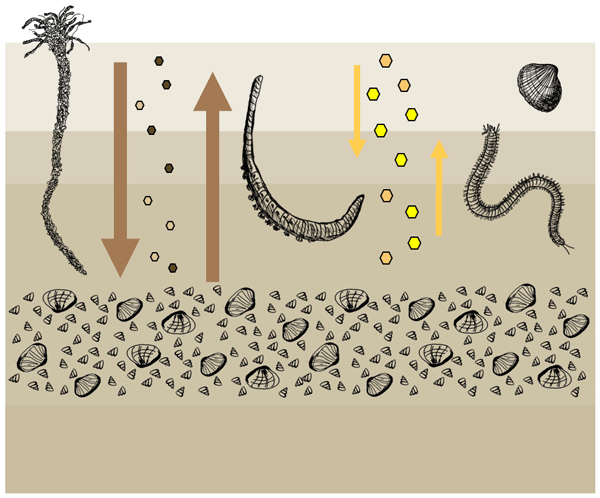
Tjitske J. Kooistra, Anna-Maartje de Boer, Tjeerd J. Bouma, Natascia Pannozzo, Stuart G. Pearson, Ad van der Spek, Henko de Stigter, Jakob Wallinga, Rob Witbaard, and Karline Soetaert
Biogeosciences, 23, 2477–2501, https://doi.org/10.5194/bg-23-2477-2026, https://doi.org/10.5194/bg-23-2477-2026, 2026
Short summary
Short summary
On intertidal flats, it is hard to distinguish sediment mixing by animals from reworking by waves and currents. We combined tracers to identify reworking of grains of different sizes on the short- and long term. Coarse (sand) grains were less mobile than fine (mud) grains, and partly kept their layering after deposition. The luminescence properties of sand grains can be used for sediment dating and can show sediment mixing, but this method needs to be tested more for young, intertidal sediments.
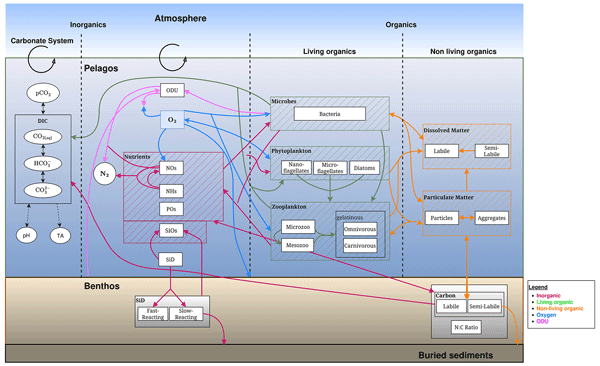
Marilaure Grégoire, Luc Vandenbulcke, Séverine Chevalier, Mathurin Choblet, Ilya Drozd, Jean-François Grailet, Evgeny Ivanov, Loïc Macé, Polina Verezemskaya, Haolin Yu, Lauranne Alaerts, Ny Riana Randresihaja, Victor Mangeleer, Guillaume Maertens de Noordhout, Arthur Capet, Catherine Meulders, Anne Mouchet, Guy Munhoven, and Karline Soetaert
Geosci. Model Dev., 19, 2137–2175, https://doi.org/10.5194/gmd-19-2137-2026, https://doi.org/10.5194/gmd-19-2137-2026, 2026
Short summary
Short summary
This paper describes the ocean BiogeochemicAl Model for Hypoxic and Benthic Influenced areas (BAMHBI). BAMHBI is a moderate complexity marine biogeochemical model that describes the cycling of carbon, nitrogen, phosphorus, silicon and oxygen through the marine foodweb. BAMHBI is a stand-alone biogeochemical model that can be coupled to any hydrodynamical model and is particularly appropriate for modelling low oxygen environments and the generation of sulfidic waters.
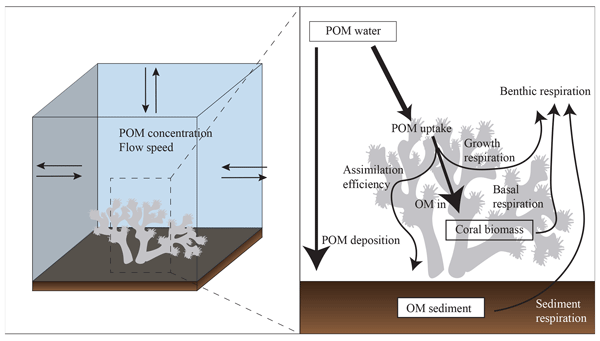
Evert de Froe, Christian Mohn, Karline Soetaert, Anna-Selma van der Kaaden, Gert-Jan Reichart, Laurence H. De Clippele, Sandra R. Maier, and Dick van Oevelen
Ocean Sci., 22, 843–870, https://doi.org/10.5194/os-22-843-2026, https://doi.org/10.5194/os-22-843-2026, 2026
Short summary
Short summary
Cold-water corals are important reef-building animals in the deep sea and are distributed globally. Until now, scientists have been mapping and predicting where cold-water corals can be found using video transects and statistical models. This study provides the first process-based model in which corals are predicted based on ocean currents and food particle movement. The results show that resupply of food by tidal currents near the seafloor is crucial for predicting where corals can grow.
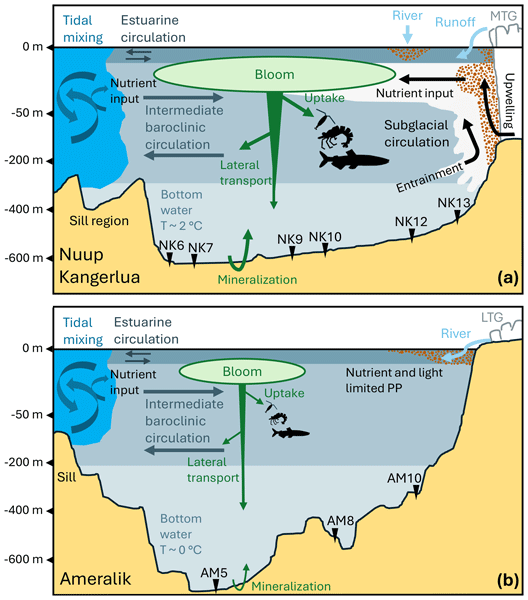
Marius Buydens, Emil De Borger, Lorenz Meire, Samuel Bodé, Antonio Schirone, Karline Soetaert, Ann Vanreusel, and Ulrike Braeckman
Biogeosciences, 23, 1159–1179, https://doi.org/10.5194/bg-23-1159-2026, https://doi.org/10.5194/bg-23-1159-2026, 2026
Short summary
Short summary
As the Greenland Ice Sheet retreats, it is crucial to understand how this affects carbon burial in fjords. Comparing a fjord influenced by marine-terminating glaciers with one fed by a land-terminating glacier shows that high productivity near marine-terminating glaciers does not necessarily enhance carbon burial. Instead, the complex interplay of physical, biological, and sedimentary processes governs fjord carbon dynamics.
Anna-Selma van der Kaaden, Dick van Oevelen, Christian Mohn, Karline Soetaert, Max Rietkerk, Johan van de Koppel, and Theo Gerkema
Ocean Sci., 20, 569–587, https://doi.org/10.5194/os-20-569-2024, https://doi.org/10.5194/os-20-569-2024, 2024
Short summary
Short summary
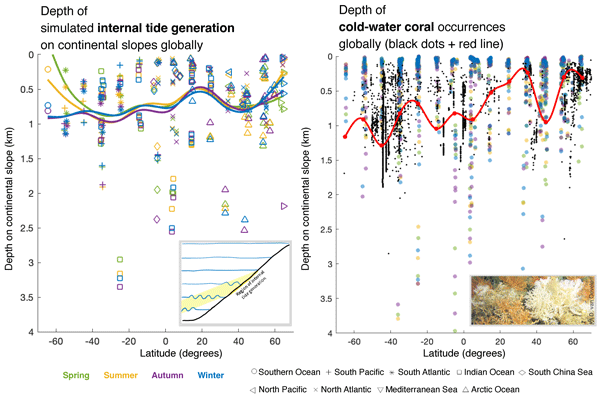
Cold-water corals (CWCs) and tidal waves in the interior of the ocean have been connected in case studies. We demonstrate this connection globally using hydrodynamic simulations and a CWC database. Internal-tide generation shows a similar depth pattern with slope steepness and latitude as CWCs. Our results suggest that internal-tide generation can be a useful predictor of CWC habitat and that current CWC habitats might change following climate-change-related shoaling of internal-tide generation.
Anna-Selma van der Kaaden, Sandra R. Maier, Siluo Chen, Laurence H. De Clippele, Evert de Froe, Theo Gerkema, Johan van de Koppel, Furu Mienis, Christian Mohn, Max Rietkerk, Karline Soetaert, and Dick van Oevelen
Biogeosciences, 21, 973–992, https://doi.org/10.5194/bg-21-973-2024, https://doi.org/10.5194/bg-21-973-2024, 2024
Short summary
Short summary
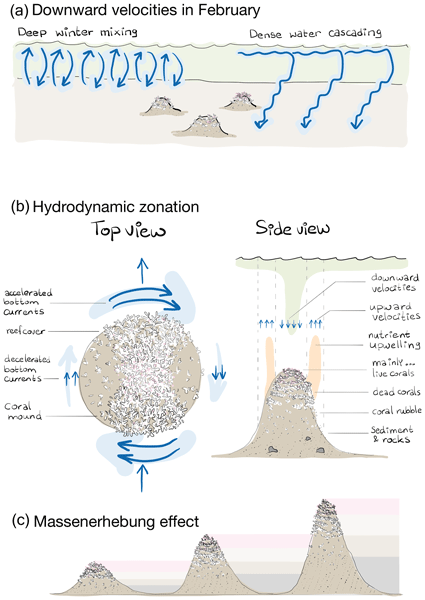
Combining hydrodynamic simulations and annotated videos, we separated which hydrodynamic variables that determine reef cover are engineered by cold-water corals and which are not. Around coral mounds, hydrodynamic zones seem to create a typical reef zonation, restricting corals from moving deeper (the expected response to climate warming). But non-engineered downward velocities in winter (e.g. deep winter mixing) seem more important for coral reef growth than coral engineering.
Caroline Ulses, Claude Estournel, Patrick Marsaleix, Karline Soetaert, Marine Fourrier, Laurent Coppola, Dominique Lefèvre, Franck Touratier, Catherine Goyet, Véronique Guglielmi, Fayçal Kessouri, Pierre Testor, and Xavier Durrieu de Madron
Biogeosciences, 20, 4683–4710, https://doi.org/10.5194/bg-20-4683-2023, https://doi.org/10.5194/bg-20-4683-2023, 2023
Short summary
Short summary
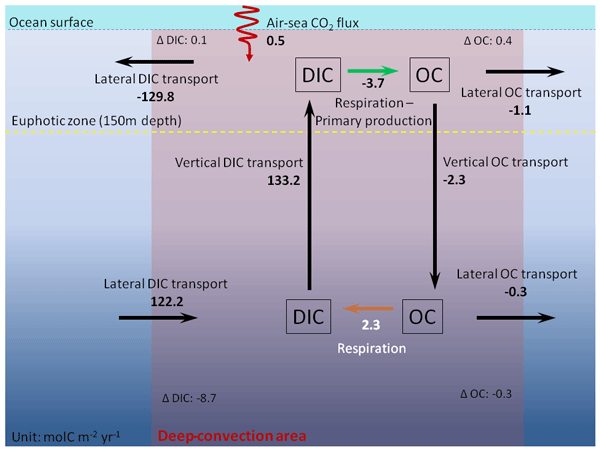
Deep convection plays a key role in the circulation, thermodynamics, and biogeochemical cycles in the Mediterranean Sea, considered to be a hotspot of biodiversity and climate change. In this study, we investigate the seasonal and annual budget of dissolved inorganic carbon in the deep-convection area of the northwestern Mediterranean Sea.
Stanley I. Nmor, Eric Viollier, Lucie Pastor, Bruno Lansard, Christophe Rabouille, and Karline Soetaert
Geosci. Model Dev., 15, 7325–7351, https://doi.org/10.5194/gmd-15-7325-2022, https://doi.org/10.5194/gmd-15-7325-2022, 2022
Short summary
Short summary
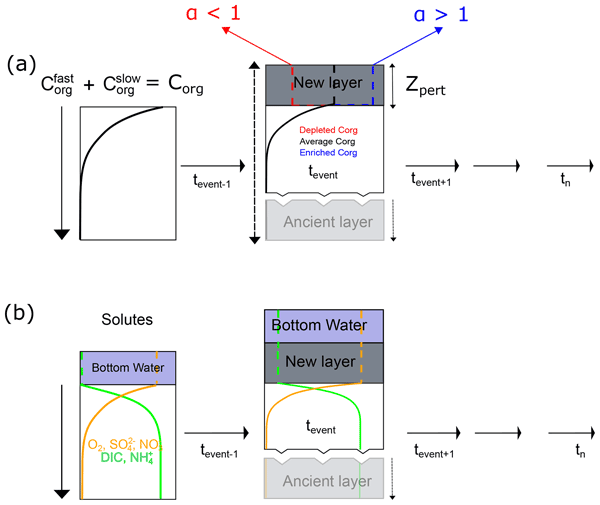
The coastal marine environment serves as a transition zone in the land–ocean continuum and is susceptible to episodic phenomena such as flash floods, which cause massive organic matter deposition. Here, we present a model of sediment early diagenesis that explicitly describes this type of deposition while also incorporating unique flood deposit characteristics. This model can be used to investigate the temporal evolution of marine sediments following abrupt changes in environmental conditions.

Justin C. Tiano, Jochen Depestele, Gert Van Hoey, João Fernandes, Pieter van Rijswijk, and Karline Soetaert
Biogeosciences, 19, 2583–2598, https://doi.org/10.5194/bg-19-2583-2022, https://doi.org/10.5194/bg-19-2583-2022, 2022
Short summary
Short summary
This study gives an assessment of bottom trawling on physical, chemical, and biological characteristics in a location known for its strong currents and variable habitats. Although trawl gears only removed the top 1 cm of the seabed surface, impacts on reef-building tubeworms significantly decreased carbon and nutrient cycling. Lighter trawls slightly reduced the impact on fauna and nutrients. Tubeworms were strongly linked to biogeochemical and faunal aspects before but not after trawling.
Alice E. Webb, Didier M. de Bakker, Karline Soetaert, Tamara da Costa, Steven M. A. C. van Heuven, Fleur C. van Duyl, Gert-Jan Reichart, and Lennart J. de Nooijer
Biogeosciences, 18, 6501–6516, https://doi.org/10.5194/bg-18-6501-2021, https://doi.org/10.5194/bg-18-6501-2021, 2021
Short summary
Short summary
The biogeochemical behaviour of shallow reef communities is quantified to better understand the impact of habitat degradation and species composition shifts on reef functioning. The reef communities investigated barely support reef functions that are usually ascribed to conventional coral reefs, and the overall biogeochemical behaviour is found to be similar regardless of substrate type. This suggests a decrease in functional diversity which may therefore limit services provided by this reef.
Cited articles
Able, K. W.: Natural history: an approach whose time has come, passed, and needs to be resurrected, ICES J. Mar. Sci., 73, 2150–2155, https://doi.org/10.1093/icesjms/fsw049, 2016.
Aller, R. C.: The effects of macrobenthos on chemical properties of marine sediment and overlying water, in: Animal–Sediment Relations, edited by: McCall, P. L. and Tevesz, M. J. S., Plenum Press, New York, 53–102, https://doi.org/10.1007/978-1-4757-1317-6_2, 1982.
Ambrose Jr., W. G.: Role of predatory infauna in structuring marine soft-bottom communities, Mar. Ecol. Prog. Ser., 17, 109–115, https://doi.org/10.3354/meps017109, 1984.
Anger, K.: Salinity as a key parameter in the larval biology of decapod crustaceans, Invertebr. Reprod. Dev., 431, 29–45, https://doi.org/10.1080/07924259.2003.9652520, 2003.
Anker, A., Murina, G. V., Lira, C., Caripe, J. A. V., Palmer, A. R., and Jeng M. S.: Macrofauna associated with echiuran burrows: a review with new observations of the innkeeper worm, Ochetostoma erythrogrammon Leuckart and Rüppel, in Venezuela, Zool. Stud., 44, 157–190, 2005.
Barmuta, L. A.: Interaction between the effects of substratun, velocity and location on stream benthos: an experiment, Aust. J. Mar. Freshw. Res., 41, 557–5573, https://doi.org/10.1071/mf9900557, 1990.
Beasley, J. C., Olson, Z. H., and Devault, T. L.: Carrion cycling in food webs: comparisons among terrestrial and marine ecosystems, Oikos, 121, 92–104, https://doi.org/10.1111/j.1600-0706.2012.20353.x, 2012.
Beauchard, O.: The importance of trait selection on the meaning of functional diversity in benthic studies, Front. Mar. Sci., 10, 1195595, https://doi.org/10.3389/fmars.2023.1195595, 2023.
Beauchard, O. and Soetaert, S.: Bottom fishing assessment tool: an R package to model the effects of bottom trawling on the marine benthos, Ecol. Appl., e70282, https://doi.org/10.1002/eap.70282, 2026a.
Beauchard, O. and Soetaert, S.: MacroTraits: a global trait data and information system for marine benthic ecology, Zenodo [data set], https://doi.org/10.5281/zenodo.24318255, 2026b.
Beauchard, O., Veríssimo, H., Queirós, A. M., and Herman, P. M. J.: The use of multiple biological traits in marine community ecology and its potential in ecological indicator development, Ecol. Indic., 76, 81–96, https://doi.org/10.1016/j.ecolind.2017.01.011, 2017.
Beauchard, O., Brind'Amour, A., Schratzberger, M., Laffargue, P., Hintzen, N. T., Somerfield, P. J., and Piet, G.: A generic approach to develop a trait-based indicator of trawling-induced disturbance, Mar. Ecol. Prog. Ser., 675, 35–52, https://doi.org/10.3354/meps13840, 2021.
Beauchard, O., Mestdagh, S., Koop, L., Ysebaert, T., and Herman, P. M. J.: Benthic synecology in a soft sediment shelf: habitat contrasts and assembly rules of life strategies, Mar. Ecol. Prog. Ser., 682, 31–50, https://doi.org/10.3354/meps13928, 2022.
Beauchard, O., Bradshaw, C., Bolam, S., Tiano., J, Garcia, C., De Borger, E., Laffargue, P., Blomqvist, M., Tsikopoulou, I., Papadopoulou, N. K., Smith, C. J., Claes, J., Soetaert, K., and Sciberras, M.: Trawling-induced change in benthic effect trait composition – A multiple case study, Front. Mar. Sci., 10, 1303909, https://doi.org/10.3389/fmars.2023.1303909, 2023a.
Beauchard, O., Thompson, M. S. A., Ellingsen, K., Piet, G. J., Laffargue, P., and Soetaert, K.: Assessing sea floor functional biodiversity and vulnerability, Mar. Ecol. Prog. Ser., 708, 21–43, https://doi.org/10.3354/meps14270, 2023b.
Berg, P., Rysgaard, S., Funch, P., and Sejr, M. K.: Effects of bioturbation on solutes and solids in marine sediments, Aquat. Microb. Ecol., 26, 81–94, https://doi.org/10.3354/ame026081, 2001.
Bergagna, L., Beauchard, O., Riccialdelli, L., Lovrich, G., Diez, M., Risso, S., Soetaert, K., and Sahade, R.: Life strategies, assembly rules and functional diversity patterns in sub-Antarctic benthic communities, Mar. Ecol. Prog. Ser., 793, meps15200, https://doi.org/10.3354/meps15200, 2026.
Beukema, J. J.: Molluscan life spans and long-term cycles in benthic communities, Oecologia, 80, 570–570, https://doi.org/10.1007/bf00380084, 1989.
Bhaud, M. and Duchêne, J. C.: Change from planktonic to benthic development: Is Life cycle evolution an adaptive answer to the constraints of dispersal?, Oceanol. Acta, 19, 335–346, 1996.
Bishop, J. D. D. and Pemberton, A. J.: The third way: spermcast mating in sessile marine invertebrates, Integr. Comp. Biol., 46, 398–406, https://doi.org/10.1093/icb/icj037, 2006.
Blanchard, J. L., Heneghan, R. F., Everett, J. D., Trebilco, R., and Richardson, A. J.: From bacteria to whales: using functional size spectra to model marine ecosystems, Trends Ecol. Evol., 32, 174–186, https://doi.org/10.1016/j.tree.2016.12.003, 2017.
Bleidorn, C.: Recent progress in reconstructing lophotrochozoan (spiralian) phylogeny, Org. Divers. Evol., 19, 557–566, https://doi.org/10.1007/s13127-019-00412-4, 2019.
Bournaud, M., Richoux, P., and Usseglio-Polatera, P.: An approach to the synthesis of qualitative ecological information from aquatic coleoptera communities, Regul. Rivers: Res. Manage., 7, 165–180, https://doi.org/10.1002/rrr.3450070205, 1992.
Bremner, J., Rogers, S. I., and Frid, C. L. J.: Assessing functional diversity in marine benthic ecosystems: a comparison of approaches, Mar. Ecol. Prog. Ser., 254, 11–25, https://doi.org/10.3354/meps254011, 2003.
Brett, C. E. and Walker, S. E.: Predators and predation in Paleozoic marine environments, Paleontolog. Soc. Pap., 8, 93–118, https://doi.org/10.1017/s1089332600001078, 2002.
Bromley, R. G.: Bioerosion of Bermuda reefs, Palaeogeogr. Palaeoclimatol. Palaeoecol., 23, 169–197, https://doi.org/10.1016/0031-0182(78)90093-7, 1978.
Buhl-Mortensen, L., Vanreusel, A., Gooday, A. J., Levin, L. A., Priede, I. G., Buhl-Mortensen, P., Gheerardyn, H., King, N. J., and Raes, M.: Biological structures as a source of habitat heterogeneity and biodiversity on the deep ocean margins, Mar. Ecol., 31, 21–50, https://doi.org/10.1111/j.1439-0485.2010.00359.x, 2010.
Burgess, S. C., Baskett, M. L., Grosberg, R. K., Morgan, S. G., and Strathmann, R. R.: When is dispersal for dispersal? Unifying marine and terrestrial perspectives, Biol. Rev., 91, 867–882, https://doi.org/10.1111/brv.12198, 2015.
Cadotte, M. W., Carboni, M., Si, X., and Tatsumi, S.: Do traits and phylogeny support congruent community diversity patterns and assembly inferences? J. Ecol., 107, 2065–2077, https://doi.org/10.1111/1365-2745.13247, 2019.
Callaway, R.: Tube worms promote community change, Mar. Ecol. Prog. Ser., 308, 49–60, https://doi.org/10.3354/meps308049, 2006.
Calow, P.: Towards a definition of functional ecology, Funct. Ecol., 1, 57–61, https://doi.org/10.2307/2389358, 1987.
Cavender-Bares, J., Kozak, K. H., Fine, P. V. A., and Kembel, S. W.: The merging of community ecology and phylogenetic biology, Ecol. Lett., 12, 693–715, https://doi.org/10.1111/j.1461-0248.2009.01314.x., 2009.
Cernansky, R.: Biodiversity moves beyond counting species, Nature, 546, 22–24, https://doi.org/10.1038/546022a, 2017.
Chapman, A. S., Beaulieu, S. E., Colaço, A., Gebruk, A. V., Hilario, A., Kihara, T. C., Ramirez-Llodra, E., Sarrazin, J., Tunnicliffe, V., Amon, D. J., Baker, M., Boschen-Rose, R. E., Chen, C., Cooper, I. J., Copley, J. T., Corbari, L., Cordes, E. E., Cuvelier, D., Duperron, S., Du Preez, C., Gollner, S., Horton, T., Hourdez, S., Krylova, E. M., Linse, K., LokaBharathi, P. A., Marsh, L., Matabos, M., Wier Mills, S., Mullineaux, L. S., Rapp, H. T., Reid, W. D. K., Rybakova (Goroslavskaya), E., Remya A. T. T., Southgate, S. J., Stöhr, S., Turner, P. J., Watanabe, H. K., Yasuhara, M., and Bates, A. E.: sFDvent: a global trait database for deep-sea hydrothermal-vent fauna, Global Ecol. Biogeogr., 28, 1538–1551, https://doi.org/10.5061/dryad.cn2rv96, 2019.
Charnov, E. L.: Life history invariants. Some explorations of symmetry in evolutionary ecology, Oxford University Press, Oxford, https://doi.org/10.1093/oso/9780198540724.001.0001, 1993.
Cheng, C. H., de Smit, J. C., Fivash, G. S., Hulscher, S. J. M. H., Borsje, B. W., and Soetaert, K.: Sediment shell-content diminishes current-driven sand ripple development and migration, Earth Surf. Dynam., 9, 1335–1346, https://doi.org/10.5194/esurf-9-1335-2021, 2021.
Chessel, D., Dufour, A. B., and Thioulouse, J.: The ade4 package-I – One-table methods, R News, 4, 5–10, 2004.
Chevalier, S., Beauchard, O., Teacǎ, A., Begun, T., Todorova, V., Vandenbulcke, L., Soetaert, K., and Gr'́egoire, M.: A macrozoobenthic data set of the Black Sea northwestern shelf, Sci. Data, 12, 957, https://doi.org/10.1038/s41597-025-05311-2, 2025.
Chevenet, F., Dolédec, S., and Chessel D.: A fuzzy coding approach for the analysis of long-term ecological data, Freshwater Biol., 31, 295–309, https://doi.org/10.1111/j.1365-2427.1994.tb01742.x, 1994.
Chia, F., Gibson, G., and Qian, P.: Poecilogony as a reproductive strategy of marine invertebrates, Oceanol. Acta, 19, 203–208, https://archimer.ifremer.fr/doc/00094/20478, 1996.
Christensen, B., Vedel, A., and Kristensen, E.: Carbon and nitrogen fluxes in sediment inhabited by suspension-feeding (Nereis diversicolor) and non-suspension-feeding (N. virens) polychaetes, Mar. Ecol. Prog. Ser., 192, 203–217, https://doi.org/10.3354/meps192203, 2000.
Clare, D. S., Bolam, S. G., McIlwaine, P. S. O., Garcia, C., Murray, J. M., and Eggleton, J. D.: Biological traits of marine benthic invertebrates in Northwest Europe, Sci. Data, 9, 339, https://doi.org/10.1038/s41597-022-01442-y, 2022.
Clark, R. B.: The origin and formation of the heteronereis, Biol. Rev., 36, 199–236, https://doi.org/10.1111/j.1469-185X.1961.tb01584.x, 1961.
Clarke, A.: Seasonality in the Antarctic marine environment, Comp. Biochem. Physiol. B, 90, 461–473, https://doi.org/10.1016/0305-0491(88)90285-4, 1988.
Clarke, A.: Antarctic marine benthic diversity: patterns and processes, J. Exp. Mar. Bio. Ecol., 366, 48–55, https://doi.org/10.1016/j.jembe.2008.07.008, 2008a.
Clarke, A.: Ecological stoichiometry in six species of Antarctic marine benthos, Mar. Ecol. Prog. Ser., 369, 25–37, https://doi.org/10.3354/meps, 2008b.
Cooper, K. M., Bolam, S. G., Downie, A. L., and Barry, J.: Biological-based habitat classification approaches promote cost-efficient monitoring: an example using seabed assemblages, J. Appl. Ecol., 56, 1085–1098, https://doi.org/10.1111/1365-2664.13381, 2019.
Costello, M. J., Claus, S., Dekeyzer, S., Vandepitte, L., Tuama, E. O., Lear, D., and Tyler-Walters, H.: Biological and ecological traits of marine species, Peer J., 3, e1201, https://doi.org/10.7717/peerj.1201, 2015.
Creutzberg, F., Wapenaar, P., Duineveld, G., and Lopez Lopez, N.: Distribution and density of the benthic fauna in the southern North Sea in relation to bottom characteristics and hydrographic conditions, Rapp. P.-v. R'eun. Cons. Int. Explo. Mer 183, 101–110, https://www.vliz.be/en/imis?module=ref&refid=14729&utm_source=chatgpt.com (last access: 25 March 2026), 1984.
Dammhahn, M., Dingemanse, N. J., Niemelä, P. T., and Réale, D.: Pace-of-life syndromes: a framework for the adaptive integration of behaviour, physiology and life history, Behav. Ecol. Sociobiol., 72, 62, https://doi.org/10.1007/s00265-018-2473-y, 2018.
Darling, E. S., Alvarez-Filip, L., Oliver, T. A., McClanahan, T. R., and Côté, I. M.: Evaluating life-history strategies of reef corals from species traits, Ecol. Lett., 15, 1378–1386, https://doi.org/10.1111/j.1461-0248.2012.01861.x, 2012.
Darwin, C.: On the origin of species, John Murray, London, https://doi.org/10.5962/bhl.title.82303, 1859.
Dawson, S. K., Carmona, C. P., González-Suárez, M., Jönsson, M., Chichorro, F., Mallen-Cooper, M., Melero, Y., Moor, H., Simaika, J. P., and Duthie, A. B.: The traits of “trait ecologists”: An analysis of the use of trait and functional trait terminology, Ecol. Evol., 11, 16434–16445, https://doi.org/10.1002/ece3.8321, 2021.
Dayton, P. K.: The importance of the natural sciences to conservation, Am. Nat., 16, 1–13, https://doi.org/10.1086/376572, 2003.
de Bello, F., Carmona, C. P., Dias, A. T. C., Götzenberger, L., Moretti, M., and Berg, M. P.: Handbook of trait-based ecology. From theory to R tools, Cambridge University Press, Cambridge, https://doi.org/10.1017/9781108628426, 2021a.
de Bello, F., Lavorel, S., Hallett, L. M., Valencia, E., Garnier, E., Roscher, C., Conti, L., Galland, T., Goberna, M., Májeková, M., Montesinos-Navarro, A., Pausas, J. G., Verdú, M., E-Vojtkó, A., Götzenberger, L., and Lepš, J.: Functional trait effects on ecosystem stability: assembling the jigsaw puzzle, Trends Ecol. Evol., 36, 822–836, https://doi.org/10.1016/j.tree.2021.05.001, 2021b.
Degen, R. and Faulwetter, S.: The Arctic Traits Database – a repository of Arctic benthic invertebrate traits, Earth Syst. Sci. Data, 11, 301–322, https://doi.org/10.5194/essd-11-301-2019, 2019.
de Juan, S., Bremner, J., Hewitt, J., Törnroos, A., Mangano, M. C., Thrush, S., and Hinz, H.: Biological traits approaches in benthic marine ecology: dead ends and new paths, Ecol. Evol., 12, e9001, https://doi.org/10.1002/ece3.9001, 2022.
Diaz, R. J. and Rosenberg, R.: Marine benthic hypoxia: a review of its ecological effects and the behavioural responses of benthic macrofauna, Oceanogr. Mar. Biol. Ann. Rev., 33, 245–303, 1995.
Díaz, S. and Cabido, M.: Vive la différence: plant functional diversity matters to ecosystem processes, Trends Ecol. Evol., 16, 646–655, https://doi.org/10.1016/S0169-5347(01)02283-2, 2001.
Dodou, D., Breedveld, P., de Winter, J. C. F., Dankelman, J., and van Leeuwen, J. L.: Mechanisms of temporary adhesion in benthic animals, Biol. Rev., 86, 15–32, https://doi.org/10.1111/j.1469-185X.2010.00132.x, 2011.
Dray, S., Chessel, D., and Thioulouse, J.: Co-inertia analysis and the linking of ecological data tables, Ecology, 84, 3078–3089, https://doi.org/10.1890/03-0178, 2003.
Dray, S., Dufour, A. B., and Chessel, D.: The ade4 Package – II: Two-table and K-table methods, R News, 7, 47–54, 2007.
Enderlein, P.: Effect of substrate composition on burrowing depth and respiratory current in two spatangoids (Echinoidea), Sarsia, 89, 190–195, https://doi.org/10.1080/00364820410006367, 2004.
Engel, M. S., Ceríaco, L. M. P., Daniel, G. M., Dellapé, P. M., Löbl, I., Marinov, M., Reis, R. E., Young, M. T., Dubois, A., Agarwal, I., Lehmann, P. A., Alvarado, M., Alvarez, N., Andreone, F., Araujo-Vieira, K., Ascher, J. S., Baêta, D., Baldo, D., Bandeira, S. A., Barden, P., Barrasso, D. A., Bendifallah, L., Bockmann, F. A., Böhme, W., Borkent, A., Brandão, C. R. F., Busack, S. D., Bybee, S. M., Channing, A., Chatzimanolis, S., Christenhusz, M. J. M., Crisci, J. V., D'Elía, G., Da Costa, L. M., Davis, S. R., De Lucena, C. A. S., Deuve, T., Fernandes Elizalde, S., Faivovich, J., Farooq, H., Ferguson, A. W., Gippoliti, S., Gonçalves, F. M. P., Gonzalez, V. H., Greenbaum, E., Hinojosa-Díaz, I. A., Ineich, I., Jiang, J., Kahono, S., Kury, A. B., Lucinda, P. H. F., Lynch, J. D., Malécot, V., Marques, M. P., Marris, J. W. M., McKellar, R. C., Mendes, L. F., Nihei, S. S., Nishikawa, K., Ohler, A., Orrico, V. G. D., Ota, H., Paiva, J., Parrinha, D., Pauwels, O. S. G., Pereyra, M. O., Pestana, L. B., Pinheiro, P. D. P., Prendini, L., Prokop, J., Rasmussen, C., Rödel, M.-O., Trefaut Rodrigues, M., Rodríguez, S. M., Salatnaya, H., Sampaio, Í., Sánchez-García, A., Shebl, M. A., Santos, B. S., Solórzano-Kraemer, M. M., Sousa, A. C. A., Stoev, P., Teta, P., Trape, J.-F., Van-Dúnem Dos Santos, C., Vasudevan, K., Vink, C. J., Vogel, G., Wagner, P., Wappler, T., Ware, J. L., Wedmann, S., and Zacharie, C. K.: The taxonomic impediment: a shortage of taxonomists, not the lack of technical approaches, Zool. J. Linn. Soc., 193, 381–387, https://doi.org/10.1093/zoolinnean/zlab072, 2021.
Escoufier, Y.: Le traitement des variables vectorielles, Biometrics, 29, 751–760, https://doi.org/10.2307/2529140, 1973.
Etter, R. J. and Mullineaux, L. S.: Deep-Sea Communities, in: Marine Community Ecology, edited by: Bertness, S. D., Gaines, S. D., and Hay, M. E., Sinauer Associates, Sunderland, 367–394, ISBN 9780878930579, 2001.
Fallon, S. J., Thresher, R. E., and Adkins, J.: Age and growth of the cold-water scleractinian Solenosmilia variabilis and its reef on SW Pacific seamounts, Coral Reefs, 33, 31–38, https://doi.org/10.1007/s00338-013-1097-y, 2013.
Fauchald, K.: Life diagram patterns in benthic polychaetes, Proc. Biol. Soc. Wash., 96, 160–177, 1983.
Fauchald, K. and Jumars, P. A.: The diet of worms: a study of polychaete feeding guilds, Oceanogr. Mar. Biol. Ann. Rev., 17, 193–284, 1979.
Faulwetter, S., Markantonatou, V., Pavloudi, C., Papageorgiou, N., Keklikoglou, K., Chatzinikolaou, E., Pafilis, E., Chatzigeorgiou, G., Vasileiadou, K., Dailianis, T., Fanini, L., Koulouri, P., and Arvanitidis, C.: Polytraits: a database on biological traits of marine polychaetes, Biodivers. Data J., 2, e1024, https://doi.org/10.3897/BDJ.2.e1024, 2014.
Fernandez, M. O., Collins, A. G., Gittenberger, A., Roy, K., and Marques A. C.: Traits and depth: What do hydroids tell us about morphology and life-history strategies in the deep sea?, Global Ecol. Biogeogr., 29, 908–924, https://doi.org/10.1111/geb.13074, 2020.
Flammang, P.: Adhesive secretions in echinoderms: an overview, in: Biological Adhesives, edited by: Smith, A. M. and Callow, J. A., Springer-Verlag, Berlin, Heidelberg, 183–206, https://doi.org/10.1007/978-3-540-31049-5_10, 1996.
François, F., Poggiale, J. C., Durbec, J. P., and Stora, G.: A new approach for the modelling of sediment reworking induced by a macrobenthic community, Acta Biotheor., 45, 295–319, https://doi.org/10.1023/A:1000636109604, 1997.
Friedrichs, M., Graf, G., and Springer, B.: Skimming flow induced over a simulated polychaete tube lawn at low population densities, Mar. Ecol. Prog. Ser., 192, 219–228, https://doi.org/10.3354/meps192219, 2000.
Gage, J. D.: Recruitment ecology and age structure of deep-sea invertebrate populations, in: Reproduction, Larval Biology, and Recruitment in the Deep-Sea Benthos, edited by: Young, C. M. and Eckelbarger, K. J., Columbia University Press, New York, 223–242, ISBN 0-231-08004-2, 1994.
Galparsoro, I., Connor D. W., Borja Á., Aish, A., Amorim, P., Bajjouk, T., Chambers, C., Coggan, R., Dirberg, G., Ellwood, H., Evans, D., Goodin, K. L., Grehan, A., Haldin, J., Howell, K., Jenkins, C., Michez, N., Mo, G., Buhl-Mortensen, P., Pearce, B., and Vasquez, M.: Using EUNIS habitat classification for benthic mapping in European seas: present concerns and future needs, Mar. Pollut. Bull., 64, 2630–2638, https://doi.org/10.1016/j.marpolbul.2012.10.010, 2012.
Gaston, G. R.: Benthic Polychaeta of the Middle Atlantic Bight: feeding and distribution, Mar. Ecol. Prog. Ser., 36, 251–262, https://doi.org/10.3354/meps036251, 1987.
Gaston, K. J. and May, R. M.: Taxonomy of taxonomists, Nature, 356, 281–282, 1992.
Gaston, K. J. and Spicer, J. I.: Biodiversity – An introduction, Second edition, Blackwell Publishing, Oxford, ISBN 978-1-405-11857-6, 2004.
Giangrande, A., Geraci, S., and Belmonte, G.: Life-cycle and life-history diversity in marine invertebrates and the implications in community dynamics, Oceanogr. Mar. Biol. Ann. Rev., 32, 305–333, 1994.
Gilbert, F., Kristensen, E., Aller, R. C., Banta, G. T., Archambault, P., Belley, R., Bellucci, L. G., Calder, L., Cuny, P., de Montaudouin, X., Eriksson, S. P., Forster, S., Gillet, P., Godbold, J. A., Glud, R. N., Gunnarsson, J., Hulth, S., Lindqvist, S., Maire, A., Michaud E., and Stora, G.: Sediment reworking by the burrowing polychaete Hediste diversicolor modulated by environmental and biological factors across the temperate North Atlantic. A tribute to Gaston Desrosiers, J. Exp. Mar. Bio. Ecol., 541, 151588, https://doi.org/10.1016/j.jembe.2021.151588, 2021.
Gilbert, M. A.: Growth rate, longevity and maximum size of Macoma balthica (L.), Biol. Bull., 145, 119–126, 1973.
Gili, J. M. and Coma, R.: Benthic suspension feeders: their paramount role in littoral marine food webs, Trends Ecol. Evol., 13, 316–321, https://doi.org/10.1016/s0169-5347(98)01365-2, 1998.
Gimenez, B. C. G., Gusmao, J. B., Petsch, D. K., Fernandes, F. J., and Lana, P. C.: Trait-based approaches to address animal-soft sediment relationships in marine ecosystem: a mini review, Ocean Coast. Res., v72, e24078, https://doi.org/10.1590/2675-2824072.23139, 2024.
Giribet, G.: New animal phylogeny: future challenges for animal phylogeny in the age of phylogenomics, Org. Divers. Evol., 16, 419–426, https://doi.org/10.1007/s13127-015-0236-4, 2016.
Gleason, D. F. and Hofmann, D. K.: Coral larvae: from gametes to recruits, J. Exp. Mar. Biol. Ecol., 408, 42–57, https://doi.org/10.1016/j.jembe.2011.07.025, 2011.
Gontikaki, E., van Oevelen, D., Soetaert, K., and Witte, U.: Food web flows through a sub-arctic deep-sea benthic community, Progr. Oceanogr., 91, 245–259, https://doi.org/10.1016/j.pocean.2010.12.014, 2011.
Goolsby, E. W., Bruggeman, J., and Ané, C.: Rphylopars: Fast multivariate phylogenetic comparative methods for missing data and within-species variation, Meth. Ecol. Evol., 8, 22–27, https://doi.org/10.1111/2041-210X.12612, 2017.
Gower, J. C.: Some distance properties of latent root and vector methods used in multivariate analysis, Biometrika, 53, 325–338, https://doi.org/10.1093/biomet/53.3-4.325, 1966.
Graf, G. and Rosenberg, R.: Bioresuspension and biodeposition: a review, J. Mar. Syst., 11, 269–278, https://doi.org/10.1016/S0924-7963(96)00126-1, 1997.
Grassle, J. F. and Sanders, H. L.: Life histories and the role of disturbance, Deep-Sea Res. Oceanogr. Abstr., 20, 643–659, https://doi.org/10.1016/0011-7471(73)90032-6, 1973.
Gray, J. S.: Animal-sediment relationships, Oceanogr. Mar. Biol. Ann. Rev., 12, 223–261, 1974.
Greene, H. W.: Organisms in nature as a central focus for biology, Trends Ecol. Evol., 20, 23–27, https://doi.org/10.1016/j.tree.2004.11.005, 2005.
Guénard, G., Legendre, P., and Peres-Neto, P.: Phylogenetic eigenvector maps: a framework to model and predict species traits, Meth. Ecol. Evol., 4, 1120–1131, https://doi.org/10.1111/2041-210X.12111, 2013.
Gusha, N. M. C. and McQuaid, C. D.: Traits without boundaries: The environmental influence on biological traits across an intertidal region, J. Sea Res., 203, 102559, https://doi.org/10.1016/j.seares.2024.102559, 2025.
Hall, S. J.: Physical disturbance and marine benthic communities: life in unconsolidated sediments, Oceanogr. Mar. Biol. Ann. Rev., 32, 179–239, 1994.
Heip, C., Basford, D., Craeymeersch, J. A., Dewarumez, J. M., Dorjes, J., de Wilde, P., Duineveld, G., Eleftheriou, A., Herman, P. M. J., Niermann, U., Kingston, P., Künitzer A., Rachor, E., Rumohr, H., Soetaert, K., and Soltwedel, T.: Trends in biomass, density and diversity of North Sea macrofauna, ICES J. Mar. Sci., 49, 13–22, https://doi.org/10.1093/icesjms/49.1.13, 1992.
Herman, P. M. J., Middelburg, J. J., van de Koppel, J., and Heip, C. H. R.: Ecology of estuarine macrobenthos, Adv. Ecol. Res., 29, 195–240, https://doi.org/10.1016/S0065-2504(08)60194-4, 1999.
Hughes, P. W.: Between semelparity and iteroparity: empirical evidence for a continuum of modes of parity, Ecol Evol., 7, 8232–8261, https://doi.org/10.1002/ece3.3341, 2017.
Ingrosso, G., Abbiati, M., Badalamenti, F., Bavestrello, G., Belmonte, G., Cannas, R., Benedetti-Cecchi, L., Bertolino, M., Bevilacqua, S., Bianchi, C. N., Bo, M., Boscari, E., Cardone, F., Cattaneo-Vietti, R., Cau, A., Cerrano, C., Chemello, R., Chimienti, G., Congiu, L., Corriero, G., and Boero, F.: Mediterranean bioconstructions along the Italian coast, Adv. Mar. Biol., 79, 61–136, https://doi.org/10.1016/bs.amb.2018.05.001, 2018.
Jablonski, D. and Lutz R. A.: Larval ecology of marine benthic invertebrates: paleobiological implications, Biol. Rev., 58, 21–89, https://doi.org/10.1111/j.1469-185X.1983.tb00380.x, 1983.
Jacoby, D. M. P., Brown, C., Croft, D. P., Mann, J., and Mourier, J.: Sociality in the marine environment, Front. Mar. Sci., 9, 863595, https://doi.org/10.3389/fmars.2022.863595, 2022.
Johnson, R. G.: Animal-sediment relations in shallow water benthic communities, Mar. Geol., 11, 93–104, https://doi.org/10.1016/0025-3227(71)90069-7, 1971.
Jones, C. G., Lawton, J. H., and Shachak, M.: Organisms as ecosystem engineers, Oikos, 69, 373–386, https://doi.org/10.2307/3545850, 1994.
Jumars, P. A., Dorgan, K. M., and Lindsay, S. M.: Diet of worms emended: an update of polychaete feeding guilds, Annu. Rev. Mar. Sci., 7, 497–520, https://doi.org/10.1146/annurev-marine-010814-020007, 2015.
Keddy, P. A.: A pragmatic approach to functional ecology, Funct. Ecol., 6, 621–626, https://doi.org/10.2307/2389954, 1992a.
Keddy, P. A.: Assembly and response rules: two goals for predictive community ecology, J. Veg. Sci., 3, 157–164, https://doi.org/10.2307/3235676, 1992b.
Kindsvater, H. K., Mangel, M., Reynolds, J. D., and Dulvy, N. K.: Ten principles from evolutionary ecology essential for effective marine conservation, Ecol. Evol., 6, 2125–2138, https://doi.org/10.1002/ece3.2012, 2016.
Kovalenko, K. E., Thomaz, S. M., and Warfe, D. M.: Habitat complexity: approaches and future directions, Hydrobiologia, 685, 1–17, https://doi.org/10.1007/s10750-011-0974-z, 2012.
Kristensen, E.: Direct measurement of ventilation and oxygen uptake in three species of tubiculous polychaetes (Nereis spp.), Comparat. Physiol., 145, 45–50, https://doi.org/10.1007/BF00782592, 1981.
Kristensen, E.: Benthic fauna and biogeochemical processes in marine sediments: microbial activities and fluxes, in: Nitrogen Cycling in Coastal Marine Environments, edited by: Blackburn, T. H. and Sorensen, J., John Wiley & Sons Ltd, Chichester, 275–299, ISBN 9780471914044, 1988.
Kristensen, E. and Kostka, J. E.: Macrofaunal burrows and irrigation in marine sediment: microbiological and biogeochemical interactions, Coast. Estuar. Stud., 60, 125–157, https://doi.org/10.1029/CE060p0125, 2005.
Kristensen, E., Penha-Lopes, G., Delefosse, M., Valdemarsen, T., Quintana, C. O., and Banta, G. T.: What is bioturbation? The need for a precise definition for fauna in aquatic sciences, Mar. Ecol. Prog. Ser., 446, 285–302, https://doi.org/10.3354/meps09506, 2012.
Künitzer, A., Basford, D., Craeymeersch, J. A., Dewarumez, J. M., Dorjes, J., Duineveld, G. C. A., Eleftheriou, A., Heip, C., Herman, P., Kingston, P., Niermann, U., Rachor, E., Rumohr, H., and de Wilde, P. A. J.: The benthic infauna of the North Sea: species distribution and assemblages, ICES J. Mar. Sci., 49, 127–143, https://doi.org/10.1093/icesjms/49.2.127, 1992.
Lackschewitz, D. and Reise, K.: Macrofauna on flood delta shoals in the Wadden Sea with an underground association between the lugworm Arenicola marina and the amphipod Urothoe poseidonis, Helgol. Meeresunters., 52, 147–158, https://doi.org/10.1007/BF02908744, 1998.
Lam-Gordillo, O., Baring, R., and Dittmann, S.: Ecosystem functioning and functional approaches on marine macrobenthic fauna: a research synthesis towards a global consensus, Ecol. Ind., 115, 106379, https://doi.org/10.1016/j.ecolind.2020.106379, 2020a.
Lam-Gordillo, O., Baring, R., and Dittmann, S.: Establishing the South Australian Macrobenthic Traits (SAMT) database: A trait classification for functional assessments, Ecol. Evol., 10, 14372–14387, https://doi.org/10.1002/ece3.7040, 2020b.
Lam-Gordillo, O., Lohrer, A. M., Hewitt, J., and Dittmann, S.: NZTD – The New Zealand Trait Database for shallow-water marine benthic invertebrates, Sci. Data, 10, 502, https://doi.org/10.1038/s41597-023-02414-6, 2023.
Lavorel, S. and Garnier, E.: Predicting changes in community composition and ecosystem functioning from plant traits: revisiting the Holy Grail, Funct. Ecol., 16, 545–556, https://doi.org/10.1046/j.1365-2435.2002.00664.x, 2002.
Levinton, J. and Kelaher, B.: Opposing organizing forces of deposit-feeding marine communities, J. Exp. Mar. Biol. Ecol., 300, 65–82, https://doi.org/10.1016/j.jembe.2003.12.008, 2004.
Levitan, D. R.: The ecology of fertilization in free-spawning invertebrates, in: Ecology of Marine Invertebrate Larvae, edited by: McEdward, L. R., CRC Press, New York, 123–156, https://doi.org/10.1201/9780138758950-4, 1995.
Lim, R., Fourie, S. A., Stout, E. J., Roots, B. J., Cronin-O'Reilly, S., Rodgers, E. M., and Tweedley, J. R.: Testing the Remane diagram: occurrences of benthic macroinvertebrates in oligohaline to hyperhaline salinities, Water, 17, 1642, https://doi.org/10.3390/w17111642, 2025.
Lindroth, A.: Atmungsventilation der Polychäten, Z. Vgl. Physiol., 28, 485–532, https://doi.org/10.1007/BF00297957, 1941.
Little, S., Wood, P. J., and Elliott, M.: Quantifying salinity-induced changes on estuarine benthic fauna: The potential implications of climate change, 198, 610–625, https://doi.org/10.1016/j.ecss.2016.07.020, 2017.
Lively, C. M. and Johnson, S. G.: Brooding and the evolution of parthenogenesis: strategy models and evidence from aquatic invertebrates, P. Roy. Soc. Lond. B, 256, 89–95, https://doi.org/10.1098/rspb.1994.0054, 1994.
Lopez, G. R. and Levinton, J. S.: Ecology of deposit-feeding animals in marine sediments, Quart. Rev. Biol., 62, 235–260, https://doi.org/10.1086/415511, 1987.
Love, A. C.: Marine invertebrates, model organisms, and the modern synthesis: epistemic values, evo-devo, and exclusion, Theory Biosci., 128, 19–42, https://doi.org/10.1007/s12064-009-0063-2, 2009.
Luckenbach, M. W.: Sediment stability around animal tubes: the roles of hydrodynamic processes and biotic activity, Limnol. Oceanogr., 31, 779–787, https://doi.org/10.4319/lo.1986.31.4.0779, 1986.
Mantel, N.: The detection of disease clustering and a generalized regression approach, Cancer Res., 27, 209–220, 1967.
Marshall, D. J. and Keough, M. J.: The evolutionary ecology of offspring size in marine invertebrates, Adv. Mar. Biol., 53, 1–60, https://doi.org/10.1016/S0065-2881(07)53001-4, 2007.
Martini, S., Larras, F., Boyé, A., Faure, E., Aberle, N., Archambault, P., Bacouillard, l., Beisner, B. E., Bittner, l., Castella, E., Danger, M., Gauthier, O., Karp-Boss, L., Lombard, F., Maps, F., Stemmann, L., Thiébaut, E., Usseglio-Polatera, P., Vogt, M., Laviale, M., and Ayata, S. D.: Functional trait-based approaches as a common framework for aquatic ecologists, Limnol. Oceanogr., 66, 965–994, https://doi.org/10.1002/lno.11655, 2021.
Mazzei, R. and Rubenstein, D. R.: Larval ecology, dispersal, and the evolution of sociality in the sea, Ethology, 127, 808–820, https://doi.org/10.1111/eth.13195, 2021.
McEdward, L. R.: Reproductive strategies of marine benthic invertebrates revisited: facultative feeding by planktotrophic larvae, Am. Nat., 150, 48–72, https://doi.org/10.1086/286056, 1997.
McHugh, D. and Fong, P. P.: Do life history traits account for diversity of polychaete annelids?, Invertebr. Biol., 121, 325–338, https://doi.org/10.1111/j.1744-7410.2002.tb00133.x, 2002.
McHugh, D. and Rouse, G. W.: Life history evolution of marine invertebrates: new views from phylogenetic systematics, Trends Ecol. Evol., 13, 182–186, https://doi.org/10.1016/S0169-5347(97)01285-8, 1998.
Meadows, P. S., Meadows, A., West, F. J. C., Shand, P. S., and Shaikh, M. A.: Mussels and mussel beds (Mytilus edulis) as stabilizers of sedimentary environments in the intertidal zone, J. Geol. Soc., 139, 331–347, https://doi.org/10.1144/GSL.SP.1998.139.01.26, 1998.
Meijer, K. J., Gusmao, J. B., Bruil, L., Franken, O., Grimm, I. A., van der Heide, T., Hijner, N., Holthuijsen, S. J., Hübner, L., Thieltges, D. W., Olff, H., Eriksson, B. K., and Govers, L. L.: The seafloor from a trait perspective. A comprehensive life history dataset of soft sediment macrozoobenthos, Sci. Data, 10, 808, https://doi.org/10.1038/s41597-023-02728-5, 2023.
Mendes, S. L. D. S. D., Paiva, P. C., and Nascimento, R. L.: Seasonal upwelling and depth-driven gradients foster functional overdispersion in Southwestern Atlantic annelid assemblages, Mar. Ecol. Prog. Ser., 765, 53–72, https://doi.org/10.3354/meps14896, 2025.
Meyer, D. L., Townsend, E. C., and Thayer, G. W.: Stabilization and Erosion Control Value of Oyster Cultch for Intertidal Marsh. Restor. Ecol., 5, 93–99, https://doi.org/10.1046/j.1526-100X.1997.09710.x, 1997.
Meysman, F. J. R., Middelburg J. J., and Heip C. H. R.: Bioturbation: a fresh look at Darwin's last idea, Trends Ecol. Evol., 21, 688–695, https://doi.org/10.1016/j.tree.2006.08.002, 2006.
Miatta, M., Bates, A. E., and Snelgrove, P. V. R.: Incorporating biological traits into conservation strategies, Annu. Rev. Mar. Sci., 13, 421–443, https://doi.org/10.1146/annurev-marine-032320-094121, 2021.
Mlambo, M. C.: Not all traits are “functional”: insights from taxonomy and biodiversity-ecosystem functioning research, Biodivers. Conserv., 23, 781–790, https://doi.org/10.1007/s10531-014-0618-5, 2014.
Montero-Serra, I., Linares, C., Doak, D. F., Ledoux, J. B., and Garrabou, J.: Strong linkages between depth, longevity and demographic stability across marine sessile species, P. Roy. Soc. B, 285, 20172688, https://doi.org/10.1098/rspb.2017.2688, 2018.
Morim, T., Henriques, S., Vasconcelos, R., and Dolbeth, M.: A roadmap to define and select aquatic biological traits at different scales of analysis, Sci. Rep., 13, 22947, https://doi.org/10.1038/s41598-023-50146-9, 2023.
Mouillot, D., Graham, N. A. J., Villéger, S., Mason, N. W. H., and Bellwood, D. R.: A functional approach reveals community responses to disturbances, Trends Ecol. Evol., 28, 167–177, https://doi.org/10.1016/j.tree.2012.10.004, 2013.
Mouquet, N., Devictor, V., Meynard, C. N., Munoz, F., Bersier, L. F., Chave, J., Couteron, P., Dalecky, A., Fontaine, C., Gravel, D., Hardy, O. J., Jabot, F., Lavergne, S., Leibold, M., Mouillot, D., Münkemüller, T., Pavoine, S., Prinzing, A., Rodrigues, A. S. L., Rohr, R. P., Thébault, E., and Thuiller, W.: Ecophylogenetics: advances and perspectives, Biol. Rev., 87, 769–785, https://doi.org/10.1111/j.1469-185X.2012.00224.x, 2012.
Murtagh, F. and Legendre, P.: Ward's hierarchical agglomerative clustering method: which algorithms implement Ward's criterion?, J. Classif., 31, 274–295, https://doi.org/10.1007/s00357-014-9161-z, 2014.
Nanglu, K., de Carle, D., Cullen, T. M., Anderson, E. B., Arif, S., Castañeda, R. A., Chang, L. M., Iwama, R. E., Fellin, E., Manglicmot, R. C., Massey, M. D., and Astudillo-Clavijo, V.: The nature of science: the fundamental role of natural history in ecology, evolution, conservation, and education, Ecol. Evol., 13, e10621, https://doi.org/10.1002/ece3.10621, 2023.
Oliver, T. H., Heard, M. S., Isaac, N. J. B., Roy, D. B., Procter, D., Eigenbrod, F., and Bullock, J. M.: Biodiversity and resilience of ecosystem functions, Trends Ecol. Evol., 30, 673–684, https://doi.org/10.1016/j.tree.2015.08.009, 2015.
Pacheco, A. S., González, M. T., Bremner, J., Oliva, M., Heilmayer, O., Laudien, J., and Riascos, J. M.: Functional diversity of marine macrobenthic communities from sublittoral soft-sediment habitats off northern Chile, Helgol. Mar. Res., 65, 413–424, https://doi.org/10.1007/s10152-010-0238-8, 2011.
Pavoine, S. and Ricotta, C.: Testing for phylogenetic signal in biological traits: the ubiquity of cross-product statistics, Evolution, 67, 828–840, https://doi.org/10.1111/j.1558-5646.2012.01823.x, 2013.
Pavoine, S., Dufour, A. B., and Chessel, D.: From dissimilarities among species to dissimilarities among communities: a double principal coordinate analysis, J. Theor. Biol., 228, 523–537, https://doi.org/10.1016/j.jtbi.2004.02.014, 2004.
Pearson, T. H.: Functional group ecology in soft-sediment marine benthos: the role of bioturbation, Oceanogr. Mar. Biol. Ann. Rev., 39, 233–267, https://doi.org/10.1201/b12588, 2001.
Pearson, T. H. and Rosenberg, R.: Macrobenthic succession in relation to organic enrichment and pollution of the marine environment, Oceanogr. Mar. Biol. Ann. Rev., 16, 229–311, 1978.
Pechenik, J. A.: Delayed metamorphosis by larvae of benthic marine invertebrates: does it occur? Is there a price to pay?, Ophelia, 32, 63–94, https://doi.org/10.1080/00785236.1990.10422025, 1990.
Pechenik, J. A.: On the advantages and disadvantages of larval stages in benthic marine invertebrate life cycles, Mar. Ecol. Prog. Ser., 177, 269–297, https://doi.org/10.3354/meps177269, 1999.
Peterson, C. H.: Intertidal zonation of marine invertebrates in sand and mud, Am. Sci., 79, 236–249, 1991.
Piepenburg, D.: Recent research on Arctic benthos: common notions need to be revised, Polar Biol., 28, 733–755, https://doi.org/10.1007/s00300-005-0013-5, 2005.
Podbielski, I., Hiebenthal, C., Hajati, M. C., Bock, C., Bleich, M., and Melzner, F.: Capacity for cellular osmoregulation defines critical salinity of marine invertebrates at low salinity, Front. Mar. Sci., 9, 898364, https://doi.org/10.3389/fmars.2022.898364, 2022.
Powell, E. N. and Cummins, H.: Are molluscan maximum life spans determined by long-term cycles in benthic communities?, Oecologia, 67, 177–182, https://doi.org/10.1007/BF00384281, 1985.
Queirós, A. M., Birchenough, S. N. R., Bremner, J., Godbold, J. A., Parker, R. E., Romero-Ramirez, A., Reiss, H., Solan, M., Somerfield, P. J., Van Colen, C., Van Hoey, G., and Widdicombe, S.: A bioturbation classification of European marine infaunal invertebrates, Ecol. Evol., 3, 3958–3985, https://doi.org/10.1002/ece3.769, 2013.
Ramirez Llodra, E.: Fecundity and life history strategies in marine invertebrates, Adv. Mar. Biol., 43, 87–170, https://doi.org/10.1016/S0065-2881(02)43004-0, 2002.
Ramón, M. and Richardson, A.: Age determination and shell growth of Chamelea gallina (Bivalvia: Veneridae) in the western Mediterranean, Mar. Ecol. Prog. Ser., 89, 15–23, https://doi.org/10.3354/meps089015, 1992.
R Core Team: R: A language and environment for statistical computing. R Foundation for Statistical Computing, Vienna, Austria. URL https://www.R-project.org/, 2025.
Rech, S., Thiel, M., Ruiz, G. M., Haram, L. E., and Carlton, J. T.: Ocean rafting: marine litter and benthic stopovers mmplify species dispersal opportunities, Global Ecol. Biogeogr., 34, e70031, https://doi.org/10.1111/geb.70031, 2025.
Remane, A.: Die Brackwasserfauna, Verh. Dtsch. Zool. Ges., 36, 34–74, 1934.
Resh, V. H., Hildrew, A. G., Statzner, B., and Townsend, C. R.: Theoretical habitat templets, species traits, and species richness: a synthesis of long-term ecological research on the Upper Rhône River in the context of concurrently developed ecological theory, Freshwater Biol., 31, 539–554. https://doi.org/10.1111/j.1365-2427.1994.tb01756.x, 1994.
Rhoads, D. C., McCall, P. L., and Yingst, J. Y.: Disturbance and production on the estuarine seafloor: dredge-spoil disposal in estuaries such as Long Island Sound can be managed in ways that enhance productivity rather than diminish it, Am. Sci., 66, 577–586, 1978.
Ricciardi, A. and Bourget, E.: Weight-to-weight conversion factors for marine benthic macroinvertebrates, Mar. Ecol. Prog. Ser., 63, 245–251, https://doi.org/10.3354/meps163245, 1998.
Ricklefs, R. E. and Wikelski, M.: The physiology/life history nexus, Trends Ecol. Evol., 17, 462–468, https://doi.org/10.1016/S0169-5347(02)02578-8, 2002.
Ricotta, C., Podani, J., Schmera, D., Bacaro, G., Maccherini, S., and Pavoine, S.: The ternary diagram of functional diversity, Meth. Ecol. Evol., 14, 1168–1174, https://doi.org/10.1111/2041-210X.14100, 2023.
Roberts, J. M., Wheeler, A. J., and Freiwald, A.: Reefs of the deep: the biology and geology of cold-water coral ecosystems, Science, 312, 543–547, https://doi.org/10.1126/science.1119861, 2006.
Robertson, A. I.: The relationship between annual production: biomass ratios and lifespans for marine macrobenthos, Oecologia, 38, 193–202, https://doi.org/10.1007/BF00346563, 1979.
Salonen, K., Sarvala, J., Hakala, I., and Vilianen, M. L.: The relation of energy and organic carbon in aquatic invertebrate?, Limnol. Oceanogr., 21, 724–730, https://doi.org/10.4319/lo.1976.21.5.0724, 1976.
San Vincente, C.: Life history perspectives on voltinism, in: The Natural History of the Crustacea Series – Life histories, Volume 5, edited by: Wellborn G. A. and Thiel, M., Oxford University press, New York, 125–150, https://doi.org/10.1093/oso/9780190620271.003.0005, 2018.
Savage, V. M., Gillooly, J. F., Brown, J. H., West, G. B., and Charnov, E. L.: Effects of body size and temperature on population growth, Am. Nat., 163, 429–441, https://doi.org/10.1086/381872, 2004.
Sebens, K. P.: Habitat structure and community dynamics in marine benthic systems, Habitat Structure, in: Population and Community Biology Series, edited by: Bell, S. S., McCoy, E. D., and Mushinsky, H. R., Springer, Dordrecht, 211–234, https://doi.org/10.1007/978-94-011-3076-9_11, 1991.
Seibold, E. and Berger, W. (Eds.): The sea floor. An introduction to marine geology, Springer, Cham, 268 pp., https://doi.org/10.1007/978-3-319-51412-3, 2017.
Simberloff, D.: Community ecology: is it time to move on?, Am. Nat., 163, 787–799, https://doi.org/10.1086/420777, 2004.
Sirenko, B. I.: Main differences in macrobenthos and benthic communities of the arctic and antarctic, as illustrated by comparison of the Laptev and Weddell sea faunas, Russ. J. Mar. Biol., 35, 445–453, https://doi.org/10.1134/S1063074009060017, 2009.
Snelgrove, P. V. R.: Getting to the bottom of marine biodiversity: sedimentary habitats, BioScience, 49, 129–138, https://doi.org/10.2307/1313538, 1999.
Snelgrove, P. V. R. and Butman, C. A.: Animal-sediment relationships revisited: cause versus effect, Oceanogr. Mar. Biol. Ann. Rev., 32, 111–177, 1994.
Solan, M., Cardinale, B. J., Downing, A. L., Engelhardt, K. A. M., Ruesink, J. L., and Srivastava, D. S.: Extinction and ecosystem function in the marine benthos, Science, 306, 1177–1180, https://doi.org/10.1126/science.1103960, 2004.
Southwood, T. R. E.: Tactics, strategies and templets, Oikos, 52, 3–18, https://doi.org/10.2307/3565974, 1988.
Spalding, M., Fox, H. E., Allen, G. R., Davidson, R., Ferdaña, Z. A., Finlayson, M., Halpern, B. S., Jorge, M. A., Lombana, A. L., Lourie, S. A., Martin, K. D., McManus, E., Molnar, J., Recchia, C. A., and Robertson, J.: Marine ecoregions of the World: a bioregionalization of coastal and shelf areas, BioScience, 57, 573–583, https://doi.org/10.1641/B570707, 2007.
Statzner, B., Hoppenhaus, K., Arens, M. F., and Richoux, P.: Reproductive traits, habitat use and templet theory: synthesis on world-wide data on aquatic insects, Freshwater Biol., 38, 109–135, https://doi.org/10.1046/j.1365-2427.1997.00195.x, 1997.
Statzner, B. and Bêche, L. A.: Can biological invertebrate traits resolve effects of multiple stressors on running water ecosystems?, Freshwater Biol., 55, 80–119, https://doi.org/10.1111/j.1365-2427.2009.02369.x, 2010.
Stearns, S. C.: The evolution of life histories, Oxford University Press, Oxford, https://doi.org/10.1093/oso/9780198577416.001.0001, 1992.
Stott, I., Salguero-Gómez, R., Jones, O. R., Ezard, T. H. G., Gamelon, M., Lachish, S., Lebreton, J. D., Simmonds, E. G., Gaillard, J. M., and Hodgson, D. J.: Life histories are not just fast or slow, Trends Ecol. Evol., 39, 9, https://doi.org/10.1016/j.tree.2024.06.001, 2024.
Strathmann, R. R.: Egg size, larval development, and juvenile size in benthic marine invertebrates, Am. Nat., 111, 373–376, https://doi.org/10.1086/283168, 1977.
Strathmann, R. R.: Why life histories evolve differently in the sea?, Am. Zool., 30, 197–207, https://doi.org/10.1093/icb/30.1.197, 1990.
Strathmann, R. R. and Strathmann, M. F.: The relationship between adult size and brooding in marine invertebrates, Am. Nat., 119, 91–101, https://doi.org/10.1086/283892, 1982.
Susini, I., Tillin, H. M., Anderson, L., Robertson, C. M., Rees, S., and Howell, K. L.: Towards greater standardisation in benthic trait research to support application to environmental management, Ecol. Evol., 15, e71072, https://doi.org/10.1002/ece3.71072, 2025.
Sutton, L., Mueter, F. J., Bluhm, B. A., and Iken, K.: Environmental filtering influences functional community assembly of epibenthic communities, Front. Mar. Sci., 8, 736917, https://doi.org/10.3389/fmars.2021.736917, 2021.
Swift, D. J.: The macrobenthic infauna off Sellafield (north-eastern Irish Sea) with special reference to bioturbation, J. Mar. Biol. Assoc. UK, 73, 143–162, https://doi.org/10.1017/S0025315400032690, 1993.
Tenenhaus, M. and Young, F. W.: An analysis and synthesis of multiple correspondence analysis, optimal scaling, dual scaling, homogeneity analysis and other methods for quantifying categorical multivariate data, Psychometrika, 50, 91–119, https://doi.org/10.1007/BF02294151, 1985.
Thiel, M. and Gutow, L.: The ecology of rafting in the marine environment. I. The floating substrata, Oceanogr. Mar. Biol. Ann. Rev., 42, 181–264, https://doi.org/10.1201/9780203507810.ch6, 2005a.
Thiel, M. and Gutow, L.: The ecology of rafting in the marine environment. II. The rafting organisms and community, Oceanogr. Mar. Biol. Ann. Rev., 43, 276–418, https://doi.org/10.1201/9781420037449.ch7, 2005b.
Thiel, M. and Gutow, L.: The ecology of rafting in the marine environment. III. Biogeographical and evolutionary consequences, Oceanogr. Mar. Biol. Ann. Rev., 44, 323–429, https://doi.org/10.1201/9781420006391.ch7, 2006.
Thrush, S. F. and Dayton, P. K.: Disturbance to marine benthic habitats by trawling and dredging: implications for marine biodiversity, Annu. Rev. Ecol. Evol. Syst., 33, 449–473, https://doi.org/10.1146/annurev.ecolsys.33.010802.150515, 2002.
Tillin, H. M., Hiddink, J. G., Jennings, S., and Kaiser, M. J.: Chronic bottom trawling alters the functional composition of benthic invertebrate communities on a sea-basin scale, Mar. Ecol. Prog. Ser., 318, 31–45, https://doi.org/10.3354/meps318031, 2006.
Tomanek, L. and Helmuth, B.: Physiological ecology of rocky intertidal organisms: a synergy of concepts, Integr. Comp. Biol., 42, 771–775, https://doi.org/10.1093/icb/42.4.771, 2002.
Törnroos, A. and Bonsdorff, E.: Developing the multitrait concept for functional diversity: lessons from a system rich in functions but poor in species, Ecol. Appl., 22, 2221–2236, https://doi.org/10.1890/11-2042.1, 2012.
Townsend, C. R. and Hildrew, A. G.: Species traits in relation to a habitat templet for river systems, Freshwater Biol., 31, 265–275, https://doi.org/10.1111/j.1365-2427.1994.tb01740.x, 1994.
Trudgill, S.: Bioerosion of intertidal limestone, Co. Clare, Eire – 3: Zonation, process and form, Mar. Geol., 74, 111–121, https://doi.org/10.1016/0025-3227(87)90009-0, 1987.
Trudgill, S.: Integrated geomorphological and ecological studies on rocky shores in southern Britain, Field Stud., 7, 239–279, 1988.
Tseng, L. C., Huang, S. P., Das, S., Chen, I. S., Shao, K. T., and Hwang, J. S.: A slender symbiotic goby hiding in burrows of mud shrimp Austinogebia edulis in western Taiwan, PLOS ONE, 14, e0219815, https://doi.org/10.1371/journal.pone.0219815, 2019.
Tyler, E. H. M., Somerfield, P. J., Berghe, E. V., Bremner, J., Jackson, E., Langmead, O., Palomares, M. L. D., and Webb, T. J.: Extensive gaps and biases in our knowledge of a well-known fauna: implications for integrating biological traits into macroecology, Global Ecol. Biogeogr., 21, 922–934, https://doi.org/10.1111/j.1466-8238.2011.00726.x, 2012.
Usseglio-Polatera, P., Bournaud, M., Richoux, P., and Tachet, H.: Biological and ecological traits of benthic freshwater macroinvertebrates: relationships and definition of groups with similar traits, Freshwater Biol., 43, 175–205, https://doi.org/10.1046/j.1365-2427.2000.00535.x, 2000.
Vance, R. R.: On reproductive strategies in marine benthic invertebrates, Am. Nat., 107, 339–352, https://doi.org/10.1086/282838, 1973.
Varpe, Ø. and Ejsmond, M. J.: Semelparity and iteroparity, in: The Natural History of the Crustacea Series – Life histories, Volume 5, edited by: Wellborn, G. A. and Thiel, M., Oxford University press, New York, 97–123, https://doi.org/10.1093/oso/9780190620271.001.0001, 2018.
Vellend, M.: Conceptual synthesis in community ecology, Quart. Rev. Biol., 85, 183–206, https://doi.org/10.1086/652373, 2010.
Violle, C., Navas, M. L., Vile, D., Kazakou, E., Fortunel, C., Hummel, I., and Garnier, E.: Let the concept of trait be functional!, Oikos, 116, 882–892, https://doi.org/10.1111/j.0030-1299.2007.15559.x, 2007.
Volkenborn, N., Meile, C., Polerecky, L., Pilditch, C. A., Norkko, A., Norkko, J., Hewitt, J. E., Thrush, S. F., Wethey, D. S., and Woodin, S. A.: Intermittent bioirrigation and oxygen dynamics in permeable sediments: an experimental and modeling study of three tellinid bivalves, J. Mar. Res., 70, 794–823, https://doi.org/10.1357/002224012806770955, 2012.
Volkenborn, N., Woodin, S. A., Wethey, D. S., and Polerecky, L.: Bioirrigation in marine sediments, in: Reference Module in Earth Systems and Environmental Sciences, edited by: Elias, S. A., Elsevier, 1–10, https://doi.org/10.1016/B978-0-12-409548-9.09525-7, 2016.
Walker, K. R. and Bambach, R. K.: Feeding by benthic invertebrates: Classification and terminology for paleoecological analysis, Lethaia, 7, 67–78, https://doi.org/10.1111/j.1502-3931.1974.tb00886.x, 1974.
Walsh, D. M.: Fitness and function, Brit. J. Philos. Sci., 47, 553–574, https://doi.org/10.1093/bjps/47.4.553, 1996.
Ward, J. E. and Shumway, S. E.: Separating the grain from the chaff: particle selection in suspension- and deposit-feeding bivalves, J. Exp. Mar. Biol. Ecol., 300, 83–130, https://doi.org/10.1016/j.jembe.2004.03.002, 2004.
Warwick, R. M.: Species size distributions in marine benthic communities, Oecologia, 61, 32–41, https://doi.org/10.1007/BF00379085, 1984.
Webb, T. J., Tyler, E. H. M., and Somerfield, P. J.: Life history mediates large-scale population ecology in marine benthic taxa, Mar. Ecol. Prog. Ser., 396, 293–306, https://doi.org/10.3354/meps08253, 2009.
Weiss, K. C. B. and Courtenay R. A.: Unifying functional trait approaches to understand the assemblage of ecological communities: Synthesizing taxonomic divides, Ecography, 42, 2012–2020, https://doi.org/10.1111/ecog.04387, 2019.
Wentworth, C. K.: A scale of grade and class terms for clastic sediments, J. Geol., 30, 377–392, https://doi.org/10.1086/622910, 1922.
White, E. P., Ernest, S. K. M., Kerkhoff, A. J., and Enquist, B. J.: Relationships between body size and abundance in ecology, Trends Ecol. Evol., 22, 323–330, https://doi.org/10.1016/j.tree.2007.03.007, 2007.
Wiesebron, L. E., Steiner, N., Morys, C., Ysebaert, T., and Bouma, T. J.: Sediment bulk density effects on benthic macrofauna burrowing and bioturbation behavior, Front. Mar. Sci. 8, 707785, https://doi.org/10.3389/fmars.2021.707785, 2021.
Wildish, D. J.: Factors controlling marine and estuarine sublittoral macrofauna, Helgoländer Wiss. Meeresunters., 30, 445–454, https://doi.org/10.1007/bf02207853, 1977.
Wildish, D. L. and Peer, D.: Tidal current speed and production of benthic macrofauna in the lower Bay of Fundy, Can. J. Fish. Aquat. Sci., 40, 309–321, https://doi.org/10.1139/f83-292, 1983.
Willby, N. J., Abernethy, V. J., and Demars, B. O. L.: Attribute-based classification of European hydrophytes and its relationship to habitat utilization, Freshwater Biol., 43, 43–74, https://doi.org/10.1046/j.1365-2427.2000.00523.x, 2000.
Williams, G. C.: Sex and Evolution, Princeton University Press, Princeton, ISBN 9780691081526, 1975.
Wong, M. C. and Dowd, M.: Patterns in taxonomic and functional diversity of macrobenthic invertebrates across seagrass habitats: a case study in Atlantic Canada, Estuar. Coasts, 38, 2323–2336, https://doi.org/10.1007/s12237-015-9967-x, 2015.
Woodin, S. A.: Refuges, disturbance, and community structure: a marine soft-bottom example, Ecology, 59, 274–284, https://doi.org/10.2307/1936373, 1978.
WoRMS Editorial Board: World Register of Marine Species, VLIZ, https://doi.org/10.14284/170, 2026.
Wrede, A., Beermann, J., Dannheim, J., Gutow L., and Brey, T.: Organism functional traits and ecosystem supporting services – A novel approach to predict bioirrigation, Ecol. Indic., 91, 737–743, https://doi.org/10.1016/j.ecolind.2018.04.026, 2018.
Yamanaka, T., White, P. C. L., Spencer, M., and Raffaelli, D.: Patterns and processes in abundance–body size relationships for marine benthic invertebrates, J. Anim. Ecol., 81, 463–471, https://doi.org/10.1111/j.1365-2656.2011.01921.x, 2012.
Yonge, C. M.: Feeding mechanisms in invertebrates, Biol. Rev., 3, 21–76, https://doi.org/10.1111/j.1469-185X.1928.tb00882.x, 1928.
Young, D. K. and Rhoads, D. C.: Animal-sediment relations in Cape Cod Bay, Massachusetts I. A transect study, Mar. Biol., 11, 242–254, https://doi.org/10.1007/BF00401272, 1971.
Ysebaert, T., Walles, B., Haner, J., and Hancock, B.: Habitat modification and coastal protection by ecosystem-engineering reef-building bivalves, in: Goods and Services of Marine Bivalves, edited by: Smaal, A. C., Ferreira, J. G., Grant, J., Petersen, J. K., and Strand, Ø., Springer, Cham, 253–273, https://doi.org/10.1007/978-3-319-96776-9_28, 2019.
Editorial statement
This paper makes a significant contribution to benthic ecology by compiling a large-scale, systematically curated database of macrofauna traits, addressing a longstanding need for consistent trait data across taxa at a global scale, including regions beyond Europe where such data have historically been scarce. A principal strength of the work lies in the rigour of its trait allocation methodology, which ensures a level of internal consistency rarely achieved in datasets synthesized from heterogeneous sources. The database is further distinguished by its accompanying R package, which substantially enhances its accessibility and facilitates its integration into a wide range of analytical workflows. Taken together, the scale of the database, the robustness of its curation, and the ease with which it can be accessed and applied position it as a resource of considerable value to the wider research community. In addition to its research applications, the package's usability lends itself well to pedagogical use, offering an accessible means by which students can engage directly with a substantial, real-world trait dataset. For these reasons, the paper represents a strong candidate for recognition as a highlight paper, combining scientific rigour with broad utility and accessibility.
This paper makes a significant contribution to benthic ecology by compiling a large-scale,...
Short summary
MacroTraits is a global trait data and information system of the marine zoobenthos. Based on a detailed terminology, the database provides fuzzy-coded data of 41 traits that cover habitat, life cycle, dwelling mode and ecosystem function for 1893 macro- and megabenthic species. Theoretical relevance supports the use of these data in functional ecology such as species assembly rules and exploration of ecosystem functions. This rich documentation enables worldwide comparative studies.
MacroTraits is a global trait data and information system of the marine zoobenthos. Based on a...


Altmetrics
Final-revised paper
Preprint