Articles | Volume 18, issue 11
https://doi.org/10.5194/essd-18-8167-2026
© Author(s) 2026. This work is distributed under
the Creative Commons Attribution 4.0 License.
the Creative Commons Attribution 4.0 License.
https://doi.org/10.5194/essd-18-8167-2026
© Author(s) 2026. This work is distributed under
the Creative Commons Attribution 4.0 License.
the Creative Commons Attribution 4.0 License.
Data description article
| 
09 Nov 2026
Data description article |
| 09 Nov 2026
| 09 Nov 2026
Climatology of the sea temperature from long-term in situ observations: Northern Chilean Patagonia

GeoHydrodynamics and Environment Research, University of Liège, Liège, Belgium
Alexander Barth
GeoHydrodynamics and Environment Research, University of Liège, Liège, Belgium
Iván Pérez-Santos
Centro de investigación i˜mar, Universidad de Los Lagos, Puerto Montt, Chile
Centro de Investigación Oceanográfica en el Pacífico Sur-Oriental COPAS COASTAL, Departamento de Oceanografía, Universidad de Concepción, Concepción, Chile
Pamela Linford
Centro de Investigación Oceanográfica en el Pacífico Sur-Oriental COPAS COASTAL, Departamento de Oceanografía, Universidad de Concepción, Concepción, Chile
Aida Alvera-Azcárate
GeoHydrodynamics and Environment Research, University of Liège, Liège, Belgium
Related authors
Cécile Pujol, Alexander Barth, Iván Pérez-Santos, Pamela Muñoz-Linford, and Aida Alvera-Azcárate
EGUsphere, https://doi.org/10.5194/egusphere-2025-1421, https://doi.org/10.5194/egusphere-2025-1421, 2025
Preprint archived
Short summary
Short summary
Marine heatwaves and cold spells are periods of extreme sea temperatures. This study focuses on Chilean Northern Patagonia, a fjord region vulnerable due to its aquaculture. It aims to understand these events' distribution and identify the most affected basins. Results show higher intensity in enclosed areas like Reloncaví Sound and Puyuhuapi Fjord. Marine heatwaves are becoming more frequent over time, while cold spells are decreasing.
Pamela Linford, Iván Pérez-Santos, Paulina Montero, Patricio A. Díaz, Claudia Aracena, Elías Pinilla, Facundo Barrera, Manuel Castillo, Aida Alvera-Azcárate, Mónica Alvarado, Gabriel Soto, Cécile Pujol, Camila Schwerter, Sara Arenas-Uribe, Pilar Navarro, Guido Mancilla-Gutiérrez, Robinson Altamirano, Javiera San Martín, and Camila Soto-Riquelme
Biogeosciences, 21, 1433–1459, https://doi.org/10.5194/bg-21-1433-2024, https://doi.org/10.5194/bg-21-1433-2024, 2024
Short summary
Short summary
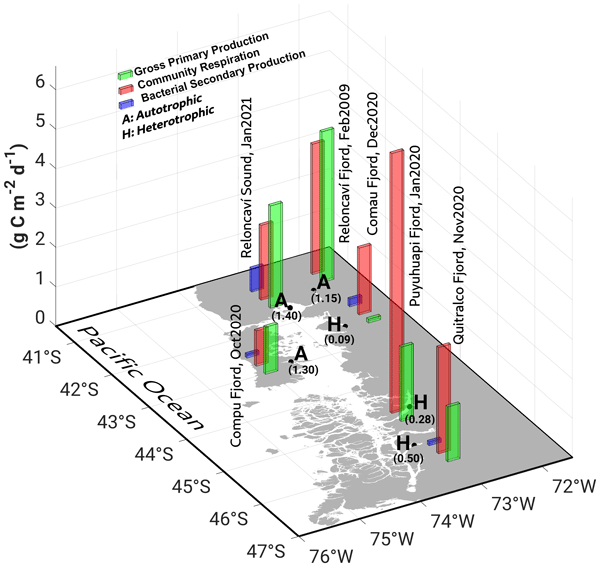
The Patagonian fjords comprise a world region where low-oxygen water and hypoxia conditions are observed. An in situ dataset was used to quantify the mechanism involved in the presence of these conditions in northern Patagonian fjords. Water mass analysis confirmed the contribution of Equatorial Subsurface Water in the advection of the low-oxygen water, and hypoxic conditions occurred when the community respiration rate exceeded the gross primary production.
Zhuomin Li, Aida Alvera-Azcárate, Alexander Barth, Nathaniel Bensoussan, Lei Guan, and Na Xu
EGUsphere, https://doi.org/10.5194/egusphere-2026-5436, https://doi.org/10.5194/egusphere-2026-5436, 2026
This preprint is open for discussion and under review for Ocean Science (OS).
Short summary
Short summary
In the Gulf of Lion, summer–autumn northwest winds drive coastal upwelling cooling often masked in satellite/reanalysis SST by clouds and strict quality control. We reconstruct HY-1D COCTS SST and validate against three coastal stations. It captures most events but underestimates cooling. We add wind-informed cloud detection using wind speed/direction to recover cold upwelling pixels mislabeled as cloud. Results match in situ SST better, improving SST availability for upwelling studies.
Grega Rovšček, Matjaž Ličer, Alexander Barth, and Matej Kristan
Geosci. Model Dev., 19, 8915–8938, https://doi.org/10.5194/gmd-19-8915-2026, https://doi.org/10.5194/gmd-19-8915-2026, 2026
Short summary
Short summary
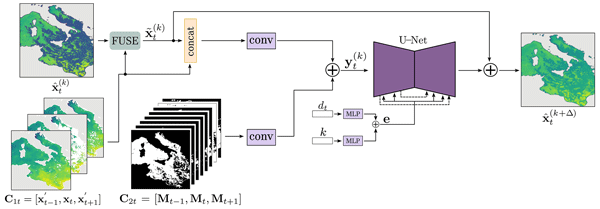
Satellite measurements of sea surface temperature are often blocked by clouds, leaving large gaps in the data used to study the ocean and climate. We developed a new computer model that fills in these missing areas while also estimating how uncertain the reconstruction is. Tests on several ocean regions show more accurate results and more realistic patterns, helping scientists better analyze and model ocean conditions.
Iván Pérez-Santos, Pamela Linford, Luis Rozas, Osvaldo Artal, Elías Pinilla, Lauren Ross, Patricio Díaz, Marcela Rojas, Guido Mancilla-Gutiérrez, Gabriel Soto, and Ivonne Montes
EGUsphere, https://doi.org/10.5194/egusphere-2026-2889, https://doi.org/10.5194/egusphere-2026-2889, 2026
Short summary
Short summary
The ocean deoxygenation has accelerated globally, driven by warming and diminishing deep-water ventilation. The objective of this work is to quantify the contributions of turbulent and diapycnal mixing to water ventilation, as evidenced by upward oxygen transport from deep to subsurface layers in the northern Patagonian fjords. Our results highlight the importance of incorporating turbulence measurements into fjord studies to understand sensitivity to significant oxygen variability.
Camila Sola-Hidalgo, Iván Pérez-Santos, Manuel Castillo, Marcela Cornejo, Ángela Baldrich, and Maibelin Castillo-Álvarez
EGUsphere, https://doi.org/10.5194/egusphere-2026-2329, https://doi.org/10.5194/egusphere-2026-2329, 2026
Short summary
Short summary
This study investigates the influence of climate change and physical drivers on dissolved oxygen (DO) renewal in northern Patagonian fjords. The research identifies two distinct scales of oxygen recovery: seasonal ventilation periods and synoptic-scale ventilation pulses. Key drivers, including onshore Ekman transport and wind-driven downwelling, were found to be the primary mechanisms delivering oxygen-rich water to deeper layers, especially from winter to spring.
Maibelin Castillo-Alvarez, Oscar Pizarro, Alain Muñoz-Caravaca, Iván Pérez-Santos, David Carrasco, David Francisco Bustos-Usta, and Laura Castellanos-Torres
Ocean Sci., 22, 1409–1427, https://doi.org/10.5194/os-22-1409-2026, https://doi.org/10.5194/os-22-1409-2026, 2026
Short summary
Short summary
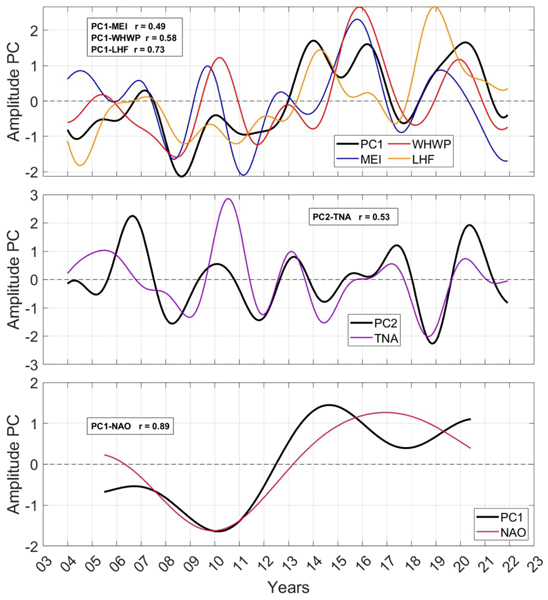
We examine 2003–2022 sea-surface temperature (SST) in Cuba's Jardines de la Reina National Park. Using standard marine heatwave metrics and climate-mode indices, we show how large-scale patterns drive SST changes at different scales and in marine heatwave frequency, duration, and intensity. Findings help explain recent extremes and support reef conservation and early-warning efforts in the Caribbean.
Abel Dechenne, Aida Alvera-Azcarate, Jean-Marie Beckers, and Alexander Barth
EGUsphere, https://doi.org/10.5194/egusphere-2026-1627, https://doi.org/10.5194/egusphere-2026-1627, 2026
Short summary
Short summary
The current work is dedicated to interpolate surface currents of the Mediterranean Sea. These surface currents maps are created based on drifters, satellites and radars observations. With a nine years analysis, the reconstructed surface currents highlight the winter to summer variation as a coastal, deep and stable circulation to a gyral and non-stable circulation. The central Ionian Sea was analysed, we highlighted the appearance of two gyres associated to the autumn-winter period.

Ehsan Mehdipour, Hongyan Xi, Alexander Barth, Aida Alvera-Azcárate, Adalbert Wilhelm, and Astrid Bracher
Geosci. Model Dev., 19, 1619–1643, https://doi.org/10.5194/gmd-19-1619-2026, https://doi.org/10.5194/gmd-19-1619-2026, 2026
Short summary
Short summary
Phytoplankton are vital for marine ecosystems and nutrient cycling, detectable by optical satellites. Data gaps caused by clouds and other non-optimal conditions limit comprehensive analyses like trend monitoring. This study evaluated DINCAE and DINEOF gap-filling methods for reconstructing chlorophyll a datasets, including total chlorophyll a and five major phytoplankton groups. Both methods showed robust reconstruction capabilities, aiding pattern detection and long-term ocean colour analysis.
Marcela Rojas-Celis, Manuel I. Castillo, Iván Pérez-Santos, Carmen Barrios-Guzmán, José Garcés-Vargas, Alicia Guerrero, Mauricio F. Landaeta, Andrea Piñones, and Maritza Sepúlveda
EGUsphere, https://doi.org/10.5194/egusphere-2025-5846, https://doi.org/10.5194/egusphere-2025-5846, 2025
Preprint archived
Short summary
Short summary
The turbulent kinetic energy dissipation rates (ε) in Chilean Patagonia spanning 10-9 to 10-5 W kg⁻2 was maxima at sills and constrictions. The northern fjords had strong seasonal stratification by freshwater input, while southern regions are mixed by tidal forcing. These results underscore the critical control of topography and tidal forcing on mixing heterogeneity, providing a framework for projecting the response of these ecosystems to climate-driven changes.
Bayoumy Mohamed, Alexander Barth, Dimitry Van der Zande, and Aida Alvera-Azcárate
Ocean Sci., 21, 2505–2525, https://doi.org/10.5194/os-21-2505-2025, https://doi.org/10.5194/os-21-2505-2025, 2025
Short summary
Short summary
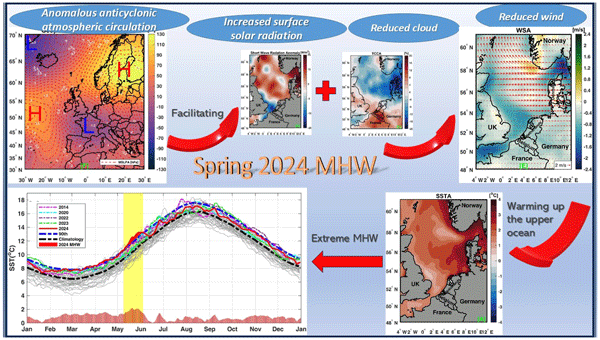
We quantified the role of climate change and internal variability in marine heatwaves (MHWs) in the North Sea over more than 4 decades (1982–2024). A key finding is the 2013 climate shift, which was associated with increased warming and MHWs. Long-term warming accounted for 80 % of the observed trend in MHW frequency. The most intense MHW event in May 2024 was attributed to an anomalous anticyclonic atmospheric circulation. We also explored the impact of MHWs on chlorophyll concentration.
Pilar Aparicio-Rizzo, Dagoberto Poblete-Caballero, Cristian Vera-Bastidas, Iván Pérez-Santos, and Daniel Varela
Ocean Sci., 21, 2379–2395, https://doi.org/10.5194/os-21-2379-2025, https://doi.org/10.5194/os-21-2379-2025, 2025
Short summary
Short summary
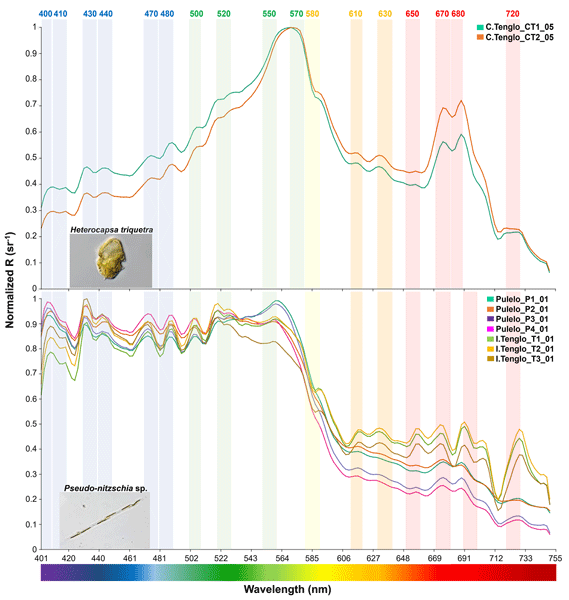
This work combines a hyperspectral sensor and an unmanned aerial vehicle to detect and differentiate phytoplankton species from optical data in Patagonian fjords at local scale. The results show differences between in situ spectral signals, especially in the blue, green and red near-infrared spectra, distinguishing between diatom and dinoflagellate. These tools are useful especially in coastal areas where cloud cover and geographical heterogeneity make satellite data acquisition difficult.
Matjaž Zupančič Muc, Vitjan Zavrtanik, Alexander Barth, Aida Alvera-Azcarate, Matjaž Ličer, and Matej Kristan
Geosci. Model Dev., 18, 5549–5573, https://doi.org/10.5194/gmd-18-5549-2025, https://doi.org/10.5194/gmd-18-5549-2025, 2025
Short summary
Short summary
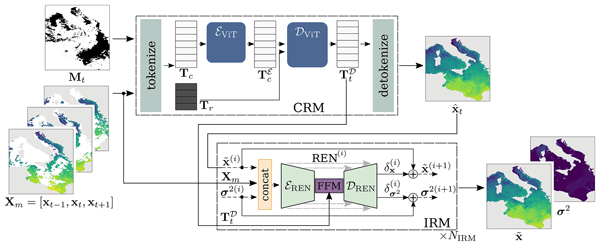
Accurate sea surface temperature data (SST) are crucial for weather forecasting and climate modeling, but satellite observations are often incomplete. We developed a new method called CRITER, which uses machine learning to fill in the gaps in SST data. Our two-stage approach reconstructs large-scale patterns and refines details. Tested on Mediterranean, Adriatic, and Atlantic sea data, CRITER outperforms current methods, reducing errors by up to 44 %.
Macarena Díaz-Astudillo, Manuel I. Castillo, Pedro A. Figueroa, Leonardo R. Castro, Ramiro Riquelme-Bugueño, Iván Pérez-Santos, Oscar Pizarro, and Gonzalo S. Saldías
Ocean Sci., 21, 1833–1848, https://doi.org/10.5194/os-21-1833-2025, https://doi.org/10.5194/os-21-1833-2025, 2025
Short summary
Short summary
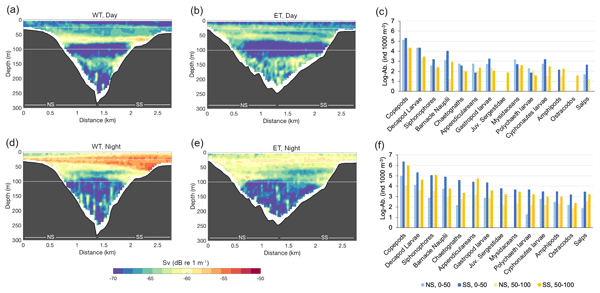
Submarine canyons are known hotspots of marine productivity and biodiversity, but we do not fully understand why. We studied a submarine canyon located in central Chile and found that it is a highly dynamic environment in both space and time. We think that the alternating currents and the contrasting distribution of zooplankton within the canyon might interact to promote zooplankton retention. Our results help to explain why submarine canyons host such high zooplankton diversity and abundance.
Aida Alvera-Azcárate, Dimitry Van der Zande, Alexander Barth, Antoine Dille, Joppe Massant, and Jean-Marie Beckers
Ocean Sci., 21, 787–805, https://doi.org/10.5194/os-21-787-2025, https://doi.org/10.5194/os-21-787-2025, 2025
Short summary
Short summary
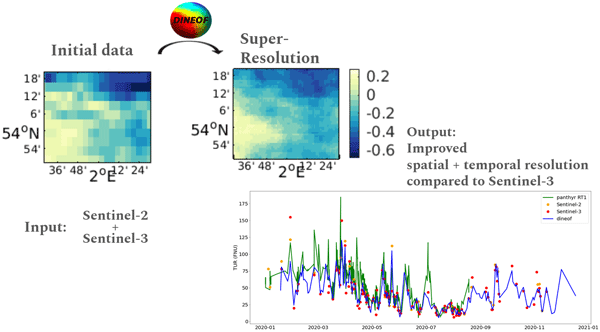
This work presents an approach for increasing the spatial resolution of satellite data and interpolating gaps due to cloud cover, using a method called DINEOF (data-interpolating empirical orthogonal functions). The method is tested on turbidity and chlorophyll-a concentration data in the Belgian coastal zone and the North Sea. The results show that we are able to improve the spatial resolution of these data in order to perform analyses of spatial and temporal variability in coastal regions.
Cécile Pujol, Alexander Barth, Iván Pérez-Santos, Pamela Muñoz-Linford, and Aida Alvera-Azcárate
EGUsphere, https://doi.org/10.5194/egusphere-2025-1421, https://doi.org/10.5194/egusphere-2025-1421, 2025
Preprint archived
Short summary
Short summary
Marine heatwaves and cold spells are periods of extreme sea temperatures. This study focuses on Chilean Northern Patagonia, a fjord region vulnerable due to its aquaculture. It aims to understand these events' distribution and identify the most affected basins. Results show higher intensity in enclosed areas like Reloncaví Sound and Puyuhuapi Fjord. Marine heatwaves are becoming more frequent over time, while cold spells are decreasing.
Alexander Barth, Julien Brajard, Aida Alvera-Azcárate, Bayoumy Mohamed, Charles Troupin, and Jean-Marie Beckers
Ocean Sci., 20, 1567–1584, https://doi.org/10.5194/os-20-1567-2024, https://doi.org/10.5194/os-20-1567-2024, 2024
Short summary
Short summary
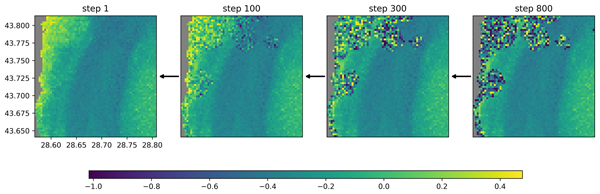
Most satellite observations have gaps, for example, due to clouds. This paper presents a method to reconstruct missing data in satellite observations of the chlorophyll a concentration in the Black Sea. Rather than giving a single possible reconstructed field, the discussed method provides an ensemble of possible reconstructions using a generative neural network. The resulting ensemble is validated using techniques from numerical weather prediction and ocean modelling.
Manal Hamdeno, Aida Alvera-Azcárate, George Krokos, and Ibrahim Hoteit
Ocean Sci., 20, 1087–1107, https://doi.org/10.5194/os-20-1087-2024, https://doi.org/10.5194/os-20-1087-2024, 2024
Short summary
Short summary
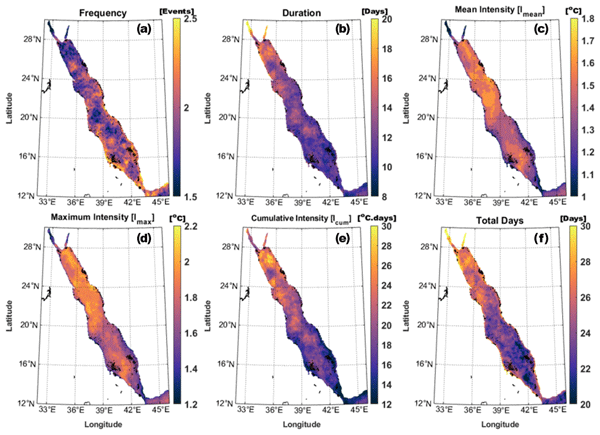
Our study focuses on the characteristics of MHWs in the Red Sea during the last 4 decades. Using satellite-derived sea surface temperatures (SSTs), we found a clear warming trend in the Red Sea since 1994, which has intensified significantly since 2016. This SST rise was associated with an increase in the frequency and days of MHWs. In addition, a correlation was found between the frequency of MHWs and some climate modes, which was more pronounced in some years of the study period.
Pamela Linford, Iván Pérez-Santos, Paulina Montero, Patricio A. Díaz, Claudia Aracena, Elías Pinilla, Facundo Barrera, Manuel Castillo, Aida Alvera-Azcárate, Mónica Alvarado, Gabriel Soto, Cécile Pujol, Camila Schwerter, Sara Arenas-Uribe, Pilar Navarro, Guido Mancilla-Gutiérrez, Robinson Altamirano, Javiera San Martín, and Camila Soto-Riquelme
Biogeosciences, 21, 1433–1459, https://doi.org/10.5194/bg-21-1433-2024, https://doi.org/10.5194/bg-21-1433-2024, 2024
Short summary
Short summary
The Patagonian fjords comprise a world region where low-oxygen water and hypoxia conditions are observed. An in situ dataset was used to quantify the mechanism involved in the presence of these conditions in northern Patagonian fjords. Water mass analysis confirmed the contribution of Equatorial Subsurface Water in the advection of the low-oxygen water, and hypoxic conditions occurred when the community respiration rate exceeded the gross primary production.
Francesca Doglioni, Robert Ricker, Benjamin Rabe, Alexander Barth, Charles Troupin, and Torsten Kanzow
Earth Syst. Sci. Data, 15, 225–263, https://doi.org/10.5194/essd-15-225-2023, https://doi.org/10.5194/essd-15-225-2023, 2023
Short summary
Short summary
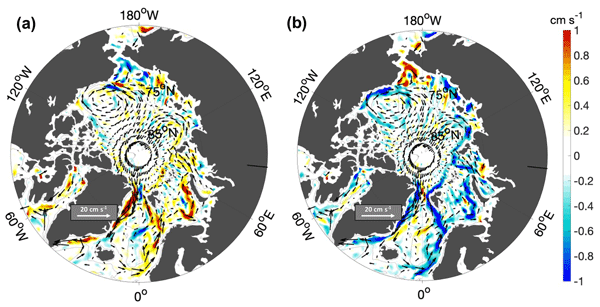
This paper presents a new satellite-derived gridded dataset, including 10 years of sea surface height and geostrophic velocity at monthly resolution, over the Arctic ice-covered and ice-free regions, up to 88° N. We assess the dataset by comparison to independent satellite and mooring data. Results correlate well with independent satellite data at monthly timescales, and the geostrophic velocity fields can resolve seasonal to interannual variability of boundary currents wider than about 50 km.
Alexander Barth, Aida Alvera-Azcárate, Charles Troupin, and Jean-Marie Beckers
Geosci. Model Dev., 15, 2183–2196, https://doi.org/10.5194/gmd-15-2183-2022, https://doi.org/10.5194/gmd-15-2183-2022, 2022
Short summary
Short summary
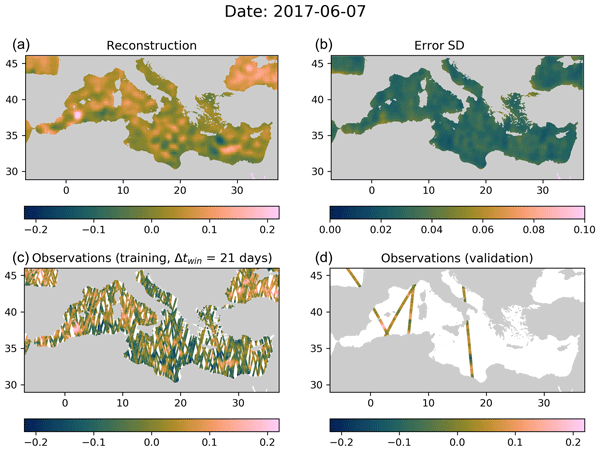
Earth-observing satellites provide routine measurement of several ocean parameters. However, these datasets have a significant amount of missing data due to the presence of clouds or other limitations of the employed sensors. This paper describes a method to infer the value of the missing satellite data based on a convolutional autoencoder (a specific type of neural network architecture). The technique also provides a reliable error estimate of the interpolated value.
Malek Belgacem, Katrin Schroeder, Alexander Barth, Charles Troupin, Bruno Pavoni, Patrick Raimbault, Nicole Garcia, Mireno Borghini, and Jacopo Chiggiato
Earth Syst. Sci. Data, 13, 5915–5949, https://doi.org/10.5194/essd-13-5915-2021, https://doi.org/10.5194/essd-13-5915-2021, 2021
Short summary
Short summary
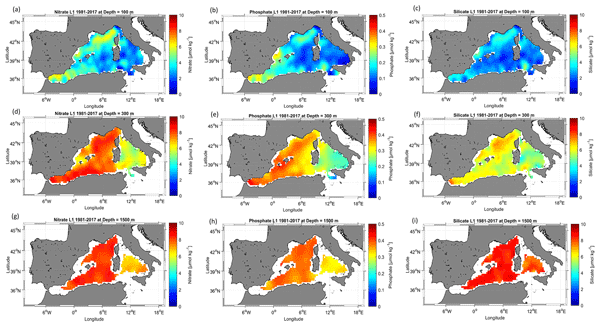
The Mediterranean Sea exhibits an anti-estuarine circulation, responsible for its low productivity. Understanding this peculiar character is still a challenge since there is no exact quantification of nutrient sinks and sources. Because nutrient in situ observations are generally infrequent and scattered in space and time, climatological mapping is often applied to sparse data in order to understand the biogeochemical state of the ocean. The dataset presented here partly addresses these issues.
Estrella Olmedo, Verónica González-Gambau, Antonio Turiel, Cristina González-Haro, Aina García-Espriu, Marilaure Gregoire, Aida Álvera-Azcárate, Luminita Buga, and Marie-Hélène Rio
Earth Syst. Sci. Data Discuss., https://doi.org/10.5194/essd-2021-364, https://doi.org/10.5194/essd-2021-364, 2021
Revised manuscript not accepted
Short summary
Short summary
We present the first dedicated satellite salinity product in the Black Sea. We use the measurements provided by the European Soil Moisture and Ocean Salinity mission. We introduce enhanced algorithms for dealing with the contamination produced by the Radio Frequency Interferences that strongly affect this basin. We also provide a complete quality assessment of the new product and give an estimated accuracy of it.
Cited articles
Aiken, C., Navarrete, S., Castillo, M., and Castilla, J.: Along-shore larval dispersal kernels in a numerical ocean model of the central Chilean coast, Mar. Ecol. Prog. Ser., 339, 13–24, https://doi.org/10.3354/meps339013, 2007.
Barnier, B., Siefridt, L., and Marchesiello, P.: Thermal forcing for a global ocean circulation model using a three-year climatology of ECMWF analyses, J. Mar. Syst., 6, 363–380, https://doi.org/10.1016/0924-7963(94)00034-9, 1995.
Barth, A., Beckers, J.-M., Troupin, C., Alvera-Azcárate, A., and Vandenbulcke, L.: divand-1.0: n-dimensional variational data analysis for ocean observations, Geosci. Model Dev., 7, 225–241, https://doi.org/10.5194/gmd-7-225-2014, 2014.
Barth, A., Troupin, C., Reyes, E., Alvera-Azcárate, A., Beckers, J.-M., and Tintoré, J.: Variational interpolation of high-frequency radar surface currents using DIVAnd, Ocean Dynam., 71, 293–308, https://doi.org/10.1007/s10236-020-01432-x, 2021.
Beckers, J.-M., Barth, A., Troupin, C., and Alvera-Azcárate, A.: Approximate and Efficient Methods to Assess Error Fields in Spatial Gridding with Data Interpolating Variational Analysis (DIVA), J. Atmos. Ocean. Tech., 31, 515–530, https://doi.org/10.1175/JTECH-D-13-00130.1, 2014.
Bianchi, D., Carozza, D. A., Galbraith, E. D., Guiet, J., and DeVries, T.: Estimating global biomass and biogeochemical cycling of marine fish with and without fishing, Sci. Adv., 7, eabd7554, https://doi.org/10.1126/sciadv.abd7554, 2021.
Bianchi, T. S., Arndt, S., Austin, W. E. N., Benn, D. I., Bertrand, S., Cui, X., Faust, J. C., Koziorowska-Makuch, K., Moy, C. M., Savage, C., Smeaton, C., Smith, R. W., and Syvitski, J.: Fjords as Aquatic Critical Zones (ACZs), Earth-Sci. Rev., 203, 103145, https://doi.org/10.1016/j.earscirev.2020.103145, 2020.
Brasseur, P. P. and Haus, J. A.: Application of a 3-D variational inverse model to the analysis of ecohydrodynamic data in the Northern Bering and Southern Chukchi Seas, J. Mar. Syst., 1, 383–401, https://doi.org/10.1016/0924-7963(91)90006-G, 1991.
Brodie, S., Pozo Buil, M., Welch, H., Bograd, S. J., Hazen, E. L., Santora, J. A., Seary, R., Schroeder, I. D., and Jacox, M. G.: Ecological forecasts for marine resource management during climate extremes, Nat. Commun., 14, 7701, https://doi.org/10.1038/s41467-023-43188-0, 2023.
Buchan, S. J., Pérez-Santos, I., Narváez, D., Castro, L., Stafford, K. M., Baumgartner, M. F., Valle-Levinson, A., Montero, P., Gutiérrez, L., Rojas, C., Daneri, G., and Neira, S.: Intraseasonal variation in southeast Pacific blue whale acoustic presence, zooplankton backscatter, and oceanographic variables on a feeding ground in Northern Chilean Patagonia, Prog. Oceanogr., 199, 102709, https://doi.org/10.1016/j.pocean.2021.102709, 2021.
Calvete, C. and Sobarzo, M.: Quantification of the surface brackish water layer and frontal zones in southern Chilean fjords between Boca del Guafo (43° 30′S) and Estero Elefantes (46° 30′S), Cont. Shelf Res., 31, 162–171, https://doi.org/10.1016/j.csr.2010.09.013, 2011.
Castillo, M. I., Cifuentes, U., Pizarro, O., Djurfeldt, L., and Caceres, M.: Seasonal hydrography and surface outflow in a fjord with a deep sill: the Reloncaví fjord, Chile, Ocean Sci., 12, 533–544, https://doi.org/10.5194/os-12-533-2016, 2016.
Cheng, L. and Zhu, J.: Influences of the Choice of Climatology on Ocean Heat Content Estimation, J. Atmos. Ocean. Tech., 32, 388–394, https://doi.org/10.1175/JTECH-D-14-00169.1, 2015.
Díaz, P. A., Gormaz, R., Aguayo, P., Pérez-Santos, I., Saldías, G. S., Figueroa, R. I., Fernández, P. A., Álvarez, G., Rodríguez-Villegas, C., Schwerter, C., Cassis, D., Vera, R., and Conca, C.: Unveiling the 2017 Karenia Bloom in NW Chilean Patagonia by Integrating Remote Sensing and Field Data, Microorganisms, 13, 2440, https://doi.org/10.3390/microorganisms13112440, 2025.
Dickey, T., Lewis, M., and Chang, G.: Optical oceanography: Recent advances and future directions using global remote sensing and in situ observations, Rev. Geophys., 44, 2003RG000148, https://doi.org/10.1029/2003RG000148, 2006.
Embury, O., Good, S. A., and Merchant, C. J.: ESA Sea Surface Temperature Climate Change Initiative (SST_cci): Climatology Climate Data Record, version 2.2, NERC EDS Centre for Environmental Data Analysis [data set], https://doi.org/10.5285/DC11996A68C446ABB342E917EFDAAC30, 2023.
European Union-Copernicus Marine Service: Global Ocean Physics Reanalysis, Marine Data Store (MDS) [data set], https://doi.org/10.48670/MOI-00021, 2018.
FAO: The State of World Fisheries and Aquaculture 2024, FAO, https://doi.org/10.4060/cd0683en, 2024.
Flaounas, E., Davolio, S., Raveh-Rubin, S., Pantillon, F., Miglietta, M. M., Gaertner, M. A., Hatzaki, M., Homar, V., Khodayar, S., Korres, G., Kotroni, V., Kushta, J., Reale, M., and Ricard, D.: Mediterranean cyclones: current knowledge and open questions on dynamics, prediction, climatology and impacts, Weather Clim. Dynam., 3, 173–208, https://doi.org/10.5194/wcd-3-173-2022, 2022.
Garcia, H. E., Boyer, T. P., Locarnini, R. A., Reagan, J. R., Mishonov, A. V., Baranova, O. K., Paver, C. R., Wang, Z., Bouchard, C., Cross, S., Seidov, D., and Dukhovskoy, D.: World Ocean Database 2023 User's Manual, https://doi.org/10.25923/J8GQ-EE82, 2024.
Goebeler, N., Norkko, A., and Norkko, J.: Ninety years of coastal monitoring reveals baseline and extreme ocean temperatures are increasing off the Finnish coast, Commun. Earth Environ., 3, 215, https://doi.org/10.1038/s43247-022-00545-z, 2022.
Hemming, M. P., Roughan, M., and Schaeffer, A.: Daily Subsurface Ocean Temperature Climatology Using Multiple Data Sources: New Methodology, Front. Mar. Sci., 7, 485, https://doi.org/10.3389/fmars.2020.00485, 2020.
Hobday, A., Alexander, L. V., Perkins, S. E., Smale, D. A., Straub, S. C., Oliver, E. C. J., Benthuysen, J. A., Burrows, M. T., Donat, M. G., Feng, M., Holbrook, N. J., Moore, P. J., Scannell, H. A., Sen Gupta, A., and Wernberg, T.: A hierarchical approach to defining marine heatwaves, Prog. Oceanogr., 141, 227–238, https://doi.org/10.1016/j.pocean.2015.12.014, 2016.
Hoteit, I., Cornuelle, B., Kim, S. Y., Forget, G., Köhl, A., and Terrill, E.: Assessing 4D-VAR for dynamical mapping of coastal high-frequency radar in San Diego, Dyn. Atmos. Oceans, 48, 175–197, https://doi.org/10.1016/j.dynatmoce.2008.11.005, 2009.
Huang, B., Liu, C., Banzon, V., Freeman, E., Graham, G., Hankins, B., Smith, T., and Zhang, H.-M.: Improvements of the Daily Optimum Interpolation Sea Surface Temperature (DOISST) Version 2.1, J. Climate, 34, 2923–2939, https://doi.org/10.1175/JCLI-D-20-0166.1, 2021.
Janjić, T., Bormann, N., Bocquet, M., Carton, J. A., Cohn, S. E., Dance, S. L., Losa, S. N., Nichols, N. K., Potthast, R., Waller, J. A., and Weston, P.: On the representation error in data assimilation, Q. J. Roy. Meteor. Soc., 144, 1257–1278, https://doi.org/10.1002/qj.3130, 2018.
Kilpeläinen, T., Vihma, T., and Ólafsson, H.: Modelling of spatial variability and topographic effects over Arctic fjords in Svalbard, Tellus Dyn. Meteorol. Oceanogr., 63, 223, https://doi.org/10.1111/j.1600-0870.2010.00481.x, 2011.
Lara, C., Saldias, G., Westberry, T., Behrenfeld, M., and Broitman, B.: First assessment of MODIS satellite ocean color products (OC3 and nFLH) in the Inner Sea of Chiloe, northern Patagonia, Lat. Am. J. Aquat. Res., 45, 822–827, https://doi.org/10.3856/vol45-issue4-fulltext-18, 2017.
Lazure, P., Garnier, V., Dumas, F., Herry, C., and Chifflet, M.: Development of a hydrodynamic model of the Bay of Biscay. Validation of hydrology, Cont. Shelf Res., 29, 985–997, https://doi.org/10.1016/j.csr.2008.12.017, 2009.
Legler, D. M., Freeland, H. J., Lumpkin, R., Ball, G., McPhaden, M. J., North, S., Crowley, R., Goni, G. J., Send, U., and Merrifield, M. A.: The current status of the real-time in situ Global Ocean Observing System for operational oceanography, J. Oper. Oceanogr., 8, s189–s200, https://doi.org/10.1080/1755876X.2015.1049883, 2015.
León-Muñoz, J., Marcé, R., and Iriarte, J.: Influence of hydrological regime of an Andean river on salinity, temperature and oxygen in a Patagonia fjord, Chile, N. Z. J. Mar. Freshw. Res., 47, 515–528, https://doi.org/10.1080/00288330.2013.802700, 2013.
León-Muñoz, J., Aguayo, R., Corredor-Acosta, A., Tapia, F. J., Iriarte, J. L., Reid, B., and Soto, D.: Hydrographic shifts in coastal waters reflect climate-driven changes in hydrological regimes across Northwestern Patagonia, Sci. Rep., 14, 20632, https://doi.org/10.1038/s41598-024-71008-y, 2024.
Linford, P., Pérez-Santos, I., Montes, I., Dewitte, B., Buchan, S., Narváez, D., Saldías, G., Pinilla, E., Garreaud, R., Díaz, P., Schwerter, C., Montero, P., Rodríguez-Villegas, C., Cáceres-Soto, M., Mancilla-Gutiérrez, G., and Altamirano, R.: Recent Deoxygenation of Patagonian Fjord Subsurface Waters Connected to the Peru–Chile Undercurrent and Equatorial Subsurface Water Variability, Global Biogeochem. Cy., 37, e2022GB007688, https://doi.org/10.1029/2022GB007688, 2023.
Linford, P., Pérez-Santos, I., Montero, P., Díaz, P. A., Aracena, C., Pinilla, E., Barrera, F., Castillo, M., Alvera-Azcárate, A., Alvarado, M., Soto, G., Pujol, C., Schwerter, C., Arenas-Uribe, S., Navarro, P., Mancilla-Gutiérrez, G., Altamirano, R., San Martín, J., and Soto-Riquelme, C.: Oceanographic processes driving low-oxygen conditions inside Patagonian fjords, Biogeosciences, 21, 1433–1459, https://doi.org/10.5194/bg-21-1433-2024, 2024.
Martínez-Moreno, J., Hogg, A. McC., and England, M. H.: Climatology, Seasonality, and Trends of Spatially Coherent Ocean Eddies, J. Geophys. Res.-Oceans, 127, e2021JC017453, https://doi.org/10.1029/2021JC017453, 2022.
Maturana-Martínez, C., Fernández, C., González, H. E., and Galand, P. E.: Different Active Microbial Communities in Two Contrasted Subantarctic Fjords, Front. Microbiol., 12, 620220, https://doi.org/10.3389/fmicb.2021.620220, 2021.
Merkouriadi, I. and Leppäranta, M.: Influence of sea ice on the seasonal variability of hydrography and heat content in Tvärminne, Gulf of Finland, Ann. Glaciol., 56, 274–284, https://doi.org/10.3189/2015AoG69A003, 2015.
Minnett, P. J., Alvera-Azcárate, A., Chin, T. M., Corlett, G. K., Gentemann, C. L., Karagali, I., Li, X., Marsouin, A., Marullo, S., Maturi, E., Santoleri, R., Saux Picart, S., Steele, M., and Vazquez-Cuervo, J.: Half a century of satellite remote sensing of sea-surface temperature, Remote Sens. Environ., 233, 111366, https://doi.org/10.1016/j.rse.2019.111366, 2019.
Moore, S. K., Trainer, V. L., Mantua, N. J., Parker, M. S., Laws, E. A., Backer, L. C., and Fleming, L. E.: Impacts of climate variability and future climate change on harmful algal blooms and human health, Environ. Health, 7, S4, https://doi.org/10.1186/1476-069X-7-S2-S4, 2008.
Narváez, D. A., Vargas, C. A., Cuevas, L. A., García-Loyola, S. A., Lara, C., Segura, C., Tapia, F. J., and Broitman, B. R.: Dominant scales of subtidal variability in coastal hydrography of the Northern Chilean Patagonia, J. Mar. Syst., 193, 59–73, https://doi.org/10.1016/j.jmarsys.2018.12.008, 2019.
Pantoja, S., Luis Iriarte, J., and Daneri, G.: Oceanography of the Chilean Patagonia, Cont. Shelf Res., 31, 149–153, https://doi.org/10.1016/j.csr.2010.10.013, 2011.
Pérez-Santos, I.: Deep ventilation event during fall and winter 2015 in the Puyuhuapi Fjord (44.6 S), Lat. Am. J. Aquat. Res., 45, 223–227, https://doi.org/10.3856/vol45-issue1-fulltext-25, 2017.
Pérez-Santos, I., Garcés-Vargas, J., Schneider, W., Ross, L., Parra, S., and Valle-Levinson, A.: Double-diffusive layering and mixing in Patagonian fjords, Prog. Oceanogr., 129, 35–49, https://doi.org/10.1016/j.pocean.2014.03.012, 2014.
Pérez-Santos, I., Díaz, P. A., Silva, N., Garreaud, R., Montero, P., Henríquez-Castillo, C., Barrera, F., Linford, P., Amaya, C., Contreras, S., Aracena, C., Pinilla, E., Altamirano, R., Vallejos, L., Pavez, J., and Maulen, J.: Oceanography time series reveals annual asynchrony input between oceanic and estuarine waters in Patagonian fjords, Sci. Total Environ., 798, 149241, https://doi.org/10.1016/j.scitotenv.2021.149241, 2021.
Pinilla, E., Soto, G., Soto-Riquelme, C., Venegas, O., and Salas, P.: Determinación de las escalas de intercambio de agua en fiordos y canales de la Patagonia, Etapa II (Región de Aysén), https://www.researchgate.net/publication/337367262_Determinacion_de_las_escalas_de_intercambio_de_agua_en_fiordos_y_canales_de_la_Patagonia_Etapa_II_Region_de_Aysen (last access: 4 November 2026), 2019a.
Pinilla, E., Soto-Riquelme, C., Soto-Soto, G., San Martín, J., Valdebenito Muñoz, P., and Reche García, P.: Determinación de las escalas de intercambio de agua en fiordos y canales de la Patagonia sur, Etapa II (Región de Aysén), Subsecr. Econ. Empres. Menor Tamaño, https://doi.org/10.13140/RG.2.2.17813.65762, 2019b.
Pinilla, E., Castillo, M. I., Pérez-Santos, I., Venegas, O., and Valle-Levinson, A.: Water age variability in a Patagonian fjord, J. Mar. Syst., 210, 103376, https://doi.org/10.1016/j.jmarsys.2020.103376, 2020.
Pinilla, E., Soto, G., Soto-Riquelme, C., Venegas, O., Salas, P., and Cortés, J.: Determinación de las escalas de intercambio de agua en fiordos y canales de la región de Los Lagos y región de Aysén, Subsecr. Econ. Empres. Menor Tamaño, https://doi.org/10.13140/RG.2.2.17813.65762, 2021.
Pujol, C., Barth, A., Pérez-Santos, I., Linford, P., and Alvera-Azcárate, A.: Climatology (Daily and Monthly) of the Sea Temperature in the Chilean Northern Patagonia, Zenodo [data set], https://doi.org/10.5281/zenodo.21959707, 2026.
Ridgwell, A., Hargreaves, J. C., Edwards, N. R., Annan, J. D., Lenton, T. M., Marsh, R., Yool, A., and Watson, A.: Marine geochemical data assimilation in an efficient Earth System Model of global biogeochemical cycling, Biogeosciences, 4, 87–104, https://doi.org/10.5194/bg-4-87-2007, 2007.
Rodrigo, C.: Submarine topography in the Chilean North Patagonian channels, in: Progress in the oceanographic knowledge of Chilean inner waters, from Puerto Montt to Cape Horn, 19–23, 2008.
Saldías, G. S., Sobarzo, M., and Quiñones, R.: Freshwater structure and its seasonal variability off western Patagonia, Prog. Oceanogr., 174, 143–153, https://doi.org/10.1016/j.pocean.2018.10.014, 2019.
Saldías, G. S., Hernández, W., Lara, C., Muñoz, R., Rojas, C., Vásquez, S., Pérez-Santos, I., and Soto-Mardones, L.: Seasonal Variability of SST Fronts in the Inner Sea of Chiloé and Its Adjacent Coastal Ocean, Northern Patagonia, Remote Sens., 13, 181, https://doi.org/10.3390/rs13020181, 2021.
Schneider, W., Pérez-Santos, I., Ross, L., Bravo, L., Seguel, R., and Hernández, F.: On the hydrography of Puyuhuapi Channel, Chilean Patagonia, Prog. Oceanogr., 129, 8–18, https://doi.org/10.1016/j.pocean.2014.03.007, 2014.
Senay, G. B., Parrish, G. E. L., Schauer, M., Friedrichs, M., Khand, K., Boiko, O., Kagone, S., Dittmeier, R., Arab, S., and Ji, L.: Improving the Operational Simplified Surface Energy Balance Evapotranspiration Model Using the Forcing and Normalizing Operation, Remote Sens., 15, 260, https://doi.org/10.3390/rs15010260, 2023.
Shahzadi, K., Pinardi, N., Barth, A., Troupin, C., Lyubartsev, V., and Simoncelli, S.: A New Global Ocean Climatology, Front. Environ. Sci., 9, 711363, https://doi.org/10.3389/fenvs.2021.711363, 2021a.
Shahzadi, K., Zavatarelli, M., and Pinardi, N.: SeaDataCloud Dissolved Oxygen and Apparent Oxygen Utilization Climatology for the Global Ocean, SeaDataCloud, https://doi.org/10.13155/79295, 2021b.
Sievers, H. and Silva, N.: Water masses and circulation in austral Chilean channels, in: Progress in the oceanographic knowledge of Chilean inner waters, from Puerto Montt to Cape Horn, 53–58, 2008.
Simoncelli, S., Oliveri, P., and Mattia, G.: SeaDataCloud Temperature and Salinity Climatology for the Mediterranean Sea (Version 1), SeaDataCloud, https://doi.org/10.13155/77506, 2020.
Skogseth, R., Olivier, L. L. A., Nilsen, F., Falck, E., Fraser, N., Tverberg, V., Ledang, A. B., Vader, A., Jonassen, M. O., Søreide, J., Cottier, F., Berge, J., Ivanov, B. V., and Falk-Petersen, S.: Variability and decadal trends in the Isfjorden (Svalbard) ocean climate and circulation – An indicator for climate change in the European Arctic, Prog. Oceanogr., 187, 102394, https://doi.org/10.1016/j.pocean.2020.102394, 2020.
Soto, D., León-Muñoz, J., Dresdner, J., Luengo, C., Tapia, F. J., and Garreaud, R.: Salmon farming vulnerability to climate change in southern Chile: understanding the biophysical, socioeconomic and governance links, Rev. Aquac., 11, 354–374, https://doi.org/10.1111/raq.12336, 2019.
Soto-Riquelme, C., Pinilla, E., and Ross, L.: Wind influence on residual circulation in Patagonian channels and fjords, Cont. Shelf Res., 254, 104905, https://doi.org/10.1016/j.csr.2022.104905, 2023.
Strub, P. T., James, C., Montecino, V., Rutllant, J. A., and Blanco, J. L.: Ocean circulation along the southern Chile transition region (38–46° S): Mean, seasonal and interannual variability, with a focus on 2014–2016, Prog. Oceanogr., 172, 159–198, https://doi.org/10.1016/j.pocean.2019.01.004, 2019.
Subsecretaría del Trabajo, Gobierno de Chile and Observatorio Laboral de la Región de Aysén: EQUIPO OBSERVATORIO LABORAL AYSÉN, 2024.
Szeligowska, M., Trudnowska, E., Boehnke, R., Dąbrowska, A. M., Wiktor, J. M., Sagan, S., and Błachowiak-Samołyk, K.: Spatial Patterns of Particles and Plankton in the Warming Arctic Fjord (Isfjorden, West Spitsbergen) in Seven Consecutive Mid-Summers (2013–2019), Front. Mar. Sci., 7, 584, https://doi.org/10.3389/fmars.2020.00584, 2020.
Troupin, C., Machín, F., Ouberdous, M., Sirjacobs, D., Barth, A., and Beckers, J.-M.: High-resolution climatology of the northeast Atlantic using Data-Interpolating Variational Analysis (Diva), J. Geophys. Res.-Oceans, 115, 2009JC005512, https://doi.org/10.1029/2009JC005512, 2010.
Troupin, C., Barth, A., Sirjacobs, D., Ouberdous, M., Brankart, J.-M., Brasseur, P., Rixen, M., Alvera-Azcárate, A., Belounis, M., Capet, A., Lenartz, F., Toussaint, M.-E., and Beckers, J.-M.: Generation of analysis and consistent error fields using the Data Interpolating Variational Analysis (DIVA), Ocean Model., 52–53, 90–101, https://doi.org/10.1016/j.ocemod.2012.05.002, 2012.
Vásquez, S. I., De La Torre, M. B., Saldías, G. S., and Montecinos, A.: Meridional Changes in Satellite Chlorophyll and Fluorescence in Optically-Complex Coastal Waters of Northern Patagonia, Remote Sens., 13, 1026, https://doi.org/10.3390/rs13051026, 2021.
Vichi, M., Oddo, P., Zavatarelli, M., Coluccelli, A., Coppini, G., Celio, M., Fonda Umani, S., and Pinardi, N.: Calibration and validation of a one-dimensional complex marine biogeochemical flux model in different areas of the northern Adriatic shelf, Ann. Geophys., 21, 413–436, https://doi.org/10.5194/angeo-21-413-2003, 2003.
WMO: Guide to Climatological Practices, World Meteorological Organization, Geneva, Switzerland, ISBN 978-92-63-10100-6, 2023.
Short summary
In this study, we present the first high-resolution, four-dimensional temperature climatology for Northern Chilean Patagonia, a region characterised by a complex network of fjords and channels. The climatology is based on approximately three million in situ observations collected over the past 75 years and interpolated into continuous temperature fields with a horizontal resolution of about 900 m and 32 vertical levels, providing monthly and daily fields from the surface to 400 m depth.
In this study, we present the first high-resolution, four-dimensional temperature climatology...


Altmetrics
Final-revised paper
Preprint