Articles | Volume 18, issue 11
https://doi.org/10.5194/essd-18-8149-2026
© Author(s) 2026. This work is distributed under
the Creative Commons Attribution 4.0 License.
https://doi.org/10.5194/essd-18-8149-2026
© Author(s) 2026. This work is distributed under
the Creative Commons Attribution 4.0 License.
Daily global sea surface ageostrophic current dataset from 1993–2023 via physics-informed deep learning

Guangxi Cui
State Key Laboratory of Internet of Things for Smart City, Department of Ocean Science and Technology, University of Macau, Macau, China
Center for Ocean Research in Hong Kong and Macau (CORE), Hong Kong, China
Ka-Veng Yuen
State Key Laboratory of Internet of Things for Smart City, Department of Civil and Environmental Engineering, University of Macau, Macau, China
Ying Chen
State Key Laboratory of Internet of Things for Smart City, Department of Ocean Science and Technology, University of Macau, Macau, China
Center for Ocean Research in Hong Kong and Macau (CORE), Hong Kong, China
Zhiqiang Liu
Department of Ocean Science and Engineering and Center for Complex Flows and Soft Matter Research, Southern University of Science and Technology, Shenzhen, China
Dingqi Yang
State Key Laboratory of Internet of Things for Smart City, Department of Computer and Information Science, University of Macau, Macau, China
Guangliang Liu
State Key Laboratory of Physical Oceanography, Institute of Oceanographic Instrumentation, Shandong Academy of Sciences, Qingdao, China
Key Laboratory of Computing Power Network and Information Security, Ministry of Education, Shandong Computer Science Center, Qilu University of Technology (Shandong Academy of Sciences), Jinan, China
State Key Laboratory of Internet of Things for Smart City, Department of Ocean Science and Technology, University of Macau, Macau, China
Center for Ocean Research in Hong Kong and Macau (CORE), Hong Kong, China
Related authors
No articles found.
Yuxin Lin, Zhiqiang Liu, Feng Zhou, Qicheng Meng, and Wenyan Zhang
Ocean Sci., 22, 2287–2305, https://doi.org/10.5194/os-22-2287-2026, https://doi.org/10.5194/os-22-2287-2026, 2026
Short summary
Short summary
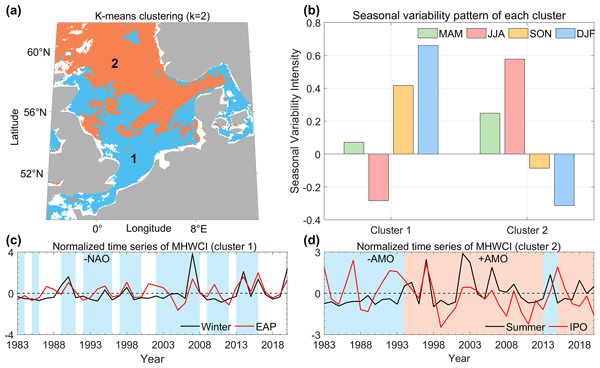
Marine heatwaves, periods of unusually warm sea temperatures, are increasing worldwide. Using observed sea surface temperature data and statistical clustering, this study shows that the North Sea contains two regions with different seasonal responses to climate patterns. Winter heatwaves in the south are driven by regional circulation, while summer events in the north reflect Atlantic and Pacific influences. These insights can help improve regional forecasting.
Guangchuang Zhang, Zhongya Cai, and Zhiqiang Liu
EGUsphere, https://doi.org/10.5194/egusphere-2026-3511, https://doi.org/10.5194/egusphere-2026-3511, 2026
Short summary
Short summary
Deep ocean waters eventually return toward the upper ocean, carrying heat, carbon, and nutrients. We used a global ocean data set and a tracking method to map where this return happens and how long it takes within 100 years. The Southern Ocean is the main gateway, while the Atlantic, Pacific, and Indian Oceans follow different routes and speeds. The results show that deep-ocean renewal is uneven, helping explain how the deep sea connects to climate, marine life, and future environmental change.
Yunping Song, Yuxin Lin, Peng Zhan, Zhiqiang Liu, and Zhongya Cai
Ocean Sci., 21, 3361–3374, https://doi.org/10.5194/os-21-3361-2025, https://doi.org/10.5194/os-21-3361-2025, 2025
Short summary
Short summary
To study summer coastal current changes in the Northern South China Sea (NSCS), we analyzed 2000–2022 observations and simulations, focusing on El Niño–Southern Oscillation (ENSO) and Pearl River freshwater impacts. During El Niño, uneven sea levels between the central and southern South China Sea strengthened northward currents. The Pearl River’s freshwater plume extended farther east, reducing nearshore salinity. Our findings highlight how local and remote factors interact to shape NSCS circulation dynamics.
Qibang Tang, Zhongya Cai, and Zhiqiang Liu
Ocean Sci., 21, 1291–1301, https://doi.org/10.5194/os-21-1291-2025, https://doi.org/10.5194/os-21-1291-2025, 2025
Short summary
Short summary
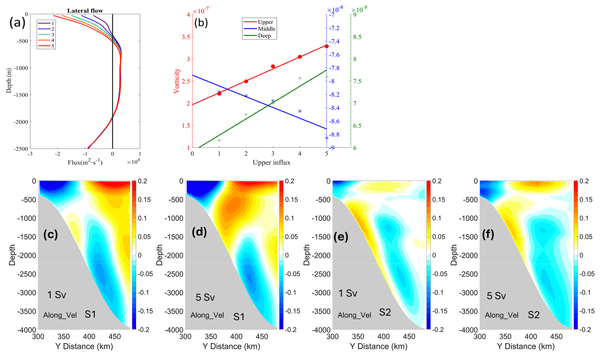
The South China Sea is the largest semi-enclosed marginal sea in the western Pacific, featuring unique layered circulation with rotating currents in its upper, middle, and deep layers. This study uses simulations to explore how stronger currents in the upper layer influence circulation across the entire basin. The vorticity analyses show that the enhanced upper currents increase the strength of middle and deep currents, driven by changes in bottom pressure and cross-slope movements.
Mingyu Li, Alessandro Stocchino, Zhongya Cai, and Tingting Zu
Ocean Sci., 20, 931–944, https://doi.org/10.5194/os-20-931-2024, https://doi.org/10.5194/os-20-931-2024, 2024
Short summary
Short summary
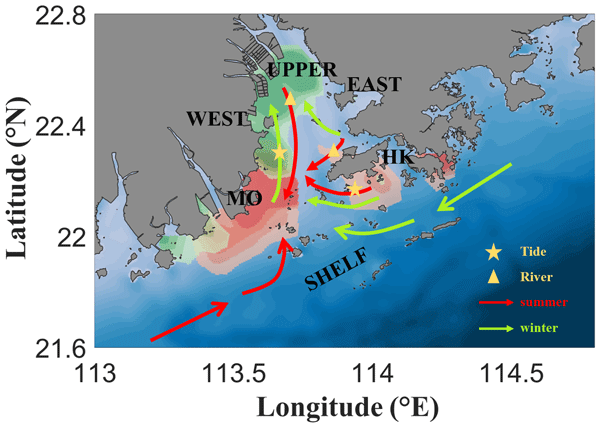
In this study, we explored how water accumulates in a coastal estuary, a key factor affecting the estuary's environmental health and ecosystem. We revealed significant bottom accumulations influenced by plume fronts and velocity convergence, with notable seasonal variability. By analyzing trajectories, we identified subregions with distinct accumulation patterns and examined their interconnections, highlighting the substantial impact of tides and river discharge on these dynamics.
Fanglou Liao, Xiao Hua Wang, and Zhiqiang Liu
Geosci. Model Dev., 15, 1129–1153, https://doi.org/10.5194/gmd-15-1129-2022, https://doi.org/10.5194/gmd-15-1129-2022, 2022
Short summary
Short summary
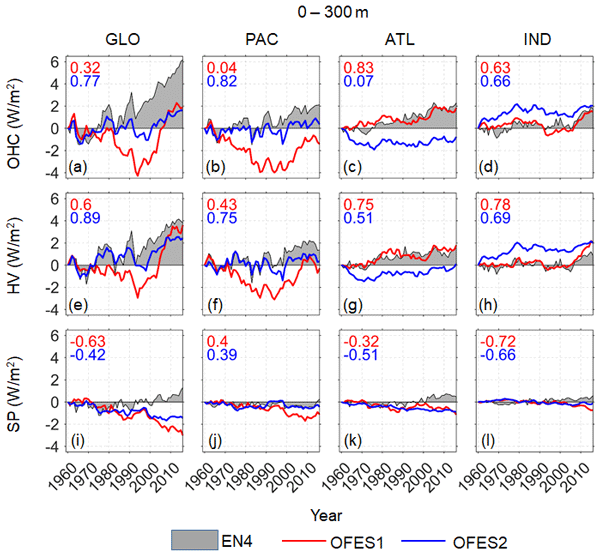
The ocean heat content (OHC) estimated using two eddying hindcast simulations, OFES1 and OFES2, was compared from 1960 to 2016, with observation-based results as a reference. Marked differences were found, especially in the Atlantic Ocean. These were related to the differences in the net surface heating, heat advection, and vertical heat diffusion. These documented differences may help the community better understand and use these quasi-global high-resolution datasets for their own purposes.
Cited articles
Adeagbo, O. S., Du, Y., Wang, T., and Wang, M.: Eddy–mean flow interactions in the Agulhas leakage region, J. Oceanogr., 78, 151–161, https://doi.org/10.1007/s10872-022-00637-6, 2022.
Aluie, H., Hecht, M., and Vallis, G. K.: Mapping the Energy Cascade in the North Atlantic Ocean: The Coarse-Graining Approach, J. Phys. Oceanogr., 48, 225–244, https://doi.org/10.1175/JPO-D-17-0100.1, 2018.
Andres, M., Park, J.-H., Wimbush, M., Zhu, X.-H., Chang, K.-I., and Ichikawa, H.: Study of the Kuroshio/Ryukyu Current system based on satellite-altimeter and in situ measurements, J. Oceanogr., 64, 937–950, https://doi.org/10.1007/s10872-008-0077-2, 2008.
Armitage, T. W. K., Bacon, S., Ridout, A. L., Petty, A. A., Wolbach, S., and Tsamados, M.: Arctic Ocean surface geostrophic circulation 2003–2014, The Cryosphere, 11, 1767–1780, https://doi.org/10.5194/tc-11-1767-2017, 2017.
Arnason, G., Haltiner, G., and Frawley, M.: Higher-order geostrophic wind approximations, Mon. Weather Rev., 90, 175–185, https://doi.org/10.1175/1520-0493(1962)090<0175:HGWA>2.0.CO;2, 1962.
Bonino, G., Galimberti, G., Masina, S., McAdam, R., and Clementi, E.: Machine learning methods to predict sea surface temperature and marine heatwave occurrence: a case study of the Mediterranean Sea, Ocean Sci., 20, 417–432, https://doi.org/10.5194/os-20-417-2024, 2024.
Buckingham, C. E., Gula, J., and Carton, X.: The Role of Curvature in Modifying Frontal Instabilities. Part I: Review of Theory and Presentation of a Nondimensional Instability Criterion, J. Phys. Oceanogr., 51, 299–315, https://doi.org/10.1175/JPO-D-19-0265.1, 2021.
Cai, Z. and Gan, J.: Dynamics of the Layered Circulation Inferred from Kinetic Energy Pathway in the South China Sea, J. Phys. Oceanogr., 51, 1671–1685, https://doi.org/10.1175/JPO-D-20-0226.1, 2021.
Cao, Y., Dong, C., Qiu, Z., Bethel, B. J., Shi, H., Lü, H., and Cheng, Y.: Corrections of Mesoscale Eddies and Kuroshio Extension Surface Velocities Derived from Satellite Altimeters, Remote Sens., 15, https://doi.org/10.3390/rs15010184, 2023a.
Cao, Y., Dong, C., Stegner, A., Bethel, B. J., Li, C., Dong, J., Lü, H., and Yang, J.: Global Sea Surface Cyclogeostrophic Currents Derived From Satellite Altimetry Data, J. Geophys. Res.-Oceans, 128, e2022JC019357, https://doi.org/10.1029/2022JC019357, 2023b.
Chen, K., Gaube, P., and Pallàs-Sanz, E.: On the Vertical Velocity and Nutrient Delivery in Warm Core Rings, J. Phys. Oceanogr., 50, 1557–1582, https://doi.org/10.1175/JPO-D-19-0239.1, 2020.
Chen, Y., Zhou, C., Cai, Z., and Xu, J.: Dynamics of the Deep-Water Overflow Seasonality in the Luzon Strait, Ocean-Land-Atmosphere Research, 5, 0154, https://doi.org/10.34133/olar.0154, 2026.
Cho, S.-W., Choi, J.-G., Kim, D., Lu, W., and Jo, Y.-H.: Deriving hourly diagnostic surface velocity fields considering inertia and an application in the Yellow Sea, Ocean Sci., 21, 3179–3193, https://doi.org/10.5194/os-21-3179-2025, 2025.
CNES and CLS: Experimental Multimission Gridded (MIOST with SWOT) Level-4 Sea Surface Heights and Velocities, AVISO [data set], https://doi.org/10.24400/527896/a01-2025.001, 2025.
Cui, G.: Daily Global Sea Surface Ageostrophic Current Dataset from 1993–2023 via Physics-Informed Deep Learning, Zenodo [code], https://doi.org/10.5281/zenodo.23901902, 2026.
Cui, G. and Cai, Z.: Daily Global Sea Surface Ageostrophic Current Dataset from 1993–2023 via Physics-Informed Deep Learning, Zenodo [data set], https://doi.org/10.5281/zenodo.19966716, 2026.
Cui, G., Yuen, K.-V., Cai, Z., Liu, Z., and Zhang, G.: Research on adaptive ocean remote sensing target detection framework: An efficient solution based on the broad learning system, ISPRS J. Photogramm., 229, 188–210, https://doi.org/10.1016/j.isprsjprs.2025.08.020, 2025.
Cui, G., Cai, Z., and Liu, Z.: A hybrid physics-informed and data-driven model for estimating ocean internal wave phase speeds from remote sensing imagery, Remote Sens. Environ., 335, 115247, https://doi.org/10.1016/j.rse.2026.115247, 2026.
Dong, C., Xu, G., Han, G., Bethel, B. J., Xie, W., and Zhou, S.: Recent Developments in Artificial Intelligence in Oceanography, Ocean-Land-Atmosphere Research, 2022, https://doi.org/10.34133/2022/9870950, 2022.
Dong, J., Fox-Kemper, B., Zhang, H., and Dong, C.: The Scale of Submesoscale Baroclinic Instability Globally, J. Phys. Oceanogr., 50, 2649–2667, https://doi.org/10.1175/JPO-D-20-0043.1, 2020.
Dong, J., Fox-Kemper, B., Zhang, H., and Dong, C.: The scale and activity of symmetric instability estimated from a global submesoscale-permitting ocean model, J. Phys. Oceanogr., 51, 1655–1670, https://doi.org/10.1175/JPO-D-20-0159.1, 2021.
Douglass, E. M. and Richman, J. G.: Analysis of ageostrophy in strong surface eddies in the Atlantic Ocean, J. Geophys. Res.-Oceans, 120, 1490–1507, https://doi.org/10.1002/2014JC010350, 2015.
Du, Y., Dong, X., Jiang, X., Zhang, Y., Zhu, D., Sun, Q., Wang, Z., Niu, X., Chen, W., and Zhu, C.: Ocean surface current multiscale observation mission (OSCOM): Simultaneous measurement of ocean surface current, vector wind, and temperature, Prog. Oceanogr., 193, 102531, https://doi.org/10.1016/j.pocean.2021.102531, 2021.
Dubois, M., Rossi, V., Ser-Giacomi, E., Arnaud-Haond, S., López, C., and Hernández-García, E.: Linking basin-scale connectivity, oceanography and population dynamics for the conservation and management of marine ecosystems, Global Ecol. Biogeogr., 25, 503–515, https://doi.org/10.1111/geb.12431, 2016.
Edwards, C. A., De Mey-Frémaux, P., Barceló-Llull, B., Charria, G., Choi, B.-J., Halliwell, G. R., Hole, L. R., Kerry, C., Kourafalou, V. H., Kurapov, A. L., Moore, A. M., Mourre, B., Oddo, P., Pascual, A., Roughan, M., Skandrani, C., Storto, A., Vervatis, V., and Wilkin, J. L.: Assessing impacts of observations on ocean circulation models with examples from coastal, shelf, and marginal seas, Front. Mar. Sci., 11, https://doi.org/10.3389/fmars.2024.1458036, 2024.
ESR and Dohan, K.: Ocean Surface Current Analyses Real-time (OSCAR) Surface Currents – Final 0.25 Degree (Version 2.0), PO.DAAC, CA, USA [data set], https://doi.org/10.5067/OSCAR-25F20, 2021.
Fan, S., Kudryavtsev, V., Yurovsky, Y., and Zhang, B.: Reconstructing ocean surface current vector field from SAR doppler shift measurements, Remote Sens. Environ., 328, 114855, https://doi.org/10.1016/j.rse.2025.114855, 2025.
Fraser, N. J., Fox, A. D., Cunningham, S. A., Rath, W., Schwarzkopf, F. U., and Biastoch, A.: Vertical Velocity Dynamics in the North Atlantic and Implications for AMOC, J. Phys. Oceanogr., 54, 2011–2024, https://doi.org/10.1175/JPO-D-23-0229.1, 2024.
Gold, E.: The relation between wind velocity at 1000 metres altitude and the surface pressure distribution, P. R. Soc. Lond. A-Conta., 80, 436–443, https://doi.org/10.1098/rspa.1908.0038, 1908.
He, K., Zhang, X., Ren, S., and Sun, J.: Deep Residual Learning for Image Recognition, in: 2016 IEEE Conference on Computer Vision and Pattern Recognition (CVPR), 27–30 June 2016, 770–778, https://doi.org/10.1109/CVPR.2016.90, 2016.
Hiron, L., Nolan, D. S., and Shay, L. K.: Study of Ageostrophy during Strong, Nonlinear Eddy-Front Interaction in the Gulf of Mexico, J. Phys. Oceanogr., 51, 745–755, https://doi.org/10.1175/JPO-D-20-0182.1, 2021.
Huo, J., Zhang, J., Yang, J., Li, C., Liu, G., and Cui, W.: High kinetic energy mesoscale eddy identification based on multi-task learning and multi-source data, Int. J. Appl. Earth Obs., 128, 103714, https://doi.org/10.1016/j.jag.2024.103714, 2024.
Ioannou, A., Stegner, A., Tuel, A., LeVu, B., Dumas, F., and Speich, S.: Cyclostrophic Corrections of AVISO/DUACS Surface Velocities and Its Application to Mesoscale Eddies in the Mediterranean Sea, J. Geophys. Res.-Oceans, 124, 8913–8932, https://doi.org/10.1029/2019JC015031, 2019.
Jang, E., Kim, Y. J., Im, J., Park, Y.-G., and Sung, T.: Global sea surface salinity via the synergistic use of SMAP satellite and HYCOM data based on machine learning, Remote Sens. Environ., 273, 112980, https://doi.org/10.1016/j.rse.2022.112980, 2022.
Kafiabad, H. A., Savva, M. A. C., and Vanneste, J.: Diffusion of inertia-gravity waves by geostrophic turbulence, J. Fluid Mech., 869, R7, https://doi.org/10.1017/jfm.2019.300, 2019.
Kartal, S.: Assessment of the spatiotemporal prediction capabilities of machine learning algorithms on Sea Surface Temperature data: A comprehensive study, Eng. Appl. Artif. Intel., 118, 105675, https://doi.org/10.1016/j.engappai.2022.105675, 2023.
Kingma, D. P. and Ba, J.: Adam: A Method for Stochastic Optimization, arXiv, https://doi.org/10.48550/arXiv.1412.6980, 2014.
Kumar, C., Podestá, G., Kilpatrick, K., and Minnett, P.: A machine learning approach to estimating the error in satellite sea surface temperature retrievals, Remote Sens. Environ., 255, 112227, https://doi.org/10.1016/j.rse.2020.112227, 2021.
Kwak, Y. S. and Richmond, A. D.: Dependence of the high-latitude lower thermospheric wind vertical vorticity and horizontal divergence on the interplanetary magnetic field, J. Geophys. Res.-Space, 119, 1356–1368, https://doi.org/10.1002/2013JA019589, 2014.
Lenain, L., Srinivasan, K., Barkan, R., and Pizzo, N.: An unprecedented view of ocean currents from geostationary satellites, Nat. Geosci., 19, 526–533, https://doi.org/10.1038/s41561-026-01943-0, 2026.
Li, X., Liu, B., Zheng, G., Ren, Y., Zhang, S., Liu, Y., Gao, L., Liu, Y., Zhang, B., and Wang, F.: Deep-learning-based information mining from ocean remote-sensing imagery, Natl. Sci. Rev., 7, 1584–1605, https://doi.org/10.1093/nsr/nwaa047, 2020.
Li, Z., Cai, Z., Liu, Z., Wang, X., and Hu, J.: A novel identification method for unrevealed mesoscale eddies with transient and weak features-Capricorn Eddies as an example, Remote Sens. Environ., 274, 112981, https://doi.org/10.1016/j.rse.2022.112981, 2022.
Liu, Y., He, Q., Zhan, W., Guo, M., Zheng, Y., Shen, X., and Zhan, H.: Heterogeneity of phytoplankton response to submesoscale processes in the global ocean, Commun. Earth Environ., 6, 386, https://doi.org/10.1038/s43247-025-02365-3, 2025.
Manucharyan, G. E., Siegelman, L., and Klein, P.: A Deep Learning Approach to Spatiotemporal Sea Surface Height Interpolation and Estimation of Deep Currents in Geostrophic Ocean Turbulence, J. Adv. Model. Earth Sy., 13, e2019MS001965, https://doi.org/10.1029/2019MS001965, 2021.
Masuda, Y., Yamanaka, Y., Smith, S. L., Hirata, T., Nakano, H., Oka, A., and Sumata, H.: Photoacclimation by phytoplankton determines the distribution of global subsurface chlorophyll maxima in the ocean, Commun. Earth Environ., 2, 128, https://doi.org/10.1038/s43247-021-00201-y, 2021.
Morales-Márquez, V., Hernández-Carrasco, I., Fox-Kemper, B., and Orfila, A.: Ageostrophic Contribution by the Wind and Waves Induced Flow to the Lateral Stirring in the Mediterranean Sea, J. Geophys. Res.-Oceans, 128, e2022JC019135, https://doi.org/10.1029/2022JC019135, 2023.
Mulet, S., Rio, M.-H., Etienne, H., Artana, C., Cancet, M., Dibarboure, G., Feng, H., Husson, R., Picot, N., Provost, C., and Strub, P. T.: The new CNES-CLS18 global mean dynamic topography, Ocean Sci., 17, 789–808, https://doi.org/10.5194/os-17-789-2021, 2021.
Penven, P., Halo, I., Pous, S., and Marié, L.: Cyclogeostrophic balance in the Mozambique Channel, J. Geophys. Res.-Oceans, 119, 1054–1067, https://doi.org/10.1002/2013JC009528, 2014.
Qin, Y., Su, C., Chu, D., Zhang, J., and Song, J.: A review of application of machine learning in storm surge problems, J. Mar. Sci. Eng., 11, 1729, https://doi.org/10.3390/jmse11091729, 2023.
Qiu, B., Chen, S., Klein, P., Sasaki, H., and Sasai, Y.: Seasonal Mesoscale and Submesoscale Eddy Variability along the North Pacific Subtropical Countercurrent, J. Phys. Oceanogr., 44, 3079–3098, https://doi.org/10.1175/JPO-D-14-0071.1, 2014.
Qiu, C., Mao, H., Wang, Y., Yu, J., Su, D., and Lian, S.: An irregularly shaped warm eddy observed by Chinese underwater gliders, J. Oceanogr., 75, 139–148, https://doi.org/10.1007/s10872-018-0490-0, 2019.
Rio, M.-H., Mulet, S., and Picot, N.: Beyond GOCE for the ocean circulation estimate: Synergetic use of altimetry, gravimetry, and in situ data provides new insight into geostrophic and Ekman currents, Geophys. Res. Lett., 41, 8918–8925, https://doi.org/10.1002/2014GL061773, 2014.
Roquet, F., Bell, M. J., de Boer, A. M., Ferreira, D., Jones, C. S., LaCasce, J. H., de Lavergne, C., Marshall, D. P., Munday, D. R., Nycander, J., and Ödalen, M.: Controls of the global overturning circulation of the ocean, npj Clim. Atmos. Sci., 8, 304, https://doi.org/10.1038/s41612-025-01185-8, 2025.
Ruiz, S., Pelegrí, J. L., Emelianov, M., Pascual, A., and Mason, E.: Geostrophic and ageostrophic circulation of a shallow anticyclonic eddy off Cape Bojador, J. Geophys. Res.-Oceans, 119, 1257–1270, https://doi.org/10.1002/2013JC009169, 2014.
Shang, J., Shi, H., Yuan, M., Wu, Q., Lv, A., Dou, F., Yin, H., Liu, L., and Hu, X.: Satellite-Ground Integrated External Calibration of the WindRAD Scatterometer Onboard FY-3E Satellite, IEEE T. Geosci. Remote, 63, 1–10, https://doi.org/10.1109/TGRS.2025.3526834, 2025.
Shankar, D., Vinayachandran, P. N., and Unnikrishnan, A. S.: The monsoon currents in the north Indian Ocean, Prog. Oceanogr., 52, 63–120, https://doi.org/10.1016/S0079-6611(02)00024-1, 2002.
Shchepetkin, A. F. and McWilliams, J. C.: The regional oceanic modeling system (ROMS): a split-explicit, free-surface, topography-following-coordinate oceanic model, Ocean Model., 9, 347–404, https://doi.org/10.1016/j.ocemod.2004.08.002, 2005.
Sinha, A. and Abernathey, R.: Estimating Ocean Surface Currents With Machine Learning, Frontiers in Marine Science, 8, https://doi.org/10.3389/fmars.2021.672477, 2021.
Srinivasan, M. and Tsontos, V.: Satellite Altimetry for Ocean and Coastal Applications: A Review, Remote Sens., 15, https://doi.org/10.3390/rs15163939, 2023.
Su, F., Fan, R., Yan, F., Meadows, M., Lyne, V., Hu, P., Song, X., Zhang, T., Liu, Z., Zhou, C., Pei, T., Yang, X., Du, Y., Wei, Z., Wang, F., Qi, Y., and Chai, F.: Widespread global disparities between modelled and observed mid-depth ocean currents, Nat. Commun., 14, 2089, https://doi.org/10.1038/s41467-023-37841-x, 2023.
Sudre, J., Maes, C., and Garçon, V.: On the global estimates of geostrophic and Ekman surface currents, Limnol. Oceanogr.-Fluids Environments, 3, 1–20, https://doi.org/10.1215/21573689-2071927, 2013.
Thomas, J. and Daniel, D.: Forward flux and enhanced dissipation of geostrophic balanced energy, J. Fluid Mech., 911, A60, https://doi.org/10.1017/jfm.2020.1026, 2021.
Timmermans, M.-L. and Marshall, J.: Understanding Arctic Ocean Circulation: A Review of Ocean Dynamics in a Changing Climate, J. Geophys. Res.-Oceans, 125, e2018JC014378, https://doi.org/10.1029/2018JC014378, 2020.
Uchida, H. and Imawaki, S.: Eulerian mean surface velocity field derived by combining drifter and satellite altimeter data, Geophys. Res. Lett., 30, https://doi.org/10.1029/2002GL016445, 2003.
Ueno, H., Bracco, A., Barth, J. A., Budyansky, M. V., Hasegawa, D., Itoh, S., Kim, S. Y., Ladd, C., Lin, X., Park, Y.-G., Prants, S., Ross, T., Rypina, I. I., Sasai, Y., Trusenkova, O. O., Ustinova, E. I., and Zhong, Y.: Review of oceanic mesoscale processes in the North Pacific: Physical and biogeochemical impacts, Prog. Oceanogr., 212, 102955, https://doi.org/10.1016/j.pocean.2022.102955, 2023.
Van Meurs, P. and Niiler, P. P.: Temporal variability of the large-scale geostrophic surface velocity in the northeast Pacific, J. Phys. Oceanogr., 27, 2288–2297, https://doi.org/10.1175/1520-0485(1997)027<2288:TVOTLS>2.0.CO;2, 1997.
Wunsch, C.: Patterns of kinetic energy conversion in a time-average upper ocean, Prog. Oceanogr., 234, 103453, https://doi.org/10.1016/j.pocean.2025.103453, 2025.
Wunsch, C. and Gaposchkin, E. M.: On using satellite altimetry to determine the general circulation of the oceans with application to geoid improvement, Rev. Geophys., 18, 725–745, https://doi.org/10.1029/RG018i004p00725, 1980.
Xavier, G. B., Larsson, J.-Å., Villoresi, P., Vallone, G., and Cabello, A.: Energy-time and time-bin entanglement: past, present and future, npj Quantum Information, 11, 129, https://doi.org/10.1038/s41534-025-01072-3, 2025.
Zhang, W., Griffies, S. M., Hallberg, R. W., Kuo, Y.-H., and Wolfe, C. L. P.: The Role of Surface Potential Vorticity in the Vertical Structure of Mesoscale Eddies in Wind-Driven Ocean Circulations, J. Phys. Oceanogr., 54, 1243–1266, https://doi.org/10.1175/JPO-D-23-0203.1, 2024.
Zhang, Z., Qiu, B., Klein, P., and Travis, S.: The influence of geostrophic strain on oceanic ageostrophic motion and surface chlorophyll, Nat. Commun., 10, 2838, https://doi.org/10.1038/s41467-019-10883-w, 2019.
Zhou, X., Zhu, S., Jia, W., and Yao, H.: Estimating Subsurface Thermohaline Structure in the Tropical Western Pacific Using DO-ResNet Model, Atmosphere, 15, https://doi.org/10.3390/atmos15091043, 2024.
Short summary
Most long-term satellite-based global current datasets capture only large-scale flows driven by pressure differences, missing important nonlinear motions. We used satellite data and a physics-informed deep learning method to create a new global dataset, including these previously missing components. Our currents are more accurate than traditional products, and we show that motions driven by nonlinear effects strongly influence the transport of heat, carbon, and nutrients in ocean.
Most long-term satellite-based global current datasets capture only large-scale flows driven by...
Altmetrics
Final-revised paper
Preprint