Articles | Volume 18, issue 10
https://doi.org/10.5194/essd-18-7253-2026
© Author(s) 2026. This work is distributed under
the Creative Commons Attribution 4.0 License.
https://doi.org/10.5194/essd-18-7253-2026
© Author(s) 2026. This work is distributed under
the Creative Commons Attribution 4.0 License.
Weather station data from the Mount Everest region, Nepal: 3810–8810 m above sea level

Arbindra Khadka
CORRESPONDING AUTHOR
Central Department of Hydrology and Meteorology, Tribhuvan University, Kirtipur, Nepal
Université Grenoble Alpes, CNRS, IRD, IGE, Grenoble, France
Lester Baker Perry
Department of Geography (Climatology), University of Nevada, Reno, Nevada, USA
Research Institute for Environment, Energy, and Economics, Department of Sustainable Technology & the Built Environment, Appalachian State University, Boone, North Carolina
Tom Matthews
Department of Geography, King's College London, London, UK
Tenzing Gyalzen Sherpa
Khumbu Climbing Centre, Phortse, Nepal
Chitra Bahadur Shrestha
Central Department of Hydrology and Meteorology, Tribhuvan University, Kirtipur, Nepal
Dibas Shrestha
Central Department of Hydrology and Meteorology, Tribhuvan University, Kirtipur, Nepal
Deepak Aryal
Central Department of Hydrology and Meteorology, Tribhuvan University, Kirtipur, Nepal
Subash Tuladhar
Department of Hydrology and Meteorology, Kathmandu, Nepal
Niraj Pradhananga
Department of Hydrology and Meteorology, Kathmandu, Nepal
Dinkar Kayastha
Department of Hydrology and Meteorology, Kathmandu, Nepal
Brian Raichle
Research Institute for Environment, Energy, and Economics, Department of Sustainable Technology & the Built Environment, Appalachian State University, Boone, North Carolina
Peter Athans
The North Face, Alameda, California
Dawa Yangzum Sherpa
The North Face, Alameda, California
Keith Garrett
Mount Washington Observatory, North Conway, New Hampshire, USA
Garrett Wheeler
Campbell Scientific, Logan, Utah, USA
Tom Young
RM Young, Traverse City, Michigan, USA
Aurora Elmore
National Oceanic and Atmospheric Administration, Maryland, USA
Related authors
No articles found.
Benjamin Graves, Tom Matthews, Tamsin Edwards, Richard Taylor, Megan James, Baker Perry, and Magali Ponds
EGUsphere, https://doi.org/10.5194/egusphere-2026-5187, https://doi.org/10.5194/egusphere-2026-5187, 2026
This preprint is open for discussion and under review for The Cryosphere (TC).
Short summary
Short summary
The future of the world’s glaciers under climate change is simulated using models. However, the modelled response of glaciers to rising temperatures is stronger in some models than in others. This study compares the simulated behaviour of a glacier at high elevation using four models to compare how each one reacts to rising temperatures. Simple models respond more strongly than is realistic, because they do not account for the full range of environmental factors which affect the glacier.
Tom Matthews, Baker Perry, Ben Graves, Fanny Brun, Maria Sanolaria-Otin, Navaraj Pokhrel, Arbindra Khadka, Dibas Shrestha, Ludving Cano, Aris Kwadijk, Walter Immereel, Brandt Maxwell, and Anton Seimon
EGUsphere, https://doi.org/10.5194/egusphere-2026-5200, https://doi.org/10.5194/egusphere-2026-5200, 2026
This preprint is open for discussion and under review for The Cryosphere (TC).
Short summary
Short summary
Extreme precipitation shapes hazards and water resources in high mountains, but is rarely observed directly. On 4 October 2025, weather stations on Mt. Everest recorded one of the most extreme snowfall events ever measured. The storm revealed that Himalayan snowfall extremes can be far larger than previously documented, and that intense snowfall can cool the atmosphere sufficiently to prevent rain at impact-sensitive elevations, complicating the picture of how warming will affect future storms.
Megan C. James, Tamsin L. Edwards, Tom Matthews, Alexander T. Bradley, James F. O'Neill, and Harry Zekollari
EGUsphere, https://doi.org/10.5194/egusphere-2026-2069, https://doi.org/10.5194/egusphere-2026-2069, 2026
Short summary
Short summary
As the climate warms, glaciers are shrinking, contributing to sea-level rise, natural hazards and water insecurity. We show for one case study – the very long-term response of Iceland’s glaciers to global warming – that large uncertainties arise from the poorly known parameters within models. This is usually overlooked, but we show neglecting it underestimates uncertainty in our glacier model by as much as 90 %, highlighting the importance of accounting for it in future glacier projections.
Sunil N. Oulkar, Matthew W. Peacey, Michael Mitrev, Duncan J. Quincey, Bryn Hubbard, Tom Matthews, Ankita S. Oulkar, Katie E. Miles, and Ann V. Rowan
Geosci. Instrum. Method. Data Syst., 15, 75–88, https://doi.org/10.5194/gi-15-75-2026, https://doi.org/10.5194/gi-15-75-2026, 2026
Short summary
Short summary
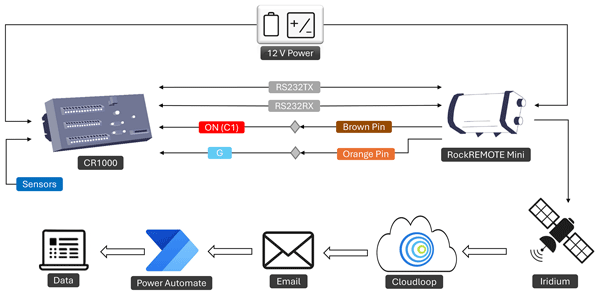
We designed and tested a system that can record and send data in near real time from extreme and remote locations, such as Mount Everest. Using solar power and satellite communication, the system worked reliably at high altitude, showing it can be applied in other remote regions. This approach will help scientists collect vital information on how the environment is changing in areas that are normally very difficult to study.
Motilal Ghimire, Dibas Shrestha, Raju Chauhan, Amrit Thapa, Til Prasad Pangali Sharma, Krishna Prasad Sharma, Sher Bahadur Gurung, Sundar Devkota, Prabin Bhandari, Sikesh Koirala, Yanhong Wu, Niroj Timalsina, and Jeevan Kutu
The Cryosphere, 20, 551–572, https://doi.org/10.5194/tc-20-551-2026, https://doi.org/10.5194/tc-20-551-2026, 2026
Short summary
Short summary
In the Upper Karnali Basin, a critical water source for millions of people, snow and glaciers are shrinking, and snowlines have shifted as temperatures rise over the last two decades. Snow and glacier decline has threatened water supplies for farming, drinking, and hydropower. This study shows how climate change is reshaping the region’s frozen landscapes, risking water security for communities downstream. Protecting these icy reservoirs is vital to safeguarding lives and ecosystems.
Navaraj Pokhrel, Patrick Wagnon, Fanny Brun, Arbindra Khadka, Tom Matthews, Audrey Goutard, Dibas Shrestha, Baker Perry, and Marion Réveillet
The Cryosphere, 18, 5913–5920, https://doi.org/10.5194/tc-18-5913-2024, https://doi.org/10.5194/tc-18-5913-2024, 2024
Short summary
Short summary
We studied snow processes in the accumulation area of Mera Glacier (central Himalaya, Nepal) by deploying a cosmic ray counting sensor that allows one to track the evolution of snow water equivalent. We suspect significant surface melting, water percolation, and refreezing within the snowpack, which might be missed by traditional mass balance surveys.
Maximillian Van Wyk de Vries, Tom Matthews, L. Baker Perry, Nirakar Thapa, and Rob Wilby
Geosci. Model Dev., 17, 7629–7643, https://doi.org/10.5194/gmd-17-7629-2024, https://doi.org/10.5194/gmd-17-7629-2024, 2024
Short summary
Short summary
This paper introduces the AtsMOS workflow, a new tool for improving weather forecasts in mountainous areas. By combining advanced statistical techniques with local weather data, AtsMOS can provide more accurate predictions of weather conditions. Using data from Mount Everest as an example, AtsMOS has shown promise in better forecasting hazardous weather conditions, making it a valuable tool for communities in mountainous regions and beyond.
Cited articles
Brun, F., Berthier, E., Wagnon, P., Kääb, A., and Treichler, D.: A spatially resolved estimate of High Mountain Asia glacier mass balances from 2000 to 2016, Nat. Geosci., 10, 668–673, https://doi.org/10.1038/ngeo2999, 2017.
Brun, F., King, O., Réveillet, M., Amory, C., Planchot, A., Berthier, E., Dehecq, A., Bolch, T., Fourteau, K., Brondex, J., Dumont, M., and Mayer, C.: Everest South Col Glacier did not thin during the period 1984–2017, The Cryosphere, 17, 3251–3268, https://doi.org/10.5194/tc-17-3251-2023, 2023.
Buck, A. L.: New Equations for Computing Vapor Pressure and Enhancement Factor, J. Appl. Meteorol. Climatol., 20, 1527–1532, https://doi.org/10.1175/1520-0450(1981)020<1527:NEFCVP>2.0.CO;2, 1981.
Buck, A. L.: Buck research cr-1a user's manual, Buck Res. Instruments Boulder, CO, USA, https://www.hygrometers.com/wp-content/uploads/CR-1A-users-manual-2009-12.pdf (last access: 30 July 2025), 1996.
Dragone, N. B., Perry, L. B., Solon, A. J., Seimon, A., Seimon, T. A., and Schmidt, S. K.: Genetic analysis of the frozen microbiome at 7900 m a.s.l., on the South Col of Sagarmatha (Mount Everest), Arctic, Antarct. Alp. Res., 55, 2164999, https://doi.org/10.1080/15230430.2023.2164999, 2023.
Fausto, R. S., Van As, D., Mankoff, K. D., Vandecrux, B., Citterio, M., Ahlstrøm, A. P., Andersen, S. B., Colgan, W., Karlsson, N. B., Kjeldsen, K. K., Korsgaard, N. J., Larsen, S. H., Nielsen, S., Pedersen, A., Shields, C. L., Solgaard, A. M., and Box, J. E.: Programme for Monitoring of the Greenland Ice Sheet (PROMICE) automatic weather station data, Earth Syst. Sci. Data, 13, 3819–3845, https://doi.org/10.5194/essd-13-3819-2021, 2021.
Graves, B., Matthews, T., Perry, B. L., Edwards, T., Taylor, R., Brun, F., Wagnon, P., Khadka, A., and Shrestha, D.: Modelling Accumulation of a High-Altitude Himalayan Glacier, J. Glaciol., 72, e72, https://doi.org/10.1017/jog.2026.10147, 2026.
Grey, L., Johnson, A. V., Matthews, T., Perry, L. B., Elmore, A. C., Khadka, A., Shrestha, D., Tuladhar, S., Baidya, S. K., Aryal, D., and Gajurel, A. P.: Mount Everest's photogenic weather during the post-monsoon, Weather, 77, 156–160, https://doi.org/10.1002/WEA.4184, 2022.
Hersbach, H., Bell, B., Berrisford, P., Hirahara, S., Horányi, A., Muñoz-Sabater, J., Nicolas, J., Peubey, C., Radu, R., Schepers, D., Simmons, A., Soci, C., Abdalla, S., Abellan, X., Balsamo, G., Bechtold, P., Biavati, G., Bidlot, J., Bonavita, M., De Chiara, G., Dahlgren, P., Dee, D., Diamantakis, M., Dragani, R., Flemming, J., Forbes, R., Fuentes, M., Geer, A., Haimberger, L., Healy, S., Hogan, R. J., Hólm, E., Janisková, M., Keeley, S., Laloyaux, P., Lopez, P., Lupu, C., Radnoti, G., de Rosnay, P., Rozum, I., Vamborg, F., Villaume, S., and Thépaut, J. N.: The ERA5 global reanalysis, Q. J. R. Meteorol. Soc., 146, 1999–2049, https://doi.org/10.1002/qj.3803, 2020.
Immerzeel, W. W., Van Beek, L. P. H., and Bierkens, M. F. P.: Climate change will affect the Asian water towers, Science, 328, 1382–1385, https://doi.org/10.1126/science.1183188, 2010.
Khadka, A.: NGS Mount Everest AWS Network, Zenodo [data set], https://doi.org/10.5281/zenodo.18849098, 2026a.
Khadka, A.: Mount Everest AWS Network quality control code, [GitHub code], https://doi.org/10.5281/zenodo.22108645, 2026b.
Khadka, A., Matthews, T., Perry, L. B., Koch, I., Wagnon, P., Shrestha, D., Sherpa, T. G., Aryal, D., Tait, A., Sherpa, T. C., Tuladhar, S., Baidya, S. K., Elvin, S., Elmore, A. C., Gajurel, A., and Mayewski, P. A.: Weather on Mount Everest during the 2019 summer monsoon, Weather, 76, 205–207, https://doi.org/10.1002/wea.3931, 2021.
Khadka, A., Wagnon, P., Brun, F., Shrestha, D., Lejeune, Y., and Arnaud, Y.: Evaluation of ERA5-Land and HARv2 reanalysis data at high elevation in the upper Dudh Koshi basin (Everest region, Nepal), J. Appl. Meteorol. Climatol., 61, 931–954, https://doi.org/10.1175/jamc-d-21-0091.1, 2022.
King, O., Bhattacharya, A., Ghuffar, S., Tait, A., Guilford, S., Elmore, A. C., and Bolch, T.: Six Decades of Glacier Mass Changes around Mt. Everest Are Revealed by Historical and Contemporary Images, One Earth, 3, 608–620, https://doi.org/10.1016/J.ONEEAR.2020.10.019, 2020.
Kochendorfer, J., Earle, M., Rasmussen, R., Smith, C., Yang, D., Morin, S., Mekis, E., Buisan, S., Roulet, Y.-A., Landolt, S., Wolff, M., Hoover, J., Thériault, J. M., Lee, G., Baker, B., Nitu, R., Lanza, L., Colli, M., and Meyers, T.: How Well Are We Measuring Snow Post-SPICE?, Bull. Am. Meteorol. Soc., 103, E370–E388, https://doi.org/10.1175/BAMS-D-20-0228.1, 2022.
Löffler-Mang, M. and Joss, J.: An optical disdrometer for measuring size and velocity of hydrometeors., J. Atmos. Ocean. Technol., 17, 130–139, 2000.
Matthews, T., Perry, L. B., Koch, I., Aryal, D., Khadka, A., Shrestha, D., Abernathy, K., Elmore, A. C., Seimon, A., Tait, A., Elvin, S., Tuladhar, S., Baidya, S. K., Potocki, M., Birkel, S. D., Kang, S., Sherpa, T. C., Gajurel, A., and Mayewski, P. A.: Going to Extremes: Installing the World's Highest Weather Stations on Mount Everest, Bull. Am. Meteorol. Soc., 101, E1870–E1890, https://doi.org/10.1175/BAMS-D-19-0198.1, 2020a.
Matthews, T., Perry, L. B., Lane, T. P., Elmore, A. C., Khadka, A., Aryal, D., Shrestha, D., Tuladhar, S., Baidya, S. K., Gajurel, A., Potocki, M., and Mayewski, P. A.: Into Thick(er) Air? Oxygen Availability at Humans' Physiological Frontier on Mount Everest, iScience, 23, 101718, https://doi.org/10.1016/j.isci.2020.101718, 2020b.
Matthews, T., Perry, L. B., Khadka, A., Sherpa, T. G., Shrestha, D., Aryal, D., Tuladhar, S., Thapa, N., Pradhananga, N., Athans, P., Sherpa, D. Y., Guy, H., Seimon, A., Elmore, A. C., Li, K., and Alexiev, N.: Weather observations reach the summit of Mount Everest, Bull. Am. Meteorol. Soc., 1, https://doi.org/10.1175/BAMS-D-22-0120.1, 2022.
Miner, K. R., Mayewski, P. A., Baidya, S. K., Broad, K., Clifford, H., Elmore, A., Gajurel, A. P., Giri, B., Guilford, S., Hubbard, M., Jaskolski, C., Koldewey, H., Li, W., Matthews, T., Napper, I., Perry, L. B., Potocki, M., Priscu, J. C., Tait, A., Thompson, R., and Tuladhar, S.: An overview of physical risks in the Mt. Everest region, One Earth, 3, 547–550, https://doi.org/10.1016/j.oneear.2020.10.008, 2020.
Pérez-Tello, M. A., Platero, I., Valdivia, J. M., Martinez-Castro, D., Villalobos-Puma, E. E., and Silva, F. Y.: Evaluation and Correction of Precipitation Types Measured by a PARSIVEL2 Disdrometer in a Tropical Glacier Environment, EGUsphere [preprint], https://doi.org/10.5194/egusphere-2026-2705, 2026.
Perry, L. B., Matthews, T., Guy, H., Koch, I., Khadka, A., Elmore, A. C., Shrestha, D., Tuladhar, S., Baidya, S. K., Maharjan, S., Wagnon, P., Aryal, D., Seimon, A., Gajurel, A., and Mayewski, P. A.: Precipitation Characteristics and Moisture Source Regions on Mt. Everest in the Khumbu, Nepal, One Earth, 3, 594–607, https://doi.org/10.1016/j.oneear.2020.10.011, 2020.
Pfeffer, W. T., Arendt, A. A., Bliss, A., Bolch, T., Graham, J., Gardner, A. S., Hagen, J.-O., Hock, R., Kaser, G., Kienholz, C., Miles, E. S., Moholdt, G., Mölg, N., Mölg, M., Paul, F., Radic', V., Radic', R., Rastner, P., Raup, B. H., Rich, J., Sharp, M. J., and Consortium, R.: The Randolph Glacier Inventory: a globally complete inventory of glaciers, J. Glaciol., 60, 537–552, https://doi.org/10.3189/2014JoG13J176, 2014.
Potocki, M., Mayewski, P. A., Matthews, T., Perry, L. B., Schwikowski, M., Tait, A. M., Korotkikh, E., Clifford, H., Kang, S., Sherpa, T. C., Singh, P. K., Koch, I., and Birkel, S.: Mt. Everest's highest glacier is a sentinel for accelerating ice loss, npj Clim. Atmos. Sci., 5, 1–8, https://doi.org/10.1038/s41612-022-00230-0, 2022.
Ryan, W. A., Doesken, N. J., and Fassnacht, S. R.: Ultrasonic snow depth sensors for national weather service. Snow measurements in the US: evaluation of operational readiness, Hydrol. Process., 22, 2748–2757, https://doi.org/10.1002/HYP.7065, 2008.
Salerno, F., Guyennon, N., Thakuri, S., Viviano, G., Romano, E., Vuillermoz, E., Cristofanelli, P., Stocchi, P., Agrillo, G., Ma, Y., and Tartari, G.: Weak precipitation, warm winters and springs impact glaciers of south slopes of Mt. Everest (central Himalaya) in the last 2 decades (1994–2013), The Cryosphere, 9, 1229–1247, https://doi.org/10.5194/tc-9-1229-2015, 2015.
Salerno, F., Guyennon, N., Yang, K., Shaw, T. E., Lin, C., Colombo, N., Romano, E., Gruber, S., Bolch, T., Alessandri, A., Cristofanelli, P., Putero, D., Diolaiuti, G., Tartari, G., Verza, G., Thakuri, S., Balsamo, G., Miles, E. S., and Pellicciotti, F.: Local cooling and drying induced by Himalayan glaciers under global warming, Nat. Geosci., 16, 1120–1127, https://doi.org/10.1038/s41561-023-01331-y, 2023.
Salerno, F., Guyennon, N., Colombo, N., Melis, M. T., Dessì, F. G., Verza, G., Bista, K., Sheharyar, A., and Tartari, G.: What is climate change doing in the Himalaya? Thirty years of the Pyramid Meteorological Network (Nepal), Earth Syst. Sci. Data, 17, 4293–4304, https://doi.org/10.5194/essd-17-4293-2025, 2025.
Shea, J. M., Wagnon, P., Immerzeel, W. W., Biron, R., Brun, F., and Pellicciotti, F.: A comparative high-altitude meteorological analysis from three catchments in the Nepalese Himalaya, Int. J. Water Resour. Dev., 31, 174–200, https://doi.org/10.1080/07900627.2015.1020417, 2015.
Sherpa, T. C., Matthews, T., Perry, L. B., Thapa, A., Singh, P. K., Khadka, A., Koch, I., Pelto, M., Panday, P., Aryal, D., Shrestha, D., Kang, S., and Mayewski, P. A.: Insights from the first winter weather observations near Mount Everest's summit, Weather, 78, 344–348, https://doi.org/10.1002/wea.4374, 2023.
Thakuri, S., Salerno, F., Smiraglia, C., Bolch, T., D'Agata, C., Viviano, G., and Tartari, G.: Tracing glacier changes since the 1960s on the south slope of Mt. Everest (central Southern Himalaya) using optical satellite imagery, The Cryosphere, 8, 1297–1315, https://doi.org/10.5194/tc-8-1297-2014, 2014.
Thakuri, S., Dahal, S., Shrestha, D., Guyennon, N., Romano, E., and Colombo, N.: Elevation-dependent warming of maximum air temperature in Nepal during 1976–2015, Atmos. Res., 228, 261–269, https://doi.org/10.1016/j.atmosres.2019.06.006, 2019.
The Himalayan Times: NatGeo scientists instal highest weather station on Mt Everest, The Himalayan Times, https://thehimalayantimes.com/nepal/natgeo-scientists-instal-highest-weather-station-on-mt-everest (last access: 15 Ju;y 2025), 2022.
Wagnon, P., Brun, F., Khadka, A., Berthier, E., Shrestha, D., Vincent, C., Arnaud, Y., Six, D., Dehecq, A., Ménégoz, M., and Jomelli, V.: Reanalysing the 2007-19 glaciological mass-balance series of Mera Glacier, Nepal, Central Himalaya, using geodetic mass balance, J. Glaciol., 67, 117–125, https://doi.org/10.1017/jog.2020.88, 2021.
Van Wyk de Vries, M., Matthews, T., Perry, L. B., Thapa, N., and Wilby, R.: At-scale Model Output Statistics in mountain environments (AtsMOS v1.0), Geosci. Model Dev., 17, 7629–7643, https://doi.org/10.5194/gmd-17-7629-2024, 2024.
Yang, W., Guo, X., Yao, T., Yang, K., Zhao, L., Li, S., and Zhu, M.: Summertime surface energy budget and ablation modeling in the ablation zone of a maritime Tibetan glacier, J. Geophys. Res. Atmos., 116, 14116, https://doi.org/10.1029/2010JD015183, 2011.
Editorial statement
This paper presents a quality-controlled meteorological dataset from six automatic weather stations spanning almost 5,000 m of elevation in the Mount Everest region, from 3,810 to 8,810 m above sea level. The installation and maintenance required to gather this data presents and exceptional effort. These rare observations from some of the highest elevations on Earth provide a valuable resource for investigating high-altitude climate and weather, evaluating atmospheric models and reanalyses, and improving our understanding of the Himalayan climate system.
This paper presents a quality-controlled meteorological dataset from six automatic weather...
Short summary
We installed six automatic weather stations from 3,810 m to 8,810 m on Mount Everest region to better understand weather conditions at high altitudes. These measurements reveal how temperature, humidity, and wind changes with height and season. Our results show differences between observations and widely used ERA5 datasets. This improved knowledge helps scientists better understand mountain weather and climate, climate change and supports water resource planning for communities downstream.
We installed six automatic weather stations from 3,810 m to 8,810 m on Mount Everest region to...
Altmetrics
Final-revised paper
Preprint