Articles | Volume 18, issue 1
https://doi.org/10.5194/essd-18-721-2026
© Author(s) 2026. This work is distributed under
the Creative Commons Attribution 4.0 License.

https://doi.org/10.5194/essd-18-721-2026
© Author(s) 2026. This work is distributed under
the Creative Commons Attribution 4.0 License.
A climate data record of sea ice age using Lagrangian advection of a triangular mesh

Nansen Environmental and Remote Sensing Centre, Bergen, Norway
Bjerknes Centre for Climate Research, Bergen, Norway
Nansen Environmental and Remote Sensing Centre, Bergen, Norway
Bjerknes Centre for Climate Research, Bergen, Norway
Heather Regan
Nansen Environmental and Remote Sensing Centre, Bergen, Norway
Bjerknes Centre for Climate Research, Bergen, Norway
Thomas Lavergne
Norwegian Meteorological Institute, Oslo, Norway
Signe Aaboe
Norwegian Meteorological Institute, Tromsø, Norway
Emily Jane Down
Norwegian Meteorological Institute, Tromsø, Norway
Related authors
Jean Rabault, Trygve Halsne, Ana Carrasco, Anton Korosov, Joey Voermans, Patrik Bohlinger, Jens Boldingh Debernard, Malte Müller, Øyvind Breivik, Takehiko Nose, Gaute Hope, Fabrice Collard, Sylvain Herlédan, Tsubasa Kodaira, Nick Hughes, Qin Zhang, Kai Håkon Christensen, Alexander Babanin, Lars Willas Dreyer, Cyril Palerme, Lotfi Aouf, Konstantinos Christakos, Atle Jensen, Johannes Röhrs, Aleksey Marchenko, Graig Sutherland, Trygve Kvåle Løken, and Takuji Waseda
The Cryosphere, 19, 6229–6260, https://doi.org/10.5194/tc-19-6229-2025, https://doi.org/10.5194/tc-19-6229-2025, 2025
Short summary
Short summary
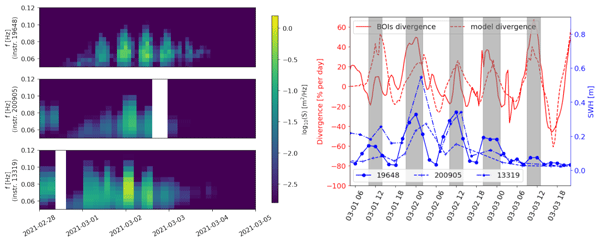
We observe strongly modulated waves-in-ice significant wave height using buoys deployed East of Svalbard. We show that these observations likely cannot be explained by wave-current interaction or tide-induced modulation alone. We also demonstrate a strong correlation between the waves height modulation, and the rate of sea ice convergence. Therefore, our data suggest that the rate of sea ice convergence and divergence may modulate wave in ice energy dissipation.
Léo Edel, Jiping Xie, Anton Korosov, Julien Brajard, and Laurent Bertino
The Cryosphere, 19, 731–752, https://doi.org/10.5194/tc-19-731-2025, https://doi.org/10.5194/tc-19-731-2025, 2025
Short summary
Short summary
This study developed a new method to estimate Arctic sea ice thickness from 1992 to 2010 using a combination of machine learning and data assimilation. By training a machine learning model on data from 2011 to 2022, past errors in sea ice thickness can be corrected, leading to improved estimations. This approach provides insights into historical changes in sea ice thickness, showing a notable decline from 1992 to 2022, and offers a valuable resource for future studies.
Anton Korosov, Yue Ying, and Einar Ólason
Geosci. Model Dev., 18, 885–904, https://doi.org/10.5194/gmd-18-885-2025, https://doi.org/10.5194/gmd-18-885-2025, 2025
Short summary
Short summary
We have developed a new method to improve the accuracy of sea ice models, which predict how ice moves and deforms due to wind and ocean currents. Traditional models use parameters that are often poorly defined. The new approach uses machine learning to fine-tune these parameters by comparing simulated ice drift with satellite data. The method identifies optimal settings for the model by analysing patterns in ice deformation. This results in more accurate simulations of sea ice drift forecasting.
Einar Ólason, Guillaume Boutin, Timothy Williams, Anton Korosov, Heather Regan, Jonathan Rheinlænder, Pierre Rampal, Daniela Flocco, Abdoulaye Samaké, Richard Davy, Timothy Spain, and Sean Chua
EGUsphere, https://doi.org/10.5194/egusphere-2024-3521, https://doi.org/10.5194/egusphere-2024-3521, 2025
Short summary
Short summary
This paper introduces a new version of the neXtSIM sea-ice model. NeXtSIM is unique among sea-ice models in how it represents sea-ice dynamics, focusing on features such as cracks and ridges and how these impact interactions between the atmosphere and ocean where sea ice is present. The new version introduces some physical parameterisations and model options detailed and explained in the paper. Following the paper's publication, the neXtSIM code will be released publicly for the first time.
Andreas Stokholm, Jørgen Buus-Hinkler, Tore Wulf, Anton Korosov, Roberto Saldo, Leif Toudal Pedersen, David Arthurs, Ionut Dragan, Iacopo Modica, Juan Pedro, Annekatrien Debien, Xinwei Chen, Muhammed Patel, Fernando Jose Pena Cantu, Javier Noa Turnes, Jinman Park, Linlin Xu, Katharine Andrea Scott, David Anthony Clausi, Yuan Fang, Mingzhe Jiang, Saeid Taleghanidoozdoozan, Neil Curtis Brubacher, Armina Soleymani, Zacharie Gousseau, Michał Smaczny, Patryk Kowalski, Jacek Komorowski, David Rijlaarsdam, Jan Nicolaas van Rijn, Jens Jakobsen, Martin Samuel James Rogers, Nick Hughes, Tom Zagon, Rune Solberg, Nicolas Longépé, and Matilde Brandt Kreiner
The Cryosphere, 18, 3471–3494, https://doi.org/10.5194/tc-18-3471-2024, https://doi.org/10.5194/tc-18-3471-2024, 2024
Short summary
Short summary
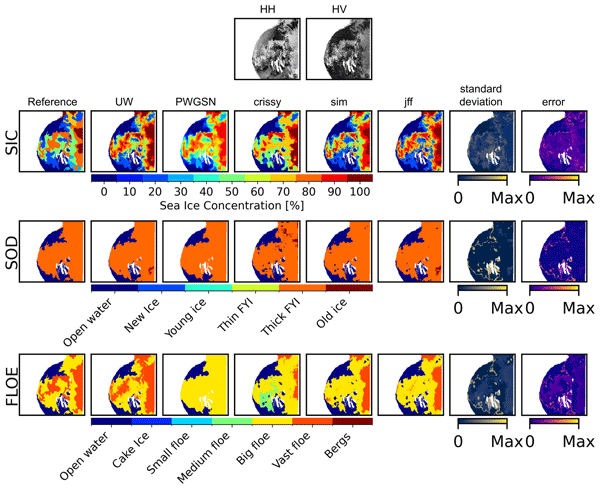
The AutoICE challenge encouraged the development of deep learning models to map multiple aspects of sea ice – the amount of sea ice in an area and the age and ice floe size – using multiple sources of satellite and weather data across the Canadian and Greenlandic Arctic. Professionally drawn operational sea ice charts were used as a reference. A total of 179 students and sea ice and AI specialists participated and produced maps in broad agreement with the sea ice charts.
Anton Korosov, Pierre Rampal, Yue Ying, Einar Ólason, and Timothy Williams
The Cryosphere, 17, 4223–4240, https://doi.org/10.5194/tc-17-4223-2023, https://doi.org/10.5194/tc-17-4223-2023, 2023
Short summary
Short summary
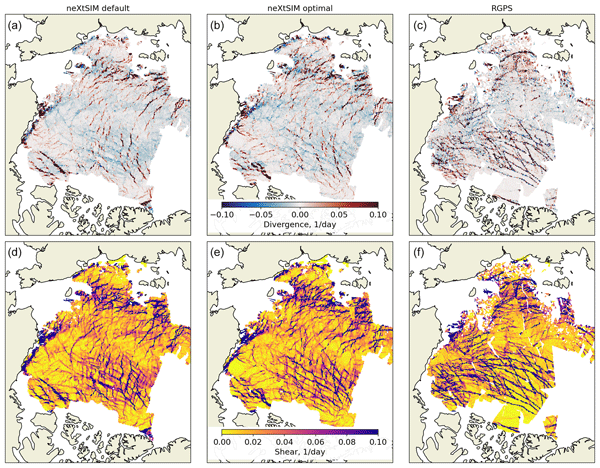
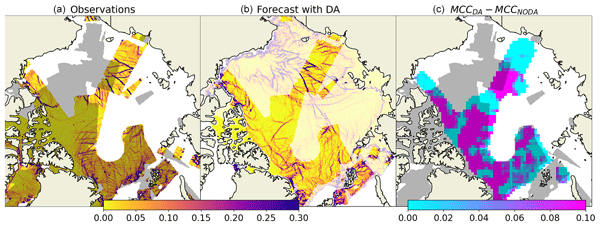
It is possible to compute sea ice motion from satellite observations and detect areas where ice converges (moves together), forms ice ridges or diverges (moves apart) and opens leads. However, it is difficult to predict the exact motion of sea ice and position of ice ridges or leads using numerical models. We propose a new method to initialise a numerical model from satellite observations to improve the accuracy of the forecasted position of leads and ridges for safer navigation.
Heather Regan, Pierre Rampal, Einar Ólason, Guillaume Boutin, and Anton Korosov
The Cryosphere, 17, 1873–1893, https://doi.org/10.5194/tc-17-1873-2023, https://doi.org/10.5194/tc-17-1873-2023, 2023
Short summary
Short summary
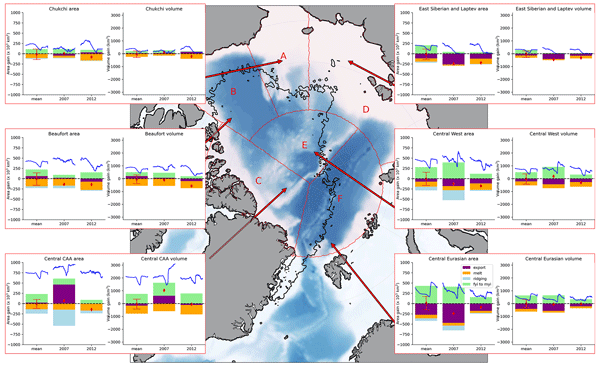
Multiyear ice (MYI), sea ice that survives the summer, is more resistant to changes than younger ice in the Arctic, so it is a good indicator of sea ice resilience. We use a model with a new way of tracking MYI to assess the contribution of different processes affecting MYI. We find two important years for MYI decline: 2007, when dynamics are important, and 2012, when melt is important. These affect MYI volume and area in different ways, which is important for the interpretation of observations.
Karina von Schuckmann, Audrey Minière, Flora Gues, Francisco José Cuesta-Valero, Gottfried Kirchengast, Susheel Adusumilli, Fiammetta Straneo, Michaël Ablain, Richard P. Allan, Paul M. Barker, Hugo Beltrami, Alejandro Blazquez, Tim Boyer, Lijing Cheng, John Church, Damien Desbruyeres, Han Dolman, Catia M. Domingues, Almudena García-García, Donata Giglio, John E. Gilson, Maximilian Gorfer, Leopold Haimberger, Maria Z. Hakuba, Stefan Hendricks, Shigeki Hosoda, Gregory C. Johnson, Rachel Killick, Brian King, Nicolas Kolodziejczyk, Anton Korosov, Gerhard Krinner, Mikael Kuusela, Felix W. Landerer, Moritz Langer, Thomas Lavergne, Isobel Lawrence, Yuehua Li, John Lyman, Florence Marti, Ben Marzeion, Michael Mayer, Andrew H. MacDougall, Trevor McDougall, Didier Paolo Monselesan, Jan Nitzbon, Inès Otosaka, Jian Peng, Sarah Purkey, Dean Roemmich, Kanako Sato, Katsunari Sato, Abhishek Savita, Axel Schweiger, Andrew Shepherd, Sonia I. Seneviratne, Leon Simons, Donald A. Slater, Thomas Slater, Andrea K. Steiner, Toshio Suga, Tanguy Szekely, Wim Thiery, Mary-Louise Timmermans, Inne Vanderkelen, Susan E. Wjiffels, Tonghua Wu, and Michael Zemp
Earth Syst. Sci. Data, 15, 1675–1709, https://doi.org/10.5194/essd-15-1675-2023, https://doi.org/10.5194/essd-15-1675-2023, 2023
Short summary
Short summary
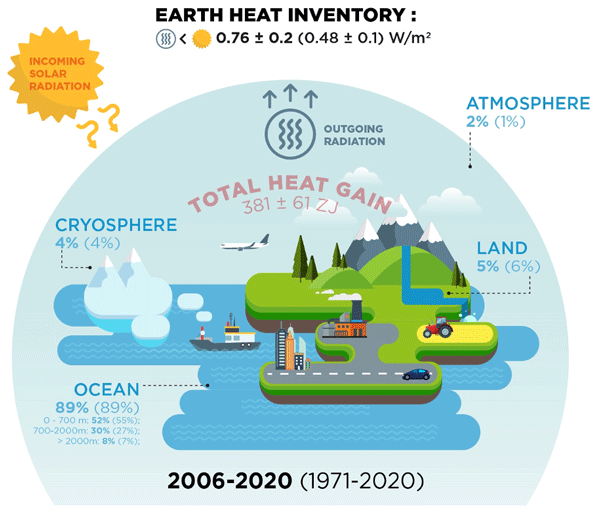
Earth's climate is out of energy balance, and this study quantifies how much heat has consequently accumulated over the past decades (ocean: 89 %, land: 6 %, cryosphere: 4 %, atmosphere: 1 %). Since 1971, this accumulated heat reached record values at an increasing pace. The Earth heat inventory provides a comprehensive view on the status and expectation of global warming, and we call for an implementation of this global climate indicator into the Paris Agreement’s Global Stocktake.
Timothy Williams, Anton Korosov, Pierre Rampal, and Einar Ólason
The Cryosphere, 15, 3207–3227, https://doi.org/10.5194/tc-15-3207-2021, https://doi.org/10.5194/tc-15-3207-2021, 2021
Short summary
Short summary
neXtSIM (neXt-generation Sea Ice Model) includes a novel and extremely realistic way of modelling sea ice dynamics – i.e. how the sea ice moves and deforms in response to the drag from winds and ocean currents. It has been developed over the last few years for a variety of applications, but this paper represents its first demonstration in a forecast context. We present results for the time period from November 2018 to June 2020 and show that it agrees well with satellite observations.
Marcel Kleinherenbrink, Anton Korosov, Thomas Newman, Andreas Theodosiou, Alexander S. Komarov, Yuanhao Li, Gert Mulder, Pierre Rampal, Julienne Stroeve, and Paco Lopez-Dekker
The Cryosphere, 15, 3101–3118, https://doi.org/10.5194/tc-15-3101-2021, https://doi.org/10.5194/tc-15-3101-2021, 2021
Short summary
Short summary
Harmony is one of the Earth Explorer 10 candidates that has the chance of being selected for launch in 2028. The mission consists of two satellites that fly in formation with Sentinel-1D, which carries a side-looking radar system. By receiving Sentinel-1's signals reflected from the surface, Harmony is able to observe instantaneous elevation and two-dimensional velocity at the surface. As such, Harmony's data allow the retrieval of sea-ice drift and wave spectra in sea-ice-covered regions.
José Abraham Torres Alavez, Ruth Mottram, Thomas Lavergne, Rasmus Pedersen, and Ole Bøssing Christensen
EGUsphere, https://doi.org/10.5194/egusphere-2025-6183, https://doi.org/10.5194/egusphere-2025-6183, 2026
This preprint is open for discussion and under review for The Cryosphere (TC).
Short summary
Short summary
Coastal polynyas shape sea ice production and polar climate. This study analyses Greenland and Antarctic polynyas using two satellite sea-ice products and HCLIM simulations. The high-resolution CCI dataset improves polynya representation, boundary-layer structure, and near-surface conditions. Results show that integrating high-resolution sea-ice data enhances regional climate modelling and supports better reanalysis systems.
Valentin Ludwig, Caroline Ribere, Sara Fleury, Christian Haas, Michel Tsamados, Mahmoud El Hajj, Jerome Bouffard, Michele Scagliola, Marion Bocquet, Eric de Boisseson, Vincent Boulenger, Guillaume Boutin, Laurence Connor, Léo Edel, Stefan Hendricks, Ferran Hernández Macià, Marcus Huntemann, Lars Kaleschke, Frank Kauker, Jack Landy, Tom Megain, Alek Petty, Till Soya Rasmussen, Mads Hvid Ribergaard, Robert Ricker, Axel Schweiger, Hoyeon Shi, Xiangshan Tian-Kunze, Donghui Yi, and Alessandro Di Bella
EGUsphere, https://doi.org/10.5194/egusphere-2025-6201, https://doi.org/10.5194/egusphere-2025-6201, 2026
This preprint is open for discussion and under review for The Cryosphere (TC).
Short summary
Short summary
Our paper compares Arctic sea-ice thickness datasets from models, reanalyses, satellite-only, and multi-product sources. We validate them against Beaufort Sea reference data, compare large-scale products, and analyse time series. Cross-product biases range from 0.2–0.4 m, RMSDs from 0.4–0.9 m, and correlations from 0.5–0.8. We find no 2010–2023 trend, but 1995–2023 thinning of ~ 0.5 m in November and ~ 0.3 m in March.
Andreas Wernecke, Thomas Lavergne, Stefan Kern, and Dirk Notz
EGUsphere, https://doi.org/10.5194/egusphere-2025-6234, https://doi.org/10.5194/egusphere-2025-6234, 2026
This preprint is open for discussion and under review for The Cryosphere (TC).
Short summary
Short summary
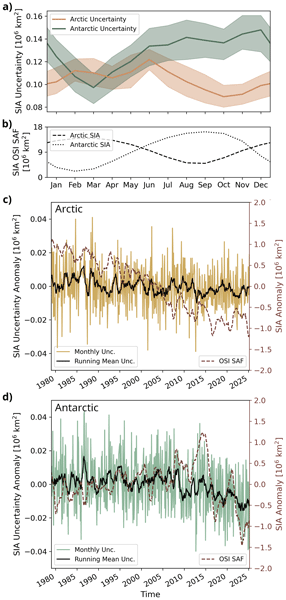
We analyse the types and size of uncertainties in satellite measurements of the global sea ice cover. These measurements give insights into the state of the climate system and quality of climate models. We derive uncertainties for one satellite product and compare it with other products. We find that offsets do play a role for measurements of the total sea ice cover, but also for estimates of its change. This calls for further investigations into the product development.
Cyril Palerme, Johannes Röhrs, Thomas Lavergne, Jozef Rusin, Are Frode Kvanum, Atle Macdonald Sørensen, Arne Melsom, Julien Brajard, Martina Idžanović, Marina Durán Moro, and Malte Müller
Geosci. Model Dev., 18, 9751–9766, https://doi.org/10.5194/gmd-18-9751-2025, https://doi.org/10.5194/gmd-18-9751-2025, 2025
Short summary
Short summary
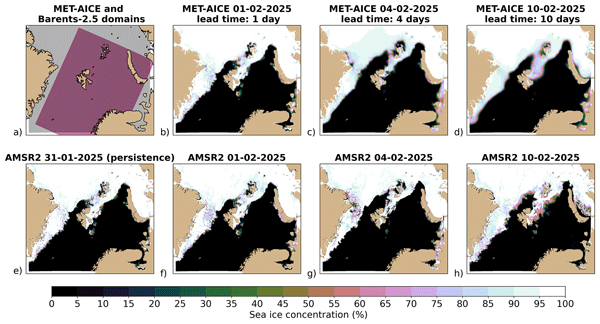
We present MET-AICE, a sea ice prediction system based on artificial intelligence techniques that has been running operationally since March 2024. The forecasts are produced daily and provide sea ice concentration predictions for the next 10 days. We evaluate the MET-AICE forecasts from the first year of operation, and we compare them to forecasts produced by three physically-based models. We show that MET-AICE is skillful and provides more accurate forecasts than the physically-based models.
Jean Rabault, Trygve Halsne, Ana Carrasco, Anton Korosov, Joey Voermans, Patrik Bohlinger, Jens Boldingh Debernard, Malte Müller, Øyvind Breivik, Takehiko Nose, Gaute Hope, Fabrice Collard, Sylvain Herlédan, Tsubasa Kodaira, Nick Hughes, Qin Zhang, Kai Håkon Christensen, Alexander Babanin, Lars Willas Dreyer, Cyril Palerme, Lotfi Aouf, Konstantinos Christakos, Atle Jensen, Johannes Röhrs, Aleksey Marchenko, Graig Sutherland, Trygve Kvåle Løken, and Takuji Waseda
The Cryosphere, 19, 6229–6260, https://doi.org/10.5194/tc-19-6229-2025, https://doi.org/10.5194/tc-19-6229-2025, 2025
Short summary
Short summary
We observe strongly modulated waves-in-ice significant wave height using buoys deployed East of Svalbard. We show that these observations likely cannot be explained by wave-current interaction or tide-induced modulation alone. We also demonstrate a strong correlation between the waves height modulation, and the rate of sea ice convergence. Therefore, our data suggest that the rate of sea ice convergence and divergence may modulate wave in ice energy dissipation.
Robert Ricker, Thomas Lavergne, Stefan Hendricks, Stephan Paul, Emily Down, Mari Anne Killie, and Marion Bocquet
The Cryosphere, 19, 3785–3803, https://doi.org/10.5194/tc-19-3785-2025, https://doi.org/10.5194/tc-19-3785-2025, 2025
Short summary
Short summary
We developed a new method to map Arctic sea ice thickness daily using satellite measurements. We address a problem similar to motion blur in photography. Traditional methods collect satellite data over 1 month to get a full picture of Arctic sea ice thickness. But in the same way as in photos of moving objects, long exposure leads to motion blur, making it difficult to identify certain features in the sea ice maps. Our method corrects for this motion blur, providing a sharper view of the evolving sea ice.
Jennifer Veitch, Enrique Alvarez-Fanjul, Arthur Capet, Stefania Ciliberti, Mauro Cirano, Emanuela Clementi, Fraser Davidson, Ghada el Serafy, Guilherme Franz, Patrick Hogan, Sudheer Joseph, Svitlana Liubartseva, Yasumasa Miyazawa, Heather Regan, and Katerina Spanoudaki
State Planet, 5-opsr, 6, https://doi.org/10.5194/sp-5-opsr-6-2025, https://doi.org/10.5194/sp-5-opsr-6-2025, 2025
Short summary
Short summary
Ocean forecast systems provide information about a future state of the ocean. This information is provided in the form of decision support tools, or downstream applications, that can be accessed by various stakeholders to support livelihoods, coastal resilience and the good governance of the marine environment. This paper provides an overview of the various downstream applications of ocean forecast systems that are utilized around the world.
Mauro Cirano, Enrique Alvarez-Fanjul, Arthur Capet, Stefania Ciliberti, Emanuela Clementi, Boris Dewitte, Matias Dinápoli, Ghada El Serafy, Patrick Hogan, Sudheer Joseph, Yasumasa Miyazawa, Ivonne Montes, Diego A. Narvaez, Heather Regan, Claudia G. Simionato, Gregory C. Smith, Joanna Staneva, Clemente A. S. Tanajura, Pramod Thupaki, Claudia Urbano-Latorre, Jennifer Veitch, and Jorge Zavala Hidalgo
State Planet, 5-opsr, 5, https://doi.org/10.5194/sp-5-opsr-5-2025, https://doi.org/10.5194/sp-5-opsr-5-2025, 2025
Short summary
Short summary
Operational ocean forecasting systems (OOFSs) are crucial for human activities, environmental monitoring, and policymaking. An assessment across eight key regions highlights strengths and gaps, particularly in coastal and biogeochemical forecasting. AI offers improvements, but collaboration, knowledge sharing, and initiatives like the OceanPrediction Decade Collaborative Centre (DCC) are key to enhancing accuracy, accessibility, and global forecasting capabilities.
Mukund Gupta, Heather Regan, Younghyun Koo, Sean Minhui Tashi Chua, Xueke Li, and Petra Heil
The Cryosphere, 19, 1241–1257, https://doi.org/10.5194/tc-19-1241-2025, https://doi.org/10.5194/tc-19-1241-2025, 2025
Short summary
Short summary
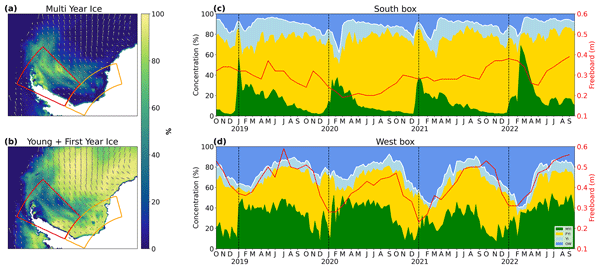
The sea ice cover is composed of floes, whose shapes set the material properties of the pack. Here, we use a satellite product (ICESat-2) to investigate these floe shapes within the Weddell Sea in Antarctica. We find that floes tend to become smaller during the melt season, while their thickness distribution exhibits different behavior between the western and southern regions of the pack. These metrics will help calibrate models and improve our understanding of sea ice physics across scales.
Léo Edel, Jiping Xie, Anton Korosov, Julien Brajard, and Laurent Bertino
The Cryosphere, 19, 731–752, https://doi.org/10.5194/tc-19-731-2025, https://doi.org/10.5194/tc-19-731-2025, 2025
Short summary
Short summary
This study developed a new method to estimate Arctic sea ice thickness from 1992 to 2010 using a combination of machine learning and data assimilation. By training a machine learning model on data from 2011 to 2022, past errors in sea ice thickness can be corrected, leading to improved estimations. This approach provides insights into historical changes in sea ice thickness, showing a notable decline from 1992 to 2022, and offers a valuable resource for future studies.
Anton Korosov, Yue Ying, and Einar Ólason
Geosci. Model Dev., 18, 885–904, https://doi.org/10.5194/gmd-18-885-2025, https://doi.org/10.5194/gmd-18-885-2025, 2025
Short summary
Short summary
We have developed a new method to improve the accuracy of sea ice models, which predict how ice moves and deforms due to wind and ocean currents. Traditional models use parameters that are often poorly defined. The new approach uses machine learning to fine-tune these parameters by comparing simulated ice drift with satellite data. The method identifies optimal settings for the model by analysing patterns in ice deformation. This results in more accurate simulations of sea ice drift forecasting.
Einar Ólason, Guillaume Boutin, Timothy Williams, Anton Korosov, Heather Regan, Jonathan Rheinlænder, Pierre Rampal, Daniela Flocco, Abdoulaye Samaké, Richard Davy, Timothy Spain, and Sean Chua
EGUsphere, https://doi.org/10.5194/egusphere-2024-3521, https://doi.org/10.5194/egusphere-2024-3521, 2025
Short summary
Short summary
This paper introduces a new version of the neXtSIM sea-ice model. NeXtSIM is unique among sea-ice models in how it represents sea-ice dynamics, focusing on features such as cracks and ridges and how these impact interactions between the atmosphere and ocean where sea ice is present. The new version introduces some physical parameterisations and model options detailed and explained in the paper. Following the paper's publication, the neXtSIM code will be released publicly for the first time.
Karina von Schuckmann, Lorena Moreira, Mathilde Cancet, Flora Gues, Emmanuelle Autret, Jonathan Baker, Clément Bricaud, Romain Bourdalle-Badie, Lluis Castrillo, Lijing Cheng, Frederic Chevallier, Daniele Ciani, Alvaro de Pascual-Collar, Vincenzo De Toma, Marie Drevillon, Claudia Fanelli, Gilles Garric, Marion Gehlen, Rianne Giesen, Kevin Hodges, Doroteaciro Iovino, Simon Jandt-Scheelke, Eric Jansen, Melanie Juza, Ioanna Karagali, Thomas Lavergne, Simona Masina, Ronan McAdam, Audrey Minière, Helen Morrison, Tabea Rebekka Panteleit, Andrea Pisano, Marie-Isabelle Pujol, Ad Stoffelen, Sulian Thual, Simon Van Gennip, Pierre Veillard, Chunxue Yang, and Hao Zuo
State Planet, 4-osr8, 1, https://doi.org/10.5194/sp-4-osr8-1-2024, https://doi.org/10.5194/sp-4-osr8-1-2024, 2024
Andreas Stokholm, Jørgen Buus-Hinkler, Tore Wulf, Anton Korosov, Roberto Saldo, Leif Toudal Pedersen, David Arthurs, Ionut Dragan, Iacopo Modica, Juan Pedro, Annekatrien Debien, Xinwei Chen, Muhammed Patel, Fernando Jose Pena Cantu, Javier Noa Turnes, Jinman Park, Linlin Xu, Katharine Andrea Scott, David Anthony Clausi, Yuan Fang, Mingzhe Jiang, Saeid Taleghanidoozdoozan, Neil Curtis Brubacher, Armina Soleymani, Zacharie Gousseau, Michał Smaczny, Patryk Kowalski, Jacek Komorowski, David Rijlaarsdam, Jan Nicolaas van Rijn, Jens Jakobsen, Martin Samuel James Rogers, Nick Hughes, Tom Zagon, Rune Solberg, Nicolas Longépé, and Matilde Brandt Kreiner
The Cryosphere, 18, 3471–3494, https://doi.org/10.5194/tc-18-3471-2024, https://doi.org/10.5194/tc-18-3471-2024, 2024
Short summary
Short summary
The AutoICE challenge encouraged the development of deep learning models to map multiple aspects of sea ice – the amount of sea ice in an area and the age and ice floe size – using multiple sources of satellite and weather data across the Canadian and Greenlandic Arctic. Professionally drawn operational sea ice charts were used as a reference. A total of 179 students and sea ice and AI specialists participated and produced maps in broad agreement with the sea ice charts.
Andreas Wernecke, Dirk Notz, Stefan Kern, and Thomas Lavergne
The Cryosphere, 18, 2473–2486, https://doi.org/10.5194/tc-18-2473-2024, https://doi.org/10.5194/tc-18-2473-2024, 2024
Short summary
Short summary
The total Arctic sea-ice area (SIA), which is an important climate indicator, is routinely monitored with the help of satellite measurements. Uncertainties in observations of sea-ice concentration (SIC) partly cancel out when summed up to the total SIA, but the degree to which this is happening has been unclear. Here we find that the uncertainty daily SIA estimates, based on uncertainties in SIC, are about 300 000 km2. The 2002 to 2017 September decline in SIA is approx. 105 000 ± 9000 km2 a−1.
Cyril Palerme, Thomas Lavergne, Jozef Rusin, Arne Melsom, Julien Brajard, Are Frode Kvanum, Atle Macdonald Sørensen, Laurent Bertino, and Malte Müller
The Cryosphere, 18, 2161–2176, https://doi.org/10.5194/tc-18-2161-2024, https://doi.org/10.5194/tc-18-2161-2024, 2024
Short summary
Short summary
Sea ice forecasts are operationally produced using physically based models, but these forecasts are often not accurate enough for maritime operations. In this study, we developed a statistical correction technique using machine learning in order to improve the skill of short-term (up to 10 d) sea ice concentration forecasts produced by the TOPAZ4 model. This technique allows for the reduction of errors from the TOPAZ4 sea ice concentration forecasts by 41 % on average.
Marina Durán Moro, Ann Kristin Sperrevik, Thomas Lavergne, Laurent Bertino, Yvonne Gusdal, Silje Christine Iversen, and Jozef Rusin
The Cryosphere, 18, 1597–1619, https://doi.org/10.5194/tc-18-1597-2024, https://doi.org/10.5194/tc-18-1597-2024, 2024
Short summary
Short summary
Individual satellite passes instead of daily means of sea ice concentration are used to correct the sea ice model forecast in the Barents Sea. The use of passes provides a significantly larger improvement of the forecasts even after a 7 d period due to the more precise information on temporal and spatial variability contained in the passes. One major advantage of the use of satellite passes is that there is no need to wait for the daily mean availability in order to update the forecast.
Thomas Lavergne and Emily Down
Earth Syst. Sci. Data, 15, 5807–5834, https://doi.org/10.5194/essd-15-5807-2023, https://doi.org/10.5194/essd-15-5807-2023, 2023
Short summary
Short summary
Sea ice in the Arctic and Antarctic can move several tens of kilometers per day due to wind and ocean currents. By analysing thousands of satellite images, we measured how sea ice has been moving every single day from 1991 through to 2020. We compare our data to how buoys attached to the ice moved and find good agreement. Other scientists will now use our data to better understand if climate change has modified the way sea ice moves and in what way.
Anton Korosov, Pierre Rampal, Yue Ying, Einar Ólason, and Timothy Williams
The Cryosphere, 17, 4223–4240, https://doi.org/10.5194/tc-17-4223-2023, https://doi.org/10.5194/tc-17-4223-2023, 2023
Short summary
Short summary
It is possible to compute sea ice motion from satellite observations and detect areas where ice converges (moves together), forms ice ridges or diverges (moves apart) and opens leads. However, it is difficult to predict the exact motion of sea ice and position of ice ridges or leads using numerical models. We propose a new method to initialise a numerical model from satellite observations to improve the accuracy of the forecasted position of leads and ridges for safer navigation.
Stefania A. Ciliberti, Enrique Alvarez Fanjul, Jay Pearlman, Kirsten Wilmer-Becker, Pierre Bahurel, Fabrice Ardhuin, Alain Arnaud, Mike Bell, Segolene Berthou, Laurent Bertino, Arthur Capet, Eric Chassignet, Stefano Ciavatta, Mauro Cirano, Emanuela Clementi, Gianpiero Cossarini, Gianpaolo Coro, Stuart Corney, Fraser Davidson, Marie Drevillon, Yann Drillet, Renaud Dussurget, Ghada El Serafy, Katja Fennel, Marcos Garcia Sotillo, Patrick Heimbach, Fabrice Hernandez, Patrick Hogan, Ibrahim Hoteit, Sudheer Joseph, Simon Josey, Pierre-Yves Le Traon, Simone Libralato, Marco Mancini, Pascal Matte, Angelique Melet, Yasumasa Miyazawa, Andrew M. Moore, Antonio Novellino, Andrew Porter, Heather Regan, Laia Romero, Andreas Schiller, John Siddorn, Joanna Staneva, Cecile Thomas-Courcoux, Marina Tonani, Jose Maria Garcia-Valdecasas, Jennifer Veitch, Karina von Schuckmann, Liying Wan, John Wilkin, and Romane Zufic
State Planet, 1-osr7, 2, https://doi.org/10.5194/sp-1-osr7-2-2023, https://doi.org/10.5194/sp-1-osr7-2-2023, 2023
Johannes Röhrs, Yvonne Gusdal, Edel S. U. Rikardsen, Marina Durán Moro, Jostein Brændshøi, Nils Melsom Kristensen, Sindre Fritzner, Keguang Wang, Ann Kristin Sperrevik, Martina Idžanović, Thomas Lavergne, Jens Boldingh Debernard, and Kai H. Christensen
Geosci. Model Dev., 16, 5401–5426, https://doi.org/10.5194/gmd-16-5401-2023, https://doi.org/10.5194/gmd-16-5401-2023, 2023
Short summary
Short summary
A model to predict ocean currents, temperature, and sea ice is presented, covering the Barents Sea and northern Norway. To quantify forecast uncertainties, the model calculates ensemble forecasts with 24 realizations of ocean and ice conditions. Observations from satellites, buoys, and ships are ingested by the model. The model forecasts are compared with observations, and we show that the ocean model has skill in predicting sea surface temperatures.
Heather Regan, Pierre Rampal, Einar Ólason, Guillaume Boutin, and Anton Korosov
The Cryosphere, 17, 1873–1893, https://doi.org/10.5194/tc-17-1873-2023, https://doi.org/10.5194/tc-17-1873-2023, 2023
Short summary
Short summary
Multiyear ice (MYI), sea ice that survives the summer, is more resistant to changes than younger ice in the Arctic, so it is a good indicator of sea ice resilience. We use a model with a new way of tracking MYI to assess the contribution of different processes affecting MYI. We find two important years for MYI decline: 2007, when dynamics are important, and 2012, when melt is important. These affect MYI volume and area in different ways, which is important for the interpretation of observations.
Karina von Schuckmann, Audrey Minière, Flora Gues, Francisco José Cuesta-Valero, Gottfried Kirchengast, Susheel Adusumilli, Fiammetta Straneo, Michaël Ablain, Richard P. Allan, Paul M. Barker, Hugo Beltrami, Alejandro Blazquez, Tim Boyer, Lijing Cheng, John Church, Damien Desbruyeres, Han Dolman, Catia M. Domingues, Almudena García-García, Donata Giglio, John E. Gilson, Maximilian Gorfer, Leopold Haimberger, Maria Z. Hakuba, Stefan Hendricks, Shigeki Hosoda, Gregory C. Johnson, Rachel Killick, Brian King, Nicolas Kolodziejczyk, Anton Korosov, Gerhard Krinner, Mikael Kuusela, Felix W. Landerer, Moritz Langer, Thomas Lavergne, Isobel Lawrence, Yuehua Li, John Lyman, Florence Marti, Ben Marzeion, Michael Mayer, Andrew H. MacDougall, Trevor McDougall, Didier Paolo Monselesan, Jan Nitzbon, Inès Otosaka, Jian Peng, Sarah Purkey, Dean Roemmich, Kanako Sato, Katsunari Sato, Abhishek Savita, Axel Schweiger, Andrew Shepherd, Sonia I. Seneviratne, Leon Simons, Donald A. Slater, Thomas Slater, Andrea K. Steiner, Toshio Suga, Tanguy Szekely, Wim Thiery, Mary-Louise Timmermans, Inne Vanderkelen, Susan E. Wjiffels, Tonghua Wu, and Michael Zemp
Earth Syst. Sci. Data, 15, 1675–1709, https://doi.org/10.5194/essd-15-1675-2023, https://doi.org/10.5194/essd-15-1675-2023, 2023
Short summary
Short summary
Earth's climate is out of energy balance, and this study quantifies how much heat has consequently accumulated over the past decades (ocean: 89 %, land: 6 %, cryosphere: 4 %, atmosphere: 1 %). Since 1971, this accumulated heat reached record values at an increasing pace. The Earth heat inventory provides a comprehensive view on the status and expectation of global warming, and we call for an implementation of this global climate indicator into the Paris Agreement’s Global Stocktake.
Guillaume Boutin, Einar Ólason, Pierre Rampal, Heather Regan, Camille Lique, Claude Talandier, Laurent Brodeau, and Robert Ricker
The Cryosphere, 17, 617–638, https://doi.org/10.5194/tc-17-617-2023, https://doi.org/10.5194/tc-17-617-2023, 2023
Short summary
Short summary
Sea ice cover in the Arctic is full of cracks, which we call leads. We suspect that these leads play a role for atmosphere–ocean interactions in polar regions, but their importance remains challenging to estimate. We use a new ocean–sea ice model with an original way of representing sea ice dynamics to estimate their impact on winter sea ice production. This model successfully represents sea ice evolution from 2000 to 2018, and we find that about 30 % of ice production takes place in leads.
Yufang Ye, Yanbing Luo, Yan Sun, Mohammed Shokr, Signe Aaboe, Fanny Girard-Ardhuin, Fengming Hui, Xiao Cheng, and Zhuoqi Chen
The Cryosphere, 17, 279–308, https://doi.org/10.5194/tc-17-279-2023, https://doi.org/10.5194/tc-17-279-2023, 2023
Short summary
Short summary
Arctic sea ice type (SITY) variation is a sensitive indicator of climate change. This study gives a systematic inter-comparison and evaluation of eight SITY products. Main results include differences in SITY products being significant, with average Arctic multiyear ice extent up to 1.8×10⁶ km2; Ku-band scatterometer SITY products generally performing better; and factors such as satellite inputs, classification methods, training datasets and post-processing highly impacting their performance.
Stefan Kern, Thomas Lavergne, Leif Toudal Pedersen, Rasmus Tage Tonboe, Louisa Bell, Maybritt Meyer, and Luise Zeigermann
The Cryosphere, 16, 349–378, https://doi.org/10.5194/tc-16-349-2022, https://doi.org/10.5194/tc-16-349-2022, 2022
Short summary
Short summary
High-resolution clear-sky optical satellite imagery has rarely been used to evaluate satellite passive microwave sea-ice concentration products beyond case-study level. By comparing 10 such products with sea-ice concentration estimated from > 350 such optical images in both hemispheres, we expand results of earlier evaluation studies for these products. Results stress the need to look beyond precision and accuracy and to discuss the evaluation data’s quality and filters applied in the products.
Thomas Lavergne, Montserrat Piñol Solé, Emily Down, and Craig Donlon
The Cryosphere, 15, 3681–3698, https://doi.org/10.5194/tc-15-3681-2021, https://doi.org/10.5194/tc-15-3681-2021, 2021
Short summary
Short summary
Pushed by winds and ocean currents, polar sea ice is on the move. We use passive microwave satellites to observe this motion. The images from their orbits are often put together into daily images before motion is measured. In our study, we measure motion from the individual orbits directly and not from the daily images. We obtain many more motion vectors, and they are more accurate. This can be used for current and future satellites, e.g. the Copernicus Imaging Microwave Radiometer (CIMR).
Timothy Williams, Anton Korosov, Pierre Rampal, and Einar Ólason
The Cryosphere, 15, 3207–3227, https://doi.org/10.5194/tc-15-3207-2021, https://doi.org/10.5194/tc-15-3207-2021, 2021
Short summary
Short summary
neXtSIM (neXt-generation Sea Ice Model) includes a novel and extremely realistic way of modelling sea ice dynamics – i.e. how the sea ice moves and deforms in response to the drag from winds and ocean currents. It has been developed over the last few years for a variety of applications, but this paper represents its first demonstration in a forecast context. We present results for the time period from November 2018 to June 2020 and show that it agrees well with satellite observations.
Marcel Kleinherenbrink, Anton Korosov, Thomas Newman, Andreas Theodosiou, Alexander S. Komarov, Yuanhao Li, Gert Mulder, Pierre Rampal, Julienne Stroeve, and Paco Lopez-Dekker
The Cryosphere, 15, 3101–3118, https://doi.org/10.5194/tc-15-3101-2021, https://doi.org/10.5194/tc-15-3101-2021, 2021
Short summary
Short summary
Harmony is one of the Earth Explorer 10 candidates that has the chance of being selected for launch in 2028. The mission consists of two satellites that fly in formation with Sentinel-1D, which carries a side-looking radar system. By receiving Sentinel-1's signals reflected from the surface, Harmony is able to observe instantaneous elevation and two-dimensional velocity at the surface. As such, Harmony's data allow the retrieval of sea-ice drift and wave spectra in sea-ice-covered regions.
Cited articles
Aaboe, S., Down, E. J., Sørensen, A., Lavergne, T., and Eastwood, S.: Sea Ice Edge and Sea Ice Type Climate Data Records, Version 4.0: Algorithm Theoretical Basis Document, Copernicus Climate Change Service [data set], 2023a. a
Aaboe, S., Down, E. J., Sørensen, A., Lavergne, T., and Eastwood, S.: Sea ice type climate data record 1978-present, v4.0, Copernicus Climate Change Service, Climate Data Store [data set], https://doi.org/10.24381/cds.29c46d83, 2023b. a
Brodzik, M. J. and Knowles, K.: EASE-Grid 2.0 Land-Ocean-Coastline-Ice Masks Derived from Boston University MODIS/Terra Land Cover Data, Version 1, National Snow and Ice Data Center, Boulder, USA [data set], https://doi.org/10.5067/VY2JQZL9J8AQ (last access: 2 June 2025), 2011. a, b
Brunette, C., Tremblay, L. B., and Newton, R.: A new state-dependent parameterization for the free drift of sea ice, The Cryosphere, 16, 533–557, https://doi.org/10.5194/tc-16-533-2022, 2022. a
CF-community: Climate and Forecast Metadata Convention, http://www.cfconventions.org (last access: 2 June 2025), 2022. a
Edel, L., Xie, J., Korosov, A., Brajard, J., and Bertino, L.: Reconstruction of Arctic sea ice thickness (1992–2010) based on a hybrid machine learning and data assimilation approach, The Cryosphere, 19, 731–752, https://doi.org/10.5194/tc-19-731-2025, 2025. a
Falkingham, J.: The International Ice Charting Working Group: the first twenty-five years, Frontiers in Marine Science, 12, https://doi.org/10.3389/fmars.2025.1563900, 2025. a
Fowler, C., Emery, W., and Maslanik, J.: Satellite-derived evolution of Arctic sea ice age: October 1978 to March 2003, IEEE Geosci. Remote S., 1, 71–74, https://doi.org/10.1109/LGRS.2004.824741, 2004. a
Geuzaine, C. and Remacle, J.-F.: Gmsh: A 3-D finite element mesh generator with built-in pre- and post-processing facilities, Int. J. Numer. Meth. Eng., 79, 1309–1331, https://doi.org/10.1002/nme.2579, 2009. a
Johnson, T., Tsamados, M., Muller, J.-P., and Stroeve, J.: Mapping Arctic sea-ice surface roughness with multi-angle imaging SpectroRadiometer, Remote Sens.-Basel, 14, 6249, https://doi.org/10.3390/rs14246249, 2022. a
Kern, S., Lavergne, T., Pedersen, L. T., Tonboe, R. T., Bell, L., Meyer, M., and Zeigermann, L.: Satellite passive microwave sea-ice concentration data set intercomparison using Landsat data, The Cryosphere, 16, 349–378, https://doi.org/10.5194/tc-16-349-2022, 2022. a
Korosov, A.: Explanatory animations for the Arctic Sea Ice Age Climate Data Record Version 2.1, Zenodo [code, video], https://doi.org/10.5281/zenodo.16744295, 2025a. a, b, c
Korosov, A. and Edel, L.: Arctic Sea Ice Age Climate Data Record Version 2.1 (monthly), Zenodo [data set], https://doi.org/10.5281/zenodo.15773500, 2025a. a
Korosov, A. and Edel, L.: Sea ice age computation software, PySeaIceAge-2.1.1, Zenodo [code], https://doi.org/10.5281/zenodo.16743289, 2025b. a
Korosov, A. and Edel, L.: Arctic Sea Ice Age Climate Data Record Version 2.1, Norwegian Meteorological Institute [data set], https://doi.org/10.21343/sqvr-rq75, 2026. a, b
Korosov, A. A., Rampal, P., Pedersen, L. T., Saldo, R., Ye, Y., Heygster, G., Lavergne, T., Aaboe, S., and Girard-Ardhuin, F.: A new tracking algorithm for sea ice age distribution estimation, The Cryosphere, 12, 2073–2085, https://doi.org/10.5194/tc-12-2073-2018, 2018. a, b, c
Kwok, R.: Arctic sea ice thickness, volume, and multiyear ice coverage: losses and coupled variability (1958–2018), Environ. Res. Lett., 13, 105005, https://doi.org/10.1088/1748-9326/aae3ec, 2018. a
Landy, J. C., Petty, A. A., Tsamados, M., and Stroeve, J. C.: Sea ice roughness overlooked as a key source of uncertainty in CryoSat-2 ice freeboard retrievals, J. Geophys. Res.-Oceans, 125, e2019JC015820, https://doi.org/10.1029/2019JC015820, 2020. a
Lavergne, T.: Transformation and Rotation of OSI SAF Sea Ice Drift vectors, Zenodo [code], https://doi.org/10.5281/zenodo.8398399, 2023. a
Lavergne, T. and Down, E.: A climate data record of year-round global sea-ice drift from the EUMETSAT Ocean and Sea Ice Satellite Application Facility (OSI SAF), Earth Syst. Sci. Data, 15, 5807–5834, https://doi.org/10.5194/essd-15-5807-2023, 2023. a, b, c
Lavergne, T., Eastwood, S., Teffah, Z., Schyberg, H., and Breivik, L.-A.: Sea ice motion from low-resolution satellite sensors: an alternative method and its validation in the Arctic, J. Geophys. Res.-Oceans, 115, https://doi.org/10.1029/2009jc005958, 2010. a, b
Lavergne, T., Sørensen, A. M., Kern, S., Tonboe, R., Notz, D., Aaboe, S., Bell, L., Dybkjær, G., Eastwood, S., Gabarro, C., Heygster, G., Killie, M. A., Brandt Kreiner, M., Lavelle, J., Saldo, R., Sandven, S., and Pedersen, L. T.: Version 2 of the EUMETSAT OSI SAF and ESA CCI sea-ice concentration climate data records, The Cryosphere, 13, 49–78, https://doi.org/10.5194/tc-13-49-2019, 2019. a
Lavergne, T., Kern, S., Aaboe, S., Derby, L., Dybkjaer, G., Garric, G., Heil, P., Hendricks, S., Holfort, J., Howell, S., Key, J., Lieser, J. L., Maksym, T., Maslowski, W., Meier, W., Muñoz-Sabater, J., Nicolas, J., Özsoy, B., Rabe, B., Rack, W., Raphael, M., de Rosnay, P., Smolyanitsky, V., Tietsche, S., Ukita, J., Vichi, M., Wagner, P., Willmes, S., and Zhao, X.: A new structure for the sea ice essential climate variables of the global climate observing system, B. Am. Meteorol. Soc., 103, E1502–E1521, https://doi.org/10.1175/BAMS-D-21-0227.1, 2022. a
Nealen, A., Igarashi, T., Sorkine, O., and Alexa, M.: Laplacian mesh optimization, in: Proceedings of the 4th International Conference on Computer Graphics and Interactive Techniques in Australasia and Southeast Asia, GRAPHITE '06, Association for Computing Machinery, New York, NY, USA, https://doi.org/10.1145/1174429.1174494, 381–389, 2006. a
OSI SAF: Global Low Resolution Sea Ice Drift, EUMETSAT [data set], https://doi.org/10.15770/EUM_SAF_OSI_NRT_2007, 2007. a
OSI SAF: Global sea ice concentration interim climate data record (v3.0, 2022), EUMETSAT [data set], https://doi.org/10.15770/EUM_SAF_OSI_0014, 2022a. a
OSI SAF: Global sea ice concentration climate data record 1978–2020 (v3.0, 2022), EUMETSAT [data set], https://doi.org/10.15770/EUM_SAF_OSI_0013, 2022b. a
OSI SAF: Global sea ice drift climate data record 1991–2020 (v1.0, 2022), EUMETSAT [data set], https://doi.org/10.15770/EUM_SAF_OSI_0012, 2022c. a
Regan, H., Rampal, P., Òlason, E., Boutin, G., and Korosov, A.: Modelling the evolution of Arctic multiyear sea ice over 2000–2018, The Cryosphere, 17, 1873–1893, https://doi.org/10.5194/tc-17-1873-2023, 2023. a, b, c
Thomas, D.: The quality of sea ice velocity estimates, J. Geophys. Res., 104, 13627–13652, https://doi.org/10.1029/1999jc900086, 1999. a
Thorndike, A. S. and Colony, R.: Sea ice motion in response to geostrophic winds, J. Geophys. Res., 87, 5845–5852, https://doi.org/10.1029/JC087iC08p05845, 1982. a
Tschudi, M., Meier, W. N., Stewart, J. S., Fowler, C., and Maslanik, J.: Polar Pathfinder daily 25 km EASE-grid sea ice motion vectors, NASA National Snow and Ice Data Center Distributed Active Archive Center, Boulder, Colorado USA, https://doi.org/10.5067/INAWUWO7QH7B, 2019. a
Tschudi, M. A., Meier, W. N., and Stewart, J. S.: An enhancement to sea ice motion and age products at the National Snow and Ice Data Center (NSIDC), The Cryosphere, 14, 1519–1536, https://doi.org/10.5194/tc-14-1519-2020, 2020. a, b, c
Short summary
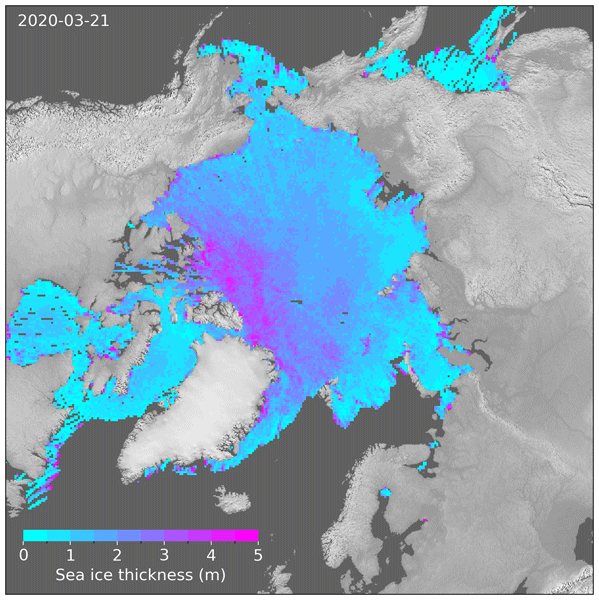
We present a new long-term record of Arctic sea ice age spanning from 1991 to 2024. Using satellite data and a new tracking method, it maps fractions of sea ice from first- to sixth-year and includes uncertainty estimates. The dataset shows a decline in older ice and more first-year ice, it agrees well with buoy data, and supports Arctic monitoring, climate research, navigation, and model evaluation.
We present a new long-term record of Arctic sea ice age spanning from 1991 to 2024. Using...
Altmetrics
Final-revised paper
Preprint