Articles | Volume 18, issue 9
https://doi.org/10.5194/essd-18-6637-2026
© Author(s) 2026. This work is distributed under
the Creative Commons Attribution 4.0 License.
the Creative Commons Attribution 4.0 License.
https://doi.org/10.5194/essd-18-6637-2026
© Author(s) 2026. This work is distributed under
the Creative Commons Attribution 4.0 License.
the Creative Commons Attribution 4.0 License.
Data description article
| Highlight paper
| 
09 Sep 2026
Data description article | Highlight paper |
| 09 Sep 2026
| 09 Sep 2026
A global hourly ISIMIP3 climate forcing dataset for impact modeling
Michel Bechtold
CORRESPONDING AUTHOR

Department of Earth and Environmental Sciences, KU Leuven, Leuven, Belgium
Benjamin Poschlod
Institute for Global Water Security, Hamburg University of Technology, Hamburg, Germany
Research Unit Sustainability and Climate Risk, Earth and Society Research Hub (ESRAH), University of Hamburg, Hamburg, Germany
Christian Otto
Potsdam Institute for Climate Impact Research, Potsdam, Germany
Jan Volkholz
Potsdam Institute for Climate Impact Research, Potsdam, Germany
Matthias Büchner
Potsdam Institute for Climate Impact Research, Potsdam, Germany
Florian Zabel
Department of Environmental Sciences, University of Basel, Basel, Switzerland
Related authors
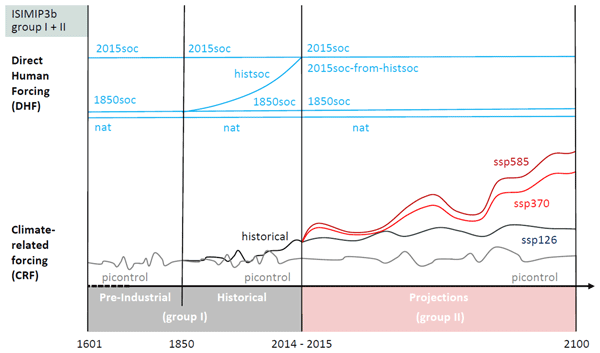
Katja Frieler, Stefan Lange, Jacob Schewe, Matthias Mengel, Simon Treu, Christian Otto, Jan Volkholz, Christopher P. O. Reyer, Stefanie Heinicke, Colin Jones, Julia L. Blanchard, Cheryl S. Harrison, Colleen M. Petrik, Tyler D. Eddy, Kelly Ortega-Cisneros, Camilla Novaglio, Ryan Heneghan, Derek P. Tittensor, Olivier Maury, Matthias Büchner, Thomas Vogt, Dánnell Quesada-Chacón, Kerry Emanuel, Chia-Ying Lee, Suzana J. Camargo, Linn Hamester, Jonas Jägermeyr, Sam Rabin, Jochen Klar, Iliusi D. Vega del Valle, Lisa Novak, Inga J. Sauer, Gitta Lasslop, Sarah Chadburn, Eleanor Burke, Angela Gallego-Sala, Noah Smith, Jinfeng Chang, Stijn Hantson, Chantelle Burton, Anne Gädeke, Fang Li, Simon N. Gosling, Hannes Müller Schmied, Fred Hattermann, Thomas Hickler, Rafael Marcé, Don Pierson, Wim Thiery, Daniel Mercado-Bettín, Robert Ladwig, Ana Isabel Ayala, Matthew Forrest, Michel Bechtold, Robert Reinecke, Inge de Graaf, Jed O. Kaplan, Alexander Koch, Matthieu Lengaigne, Rohini Kumar, and Maryna Strokal
Geosci. Model Dev., 19, 4095–4135, https://doi.org/10.5194/gmd-19-4095-2026, https://doi.org/10.5194/gmd-19-4095-2026, 2026
Short summary
Short summary
This paper describes the experiments and data sets necessary to run historic and future impact projections, and the underlying assumptions of future climate change as defined by the 3rd round of the ISIMIP Project (Inter-sectoral Impactmodel Intercomparison Project, isimip.org). ISIMIP provides a framework for cross-sectorally consistent climate impact simulations to contribute to a comprehensive and consistent picture of the world under different climate-change scenarios.
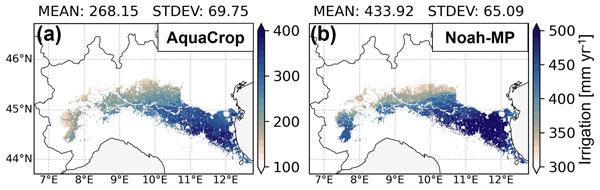
Louise Busschaert, Michel Bechtold, Sara Modanesi, Christian Massari, Dirk Raes, Sujay V. Kumar, and Gabriëlle J. M. De Lannoy
Hydrol. Earth Syst. Sci., 30, 2579–2611, https://doi.org/10.5194/hess-30-2579-2026, https://doi.org/10.5194/hess-30-2579-2026, 2026
Short summary
Short summary
Two models, AquaCrop (crop model) and Noah-MP (land surface model), were compared estimating irrigation in Italy's Po Valley. Noah-MP simulated higher water use (434 mm/yr) than AquaCrop (268 mm/yr), mainly due to extra water losses like runoff. Once losses were accounted for, both aligned with basin-scale reports of around 500 to 600 mm/yr. The study highlights how complex irrigation modeling is, and the need for better observational data to validate results.
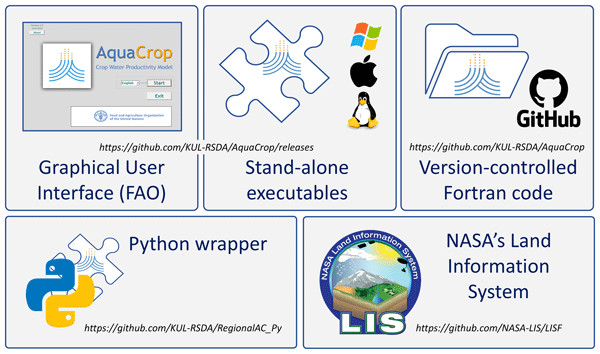
Gabriëlle J. M. De Lannoy, Louise Busschaert, Michel Bechtold, Niccolò Lanfranco, Shannon de Roos, Zdenko Heyvaert, Martynas Bielinis, Jonas Mortelmans, Samuel A. Scherrer, Maxime Van den Bossche, Sujay Kumar, David M. Mocko, Eric Kemp, Lee Heng, Pasquale Steduto, and Dirk Raes
Geosci. Model Dev., 19, 2551–2575, https://doi.org/10.5194/gmd-19-2551-2026, https://doi.org/10.5194/gmd-19-2551-2026, 2026
Short summary
Short summary
The AquaCrop model has been incorporated into the NASA Land Information System, to advance regional crop growth simulations at any spatial resolution, with a range of different input sources for meteorology, soil and crop parameters. This system also facilitates the assimilation of satellite data to update the crop and water conditions during model simulations. We present three exploratory applications to highlight pathways for future research on regional-scale crop estimation.
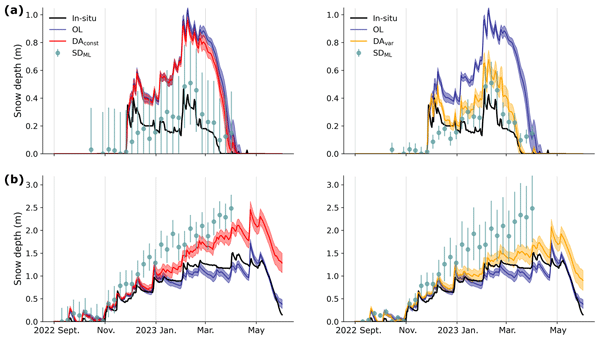
Devon Dunmire, Michel Bechtold, Lucas Boeykens, and Gabriëlle J. M. De Lannoy
The Cryosphere, 20, 609–628, https://doi.org/10.5194/tc-20-609-2026, https://doi.org/10.5194/tc-20-609-2026, 2026
Short summary
Short summary
Snow is vital for society and the climate, yet estimates of snowpack remain uncertain due to observational and modeling limitations. Data assimilation (DA) helps by integrating observations with models. Here, we integrate snow depth retrievals into a physically-based snow model across the European Alps. This work offers advancements for snow data assimilation, such as incorporating a dynamic observational uncertainty, which is essential for forecasting and water resource management.
Louise Busschaert, Michel Bechtold, Sara Modanesi, Christian Massari, Dirk Raes, Sujay V. Kumar, and Gabrielle J. M. De Lannoy
EGUsphere, https://doi.org/10.2139/ssrn.4974019, https://doi.org/10.2139/ssrn.4974019, 2024
Preprint archived
Short summary
Short summary
This study estimates irrigation in the Po Valley using AquaCrop and Noah-MP models with sprinkler irrigation. Noah-MP shows higher annual rates than AquaCrop due to more water losses. After adjusting, both align with reported irrigation ranges (500–600 mm/yr). Soil moisture estimates from both models match satellite data, though both have limitations in vegetation and evapotranspiration modeling. The study emphasizes the need for observations to improve irrigation estimates.
Tobias Karl David Weber, Lutz Weihermüller, Attila Nemes, Michel Bechtold, Aurore Degré, Efstathios Diamantopoulos, Simone Fatichi, Vilim Filipović, Surya Gupta, Tobias L. Hohenbrink, Daniel R. Hirmas, Conrad Jackisch, Quirijn de Jong van Lier, John Koestel, Peter Lehmann, Toby R. Marthews, Budiman Minasny, Holger Pagel, Martine van der Ploeg, Shahab Aldin Shojaeezadeh, Simon Fiil Svane, Brigitta Szabó, Harry Vereecken, Anne Verhoef, Michael Young, Yijian Zeng, Yonggen Zhang, and Sara Bonetti
Hydrol. Earth Syst. Sci., 28, 3391–3433, https://doi.org/10.5194/hess-28-3391-2024, https://doi.org/10.5194/hess-28-3391-2024, 2024
Short summary
Short summary
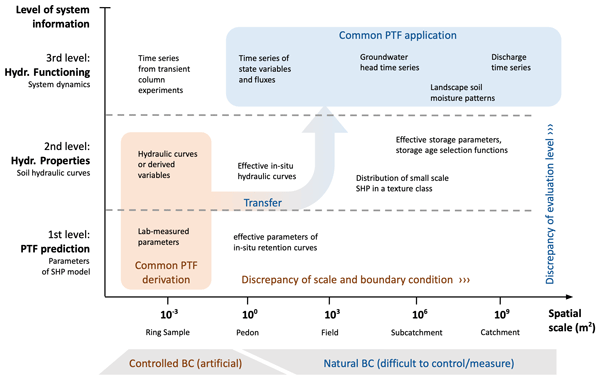
Pedotransfer functions (PTFs) are used to predict parameters of models describing the hydraulic properties of soils. The appropriateness of these predictions critically relies on the nature of the datasets for training the PTFs and the physical comprehensiveness of the models. This roadmap paper is addressed to PTF developers and users and critically reflects the utility and future of PTFs. To this end, we present a manifesto aiming at a paradigm shift in PTF research.
Jonas Mortelmans, Anne Felsberg, Gabriëlle J. M. De Lannoy, Sander Veraverbeke, Robert D. Field, Niels Andela, and Michel Bechtold
Nat. Hazards Earth Syst. Sci., 24, 445–464, https://doi.org/10.5194/nhess-24-445-2024, https://doi.org/10.5194/nhess-24-445-2024, 2024
Short summary
Short summary
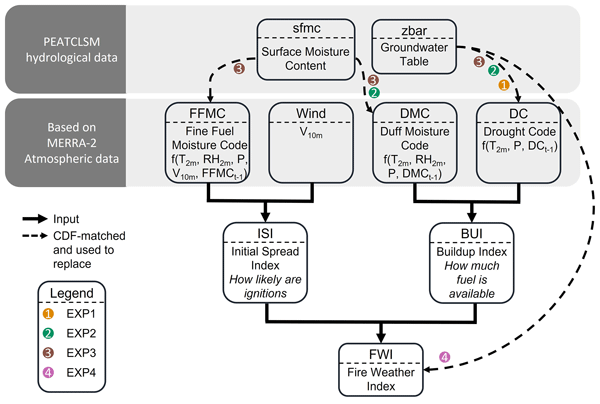
With global warming increasing the frequency and intensity of wildfires in the boreal region, accurate risk assessments are becoming more crucial than ever before. The Canadian Fire Weather Index (FWI) is a renowned system, yet its effectiveness in peatlands, where hydrology plays a key role, is limited. By incorporating groundwater data from numerical models and satellite observations, our modified FWI improves the accuracy of fire danger predictions, especially over summer.
Katja Frieler, Jan Volkholz, Stefan Lange, Jacob Schewe, Matthias Mengel, María del Rocío Rivas López, Christian Otto, Christopher P. O. Reyer, Dirk Nikolaus Karger, Johanna T. Malle, Simon Treu, Christoph Menz, Julia L. Blanchard, Cheryl S. Harrison, Colleen M. Petrik, Tyler D. Eddy, Kelly Ortega-Cisneros, Camilla Novaglio, Yannick Rousseau, Reg A. Watson, Charles Stock, Xiao Liu, Ryan Heneghan, Derek Tittensor, Olivier Maury, Matthias Büchner, Thomas Vogt, Tingting Wang, Fubao Sun, Inga J. Sauer, Johannes Koch, Inne Vanderkelen, Jonas Jägermeyr, Christoph Müller, Sam Rabin, Jochen Klar, Iliusi D. Vega del Valle, Gitta Lasslop, Sarah Chadburn, Eleanor Burke, Angela Gallego-Sala, Noah Smith, Jinfeng Chang, Stijn Hantson, Chantelle Burton, Anne Gädeke, Fang Li, Simon N. Gosling, Hannes Müller Schmied, Fred Hattermann, Jida Wang, Fangfang Yao, Thomas Hickler, Rafael Marcé, Don Pierson, Wim Thiery, Daniel Mercado-Bettín, Robert Ladwig, Ana Isabel Ayala-Zamora, Matthew Forrest, and Michel Bechtold
Geosci. Model Dev., 17, 1–51, https://doi.org/10.5194/gmd-17-1-2024, https://doi.org/10.5194/gmd-17-1-2024, 2024
Short summary
Short summary
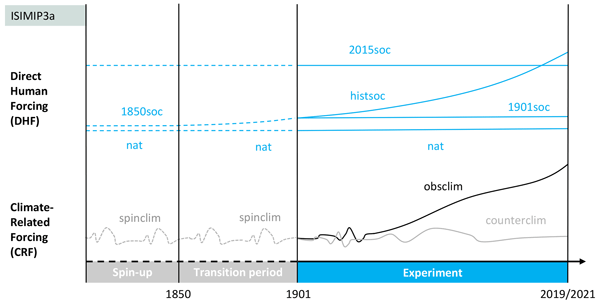
Our paper provides an overview of all observational climate-related and socioeconomic forcing data used as input for the impact model evaluation and impact attribution experiments within the third round of the Inter-Sectoral Impact Model Intercomparison Project. The experiments are designed to test our understanding of observed changes in natural and human systems and to quantify to what degree these changes have already been induced by climate change.
Samuel Scherrer, Gabriëlle De Lannoy, Zdenko Heyvaert, Michel Bechtold, Clement Albergel, Tarek S. El-Madany, and Wouter Dorigo
Hydrol. Earth Syst. Sci., 27, 4087–4114, https://doi.org/10.5194/hess-27-4087-2023, https://doi.org/10.5194/hess-27-4087-2023, 2023
Short summary
Short summary
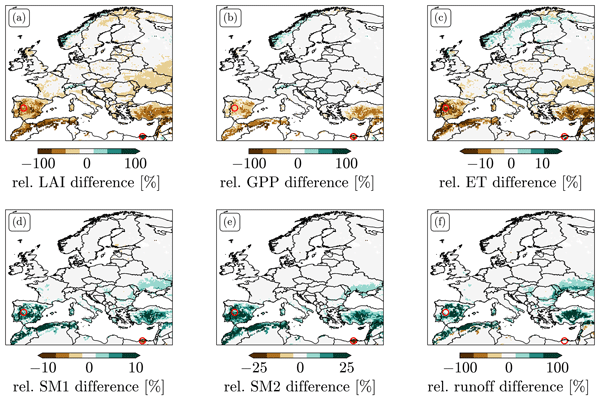
We explored different options for data assimilation (DA) of the remotely sensed leaf area index (LAI). We found strong biases between LAI predicted by Noah-MP and observations. LAI DA that does not take these biases into account can induce unphysical patterns in the resulting LAI and flux estimates and leads to large changes in the climatology of root zone soil moisture. We tested two bias-correction approaches and explored alternative solutions to treating bias in LAI DA.
Sara Modanesi, Christian Massari, Michel Bechtold, Hans Lievens, Angelica Tarpanelli, Luca Brocca, Luca Zappa, and Gabriëlle J. M. De Lannoy
Hydrol. Earth Syst. Sci., 26, 4685–4706, https://doi.org/10.5194/hess-26-4685-2022, https://doi.org/10.5194/hess-26-4685-2022, 2022
Short summary
Short summary
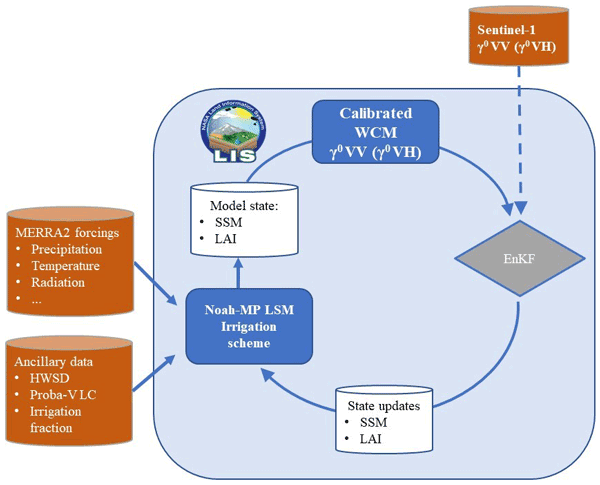
Given the crucial impact of irrigation practices on the water cycle, this study aims at estimating irrigation through the development of an innovative data assimilation system able to ingest high-resolution Sentinel-1 radar observations into the Noah-MP land surface model. The developed methodology has important implications for global water resource management and the comprehension of human impacts on the water cycle and identifies main challenges and outlooks for future research.
Anne Felsberg, Jean Poesen, Michel Bechtold, Matthias Vanmaercke, and Gabriëlle J. M. De Lannoy
Nat. Hazards Earth Syst. Sci., 22, 3063–3082, https://doi.org/10.5194/nhess-22-3063-2022, https://doi.org/10.5194/nhess-22-3063-2022, 2022
Short summary
Short summary
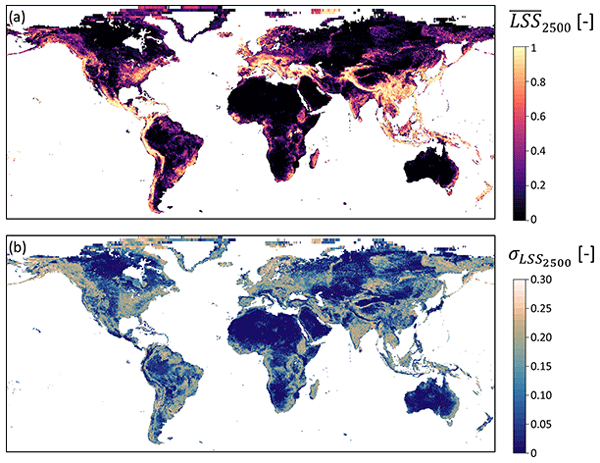
In this study we assessed global landslide susceptibility at the coarse 36 km spatial resolution of global satellite soil moisture observations to prepare for a subsequent combination of the two. Specifically, we focus therefore on the susceptibility of hydrologically triggered landslides. We introduce ensemble techniques, common in, for example, meteorology but not yet in the landslide community, to retrieve reliable estimates of the total prediction uncertainty.
Kai Kornhuber, Emanuele Bevacqua, Mariana Madruga de Brito, Wiebke S. Jäger, Pauline Rivoire, Cassandra D. W. Rogers, Fabiola Banfi, Fulden Batibeniz, James Carruthers, Carlo De Michele, Silvia De Angeli, Cristina Deidda, Marleen C. de Ruiter, Andreas H. Fink, Henrique M. D. Goulart, Katharina Küpfer, Patrick Ludwig, Douglas Maraun, Gabriele Messori, Shruti Nath, Fiachra O'Loughlin, Joaquim G. Pinto, Benjamin Poschlod, Alexandre M. Ramos, Colin Raymond, Andreia F. S. Ribeiro, Deepti Singh, Laura Suarez Gutierrez, Philip J. Ward, and Christopher J. White
Nat. Hazards Earth Syst. Sci., 26, 4309–4334, https://doi.org/10.5194/nhess-26-4309-2026, https://doi.org/10.5194/nhess-26-4309-2026, 2026
Short summary
Short summary
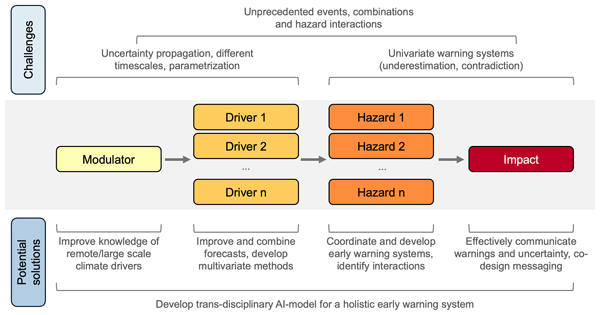
Impacts from extreme weather events may become more severe due to increased likelihood of compounding events under global warming, which challenge present day climate modelling and forecasting capacities. In this perspective we reflect on the usability of compound event research to bridge the gap between academic research and real-world applications.
Benjamin Poschlod, Lukas Brunner, and Jana Sillmann
EGUsphere, https://doi.org/10.5194/egusphere-2026-4014, https://doi.org/10.5194/egusphere-2026-4014, 2026
Short summary
Short summary
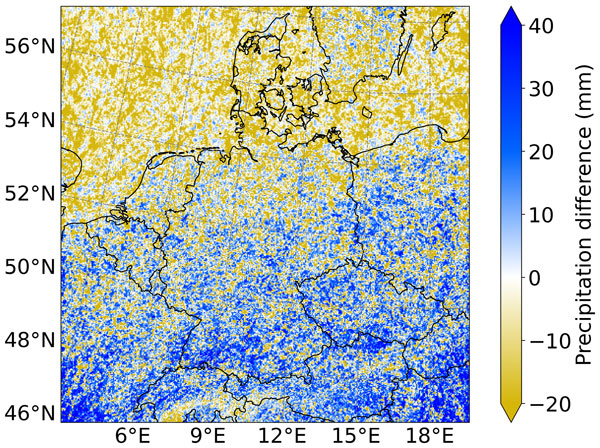
Scientists often measure drought by counting the longest run of days without meaningful rain. Comparing high-resolution climate models, radar, and station data across Germany, we found that fine-scale maps show sharp, patchy patterns, because a small shower can break the dry streak in one place but not the next. The high-resolution climate model matches what radar observes, but yearly counts are so sensitive to chance rainfall that they are an unreliable basis for tracking drought.
Jingkun Yang, Benjamin Poschlod, and Felix Ament
EGUsphere, https://doi.org/10.5194/egusphere-2026-4111, https://doi.org/10.5194/egusphere-2026-4111, 2026
Short summary
Short summary
Heavy rainfall is becoming more severe, yet common measures capture only its peak strength, not how long it lasts or how wide an area it covers. Using high-resolution climate simulations for Germany, we rank the 200 most extreme events across past, present and future. We found that future events are not only more intense but also last longer and spread over larger areas. This means future rainfall hazards will be more complex, and assessments must consider strength, duration and extent together.
Marc Lennartz, Benjamin Poschlod, and Bruno Merz
Nat. Hazards Earth Syst. Sci., 26, 3273–3289, https://doi.org/10.5194/nhess-26-3273-2026, https://doi.org/10.5194/nhess-26-3273-2026, 2026
Short summary
Short summary
Predicting hourly rainfall extremes under climate change is crucial yet highly uncertain. Using convection-permitting climate model data over Germany, we compare stationary and non-stationary general extreme value (GEV) and simplified metastatistical extreme value (sMEV) methods. We show that the sMEV approach exhibits lower uncertainty across return periods. Moreover, the non-stationary sMEV better captures climate-change-induced changes, though care is needed when projecting future extremes.
Xinrui Liu, Thomas Gasser, Jianmin Ma, Junfeng Liu, Jonas Jägermeyr, Christoph Müller, Christian Folberth, Florian Zabel, Atul K. Jain, Wenfeng Liu, and Heidi Webber
Geosci. Model Dev., 19, 5857–5880, https://doi.org/10.5194/gmd-19-5857-2026, https://doi.org/10.5194/gmd-19-5857-2026, 2026
Short summary
Short summary
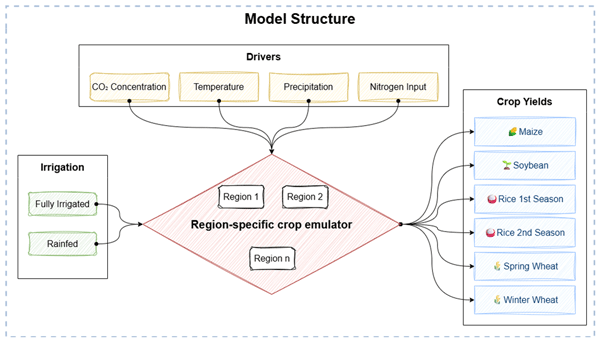
This paper presents a crop yield emulator for four major crops (maize, rice, soybean, and wheat). Trained on process-based crop model simulations, it captures yield responses to key drivers: atmospheric CO2, temperature, water availability, and nitrogen use. The emulator closely reproduces the behavior of complex crop models and aligns well with FAO (Food and Agriculture Organization)-reported historical yields. It provides a robust and efficient method for representing agricultural outcomes in climate change impact assessments.
Anastasia Vogelbacher, Malte von Szombathely, Marc Lennartz, Benjamin Poschlod, and Jana Sillmann
Nat. Hazards Earth Syst. Sci., 26, 2765–2783, https://doi.org/10.5194/nhess-26-2765-2026, https://doi.org/10.5194/nhess-26-2765-2026, 2026
Short summary
Short summary
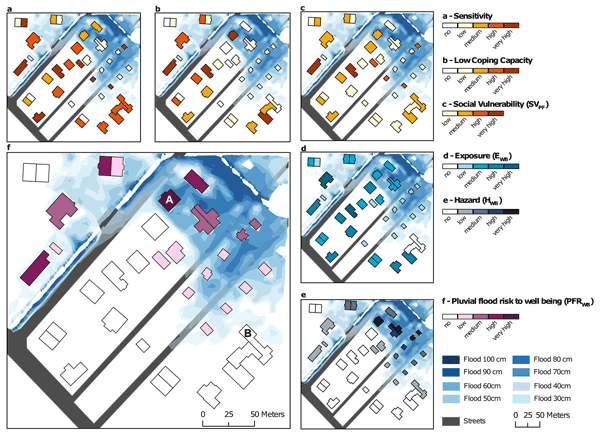
In this study we address risk to pluvial floods by following the risk definition of the Intergovernmental Panel on Climate Change (IPCC), developed in co-operation with stakeholders of the city of Hamburg. We identify buildings in urban areas where residents face higher flood risk due to greater social vulnerability, increased exposure, or elevated flood hazard. We present the development and application of a Python-based ArcGIS toolbox for estimating pluvial flood risk at building scale.
Katja Frieler, Stefan Lange, Jacob Schewe, Matthias Mengel, Simon Treu, Christian Otto, Jan Volkholz, Christopher P. O. Reyer, Stefanie Heinicke, Colin Jones, Julia L. Blanchard, Cheryl S. Harrison, Colleen M. Petrik, Tyler D. Eddy, Kelly Ortega-Cisneros, Camilla Novaglio, Ryan Heneghan, Derek P. Tittensor, Olivier Maury, Matthias Büchner, Thomas Vogt, Dánnell Quesada-Chacón, Kerry Emanuel, Chia-Ying Lee, Suzana J. Camargo, Linn Hamester, Jonas Jägermeyr, Sam Rabin, Jochen Klar, Iliusi D. Vega del Valle, Lisa Novak, Inga J. Sauer, Gitta Lasslop, Sarah Chadburn, Eleanor Burke, Angela Gallego-Sala, Noah Smith, Jinfeng Chang, Stijn Hantson, Chantelle Burton, Anne Gädeke, Fang Li, Simon N. Gosling, Hannes Müller Schmied, Fred Hattermann, Thomas Hickler, Rafael Marcé, Don Pierson, Wim Thiery, Daniel Mercado-Bettín, Robert Ladwig, Ana Isabel Ayala, Matthew Forrest, Michel Bechtold, Robert Reinecke, Inge de Graaf, Jed O. Kaplan, Alexander Koch, Matthieu Lengaigne, Rohini Kumar, and Maryna Strokal
Geosci. Model Dev., 19, 4095–4135, https://doi.org/10.5194/gmd-19-4095-2026, https://doi.org/10.5194/gmd-19-4095-2026, 2026
Short summary
Short summary
This paper describes the experiments and data sets necessary to run historic and future impact projections, and the underlying assumptions of future climate change as defined by the 3rd round of the ISIMIP Project (Inter-sectoral Impactmodel Intercomparison Project, isimip.org). ISIMIP provides a framework for cross-sectorally consistent climate impact simulations to contribute to a comprehensive and consistent picture of the world under different climate-change scenarios.
Katja Irob, Liling Chang, Yakir Preisler, Sebastian Fiedler, Matthias Büchner, José M. Grünzweig, and Efrat Sheffer
EGUsphere, https://doi.org/10.5194/egusphere-2026-2448, https://doi.org/10.5194/egusphere-2026-2448, 2026
Short summary
Short summary
Dryland forests are promoted for climate mitigation, but their persistence under future climate is uncertain. Using a calibrated forest model and 21 years of field data from an arid pine forest, we simulated carbon uptake and growth through 2100. Rising carbon dioxide initially boosted productivity, but compound drought and heat stress later overrode these benefits. Declining carbon uptake preceded visible structural deterioration by up to 37 years, an early warning window for managers.
Louise Busschaert, Michel Bechtold, Sara Modanesi, Christian Massari, Dirk Raes, Sujay V. Kumar, and Gabriëlle J. M. De Lannoy
Hydrol. Earth Syst. Sci., 30, 2579–2611, https://doi.org/10.5194/hess-30-2579-2026, https://doi.org/10.5194/hess-30-2579-2026, 2026
Short summary
Short summary
Two models, AquaCrop (crop model) and Noah-MP (land surface model), were compared estimating irrigation in Italy's Po Valley. Noah-MP simulated higher water use (434 mm/yr) than AquaCrop (268 mm/yr), mainly due to extra water losses like runoff. Once losses were accounted for, both aligned with basin-scale reports of around 500 to 600 mm/yr. The study highlights how complex irrigation modeling is, and the need for better observational data to validate results.
Timothy Tiggeloven, Colin Raymond, Marleen C. de Ruiter, Jana Sillmann, Annegret H. Thieken, Sophie L. Buijs, Roxana Ciurean, Emma Cordier, Julia M. Crummy, Lydia Cumiskey, Kelley De Polt, Melanie Duncan, Davide M. Ferrario, Wiebke S. Jäger, Elco E. Koks, Nicole van Maanen, Heather J. Murdock, Jaroslav Mysiak, Sadhana Nirandjan, Benjamin Poschlod, Peter Priesmeier, Nivedita Sairam, Pia-Johanna Schweizer, Tristian R. Stolte, Marie-Luise Zenker, James E. Daniell, Alexander Fekete, Christian M. Geiß, Marc J. C. van den Homberg, Sirkku K. Juhola, Christian Kuhlicke, Karen Lebek, Robert Šakić Trogrlić, Stefan Schneiderbauer, Silvia Torresan, Cees J. van Westen, Judith N. Claassen, Bijan Khazai, Virginia Murray, Julius Schlumberger, and Philip J. Ward
Geosci. Commun., 9, 185–221, https://doi.org/10.5194/gc-9-185-2026, https://doi.org/10.5194/gc-9-185-2026, 2026
Short summary
Short summary
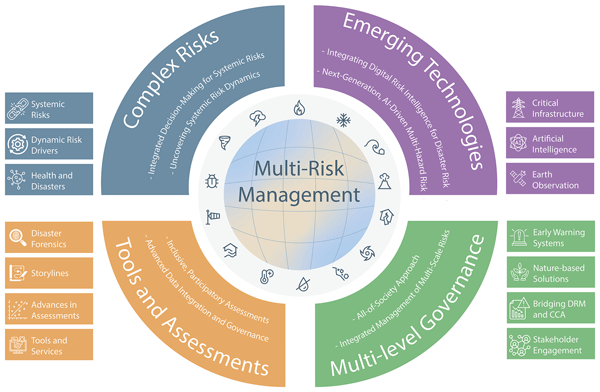
Natural hazards like floods, earthquakes, and landslides are often interconnected which may create bigger problems than when they occur alone. We studied expert discussions from an international conference to understand how scientists and policymakers can better prepare for these multi-hazards and use new technologies to protect its communities while contributing to dialogues about future international agreements beyond the Sendai Framework and supporting global sustainability goals.
Gabriëlle J. M. De Lannoy, Louise Busschaert, Michel Bechtold, Niccolò Lanfranco, Shannon de Roos, Zdenko Heyvaert, Martynas Bielinis, Jonas Mortelmans, Samuel A. Scherrer, Maxime Van den Bossche, Sujay Kumar, David M. Mocko, Eric Kemp, Lee Heng, Pasquale Steduto, and Dirk Raes
Geosci. Model Dev., 19, 2551–2575, https://doi.org/10.5194/gmd-19-2551-2026, https://doi.org/10.5194/gmd-19-2551-2026, 2026
Short summary
Short summary
The AquaCrop model has been incorporated into the NASA Land Information System, to advance regional crop growth simulations at any spatial resolution, with a range of different input sources for meteorology, soil and crop parameters. This system also facilitates the assimilation of satellite data to update the crop and water conditions during model simulations. We present three exploratory applications to highlight pathways for future research on regional-scale crop estimation.
Benjamin Poschlod, Laura Sailer, Alexander Sasse, Anastasia Vogelbacher, and Ralf Ludwig
Hydrol. Earth Syst. Sci., 30, 1165–1188, https://doi.org/10.5194/hess-30-1165-2026, https://doi.org/10.5194/hess-30-1165-2026, 2026
Short summary
Short summary
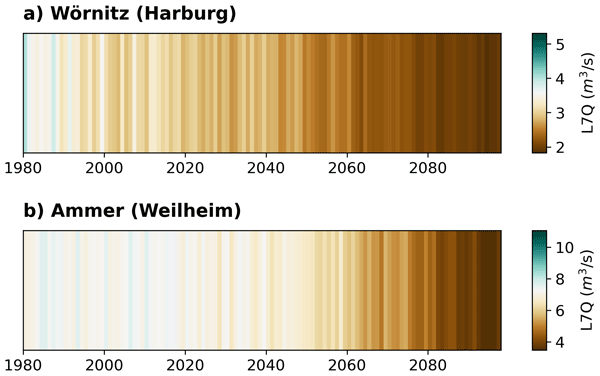
Europe was hit by severe droughts in recent years resulting in extreme low flow conditions in rivers. Here, we investigate future climate change effects on river droughts in Bavaria. We find increasing severity for the low peak discharge and low flow duration in a warmer climate. This is caused by hotter and drier summers, where the joint occurrence of heat and drought intensifies. Further, we show that conditions in the year before the drought gain more importance in a warmer climate.
Devon Dunmire, Michel Bechtold, Lucas Boeykens, and Gabriëlle J. M. De Lannoy
The Cryosphere, 20, 609–628, https://doi.org/10.5194/tc-20-609-2026, https://doi.org/10.5194/tc-20-609-2026, 2026
Short summary
Short summary
Snow is vital for society and the climate, yet estimates of snowpack remain uncertain due to observational and modeling limitations. Data assimilation (DA) helps by integrating observations with models. Here, we integrate snow depth retrievals into a physically-based snow model across the European Alps. This work offers advancements for snow data assimilation, such as incorporating a dynamic observational uncertainty, which is essential for forecasting and water resource management.
Alexander Lee Rischmuller, Benjamin Poschlod, and Jana Sillmann
Adv. Stat. Clim. Meteorol. Oceanogr., 12, 1–19, https://doi.org/10.5194/ascmo-12-1-2026, https://doi.org/10.5194/ascmo-12-1-2026, 2026
Short summary
Short summary
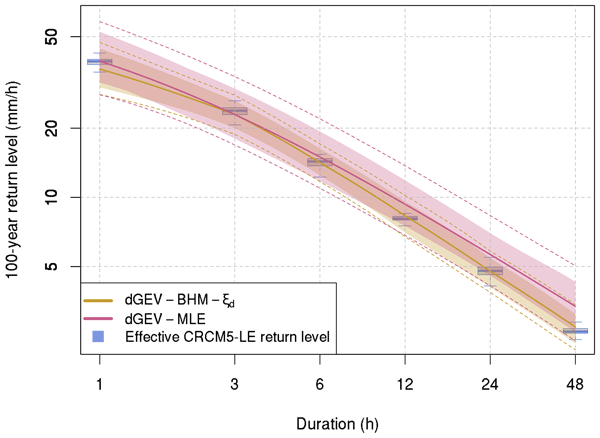
Extreme precipitation probability estimation is vital for hazard protection design but has high uncertainty. We tested six statistical models using 2000 years of climate data. Our Bayesian hierarchical duration-dependent Generalized Extreme Value model shows the highest accuracy and robustness for sample sizes between 30 and 100 years, making it highly promising for use with limited observational records.
Natalia Castillo Bautista, Marco Gaetani, Leonard F. Borchert, Benjamin Poschlod, Lukas Brunner, Jana Sillmann, and Mario L. V. Martina
EGUsphere, https://doi.org/10.5194/egusphere-2025-5073, https://doi.org/10.5194/egusphere-2025-5073, 2025
Short summary
Short summary
When hot temperatures and drought occur together (compound events), they can cause harmful impacts on crops and society. Using six decades of climate data, we show that such compound events repeatedly occurred in three breadbaskets of the Northern Hemisphere. These events are linked to atmospheric circulation patterns that favor heat and dryness, which in turn interact to amplify the impact. Our study contributes to understand the drivers of these events to support climate impact assessment.
Edna Johanna Molina Bacca, Miodrag Stevanović, Benjamin Leon Bodirsky, Jonathan Cornelis Doelman, Louise Parsons Chini, Jan Volkholz, Katja Frieler, Christopher Paul Oliver Reyer, George Hurtt, Florian Humpenöder, Kristine Karstens, Jens Heinke, Christoph Müller, Jan Philipp Dietrich, Hermann Lotze-Campen, Elke Stehfest, and Alexander Popp
Earth Syst. Dynam., 16, 753–801, https://doi.org/10.5194/esd-16-753-2025, https://doi.org/10.5194/esd-16-753-2025, 2025
Short summary
Short summary
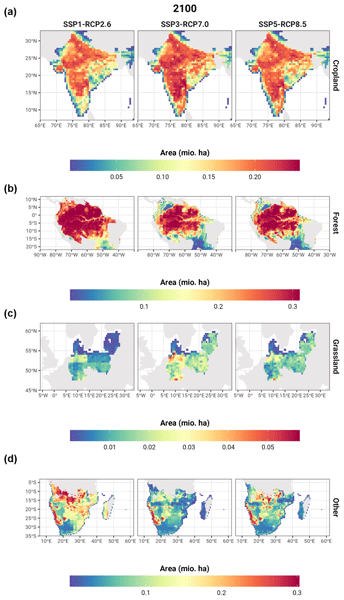
Land-use change projections are vital for impact studies. This study compares updated land-use model projections, including CO2 fertilization among other upgrades, from the MAgPIE and IMAGE models under three scenarios, highlighting differences, uncertainty hotspots, and harmonization effects. Key findings include reduced bioenergy crop demand projections and differences in grassland area allocation and sizes, with socioeconomic–climate scenarios' largest effect on variance starting in 2030.
Florian Zabel, Matthias Knüttel, and Benjamin Poschlod
Geosci. Model Dev., 18, 1067–1087, https://doi.org/10.5194/gmd-18-1067-2025, https://doi.org/10.5194/gmd-18-1067-2025, 2025
Short summary
Short summary
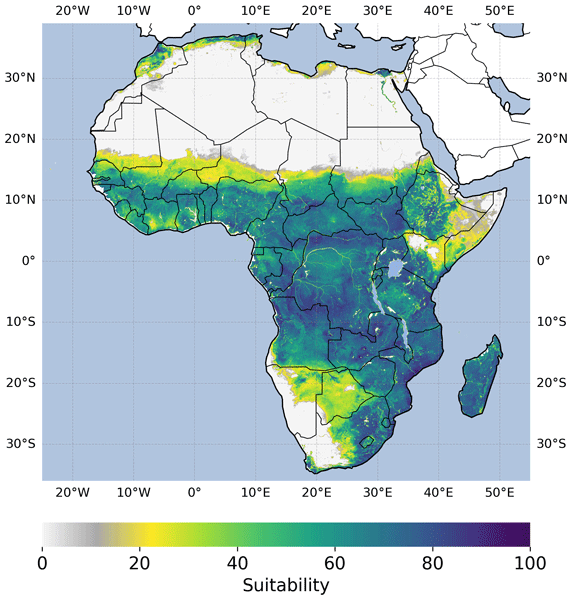
CropSuite is a new open-source crop suitability model. It provides a GUI and a wide range of options, including a spatial downscaling of climate data. We apply CropSuite to 48 staple and opportunity crops at a 1 km spatial resolution in Africa. We find that climate variability significantly impacts suitable areas but also affects optimal sowing dates and multiple cropping potential. The results provide valuable information for climate impact assessments, adaptation, and land-use planning.
Louise Busschaert, Michel Bechtold, Sara Modanesi, Christian Massari, Dirk Raes, Sujay V. Kumar, and Gabrielle J. M. De Lannoy
EGUsphere, https://doi.org/10.2139/ssrn.4974019, https://doi.org/10.2139/ssrn.4974019, 2024
Preprint archived
Short summary
Short summary
This study estimates irrigation in the Po Valley using AquaCrop and Noah-MP models with sprinkler irrigation. Noah-MP shows higher annual rates than AquaCrop due to more water losses. After adjusting, both align with reported irrigation ranges (500–600 mm/yr). Soil moisture estimates from both models match satellite data, though both have limitations in vegetation and evapotranspiration modeling. The study emphasizes the need for observations to improve irrigation estimates.
Tobias Karl David Weber, Lutz Weihermüller, Attila Nemes, Michel Bechtold, Aurore Degré, Efstathios Diamantopoulos, Simone Fatichi, Vilim Filipović, Surya Gupta, Tobias L. Hohenbrink, Daniel R. Hirmas, Conrad Jackisch, Quirijn de Jong van Lier, John Koestel, Peter Lehmann, Toby R. Marthews, Budiman Minasny, Holger Pagel, Martine van der Ploeg, Shahab Aldin Shojaeezadeh, Simon Fiil Svane, Brigitta Szabó, Harry Vereecken, Anne Verhoef, Michael Young, Yijian Zeng, Yonggen Zhang, and Sara Bonetti
Hydrol. Earth Syst. Sci., 28, 3391–3433, https://doi.org/10.5194/hess-28-3391-2024, https://doi.org/10.5194/hess-28-3391-2024, 2024
Short summary
Short summary
Pedotransfer functions (PTFs) are used to predict parameters of models describing the hydraulic properties of soils. The appropriateness of these predictions critically relies on the nature of the datasets for training the PTFs and the physical comprehensiveness of the models. This roadmap paper is addressed to PTF developers and users and critically reflects the utility and future of PTFs. To this end, we present a manifesto aiming at a paradigm shift in PTF research.
Benjamin Poschlod and Anne Sophie Daloz
The Cryosphere, 18, 1959–1981, https://doi.org/10.5194/tc-18-1959-2024, https://doi.org/10.5194/tc-18-1959-2024, 2024
Short summary
Short summary
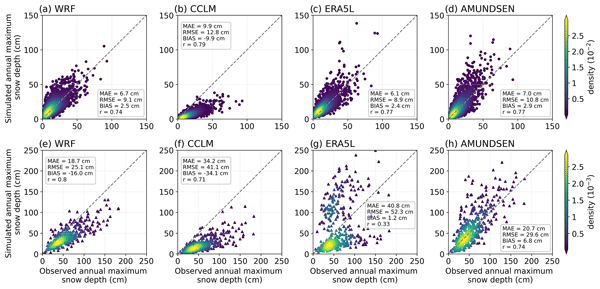
Information about snow depth is important within climate research but also many other sectors, such as tourism, mobility, civil engineering, and ecology. Climate models often feature a spatial resolution which is too coarse to investigate snow depth. Here, we analyse high-resolution simulations and identify added value compared to a coarser-resolution state-of-the-art product. Also, daily snow depth extremes are well reproduced by two models.
Jonas Mortelmans, Anne Felsberg, Gabriëlle J. M. De Lannoy, Sander Veraverbeke, Robert D. Field, Niels Andela, and Michel Bechtold
Nat. Hazards Earth Syst. Sci., 24, 445–464, https://doi.org/10.5194/nhess-24-445-2024, https://doi.org/10.5194/nhess-24-445-2024, 2024
Short summary
Short summary
With global warming increasing the frequency and intensity of wildfires in the boreal region, accurate risk assessments are becoming more crucial than ever before. The Canadian Fire Weather Index (FWI) is a renowned system, yet its effectiveness in peatlands, where hydrology plays a key role, is limited. By incorporating groundwater data from numerical models and satellite observations, our modified FWI improves the accuracy of fire danger predictions, especially over summer.
Katja Frieler, Jan Volkholz, Stefan Lange, Jacob Schewe, Matthias Mengel, María del Rocío Rivas López, Christian Otto, Christopher P. O. Reyer, Dirk Nikolaus Karger, Johanna T. Malle, Simon Treu, Christoph Menz, Julia L. Blanchard, Cheryl S. Harrison, Colleen M. Petrik, Tyler D. Eddy, Kelly Ortega-Cisneros, Camilla Novaglio, Yannick Rousseau, Reg A. Watson, Charles Stock, Xiao Liu, Ryan Heneghan, Derek Tittensor, Olivier Maury, Matthias Büchner, Thomas Vogt, Tingting Wang, Fubao Sun, Inga J. Sauer, Johannes Koch, Inne Vanderkelen, Jonas Jägermeyr, Christoph Müller, Sam Rabin, Jochen Klar, Iliusi D. Vega del Valle, Gitta Lasslop, Sarah Chadburn, Eleanor Burke, Angela Gallego-Sala, Noah Smith, Jinfeng Chang, Stijn Hantson, Chantelle Burton, Anne Gädeke, Fang Li, Simon N. Gosling, Hannes Müller Schmied, Fred Hattermann, Jida Wang, Fangfang Yao, Thomas Hickler, Rafael Marcé, Don Pierson, Wim Thiery, Daniel Mercado-Bettín, Robert Ladwig, Ana Isabel Ayala-Zamora, Matthew Forrest, and Michel Bechtold
Geosci. Model Dev., 17, 1–51, https://doi.org/10.5194/gmd-17-1-2024, https://doi.org/10.5194/gmd-17-1-2024, 2024
Short summary
Short summary
Our paper provides an overview of all observational climate-related and socioeconomic forcing data used as input for the impact model evaluation and impact attribution experiments within the third round of the Inter-Sectoral Impact Model Intercomparison Project. The experiments are designed to test our understanding of observed changes in natural and human systems and to quantify to what degree these changes have already been induced by climate change.
Benedikt Mester, Thomas Vogt, Seth Bryant, Christian Otto, Katja Frieler, and Jacob Schewe
Nat. Hazards Earth Syst. Sci., 23, 3467–3485, https://doi.org/10.5194/nhess-23-3467-2023, https://doi.org/10.5194/nhess-23-3467-2023, 2023
Short summary
Short summary
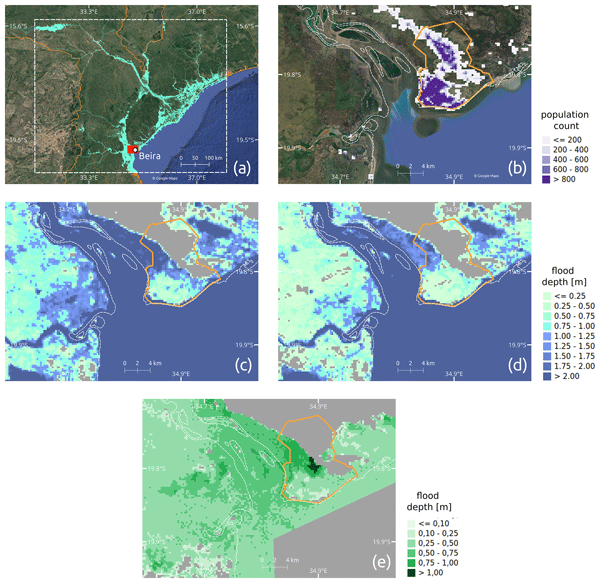
In 2019, Cyclone Idai displaced more than 478 000 people in Mozambique. In our study, we use coastal flood modeling and satellite imagery to construct a counterfactual cyclone event without the effects of climate change. We show that 12 600–14 900 displacements can be attributed to sea level rise and the intensification of storm wind speeds due to global warming. Our impact attribution study is the first one on human displacement and one of very few for a low-income country.
Samuel Scherrer, Gabriëlle De Lannoy, Zdenko Heyvaert, Michel Bechtold, Clement Albergel, Tarek S. El-Madany, and Wouter Dorigo
Hydrol. Earth Syst. Sci., 27, 4087–4114, https://doi.org/10.5194/hess-27-4087-2023, https://doi.org/10.5194/hess-27-4087-2023, 2023
Short summary
Short summary
We explored different options for data assimilation (DA) of the remotely sensed leaf area index (LAI). We found strong biases between LAI predicted by Noah-MP and observations. LAI DA that does not take these biases into account can induce unphysical patterns in the resulting LAI and flux estimates and leads to large changes in the climatology of root zone soil moisture. We tested two bias-correction approaches and explored alternative solutions to treating bias in LAI DA.
Florian Zabel and Benjamin Poschlod
Geosci. Model Dev., 16, 5383–5399, https://doi.org/10.5194/gmd-16-5383-2023, https://doi.org/10.5194/gmd-16-5383-2023, 2023
Short summary
Short summary
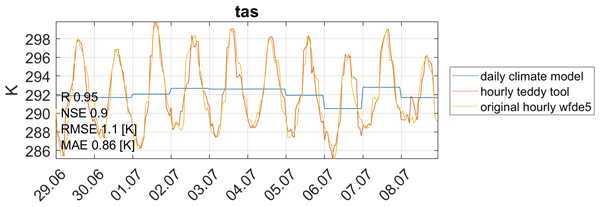
Today, most climate model data are provided at daily time steps. However, more and more models from different sectors, such as energy, water, agriculture, and health, require climate information at a sub-daily temporal resolution for a more robust and reliable climate impact assessment. Here we describe and validate the Teddy tool, a new model for the temporal disaggregation of daily climate model data for climate impact analysis.
Sara Modanesi, Christian Massari, Michel Bechtold, Hans Lievens, Angelica Tarpanelli, Luca Brocca, Luca Zappa, and Gabriëlle J. M. De Lannoy
Hydrol. Earth Syst. Sci., 26, 4685–4706, https://doi.org/10.5194/hess-26-4685-2022, https://doi.org/10.5194/hess-26-4685-2022, 2022
Short summary
Short summary
Given the crucial impact of irrigation practices on the water cycle, this study aims at estimating irrigation through the development of an innovative data assimilation system able to ingest high-resolution Sentinel-1 radar observations into the Noah-MP land surface model. The developed methodology has important implications for global water resource management and the comprehension of human impacts on the water cycle and identifies main challenges and outlooks for future research.
Anne Felsberg, Jean Poesen, Michel Bechtold, Matthias Vanmaercke, and Gabriëlle J. M. De Lannoy
Nat. Hazards Earth Syst. Sci., 22, 3063–3082, https://doi.org/10.5194/nhess-22-3063-2022, https://doi.org/10.5194/nhess-22-3063-2022, 2022
Short summary
Short summary
In this study we assessed global landslide susceptibility at the coarse 36 km spatial resolution of global satellite soil moisture observations to prepare for a subsequent combination of the two. Specifically, we focus therefore on the susceptibility of hydrologically triggered landslides. We introduce ensemble techniques, common in, for example, meteorology but not yet in the landslide community, to retrieve reliable estimates of the total prediction uncertainty.
Cited articles
Anderson, G. B., Bell, M. L., and Peng, R. D.: Methods to calculate the heat index as an exposure metric in environmental health research, Environ. Health Persp., 121, 1111–1119, https://doi.org/10.1289/ehp.1206273, 2013. a
Ban, N., Schmidli, J., and Schär, C.: Heavy precipitation in a changing climate: Does short-term summer precipitation increase faster?, Geophys. Res. Lett., 42, 1165–1172, https://doi.org/10.1002/2014GL062588, 2015. a
Bandoc, G., Prăvălie, R., Patriche, C., and Degeratu, M.: Spatial assessment of wind power potential at global scale. A geographical approach, J. Clean. Prod., 200, 1065–1086, https://doi.org/10.1016/j.jclepro.2018.07.288, 2018. a
Bechtold, M., Zabel, F., Poschlod, B., Otto, C., Volkholz, J., and Büchner, M.: Hourly ISIMIP3a atmospheric climate input data, ISIMIP Repository [data set], https://doi.org/10.48364/ISIMIP.736682, 2026a. a, b
Bechtold, M., Zabel, F., Poschlod, B., Otto, C., Volkholz, J., and Büchner, M.: Hourly ISIMIP3b atmospheric climate input data, ISIMIP Repository [data set], https://doi.org/10.48364/ISIMIP.170328, 2026b. a, b
Borga, M., Anagnostou, E. N., Blöschl, G., and Creutin, J.-D.: Flash flood forecasting, warning and risk management: the HYDRATE project, Environ. Sci. Policy, 14, 834–844, https://doi.org/10.1016/j.envsci.2011.05.017, 2011. a
Bortolotti, P., Canet Tarres, H., Dykes, K., Merz, K., Sethuraman, L., Verelst, D., and Zahle, F.: IEA Wind TCP Task 37: Systems engineering in wind energy–WP2.1 Reference wind turbines, Tech. rep., reference wind turbines report, 2019. a
Bosch, J., Staffell, I., and Hawkes, A. D.: Temporally-explicit and spatially-resolved global onshore wind energy potentials, Energy, 131, 207–217, https://doi.org/10.1016/j.energy.2017.05.052, 2017. a, b
Boulange, J., Yoshida, T., Nishina, K., Okada, M., and Hanasaki, N.: Delivering the latest global water resource simulation results to the public, Climate Services, 30, 100386, https://doi.org/10.1016/j.cliser.2023.100386, 2023. a
Chenni, R., Makhlouf, M., Kerbache, T., and Bouzid, A.: A detailed modeling method for photovoltaic cells, Energy, 32, 1724–1730, https://doi.org/10.1016/j.energy.2006.12.006, 2007. a
Compo, G. P., Whitaker, J. S., Sardeshmukh, P. D., Matsui, N., Allan, R. J., Yin, X., Gleason, B. E., Vose, R. S., Rutledge, G., Bessemoulin, P., Brönnimann, S., Brunet, M., Crouthamel, R. I., Grant, A. N., Groisman, P. Y., Jones, P. D., Kruk, M. C., Kruger, A. C., Marshall, G. J., Maugeri, M., Mok, H. Y., Nordli, Ø., Ross, T. F., Trigo, R. M., Wang, X. L., Woodruff, S. D., and Worley, S. J.: The Twentieth Century Reanalysis Project, Q. J. Roy. Meteor. Soc., 137, 1–28, https://doi.org/10.1002/qj.776, 2011. a
Crook, J. A., Jones, L. A., Forster, P. M., and Crook, R.: Climate change impacts on future photovoltaic and concentrated solar power energy output, Energ. Environ. Sci., 4, 3101–3109, https://doi.org/10.1039/C1EE01495A, 2011. a
Cucchi, M., Weedon, G. P., Amici, A., Bellouin, N., Lange, S., Müller Schmied, H., Hersbach, H., and Buontempo, C.: WFDE5: bias-adjusted ERA5 reanalysis data for impact studies, Earth Syst. Sci. Data, 12, 2097–2120, https://doi.org/10.5194/essd-12-2097-2020, 2020. a, b, c
Eyring, V., Bony, S., Meehl, G. A., Senior, C. A., Stevens, B., Stouffer, R. J., and Taylor, K. E.: Overview of the Coupled Model Intercomparison Project Phase 6 (CMIP6) experimental design and organization, Geosci. Model Dev., 9, 1937–1958, https://doi.org/10.5194/gmd-9-1937-2016, 2016. a
Förster, K., Hanzer, F., Winter, B., Marke, T., and Strasser, U.: An open-source MEteoroLOgical observation time series DISaggregation Tool (MELODIST v0.1.1), Geosci. Model Dev., 9, 2315–2333, https://doi.org/10.5194/gmd-9-2315-2016, 2016. a
Frieler, K., Lange, S., Schewe, J., Mengel, M., Treu, S., Otto, C., Volkholz, J., Reyer, C. P. O., Heinicke, S., Jones, C., Blanchard, J. L., Harrison, C. S., Petrik, C. M., Eddy, T. D., Ortega-Cisneros, K., Novaglio, C., Heneghan, R., Tittensor, D. P., Maury, O., Büchner, M., Vogt, T., Quesada-Chacón, D., Emanuel, K., Lee, C.-Y., Camargo, S. J., Hamester, L., Jägermeyr, J., Rabin, S., Klar, J., Vega del Valle, I. D., Novak, L., Sauer, I. J., Lasslop, G., Chadburn, S., Burke, E., Gallego-Sala, A., Smith, N., Chang, J., Hantson, S., Burton, C., Gädeke, A., Li, F., Gosling, S. N., Müller Schmied, H., Hattermann, F., Hickler, T., Marcé, R., Pierson, D., Thiery, W., Mercado-Bettín, D., Ladwig, R., Ayala, A. I., Forrest, M., Bechtold, M., Reinecke, R., de Graaf, I., Kaplan, J. O., Koch, A., Lengaigne, M., Kumar, R., and Strokal, M.: Scenario set-up and the new CMIP6-based climate-related forcings provided within the third round of the Inter-Sectoral Model Intercomparison Project (ISIMIP3b, group I and II), Geosci. Model Dev., 19, 4095–4135, https://doi.org/10.5194/gmd-19-4095-2026, 2026. a
Görner, C., Franke, J., Kronenberg, R., Hellmuth, O., and Bernhofer, C.: Multivariate non-parametric Euclidean distance model for hourly disaggregation of daily climate data, Theor. Appl. Climatol., 143, 241–265, https://doi.org/10.1007/s00704-020-03426-7, 2021. a
Hersbach, H., Bell, B., Berrisford, P., Hirahara, S., Horányi, A., Muñoz-Sabater, J., Nicolas, J., Peubey, C., Radu, R., Schepers, D., Simmons, A., Soci, C., Abdalla, S., Abellan, X., Balsamo, G., Bechtold, P., Biavati, G., Bidlot, J., Bonavita, M., De Chiara, G., Dahlgren, P., Dee, D., Diamantakis, M., Dragani, R., Flemming, J., Forbes, R., Fuentes, M., Geer, A., Haimberger, L., Healy, S., Hogan, R. J., Hólm, E., Janisková, M., Keeley, S., Laloyaux, P., Lopez, P., Lupu, C., Radnoti, G., de Rosnay, P., Rozum, I., Vamborg, F., Villaume, S., and Thépaut, J.-N.: The ERA5 global reanalysis, Q. J. Roy. Meteor. Soc., 146, 1999–2049, https://doi.org/10.1002/qj.3803, 2020. a, b
Huang, Y., Bárdossy, A., and Zhang, K.: Sensitivity of hydrological models to temporal and spatial resolutions of rainfall data, Hydrol. Earth Syst. Sci., 23, 2647–2663, https://doi.org/10.5194/hess-23-2647-2019, 2019. a, b
Jägermeyr, J., Müller, C., Ruane, A. C., Elliott, J., Balkovic, J., Castillo, O., Faye, B., Foster, I., Folberth, C., Franke, J. A., Fuchs, K., Guarin, J. R., Heinke, J., Hoogenboom, G., Iizumi, T., Jain, A. K., Kelly, D., Khabarov, N., Lange, S., Lin, T.-S., Liu, W., Mialyk, O., Minoli, S., Moyer, E. J., Okada, M., Phillips, M., Porter, C., Rabin, S. S., Scheer, C., Schneider, J. M., Schyns, J. F., Skalsky, R., Smerald, A., Stella, T., Stephens, H., Webber, H., Zabel, F., and Rosenzweig, C.: Climate impacts on global agriculture emerge earlier in new generation of climate and crop models, Nature Food, 2, 873–885, https://doi.org/10.1038/s43016-021-00400-y, 2021. a
Jerez, S., Tobin, I., Vautard, R., Montávez, J. P., López-Romero, J. M., Thais, F., and Wild, M.: The impact of climate change on photovoltaic power generation in Europe, Nat. Commun., 6, 10014, https://doi.org/10.1038/ncomms10014, 2015. a, b
Jiang, R., Lu, H., Yang, K., Chen, D., Zhou, J., Yamazaki, D., Pan, M., Li, W., Xu, N., Yang, Y., Guan, D., and Tian, F.: Substantial increase in future fluvial flood risk projected in China's major urban agglomerations, Commun. Earth Environ., 4, 389, https://doi.org/10.1038/s43247-023-01049-0, 2023. a
Kim, H.: Global Soil Wetness Project Phase 3 Atmospheric Boundary Conditions (Experiment 1), Data Integration and Analysis System (DIAS) [data set], https://doi.org/10.20783/dias.501, 2017. a
Lange, S., Menz, C., Gleixner, S., Cucchi, M., Weedon, G. P., Amici, A., Bellouin, N., Müller Schmied, H., Hersbach, H., Buontempo, C., and Cagnazzo, C.: WFDE5 over land merged with ERA5 over the ocean, ISIMIP Repository, https://doi.org/10.48364/ISIMIP.342217, 2021. a
Lange, S., Mengel, M., Treu, S., and Büchner, M.: ISIMIP3a atmospheric climate input data, ISIMIP Repository, https://doi.org/10.48364/ISIMIP.982724.1, 2022. a
Lavers, D. A., Simmons, A., Vamborg, F., and Rodwell, M. J.: An evaluation of ERA5 precipitation for climate monitoring, Q. J. Roy. Meteor. Soc., 148, 3152–3165, https://doi.org/10.1002/qj.4351, 2022. a
Li, X., Meshgi, A., Wang, X., Zhang, J., Tay, S. H. X., Pijcke, G., Manocha, N., Ong, M., Nguyen, M. T., and Babovic, V.: Three resampling approaches based on method of fragments for daily-to-subdaily precipitation disaggregation, Int. J. Climatol., 38, e1119–e1138, https://doi.org/10.1002/joc.5438, 2018. a
Lian, X., Zhao, W., and Gentine, P.: Recent global decline in rainfall interception loss due to altered rainfall regimes, Nat. Commun., 13, 7642, https://doi.org/10.1038/s41467-022-35414-y, 2022. a
Lu, X., McElroy, M. B., and Kiviluoma, J.: Global potential for wind-generated electricity, P. Natl. Acad. Sci. USA, 106, 10933–10938, https://doi.org/10.1073/pnas.0904101106, 2009. a
McErlich, C., McDonald, A., Schuddeboom, A., Vishwanathan, G., Renwick, J., and Rana, S.: Positive correlation between wet-day frequency and intensity linked to universal precipitation drivers, Nat. Geosci., 16, 410–415, https://doi.org/10.1038/s41561-023-01177-4, 2023. a
Mengel, M., Treu, S., Lange, S., and Frieler, K.: ATTRICI v1.1 – counterfactual climate for impact attribution, Geosci. Model Dev., 14, 5269–5284, https://doi.org/10.5194/gmd-14-5269-2021, 2021. a
Miao, H., Xu, H., Huang, G., and Yang, K.: Evaluation and future projections of wind energy resources over the Northern Hemisphere in CMIP5 and CMIP6 models, Renew. Energ., 211, 809–821, https://doi.org/10.1016/j.renene.2023.05.007, 2023. a, b, c
Müller, C., Franke, J., Jägermeyr, J., Ruane, A. C., Elliott, J., Moyer, E., Heinke, J., Falloon, P. D., Folberth, C., Francois, L., Hank, T., Izaurralde, R. C., Jacquemin, I., Liu, W., Olin, S., Pugh, T. A. M., Williams, K., and Zabel, F.: Exploring uncertainties in global crop yield projections in a large ensemble of crop models and CMIP5 and CMIP6 climate scenarios, Environ. Res. Lett., 16, 034040, https://doi.org/10.1088/1748-9326/abd8fc, 2021. a
Müller, C., Jägermeyr, J., Franke, J. A., Ruane, A. C., Balkovic, J., Ciais, P., Dury, M., Falloon, P., Folberth, C., Hank, T., Hoffmann, M., Izaurralde, R. C., Jacquemin, I., Khabarov, N., Liu, W., Olin, S., Pugh, T. A. M., Wang, X., Williams, K., Zabel, F., and Elliott, J. W.: Substantial differences in crop yield sensitivities between models call for functionality-based model evaluation, Earth's Future, 12, e2023EF003773, https://doi.org/10.1029/2023EF003773, 2024. a
Orlov, A., Jägermeyr, J., Müller, C., Daloz, A. S., Zabel, F., Minoli, S., Liu, W., Lin, T.-S., Jain, A. K., Folberth, C., Okada, M., Poschlod, B., Smerald, A., Schneider, J. M., and Sillmann, J.: Human heat stress could offset potential economic benefits of CO2 fertilization in crop production under a high-emissions scenario, One Earth, 7, 1250–1265, https://doi.org/10.1016/j.oneear.2024.06.012, 2024. a, b, c
Poschlod, B. and Zabel, F.: Annual number of hours with a dangerous heat index: A global dataset based on hourly CMIP6-based ISIMIP3b climate model data, Zenodo, https://doi.org/10.5281/zenodo.17939400, 2025a. a
Poschlod, B. and Zabel, F.: Photovoltaic power potential: A global dataset based on hourly CMIP6-based ISIMIP3b climate model data, Zenodo, https://doi.org/10.5281/zenodo.17939473, 2025b. a
Poschlod, B. and Zabel, F.: Fraction of wet hours: A global dataset based on hourly CMIP6-based ISIMIP3b climate model data, Zenodo, https://doi.org/10.5281/zenodo.17939524, 2025c. a
Poschlod, B. and Zabel, F.: Fraction of annual number of hours suitable for wind power generation: A global dataset based on hourly CMIP6-based ISIMIP3b climate model data, Zenodo, https://doi.org/10.5281/zenodo.17939543, 2025d. a
Renner, M., Kleidon, A., Clark, M., Nijssen, B., Heidkamp, M., Best, M., and Abramowitz, G.: How well can land-surface models represent the diurnal cycle of turbulent heat fluxes?, J. Hydrometeorol., 22, 77–94, https://doi.org/10.1175/JHM-D-20-0034.1, 2021. a, b
Rothfusz, L. P.: The heat index equation, National Weather Service, Technical Attachment SR 90-23, 1990. a
Schneider, J. M., Delzeit, R., Neumann, C., Heimann, T., Seppelt, R., Schuenemann, F., Söder, M., Mauser, W., and Zabel, F.: Effects of profit-driven cropland expansion and conservation policies, Nat. Sustain., 7, 1335–1347, https://doi.org/10.1038/s41893-024-01410-x, 2024. a
Schwingshackl, C., Sillmann, J., Vicedo-Cabrera, A. M., Sandstad, M., and Aunan, K.: Heat stress indicators in CMIP6: Estimating future trends and exceedances of impact-relevant thresholds, Earth's Future, 9, e2020EF001885, https://doi.org/10.1029/2020EF001885, 2021. a, b
Slivinski, L. C., Compo, G. P., Whitaker, J. S., Sardeshmukh, P. D., Giese, B. S., McColl, C., Allan, R., Yin, X., Vose, R., Titchner, H., Kennedy, J., Spencer, L. J., Ashcroft, L., Brönnimann, S., Brunet, M., Camuffo, D., Cornes, R., Cram, T. A., Crouthamel, R., Domínguez-Castro, F., Freeman, J. E., Gergis, J., Hawkins, E., Jones, P. D., Jourdain, S., Kaplan, A., Kubota, H., Le Blancq, F., Lee, T.-C., Lorrey, A., Luterbacher, J., Maugeri, M., Mock, C. J., Moore, G. W. K., Przybylak, R., Pudmenzky, C., Reason, C., Slonosky, V. C., Smith, C. A., Tinz, B., Trewin, B., Valente, M. A., Wang, X. L., Wilkinson, C., Wood, K., and Wyszyński, P.: Towards a more reliable historical reanalysis: Improvements for version 3 of the Twentieth Century Reanalysis system, Q. J. Roy. Meteor. Soc., 145, 2876–2908, https://doi.org/10.1002/qj.3598, 2019. a
Slivinski, L. C., Compo, G. P., Sardeshmukh, P. D., Whitaker, J. S., McColl, C., Allan, R. J., Brohan, P., Yin, X., Smith, C. A., Spencer, L. J., Vose, R. S., Rohrer, M., Conroy, R. P., Schuster, D. C., Kennedy, J. J., Ashcroft, L., Brönnimann, S., Brunet, M., Camuffo, D., Cornes, R., Cram, T. A., Domínguez-Castro, F., Freeman, J. E., Gergis, J., Hawkins, E., Jones, P. D., Kubota, H., Lee, T. C., Lorrey, A. M., Luterbacher, J., Mock, C. J., Przybylak, R. K., Pudmenzky, C., Slonosky, V. C., Tinz, B., Trewin, B., Wang, X. L., Wilkinson, C., Wood, K., and Wyszyński, P.: An evaluation of the performance of the Twentieth Century Reanalysis version 3, J. Climate, 34, 1417–1438, https://doi.org/10.1175/JCLI-D-20-0505.1, 2021. a
Steadman, R. G.: The assessment of sultriness. Part I: A temperature-humidity index based on human physiology and clothing science, J. Appl. Meteorol., 18, 861–873, https://doi.org/10.1175/1520-0450(1979)018<0861:TAOSPI>2.0.CO;2, 1979. a
Tonui, J. K. and Tripanagnostopoulos, Y.: Performance improvement of PV/T solar collectors with natural air flow operation, Sol. Energy, 82, 1–12, https://doi.org/10.1016/j.solener.2007.06.004, 2008. a
Vargas Zeppetello, L. R., Raftery, A. E., and Battisti, D. S.: Probabilistic projections of increased heat stress driven by climate change, Commun. Earth Environ., 3, 183, https://doi.org/10.1038/s43247-022-00524-4, 2022. a, b
Vereecken, H., Weihermüller, L., Assouline, S., Šimůnek, J., Verhoef, A., Herbst, M., Archer, N., Mohanty, B., Montzka, C., Vanderborght, J., Balsamo, G., Bechtold, M., Boone, A., Chadburn, S., Cuntz, M., Decharme, B., Ducharne, A., Ek, M., Garrigues, S., Goergen, K., Ingwersen, J., Kollet, S., Lawrence, D. M., Li, Q., Or, D., Swenson, S., de Vrese, P., Walko, R., Wu, Y., and Xue, Y.: Infiltration from the Pedon to Global Grid Scales: An Overview and Outlook for Land Surface Modeling, Vadose Zone J., 18, https://doi.org/10.2136/vzj2018.10.0191, 2019. a
Warszawski, L., Frieler, K., Huber, V., Piontek, F., Serdeczny, O., and Schewe, J.: The Inter-Sectoral Impact Model Intercomparison Project (ISI-MIP): Project framework, P. Natl. Acad. Sci. USA, 111, 3228–3232, https://doi.org/10.1073/pnas.1312330110, 2014. a
Wild, M., Folini, D., Henschel, F., Fischer, N., and Müller, B.: Projections of long-term changes in solar radiation based on CMIP5 climate models and their influence on energy yields of photovoltaic systems, Sol. Energy, 116, 12–24, https://doi.org/10.1016/j.solener.2015.03.039, 2015. a
Zabel, F. and Poschlod, B.: Teddy-Tool v1.3: Temporal Disaggregation of Daily Climate Model Data, Zenodo [code], https://doi.org/10.5281/zenodo.17551135, 2025. a
Editorial statement
The global dataset in this Data description paper provides high temporal and spatial resolution and it is very valuable to the climate-impact assessments community. It is a unique and useful dataset, with potentially very high reusability.
The global dataset in this Data description paper provides high temporal and spatial resolution...
Short summary
Many climate impacts depend on what happens within a day: heat stress peaks in the afternoon and solar or wind power rise and fall hour by hour. Yet global climate projections are usually published only as daily averages. We converted them into hourly data for global land areas, covering 1850 to 2100 and several future scenarios. The dataset is freely available and lets researchers estimate impacts on health, water and energy far more realistically.
Many climate impacts depend on what happens within a day: heat stress peaks in the afternoon and...


Altmetrics
Final-revised paper
Preprint