Articles | Volume 18, issue 9
https://doi.org/10.5194/essd-18-6527-2026
© Author(s) 2026. This work is distributed under
the Creative Commons Attribution 4.0 License.
the Creative Commons Attribution 4.0 License.
https://doi.org/10.5194/essd-18-6527-2026
© Author(s) 2026. This work is distributed under
the Creative Commons Attribution 4.0 License.
the Creative Commons Attribution 4.0 License.
Data description article
| 
08 Sep 2026
Data description article |
| 08 Sep 2026
| 08 Sep 2026
Long-term temperature, oxygen and water clarity trends in Swiss lakes
Fabian Bärenbold
CORRESPONDING AUTHOR

Department of Surface Waters – Research and Management, Swiss Federal Institute of Aquatic Science and Technology (Eawag), Kastanienbaum, Switzerland
Institute of Earth Surface Dynamics, University of Lausanne, Lausanne, Switzerland
Camilla Capelli
Institute of Earth Sciences, University of Applied Sciences and Arts of Southern Switzerland (SUPSI), Mendrisio, Switzerland
Lukas De Ventura
Office for Environment, Department of Construction, Transport and Environment of the Canton of Aargau, Aarau, Switzerland
Stefanie Eyring
Water and Soil Conservation Laboratory, Department of Water and Waste Management, Public Works and Transport Directorate of the Canton of Bern, Bern, Switzerland
Elise Folly
Water Protection Section, Service for the Environment of Canton Fribourg, Givisiez, Switzerland
Nicole Gallina
International Commission for the Protection of the Waters of Lake Geneva – CIPEL, Geneva, Switzerland
Barbara Känel
Office of Waste, Water, Energy, and Air (AWEL), Canton of Zurich, Zurich, Switzerland
Peter Keller
Office for Environment, Building Department of the Canton of Zug, Zug, Switzerland
Oliver Köster
Zurich Water Supply, Zurich, Switzerland
Fabio Lepori
General Direction of Environment, Canton of Vaud, Lausanne, Switzerland
Robert Lovas
Office for Environment and Energy (UWE), Canton of Lucerne, Lucerne, Switzerland
Michela Rogora
National Research Council of Italy, Water Research Institute (CNR-IRSA), Verbania, Italy
David J. Janssen
Department of Surface Waters – Research and Management, Swiss Federal Institute of Aquatic Science and Technology (Eawag), Kastanienbaum, Switzerland
Damien Bouffard
Department of Surface Waters – Research and Management, Swiss Federal Institute of Aquatic Science and Technology (Eawag), Kastanienbaum, Switzerland
Institute of Earth Surface Dynamics, University of Lausanne, Lausanne, Switzerland
Martin Schmid
Department of Surface Waters – Research and Management, Swiss Federal Institute of Aquatic Science and Technology (Eawag), Kastanienbaum, Switzerland
Related authors
No articles found.
Marina Amadori, Abolfazl Irani Rahaghi, Damien Bouffard, and Marco Toffolon
Geosci. Model Dev., 18, 3473–3486, https://doi.org/10.5194/gmd-18-3473-2025, https://doi.org/10.5194/gmd-18-3473-2025, 2025
Short summary
Short summary
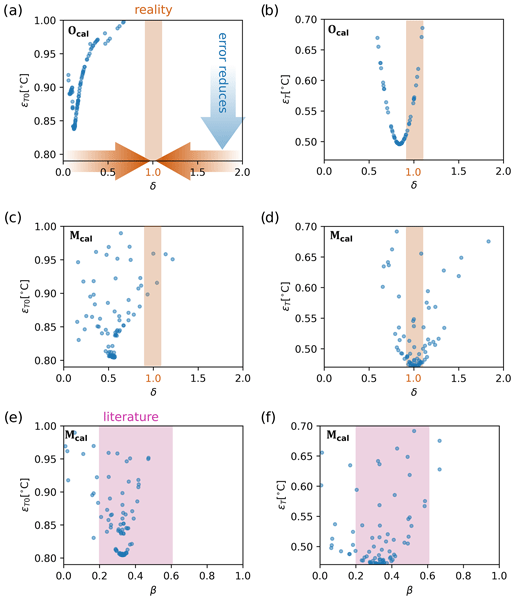
Models simplify reality using assumptions, which can sometimes introduce flaws and affect their accuracy. Properly calibrating model parameters is essential, and although automated tools can speed up this process, they may occasionally produce incorrect values due to inconsistencies in the model. We demonstrate that by carefully applying automated tools, we were able to identify and correct a flaw in a widely used model for lake environments.
Daniele Strigaro, Camilla Capelli, and Massimiliano Cannata
Int. Arch. Photogramm. Remote Sens. Spatial Inf. Sci., XLVIII-4-W12-2024, 143–148, https://doi.org/10.5194/isprs-archives-XLVIII-4-W12-2024-143-2024, https://doi.org/10.5194/isprs-archives-XLVIII-4-W12-2024-143-2024, 2024
Olivia Desgué-Itier, Laura Melo Vieira Soares, Orlane Anneville, Damien Bouffard, Vincent Chanudet, Pierre Alain Danis, Isabelle Domaizon, Jean Guillard, Théo Mazure, Najwa Sharaf, Frédéric Soulignac, Viet Tran-Khac, Brigitte Vinçon-Leite, and Jean-Philippe Jenny
Hydrol. Earth Syst. Sci., 27, 837–859, https://doi.org/10.5194/hess-27-837-2023, https://doi.org/10.5194/hess-27-837-2023, 2023
Short summary
Short summary
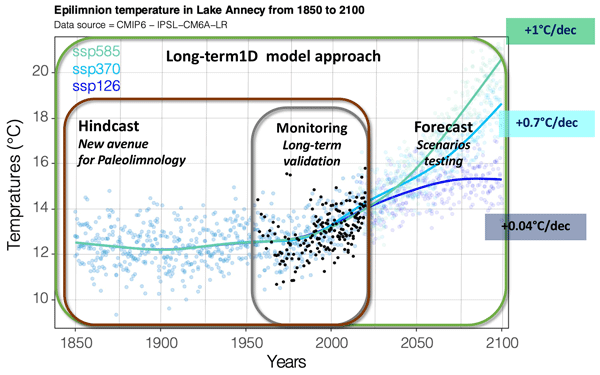
The long-term effects of climate change will include an increase in lake surface and deep water temperatures. Incorporating up to 6 decades of limnological monitoring into an improved 1D lake model approach allows us to predict the thermal regime and oxygen solubility in four peri-alpine lakes over the period 1850–2100. Our modeling approach includes a revised selection of forcing variables and provides a way to investigate the impacts of climate variations on lakes for centennial timescales.
Artur Safin, Damien Bouffard, Firat Ozdemir, Cintia L. Ramón, James Runnalls, Fotis Georgatos, Camille Minaudo, and Jonas Šukys
Geosci. Model Dev., 15, 7715–7730, https://doi.org/10.5194/gmd-15-7715-2022, https://doi.org/10.5194/gmd-15-7715-2022, 2022
Short summary
Short summary
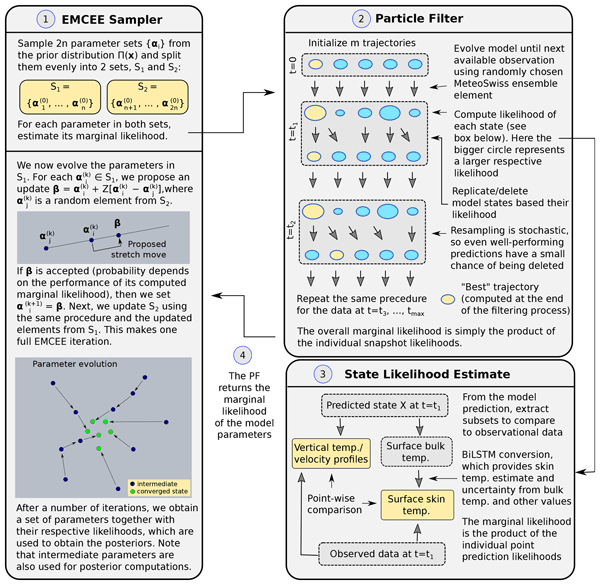
Reconciling the differences between numerical model predictions and observational data is always a challenge. In this paper, we investigate the viability of a novel approach to the calibration of a three-dimensional hydrodynamic model of Lake Geneva, where the target parameters are inferred in terms of distributions. We employ a filtering technique that generates physically consistent model trajectories and implement a neural network to enable bulk-to-skin temperature conversion.
D. Strigaro, M. Cannata, C. Capelli, and F. Lepori
Int. Arch. Photogramm. Remote Sens. Spatial Inf. Sci., XLVIII-4-W1-2022, 457–463, https://doi.org/10.5194/isprs-archives-XLVIII-4-W1-2022-457-2022, https://doi.org/10.5194/isprs-archives-XLVIII-4-W1-2022-457-2022, 2022
Malgorzata Golub, Wim Thiery, Rafael Marcé, Don Pierson, Inne Vanderkelen, Daniel Mercado-Bettin, R. Iestyn Woolway, Luke Grant, Eleanor Jennings, Benjamin M. Kraemer, Jacob Schewe, Fang Zhao, Katja Frieler, Matthias Mengel, Vasiliy Y. Bogomolov, Damien Bouffard, Marianne Côté, Raoul-Marie Couture, Andrey V. Debolskiy, Bram Droppers, Gideon Gal, Mingyang Guo, Annette B. G. Janssen, Georgiy Kirillin, Robert Ladwig, Madeline Magee, Tadhg Moore, Marjorie Perroud, Sebastiano Piccolroaz, Love Raaman Vinnaa, Martin Schmid, Tom Shatwell, Victor M. Stepanenko, Zeli Tan, Bronwyn Woodward, Huaxia Yao, Rita Adrian, Mathew Allan, Orlane Anneville, Lauri Arvola, Karen Atkins, Leon Boegman, Cayelan Carey, Kyle Christianson, Elvira de Eyto, Curtis DeGasperi, Maria Grechushnikova, Josef Hejzlar, Klaus Joehnk, Ian D. Jones, Alo Laas, Eleanor B. Mackay, Ivan Mammarella, Hampus Markensten, Chris McBride, Deniz Özkundakci, Miguel Potes, Karsten Rinke, Dale Robertson, James A. Rusak, Rui Salgado, Leon van der Linden, Piet Verburg, Danielle Wain, Nicole K. Ward, Sabine Wollrab, and Galina Zdorovennova
Geosci. Model Dev., 15, 4597–4623, https://doi.org/10.5194/gmd-15-4597-2022, https://doi.org/10.5194/gmd-15-4597-2022, 2022
Short summary
Short summary
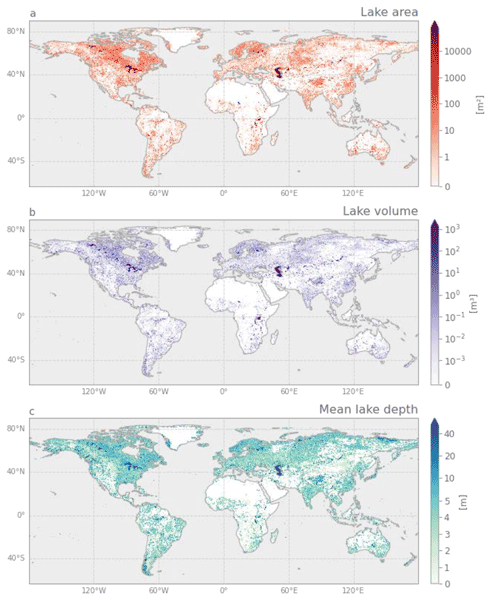
Lakes and reservoirs are warming across the globe. To better understand how lakes are changing and to project their future behavior amidst various sources of uncertainty, simulations with a range of lake models are required. This in turn requires international coordination across different lake modelling teams worldwide. Here we present a protocol for and results from coordinated simulations of climate change impacts on lakes worldwide.
Tomy Doda, Cintia L. Ramón, Hugo N. Ulloa, Alfred Wüest, and Damien Bouffard
Hydrol. Earth Syst. Sci., 26, 331–353, https://doi.org/10.5194/hess-26-331-2022, https://doi.org/10.5194/hess-26-331-2022, 2022
Short summary
Short summary
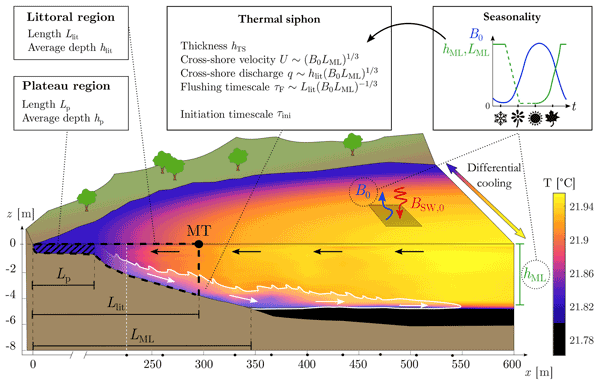
At night or during cold periods, the shallow littoral region of lakes cools faster than their deeper interior. This induces a cold downslope current that carries littoral waters offshore. From a 1-year-long database collected in a small temperate lake, we resolve the seasonality of this current and report its frequent occurrence from summer to winter. This study contributes to a better quantification of lateral exchange in lakes, with implications for the transport of dissolved compounds.
Marco Toffolon, Luca Cortese, and Damien Bouffard
Geosci. Model Dev., 14, 7527–7543, https://doi.org/10.5194/gmd-14-7527-2021, https://doi.org/10.5194/gmd-14-7527-2021, 2021
Short summary
Short summary
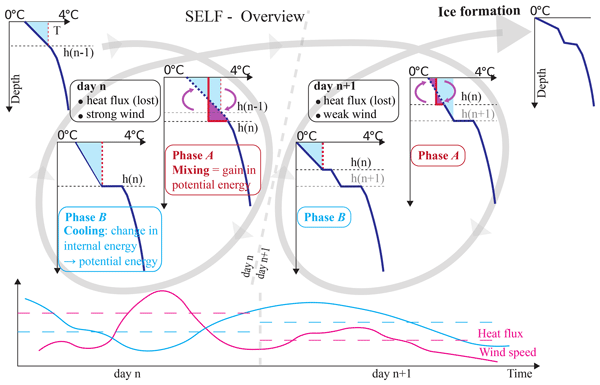
The time when lakes freeze varies considerably from year to year. A common way to predict it is to use negative degree days, i.e., the sum of air temperatures below 0 °C, a proxy for the heat lost to the atmosphere. Here, we show that this is insufficient as the mixing of the surface layer induced by wind tends to delay the formation of ice. To do so, we developed a minimal model based on a simplified energy balance, which can be used both for large-scale analyses and short-term predictions.
Pascal Perolo, Bieito Fernández Castro, Nicolas Escoffier, Thibault Lambert, Damien Bouffard, and Marie-Elodie Perga
Earth Syst. Dynam., 12, 1169–1189, https://doi.org/10.5194/esd-12-1169-2021, https://doi.org/10.5194/esd-12-1169-2021, 2021
Short summary
Short summary
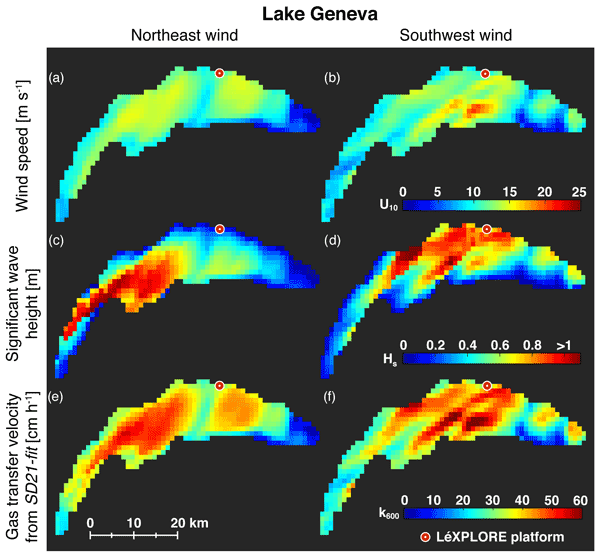
Wind blowing over the ocean creates waves that, by increasing the level of turbulence, promote gas exchange at the air–water interface. In this study, for the first time, we measured enhanced gas exchanges by wind-induced waves at the surface of a large lake. We adapted an ocean-based model to account for the effect of surface waves on gas exchange in lakes. We finally show that intense wind events with surface waves contribute disproportionately to the annual CO2 gas flux in a large lake.
Frerk Pöppelmeier, David J. Janssen, Samuel L. Jaccard, and Thomas F. Stocker
Biogeosciences, 18, 5447–5463, https://doi.org/10.5194/bg-18-5447-2021, https://doi.org/10.5194/bg-18-5447-2021, 2021
Short summary
Short summary
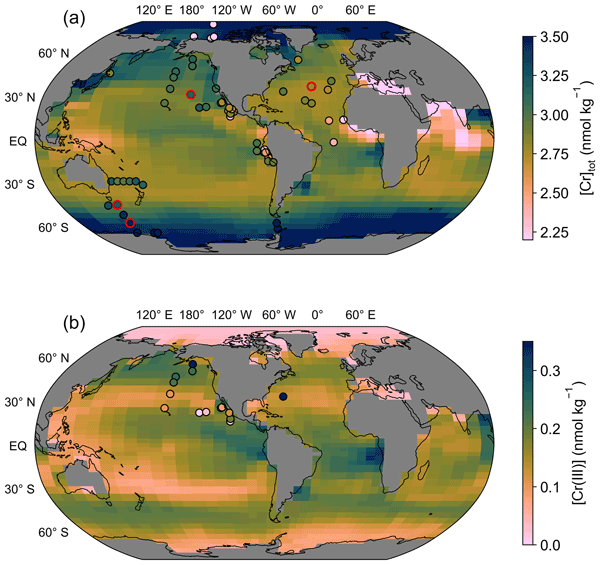
Chromium (Cr) is a redox-sensitive element that holds promise as a tracer of ocean oxygenation and biological activity. We here implemented the oxidation states Cr(III) and Cr(VI) in the Bern3D model to investigate the processes that shape the global Cr distribution. We find a Cr ocean residence time of 5–8 kyr and that the benthic source dominates the tracer budget. Further, regional model–data mismatches suggest strong Cr removal in oxygen minimum zones and a spatially variable benthic source.
Cited articles
Bärenbold, B., Capelli, C., De Ventura, L., Eyring, S., Folly, E., Gallina, N., Känel, B., Keller, P., Köster, O., Lepori, F., Lovas, R., Rogora, M., Janssen, D., Bouffard, D., and Schmid, M.: Data for: Long-term temperature, oxygen and water clarity trends in Swiss lakes (Version 1.0), Eawag: Swiss Federal Institute of Aquatic Science and Technology [code, data set], https://doi.org/10.25678/000GJC, 2026.
Boehrer, B. and Schultze, M.: Stratification of lakes, Rev. Geophys., 46, https://doi.org/10.1029/2006RG000210, 2008.
Capelli, C., Castelli, A., Lepori, F., Moccetti, P., and Rotta, F.: Physical and chemical data for Lake Lugano (Switzerland and Italy), 1972–2021 (Version v.1), IST-SUPSI [data set], https://doi.org/10.23728/b2share.1f7646c9babb441a8d73d2d0c1af0d96, 2024a.
Capelli, C., Castelli, A., Moccetti, P., and Rotta, F.: Physical and chemical data for Lake Lugano (Switzerland and Italy), 2022–2024 (Version v.1), IST-SUPSI [data set], https://doi.org/10.23728/b2share.398d3981e1824e949bf6eeac052f1d5b, 2024b.
Carpenter, J. H.: The accuracy of the Winkler method for dissolved oxygen analysis, Limnol. Oceanogr., 10, 135–140, https://doi.org/10.4319/lo.1965.10.1.0135, 1965.
Chen, C. T. A. and Millero, F. J.: Thermodynamic properties for natural waters covering only the limnological range, Limnol. Oceanogr., 31, 657–662, https://doi.org/10.4319/lo.1986.31.3.0657, 1986.
Cruz, H.: pylake(v0.1.11), GitHub, https://github.com/eawag-surface-waters-research/PyLake (last access: 19 August 2026), 2025.
DIN (Deutsches Institut für Normung): Water quality; determination of dissolved oxygen; iodometric method, DIN EN 25813:1993-01 (ISO 5813:1983), https://doi.org/10.31030/2553997, 1993.
Engelhardt, C. and Kirillin, G.: Criteria for the onset and breakup of summer lake stratification based on routine temperature measurements, Fundam. Appl. Limnol., 184, 183–194, https://doi.org/10.1127/1863-9135/2014/0582, 2014.
Fast, A. W.: Artificial aeration as a lake restoration technique, in: Lake Restoration: Proceedings of a National Conference, Minneapolis, Minnesota, 121–131, United States, Environmental Protection Agency, Office of Water Planning and Standards, https://hdl.handle.net/2027/mdp.39015039075521 (last access: 3 September 2026), 1979.
Gallina, N., Beniston, M., and Jacquet, S.: Estimating future cyanobacterial occurrence and importance in lakes: a case study with Planktothrix rubescens in Lake Geneva, Aquat. Sci., 79, 249–263, https://doi.org/10.1007/s00027-016-0494-z, 2017.
Gray, E., Mackay, E. B., Elliott, J. A., Folkard, A. M., and Jones, I. D.: Wide-spread inconsistency in estimation of lake mixed depth impacts interpretation of limnological processes, Water Res., 168, 115136, https://doi.org/10.1016/j.watres.2019.115136, 2020.
Hastie, T. J.: Generalized additive models, Statistical models in S, Routledge, 249–307, https://doi.org/10.1201/9780203738535, 2017.
Hendricks-Franssen, H. and Scherrer, S. C.: Freezing of lakes on the Swiss plateau in the period 1901–2006, Int. J. Climatol., 28, 421–433, https://doi.org/10.1002/joc.1553, 2008.
Heiskanen, J. J., Mammarella, I., Ojala, A., Stepanenko, V., Erkkilä, K. M., Miettinen, H., Sandström, H., Eugster, W., Leppäranta, M., Järvinen, H., Vesala, T., and Nordbo, A.: Effects of water clarity on lake stratification and lake‐atmosphere heat exchange, J. Geophys. Res.-Atmos., 120, 7412–7428, https://doi.org/10.1002/2014JD022938, 2015.
Holzner, C. P., Aeschbach-Hertig, W., Simona, M., Veronesi, M., Imboden, D. M., and Kipfer, R.: Exceptional mixing events in meromictic Lake Lugano (Switzerland/Italy), studied using environmental tracers, Limnol. Oceanogr., 54, 1113–1124, https://doi.org/10.4319/lo.2009.54.4.1113, 2009.
Idso, S. B.: On the concept of lake stability 1, Limnol. Oceanogr., 18, 681–683, https://doi.org/10.4319/lo.1973.18.4.0681, 1973.
Imboden, D. M. and Emerson, S.: Natural radon and phosphorus as limnologic tracers: Horizontal and vertical eddy diffusion in Greifensee, Limnol. Oceanogr., 23, 77–90, https://doi.org/10.4319/lo.1978.23.1.0077, 1978.
Imboden, D. M. and Wüest, A.: Mixing mechanisms in lakes, in: Physics and chemistry of lakes, 83–138, Berlin, Heidelberg, Springer Berlin Heidelberg, https://doi.org/10.1007/978-3-642-85132-2_4, 1995.
Jane, S. F., Hansen, G. J., Kraemer, B. M., Leavitt, P. R., Mincer, J. L., North, R. L., Pilla, R. M., Stetler, J. T., Williamson, C. E., Woolway, R. I., Arvola, L., Chandra, S., DeGasperi, C. L., Diemer, L., Dunalska, J., Erina, O., Flaim, G., Grossart, H., Hambright, K. D., Hein, C., Hejzlar, J., Janus, L. L., Jenny, J., Jones, J. R., Knoll, L. B., Leoni, B., Mackay, E., Matsuzaki, S. S., McBride, C., Müller-Navarra, D. C., Paterson, A. M., Pierson, D., Rogora, M., Rusak, J. A., Sadro, S., Saulnier-Talbot, E., Schmid, M., Sommaruga, R., Thiery, W., Verburg, P., Weathers, K. C., Weyhenmeyer G. A., Yokota, K., and Rose, K. C.: Widespread deoxygenation of temperate lakes, Nature, 594, 66–70, https://doi.org/10.1038/s41586-021-03550-y, 2021.
Kiefer, I., Müller, B., and Wüest, A.: Anleitung zur Analyse von Sauerstoffzehrung und Netto-Ökosystemproduktion in Seen. Arbeitshilfe zur Ermittlung relevanter Grössen der Trophie von Seen, Eawag; École polytechnique fédérale de Lausanne (EPFL), https://www.dora.lib4ri.ch/eawag/item/eawag:21995 (last access: 19 August 2026), 2021.
Kirillin, G. and Shatwell, T.: Generalized scaling of seasonal thermal stratification in lakes, Earth-Sci. Rev., 161, 179–190, https://doi.org/10.1016/j.earscirev.2016.08.008, 2016.
Ladwig, R., Rock, L. A., and Dugan, H. A.: Impact of salinization on lake stratification and spring mixing, Limnology and Oceanography Letters, 8, 93–102, https://doi.org/10.1002/lol2.10215, 2021.
Livingstone, D. M.: Temporal structure in the deep-water temperature of four Swiss lakes: A short-term climatic change indicator?, Int. Ver. The., 25, 75–81, https://doi.org/10.1080/03680770.1992.11900062, 1993.
Livingstone, D. M.: An example of the simultaneous occurrence of climate-driven “sawtooth” deep-water warming/cooling episodes in several Swiss lakes, Int. Ver. The., 26, 822–828, https://doi.org/10.1080/03680770.1995.11900832, 1997.
Marcé, R., George, G., Buscarinu, P., Deidda, M., Dunalska, J., de Eyto, E., Flaim, G., Grossart, H., Istvanovics, V., Lenhardt, M., Moreno-Ostos, E., Obrador, B., Ostrovsky, I., Pierson, D. C., Potužák, J., Poikane, S., Rinke, K., Rodriguez-Mozaz, S., Staehr, P. A., Šumberová, K., Waajen, G., Weyhenmeyer, G. A., Weathers, K. C., Zion, M., Ibelings, B. W., and Jennings, E.: Automatic high frequency monitoring for improved lake and reservoir management, Environ. Sci. Technol., 50, 10780–10794, https://doi.org/10.1021/acs.est.6b01604, 2016.
Mazumder, A., Taylor, W. D., McQueen, D. J., and Lean, D. R. S.: Effects of fish and plankton on lake temperature and mixing depth, Science, 247, 312–315, https://doi.org/10.1126/science.247.4940.312, 1990.
Mesman, J. P., Stelzer, J. A., Dakos, V., Goyette, S., Jones, I. D., Kasparian, J., McGinnis, D. F., and Ibelings, B. W.: The role of internal feedbacks in shifting deep lake mixing regimes under a warming climate, Freshwater Biol., 66, 1021–1035, https://doi.org/10.1111/fwb.13704, 2021.
MeteoSwiss and ETH Zurich: Climate CH2025 – Scientific Report, Federal Office of Meteorology and Climatology MeteoSwiss, Zurich, https://doi.org/10.18751/climate/scenarios/ch2025/sr/1.0/, 2025.
Müller, B., Bryant, L. D., Matzinger, A., and Wüest, A.: Hypolimnetic oxygen depletion in eutrophic lakes, Environ. Sci. Technol., 46, 9964–9971, https://doi.org/10.1021/es301422r, 2012.
Müller, B., Steinsberger, T., Schwefel, R., Gächter, R., Sturm, M., and Wüest, A.: Oxygen consumption in seasonally stratified lakes decreases only below a marginal phosphorus threshold, Sci. Rep., 9, 18054, https://doi.org/10.1038/s41598-019-54486-3, 2019.
OECD (Organization for Economic Cooperation and Development): Eutrophication of Waters. Monitoring assessment and control, Final Report, OECD Cooperative Programme on Monitoring of Inland Waters (Eutrophication Control), Environment Directorate, OECD, Paris, 154 pp., https://oceanrep.geomar.de/id/eprint/37417/ (last access: 3 September 2026), 1982.
O'Reilly, C. M., Sharma, S., Gray, D. K., Hampton, S. E., Read, J. S., Rowley, R. J., Schneider, P., Lenters, J. D., McIntyre, P. B., Kraemer, B. M., Weyhenmeyer, G. A., Straile, D., Dong, B., Adrian, R., Allan, M. G., Anneville, O., Arvola, L., Austin, J., Bailey, J. L., Baron, J. S., Brookes, J. D., de Eyto, E., Dokulil, M. T., Hamilton, D. P., Havens, K., Hetherington, A. L., Higgins, S. N., Hook, S., Izmest'eva, L. R., Joehnk, K. D., Kangur, K., Kasprzak, P., Kumagai, M., Kuusisto, E., Leshkevich, G., Livingstone, D. M., MacIntyre, S., May, L., Melack, J. M., Mueller-Navarra, D. C., Naumenko, M., Noges, P., Noges, T., North, R. P., Plisnier, P.-D., Rigosi, A., Rimmer, A., Rogora, M., Rudstam, L. G., Rusak, J. A., Salmaso, N., Samal, N. R., Schindler, D. E., Schladow, S. G., Schmid, M., Schmidt, S. R., Silow, E., Soylu, M. E., Teubner, K., Verburg, P., Voutilainen, A., Watkinson, A., Williamson, C. E., and Zhang, G.: Rapid and highly variable warming of lake surface waters around the globe, Geophys. Res. Lett., 42, 10–773, https://doi.org/10.1002/2015GL066235, 2015.
Piccolroaz, S., Woolway, R. I., and Merchant, C. J.: Global reconstruction of twentieth century lake surface water temperature reveals different warming trends depending on the climatic zone, Climatic Change, 160, 427–442, https://doi.org/10.1007/s10584-020-02663-z, 2020.
Pilla, R. M., Williamson, C. E., Adamovich, B. V., Adrian, R., Anneville, O., Chandra, S., Colom-Montero, W., Devlin, S. P., Dix, M. A., Dokulil, M. T., Gaiser, E. E., Girdner, S. F., Hambright, K. D., Hamilton, D. P., Havens, K., Hessen, D. O., Higgins, S. N., Huttula, T. H., Huuskonen, H., Isles, P. D. F., Joehnk, K. D., Jones, I. D., Keller, W. B., Knoll, L. B., Korhonen, J., Kraemer, B. M., Leavitt, P. R., Lepori, F., Luger, M. S., Maberly, S. C., Melack, J. M., Melles, S. J., Müller-Navarra, D. C., Pierson, D. C., Pislegina, H. V., Plisnier, P.-D., Richardson, D. C., Rimmer, A., Rogora, M., Rusak, J. A., Sadro, S., Salmaso, N., Saros, J. E., Saulnier-Talbot, É., Schindler, D. E., Schmid, M., Shimaraeva, S. V., Silow, E. A., Sitoki, L. M., Sommaruga, R., Straile, D., Strock, K. E., Thiery, W., Timofeyev, M. A., Verburg, P., Vinebrooke, R. D., Weyhenmeyer, G. A., and Zadereev, E.: Deeper waters are changing less consistently than surface waters in a global analysis of 102 lakes, Sci. Rep., 10, 20514, https://doi.org/10.1038/s41598-020-76873-x, 2020.
Read, J. S., Hamilton, D. P., Jones, I. D., Muraoka, K., Winslow, L. A., Kroiss, R., Wu, C. H., and Gaiser, E.: Derivation of lake mixing and stratification indices from high-resolution lake buoy data, Environ. Modell. Softw., 26, 1325–1336, https://doi.org/10.1016/j.envsoft.2011.05.006, 2011.
Rogora, M., Giacomotti, P., Tartari, G., and Orru', A.: Transparency (Secchi depth) of Lake Maggiore, Ghiffa station, B2SHARE v2 [data set], https://doi.org/10.23728/b2share.3077382cfa474d0fbb066024beae3e2d, 2025.
Rogora, M., Tartari, G., Giacomotti, P., and Orru', A.: Time series of physical/chemical characteristics of Lago Maggiore – Italy, eLTER Research Infrastructure [data set], https://doi.org/10.71900/PVXB-V622, 2026.
Rose, K. C., Winslow, L. A., Read, J. S., and Hansen, G. J.: Climate‐induced warming of lakes can be either amplified or suppressed by trends in water clarity, Limnology and Oceanography Letters, 1, 44–53, https://doi.org/10.1002/lol2.10027, 2016.
Schilliger, L., Tetzlaff, A., Bourgeois, Q., Correa, L. F., and Wild, M.: An investigation on causes of the detected surface solar radiation brightening in Europe using satellite data, J. Geophys. Res.-Atmos., 129, e2024JD041101, https://doi.org/10.1029/2024JD041101, 2024.
Schmid, M. and Köster, O.: Excess warming of a Central European lake driven by solar brightening, Water Resour. Res., 52, 8103–8116, https://doi.org/10.1002/2016WR018651, 2016.
Servén, D. and Brummitt, C.: pyGAM: Generalized Additive Models in Python, Zenodo, https://doi.org/10.5281/zenodo.1208724, 2018.
Stefanidis, K., Varlas, G., Papaioannou, G., Papadopoulos, A., and Dimitriou, E.: Trends of lake temperature, mixing depth and ice cover thickness of European lakes during the last four decades, Sci. Total Environ., 830, 154709, https://doi.org/10.1016/j.scitotenv.2022.154709, 2022.
Swiss Confederation: Waters Protection Ordinance (WPO; SR 814.201), https://www.fedlex.admin.ch/eli/cc/1998/2863_2863_2863/en (last access: 19 August 2026), 1998.
Swiss Federal Office for the Environment: Lake water quality, https://www.indikatoren.admin.ch/public/v2/detail?ind=WS037&lng=en, last access: 19 August 2026.
Valerio, G. and Pilotti, M.: Contribution of chemical stratification to the extent of water renewal in a deep lake, Water Resour. Res., 61, e2024WR039382, https://doi.org/10.1029/2024WR039382, 2025.
Jones, I. D. and Smol, J. P. (Eds.): Wetzel's Limnology: Lake and river ecosystems, Elsevier, https://cir.nii.ac.jp/crid/1971430859806798885 (last access: 3 September 2026), 2023.
Woolway, R. I., Dokulil, M. T., Marszelewski, W., Schmid, M., Bouffard, D., and Merchant, C. J.: Warming of Central European lakes and their response to the 1980s climate regime shift, Climatic Change, 142, 505–520, https://doi.org/10.1007/s10584-017-1966-4, 2017.
Woolway, R. I., Sharma, S., Weyhenmeyer, G. A., Debolskiy, A., Golub, M., Mercado-Bettín, D., Perroud, M., Stepanenko, V., Tan, Z., Grant, L., Ladwig, R., Mesman, J., Moore, T. N., Shatwell, T., Vanderkelen, I., Austin, J. A., DeGasperi, C. L., Dokulil, M., La Fuente, S., Mackay, E. B., Schladow, S. G., Watanabe, S., Marcé, R., Pierson, D. C., Thiery, W., and Jennings, E.: Phenological shifts in lake stratification under climate change, Nat. Commun., 12, 2318, https://doi.org/10.1038/s41467-021-22657-4, 2021.
Wüest, A., Aeschbach-Hertig, W., Baur, H., Hofer, M., Kipfer, R., and Schurter, M.: Density structure and tritium-helium age of deep hypolimnetic water in the northern basin of Lake Lugano, Aquat. Sci., 54, 205–218, https://doi.org/10.1007/BF00878137, 1992.
Wüest, A., Piepke, G., and Halfman, J. D.: Combined effects of dissolved solids and temperature on the density stratification of Lake Malawi, in: Limnology, Climatology and Paleoclimatology of the East African Lakes, Routledge, 183–202, https://doi.org/10.1201/9780203748978, 1996.
Short summary
We present a publicly available dataset of physical lake monitoring data of 21 Swiss lakes, including calculated variables like thermocline depth. The data was measured over many decades by cantonal authorities and research institutes. We used the data to compare the evolution of Swiss lakes, and we found that temperature, heat content and stratification strength have strongly increased. In contrast, deepwater oxygen and thermocline depth do not show clear trends during the last few decades.
We present a publicly available dataset of physical lake monitoring data of 21 Swiss lakes,...


Altmetrics
Final-revised paper
Preprint