Articles | Volume 18, issue 8
https://doi.org/10.5194/essd-18-5773-2026
© Author(s) 2026. This work is distributed under
the Creative Commons Attribution 4.0 License.
https://doi.org/10.5194/essd-18-5773-2026
© Author(s) 2026. This work is distributed under
the Creative Commons Attribution 4.0 License.
Corrected event dataset of FengYun-4A Lightning Mapping Imager (FY-4A LMI), 2019–2023
Yuansheng Zhang
State Key Laboratory of Atmospheric Environment and Extreme Meteorology, Institute of Atmospheric Physics, Chinese Academy of Sciences, Beijing 100029, China
College of Earth and Planetary Sciences, University of Chinese Academy of Sciences, Beijing 100049, China
Xiushu Qie
CORRESPONDING AUTHOR
State Key Laboratory of Atmospheric Environment and Extreme Meteorology, Institute of Atmospheric Physics, Chinese Academy of Sciences, Beijing 100029, China
College of Earth and Planetary Sciences, University of Chinese Academy of Sciences, Beijing 100049, China
Rubin Jiang
CORRESPONDING AUTHOR
State Key Laboratory of Atmospheric Environment and Extreme Meteorology, Institute of Atmospheric Physics, Chinese Academy of Sciences, Beijing 100029, China
Dongjie Cao
National Satellite Meteorological Center, Chinese Meteorological Administration, Beijing 100081, China
Jing Yang
State Key Laboratory of Atmospheric Environment and Extreme Meteorology, Institute of Atmospheric Physics, Chinese Academy of Sciences, Beijing 100029, China
Dongfang Wang
State Key Laboratory of Atmospheric Environment and Extreme Meteorology, Institute of Atmospheric Physics, Chinese Academy of Sciences, Beijing 100029, China
Mingyuan Liu
State Key Laboratory of Atmospheric Environment and Extreme Meteorology, Institute of Atmospheric Physics, Chinese Academy of Sciences, Beijing 100029, China
Dongxia Liu
State Key Laboratory of Atmospheric Environment and Extreme Meteorology, Institute of Atmospheric Physics, Chinese Academy of Sciences, Beijing 100029, China
Zhuling Sun
State Key Laboratory of Atmospheric Environment and Extreme Meteorology, Institute of Atmospheric Physics, Chinese Academy of Sciences, Beijing 100029, China
Hongbo Zhang
State Key Laboratory of Atmospheric Environment and Extreme Meteorology, Institute of Atmospheric Physics, Chinese Academy of Sciences, Beijing 100029, China
Shanfeng Yuan
State Key Laboratory of Atmospheric Environment and Extreme Meteorology, Institute of Atmospheric Physics, Chinese Academy of Sciences, Beijing 100029, China
Related authors
No articles found.
Xinran Xia, Rubin Jiang, Min Min, Shengli Wu, Peng Zhang, and Xiangao Xia
Earth Syst. Sci. Data Discuss., https://doi.org/10.5194/essd-2024-395, https://doi.org/10.5194/essd-2024-395, 2024
Revised manuscript not accepted
Short summary
Short summary
Based on the MicroWave Radiation Imager aboard FY-3 series satellites, we developed a global terrestrial precipitable water vapor dataset from 2012 to 2020. This dataset overcomes the limitations of infrared observations and provides accurate, all-weather PWV data ,spanning all types of land surface. Researchers are expected to leverage it to explore the role of water vapor in weather patterns, refine precipitation forecasting, and validate climate simulations.
Zhixiong Chen, Jane Liu, Xiushu Qie, Xugeng Cheng, Yukun Shen, Mengmiao Yang, Rubin Jiang, and Xiangke Liu
Atmos. Chem. Phys., 22, 8221–8240, https://doi.org/10.5194/acp-22-8221-2022, https://doi.org/10.5194/acp-22-8221-2022, 2022
Short summary
Short summary
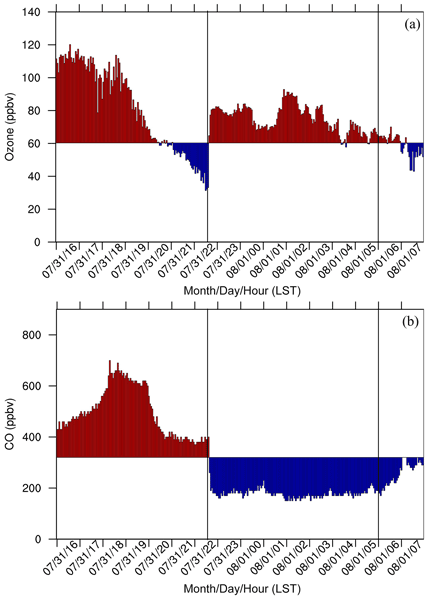
A vigorous surface ozone surge event of stratospheric origin occurred in the North China Plain at night. Surface ozone concentrations were 40–50 ppbv higher than the corresponding monthly mean, whereas surface carbon monoxide concentrations declined abruptly, which confirmed the direct stratospheric intrusions to the surface. We further addressed the notion that a combined effect of the dying typhoon and mesoscale convective systems was responsible for this vigorous ozone surge.
Mengyu Sun, Dongxia Liu, Xiushu Qie, Edward R. Mansell, Yoav Yair, Alexandre O. Fierro, Shanfeng Yuan, Zhixiong Chen, and Dongfang Wang
Atmos. Chem. Phys., 21, 14141–14158, https://doi.org/10.5194/acp-21-14141-2021, https://doi.org/10.5194/acp-21-14141-2021, 2021
Short summary
Short summary
By acting as cloud condensation nuclei (CCN), increasing aerosol loading tends to enhance lightning activity through microphysical processes. We investigated the aerosol effects on the development of a thunderstorm. A two-moment bulk microphysics scheme and bulk lightning model were coupled in the WRF Model to simulate a multicell thunderstorm. Sensitivity experiments show that the enhancement of lightning activity under polluted conditions results from an increasing ice crystal number.
Cited articles
Abarca, S. F., Corbosiero, K. L., and Galarneau, T. J.: An evaluation of the worldwide lightning location network (wwlln) using the national lightning detection network (nldn) as ground truth, J. Geophys. Res.-Atmos., 115, 2009JD013411, https://doi.org/10.1029/2009JD013411, 2010.
Brune, W. H., Mcfarland, P. J., Bruning, E., Waugh, S., Macgorman, D., Miller, D. O., Jenkins, J. M., Ren, X., Mao, J., and Peischl, J.: Extreme oxidant amounts produced by lightning in storm clouds, Science, 372, 711–715, https://doi.org/10.1126/science.abg0492, 2021.
Buechler, D., Varghese, T., Armstrong, P., Bremer, J., Lamb, R., Fulbright, J., Goodman, S., Butler, J. J., Xiong, X. J., and Gu, X.: On-orbit validation of the geolocation accuracy of goes-16 geostationary lightning mapper (glm) flashes using ground-based laser beacons, in: Earth Observing Systems XXIII, SPIE, 2018/1/1, 107640J, 2018.
Cao, D.: The development of product algorithm of the fengyun-4 geostationary lightning mapping imager, Adv. Meteorol. Sci. Techol., 6, 94–98, 2016.
Cao, D., Lu, F., Zhang, X., and Yang, J.: Lightning activity observed by the fengyun-4a lightning mapping imager, Remote Sens., 13, 3013, https://doi.org/10.3390/rs13153013, 2021.
Carr, J. L., Tillier, C. E., and Shu, Y.: Validation of image navigation and registration for the geostationary lightning mapper, J. Appl. Remote Sens., 3, 1, https://doi.org/10.1117/1.JRS.14.032403, 2020.
Chen, Z., Qie, X., Sun, J., Xiao, X., Zhang, Y., Cao, D., and Yang, J.: Evaluation of fengyun-4a lightning mapping imager (lmi) performance during multiple convective episodes over beijing, Remote Sens., 13, 1746, https://doi.org/10.3390/rs13091746, 2021.
Cheng, K., Tong, X., Liu, S., Yan, X., and Li, H.: An on-orbit geometric calibration approach based on double tubes edge-binding feng yun-4a lightning mapping imager, J. Geomat. Sci. Technol., 38, 477–484, 2021.
Fan, P., Zheng, D., Zhang, Y., Gu, S., Zhang, W., Yao, W., Yan, B., and Xu, Y.: A performance evaluation of the world wide lightning location network (wwlln) over the tibetan plateau, J. Atmos. Ocean. Tech., 35, 927–939, https://doi.org/10.1175/JTECH-D-17-0144.1, 2018.
Goodman, S. J., Blakeslee, R. J., Koshak, W. J., Mach, D., Bailey, J., Buechler, D., Carey, L., Schultz, C., Bateman, M., Mccaul, E., and Stano, G.: The goes-r geostationary lightning mapper (glm), Atmos. Res., 125–126, 34–49, https://doi.org/10.1016/j.atmosres.2013.01.006, 2013.
Holmlund, K., Grandell, J., Schmetz, J., Stuhlmann, R., Bojkov, B., Munro, R., Lekouara, M., Coppens, D., Viticchie, B., August, T., Theodore, B., Watts, P., Dobber, M., Fowler, G., Bojinski, S., Schmid, A., Salonen, K., Tjemkes, S., Aminou, D., and Blythe, P.: Meteosat third generation (mtg): continuation and innovation of observations from geostationary orbit, B. Am. Meteorol. Soc., 5, https://doi.org/10.1175/BAMS-D-19-0304.1, 2021.
Hui, W., Huang, F., and Liu, R.: Characteristics of lightning signals over the tibetan plateau and the capability of fy-4a lmi lightning detection in the plateau, Int. J. Remote Sens., 41, 4605–4625, https://doi.org/10.1080/01431161.2020.1723176, 2020a.
Hui, W., Zhang, W., Lyu, W., and Li, P.: Preliminary observations from the china fengyun-4a lightning mapping imager and its optical radiation characteristics, Remote Sens., 12, 2622, https://doi.org/10.3390/rs12162622, 2020b.
Jie, Z.: Comparison of the satellite-based lightning imaging sensor (lis) against the ground-based national lightning monitoring network, Prog. Geophys., 2, 541–546, 2018.
Loto Aniu, P. T. M., Davis, A., Jarvis, A., Grotenhuis, M., Rich, F. J., Califf, S., Inceoglu, F., Pacini, A., and Singer, H. J.: Initial on-orbit results from the goes-18 spacecraft science magnetometer, Space Sci. Rev., 219, 84, https://doi.org/10.1007/s11214-023-01032-3, 2023.
Peterson, M. and Mach, D.: The illumination of thunderclouds by lightning: 4. Volumetric thunderstorm imagery, Earth Space Sci., 9, https://doi.org/10.1029/2021EA001945, 2022.
Peterson, M., Light, T. E. L., and Mach, D.: The illumination of thunderclouds by lightning: 1. The extent and altitude of optical lightning sources, J. Geophys. Res.-Atmos., 127, https://doi.org/10.1029/2021JD035579, 2022a.
Peterson, M., Light, T. E. L., and Mach, D.: The illumination of thunderclouds by lightning: 2. The effect of glm instrument threshold on detection and clustering, Earth Space Sci., 9, https://doi.org/10.1029/2021EA001943, 2022b.
Peterson, M., Light, T. E. L., and Mach, D.: The illumination of thunderclouds by lightning: 3. Retrieving optical source altitude, Earth Space Sci., 9, https://doi.org/10.1029/2021EA001944, 2022c.
Qie, X., Yuan, S., Chen, Z., Wang, D., Liu, D., Sun, M., Sun, Z., Srivastava, A., Zhang, H., Lu, J., Xiao, H., Bi, Y., Feng, L., Tian, Y., Xu, Y., Jiang, R., Liu, M., Xiao, X., Duan, S., Su, D., Sun, C., Xu, W., Zhang, Y., Lu, G., Zhang, D., Yon, Y., and Yu, Y.: Understanding the dynamical-microphysical-electrical processes associated with severe thunderstorms over the beijing metropolitan region, Sci. China Earth Sci., 4, 10–26, https://doi.org/10.1007/s11430-020-9656-8, 2021.
Qie, X., Zhang, Y., Zhang, D., Yin, Y., Yu, Y., Lu, G., and Jiang, R. (Eds:): Principles and forecast of thunderbolt weather system, Science Press, Beijing, ISBN 9787030737281, 2023.
Rodger, C. J., Werner, S., Brundell, J. B., Lay, E. H., Thomson, N. R., Holzworth, R. H., and Dowden, R. L.: Detection efficiency of the VLF World-Wide Lightning Location Network (WWLLN): initial case study, Ann. Geophys., 24, 3197–3214, https://doi.org/10.5194/angeo-24-3197-2006, 2006.
Rudlosky, S. D., Goodman, S. J., Virts, K. S., and Bruning, E. C.: Initial geostationary lightning mapper observations, Geophys. Res. Lett., 46, 1097–1104, https://doi.org/10.1029/2018GL081052, 2019.
Thompson, K., Bateman, M., and Carey, L.: A comparison of two ground-based lightning detection networks against the satellite-based lightning imaging sensor (lis), J. Atmos. Ocean. Tech., 10, 2191–2205, https://doi.org/10.1175/JTECH-D-13-00186.1, 2014.
Wang, D., Sun, Z., Yuan, S., Lu, J., Qie, X., Liu, M., Xu, Y., Lu, G., and Tian, Y.: Beijing broadband lightning network and the spatiotemporal evolution of lightning flashes during a thunderstorm, Chinese J. Atmos. Sci., 44, 851–864, https://doi.org/10.3878/j.issn.1006-9895.1910.19161, 2020.
Wang, J., Tong, X., Yang, L., Shang, J., Liu, C., Bao, S., Zhang, Z., and Yang, J.: Image navigation for fy-4a lightning mapping imager, IEEE J. Select. Top. Appl. Earth Obs. Remote Sens., 14, 11450–11465, https://doi.org/10.1109/JSTARS.2021.3124955, 2021.
Wang, Y., Qie, X., Wang, D., Liu, M., Su, D., Wang, Z., Liu, D., Wu, Z., Sun, Z., and Tian, Y.: Beijing lightning network (blnet) and the observation on preliminary breakdown processes, Atmos. Res., 171, 121–132, https://doi.org/10.1016/j.atmosres.2015.12.012, 2016.
Wu, A., Cai, L., Guo, J., and Ding, M.: Comparative study on lightning data between the fengyun-4a satellite and the national lightning monitoring network in guizhou, china, J. Atmos. Sol.-Terr. Phy., 256, 106194, https://doi.org/10.1016/j.jastp.2024.106194, 2024.
Yang, J., Zhang, Z., Wei, C., Lu, F., and Guo, Q.: Introducing the new generation of chinese geostationary weather satellites, fengyun-4, B. Am. Meteorol. Soc., 98, 1637–1658, https://doi.org/10.1175/BAMS-D-16-0065.1, 2017.
Zhang, H., Zhao, X., Mei, Q., Wang, Y., Song, S., and Yu, F.: On-orbit thermal deformation prediction for a high-resolution satellite camera, Appl. Therm. Eng., 195, 117152, https://doi.org/10.1016/j.applthermaleng.2021.117152, 2021.
Zhang, W., Zhang, Y., Zheng, D., Wang, F., and Xu, L.: Relationship between lightning activity and tropical cyclone intensity over the northwest pacific, J. Geophys. Res.-Atmos., 120, 4072–4089, https://doi.org/10.1002/2014JD022334, 2015.
Zhang, Y., Cao, D., Yang, J., Lu, F., Wang, D., Liu, R., Zhang, H., Liu, D., Chen, Z., Lyu, H., Cai, W., Bao, S., and Qie, X.: A parallax shift effect correction based on cloud top height for fy-4a lightning mapping imager (lmi), Remote Sens., 15, 4856, https://doi.org/10.3390/rs15194856, 2023.
Zhang, Y., Qie, X., Cao, D., Yuan, S., Wang, D., Zhang, H., Liu, D., Sun, Z., Liu, M., Zhu, K., Jiang, R., and Yang, J.: Thermal deformation correction for the fy-4a lmi, Remote Sens., 18, 163, https://doi.org/10.3390/rs18010163, 2026a.
Zhang, Y., Qie, X., Jiang, R., Cao, D., Yang, J., Wang, D., Liu, M., Liu, D., Sun, Z., Zhang, H., and Yuan, S.: Corrected event dataset of FY-4A LMI in Northern Hemisphere (2019–2023, March–September), National Tibetan Plateau/Third Pole Environment Data Center [data set], https://doi.org/10.11888/Atmos.tpdc.303312, 2026b.
Short summary
This study presents a corrected 2019–2023 dataset for the FengYun-4A Lightning Mapping Imager, with geolocation accuracy better than 15 km, referenced to the World Wide Lightning Location Network. This open‑access resource enhances lightning monitoring and atmospheric research.
This study presents a corrected 2019–2023 dataset for the FengYun-4A Lightning Mapping Imager,...
Altmetrics
Final-revised paper
Preprint