Articles | Volume 18, issue 7
https://doi.org/10.5194/essd-18-5399-2026
© Author(s) 2026. This work is distributed under
the Creative Commons Attribution 4.0 License.
the Creative Commons Attribution 4.0 License.
https://doi.org/10.5194/essd-18-5399-2026
© Author(s) 2026. This work is distributed under
the Creative Commons Attribution 4.0 License.
the Creative Commons Attribution 4.0 License.
Data description article
| 
24 Jul 2026
Data description article |
| 24 Jul 2026
| 24 Jul 2026
A multi-method Antarctic atmospheric blocking dataset (1979–2024)
Deniz Bozkurt
CORRESPONDING AUTHOR

Department of Meteorology, University of Valparaíso, Valparaíso, Chile
Center for Climate and Resilience Research CR2, Santiago, Chile
Center for Oceanographic Research COPAS COASTAL, University of Concepción, Concepción, Chile
Charlie Opazo
Center for Climate and Resilience Research CR2, Santiago, Chile
Department of Geophysics, University of Chile, Santiago, Chile
Julio C. Marín
Department of Meteorology, University of Valparaíso, Valparaíso, Chile
Center for Atmospheric Studies and Climate Change (CEACC), University of Valparaíso, Valparaíso, Chile
Kyle R. Clem
School of Geography, Environment and Earth Sciences, Victoria University of Wellington, Wellington, New Zealand
Benjamin Pohl
Biogéosciences, CNRS/Université Bourgogne Europe, Dijon, France
Victoire Buffet
Biogéosciences, CNRS/Université Bourgogne Europe, Dijon, France
Institut des Géosciences de l'Environnement, CNRS/Université Grenoble Alpes, Saint Martin d'Hères, France
Vincent Favier
Institut des Géosciences de l'Environnement, CNRS/Université Grenoble Alpes, Saint Martin d'Hères, France
Tomás Carrasco-Escaff
Center for Climate and Resilience Research CR2, Santiago, Chile
Bradford S. Barrett
independent researcher: Raleigh, NC, USA
Related authors
Christian Torres, Deniz Bozkurt, Vincent Favier, Victoire Buffet, Claudio Bravo, Xavier Fettweis, Thomas Dethinne, Antoine Rabatel, Maximiliano Viale, Sang-Jong Park, and Jorge Arigony-Neto
EGUsphere, https://doi.org/10.5194/egusphere-2026-3508, https://doi.org/10.5194/egusphere-2026-3508, 2026
This preprint is open for discussion and under review for The Cryosphere (TC).
Short summary
Short summary
We investigated periods when unusually warm conditions in Patagonia occurred at the same time as precipitation events on the Antarctic Peninsula. By combining observations and simulations, we identified 127 such events between 1980 and 2022. These events increased ice melt in Patagonia while enhancing accumulation on the Antarctic Peninsula, highlighting how large-scale weather patterns can simultaneously affect ice-covered regions in different ways.
Claudio Bravo, Sebastián Cisternas, Maximiliano Viale, Pablo Paredes, Deniz Bozkurt, and Nicolás García-Lee
The Cryosphere, 19, 1897–1913, https://doi.org/10.5194/tc-19-1897-2025, https://doi.org/10.5194/tc-19-1897-2025, 2025
Short summary
Short summary
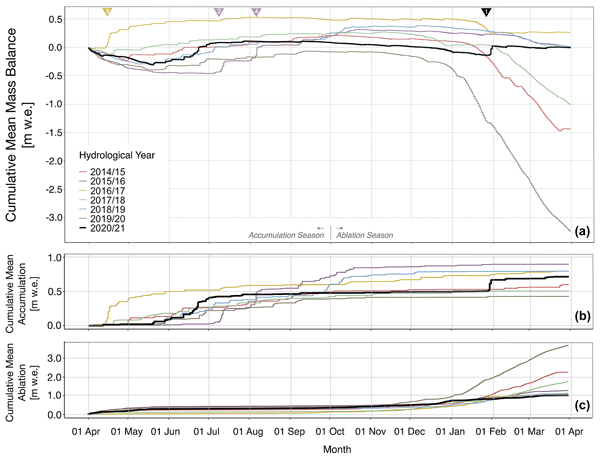
We analysed the impact of a summer snow accumulation event linked to an atmospheric river in central Chile. Using observational and remote sensing data, we show that accumulation prevails in all the glaciers of the Maipo River basin, and this sole event defines the fact that the Olivares Alfa glacier mass balance was close to equilibrium despite it being a dry year. This demonstrates that an unseasonal accumulation event can counteract the seasonal trends affecting subtropical Andean glaciers.
Christian Torres, Deniz Bozkurt, Vincent Favier, Victoire Buffet, Claudio Bravo, Xavier Fettweis, Thomas Dethinne, Antoine Rabatel, Maximiliano Viale, Sang-Jong Park, and Jorge Arigony-Neto
EGUsphere, https://doi.org/10.5194/egusphere-2026-3508, https://doi.org/10.5194/egusphere-2026-3508, 2026
This preprint is open for discussion and under review for The Cryosphere (TC).
Short summary
Short summary
We investigated periods when unusually warm conditions in Patagonia occurred at the same time as precipitation events on the Antarctic Peninsula. By combining observations and simulations, we identified 127 such events between 1980 and 2022. These events increased ice melt in Patagonia while enhancing accumulation on the Antarctic Peninsula, highlighting how large-scale weather patterns can simultaneously affect ice-covered regions in different ways.
Victoire Buffet, Vincent Favier, Benjamin Pohl, and Jonathan D. Wille
Weather Clim. Dynam., 7, 1189–1210, https://doi.org/10.5194/wcd-7-1189-2026, https://doi.org/10.5194/wcd-7-1189-2026, 2026
Short summary
Short summary
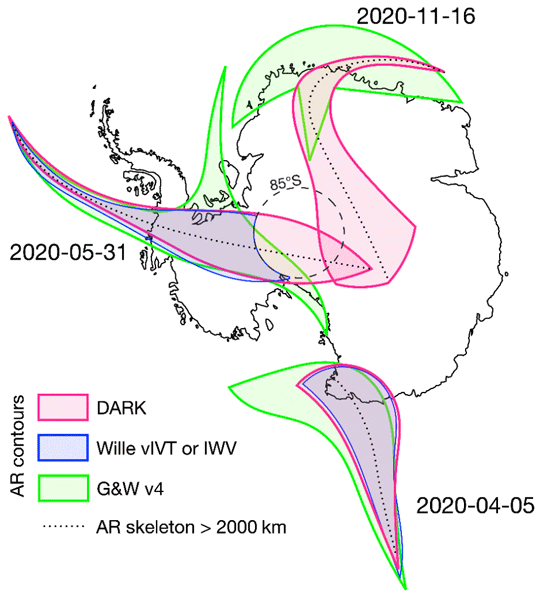
We improve the detection of long corridors of intense moisture transport, known as atmospheric rivers, that affect Antarctica. Our new method can track these rivers even when they curve, cross the South Pole, or break into smaller parts. We show that they cause even more heavy snowfall and warm weather on the continent than previously thought, clarifying their role in shaping Antarctic climate and ice loss.
Laura Gallardo, Charlie Opazo, Camilo Menares, Kevin Basoa, Lucas Castillo, Nikos Daskalakis, Maria Kanakidou, Carmen Vega, Nicolás Huneeus, Roberto Rondanelli, and Rodrigo Seguel
Atmos. Chem. Phys., 26, 8783–8807, https://doi.org/10.5194/acp-26-8783-2026, https://doi.org/10.5194/acp-26-8783-2026, 2026
Short summary
Short summary
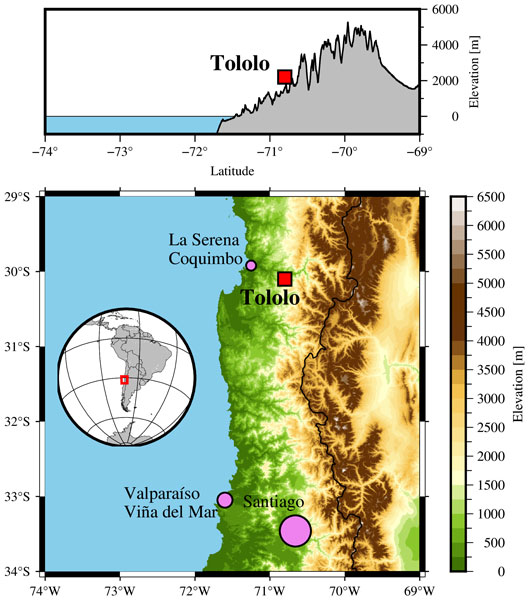
We assert the role of methane and other drivers of change in explaining the growing tropospheric ozone (O3) trend at Tololo (30.17° S, 70.80° W, 2154 m a.s.l.), and we quantify the contributions of biomass burning and stratospheric and upper tropospheric O3, particularly during the late winter and spring. These findings enhance understanding of O3 variability in the Southern Hemisphere free troposphere and underscore the importance of sustained observations at Tololo amid climate change.
Titouan Tcheng, Elise Fourré, Christophe Leroy-Dos Santos, Frédéric Parrenin, Emmanuel Le Meur, Frédéric Prié, Olivier Jossoud, Roxanne Jacob, Bénédicte Minster, Olivier Magand, Cécile Agosta, Niels Dutrievoz, Vincent Favier, Léa Baubant, Coralie Lassalle-Bernard, Mathieu Casado, Martin Werner, Alexandre Cauquoin, Laurent Arnaud, Bruno Jourdain, Ghislain Picard, Marie Bouchet, and Amaëlle Landais
The Cryosphere, 20, 1599–1618, https://doi.org/10.5194/tc-20-1599-2026, https://doi.org/10.5194/tc-20-1599-2026, 2026
Short summary
Short summary
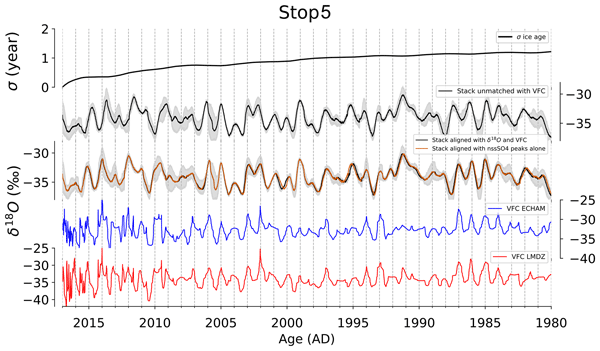
Studying Antarctic ice cores is crucial to assess past climate changes, as they hold historical climate data. This study examines multiple ice cores from three sites in coastal Adélie Land to see if combining cores improves data interpretability. It does at two sites, but at a third, wind-driven snow layer mixing limited benefits. We show that using multiple ice cores from one location can better uncover climate history, especially in areas with less wind disturbance.
Benjamin Heurgue, Charles Amory, Christoph Kittel, Fredrik Boberg, Gaël Durand, Vincent Favier, Xavier Fettweis, Quentin Glaude, Heiko Goelzer, Nicolaj Hansen, Nicolas C. Jourdain, Ruth Mottram, Martin Olesen, Willem Jan Van de Berg, Michiel R. Van den Broeke, and René R. Wijngaard
EGUsphere, https://doi.org/10.5194/egusphere-2026-624, https://doi.org/10.5194/egusphere-2026-624, 2026
Short summary
Short summary
We studied how the Antarctic ice sheet surface mass balance may change by 2100 using three high-resolution climate models forced by the same future climate scenario. While the models agree for present-day conditions, they project very different futures, especially over floating ice shelves. These differences mainly come from how melting, refreezing, and temperature are represented. Our results show that future sea level projections strongly depend on how well models simulate today’s climate.
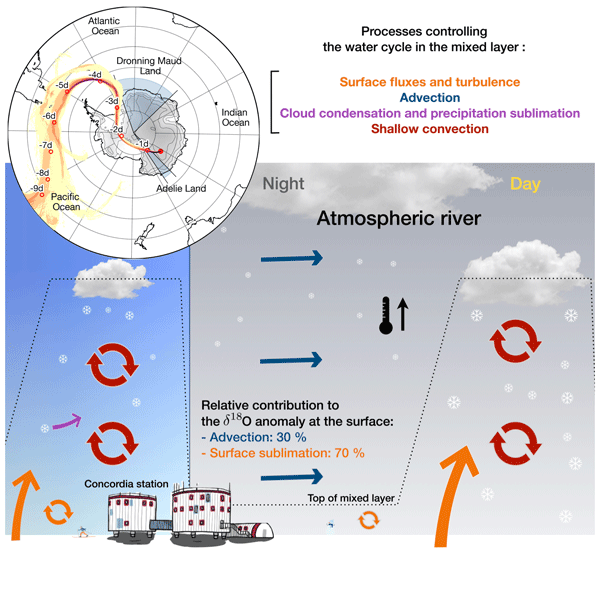
Niels Dutrievoz, Cécile Agosta, Cécile Davrinche, Amaëlle Landais, Sebastien Nguyen, Étienne Vignon, Inès Ollivier, Christophe Leroy-Dos Santos, Elise Fourré, Mathieu Casado, Jonathan Wille, Vincent Favier, Bénédicte Minster, and Frédéric Prié
The Cryosphere, 20, 1025–1046, https://doi.org/10.5194/tc-20-1025-2026, https://doi.org/10.5194/tc-20-1025-2026, 2026
Short summary
Short summary
In December 2018, an atmospheric river event from the Atlantic reached Dome C, East Antarctica, causing a +18 °C warming, tripled water vapour, and a strong isotopic anomaly in water vapour (+ 17 ‰ for δ18O) at the surface. During the peak of the event, we found 70 % of the water vapour came from local snow sublimation, and 30 % from the atmospheric river itself, highlighting both long-range moisture advection and interactions between the boundary layer and the snowpack.
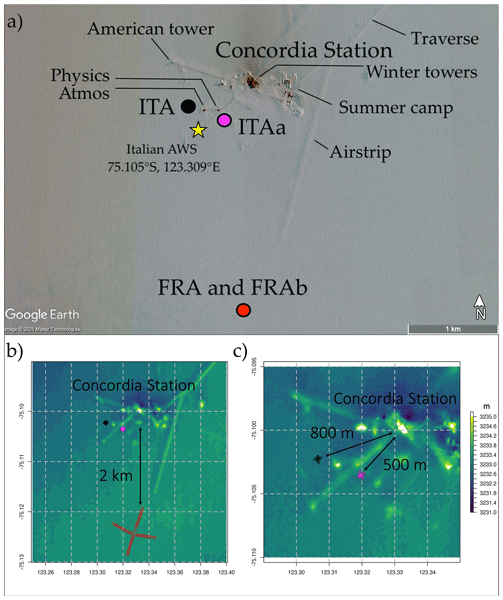
Claudio Stefanini, Barbara Stenni, Mauro Masiol, Giuliano Dreossi, Vincent Favier, Francesca Becherini, Claudio Scarchilli, Virginia Ciardini, Gabriele Carugati, and Massimo Frezzotti
The Cryosphere, 19, 5781–5799, https://doi.org/10.5194/tc-19-5781-2025, https://doi.org/10.5194/tc-19-5781-2025, 2025
Short summary
Short summary
This study analyzes snow accumulation near Concordia Station in Antarctica (3233 m) to estimate yearly snow accumulation. Data from Italian and French stake farms show strong variation due to wind and surface features. On average, 7–8 cm of snow accumulate yearly near the Station. The study also compares results with climate models and explores whether the station buildings affect measurements.
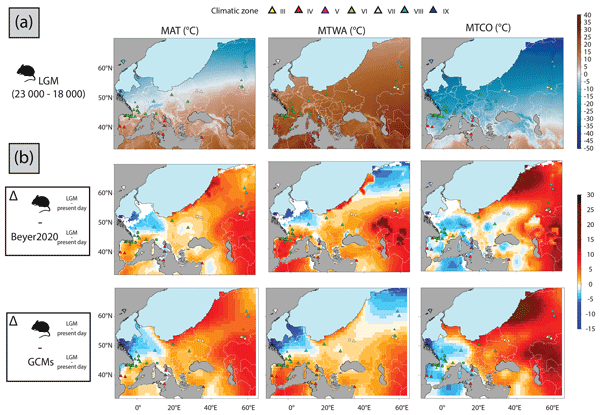
Aurélien Royer, Julien Crétat, Rémi Laffont, Sara Gamboa, Belén Luna, Iris Menéndez, Benjamin Pohl, Sophie Montuire, and Manuel Hernández Fernández
Clim. Past, 21, 1821–1851, https://doi.org/10.5194/cp-21-1821-2025, https://doi.org/10.5194/cp-21-1821-2025, 2025
Short summary
Short summary
Continental-scale temperature maps have been generated based on rodent associations and spatial generalized linear mixed model for six different periods (Last Glacial Maximum, Heinrich Stadial, Bølling, Allerød, Younger Dryas and present-day conditions). Their reliability was assessed by comparing them with general circulation models, showing similar estimates, but slightly colder values in western Europe and warmer ones in eastern Europe for past periods.
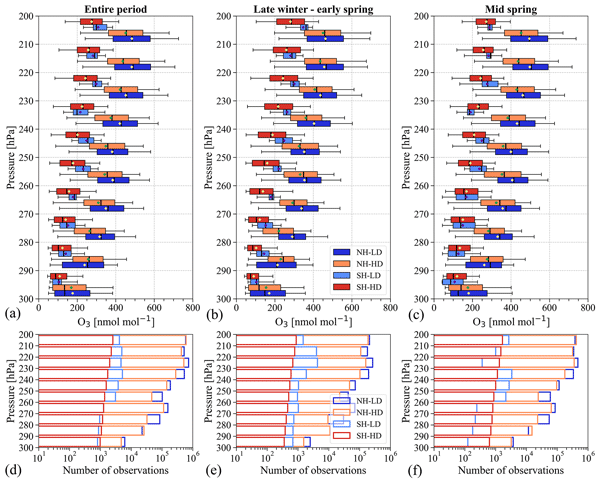
Rodrigo J. Seguel, Charlie Opazo, Yann Cohen, Owen R. Cooper, Laura Gallardo, Björn-Martin Sinnhuber, Florian Obersteiner, Andreas Zahn, Peter Hoor, Susanne Rohs, and Andreas Marsing
Atmos. Chem. Phys., 25, 8553–8573, https://doi.org/10.5194/acp-25-8553-2025, https://doi.org/10.5194/acp-25-8553-2025, 2025
Short summary
Short summary
We explored ozone differences between the Northern Hemisphere and Southern Hemispheres in the upper troposphere–lower stratosphere. We found lower ozone (with stratospheric origin) in the Southern Hemisphere, especially during years of severe ozone depletion. Sudden stratospheric warming events increased the ozone in each hemisphere, highlighting the relationship between stratospheric processes and ozone in the upper troposphere, where ozone is an important greenhouse gas.
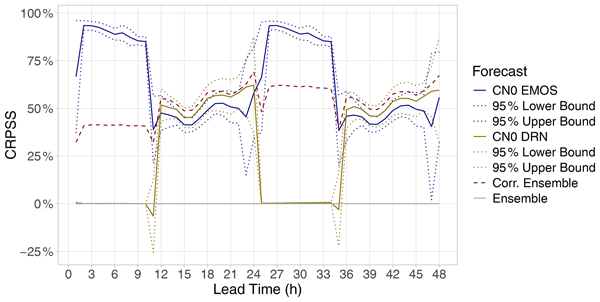
Sándor Baran, Julio C. Marín, Omar Cuevas, Mailiu Díaz, Marianna Szabó, Orietta Nicolis, and Mária Lakatos
Adv. Stat. Clim. Meteorol. Oceanogr., 11, 89–105, https://doi.org/10.5194/ascmo-11-89-2025, https://doi.org/10.5194/ascmo-11-89-2025, 2025
Short summary
Short summary
This paper assesses the skill of probabilistic forecasts of solar irradiance in the northern regions of Chile. Raw ensemble forecast are calibrated using a parametric and a novel non-parametric machine-learning-based method. As the reference approach, the ensemble model output statistics are considered. We verify the superiority of the proposed non-parametric neural-network-based ensemble correction, resulting in more than 50 % improvement in prediction performance compared to the raw forecasts.
Claudio Bravo, Sebastián Cisternas, Maximiliano Viale, Pablo Paredes, Deniz Bozkurt, and Nicolás García-Lee
The Cryosphere, 19, 1897–1913, https://doi.org/10.5194/tc-19-1897-2025, https://doi.org/10.5194/tc-19-1897-2025, 2025
Short summary
Short summary
We analysed the impact of a summer snow accumulation event linked to an atmospheric river in central Chile. Using observational and remote sensing data, we show that accumulation prevails in all the glaciers of the Maipo River basin, and this sole event defines the fact that the Olivares Alfa glacier mass balance was close to equilibrium despite it being a dry year. This demonstrates that an unseasonal accumulation event can counteract the seasonal trends affecting subtropical Andean glaciers.
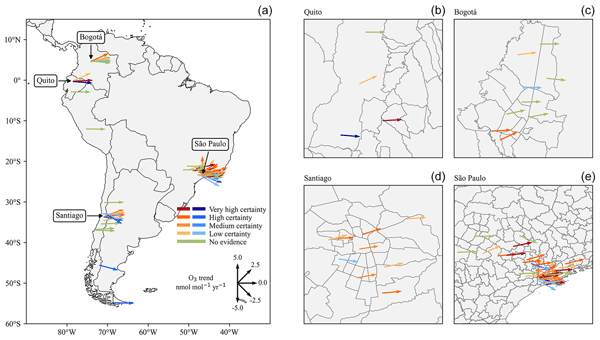
Rodrigo J. Seguel, Lucas Castillo, Charlie Opazo, Néstor Y. Rojas, Thiago Nogueira, María Cazorla, Mario Gavidia-Calderón, Laura Gallardo, René Garreaud, Tomás Carrasco-Escaff, and Yasin Elshorbany
Atmos. Chem. Phys., 24, 8225–8242, https://doi.org/10.5194/acp-24-8225-2024, https://doi.org/10.5194/acp-24-8225-2024, 2024
Short summary
Short summary
Trends of surface ozone were examined across South America. Our findings indicate that ozone trends in major South American cities either increase or remain steady, with no signs of decline. The upward trends can be attributed to chemical regimes that efficiently convert nitric oxide into nitrogen dioxide. Additionally, our results suggest a climate penalty for ozone driven by meteorological conditions that favor wildfire propagation in Chile and extensive heat waves in southern Brazil.
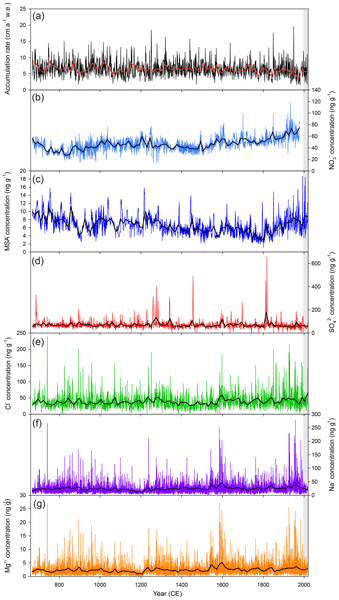
V. Holly L. Winton, Robert Mulvaney, Joel Savarino, Kyle R. Clem, and Markus M. Frey
Clim. Past, 20, 1213–1232, https://doi.org/10.5194/cp-20-1213-2024, https://doi.org/10.5194/cp-20-1213-2024, 2024
Short summary
Short summary
In 2018, a new 120 m ice core was drilled in a region located under the Antarctic ozone hole. We present the first results including a 1300-year record of snow accumulation and aerosol chemistry. We investigate the aerosol and moisture source regions and atmospheric processes related to the ice core record and discuss what this means for developing a record of past ultraviolet radiation and ozone depletion using the stable isotopic composition of nitrate measured in the same ice core.
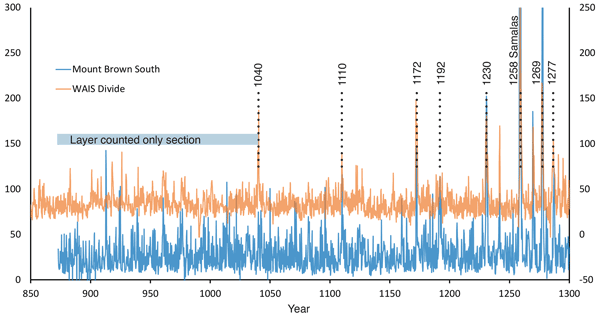
Tessa R. Vance, Nerilie J. Abram, Alison S. Criscitiello, Camilla K. Crockart, Aylin DeCampo, Vincent Favier, Vasileios Gkinis, Margaret Harlan, Sarah L. Jackson, Helle A. Kjær, Chelsea A. Long, Meredith K. Nation, Christopher T. Plummer, Delia Segato, Andrea Spolaor, and Paul T. Vallelonga
Clim. Past, 20, 969–990, https://doi.org/10.5194/cp-20-969-2024, https://doi.org/10.5194/cp-20-969-2024, 2024
Short summary
Short summary
This study presents the chronologies from the new Mount Brown South ice cores from East Antarctica, which were developed by counting annual layers in the ice core data and aligning these to volcanic sulfate signatures. The uncertainty in the dating is quantified, and we discuss initial results from seasonal cycle analysis and mean annual concentrations. The chronologies will underpin the development of new proxy records for East Antarctica spanning the past millennium.
Claudio Stefanini, Giovanni Macelloni, Marion Leduc-Leballeur, Vincent Favier, Benjamin Pohl, and Ghislain Picard
The Cryosphere, 18, 593–608, https://doi.org/10.5194/tc-18-593-2024, https://doi.org/10.5194/tc-18-593-2024, 2024
Short summary
Short summary
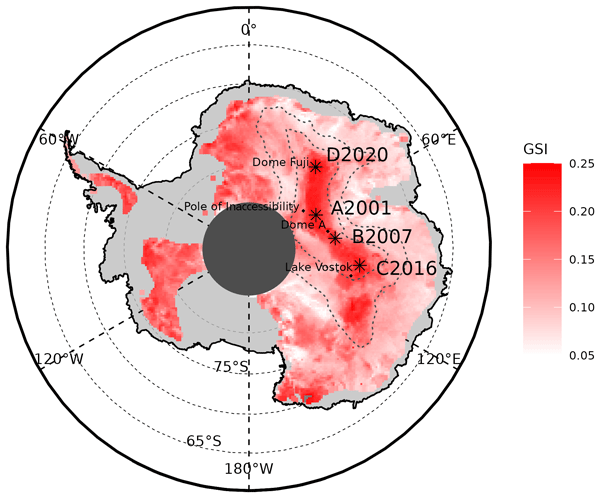
Local and large-scale meteorological conditions have been considered in order to explain some peculiar changes of snow grains on the East Antarctic Plateau from 2000 to 2022, by using remote sensing observations and reanalysis. We identified some extreme grain size events on the highest ice divide, resulting from a combination of conditions of low wind speed and low temperature. Moreover, the beginning of seasonal grain growth has been linked to the occurrence of atmospheric rivers.
Sara Arioli, Ghislain Picard, Laurent Arnaud, and Vincent Favier
The Cryosphere, 17, 2323–2342, https://doi.org/10.5194/tc-17-2323-2023, https://doi.org/10.5194/tc-17-2323-2023, 2023
Short summary
Short summary
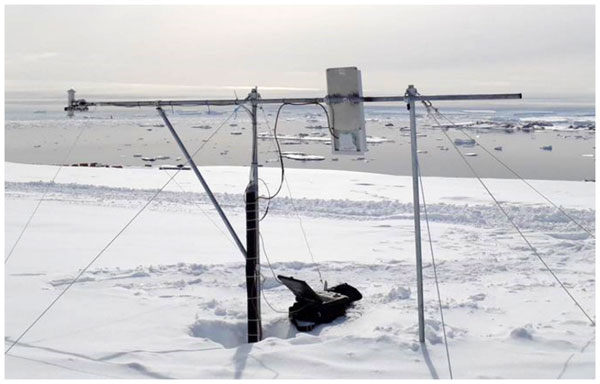
To assess the drivers of the snow grain size evolution during snow drift, we exploit a 5-year time series of the snow grain size retrieved from spectral-albedo observations made with a new, autonomous, multi-band radiometer and compare it to observations of snow drift, snowfall and snowmelt at a windy location of coastal Antarctica. Our results highlight the complexity of the grain size evolution in the presence of snow drift and show an overall tendency of snow drift to limit its variations.

Marco Gaetani, Benjamin Pohl, Maria del Carmen Alvarez Castro, Cyrille Flamant, and Paola Formenti
Atmos. Chem. Phys., 21, 16575–16591, https://doi.org/10.5194/acp-21-16575-2021, https://doi.org/10.5194/acp-21-16575-2021, 2021
Short summary
Short summary
During the dry austral winter, biomass fires in tropical Africa emit large amounts of smoke in the atmosphere, with large impacts on climate and air quality. The study of the relationship between atmospheric circulation and smoke transport shows that midlatitude atmospheric disturbances may deflect the smoke from tropical Africa towards southern Africa. Understanding the distribution of the smoke in the region is crucial for climate modelling and air quality monitoring.
Cited articles
AMS (American Meteorological Society): “Blocking high.” Glossary of Meteorology, https://glossary.ametsoc.org/wiki/blocking-high/ (last access: 21 June 2026), 2026.
Baiman, R., Winters, A. C., Pohl, B., Favier, V., Wille, J. D., and Clem, K. R.: Synoptic and planetary-scale dynamics modulate Antarctic atmospheric river precipitation intensity, Commun. Earth Environ., 5, 127, https://doi.org/10.1038/s43247-024-01307-9, 2024.
Barnes, E. A., Dunn-Sigouin, E., Masato, G., and Woollings, T.: Exploring recent trends in Northern Hemisphere blocking, Geophys. Res. Lett., 41, 638–644, 2014.
Barrett, B. S., Lafluer, D. M., and Henderson, G. R.: Madden–Julian Oscillation modulation of Antarctic sea ice, Glacies, 2, 16, https://doi.org/10.3390/glacies2040016, 2025.
Barriopedro, D., García-Herrera, R., Lupo, A. R., and Hernández, E.: A Climatology of Northern Hemisphere Blocking, J. Climate, 19, 1042–1063, https://doi.org/10.1175/JCLI3678.1, 2006.
Berrisford, P., Hoskins, B. J., and Tyrlis, E.: Blocking and Rossby wave breaking on the dynamical tropopause in the Southern Hemisphere, J. Atmos. Sci., 64, 2881–2898, https://doi.org/10.1175/JAS3984.1, 2007.
Bozkurt, D., Rondanelli, R., Marín, J., and Garreaud, R.: Foehn event triggered by an atmospheric river underlies record-setting temperature along continental Antarctica, J. Geophys. Res.-Atmos., 123, 3871–3892, https://doi.org/10.1002/2017JD027796, 2018.
Bozkurt, D., Marín, J., and Barrett, B.: Temperature and moisture transport during atmospheric blocking patterns around the Antarctic Peninsula, Weather Clim. Extrem., 38, 100506, https://doi.org/10.1016/j.wace.2022.100506, 2022.
Bozkurt, D., Marín, J., Verdugo, C., and Barrett, B.: Atmospheric blocking and temperatures in the Antarctic Peninsula, Sci. Total Environ., 931, 172852, https://doi.org/10.1016/j.scitotenv.2024.172852, 2024.
Bozkurt, D., Opazo, C., Marín, J. C., Clem, K. R., Pohl, B., Buffet, V., Favier, V., Carrasco-Escaff, T., and Barrett, B. S.: A multi-method Antarctic atmospheric blocking dataset based on ERA5 (1979–2024), Zenodo [data set], https://doi.org/10.5281/zenodo.18329806, 2026.
Carrera, M. L., Higgins, R. W., and Kousky, V. E.: Downstream weather impacts associated with atmospheric blocking over the Northeast Pacific, J. Climate, 17, 4823–4839, https://doi.org/10.1175/JCLI-3237.1, 2004.
Clem, K. R., MacFerrin, M., Kennett, D., Bozkurt, D., and Scambos, T.: Record warmth and surface melt on the Antarctic Peninsula in February 2020, B. Am. Meteorol. Soc., 102, S328–S329, https://doi.org/10.1175/BAMS-D-21-0081.1, 2021.
Clem, K. R., Bozkurt, D., Kennett, D., King, J. C., and Turner, J.: Central tropical Pacific convection drives extreme high temperatures and surface melt on the Larsen C Ice Shelf, Antarctic Peninsula, Nat. Commun., 13, 3906, https://doi.org/10.1038/s41467-022-31119-4, 2022.
Clem, K. R., Batzli, S., Bozkurt, D., Bromwich, D. H., Cassano, J., Dice, M., Elvidge, A. D., Fogt, R. L., Gorodetskaya, I., Goyal, R., Katurji, M., Keller, L., King, J., Lazzara, M., Mikolajczyk, D., Norton, T., Rowe, P., Wang, S.-H., Van den Broeke, M., and Zou, X.: Meteorology and Climate of Antarctica, in: Meteorology and Climate of the Southern Hemisphere, edited by: Taschetto, A. S., Ndarana, T., and Ambrizzi, T., Cambridge University Press, 241–283, https://doi.org/10.1017/9781009352680.009, 2025.
Davini, P., Cagnazzo, C., Neale, R., and Tríbbia, J.: Coupling between Greenland blocking and the North Atlantic Oscillation pattern, Geophys. Res. Lett., 39, L14801, https://doi.org/10.1029/2012GL052315, 2012.
Dole, R. M.: The life cycle of persistent anomalies and blocking over the North Pacific, Adv. Geophys., 29, 31–69, 1986.
Dole, R. M. and Gordon, N. D.: Persistent anomalies of the extratropical Northern Hemisphere wintertime circulation: Geographical distribution and regional persistence characteristics, Mon. Weather Rev., 111, 1567–1586, https://doi.org/10.1175/1520-0493(1983)111<1567:PAOTEN>2.0.CO;2, 1983.
Dong, L. and Colucci, S. J.: The role of deformation and potential vorticity in Southern Hemisphere blocking onsets, J. Atmos. Sci., 62, 4043–4056, https://doi.org/10.1175/JAS3576.1, 2005.
Fogt, R. L., Jones, J. M., and Renwick, J.: Seasonal zonal asymmetries in the Southern Annular Mode and their impact on regional temperature anomalies, J. Climate, 25, 6253–6270, https://doi.org/10.1175/JCLI-D-11-00474.1, 2012.
Francis, D., Fonseca, R., Nelli, N., Heil, P., Wille, J. D., Gorodetskaya, I. V., and Massom, R. A.: Drivers of observed winter–spring sea-ice and snow thickness at a coastal site in East Antarctica, The Cryosphere, 20, 1–28, https://doi.org/10.5194/tc-20-1-2026, 2026.
Gilbert, E., Pishniak, D., Torres, J. A., Orr, A., Maclennan, M., Wever, N., and Verro, K.: Extreme precipitation associated with atmospheric rivers over West Antarctic ice shelves: insights from kilometre-scale regional climate modelling, The Cryosphere, 19, 597–618, https://doi.org/10.5194/tc-19-597-2025, 2025.
Gorodetskaya, I. V., Tsukernik, M., Claes, K., Ralph, M. F., Neff, W. D., and van Lipzig, N. P. M.: The role of atmospheric rivers in anomalous snow accumulation in East Antarctica, Geophys. Res. Lett., 41, 6199–6206, https://doi.org/10.1002/2014GL060881, 2014.
Gorodetskaya, I. V., Durán-Alarcón, C., González-Herrero, S., Clem, K. R., Zou, X., Rowe, P., Rodriguez Imazio, P., Campos, D., Leroy-Dos Santos, C., Dutrievoz, N., Wille, J. D., Chyhareva, A., Favier, V., Blanchet, J., Pohl, B., Cordero, R. R., Park, S.-J., Colwell, S., Lazzara, M. A., Carrasco, J., Gulisano, A. M., Krakovska, S., Ralph, F. M., Dethinne, T., and Picard, G.: Record-high Antarctic Peninsula temperatures and surface melt in February 2022, npj Clim. Atmos. Sci., 6, 202, https://doi.org/10.1038/s41612-023-00529-6, 2023.
Grotjahn, R., Black, R., Leung, R., Wehner, M. F., Barlow, M., Bosilovich, M., Gershunov, A., Gutowski Jr., W. J., Gyakum, J. R., Katz, R. W., Lee, Y.-Y., Lim, Y.-K., and Prabhat: North American extreme temperature events and related large scale meteorological patterns: a review of statistical methods, dynamics, modeling, and trends, Clim. Dynam., 46, 1151–1184, https://doi.org/10.1007/s00382-015-2638-6, 2016.
Hanna, E., Francis, J., Wang, M., Overland, J. E., Cohen, J., Luo, D., Vihma, T., Fu, Q., Hall, R. J., Jaiser, R., Kim, S.-J., Köhler, R., Luu, L., Shen, X., Erner, I., Ukita, J., Yao, Y., Ye, K., Choi, H., and Skific, N.: Influence of high-latitude blocking and the northern stratospheric polar vortex on cold-air outbreaks under Arctic amplification of global warming, Environ. Res.: Clim., 3, 042004, https://doi.org/10.1088/2752-5295/ad93f3, 2024.
Hauser, S., Teubler, F., Riemer, M., Knippertz, P., and Grams, C. M.: Life cycle dynamics of Greenland blocking from a potential vorticity perspective, Weather Clim. Dynam., 5, 633–658, https://doi.org/10.5194/wcd-5-633-2024, 2024.
Hauser, S., Teubler, F., Riemer, M., and Grams, C. M.: A quasi-Lagrangian perspective on the role of dry and moist processes in the formation of blocked North Atlantic–European weather regimes, Weather Clim. Dynam., 7, 937–958, https://doi.org/10.5194/wcd-7-937-2026, 2026.
Henderson, G. R., Barrett, B. S., Lois, A., and Elsaawy, H.: Time-lagged response of the Antarctic atmosphere to tropical MJO convection, Mon. Weather Rev., 146, 1219–1231, https://doi.org/10.1175/MWR-D-17-0224.1, 2018.
Henderson, G. R., Barrett, B. S., Wachowicz, L. J., Mattingly, K. S., Preece, J. R., and Mote, T. L.: Local and remote atmospheric circulation drivers of Arctic change: A review, Front. Earth Sci., 9, 709896, https://doi.org/10.3389/feart.2021.709896, 2021.
Hersbach, H., Bell, B., Berrisford, P., Hirahara, S., Horányi, A., Muñoz-Sabater, J., Nicolas, J., Peubey, C., Radu, R., Schepers, D., Simmons, A., Soci, C., Abdalla, S., Abellan, X., Balsamo, G., Bechtold, P., Biavati, G., Bidlot, J., Bonavita, M., De Chiara, G., Dahlgren, P., Dee, D., Diamantakis, M., Dragani, R., Flemming, J., Forbes, R., Fuentes, M., Geer, A., Haimberger, L., Healy, S., Hogan, R. J., Hólm, E., Janisková, M., Keeley, S., Laloyaux, P., Lopez, P., Lupu, C., Radnoti, G., de Rosnay, P., Rozum, I., Vamborg, F., Villaume, S., and Thépaut, J.-N.: The ERA5 global reanalysis, Q. J. Roy. Meteor. Soc., 146, 1999–2049, https://doi.org/10.1002/qj.3803, 2020.
Hoffmann, L. and Spang, R.: An assessment of tropopause characteristics of the ERA5 and ERA-Interim meteorological reanalyses, Atmos. Chem. Phys., 22, 4019–4046, https://doi.org/10.5194/acp-22-4019-2022, 2022.
Hoskins, B. and Woollings, T.: Persistent Extratropical Regimes and Climate Extremes, Current Climate Change Reports, 1, 115–124, 2015.
Hoskins, B. J., McIntyre, M. E., and Robertson, A. W.: On the use and significance of isentropic potential vorticity maps, Q. J. Roy. Meteor. Soc., 111, 877–946, https://doi.org/10.1002/qj.49711147002, 1985.
Liang, K., Wang, J., Luo, H., and Yang, Q.: The role of atmospheric rivers in Antarctic sea ice variations, Geophys. Res. Lett., 50, e2022GL102588, https://doi.org/10.1029/2022GL102588, 2023.
Lim, E.-P., Thompson, D. W. J., Butler, A. H., Wheeler, M. C., Nakamura, H., Jucker, M., Arblaster, J. M., Hendon, H. H., Newman, P. A., and Coy, L.: Characteristics of Antarctic stratospheric variability during winter: A case study of the 2024 sudden stratospheric warming and its surface impacts, J. Geophys. Res.-Atmos., 131, e2025JD045089, https://doi.org/10.1029/2025JD045089, 2026.
Liu, Z. and Wang, L.: Enhanced occurrence of atmospheric blocking in the Southern Hemisphere by baroclinic annular mode, Geophys. Res. Lett., 51, e2023GL107343, https://doi.org/10.1029/2023GL107343, 2024.
Maclennan, M. L., Lenaerts, J. T. M., Shields, C. A., Hoffman, A. O., Wever, N., Thompson-Munson, M., Winters, A. C., Pettit, E. C., Scambos, T. A., and Wille, J. D.: Climatology and surface impacts of atmospheric rivers on West Antarctica, The Cryosphere, 17, 865–881, https://doi.org/10.5194/tc-17-865-2023, 2023.
Marín, J., Bozkurt, D., and Barrett, B.: Atmospheric blocking trends and seasonality around the Antarctic Peninsula, J. Climate, 35, 3803–3818, https://doi.org/10.1175/JCLI-D-21-0323.1, 2022.
Marshall, G. J. and King, J. C.: Southern Hemisphere circulation anomalies associated with extreme Antarctic Peninsula winter temperatures, Geophys. Res. Lett., 25, 2437–2440, https://doi.org/10.1029/98GL01651, 1998.
Marshall, G. J., Orr, A., van Lipzig, N. P. M., and King, J. C.: The impact of a changing Southern Hemisphere annular mode on Antarctic Peninsula summer temperatures, J. Climate, 19, 5388–5404, https://doi.org/10.1175/JCLI3844.1, 2006.
Masato, G., Hoskins, B. J., and Woollings, T.: Wave-breaking characteristics of Northern Hemisphere winter blocking: a two-dimensional approach, J. Climate, 26, 4535–4549, https://doi.org/10.1175/JCLI-D-12-00240.1, 2013.
Nakamura, N. and Huang, C. S. Y.: Atmospheric blocking as a traffic jam in the jet stream, Science, 361, 42–47, https://doi.org/10.1126/science.aat0721, 2018.
Patterson, M., Bracegirdle, T., and Woollings, T.: Southern Hemisphere atmospheric blocking in CMIP5 and future changes in the Australia–New Zealand sector, Geophys. Res. Lett., 46, 9281–9290, https://doi.org/10.1029/2019GL083264, 2019.
Pepler, A.: Projections of synoptic anticyclones for the twenty-first century, Clim. Dynam., 61, 3271–3287, https://doi.org/10.1007/s00382-023-06728-4, 2023.
Pinheiro, M. C., Ullrich, P. A., and Grotjahn, R.: Atmospheric blocking and intercomparison of objective detection methods: flow field characteristics, Clim. Dynam., 53, 4189–4216, https://doi.org/10.1007/s00382-019-04782-5, 2019.
Ploeger, F., Diallo, M., Charlesworth, E., Konopka, P., Legras, B., Laube, J. C., Grooß, J.-U., Günther, G., Engel, A., and Riese, M.: The stratospheric Brewer–Dobson circulation inferred from age of air in the ERA5 reanalysis, Atmos. Chem. Phys., 21, 8393–8412, https://doi.org/10.5194/acp-21-8393-2021, 2021.
Pohl, B., Favier, V., Wille, J., Udy, D. G., Vance, T. R., Pergaud, J., Dutrievoz, N., Blanchet, J., Kittel, C., Amory, C., Krinner, G., and Codron, F.: Relationship between weather regimes and atmospheric rivers in East Antarctica, J. Geophys. Res.-Atmos., 126, e2021JD035294, https://doi.org/10.1029/2021JD035294, 2021.
Polster, C. and Wirth, V.: A new atmospheric background state to diagnose local waveguidability, Geophys. Res. Lett., 50, e2023GL106166, https://doi.org/10.1029/2023GL106166, 2023.
Renwick, J. A.: ENSO-related variability in the frequency of South Pacific blocking, Mon. Weather Rev., 126, 3117–3123, https://doi.org/10.1175/1520-0493(1998)126<3117:ERVITF>2.0.CO;2, 1998.
Renwick, J. A. and Revell, M. J.: Blocking over the South Pacific and Rossby wave propagation, Mon. Weather Rev., 127, 2233–2247, https://doi.org/10.1175/1520-0493(1999)127<2233:BOTSPA>2.0.CO;2, 1999.
Rex, D. F.: Blocking action in the middle troposphere and its effect upon regional climate, Tellus, 2, 196–211, https://doi.org/10.1111/j.2153-3490.1950.tb00331.x, 1950.
Rondanelli, R., Hatchett, B., Rutllant, J., Bozkurt, D., and Garreaud, R.: Strongest MJO on record triggers extreme Atacama rainfall and warmth in Antarctica, Geophys. Res. Lett., 46, 3482–3491, https://doi.org/10.1029/2018GL081475, 2019.
Scherrer, S. C., Croci-Maspoli, M., Schwierz, C., and Appenzeller, C.: Two-dimensional indices of atmospheric blocking and their statistical relationship with winter climate patterns in the Euro-Atlantic region, Int. J. Climatol., 26, 233–249, https://doi.org/10.1002/joc.1250, 2006.
Schwierz, C., Croci-Maspoli, M., and Davies, H. C.: Perspicacious indicators of atmospheric blocking, Geophys. Res. Lett., 31, L06125, https://doi.org/10.1029/2003GL019341, 2004.
Sousa, P. M., Barriopedro, D., García-Herrera, R., Woollings, T., and Trigo, R. M.: A new combined detection algorithm for blocking and subtropical ridges, J. Climate, 34, 7735–7758, https://doi.org/10.1175/JCLI-D-20-0658.1, 2021.
Tang, H., Li, S., Jones, J. M., González-Herrero, S., Orr, A., Otto, F. E. L., Screen, J. A., Clem, K. R., Bozkurt, D., Catto, J. L., Suitters, C. C., Maclennan, M. L., and Sun, Y.: Unprecedented 2024 East Antarctic winter heatwave driven by polar vortex weakening and amplified by anthropogenic warming, npj Clim. Atmos. Sci., 9, 122, https://doi.org/10.1038/s41612-026-01392-x, 2026.
Tibaldi, S. and Molteni, F.: On the operational predictability of blocking, Tellus, 42A, 343–365, https://doi.org/10.3402/tellusa.v42i3.11882, 1990.
Tibaldi, S., D'Andrea, F., Tosi, E., and Roeckner, E.: Climatology of the northern hemisphere blocking in the ECHAM model, Clim. Dynam., 13, 649–666, 1997.
Trenberth, K. E. and Mo, K. C.: Blocking in the Southern Hemisphere, Mon. Weather Rev., 113, 3–21, https://doi.org/10.1175/1520-0493(1985)113<0003:BITSH>2.0.CO;2, 1985.
Turner, J., Lu, H., King, J. C., Carpentier, S., Lazzara, M., Phillips, T., and Wille, J.: An extreme high temperature event in coastal East Antarctica associated with an atmospheric river and record summer downslope winds, Geophys. Res. Lett., 49, e2021GL097108, https://doi.org/10.1029/2021GL097108, 2022.
Ullrich, P. A., Zarzycki, C. M., McClenny, E. E., Pinheiro, M. C., Stansfield, A. M., and Reed, K. A.: TempestExtremes v2.1: a community framework for feature detection, tracking, and analysis in large datasets, Geosci. Model Dev., 14, 5023–5048, https://doi.org/10.5194/gmd-14-5023-2021, 2021.
Wachowicz, L., Preece, J., Mote, T., Barrett, B. S., and Henderson, G. R.: Historical trends of seasonal Greenland blocking under different blocking metrics, Int. J. Clim., 41, E3263–E3278, https://doi.org/10.1002/joc.6923, 2021.
Wang, G., Hendon, H. H., Arblaster, J. M., Lim, E.-P., Abhik, S., and van Rensch, P.: Compounding Tropical and Stratospheric Forcing of the Record Low Antarctic Sea-Ice in 2016, Nat. Commun., 10, 13, https://doi.org/10.1038/s41467-018-07689-7, 2019.
Wang, S., Ding, M., Liu, G., Li, G., and Chen, W.: Blocking events in East Antarctica: impact on precipitation and their association with large-scale atmospheric circulation modes, J. Climate, 37, 1333–1345, https://doi.org/10.1175/JCLI-D-23-0419.1, 2024.
Wille, J. D., Favier, V., Gorodetskaya, I. V., Agosta, C., Baiman, R., Barrett, J. E., Barthelemy, L., Boza, B., Bozkurt, D., Casado, M., Chyhareva, A., Clem, K. R., Codron, F., Datta, R. T., Durán-Alarcón, C., Francis, D., Hoffman, A. O., Kolbe, M., Krakovska, S., Linscott, G., Maclennan, M. L., Mattingly, K. S., Mu, Y., Pohl, B., Leroy-Dos Santos, C., Shields, C. A., Toker, E., Winters, A. C., Yin, Z., Zou, X., Zhang, C., and Zhang, Z.: Atmospheric rivers in Antarctica, Nat. Rev. Earth Environ., 6, 178–192, https://doi.org/10.1038/s43017-024-00638-7, 2025.
Wille, J. D., Favier, V., Jourdain, N. C., Kittel, C., Turton, J. V., Agosta, C., Gorodetskaya, I. V., Picard, G., Codron, F., Leroy-Dos Santos, C., Amory, C., Fettweis, X., Blanchet, J., Jomelli, V., and Berchet, A.: Intense atmospheric rivers can weaken ice shelf stability at the Antarctic Peninsula, Commun. Earth Environ., 3, 90, https://doi.org/10.1038/s43247-022-00422-9, 2022.
Wille, J. D., Alexander, S. P., Amory, C., Baiman, R., Barthélemy, L., Bergstrom, D. M., Berne, A., Binder, H., Blanchet, J., Bozkurt, D., Bracegirdle, T. J., Casado, M., Choi, T., Clem, K. R., Codron, F., Datta, R., Di Battista, S., Favier, V., Francis, D., Fraser, A. D., Fourré, E., Garreaud, R. D., Genthon, C., Gorodetskaya, I. V., González-Herrero, S., Heinrich, V. J., Hubert, G., Joos, H., Kim, S.-J., King, J. C., Kittel, C., Landais, A., Lazzara, M., Leonard, G. H., Lieser, J. L., Maclennan, M., Mikolajczyk, D., Neff, P., Ollivier, I., Picard, G., Pohl, B., Ralph, F. M., Rowe, P., Schlosser, E., Shields, C. A., Smith, I. J., Sprenger, M., Trusel, L., Udy, D., Vance, T., Vignon, É., Walker, C., Wever, N., and Zou, X.: The Extraordinary March 2022 East Antarctica “Heat” Wave. Part I: Observations and Meteorological Drivers, J. Climate, 37, 757–778, https://doi.org/10.1175/JCLI-D-23-0175.1, 2024a.
Wille, J. D., Pohl, B., Favier, V., Winters, A. C., Baiman, R., Cavallo, S. M., Leroy-Dos Santos, C., Clem, K., Udy, D. G., Vance, T. R., Gorodetskaya, I., Codron, F., and Berchet, A.: Examining atmospheric river life cycles in East Antarctica, J. Geophys. Res.-Atmos., 129, e2023JD039970, https://doi.org/10.1029/2023JD039970, 2024b.
Woollings, T., Barriopedro, D., Methven, J., Son, S.-W., Martius, O., Harvey, B., Sillmann, J., Lupo, A. R., and Seneviratne, S.: Blocking and its response to climate change, Curr. Clim. Change Rep., 4, 287–300, https://doi.org/10.1007/s40641-018-0108-z, 2018.
Xu, M., Yu, L., Liang, K., Vilma, T., Bozkurt, D., Hu, X., and Yang, Q.: Dominant role of vertical air flows in the unprecedented warming on the Antarctic Peninsula in February 2020, Commun. Earth Environ., 2, 133, https://doi.org/10.1038/s43247-021-00203-w, 2021.
Zhai, Z., Wang, Y., Wu, Q., and Hou, S.: Record-breaking warm late-winter over Antarctica in 2024: the role of Western Pacific Warm Pool and Pacific Decadal Oscillation, Geophys. Res. Lett., 52, e2024GL114528, https://doi.org/10.1029/2024GL114528, 2025.
Short summary
Atmospheric blocking near Antarctica drives long lasting circulation anomalies and extreme events, yet it remains poorly understood. We created a new public dataset for 1979 to 2024 using global reanalysis data and several detection methods applied in a consistent way. We found strong method dependent differences in how often, where, and how long blocking occurs, showing that no single approach captures all forms of Antarctic blocking.
Atmospheric blocking near Antarctica drives long lasting circulation anomalies and extreme...


Altmetrics
Final-revised paper
Preprint