Articles | Volume 18, issue 6
https://doi.org/10.5194/essd-18-4279-2026
© Author(s) 2026. This work is distributed under
the Creative Commons Attribution 4.0 License.
the Creative Commons Attribution 4.0 License.
https://doi.org/10.5194/essd-18-4279-2026
© Author(s) 2026. This work is distributed under
the Creative Commons Attribution 4.0 License.
the Creative Commons Attribution 4.0 License.
Data description article
| 
24 Jun 2026
Data description article |
| 24 Jun 2026
| 24 Jun 2026
Reconstructing two-decade daily high-resolution seamless global land XCO2 records using a hybrid Transformer–BiLSTM model
Yu Qu
MEEKL-AERM, College of Environmental Sciences and Engineering, Institute of Tibetan Plateau, and Center for Environment and Health, Peking University, Beijing 100871, China
School of Geographical Sciences, South China Normal University, Guangzhou 510631, China
Xian Shi
College of Geodesy and Geomatics, Shandong University of Science and Technology, Qingdao 266590, China
Yulong Fan
MEEKL-AERM, College of Environmental Sciences and Engineering, Institute of Tibetan Plateau, and Center for Environment and Health, Peking University, Beijing 100871, China
College of Geodesy and Geomatics, Shandong University of Science and Technology, Qingdao 266590, China
Zhihui Wang
University of Science and Technology of China, Hefei 230026, China
Anhui Province Key Laboratory of Optical Quantitative Remote Sensing, Hefei Institutes of Physical Science, Chinese Academy of Sciences, Hefei 230031, China
MEEKL-AERM, College of Environmental Sciences and Engineering, Institute of Tibetan Plateau, and Center for Environment and Health, Peking University, Beijing 100871, China
Related authors
No articles found.
Zeyu Yang, Fan Cheng, Jian Gao, Huan Liu, and Jing Wei
Atmos. Chem. Phys., 26, 7933–7947, https://doi.org/10.5194/acp-26-7933-2026, https://doi.org/10.5194/acp-26-7933-2026, 2026
Short summary
Short summary
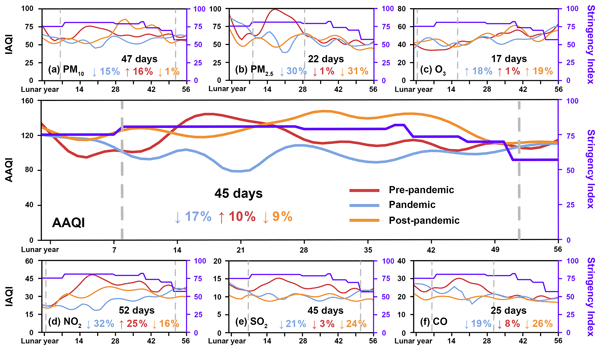
We developed a machine learning approach to map daily air pollution across China at high resolution, covering six major pollutants. Our results reveal how different pollutants respond differently to changes in human activity and emissions, uncovering the underlying chemical and atmospheric processes. This study provides detailed evidence of air pollution patterns and interactions, offering insights that can guide more effective strategies to protect air quality and public health.

Jing Wei, Zhanqing Li, Jun Wang, Can Li, Pawan Gupta, and Maureen Cribb
Atmos. Chem. Phys., 23, 1511–1532, https://doi.org/10.5194/acp-23-1511-2023, https://doi.org/10.5194/acp-23-1511-2023, 2023
Short summary
Short summary
This study estimated the daily seamless 10 km ambient gaseous pollutants (NO2, SO2, and CO) across China using machine learning with extensive input variables measured on monitors, satellites, and models. Our dataset yields a high data quality via cross-validation at varying spatiotemporal scales and outperforms most previous related studies, making it most helpful to future (especially short-term) air pollution and environmental health-related studies.
Fanlei Meng, Yibo Zhang, Jiahui Kang, Mathew R. Heal, Stefan Reis, Mengru Wang, Lei Liu, Kai Wang, Shaocai Yu, Pengfei Li, Jing Wei, Yong Hou, Ying Zhang, Xuejun Liu, Zhenling Cui, Wen Xu, and Fusuo Zhang
Atmos. Chem. Phys., 22, 6291–6308, https://doi.org/10.5194/acp-22-6291-2022, https://doi.org/10.5194/acp-22-6291-2022, 2022
Short summary
Short summary
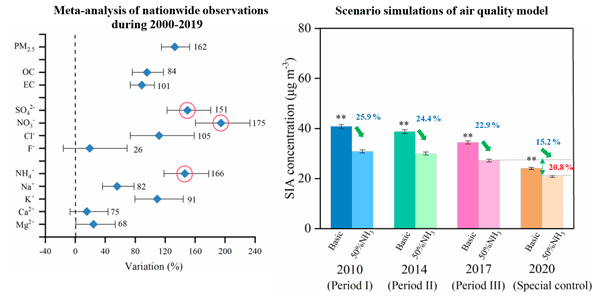
PM2.5 pollution is a pressing environmental issue threatening human health and food security globally. We combined a meta-analysis of nationwide measurements and air quality modeling to identify efficiency gains by striking a balance between controlling NH3 and acid gas emissions. Persistent secondary inorganic aerosol pollution in China is limited by acid gas emissions, while an additional control on NH3 emissions would become more important as reductions in SO2 and NOx emissions progress.
Cited articles
Agustí-Panareda, A., Barré, J., Massart, S., Inness, A., Aben, I., Ades, M., Baier, B. C., Balsamo, G., Borsdorff, T., and Bousserez, N.: The CAMS greenhouse gas reanalysis from 2003 to 2020, Atmos. Chem. Phys., 23, 3829–3859, https://doi.org/10.5194/acp-23-3829-2023, 2023.
Ak-Bhd, M.: WMO greenhouse gas bulletin, World Meteorological Organization: Geneva, Switzerland, https://gaw.kishou.go.jp/publications/bulletin (last access: 14 May 2026), 2021.
Antezana Lopez, F. P., Zhou, G., Jing, G., Zhang, K., Chen, L., Chen, L., and Tan, Y.: Global Daily Column Average CO2 at 0.1°×0.1° Spatial Resolution Integrating OCO-3, GOSAT, CAMS with EOF and Deep Learning, Sci. Data, 12, 268, https://doi.org/10.1038/s41597-024-04135-w, 2025.
Betts, R. A., Jones, C. D., Knight, J. R., Keeling, R. F., and Kennedy, J. J.: El Niño and a record CO2 rise, Nat. Clim. Change, 6, 806–810, 2016.
Bovensmann, H., Burrows, J., Buchwitz, M., Frerick, J., Noel, S., Rozanov, V., Chance, K., and Goede, A.: SCIAMACHY: Mission objectives and measurement modes, J. Atmos. Sci., 56, 127–150, https://doi.org/10.1175/1520-0469(1999)056<0127:SMOAMM>2.0.CO;2, 1999.
Brando, P. M., Paolucci, L., Ummenhofer, C. C., Ordway, E. M., Hartmann, H., Cattau, M. E., Rattis, L., Medjibe, V., Coe, M. T., and Balch, J.: Droughts, wildfires, and forest carbon cycling: A pantropical synthesis, Annu. Rev. Earth Planet. Sci., 47, 555–581, https://doi.org/10.1146/annurev-earth-082517-010235, 2019.
Buchwitz, M., De Beek, R., Noël, S., Burrows, J., Bovensmann, H., Bremer, H., Bergamaschi, P., Körner, S., and Heimann, M.: Carbon monoxide, methane and carbon dioxide columns retrieved from SCIAMACHY by WFM-DOAS: year 2003 initial data set, Atmos. Chem. Phys., 5, 3313–3329, https://doi.org/10.5194/acp-5-3313-2005, 2005.
Buchwitz, M., Reuter, M., Schneising, O., Boesch, H., Guerlet, S., Dils, B., Aben, I., Armante, R., Bergamaschi, P., and Blumenstock, T.: The Greenhouse Gas Climate Change Initiative (GHG-CCI): Comparison and quality assessment of near-surface-sensitive satellite-derived CO2 and CH4 global data sets, Remote Sens. Environ., 162, 344–362, https://doi.org/10.1016/j.rse.2013.04.024, 2015.
Buchwitz, M., Reuter, M., Schneising, O., Noël, S., Gier, B., Bovensmann, H., Burrows, J. P., Boesch, H., Anand, J., and Parker, R. J.: Computation and analysis of atmospheric carbon dioxide annual mean growth rates from satellite observations during 2003–2016, Atmos. Chem. Phys., 18, 17355–17370, https://doi.org/10.5194/acp-18-17355-2018, 2018.
Butz, A., Guerlet, S., Hasekamp, O., Schepers, D., Galli, A., Aben, I., Frankenberg, C., Hartmann, J. M., Tran, H., and Kuze, A.: Toward accurate CO2 and CH4 observations from GOSAT, Geophys. Res. Lett., 38, https://doi.org/10.1029/2011GL047888, 2011.
Chatterjee, A., Gierach, M., Sutton, A., Feely, R., Crisp, D., Eldering, A., Gunson, M., O'Dell, C., Stephens, B., and Schimel, D.: Influence of El Niño on atmospheric CO2 over the tropical Pacific Ocean: Findings from NASA's OCO-2 mission, Science, 358, eaam5776, https: //doi/10.1126/science.aam5776, 2017.
Chen, J., Hu, R., Chen, L., Liao, Z., Che, L., and Li, T.: Multi-sensor integrated mapping of global XCO2 from 2015 to 2021 with a local random forest model, ISPRS J. Photogram. Remote Sens., 208, 107–120, https://doi.org/10.1016/j.isprsjprs.2024.01.009, 2024.
Crippa, M., Guizzardi, D., Pisoni, E., Solazzo, E., Guion, A., Muntean, M., Florczyk, A., Schiavina, M., Melchiorri, M., and Hutfilter, A. F.: Global anthropogenic emissions in urban areas: patterns, trends, and challenges, Environ. Res. Lett., 16, 074033, https://doi.org/10.1088/1748-9326/ac00e2, 2021.
Crisp, D.: Measuring atmospheric carbon dioxide from space with the Orbiting Carbon Observatory-2 (OCO-2), Proc. SPIE 9607, Earth Observing Systems XX, 960702, https://doi.org/10.1117/12.2187291, 2015.
Crisp, D., Pollock, H. R., Rosenberg, R., Chapsky, L., Lee, R. A., Oyafuso, F. A., Frankenberg, C., O'Dell, C. W., Bruegge, C. J., and Doran, G. B.: The on-orbit performance of the Orbiting Carbon Observatory-2 (OCO-2) instrument and its radiometrically calibrated products, Atmos. Meas. Tech., 10, 59–81, https://doi.org/10.5194/amt-10-59-2017, 2017.
da Costa, L. M., de Araújo Santos, G. A., de Mendonça, G. C., de Souza Maria, L., da Silva Jr., C. A., Panosso, A. R., and La Scala Jr., N.: Exploring CO2 anomalies in Brazilian biomes combining OCO-2 & 3 data: Linkages to wildfires patterns, Adv. Space Res., 73, 4158–4174, https://doi.org/10.1016/j.asr.2024.01.016, 2024.
Gao, Z., Jiang, Y., He, J., and Wu, J.: Spatiotemporal variation analysis of global XCO2 concentration during 2010–2020 based on DINEOF-BME framework and wavelet function, Sci. Total Environ., 892, 164750, https://doi.org/10.1016/j.scitotenv.2023.164750, 2023.
Guan, X., Sun, Z., Chu, D., Xie, G., Wang, Y., and Shen, H.: Long-term (2000–2020) global 0.05° continuous atmospheric carbon dioxide mapping combining OCO-2 observations and model simulations, Sci. Total Environ., 957, 177051, https://doi.org/10.1016/j.scitotenv.2024.177051, 2024.
Guan, Y., Keppel-Aleks, G., Doney, S. C., Petri, C., Pollard, D., Wunch, D., Hase, F., Ohyama, H., Morino, I., and Notholt, J.: Characteristics of interannual variability in space-based XCO2 global observations, Atmos. Chem. Phys., 23, 5355–5372, https://doi.org/10.5194/acp-23-5355-2023, 2023.
Hammerling, D. M., Michalak, A. M., and Kawa, S. R.: Mapping of CO2 at high spatiotemporal resolution using satellite observations: Global distributions from OCO-2, J. Geophys. Res.-Atmos., 117, https://doi.org/10.1029/2011JD017015, 2012.
He, C., Ji, M., Li, T., Liu, X., Tang, D., Zhang, S., Luo, Y., Grieneisen, M. L., Zhou, Z., and Zhan, Y.: Deriving full-coverage and fine-scale XCO2 across China based on OCO-2 satellite retrievals and CarbonTracker output, Geophys. Res. Lett., 49, e2022GL098435, https://doi.org/10.1029/2022GL098435, 2022.
He, Q., Ye, T., Chen, X., Dong, H., Wang, W., Liang, Y., and Li, Y.: Full-coverage mapping high-resolution atmospheric CO2 concentrations in China from 2015 to 2020: Spatiotemporal variations and coupled trends with particulate pollution, J. Clean. Product., 428, 139290, https://doi.org/10.1016/j.jclepro.2023.139290, 2023a.
He, S., Yuan, Y., Wang, Z., Luo, L., Zhang, Z., Dong, H., and Zhang, C.: Machine learning model-based estimation of XCO2 with high spatiotemporal resolution in china, Atmosphere, 14, 436, https://doi.org/10.3390/atmos14030436, 2023b.
He, Z., Lei, L., Zhang, Y., Sheng, M., Wu, C., Li, L., Zeng, Z.-C., and Welp, L. R.: Spatio-temporal mapping of multi-satellite observed column atmospheric CO2 using precision-weighted kriging method, Remote Sens., 12, 576, https://doi.org/10.3390/rs12030576, 2020.
He, Z., Fan, G., Li, X., Gong, F.-Y., Liang, M., Gao, L., and Zhou, M.: Spatio-temporal modeling of satellite-observed CO2 columns in China using deep learning, Int. J. Appl. Earth Obs. Geoinf., 129, 103859, https://doi.org/10.1016/j.jag.2024.103859, 2024.
Hua, Y., Zhao, X., Sun, W., and Sun, Q.: Satellite-Based Reconstruction of Atmospheric CO2 Concentration over China Using a Hybrid CNN and Spatiotemporal Kriging Model, Remote Sens., 16, 2433, https://doi.org/10.3390/rs16132433, 2024.
Huang, N., Gu, L., Black, T. A., Wang, L., and Niu, Z.: Remote sensing-based estimation of annual soil respiration at two contrasting forest sites, J. Geophys. Res.-Biogeo., 120, 2306–2325, https://doi.org/10.1002/2015JG003060, 2015.
Huang, X., Deng, Z., Jiang, F., Zhou, M., Lin, X., Liu, Z., and Peng, M.: Improved consistency of satellite XCO2 retrievals based on machine learning, Geophys. Res. Lett., 51, e2023GL107536, https://doi.org/10.1029/2023GL107536, 2024a.
Huang, Y., Wang, R., Ju, M., Zhu, X., and Xie, Y.: Reconstructing global daily XCO2 at 1×1 spatial resolution from 2016 to 2019 with multisource satellite observation data, J. Appl. Remote Sens., 18, 028502, https://doi.org/10.1117/1.JRS.18.028502, 2024b.
Hwang, S., Choi, H., Kang, Y., and Im, J.: Reconstructing long-term (2003–2019) global high-resolution XCO2: bridging observational gaps with machine learning, GISci. Remote Sens., 63, 2627042, https://doi.org/10.1080/15481603.2026.2627042, 2026.
Jacobson, A., Schuldt, K., Tans, P., Andrews, A., Miller, J., Oda, T., Mund, J., Weir, B., Ott, L., and Aalto, T.: CarbonTracker CT2022, NOAA Global Monitoring Laboratory, https://gml.noaa.gov/ccgg/carbontracker/ (last access: 14 May 2026), 2023.
Jin, C., Xue, Y., Jiang, X., Zhao, L., Yuan, T., Sun, Y., Wu, S., and Wang, X.: A long-term global XCO2 dataset: Ensemble of satellite products, Atmos. Res., 279, 106385, https://doi.org/10.1016/j.atmosres.2022.106385, 2022.
Kemp, L., Xu, C., Depledge, J., Ebi, K. L., Gibbins, G., Kohler, T. A., Rockström, J., Scheffer, M., Schellnhuber, H. J., and Steffen, W.: Climate endgame: Exploring catastrophic climate change scenarios, P. Natl. Acad. Sci. USA, 119, e2108146119, https://doi.org/10.1073/pnas.2108146119, 2022.
Kim, J.-S., Kug, J.-S., Yoon, J.-H., and Jeong, S.-J.: Increased atmospheric CO2 growth rate during El Niño driven by reduced terrestrial productivity in the CMIP5 ESMs, J. Climate, 29, 8783–8805, https://doi.org/10.1175/JCLI-D-14-00672.1, 2016.
Kuze, A., Suto, H., Nakajima, M., and Hamazaki, T.: Thermal and near infrared sensor for carbon observation Fourier-transform spectrometer on the Greenhouse Gases Observing Satellite for greenhouse gases monitoring, Appl. Optics, 48, 6716–6733, https://doi.org/10.1364/AO.48.006716, 2009.
Lee, H., Calvin, K., Dasgupta, D., Krinner, G., Mukherji, A., Thorne, P., Trisos, C., Romero, J., Aldunce, P., and Barret, K.: IPCC, 2023: Climate change 2023: Synthesis report, summary for policymakers, in: Contribution of working groups I, II and III to the sixth assessment report of the intergovernmental panel on climate change, edited by: core writing team, Lee, H., and Romero, J., IPCC, geneva, Switzerland, https://doi.org/10.59327/IPCC/AR6-9789291691647.001, 2023.
Lee, J., Jeong, S., Kim, Y. J., Roh, S., Kim, J., and Jin, H.: Synergy of multiple-satellite measurements to fill the gap of global XCO2, J. Geophys. Res.-Atmos., 130, e2024JD042809, https://doi.org/10.1029/2024JD042809, 2025.
Li, J., Jia, K., Wei, X., Xia, M., Chen, Z., Yao, Y., Zhang, X., Jiang, H., Yuan, B., and Tao, G.: High-spatiotemporal resolution mapping of spatiotemporally continuous atmospheric CO2 concentrations over the global continent, Int. J. Appl. Earth Obs. Geoinf., 108, 102743, https://doi.org/10.1016/j.jag.2022.102743, 2022.
Li, J., Zhang, Z., Li, T., Yuan, Q., and Zhang, L.: Global daily seamless XCO2 Mapping (2016–2020): Spatio-temporal trends and variations during wildfire events, Int. J. Appl. Earth Obs. Geoinf., 146, 105092, https://doi.org/10.1016/j.jag.2026.105092, 2026.
Li, K., Bai, K., Jiao, P., Chen, H., He, H., Shao, L., Sun, Y., Zheng, Z., Li, R., and Chang, N.-B.: Developing unbiased estimation of atmospheric methane via machine learning and multiobjective programming based on TROPOMI and GOSAT data, Remote Sens. Environ., 304, 114039, https://doi.org/10.1016/j.rse.2024.114039, 2024a.
Li, R., Zhou, X., Cheng, T., Tao, Z., Wang, N., Zhang, H., and Lv, T.: Improving Satellite XCO2 Measurements Accuracy: A Bayesian Bias Correction Approach Considering Spatiotemporal Bias Characteristics, IEEE T. Geosci. Remote, 62, 4111411, https://doi.org/10.1109/TGRS.2024.3483776, 2024b.
Li, Y., Yan, J., Zhong, L., Bao, D., Sun, L., and Li, G.: Full-Coverage Mapping of Daily High-Resolution XCO2 across China from 2015 to 2020 by Deep Learning-Based Spatio-Temporal Fusion, IEEE T. Geosci. Remote, 63, 4102716, https://doi.org/10.1109/TGRS.2025.3540289, 2025.
Liang, A., Pang, R., Chen, C., and Xiang, C.: XCO2 Fusion algorithm based on multisource greenhouse gas satellites and carbontracker, Atmosphere, 14, 1335, https://doi.org/10.3390/atmos14091335, 2023.
Liu, W., Li, R., Cao, J., Huang, C., Zhang, F., and Zhang, M.: Mapping high-resolution XCO2 concentrations in China from 2015 to 2020 based on spatiotemporal ensemble learning model, Ecol. Inform., 83, 102806, https://doi.org/10.1016/j.ecoinf.2024.102806, 2024.
Liu, Z., Deng, Z., Zhu, B., Ciais, P., Davis, S. J., Tan, J., Andrew, R. M., Boucher, O., Arous, S. B., and Canadell, J. G.: Global patterns of daily CO2 emissions reductions in the first year of COVID-19, Nat. Geosci., 15, 615–620, https://doi.org/10.1038/s41561-022-00965-8, 2022.
Lundberg, S. M. and Lee, S.-I.: A unified approach to interpreting model predictions, arXiv [preprint] https://doi.org/10.48550/arXiv.1705.07874, 2017.
Ma, X., Zhang, H., Han, G., Mao, F., Xu, H., Shi, T., Hu, H., Sun, T., and Gong, W.: A regional spatiotemporal downscaling method for CO2 columns, IEEE T. Geosci. Remote, 59, 8084–8093, https://doi.org/10.1109/TGRS.2021.3052215, 2021.
Petzold, A., Thouret, V., Gerbig, C., Zahn, A., Brenninkmeijer, C. A., Gallagher, M., Hermann, M., Pontaud, M., Ziereis, H., and Boulanger, D.: Global-scale atmosphere monitoring by in-service aircraft – current achievements and future prospects of the European Research Infrastructure IAGOS, Tellus B, 67, 28452, https://doi.org/10.3402/tellusb.v67.28452, 2015.
Qu, Y. and Wei, J.: GlobalHighXCO2: Global Daily Seamless 10 km XCO2 Dataset Over Land (2003–Present), Zenodo [data set], https://doi.org/10.5281/zenodo.18220962, 2026.
Qu, Y., Wei, J., Xing, H., Shi, X., Ao, Z., and Meng, X.: Global estimates of daily gapless atmospheric XCH4 concentrations from satellite and reanalysis data during 2003–2020, IEEE T. Geosci. Remote, 63, 4109012, https://doi.org/10.1109/TGRS.2025.3593486, 2025.
Reuter, M., Bovensmann, H., Buchwitz, M., Burrows, J., Connor, B., Deutscher, N. M., Griffith, D., Heymann, J., Keppel-Aleks, G., and Messerschmidt, J.: Retrieval of atmospheric CO2 with enhanced accuracy and precision from SCIAMACHY: Validation with FTS measurements and comparison with model results, J. Geophys. Res.-Atmos., 116, https://doi.org/10.1029/2010JD015047, 2011.
Reuter, M., Buchwitz, M., Schneising, O., Krautwurst, S., O'Dell, C. W., Richter, A., Bovensmann, H., and Burrows, J. P.: Towards monitoring localized CO2 emissions from space: co-located regional CO2 and NO2 enhancements observed by the OCO-2 and S5P satellites, Atmos. Chem. Phys., 19, 9371–9383, https://doi.org/10.5194/acp-19-9371-2019, 2019.
Rodrigues, A., Albuquerque Sardinha, R., and Pita, G.: Fundamentals of global carbon budgets and climate change, in: Fundamental Principles of Environmental Physics, Springer, 303–351, https://doi.org/10.1007/978-3-031-84841-4_8, 2025.
Romanov, V.: Greenhouse Gases and Clay Minerals: Enlightening Down-to-Earth Road Map to Basic Science of Clay-Greenhouse Gas Interfaces, Springer, https://doi.org/10.1007/978-3-319-12661-6, 2017.
Sheng, M., Lei, L., Zeng, Z.-C., Rao, W., and Zhang, S.: Detecting the responses of CO2 column abundances to anthropogenic emissions from satellite observations of GOSAT and OCO-2, Remote Sens., 13, 3524, https://doi.org/10.3390/rs13173524, 2021.
Sheng, M., Lei, L., Zeng, Z.-C., Rao, W., Song, H., and Wu, C.: Global land 1° mapping dataset of XCO2 from satellite observations of GOSAT and OCO-2 from 2009 to 2020, Big Earth Data, 7, 170–190, https://doi.org/10.1080/20964471.2022.2033149, 2023.
Siabi, Z., Falahatkar, S., and Alavi, S. J.: Spatial distribution of XCO2 using OCO-2 data in growing seasons, J. Environ. Manage., 244, 110–118, https://doi.org/10.1016/j.jenvman.2019.05.049, 2019.
Tian, W., Zhang, L., Yu, T., Wu, Y., Zhang, W., Wang, Z., and Zhu, H.: Using multisource data and time series features to construct a global terrestrial CO2 coverage by deep learning, IEEE T. Geosci. Remote, 62, 4109814, https://doi.org/10.1109/TGRS.2024.3462589, 2024.
Vaswani, A., Shazeer, N., Parmar, N., Uszkoreit, J., Jones, L., Gomez, A. N., Kaiser, Ł., and Polosukhin, I.: Attention is all you need, arXiv [preprint], https://doi.org/10.48550/arXiv.1706.03762, 2017.
Wang, J.: Global daily 1 km gapless XCO2 (2003–2023) derived from multi-satellite observations and a spatiotemporal deep learning framework, Environ.Imp. Assess. Rev., 117, 108146, https://doi.org/10.1016/j.eiar.2025.108146, 2026.
Wang, J., Liu, Z., Zeng, N., Jiang, F., Wang, H., and Ju, W.: Spaceborne detection of XCO2 enhancement induced by Australian mega-bushfires, Environ. Res. Lett., 15, 124069, https://doi.org/10.1088/1748-9326/abc846, 2020.
Wang, X., Piao, S., Ciais, P., Friedlingstein, P., Myneni, R. B., Cox, P., Heimann, M., Miller, J., Peng, S., and Wang, T.: A two-fold increase of carbon cycle sensitivity to tropical temperature variations, Nature, 506, 212–215, https://doi.org/10.1038/nature12915, 2014.
Wang, Y., Yuan, Q., Li, T., Yang, Y., Zhou, S., and Zhang, L.: Seamless mapping of long-term (2010–2020) daily global XCO2 and XCH4 from the Greenhouse Gases Observing Satellite (GOSAT), Orbiting Carbon Observatory 2 (OCO-2), and CAMS global greenhouse gas reanalysis (CAMS-EGG4) with a spatiotemporally self-supervised fusion method, Earth System Science Data, 15, 3597–3622, https://doi.org/10.5194/essd-15-3597-2023, 2023.
Wang, Z., Zhang, C., Shi, K., Shangguan, Y., Hu, B., Chen, X., Wei, D., Chen, S., Atkinson, P. M., and Zhang, Q.: A full-coverage satellite-based global atmospheric CO2 dataset at 0.05° resolution from 2015 to 2021 for exploring global carbon dynamics, Earth Syst. Sci. Data, 17, 5355–5375, https://doi.org/10.5194/essd-17-5355-2025, 2025.
Wei, J., Li, Z., Chen, X., Li, C., Sun, Y., Wang, J., Lyapustin, A., Brasseur, G. P., Jiang, M., and Sun, L.: Separating daily 1 km PM2.5 inorganic chemical composition in China since 2000 via deep learning integrating ground, satellite, and model data, Environ. Sci. Technol., 57, 18282–18295, https://doi.org/10.1021/acs.est.3c00272, 2023.
Wei, J., Wang, Z., Li, Z., Li, Z., Pang, S., Xi, X., Cribb, M., and Sun, L.: Global aerosol retrieval over land from Landsat imagery integrating Transformer and Google Earth Engine, Remote Sens. Enviro., 315, 114404, https://doi.org/10.1016/j.rse.2024.114404, 2024.
Wolter, K. and Timlin, M. S.: El Niño/Southern Oscillation behaviour since 1871 as diagnosed in an extended multivariate ENSO index (MEI. ext), Int. J. Climatol., 31, 1074–1087, https://doi.org/10.1002/joc.2336, 2011.
Wu, C., Yang, S., Jiao, D., Chen, Y., Yang, J., and Huang, B.: Estimation of daily XCO2 at 1 km resolution in China using a spatiotemporal ResNet model, Sci. Total Environ., 954, 176171, https://doi.org/10.1016/j.scitotenv.2024.176171, 2024.
Wunch, D., Wennberg, P. O., Osterman, G., Fisher, B., Naylor, B., Roehl, C. M., O'Dell, C., Mandrake, L., Viatte, C., and Kiel, M.: Comparisons of the orbiting carbon observatory-2 (OCO-2) XCO2 measurements with TCCON, Atmos. Meas. Tech., 10, 2209–2238, https://doi.org/10.5194/amt-10-2209-2017, 2017.
Yang, D., Liu, Y., Cai, Z., Chen, X., Yao, L., and Lu, D.: First global carbon dioxide maps produced from TanSat measurements, Adv. Atmos. Sci., 35, 621–623, https://doi.org/10.1007/s00376-018-7312-6, 2018.
Yang, H., Li, T., Wu, J., Wang, Y., Zhang, L., and Hu, R.: Global 20-year XCO2 mapping through synergy of multi-satellite observations, Geosci. Front., 17, 102333, https://doi.org/10.1016/j.gsf.2026.102333, 2026.
Yeom, J.-M., Jeong, S., Ha, J.-S., Lee, K.-H., Lee, C.-S., and Park, S.: Estimation of the hourly aerosol optical depth from GOCI geostationary satellite data: deep neural network, machine learning, and physical models, IEEE T. Geosci. Remote, 60, 4103612, https://doi.org/10.1109/TGRS.2021.3107542, 2021.
Yu, Y., Tian, W., Zhang, L., Yu, T., Wu, Y., and Cheng, T.: MCF-XCO2: A cross-mission consistency and fusion framework for integrating multi-satellite XCO2 observations, Atmos. Res., 334, 108747, https://doi.org/10.1016/j.atmosres.2026.108747, 2026.
Zhang, B., Zhang, H., Zhao, G., and Lian, J.: Constructing a PM2.5 concentration prediction model by combining auto-encoder with Bi-LSTM neural networks, Environ. Model. Softw., 124, 104600, https://doi.org/10.1016/j.envsoft.2019.104600, 2020.
Zhang, L., Li, T., Wu, J., and Yang, H.: Global estimates of gap-free and fine-scale CO2 concentrations during 2014–2020 from satellite and reanalysis data, Environ. Int., 178, 108057, https://doi.org/10.1016/j.envint.2023.108057, 2023.
Zhang, M. and Liu, G.: Mapping contiguous XCO2 by machine learning and analyzing the spatio-temporal variation in China from 2003 to 2019, Sci. Total Environ., 858, 159588, https://doi.org/10.1016/j.scitotenv.2022.159588, 2023.
Short summary
We developed a new global dataset that provides daily seamless observations of XCO2 over land from 2003 to 2022. Using artificial intelligence to integrate multiple satellite missions, atmospheric reanalysis, and environmental data, we filled data gaps and ensured continuity across satellite records. The dataset captures both long-term increases in XCO2 and short-term enhancements associated with events such as wildfires, supporting carbon-emission monitoring and climate-change studies.
We developed a new global dataset that provides daily seamless observations of XCO2 over land...


Altmetrics
Final-revised paper
Preprint