Articles | Volume 18, issue 6
https://doi.org/10.5194/essd-18-3853-2026
© Author(s) 2026. This work is distributed under
the Creative Commons Attribution 4.0 License.
the Creative Commons Attribution 4.0 License.
https://doi.org/10.5194/essd-18-3853-2026
© Author(s) 2026. This work is distributed under
the Creative Commons Attribution 4.0 License.
the Creative Commons Attribution 4.0 License.
Data review article
| 
05 Jun 2026
Data review article |
| 05 Jun 2026
| 05 Jun 2026
Peat core research in the Western Siberian Lowland: applications of palaeoecological proxies, regions studied, and future prospects

Department of Past Landscape Dynamics, Institute of Geography and Spatial Organization, Polish Academy of Sciences, Warsaw, Poland
Michał Słowiński
Department of Past Landscape Dynamics, Institute of Geography and Spatial Organization, Polish Academy of Sciences, Warsaw, Poland
Related authors
Ewa Zin, Tomasz Związek, Marcin Klisz, Sandra Słowińska, Dominik Róg, Milena Obremska, Dominika Łuców, Jarosław Pietruczuk, Joachim Popek, Katarzyna Piotrowicz, Kamil Pilch, Krzysztof Szewczyk, Agnieszka Halaś, and Michał Słowiński
Biogeosciences, 23, 3091–3138, https://doi.org/10.5194/bg-23-3091-2026, https://doi.org/10.5194/bg-23-3091-2026, 2026
Short summary
Short summary
We used a multi-proxy approach combining peat, tree ring, climate, and historical records to reconstruct > 2300 years of peatland dynamics in a Central European region. Results show a human-induced shift from alder to pine forest due to land use change and acidification, stressing the importance of long-term records for peatland conservation.
Michał Słowiński, Agnieszka Halaś, Michał A. Niedzielski, Krzysztof Szewczyk, Jerzy Jonczak, Dominika Łuców, Sebastian Tyszkowski, Sandra Słowińska, Agnieszka Gruszczyńska, Bogusława Kruczkowska, Aleksandra Chojnacka, Tomasz Polkowski, Krzysztof Sztabkowski, Dariusz Brykała, Jacek Wolski, Tomasz Samojlik, Adrian Kaszkiel, Barbara Gmińska-Nowak, Mateusz Kramkowski, and Tomasz Związek
Earth Syst. Sci. Data, 18, 493–506, https://doi.org/10.5194/essd-18-493-2026, https://doi.org/10.5194/essd-18-493-2026, 2026
Short summary
Short summary
Poland’s first national inventory of relict charcoal hearths maps >634,000 features from light detection and ranging (LiDAR) digital terrain models (DTMs) processed in QGIS 3.18. We used relief-shaded bare-earth DTMs and web map tile services (WMTS), classifying features by size, form, slope, and environment into three main types. The open-access ReCHAR database supports research on forest history, early industries, and human–environment interactions.
Agnieszka Halaś, Mariusz Lamentowicz, Milena Obremska, Dominika Łuców, and Michał Słowiński
Biogeosciences, 22, 4797–4822, https://doi.org/10.5194/bg-22-4797-2025, https://doi.org/10.5194/bg-22-4797-2025, 2025
Short summary
Short summary
Western Siberian peatlands regulate global climate, but their response to permafrost thaw remains poorly studied. Our study analyzed peat cores from a peat plateau and a lake edge to track changes over two centuries. We found that permafrost thawing, driven by rising temperatures, altered peatland hydrology, vegetation, and microbial life. These shifts may expand with further warming, affecting carbon storage and climate feedbacks. Our findings highlight early warning signs of ecosystem change.
Elwira Sienkiewicz, Karolina Kaucha, Michał Gąsiorowski, Urszula Kowalewska, and Michał Słowiński
EGUsphere, https://doi.org/10.5194/egusphere-2026-4131, https://doi.org/10.5194/egusphere-2026-4131, 2026
This preprint is open for discussion and under review for Biogeosciences (BG).
Short summary
Short summary
Combined diatom, Cladocera and geochemical records show that TSN did not follow a typical eutrophication pathway. Instead, it evolved from oligo-mesotrophic to oligotrophic and finally to persistent dystrophic conditions, driven by catchment terrestrialization, peatland expansion and hydrological isolation. The present dystrophic state reflects long-term natural development, demonstrating that mountain lake dystrophication is locally controlled by catchment and hydrological changes.
Ewa Zin, Tomasz Związek, Marcin Klisz, Sandra Słowińska, Dominik Róg, Milena Obremska, Dominika Łuców, Jarosław Pietruczuk, Joachim Popek, Katarzyna Piotrowicz, Kamil Pilch, Krzysztof Szewczyk, Agnieszka Halaś, and Michał Słowiński
Biogeosciences, 23, 3091–3138, https://doi.org/10.5194/bg-23-3091-2026, https://doi.org/10.5194/bg-23-3091-2026, 2026
Short summary
Short summary
We used a multi-proxy approach combining peat, tree ring, climate, and historical records to reconstruct > 2300 years of peatland dynamics in a Central European region. Results show a human-induced shift from alder to pine forest due to land use change and acidification, stressing the importance of long-term records for peatland conservation.
Michał Słowiński, Agnieszka Halaś, Michał A. Niedzielski, Krzysztof Szewczyk, Jerzy Jonczak, Dominika Łuców, Sebastian Tyszkowski, Sandra Słowińska, Agnieszka Gruszczyńska, Bogusława Kruczkowska, Aleksandra Chojnacka, Tomasz Polkowski, Krzysztof Sztabkowski, Dariusz Brykała, Jacek Wolski, Tomasz Samojlik, Adrian Kaszkiel, Barbara Gmińska-Nowak, Mateusz Kramkowski, and Tomasz Związek
Earth Syst. Sci. Data, 18, 493–506, https://doi.org/10.5194/essd-18-493-2026, https://doi.org/10.5194/essd-18-493-2026, 2026
Short summary
Short summary
Poland’s first national inventory of relict charcoal hearths maps >634,000 features from light detection and ranging (LiDAR) digital terrain models (DTMs) processed in QGIS 3.18. We used relief-shaded bare-earth DTMs and web map tile services (WMTS), classifying features by size, form, slope, and environment into three main types. The open-access ReCHAR database supports research on forest history, early industries, and human–environment interactions.
Eliise Poolma, Katarzyna Marcisz, Leeli Amon, Patryk Fiutek, Piotr Kołaczek, Karolina Leszczyńska, Dmitri Mauquoy, Michał Słowiński, Siim Veski, Friederike Wagner-Cremer, and Mariusz Lamentowicz
Clim. Past, 21, 1933–1959, https://doi.org/10.5194/cp-21-1933-2025, https://doi.org/10.5194/cp-21-1933-2025, 2025
Short summary
Short summary
We studied a peatland in northern Poland to see how climate and natural ecosystem changes shaped it over the past 11,500 years. By analysing preserved plants and microscopic life, we found clear shifts in wetness linked to climate and internal development. This longest complete peat record in the region shows how peatlands help us understand long-term environmental change and their future resilience to climate change.
Luke Oliver Andrews, Katarzyna Marcisz, Piotr Kołaczek, Leeli Amon, Siim Veski, Atko Heinsalu, Normunds Stivrins, Mariusz Bąk, Marco A. Aquino-Lopez, Anna Cwanek, Edyta Łokas, Monika Karpińska-Kołaczek, Sambor Czerwiński, Michał Słowiński, and Mariusz Lamentowicz
Biogeosciences, 22, 5849–5875, https://doi.org/10.5194/bg-22-5849-2025, https://doi.org/10.5194/bg-22-5849-2025, 2025
Short summary
Short summary
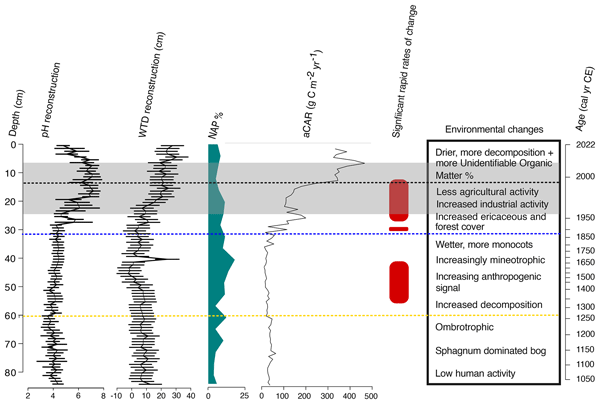
The long-term effects of alkalinisation upon peatland ecosystem functioning remains poorly understood. Using palaeoecological techniques, we show that intensive cement dust pollution altered vegetation cover and reduced carbon storage in an Estonian peatland. Changes also occurred during the 13th century following agricultural intensification. These shifts occurred following substantial as well as small but sustained increases in alkalinity. Limited recovery was evident ~30 years post-pollution.
Tomasz Polkowski, Agnieszka Gruszczyńska, Bartosz Kotrys, Artur Górecki, Anna Hrynowiecka, Marcin Żarski, Mirosław Błaszkiewicz, Jerzy Nitychoruk, Monika Czajkowska, Stefan Lauterbach, and Michał Słowiński
Clim. Past, 21, 1779–1800, https://doi.org/10.5194/cp-21-1779-2025, https://doi.org/10.5194/cp-21-1779-2025, 2025
Short summary
Short summary
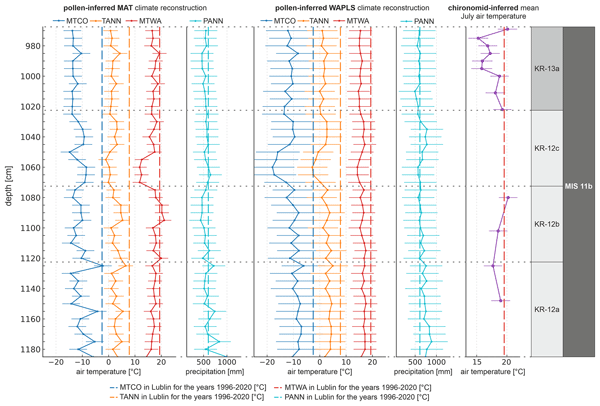
In our study, we investigate changes in environment and climate that occured during post-Holsteinian period in Krępa palaeolake (eastern Poland). To achieve this goal we reconstructed summer temperature at the time using Chironomidae larvae head capsules and pollen data. This is first research from Central Europe with both chironomids and pollen used to trace climate change through post-Holsteinian period. We hope to encourage scientific community to carry out further research in the region.
Agnieszka Halaś, Mariusz Lamentowicz, Milena Obremska, Dominika Łuców, and Michał Słowiński
Biogeosciences, 22, 4797–4822, https://doi.org/10.5194/bg-22-4797-2025, https://doi.org/10.5194/bg-22-4797-2025, 2025
Short summary
Short summary
Western Siberian peatlands regulate global climate, but their response to permafrost thaw remains poorly studied. Our study analyzed peat cores from a peat plateau and a lake edge to track changes over two centuries. We found that permafrost thawing, driven by rising temperatures, altered peatland hydrology, vegetation, and microbial life. These shifts may expand with further warming, affecting carbon storage and climate feedbacks. Our findings highlight early warning signs of ecosystem change.
Cited articles
Alexandrov, G. A., Brovkin, V. A., and Kleinen, T.: The influence of climate on peatland extent in Western Siberia since the Last Glacial Maximum, Sci. Rep., 6, 24784, https://doi.org/10.1038/srep24784, 2016.
Artz, R. R. E., Chapman, S. J., Jean Robertson, A. H., Potts, J. M., Laggoun-Défarge, F., Gogo, S., Comont, L., Disnar, J.-R., and Francez, A.-J.: FTIR spectroscopy can be used as a screening tool for organic matter quality in regenerating cutover peatlands, Soil Biol. Biochem., 40, 515–527, https://doi.org/10.1016/j.soilbio.2007.09.019, 2008.
Barber, K. E.: Peatlands as scientific archives of past biodiversity, Biodivers. Conserv., 2, 474–489, https://doi.org/10.1007/BF00056743, 1993.
Baryshnikov, M. K.: Carex-Hypnum Bogs of the West Vasuganye, Moscow, 37 pp., 1929.
Batzer, D., Wu, H., Wheeler, T., and Eggert, S.: Peatland Invertebrates, in: Invertebrates in Freshwater Wetlands: An International Perspective on their Ecology, edited by: Batzer, D. and Boix, D., Springer International Publishing, Cham, 219–250, https://doi.org/10.1007/978-3-319-24978-0_7, 2016.
Beck, H. E., Zimmermann, N. E., McVicar, T. R., Vergopolan, N., Berg, A., and Wood, E. F.: Present and future Köppen-Geiger climate classification maps at 1-km resolution, Sci. Data, 5, 180214, https://doi.org/10.1038/sdata.2018.214, 2018.
Biester, H., Knorr, K.-H., Schellekens, J., Basler, A., and Hermanns, Y.-M.: Comparison of different methods to determine the degree of peat decomposition in peat bogs, Biogeosciences, 11, 2691–2707, https://doi.org/10.5194/bg-11-2691-2014, 2014.
Birks, H. H. and Birks, H. J. B.: Future Uses of Pollen Analysis Must Include Plant Macrofossils, J. Biogeogr., 27, 31–35, 2000.
Blyakharchuk, T.: Four new pollen sections tracing the Holocene vegetational development of the southern part of the West Siberan Lowland, Holocene, 13, 715–731, https://doi.org/10.1191/0959683603hl658rp, 2003.
Blyakharchuk, T. A., Kurina, I. V., and Pologova, N. N.: Pozdnegolotsenovaya dinamika rastitel'nogo pokrova i uvlazhnennosti klimata yugo-vostochnogo sektora Zapadno-Sibirskoy ravniny po dannym palinologicheskogo i rizopodnogo issledovaniy torfyanykh otlozheniy [Late Holocene dynamics of vegetation cover and climate humidity in the southeastern sector of the West Siberian Plain based on palynological and rhizopod studies of peat deposits], Bull. Tomsk State Univ. Biol., 164–189, https://doi.org/10.17223/19988591/45/9, 2019.
Borisova, O. K., Novenko, E. Y., Zelikson, E. M., and Kremenetski, K. V.: Lateglacial and Holocene vegetational and climatic changes in the southern taiga zone of West Siberia according to pollen records from Zhukovskoye peat mire, Quat. Int., 237, 65–73, https://doi.org/10.1016/j.quaint.2011.01.015, 2011.
Borren, W., Bleuten, W., and Lapshina, E. D.: Holocene peat and carbon accumulation rates in the southern taiga of western Siberia, Quat. Res., 61, 42–51, https://doi.org/10.1016/j.yqres.2003.09.002, 2004.
Botch, M. S. and Masing, V. V.: Mire ecosystems in the USSR, in: Ecosystems of the World, vol. 4A, Mires: Swamp, Bog, Fen and Moor, edited by: Gore, A. J. P., Elsevier Science, New York, 95–152, ISBN 0444420037, 1983.
Botch, M. S., Kobak, K. I., Vinson, T. S., and Kolchugina, T. P.: Carbon pools and accumulation in peatlands of the former Soviet Union, Glob. Biogeochem. Cycles, 9, 37–46, https://doi.org/10.1029/94GB03156, 1995.
Bronzov, A. Y.: Verkhovye bolota Narymskogo kraya (bassein reki Vasiugan) [Bogs of the Narymski region (watershed of the Vasiugan River)], Proc. Peat Inst., 3, 1–100, 1930.
Brown, J., Ferrians, O., Heginbottom, J. A., and Melnikov, E.: Circum-Arctic Map of Permafrost and Ground-Ice Conditions (2), National Snow and Ice Data Center [data set], https://doi.org/10.7265/SKBG-KF16, 2002.
Carballeira, R. and Pontevedra-Pombal, X.: Diatoms in Paleoenvironmental Studies of Peatlands, Quaternary, 3, 10, https://doi.org/10.3390/quat3020010, 2020.
Chambers, F. M. and Charman, D. J.: Holocene environmental change: contributions from the peatland archive, The Holocene, 14, 1–6, https://doi.org/10.1191/0959683604hl684ed, 2004.
Charman, D.: Biostratigraphic and palaeoenvironmental applications of testate amoebae, Quaternary Sci. Rev., 20, 1753–1764, https://doi.org/10.1016/S0277-3791(01)00036-1, 2001.
Charman, D. J., Amesbury, M. J., Hinchliffe, W., Hughes, P. D. M., Mallon, G., Blake, W. H., Daley, T. J., Gallego-Sala, A. V., and Mauquoy, D.: Drivers of Holocene peatland carbon accumulation across a climate gradient in northeastern North America, Quaternary Sci. Rev., 121, 110–119, https://doi.org/10.1016/j.quascirev.2015.05.012, 2015.
Conedera, M., Tinner, W., Neff, C., Meurer, M., Dickens, A. F., and Krebs, P.: Reconstructing past fire regimes: methods, applications, and relevance to fire management and conservation, Quaternary Sci. Rev., 28, 555–576, https://doi.org/10.1016/j.quascirev.2008.11.005, 2009.
Dranitsyn, D. A.: Secondary podzols and the shift in the podzol zone in the northern part of the Ob'-Irtysh watershed, Proc. Dokuchaev Soil Comm., 2, 33–93, 1914.
Duchkov, A. D.: Characteristics of permafrost in Siberia, in: Advances in the Geological Storage of Carbon Dioxide, 81–91, https://doi.org/10.1007/1-4020-4471-2_08, 2006.
Efremov, S. P. and Efremova, T. T.: Present stocks of peat and organic carbon in bog ecosystems of west Siberia, in: Carbon Storage and Atmospheric Exchange by West Siberian Peatlands, Utrecht Univ., Utrecht, Netherlands, 73–78, 2001.
Feurdean, A., Gałka, M., Florescu, G., Diaconu, A.-C., Tanţău, I., Kirpotin, S., and Hutchinson, S. M.: 2000 years of variability in hydroclimate and carbon accumulation in western Siberia and the relationship with large-scale atmospheric circulation: A multi-proxy peat record, Quaternary Sci. Rev., 226, 105948, https://doi.org/10.1016/j.quascirev.2019.105948, 2019.
Feurdean, A., Diaconu, A.-C., Pfeiffer, M., Gałka, M., Hutchinson, S. M., Butiseaca, G., Gorina, N., Tonkov, S., Niamir, A., Tantau, I., Zhang, H., and Kirpotin, S.: Holocene wildfire regimes in western Siberia: interaction between peatland moisture conditions and the composition of plant functional types, Clim. Past, 18, 1255–1274, https://doi.org/10.5194/cp-18-1255-2022, 2022.
Fiałkiewicz-Kozieł, B., Smieja-Król, B., Frontasyeva, M., Słowiński, M., Marcisz, K., Lapshina, E., Gilbert, D., Buttler, A., Jassey, V. E. J., Kaliszan, K., Laggoun-Défarge, F., Kołaczek, P., and Lamentowicz, M.: Anthropogenic- and natural sources of dust in peatland during the Anthropocene, Sci. Rep., 6, 38731, https://doi.org/10.1038/srep38731, 2016.
Glavtorffond RSFSR: Torfianye mestorozhdenia Zapadnoi Sibiri [Peat Deposits in Western Siberia], Glavtorffond RSFSR, Moscow, 1956.
Glebov, F. Z., Toleyko, L. S., Starikov, E. V., and Zhidovlenko, V. A.: Palinologicheskaya kharakteristika i datirovanie po 14C torfyanika v Aleksandrovskom rayone Tomskoy oblasti (srednetaezhnaya podzona) [Palynology and 14C dating of a peat bog from the Aleksandrovsk district of Tomskregion (middle taiga sub-belt)], in: Tipy bolot SSSR i printsipy ikh klassifikatsii [Types of the USSR Bogs and Principles of their Classification], Nauka, Leningrad, 194–199, 1974.
Glebov, F. Z., Karpenko, L. V., and Dashkovskaya, I. S.: Climatic Changes, Successions of Peatlands and Zonal Vegetation, and Peat Accumulation Dynamics in the Holocene (the West-Siberia Peat Profile “Vodorasdel”), Clim. Change, 55, 175–181, https://doi.org/10.1023/A:1020216922975, 2002.
Gordiagin, A. Y.: Data to know about soils and vegetation of West Siberia, Proc. Nat. Soc. Kazan Univ., 34, 222, 1901.
Gorodkov, B. N.: Permafrost in the Northern Area, Leningrad, 109 pp., 1932.
Govorukhin, V. S.: Vegetation of the summer pasture area of reindeer, Zemlevedenie, 35, 68–92, 1933.
Greifswald Mire Centre: Global Peatland Map 2.0. Underlying dataset of the UNEP Global Peatland Assessment – The State of the World's Peatlands: Evidence for action toward the conservation, restoration, and sustainable management of peatlands, Global Peatlands Initiative, https://nextcloud.uni-greifswald.de/public.php/dav/files/s7Ln5QKxdQG5aaA/?accept=zip (last access: 3 June 2026), 2022.
Halaś, A. and Słowiński, M.: Western Siberian Peat Core Database (WSPC), Zenodo [data set], https://doi.org/10.5281/zenodo.20323517, 2026.
Halaś, A., Lamentowicz, M., Obremska, M., Łuców, D., and Słowiński, M.: Peatland development reconstruction and complex biological responses to permafrost thawing in Western Siberia, Biogeosciences, 22, 4797–4822, https://doi.org/10.5194/bg-22-4797-2025, 2025.
Haslett, J. and Parnell, A. C.: A simple monotone process with application to radiocarbon-dated depth chronologies, J. R. Stat. Soc. Ser. C Appl. Stat., 57, 399–418, 2008.
Horsák, M.: Mollusc assemblages in palaeoecological reconstructions: an investigation of their predictive power using transfer function models, Boreas, 40, 459–467, https://doi.org/10.1111/j.1502-3885.2010.00195.x, 2011.
Hugelius, G., Loisel, J., Chadburn, S., Jackson, R. B., Jones, M., MacDonald, G., Marushchak, M., Olefeldt, D., Packalen, M., Siewert, M. B., Treat, C., Turetsky, M., Voigt, C., and Yu, Z.: Large stocks of peatland carbon and nitrogen are vulnerable to permafrost thaw, P. Natl. Acad. Sci. USA, 117, 20438–20446, https://doi.org/10.1073/pnas.1916387117, 2020.
Ivanov, K. E. and Novikov, S. M.: Bolota Zapadnoi Sibiri, ikh stroenie i gidrologicheskiy rezhim [Bogs of West Siberia, their structure and hydrology], Gidrometeoizdat, Leningrad, 447 pp., 1976.
Khotinsky, N. A.: Holocene vegetation history, in: Late Quaternary Environments of the Soviet Union, ISBN 978-0-8166-1250-5, 1984.
Kirpotin, S. N., Berezin, A., Bazanov, V., Polishchuk, Y., Vorobiov, S., Mironycheva-Tokoreva, N., Kosykh, N., Volkova, I., Dupre, B., Pokrovsky, O., Kouraev, A., Zakharova, E., Shirokova, L., Mognard, N., Biancamaria, S., Viers, J., and Kolmakova, M.: Western Siberia wetlands as indicator and regulator of climate change on the global scale, Int. J. Environ. Stud., 66, 409–421, https://doi.org/10.1080/00207230902753056, 2009.
Kremenetski, K. V., Velichko, A. A., Borisova, O. K., MacDonald, G. M., Smith, L. C., Frey, K. E., and Orlova, L. A.: Peatlands of the Western Siberian lowlands: current knowledge on zonation, carbon content and Late Quaternary history, Quaternary Sci. Rev., 22, 703–723, https://doi.org/10.1016/S0277-3791(02)00196-8, 2003.
Kurakova, A. A.: Landscape-Hydrological Zoning of the Flat Areas of Western Siberia and Its Application in the Analysis of River Bank Erosion, Geogr. Nat. Resour., 45, 397–409, https://doi.org/10.1134/S1875372824700720, 2024.
Kurina, I. V., Veretennikova, E. E., Salisch, L. V., Egorova, M. L., Dolgin, V. N., Udaloi, A. V., and Golovatskaya, E. A.: Primenenie zooindikatorov dlya rekonstruktsii usloviy prirodnoy sredy golotsena v torfyanoy zalezhi nizinnogo bolota [The use of zoo-indicators for the reconstruction of paleoenvironments in the Holocene in the peat deposits of an eutrophic peatland], Zool. Zhurnal, 96, 973–986, https://doi.org/10.7868/S0044513417080086, 2017.
Kurina, I. V., Li, H., and Barashkov, D. R.: Use of testate amoebae to infer paleohydrology during fen and fen-bog transition stages of ombrotrophic mire development, J. Paleolimnol., 63, 147–158, https://doi.org/10.1007/s10933-019-00107-y, 2020.
Kurina, I. V., Veretennikova, E. E., Il'ina, A. A., Egorova, M. L., Salisch, L. V., Dolgin, V. N., Udaloi, A. V., Golovatskaya, E. A., Dyukarev, E. A., and Smirnov, S. V.: Multi-proxy climate and environmental records from a Holocene eutrophic mire, southern taiga subzone, West Siberia, Boreas, 52, 223–239, https://doi.org/10.1111/bor.12604, 2023.
Lamentowicz, M., Słowiński, M., Marcisz, K., Zielińska, M., Kaliszan, K., Lapshina, E., Gilbert, D., Buttler, A., Fiałkiewicz-Kozieł, B., Jassey, V. E. J., Laggoun-Defarge, F., and Kołaczek, P.: Hydrological dynamics and fire history of the last 1300 years in western Siberia reconstructed from a high-resolution, ombrotrophic peat archive, Quat. Res., 84, 312–325, https://doi.org/10.1016/j.yqres.2015.09.002, 2015.
Lapshina, E. D. and Zarov, E. A.: Stratigraphy of peat deposits and mire development in the southernpart of the forest zone of Western Siberia in Holocene., Environ. Dyn. Glob. Clim. Change, 14, 70–101, https://doi.org/10.18822/edgcc568688, 2023.
Leonova, G. À., Maltsev, À. Å., Preis, Y. I., and Miroshnichenko, L. V.: Biogeochemistry of holocene peatlands in the baraba forest-steppe (southern West Siberia), Appl. Geochem., 124, 104811, https://doi.org/10.1016/j.apgeochem.2020.104811, 2021.
Leonova, G. A., Maltsev, A. E., Preis, Y. I., Miroshnichenko, L. V., Shavekin, A. S., and Rubanov, M. V.: Biogeochemical Features of Holocene Sediments in Oligotrophic Bogs of the Baraba Forest Steppe, Geochem. Int., 60, 183–202, https://doi.org/10.1134/S0016702922020069, 2022.
Levkovskaya, G. M., Kind, N. V., Zavelsky, F. C., and Forova, V. S.: Absolute age of peat bogs of the Igarka City region and the division of the West Siberia Holocene, Bull. Comm. Quat. Stud., 37, 94–101, 1970.
Liss, O. L. and Berezina, N.: Bolotnye sistemy Zapadnoy Sibiri [Bogs of the West Siberian Lowland], Moscow University publishing, Moscow, 206 pp., ISBN 5-8125-0150-5, 1981.
Liss, O. L. and Kulikova, G. G.: About the regional classification of bogs in Tomsk region, Vestn. Mosk. Univ., 4, 87–91, 1967.
Loisel, J., Yu, Z., Beilman, D. W., Camill, P., Alm, J., Amesbury, M. J., Anderson, D., Andersson, S., Bochicchio, C., Barber, K., Belyea, L. R., Bunbury, J., Chambers, F. M., Charman, D. J., De Vleeschouwer, F., Fiałkiewicz-Kozieł, B., Finkelstein, S. A., Gałka, M., Garneau, M., Hammarlund, D., Hinchcliffe, W., Holmquist, J., Hughes, P., Jones, M. C., Klein, E. S., Kokfelt, U., Korhola, A., Kuhry, P., Lamarre, A., Lamentowicz, M., Large, D., Lavoie, M., MacDonald, G., Magnan, G., Mäkilä, M., Mallon, G., Mathijssen, P., Mauquoy, D., McCarroll, J., Moore, T. R., Nichols, J., O'Reilly, B., Oksanen, P., Packalen, M., Peteet, D., Richard, P. J., Robinson, S., Ronkainen, T., Rundgren, M., Sannel, A. B. K., Tarnocai, C., Thom, T., Tuittila, E.-S., Turetsky, M., Väliranta, M., van der Linden, M., van Geel, B., van Bellen, S., Vitt, D., Zhao, Y., and Zhou, W.: A database and synthesis of northern peatland soil properties and Holocene carbon and nitrogen accumulation, The Holocene, 24, 1028–1042, https://doi.org/10.1177/0959683614538073, 2014.
Longman, J., Veres, D., and Wennrich, V.: Utilisation of XRF core scanning on peat and other highly organic sediments, Quatern. Int., 514, 85–96, https://doi.org/10.1016/j.quaint.2018.10.015, 2019.
López-Blanco, E., Topp-Jørgensen, E., Christensen, T. R., Rasch, M., Skov, H., Arndal, M. F., Bret-Harte, M. S., Callaghan, T. V., and Schmidt, N. M.: Towards an increasingly biased view on Arctic change, Nat. Clim. Change, 14, 152–155, https://doi.org/10.1038/s41558-023-01903-1, 2024.
L'vov, Y. A.: Metodicheskie materialy k tipologii i klassifikatsii bolot Tomskoy oblasti [Methodical materials for the typology and classification of the Tomsk Province mires], in: Tipy bolot SSSR i printsipy ikh klassifikatsii [Types of the USSR Bogs and Principles of their Classification], Nauka, Leningrad, 188–194, 1974.
MacDonald, G. M., Beilman, D. W., Kremenetski, K. V., Sheng, Y., Smith, L. C., and Velichko, A. A.: Rapid Early Development of Circumarctic Peatlands and Atmospheric CH4 and CO2 Variations, Science, 314, 285–288, https://doi.org/10.1126/science.1131722, 2006.
Malyasova, E. S., Novikov, S. M., and Usova, L. I.: Dynamics of peat accumulation and the formation of palsa mires in the Western Siberia, Bot. Zhurnal, 9, 1227–1238, 1991.
Mander, L. and Punyasena, S. W.: Fossil Pollen and Spores in Paleoecology, in: Methods in Paleoecology: Reconstructing Cenozoic Terrestrial Environments and Ecological Communities, edited by: Croft, D. A., Su, D. F., and Simpson, S. W., Springer International Publishing, Cham, 215–234, https://doi.org/10.1007/978-3-319-94265-0_11, 2018.
Map of West Siberian wetlands: Karta bolot Zapadnoi Sibiri, Moscow: Main Administration of Geodesy and Cartography, 1970.
Map of West Siberian wetlands: Karta bolot Zapadnoi Sibiri, Omsk, 1996.
Martínez Cortizas, A., López-Merino, L., Silva-Sánchez, N., Sjöström, J. K., and Kylander, M. E.: Investigating the Mineral Composition of Peat by Combining FTIR-ATR and Multivariate Analysis, Minerals, 11, 1084, https://doi.org/10.3390/min11101084, 2021.
McClymont, E. L., Pendall, E., and Nichols, J.: Stable isotopes and organic geochemistry in peat: Tools to investigate past hydrology, temperature and biogeochemistry, PAGES News, 18, 15–18, https://doi.org/10.22498/pages.18.1.15, 2010.
Minayeva, T., Bleuten, W., Sirin, A., and Lapshina, E. D.: Eurasian Mires of the Southern Taiga Belt: Modern Features and Response to Holocene Palaeoclimate, in: Wetlands and Natural Resource Management, edited by: Verhoeven, J. T. A., Beltman, B., Bobbink, R., and Whigham, D. F., Springer, Berlin, Heidelberg, 315–341, https://doi.org/10.1007/978-3-540-33187-2_14, 2006.
Mitchell, E. A. D.: A brief history of testate amoebae research and introducing the International Society for Testate Amoeba Research (ISTAR), Acta Protozool., 2024, 1–14, 2025.
Mitchell, E. A. D. and Payne, R.: Testate Amoeba Analysis, in: The Encyclopedia of Archaeological Sciences, 1–4, https://doi.org/10.1002/9781119188230.saseas0576, 2018.
Neustadt, M. I.: On absolute age of peat bogs of Western Siberia., Rev. Roum. Biol. Ser. Bot., 12, 181–186, 1967.
Neustadt, M. I.: The world natural phenomenon – Bogs of the West Siberian Lowland, Izv. Akad. Nauk SSSR, 21–34, 1971.
Neustadt, M. I.: Holocene peatland development, in: Late Quaternary Environments of the Soviet Union, University of Minnesota Press, Minneapolis, 201–206, ISBN 0-8166-1250-1, 1984.
Novenko, E., Rudenko, O., Mazei, N., Kupriyanov, D., Andreev, R., Shatunov, A., Kusilman, M., Prokushkin, A., and Olchev, A.: Effects of Climate Change and Fire on the Middle and Late Holocene Forest History in Yenisei Siberia, Forests, 14, 2321, https://doi.org/10.3390/f14122321, 2023.
Novenko, E. Y., Mazei, N. G., Kupriyanov, D., Shatunov, A. E., Andreev, R. A., Makarova, E. A., Borodina, K. A., Rudenko, O., Prokushkin, A. S., and Volkova, E. M.: Izmeneniya rastitel'nosti Prieniseyskoy Sibiri v poslednie 4700 let: novye paleoekologicheskie dannye iz rayona Igarki (Krasnoyarskiy kray) [Vegetation changes in Yenisei Siberia over the last 4700 years: new palaeoecological data from Igarka area; Krasnoyarsk Region], Geomorfologiya, 53, 5–6, https://doi.org/10.31857/S0435428122030129, 2022.
Novenko, E. Y., Prokushkin, A. S., Mazei, N. G., Zazovskaya, E. P., Kupriyanov, D. A., Shatunov, A. E., Andreev, R. A., Makarova, E. A., Kusilman, M. V., Serikov, S. I., Xiuyuan, G., Babeshko, K. V., Tsyganov, A. N., and Mazei, Y. A.: The mid- and late Holocene palsa palaeoecology and hydroclimatic changes in Yenisei Siberia revealed by a high-resolution peat archive, Quat. Int., 682, 8–21, https://doi.org/10.1016/j.quaint.2024.01.013, 2024.
Olson, D. M., Dinerstein, E., Wikramanayake, E. D., Burgess, N. D., Powell, G. V. N., Underwood, E. C., D'amico, J. A., Itoua, I., Strand, H. E., Morrison, J. C., Loucks, C. J., Allnutt, T. F., Ricketts, T. H., Kura, Y., Lamoreux, J. F., Wettengel, W. W., Hedao, P., and Kassem, K. R.: Terrestrial Ecoregions of the World: A New Map of Life on Earth: A new global map of terrestrial ecoregions provides an innovative tool for conserving biodiversity, Bioscience, 51, 933–938, https://doi.org/10.1017/S0033822200033695, 2001.
Olsson, I. U.: Radiocarbon Dating History: Early Days, Questions, and Problems Met, Radiocarbon, 51, 1–43, https://doi.org/10.1017/S0033822200033695, 2009.
Panova, N. K., Trofimova, S. S., Antipina, T. G., Zinoviev, E. V., Gilev, A. V., and Erokhin, N. G.: Holocene dynamics of vegetation and ecological conditions in the southern Yamal Peninsula according to the results of comprehensive analysis of a relict peat bog deposit, Russ. J. Ecol., 41, 20–27, https://doi.org/10.1134/S1067413610010042, 2010.
Paradossky, V. L., Pechatnova, Y. V., and Solomonova, M. Y.: The natural transformations of the Northern Kulunda in the second half of the Holocene based on studying the microbiomorphic profile of swampy phytocenosis, Ukr. J. Ecol., 9, 406–411, 2019.
Parry, L. E., West, L. J., Holden, J., and Chapman, P. J.: Evaluating approaches for estimating peat depth, J. Geophys. Res.-Biogeo., 119, 567–576, https://doi.org/10.1002/2013JG002411, 2014.
Peteet, D., Andreev, A., Bardeen, W., and Mistretta, F.: Long-term Arctic peatland dynamics, vegetation and climate history of the Pur-Taz region, Western Siberia, Boreas, 27, 115–126, https://doi.org/10.1111/j.1502-3885.1998.tb00872.x, 1998.
Polishchuk, Y. M., Bogdanov, A. N., Polishchuk, V. Y., Manasypov, R. M., Shirokova, L. S., Kirpotin, S. N., and Pokrovsky, O. S.: Size Distribution, Surface Coverage, Water, Carbon, and Metal Storage of Thermokarst Lakes in the Permafrost Zone of the Western Siberia Lowland, Water, 9, 228, https://doi.org/10.3390/w9030228, 2017.
Preis, Y.: Indicators of paleocryogenic processes that disrupt the patterns of peatland autogenic development in the zone of seasonal freezing of rocks of Western Siberia, Limnol. Freshw. Biol., 562–567, https://doi.org/10.31951/2658-3518-2024-A-4-562, 2024.
Preis, Y., Maltsev, A., and Leonova, G.: Assessment of Holocene climate influence on hydrothermal regime of paleoecotopes within Ryams of the Baraba forest-steppe (southern Western Siberia), Limnol. Freshw. Biol., 580–587, https://doi.org/10.31951/2658-3518-2024-A-4-580, 2024.
Preis, Y. I.: Detal'naya rekonstruktsiya funktsional'nogo sostoyaniya bolota kak otklik na izmeneniya kontinental'nogo klimata golotsena (srednyaya tayga Zapadnoy Sibiri) [Detailed reconstruction of bog functional state as a response to continental climate changes in Holocene (the middle taiga of Western Siberia)], News Tomsk Polytech. Univ. Eng. Georesources, 326, 90–102, 2015.
Punning, J. M., Kakum, T., and Rajamäe, R.: Tallinn Radiocarbon Dates II, Radiocarbon, 16, 388–394, https://doi.org/10.1017/S0033822200059683, 1974.
Pupysheva, M. A. and Blyakharchuk, T. A.: Fires and their Significance in the Earth's Post-Glacial Period: a Review of Methods, Achievements, Groundwork, Contemp. Probl. Ecol., 16, 303–315, https://doi.org/10.1134/S1995425523030095, 2023.
QGIS Development Team: QGIS Geographic Information System, Zenodo, https://doi.org/10.5281/zenodo.6139224, 2025.
R Core Team: R: A Language and Environment for Statistical Computing, R Foundation for Statistical Computing, Vienna, Austria, https://www.R-project.org/ (last access: 3 June 2026), 2022.
Reimer, P. J., Austin, W. E. N., Bard, E., Bayliss, A., Blackwell, P. G., Ramsey, C. B., Butzin, M., Cheng, H., Edwards, R. L., Friedrich, M., Grootes, P. M., Guilderson, T. P., Hajdas, I., Heaton, T. J., Hogg, A. G., Hughen, K. A., Kromer, B., Manning, S. W., Muscheler, R., Palmer, J. G., Pearson, C., Plicht, J. V. D., Reimer, R. W., Richards, D. A., Scott, E. M., Southon, J. R., Turney, C. S. M., Wacker, L., Adolphi, F., Büntgen, U., Capano, M., Fahrni, S. M., Fogtmann-Schulz, A., Friedrich, R., Köhler, P., Kudsk, S., Miyake, F., Olsen, J., Reinig, F., Sakamoto, M., Sookdeo, A., and Talamo, S.: The IntCal20 Northern Hemisphere Radiocarbon Age Calibration Curve (0–55 cal kBP), Radiocarbon, 62, 725–757, https://doi.org/10.1017/RDC.2020.41, 2020.
Rudmin, M., Ruban, A., Savichev, O., Mazurov, A., Dauletova, A., and Savinova, O.: Authigenic and Detrital Minerals in Peat Environment of Vasyugan Swamp, Western Siberia, Minerals, 8, 500, https://doi.org/10.3390/min8110500, 2018.
Ryabogina, N. E., Nesterova, M. I., Utaygulova, R. R., and Trubitsyna, E. D.: Forest fires in southwest Western Siberia: the impact of climate and economic transitions over 9000 years, J. Quaternary Sci., 39, 432–442, https://doi.org/10.1002/jqs.3593, 2024.
Rydin, H., Gunnarsson, U., and Sundberg, S.: The Role of Sphagnum in Peatland Development and Persistence, in: Boreal Peatland Ecosystems, edited by: Wieder, R. K. and Vitt, D. H., Springer, Berlin, Heidelberg, 47–65, https://doi.org/10.1007/978-3-540-31913-9_4, 2006.
Rydin, H., Jeglum, J. K., and Bennett, K. D.: The Biology of Peatlands, OUP Oxford, 397 pp., ISBN 978-0-19-960299-5, 2013.
Schaaff, V., Grossi, V., Makou, M., Garcin, Y., Deschamps, P., Sebag, D., Ngounou Ngatcha, B., and Ménot, G.: Constraints on hopanes and brGDGTs as pH proxies in peat, Geochim. Cosmochim. Acta, 373, 342–354, https://doi.org/10.1016/j.gca.2024.03.034, 2024.
Scharlemann, J. P., Tanner, E. V., Hiederer, R., and Kapos, V.: Global soil carbon: understanding and managing the largest terrestrial carbon pool, Carbon Manag., 5, 81–91, https://doi.org/10.4155/cmt.13.77, 2014.
Schuur, E. A. G., Pallandt, M., and Göckede, M.: Russian collaboration loss risks permafrost carbon emissions network, Nat. Clim. Change, 14, 410–411, https://doi.org/10.1038/s41558-024-02001-6, 2024.
Seniczak, A., Seniczak, S., Iturrondobeitia, J. C., Gwiazdowicz, D. J., Waldon-Rudzionek, B., Flatberg, K. I., and Bolger, T.: Mites (Oribatida and Mesostigmata) and vegetation as complementary bioindicators in peatlands, Sci. Total Environ., 851, 158335, https://doi.org/10.1016/j.scitotenv.2022.158335, 2022.
Shefer, N. V., Loiko, S. V., Kriñkov, I. V., and Lim, A. G.: The most comprehensive history of fire activity in the Pur-Taz interfluve over the last 11,000 years (Western Siberia, Russia), Acta Biol. Sib., 10, 1755–1777, https://doi.org/10.5281/zenodo.14525710, 2024.
Sheng, Y.: West Siberian Lowland Peatland GIS Data Collection, Arctic Data Center [data set], https://doi.org/10.5065/D65T3HM5, 2016.
Sheng, Y., Smith, L. C., MacDonald, G. M., Kremenetski, K. V., Frey, K. E., Velichko, A. A., Lee, M., Beilman, D. W., and Dubinin, P.: A high-resolution GIS-based inventory of the west Siberian peat carbon pool, Global Biogeochem. Cy., 18, https://doi.org/10.1029/2003GB002190, 2004.
Shotyk, W.: Review of the inorganic geochemistry of peats and peatland waters, Earth-Sci. Rev., 25, 95–176, https://doi.org/10.1016/0012-8252(88)90067-0, 1988.
Shumilovskikh, L., O'Keefe, J. M. K., and Marret, F.: An overview of the taxonomic groups of non-pollen palynomorphs, Geol. Soc. Lond. Spec. Publ., 511, 13–61, https://doi.org/10.1144/SP511-2020-65, 2021.
Shvartseva, O., Gaskova, O., Yurtaev, A., Boguslavsky, A., Kolpakova, M., and Mashkova, D.: Water–Rock–Organic Matter Interactions in Wetland Ecosystem: Hydrogeochemical Investigation and Computer Modeling, Water, 16, 428, https://doi.org/10.3390/w16030428, 2024.
Sjöström, J. K., Bindler, R., Granberg, T., and Kylander, M. E.: Procedure for Organic Matter Removal from Peat Samples for XRD Mineral Analysis, Wetlands, 39, 473–481, https://doi.org/10.1007/s13157-018-1093-7, 2019.
Smith, L. C., MacDonald, G., Frey, K. E., Velichko, A. A., Kremenetski, K., Borisova, O. K., Dubinin, P., and Forster, R. R.: U.S.-Russia venture probes Siberian peatlands' sensitivity to climate, Eos Trans. Am. Geophys. Union, https://doi.org/10.1029/00EO00357, 2000.
Smith, L. C., MacDonald, G. M., Velichko, A. A., Beilman, D. W., Borisova, O. K., Frey, K. E., Kremenetski, K. V., and Sheng, Y.: Siberian Peatlands a Net Carbon Sink and Global Methane Source Since the Early Holocene, Science, 303, 353–356, https://doi.org/10.1126/science.1090553, 2004.
Smith, L. C., Beilman, David. W., Kremenetski, K. V., Sheng, Y., MacDonald, G. M., Lammers, R. B., Shiklomanov, A. I., and Lapshina, E. D.: Influence of permafrost on water storage in West Siberian peatlands revealed from a new database of soil properties, Permafrost Periglac., 23, 69–79, https://doi.org/10.1002/ppp.735, 2012.
Solomeshch, A. I.: The West Siberian Lowland, in: The World's Largest Wetlands: Ecology and Conservation, edited by: Fraser, L. H. and Keddy, P. A., Cambridge University Press, Cambridge, 11–62, https://doi.org/10.1017/CBO9780511542091.003, 2005.
Startsev, V., Gorbach, N., Mazur, A., Prokushkin, A., Karpenko, L., and Dymov, A.: Macrocharcoal Signals in Histosols Reveal Wildfire History of Vast Western Siberian Forest-Peatland Complexes, Plants, 11, 3478, https://doi.org/10.3390/plants11243478, 2022.
Stepanova, V. A. and Volkova, I. I.: Osobennosti genezisa Nikolaevskogo ryama v lesostepi Zapadnoy Sibiri [Genesis features of the Nikolaevka ryam in the forest-steppe of Western Siberia], Tomsk State Univ. J. Biol., 202–223, https://doi.org/10.17223/19988591/40/12, 2017.
Swindles, G. T., Mullan, D. J., Brannigan, N. T., Fewster, R. E., Sim, T. G., Gallego-Sala, A., Blaauw, M., Lamentowicz, M., Jassey, V. E. J., Marcisz, K., Green, S. M., Roland, T. P., Loisel, J., Amesbury, M. J., Blundell, A., Chambers, F. M., Charman, D. J., Evans, C. R. C., Feurdean, A., Galloway, J. M., Gałka, M., Karofeld, E., Keaveney, E. M., Korhola, A., Lamentowicz, Ł., Langdon, P., Mauquoy, D., McKeown, M. M., Mitchell, E. A. D., Plunkett, G., Roe, H. M., Turner, T. E., Sillasoo, Ü., Väliranta, M., van der Linden, M., and Warner, B.: Climate and water-table levels regulate peat accumulation rates across Europe, PLOS One, 20, e0327422, https://doi.org/10.1371/journal.pone.0327422, 2025.
Syso, A. I. and Peregon, A. M.: The features of peat-accumulation process at the southern slope of the Great Vasyugan Bog, Contemp. Probl. Ecol., 2, 124–127, https://doi.org/10.1134/S1995425509020064, 2009.
Tarasov, P. E., Webb III, T., Andreev, A. A., Afanas'eva, N. B., Berezina, N. A., Bezusko, L. G., Blyakharchuk, T. A., Bolikhovskaya, N. S., Cheddadi, R., Chernavskaya, M. M., Chernova, G. M., Dorofeyuk, N. I., Dirksen, V. G., Elina, G. A., Filimonova, L. V., Glebov, F. Z., Guiot, J., Gunova, V. S., Harrison, S. P., Jolly, D., Khomutova, V. I., Kvavadze, E. V., Osipova, I. M., Panova, N. K., Prentice, I. C., Saarse, L., Sevastyanov, D. V., Volkova, V. S., and Zernitskaya, V. P.: Present-day and mid-Holocene biomes reconstructed from pollen and plant macrofossil data from the former Soviet Union and Mongolia, J. Biogeogr., 25, 1029–1053, https://doi.org/10.1046/j.1365-2699.1998.00236.x, 1998.
Tikhonravova, Y., Kuznetsova, A., Slagoda, E., and Koroleva, E.: Holocene permafrost peatland evolution in drained lake basins on the Pur-Taz Interfluve, North-Western Siberia, Quatern. Int., 669, 32–42, https://doi.org/10.1016/j.quaint.2023.07.005, 2023.
Tiuremnov, S. N.: Torfyanye mestorozhdeniya [Peat Deposits], Nedra, Moscow, 487 pp., 1976.
Tolonen, K.: Interpretation of changes in the ash content of ombrotrophic peat layers, Bull. Geol. Soc. Finl., 56, 207–219, https://doi.org/10.17741/bgsf/56.1-2.013, 1984.
Treat, C. C., Jones, M. C., Camill, P., Gallego-Sala, A., Garneau, M., Harden, J. W., Hugelius, G., Klein, E. S., Kokfelt, U., Kuhry, P., Loisel, J., Mathijssen, P. J. H., O'Donnell, J. A., Oksanen, P. O., Ronkainen, T. M., Sannel, A. B. K., Talbot, J., Tarnocai, C., and Väliranta, M.: Effects of permafrost aggradation on peat properties as determined from a pan-Arctic synthesis of plant macrofossils, J. Geophys. Res.-Biogeo., 121, 78–94, https://doi.org/10.1002/2015JG003061, 2016.
Trofimova, I. E. and Balybina, A. S.: Classification of climates and climatic regionalization of the West-Siberian plain, Geogr. Nat. Resour., 35, 114–122, https://doi.org/10.1134/S1875372814020024, 2014.
Tsyganov, A. N., Zarov, E. A., Mazei, Y. A., Kulkov, M. G., Babeshko, K. V., Yushkovets, S. Y., Payne, R. J., Ratcliffe, J. L., Fatyunina, Y. A., Zazovskaya, E. P., and Lapshina, E. D.: Key periods of peatland development and environmental changes in the middle taiga zone of Western Siberia during the Holocene, Ambio, 50, 1896–1909, https://doi.org/10.1007/s13280-021-01545-7, 2021.
Turunen, J., Tahvanainen, T., Tolonen, K., and Pitkänen, A.: Carbon accumulation in West Siberian Mires, Russia Sphagnum peatland distribution in North America and Eurasia during the past 21,000 years, Global Biogeochem. Cy., 15, 285–296, https://doi.org/10.1029/2000GB001312, 2001.
UNEP: The State of the World's Peatlands: Evidence for action toward the conservation, restoration, and sustainable management of peatlands, Global Peatlands Initiative, United Nations Environment Programme, Nairobi, ISBN 978-92-807-3991-6, 2022.
Vaganov, E. A., Vedrova, E. F., Verkhovets, S. V., Efremov, S. P., Efremova, T. T., Kruglov, V. B., Onuchin, A. A., Sukhinin, A. I., and Shibistova, O. B.: Forests and swamps of Siberia in the global carbon cycle, Sib. Ecol. J., 4, 631–649, 2005.
Van Geel, B.: Non-Pollen Palynomorphs, in: Tracking Environmental Change Using Lake Sediments: Terrestrial, Algal, and Siliceous Indicators, edited by: Smol, J. P., Birks, H. J. B., Last, W. M., Bradley, R. S., and Alverson, K., Springer Netherlands, Dordrecht, 99–119, https://doi.org/10.1007/0-306-47668-1_6, 2001.
Vasil'chuk, Y. K., Jungner, H., and Vasil'chuk, A. C.: 14C Dating of Peat and δ18O-δd in Ground Ice From Northwest Siberia, Radiocarbon, 43, 527–540, https://doi.org/10.1017/S0033822200041187, 2001.
Velichko, A. A., Timireva, S. N., Kremenetski, K. V., MacDonald, G. M., and Smith, L. C.: West Siberian Plain as a late glacial desert, Quatern. Int., 237, 45–53, https://doi.org/10.1016/j.quaint.2011.01.013, 2011.
Veretennikova, E. E., Kuryina, I. V., Dyukarev, E. A., Golovatskaya, E. A., and Smirnov, S. V.: Geochemical Features of Peat Deposits at Oligotrophic Bogs in the Southern Taiga Subzone of West Siberia, Geochem. Int., 59, 618–631, https://doi.org/10.1134/S0016702921050098, 2021.
Volkov, V. S., Gurtovaya, Y., Firsov, L. V., Panychev, V. A., and Orlova, L. A.: Stroenie, vozrast i istoriya formirovaniya golotsenovogo torfyanika u s. Gorno-Slinkina na Irtyshe [Structure, age and history of development of the Holocene peat-bog near Gorno-Slinkino village on the Irtysh River], in: Pleistotsen Sibiri i smezhnykh oblastei, Nauka, Moscow, 34–39, 1973.
Wickham, H.: ggplot2: Elegant Graphics for Data Analysis, Springer-Verlag New York, ISBN 978-3-319-24277-4, 2016.
Wickham, H., François, R., Henry, L., Müller, K., Vaughan, D., Software, P., and PBC: dplyr: A Grammar of Data Manipulation, https://doi.org/10.32614/CRAN.package.dplyr, 2023.
Willis, K. S., Beilman, D., Booth, R. K., Amesbury, M., Holmquist, J., and MacDonald, G.: Peatland paleohydrology in the southern West Siberian Lowlands: Comparison of multiple testate amoeba transfer functions, sites, and Sphagnum δ13C values, The Holocene, 25, 1425–1436, https://doi.org/10.1177/0959683615585833, 2015.
Witze, A.: Russia's war in Ukraine forces Arctic climate projects to pivot, Nature, 607, 432–432, https://doi.org/10.1038/d41586-022-01868-9, 2022.
Xu, J., Morris, P. J., Liu, J., and Holden, J.: PEATMAP: Refining estimates of global peatland distribution based on a meta-analysis, CATENA, 160, 134–140, https://doi.org/10.1016/j.catena.2017.09.010, 2018.
Yu, Z., Beilman, D. W., and Jones, M. C.: Sensitivity of Northern Peatland Carbon Dynamics to Holocene Climate Change, in: Carbon Cycling in Northern Peatlands, American Geophysical Union (AGU), 55–69, https://doi.org/10.1029/2008GM000822, 2009.
Zhang, H., Väliranta, M., Swindles, G. T., Aquino-López, M. A., Mullan, D., Tan, N., Amesbury, M., Babeshko, K. V., Bao, K., Bobrov, A., Chernyshov, V., Davies, M. A., Diaconu, A.-C., Feurdean, A., Finkelstein, S. A., Garneau, M., Guo, Z., Jones, M. C., Kay, M., Klein, E. S., Lamentowicz, M., Magnan, G., Marcisz, K., Mazei, N., Mazei, Y., Payne, R., Pelletier, N., Piilo, S. R., Pratte, S., Roland, T., Saldaev, D., Shotyk, W., Sim, T. G., Sloan, T. J., Słowiński, M., Talbot, J., Taylor, L., Tsyganov, A. N., Wetterich, S., Xing, W., and Zhao, Y.: Recent climate change has driven divergent hydrological shifts in high-latitude peatlands, Nat. Commun., 13, 4959, https://doi.org/10.1038/s41467-022-32711-4, 2022.
Zhilinsky, I. I.: Ocherk gidrotekhnicheskikh rabot v rayone Sibirskoi zheleznoi dorogi po obvodneniyu pereselencheskikh uchastkov v Ishimskoi stepi i osusheniyu bolot v Barabe. 1895–1904 gg [Description of hydrotechnical works in the area of the Siberian railroad to insure water supply for settlements in the Ishim steppe and to drain bogs in the Baraba forest-steppe (1895–1904)], Saint-Petersburg, 829 pp., 1907.
Short summary
Peatlands act as natural time capsules, preserving records of past environments. We compiled and mapped metadata from over 650 peat samples from Western Siberian Lowland, summarizing decades of research. Our database organizes information about existing studies, showing which periods, regions, and methods have been investigated, and guiding researchers toward gaps where future work can expand our understanding of these ecosystems.
Peatlands act as natural time capsules, preserving records of past environments. We compiled and...


Altmetrics
Final-revised paper
Preprint