Articles | Volume 18, issue 5
https://doi.org/10.5194/essd-18-3559-2026
© Author(s) 2026. This work is distributed under
the Creative Commons Attribution 4.0 License.
the Creative Commons Attribution 4.0 License.
https://doi.org/10.5194/essd-18-3559-2026
© Author(s) 2026. This work is distributed under
the Creative Commons Attribution 4.0 License.
the Creative Commons Attribution 4.0 License.
Data description article
| 
26 May 2026
Data description article |
| 26 May 2026
| 26 May 2026
A dataset of vertical profiles of O3 and HONO from the hyperspectral vertical remote sensing network in China (2021–2024)
Tiliang Zou
School of Environmental Science and Optoelectronic Technology, University of Science and Technology of China, Hefei 230026, China

Key Lab of Environmental Optics & Technology, Anhui Institute of Optics and Fine Mechanics, Hefei Institutes of Physical Science, Chinese Academy of Sciences, Hefei, 230031, China
Xiangguang Ji
State Key Laboratory of Opto-Electronic Information Acquisition and Protection Technology, Anhui University, Hefei, 230601, China
Information Materials and Intelligent Sensing Laboratory of Anhui Province, Anhui University, Hefei, Anhui, 230601, China
Shaocong Wei
Institute of Environment Hefei Comprehensive National Science Center, Hefei, 230031, China
Wei Tan
Key Lab of Environmental Optics & Technology, Anhui Institute of Optics and Fine Mechanics, Hefei Institutes of Physical Science, Chinese Academy of Sciences, Hefei, 230031, China
Haoran Liu
Institute of Physical Science and Information Technology, Anhui University, Hefei, 230601, China
Key Lab of Environmental Optics & Technology, Anhui Institute of Optics and Fine Mechanics, Hefei Institutes of Physical Science, Chinese Academy of Sciences, Hefei, 230031, China
Institute of Physical Science and Information Technology, Anhui University, Hefei, 230601, China
Department of Precision Machinery and Precision Instrumentation, University of Science and Technology of China, Hefei, 230026, China
Center for Excellence in Regional Atmospheric Environment, Institute of Urban Environment, Chinese Academy of Sciences, Xiamen, 361021, China
Key Laboratory of Precision Scientific Instrumentation of Anhui Higher Education Institutes, University of Science and Technology of China, Hefei, 230026, China
Related authors
Tiliang Zou, Chengzhi Xing, Zhijian Tang, Yikai Li, Zhenyi Chen, Xiao Liang, Wei Tan, and Cheng Liu
EGUsphere, https://doi.org/10.5194/egusphere-2026-3286, https://doi.org/10.5194/egusphere-2026-3286, 2026
Short summary
Short summary
Boundary-layer "relay oxidation" revealed: HCHO/HONO drive OH <1 km; O₃ dominates >2.8 km (>74 %). Urban OH shifts spring HONO (4.43×10⁻⁴) to summer HCHO (5.22×10⁻⁴); rural stays HCHO-dominated (1.82×10⁻³). Summer urban HONO peaks ~2.4 km (~30.6 % OH, C=0.053 h⁻¹). Rural C(HONO) highest surface (0.1 h⁻¹), drops fast. Neglecting verticality underestimates O₃/SOA. High-altitude oxidation limits NOₓ control efficacy, demanding 3D strategies.
Yikai Li, Chengzhi Xing, Peiyuan Jiao, and Cheng Liu
Earth Syst. Sci. Data Discuss., https://doi.org/10.5194/essd-2026-743, https://doi.org/10.5194/essd-2026-743, 2026
Preprint under review for ESSD
Short summary
Short summary
We created a six-year record of air pollution over China using ground-based instruments at 53 locations. The dataset includes ozone, nitrogen dioxide, formaldehyde, nitrous acid, sulfur dioxide, and airborne particles. All observations were processed in the same way and compared with satellite and other ground measurements. The dataset provides a consistent reference for checking satellite products and studying how air pollution changes across regions and over time.
Zhuang Wang, Shanshan Liu, Congzi Xia, Yujia Chen, Chengxiao Liu, Yanfeng Huo, Xinfeng Lin, Nian Qiu, Xiaoyun Sun, Shaowei Yan, Jiaqi Chen, Nan Ge, Guanyin Yang, Zhenzhen Hua, Hao Zhang, Chune Shi, Yizhi Zhu, Kaidi Zhang, Xintong Chen, Chengzhi Xing, and Cheng Liu
EGUsphere, https://doi.org/10.5194/egusphere-2026-5807, https://doi.org/10.5194/egusphere-2026-5807, 2026
This preprint is open for discussion and under review for Atmospheric Chemistry and Physics (ACP).
Short summary
Short summary
Volcanic particles from Shinmoedake reached eastern China after several days of travel. Using two similar laser-based atmospheric instruments, satellite observations, and air-mass tracking, we found that particles observed about 200 kilometres apart had very different optical properties despite similar overall signal strength. This shows that long-travelled volcanic pollution can vary strongly over regional distances, affecting how it is identified and represented in models.
Zhuang Wang, Chengxiao Liu, Yanfeng Huo, Xinfeng Lin, Shaowei Yan, Xiaoyun Sun, Jiaqi Chen, Nan Ge, Guanyin Yang, Zhenzhen Hua, Hao Zhang, Chune Shi, Yong Zhu, Yizhi Zhu, Congzi Xia, Kaidi Zhang, Xintong Chen, Yujia Chen, Chengzhi Xing, and Cheng Liu
Earth Syst. Sci. Data Discuss., https://doi.org/10.5194/essd-2026-677, https://doi.org/10.5194/essd-2026-677, 2026
Preprint under review for ESSD
Short summary
Short summary
Airborne particles affect air quality and climate, but their distribution with height is poorly documented over central China. We used seven years of continuous ground-based lidar observations to build a detailed record of dust and other particles profiles from 2018 to 2024. Most particles were found below about two kilometres, with dust more common in spring and other particles in winter. The dataset can help track air pollution and dust transport and improve satellite and model assessments.
Zhenda Sun, Hao Yin, Zhongfeng Pan, Chongyang Li, Ke Liu, Yu Yang, Youwen Sun, and Cheng Liu
Atmos. Chem. Phys., 26, 11027–11046, https://doi.org/10.5194/acp-26-11027-2026, https://doi.org/10.5194/acp-26-11027-2026, 2026
Short summary
Short summary
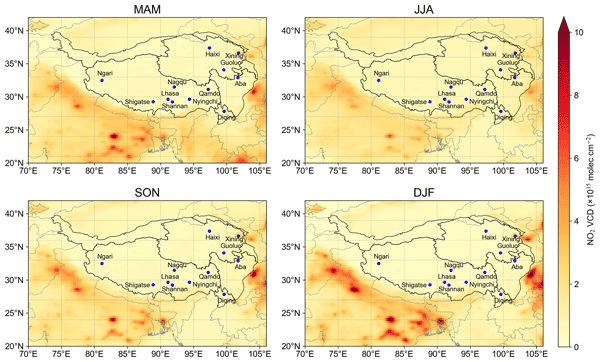
We used satellite and ground observations to study changes in nitrogen dioxide transport over the Tibetan Plateau during the past two decades. The results show that near-surface pollution has decreased, while atmospheric NO₂ column signals have increased. The Tibetan Plateau may play a certain role as a transit region in regional pollution transport, suggesting that its influence on surrounding air quality and environmental changes deserves more attention.
Tiliang Zou, Chengzhi Xing, Zhijian Tang, Yikai Li, Zhenyi Chen, Xiao Liang, Wei Tan, and Cheng Liu
EGUsphere, https://doi.org/10.5194/egusphere-2026-3286, https://doi.org/10.5194/egusphere-2026-3286, 2026
Short summary
Short summary
Boundary-layer "relay oxidation" revealed: HCHO/HONO drive OH <1 km; O₃ dominates >2.8 km (>74 %). Urban OH shifts spring HONO (4.43×10⁻⁴) to summer HCHO (5.22×10⁻⁴); rural stays HCHO-dominated (1.82×10⁻³). Summer urban HONO peaks ~2.4 km (~30.6 % OH, C=0.053 h⁻¹). Rural C(HONO) highest surface (0.1 h⁻¹), drops fast. Neglecting verticality underestimates O₃/SOA. High-altitude oxidation limits NOₓ control efficacy, demanding 3D strategies.
Qijin Zhang, Chengzhi Xing, Yikai Li, Haochen Peng, Haoran Liu, Wei Tan, Chao Liu, Zhiguo Zhang, Wanchao Ma, Tianyu Tang, and Cheng Liu
Atmos. Chem. Phys., 26, 8387–8405, https://doi.org/10.5194/acp-26-8387-2026, https://doi.org/10.5194/acp-26-8387-2026, 2026
Short summary
Short summary
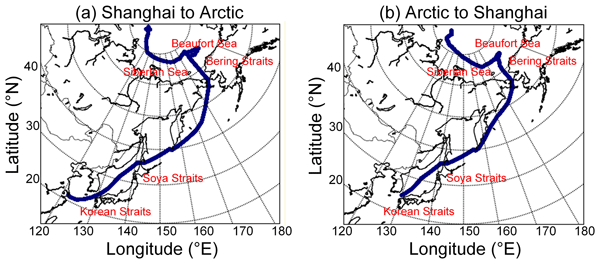
Our study uses ship-based Multi-Axis Differential Optical Absorption Spectroscopy (MAX-DOAS) to validate multi-satellite products (Tropospheric Monitoring Instrument, Geostationary Environmental Monitoring Spectrometer, Global Ozone Monitoring Experiment-2) and identify source mechanisms of BrO (sea ice-coupled photochemistry) and IO (biogenic-driven).

Zhongfeng Pan, Hao Yin, Zhenda Sun, Chongyang Li, Youwen Sun, and Cheng Liu
Atmos. Chem. Phys., 26, 2545–2559, https://doi.org/10.5194/acp-26-2545-2026, https://doi.org/10.5194/acp-26-2545-2026, 2026
Short summary
Short summary
This study examines air pollution in Beijing-Tianjin-Hebei and the Yangtze River Delta from 2015 to 2022. PM2.5 (particulate matter) decreased by 9.1-31.4 μg/m³ and PM10 by 9.8–42.9 μg/m³. Weather factors like humidity, air pressure, and rainfall influenced pollution, with tailored solutions needed for different regions.
Zhenda Sun, Hao Yin, Zhongfeng Pan, Chongyang Li, Xiao Lu, Ke Liu, Youwen Sun, and Cheng Liu
Atmos. Chem. Phys., 25, 6823–6842, https://doi.org/10.5194/acp-25-6823-2025, https://doi.org/10.5194/acp-25-6823-2025, 2025
Short summary
Short summary
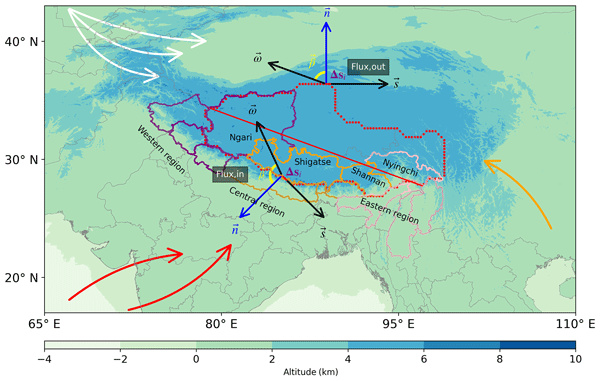
This study investigates the variability and driving forces of transboundary CO transport flux over the Tibetan Plateau from May 2018 to April 2024. During this period, external CO influx increased by 2.86 Tg yr-1, while internal efflux slightly declined by 1.70 Tg yr-1. The rising influx in recent years is likely linked to the rapid increase in CO concentrations from South Asia.
Peiyuan Jiao, Chengzhi Xing, Yikai Li, Xiangguang Ji, Wei Tan, Qihua Li, Haoran Liu, and Cheng Liu
Earth Syst. Sci. Data, 17, 3167–3187, https://doi.org/10.5194/essd-17-3167-2025, https://doi.org/10.5194/essd-17-3167-2025, 2025
Short summary
Short summary
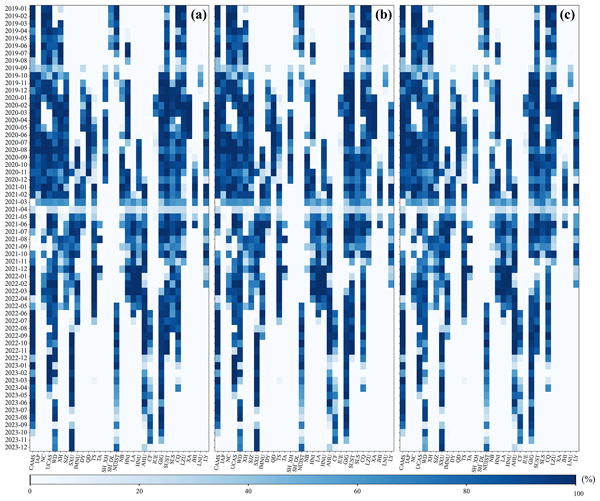
Vertical profile observations are key to understanding regional air pollution but remain scarce due to existing limits. This study presents a high-time-resolution (ca. 15 min) dataset of aerosol, nitrogen dioxide, and formaldehyde vertical profiles from 32 sites in China (2019–2023) using passive remote sensing. It documents vertical distribution, seasonal variations, and diurnal patterns, revealing long-term trends. Data are available at Zenodo under https://doi.org/10.5281/zenodo.15211604.
Chengxin Zhang, Xinhan Niu, Hongyu Wu, Zhipeng Ding, Ka Lok Chan, Jhoon Kim, Thomas Wagner, and Cheng Liu
Atmos. Chem. Phys., 25, 759–770, https://doi.org/10.5194/acp-25-759-2025, https://doi.org/10.5194/acp-25-759-2025, 2025
Short summary
Short summary
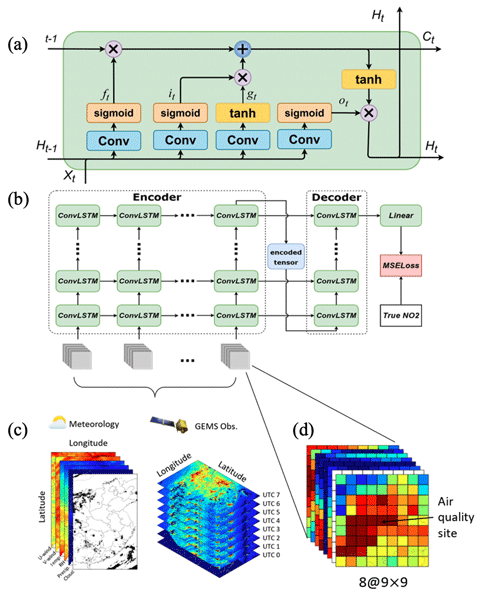
This research utilizes hourly air pollution observations from the world’s first geostationary satellite to develop a spatiotemporal neural network model for full-coverage surface NO2 pollution prediction over the next 24 hours, achieving outstanding forecasting performance and efficacy. These results highlight the profound impact of geostationary satellite observations in advancing air quality forecasting models, thereby contributing to future models for health exposure to air pollution.
Zhuang Wang, Chune Shi, Hao Zhang, Xianguang Ji, Yizhi Zhu, Congzi Xia, Xiaoyun Sun, Xinfeng Lin, Shaowei Yan, Suyao Wang, Yuan Zhou, Chengzhi Xing, Yujia Chen, and Cheng Liu
Atmos. Chem. Phys., 25, 347–366, https://doi.org/10.5194/acp-25-347-2025, https://doi.org/10.5194/acp-25-347-2025, 2025
Short summary
Short summary
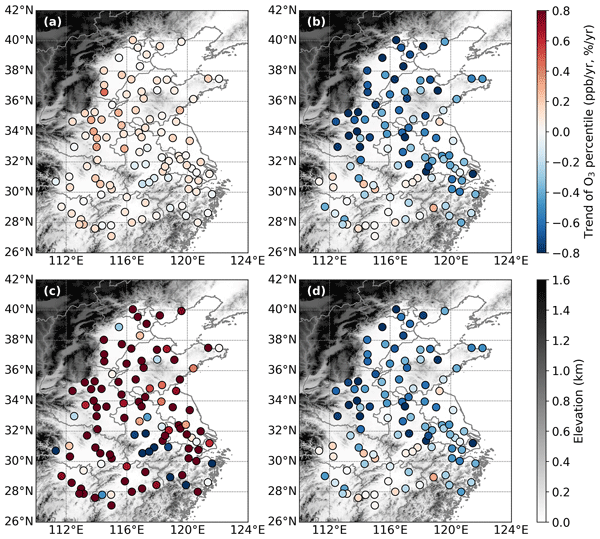
This study attempts to explain the surface ozone background and typical and peak trends in eastern China by combining a large number of ground-based and satellite observations. We found diametrically opposed trends in peak (decreasing) and low (increasing) ozone concentrations. Anthropogenic emissions primarily drive trends in low and peak ozone concentrations in eastern China, though meteorological effects also play a role.
Chengzhi Xing, Cheng Liu, Chunxiang Ye, Jingkai Xue, Hongyu Wu, Xiangguang Ji, Jinping Ou, and Qihou Hu
Atmos. Chem. Phys., 24, 10093–10112, https://doi.org/10.5194/acp-24-10093-2024, https://doi.org/10.5194/acp-24-10093-2024, 2024
Short summary
Short summary
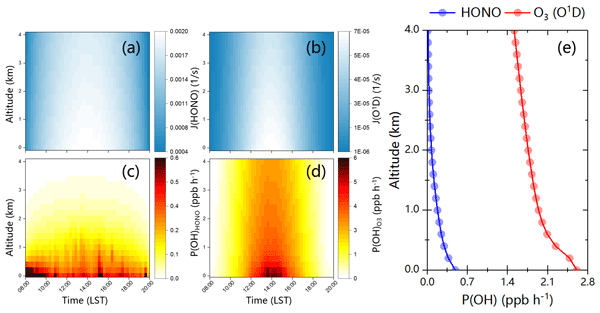
We identified the contributions of ozone (O3) and nitrous acid (HONO) to the production rates of hydroxide (OH) in vertical space on the Tibetan Plateau (TP). A new insight was offered: the contributions of HONO and O3 to the production rates of OH on the TP are even greater than in lower-altitudes areas. This study enriches the understanding of vertical distribution of atmospheric components and explains the strong atmospheric oxidation capacity (AOC) on the TP.
Zhuang Wang, Chune Shi, Hao Zhang, Yujia Chen, Xiyuan Chi, Congzi Xia, Suyao Wang, Yizhi Zhu, Kaidi Zhang, Xintong Chen, Chengzhi Xing, and Cheng Liu
Atmos. Chem. Phys., 23, 14271–14292, https://doi.org/10.5194/acp-23-14271-2023, https://doi.org/10.5194/acp-23-14271-2023, 2023
Short summary
Short summary
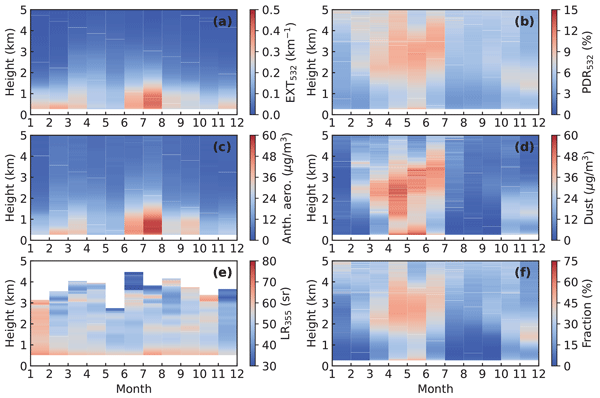
The annual cycle of dust and anthropogenic aerosols' vertical distributions was revealed by polarization Raman lidar in Beijing. Anthropogenic aerosols typically accumulate at the top of the mixing layer (ML) due to the hygroscopic growth of atmospheric particles, and this is most significant in summer. There is no significant relationship between bottom dust mass concentration and ML height, while the dust in the upper air tends to be distributed near the mixing layer.
Chengzhi Xing, Shiqi Xu, Yuhang Song, Cheng Liu, Yuhan Liu, Keding Lu, Wei Tan, Chengxin Zhang, Qihou Hu, Shanshan Wang, Hongyu Wu, and Hua Lin
Atmos. Chem. Phys., 23, 5815–5834, https://doi.org/10.5194/acp-23-5815-2023, https://doi.org/10.5194/acp-23-5815-2023, 2023
Short summary
Short summary
High RH could contribute to the secondary formation of HONO in the sea atmosphere. High temperature could promote the formation of HONO from NO2 heterogeneous reactions in the sea and coastal atmosphere. The aerosol surface plays a more important role during the above process in coastal and sea cases. The generation rate of HONO from the NO2 heterogeneous reaction in the sea cases is larger than that in inland cases in higher atmospheric layers above 600 m.
Yuhang Song, Chengzhi Xing, Cheng Liu, Jinan Lin, Hongyu Wu, Ting Liu, Hua Lin, Chengxin Zhang, Wei Tan, Xiangguang Ji, Haoran Liu, and Qihua Li
Atmos. Chem. Phys., 23, 1803–1824, https://doi.org/10.5194/acp-23-1803-2023, https://doi.org/10.5194/acp-23-1803-2023, 2023
Short summary
Short summary
Using the MAX-DOAS network, we successfully analyzed three typical transport types (regional, dust, and transboundary long-range transport), emphasizing the unique advantages provided by the network in monitoring pollutant transport. We think that our findings provide the public with a thorough understanding of pollutant transport phenomena and a reference for designing collaborative air pollution control strategies.
Xiangyu Zeng, Wei Wang, Cheng Liu, Changgong Shan, Yu Xie, Peng Wu, Qianqian Zhu, Minqiang Zhou, Martine De Mazière, Emmanuel Mahieu, Irene Pardo Cantos, Jamal Makkor, and Alexander Polyakov
Atmos. Meas. Tech., 15, 6739–6754, https://doi.org/10.5194/amt-15-6739-2022, https://doi.org/10.5194/amt-15-6739-2022, 2022
Short summary
Short summary
CFC-11 and CFC-12, which are classified as ozone-depleting substances, also have high global warming potentials. This paper describes obtaining the CFC-11 and CFC-12 total columns from the solar spectra based on ground-based Fourier transform infrared spectroscopy at Hefei, China. The seasonal variation and annual trend of the two gases are analyzed, and then the data are compared with other independent datasets.

Hao Yin, Youwen Sun, Justus Notholt, Mathias Palm, Chunxiang Ye, and Cheng Liu
Atmos. Chem. Phys., 22, 14401–14419, https://doi.org/10.5194/acp-22-14401-2022, https://doi.org/10.5194/acp-22-14401-2022, 2022
Short summary
Short summary
Improved knowledge of the chemistry and drivers of surface ozone over the Qinghai-Tibet Plateau (QTP) is significant for regulatory and control purposes in this high-altitude region in the Himalayas. Our study investigates the processes and drivers of surface ozone anomalies by using machine-learning model-based meteorological normalization methods between 2015 and 2020 in urban areas over the QTP. This study can provide valuable implication for ozone mitigation over the QTP.
Youwen Sun, Hao Yin, Wei Wang, Changgong Shan, Justus Notholt, Mathias Palm, Ke Liu, Zhenyi Chen, and Cheng Liu
Atmos. Meas. Tech., 15, 4819–4834, https://doi.org/10.5194/amt-15-4819-2022, https://doi.org/10.5194/amt-15-4819-2022, 2022
Short summary
Short summary
This study summarizes an overview of the status and perspective of GHG monitoring in China. This study not only improves our understanding with respect to the status, advances, and challenges of GHG monitoring in China but also presents an outlook for further improving GHG monitoring capacity in China.
Bo Li, Cheng Liu, Qihou Hu, Mingzhai Sun, Chengxin Zhang, Shulin Zhang, Yizhi Zhu, Ting Liu, Yike Guo, Gregory R. Carmichael, and Meng Gao
EGUsphere, https://doi.org/10.5194/egusphere-2022-578, https://doi.org/10.5194/egusphere-2022-578, 2022
Preprint archived
Short summary
Short summary
Ambient particles have an important impact on human health, meteorology and climate change. By building a deep spatiotemporal neural network model we have overcome the long-standing limitations and get the full time and space coverage ground PM2.5 concentrations. We open the neural network black box data model by using sensitivity analysis and visualization techniques. This research will help improve health effects studies, climate effects of aerosols, and air quality prediction.
Stefan Noël, Maximilian Reuter, Michael Buchwitz, Jakob Borchardt, Michael Hilker, Oliver Schneising, Heinrich Bovensmann, John P. Burrows, Antonio Di Noia, Robert J. Parker, Hiroshi Suto, Yukio Yoshida, Matthias Buschmann, Nicholas M. Deutscher, Dietrich G. Feist, David W. T. Griffith, Frank Hase, Rigel Kivi, Cheng Liu, Isamu Morino, Justus Notholt, Young-Suk Oh, Hirofumi Ohyama, Christof Petri, David F. Pollard, Markus Rettinger, Coleen Roehl, Constantina Rousogenous, Mahesh Kumar Sha, Kei Shiomi, Kimberly Strong, Ralf Sussmann, Yao Té, Voltaire A. Velazco, Mihalis Vrekoussis, and Thorsten Warneke
Atmos. Meas. Tech., 15, 3401–3437, https://doi.org/10.5194/amt-15-3401-2022, https://doi.org/10.5194/amt-15-3401-2022, 2022
Short summary
Short summary
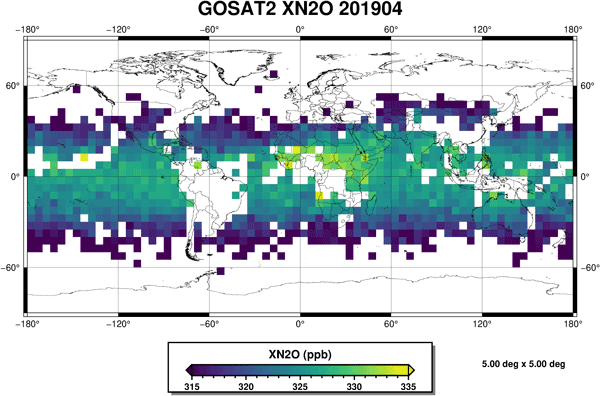
We present a new version (v3) of the GOSAT and GOSAT-2 FOCAL products.
In addition to an increased number of XCO2 data, v3 also includes products for XCH4 (full-physics and proxy), XH2O and the relative ratio of HDO to H2O (δD). For GOSAT-2, we also present first XCO and XN2O results. All FOCAL data products show reasonable spatial distribution and temporal variations and agree well with TCCON. Global XN2O maps show a gradient from the tropics to higher latitudes on the order of 15 ppb.
Chenhong Zhou, Fan Wang, Yike Guo, Cheng Liu, Dongsheng Ji, Yuesi Wang, Xiaobin Xu, Xiao Lu, Yan Wang, Gregory Carmichael, and Meng Gao
Earth Syst. Sci. Data Discuss., https://doi.org/10.5194/essd-2022-187, https://doi.org/10.5194/essd-2022-187, 2022
Manuscript not accepted for further review
Short summary
Short summary
We develop an eXtreme Gradient Boosting (XGBoost) model integrating high-resolution meteorological data, satellite retrievals of trace gases, etc. to provide reconstructed daily ground-level O3 over 2005–2021 in China. It can facilitate climatological, ecological, and health research. The dataset is freely available at Zenodo (https://zenodo.org/record/6507706#.Yo8hKujP13g; Zhou, 2022).
Hao Yin, Youwen Sun, Justus Notholt, Mathias Palm, and Cheng Liu
Atmos. Chem. Phys., 22, 4167–4185, https://doi.org/10.5194/acp-22-4167-2022, https://doi.org/10.5194/acp-22-4167-2022, 2022
Short summary
Short summary
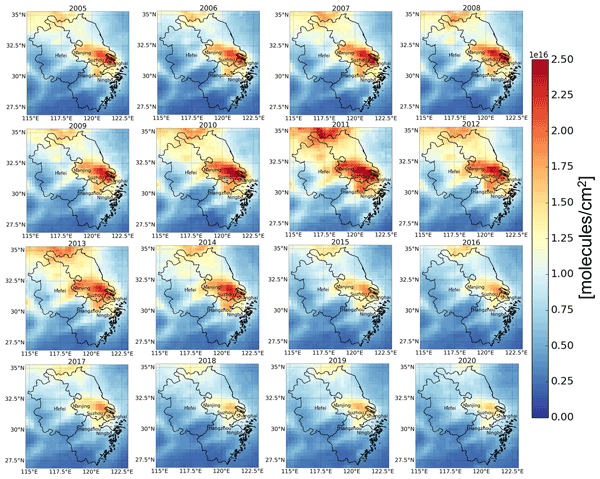
In this study, we quantity the long-term variabilities and the underlying drivers of NO2 from 2005 to 2020 over the Yangtze River Delta (YRD), one of the most densely populated and highly industrialized city clusters in China. We reveal the significant effect of the Action Plan on the Prevention and Control of Air Pollution since 2013 adopted by the Chinese government to reduce NOx pollution. Our study can improve the understanding of pollution control measures on a regional scale.
Gerrit Kuhlmann, Ka Lok Chan, Sebastian Donner, Ying Zhu, Marc Schwaerzel, Steffen Dörner, Jia Chen, Andreas Hueni, Duc Hai Nguyen, Alexander Damm, Annette Schütt, Florian Dietrich, Dominik Brunner, Cheng Liu, Brigitte Buchmann, Thomas Wagner, and Mark Wenig
Atmos. Meas. Tech., 15, 1609–1629, https://doi.org/10.5194/amt-15-1609-2022, https://doi.org/10.5194/amt-15-1609-2022, 2022
Short summary
Short summary
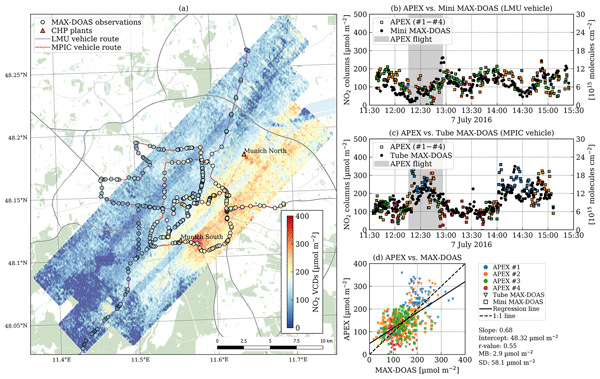
Nitrogen dioxide (NO2) is an air pollutant whose concentration often exceeds air quality guideline values, especially in urban areas. To map the spatial distribution of NO2 in Munich, we conducted the Munich NO2 Imaging Campaign (MuNIC), where NO2 was measured with stationary, mobile, and airborne in situ and remote sensing instruments. The campaign provides a unique dataset that has been used to compare the different instruments and to study the spatial variability of NO2 and its sources.
Thomas E. Taylor, Christopher W. O'Dell, David Crisp, Akhiko Kuze, Hannakaisa Lindqvist, Paul O. Wennberg, Abhishek Chatterjee, Michael Gunson, Annmarie Eldering, Brendan Fisher, Matthäus Kiel, Robert R. Nelson, Aronne Merrelli, Greg Osterman, Frédéric Chevallier, Paul I. Palmer, Liang Feng, Nicholas M. Deutscher, Manvendra K. Dubey, Dietrich G. Feist, Omaira E. García, David W. T. Griffith, Frank Hase, Laura T. Iraci, Rigel Kivi, Cheng Liu, Martine De Mazière, Isamu Morino, Justus Notholt, Young-Suk Oh, Hirofumi Ohyama, David F. Pollard, Markus Rettinger, Matthias Schneider, Coleen M. Roehl, Mahesh Kumar Sha, Kei Shiomi, Kimberly Strong, Ralf Sussmann, Yao Té, Voltaire A. Velazco, Mihalis Vrekoussis, Thorsten Warneke, and Debra Wunch
Earth Syst. Sci. Data, 14, 325–360, https://doi.org/10.5194/essd-14-325-2022, https://doi.org/10.5194/essd-14-325-2022, 2022
Short summary
Short summary
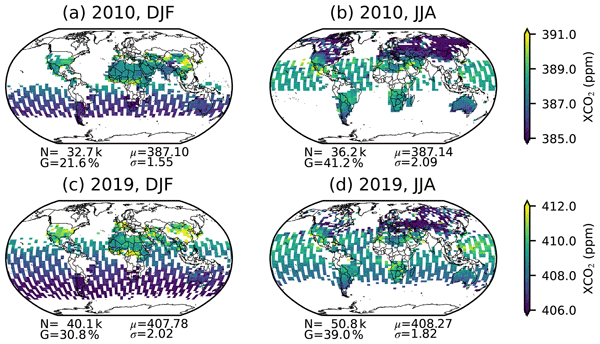
We provide an analysis of an 11-year record of atmospheric carbon dioxide (CO2) concentrations derived using an optimal estimation retrieval algorithm on measurements made by the GOSAT satellite. The new product (version 9) shows improvement over the previous version (v7.3) as evaluated against independent estimates of CO2 from ground-based sensors and atmospheric inversion systems. We also compare the new GOSAT CO2 values to collocated estimates from NASA's Orbiting Carbon Observatory-2.
Youwen Sun, Hao Yin, Xiao Lu, Justus Notholt, Mathias Palm, Cheng Liu, Yuan Tian, and Bo Zheng
Atmos. Chem. Phys., 21, 18589–18608, https://doi.org/10.5194/acp-21-18589-2021, https://doi.org/10.5194/acp-21-18589-2021, 2021
Short summary
Short summary
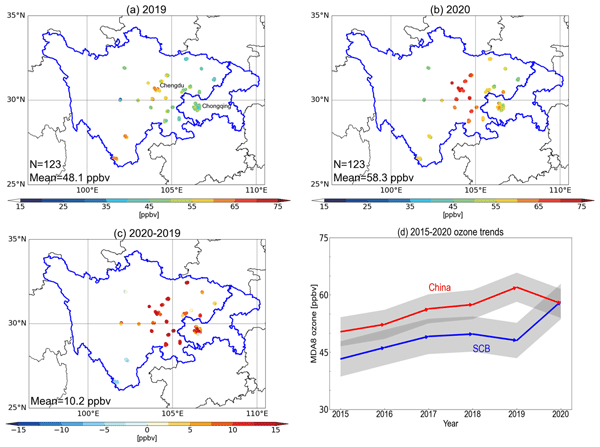
This study uses high-resolution nested-grid GEOS-Chem simulation, the eXtreme Gradient Boosting (XGBoost) machine learning method, and the exposure–response relationship to determine the drivers and evaluate the health risks of the unexpected surface O3 enhancements over the Sichuan Basin in 2020. These unexpected O3 enhancements were induced by meteorological anomalies and caused dramatically high health risks.
Chengzhi Xing, Cheng Liu, Hongyu Wu, Jinan Lin, Fan Wang, Shuntian Wang, and Meng Gao
Earth Syst. Sci. Data, 13, 4897–4912, https://doi.org/10.5194/essd-13-4897-2021, https://doi.org/10.5194/essd-13-4897-2021, 2021
Short summary
Short summary
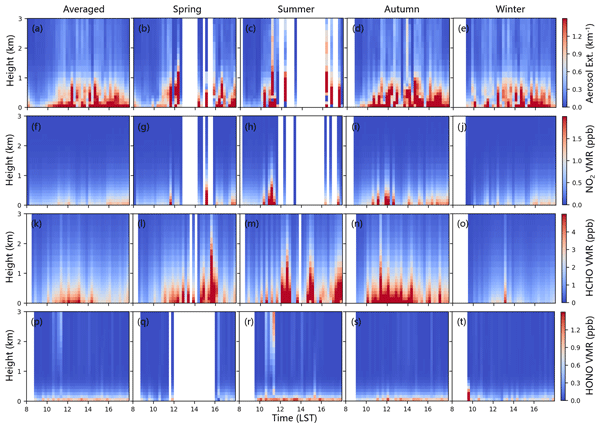
Observations of atmospheric composition, especially vertical profile observations, remain sparse and rare on the Tibetan Plateau (TP), due to extremely high altitude, topographical heterogeneity and the grinding environment. This paper introduces a high-time-resolution (~ 15 min) vertical profile observational dataset of atmospheric composition (aerosols, NO2, HCHO and HONO) on the TP for more than 1 year (2017–2019) using a passive remote sensing technique.
Mingshuai Zhang, Chun Zhao, Yuhan Yang, Qiuyan Du, Yonglin Shen, Shengfu Lin, Dasa Gu, Wenjing Su, and Cheng Liu
Geosci. Model Dev., 14, 6155–6175, https://doi.org/10.5194/gmd-14-6155-2021, https://doi.org/10.5194/gmd-14-6155-2021, 2021
Short summary
Short summary
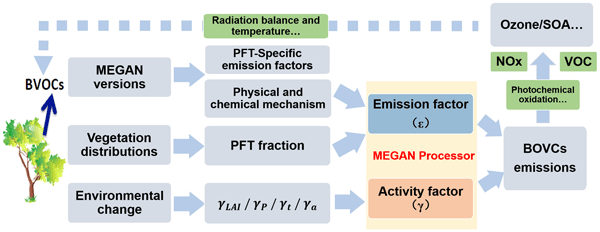
Biogenic volatile organic compounds (BVOCs) can influence atmospheric chemistry and secondary pollutant formation. This study examines the performance of different versions of the Model of Emissions of Gases and Aerosols from Nature (MEGAN) in modeling BVOCs and ozone and their sensitivities to vegetation distributions over eastern China. The results suggest more accurate vegetation distribution and measurements of BVOC emission fluxes are needed to reduce the uncertainties.
Cited articles
Aliwell, S. R., Van Roozendael, M., Johnston, P. V., Richter, A., Wagner, T., Arlander, D. W., Burrows, J. P., Fish, D. J., Jones, R. L., Tørnkvist, K. K., Lambert, J.-C., Pfeilsticker, K., and Pundt, I.: Analysis for BrO in zenith-sky spectra: An intercomparison exercise for analysis improvement, J. Geophys. Res.-Atmos., 107, ACH 10-1–ACH 10-20, https://doi.org/10.1029/2001JD000329, 2002.
Ancellet, G., Viatte, C., Boynard, A., Ravetta, F., Pelon, J., Cailteau-Fischbach, C., Genau, P., Capo, J., Roy, A., and Nédélec, P.: Analysis of the day-to-day variability of ozone vertical profiles in the lower troposphere during the 2022 Paris ACROSS campaign, Atmos. Chem. Phys., 24, 12963–12983, https://doi.org/10.5194/acp-24-12963-2024, 2024.
Andersen, S. T., Carpenter, L. J., Reed, C., Lee, J. D., Chance, R., Sherwen, T., Vaughan, A. R., Stewart, J., Edwards, P. M., Bloss, W. J., Sommariva, R., Crilley, L. R., Nott, G. J., Neves, L., Read, K., Heard, D. E., Seakins, P. W., Whalley, L. K., Boustead, G. A., Fleming, L. T., Stone, D., and Fomba, K. W.: Extensive field evidence for the release of HONO from the photolysis of nitrate aerosols, Sci. Adv., 9, eadd6266, https://doi.org/10.1126/sciadv.add6266, 2023.
Anon: Systematic Evaluation of Four Satellite AOD Datasets for Estimating PM2.5 Using a Random Forest Approach, Remote Sens., 15, 2064–2064, https://doi.org/10.3390/rs15082064, 2023.
Aumont, B., Chervier, F., and Laval, S.: Contribution of HONO sources to the NOx/HOx/O3 chemistry in the polluted boundary layer, Atmos. Environ., 37, 487–498, https://doi.org/10.1016/S1352-2310(02)00920-2, 2003.
Chambers, S. D., Guérette, E.-A., Monk, K., Griffiths, A. D., Zhang, Y., Duc, H., Cope, M., Emmerson, K. M., Chang, L. T., Silver, J. D., Utembe, S., Crawford, J., Williams, A. G., and Keywood, M.: Skill-Testing Chemical Transport Models across Contrasting Atmospheric Mixing States Using Radon-222, Atmosphere, 10, 25, https://doi.org/10.3390/atmos10010025, 2019.
Chen, Z., Xie, Y., Liu, J., Shen, L., Cheng, X., Han, H., Yang, M., Shen, Y., Zhao, T., and Hu, J.: Distinct seasonality in vertical variations of tropospheric ozone over coastal regions of southern China, Sci. Total Environ., 874, 162423, https://doi.org/10.1016/j.scitotenv.2023.162423, 2023.
Chen, Z., Liu, R., Wu, S., Xu, J., Wu, Y., and Qi, S.: Diurnal variation characteristics and meteorological causes of autumn ozone in the Pearl River Delta, China, Sci. Total Environ., 908, 168469, https://doi.org/10.1016/j.scitotenv.2023.168469, 2024.
Couillard, M. H., Schwab, M. J., Schwab, J. J., Lu, C.-H. (S.), Joseph, E., Stutsrim, B., Shrestha, B., Zhang, J., Knepp, T. N., and Gronoff, G. P.: Vertical Profiles of Ozone Concentrations in the Lower Troposphere Downwind of New York City During LISTOS 2018–2019, J. Geophys. Res.-Atmos., 126, e2021JD035108, https://doi.org/10.1029/2021JD035108, 2021.
Crilley, L. R., Kramer, L., Pope, F. D., Whalley, L. K., Cryer, D. R., Heard, D. E., Lee, J. D., Reed, C., and Bloss, W. J.: On the interpretation of in situ HONO observations via photochemical steady state, Faraday Discuss., 189, 191–212, https://doi.org/10.1039/C5FD00224A, 2016.
David, L. M. and Nair, P. R.: Diurnal and seasonal variability of surface ozone and NOx at a tropical coastal site: Association with mesoscale and synoptic meteorological conditions, J. Geophys. Res.-Atmos., 116, https://doi.org/10.1029/2010JD015076, 2011.
Dewan, S. and Lakhani, A.: Tropospheric ozone and its natural precursors impacted by climatic changes in emission and dynamics, Front. Environ. Sci., 10, https://doi.org/10.3389/fenvs.2022.1007942, 2022.
Donzelli, G. and Suarez-Varela, M. M.: Tropospheric Ozone: A Critical Review of the Literature on Emissions, Exposure, and Health Effects, Atmosphere, 15, 779, https://doi.org/10.3390/atmos15070779, 2024.
Elshorbany, Y., Barnes, I., Becker, K., Kleffmann, J., and Wiesen, P.: Sources and cycling of tropospheric hydroxyl radicals – An overview, USF St. Petersburg Campus Faculty Publications, https://doi.org/10.1524/zpch.2010.6136, 2010.
Fardilah, R. D., Turyanti, A., Pangestu, L. A., Dominica, M. V., and Perdinan: Systematic Literature Review on Ozone Dispersion Correlated with Diurnal Concentration Pattern in Urban and Rural Areas, Agromet, 37, 77–90, https://doi.org/10.29244/j.agromet.37.2.77-90, 2023.
Fleischmann, O. C., Hartmann, M., Burrows, J. P., and Orphal, J.: New ultraviolet absorption cross-sections of BrO at atmospheric temperatures measured by time-windowing Fourier transform spectroscopy, J. Photochem. Photobiol. A, 168, 117–132, https://doi.org/10.1016/j.jphotochem.2004.03.026, 2004.
Garcia-Nieto, D., Benavent, N., and Saiz-Lopez, A.: Measurements of atmospheric HONO vertical distribution and temporal evolution in Madrid (Spain) using the MAX-DOAS technique, Sci. Total Environ., 643, 957–966, https://doi.org/10.1016/j.scitotenv.2018.06.180, 2018b.
Gu, R., Shen, H., Xue, L., Wang, T., Gao, J., Li, H., Liang, Y., Xia, M., Yu, C., Liu, Y., and Wang, W.: Investigating the sources of atmospheric nitrous acid (HONO) in the megacity of Beijing, China, Sci. Total Environ., 812, 152270, https://doi.org/10.1016/j.scitotenv.2021.152270, 2022.
Guo, J., Zhang, X., Gao, Y., Wang, Z., Zhang, M., Xue, W., Herrmann, H., Brasseur, G. P., Wang, T., and Wang, Z.: Evolution of Ozone Pollution in China: What Track Will It Follow?, Environ. Sci. Technol., 57, 109–117, https://doi.org/10.1021/acs.est.2c08205, 2023.
Guo, P., Su, Y., Sun, X., Liu, C., Cui, B., Xu, X., Ouyang, Z., and Wang, X.: Urban–Rural Comparisons of Biogenic Volatile Organic Compounds and Ground-Level Ozone in Beijing, Forests, 15, 508, https://doi.org/10.3390/f15030508, 2024a.
Guo, W., Yang, Y., Zhang, J., Han, K., Yang, Y., Chen, Q., Li, S., and Zhu, Y.: Effects of valley topography on ozone pollution in the Lanzhou valley: A numerical case study, Environ. Pollut., 363, 125225, https://doi.org/10.1016/j.envpol.2024.125225, 2024b.
Hao, Q., Jiang, N., Zhang, R., Yang, L., and Li, S.: Characteristics, sources, and reactions of nitrous acid during winter at an urban site in the Central Plains Economic Region in China, Atmos. Chem. Phys., 20, 7087–7102, https://doi.org/10.5194/acp-20-7087-2020, 2020.
He, C., Wu, Q., Li, B., Liu, J., Gong, X., and Zhang, L.: Surface ozone pollution in China: Trends, exposure risks, and drivers, Front. Publ. Health, 11, https://doi.org/10.3389/fpubh.2023.1131753, 2023a.
He, G., He, C., Wang, H., Lu, X., Pei, C., Qiu, X., Liu, C., Wang, Y., Liu, N., Zhang, J., Lei, L., Liu, Y., Wang, H., Deng, T., Fan, Q., and Fan, S.: Nighttime ozone in the lower boundary layer: insights from 3-year tower-based measurements in South China and regional air quality modeling, Atmos. Chem. Phys., 23, 13107–13124, https://doi.org/10.5194/acp-23-13107-2023, 2023b.
He, S., Wang, S., Zhang, S., Zhu, J., Sun, Z., Xue, R., and Zhou, B.: Vertical distributions of atmospheric HONO and the corresponding OH radical production by photolysis at the suburb area of Shanghai, China, Sci. Total Environ., 858, 159703, https://doi.org/10.1016/j.scitotenv.2022.159703, 2023c.
He, Y., Wang, H., Wang, H., Xu, X., Li, Y., and Fan, S.: Meteorology and topographic influences on nocturnal ozone increase during the summertime over Shaoguan, China, Atmos. Environ., 256, 118459, https://doi.org/10.1016/j.atmosenv.2021.118459, 2021.
Hong, Q., Zhu, L., Xing, C., Hu, Q., Lin, H., Zhang, C., Zhao, C., Liu, T., Su, W., and Liu, C.: Inferring vertical variability and diurnal evolution of O3 formation sensitivity based on the vertical distribution of summertime HCHO and NO2 in Guangzhou, China, Sci. Total Environ., 827, 154045, https://doi.org/10.1016/j.scitotenv.2022.154045, 2022.
Hu, Q., Ji, X., Hong, Q., Li, J., Li, Q., Ou, J., Liu, H., Xing, C., Tan, W., Chen, J., Chang, B., and Liu, C.: Vertical Evolution of Ozone Formation Sensitivity Based on Synchronous Vertical Observations of Ozone and Proxies for Its Precursors: Implications for Ozone Pollution Prevention Strategies, Environ. Sci. Technol., 58, 4291–4301, https://doi.org/10.1021/acs.est.4c00637, 2024.
Itahashi, S., Mathur, R., Hogrefe, C., and Zhang, Y.: Modeling stratospheric intrusion and trans-Pacific transport on tropospheric ozone using hemispheric CMAQ during April 2010 – Part 1: Model evaluation and air mass characterization for stratosphere–troposphere transport, Atmos. Chem. Phys., 20, 3373–3396, https://doi.org/10.5194/acp-20-3373-2020, 2020.
Ji, X., Liu, C., Wang, Y., Hu, Q., Lin, H., Zhao, F., Xing, C., Tang, G., Zhang, J., and Wagner, T.: Ozone profiles without blind area retrieved from MAX-DOAS measurements and comprehensive validation with multi-platform observations, Remote Sens. Environ., 284, 113339, https://doi.org/10.1016/j.rse.2022.113339, 2023.
Jiao, P., Xing, C., Li, Y., Ji, X., Tan, W., Li, Q., Liu, H., and Liu, C.: A dataset of ground-based vertical profile observations of aerosol, NO2, and HCHO from the hyperspectral vertical remote sensing network in China (2019–2023), Earth Syst. Sci. Data, 17, 3167–3187, https://doi.org/10.5194/essd-17-3167-2025, 2025.
Johnson, M. S., Rozanov, A., Weber, M., Mettig, N., Sullivan, J., Newchurch, M. J., Kuang, S., Leblanc, T., Chouza, F., Berkoff, T. A., Gronoff, G., Strawbridge, K. B., Alvarez, R. J., Langford, A. O., Senff, C. J., Kirgis, G., McCarty, B., and Twigg, L.: TOLNet validation of satellite ozone profiles in the troposphere: impact of retrieval wavelengths, Atmos. Meas. Tech., 17, 2559–2582, https://doi.org/10.5194/amt-17-2559-2024, 2024.
Kim, H., Park, R. J., Hong, S.-Y., Park, D.-H., Kim, S.-W., Oak, Y. J., Feng, X., Lin, H., and Fu, T.-M.: A mixed layer height parameterization in a 3-D chemical transport model: Implications for gas and aerosol simulations, Sci. Total Environ., 955, 176838, https://doi.org/10.1016/j.scitotenv.2024.176838, 2024.
Li, K., Jacob, D. J., Shen, L., Lu, X., De Smedt, I., and Liao, H.: Increases in surface ozone pollution in China from 2013 to 2019: anthropogenic and meteorological influences, Atmos. Chem. Phys., 20, 11423–11433, https://doi.org/10.5194/acp-20-11423-2020, 2020.
Li, K., Tan, R., Qiao, W., Lee, T., Wang, Y., Zhang, D., Tang, M., Zhao, W., Gu, Y., Fan, S., Zhang, J., Lyu, X., Xue, L., Xu, J., Ma, Z., Latif, M. T., Amnuaylojaroen, T., Gil, J., Lee, M.-H., Bak, J., Kim, J., Liao, H., Kanaya, Y., Lu, X., Nagashima, T., and Koo, J.-H.: Surface and tropospheric ozone over East Asia and Southeast Asia from observations: distributions, trends, and variability, Atmos. Chem. Phys., 25, 11575–11596, https://doi.org/10.5194/acp-25-11575-2025, 2025a.
Li, M., McDonald, B. C., McKeen, S. A., Eskes, H., Levelt, P., Francoeur, C., Harkins, C., He, J., Barth, M., Henze, D. K., Bela, M. M., Trainer, M., de Gouw, J. A., and Frost, G. J.: Assessment of Updated Fuel-Based Emissions Inventories Over the Contiguous United States Using TROPOMI NO2 Retrievals, J. Geophys. Res.-Atmos., 126, e2021JD035484, https://doi.org/10.1029/2021JD035484, 2021.
Li, Y., Xing, C., Peng, H., Jiao, P., Zhang, Q., Liu, C., Sun, Z., Tan, W., and Liu, C.: Vertical Differences in NO2-to-HONO Heterogeneous Conversion and HONO-Driven OH Production over Inland, Coastal, and Island Regions, Environ. Sci. Technol., 59, 26020–26030, https://doi.org/10.1021/acs.est.5c10318, 2025b.
Liang, Y., Zha, Q., Wang, W., Cui, L., Lui, K. H., Ho, K. F., Wang, Z., Lee, S., and Wang, T.: Revisiting nitrous acid (HONO) emission from on-road vehicles: A tunnel study with a mixed fleet, J. Air Waste Manage. Assoc., 67, 797–805, https://doi.org/10.1080/10962247.2017.1293573, 2017.
Liao, Z., Pan, Y., Ma, P., Jia, X., Cheng, Z., Wang, Q., Dou, Y., Zhao, X., Zhang, J., and Quan, J.: Meteorological and chemical controls on surface ozone diurnal variability in Beijing: A clustering-based perspective, Atmos. Environ., 295, 119566, https://doi.org/10.1016/j.atmosenv.2022.119566, 2023.
Liao, Z., Gao, M., Zhang, J., Sun, J., Quan, J., Jia, X., Pan, Y., and Fan, S.: Mixing-layer-height-referenced ozone vertical distribution in the lower troposphere of Chinese megacities: stratification, classification, and meteorological and photochemical mechanisms, Atmos. Chem. Phys., 24, 3541–3557, https://doi.org/10.5194/acp-24-3541-2024, 2024.
Liao, Z., Zhang, J., Gao, M., and Ma, Z.: Widespread stratospheric intrusion influence on summer ozone pollution over China revealed by multi-site ozonesonde and validated EAC4 reanalysis, Atmos. Chem. Phys., 25, 14865–14877, https://doi.org/10.5194/acp-25-14865-2025, 2025.
Lin, H., Xing, C., Hong, Q., Liu, C., Ji, X., Liu, T., Lin, J., Lu, C., Tan, W., Li, Q., and Liu, H.: Diagnosis of Ozone Formation Sensitivities in Different Height Layers via MAX-DOAS Observations in Guangzhou, J. Geophys. Res.-Atmos., 127, e2022JD036803, https://doi.org/10.1029/2022JD036803, 2022.
Liu, C., Xing, C., Hu, Q., Li, Q., Liu, H., Hong, Q., Tan, W., Ji, X., Lin, H., Lu, C., Lin, J., Liu, H., Wei, S., Chen, J., Yang, K., Wang, S., Liu, T., and Chen, Y.: Ground-Based Hyperspectral Stereoscopic Remote Sensing Network: A Promising Strategy to Learn Coordinated Control of O3 and PM2.5 over China, Engineering, 19, 71–83, https://doi.org/10.1016/j.eng.2021.02.019, 2022a.
Liu, H., Han, X., Tang, G., Zhang, J., Xia, X., Zhang, M., and Meng, L.: Model analysis of vertical exchange of boundary layer ozone and its impact on surface air quality over the North China Plain, Sci. Total Environ., 821, 153436, https://doi.org/10.1016/j.scitotenv.2022.153436, 2022b.
Liu, P., Xue, C., Ye, C., Liu, C., Zhang, C., Wang, J., Zhang, Y., Liu, J., and Mu, Y.: The Lack of HONO Measurement May Affect the Accurate Diagnosis of Ozone Production Sensitivity, ACS Environ. Au, 3, 18–23, https://doi.org/10.1021/acsenvironau.2c00048, 2023a.
Liu, X., Yi, G., Zhou, X., Zhang, T., Bie, X., Li, J., and Tan, H.: Spatio-temporal variations of PM2.5 and O3 in China during 2013–2021: Impact factor analysis, Environ. Pollut., 334, 122189, https://doi.org/10.1016/j.envpol.2023.122189, 2023b.
Lu, Y., Kong, L., Shen, J., Liu, B., An, Y., Wang, Y., Tan, J., and Wang, L.: Characteristics and influencing factors of ambient ozone pollution in Hangzhou in the relative humidity range with high ozone levels, Atmos. Pollut. Res., 16, 102648, https://doi.org/10.1016/j.apr.2025.102648, 2025.
Lyu, Y., Xu, H., Wu, H., Han, F., Lv, F., Kang, A., and Pang, X.: Spatiotemporal variations of PM2.5 and ozone in urban agglomerations of China and meteorological drivers for ozone using explainable machine learning, Environ. Pollut., 365, 125380, https://doi.org/10.1016/j.envpol.2024.125380, 2025.
Meng, F., Qin, M., Tang, K., Duan, J., Fang, W., Liang, S., Ye, K., Xie, P., Sun, Y., Xie, C., Ye, C., Fu, P., Liu, J., and Liu, W.: High-resolution vertical distribution and sources of HONO and NO2 in the nocturnal boundary layer in urban Beijing, China, Atmos. Chem. Phys., 20, 5071–5092, https://doi.org/10.5194/acp-20-5071-2020, 2020.
Monks, P. S., Archibald, A. T., Colette, A., Cooper, O., Coyle, M., Derwent, R., Fowler, D., Granier, C., Law, K. S., Mills, G. E., Stevenson, D. S., Tarasova, O., Thouret, V., von Schneidemesser, E., Sommariva, R., Wild, O., and Williams, M. L.: Tropospheric ozone and its precursors from the urban to the global scale from air quality to short-lived climate forcer, Atmos. Chem. Phys., 15, 8889–8973, https://doi.org/10.5194/acp-15-8889-2015, 2015.
Orphal, J. and Chance, K.: Ultraviolet and visible absorption cross-sections for HITRAN, J. Quant. Spectrosc. Ra., 82, 491–504, https://doi.org/10.1016/S0022-4073(03)00173-0, 2003.
Park, S., Son, S.-W., Jung, M.-I., Park, J., and Park, S. S.: Evaluation of tropospheric ozone reanalyses with independent ozonesonde observations in East Asia, Geosci. Lett., 7, 12, https://doi.org/10.1186/s40562-020-00161-9, 2020.
Qiao, X., Guo, H., Wang, P., Tang, Y., Ying, Q., Zhao, X., Deng, W., and Zhang, H.: Fine Particulate Matter and Ozone Pollution in the 18 Cities of the Sichuan Basin in Southwestern China: Model Performance and Characteristics, Aerosol Air Qual. Res., 19, 2308–2319, https://doi.org/10.4209/aaqr.2019.05.0235, 2019.
Qiu, Y., Li, X., Chai, W., Liu, Y., Song, M., Tian, X., Zou, Q., Lou, W., Zhang, W., Li, J., and Zhang, Y.: Insights into ozone pollution control in urban areas by decoupling meteorological factors based on machine learning, Atmos. Chem. Phys., 25, 1749–1763, https://doi.org/10.5194/acp-25-1749-2025, 2025.
Qu, H., Wang, Y., Zhang, R., and Li, J.: Extending Ozone-Precursor Relationships in China From Peak Concentration to Peak Time, J. Geophys. Res.-Atmos., 125, e2020JD033670, https://doi.org/10.1029/2020JD033670, 2020.
Ryan, R. G., Rhodes, S., Tully, M., Wilson, S., Jones, N., Frieß, U., and Schofield, R.: Daytime HONO, NO2 and aerosol distributions from MAX-DOAS observations in Melbourne, Atmos. Chem. Phys., 18, 13969–13985, https://doi.org/10.5194/acp-18-13969-2018, 2018.
Sekiya, T., Emili, E., Miyazaki, K., Inness, A., Qu, Z., Pierce, R. B., Jones, D., Worden, H., Cheng, W. Y. Y., Huijnen, V., and Koren, G.: Assessing the relative impacts of satellite ozone and its precursor observations to improve global tropospheric ozone analysis using multiple chemical reanalysis systems, Atmos. Chem. Phys., 25, 2243–2268, https://doi.org/10.5194/acp-25-2243-2025, 2025.
Serdyuchenko, A., Gorshelev, V., Weber, M., Chehade, W., and Burrows, J. P.: High spectral resolution ozone absorption cross-sections – Part 2: Temperature dependence, Atmos. Meas. Tech., 7, 625–636, https://doi.org/10.5194/amt-7-625-2014, 2014.
Sharma, B. R., Kuttippurath, J., and Gopikrishnan, G. S.: Tropospheric ozone as an atmospheric pollutant and short-lived climate forcer in the Third Pole, Chemosphere, 380, 144474, https://doi.org/10.1016/j.chemosphere.2025.144474, 2025.
Shi, Y., Zeng, Q., Liu, L., Huo, J., Zhang, Z., Ding, W., and Hu, F.: Observed Evidence That Subsidence Process Stabilizes the Boundary Layer and Increases the Ground Concentration of Secondary Pollutants, J. Geophys. Res.-Atmos., 127, e2021JD035244, https://doi.org/10.1029/2021JD035244, 2022.
Shu, Z., Zhao, T., Chen, Y., Liu, Y., Yang, F., Jiang, Y., He, G., Yang, Q., and Zhang, Y.: Terrain effect on atmospheric process in seasonal ozone variation over the Sichuan Basin, Southwest China, Environ. Pollut., 338, 122622, https://doi.org/10.1016/j.envpol.2023.122622, 2023.
Song, M., Zhao, X., Liu, P., Mu, J., He, G., Zhang, C., Tong, S., Xue, C., Zhao, X., Ge, M., and Mu, Y.: Atmospheric NOx oxidation as major sources for nitrous acid (HONO), npj Clim. Atmos. Sci., 6, 30, https://doi.org/10.1038/s41612-023-00357-8, 2023a.
Song, X., Li, X.-B., Yuan, B., He, X., Chen, Y., Wang, S., Huangfu, Y., Peng, Y., Zhang, C., Liu, A., Yang, H., Liu, C., Li, J., and Shao, M.: Elucidating key factors in regulating budgets of ozone and its precursors in atmospheric boundary layer, npj Clim. Atmos. Sci., 7, 262, https://doi.org/10.1038/s41612-024-00818-8, 2024.
Song, Y., Xing, C., Liu, C., Lin, J., Wu, H., Liu, T., Lin, H., Zhang, C., Tan, W., Ji, X., Liu, H., and Li, Q.: Evaluation of transport processes over North China Plain and Yangtze River Delta using MAX-DOAS observations, Atmos. Chem. Phys., 23, 1803–1824, https://doi.org/10.5194/acp-23-1803-2023, 2023b.
Song, Y., Wang, P., Yang, Y., Tang, J., and Liao, H.: Meteorological conditions and physicochemical processes amplifying ozone pollution during heatwaves in major city clusters of China, Atmos. Res., 330, 108580, https://doi.org/10.1016/j.atmosres.2025.108580, 2026.
Spataro, F. and Ianniello, A.: Sources of atmospheric nitrous acid: State of the science, current research needs, and future prospects, J. Air Waste Manage. Assoc., 64, 1232–1250, https://doi.org/10.1080/10962247.2014.952846, 2014.
Spurr, R. J. D.: VLIDORT: A linearized pseudo-spherical vector discrete ordinate radiative transfer code for forward model and retrieval studies in multilayer multiple scattering media, J. Quant. Spectrosc. Ra., 102, 316–342, https://doi.org/10.1016/j.jqsrt.2006.05.005, 2006.
Stutz, J., Kim, E. S., Platt, U., Bruno, P., Perrino, C., and Febo, A.: UV-visible absorption cross sections of nitrous acid, J. Geophys. Res.-Atmos., 105, 14585–14592, https://doi.org/10.1029/2000JD900003, 2000.
Su, W., Liu, C., Hu, Q., Fan, G., Xie, Z., Huang, X., Zhang, T., Chen, Z., Dong, Y., Ji, X., Liu, H., Wang, Z., and Liu, J.: Characterization of ozone in the lower troposphere during the 2016 G20 conference in Hangzhou, Sci. Rep., 7, 17368, https://doi.org/10.1038/s41598-017-17646-x, 2017.
Tang, Y., An, J., Wang, F., Li, Y., Qu, Y., Chen, Y., and Lin, J.: Impacts of an unknown daytime HONO source on the mixing ratio and budget of HONO, and hydroxyl, hydroperoxyl, and organic peroxy radicals, in the coastal regions of China, Atmos. Chem. Phys., 15, 9381–9398, https://doi.org/10.5194/acp-15-9381-2015, 2015.
Thalman, R. and Volkamer, R.: Temperature dependent absorption cross-sections of O2–O2 collision pairs between 340 and 630 nm and at atmospherically relevant pressure, Phys. Chem. Chem. Phys., 15, 15371, https://doi.org/10.1039/c3cp50968k, 2013.
Thürkow, M., Schaap, M., Kranenburg, R., Pfäfflin, F., Neunhäuserer, L., Wolke, R., Heinold, B., Stoll, J., Lupaşcu, A., Nordmann, S., Minkos, A., and Butler, T.: Dynamic evaluation of modeled ozone concentrations in Germany with four chemistry transport models, Sci. Total Environ., 906, 167665, https://doi.org/10.1016/j.scitotenv.2023.167665, 2024.
Torres, O., Jethva, H., Ahn, C., Jaross, G., and Loyola, D. G.: TROPOMI aerosol products: evaluation and observations of synoptic-scale carbonaceous aerosol plumes during 2018–2020, Atmos. Meas. Tech., 13, 6789–6806, https://doi.org/10.5194/amt-13-6789-2020, 2020.
Vandaele, A. C., Hermans, C., Simon, P. C., Carleer, M., Colin, R., Fally, S., Mérienne, M. F., Jenouvrier, A., and Coquart, B.: Measurements of the NO2 absorption cross-section from 42 000 cm−1 to 10 000 cm−1 (238–1000 nm) at 220 K and 294 K, J. Quant. Spectrosc. Ra., 59, 171–184, https://doi.org/10.1016/S0022-4073(97)00168-4, 1998.
Wang, N., Du, Y., Chen, D., Meng, H., Chen, X., Zhou, L., Shi, G., Zhan, Y., Feng, M., Li, W., Chen, M., Li, Z., and Yang, F.: Spatial disparities of ozone pollution in the Sichuan Basin spurred by extreme, hot weather, Atmos. Chem. Phys., 24, 3029–3042, https://doi.org/10.5194/acp-24-3029-2024, 2024a.
Wang, R., Shen, H., Zeng, C., Chen, J., Wang, Y., and Li, Y.: A global land daily 10-km-resolution surface ozone dataset from 2013–2022, Sci. Data, 12, 1710, https://doi.org/10.1038/s41597-025-05990-x, 2025a.
Wang, W.-N., Cheng, T.-H., Gu, X.-F., Chen, H., Guo, H., Wang, Y., Bao, F.-W., Shi, S.-Y., Xu, B.-R., Zuo, X., Meng, C., and Zhang, X.-C.: Assessing Spatial and Temporal Patterns of Observed Ground-level Ozone in China, Sci. Rep., 7, 3651, https://doi.org/10.1038/s41598-017-03929-w, 2017.
Wang, X., Zhang, H., Hong, X., Xiang, Y., Wang, S., Zhang, T., Qin, Z., and Ou, J.: Vertical profiles and regional transport of ozone in typical area of Yangtze-Huaihe River Basin during the autumn base on multiple lidars, Atmos. Pollut. Res., 15, 101983, https://doi.org/10.1016/j.apr.2023.101983, 2024b.
Wang, Y., Puīte, J., Wagner, T., Donner, S., Beirle, S., Hilboll, A., Vrekoussis, M., Richter, A., Apituley, A., Piters, A., Allaart, M., Eskes, H., Frumau, A., Van Roozendael, M., Lampel, J., Platt, U., Schmitt, S., Swart, D., and Vonk, J.: Vertical Profiles of Tropospheric Ozone From MAX-DOAS Measurements During the CINDI-2 Campaign: Part 1 – Development of a New Retrieval Algorithm, J. Geophys. Res.-Atmos., 123, 10637–10670, https://doi.org/10.1029/2018JD028647, 2018.
Wang, Y., Dörner, S., Donner, S., Böhnke, S., De Smedt, I., Dickerson, R. R., Dong, Z., He, H., Li, Z., Li, Z., Li, D., Liu, D., Ren, X., Theys, N., Wang, Y., Wang, Y., Wang, Z., Xu, H., Xu, J., and Wagner, T.: Vertical profiles of NO2, SO2, HONO, HCHO, CHOCHO and aerosols derived from MAX-DOAS measurements at a rural site in the central western North China Plain and their relation to emission sources and effects of regional transport, Atmos. Chem. Phys., 19, 5417–5449, https://doi.org/10.5194/acp-19-5417-2019, 2019.
Wang, Y., Gao, W., Wang, S., Song, T., Gong, Z., Ji, D., Wang, L., Liu, Z., Tang, G., Huo, Y., Tian, S., Li, J., Li, M., Yang, Y., Chu, B., Petäjä, T., Kerminen, V.-M., He, H., Hao, J., Kulmala, M., Wang, Y., and Zhang, Y.: Contrasting trends of PM2.5 and surface-ozone concentrations in China from 2013 to 2017, Natl. Sci. Rev., 7, 1331–1339, https://doi.org/10.1093/nsr/nwaa032, 2020.
Wang, Y., Yang, Y., Yuan, Q., Li, T., Zhou, Y., Zong, L., Wang, M., Xie, Z., Ho, H. C., Gao, M., Tong, S., Lolli, S., and Zhang, L.: Substantially underestimated global health risks of current ozone pollution, Nat. Commun., 16, 102, https://doi.org/10.1038/s41467-024-55450-0, 2025b.
Wang, Z., Zhang, H., Shi, C., Ji, X., Zhu, Y., Xia, C., Sun, X., Zhang, M., Lin, X., Yan, S., Zhou, Y., Xing, C., Chen, Y., and Liu, C.: Vertical and spatial differences in ozone formation sensitivities under different ozone pollution levels in eastern Chinese cities, npj Clim. Atmos. Sci., 8, 30, https://doi.org/10.1038/s41612-024-00855-3, 2025c.
Xia, N., Du, E., Guo, Z., and de Vries, W.: The diurnal cycle of summer tropospheric ozone concentrations across Chinese cities: Spatial patterns and main drivers, Environ. Pollut., 286, 117547, https://doi.org/10.1016/j.envpol.2021.117547, 2021.
Xing, C., Liu, C., Wang, S., Chan, K. L., Gao, Y., Huang, X., Su, W., Zhang, C., Dong, Y., Fan, G., Zhang, T., Chen, Z., Hu, Q., Su, H., Xie, Z., and Liu, J.: Observations of the vertical distributions of summertime atmospheric pollutants and the corresponding ozone production in Shanghai, China, Atmos. Chem. Phys., 17, 14275–14289, https://doi.org/10.5194/acp-17-14275-2017, 2017.
Xing, C., Liu, C., Wang, S., Hu, Q., Liu, H., Tan, W., Zhang, W., Li, B., and Liu, J.: A new method to determine the aerosol optical properties from multiple-wavelength O4 absorptions by MAX-DOAS observation, Atmos. Meas. Tech., 12, 3289–3302, https://doi.org/10.5194/amt-12-3289-2019, 2019.
Xing, C., Liu, C., Wu, H., Lin, J., Wang, F., Wang, S., and Gao, M.: Ground-based vertical profile observations of atmospheric composition on the Tibetan Plateau (2017–2019), Earth Syst. Sci. Data, 13, 4897–4912, https://doi.org/10.5194/essd-13-4897-2021, 2021a.
Xing, C., Liu, C., Hu, Q., Fu, Q., Wang, S., Lin, H., Zhu, Y., Wang, S., Wang, W., Javed, Z., Ji, X., and Liu, J.: Vertical distributions of wintertime atmospheric nitrogenous compounds and the corresponding OH radicals production in Leshan, southwest China, J. Environ. Sci., 105, 44–55, https://doi.org/10.1016/j.jes.2020.11.019, 2021b.
Xing, C., Liu, C., Hong, Q., Liu, H., Wu, H., Lin, J., Song, Y., Chen, Y., Liu, T., Hu, Q., Tan, W., and Lin, H.: Vertical distributions and potential sources of wintertime atmospheric pollutants and the corresponding ozone production on the coast of Bohai Sea, J. Environ. Manage., 319, 115721, https://doi.org/10.1016/j.jenvman.2022.115721, 2022.
Xing, C., Xu, S., Song, Y., Liu, C., Liu, Y., Lu, K., Tan, W., Zhang, C., Hu, Q., Wang, S., Wu, H., and Lin, H.: A new insight into the vertical differences in NO2 heterogeneous reaction to produce HONO over inland and marginal seas, Atmos. Chem. Phys., 23, 5815–5834, https://doi.org/10.5194/acp-23-5815-2023, 2023.
Xing, C., Liu, C., Li, Q., Wang, S., Tan, W., Zou, T., Wang, Z., and Lu, C.: Observations of HONO and its precursors between urban and its surrounding agricultural fields: The vertical transports, sources and contribution to OH, Sci. Total Environ., 915, 169159, https://doi.org/10.1016/j.scitotenv.2023.169159, 2024a.
Xing, C., Liu, C., Ye, C., Xue, J., Wu, H., Ji, X., Ou, J., and Hu, Q.: Observations of the vertical distributions of summertime atmospheric pollutants in Nam Co: OH production and source analysis, Atmos. Chem. Phys., 24, 10093–10112, https://doi.org/10.5194/acp-24-10093-2024, 2024b.
Xu, S., Wang, S., Xia, M., Lin, H., Xing, C., Ji, X., Su, W., Tan, W., Liu, C., and Hu, Q.: Observations by Ground-Based MAX-DOAS of the Vertical Characters of Winter Pollution and the Influencing Factors of HONO Generation in Shanghai, China, Remote Sens., 13, 3518, https://doi.org/10.3390/rs13173518, 2021.
Xuan, H., Liu, J., Zhao, Y., Cao, Q., Chen, T., Wang, Y., Liu, Z., Sun, X., Li, H., Zhang, P., Chu, B., Ma, Q., and He, H.: Relative humidity driven nocturnal HONO formation mechanism in autumn haze events of Beijing, npj Clim. Atmos. Sci., 7, 193, https://doi.org/10.1038/s41612-024-00745-8, 2024.
Xuan, H., Lian, C., Ma, P., Lan, L., Wang, W., Liu, C., Quan, J., Zhang, S., Liu, J., Li, H., Chen, T., Zhang, P., Wang, Y., Chu, B., Ma, Q., and He, H.: Vertical Distribution of Sources and Atmospheric Impacts of HONO in the North China Plain, Environ. Sci. Technol., 59, 17666–17676, https://doi.org/10.1021/acs.est.5c01801, 2025.
Xue, C., Ye, C., Zhang, C., Catoire, V., and Mu, Y.: Evidence for Strong HONO Emission from Fertilized Agricultural Fields and its Remarkable Impact on Regional O3 Pollution in the Summer North China Plain, ACS Earth Space Chem., 5, https://doi.org/10.1021/acsearthspacechem.0c00314, 2021.
Xue, C., Chen, H., McGillen, M. R., Su, H., Cheng, Y., Kleffmann, J., Li, G., Cazaunau, M., Colomb, A., Sciare, J., DeWitt, L., Marchand, N., Sarda-Esteve, R., Petit, J.-E., and Kukui, A.: Role of Heterogeneous Reactions in the Atmospheric Oxidizing Capacity in Island Environments, Environ. Sci. Technol., 59, 3153–3164, https://doi.org/10.1021/acs.est.4c11647, 2025.
Yang, G., Liu, Y., and Li, X.: Spatiotemporal distribution of ground-level ozone in China at a city level, Sci. Rep., 10, 7229, https://doi.org/10.1038/s41598-020-64111-3, 2020.
Ye, C., Lu, K., Ma, X., Qiu, W., Li, S., Yang, X., Xue, C., Zhai, T., Liu, Y., Li, X., Li, Y., Wang, H., Tan, Z., Chen, X., Dong, H., Zeng, L., Hu, M., and Zhang, Y.: HONO chemistry at a suburban site during the EXPLORE-YRD campaign in 2018: formation mechanisms and impacts on O3 production, Atmos. Chem. Phys., 23, 15455–15472, https://doi.org/10.5194/acp-23-15455-2023, 2023a.
Ye, C., Lu, K., Ma, X., Qiu, W., Li, S., Yang, X., Xue, C., Zhai, T., Liu, Y., Li, X., Li, Y., Wang, H., Tan, Z., Chen, X., Dong, H., Zeng, L., Hu, M., and Zhang, Y.: HONO chemistry at a suburban site during the EXPLORE-YRD campaign in 2018: formation mechanisms and impacts on O3 production, Atmos. Chem. Phys., 23, 15455–15472, https://doi.org/10.5194/acp-23-15455-2023, 2023b.
Yu, H., De Smedt, I., Theys, N., Sneep, M., Veefkind, P., and Van Roozendael, M.: Harmonized cloud datasets for the Ozone Monitoring Instrument (OMI) and TROPOspheric Monitoring Instrument (TROPOMI) using the O2–O2 477 nm absorption band, Atmos. Meas. Tech., 18, 4131–4163, https://doi.org/10.5194/amt-18-4131-2025, 2025.
Yu, Y., Cheng, P., Li, H., Yang, W., Han, B., Song, W., Hu, W., Wang, X., Yuan, B., Shao, M., Huang, Z., Li, Z., Zheng, J., Wang, H., and Yu, X.: Budget of nitrous acid (HONO) at an urban site in the fall season of Guangzhou, China, Atmos.Chem. Phys., 22, 8951–8971, https://doi.org/10.5194/acp-22-8951-2022, 2022.
Zeng, Y., Zhang, J., Li, D., Liao, Z., Bian, J., Bai, Z., Shi, H., Xuan, Y., Yao, Z., and Chen, H.: Vertical distribution of tropospheric ozone and its sources of precursors over Beijing: Results from ∼20 years of ozonesonde measurements based on clustering analysis, Atmos. Res., 284, 106610, https://doi.org/10.1016/j.atmosres.2023.106610, 2023.
Zhang, H., Ren, C., Zhou, X., Tang, K., Liu, Y., Liu, T., Wang, J., Chi, X., Li, M., Li, N., Huang, X., and Ding, A.: Improving HONO Simulations and Evaluating Its Impacts on Secondary Pollution in the Yangtze River Delta Region, China, J. Geophys. Res.-Atmos., 129, e2024JD041052, https://doi.org/10.1029/2024JD041052, 2024.
Zhang, H., Shi, C., Ying, C., Weng, S., Ni, E., Zhao, L., Yang, P., Tang, K., Zhou, X., Ren, C., Chi, X., Zhou, D., Li, M., Li, N., Liu, T., and Huang, X.: HONO formation mechanisms and impacts on ambient oxidants in coastal regions of Fujian, China, Atmos. Chem. Phys., 25, 16797–16816, https://doi.org/10.5194/acp-25-16797-2025, 2025a.
Zhang, Q., Liu, P., Wang, Y., George, C., Chen, T., Ma, S., Ren, Y., Mu, Y., Song, M., Herrmann, H., Mellouki, A., Chen, J., Yue, Y., Zhao, X., Wang, S., and Zeng, Y.: Unveiling the underestimated direct emissions of nitrous acid (HONO), P. Natl. Acad. Sci. USA, 120, e2302048120, https://doi.org/10.1073/pnas.2302048120, 2023a.
Zhang, X., Tong, S., Jia, C., Zhang, W., Wang, Z., Tang, G., Hu, B., Liu, Z., Wang, L., Zhao, P., Pan, Y., and Ge, M.: Elucidating HONO formation mechanism and its essential contribution to OH during haze events, npj Clim. Atmos. Sci., 6, 55, https://doi.org/10.1038/s41612-023-00371-w, 2023b.
Zhang, X., Yan, Y., Zhang, N., Wang, W., Suo, H., Jian, X., Wang, C., Ma, H., Gao, H., Yang, Z., Huang, T., and Ma, J.: The 21st-century wetting inhibits growing surface ozone in Northwestern China, Atmos. Chem. Phys., 25, 9669–9684, https://doi.org/10.5194/acp-25-9669-2025, 2025b.
Zhang, Y., Zhang, Y., Liu, Z., Bi, S., and Zheng, Y.: Analysis of Vertical Distribution Changes and Influencing Factors of Tropospheric Ozone in China from 2005 to 2020 Based on Multi-Source Data, Int. J. Environ. Res. Publ. Health, 19, 12653, https://doi.org/10.3390/ijerph191912653, 2022.
Zhou, M., Li, Y., and Zhang, F.: Spatiotemporal Variation in Ground Level Ozone and Its Driving Factors: A Comparative Study of Coastal and Inland Cities in Eastern China, Int. J. Environ. Res. Publ. Health, 19, 9687, https://doi.org/10.3390/ijerph19159687, 2022.
Zhu, L., Wang, J., Xu, Y., Ma, N., Song, X., Qin, J., Li, B., Tsui, W. B. C., Lv, L., and Zhang, T.: Vertical Characteristics of an Ozone Pollution Episode in Hong Kong Under the Typhoon Mawar – A Case Study, Remote Sens., 17, 3904, https://doi.org/10.3390/rs17233904, 2025a.
Zhu, X., Wang, H., Han, Y., Zhang, D., Liu, S., Zhang, Z., and Liu, Y.: Reconstructing the VOC–Ozone Research Framework Through a Systematic Review of Observation and Modeling, Sustainability, 17, 7512, https://doi.org/10.3390/su17167512, 2025b.
Zou, T., Xing, C., Xue, J., Li, Q., Tan, W., Wu, Z., and Liu, C.: Transport characteristics of urban and rural aerosols based on vertical observations and deep learning predictions, Atmos. Res., 315, 107876, https://doi.org/10.1016/j.atmosres.2024.107876, 2025.
Zou, T., Xing, C., Ji, X., Wei, S., Tan, W., Liu, H., and Liu, C.: A dataset of vertical profiles of O3, HONO and their contribution to OH radical from the hyperspectral vertical remote sensing network in China (2021–2024), Zenodo [data set], https://doi.org/10.5281/zenodo.18489836, 2026.
Short summary
Here we present vertical profile measurements of HONO (Nitrous acid) and O3 acquired by the Chinese Hyperspectral Vertical Remote Sensing Network during 2021–2024. The dataset comprises 22 representative sites spanning urban, suburban, plateau, and basin environments, covering diverse surface and climatic regimes.
Here we present vertical profile measurements of HONO (Nitrous acid) and O3 acquired by the...


Altmetrics
Final-revised paper
Preprint