Articles | Volume 18, issue 5
https://doi.org/10.5194/essd-18-3125-2026
© Author(s) 2026. This work is distributed under
the Creative Commons Attribution 4.0 License.
the Creative Commons Attribution 4.0 License.
https://doi.org/10.5194/essd-18-3125-2026
© Author(s) 2026. This work is distributed under
the Creative Commons Attribution 4.0 License.
the Creative Commons Attribution 4.0 License.
Data description article
| 
12 May 2026
Data description article |
| 12 May 2026
| 12 May 2026
GEOXYGEN: a global long-term dissolved oxygen dataset based on biogeochemistry-aware machine learning framework and multi-source observations
Zhenguo Wang
Department of Atmospheric and Oceanic Sciences, Fudan University, Shanghai, 200438, China

Department of Atmospheric and Oceanic Sciences, Fudan University, Shanghai, 200438, China
Institute of Eco-Chongming (IEC), 1050 Baozhen, Lühua Town, Chongming District, Shanghai 202151, China
Cunjin Xue
International Research Center of Big Data for Sustainable Development Goals, Beijing 100094, China
Key Laboratory of Digital Earth Science, Aerospace Information Research Institute, Chinese Academy of Sciences, Beijing 100094, China
Guihua Wang
Department of Atmospheric and Oceanic Sciences, Fudan University, Shanghai, 200438, China
Related authors
Zhenguo Wang and Weiwei Fu
Earth Syst. Sci. Data Discuss., https://doi.org/10.5194/essd-2026-375, https://doi.org/10.5194/essd-2026-375, 2026
Revised manuscript under review for ESSD
Short summary
Short summary
We created a global monthly data set of surface ocean carbon dioxide pressure from 1982 to 2024 to help assess how much carbon the ocean takes up. The data set uses physical knowledge and machine learning to estimate changes from sparse observations. We found that gaps in where observations are collected reduce confidence about twice as much as gaps in when they are collected, highlighting where future measurements are most needed.
Wei Huang, Guihua Wang, Changlin Chen, Gengxin Chen, and Weiqiang Wang
Earth Syst. Sci. Data, 18, 6411–6419, https://doi.org/10.5194/essd-18-6411-2026, https://doi.org/10.5194/essd-18-6411-2026, 2026
Short summary
Short summary
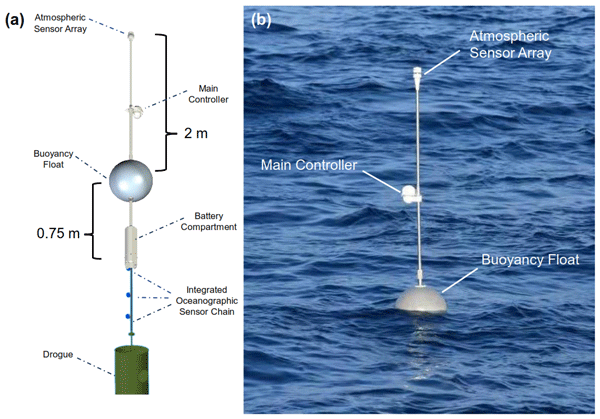
Understanding air-sea interactions is essential for global climate and weather systems. However, high-frequency, synchronous observations are extremely rare. We present a unique dataset from five drifting buoys in the Bay of Bengal (2020–2022) capturing both atmospheric and oceanic variables. Sampled at rates up to every 5 minutes during four tropical cyclones, this data provides crucial records to study air-sea coupling, validate satellites, and improve models under extreme conditions.
Ye Liu and Weiwei Fu
EGUsphere, https://doi.org/10.5194/egusphere-2026-3657, https://doi.org/10.5194/egusphere-2026-3657, 2026
Short summary
Short summary
We evaluate a framework for the Baltic Sea that jointly assimilates sea surface temperature and chlorophyll from satellite and in situ observations into a model. Satellite chlorophyll improves surface phytoplankton, but profile data is needed to represent subsurface features. The improved representation of phytoplankton alters how light is absorbed in the water, modifying temperature structure and leading to improved oxygen distributions in well-oxygenated waters.
Zhenguo Wang and Weiwei Fu
Earth Syst. Sci. Data Discuss., https://doi.org/10.5194/essd-2026-375, https://doi.org/10.5194/essd-2026-375, 2026
Revised manuscript under review for ESSD
Short summary
Short summary
We created a global monthly data set of surface ocean carbon dioxide pressure from 1982 to 2024 to help assess how much carbon the ocean takes up. The data set uses physical knowledge and machine learning to estimate changes from sparse observations. We found that gaps in where observations are collected reduce confidence about twice as much as gaps in when they are collected, highlighting where future measurements are most needed.
Jialu Liu, Pengfei Han, Huiling Ouyang, Ning Zeng, Zhenfeng Wang, Jian Wang, Weiwei Fu, Honggang Lv, Wenhao Lin, Zheng Xia, and Bo Yao
Atmos. Meas. Tech., 19, 2837–2854, https://doi.org/10.5194/amt-19-2837-2026, https://doi.org/10.5194/amt-19-2837-2026, 2026
Short summary
Short summary
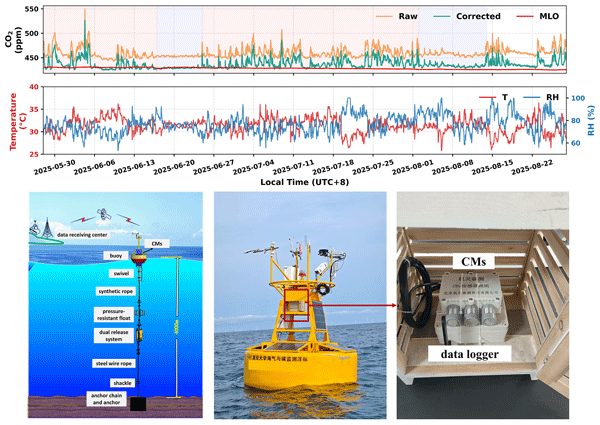
This study deployed a buoy equipped with three low-cost sensors in the northern South China Sea to continuously monitor atmospheric CO2 at the sea surface. After correcting for environmental factors and sensor drift, the measurement accuracy improved. CO2 levels were generally stable with small daily changes, while local fluctuations reflected air from land. This affordable approach enables reliable ocean CO2 monitoring and helps study the ocean’s role in the global carbon cycle.
Wenhu Liu, Guihua Wang, Changlin Chen, and Muping Zhou
EGUsphere, https://doi.org/10.5194/egusphere-2022-439, https://doi.org/10.5194/egusphere-2022-439, 2022
Preprint archived
Short summary
Short summary
We explore the spatial-temporal characteristics of oceanic bottom mixed layer (BML) in the South China Sea (SCS) and investigated its potential formation mechanisms. We found that the BML in the SCS has significant inhomogeneity. In particular, the BML is thick and unstable over the northern continental slope and is relatively thin and stable over the continental shelf and in deep-sea regions. These findings may enhance our understanding of the BML dynamics in the SCS and other marginal seas.
Cited articles
Bopp, L., Resplandy, L., Orr, J. C., Doney, S. C., Dunne, J. P., Gehlen, M., Halloran, P., Heinze, C., Ilyina, T., Séférian, R., Tjiputra, J., and Vichi, M.: Multiple stressors of ocean ecosystems in the 21st century: projections with CMIP5 models, Biogeosciences, 10, 6225–6245, https://doi.org/10.5194/bg-10-6225-2013, 2013.
Breitburg, D., Levin, L. A., Oschlies, A., Gregoire, M., Chavez, F. P., Conley, D. J., Garcon, V., Gilbert, D., Gutierrez, D., Isensee, K., Jacinto, G. S., Limburg, K. E., Montes, I., Naqvi, S. W. A., Pitcher, G. C., Rabalais, N. N., Roman, M. R., Rose, K. A., Seibel, B. A., Telszewski, M., Yasuhara, M., and Zhang, J.: Declining oxygen in the global ocean and coastal waters, Science, 359, eaam7240, https://doi.org/10.1126/science.aam7240, 2018.
Cao, R., Wang, S., Bao, S., Li, X., Tan, J., and Shao, C.: SE-LeNet: A data reconstruction method for dissolved oxygen in tropical Pacific with deep learning, in: Proc. 2024 IEEE Int. Conf. Parallel Distrib. Process. Appl. (ISPA), IEEE, https://doi.org/10.1109/ISPA63168.2024.00031, 2024.
Carpenter, J. H.: The accuracy of the winkler method for dissolved oxygen analysis 1, Limnol. Oceanogr., 10, 135–140, https://doi.org/10.4319/lo.1965.10.1.0135, 1965.
Chau, T. T. T., Gehlen, M., and Chevallier, F.: A seamless ensemble-based reconstruction of surface ocean pCO2 and air–sea CO2 fluxes over the global coastal and open oceans, Biogeosciences, 19, 1087–1109, https://doi.org/10.5194/bg-19-1087-2022, 2022.
Chau, T.-T.-T., Gehlen, M., Metzl, N., and Chevallier, F.: CMEMS-LSCE: a global, 0.25°, monthly reconstruction of the surface ocean carbonate system, Earth Syst. Sci. Data, 16, 121–160, https://doi.org/10.5194/essd-16-121-2024, 2024.
Cheng, L. and Gouretski, V.: IAP Global Ocean Oxygen gridded product (1-degree), CASODC [data set], https://doi.org/10.12157/IOCAS.20231214.006, 2024.
Chen, Z., Siedlecki, S., Long, M., Petrik, C. M., Stock, C. A., and Deutsch, C. A.: Skillful multiyear prediction of marine habitat shifts jointly constrained by ocean temperature and dissolved oxygen, Nat. Commun., 15, 900, https://doi.org/10.1038/s41467-024-45016-5, 2024.
Cocco, V., Joos, F., Steinacher, M., Frölicher, T. L., Bopp, L., Dunne, J., Gehlen, M., Heinze, C., Orr, J., Oschlies, A., Schneider, B., Segschneider, J., and Tjiputra, J.: Oxygen and indicators of stress for marine life in multi-model global warming projections, Biogeosciences, 10, 1849–1868, https://doi.org/10.5194/bg-10-1849-2013, 2013.
Franco, A. C., Hernández-Ayón, J. M., Beier, E., Garçon, V., Maske, H., Paulmier, A., Färber-Lorda, J., Castro, R., and Sosa-Ávalos, R.: Air–sea CO2 fluxes above the stratified oxygen minimum zone in the coastal region off Mexico, J. Geophys. Res.-Oceans, 119, 2923–2937, https://doi.org/10.1002/2013JC009337, 2014.
Garabaghi, F. H., Benzer, S., and Benzer, R.: Modeling dissolved oxygen concentration using machine learning techniques with dimensionality reduction approach, Environ. Monit. Assess., 195, 879, https://doi.org/10.1007/s10661-023-11492-3, 2023.
Garcia, H., Cruzado, A., Gordon, L., and Escanez, J.: Decadal-scale chemical variability in the subtropical North Atlantic deduced from nutrient and oxygen data, J. Geophys. Res.-Oceans, 103, 2817–2830, https://doi.org/10.1029/97JC03037, 1998.
Garcia, H. E., Wang, Z., Bouchard, C., Cross, S. L., Paver, C. R., Reagan, J. R., Boyer, T. P., Locarnini, R. A., Mishonov, A. V., Baranova, O., Seidov, D., and Dukhovskoy, D.: World Ocean Atlas 2023, Volume 3: Dissolved Oxygen, Apparent Oxygen Utilization, and Oxygen Saturation, edited by: Mishonov, A., NOAA Atlas NESDIS 91, 109 pp., https://doi.org/10.25923/rb67-ns53, 2024.
Gilbert, D., Rabalais, N. N., Díaz, R. J., and Zhang, J.: Evidence for greater oxygen decline rates in the coastal ocean than in the open ocean, Biogeosciences, 7, 2283–2296, https://doi.org/10.5194/bg-7-2283-2010, 2010.
Giomi, F., Barausse, A., Steckbauer, A., Daffonchio, D., Duarte, C. M., and Fusi, M.: Oxygen dynamics in marine productive ecosystems at ecologically relevant scales, Nat. Geosci., 16, 560–566, https://doi.org/10.1038/s41561-023-01217-z, 2023.
Gong, H., Li, C., and Zhou, Y.: Emerging global ocean deoxygenation across the 21st century, Geophys. Res. Lett., 48, e2021GL095370, https://doi.org/10.1029/2021GL095370, 2021.
Gouretski, V., Cheng, L., Du, J., Xing, X., Chai, F., and Tan, Z.: A consistent ocean oxygen profile dataset with new quality control and bias assessment, Earth Syst. Sci. Data, 16, 5503–5530, https://doi.org/10.5194/essd-16-5503-2024, 2024.
Gregoire, M., Garcon, V., Garcia, H., Breitburg, D., Isensee, K., Oschlies, A., Telszewski, M., Barth, A., Bittig, H. C., Carstensen, J., Carval, T., Chai, F., Chavez, F., Conley, D., Coppola, L., Crowe, S., Currie, K., Dai, M., Deflandre, B., Dewitte, B., Diaz, R., Garcia-Robledo, E., Gilbert, D., Giorgetti, A., Glud, R., Gutierrez, D., Hosoda, S., Ishii, M., Jacinto, G., Langdon, C., Lauvset, S. K., Levin, L. A., Limburg, K. E., Mehrtens, H., Montes, I., Naqvi, W., Paulmier, A., Pfeil, B., Pitcher, G., Pouliquen, S., Rabalais, N., Rabouille, C., Recape, V., Roman, M., Rose, K., Rudnick, D., Rummer, J., Schmechtig, C., Schmidtko, S., Seibel, B., Slomp, C., Sumalia, U. R., Tanhua, T., Thierry, V., Uchida, H., Wanninkhof, R., and Yasuhara, M.: A global ocean oxygen database and atlas for assessing and predicting deoxygenation and ocean health in the open and coastal ocean, Front. Mar. Sci., 8, https://doi.org/10.3389/fmars.2021.724913, 2021.
Grégoire, M., Oschlies, A., Canfield, D., Castro, C., Ciglenecki, I., Croot, P., Salin, K., Schneider, B., Serret, P., and Slomp, C.: Ocean Oxygen: the role of the Ocean in the oxygen we breathe and the threat of deoxygenation, European Marine Board, Ostend, Belgium, Zenodo, https://doi.org/10.5281/zenodo.7941157, 2023.
Guinehut, S., Dhomps, A.-L., Larnicol, G., and Le Traon, P.-Y.: High resolution 3-D temperature and salinity fields derived from in situ and satellite observations, Ocean Sci., 8, 845–857, https://doi.org/10.5194/os-8-845-2012, 2012.
Hauser, D., Tourain, C., Hermozo, L., Alraddawi, D., Aouf, L., Chapron, B., Dalphinet, A., Delaye, L., Dalila, M., and Dormy, E.: New observations from the SWIM radar on-board CFOSAT: Instrument validation and ocean wave measurement assessment, IEEE T. Geosci. Remote Sens., 59, 5–26, https://doi.org/10.1109/TGRS.2020.2994372, 2020.
Hollitzer, H. A. L., Patara, L., Terhaar, J., and Oschlies, A.: Competing effects of wind and buoyancy forcing on ocean oxygen trends in recent decades, Nat. Commun., 15, https://doi.org/10.1038/s41467-024-53557-y, 2024.
Huang, S., Shao, J., Chen, Y., Qi, J., Wu, S., Zhang, F., He, X., and Du, Z.: Reconstruction of dissolved oxygen in the Indian Ocean from 1980 to 2019 based on machine learning techniques, Front. Mar. Sci., 10, 1291232, https://doi.org/10.3389/fmars.2023.1291232, 2023.
Humphries, N. E., Fuller, D. W., Schaefer, K. M., and Sims, D. W.: Highly active fish in low oxygen environments: Vertical movements and behavioural responses of bigeye and yellowfin tunas to oxygen minimum zones in the eastern Pacific Ocean, Mar. Biol., 171, 55, https://doi.org/10.1007/s00227-023-04366-2, 2024.
IOC, SCOR, and IAPSO: The International thermodynamic equation of seawater – 2010: calculation and use of thermodynamic properties [includes corrections up to 31st October 2015], Intergovernmental Oceanographic Commission Manuals and Guides, 56, UNESCO, Paris, France, 196 pp., https://doi.org/10.25607/OBP-1338, 2015.
Ito, T., Minobe, S., Long, M. C., and Deutsch, C.: Upper ocean O2 trends: 1958–2015, Geophys. Res. Lett., 44, 4214–4223, https://doi.org/10.1002/2017GL073613, 2017.
Ito, T., Cervania, A., Cross, K., Ainchwar, S., and Delawalla, S.: Mapping dissolved oxygen concentrations by combining shipboard and Argo observations using machine learning algorithms, J. Geophys. Res.: Mach. Learn. Comput., 1, e2024JH000272, https://doi.org/10.1029/2024JH000272, 2024a.
Ito, T., Garcia, H. E., Wang, Z., Minobe, S., Long, M. C., Cebrian, J., Reagan, J., Boyer, T., Paver, C., Bouchard, C., Takano, Y., Bushinsky, S., Cervania, A., and Deutsch, C. A.: Underestimation of multi-decadal global O2 loss due to an optimal interpolation method, Biogeosciences, 21, 747–759, https://doi.org/10.5194/bg-21-747-2024, 2024b.
Kim, H., Franco, A. C., and Sumaila, U. R.: A selected review of impacts of ocean deoxygenation on fish and fisheries, Fishes, 8, https://doi.org/10.3390/fishes8060316, 2023.
Kolodziejczyk, N., Prigent-Mazella, A., and Gaillard, F.: ISAS temperature, salinity, dissolved oxygen gridded fields, SEANOE [data set], https://doi.org/10.17882/52367, 2023.
Li, C., Huang, J., Ding, L., Liu, X., Yu, H., and Huang, J.: Increasing escape of oxygen from oceans under climate change, Geophys. Res. Lett., 47, e2019GL086345, https://doi.org/10.1029/2019GL086345, 2020.
Liu, G., Yu, X., Zhang, J., Wang, X., Xu, N., and Ali, S.: Reconstruction of the three-dimensional dissolved oxygen and its spatio-temporal variations in the Mediterranean Sea using machine learning, J. Environ. Sci., 157, 710–728, https://doi.org/10.1016/j.jes.2025.01.010, 2025.
Liu, Q., Liu, C., Meng, Q., Su, B., Ye, H., Chen, B., Li, W., Cao, X., Nie, W., and Ma, N.: Machine learning reveals biological activities as the dominant factor in controlling deoxygenation in the South Yellow Sea, Cont. Shelf Res., 283, 105348, https://doi.org/10.1016/j.csr.2024.105348, 2024.
Lu, B., Zhao, Z., Han, L., Gan, X., Zhou, Y., Zhou, L., Fu, L., Wang, X., Zhou, C., and Zhang, J.: Oxygenerator: Reconstructing global ocean deoxygenation over a century with deep learning, arXiv [preprint], https://doi.org/10.48550/arXiv.2405.07233, 2024.
Ma, D., Zhao, F., Zhu, L., Li, X., Wei, J., Chen, X., Hou, L., Li, Y., and Liu, M.: Deep learning reveals hotspots of global oceanic oxygen changes from 2003 to 2020, Int. J. Appl. Earth Obs. Geoinf., 136, 104363, https://doi.org/10.1016/j.jag.2025.104363, 2025.
Mears, C., Lee, T., Ricciardulli, L., Wang, X., and Wentz, F.: Improving the Accuracy of the Cross-Calibrated Multi-Platform (CCMP) Ocean Vector Winds, Remote Sens., 14, 4230, https://doi.org/10.3390/rs14174230, 2022.
Milà, C., Ludwig, M., Pebesma, E., Tonne, C., and Meyer, H.: Random forests with spatial proxies for environmental modelling: opportunities and pitfalls, Geosci. Model Dev., 17, 6007–6033, https://doi.org/10.5194/gmd-17-6007-2024, 2024.
NASA Ocean Biology Processing Group: Sea-viewing Wide Field-of-view Sensor (SeaWiFS) Level-2 Ocean Color Data, version R2018.8, NASA Ocean Biology Distributed Active Archive Center [data set], https://doi.org/10.5067/ORBVIEW-2/SEAWIFS/L2/OC/2018, 2018.
Oschlies, A.: A committed fourfold increase in ocean oxygen loss, Nat. Commun., 12, https://doi.org/10.1038/s41467-021-22584-4, 2021.
Oschlies, A., Brandt, P., Stramma, L., and Schmidtko, S.: Drivers and mechanisms of ocean deoxygenation, Nat. Geosci., 11, 467–473, https://doi.org/10.1038/s41561-018-0152-2, 2018.
Ping, B., Meng, Y., Su, F., Xue, C., and Li, Z.: Retrieval of subsurface dissolved oxygen from surface oceanic parameters based on machine learning, Mar. Environ. Res., 199, 106578, https://doi.org/10.1016/j.marenvres.2024.106578, 2024.
Regier, P. J., Ward, N. D., Myers-Pigg, A. N., Grate, J., Freeman, M. J., and Ghosh, R. N.: Seasonal drivers of dissolved oxygen across a tidal creek–marsh interface revealed by machine learning, Limnol. Oceanogr., 68, 2359–2374, https://doi.org/10.1002/lno.12426, 2023.
Robinson, C.: Microbial respiration, the engine of ocean deoxygenation, Front. Mar. Sci., 5, https://doi.org/10.3389/fmars.2018.00533, 2019.
Salazar, J. J., Garland, L., Ochoa, J., and Pyrcz, M. J.: Fair train-test split in machine learning: Mitigating spatial autocorrelation for improved prediction accuracy, J. Petrol. Sci. Eng., 209, 109885, https://doi.org/10.1016/j.petrol.2021.109885, 2022.
Schmidtko, S., Stramma, L., and Visbeck, M.: Decline in global oceanic oxygen content during the past five decades, Nature, 542, 335–339, https://doi.org/10.1038/nature21399, 2017.
Shao, J., Huang, S., Chen, Y., Qi, J., Wang, Y., Wu, S., Liu, R., and Du, Z.: Satellite-based global sea surface oxygen mapping and interpretation with spatiotemporal machine learning, Environ. Sci. Technol., 58, 498–509, https://doi.org/10.1021/acs.est.3c08833, 2024.
Sharp, J. D., Fassbender, A. J., Carter, B. R., Johnson, G. C., Schultz, C., and Dunne, J. P.: GOBAI-O2: temporally and spatially resolved fields of ocean interior dissolved oxygen over nearly 2 decades, Earth Syst. Sci. Data, 15, 4481–4518, https://doi.org/10.5194/essd-15-4481-2023, 2023.
Szekely, T., Gourrion, J., Pouliquen, S., and Reverdin, G.: The CORA 5.2 dataset for global in situ temperature and salinity measurements: data description and validation, Ocean Sci., 15, 1601–1614, https://doi.org/10.5194/os-15-1601-2019, 2019.
Szekely, T., Gourrion, J., Pouliquen, S., Reverdin, G., and Merceur, F.: CORA, Coriolis Ocean Dataset for Reanalysis, SEANOE [data set], https://doi.org/10.17882/46219, 2025.
Valera, M., Walter, R. K., Bailey, B. A., and Castillo, J. E.: Machine learning based predictions of dissolved oxygen in a small coastal embayment, J. Mar. Sci. Eng., 8, 1007, https://doi.org/10.3390/jmse8121007, 2020.
Wagstaff, J. and Bean, B.: remap: Regionalized models with spatially smooth predictions, R J., 14, 160–178, https://doi.org/10.32614/RJ-2023-004, 2022.
Wang, Z.: GEOXYGEN_Code, Zenodo [code], https://doi.org/10.5281/zenodo.19852901, 2026.
Wang, Z., Xue, C., and Ping, B.: A reconstructing model based on time–space–depth partitioning for global ocean dissolved oxygen concentration, Remote Sens., 16, 228, https://doi.org/10.3390/rs16020228, 2024.
Wang, Z., Fu, W., Xue, C., and Wang, G.: GEOXYGEN: A global monthly gridded dissolved oxygen product (0.5° × 0.5°), Zenodo [data set], https://doi.org/10.5281/zenodo.19703198, 2026a.
Wang, Z., Fu, W., Xue, C., and Wang, G.: GEOXYGEN: A global monthly gridded dissolved oxygen product (0.5° × 0.5°) [data set], https://doi.org/10.12157/IOCAS.20260223.002, 2026b.
Xue, C., Wang, Z., Yue, L., and Niu, C.: A global four-dimensional gridded dataset of ocean dissolved oxygen concentration retrieval from Argo profiles, Geosci. Data J., 11, 775–789, https://doi.org/10.1002/gdj3.251, 2024.
Yamaguchi, R., Kouketsu, S., Kosugi, N., and Ishii, M.: Global upper ocean dissolved oxygen budget for constraining the biological carbon pump, Commun. Earth Environ., 5, https://doi.org/10.1038/s43247-024-01886-7, 2024.
Zhou, Y., Gong, H., and Zhou, F.: Responses of Horizontally Expanding Oceanic Oxygen Minimum Zones to Climate Change Based on Observations, Geophys. Res. Lett., 49, https://doi.org/10.1029/2022gl097724, 2022.
Short summary
Ocean oxygen is vital for marine life and climate, but long records are uneven. We combine nearly one million ship and autonomous float measurements with careful quality control and machine learning to create GEOXYGEN, a monthly global map of dissolved oxygen from 1960–2024 with high spatial detail and full-depth coverage. It reveals broad long-term oxygen changes and offers a consistent basis for studies of ocean deoxygenation and climate impacts.
Ocean oxygen is vital for marine life and climate, but long records are uneven. We combine...


Altmetrics
Final-revised paper
Preprint