Articles | Volume 18, issue 4
https://doi.org/10.5194/essd-18-2573-2026
© Author(s) 2026. This work is distributed under
the Creative Commons Attribution 4.0 License.
the Creative Commons Attribution 4.0 License.
https://doi.org/10.5194/essd-18-2573-2026
© Author(s) 2026. This work is distributed under
the Creative Commons Attribution 4.0 License.
the Creative Commons Attribution 4.0 License.
Data description article
| 
10 Apr 2026
Data description article |
| 10 Apr 2026
| 10 Apr 2026
Spatially distributed measurements of aerosols and stable isotopes in water vapour and precipitation in coastal Northern Norway during the ISLAS2021 campaign
Alena Dekhtyareva
Geophysical Institute, Faculty of Natural Sciences and Technology, University of Bergen, Bergen, Norway
Bjerknes Centre for Climate Research, Bergen, Norway

Geophysical Institute, Faculty of Natural Sciences and Technology, University of Bergen, Bergen, Norway
Bjerknes Centre for Climate Research, Bergen, Norway
Tim Carlsen
Department of Geosciences, University of Oslo, Oslo, Norway
Iris Thurnherr
Geophysical Institute, Faculty of Natural Sciences and Technology, University of Bergen, Bergen, Norway
Bjerknes Centre for Climate Research, Bergen, Norway
Aina Johannessen
Geophysical Institute, Faculty of Natural Sciences and Technology, University of Bergen, Bergen, Norway
Bjerknes Centre for Climate Research, Bergen, Norway
Andrew Seidl
Geophysical Institute, Faculty of Natural Sciences and Technology, University of Bergen, Bergen, Norway
Bjerknes Centre for Climate Research, Bergen, Norway
David M. Chandler
NORCE Norwegian Research Centre, Bergen, Norway
Bjerknes Centre for Climate Research, Bergen, Norway
Daniele Zannoni
Geophysical Institute, Faculty of Natural Sciences and Technology, University of Bergen, Bergen, Norway
Bjerknes Centre for Climate Research, Bergen, Norway
now at: Department of Environmental Sciences, Informatics and Statistics, Ca' Foscari University of Venice, Venice, Italy
Alexandra Touzeau
Geophysical Institute, Faculty of Natural Sciences and Technology, University of Bergen, Bergen, Norway
Bjerknes Centre for Climate Research, Bergen, Norway
Marvin Kähnert
Geophysical Institute, Faculty of Natural Sciences and Technology, University of Bergen, Bergen, Norway
Bjerknes Centre for Climate Research, Bergen, Norway
Astrid B. Gjelsvik
Department of Geosciences, University of Oslo, Oslo, Norway
Franziska Hellmuth
Department of Geosciences, University of Oslo, Oslo, Norway
Britta Schäfer
Department of Geosciences, University of Oslo, Oslo, Norway
Robert O. David
Department of Geosciences, University of Oslo, Oslo, Norway
Related authors
Andrew W. Seidl, Aina Johannessen, Alena Dekhtyareva, Jannis M. Huss, Marius O. Jonassen, Alexander Schulz, Ove Hermansen, Christoph K. Thomas, and Harald Sodemann
Earth Syst. Sci. Data, 18, 1969–1993, https://doi.org/10.5194/essd-18-1969-2026, https://doi.org/10.5194/essd-18-1969-2026, 2026
Short summary
Short summary
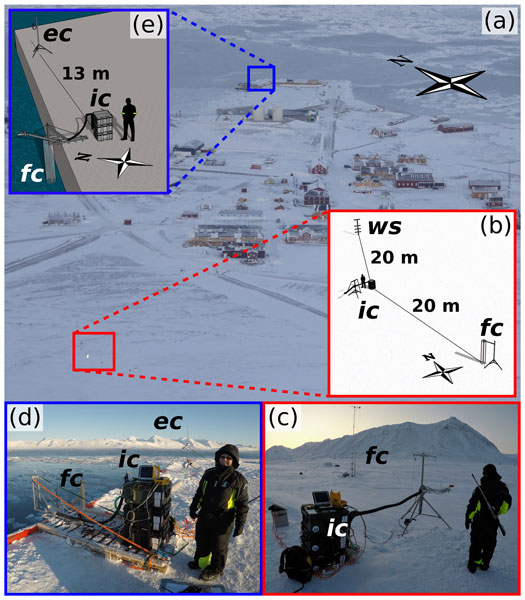
ISLAS2020 set out to measure the stable water isotopic composition of Arctic moisture. By not only measuring at different sites around Ny-Ålesund, Svalbard, but also measuring at variable heights above surface level, we aim to characterize processes that produce or modify the isotopic composition. We also collect precipitation samples from sites that were typically downstream of Ny-Ålesund, so as to capture the isotopic composition during removal from the atmospheric water cycle.
Harald Sodemann, Alena Dekhtyareva, Alvaro Fernandez, Andrew Seidl, and Jenny Maccali
Atmos. Meas. Tech., 16, 5181–5203, https://doi.org/10.5194/amt-16-5181-2023, https://doi.org/10.5194/amt-16-5181-2023, 2023
Short summary
Short summary
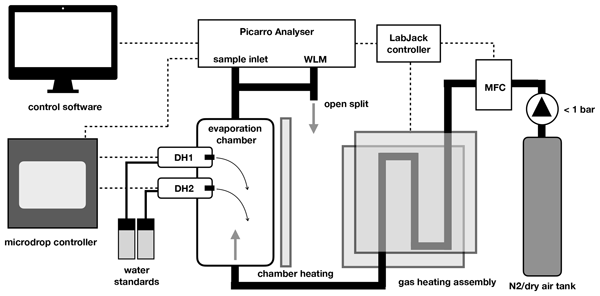
We describe a device that allows one to produce a continuous stream of water vapour with a specified level of humidity. As a main innovation, we can mix waters with different water isotope composition. Through a series of tests we show that the performance characteristics of the device are in line with specifications. We present two laboratory applications where the device proves useful, first in characterizing instruments, and second for the analysis of water contained in stalagmites.

Alena Dekhtyareva, Mark Hermanson, Anna Nikulina, Ove Hermansen, Tove Svendby, Kim Holmén, and Rune Grand Graversen
Atmos. Chem. Phys., 22, 11631–11656, https://doi.org/10.5194/acp-22-11631-2022, https://doi.org/10.5194/acp-22-11631-2022, 2022
Short summary
Short summary
Despite decades of industrial activity in Svalbard, there is no continuous air pollution monitoring in the region’s settlements except Ny-Ålesund. The NOx and O3 observations from the three-station network have been compared for the first time in this study. It has been shown how the large-scale weather regimes control the synoptic meteorological conditions and determine the atmospheric long-range transport pathways and efficiency of local air pollution dispersion.
Fiona Paulus, Joshua J. Müller, Benjamin Kirbus, Harald Sodemann, Lars van Gelder, Andreas Walbröl, Manfred Wendisch, and Roel A. J. Neggers
Atmos. Chem. Phys., 26, 13983–14014, https://doi.org/10.5194/acp-26-13983-2026, https://doi.org/10.5194/acp-26-13983-2026, 2026
Short summary
Short summary
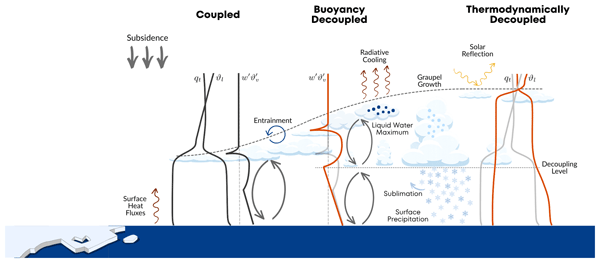
Cold Arctic air flowing from sea ice onto the warmer ocean waters rapidly warms, moistens, and forms clouds and precipitation. These events shape the Arctic climate but are difficult to observe and model. Particularly the role of large-scale sinking motion during these events is not fully understood. Using rare aircraft data and simulations to track an air mass for two days, we show that strong downward motion suppresses cloud growth, limits and delays precipitation, and reduces cloud lifetimes.
Janne Liburd, Kristof Tomej, Ann Eileen Lennert, Benjamin Fischer, Andrea L. Popp, Mahaut de Vareilles, Costijn Zwart, and Harald Sodemann
EGUsphere, https://doi.org/10.5194/egusphere-2026-5504, https://doi.org/10.5194/egusphere-2026-5504, 2026
This preprint is open for discussion and under review for Geoscience Communication (GC).
Short summary
Short summary
As scientists increasingly work with citizens and other stakeholders, collaboration becomes more valuable, but also more challenging. The example of the ISOSCAN research project on water forecasting shows how co-designing research activities can foster learning, trust, and new ways of thinking about scientific work, thereby benefiting research outcomes and the scientists involved. Tensions between different perspectives can become opportunities for reflection, learning and innovation.
Sjur Barndon, Augusto Lima, David M. Chandler, Abe T. Wiersma, Tancrède P. M. Leger, Raúl Pérez Prats, Eline S. Rentier, and Suzette G.A. Flantua
Earth Syst. Sci. Data Discuss., https://doi.org/10.5194/essd-2026-404, https://doi.org/10.5194/essd-2026-404, 2026
Preprint under review for ESSD
Short summary
Short summary
Mountain glacier history is hard to trace because field evidence is patchy and often erased by later ice advances. We used a fast computer model to simulate how glaciers grew and shrank over the last 130,000 years in nine mountain regions, and compared the results with mapped past and modern glaciers. By combining many plausible simulations, we map where glacier changes are reliable and where they are uncertain. The results provide a new baseline for studies of water, landscapes, and ecosystems.
Mel Fülster, Ruzica Dadic, Iris Thurnherr, and Heini Wernli
EGUsphere, https://doi.org/10.5194/egusphere-2026-4721, https://doi.org/10.5194/egusphere-2026-4721, 2026
This preprint is open for discussion and under review for The Cryosphere (TC).
Short summary
Short summary
Winter-time fast ice extent and variability in McMurdo Sound is governed by strong wind events. We investigate the large scale atmospheric forcing leading to winter sea ice breakout events in McMurdo Sound from 2013–2024 using satellite-derived sea ice concentration data, weather station data and ERA-5 reanalysis data. Our results indicate that cyclones in the Ross Sea impact sea ice in McMurdo Sound indirectly through the barrier wind regime known as the Ross Ice Shelf air stream.

François Burgay, Haley Derrod, Tobias Erhardt, Federico Scoto, Delia Segato, Niccolò Maffezzoli, Federico Dallo, Daniele Zannoni, Azzurra Spagnesi, Helle-Astrid Kjær, Hubertus Fischer, Cristiano Varin, Carlo Barbante, and Andrea Spolaor
Clim. Past, 22, 1675–1689, https://doi.org/10.5194/cp-22-1675-2026, https://doi.org/10.5194/cp-22-1675-2026, 2026
Short summary
Short summary
Ice-core measurements from Greenland suggest that atmospheric iron deposition played a smaller role than previously thought in regulating marine productivity in the iron-limited North Pacific. Despite a strong increase in total iron deposition, the fraction of iron more likely to be available to phytoplankton rose only modestly, pointing to sea-ice extent and sedimentary iron remobilization as potentially more important factors during the last glacial transition.
Guangyu Li, André Welti, Iris Thurnherr, Ulrike Lohmann, and Zamin A. Kanji
Atmos. Chem. Phys., 26, 10835–10859, https://doi.org/10.5194/acp-26-10835-2026, https://doi.org/10.5194/acp-26-10835-2026, 2026
Short summary
Short summary
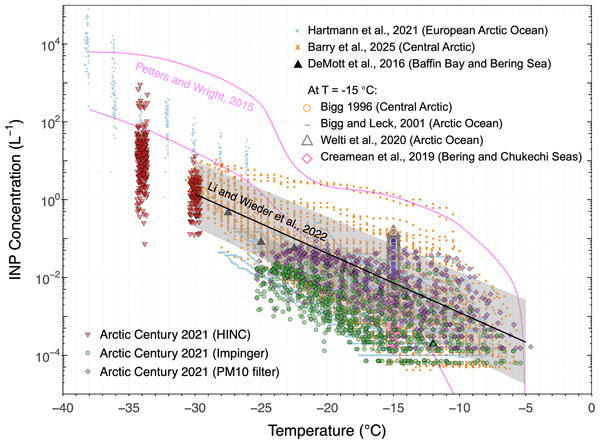
This study presents ship-based measurements of summertime ice-nucleating particles (INPs) over the data-scarce Eurasian-Arctic Seas. We found that INPs are driven by both local and regional sources, with the highest levels observed near land and over ice-free waters. This study is highlighted for improving the understanding of INP abundance, sources, and their role in cloud processes in the rapidly warming Arctic.
Nina Elisabeth Larsgård, Tim Carlsen, Robert Oscar David, Filip Severin von der Lippe, Alfons Schwarzenboek, Harald Sodemann, and Trude Storelvmo
EGUsphere, https://doi.org/10.5194/egusphere-2026-1650, https://doi.org/10.5194/egusphere-2026-1650, 2026
Short summary
Short summary
In-situ data from multiple research flights are combined to investigate the cloud evolution of Arctic marine cold air outbreaks during the ISLAS2022 campaign. We observe a cloud development similar to what other studies have shown: More liquid at cloud top close to the sea ice, and increased glaciation as clouds mature and deepen. This composite approach can be used by the community to further understand mCAO cloud evolution with increased confidence compared to single-flight analysis.
Andrew W. Seidl, Aina Johannessen, Alena Dekhtyareva, Jannis M. Huss, Marius O. Jonassen, Alexander Schulz, Ove Hermansen, Christoph K. Thomas, and Harald Sodemann
Earth Syst. Sci. Data, 18, 1969–1993, https://doi.org/10.5194/essd-18-1969-2026, https://doi.org/10.5194/essd-18-1969-2026, 2026
Short summary
Short summary
ISLAS2020 set out to measure the stable water isotopic composition of Arctic moisture. By not only measuring at different sites around Ny-Ålesund, Svalbard, but also measuring at variable heights above surface level, we aim to characterize processes that produce or modify the isotopic composition. We also collect precipitation samples from sites that were typically downstream of Ny-Ålesund, so as to capture the isotopic composition during removal from the atmospheric water cycle.
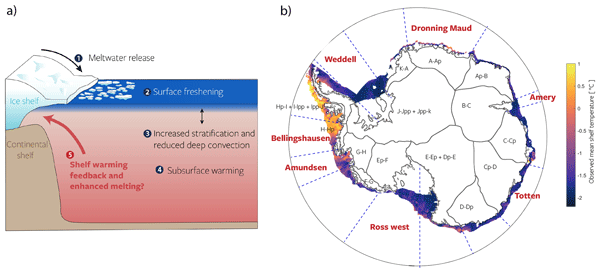
Morven Muilwijk, Tore Hattermann, Rebecca L. Beadling, Neil C. Swart, Aleksi Nummelin, Chuncheng Guo, David M. Chandler, Petra M. Langebroek, Shenjie Zhou, Pierre Dutrieux, Jia-Jia Chen, Christopher Danek, Matthew H. England, Stephen M. Griffies, F. Alexander Haumann, André Jüling, Ombeline Jouet, Qian Li, Torge Martin, John Marshall, Andrew G. Pauling, Ariaan Purich, Zihan Song, Inga J. Smith, Max Thomas, Irene Trombini, Eveline C. van der Linden, and Xiaoqi Xu
The Cryosphere, 20, 1087–1117, https://doi.org/10.5194/tc-20-1087-2026, https://doi.org/10.5194/tc-20-1087-2026, 2026
Short summary
Short summary
Antarctic meltwater affects ocean stratification and temperature, which in turn influences the rate of ice shelf melting – a coupling missing in most climate models. We analyze a suite of climate models with added meltwater to explore this feedback in different regions. While meltwater generally enhances ocean warming and melt, in West Antarctica most models simulate coastal cooling, suggesting a negative feedback that could slow future ice loss there.
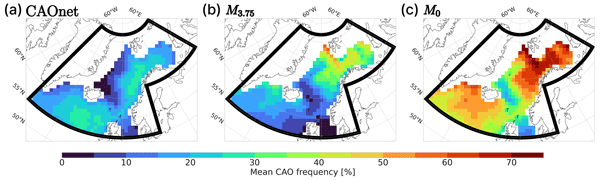
Filip Severin von der Lippe, Tim Carlsen, Trude Storelvmo, and Robert Oscar David
Atmos. Chem. Phys., 26, 1565–1585, https://doi.org/10.5194/acp-26-1565-2026, https://doi.org/10.5194/acp-26-1565-2026, 2026
Short summary
Short summary
This paper investigates how clouds associated with Arctic marine cold air outbreaks (CAOs) respond to climate change. By utilizing machine learning methods and remote sensing data from the past 25 years, the study identifies trends indicating a shortening of the CAO season. This has implications for the Arctic energy balance, underscoring the importance of further investigating these clouds to understand the trajectory of future Arctic climate.
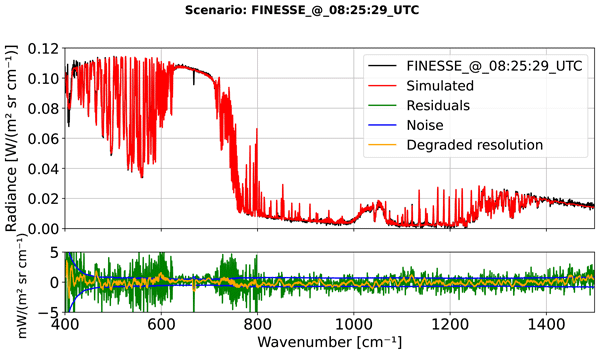
Gianluca Di Natale, Helen Brindley, Laura Warwick, Sanjeevani Panditharatne, Ping Yang, Robert Oscar David, Tim Carlsen, Sorin Nicolae Vâjâiac, Alex Vlad, Sorin Ghemuleț, Richard Bantges, Andreas Foth, Martin Flügge, Reidar Lyngra, Hilke Oetjen, Dirk Schuettemeyer, Luca Palchetti, and Jonathan Murray
Atmos. Chem. Phys., 26, 1373–1394, https://doi.org/10.5194/acp-26-1373-2026, https://doi.org/10.5194/acp-26-1373-2026, 2026
Short summary
Short summary
Cirrus clouds play a vital role in regulating Earth's energy balance. However, they remain incompletely understood, representing a major source of uncertainty in the predictive performance of climate models. We show that consistency between in situ measurements of cirrus cloud microphysics and ground-based remote sensing observations is achievable by simulating the emitted spectrum using current parameterizations of cirrus optical properties.
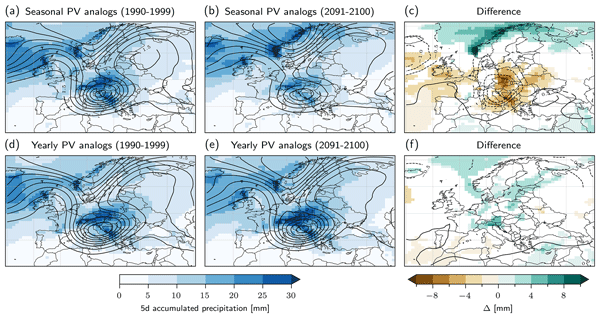
Jacopo Riboldi, Robin Noyelle, Ellina Agayar, Hanin Binder, Marc Federer, Katharina Hartmuth, Michael Sprenger, Iris Thurnherr, and Selvakumar Vishnupriya
Weather Clim. Dynam., 7, 65–87, https://doi.org/10.5194/wcd-7-65-2026, https://doi.org/10.5194/wcd-7-65-2026, 2026
Short summary
Short summary
Storm Boris led to record-breaking precipitation over central Europe in September 2024. By incorporating event-specific meteorological information, this work introduces a methodology to strengthen our comprehension of how global warming affects similar hazards. Furthermore, it contextualizes how the answer to the question "How will Boris-like storms change in a warmer climate?" depends on explicit and implicit methodological choices, with the aim to inform future attribution research.
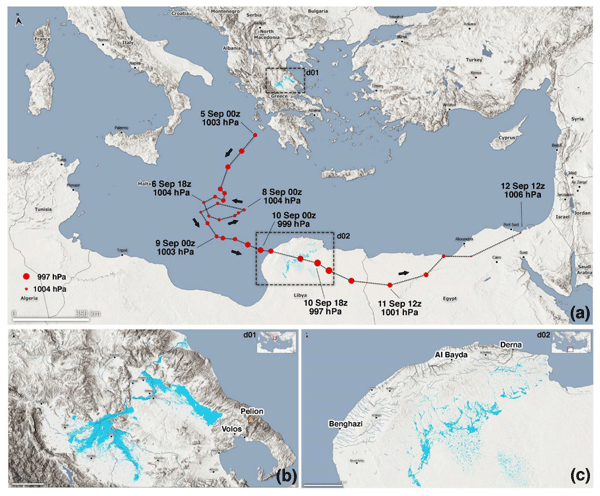
Emmanouil Flaounas, Stavros Dafis, Silvio Davolio, Davide Faranda, Christian Ferrarin, Katharina Hartmuth, Assaf Hochman, Aristeidis Koutroulis, Samira Khodayar, Mario Marcello Miglietta, Florian Pantillon, Platon Patlakas, Michael Sprenger, and Iris Thurnherr
Weather Clim. Dynam., 6, 1515–1538, https://doi.org/10.5194/wcd-6-1515-2025, https://doi.org/10.5194/wcd-6-1515-2025, 2025
Short summary
Short summary
Storm Daniel (2023) is one of the most catastrophic storms ever documented in the Mediterranean. Our results highlight the different dynamics and therefore the different predictability skill of precipitation, its extremes and impacts that have been produced in Greece and Libya, the two most affected countries. Our approach concerns an analysis of the storm by articulating dynamics, weather prediction, hydrological and oceanographic implications, climate extremes, and attribution theory.
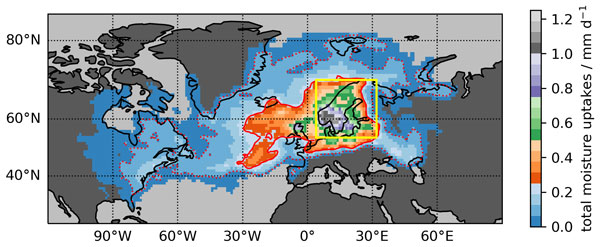
Harald Sodemann
Geosci. Model Dev., 18, 8887–8926, https://doi.org/10.5194/gmd-18-8887-2025, https://doi.org/10.5194/gmd-18-8887-2025, 2025
Short summary
Short summary
The WaterSip software locates regions where precipitation comes from. WaterSip evaluates of the water budget of the air masses, providing information on the conditions during evaporation, transport, and arrival at the target area. WaterSip can be easily configured and writes gridded output files. Guidance is given on where uncertainties arise using a case study, and best practices are recommended. This manuscript supports the comparison of different methods to find precipitation sources.
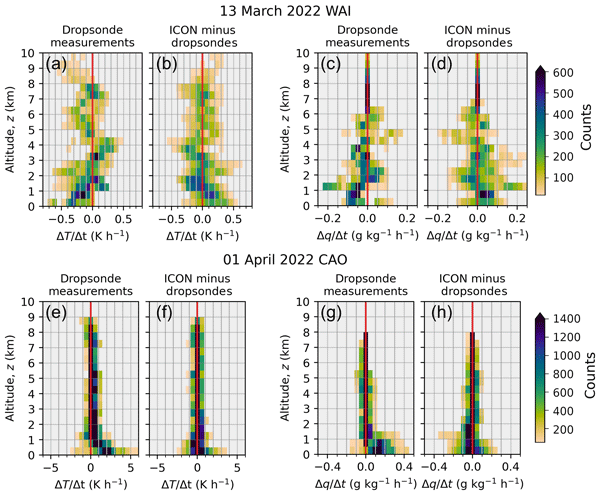
Manfred Wendisch, Benjamin Kirbus, Davide Ori, Matthew D. Shupe, Susanne Crewell, Harald Sodemann, and Vera Schemann
Atmos. Chem. Phys., 25, 15047–15076, https://doi.org/10.5194/acp-25-15047-2025, https://doi.org/10.5194/acp-25-15047-2025, 2025
Short summary
Short summary
Aircraft observations of air parcels moving into and out of the Arctic are reported. From the data, heating and cooling as well as drying and moistening of the air masses along their way into and out of the Arctic could be measured for the first time. These data are used to evaluate if weather prediction models are able to accurately represent these air mass transformations. This work helps to model the future Arctic climate changes, which may have an impact for mid-latitude weather as well.
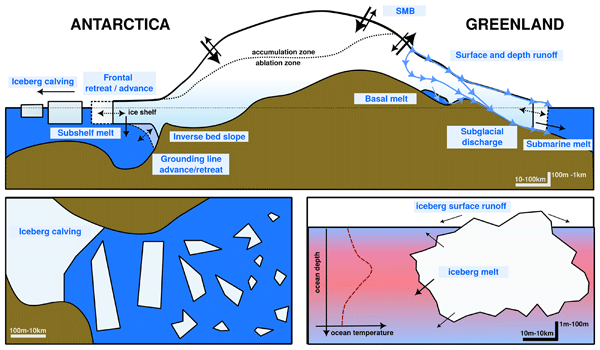
Gavin A. Schmidt, Kenneth D. Mankoff, Jonathan L. Bamber, Clara Burgard, Dustin Carroll, David M. Chandler, Violaine Coulon, Benjamin J. Davison, Matthew H. England, Paul R. Holland, Nicolas C. Jourdain, Qian Li, Juliana M. Marson, Pierre Mathiot, Clive R. McMahon, Twila A. Moon, Ruth Mottram, Sophie Nowicki, Anna Olivé Abelló, Andrew G. Pauling, Thomas Rackow, and Damien Ringeisen
Geosci. Model Dev., 18, 8333–8361, https://doi.org/10.5194/gmd-18-8333-2025, https://doi.org/10.5194/gmd-18-8333-2025, 2025
Short summary
Short summary
The impact of increasing mass loss from the Greenland and Antarctic ice sheets has not so far been included in historical climate model simulations. This paper describes the protocols and data available for modeling groups to add this anomalous freshwater to their ocean modules to better represent the impacts of these fluxes on ocean circulation, sea ice, salinity and sea level.
Agnese Petteni, Elise Fourré, Elsa Gautier, Azzurra Spagnesi, Roxanne Jacob, Pete D. Akers, Daniele Zannoni, Jacopo Gabrieli, Olivier Jossoud, Frédéric Prié, Amaëlle Landais, Titouan Tcheng, Barbara Stenni, Joel Savarino, Patrick Ginot, and Mathieu Casado
Atmos. Meas. Tech., 18, 5435–5455, https://doi.org/10.5194/amt-18-5435-2025, https://doi.org/10.5194/amt-18-5435-2025, 2025
Short summary
Short summary
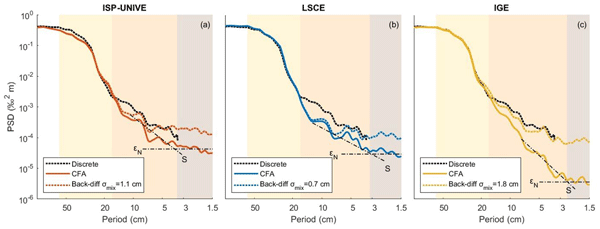
Our research compares three systems of continuous flow analysis coupled with cavity ring-down spectrometry (CFA-CRD) from Venice, Paris, and Grenoble laboratories for measuring water isotopes in ice cores, crucial for reconstructing past climate. We quantify each system’s mixing and measurement noise effects, which impact the achievable resolution of isotope continuous records. Our findings reveal specific configurations and procedures to enhance measurement accuracy, providing a framework to optimise water isotope analysis.
Johanna Beckmann, Ronja Reese, Felicity S. McCormack, Sue Cook, Lawrence Bird, Dawid Gwyther, Daniel Richards, Matthias Scheiter, Yu Wang, Hélène Seroussi, Ayako Abe‐Ouchi, Torsten Albrecht, Jorge Alvarez‐Solas, Xylar S. Asay‐Davis, Jean‐Baptiste Barre, Constantijn J. Berends, Jorge Bernales, Javier Blasco, Justine Caillet, David M. Chandler, Violaine Coulon, Richard Cullather, Christophe Dumas, Benjamin K. Galton‐Fenzi, Julius Garbe, Fabien Gillet‐Chaulet, Rupert Gladstone, Heiko Goelzer, Nicholas R. Golledge, Ralf Greve, G. Hilmar Gudmundsson, Holly Kyeore Han, Trevor R. Hillebrand, Matthew J. Hoffman, Philippe Huybrechts, Nicolas C. Jourdain, Ann Kristin Klose, Petra M. Langebroek, Gunter R. Leguy, William H. Lipscomb, Daniel P. Lowry, Pierre Mathiot, Marisa Montoya, Mathieu Morlighem, Sophie Nowicki, Frank Pattyn, Antony J. Payne, Tyler Pelle, Aurélien Quiquet, Alexander Robinson, Leopekka Saraste, Erika G. Simon, Sainan Sun, Jake P. Twarog, Luke D. Trusel, Benoit Urruty, Jonas Van Breedam, Roderik S. W. van de Wal, Chen Zhao, and Thomas Zwinger
EGUsphere, https://doi.org/10.5194/egusphere-2025-4069, https://doi.org/10.5194/egusphere-2025-4069, 2025
Short summary
Short summary
Antarctica holds enough ice to raise sea levels by many meters, but its future is uncertain. Warm ocean water melts ice shelves from below, letting inland ice flow faster into the sea. By 2300, Antarctica could add 0.6–4.4 m to sea levels. Our study identifies two key factors—how strongly shelves melt and how the ice responds. These explain much of the range, and refining them in models may improve future predictions.
Killian P. Brennan, Iris Thurnherr, Michael Sprenger, and Heini Wernli
Nat. Hazards Earth Syst. Sci., 25, 3693–3712, https://doi.org/10.5194/nhess-25-3693-2025, https://doi.org/10.5194/nhess-25-3693-2025, 2025
Short summary
Short summary
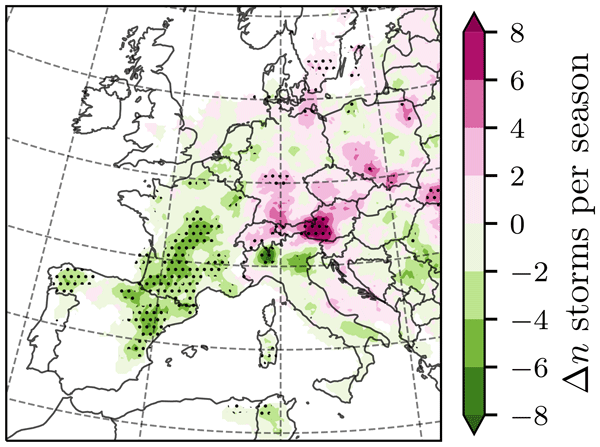
Hailstorms can cause severe damage to homes, crops, and infrastructure. Using high-resolution climate simulations, we tracked thousands of hailstorms across Europe to study future changes. Large hail will become more frequent, hail-covered areas will expand, and instances of extreme hail combined with heavy rain will double. These shifts could increase risks for communities and businesses, highlighting the need for better preparedness and adaptation.
Daniele Zannoni, Hans Christian Steen-Larsen, Harald Sodemann, Iris Thurnherr, Cyrille Flamant, Patrick Chazette, Julien Totems, Martin Werner, and Myriam Raybaut
Atmos. Chem. Phys., 25, 9471–9495, https://doi.org/10.5194/acp-25-9471-2025, https://doi.org/10.5194/acp-25-9471-2025, 2025
Short summary
Short summary
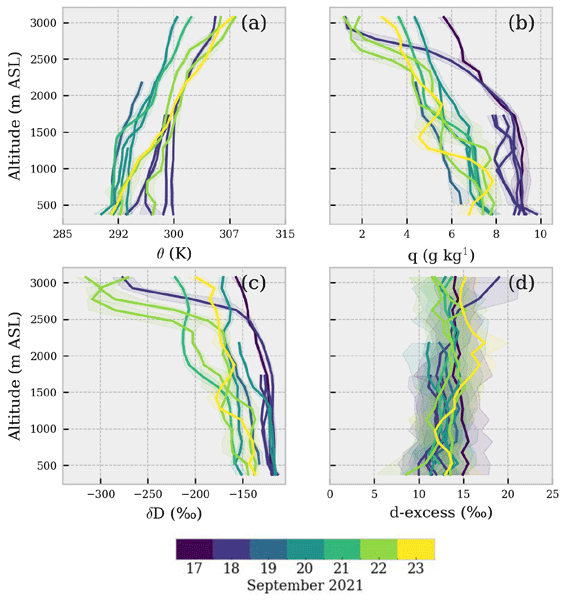
High-resolution airborne observations reveal that mixing between the free troposphere and surface evapotranspiration flux primarily modulates the water vapor isotopic composition in the lower troposphere. Water vapor isotope structure variations occur on the scale of hundreds of meters, underlining the utility of stable isotopes for studying microscale atmospheric dynamics. This study also provides the basis for better validation of water vapor isotope remote sensing retrievals with surface observations.
Astrid B. Gjelsvik, Robert O. David, Tim Carlsen, Franziska Hellmuth, Stefan Hofer, Zachary McGraw, Harald Sodemann, and Trude Storelvmo
Atmos. Chem. Phys., 25, 1617–1637, https://doi.org/10.5194/acp-25-1617-2025, https://doi.org/10.5194/acp-25-1617-2025, 2025
Short summary
Short summary
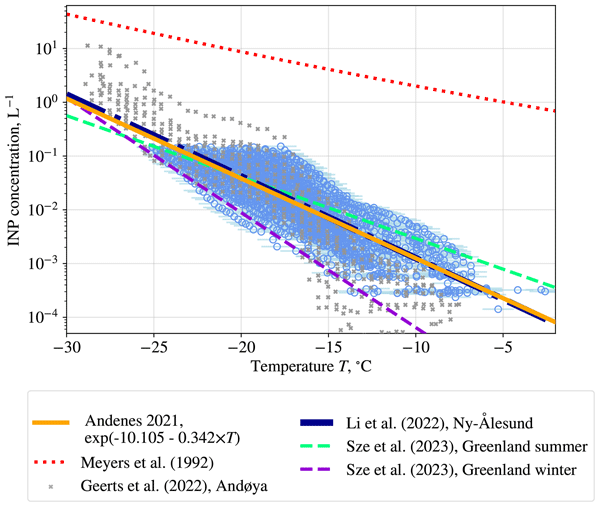
Ice formation in clouds has a substantial impact on radiation and precipitation and must be realistically simulated in order to understand present and future Arctic climate. Rare aerosols known as ice-nucleating particles can play an important role in cloud ice formation, but their representation in global climate models is not well suited for the Arctic. In this study, the simulation of cloud phase is improved when the representation of these particles is constrained by Arctic observations.
Franziska Hellmuth, Tim Carlsen, Anne Sophie Daloz, Robert Oscar David, Haochi Che, and Trude Storelvmo
Atmos. Chem. Phys., 25, 1353–1383, https://doi.org/10.5194/acp-25-1353-2025, https://doi.org/10.5194/acp-25-1353-2025, 2025
Short summary
Short summary
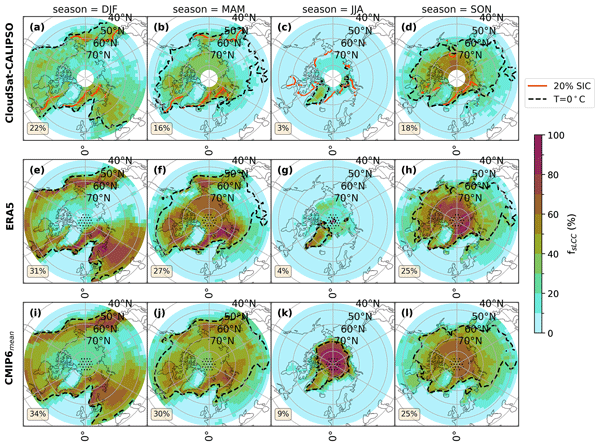
This article compares the occurrence of supercooled liquid-containing clouds (sLCCs) and their link to surface snowfall in CloudSat–CALIPSO, ERA5, and the CMIP6 models. Significant discrepancies were found, with ERA5 and CMIP6 consistently overestimating sLCC and snowfall frequency. This bias is likely due to cloud microphysics parameterization. This conclusion has implications for accurately representing cloud phase and snowfall in future climate projections.
Huiying Zhang, Xia Li, Fabiola Ramelli, Robert O. David, Julie Pasquier, and Jan Henneberger
Atmos. Meas. Tech., 17, 7109–7128, https://doi.org/10.5194/amt-17-7109-2024, https://doi.org/10.5194/amt-17-7109-2024, 2024
Short summary
Short summary
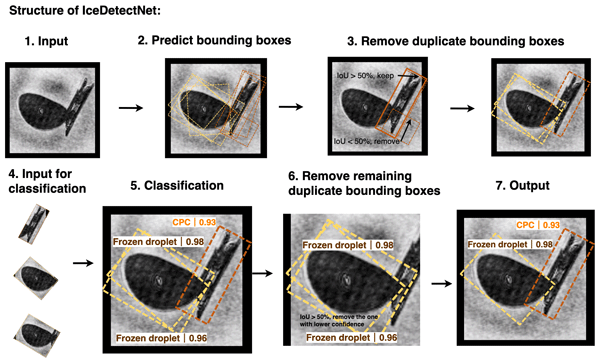
Our innovative IceDetectNet algorithm classifies each part of aggregated ice crystals, considering both their basic shape and physical processes. Trained on ice crystal images from the Arctic taken by a holographic camera, it correctly classifies over 92 % of the ice crystals. These more detailed insights into the components of aggregated ice crystals have the potential to improve our estimates of microphysical properties such as riming rate, aggregation rate, and ice water content.
David M. Chandler and Petra M. Langebroek
Clim. Past, 20, 2055–2080, https://doi.org/10.5194/cp-20-2055-2024, https://doi.org/10.5194/cp-20-2055-2024, 2024
Short summary
Short summary
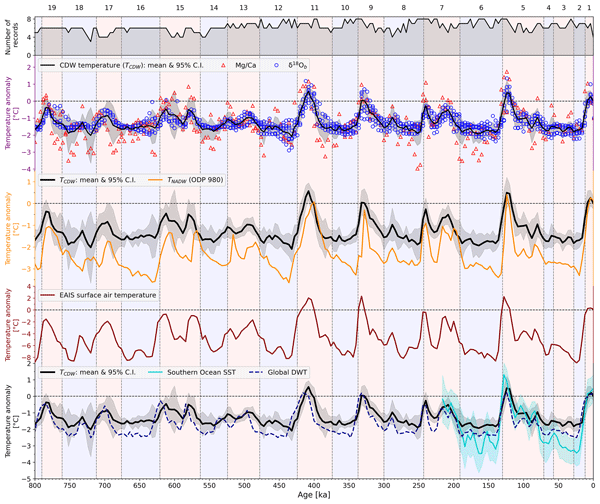
Sea level rise and global climate change caused by ice melt in Antarctica represent a puzzle of feedbacks between the climate, ocean, and ice sheets over tens to thousands of years. Antarctic Ice Sheet melting is caused mainly by warm deep water from the Southern Ocean. Here, we analyse close relationships between deep water temperatures and global climate over the last 800 000 years. This knowledge can help us to better understand how climate and sea level are likely to change in the future.
Giuliano Dreossi, Mauro Masiol, Barbara Stenni, Daniele Zannoni, Claudio Scarchilli, Virginia Ciardini, Mathieu Casado, Amaëlle Landais, Martin Werner, Alexandre Cauquoin, Giampietro Casasanta, Massimo Del Guasta, Vittoria Posocco, and Carlo Barbante
The Cryosphere, 18, 3911–3931, https://doi.org/10.5194/tc-18-3911-2024, https://doi.org/10.5194/tc-18-3911-2024, 2024
Short summary
Short summary
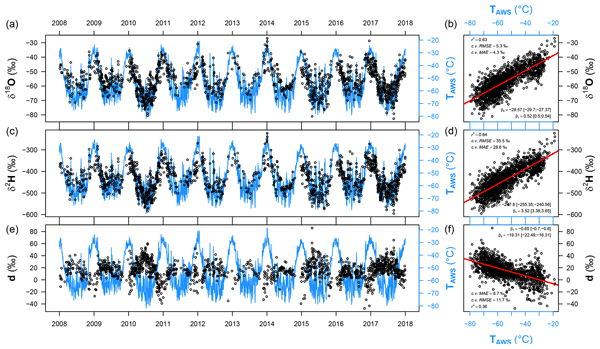
Oxygen and hydrogen stable isotopes have been extensively used to reconstruct past temperatures, with precipitation representing the input signal of the isotopic records in ice cores. We present a 10-year record of stable isotopes in daily precipitation at Concordia Station: this is the longest record for inland Antarctica and represents a benchmark for quantifying post-depositional processes and improving the paleoclimate interpretation of ice cores.
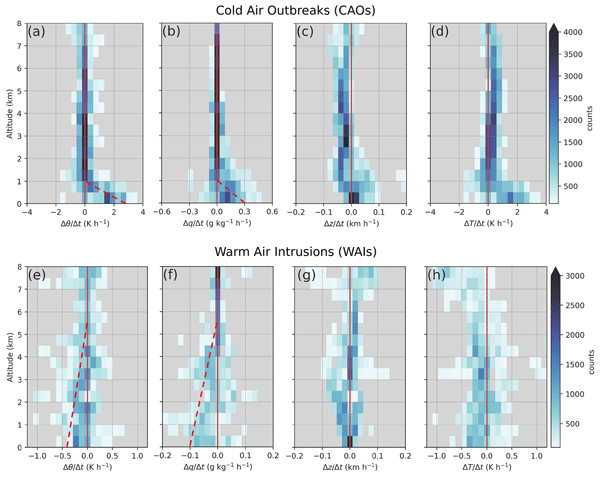
Manfred Wendisch, Susanne Crewell, André Ehrlich, Andreas Herber, Benjamin Kirbus, Christof Lüpkes, Mario Mech, Steven J. Abel, Elisa F. Akansu, Felix Ament, Clémantyne Aubry, Sebastian Becker, Stephan Borrmann, Heiko Bozem, Marlen Brückner, Hans-Christian Clemen, Sandro Dahlke, Georgios Dekoutsidis, Julien Delanoë, Elena De La Torre Castro, Henning Dorff, Regis Dupuy, Oliver Eppers, Florian Ewald, Geet George, Irina V. Gorodetskaya, Sarah Grawe, Silke Groß, Jörg Hartmann, Silvia Henning, Lutz Hirsch, Evelyn Jäkel, Philipp Joppe, Olivier Jourdan, Zsofia Jurányi, Michail Karalis, Mona Kellermann, Marcus Klingebiel, Michael Lonardi, Johannes Lucke, Anna E. Luebke, Maximilian Maahn, Nina Maherndl, Marion Maturilli, Bernhard Mayer, Johanna Mayer, Stephan Mertes, Janosch Michaelis, Michel Michalkov, Guillaume Mioche, Manuel Moser, Hanno Müller, Roel Neggers, Davide Ori, Daria Paul, Fiona M. Paulus, Christian Pilz, Felix Pithan, Mira Pöhlker, Veronika Pörtge, Maximilian Ringel, Nils Risse, Gregory C. Roberts, Sophie Rosenburg, Johannes Röttenbacher, Janna Rückert, Michael Schäfer, Jonas Schaefer, Vera Schemann, Imke Schirmacher, Jörg Schmidt, Sebastian Schmidt, Johannes Schneider, Sabrina Schnitt, Anja Schwarz, Holger Siebert, Harald Sodemann, Tim Sperzel, Gunnar Spreen, Bjorn Stevens, Frank Stratmann, Gunilla Svensson, Christian Tatzelt, Thomas Tuch, Timo Vihma, Christiane Voigt, Lea Volkmer, Andreas Walbröl, Anna Weber, Birgit Wehner, Bruno Wetzel, Martin Wirth, and Tobias Zinner
Atmos. Chem. Phys., 24, 8865–8892, https://doi.org/10.5194/acp-24-8865-2024, https://doi.org/10.5194/acp-24-8865-2024, 2024
Short summary
Short summary
The Arctic is warming faster than the rest of the globe. Warm-air intrusions (WAIs) into the Arctic may play an important role in explaining this phenomenon. Cold-air outbreaks (CAOs) out of the Arctic may link the Arctic climate changes to mid-latitude weather. In our article, we describe how to observe air mass transformations during CAOs and WAIs using three research aircraft instrumented with state-of-the-art remote-sensing and in situ measurement devices.
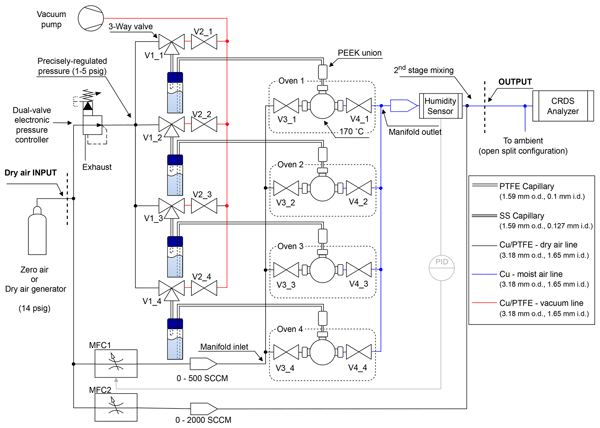
Hans Christian Steen-Larsen and Daniele Zannoni
Atmos. Meas. Tech., 17, 4391–4409, https://doi.org/10.5194/amt-17-4391-2024, https://doi.org/10.5194/amt-17-4391-2024, 2024
Short summary
Short summary
The water vapor generation module is completely scalable, allowing autonomous calibrations to use N standards and providing integration times only restricted by sample availability. We document improved reproducibility in 17O-excess liquid measurements. This module makes spectroscopy measurements comparable to mass spectrometry. We document that the vapor generation module can be used to analyze instrument performance and for vapor isotope calibration during field campaign measurements.
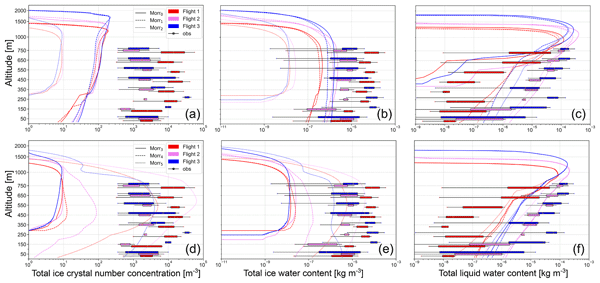
Britta Schäfer, Robert Oscar David, Paraskevi Georgakaki, Julie Thérèse Pasquier, Georgia Sotiropoulou, and Trude Storelvmo
Atmos. Chem. Phys., 24, 7179–7202, https://doi.org/10.5194/acp-24-7179-2024, https://doi.org/10.5194/acp-24-7179-2024, 2024
Short summary
Short summary
Mixed-phase clouds, i.e., clouds consisting of ice and supercooled water, are very common in the Arctic. However, how these clouds form is often not correctly represented in standard weather models. We show that both ice crystal concentrations in the cloud and precipitation from the cloud can be improved in the model when aerosol concentrations are prescribed from observations and when more processes for ice multiplication, i.e., the production of new ice particles from existing ice, are added.
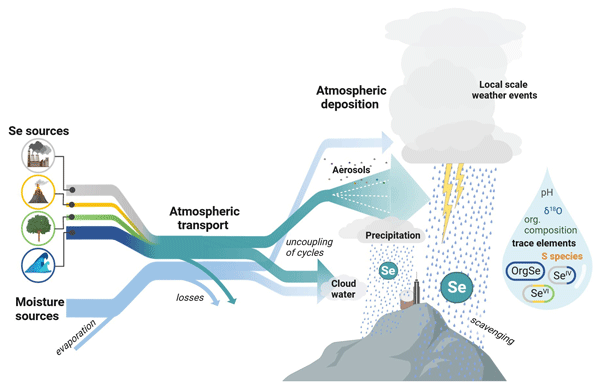
Esther S. Breuninger, Julie Tolu, Iris Thurnherr, Franziska Aemisegger, Aryeh Feinberg, Sylvain Bouchet, Jeroen E. Sonke, Véronique Pont, Heini Wernli, and Lenny H. E. Winkel
Atmos. Chem. Phys., 24, 2491–2510, https://doi.org/10.5194/acp-24-2491-2024, https://doi.org/10.5194/acp-24-2491-2024, 2024
Short summary
Short summary
Atmospheric deposition is an important source of selenium (Se) and other health-relevant trace elements in surface environments. We found that the variability in elemental concentrations in atmospheric deposition reflects not only changes in emission sources but also weather conditions during atmospheric removal. Depending on the sources and if Se is derived more locally or from further away, the Se forms can be different, affecting the bioavailability of Se atmospherically supplied to soils.
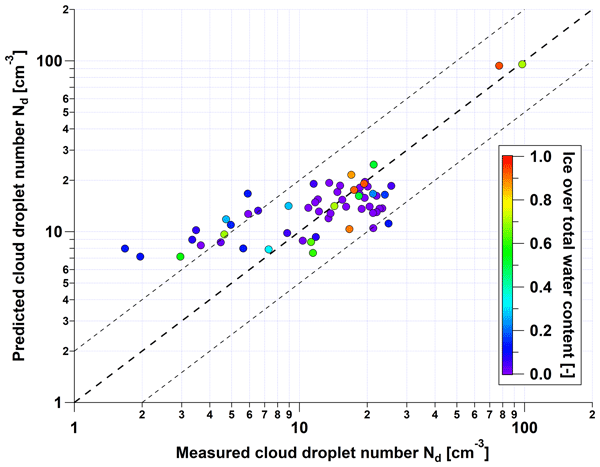
Ghislain Motos, Gabriel Freitas, Paraskevi Georgakaki, Jörg Wieder, Guangyu Li, Wenche Aas, Chris Lunder, Radovan Krejci, Julie Thérèse Pasquier, Jan Henneberger, Robert Oscar David, Christoph Ritter, Claudia Mohr, Paul Zieger, and Athanasios Nenes
Atmos. Chem. Phys., 23, 13941–13956, https://doi.org/10.5194/acp-23-13941-2023, https://doi.org/10.5194/acp-23-13941-2023, 2023
Short summary
Short summary
Low-altitude clouds play a key role in regulating the climate of the Arctic, a region that suffers from climate change more than any other on the planet. We gathered meteorological and aerosol physical and chemical data over a year and utilized them for a parameterization that help us unravel the factors driving and limiting the efficiency of cloud droplet formation. We then linked this information to the sources of aerosol found during each season and to processes of cloud glaciation.
Harald Sodemann, Alena Dekhtyareva, Alvaro Fernandez, Andrew Seidl, and Jenny Maccali
Atmos. Meas. Tech., 16, 5181–5203, https://doi.org/10.5194/amt-16-5181-2023, https://doi.org/10.5194/amt-16-5181-2023, 2023
Short summary
Short summary
We describe a device that allows one to produce a continuous stream of water vapour with a specified level of humidity. As a main innovation, we can mix waters with different water isotope composition. Through a series of tests we show that the performance characteristics of the device are in line with specifications. We present two laboratory applications where the device proves useful, first in characterizing instruments, and second for the analysis of water contained in stalagmites.
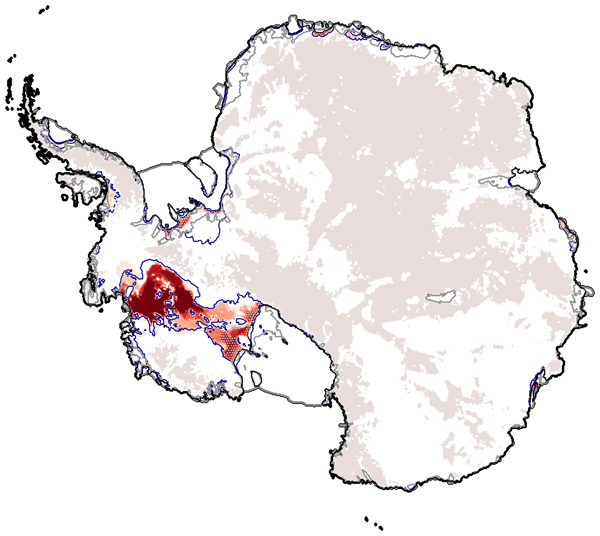
Ronja Reese, Julius Garbe, Emily A. Hill, Benoît Urruty, Kaitlin A. Naughten, Olivier Gagliardini, Gaël Durand, Fabien Gillet-Chaulet, G. Hilmar Gudmundsson, David Chandler, Petra M. Langebroek, and Ricarda Winkelmann
The Cryosphere, 17, 3761–3783, https://doi.org/10.5194/tc-17-3761-2023, https://doi.org/10.5194/tc-17-3761-2023, 2023
Short summary
Short summary
We use an ice sheet model to test where current climate conditions in Antarctica might lead. We find that present-day ocean and atmosphere conditions might commit an irreversible collapse of parts of West Antarctica which evolves over centuries to millennia. Importantly, this collapse is not irreversible yet.
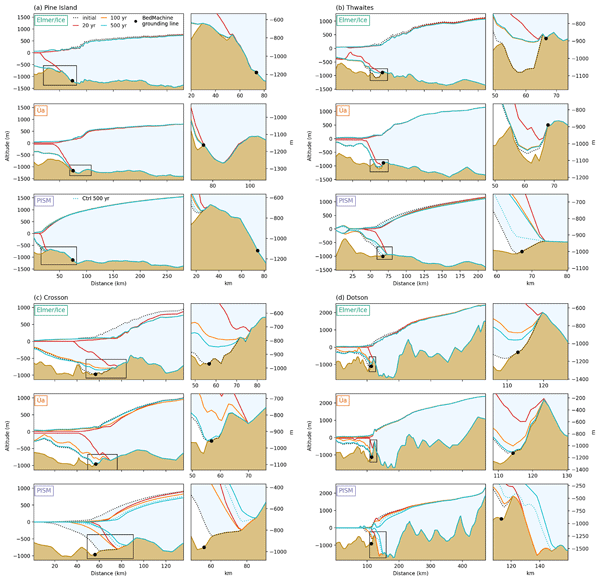
Emily A. Hill, Benoît Urruty, Ronja Reese, Julius Garbe, Olivier Gagliardini, Gaël Durand, Fabien Gillet-Chaulet, G. Hilmar Gudmundsson, Ricarda Winkelmann, Mondher Chekki, David Chandler, and Petra M. Langebroek
The Cryosphere, 17, 3739–3759, https://doi.org/10.5194/tc-17-3739-2023, https://doi.org/10.5194/tc-17-3739-2023, 2023
Short summary
Short summary
The grounding lines of the Antarctic Ice Sheet could enter phases of irreversible retreat or advance. We use three ice sheet models to show that the present-day locations of Antarctic grounding lines are reversible with respect to a small perturbation away from their current position. This indicates that present-day retreat of the grounding lines is not yet irreversible or self-enhancing.
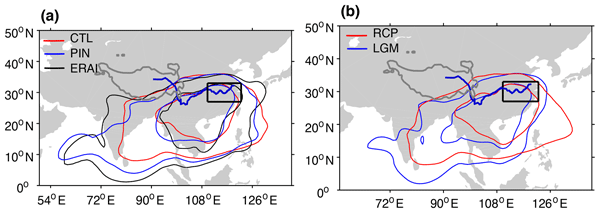
Astrid Fremme, Paul J. Hezel, Øyvind Seland, and Harald Sodemann
Weather Clim. Dynam., 4, 449–470, https://doi.org/10.5194/wcd-4-449-2023, https://doi.org/10.5194/wcd-4-449-2023, 2023
Short summary
Short summary
We study the atmospheric moisture transport into eastern China for past, present, and future climate. Hence, we use different climate and weather prediction model data with a moisture source identification method. We find that while the moisture to first order originates mostly from similar regions, smaller changes consistently point to differences in the recycling of precipitation over land between different climates. Some differences are larger between models than between different climates.
Andrew W. Seidl, Harald Sodemann, and Hans Christian Steen-Larsen
Atmos. Meas. Tech., 16, 769–790, https://doi.org/10.5194/amt-16-769-2023, https://doi.org/10.5194/amt-16-769-2023, 2023
Short summary
Short summary
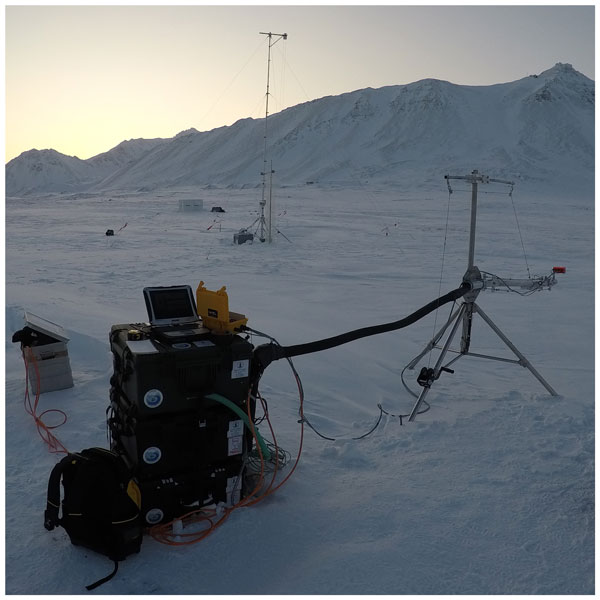
It is challenging to make field measurements of stable water isotopes in the Arctic. To this end, we present a modular stable-water-isotope analyzer profiling system. The system operated for a 2-week field campaign on Svalbard during the Arctic winter. We evaluate the system’s performance and analyze any potential impact that the field conditions might have had on the isotopic measurements and the system's ability to resolve isotope gradients in the lowermost layer of the atmosphere.
Julie Thérèse Pasquier, Jan Henneberger, Fabiola Ramelli, Annika Lauber, Robert Oscar David, Jörg Wieder, Tim Carlsen, Rosa Gierens, Marion Maturilli, and Ulrike Lohmann
Atmos. Chem. Phys., 22, 15579–15601, https://doi.org/10.5194/acp-22-15579-2022, https://doi.org/10.5194/acp-22-15579-2022, 2022
Short summary
Short summary
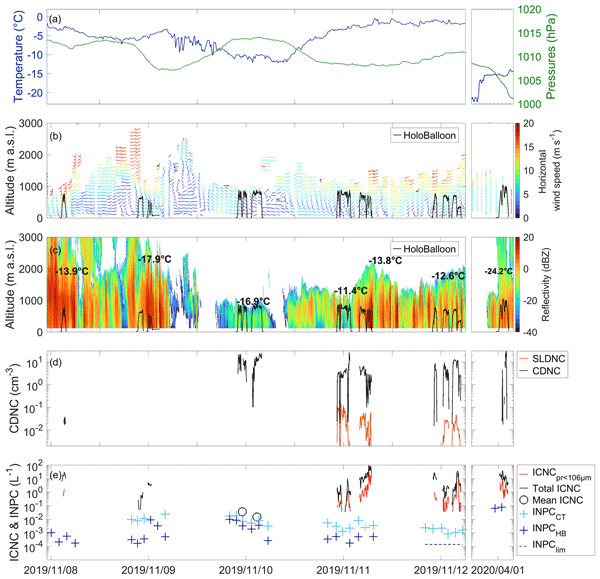
It is important to understand how ice crystals and cloud droplets form in clouds, as their concentrations and sizes determine the exact radiative properties of the clouds. Normally, ice crystals form from aerosols, but we found evidence for the formation of additional ice crystals from the original ones over a large temperature range within Arctic clouds. In particular, additional ice crystals were formed during collisions of several ice crystals or during the freezing of large cloud droplets.
Alena Dekhtyareva, Mark Hermanson, Anna Nikulina, Ove Hermansen, Tove Svendby, Kim Holmén, and Rune Grand Graversen
Atmos. Chem. Phys., 22, 11631–11656, https://doi.org/10.5194/acp-22-11631-2022, https://doi.org/10.5194/acp-22-11631-2022, 2022
Short summary
Short summary
Despite decades of industrial activity in Svalbard, there is no continuous air pollution monitoring in the region’s settlements except Ny-Ålesund. The NOx and O3 observations from the three-station network have been compared for the first time in this study. It has been shown how the large-scale weather regimes control the synoptic meteorological conditions and determine the atmospheric long-range transport pathways and efficiency of local air pollution dispersion.

Iris Thurnherr and Franziska Aemisegger
Atmos. Chem. Phys., 22, 10353–10373, https://doi.org/10.5194/acp-22-10353-2022, https://doi.org/10.5194/acp-22-10353-2022, 2022
Short summary
Short summary
Stable water isotopes in marine boundary layer vapour are strongly influenced by the strength of air–sea fluxes. Here, we investigate a distinct vapour isotope signal observed in the warm sector of Southern Ocean cyclones. Single-process air parcel models are used together with high-resolution isotope-enabled simulations with the weather prediction model COSMOiso to improve our understanding of the importance of air–sea fluxes for the moisture cycling in the context of extratropical cyclones.
Britta Schäfer, Tim Carlsen, Ingrid Hanssen, Michael Gausa, and Trude Storelvmo
Atmos. Chem. Phys., 22, 9537–9551, https://doi.org/10.5194/acp-22-9537-2022, https://doi.org/10.5194/acp-22-9537-2022, 2022
Short summary
Short summary
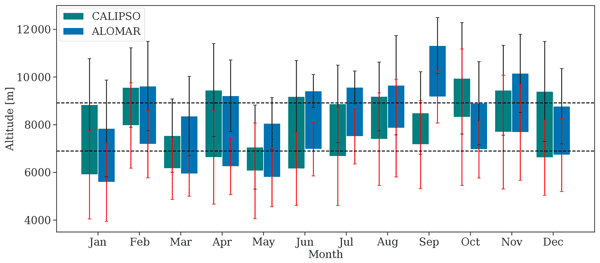
Cloud properties are important for the surface radiation budget. This study presents cold-cloud observations based on lidar measurements from the Norwegian Arctic between 2011 and 2017. Using statistical assessments and case studies, we give an overview of the macro- and microphysical properties of these clouds and demonstrate the capabilities of long-term cloud observations in the Norwegian Arctic from the ground-based lidar at Andenes.
Sebastian Becker, André Ehrlich, Evelyn Jäkel, Tim Carlsen, Michael Schäfer, and Manfred Wendisch
Atmos. Meas. Tech., 15, 2939–2953, https://doi.org/10.5194/amt-15-2939-2022, https://doi.org/10.5194/amt-15-2939-2022, 2022
Short summary
Short summary
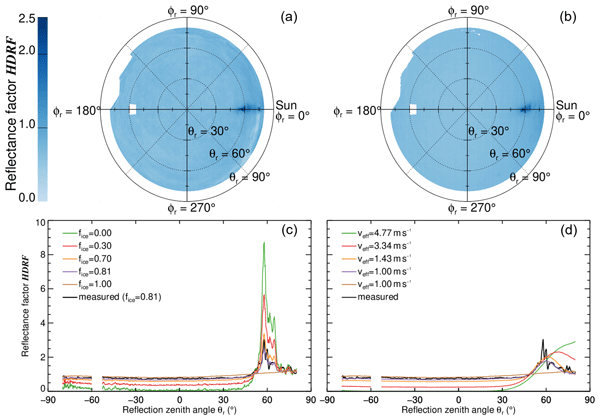
Airborne radiation measurements are used to characterize the solar directional reflection of a mixture of Arctic sea ice and open-ocean surfaces in the transition zone between both surface types. The mixture reveals reflection properties of both surface types. It is shown that the directional reflection of the mixture can be reconstructed from the directional reflection of the individual surfaces, accounting for the special conditions present in the transition zone.
Sebastian Landwehr, Michele Volpi, F. Alexander Haumann, Charlotte M. Robinson, Iris Thurnherr, Valerio Ferracci, Andrea Baccarini, Jenny Thomas, Irina Gorodetskaya, Christian Tatzelt, Silvia Henning, Rob L. Modini, Heather J. Forrer, Yajuan Lin, Nicolas Cassar, Rafel Simó, Christel Hassler, Alireza Moallemi, Sarah E. Fawcett, Neil Harris, Ruth Airs, Marzieh H. Derkani, Alberto Alberello, Alessandro Toffoli, Gang Chen, Pablo Rodríguez-Ros, Marina Zamanillo, Pau Cortés-Greus, Lei Xue, Conor G. Bolas, Katherine C. Leonard, Fernando Perez-Cruz, David Walton, and Julia Schmale
Earth Syst. Dynam., 12, 1295–1369, https://doi.org/10.5194/esd-12-1295-2021, https://doi.org/10.5194/esd-12-1295-2021, 2021
Short summary
Short summary
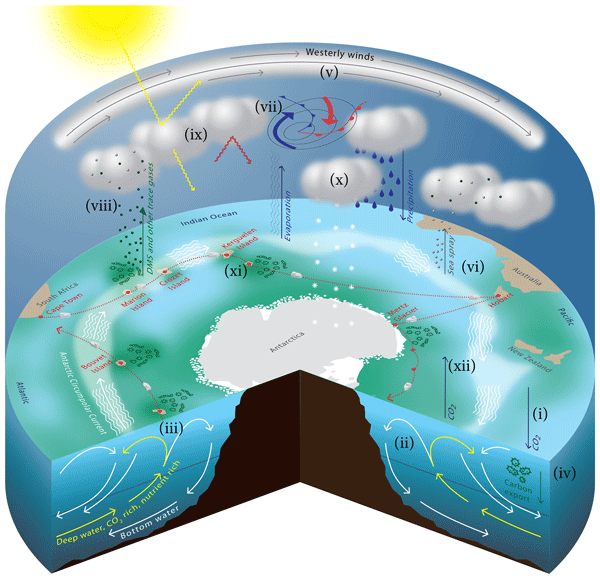
The Antarctic Circumnavigation Expedition surveyed a large number of variables describing the dynamic state of ocean and atmosphere, freshwater cycle, atmospheric chemistry, ocean biogeochemistry, and microbiology in the Southern Ocean. To reduce the dimensionality of the dataset, we apply a sparse principal component analysis and identify temporal patterns from diurnal to seasonal cycles, as well as geographical gradients and
hotspotsof interaction. Code and data are open access.
Sorin Nicolae Vâjâiac, Andreea Calcan, Robert Oscar David, Denisa-Elena Moacă, Gabriela Iorga, Trude Storelvmo, Viorel Vulturescu, and Valeriu Filip
Atmos. Meas. Tech., 14, 6777–6794, https://doi.org/10.5194/amt-14-6777-2021, https://doi.org/10.5194/amt-14-6777-2021, 2021
Short summary
Short summary
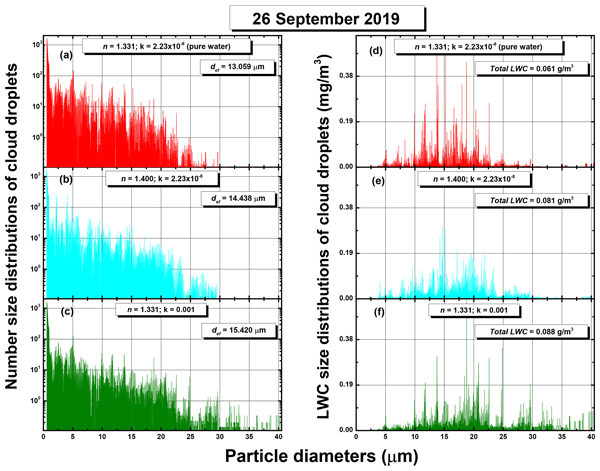
Warm clouds (with liquid droplets) play an important role in modulating the amount of incoming solar radiation to Earth’s surface and thus the climate. The most efficient way to study them is by in situ optical measurements. This paper proposes a new methodology for providing more detailed and reliable structural analyses of warm clouds through post-flight processing of collected data. The impact fine aerosol incorporation in water droplets might have on such measurements is also discussed.
Jonas Hamperl, Clément Capitaine, Jean-Baptiste Dherbecourt, Myriam Raybaut, Patrick Chazette, Julien Totems, Bruno Grouiez, Laurence Régalia, Rosa Santagata, Corinne Evesque, Jean-Michel Melkonian, Antoine Godard, Andrew Seidl, Harald Sodemann, and Cyrille Flamant
Atmos. Meas. Tech., 14, 6675–6693, https://doi.org/10.5194/amt-14-6675-2021, https://doi.org/10.5194/amt-14-6675-2021, 2021
Short summary
Short summary
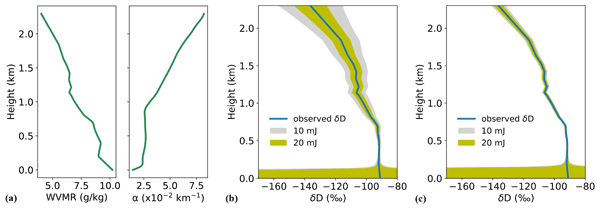
Laser active remote sensing of tropospheric water vapor is a promising technology for enhancing our understanding of processes governing the global hydrological cycle. We investigate the potential of a ground-based lidar to monitor the main water vapor isotopes at high spatio-temporal resolutions in the lower troposphere. Using a realistic end-to-end simulator, we show that high-precision measurements can be achieved within a range of 1.5 km, in mid-latitude or tropical environments.
Cited articles
Bailey, A., Aemisegger, F., Villiger, L., Los, S. A., Reverdin, G., Quiñones Mel´endez, E., Acquistapace, C., Baranowski, D. B., Böck, T., Bony, S., Bordsdorff, T., Coffman, D., de Szoeke, S. P., Diekmann, C. J., Dütsch, M., Ertl, B., Galewsky, J., Henze, D., Makuch, P., Noone, D., Quinn, P. K., Rösch, M., Schneider, A., Schneider, M., Speich, S., Stevens, B., and Thompson, E. J.: Isotopic measurements in water vapor, precipitation, and seawater during EUREC4A, Earth Syst. Sci. Data, 15, 465–495, https://doi.org/10.5194/essd-15-465-2023, 2023. a
Beall, C. M., Lucero, D., Hill, T. C., Demott, P. J., Dale Stokes, M., and Prather, K. A.: Best practices for precipitation sample storage for offline studies of ice nucleation in marine and coastal environments, Atmos. Meas. Tech., 13, 6473–6486, https://doi.org/10.5194/amt-13-6473-2020, 2020. a
Bergeron, T.: Über die dreidimensional verknüpfende Wetteranalyse, Det Norske videnskapsakademi i Oslo, Oslo, Norway, ISBN 0072-1174, https://urn.nb.no/URN:NBN:no-nb_digibok_2017013148030 (last access: 8 April 2026), 1928. a
Bigg, E. K. and Leck, C.: Properties of the aerosol over the central Arctic Ocean, J. Geophys. Res.-Atmos., 106, 32101–32109, https://doi.org/10.1029/1999JD901136, 2001. a
Bjordal, J., Storelvmo, T., Alterskjær, K., and Carlsen, T.: Equilibrium climate sensitivity above 5 °C plausible due to state-dependent cloud feedback, Nat. Geosci., 13, 718–721, https://doi.org/10.1038/s41561-020-00649-1, 2020. a
Borys, R. D., Lowenthal, D. H., Cohn, S. A., and Brown, W. O.: Mountaintop and radar measurements of anthropogenic aerosol effects on snow growth and snowfall rate, Geophys. Res. Lett., 30, 5–8, https://doi.org/10.1029/2002gl016855, 2003. a
Cantrell, W. and Heymsfield, A.: Production of ice in tropospheric clouds: A review, B. Am. Meteorol. Soc., 86, 795–807, https://doi.org/10.1175/BAMS-86-6-795, 2005. a
Carlsen, T. and David, R. O.: Spaceborne Evidence That Ice-Nucleating Particles Influence High-Latitude Cloud Phase Geophysical Research Letters, Geophys. Res. Lett., 49, e2022GL098041, https://doi.org/10.1029/2022GL098041, 2022. a, b
Ciais, P. and Jouzel, J.: Deuterium and oxygen 18 in precipitation: isotopic model, including mixed cloud processes, J. Geophys. Res., 99, 16793–16803, https://doi.org/10.1029/94jd00412, 1994. a
Copernicus Climate Change Service: Sea ice edge and type daily gridded data from 1978 to present derived from satellite observations, Copernicus Climate Change Service (C3S) Climate Data Store (CDS) [data set], https://doi.org/10.24381/cds.29c46d83, 2020. a, b
Creamean, J. M., Kirpes, R. M., Pratt, K. A., Spada, N. J., Maahn, M., de Boer, G., Schnell, R. C., and China, S.: Marine and terrestrial influences on ice nucleating particles during continuous springtime measurements in an Arctic oilfield location, Atmos. Chem. Phys., 18, 18023–18042, https://doi.org/10.5194/acp-18-18023-2018, 2018. a
Creamean, J. M., Barry, K., Hill, T. C. J., Hume, C., DeMott, P. J., Shupe, M. D., Dahlke, S., Willmes, S., Schmale, J., Beck, I., Hoppe, C. J. M., Fong, A., Chamberlain, E., Bowman, J., Scharien, R., and Persson, O.: Annual cycle observations of aerosols capable of ice formation in central Arctic clouds, Nat. Commun., 13, 1–12, https://doi.org/10.1038/s41467-022-31182-x, 2022. a
Dahlke, S., Solbès, A., and Maturilli, M.: Cold Air Outbreaks in Fram Strait: Climatology, Trends, and Observations During an Extreme Season in 2020, J. Geophys. Res.-Atmos., 127, 1–18, https://doi.org/10.1029/2021JD035741, 2022. a
David, R. O., Cascajo-Castresana, M., Brennan, K. P., Rösch, M., Els, N., Werz, J., Weichlinger, V., Boynton, L. S., Bogler, S., Borduas-Dedekind, N., Marcolli, C., and Kanji, Z. A.: Development of the DRoplet Ice Nuclei Counter Zurich (DRINCZ): Validation and application to field-collected snow samples, Atmos. Meas. Tech., 12, 6865–6888, https://doi.org/10.5194/amt-12-6865-2019, 2019. a
Duscha, C., Barrell, C., Renfrew, I., Brooks, I. M., Sodemann, H., and Reuder, J.: A ship-based characterization of coherent boundary-layer structures over the lifecycle of a marine cold-air outbreak, Bound.-Lay. Meteorol., 183, 355–380, https://doi.org/10.1007/s10546-022-00692-y, 2022. a, b
Dütsch, M., Pfahl, S., Meyer, M., and Wernli, H.: Lagrangian process attribution of isotopic variations in near-surface water vapour in a 30-year regional climate simulation over Europe, Atmos. Chem. Phys., 18, 1653–1669, https://doi.org/10.5194/acp-18-1653-2018, 2018. a
Dütsch, M., Blossey, P. N., Steig, E. J., and Nusbaumer, J. M.: Nonequilibrium Fractionation During Ice Cloud Formation in iCAM5: Evaluating the Common Parameterization of Supersaturation as a Linear Function of Temperature, J. Adv. Model. Earth Syst., 11, 3777–3793, https://doi.org/10.1029/2019MS001764, 2019. a
Ebell, K., Buhren, C., Gierens, R., Chellini, G., Lauer, M., Walbröl, A., Dahlke, S., Krobot, P., and Mech, M.: Impact of weather systems on observed precipitation at Ny-Ålesund (Svalbard), Atmos. Chem. Phys., 25, 7315–7342, https://doi.org/10.5194/acp-25-7315-2025, 2025. a
Field, P. R., Brožková, R., Chen, M., Dudhia, J., Lac, C., Hara, T., Honnert, R., Olson, J., Siebesma, P., de Roode, S., Tomassini, L., Hill, A., and McTaggart-Cowan, R.: Exploring the convective grey zone with regional simulations of a cold air outbreak, Q. J. Roy. Meteorol. Soc., 143, 2537–2555, https://doi.org/10.1002/qj.3105, 2017. a
Findeisen, W.: Die kolloidmeteorologischen Vorgänge bei der Niederschlagsbildung (Colloidal meteorological processes in the formation of precipitation), Meteorol. Zeit., 55, 121–133, https://doi.org/10.1127/metz/2015/0675, 1938. a
Forster, P., Storelvmo, T., Armour, K., Collins, W., Dufresne, J.-L., Frame, D., Lunt, D., Mauritsen, T., Palmer, M., Watanabe, M., Wild, M., and Zhang, H.: Contribution of Working Group I to the Sixth Assessment Report of the Intergovernmental Panel on Climate Change, in: Climate Change 2021: The Physical Science Basis, edited by: Masson-Delmotte, V., Zhai, P., Pirani, A., Connors, S., Péan, C., Berger, S., Caud, N., Chen, Y., Goldfarb, L., Gomis, M., Huang, M., Leitzell, K., Lonnoy, E., Matthews, J., Maycock, T., Waterfield, T., Yelekçi, O., Yu, R., and Zhou, B., Cambridge University Press, Cambridge, UK and New York, NY, USA, 923–1054, https://doi.org/10.1017/9781009157896.009, 2021. a
Galewsky, J.: Using Stable Isotopes in Water Vapor to Diagnose Relationships Between Lower-Tropospheric Stability, Mixing, and Low-Cloud Cover Near the Island of Hawaii, Geophys. Res. Lett., 45, 297–305, https://doi.org/10.1002/2017GL075770, 2018. a
Galewsky, J., Steen-Larsen, H. C., Field, R. D., Worden, J., Risi, C., and Schneider, M.: Stable isotopes in atmospheric water vapor and applications to the hydrologic cycle, Rev. Geophys., 54, 809–865, https://doi.org/10.1002/2015RG000512, 2016. a, b
Geerts, B., Giangrande, S. E., Mcfarquhar, G. M., Xue, L., Abel, S. J., Comstock, J. M., Crewell, S., Demott, P. J., Ebell, K., Field, P., Hill, T. C. J., Hunzinger, A., Jensen, M. P., Johnson, K. L., Juliano, T. W., Kollias, P., Kosovic, B., Lackner, C., Luke, E., Lüpkes, C., Matthews, A. A., Neggers, R., Ovchinnikov, M., Powers, H., Shupe, M. D., Spengler, T., Swanson, B. E., Tjernström, M., Theisen, A. K., Wales, N. A., Wang, Y., Wendisch, M., and Wu, P.: The COMBLE Campaign: A Study of Marine Boundary Layer Clouds in Arctic Cold-Air Outbreaks, B. Am. Meteorol. Soc., 103, E1371–E1389, https://doi.org/10.1175/BAMS-D-21-0044.1, 2022. a, b, c, d, e
Gimeno, L., Eiras-Barca, J., Durán-Quesada, A. M., Dominguez, F., van der Ent, R., Sodemann, H., Sánchez-Murillo, R., Nieto, R., and Kirchner, J. W.: The residence time of water vapour in the atmosphere, Nat. Rev. Earth Environ., 2, 558–569, https://doi.org/10.1038/s43017-021-00181-9, 2021. a
Gjelsvik, A. B.: Ice Nucleating Particles in Arctic Clouds and Their Impact on Climate, Msc thesis, University of Oslo, Oslo, Norway, Zenodo, https://doi.org/10.5281/zenodo.17085170, 2022. a, b, c
Gjelsvik, A. B., David, R. O., Carlsen, T., Hellmuth, F., McGraw, Z., Hofer, S., Sodemann, H., Thurnherr, I., and Storelvmo, T.: Ice-Nucleating Particle Concentrations from the MC2/ISLAS 2021 campaign in Andenes, and NorESM2 simulations with observationally constrained INPs, Zenodo [data set], https://doi.org/10.5281/zenodo.11617774, 2024. a
Gjelsvik, A. B., David, R. O., Carlsen, T., Hellmuth, F., Hofer, S., McGraw, Z., Sodemann, H., and Storelvmo, T.: Using a region-specific ice-nucleating particle parameterization improves the representation of Arctic clouds in a global climate model, Atmos. Chem. Phys., 25, 1617–1637, https://doi.org/10.5194/acp-25-1617-2025, 2025. a, b, c, d, e, f, g
Gröning, M.: Improved water δ2H and δ18O calibration and calculation of measurement uncertainty using a simple software tool, Rapid Commun. Mass Spectrom., 25, 2711–2720, https://doi.org/10.1002/rcm.5074, 2011. a, b, c
Hartmann, M., Adachi, K., Eppers, O., Haas, C., Herber, A., Holzinger, R., Hünerbein, A., Jäkel, E., Jentzsch, C., van Pinxteren, M., Wex, H., Willmes, S., and Stratmann, F.: Wintertime Airborne Measurements of Ice Nucleating Particles in the High Arctic: A Hint to a Marine, Biogenic Source for Ice Nucleating Particles, Geophys. Res. Lett., 47, https://doi.org/10.1029/2020GL087770, 2020. a
IAEA: Reference Sheet for VSMOW2 and SLAP2 International Measurement Standards, International Atomic Eenergy Agency, Vienna, 8 pp., https://nucleus.iaea.org/sites/AnalyticalReferenceMaterials/Shared%20Documents/ReferenceMaterials/StableIsotopes/VSMOW2/VSMOW2_SLAP2.pdf (last access: 8 April 2026), 2017. a, b
Jouzel, J.: Water Stable Isotopes: Atmospheric Composition and Applications in Polar Ice Core Studies, in: vol. 5, chap. 5.8, Treatise on Geochemistry: Second Edition, edited by: Holland, H. D. and Turekian, K. K., Elsevier Ltd., 213–256, ISBN 9780080983004, https://doi.org/10.1016/B978-0-08-095975-7.00408-3, 2013. a
Kähnert, M., Sodemann, H., De Rooy, W. C., and Valkonen, T. M.: On the utility of individual tendency output: Revealing interactions between parameterized processes during a marine cold air outbreak, Weather Forecast., 36, 1985–2000, https://doi.org/10.1175/WAF-D-21-0014.1, 2021. a
Korolev, A., McFarquhar, G., Field, P. R., Franklin, C., Lawson, P., Wang, Z., Williams, E., Abel, S. J., Axisa, D., Borrmann, S., Crosier, J., Fugal, J., Krämer, M., Lohmann, U., Schlenczek, O., Schnaiter, M., and Wendisch, M.: Mixed-Phase Clouds: Progress and Challenges, Meteorol. Monogr., 58, 5.1–5.50, https://doi.org/10.1175/AMSMONOGRAPHS-D-17-0001.1, 2017. a
Leroy‐Dos Santos, C., Masson‐Delmotte, V., Casado, M., Fourré, E., Steen‐Larsen, H. C., Maturilli, M., Orsi, A., Berchet, A., Cattani, O., Minster, B., Gherardi, J., and Landais, A.: A 4.5 year‐long record of Svalbard water vapor isotopic composition documents winter air mass origin, J. Geophys. Rese.-Atmos., 125, e2020JD032681, https://doi.org/10.1029/2020jd032681, 2020. a
Li, G., Wieder, J., Pasquier, J. T., Henneberger, J., and Kanji, Z. A.: Predicting atmospheric background number concentration of ice-nucleating particles in the Arctic, Atmos. Chem. Phys., 22, 14441–14454, https://doi.org/10.5194/acp-22-14441-2022, 2022. a, b
Lowenthal, D. H., Borys, R. D., Cotton, W., Saleeby, S., Cohn, S. A., and Brown, W. O.: The altitude of snow growth by riming and vapor deposition in mixed-phase orographic clouds, Atmos. Environ., 45, 519–522, https://doi.org/10.1016/j.atmosenv.2010.09.061, 2011. a, b
Markowicz, K. M., Zieliński, T., Blindheim, S., Gausa, M., Jagodnicka, A. K., Kardas, A. E., Kumala, W., Malinowski, S. P., Petelski, T., Posyniak, M., and Stacewicz, T.: Study of vertical structure of aerosol optical properties with sun photometers and ceilometer during the MACRON campaign in 2007, Acta Geophys., 60, 1308–1337, https://doi.org/10.2478/s11600-011-0056-7, 2012. a
Miller, A. J., Brennan, K. P., Mignani, C., Wieder, J., David, R. O., and Borduas-Dedekind, N.: Development of the drop Freezing Ice Nuclei Counter (FINC), intercomparison of droplet freezing techniques, and use of soluble lignin as an atmospheric ice nucleation standard, Atmos. Meas. Tech., 14, 3131–3151, https://doi.org/10.5194/amt-14-3131-2021, 2021. a
Moore, M., Blossey, P. N., Muhlbauer, A., and Kuang, Z.: Microphysical controls on the isotopic composition of wintertime orographic precipitation, J. Geophys. Res.-Atmos., 121, 7235–7253, https://doi.org/10.1002/2015JD023763, 2016. a
Morrison, H., De Boer, G., Feingold, G., Harrington, J., Shupe, M. D., and Sulia, K.: Resilience of persistent Arctic mixed-phase clouds, Nat. Geosci., 5, 11–17, https://doi.org/10.1038/ngeo1332, 2012. a
Müller, M., Batrak, Y., Kristiansen, J., Køltzow, M. A., Noer, G., and Korosov, A.: Characteristics of a convective-scale weather forecasting system for the European Arctic, Mon. Weather Rev., 145, 4771–4787, https://doi.org/10.1175/MWR-D-17-0194.1, 2017a. a
Müller, M., Homleid, M., Ivarsson, K. I., Køltzow, M. A., Lindskog, M., Midtbø, K. H., Andrae, U., Aspelien, T., Berggren, L., Bjørge, D., Dahlgren, P., Kristiansen, J., Randriamampianina, R., Ridal, M., and Vignes, O.: AROME-MetCoOp: A nordic convective-scale operational weather prediction model, Weather Forecast., 32, 609–627, https://doi.org/10.1175/WAF-D-16-0099.1, 2017b. a
Murray, B. J., Carslaw, K. S., and Field, P. R.: Opinion: Cloud-phase climate feedback and the importance of ice-nucleating particles, Atmos. Chem. Phys., 21, 665–679, https://doi.org/10.5194/acp-21-665-2021, 2021. a
Nitu, R., Roulet, Y.-A., Wolff, M., Earle, M., Reverdin, A., Smith, C., Kochendorfer, J., Morin, S., Rasmussen, R., Wong, K., Alastrué, J., Arnold, L., Baker, B., Buisán, S., Collado, J., Colli, M., Collins, B., Gaydos, A., Hannula, H.-R., Hoover, J., Joe, P., Kontu, A., Laine, T., Lanza, L., Lanzinger, E., Lee, G., Lejeune, Y., Leppänen, L., Mekis, E., Panel, J.-M., Poikonen, A., Ryu, S., Sabatini, F., Theriault, J., Yang, D., Genthon, C., van den Heuvel, F., Hirasawa, N., Konishi, H., Motoyoshi, H., Nakai, S., Nishimura, K., Senese, A., and Yamashita, K.: WMO Solid Precipitation Intercomparison Experiment (SPICE) (2012–2015), Tech. rep., WMO, Geneva, https://library.wmo.int/idurl/4/56317 (last access: 8 April 2026), 2018. a
Noone, D.: Pairing Measurements of the Water Vapor Isotope Ratio with Humidity to Deduce Atmospheric Moistening and Dehydration in the Tropical Midtroposphere, J. Climate, 25, 4476–4494, https://doi.org/10.1175/JCLI-D-11-00582.1, 2012. a
Papritz, L. and Sodemann, H.: Characterizing the local and intense water cycle during a cold air outbreak in the Nordic seas, Mon. Weather Rev., 146, 3567–3588, https://doi.org/10.1175/MWR-D-18-0172.1, 2018. a
Papritz, L. and Spengler, T.: A Lagrangian Climatology of Wintertime Cold Air Outbreaks in the Irminger and Nordic Seas and Their Role in Shaping Air–Sea Heat Fluxes, J. Climate, 30, 2717–2737, https://doi.org/10.1175/JCLI-D-16-0605.1, 2017. a, b
Pruppacher, H. R. and Klett, J. D.: Microphysics of clouds and precipitation, Atmospheric and oceanographic sciences library, in: 2nd rev. and enl. ed. edn., Kluwer Academic Publishers, Dordrecht, the Netherlands, ISBN 978-0-7923-4211-3, 1997. a
Sandu, I. and Stevens, B.: On the factors modulating the stratocumulus to cumulus transitions, J. Atmos. Sci., 68, 1865–1881, https://doi.org/10.1175/2011JAS3614.1, 2011. a
Schäfer, B., Carlsen, T., Hanssen, I., Gausa, M., and Storelvmo, T.: Observations of cold-cloud properties in the Norwegian Arctic using ground-based and spaceborne lidar, Atmos. Chem. Phys., 22, 9537–9551, https://doi.org/10.5194/acp-22-9537-2022, 2022. a, b
Seidl, A. W., Johannessen, A., Dekhtyareva, A., Huss, J. M., Jonassen, M. O., Schulz, A., Hermansen, O., Thomas, C. K., and Sodemann, H.: The ISLAS2020 field campaign: studying the near-surface exchange process of stable water isotopes during the arctic wintertime, Earth Syst. Sci. Data, 18, 1969–1993, https://doi.org/10.5194/essd-18-1969-2026, 2026. a
Shupe, M. D. and Intrieri, J. M.: Cloud radiative forcing of the Arctic surface: The influence of cloud properties, surface albedo, and solar zenith angle, J. Climate, 17, 616–628, https://doi.org/10.1175/1520-0442(2004)017<0616:CRFOTA>2.0.CO;2, 2004. a
Skatteboe, R.: ALOMAR: atmospheric science using lidars, radars and ground based instruments, J. Atmos. Terr. Phys., 58, 1823–1826, https://doi.org/10.1016/0021-9169(95)00173-5, 1996. a
Sodemann, H.: Beyond turnover time: Constraining the lifetime distribution of water vapor from simple and complex approaches, J. Atmos. Sci., 77, 413–433, https://doi.org/10.1175/JAS-D-18-0336.1, 2020. a
Sodemann, H., Dekhtyareva, A., Fernandez, A., Seidl, A., and Maccali, J.: A flexible device to produce a gas stream with a precisely controlled water vapour mixing ratio and isotope composition based on microdrop dispensing technology, Atmos. Meas. Tech., 16, 5181–5203, https://doi.org/10.5194/amt-16-5181-2023, 2023a. a, b, c
Sodemann, H., Mørkved, P. T., and Wahl, S.: FLIIMP – a community software for the processing, calibration, and reporting of liquid water isotope measurements on cavity-ring down spectrometers, Methods X, 11, 102297, https://doi.org/10.1016/j.mex.2023.102297, 2023b. a, b, c
Sodemann, H., Weng, Y., Touzeau, A., Jeansson, E., Thurnherr, I., Barrell, C., Renfrew, I. A., Semper, S., Våge, K., and Werner, M.: The Cumulative Effect of Wintertime Weather Systems on the Ocean Mixed-Layer Stable Isotope Composition in the Iceland and Greenland Seas, J. Geophys. Res.-Atmos., 129, e2024JD041138, https://doi.org/10.1029/2024JD041138, 2024. a, b, c
Sodemann, H., Seidl, A. W., Thurnherr, I., Dekhtyareva, A., David, R. O., Carlsen, T., Chandler, D. M., Schäfer, B., Gjelsvik, A. B., Touzeau, A., Zannoni, D., Baumgartner, G., Storelvmo, T., Wieder, J., Kanji, Z. A., and Flügge, M.: ISLAS2021: Calibrated stable water isotope measurements and aerosol measurements at the coast of northern Norway during March 2021, PANGAEA [data set], https://doi.org/10.1594/PANGAEA.984616, 2025. a, b, c, d
Stevens, R. G., Loewe, K., Dearden, C., Dimitrelos, A., Possner, A., Eirund, G. K., Raatikainen, T., Hill, A. A., Shipway, B. J., Wilkinson, J., Romakkaniemi, S., Tonttila, J., Laaksonen, A., Korhonen, H., Connolly, P., Lohmann, U., Hoose, C., Ekman, A. M., Carslaw, K. S., and Field, P. R.: A model intercomparison of CCN-limited tenuous clouds in the high Arctic, Atmos. Chem. Phys., 18, 11041–11071, https://doi.org/10.5194/acp-18-11041-2018, 2018. a
Stopelli, E., Conen, F., Zimmermann, L., Alewell, C., and Morris, C. E.: Freezing nucleation apparatus puts new slant on study of biological ice nucleators in precipitation, Atmos. Meas. Tech., 7, 129–134, https://doi.org/10.5194/amt-7-129-2014, 2014. a
Stopelli, E., Conen, F., Morris, C. E., Herrmann, E., Bukowiecki, N., and Alewell, C.: Ice nucleation active particles are efficiently removed by precipitating clouds, Sci. Rep., 5, 1–7, https://doi.org/10.1038/srep16433, 2015. a, b, c
Tan, I., Storelvmo, T., and Zelinka, M. D.: Observational constraints on mixed-phase clouds imply higher climate sensitivity, Science, 352, 224–228, 2016. a
Thurnherr, I., Hartmuth, K., Jansing, L., Gehring, J., Boettcher, M., Gorodetskaya, I., Werner, M., Wernli, H., and Aemisegger, F.: The role of air–sea fluxes for the water vapour isotope signals in the cold and warm sectors of extratropical cyclones over the Southern Ocean, Weather Clim. Dynam., 2, 331–357, https://doi.org/10.5194/wcd-2-331-2021, 2021. a
Tobo, Y., Adachi, K., DeMott, P. J., Hill, T. C., Hamilton, D. S., Mahowald, N. M., Nagatsuka, N., Ohata, S., Uetake, J., Kondo, Y., and Koike, M.: Glacially sourced dust as a potentially significant source of ice nucleating particles, Nat. Geosci., 12, 253–258, https://doi.org/10.1038/s41561-019-0314-x, 2019. a
Vali, G.: Quantitative Evaluation of Experimental Results an the Heterogeneous Freezing Nucleation of Supercooled Liquids, J. Atmos. Sci., 28, 402–409, https://doi.org/10.1175/1520-0469(1971)028<0402:QEOERA>2.0.CO;2, 1971. a, b
Wegener, A.: Thermodynamik der atmosphäre, Barth, Leipzig, Germany, 1911. a
Weng, Y., Touzeau, A., and Sodemann, H.: Correcting the impact of the isotope composition on the mixing ratio dependency of water vapour isotope measurements with cavity ring-down spectrometers, Atmos. Meas. Tech., 13, 3167–3190, https://doi.org/10.5194/amt-13-3167-2020, 2020. a
Wex, H., Huang, L., Zhang, W., Hung, H., Traversi, R., Becagli, S., Sheesley, R. J., Moffett, C. E., Barrett, T. E., Bossi, R., Skov, H., Hünerbein, A., Lubitz, J., Löffler, M., Linke, O., Hartmann, M., Herenz, P., and Stratmann, F.: Annual variability of ice-nucleating particle concentrations at different Arctic locations, Atmos. Chem. Phys., 19, 5293–5311, https://doi.org/10.5194/acp-19-5293-2019, 2019. a
Wieder, J., Mignani, C., Schär, M., Roth, L., Sprenger, M., Henneberger, J., Lohmann, U., Brunner, C., and Kanji, Z. A.: Unveiling atmospheric transport and mixing mechanisms of ice-nucleating particles over the Alps, Atmos. Chem. Phys., 22, 3111–3130, https://doi.org/10.5194/acp-22-3111-2022, 2022. a
Williams, A. S., Dedrick, J. L., Russell, L. M., Tornow, F., Silber, I., Fridlind, A. M., Swanson, B., DeMott, P. J., Zieger, P., and Krejci, R.: Aerosol size distribution properties associated with cold-air outbreaks in the Norwegian Arctic, Atmos. Chem. Phys., 24, 11791–11805, https://doi.org/10.5194/acp-24-11791-2024, 2024. a
Wolff, M. A., Isaksen, K., Petersen-Øverleir, A., Ødemark, K., Reitan, T., and Brækkan, R.: Derivation of a new continuous adjustment function for correcting wind-induced loss of solid precipitation: results of a Norwegian field study, Hydrol. Earth Syst. Sci., 19, 951–967, https://doi.org/10.5194/hess-19-951-2015, 2015. a
Woods, C. and Caballero, R.: The Role of Moist Intrusions in Winter Arctic Warming and Sea Ice Decline, J. Climate, 29, 4473–4485, https://doi.org/10.1175/JCLI-D-15-0773.1, 2016. a
Zelinka, M. D., Myers, T. A., McCoy, D. T., Po-Chedley, S., Caldwell, P. M., Ceppi, P., Klein, S. A., and Taylor, K. E.: Causes of Higher Climate Sensitivity in CMIP6 Models, Geophys. Res. Lett., 47, 1–12, https://doi.org/10.1029/2019GL085782, 2020. a
Short summary
During a recent field campaign from 15 to 30 March 2021 at Andenes, Norway, we collected a set of observations that allows to better constrain how clouds and precipitation processes work. Frequent alternations between mid-latitude and arctic weather systems were encountered during the campaign. Our dataset is unique in combining measurements in both vapour and precipitation, aerosols, ice nucleating particles, and was made simultaneously at different elevations at a high latitude location.
During a recent field campaign from 15 to 30 March 2021 at Andenes, Norway, we collected a set...


Altmetrics
Final-revised paper
Preprint