Articles | Volume 18, issue 3
https://doi.org/10.5194/essd-18-2319-2026
© Author(s) 2026. This work is distributed under
the Creative Commons Attribution 4.0 License.
the Creative Commons Attribution 4.0 License.
https://doi.org/10.5194/essd-18-2319-2026
© Author(s) 2026. This work is distributed under
the Creative Commons Attribution 4.0 License.
the Creative Commons Attribution 4.0 License.
Data description article
| 
30 Mar 2026
Data description article |
| 30 Mar 2026
| 30 Mar 2026
ALTICAP: a new global satellite altimetry product for coastal applications
Mathilde Cancet
CORRESPONDING AUTHOR

LEGOS, University of Toulouse, IRD, CNES, CNRS, UPS, 31400 Toulouse, France
Florence Birol
LEGOS, University of Toulouse, IRD, CNES, CNRS, UPS, 31400 Toulouse, France
Oscar Vergara
Collecte Localisation Satellites (CLS), 31520 Ramonville-Saint-Agne, France
Quentin Dagneaux
Collecte Localisation Satellites (CLS), 31520 Ramonville-Saint-Agne, France
CELAD, 31130 Balma, France
Fabien Léger
LEGOS, University of Toulouse, IRD, CNES, CNRS, UPS, 31400 Toulouse, France
François Bignalet-Cazalet
CNES, 31400 Toulouse, France
Jean-Alexis Daguze
Collecte Localisation Satellites (CLS), 31520 Ramonville-Saint-Agne, France
Ergane Fouchet
Noveltis, 31670 Labège, France
Mercator Ocean International, 31400 Toulouse, France
Alexandre Homerin
Noveltis, 31670 Labège, France
Claire Maraldi
CNES, 31400 Toulouse, France
Fernando Niño
LEGOS, University of Toulouse, IRD, CNES, CNRS, UPS, 31400 Toulouse, France
Marie-Isabelle Pujol
Collecte Localisation Satellites (CLS), 31520 Ramonville-Saint-Agne, France
Ngan Tran
Collecte Localisation Satellites (CLS), 31520 Ramonville-Saint-Agne, France
Related authors
No articles found.
Ergane Fouchet, Mounir Benkiran, Romain Escudier, and Pierre-Yves Le Traon
EGUsphere, https://doi.org/10.5194/egusphere-2026-5789, https://doi.org/10.5194/egusphere-2026-5789, 2026
This preprint is open for discussion and under review for Ocean Science (OS).
Short summary
Short summary
The SWOT satellite mission provides an unprecedented view of ocean dynamics, in two dimensions and at high resolution. We assess how these new data improve numerical ocean models and find modest but clear gains in the representation of sea level and surface currents. Our results point to future needs: more frequent and wider satellite coverage, higher-resolution models able to capture fast ocean signals, and improved methods to assimilate satellite data within models.
Lionel Gourdeau, Nadia Ayoub, Arne Bendinger, Sophie Cravatte, Rosemary Morrow, Mei-Ling Dabat, Fabien Léger, and Oscar Vergara
EGUsphere, https://doi.org/10.5194/egusphere-2026-5846, https://doi.org/10.5194/egusphere-2026-5846, 2026
This preprint is open for discussion and under review for Earth Observation (EO).
Short summary
Short summary
For decades, conventional altimeters have observed sea surface height features of hundreds of km. The recent SWOT satellite provides unprecedented observations of fine-scale ocean features down to 15 km. This study shows in a test region that with specific processing of their high-resolution data, conventional altimeters can also capture features down to 20 km, and offer a rich long-term dataset to improve our knowledge of ocean fine-scale processes alongside and beyond the SWOT mission.
Laura Gómez-Navarro, Maxime Ballarotta, Diego Cortés-Morales, Marie-Isabelle Pujol, Laura Fortunato, Baptiste Mourre, and Ananda Pascual
State Planet, 7-osr10, 8, https://doi.org/10.5194/sp-7-osr10-8-2026, https://doi.org/10.5194/sp-7-osr10-8-2026, 2026
Short summary
Short summary
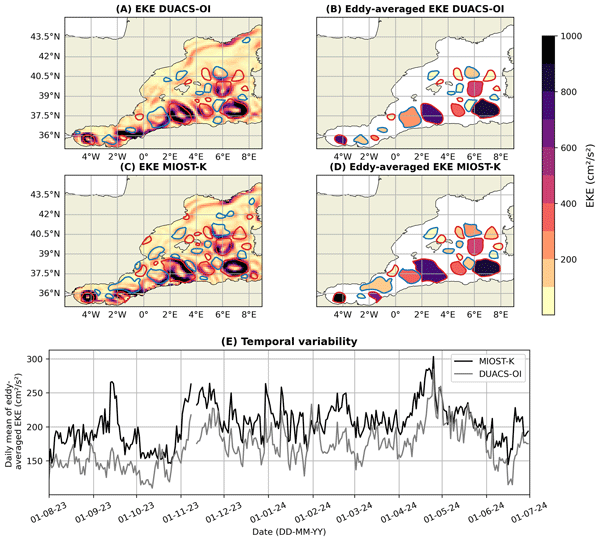
Understanding how the ocean moves heat, nutrients, and pollution is vital for climate studies and ecosystem health. We examined eddies in the western Mediterranean Sea using innovative satellite observations from the Surface Water and Ocean Topography mission. Compared to existing data, we detected major differences in eddy patterns. These advances improve our ability to monitor the ocean, manage marine pollution, and support sustainable maritime activities.
Juliette Gamot, Antoine Delepoulle, Francesco Nencioli, Marie-Isabelle Pujol, and Gerald Dibarboure
Earth Syst. Sci. Data, 18, 7043–7070, https://doi.org/10.5194/essd-18-7043-2026, https://doi.org/10.5194/essd-18-7043-2026, 2026
Short summary
Short summary
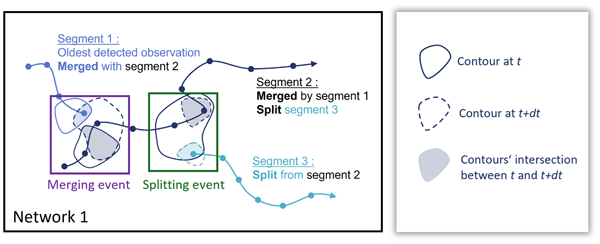
Mesoscale eddies are rotating ocean features that play a key role in transporting heat, salt, and biological material. This study presents a new global dataset derived from satellite observations to track these eddies and identify when they merge or split. By organizing them into interaction networks, we show that such events are frequent and strongly influence eddy evolution, leading to a more realistic description of ocean circulation.
Michael G. Hart-Davis, Roman Sulzbach, Stefan A. Talke, Ivan D. Haigh, Marta Marcos, Philip Woodworth, Richard Ray, Ole B. Andersen, Florent Lyard, Ergane Fouchet, Denise Dettmering, Maik Thomas, and Florian Seitz
Ocean Sci., 22, 1681–1709, https://doi.org/10.5194/os-22-1681-2026, https://doi.org/10.5194/os-22-1681-2026, 2026
Short summary
Short summary
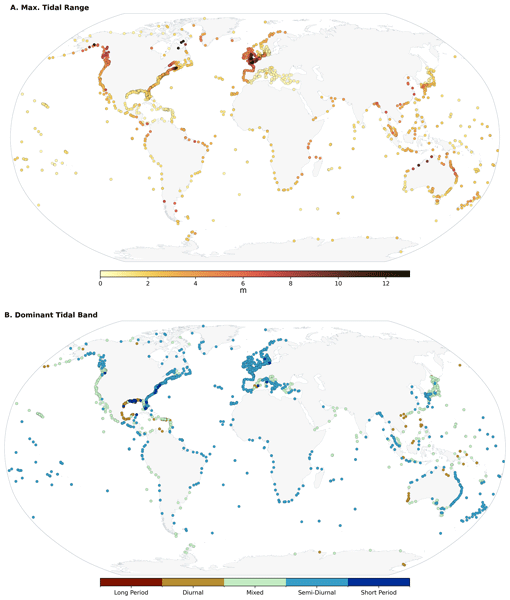
Ocean tides are a critical component of the global climate system, influencing a wide range of geophysical processes. Tide gauges have been a valuable source for developing the theory of ocean tides and for understanding their variability. We provide updated and new insights on tidal properties using the Global Extreme Sea Level Analysis tide gauge dataset, intended to be useful to a range of applications, from navigation and fishing communities to ocean scientists and tidal experts.
Cécile Kocha, Marine Liévin, Yann Pageot, Clémence Rubin, Victor Quet, Franck Octau, Marie-Isabelle Pujol, Pierre Prandi, Sabine Philipps, Gerald Dibarboure, Isabelino Denis, Carolina Nogueira Loddo, and François Bignalet-Cazalet
Earth Syst. Sci. Data Discuss., https://doi.org/10.5194/essd-2025-604, https://doi.org/10.5194/essd-2025-604, 2026
Revised manuscript under review for ESSD
Short summary
Short summary
30 years of satellite altimetry data were reprocessed in 2024, using state-of-the-art research algorithms and models. The so-called DT-2024 sea level dataset provides a homogenous and consistent set of observations from 15 satellites and 5 climate reference altimeters. This new dataset is shown to improve mesoscale quality and consistency, particularly over coastal and polar areas, as well as the long-term stability for climate research.
Maya Raghunath Suryawanshi, Malcolm McMillan, Jennifer Maddalena, Fanny Piras, Jérémie Aublanc, Jean-Alexis Daguzé, Clara Grau, and Qi Huang
The Cryosphere, 19, 2855–2880, https://doi.org/10.5194/tc-19-2855-2025, https://doi.org/10.5194/tc-19-2855-2025, 2025
Short summary
Short summary
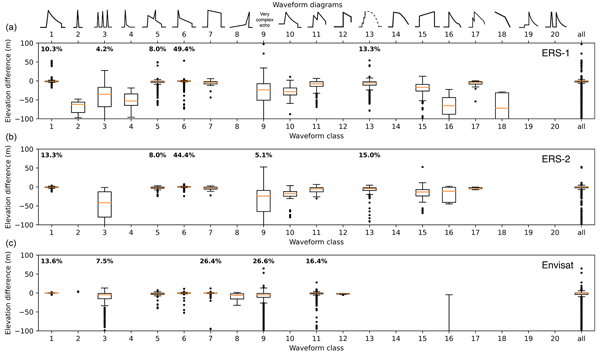
Increasing melting rates of the polar ice sheets are contributing more and more to sea level rise. Due to the remoteness and expanse of ice sheets, these changes are mainly observed using satellites. However, the accuracy of these measurements depends on the processing of these datasets. Here we use advanced algorithms to provide improved historical ice sheet elevation measurements, derived from satellite altimeters flying between 1991 and 2012, which will benefit cryospheric applications.
Pierre-Yves Le Traon, Gérald Dibarboure, Jean-Michel Lellouche, Marie-Isabelle Pujol, Mounir Benkiran, Marie Drevillon, Yann Drillet, Yannice Faugère, and Elisabeth Remy
Ocean Sci., 21, 1329–1347, https://doi.org/10.5194/os-21-1329-2025, https://doi.org/10.5194/os-21-1329-2025, 2025
Short summary
Short summary
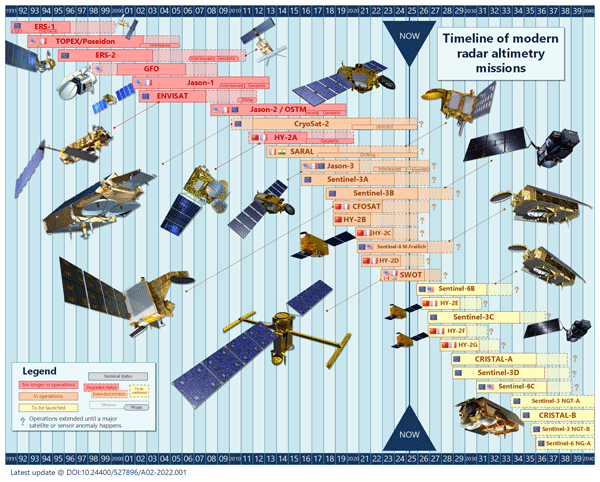
By providing all weather, global, and real-time observations of sea level, a key variable to constrain ocean analysis and forecasting systems, satellite altimetry has had a profound impact on the development of operational oceanography. This paper provides an overview of the development and evolution of satellite altimetry and operational oceanography over the past 20 years from the launch of Jason-1 in 2001 to the launch of SWOT (Surface Water and Ocean Topography) in 2022.
Gerald Dibarboure, Cécile Anadon, Frédéric Briol, Emeline Cadier, Robin Chevrier, Antoine Delepoulle, Yannice Faugère, Alice Laloue, Rosemary Morrow, Nicolas Picot, Pierre Prandi, Marie-Isabelle Pujol, Matthias Raynal, Anaelle Tréboutte, and Clément Ubelmann
Ocean Sci., 21, 283–323, https://doi.org/10.5194/os-21-283-2025, https://doi.org/10.5194/os-21-283-2025, 2025
Short summary
Short summary
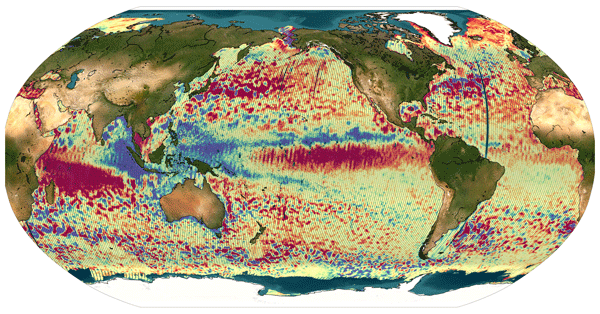
The Surface Water and Ocean Topography (SWOT) mission delivers unprecedented swath-altimetry products. In this paper, we describe how we extended the Level-3 algorithms to handle SWOT’s unique swath-altimeter data. We also illustrate and discuss the benefits, relevance, and limitations of Level-3 swath-altimeter products for various research domains.
Florence Birol, François Bignalet-Cazalet, Mathilde Cancet, Jean-Alexis Daguze, Wassim Fkaier, Ergane Fouchet, Fabien Léger, Claire Maraldi, Fernando Niño, Marie-Isabelle Pujol, and Ngan Tran
Ocean Sci., 21, 133–150, https://doi.org/10.5194/os-21-133-2025, https://doi.org/10.5194/os-21-133-2025, 2025
Short summary
Short summary
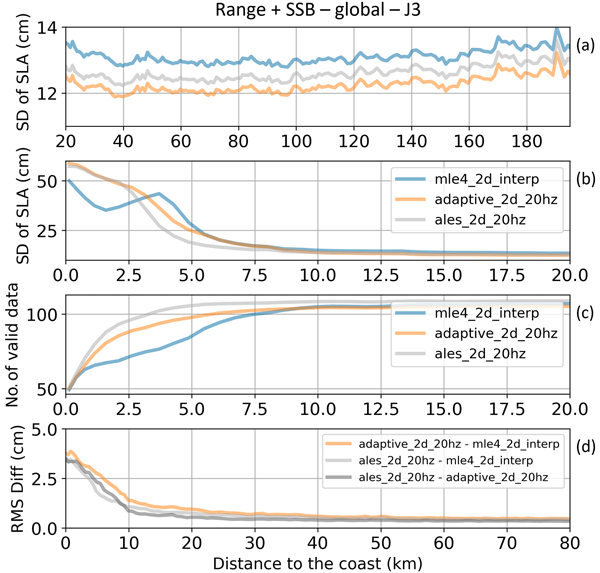
We take advantage of the availability of several algorithms for most of the terms/corrections used to calculate altimetry sea level data to quantify and analyze the sources of uncertainty associated with the approach to the coast. The results highlight their hierarchy. Tidal corrections and mean sea surface height contribute to coastal sea level data uncertainties. Improving the retracking algorithm is today the main factor to bring accurate altimetry sea level data closer to the shore.
Maxime Ballarotta, Clément Ubelmann, Valentin Bellemin-Laponnaz, Florian Le Guillou, Guillaume Meda, Cécile Anadon, Alice Laloue, Antoine Delepoulle, Yannice Faugère, Marie-Isabelle Pujol, Ronan Fablet, and Gérald Dibarboure
Ocean Sci., 21, 63–80, https://doi.org/10.5194/os-21-63-2025, https://doi.org/10.5194/os-21-63-2025, 2025
Short summary
Short summary
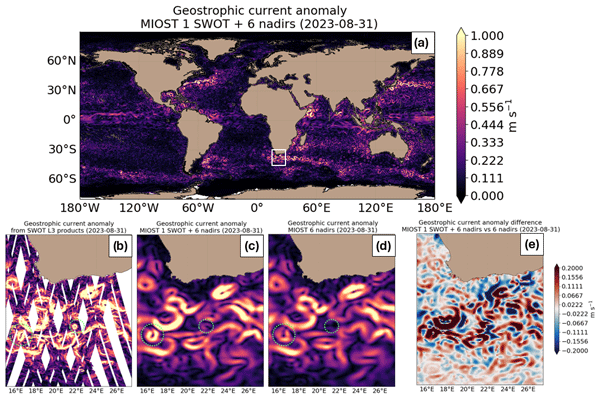
The Surface Water and Ocean Topography (SWOT) mission provides unprecedented swath altimetry data. This study examines SWOT's impact on mapping systems, showing a moderate effect with the current nadir altimetry constellation and a stronger impact with a reduced one. Integrating SWOT with dynamic mapping techniques improves the resolution of satellite-derived products, offering promising solutions for studying and monitoring sea-level variability at finer scales.
Karina von Schuckmann, Lorena Moreira, Mathilde Cancet, Flora Gues, Emmanuelle Autret, Jonathan Baker, Clément Bricaud, Romain Bourdalle-Badie, Lluis Castrillo, Lijing Cheng, Frederic Chevallier, Daniele Ciani, Alvaro de Pascual-Collar, Vincenzo De Toma, Marie Drevillon, Claudia Fanelli, Gilles Garric, Marion Gehlen, Rianne Giesen, Kevin Hodges, Doroteaciro Iovino, Simon Jandt-Scheelke, Eric Jansen, Melanie Juza, Ioanna Karagali, Thomas Lavergne, Simona Masina, Ronan McAdam, Audrey Minière, Helen Morrison, Tabea Rebekka Panteleit, Andrea Pisano, Marie-Isabelle Pujol, Ad Stoffelen, Sulian Thual, Simon Van Gennip, Pierre Veillard, Chunxue Yang, and Hao Zuo
State Planet, 4-osr8, 1, https://doi.org/10.5194/sp-4-osr8-1-2024, https://doi.org/10.5194/sp-4-osr8-1-2024, 2024
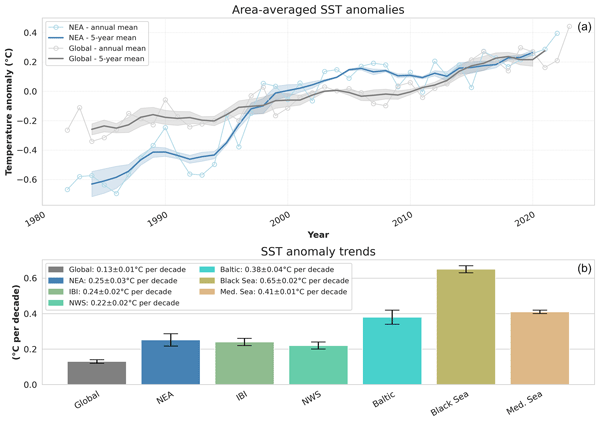
Karina von Schuckmann, Lorena Moreira, Mathilde Cancet, Flora Gues, Emmanuelle Autret, Ali Aydogdu, Lluis Castrillo, Daniele Ciani, Andrea Cipollone, Emanuela Clementi, Gianpiero Cossarini, Alvaro de Pascual-Collar, Vincenzo De Toma, Marion Gehlen, Rianne Giesen, Marie Drevillon, Claudia Fanelli, Kevin Hodges, Simon Jandt-Scheelke, Eric Jansen, Melanie Juza, Ioanna Karagali, Priidik Lagemaa, Vidar Lien, Leonardo Lima, Vladyslav Lyubartsev, Ilja Maljutenko, Simona Masina, Ronan McAdam, Pietro Miraglio, Helen Morrison, Tabea Rebekka Panteleit, Andrea Pisano, Marie-Isabelle Pujol, Urmas Raudsepp, Roshin Raj, Ad Stoffelen, Simon Van Gennip, Pierre Veillard, and Chunxue Yang
State Planet, 4-osr8, 2, https://doi.org/10.5194/sp-4-osr8-2-2024, https://doi.org/10.5194/sp-4-osr8-2-2024, 2024
Antonio Sánchez-Román, Flora Gues, Romain Bourdalle-Badie, Marie-Isabelle Pujol, Ananda Pascual, and Marie Drévillon
State Planet, 4-osr8, 4, https://doi.org/10.5194/sp-4-osr8-4-2024, https://doi.org/10.5194/sp-4-osr8-4-2024, 2024
Short summary
Short summary
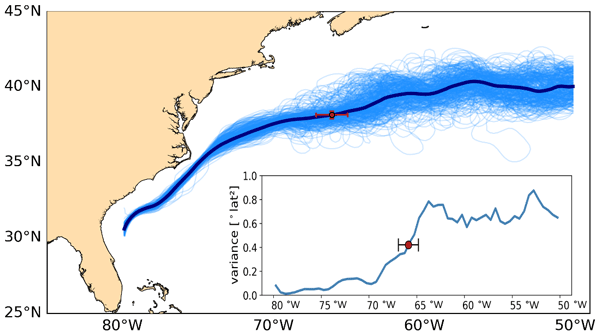
This study investigates the changing pattern of the Gulf Stream over the last 3 decades as observed in the altimetric record (1993–2022). Changes in the Gulf Stream path have an effect on its speed (and associated energy) and also on waters transported towards the subpolar North Atlantic, impacting Europe's climate. The observed shifts in the paths seem to be linked to variability in the North Atlantic Ocean during winter that may play an important role.
Elisa Carli, Rosemary Morrow, Oscar Vergara, Robin Chevrier, and Lionel Renault
Ocean Sci., 19, 1413–1435, https://doi.org/10.5194/os-19-1413-2023, https://doi.org/10.5194/os-19-1413-2023, 2023
Short summary
Short summary
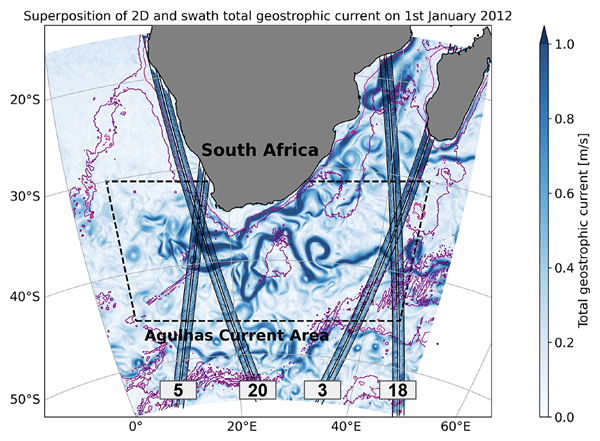
Oceanic eddies are the structures carrying most of the energy in our oceans. They are key to climate regulation and nutrient transport. We prepare for the Surface Water and Ocean Topography mission, studying eddy dynamics in the region south of Africa, where the Indian and Atlantic oceans meet, using models and simulated satellite data. SWOT will provide insights into the structures smaller than what is currently observable, which appear to greatly contribute to eddy kinetic energy and strain.
Antonio Sánchez-Román, M. Isabelle Pujol, Yannice Faugère, and Ananda Pascual
Ocean Sci., 19, 793–809, https://doi.org/10.5194/os-19-793-2023, https://doi.org/10.5194/os-19-793-2023, 2023
Short summary
Short summary
This paper assesses the performance of the latest version (DT2021) of global gridded altimetry products distributed through the CMEMS and C3S Copernicus programs on the retrieval of sea level in the coastal zone of the European seas with respect to the previous DT2018 version. This comparison is made using an external independent dataset. DT2021 sea level products better solve the signal in the coastal band.

Adrien Guérou, Benoit Meyssignac, Pierre Prandi, Michaël Ablain, Aurélien Ribes, and François Bignalet-Cazalet
Ocean Sci., 19, 431–451, https://doi.org/10.5194/os-19-431-2023, https://doi.org/10.5194/os-19-431-2023, 2023
Short summary
Short summary
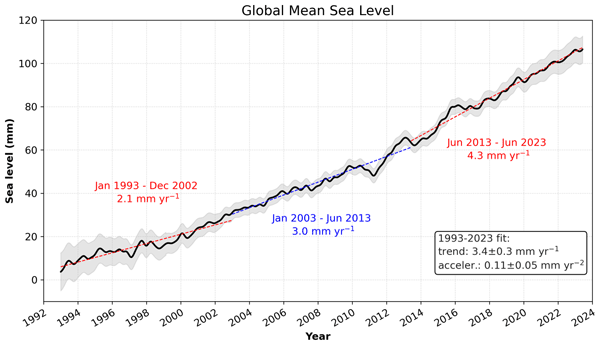
Based on the latest satellite observations published by the French space agency CNES, we present the current state of the sea level at the scale of the planet and assess its rise and acceleration over the past 29 years. To support scientific research we provide updated estimations of our confidence in our estimations and highlight key technological and scientific fields. Making progress on that will help to better characterize the sea level in the future.

Oscar Vergara, Rosemary Morrow, Marie-Isabelle Pujol, Gérald Dibarboure, and Clément Ubelmann
Ocean Sci., 19, 363–379, https://doi.org/10.5194/os-19-363-2023, https://doi.org/10.5194/os-19-363-2023, 2023
Short summary
Short summary
Recent advances allow us to observe the ocean from space with increasingly higher detail, challenging our knowledge of the ocean's surface height signature. We use a statistical approach to determine the spatial scale at which the sea surface height signal is no longer dominated by geostrophic turbulence but in turn becomes dominated by wave-type motions. This information helps us to better use the data provided by ocean-observing satellites and to gain knowledge on climate-driving processes.
Marie-Isabelle Pujol, Stéphanie Dupuy, Oscar Vergara, Antonio Sánchez-Román, Yannice Faugère, Pierre Prandi, Mei-Ling Dabat, Quentin Dagneaux, Marine Lievin, Emeline Cadier, Gérald Dibarboure, and Nicolas Picot
Earth Syst. Sci. Data Discuss., https://doi.org/10.5194/essd-2022-292, https://doi.org/10.5194/essd-2022-292, 2022
Manuscript not accepted for further review
Short summary
Short summary
An altimeter sea level along-track level-3 product with a 5 Hz (~1.2 km) sampling is proposed. It takes advantage of recent advances in radar altimeter processing, and improvements made to different stages of the processing chain. Compared to the conventional 1 Hz (~7 km) product, it significantly improves the observability of the short wavelength signal in open ocean and near coast areas (> 5 km). It also contributes to improving high resolution numerical model outputs via data assimilation.
Cited articles
Andersen, O. B. and Scharroo, R.: Range and geophysical corrections in coastal regions: and implications for mean sea surface determination, in: Coastal Altimetry, edited by: Vignudelli, S., Kostianoy, A., Cipollini, P., and Benveniste, J., Springer, Berlin, Heidelberg, 103–146, https://doi.org/10.1007/978-3-642-12796-0_5, 2011.
Birol, F. and Delebecque, C.: Using high sampling rate (10/20 Hz) altimeter data for the observation of coastal surface currents: A case study over the northwestern Mediterranean Sea, J. Mar. Syst., 129, 318–333, https://doi.org/10.1016/j.jmarsys.2013.07.009, 2014.
Birol, F., Fuller, N., Lyard, F., Cancet, M., Nino, F., Delebecque, C., Fleury, S., Toublanc, F., Melet, A., Saraceno, M., and Léger, F.: Coastal applications from nadir altimetry: Example of the X-TRACK regional products, Adv. Space Res., 59, 936–953, https://doi.org/10.1016/j.asr.2016.11.005, 2017.
Birol, F., Léger, F., Passaro, M., Cazenave, A., Niño, F., Calafat, F. M., Shaw, A., Legeais, J.-F., Gouzenes, Y., Schwatke, C., and Benveniste, J.: The X-TRACK/ALES multi-mission processing system: New advances in altimetry towards the coast, Adv. Space Res., 2021, 67, 2398–2415, https://doi.org/10.1016/j.asr.2021.01.049, 2021.
Birol, F., Bignalet-Cazalet, F., Cancet, M., Daguze, J.-A., Faugère, Y., Fkaier, W., Fouchet, E., Léger, F., Maraldi, C., Niño, F., Pujol, M.-I., and Thibaut, P.: Round Robin Assessment of altimetry algorithms for coastal sea surface height data: Inter-comparison Protocol, https://www.aviso.altimetry.fr/fileadmin/documents/data/products/alticap/RoundRobinSpecificationPlan_v5.pdf (last access: 26 March 2026), 2023.
Birol, F., Bignalet-Cazalet, F., Cancet, M., Daguze, J.-A., Fkaier, W., Fouchet, E., Léger, F., Maraldi, C., Niño, F., Pujol, M.-I., and Tran, N.: Understanding uncertainties in the satellite altimeter measurement of coastal sea level: insights from a round-robin analysis, Ocean Sci., 21, 133–150, https://doi.org/10.5194/os-21-133-2025, 2025.
Caldwell, P. C., Merrifield, M. A., and Thompson, P. R.: Sea level measured by tide gauges from global oceans – the Joint Archive for Sea Level holdings (NCEI Accession 0019568), Version 5.5, NOAA National Centers for Environmental Information [data set], https://doi.org/10.7289/V5V40S7W, 2015.
Cancet, M. and Fouchet, E.: Coastal Altimetry Round Robin: Synthesis on tidal models assessment and tide gauges selection, https://www.aviso.altimetry.fr/fileadmin/documents/data/products/alticap/REPORTS/TIDE/Tide_allsolutions.pdf (last access: 26 March 2026), 2022
Cancet, M., Fouchet, E., Sahuc, E., Lyard, F., Dibarboure, G., and Picot, N.: Bathymetry improvement and high-resolution tidal modelling at regional scales, Ocean Surface Topography Science Team (OSTST) meeting, 31 October–4 November 2022, Venice, Italy, https://doi.org/10.24400/527896/a03-2022.3304, 2022.
Carrère, L. and Lyard, F.: Modelling the barotropic response of the global ocean to atmospheric wind and pressure forcing – comparisons with observations, Geophys. Res. Lett., 30, 1275, https://doi.org/10.1029/2002GL016473, 2003.
Carrère, L., Faugère, Y., and Ablain, M.: Major improvement of altimetry sea level estimations using pressure-derived corrections based on ERA-Interim atmospheric reanalysis, Ocean Sci., 12, 825–842, https://doi.org/10.5194/os-12-825-2016, 2016.
Carrère, L., Lyard, F., Cancet, M., Allain, D., Dabat, M.-L., Fouchet, E., Sahuc, E., Faugère, Y., Dibarboure, G., and Picot, N.: A new barotropic tide model for global ocean: FES2022, Ocean Surface Topography Science Team (OSTST) meeting, 31 Oct.ober–4 November 2022, Venice, Italy, https://doi.org/10.24400/527896/a03-2022.3287, 2022.
Cartwright, D. E. and Edden, A. C.: Corrected tables of tidal harmonics, Geophys. J. Roy. Astr. Soc., 33, 253–264, https://doi.org/10.1111/j.1365-246X.1973.tb03420.x, 1973.
Cartwright, D. E. and Tayler, R. J.: New computations of the tide-generating potential, Geophys. J. Roy. Astr. Soc., 23, 45–74, https://doi.org/10.1111/j.1365-246X.1971.tb01803.x, 1971.
Cazenave, A., Gouzenes, Y., Birol, F., Leger, F., Passaro, M., Calafat, F. M., Shaw, A., Nino, F., Legeais, J.-F., Oelsmann, J., Restano, M., and Benveniste, J.: Sea level along the world's coastlines can be measured by a network of virtual altimetry stations, Commun. Earth Environ., 3, 117, https://doi.org/10.1038/s43247-022-00448-z, 2022.
Chelton, D., Ries, J., Haines, B., Fu, L.-L., and Callahan, P.: Satellite Altimetry, in: Satellite altimetry and Earth sciences, A handbook of techniques and applications, edited by: Fu, L.-L. and Cazenave, A., Int. Geophys., 69, 1–31, https://doi.org/10.1016/S0074-6142(01)80146-7, 2001.
Cheng, Y. and Andersen, O. B.: Multimission empirical ocean tide modeling for shallow waters and polar seas, J. Geophys. Res., 116, C11, https://doi.org/10.1029/2011JC007172, 2011.
CLS: CNES_CLS 2022 Mean Sea Surface (Version 2022), CNES [data set], https://doi.org/10.24400/527896/A01-2022.017, 2022.
CLS and CNRS-LEGOS: Dynamic Atmospheric Correction using ERA5 meteorological reanalysis (Version 1.1), CNES [data set], https://doi.org/10.24400/527896/A01-2025.006, 2025.
CNES: Jason-2 Geophysical Data Record (GDR), distributed by AVISO+, CNES [data set], https://www.aviso.altimetry.fr/en/data/products/ (last access: 12 September 2025), 2024a.
CNES: Jason-3 Geophysical Data Record (GDR), distributed by AVISO+, CNES [data set], https://www.aviso.altimetry.fr/en/data/products/ (last access: 12 September 2025), 2024b.
CTOH: X-TRACK-L2P Coastal along-track sea level anomalies (Version v2.2), CNES [data set], https://doi.org/10.24400/527896/A01-2022.020, 2023.
Desai, S., Wahr, J., and Beckley, B.: Revisiting the pole tide for and from satellite altimetry, J. Geod., 89, 1233–1243, https://doi.org/10.1007/s00190-015-0848-7, 2015.
Dettmering, D. and Schwatke, C.: Ionospheric Corrections for Satellite Altimetry – Impact on Global Mean Sea Level Trends, Earth Space Sci., 9, e2021EA002098, https://doi.org/10.1029/2021EA002098, 2022.
Egbert, G. D. and Erofeeva, S. Y.: Efficient Inverse Modeling of Barotropic Ocean Tides, J. Atmos. Ocean Tech., 19, 183–204, https://doi.org/10.1175/1520-0426(2002)019<0183:EIMOBO>2.0.CO;2, 2002.
EU Copernicus Marine Service Information (CMEMS): Global Ocean Along Track L3 Sea Surface Heights Reprocessed 1993 Ongoing Tailored For Data Assimilation, MDS – Marine Data Store [data set], https://doi.org/10.48670/moi-00146, 2024.
EUMETSAT: Ocean and Sea Ice Satellite Application Facility, Global Ocean Sea Ice Concentration Time Series Reprocessed (OSI-SAF), EU CMEMS – Copernicus Marine Service Information, MDS – Marine Data Store [data set], https://doi.org/10.48670/moi-00136, 2022.
Fernandes, M., Lázaro, C., Nunes, A., and Scharroo, R.: Atmospheric corrections for altimetry studies over inland water, Remote Sens., 6, 4952–4997, https://doi.org/10.3390/rs6064952, 2014.
Fernandes, M. J., Lázaro, C., Ablain, M., and Pires, N.: Improved wet path delays for all ESA and reference altimetric missions, Remote Sens. Environ., 169, 50–74, https://doi.org/10.1016/j.rse.2015.07.023, 2015.
Fu, L.-L., Pavelsky, T., Cretaux, J.-F., Morrow, R., Farrar, J. T., Vaze, P., Sengenes, P., Vinogradova-Shiffer, N., Sylvestre-Baron A., Picot, N., and Dibarboure, G.: The Surface Water and Ocean Topography Mission: A breakthrough in radar remote sensing of the ocean and land surface water, Geophys. Res. Lett., 51, e2023GL107652, https://doi.org/10.1029/2023GL107652, 2024.
Gommenginger, C., Thibaut, P., Fenoglio-Marc, L., Quartly, G., Deng, X., Gómez-Enri, J., Challenor, P., and Gao, Y.: Retracking Altimeter Waveforms Near the Coasts, in: Coastal Altimetry, edited by: Vignudelli, S., Kostianoy, A., Cipollini, P., and Benveniste, J., Springer, Berlin, Heidelberg, https://doi.org/10.1007/978-3-642-12796-0_4, 2011.
Hart-Davis, M. G., Piccioni, G., Dettmering, D., Schwatke, C., Passaro, M., and Seitz, F.: EOT20: a global ocean tide model from multi-mission satellite altimetry, Earth Syst. Sci. Data, 13, 3869–3884, https://doi.org/10.5194/essd-13-3869-2021, 2021a.
Hart-Davis, M., Piccioni, G., Dettmering, D., Schwatke, C., Passaro, M., and Seitz, F.: EOT20 – A global Empirical Ocean Tide model from multi-mission satellite altimetry, SEANOE [data set], https://doi.org/10.17882/79489, 2021b.
Iijima, B. A., Harris, I. L., Ho, C. M., Lindqwiste, U. J., Mannucci, A. J., Pi, X., Reyes, M. J., Sparks, L. C., and Wilson, B. D.: Automated daily process for global ionospheric total electron content maps and satellite ocean altimeter ionospheric calibration based on Global Positioning System data, J. Atmos. Sol.-Terr. Phy., 61, 1205–1218, https://doi.org/10.1016/S1364-6826(99)00067-X, 1999.
International Altimetry Team: Altimetry for the future: Building on 25 years of progress, Adv. Space Res., 66, 319–363, https://doi.org/10.1016/j.asr.2021.01.022, 2021.
Jousset, S., Mulet, S., Greiner, E., Wilkin, J., Vidar, L., Chafik, L., Raj, R., Bonaduce, A., Picot, N., and Dibarboure, G.: New global Mean Dynamic Topography CNES-CLS-22 combining drifters, hydrography profiles and high frequency radar data, ESS Open Archive [data set], https://doi.org/10.22541/essoar.170158328.85804859/v2, 2025.
Komjathy, A. and Born G. H.: GPS-based ionospheric corrections for single frequency radar altimetry, J. Atmos. Sol.-Terr. Phy., 61, 1197–1203, https://doi.org/10.1016/S1364-6826(99)00051-6, 1999.
Lázaro, C., Fernandes, M. J., Vieira, T., and Vieira, E.: A coastally improved global dataset of wet tropospheric corrections for satellite altimetry, Earth Syst. Sci. Data, 12, 3205–3228, https://doi.org/10.5194/essd-12-3205-2020, 2020.
LEGOS/CNRS/CLS: Dynamic Atmospheric Correction, CNES [data set], https://doi.org/10.24400/527896/A01-2022.001, 1992.
LEGOS, NOVELTIS, and CLS: FES2014 (Finite Element Solution) Ocean Tide, CNES [data set], https://www.aviso.altimetry.fr/en/data/products/auxiliary-products/global-tide-fes/description-fes2014.html (last access: 26 March 2026), 2015.
LEGOS, CLS, and Noveltis: ALTimetry Innovative Coastal Approach Product (ALTICAP), CNES [data set], https://doi.org/10.24400/527896/A01-2023.020, 2023.
LEGOS, NOVELTIS, and CLS: FES2022 (Finite Element Solution) Ocean Tide (Version 2022), CNES [data set], https://doi.org/10.24400/527896/A01-2024.004, 2024.
Le Traon, P.-Y. and Ogor, F.: ERS-1/2 orbit improvement using TOPEX/POSEIDON: The 2 cm challenge, J. Geophys. Res.-Oceans, 103, 8045–8057, https://doi.org/10.1029/97JC01917, 1998.
Le Traon, P.-Y., Dibarboure, G., Lellouche, J.-M., Pujol, M.-I., Benkiran, M., Drevillon, M., Drillet, Y., Faugère, Y., and Remy, E.: Satellite altimetry and operational oceanography: from Jason-1 to SWOT, Ocean Sci., 21, 1329–1347, https://doi.org/10.5194/os-21-1329-2025, 2025.
Lyard, F. H., Allain, D. J., Cancet, M., Carrère, L., and Picot, N.: FES2014 global ocean tide atlas: design and performance, Ocean Sci., 17, 615–649, https://doi.org/10.5194/os-17-615-2021, 2021.
Melville, W. K., Felizardo, F. C. and Matusov, P.: Wave slope and wave age effects in measurements of electromagnetic bias, J. Geophys. Res., 109, C07018, https://doi.org/10.1029/2002JC001708, 2004.
Moreau, T., Cadier, E., Boy, F., Aublanc, J., Rieu, P., Raynal, M., Labroue, S., Thibaut, P., Dibarboure, G., Picot, N., Phalippou, L., Demeestere, F., Borde, F., and Mavrocordatos, C.: High-performance altimeter Doppler processing for measuring sea level height under varying sea state conditions, Adv. Space Res., 67, 1870–1886, https://doi.org/10.1016/j.asr.2020.12.038, 2021.
Passaro, M., Cipollini, P., Vignudelli, S., Quartly, G. D., and Snaith, H. M.: ALES: A multi-mission adaptive subwaveform retracker for coastal and open ocean altimetry, Remote Sens. Environ., 145, 173–189, https://doi.org/10.1016/j.rse.2014.02.008, 2014.
Passaro, M., Nadzir, Z. A., and Quartly, G. D.: Improving the precision of sea level data from satellite altimetry with high-frequency and regional sea state bias corrections, Remote Sens. Environ., 218, 245–254, https://doi.org/10.1016/j.rse.2018.09.007, 2018.
Peng, F., Deng, X., and Cheng, X.: Quantifying the precision of retracked Jason-2 sea level data in the 0–5 km Australian coastal zone, Remote Sens. Environ., 263, 112539, https://doi.org/10.1016/j.rse.2021.112539, 2018.
Poisson, J., Quartly, G. D., Kurekin, A. A., Thibaut, P., Hoang, D., and Nencioli, F.: Development of an ENVISAT Altimetry Processor Providing Sea Level Continuity Between Open Ocean and Arctic Leads, IEEE T. Geosci. Remote, 56, 5299–5319, https://doi.org/10.1109/TGRS.2018.2813061, 2018.
Pujol, M.-I., Schaeffer, P., Faugere, Y., Raynal, M., Dibarboure, G., and Picot, N.: Gauging the improvement of recent mean sea surface models: A new approach for identifying and quantifying their errors, J. Geophys. Res.-Oceans, 123, 5889–5911, https://doi.org/10.1029/2017JC013503, 2018.
Ray, R. D.: Precise comparisons of bottom-pressure and altimetric ocean tides, J. Geophys. Res.-Oceans, 118, 4570–4584, https://doi.org/10.1002/jgrc.20336, 2013.
Ries, J. C. and Desai, S.: Update to the conventional model for rotational deformation, in: AGU Fall Meeting 2017, 11–15 December 2017, New Orleans, USA, https://ui.adsabs.harvard.edu/abs/2017AGUFM.G14A..07R (last access: 26 March 2026), 2017.
Robinson, A. R. and Brink, K. H. (Eds.): The Global Coastal Ocean: Multiscale Interdisciplinary Processes, in: The Sea, vol. 13, Harvard University Press, ISBN 10:0674015266, 2005.
Sandwell, D., Schaeffer, P., Dibarboure, G., and Picot, N.: High Resolution Mean Sea Surface for SWOT, https://spark.adobe.com/page/MkjujdFYVbHsZ/ (last access: 11 September 2025), 2017.
Schaeffer, P., Pujol, M.-I., Veillard, P., Faugere, Y., Dagneaux, Q., Dibarboure, G., and Picot, N.: The CNES CLS 2022 Mean Sea Surface: Short Wavelength Improvements from CryoSat-2 and SARAL/AltiKa High-Sampled Altimeter Data, Remote Sens., 15, 2910, https://doi.org/10.3390/rs15112910, 2023.
Schwatke, C., Dettmering, D., Passaro, M., Hart-Davis, M. G., Scherer, D., Müller, F. L., Bosch, W., and Seitz, F.: OpenADB: DGFI-TUM's Open Altimeter Database, Geosci. Data J., 11, 573–588, https://doi.org/10.1002/gdj3.233, 2023.
Stammer, D., Ray, R. D., Andersen, O. B., Arbic, B. K., Bosch, W., Carrère, L., Cheng, Y., Chinn, D. S., Dushaw, B. D., Egbert, G. D., Erofeeva, S. Y., Fok, H. S., Green, J. A. M., Griffiths, S., King, M. A., Lapin, V., Lemoine, F. G., Luthcke, S. B., Lyard, F., Morison, J., Müller, M., Padman, L., Richman, J. G., Shriver, J. F., Shum, C. K., Taguchi, E., and Yi, Y.: Accuracy assessment of global barotropic ocean tide models, Rev. Geophys., 52, 243–282, https://doi.org/10.1002/2014RG000450, 2014.
Thibaut, P., Poisson, J. C., Bronner, E., and Picot, N.: Relative Performance of the MLE3 and MLE4 Retracking Algorithms on Jason-2 Altimeter Waveforms, Mar. Geod., 33, 317–335, https://doi.org/10.1080/01490419.2010.491033, 2010.
Thibaut, P., Piras, F., Roinard, H., Guerou, A., Boy, F., Maraldi, C., Bignalet-Cazalet, F., Dibarboure, G., and Picot, N.: Benefits of the Adaptive Retracking Solution for the JASON-3 GDR-F Reprocessing Campaign, in: IEEE International Geoscience and Remote Sensing Symposium IGARSS, Brussels, Belgium, 7422–7425, https://doi.org/10.1109/IGARSS47720.2021.9553647, 2021.
Tran, N., Labroue, S., Philipps, S., Bronner, E., and Picot, N.: Overview and update of the sea state bias corrections for the Jason-2, Jason-1 and TOPEX missions, Mar. Geod., 33, 348–362, https://doi.org/10.1080/01490419.2010.487788, 2010.
Tran, N., Vandemark, D., Zaron, E. D., Thibaut, P., Dibarboure, G., and Picot, N.: Assessing the effects of sea-state related errors on the precision of high-rate Jason-3 altimeter sea level data, Adv. Space Res., 68, 963–977, https://doi.org/10.1016/j.asr.2019.11.034, 2021.
Tourain, C., Piras, F., Ollivier, A., Hauser, D., Poisson, J. C., and Boy, F.: Benefits of the Adaptive Algorithm for Retracking Altimeter Nadir Echoes: Results From Simulations and CFOSAT/SWIM Observations, IEEE T. Geosci. Remote, 59, 9927–9940, https://doi.org/10.1109/TGRS.2021.3064236, 2021.
Vignudelli, S., Kostianoy, A. G., Cipollini, P., and Benveniste, J. (Eds): Coastal Altimetry, Springer, ISBN 978-3-642-12796-0, 2011.
Vignudelli, S., Birol, F., Benveniste, J., Fu, L.-L., Picot, N., Raynal, M., and Roinard, H.: Satellite altimetry measurements of sea level in the coastal zone, Surv. Geophys., 40, 1319–1349, https://doi.org/10.1007/s10712-019-09569-1, 2019.
Wahr, J. M.: Deformation induced by polar motion, J. Geophys. Res.-Solid, 90, 9363–9368, https://doi.org/10.1029/JB090iB11p09363, 1985.
Wessel, P. and Smith, W. H. F.: A global, self-consistent, hierarchical, high-resolution shoreline database, J. Geophys. Res., 101, 8741–8743, https://doi.org/10.1029/96JB00104, 1996.
Xu, X., Birol, F., and Cazenave, A.: Evaluation of coastal sea level of Jason-2 altimetry offshore Hong Kong, Remote Sens., 25, https://doi.org/10.3390/rs10020282, 2018.
Zaron, E. D.: Baroclinic Tidal Sea Level from Exact-Repeat Mission Altimetry, J. Phys. Oceanogr., 49, 193–210, https://doi.org/10.1175/JPO-D-18-0127.1, 2019.
Zaron, E. D. and Elipot, S.: An Assessment of Global Ocean Barotropic Tide Models Using Geodetic Mission Altimetry and Surface Drifters, J. Phys. Oceanogr., 51, 63–82, https://doi.org/10.1175/JPO-D-20-0089.1, 2020.
Short summary
Observing sea level variations at high resolution is paramount for coastal scientific, societal and economic issues. ALTICAP (ALTimetry Innovative Coastal Approach Product) is a new product of Sea Level Anomaly derived from Jason-3 20 Hz along track satellite altimetry and benefiting from the most recent corrections. It covers all coastal ocean up to 500 km from land, from February 2016 to July 2021. It also provides collocated altimetric significant wave height and wind speed.
Observing sea level variations at high resolution is paramount for coastal scientific, societal...


Altmetrics
Final-revised paper
Preprint