Articles | Volume 18, issue 3
https://doi.org/10.5194/essd-18-2153-2026
© Author(s) 2026. This work is distributed under
the Creative Commons Attribution 4.0 License.
the Creative Commons Attribution 4.0 License.
https://doi.org/10.5194/essd-18-2153-2026
© Author(s) 2026. This work is distributed under
the Creative Commons Attribution 4.0 License.
the Creative Commons Attribution 4.0 License.
Data description article
| 
25 Mar 2026
Data description article |
| 25 Mar 2026
| 25 Mar 2026
A multi-year global methane data set obtained by merging observations from TROPOMI and IASI
Kanwal Shahzadi
CORRESPONDING AUTHOR

Institute for Meteorology and Climate Research (IMKASF), Karlsruhe Institute of Technology (KIT), Karlsruhe, Germany
Scientific Computing Center (SCC), Karlsruhe Institute of Technology (KIT), Karlsruhe, Germany
Matthias Schneider
CORRESPONDING AUTHOR
Institute for Meteorology and Climate Research (IMKASF), Karlsruhe Institute of Technology (KIT), Karlsruhe, Germany
Nga Ying Lo
Institute for Meteorology and Climate Research (IMKASF), Karlsruhe Institute of Technology (KIT), Karlsruhe, Germany
Scientific Computing Center (SCC), Karlsruhe Institute of Technology (KIT), Karlsruhe, Germany
Frank Hase
Institute for Meteorology and Climate Research (IMKASF), Karlsruhe Institute of Technology (KIT), Karlsruhe, Germany
Jörg Meyer
Scientific Computing Center (SCC), Karlsruhe Institute of Technology (KIT), Karlsruhe, Germany
Ugur Cayoglu
Scientific Computing Center (SCC), Karlsruhe Institute of Technology (KIT), Karlsruhe, Germany
Tobias Borsdorff
Space Research Organisation Netherlands (SRON), Leiden, the Netherlands
Mari C. Martinez-Velarte
Space Research Organisation Netherlands (SRON), Leiden, the Netherlands
Related authors
No articles found.
Robert J. Parker, Michael P. Cartwright, Dan Orr, Lakshmi N. Bharathan, Neil Humpage, Alex J. Webb, Peter Somkuti, Hartmut Boesch, Antonio Di Noia, Hiroshi Suto, Matthias Buschmann, Nicholas M. Deutscher, David W. T. Griffith, Frank Hase, Rigel Kivi, Erin McGee, Isamu Morino, Hirofumi Ohyama, Christof Petri, John Robinson, Coleen M. Roehl, Mahesh Kumar Sha, Kei Shiomi, Kimberly Strong, Ralf Sussmann, Yao Té, Voltaire A. Velazco, Mihalis Vrekoussis, Wei Wang, Thorsten Warneke, Damien Weidmann, Debra Wunch, and Minqiang Zhou
Earth Syst. Sci. Data Discuss., https://doi.org/10.5194/essd-2026-625, https://doi.org/10.5194/essd-2026-625, 2026
Preprint under review for ESSD
Short summary
Short summary
Methane is a powerful greenhouse gas and its concentration in the atmosphere is rising rapidly. We present a new record of atmospheric methane measured from space by the Japanese GOSAT-2 satellite, covering 2019 to 2025. The measurements are processed identically to those from its predecessor GOSAT and checked against ground-based instruments around the world. Together the two satellites provide a continuous 17-year record that helps track where methane comes from and how quickly it is changing.
Hui Li, Philippe Ciais, Frédéric Chevallier, Bo Zheng, Paul I. Palmer, Frank Hase, Morgan Lopez, Elsa M. Ordway, Shushi Peng, Danielle Monteverde, Michel Ramonet, Jason M. St. Clair, Le Bienfaiteur Sagang, and Benjamin Poulter
Atmos. Chem. Phys., 26, 11893–11908, https://doi.org/10.5194/acp-26-11893-2026, https://doi.org/10.5194/acp-26-11893-2026, 2026
Short summary
Short summary
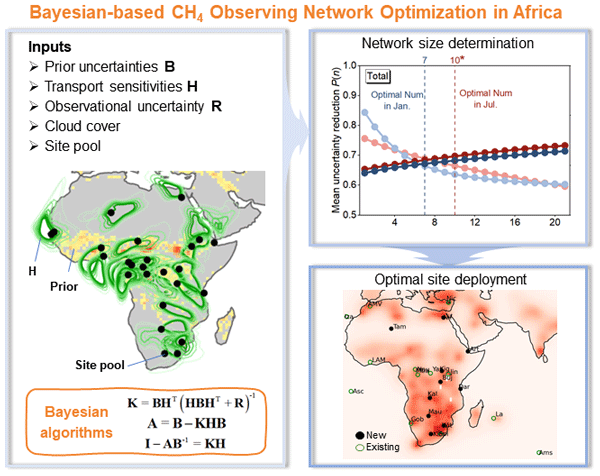
We studied how to best place methane monitoring instruments across Africa to better understand where emissions come from. Because observations can overlap in what they detect, adding more sites does not always improve results equally. Using a statistical approach, we identified both the ideal number and locations of sites (ten new sites can reduce emission uncertainty by over 65 % for total African CH4). Our results help guide cost-effective monitoring strategies in regions with limited data.
Aurélien Sicsik-Paré, Audrey Fortems-Cheiney, Isabelle Pison, Grégoire Broquet, Alvin Opler, Elise Potier, Adrien Martinez, Oliver Schneising, Michael Buchwitz, Joannes D. Maasakkers, Tobias Borsdorff, and Antoine Berchet
Atmos. Chem. Phys., 26, 10423–10454, https://doi.org/10.5194/acp-26-10423-2026, https://doi.org/10.5194/acp-26-10423-2026, 2026
Short summary
Short summary
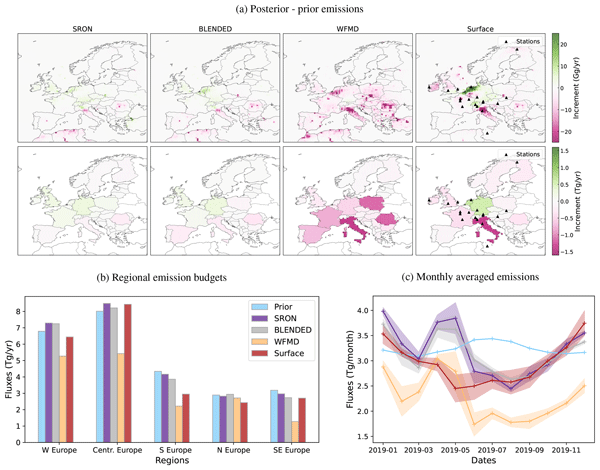
Assimilating satellite methane observations provides top-down quantification of regional methane emissions. This study compares European emissions in 2019 estimated from the inversion of three satellite datasets. We find inconsistencies in national budgets and spatial patterns, with no product clearly superior. We disentangle drivers of the differences in emissions, highlighting the impact of differences in coverage, observations and errors on the consistency of methane emission estimates.
Mari C. Martinez-Velarte, Jochen Landgraf, Ben Veihelmann, Bernd Sierk, and Tobias Borsdorff
Atmos. Meas. Tech., 19, 4703–4720, https://doi.org/10.5194/amt-19-4703-2026, https://doi.org/10.5194/amt-19-4703-2026, 2026
Short summary
Short summary
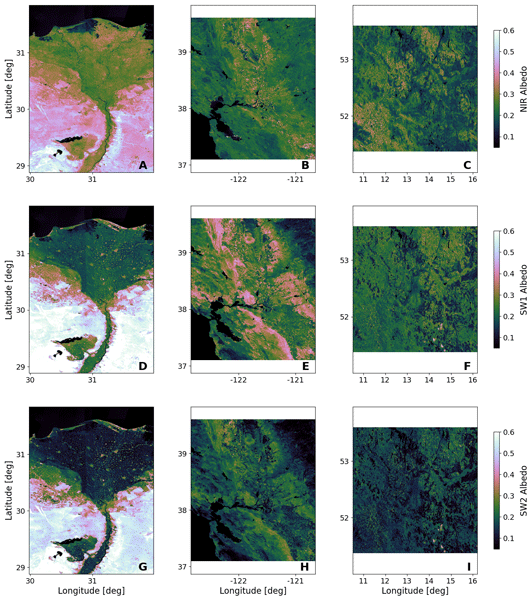
Launched in August 2025, Sentinel-5 provides daily CH4 and CO retrievals and is sensitive to CO2. Its shortwave-infrared (SWIR) mercury-cadmium-telluride (MCT) detectors exhibit persistence effects causing scene-dependent biases. This study quantifies these biases for CH4, CO, CO2, and the CH4/CO2 proxy using RemoTeC over regions with high radiance variability. Typical biases are small (<0.34 %), but outliers reach 1.59–4.01 %. Targeted post-filtering can reduce outliers and meet mission performance.
Tobias Borsdorff, Maarten Krol, Pepijn Veefkind, and Jochen Landgraf
Atmos. Meas. Tech., 19, 4617–4636, https://doi.org/10.5194/amt-19-4617-2026, https://doi.org/10.5194/amt-19-4617-2026, 2026
Short summary
Short summary
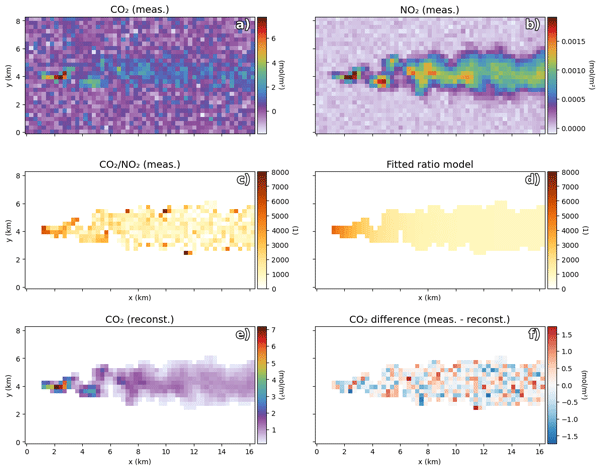
Industrial facilities release carbon dioxide and nitrogen dioxide. The Twin Anthropogenic Greenhouse Gas Observers (TANGO) mission, launching in 2028, will monitor both gases from ten thousand facilities per year using two satellites. We studied whether combining both improves carbon dioxide emission estimates and reveals plume chemistry. While this produces cleaner carbon dioxide images, precision does not improve as noise is redistributed not eliminated. Their ratio captures how nitrogen oxide converts to nitrogen dioxide within plumes.
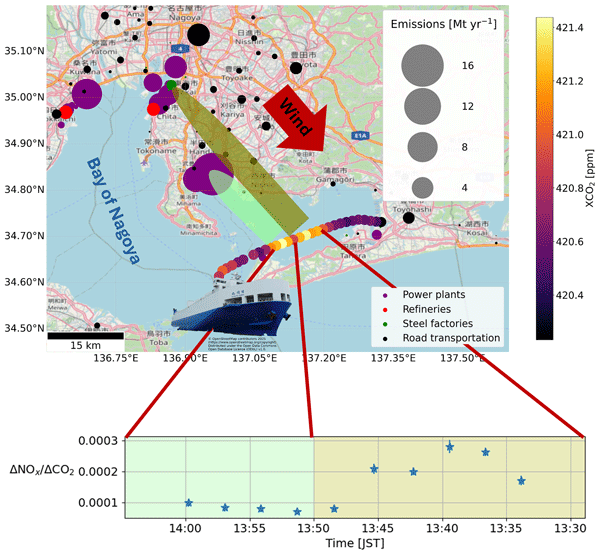
Vincent Enders, Astrid Müller, Matthias Max Frey, Frank Hase, Ralph Kleinschek, Marvin Knapp, Benedikt Löw, Isamu Morino, Shin-Ichiro Nakaoka, Hideki Nara, Hiroshi Tanimoto, Sanam N. Vardag, Karolin Voss, and André Butz
Atmos. Meas. Tech., 19, 2633–2655, https://doi.org/10.5194/amt-19-2633-2026, https://doi.org/10.5194/amt-19-2633-2026, 2026
Short summary
Short summary
We have deployed two spectrometers on a ship traveling along the coast of Japan. By that, we were able to repeatedly measure the greenhouse gas and air pollutant emissions of power plants, large industrial facilities, and cities. Using the ratios between the different gases, we are able to identify sources based on their unique signature. In addition, we are able to show that spectrometers can be operated on a ship, while still fulfilling the high standards of land-based observation networks.
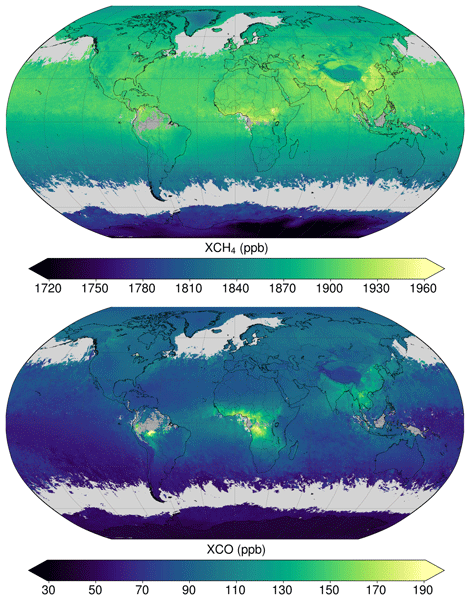
Oliver Schneising, Heinrich Bovensmann, Michael Buchwitz, Matthias Buschmann, Nicholas M. Deutscher, David W. T. Griffith, Jonas Hachmeister, Frank Hase, Laura T. Iraci, Rigel Kivi, Isamu Morino, Hirofumi Ohyama, Christof Petri, Maximilian Reuter, John Robinson, Coleen Roehl, Mahesh Kumar Sha, Kei Shiomi, Kimberly Strong, Ralf Sussmann, Yao Té, Voltaire A. Velazco, Mihalis Vrekoussis, Wei Wang, Thorsten Warneke, Damien Weidmann, Debra Wunch, Minqiang Zhou, and Hartmut Bösch
Atmos. Meas. Tech., 19, 2407–2435, https://doi.org/10.5194/amt-19-2407-2026, https://doi.org/10.5194/amt-19-2407-2026, 2026
Short summary
Short summary
We present an improved version of the TROPOMI/WFMD (TROPOspheric Monitoring Instrument/Weighting Function Modified Differential) algorithm for the simultaneous retrieval of atmospheric methane and carbon monoxide from satellite observations. The updated data product combines higher data yield with better precision and accuracy, expanding its suitability for a wider range of scientific applications. These substantial advances are mainly due to refined quality filtering, enabling more reliable identification of cloudy scenes and mitigating specific aerosol-related issues.
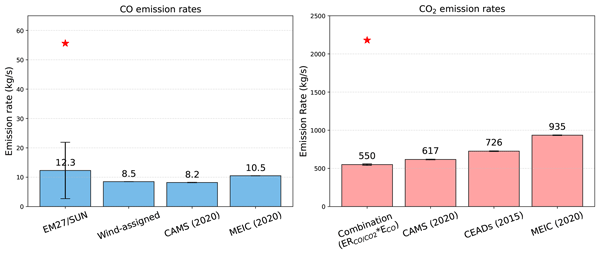
Qiansi Tu, Frank Hase, Ying Zhang, Jiaxin Fang, Yanwu Jiang, Xiaofan Li, Matthias Schneider, Zhuolin Yang, Xin Zhang, and Zhengqiang Li
Atmos. Chem. Phys., 25, 17779–17796, https://doi.org/10.5194/acp-25-17779-2025, https://doi.org/10.5194/acp-25-17779-2025, 2025
Short summary
Short summary
Understanding greenhouse gas and air pollutant concentrations and emissions characteristics in the Qinghai-Tibetan Plateau cities remains limited. We present the first CO2, CH4 and CO abundances using a portal Fourier-transform infrared (FTIR) spectrometer in Xining. Ground-based data exceeded satellite/model estimates, indicating higher local emissions. Strong CO discrepancies and ∆XCO–∆XCO2 correlation under easterly winds highlight the value of portable FTIR for urban emission studies.
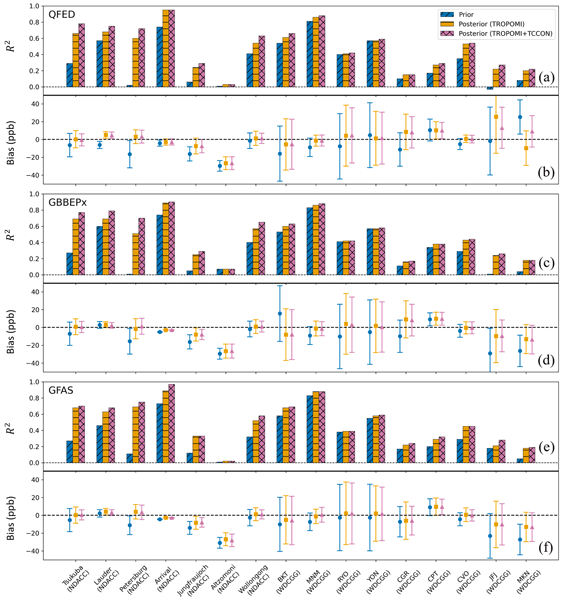
Sina Voshtani, Dylan B. A. Jones, Debra Wunch, Drew C. Pendergrass, Paul O. Wennberg, David F. Pollard, Isamu Morino, Hirofumi Ohyama, Nicholas M. Deutscher, Frank Hase, Ralf Sussmann, Damien Weidmann, Rigel Kivi, Omaira García, Yao Té, Jack Chen, Kerry Anderson, Robin Stevens, Shobha Kondragunta, Aihua Zhu, Douglas Worthy, Senen Racki, Kathryn McKain, Maria V. Makarova, Nicholas Jones, Emmanuel Mahieu, Andrea Cadena-Caicedo, Paolo Cristofanelli, Casper Labuschagne, Elena Kozlova, Thomas Seitz, Martin Steinbacher, Reza Mahdi, and Isao Murata
Atmos. Chem. Phys., 25, 15527–15565, https://doi.org/10.5194/acp-25-15527-2025, https://doi.org/10.5194/acp-25-15527-2025, 2025
Short summary
Short summary
We assess the complementarity of the greater temporal coverage provided by ground-based remote sensing data with the spatial coverage of satellite observations when these data are used together to quantify CO emissions from extreme wildfires in 2023. Our results reveal that the commonly used biomass burning emission inventories significantly underestimate the fire emissions and emphasize the importance of the ground-based remote sensing data in reducing uncertainties in the estimated emissions.
Noémie Taquet, Thomas Boulesteix, Omaira García, Robin Campion, Wolfgang Stremme, Sergio Rodríguez, Jessica López-Darias, Carlos Marrero, Diego González-García, Andreas Klügel, Frank Hase, M. Isabel García, Ramón Ramos, Pedro Rivas-Soriano, Sergio Léon-Luis, Virgilio Carreño, Antonio Alcántara, Eliezer Sépulveda, Celia Milford, Pablo González-Sicilia, and Carlos Torres
Atmos. Chem. Phys., 25, 14591–14628, https://doi.org/10.5194/acp-25-14591-2025, https://doi.org/10.5194/acp-25-14591-2025, 2025
Short summary
Short summary
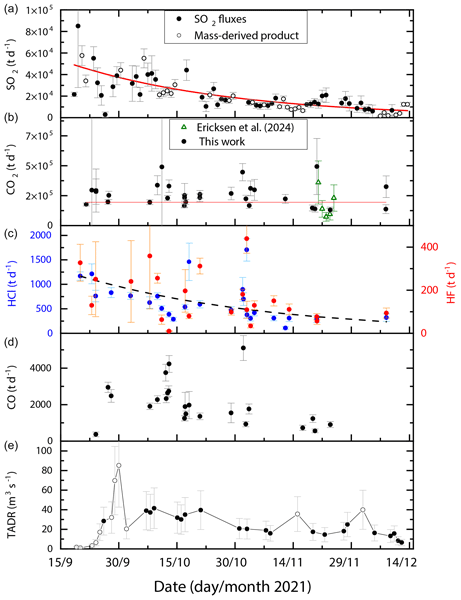
Volcanic gas emissions were quantified during the 2021 La Palma eruption using ground-based direct-sun Fourier transform infrared spectroscopy and differential optical absorption spectroscopy up to 140 km from the vent. New petrological estimations are consistent with our emission budgets. These findings highlight the feasibility of using existing atmospheric monitoring networks to study the atmospheric impact of volcanic degassing and support monitoring during eruptive crises.
Andrew Gerald Barr, Jochen Landgraf, Mari Martinez-Velarte, Mihalis Vrekoussis, Ralf Sussmann, Isamu Morino, Kimberly Strong, Minqiang Zhou, Voltaire A. Velazco, Hirofumi Ohyama, Thorsten Warneke, Frank Hase, and Tobias Borsdorff
Atmos. Meas. Tech., 18, 6093–6123, https://doi.org/10.5194/amt-18-6093-2025, https://doi.org/10.5194/amt-18-6093-2025, 2025
Short summary
Short summary
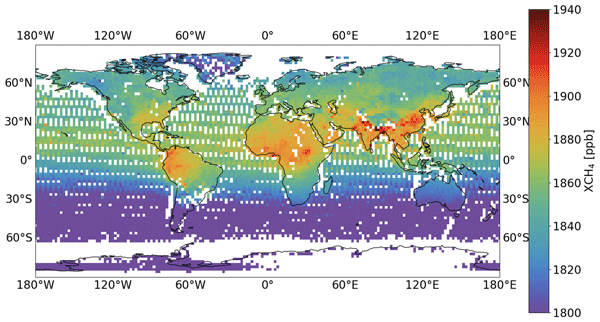
The Greenhouse Gases Observing Satellite-2 (GOSAT-2) is a satellite dedicated to measuring concentrations of greenhouse gases from space. Since its launch, the increase of CH4 and CO2 concentrations in the atmosphere is clear. The datasets obtained from GOSAT-2 are used in the Copernicus atmospheric services to monitor the climate, in light of the Paris Agreement. Here we present robust datasets of these gases from GOSAT-2, including a novel machine learning approach to data quality filtering.
Harish Shivraj Gadhavi, Akanksha Arora, Chaithanya Jain, Mahesh Kumar Sha, Frank Hase, Matthias Max Frey, Srikanthan Ramachandran, and Achuthan Jayaraman
Atmos. Meas. Tech., 18, 4497–4514, https://doi.org/10.5194/amt-18-4497-2025, https://doi.org/10.5194/amt-18-4497-2025, 2025
Short summary
Short summary
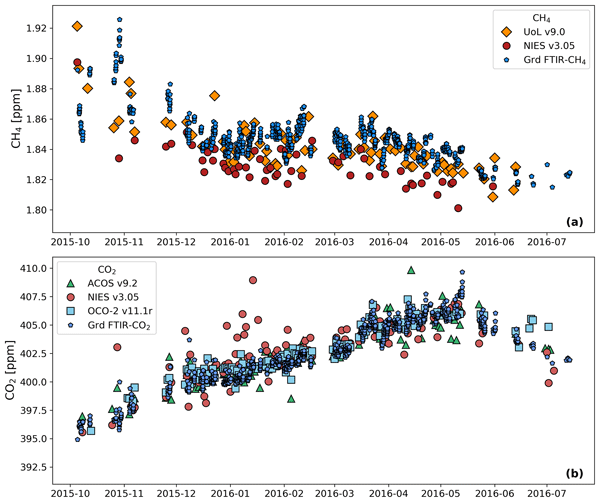
We measured carbon dioxide (CO₂) and methane (CH₄) over South India using a ground-based spectrometer and compared the results with satellite data from GOSAT (Greenhouse gases Observing SATellite; Japan) and OCO-2 (Orbiting Carbon Observatory-2; NASA, USA). The satellite data have good accuracy and precision for estimating emissions. A computer model showed that changes in methane levels are influenced more by background levels than by local sources.
Aki Tsuruta, Akihiko Kuze, Kei Shiomi, Fumie Kataoka, Nobuhiro Kikuchi, Tuula Aalto, Leif Backman, Ella Kivimäki, Maria K. Tenkanen, Kathryn McKain, Omaira E. García, Frank Hase, Rigel Kivi, Isamu Morino, Hirofumi Ohyama, David F. Pollard, Mahesh K. Sha, Kimberly Strong, Ralf Sussmann, Yao Te, Voltaire A. Velazco, Mihalis Vrekoussis, Thorsten Warneke, Minqiang Zhou, and Hiroshi Suto
Atmos. Chem. Phys., 25, 7829–7862, https://doi.org/10.5194/acp-25-7829-2025, https://doi.org/10.5194/acp-25-7829-2025, 2025
Short summary
Short summary
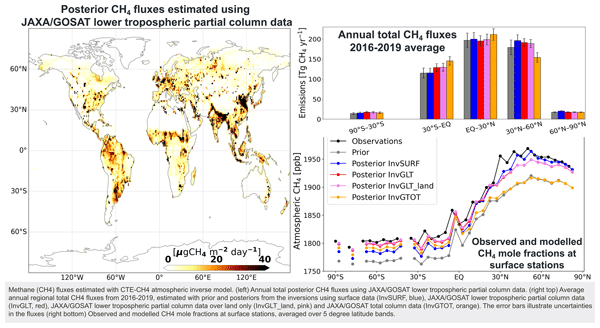
Satellite data bring invaluable information about greenhouse gas emissions globally. We found that a new type of data from the Greenhouse Gas Observing Satellite (GOSAT), which contains information about methane in the lowest layer of Earth's atmosphere, could provide reliable estimates of recent methane emissions when combined with atmospheric modelling. Therefore, the use of such data is encouraged to improve emission quantification methods and advance our understanding of methane cycles.
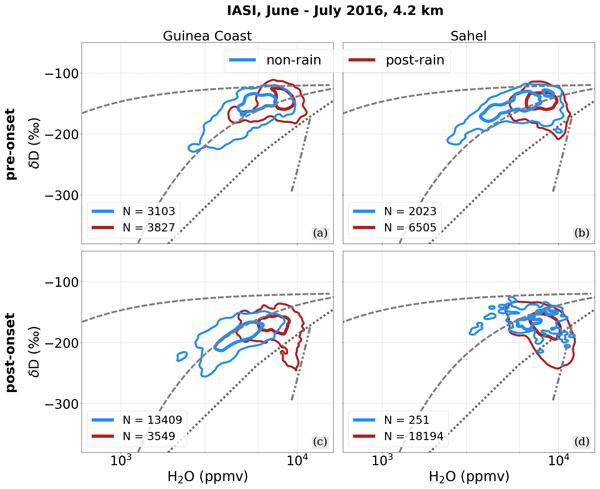
Christopher Johannes Diekmann, Matthias Schneider, Peter Knippertz, Tim Trent, Hartmut Boesch, Amelie Ninja Roehling, John Worden, Benjamin Ertl, Farahnaz Khosrawi, and Frank Hase
Atmos. Chem. Phys., 25, 5409–5431, https://doi.org/10.5194/acp-25-5409-2025, https://doi.org/10.5194/acp-25-5409-2025, 2025
Short summary
Short summary
The West African Monsoon is the main source of rainfall over West Africa, and understanding the development of the monsoon remains challenging due to complex interactions of atmospheric processes. We make use of new satellite datasets of isotopes in tropospheric water vapour to characterize processes controlling the monsoon convection. We find that comparing different water vapour isotopes reveals effects of rain–vapour interactions and air mass transport.
Lena Feld, Pablo Schmid, Marios Mermigkas, Dimitrios Balis, Jochen Gross, Darko Dubravica, Carlos Alberti, Benedikt Herkommer, Stefan Versick, Roland Ruhnke, Frank Hase, and Peter Braesicke
EGUsphere, https://doi.org/10.5194/egusphere-2025-639, https://doi.org/10.5194/egusphere-2025-639, 2025
Short summary
Short summary
Our goal is to measure CO2 emissions from cities, to verify and improve our knowledge of reported anthropogenic emissions. We use atmospheric measurements and simulations of CO2 transport to find an independent estimate. This study investigates the CO2 emissions of the city of Thessaloniki, where the reported emissions differ. The data we collected indicates that the emissions are larger than stated by the ODIAC inventory, which we used for our simulations.

Frank Hase, Paolo Castracane, Angelika Dehn, Omaira Elena García, David W. T. Griffith, Lukas Heizmann, Nicholas B. Jones, Tomi Karppinen, Rigel Kivi, Martine de Mazière, Justus Notholt, and Mahesh Kumar Sha
Atmos. Meas. Tech., 18, 1257–1267, https://doi.org/10.5194/amt-18-1257-2025, https://doi.org/10.5194/amt-18-1257-2025, 2025
Short summary
Short summary
The primary measurement result delivered by a Fourier transform spectrometer is an interferogram, and the spectrum required for further analysis needs to be calculated from the interferogram by Fourier analysis. The paper deals with technical aspects of this process and shows how the reconstruction of the spectrum can be optimized.
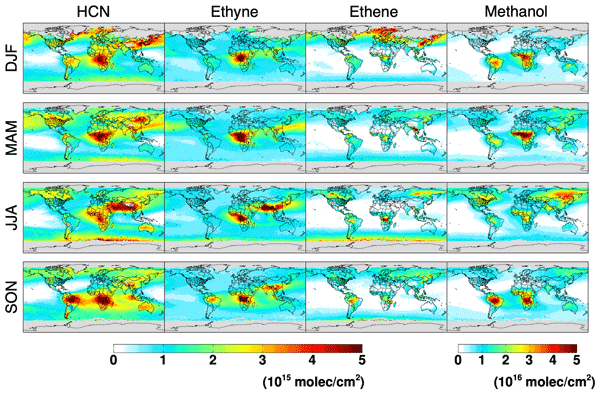
Kelley C. Wells, Dylan B. Millet, Jared F. Brewer, Vivienne H. Payne, Karen E. Cady-Pereira, Rick Pernak, Susan Kulawik, Corinne Vigouroux, Nicholas Jones, Emmanuel Mahieu, Maria Makarova, Tomoo Nagahama, Ivan Ortega, Mathias Palm, Kimberly Strong, Matthias Schneider, Dan Smale, Ralf Sussmann, and Minqiang Zhou
Atmos. Meas. Tech., 18, 695–716, https://doi.org/10.5194/amt-18-695-2025, https://doi.org/10.5194/amt-18-695-2025, 2025
Short summary
Short summary
Atmospheric volatile organic compounds (VOCs) affect both air quality and climate. Satellite measurements can help us to assess and predict their global impacts. We present new decadal (2012–2023) measurements of four key VOCs – methanol, ethene, ethyne, and hydrogen cyanide (HCN) – from the Cross-track Infrared Sounder. The measurements reflect emissions from major forests, wildfires, and industry and provide new information to advance understanding of these sources and their changes over time.
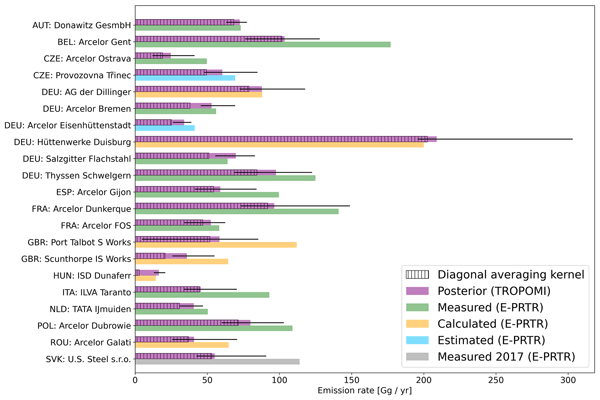
Gijs Leguijt, Joannes D. Maasakkers, Hugo A. C. Denier van der Gon, Arjo J. Segers, Tobias Borsdorff, Ivar R. van der Velde, and Ilse Aben
Atmos. Chem. Phys., 25, 555–574, https://doi.org/10.5194/acp-25-555-2025, https://doi.org/10.5194/acp-25-555-2025, 2025
Short summary
Short summary
The production of steel coincides with large emissions of greenhouse gases and air pollutants including carbon monoxide. European facilities are required to report their emissions, which are estimated using a variety of methods. We evaluate these estimates using carbon monoxide concentrations measured via satellite. We find generally good agreement between our values and those reported but also identify some uncertainties, showing that satellites can provide insights into these emissions.
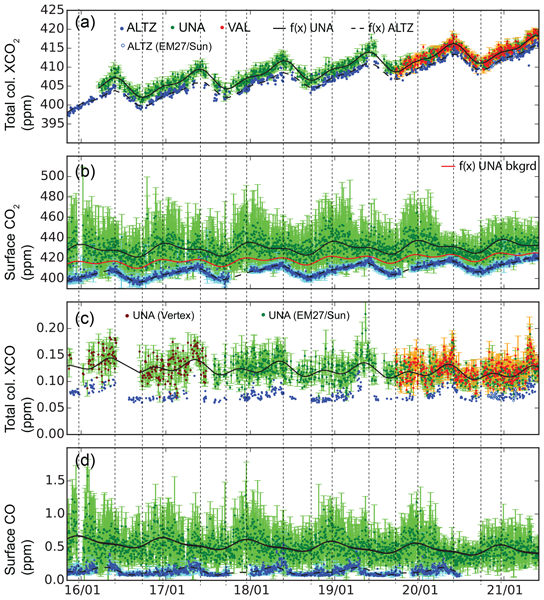
Noémie Taquet, Wolfgang Stremme, María Eugenia González del Castillo, Victor Almanza, Alejandro Bezanilla, Olivier Laurent, Carlos Alberti, Frank Hase, Michel Ramonet, Thomas Lauvaux, Ke Che, and Michel Grutter
Atmos. Chem. Phys., 24, 11823–11848, https://doi.org/10.5194/acp-24-11823-2024, https://doi.org/10.5194/acp-24-11823-2024, 2024
Short summary
Short summary
We characterize the variability in CO and CO2 emissions over Mexico City from long-term time-resolved Fourier transform infrared spectroscopy solar absorption and surface measurements from 2013 to 2021. Using the average intraday CO growth rate from total columns, the average CO / CO2 ratio and TROPOMI data, we estimate the interannual variability in the CO and CO2 anthropogenic emissions of Mexico City, highlighting the effect of an unprecedented drop in activity due to the COVID-19 lockdown.
Neil Humpage, Hartmut Boesch, William Okello, Jia Chen, Florian Dietrich, Mark F. Lunt, Liang Feng, Paul I. Palmer, and Frank Hase
Atmos. Meas. Tech., 17, 5679–5707, https://doi.org/10.5194/amt-17-5679-2024, https://doi.org/10.5194/amt-17-5679-2024, 2024
Short summary
Short summary
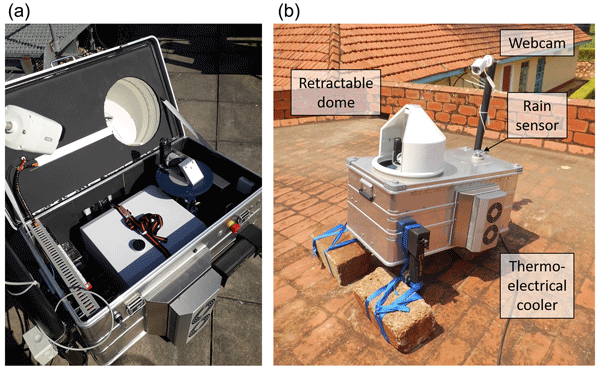
We used a Bruker EM27/SUN spectrometer within an automated weatherproof enclosure to measure greenhouse gas column concentrations over a 3-month period in Jinja, Uganda. The portability of the EM27/SUN allows us to evaluate satellite and model data in locations not covered by traditional validation networks. This is of particular value in tropical Africa, where extensive terrestrial ecosystems are a significant store of carbon and play a key role in the atmospheric budgets of CO2 and CH4.
Matthias Schneider, Kinya Toride, Farahnaz Khosrawi, Frank Hase, Benjamin Ertl, Christopher J. Diekmann, and Kei Yoshimura
Atmos. Meas. Tech., 17, 5243–5259, https://doi.org/10.5194/amt-17-5243-2024, https://doi.org/10.5194/amt-17-5243-2024, 2024
Short summary
Short summary
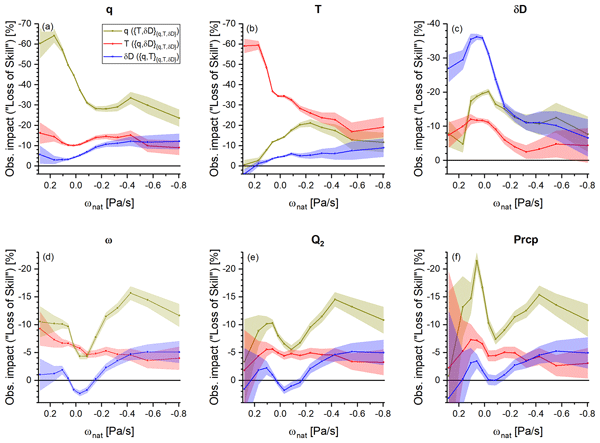
Despite its importance for extreme weather and climate feedbacks, atmospheric convection is not well constrained. This study assesses the potential of novel tropospheric water vapour isotopologue satellite observations for improving the analyses of convective events. We find that the impact of the isotopologues is small for stable atmospheric conditions but significant for unstable conditions, which have the strongest societal impacts (e.g. storms and flooding).
Brian Nathan, Joannes D. Maasakkers, Stijn Naus, Ritesh Gautam, Mark Omara, Daniel J. Varon, Melissa P. Sulprizio, Lucas A. Estrada, Alba Lorente, Tobias Borsdorff, Robert J. Parker, and Ilse Aben
Atmos. Chem. Phys., 24, 6845–6863, https://doi.org/10.5194/acp-24-6845-2024, https://doi.org/10.5194/acp-24-6845-2024, 2024
Short summary
Short summary
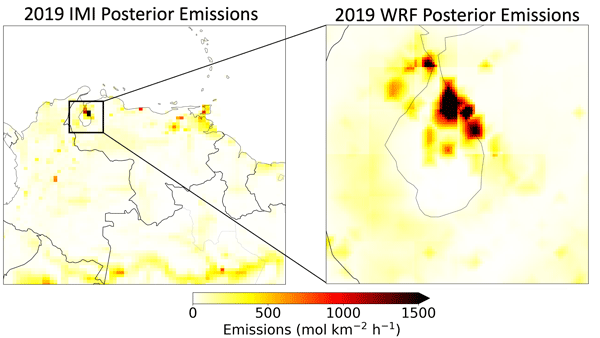
Venezuela's Lake Maracaibo region is notoriously hard to observe from space and features intensive oil exploitation, although production has strongly decreased in recent years. We estimate methane emissions using 2018–2020 TROPOMI satellite observations with national and regional transport models. Despite the production decrease, we find relatively constant emissions from Lake Maracaibo between 2018 and 2020, indicating that there could be large emissions from abandoned infrastructure.
Benedikt Herkommer, Carlos Alberti, Paolo Castracane, Jia Chen, Angelika Dehn, Florian Dietrich, Nicholas M. Deutscher, Matthias Max Frey, Jochen Groß, Lawson Gillespie, Frank Hase, Isamu Morino, Nasrin Mostafavi Pak, Brittany Walker, and Debra Wunch
Atmos. Meas. Tech., 17, 3467–3494, https://doi.org/10.5194/amt-17-3467-2024, https://doi.org/10.5194/amt-17-3467-2024, 2024
Short summary
Short summary
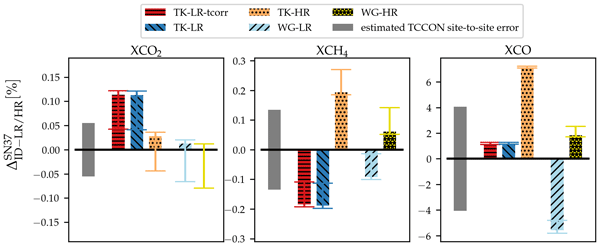
The Total Carbon Column Observing Network is a network of ground-based Fourier transform infrared (FTIR) spectrometers used mainly for satellite validation. To ensure the highest-quality validation data, the network needs to be highly consistent. This is a major challenge, which so far is solved by site comparisons with airborne in situ measurements. In this work, we describe the use of a portable FTIR spectrometer as a travel standard for evaluating the consistency of TCCON sites.
Qiansi Tu, Frank Hase, Kai Qin, Jason Blake Cohen, Farahnaz Khosrawi, Xinrui Zou, Matthias Schneider, and Fan Lu
Atmos. Chem. Phys., 24, 4875–4894, https://doi.org/10.5194/acp-24-4875-2024, https://doi.org/10.5194/acp-24-4875-2024, 2024
Short summary
Short summary
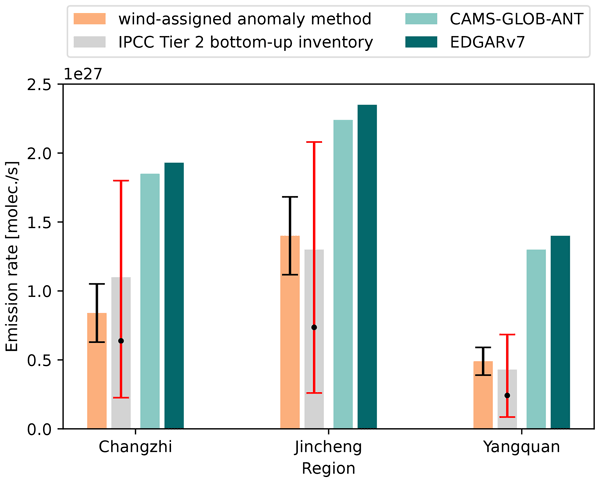
Four-year satellite observations of XCH4 are used to derive CH4 emissions in three regions of China’s coal-rich Shanxi province. The wind-assigned anomalies for two opposite wind directions are calculated, and the estimated emission rates are comparable to the current bottom-up inventory but lower than the CAMS and EDGAR inventories. This research enhances the understanding of emissions in Shanxi and supports climate mitigation strategies by validating emission inventories.
Jean-François Müller, Trissevgeni Stavrakou, Glenn-Michael Oomen, Beata Opacka, Isabelle De Smedt, Alex Guenther, Corinne Vigouroux, Bavo Langerock, Carlos Augusto Bauer Aquino, Michel Grutter, James Hannigan, Frank Hase, Rigel Kivi, Erik Lutsch, Emmanuel Mahieu, Maria Makarova, Jean-Marc Metzger, Isamu Morino, Isao Murata, Tomoo Nagahama, Justus Notholt, Ivan Ortega, Mathias Palm, Amelie Röhling, Wolfgang Stremme, Kimberly Strong, Ralf Sussmann, Yao Té, and Alan Fried
Atmos. Chem. Phys., 24, 2207–2237, https://doi.org/10.5194/acp-24-2207-2024, https://doi.org/10.5194/acp-24-2207-2024, 2024
Short summary
Short summary
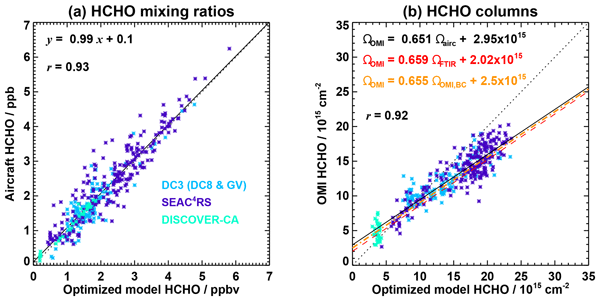
Formaldehyde observations from satellites can be used to constrain the emissions of volatile organic compounds, but those observations have biases. Using an atmospheric model, aircraft and ground-based remote sensing data, we quantify these biases, propose a correction to the data, and assess the consequence of this correction for the evaluation of emissions.
Tobias D. Schmitt, Jonas Kuhn, Ralph Kleinschek, Benedikt A. Löw, Stefan Schmitt, William Cranton, Martina Schmidt, Sanam N. Vardag, Frank Hase, David W. T. Griffith, and André Butz
Atmos. Meas. Tech., 16, 6097–6110, https://doi.org/10.5194/amt-16-6097-2023, https://doi.org/10.5194/amt-16-6097-2023, 2023
Short summary
Short summary
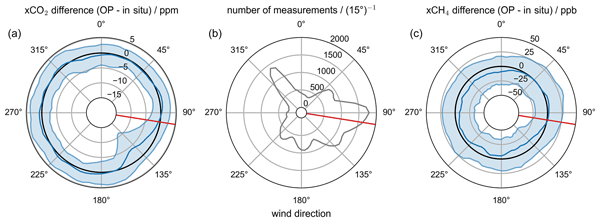
Our new observatory measures greenhouse gas concentrations of carbon dioxide (CO2) and methane (CH4) along a 1.55 km long light path over the city of Heidelberg, Germany. We compared our measurements with measurements that were taken at a single point at one end of our path. The two mostly agreed but show a significant difference for CO2 with certain wind directions. This is important when using greenhouse gas concentration measurements to observe greenhouse gas emissions of cities.
Hirofumi Ohyama, Matthias M. Frey, Isamu Morino, Kei Shiomi, Masahide Nishihashi, Tatsuya Miyauchi, Hiroko Yamada, Makoto Saito, Masanobu Wakasa, Thomas Blumenstock, and Frank Hase
Atmos. Chem. Phys., 23, 15097–15119, https://doi.org/10.5194/acp-23-15097-2023, https://doi.org/10.5194/acp-23-15097-2023, 2023
Short summary
Short summary
We conducted a field campaign for CO2 column measurements in the Tokyo metropolitan area with three ground-based Fourier transform spectrometers. The model simulations using prior CO2 fluxes were generally in good agreement with the observations. We developed an urban-scale inversion system in which spatially resolved CO2 fluxes and a scaling factor of large point source emissions were estimated. The posterior total CO2 emissions agreed with emission inventories within the posterior uncertainty.
Benedikt A. Löw, Ralph Kleinschek, Vincent Enders, Stanley P. Sander, Thomas J. Pongetti, Tobias D. Schmitt, Frank Hase, Julian Kostinek, and André Butz
Atmos. Meas. Tech., 16, 5125–5144, https://doi.org/10.5194/amt-16-5125-2023, https://doi.org/10.5194/amt-16-5125-2023, 2023
Short summary
Short summary
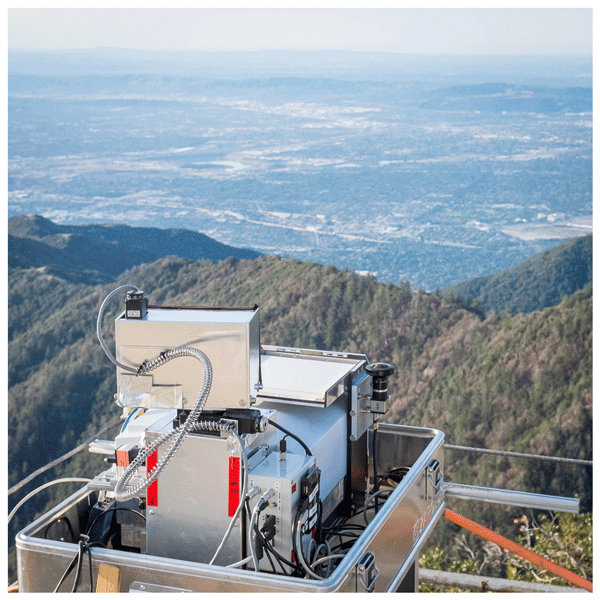
We developed a portable spectrometer (EM27/SCA) that remotely measures greenhouse gases in the lower atmosphere above a target region. The measurements can deliver insights into local emission patterns. To evaluate its performance, we set up the EM27/SCA above the Los Angeles Basin side by side with a similar non-portable instrument (CLARS-FTS). The precision is promising and the measurements are consistent with CLARS-FTS. In the future, we need to account for light scattering.
Óscar Alvárez, África Barreto, Omaira E. García, Frank Hase, Rosa D. García, Julian Gröbner, Sergio F. León-Luis, Eliezer Sepúlveda, Virgilio Carreño, Antonio Alcántara, Ramón Ramos, A. Fernando Almansa, Stelios Kazadzis, Noémie Taquet, Carlos Toledano, and Emilio Cuevas
Atmos. Meas. Tech., 16, 4861–4884, https://doi.org/10.5194/amt-16-4861-2023, https://doi.org/10.5194/amt-16-4861-2023, 2023
Short summary
Short summary
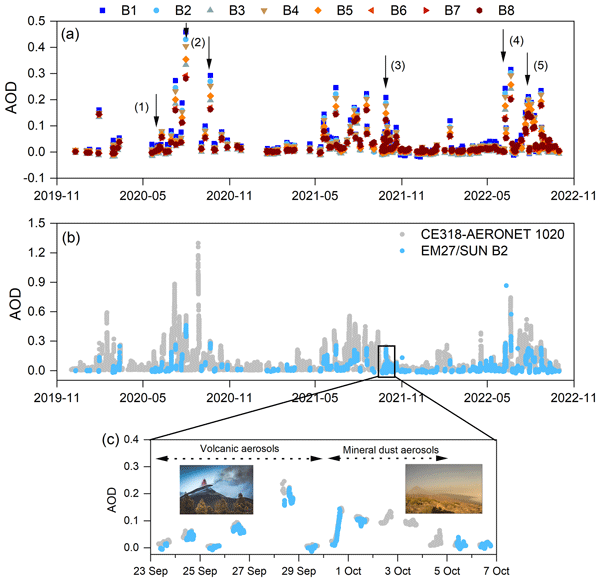
In this work, we have extended the capabilities of a portable Fourier transform infrared (FTIR) instrument, which was originally designed to provide high-quality greenhouse gas monitoring within COCCON (COllaborative Carbon Column Observing Network). The extension allows the spectrometer to now also provide coincidentally column-integrated aerosol information. This addition of a reference instrument to a global network will be utilised to enhance our understanding of atmospheric chemistry.
Berend J. Schuit, Joannes D. Maasakkers, Pieter Bijl, Gourav Mahapatra, Anne-Wil van den Berg, Sudhanshu Pandey, Alba Lorente, Tobias Borsdorff, Sander Houweling, Daniel J. Varon, Jason McKeever, Dylan Jervis, Marianne Girard, Itziar Irakulis-Loitxate, Javier Gorroño, Luis Guanter, Daniel H. Cusworth, and Ilse Aben
Atmos. Chem. Phys., 23, 9071–9098, https://doi.org/10.5194/acp-23-9071-2023, https://doi.org/10.5194/acp-23-9071-2023, 2023
Short summary
Short summary
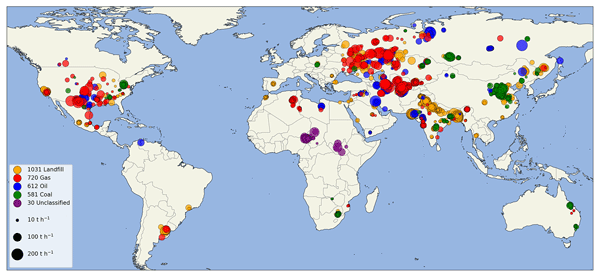
Using two machine learning models, which were trained on TROPOMI methane satellite data, we detect 2974 methane plumes, so-called super-emitters, in 2021. We detect methane emissions globally related to urban areas or landfills, coal mining, and oil and gas production. Using our monitoring system, we identify 94 regions with frequent emissions. For 12 locations, we target high-resolution satellite instruments to enlarge and identify the exact infrastructure responsible for the emissions.
Manu Goudar, Juliëtte C. S. Anema, Rajesh Kumar, Tobias Borsdorff, and Jochen Landgraf
Geosci. Model Dev., 16, 4835–4852, https://doi.org/10.5194/gmd-16-4835-2023, https://doi.org/10.5194/gmd-16-4835-2023, 2023
Short summary
Short summary
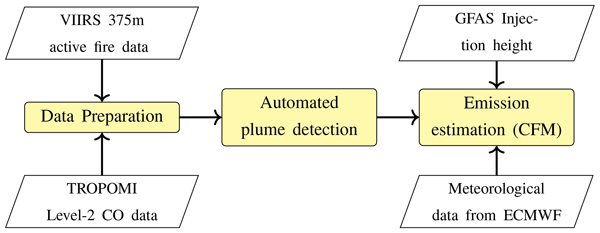
A framework was developed to automatically detect plumes and compute emission estimates with cross-sectional flux method (CFM) for biomass burning events in TROPOMI CO datasets using Visible Infrared Imaging Radiometer Suite active fire data. The emissions were more reliable when changing plume height in downwind direction was used instead of constant injection height. The CFM had uncertainty even when the meteorological conditions were accurate; thus there is a need for better inversion models.
Gijs Leguijt, Joannes D. Maasakkers, Hugo A. C. Denier van der Gon, Arjo J. Segers, Tobias Borsdorff, and Ilse Aben
Atmos. Chem. Phys., 23, 8899–8919, https://doi.org/10.5194/acp-23-8899-2023, https://doi.org/10.5194/acp-23-8899-2023, 2023
Short summary
Short summary
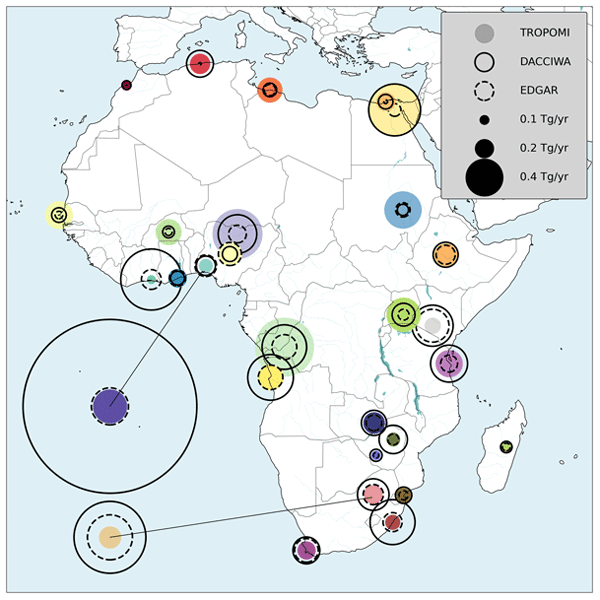
We present a fast method to evaluate carbon monoxide emissions from cities in Africa. Carbon monoxide is important for climate change in an indirect way, as it is linked to ozone, methane, and carbon dioxide. Our measurements are made with a satellite that sees the entire globe every single day. This means that we can check from space whether the current knowledge of emission rates is up to date. We make the comparison and show that the emission rates in northern Africa are underestimated.
Daniel J. Varon, Daniel J. Jacob, Benjamin Hmiel, Ritesh Gautam, David R. Lyon, Mark Omara, Melissa Sulprizio, Lu Shen, Drew Pendergrass, Hannah Nesser, Zhen Qu, Zachary R. Barkley, Natasha L. Miles, Scott J. Richardson, Kenneth J. Davis, Sudhanshu Pandey, Xiao Lu, Alba Lorente, Tobias Borsdorff, Joannes D. Maasakkers, and Ilse Aben
Atmos. Chem. Phys., 23, 7503–7520, https://doi.org/10.5194/acp-23-7503-2023, https://doi.org/10.5194/acp-23-7503-2023, 2023
Short summary
Short summary
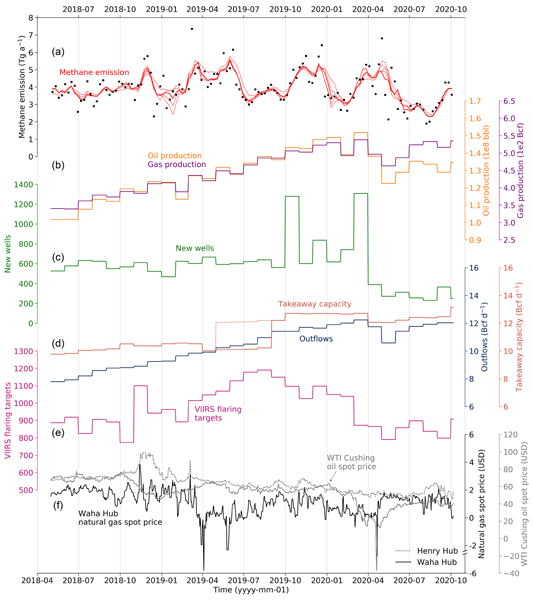
We use TROPOMI satellite observations to quantify weekly methane emissions from the US Permian oil and gas basin from May 2018 to October 2020. We find that Permian emissions are highly variable, with diverse economic and activity drivers. The most important drivers during our study period were new well development and natural gas price. Permian methane intensity averaged 4.6 % and decreased by 1 % per year.
Tobias Borsdorff, Teresa Campos, Natalie Kille, Kyle J. Zarzana, Rainer Volkamer, and Jochen Landgraf
Atmos. Meas. Tech., 16, 3027–3038, https://doi.org/10.5194/amt-16-3027-2023, https://doi.org/10.5194/amt-16-3027-2023, 2023
Short summary
Short summary
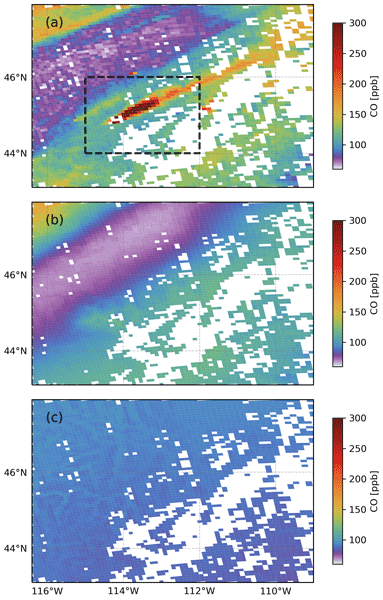
ECMWF plans to assimilate TROPOMI CO with their CAMS-IFS model. This will constrain the total column and the vertical CO distribution of the model. To show this, we combine individual TROPOMI CO column retrievals with different vertical sensitivities and obtain a vertical CO concentration profile. We test the approach on three CO pollution events in comparison with CAMS-IFS simulations that do not assimilate TROPOMI CO data and in situ airborne measurements of the BB-FLUX campaign.
Yifan Guan, Gretchen Keppel-Aleks, Scott C. Doney, Christof Petri, Dave Pollard, Debra Wunch, Frank Hase, Hirofumi Ohyama, Isamu Morino, Justus Notholt, Kei Shiomi, Kim Strong, Rigel Kivi, Matthias Buschmann, Nicholas Deutscher, Paul Wennberg, Ralf Sussmann, Voltaire A. Velazco, and Yao Té
Atmos. Chem. Phys., 23, 5355–5372, https://doi.org/10.5194/acp-23-5355-2023, https://doi.org/10.5194/acp-23-5355-2023, 2023
Short summary
Short summary
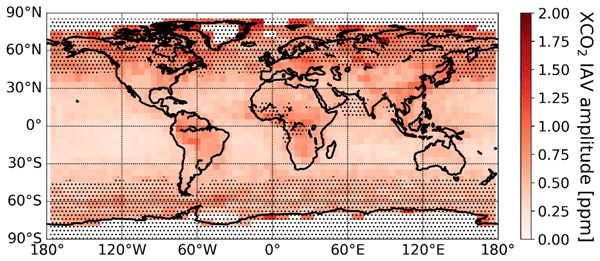
We characterize spatial–temporal patterns of interannual variability (IAV) in atmospheric CO2 based on NASA’s Orbiting Carbon Observatory-2 (OCO-2). CO2 variation is strongly impacted by climate events, with higher anomalies during El Nino years. We show high correlation in IAV between space-based and ground-based CO2 from long-term sites. Because OCO-2 has near-global coverage, our paper provides a roadmap to study IAV where in situ observation is sparse, such as open oceans and remote lands.
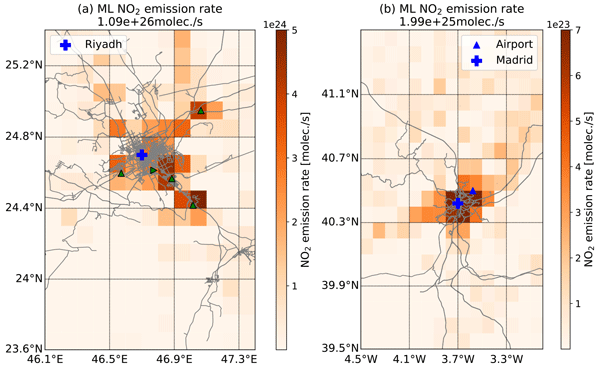
Qiansi Tu, Frank Hase, Zihan Chen, Matthias Schneider, Omaira García, Farahnaz Khosrawi, Shuo Chen, Thomas Blumenstock, Fang Liu, Kai Qin, Jason Cohen, Qin He, Song Lin, Hongyan Jiang, and Dianjun Fang
Atmos. Meas. Tech., 16, 2237–2262, https://doi.org/10.5194/amt-16-2237-2023, https://doi.org/10.5194/amt-16-2237-2023, 2023
Short summary
Short summary
Four-year TROPOMI observations are used to derive tropospheric NO2 emissions in two mega(cities) with high anthropogenic activity. Wind-assigned anomalies are calculated, and the emission rates and spatial patterns are estimated based on a machine learning algorithm. The results are in reasonable agreement with previous studies and the inventory. Our method is quite robust and can be used as a simple method to estimate the emissions of NO2 as well as other gases in other regions.
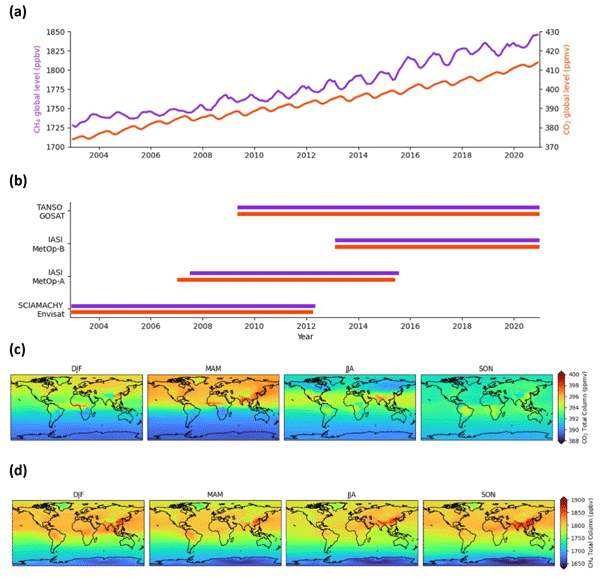
Anna Agustí-Panareda, Jérôme Barré, Sébastien Massart, Antje Inness, Ilse Aben, Melanie Ades, Bianca C. Baier, Gianpaolo Balsamo, Tobias Borsdorff, Nicolas Bousserez, Souhail Boussetta, Michael Buchwitz, Luca Cantarello, Cyril Crevoisier, Richard Engelen, Henk Eskes, Johannes Flemming, Sébastien Garrigues, Otto Hasekamp, Vincent Huijnen, Luke Jones, Zak Kipling, Bavo Langerock, Joe McNorton, Nicolas Meilhac, Stefan Noël, Mark Parrington, Vincent-Henri Peuch, Michel Ramonet, Miha Razinger, Maximilian Reuter, Roberto Ribas, Martin Suttie, Colm Sweeney, Jérôme Tarniewicz, and Lianghai Wu
Atmos. Chem. Phys., 23, 3829–3859, https://doi.org/10.5194/acp-23-3829-2023, https://doi.org/10.5194/acp-23-3829-2023, 2023
Short summary
Short summary
We present a global dataset of atmospheric CO2 and CH4, the two most important human-made greenhouse gases, which covers almost 2 decades (2003–2020). It is produced by combining satellite data of CO2 and CH4 with a weather and air composition prediction model, and it has been carefully evaluated against independent observations to ensure validity and point out deficiencies to the user. This dataset can be used for scientific studies in the field of climate change and the global carbon cycle.
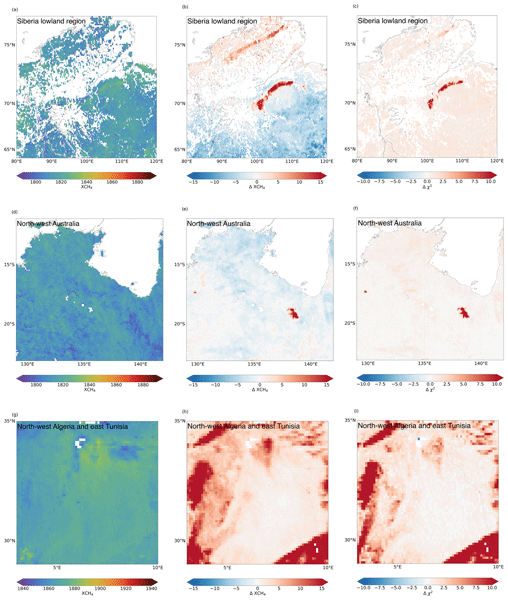
Alba Lorente, Tobias Borsdorff, Mari C. Martinez-Velarte, and Jochen Landgraf
Atmos. Meas. Tech., 16, 1597–1608, https://doi.org/10.5194/amt-16-1597-2023, https://doi.org/10.5194/amt-16-1597-2023, 2023
Short summary
Short summary
In the TROPOMI methane data, there are few false methane anomalies that can be misinterpreted as enhancements caused by strong emission sources. These artefacts are caused by features of the underlying surfaces that are not well characterized in the retrieval algorithm. Here we improve the representation of the surface reflectance dependency with wavelength in the forward model, removing the artificial localized CH4 enhancements found in several locations like Siberia, Australia and Algeria.
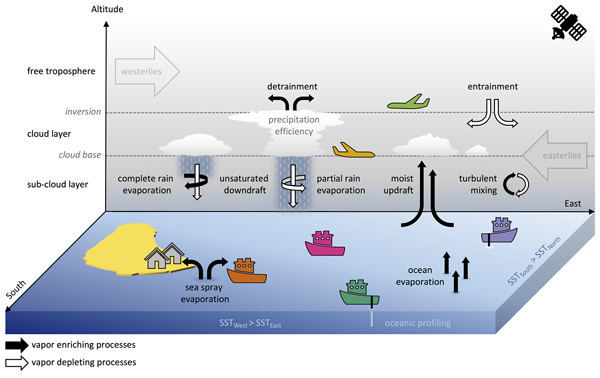
Adriana Bailey, Franziska Aemisegger, Leonie Villiger, Sebastian A. Los, Gilles Reverdin, Estefanía Quiñones Meléndez, Claudia Acquistapace, Dariusz B. Baranowski, Tobias Böck, Sandrine Bony, Tobias Bordsdorff, Derek Coffman, Simon P. de Szoeke, Christopher J. Diekmann, Marina Dütsch, Benjamin Ertl, Joseph Galewsky, Dean Henze, Przemyslaw Makuch, David Noone, Patricia K. Quinn, Michael Rösch, Andreas Schneider, Matthias Schneider, Sabrina Speich, Bjorn Stevens, and Elizabeth J. Thompson
Earth Syst. Sci. Data, 15, 465–495, https://doi.org/10.5194/essd-15-465-2023, https://doi.org/10.5194/essd-15-465-2023, 2023
Short summary
Short summary
One of the novel ways EUREC4A set out to investigate trade wind clouds and their coupling to the large-scale circulation was through an extensive network of isotopic measurements in water vapor, precipitation, and seawater. Samples were taken from the island of Barbados, from aboard two aircraft, and from aboard four ships. This paper describes the full collection of EUREC4A isotopic in situ data and guides readers to complementary remotely sensed water vapor isotope ratios.
Farahnaz Khosrawi, Kinya Toride, Kei Yoshimura, Christopher Diekmann, Benjamin Ertl, Frank Hase, and Matthias Schneider
EGUsphere, https://doi.org/10.5194/egusphere-2022-1408, https://doi.org/10.5194/egusphere-2022-1408, 2022
Preprint withdrawn
Short summary
Short summary
We assess with an Observation System Simulation Experiment the potential of mid-tropospheric water isotopologue data for constraining uncertainties in meteorological analysis fields in the tropics. Our assimilation experiments indicate that isotopologue observations have the potential to reduce the uncertainties of diabatic heating rates and precipitation in the tropics and in consequence offer potential for improving meteorological analysis in the tropical regions.
David F. Pollard, Frank Hase, Mahesh Kumar Sha, Darko Dubravica, Carlos Alberti, and Dan Smale
Earth Syst. Sci. Data, 14, 5427–5437, https://doi.org/10.5194/essd-14-5427-2022, https://doi.org/10.5194/essd-14-5427-2022, 2022
Short summary
Short summary
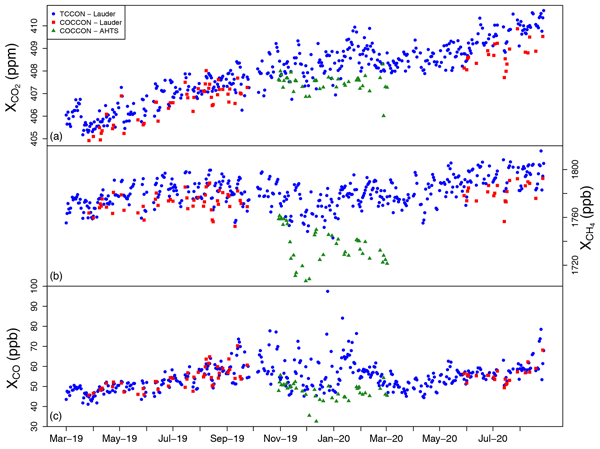
We describe measurements made in Antarctica using an EM27/SUN, a near-infrared, portable, low-resolution spectrometer from which we can retrieve the average atmospheric concentration of several greenhouse gases. We show that these measurements are reliable and comparable to other, similar ground-based measurements. Comparisons to the ESA's Sentinel-5 precursor (S5P) satellite demonstrate the usefulness of these data for satellite validation.
Alba Lorente, Tobias Borsdorff, Mari C. Martinez-Velarte, Andre Butz, Otto P. Hasekamp, Lianghai Wu, and Jochen Landgraf
Atmos. Meas. Tech., 15, 6585–6603, https://doi.org/10.5194/amt-15-6585-2022, https://doi.org/10.5194/amt-15-6585-2022, 2022
Short summary
Short summary
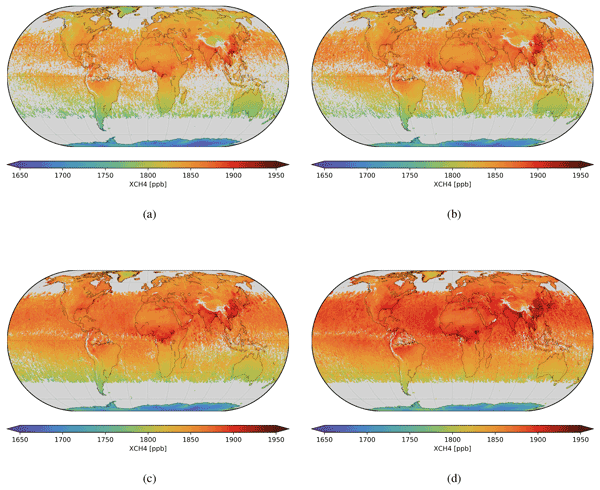
The TROPOspheric Monitoring Instrument (TROPOMI) performs observations over ocean in every orbit, enhancing the monitoring capabilities of methane from space. In the sun glint geometry the mirror-like reflection at the water surface provides a signal that is high enough to retrieve methane with high accuracy and precision. We present 4 years of methane concentrations over the ocean, and we assess its quality. We also show the importance of ocean observations to quantify total CH4 emissions.
Maximilian Rißmann, Jia Chen, Gregory Osterman, Xinxu Zhao, Florian Dietrich, Moritz Makowski, Frank Hase, and Matthäus Kiel
Atmos. Meas. Tech., 15, 6605–6623, https://doi.org/10.5194/amt-15-6605-2022, https://doi.org/10.5194/amt-15-6605-2022, 2022
Short summary
Short summary
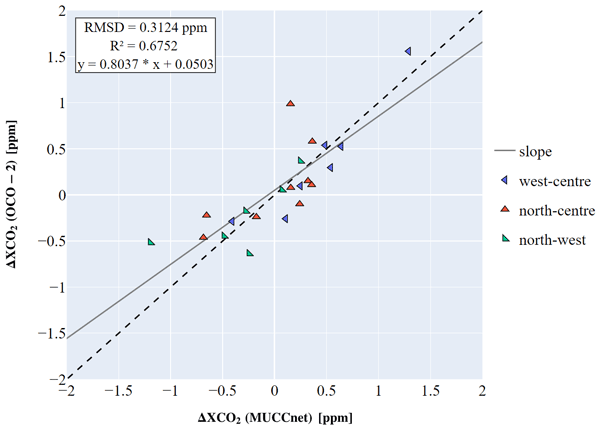
The Orbiting Carbon Observatory 2 (OCO-2) measures atmospheric concentrations of the most potent greenhouse gas, CO2, globally. By comparing its measurements to a ground-based monitoring network in Munich (MUCCnet), we find that the satellite is able to reliably detect urban CO2 concentrations. Furthermore, spatial CO2 differences captured by OCO-2 and MUCCnet are strongly correlated, which indicates that OCO-2 could be helpful in determining urban CO2 emissions from space.

Antje Inness, Ilse Aben, Melanie Ades, Tobias Borsdorff, Johannes Flemming, Luke Jones, Jochen Landgraf, Bavo Langerock, Philippe Nedelec, Mark Parrington, and Roberto Ribas
Atmos. Chem. Phys., 22, 14355–14376, https://doi.org/10.5194/acp-22-14355-2022, https://doi.org/10.5194/acp-22-14355-2022, 2022
Short summary
Short summary
The Copernicus Atmosphere Monitoring Service (CAMS) provides daily global air quality forecasts to users worldwide. One of the species of interest is carbon monoxide (CO), an important trace gas in the atmosphere with anthropogenic and natural sources, produced by incomplete combustion, for example, by wildfires. This paper looks at how well CAMS can model CO in the atmosphere and shows that the fields can be improved when blending CO data from the TROPOMI instrument with the CAMS model.
Beatriz Herrera, Alejandro Bezanilla, Thomas Blumenstock, Enrico Dammers, Frank Hase, Lieven Clarisse, Adolfo Magaldi, Claudia Rivera, Wolfgang Stremme, Kimberly Strong, Camille Viatte, Martin Van Damme, and Michel Grutter
Atmos. Chem. Phys., 22, 14119–14132, https://doi.org/10.5194/acp-22-14119-2022, https://doi.org/10.5194/acp-22-14119-2022, 2022
Short summary
Short summary
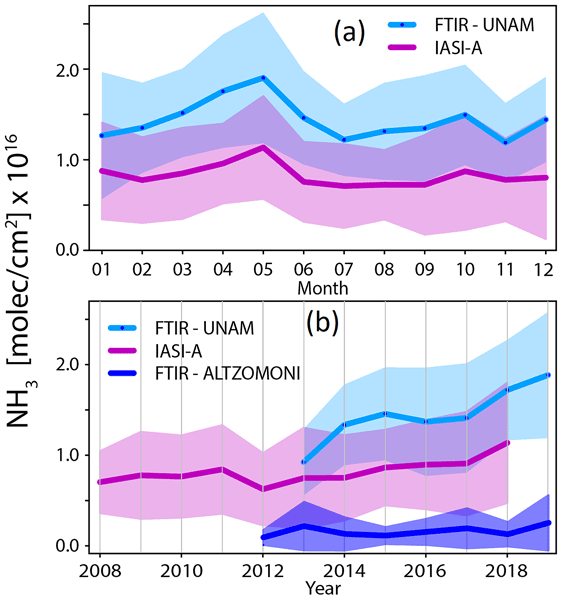
This work investigates atmospheric ammonia (NH3), a key trace gas with consequences for the environment and human health, in Mexico City. The results from the ground-based and satellite instruments show the variability and spatial distribution of NH3 over this region. NH3 in Mexico City has been increasing for the past 10 years and most of its sources are urban. This work contributes to a better understanding of NH3 sources and variability in urban and remote areas.
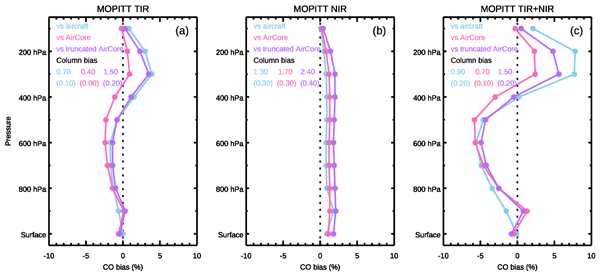
Sara Martínez-Alonso, Merritt N. Deeter, Bianca C. Baier, Kathryn McKain, Helen Worden, Tobias Borsdorff, Colm Sweeney, and Ilse Aben
Atmos. Meas. Tech., 15, 4751–4765, https://doi.org/10.5194/amt-15-4751-2022, https://doi.org/10.5194/amt-15-4751-2022, 2022
Short summary
Short summary
AirCore is a novel balloon sampling system that can measure, among others, vertical profiles of carbon monoxide (CO) from 25–30 km of altitude to near the surface. Our analyses of AirCore and satellite CO data show that AirCore profiles are suited for satellite data validation, the use of shorter aircraft vertical profiles in satellite validation results in small errors (1–3 percent points) mostly at 300 hPa and above, and the error introduced by clouds in TROPOMI land data is small (1–2 %).
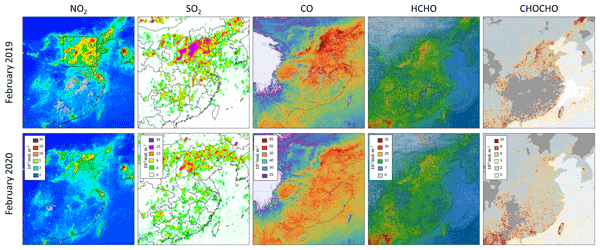
Pieternel F. Levelt, Deborah C. Stein Zweers, Ilse Aben, Maite Bauwens, Tobias Borsdorff, Isabelle De Smedt, Henk J. Eskes, Christophe Lerot, Diego G. Loyola, Fabian Romahn, Trissevgeni Stavrakou, Nicolas Theys, Michel Van Roozendael, J. Pepijn Veefkind, and Tijl Verhoelst
Atmos. Chem. Phys., 22, 10319–10351, https://doi.org/10.5194/acp-22-10319-2022, https://doi.org/10.5194/acp-22-10319-2022, 2022
Short summary
Short summary
Using the COVID-19 lockdown periods as an example, we show how Sentinel-5P/TROPOMI trace gas data (NO2, SO2, CO, HCHO and CHOCHO) can be used to understand impacts on air quality for regions and cities around the globe. We also provide information for both experienced and inexperienced users about how we created the data using state-of-the-art algorithms, where to get the data, methods taking meteorological and seasonal variability into consideration, and insights for future studies.
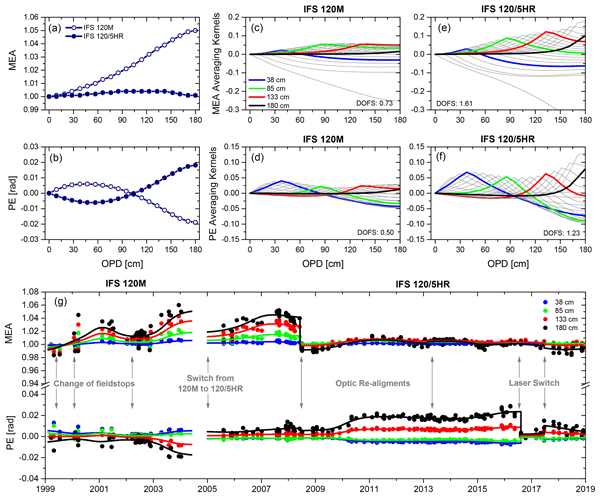
Omaira E. García, Esther Sanromá, Frank Hase, Matthias Schneider, Sergio Fabián León-Luis, Thomas Blumenstock, Eliezer Sepúlveda, Carlos Torres, Natalia Prats, Alberto Redondas, and Virgilio Carreño
Atmos. Meas. Tech., 15, 4547–4567, https://doi.org/10.5194/amt-15-4547-2022, https://doi.org/10.5194/amt-15-4547-2022, 2022
Short summary
Short summary
Retrieving high-precision concentrations of atmospheric trace gases from FTIR (Fourier transform infrared) spectrometry requires a precise knowledge of the instrumental performance. In this context, this paper examines the impact on the ozone (O3) retrievals of several approaches used to characterise the instrumental line shape (ILS) function of ground-based FTIR spectrometers within NDACC (Network for the Detection of Atmospheric Composition Change).
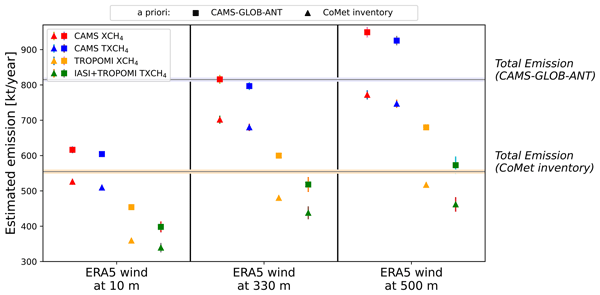
Qiansi Tu, Matthias Schneider, Frank Hase, Farahnaz Khosrawi, Benjamin Ertl, Jaroslaw Necki, Darko Dubravica, Christopher J. Diekmann, Thomas Blumenstock, and Dianjun Fang
Atmos. Chem. Phys., 22, 9747–9765, https://doi.org/10.5194/acp-22-9747-2022, https://doi.org/10.5194/acp-22-9747-2022, 2022
Short summary
Short summary
Three-year satellite observations and high-resolution model forecast of XCH4 are used to derive CH4 emissions in the USCB region, Poland – a region of intense coal mining activities. The wind-assigned anomalies for two opposite wind directions are calculated and the estimated emission rates are very close to the inventories and in reasonable agreement with the previous studies. Our method is quite robust and can serve as a simple method to estimate CH4 or CO2 emissions for other regions.
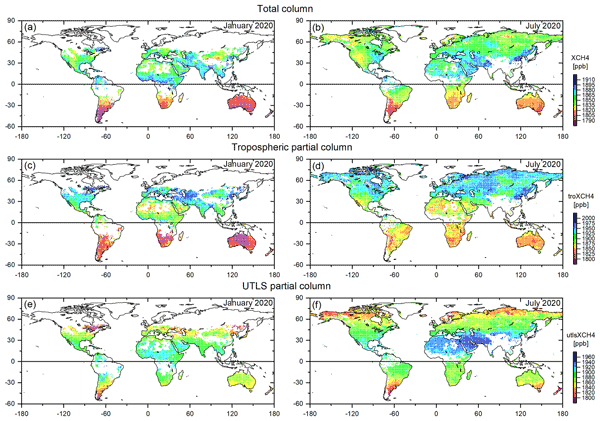
Matthias Schneider, Benjamin Ertl, Qiansi Tu, Christopher J. Diekmann, Farahnaz Khosrawi, Amelie N. Röhling, Frank Hase, Darko Dubravica, Omaira E. García, Eliezer Sepúlveda, Tobias Borsdorff, Jochen Landgraf, Alba Lorente, André Butz, Huilin Chen, Rigel Kivi, Thomas Laemmel, Michel Ramonet, Cyril Crevoisier, Jérome Pernin, Martin Steinbacher, Frank Meinhardt, Kimberly Strong, Debra Wunch, Thorsten Warneke, Coleen Roehl, Paul O. Wennberg, Isamu Morino, Laura T. Iraci, Kei Shiomi, Nicholas M. Deutscher, David W. T. Griffith, Voltaire A. Velazco, and David F. Pollard
Atmos. Meas. Tech., 15, 4339–4371, https://doi.org/10.5194/amt-15-4339-2022, https://doi.org/10.5194/amt-15-4339-2022, 2022
Short summary
Short summary
We present a computationally very efficient method for the synergetic use of level 2 remote-sensing data products. We apply the method to IASI vertical profile and TROPOMI total column space-borne methane observations and thus gain sensitivity for the tropospheric methane partial columns, which is not achievable by the individual use of TROPOMI and IASI. These synergetic effects are evaluated theoretically and empirically by inter-comparisons to independent references of TCCON, AirCore, and GAW.
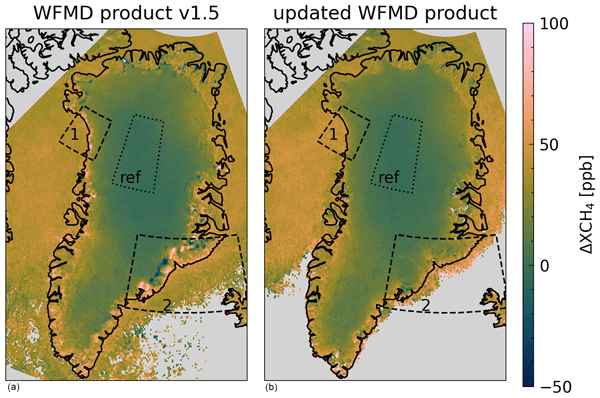
Jonas Hachmeister, Oliver Schneising, Michael Buchwitz, Alba Lorente, Tobias Borsdorff, John P. Burrows, Justus Notholt, and Matthias Buschmann
Atmos. Meas. Tech., 15, 4063–4074, https://doi.org/10.5194/amt-15-4063-2022, https://doi.org/10.5194/amt-15-4063-2022, 2022
Short summary
Short summary
Sentinel-5P trace gas retrievals rely on elevation data in their calculations. Outdated or inaccurate data can lead to significant errors in e.g. dry-air mole fractions of methane (XCH4). We show that the use of inadequate elevation data leads to strong XCH4 anomalies in Greenland. Similar problems can be expected for other regions with inaccurate elevation data. However, we expect these to be more localized. We show that updating elevation data used in the retrieval solves this issue.
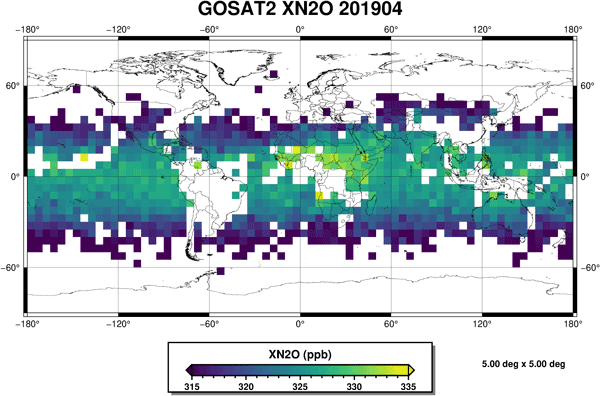
Stefan Noël, Maximilian Reuter, Michael Buchwitz, Jakob Borchardt, Michael Hilker, Oliver Schneising, Heinrich Bovensmann, John P. Burrows, Antonio Di Noia, Robert J. Parker, Hiroshi Suto, Yukio Yoshida, Matthias Buschmann, Nicholas M. Deutscher, Dietrich G. Feist, David W. T. Griffith, Frank Hase, Rigel Kivi, Cheng Liu, Isamu Morino, Justus Notholt, Young-Suk Oh, Hirofumi Ohyama, Christof Petri, David F. Pollard, Markus Rettinger, Coleen Roehl, Constantina Rousogenous, Mahesh Kumar Sha, Kei Shiomi, Kimberly Strong, Ralf Sussmann, Yao Té, Voltaire A. Velazco, Mihalis Vrekoussis, and Thorsten Warneke
Atmos. Meas. Tech., 15, 3401–3437, https://doi.org/10.5194/amt-15-3401-2022, https://doi.org/10.5194/amt-15-3401-2022, 2022
Short summary
Short summary
We present a new version (v3) of the GOSAT and GOSAT-2 FOCAL products.
In addition to an increased number of XCO2 data, v3 also includes products for XCH4 (full-physics and proxy), XH2O and the relative ratio of HDO to H2O (δD). For GOSAT-2, we also present first XCO and XN2O results. All FOCAL data products show reasonable spatial distribution and temporal variations and agree well with TCCON. Global XN2O maps show a gradient from the tropics to higher latitudes on the order of 15 ppb.
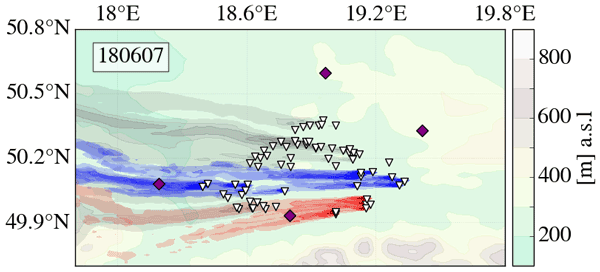
Andreas Luther, Julian Kostinek, Ralph Kleinschek, Sara Defratyka, Mila Stanisavljević, Andreas Forstmaier, Alexandru Dandocsi, Leon Scheidweiler, Darko Dubravica, Norman Wildmann, Frank Hase, Matthias M. Frey, Jia Chen, Florian Dietrich, Jarosław Nȩcki, Justyna Swolkień, Christoph Knote, Sanam N. Vardag, Anke Roiger, and André Butz
Atmos. Chem. Phys., 22, 5859–5876, https://doi.org/10.5194/acp-22-5859-2022, https://doi.org/10.5194/acp-22-5859-2022, 2022
Short summary
Short summary
Coal mining is an extensive source of anthropogenic methane emissions. In order to reduce and mitigate methane emissions, it is important to know how much and where the methane is emitted. We estimated coal mining methane emissions in Poland based on atmospheric methane measurements and particle dispersion modeling. In general, our emission estimates suggest higher emissions than expected by previous annual emission reports.

Omaira Elena García, Esther Sanromá, Matthias Schneider, Frank Hase, Sergio Fabián León-Luis, Thomas Blumenstock, Eliezer Sepúlveda, Alberto Redondas, Virgilio Carreño, Carlos Torres, and Natalia Prats
Atmos. Meas. Tech., 15, 2557–2577, https://doi.org/10.5194/amt-15-2557-2022, https://doi.org/10.5194/amt-15-2557-2022, 2022
Short summary
Short summary
Accurate observations of atmospheric ozone (O3) are essential to monitor in detail its key role in atmospheric chemistry. In this context, this paper has assessed the effect of using different retrieval strategies on the quality of O3 products from ground-based NDACC FTIR (Fourier transform infrared) spectrometry, with the aim of providing an improved O3 retrieval that could be applied at any NDACC FTIR station.
Carlos Alberti, Frank Hase, Matthias Frey, Darko Dubravica, Thomas Blumenstock, Angelika Dehn, Paolo Castracane, Gregor Surawicz, Roland Harig, Bianca C. Baier, Caroline Bès, Jianrong Bi, Hartmut Boesch, André Butz, Zhaonan Cai, Jia Chen, Sean M. Crowell, Nicholas M. Deutscher, Dragos Ene, Jonathan E. Franklin, Omaira García, David Griffith, Bruno Grouiez, Michel Grutter, Abdelhamid Hamdouni, Sander Houweling, Neil Humpage, Nicole Jacobs, Sujong Jeong, Lilian Joly, Nicholas B. Jones, Denis Jouglet, Rigel Kivi, Ralph Kleinschek, Morgan Lopez, Diogo J. Medeiros, Isamu Morino, Nasrin Mostafavipak, Astrid Müller, Hirofumi Ohyama, Paul I. Palmer, Mahesh Pathakoti, David F. Pollard, Uwe Raffalski, Michel Ramonet, Robbie Ramsay, Mahesh Kumar Sha, Kei Shiomi, William Simpson, Wolfgang Stremme, Youwen Sun, Hiroshi Tanimoto, Yao Té, Gizaw Mengistu Tsidu, Voltaire A. Velazco, Felix Vogel, Masataka Watanabe, Chong Wei, Debra Wunch, Marcia Yamasoe, Lu Zhang, and Johannes Orphal
Atmos. Meas. Tech., 15, 2433–2463, https://doi.org/10.5194/amt-15-2433-2022, https://doi.org/10.5194/amt-15-2433-2022, 2022
Short summary
Short summary
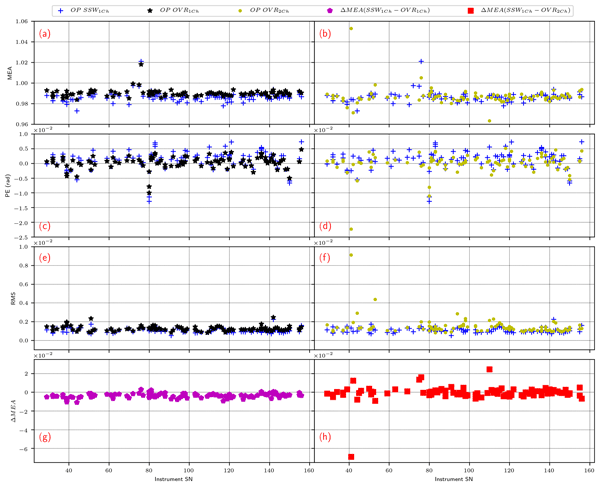
Space-borne greenhouse gas missions require ground-based validation networks capable of providing fiducial reference measurements. Here, considerable refinements of the calibration procedures for the COllaborative Carbon Column Observing Network (COCCON) are presented. Laboratory and solar side-by-side procedures for the characterization of the spectrometers have been refined and extended. Revised calibration factors for XCO2, XCO and XCH4 are provided, incorporating 47 new spectrometers.
Andreas Schneider, Tobias Borsdorff, Joost aan de Brugh, Alba Lorente, Franziska Aemisegger, David Noone, Dean Henze, Rigel Kivi, and Jochen Landgraf
Atmos. Meas. Tech., 15, 2251–2275, https://doi.org/10.5194/amt-15-2251-2022, https://doi.org/10.5194/amt-15-2251-2022, 2022
Short summary
Short summary
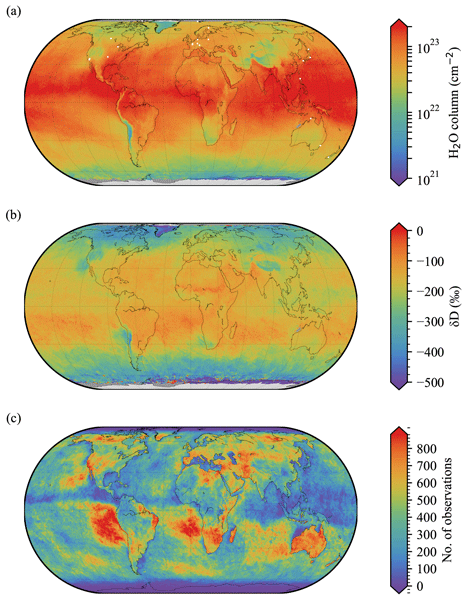
This paper presents an extended H₂O/HDO total column dataset from short-wave infrared measurements by TROPOMI including cloudy and clear-sky scenes. Coverage is tremendously increased compared to previous TROPOMI HDO datasets. The new dataset is validated against recent ground-based FTIR measurements from TCCON and against aircraft measurements over the ocean. The use of the new dataset is demonstrated with a case study of a cold air outbreak in January 2020.
Carlos Alberti, Qiansi Tu, Frank Hase, Maria V. Makarova, Konstantin Gribanov, Stefani C. Foka, Vyacheslav Zakharov, Thomas Blumenstock, Michael Buchwitz, Christopher Diekmann, Benjamin Ertl, Matthias M. Frey, Hamud Kh. Imhasin, Dmitry V. Ionov, Farahnaz Khosrawi, Sergey I. Osipov, Maximilian Reuter, Matthias Schneider, and Thorsten Warneke
Atmos. Meas. Tech., 15, 2199–2229, https://doi.org/10.5194/amt-15-2199-2022, https://doi.org/10.5194/amt-15-2199-2022, 2022
Short summary
Short summary
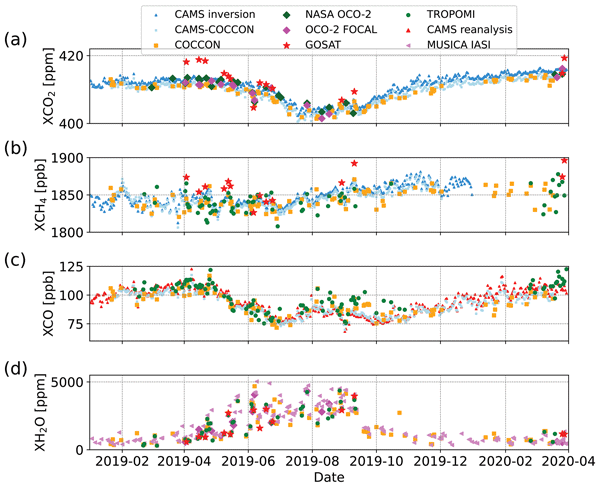
Satellite and ground-based observations at high latitudes are much sparser than at low or mid latitudes, which makes direct coincident comparisons between remote-sensing observations more difficult. Therefore, a method of scaling continuous CAMS model data to the ground-based observations is developed and used for creating virtual COCCON observations. These adjusted CAMS data are then used for satellite inter-comparison, showing good agreement in both Peterhof and Yekaterinburg cities.
Thomas von Clarmann, Steven Compernolle, and Frank Hase
Atmos. Meas. Tech., 15, 1145–1157, https://doi.org/10.5194/amt-15-1145-2022, https://doi.org/10.5194/amt-15-1145-2022, 2022
Short summary
Short summary
Contrary to the claims put forward in
Evaluation of measurement data – Guide to the expression of uncertainty in measurementissued by the JCGM, the error concept and the uncertainty concept are the same. Arguments in favor of the contrary were found not to be compelling. Neither was any evidence presented that
errorsand
uncertaintiesdefine a different relation between the measured and true values, nor is a Bayesian concept beyond the mere subjective probability referred to.
Matthias Schneider, Benjamin Ertl, Christopher J. Diekmann, Farahnaz Khosrawi, Andreas Weber, Frank Hase, Michael Höpfner, Omaira E. García, Eliezer Sepúlveda, and Douglas Kinnison
Earth Syst. Sci. Data, 14, 709–742, https://doi.org/10.5194/essd-14-709-2022, https://doi.org/10.5194/essd-14-709-2022, 2022
Short summary
Short summary
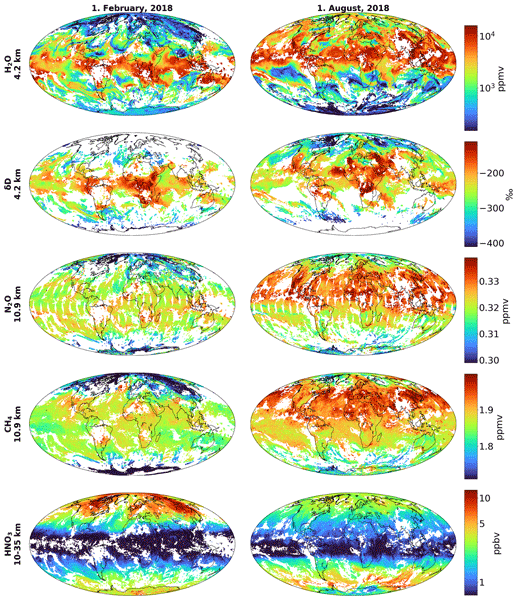
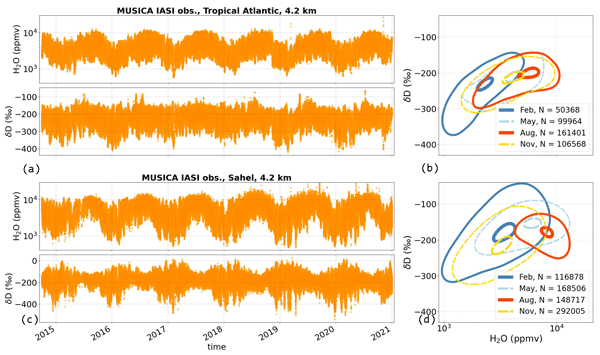
We present atmospheric H2O, HDO / H2O ratio, N2O, CH4, and HNO3 data generated by the MUSICA IASI processor using thermal nadir spectra measured by the IASI satellite instrument. The data have global daily coverage and are available for the period between October 2014 and June 2021. Multiple possibilities of data reuse are offered by providing each individual data product together with information about retrieval settings and the products' uncertainty and vertical representativeness.
Thomas E. Taylor, Christopher W. O'Dell, David Crisp, Akhiko Kuze, Hannakaisa Lindqvist, Paul O. Wennberg, Abhishek Chatterjee, Michael Gunson, Annmarie Eldering, Brendan Fisher, Matthäus Kiel, Robert R. Nelson, Aronne Merrelli, Greg Osterman, Frédéric Chevallier, Paul I. Palmer, Liang Feng, Nicholas M. Deutscher, Manvendra K. Dubey, Dietrich G. Feist, Omaira E. García, David W. T. Griffith, Frank Hase, Laura T. Iraci, Rigel Kivi, Cheng Liu, Martine De Mazière, Isamu Morino, Justus Notholt, Young-Suk Oh, Hirofumi Ohyama, David F. Pollard, Markus Rettinger, Matthias Schneider, Coleen M. Roehl, Mahesh Kumar Sha, Kei Shiomi, Kimberly Strong, Ralf Sussmann, Yao Té, Voltaire A. Velazco, Mihalis Vrekoussis, Thorsten Warneke, and Debra Wunch
Earth Syst. Sci. Data, 14, 325–360, https://doi.org/10.5194/essd-14-325-2022, https://doi.org/10.5194/essd-14-325-2022, 2022
Short summary
Short summary
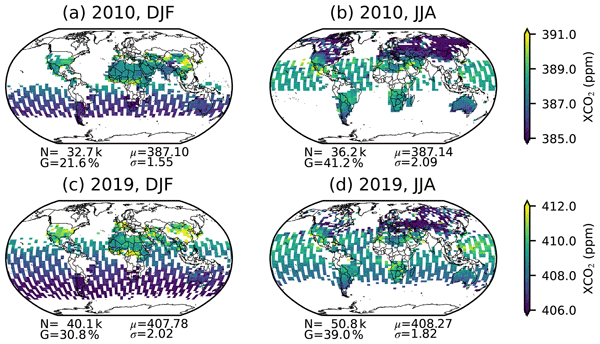
We provide an analysis of an 11-year record of atmospheric carbon dioxide (CO2) concentrations derived using an optimal estimation retrieval algorithm on measurements made by the GOSAT satellite. The new product (version 9) shows improvement over the previous version (v7.3) as evaluated against independent estimates of CO2 from ground-based sensors and atmospheric inversion systems. We also compare the new GOSAT CO2 values to collocated estimates from NASA's Orbiting Carbon Observatory-2.
Tobias Küchler, Stefan Noël, Heinrich Bovensmann, John Philip Burrows, Thomas Wagner, Christian Borger, Tobias Borsdorff, and Andreas Schneider
Atmos. Meas. Tech., 15, 297–320, https://doi.org/10.5194/amt-15-297-2022, https://doi.org/10.5194/amt-15-297-2022, 2022
Short summary
Short summary
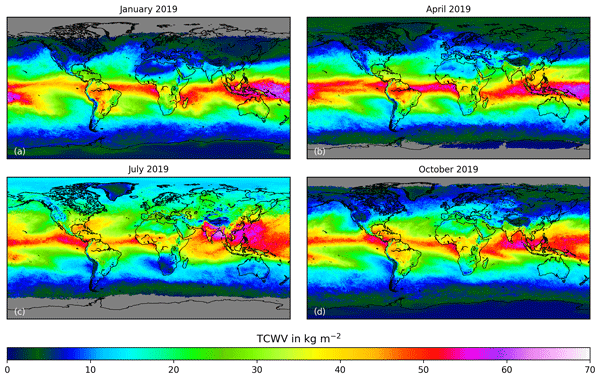
We applied the air-mass-corrected differential optical absorption spectroscopy (AMC-DOAS) method to derive total column water vapour (TCWV) from Sentinel-5P measurements and compared it to independent data sets. The correlation coefficients of typically more than 0.9 and the small deviations up to 2.5 kg m−2 reveal good agreement between our data product and other TCWV data sets. In particular for the different Sentinel-5P water vapour products, the deviations are around 1 kg m−2.
Qiansi Tu, Frank Hase, Matthias Schneider, Omaira García, Thomas Blumenstock, Tobias Borsdorff, Matthias Frey, Farahnaz Khosrawi, Alba Lorente, Carlos Alberti, Juan J. Bustos, André Butz, Virgilio Carreño, Emilio Cuevas, Roger Curcoll, Christopher J. Diekmann, Darko Dubravica, Benjamin Ertl, Carme Estruch, Sergio Fabián León-Luis, Carlos Marrero, Josep-Anton Morgui, Ramón Ramos, Christian Scharun, Carsten Schneider, Eliezer Sepúlveda, Carlos Toledano, and Carlos Torres
Atmos. Chem. Phys., 22, 295–317, https://doi.org/10.5194/acp-22-295-2022, https://doi.org/10.5194/acp-22-295-2022, 2022
Short summary
Short summary
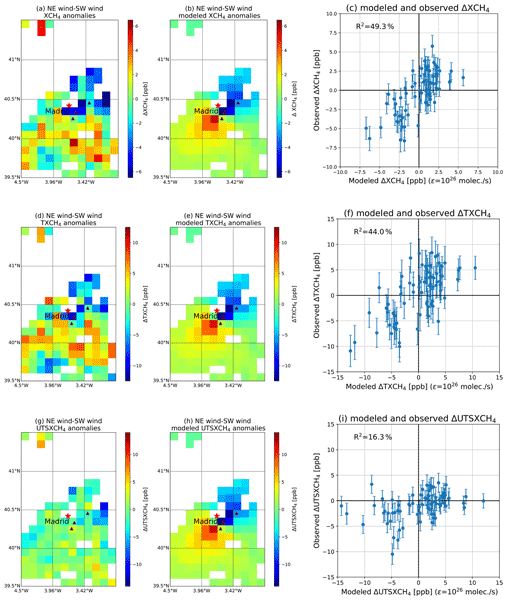
We use different methane ground- and space-based remote sensing data sets for investigating the emission strength of three waste disposal sites close to Madrid. We present a method that uses wind-assigned anomalies for deriving emission strengths from satellite data and estimate their uncertainty to 9–14 %. The emission strengths estimated from the remote sensing data sets are significantly larger than the values published in the official register.
Tyler Wizenberg, Kimberly Strong, Kaley Walker, Erik Lutsch, Tobias Borsdorff, and Jochen Landgraf
Atmos. Meas. Tech., 14, 7707–7728, https://doi.org/10.5194/amt-14-7707-2021, https://doi.org/10.5194/amt-14-7707-2021, 2021
Short summary
Short summary
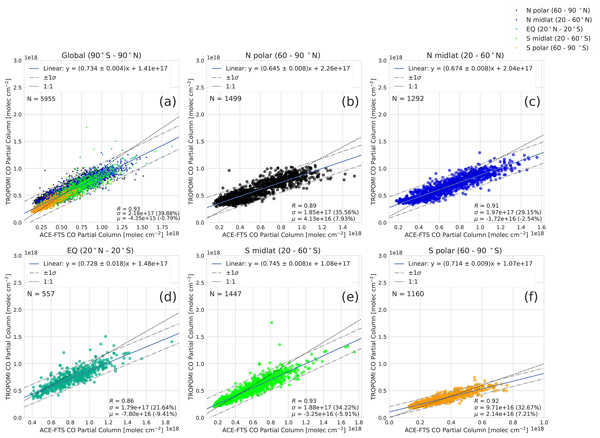
CO is an important atmospheric gas that influences both air quality and the climate. Here, we compare CO measurements from TROPOMI with those from ACE-FTS and an Arctic ground-based FTS at Eureka, Nunavut, to further characterize the accuracy of TROPOMI measurements. CO columns from the instruments agree well but show larger differences at high latitudes. Despite this, the results fall within the TROPOMI accuracy target, indicating good data quality at high latitudes.
Nicole Jacobs, William R. Simpson, Kelly A. Graham, Christopher Holmes, Frank Hase, Thomas Blumenstock, Qiansi Tu, Matthias Frey, Manvendra K. Dubey, Harrison A. Parker, Debra Wunch, Rigel Kivi, Pauli Heikkinen, Justus Notholt, Christof Petri, and Thorsten Warneke
Atmos. Chem. Phys., 21, 16661–16687, https://doi.org/10.5194/acp-21-16661-2021, https://doi.org/10.5194/acp-21-16661-2021, 2021
Short summary
Short summary
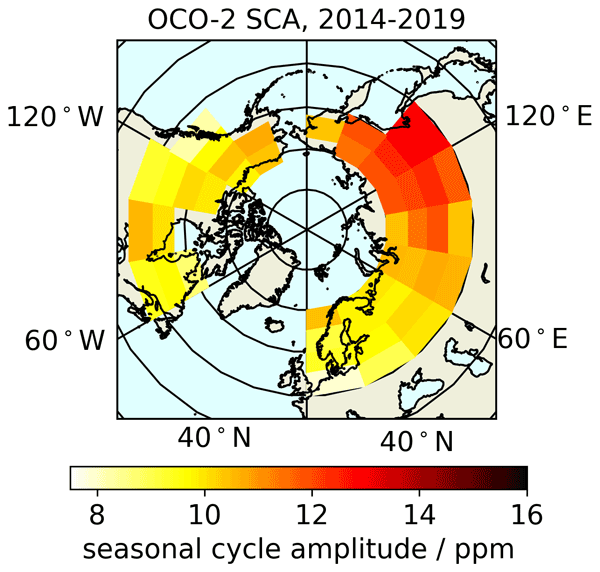
Spatial patterns of carbon dioxide seasonal cycle amplitude and summer drawdown timing derived from the OCO-2 satellite over northern high latitudes agree well with corresponding estimates from two models. The Asian boreal forest is anomalous with the largest amplitude and earliest seasonal drawdown. Modeled land contact tracers suggest that accumulated CO2 exchanges during atmospheric transport play a major role in shaping carbon dioxide seasonality in northern high-latitude regions.
Christopher J. Diekmann, Matthias Schneider, Benjamin Ertl, Frank Hase, Omaira García, Farahnaz Khosrawi, Eliezer Sepúlveda, Peter Knippertz, and Peter Braesicke
Earth Syst. Sci. Data, 13, 5273–5292, https://doi.org/10.5194/essd-13-5273-2021, https://doi.org/10.5194/essd-13-5273-2021, 2021
Short summary
Short summary
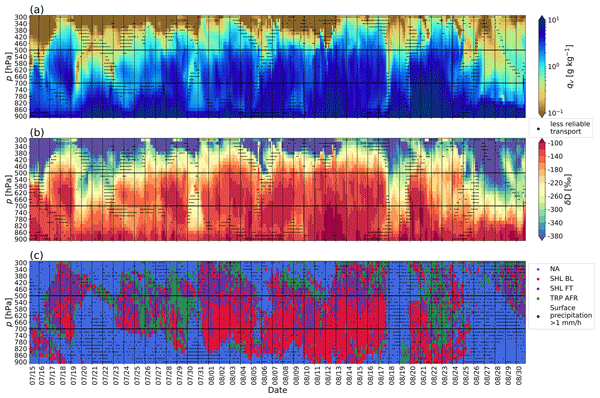
The joint analysis of different stable water isotopes in water vapour is a powerful tool for investigating atmospheric moisture pathways. This paper presents a novel global and multi-annual dataset of H2O and HDO in mid-tropospheric water vapour by using data from the satellite sensor Metop/IASI. Due to its unique combination of coverage and resolution in space and time, this dataset is highly promising for studying the hydrological cycle and its representation in weather and climate models.
Fabienne Dahinden, Franziska Aemisegger, Heini Wernli, Matthias Schneider, Christopher J. Diekmann, Benjamin Ertl, Peter Knippertz, Martin Werner, and Stephan Pfahl
Atmos. Chem. Phys., 21, 16319–16347, https://doi.org/10.5194/acp-21-16319-2021, https://doi.org/10.5194/acp-21-16319-2021, 2021
Short summary
Short summary
We use high-resolution numerical isotope modelling and Lagrangian backward trajectories to identify moisture transport pathways and governing physical and dynamical processes that affect the free-tropospheric humidity and isotopic variability over the eastern subtropical North Atlantic. Furthermore, we conduct a thorough isotope modelling validation with aircraft and remote-sensing observations of water vapour isotopes.
Omaira E. García, Matthias Schneider, Eliezer Sepúlveda, Frank Hase, Thomas Blumenstock, Emilio Cuevas, Ramón Ramos, Jochen Gross, Sabine Barthlott, Amelie N. Röhling, Esther Sanromá, Yenny González, Ángel J. Gómez-Peláez, Mónica Navarro-Comas, Olga Puentedura, Margarita Yela, Alberto Redondas, Virgilio Carreño, Sergio F. León-Luis, Enrique Reyes, Rosa D. García, Pedro P. Rivas, Pedro M. Romero-Campos, Carlos Torres, Natalia Prats, Miguel Hernández, and César López
Atmos. Chem. Phys., 21, 15519–15554, https://doi.org/10.5194/acp-21-15519-2021, https://doi.org/10.5194/acp-21-15519-2021, 2021
Short summary
Short summary
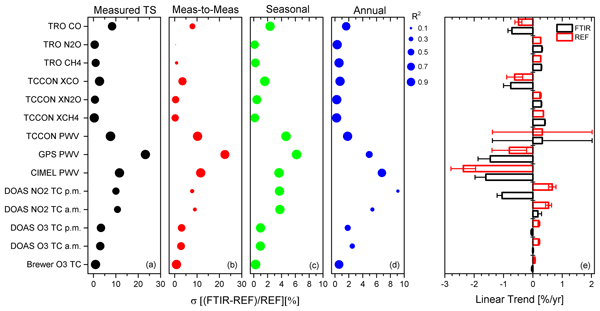
This paper analyses the potential of ground-based Fourier transform infrared (FTIR) solar observations to monitor atmospheric gaseous composition and investigate multiple climate processes. To this end, this work reviews the FTIR programme of one of most relevant ground-based FTIR stations at a global scale, the subtropical Izaña Observatory (IZO, Spain), going over its history during its first 20 years of operation (1999–2018) and exploring its great value for long-term climate research.
Cited articles
Ameri, P., Grabowski, U., Meyer, J., and Streit, A.: On the application and performance of MongoDB for climate satellite data, in: Proceedings of the 13th International Conference on Trust, Security and Privacy in Computing and Communications (TrustCom 2014), Beijing, CHN, 24–26 September 2014, IEEE Computer Society, 652–659, ISBN 978-1-4799-6513-7, https://doi.org/10.1109/TrustCom.2014.84, 2014. a
Barré, J., Aben, I., Agustí-Panareda, A., Balsamo, G., Bousserez, N., Dueben, P., Engelen, R., Inness, A., Lorente, A., McNorton, J., Peuch, V.-H., Radnoti, G., and Ribas, R.: Systematic detection of local CH4 anomalies by combining satellite measurements with high-resolution forecasts, Atmos. Chem. Phys., 21, 5117–5136, https://doi.org/10.5194/acp-21-5117-2021, 2021. a
Butz, A., Guerlet, S., Hasekamp, O., Schepers, D., Galli, A., Aben, I., Frankenberg, C., Hartmann, J.-M., Tran, H., Kuze, A., Keppel-Aleks, G., Toon, G., Wunch, D., Wennberg, P., Deutscher, N., Griffith, D., Macatangay, R., Messerschmidt, J., Notholt, J., and Warneke, T.: Toward accurate CO2 and CH4 observations from GOSAT, Geophys. Res. Lett., 38, https://doi.org/10.1029/2011GL047888, 2011. a
Butz, A., Galli, A., Hasekamp, O., Landgraf, J., Tol, P., and Aben, I.: TROPOMI aboard Sentinel-5 Precursor: Prospective performance of CH4 retrievals for aerosol and cirrus loaded atmospheres, Remote Sens. Environ., 120, 267–276, https://doi.org/10.1016/j.rse.2011.05.030, 2012. a
Clerbaux, C., Boynard, A., Clarisse, L., George, M., Hadji-Lazaro, J., Herbin, H., Hurtmans, D., Pommier, M., Razavi, A., Turquety, S., Wespes, C., and Coheur, P.-F.: Monitoring of atmospheric composition using the thermal infrared IASI/MetOp sounder, Atmos. Chem. Phys., 9, 6041–6054, https://doi.org/10.5194/acp-9-6041-2009, 2009. a
Crippa, M., Guizzardi, D., Pagani, F., Banja, M., Muntean, M., Schaaf, E., Monforti-Ferrario, F., Becker, W. E., Quadrelli, R., Risquez Martin, A., Taghavi-Moharamli, P., Köykkä, J., Grassi, G., Rossi, S., Melo, J., Oom, D., Branco, A., San-Miguel, J., Manca, G., Pisoni, E., Vignati, E., and Pekar, F.: EDGAR v7.0 – Global Greenhouse Gas Emissions Dataset (2024), European Commission, Joint Research Centre (JRC), https://edgar.jrc.ec.europa.eu/dataset_ghg2024 (last access: 8 March 2026), 2024. a
Frankenberg, C., Meirink, J. F., van Weele, M., Platt, U., and Wagner, T.: Assessing Methane Emissions from Global Space-Borne Observations, Science, 308, 1010–1014, https://doi.org/10.1126/science.1106644, 2005. a
García, O. E., Schneider, M., Ertl, B., Sepúlveda, E., Borger, C., Diekmann, C., Wiegele, A., Hase, F., Barthlott, S., Blumenstock, T., Raffalski, U., Gómez-Peláez, A., Steinbacher, M., Ries, L., and de Frutos, A. M.: The MUSICA IASI CH4 and N2O products and their comparison to HIPPO, GAW and NDACC FTIR references, Atmos. Meas. Tech., 11, 4171–4215, https://doi.org/10.5194/amt-11-4171-2018, 2018. a
Karion, A., Sweeney, C., Tans, P., and Newberger, T.: AirCore: An Innovative Atmospheric Sampling System, J. Atmos. Ocean. Tech., 27, 1839–1853, https://doi.org/10.1175/2010JTECHA1448.1, 2010. a
Krol, M., Houweling, S., Bregman, B., van den Broek, M., Segers, A., van Velthoven, P., Peters, W., Dentener, F., and Bergamaschi, P.: The two-way nested global chemistry-transport zoom model TM5: algorithm and applications, Atmos. Chem. Phys., 5, 417–432, https://doi.org/10.5194/acp-5-417-2005, 2005. a
Lorente, A., Borsdorff, T., Butz, A., Hasekamp, O., aan de Brugh, J., Schneider, A., Wu, L., Hase, F., Kivi, R., Wunch, D., Pollard, D. F., Shiomi, K., Deutscher, N. M., Velazco, V. A., Roehl, C. M., Wennberg, P. O., Warneke, T., and Landgraf, J.: Methane retrieved from TROPOMI: improvement of the data product and validation of the first 2 years of measurements, Atmos. Meas. Tech., 14, 665–684, https://doi.org/10.5194/amt-14-665-2021, 2021. a, b
Lorente, A., Borsdorff, T., Martinez-Velarte, M. C., and Landgraf, J.: Accounting for surface reflectance spectral features in TROPOMI methane retrievals, Atmos. Meas. Tech., 16, 1597–1608, https://doi.org/10.5194/amt-16-1597-2023, 2023a. a, b
Lorente, A., Borsdorff, T., Martinez Velarte, M. C., and Landgraf, J.: SRON S5P – RemoTeC scientific TROPOMI XCH4 dataset v19_446, Zenodo [data set], https://doi.org/10.5281/zenodo.7766558, 2023b. a, b
McKinney, W.: Data Structures for Statistical Computing in Python, in: Proceedings of the 9th Python in Science Conference, SciPy, 51–56, https://doi.org/10.25080/Majora-92bf1922-00a, 2010. a
Rodgers, C.: Inverse Methods for Atmospheric Sounding: Theory and Praxis, World Scientific Publishing Co., Singapore, ISBN 981-02-2740-X, 2000. a
Rodgers, C. and Connor, B.: Intercomparison of remote sounding instruments, J. Geophys. Res., 108, 4116–4129, https://doi.org/10.1029/2002JD002299, 2003. a
Saunois, M., Bousquet, P., Poulter, B., Peregon, A., Ciais, P., Canadell, J. G., Dlugokencky, E. J., Etiope, G., Bastviken, D., Houweling, S., Janssens-Maenhout, G., Tubiello, F. N., Castaldi, S., Jackson, R. B., Alexe, M., Arora, V. K., Beerling, D. J., Bergamaschi, P., Blake, D. R., Brailsford, G., Brovkin, V., Bruhwiler, L., Crevoisier, C., Crill, P., Covey, K., Curry, C., Frankenberg, C., Gedney, N., Höglund-Isaksson, L., Ishizawa, M., Ito, A., Joos, F., Kim, H.-S., Kleinen, T., Krummel, P., Lamarque, J.-F., Langenfelds, R., Locatelli, R., Machida, T., Maksyutov, S., McDonald, K. C., Marshall, J., Melton, J. R., Morino, I., Naik, V., O'Doherty, S., Parmentier, F.-J. W., Patra, P. K., Peng, C., Peng, S., Peters, G. P., Pison, I., Prigent, C., Prinn, R., Ramonet, M., Riley, W. J., Saito, M., Santini, M., Schroeder, R., Simpson, I. J., Spahni, R., Steele, P., Takizawa, A., Thornton, B. F., Tian, H., Tohjima, Y., Viovy, N., Voulgarakis, A., van Weele, M., van der Werf, G. R., Weiss, R., Wiedinmyer, C., Wilton, D. J., Wiltshire, A., Worthy, D., Wunch, D., Xu, X., Yoshida, Y., Zhang, B., Zhang, Z., and Zhu, Q.: The global methane budget 2000–2012, Earth Syst. Sci. Data, 8, 697–751, https://doi.org/10.5194/essd-8-697-2016, 2016. a
Schneider, M., Ertl, B., and Diekmann, C.: MUSICA IASI full retrieval product standard output (processing version 3.2.1), Institute of Meteorology and Climate Research, Atmospheric Trace Gases and Remote Sensing (IMKASF), Karlsruhe Institute of Technology (KIT) [data set], https://doi.org/10.35097/408, 2021. a, b
Schneider, M., Ertl, B., Diekmann, C. J., Khosrawi, F., Weber, A., Hase, F., Höpfner, M., García, O. E., Sepúlveda, E., and Kinnison, D.: Design and description of the MUSICA IASI full retrieval product, Earth Syst. Sci. Data, 14, 709–742, https://doi.org/10.5194/essd-14-709-2022, 2022a. a, b, c, d, e
Schneider, M., Ertl, B., Tu, Q., Diekmann, C. J., Khosrawi, F., Röhling, A. N., Hase, F., Dubravica, D., García, O. E., Sepúlveda, E., Borsdorff, T., Landgraf, J., Lorente, A., Butz, A., Chen, H., Kivi, R., Laemmel, T., Ramonet, M., Crevoisier, C., Pernin, J., Steinbacher, M., Meinhardt, F., Strong, K., Wunch, D., Warneke, T., Roehl, C., Wennberg, P. O., Morino, I., Iraci, L. T., Shiomi, K., Deutscher, N. M., Griffith, D. W. T., Velazco, V. A., and Pollard, D. F.: Synergetic use of IASI profile and TROPOMI total-column level 2 methane retrieval products, Atmos. Meas. Tech., 15, 4339–4371, https://doi.org/10.5194/amt-15-4339-2022, 2022b. a, b, c, d, e, f, g, h, i, j, k, l
Shahzadi, K., Schneider, M., Lo, N. Y., and Borsdorff, T.: MUSICA IASI/TROPOMI RemoTeC fused CH4 data set (version 4.1), Institute of Meteorology and Climate Research, Atmospheric Trace Gases and Remote Sensing (IMKASF), Karlsruhe Institute of Technology (KIT) [data set], https://doi.org/10.35097/wq583rnzpmd83m5g, 2026. a, b, c
Tu, Q., Hase, F., Schneider, M., García, O., Blumenstock, T., Borsdorff, T., Frey, M., Khosrawi, F., Lorente, A., Alberti, C., Bustos, J. J., Butz, A., Carreño, V., Cuevas, E., Curcoll, R., Diekmann, C. J., Dubravica, D., Ertl, B., Estruch, C., León-Luis, S. F., Marrero, C., Morgui, J.-A., Ramos, R., Scharun, C., Schneider, C., Sepúlveda, E., Toledano, C., and Torres, C.: Quantification of CH4 emissions from waste disposal sites near the city of Madrid using ground- and space-based observations of COCCON, TROPOMI and IASI, Atmos. Chem. Phys., 22, 295–317, https://doi.org/10.5194/acp-22-295-2022, 2022. a
Veefkind, J., Aben, I., McMullan, K., Förster, H., de Vries, J., Otter, G., Claas, J., Eskes, H., de Haan, J., Kleipool, Q., van Weele, M., Hasekamp, O., Hoogeveen, R., Landgraf, J., Snel, R., Tol, P., Ingmann, P., Voors, R., Kruizinga, B., Vink, R., Visser, H., and Levelt, P.: TROPOMI on the ESA Sentinel-5 Precursor: A GMES mission for global observations of the atmospheric composition for climate, air quality and ozone layer applications, Remote Sens. Environ., 120, 70–83, https://doi.org/10.1016/j.rse.2011.09.027, 2012. a
Wilkinson, M. D., Dumontier, M., Aalbersberg, I. J., Appleton, G., Axton, M., Baak, A., Blomberg, N., Boiten, J.-W., da Silva Santos, L. B., Bourne, P. E., Bouwman, J., Brookes, A. J., Clark, T., Crosas, M., Dillo, I., Dumon, O., Edmunds, S., Evelo, C. T., Finkers, R., Gonzalez-Beltran, A., Gray, A. J., Groth, P., Goble, C., Grethe, J. S., Heringa, J., 't Hoen, P. A., Hooft, R., Kuhn, T., Kok, R., Kok, J., Lusher, S. J., Martone, M. E., Mons, A., Packer, A. L., Persson, B., Rocca-Serra, P., Roos, M., van Schaik, R., Sansone, S.-A., Schultes, E., Sengstag, T., Slater, T., Strawn, G., Swertz, M. A., Thompson, M., van der Lei, J., van Mulligen, E., Velterop, J., Waagmeester, A., Wittenburg, P., Wolstencroft, K., Zhao, J., and Mons, B.: The FAIR Guiding Principles for scientific data management and stewardship, Sci. Data, 3, 2052–4463, https://doi.org/10.1038/sdata.2016.18, 2016. a
Wunch, D., Toon, G. C., Blavier, J.-F. L., Washenfelder, R. A., Notholt, J., Connor, B. J., Griffith, D. W. T., Sherlock, V., and Wennberg, P. O.: The Total Carbon Column Observing Network, Philos. T. R. Soc. A, 369, 2087–2112, https://doi.org/10.1098/rsta.2010.0240, 2011a. a
Wunch, D., Wennberg, P. O., Toon, G. C., Connor, B. J., Fisher, B., Osterman, G. B., Frankenberg, C., Mandrake, L., O'Dell, C., Ahonen, P., Biraud, S. C., Castano, R., Cressie, N., Crisp, D., Deutscher, N. M., Eldering, A., Fisher, M. L., Griffith, D. W. T., Gunson, M., Heikkinen, P., Keppel-Aleks, G., Kyrö, E., Lindenmaier, R., Macatangay, R., Mendonca, J., Messerschmidt, J., Miller, C. E., Morino, I., Notholt, J., Oyafuso, F. A., Rettinger, M., Robinson, J., Roehl, C. M., Salawitch, R. J., Sherlock, V., Strong, K., Sussmann, R., Tanaka, T., Thompson, D. R., Uchino, O., Warneke, T., and Wofsy, S. C.: A method for evaluating bias in global measurements of CO2 total columns from space, Atmos. Chem. Phys., 11, 12317–12337, https://doi.org/10.5194/acp-11-12317-2011, 2011b. a
Zhou, D. K., Larar, A. M., Liu, X., Smith, W. L., Strow, L. L., Yang, P., Schlüssel, P., and Calbet, X.: Global Land Surface Emissivity Retrieved From Satellite Ultraspectral IR Measurements, IEEE T. Geosci. Remote, 49, 1277–1290, https://doi.org/10.1109/TGRS.2010.2051036, 2011. a
Short summary
We merge TROPOMI and IASI L2 methane data from January 2018 to June 2021 on a global scale. The data merging yields total column-averaged and upper tropospheric/stratospheric partial column-averaged mole fractions (already provided by the individual data sets). In addition, it outputs tropospheric partial column-averaged mole fractions (not provided by any of the two individual data sets). We briefly document their increased potential for quantifying near-surface methane emissions.
We merge TROPOMI and IASI L2 methane data from January 2018 to June 2021 on a global scale. The...


Altmetrics
Final-revised paper
Preprint