Articles | Volume 18, issue 3
https://doi.org/10.5194/essd-18-2093-2026
© Author(s) 2026. This work is distributed under
the Creative Commons Attribution 4.0 License.
the Creative Commons Attribution 4.0 License.
https://doi.org/10.5194/essd-18-2093-2026
© Author(s) 2026. This work is distributed under
the Creative Commons Attribution 4.0 License.
the Creative Commons Attribution 4.0 License.
Data description article
| 
23 Mar 2026
Data description article |
| 23 Mar 2026
| 23 Mar 2026
Spatial and morphometric analysis of a comprehensive dataset of loess sinkholes from a small basin in the Chinese Loess Plateau
Shaanxi Key Laboratory of Earth Surface System and Environmental Carrying Capacity, College of Urban and Environmental Sciences, Northwest University, Xi'an 710127, China
Institute of Earth Surface System and Hazards, Northwest University, Xi'an 710127, China
Francisco Gutiérrez
Departamento de Ciencias de la Tierra, Universidad de Zaragoza, C/ Pedro Cerbuna 12, 50009 Zaragoza, Spain
MOE Key Laboratory of Mechanics on Disaster and Environment in Western China, Department of Geological Engineering, Lanzhou University, Lanzhou 730000, China
Sisi Li
Shaanxi Key Laboratory of Earth Surface System and Environmental Carrying Capacity, College of Urban and Environmental Sciences, Northwest University, Xi'an 710127, China
School of Electronic Information, Northwest University, Xi'an 710127, China
Ninglian Wang
Shaanxi Key Laboratory of Earth Surface System and Environmental Carrying Capacity, College of Urban and Environmental Sciences, Northwest University, Xi'an 710127, China
Institute of Earth Surface System and Hazards, Northwest University, Xi'an 710127, China
Xi-an Li
School of Geological Engineering and Geomatics, Chang'an University, Xi'an 710054, China
Xingang Wang
State Key Laboratory of Continental Evolution and Early Life, Department of Geology, Northwest University, Xi'an 710069, China
Jinhui Sun
Shaanxi Key Laboratory of Earth Surface System and Environmental Carrying Capacity, College of Urban and Environmental Sciences, Northwest University, Xi'an 710127, China
Songbai Wu
Shaanxi Key Laboratory of Earth Surface System and Environmental Carrying Capacity, College of Urban and Environmental Sciences, Northwest University, Xi'an 710127, China
Institute of Earth Surface System and Hazards, Northwest University, Xi'an 710127, China
Related authors
Longjiang Xie, Yuwei Wu, Ninglian Wang, Anan Chen, Shiqiang Zhang, and Sheng Hu
The Cryosphere, 19, 6577–6590, https://doi.org/10.5194/tc-19-6577-2025, https://doi.org/10.5194/tc-19-6577-2025, 2025
Short summary
Short summary
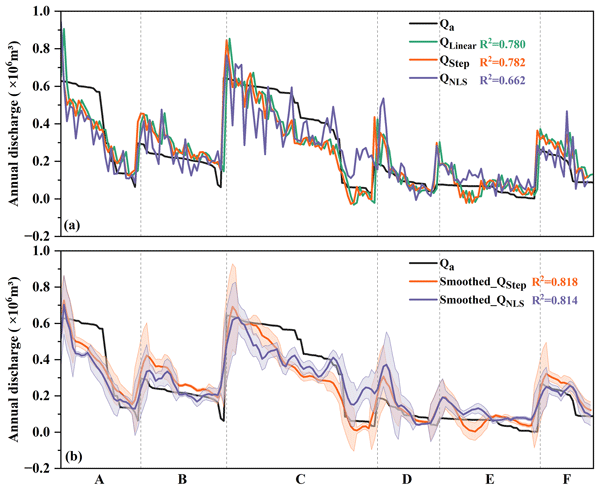
Estimating meltwater runoff from mountain glaciers is challenging due to harsh conditions and uncertainties in glacier runoff models. Using high-resolution unmanned aerial vehicle data, we extracted the complete supraglacial stream network on Qiyi Glacier (Tibetan Plateau) and its geometric parameters to build regression models estimating annual meltwater discharge with high accuracy. These methods show potential for large-scale glacier runoff estimation with improving remote sensing resolution.
Yan Yan, Cheng Zeng, Yifei Cui, Sheng Hu, Xinglu Wang, and Hui Tang
EGUsphere, https://doi.org/10.5194/egusphere-2023-2015, https://doi.org/10.5194/egusphere-2023-2015, 2023
Preprint archived
Short summary
Short summary
We aim to explore the basic parameters, development process, and magnitude of debris flows based on seismic signal analysis combined with other information recorded in real time during the formation and development of three debris flows in Wenchuan, China. The study provides a theoretical basis and a case study exemplar for the reconstruction of the debris flow process and peak velocity estimation using debris flow seismology.
Yan Yan, Yifei Cui, Xinghui Huang, Jiaojiao Zhou, Wengang Zhang, Shuyao Yin, Jian Guo, and Sheng Hu
Earth Surf. Dynam., 10, 1233–1252, https://doi.org/10.5194/esurf-10-1233-2022, https://doi.org/10.5194/esurf-10-1233-2022, 2022
Short summary
Short summary
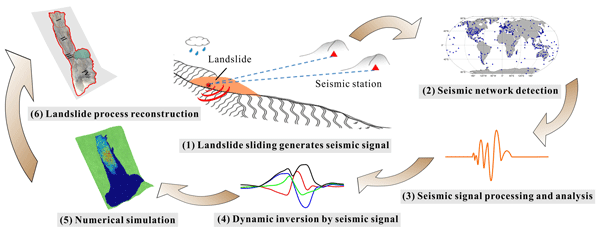
Landslides present a significant hazard for humans, but continuous landslide monitoring is not yet possible due to their unpredictability. Our study has demonstrated that combing landslide seismic signal analysis, dynamic inversion, and numerical simulation provides a comprehensive and accurate method for studying the landslide process. The approach outlined in this study could be used to support hazard prevention and control in sensitive areas.
Longjiang Xie, Yuwei Wu, Ninglian Wang, Anan Chen, Shiqiang Zhang, and Sheng Hu
The Cryosphere, 19, 6577–6590, https://doi.org/10.5194/tc-19-6577-2025, https://doi.org/10.5194/tc-19-6577-2025, 2025
Short summary
Short summary
Estimating meltwater runoff from mountain glaciers is challenging due to harsh conditions and uncertainties in glacier runoff models. Using high-resolution unmanned aerial vehicle data, we extracted the complete supraglacial stream network on Qiyi Glacier (Tibetan Plateau) and its geometric parameters to build regression models estimating annual meltwater discharge with high accuracy. These methods show potential for large-scale glacier runoff estimation with improving remote sensing resolution.
Yan Yan, Cheng Zeng, Yifei Cui, Sheng Hu, Xinglu Wang, and Hui Tang
EGUsphere, https://doi.org/10.5194/egusphere-2023-2015, https://doi.org/10.5194/egusphere-2023-2015, 2023
Preprint archived
Short summary
Short summary
We aim to explore the basic parameters, development process, and magnitude of debris flows based on seismic signal analysis combined with other information recorded in real time during the formation and development of three debris flows in Wenchuan, China. The study provides a theoretical basis and a case study exemplar for the reconstruction of the debris flow process and peak velocity estimation using debris flow seismology.
Yan Yan, Yifei Cui, Xinghui Huang, Jiaojiao Zhou, Wengang Zhang, Shuyao Yin, Jian Guo, and Sheng Hu
Earth Surf. Dynam., 10, 1233–1252, https://doi.org/10.5194/esurf-10-1233-2022, https://doi.org/10.5194/esurf-10-1233-2022, 2022
Short summary
Short summary
Landslides present a significant hazard for humans, but continuous landslide monitoring is not yet possible due to their unpredictability. Our study has demonstrated that combing landslide seismic signal analysis, dynamic inversion, and numerical simulation provides a comprehensive and accurate method for studying the landslide process. The approach outlined in this study could be used to support hazard prevention and control in sensitive areas.
Zhiheng Du, Jiao Yang, Lei Wang, Ninglian Wang, Anders Svensson, Zhen Zhang, Xiangyu Ma, Yaping Liu, Shimeng Wang, Jianzhong Xu, and Cunde Xiao
Earth Syst. Sci. Data, 14, 5349–5365, https://doi.org/10.5194/essd-14-5349-2022, https://doi.org/10.5194/essd-14-5349-2022, 2022
Short summary
Short summary
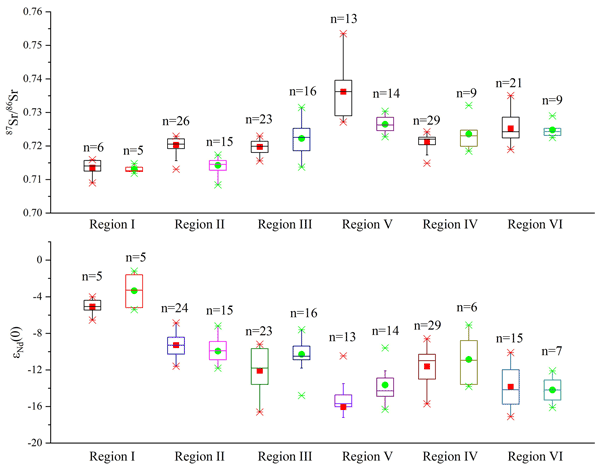
A dataset of the radiogenic strontium and neodymium isotopic compositions from the three poles (the third pole, the Arctic, and Antarctica) were integrated to obtain new findings. The dataset enables us to map the standardized locations in the three poles, while the use of sorting criteria related to the sample type permits us to trace the dust sources and sinks. The purpose of this dataset is to try to determine the variable transport pathways of dust at three poles.
Jiule Li, Baiqing Xu, Ninglian Wang, Ping Yao, and Xiangke Xu
The Cryosphere Discuss., https://doi.org/10.5194/tc-2022-43, https://doi.org/10.5194/tc-2022-43, 2022
Manuscript not accepted for further review
Short summary
Short summary
The air bubbles enclosed in the alpine glacier ice could be used to reveal regional climate changes. Thus, we analyzed the δ18O of gaseous oxygen in the ice core air bubbles (δ18Obub) from a glacier in the Tibetan Plateau (TP). We find that there is a good correlation between the variation of the δ18Obub and the accumulation or melting of the glacier. Combined with the chronology of the ice core air bubbles, we reconstruct the glacier variations since the late Holocene in the central TP.
Cited articles
Basso, A., Bruno, E., Parise, M., and Pepe, M.: Morphometric analysis of sinkholes in a karst coastal area of southern Apulia (Italy), Environ. Earth Sci., 70, 2545–2559, 2013.
Bernatek, A.: The Influence of Piping on Mid-Mountain Relief: A Case Study from the Polish Bieszczady Mts. (Eastern Carpathians), Carpath. J. Earth Env., 10, 107–120, 2015.
Bernatek-Jakiel, A. and Kondracka, M.: Combining geomorphological mapping and near surface geophysics (GPR and ERT) to study piping systems, Geomorphology, 274, 193–209, 2016.
Bernatek-Jakiel, A. and Poesen, J.: Subsurface erosion by soil piping: significance and research needs, Earth-Sci. Rev., 185, 1107–1128, https://doi.org/10.1016/j.earscirev.2018.08.006, 2018.
Bernatek-Jakiel, A., Jakiel, M., and Krzemień, K.: Piping dynamics in mid-altitude mountains under a temperate climate: Bieszczady Mountains, eastern Carpathians, Earth Surf. Proc. Land., 42, 1419–1433, https://doi.org/10.1002/esp.4160, 2017.
Bernatek-Jakiel, A., Gutiérrez, F., Nadal-Romero, E., and Jakiel, M.: Exploring the frequency-size relationships of pipe collapses in different morphoclimatic regions, Geomorphology, 345, 106845, https://doi.org/10.1016/j.geomorph.2019.106845, 2019.
Borah, U. K., Gond, A., Rajan, P. P., Sivan, R., and Vivekanandan, N.: Joint geomorphological and geophysical (electrical resistivity) investigation for the configuration of soil pipe, Contrib. Geophys. Geod., 52, 239–255, https://doi.org/10.31577/congeo.2022.52.2.4, 2022.
Bruno, E., Calcaterra, D., and Parise, M.: Development and morphometry of sinkholes in coastal plains of Apulia, southern Italy. Preliminary sinkhole susceptibility assessment, Eng. Geol., 99, 198–209, https://doi.org/10.1016/j.enggeo.2007.11.017, 2008.
Cole, J. P.: Study of major and minor civil divisions in political geography, The 20th International Geographical Congress, London, 1964.
Coskuner, B., İnce, İ., and Barstuğan, M.: Sinkhole detection via deep learning using DEM images, Nat. Hazards, 121, 8347–8366, https://doi.org/10.1007/s11069-025-07127-0, 2025.
Creati, N., Paganini, P., Sterzai, P., and Pavan, A.: Mapping of karst sinkholes from LIDAR data using machine-learning methods in the Trieste area, J. Spat. Sci., 70, 365–380, https://doi.org/10.1080/14498596.2025.2469176, 2025.
Day, M.: Doline morphology and development in Barbados, Ann. Assoc. Am. Geogr., 73, 206–219, 1983.
De Carvalho Júnio, O. A., Guimarães, R. F., Montgomery, D. R., Gillespie, A. R., Gomes, R. A. T., De Souza Martins, É. D., and Silva, N. C.: Karst Depression Detection Using ASTER, ALOS/PRISM and SRTM-Derived Digital Elevation Models in the Bambu Group, Brazil, Remote Sens.-Basel, 6, 330–351, https://doi.org/10.3390/rs6010330, 2014.
De Waele, J. and Gutiérrez, F.: Karst hydrogeology, geomorphology and caves, John Wiley & Sons, 888 pp., ISBN 9781119605348, 2022.
Donnelly, L. J.: Subsidence and associated ground movements on the Pennines, northern England, Q. J. Eng. Geol. Hydroge., 41, 315–332, https://doi.org/10.1144/1470-9236/07-216, 2008.
Farrant, A. R. and Cooper, A. H.: Karst geohazards in the UK: the use of digital data for hazard management, Q. J. Eng. Geol. Hydroge., 41, 339–356, https://doi.org/10.1144/1470-9236/07-201, 2008.
Gallant, J. C. and Hutchinson, M. F.: A differential equation for specific catchment area, Water Resour. Res., 47, W05535, https://doi.org/10.1029/2009wr008540, 2011.
Gao, Y., Alexander, E. C. and Tipping, R.: The development of a karst feature database for southeastern Minnesota, J. Cave Karst Stud., 64, 51–57, 2002.
Gao, Y., Alexander, E. J. R., and Barnes, R. J.: Karst database implementation in Minnesota: analysis of sinkhole distribution, Environ. Geol., 47, 1083–1098, https://doi.org/10.1007/s00254-005-1241-2, 2005.
Geng, H. P., Liu, R., Zheng, W. S., Zhang, Y. B., Xie, R., Guo, Y., and Pan, B. T.: Interaction Between Animal Burrowing and Loess Cave Formation in the Chinese Loess Plateau, Front. Earth Sci., 9, 806921, https://doi.org/10.3389/feart.2021.806921, 2021.
Geng, H. P., Xu, W. Y., Zheng, W. S., Gao, X. L., and Pan, B. T.: A hybrid mechanism for the initiation and expansion of loess caves across the Chinese Loess Plateau, Land Degrad. Dev., 34, 3329–3339, https://doi.org/10.1002/ldr.4686, 2023.
Gibbs, H. S.: Tunnel-gully erosion on the Wither Hills, Marlborough, New Zealand Journal of Science and Technology, 27, 135–146, 1945.
Gökkaya, E., Gutiérrez, F., Ferk, M., and Görüm, T.: Sinkhole development in the Sivas gypsum karst, Turkey, Geomorphology, 386, 107746, https://doi.org/10.1016/j.geomorph.2021.107746, 2021.
Gutiérrez, F., Desir, G., and Gutiérrez, M.: Causes of the catastrophic failure of an earth dam built on gypsiferous alluvium and dispersive clays (Altorricon, Huesca Province, NE Spain), Environ. Geol., 43, 842–851, https://doi.org/10.1007/s00254-002-0700-2, 2003.
Gutiérrez, F., Parise, M., De Waele, J., and Jourde, H.: A review on natural and human-induced geohazards and impacts in karst, Earth-Sci. Rev., 138, 61–88, https://doi.org/10.1016/j.earscirev.2014.08.002, 2014.
Hofierka, J., Gallay, M., Bandura, P., and Šašak, J.: Identification of karst sinkholes in a forested karst landscape using airborne laser scanning data and water flow analysis, Geomorphology, 308, 265–277, https://doi.org/10.1016/j.geomorph.2018.02.004, 2018.
Hu, S., Qiu, H. J., Wang, N. L., Cui, Y. F., Wang, J. D., Wang, X. G., Ma, S. Y., Yang, D. D., and Cao, M. M.: The influence of loess cave development upon landslides and geomorphologic evolution: A case study from the northwest Loess Plateau, China, Geomorphology, 359, 107167, https://doi.org/10.1016/j.geomorph.2020.107167, 2020.
Hu, S., Qiu, H. J., Wang, N. L., Wang, X. G., Ma, S. Y., Yang, D. D., Wei, N., Liu, Z. J., Shen, Y. D., Cao, M. M., and Song, Z. P.: Movement process, geomorphological changes, and influencing factors of a reactivated loess landslide on the right bank of the middle of the Yellow River, China, Landslides, 19, 1265–1295, https://doi.org/10.1007/s10346-022-01856-0, 2022.
Hu, S., Jiang, Z. D., Wang, N. L., Zhang, F. Y., Chen, Y. X., Wu, S. B., Wang, L., and Li, S. S.: In Situ Dataset of Loess Sinkholes using UAS and LiDAR Technology in Huining County, China (2024), Digital Journal of Global Change Data Repository, https://doi.org/10.3974/geodb.2024.05.05.V1, 2024.
Hu, S., Gutiérrez, F., Zhang, F., Li, S., Wang, N., Li, X., and Wang, X.: A morphological dataset of loess sinkholes from a small basin in the Chinese Loess Plateau (1.0), Zenodo [data set], https://doi.org/10.5281/zenodo.14000267, 2025.
Jiang, Z. D., Hu, S., Deng, H., Wang, N. L., Zhang, F. Y., Wang, L., Wu, S. B., Wang, X. A., Cao, Z. W., Chen, Y. X., and Li, S. S.: Detection and automatic identification of loess sinkholes from the perspective of LiDAR point clouds and deep learning algorithm, Geomorphology, 465, 109404, https://doi.org/10.1016/j.geomorph.2024.109404, 2024.
Jones, E. and Beck, D.: The use of 3D laser scanning for deformation monitoring in underground mines, Proceedings of the 13th AusIMM Underground Operators Conference, 66, 267–270, https://www.ausimm.com/publications/conference-proceedings/13th-ausimm-underground-operators-conference-2017/the-use-of-3d-laser-scanning-for-deformation-monitoring-in -underground-mines/ (last access: 19 March 2026), 2017.
Kariminejad, N., Sepehr, A., Poesen, J., and Hassanli, A.: Combining UAV remote sensing and pedological analyses to better understand soil piping erosion, Geoderma, 429, 116267, https://doi.org/10.1016/j.geoderma.2022.116267, 2023.
Kim, C. E. and Anderson, T. A.: Digital disks and a digital compactness measure, Proceedings of the sixteenth annual ACM symposium on Theory of computing, ACM Press, New York, 117–124, https://doi.org/10.1145/800057.808673, 1984.
Kobal, M., Bertoncelj, I., Pirotti, F., Dakskobler, I., and Kutnar, L.: Using Lidar Data to Analyse Sinkhole Characteristics Relevant for Understory Vegetation under Forest Cover-Case Study of a High Karst Area in the Dinaric Mountains, Plos One, 10, e0122070, https://doi.org/10.1371/journal.pone.0122070, 2015.
Konsolaki, A., Vassilakis, E., Gouliotis, L., Kontostavlos, G., and Giannopoulos, V.: High Resolution Digital 3d Modelling of Subsurface Morphological Structures of Koutouki Cave, Greece, Acta Carsologica, 49, 163–177, https://doi.org/10.3986/ac.v49i2-3.7708, 2020.
Lee, E. J., Shin, S. Y., Ko, B. C., and Chang, C.: Early sinkhole detection using a drone-based thermal camera and image processing, Infrared Phys. Techn., 78, 223–232, https://doi.org/10.1016/j.infrared.2016.08.009, 2016.
Li, S., Sun, J., Hu, S., and Wang, L.: LSPNet for Automatic Recognition and Cataloguing of Loess Sinkholes from Point Clouds (V1.0), Zenodo [data set], https://doi.org/10.5281/zenodo.17667244, 2025.
Li, S. S., Hu, S., Wang, L., Zhang, F. Y., Wang, N. L., Wu, S. B., Wang, X. A., and Jiang, Z. D.: Quantifying the Geomorphological Susceptibility of the Piping Erosion in Loess Using LiDAR-Derived DEM and Machine Learning Methods, Remote Sens.-Basel, 16, 4203, https://doi.org/10.3390/rs16224203, 2024.
Li, W. W., Goodchild, M. F., and Church, R.: An efficient measure of compactness for two-dimensional shapes and its application in regionalization problems, Int. J. Geogr. Inf. Sci., 27, 1227–1250, https://doi.org/10.1080/13658816.2012.752093, 2013.
Li, X., Song, Y., and Ye, W.: Engineering geological research on tunnel-erosion in loess, Tongji University Press, Shanghai, ISBN 9787560844343, 2010 (in Chinese).
Li, X. A., Wang, L., Hong, B., Li, L. C., Liu, J., and Lei, H. N.: Erosion characteristics of loess tunnels on the Loess Plateau: A field investigation and experimental study, Earth Surf. Proc. Land., 45, 1945–1958, https://doi.org/10.1002/esp.4857, 2020.
Liu, H. X. and Wang, L.: Mapping detention basins and deriving their spatial attributes from airborne LiDAR data for hydrological applications, Hydrol. Process., 22, 2358–2369, https://doi.org/10.1002/hyp.6834, 2008.
Liu, T. S.: Loess Deposits in the Middle Reaches of the Yellow River, Science Press, Beijing, 1–234, ISBN 13031196, 1964 (in Chinese).
Liu, T. S.: Loess Deposits in China, Science Press, Beijing, 1–244, ISBN 9787030567390, 1965 (in Chinese).
Llena, M., Carreras, S., Bernatek-Jakiel, A., Ollero, A., and Nadal-Romero, E.: Agricultural land abandonment linked to pipe collapse and gully development: Reconstruction from archival SfM and LiDAR datasets, Geoderma, 449, 116995, https://doi.org/10.1016/j.geoderma.2024.116995, 2024.
Mokroš, M., Mikita, T., Singh, A., Tomaštík, J., Chudá, J., Wężyk, P., Kuželka, K., Surový, P., Klimánek, M., Zieba-Kulawik, K., Bobrowski, R., and Liang, X. L.: Novel low-cost mobile mapping systems for forest inventories as terrestrial laser scanning alternatives, Int. J. Appl. Earth Obs., 104, 102512, https://doi.org/10.1016/j.jag.2021.102512, 2021.
Moore, I. D., Grayson, R., and Ladson, A.: Digital terrain modelling: a review of hydrological, geomorphological, and biological applications, Hydrol. Process., 5, 3–30, 1991.
Morgan, R. P. C.: Soil erosion and conservation, 3rd edn., Blackwell Publishing, United Kingdom, ISBN 978-1-405-14467-4, 2005.
Niu, Y. N.: Study on provenance of Quaternary loess in Longxi area: a case from Huining, Lanzhou University Thesis, https://kns.cnki.net/kcms2/article/abstract?v=mDcNmAOuO1Pjp 9ey5nvgjsMQZFUnaQnnNy0-lWqmaTTUFr0UvurDsVTHZK-u-iY5EnUwFAPCt1U9wTAA5_aYAFoHP1dR_gwxkPDmghu GBeikPI_sG_MwHt9cPDZr13WAm0HpFK-uEwerlvN0Mt0JrauY3P6od-BmAXY2oVsXObBp7f68h2v9rB SnqTO9048R&uniplatform=NZKPT&language=CHS (last access: 19 March 2026), 2023 (in Chinese).
Öztürk, M. Z., Şener, M. F., Şener, M., and Şimşek, M.: Structural controls on distribution of dolines on Mount Anamas (Taurus Mountains, Turkey), Geomorphology, 317, 107–116, https://doi.org/10.1016/j.geomorph.2018.05.023, 2018.
Panno, S., Weibel, C. P., and Li, W.: Karst regions of Illinois, Open file series 1997-02, http://hdl.handle.net/10111/UIUCOCA:karstregionsofil19972pann (last access: 18 March 2026), 1997.
Panno, S. V. and Luman, D. E.: Mapping palimpsest karst features on the Illinois sinkhole plain using historical aerial photography, Carbonate Evaporite, 28, 201–214, https://doi.org/10.1007/s13146-012-0107-4, 2013.
Peng, J. B., Sun, P., Igwe, O., and Li, X.: Loess caves, a special kind of geo-hazard on loess plateau, northwestern China, Eng. Geol., 236, 79–88, https://doi.org/10.1016/j.enggeo.2017.08.012, 2018.
Peng, S. S.: Pronounced changes in atmospheric circulation and dust source areas during the mid-Pleistocene implicated by the Huining loess-soil sequence from the northeastern margin of the Tibetan Plateau, PhD thesis, China University of Geosciences (Beijing), https://kns.cnki.net/kcms2/article/abstract?v=_JlElU3EDUoUxL 9OxR02LElq9UEjk1MwopcUC91BNJR7dJx-jDvYVWIzmjINQ6l-XIzdcOEYZNTurjrmQgyur06J2xnMczTe SXkzolVyJtY8xXles0Ldklaf1Jdr0dPiSiH5_q0FO7PiHzT-GR5-zCbdBmeQIkmc-kM6a6GGAVojRQJ73lc_AQ==&uniplatform =NZKPT (last access: 19 March 2026), 2014 (in Chinese).
Pierson, T. C.: Soil pipes and slope stability, Q. J. Eng. Geol. Hydroge., 16, 1–11, 1983.
Poesen, J.: Soil erosion in the Anthropocene: Research needs, Earth Surf. Proc. Land., 43, 64–84, https://doi.org/10.1002/esp.4250, 2018.
Rajabi, A.: Sinkhole Detection and Quantification Using LiDAR Data, Electronic Theses and Dissertations, 5776, https://stars.library.ucf.edu/etd/5776 (last access: 18 March 2026), 2018.
Richards, K. S. and Reddy, K. R.: Critical appraisal of piping phenomena in earth dams, B. Eng. Geol. Environ., 66, 381–402, https://doi.org/10.1007/s10064-007-0095-0, 2007.
Sevil, J. and Gutiérrez, F.: Morphometry and evolution of sinkholes on the western shore of the Dead Sea. Implications for susceptibility assessment, Geomorphology, 434, 108732, https://doi.org/10.1016/j.geomorph.2023.108732, 2023.
Sidle, R. C. and Bogaard, T. A.: Dynamic earth system and ecological controls of rainfall-initiated landslides, Earth-Sci. Rev., 159, 275–291, https://doi.org/10.1016/j.earscirev.2016.05.013, 2016.
Uchida, T., Kosugi, K., and Mizuyama, T.: Effects of pipeflow on hydrological process and its relation to landslide: a review of pipeflow studies in forested headwater catchments, Hydrol. Process., 15, 2151–2174, https://doi.org/10.1002/hyp.281, 2001.
Vajedian, S. and Motagh, M.: Extracting sinkhole features from time-series of TerraSAR-X/TanDEM-X data, ISPRS J. Photogramm., 150, 274–284, https://doi.org/10.1016/j.isprsjprs.2019.02.016, 2019.
Vennari, C. and Parise, M.: A Chronological Database about Natural and Anthropogenic Sinkholes in Italy, Geosciences, 12, 200, https://doi.org/10.3390/geosciences12050200, 2022.
Verachtert, E., Van den Eeckhaut, M., Poesen, J., and Deckers, J.: Factors controlling the spatial distribution of soil piping erosion on loess-derived soils: A case study from central Belgium, Geomorphology, 118, 339–348, https://doi.org/10.1016/j.geomorph.2010.02.001, 2010.
Wang, X. G., Hu, S., Lian, B. Q., Wang, J. D., Zhan, H. B., Wang, D. Z., Liu, K., Luo, L., and Gu, C. Y.: Formation mechanism of a disaster chain in Loess Plateau: A case study of the Pucheng County disaster chain on August 10, 2023, in Shaanxi Province, China, Eng. Geol., 331, 107463, https://doi.org/10.1016/j.enggeo.2024.107463, 2024.
Wu, Q. S., Deng, C. B., and Chen, Z. Q.: Automated delineation of karst sinkholes from LiDAR-derived digital elevation models, Geomorphology, 266, 1–10, https://doi.org/10.1016/j.geomorph.2016.05.006, 2016.
Yang, S. and Ding, Z.: Spatial changes in grain size of loess deposits in the Chinese Loess Plateau and implications for palaeoenvironment, Quaternary Sciences, 37, 934–944, 2017 (in Chinese).
Yuan, Z. L., Ban, X. J., Han, F. Y., Zhang, X. Q., Yin, S. H., and Wang, Y. M.: Integrated three-dimensional visualization and soft-sensing system for underground paste backfilling, Tunn. Undergr. Sp. Tech., 127, 104578, https://doi.org/10.1016/j.tust.2022.104578, 2022.
Zhang, F., Peng, J., Zhang, Y., Wang, Y., and Zhang, T.: Prediction of static liquefaction landslides in loess: Integrating triaxial shear parameters into the sliding-block model, Eng. Geol., 108549, https://doi.org/10.1016/j.enggeo.2026.108549, 2026.
Zhang, W. M., Qi, J. B., Wan, P., Wang, H. T., Xie, D. H., Wang, X. Y., and Yan, G. J.: An Easy-to-Use Airborne LiDAR Data Filtering Method Based on Cloth Simulation, Remote Sens.-Basel, 8, 501, https://doi.org/10.3390/rs8060501, 2016.
Zhu, J. F. and Pierskalla, W. P.: Applying a weighted random forests method to extract karst sinkholes from LiDAR data, J. Hydrol., 533, 343–352, https://doi.org/10.1016/j.jhydrol.2015.12.012, 2016.
Zhu, J. F., Nolte, A. M., Jacobs, N., and Ye, M.: Using machine learning to identify karst sinkholes from LiDAR-derived topographic depressions in the Bluegrass Region of Kentucky, J. Hydrol., 588, 125049, https://doi.org/10.1016/j.jhydrol.2020.125049, 2020.
Zumpano, V., Pisano, L., and Parise, M.: An integrated framework to identify and analyze karst sinkholes, Geomorphology, 332, 213–225, https://doi.org/10.1016/j.geomorph.2019.02.013, 2019.
Short summary
On Chinese Loess Plateau, rain sneaks through cracks, hollows underground tunnels and suddenly collapses the roof, carving house-sized sinkholes. Airborne and handheld laser scanner now map 1194 of these sinkholes in one basin, showing they have quietly swallowed 345 000 t of soil. The open dataset gives the world its first high-resolution case study for mapping and managing loess sinkholes, proving that this soil-piping process deserves urgent attention, not neglect.
On Chinese Loess Plateau, rain sneaks through cracks, hollows underground tunnels and suddenly...


Altmetrics
Final-revised paper
Preprint