Articles | Volume 18, issue 3
https://doi.org/10.5194/essd-18-1943-2026
© Author(s) 2026. This work is distributed under
the Creative Commons Attribution 4.0 License.
the Creative Commons Attribution 4.0 License.
https://doi.org/10.5194/essd-18-1943-2026
© Author(s) 2026. This work is distributed under
the Creative Commons Attribution 4.0 License.
the Creative Commons Attribution 4.0 License.
Data description article
| 
16 Mar 2026
Data description article |
| 16 Mar 2026
| 16 Mar 2026
A new magnetic anomaly map for Greenland based on a combination of equivalent source modeling and spherical harmonic expansion
Björn H. Heincke
CORRESPONDING AUTHOR

Geological Survey of Denmark and Greenland (GEUS), Department of Geophysics and Sedimentary Basins, Oester Voldgade 10, 1350 Copenhagen K, Denmark
Wolfgang Szwillus
Kiel University, Department of Geosciences, Otto-Hahn Platz 1, 24118 Kiel, Germany
Judith Freienstein
Kiel University, Department of Geosciences, Otto-Hahn Platz 1, 24118 Kiel, Germany
Jörg Ebbing
Kiel University, Department of Geosciences, Otto-Hahn Platz 1, 24118 Kiel, Germany
Carmen Gaina
Centre for Planetary Habitability (PHAB), University of Oslo, Department of Geosciences, Sem Sælands vei 2A, 0371 Oslo, Norway
Antonia Ruppel
Federal Institute for Geosciences and Natural Resources, Stilleweg 2, 30655 Hanover, Germany
Yixiati Dilixiati
University of Stuttgart, Institute of Geodesy, Geschwister-Scholl-Str. 24D, 70174 Stuttgart, Germany
Agnes Wansing
Kiel University, Department of Geosciences, Otto-Hahn Platz 1, 24118 Kiel, Germany
Related authors
Robert Jackisch, Björn H. Heincke, Robert Zimmermann, Erik V. Sørensen, Markku Pirttijärvi, Moritz Kirsch, Heikki Salmirinne, Stefanie Lode, Urpo Kuronen, and Richard Gloaguen
Solid Earth, 13, 793–825, https://doi.org/10.5194/se-13-793-2022, https://doi.org/10.5194/se-13-793-2022, 2022
Short summary
Short summary
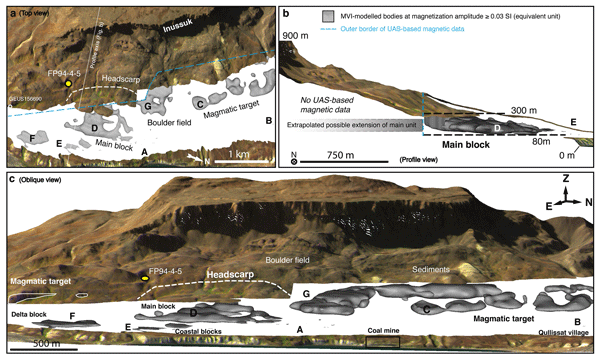
We integrate UAS-based magnetic and multispectral data with legacy exploration data of a Ni–Cu–PGE prospect on Disko Island, West Greenland. The basalt unit has a complex magnetization, and we use a constrained 3D magnetic vector inversion to estimate magnetic properties and spatial dimensions of the target unit. Our 3D modelling reveals a horizontal sheet and a strong remanent magnetization component. We highlight the advantage of UAS use in rugged and remote terrain.
Judith Freienstein, Charlotte Carter, Georg-Maximilian Hüttner, Olaf Eisen, Wolfgang Szwillus, and Jörg Ebbing
EGUsphere, https://doi.org/10.5194/egusphere-2026-4746, https://doi.org/10.5194/egusphere-2026-4746, 2026
Short summary
Short summary
The North East Greenland Ice Stream is a fast flowing ice stream with its formation so far inland remaining unclear. We used high-resolution bed topography data in 3D modeling to investigate its effects on geothermal heat flow (GHF). Results show local deviations of up to 20 % compared to 1D solutions. Our study highlights the importance of small-scale models to reduce uncertainty in GHF estimates to improve the understanding of ice stream dynamics.
Steven Franke, Daniel Steinhage, Veit Helm, Tobias Binder, Uwe Nixdorf, Heinrich Miller, Angelika Humbert, Daniela Jansen, Graeme Eagles, Hannes Eisermann, Wilfried Jokat, Antonia Ruppel, Reinhard Drews, Alexandra Zuhr, Amelie Driemel, Andreas Walter, Peter Konopatzky, Robin Heß, Antonie Haas, Roland Koppe, Pascal H. Andreas, and Olaf Eisen
The Cryosphere, 20, 2485–2530, https://doi.org/10.5194/tc-20-2485-2026, https://doi.org/10.5194/tc-20-2485-2026, 2026
Short summary
Short summary
This review synthesizes 30 years of Alfred Wegener Institute’s (AWI) airborne radar research in Antarctica and Greenland, detailing six radar systems and their applications in studying ice dynamics, basal properties, and subglacial landscapes. Moreover, it introduces the public release of AWI's airborne radar datasets via the Radar Data over Polar Ice Sheets Viewer and PANGAEA, ensuring findable, accessible, interoperable, and reusable access for future polar research.
Mirko Scheinert, Weisen Shen, Richard C. Aster, Lambert Caron, Michael D. Hartinger, Matt A. King, Andrew Lloyd, Anya M. Reading, J. Paul Winberry, Terry Wilson, Lucilla Alfonsi, Michael J. Bentley, Eric Buchta, Thomas Y. Chen, Peter J. Clarke, Jörg Ebbing, Olaf Eisen, Natalya Gomez, Esra Günaydın, Samantha Hansen, Erik R. Ivins, Achraf Koulali, Grace A. Nield, Frederick Richards, Mahmut O. Selbesoglu, Stephanie Sherman, Pippa L. Whitehouse, and Matthias Willen
EGUsphere, https://doi.org/10.5194/egusphere-2025-6370, https://doi.org/10.5194/egusphere-2025-6370, 2026
Short summary
Short summary
With an ongoing mass loss the Antarctic Ice Sheet contributes to global-mean sea level rise at a rate of 0.4 mm/a. Thus, it plays a key role in global climate and provides a natural laboratory to study processes that interlink cryosphere, solid Earth, atmosphere and ocean. We discuss how GNSS and seismic networks in Antarctica were used to significantly advance our understanding of these processes, and how they should be maintained and extended to answer key science questions in the future.
Jonas Liebsch, Jörg Ebbing, and Kenichi Matsuoka
Solid Earth, 16, 1401–1420, https://doi.org/10.5194/se-16-1401-2025, https://doi.org/10.5194/se-16-1401-2025, 2025
Short summary
Short summary
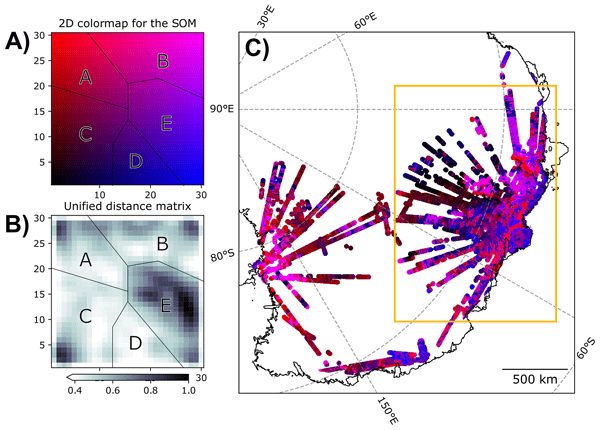
The evolution of the Antarctic ice sheets depends, in addition to factors representing the warming climate, on the earth structure beneath the ice. What’s beneath the ice is largely inaccessible for direct sampling, but can be interpreted with the use of airborne measurements. We apply an unsupervised machine learning method to such data in East Antarctica to test whether this can ease interpretation and hence our understanding of what rocks types are beneath the ice.
Kim Senger, Grace Shephard, Fenna Ammerlaan, Owen Anfinson, Pascal Audet, Bernard Coakley, Victoria Ershova, Jan Inge Faleide, Sten-Andreas Grundvåg, Rafael Kenji Horota, Karthik Iyer, Julian Janocha, Morgan Jones, Alexander Minakov, Margaret Odlum, Anna Sartell, Andrew Schaeffer, Daniel Stockli, Marie Annette Vander Kloet, and Carmen Gaina
Geosci. Commun., 7, 267–295, https://doi.org/10.5194/gc-7-267-2024, https://doi.org/10.5194/gc-7-267-2024, 2024
Short summary
Short summary
The article describes a course that we have developed at the University Centre in Svalbard that covers many aspects of Arctic geology. The students experience this course through a wide range of lecturers, focussing both on the small and larger scales and covering many geoscientific disciplines.
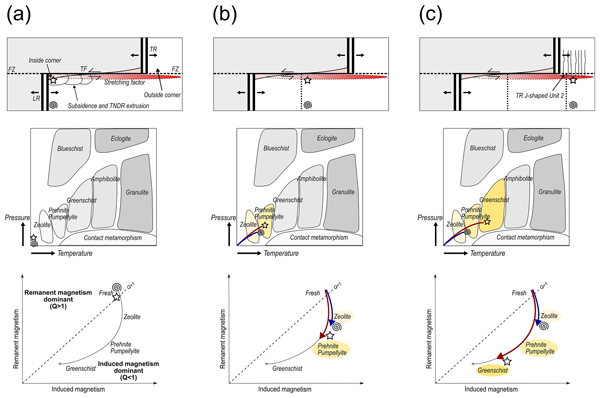
Peter Haas, Myron F. H. Thomas, Christian Heine, Jörg Ebbing, Andrey Seregin, and Jimmy van Itterbeeck
Solid Earth, 15, 1419–1443, https://doi.org/10.5194/se-15-1419-2024, https://doi.org/10.5194/se-15-1419-2024, 2024
Short summary
Short summary
Transform faults are conservative plate boundaries where no material is added or destroyed. Oceanic fracture zones are their inactive remnants and record tectonic processes that formed oceanic crust. In this study, we combine high-resolution data sets along fracture zones in the Gulf of Guinea to demonstrate that their formation is characterized by increased metamorphic conditions. This is in line with previous studies that describe the non-conservative character of transform faults.
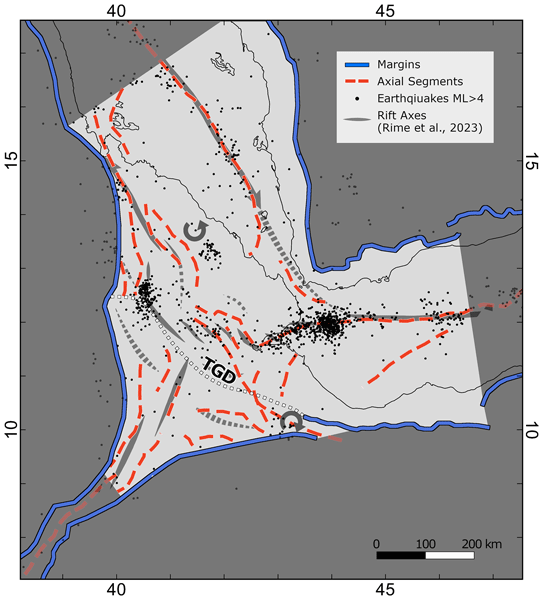
Ran Issachar, Peter Haas, Nico Augustin, and Jörg Ebbing
Solid Earth, 15, 807–826, https://doi.org/10.5194/se-15-807-2024, https://doi.org/10.5194/se-15-807-2024, 2024
Short summary
Short summary
In this contribution, we explore the causal relationship between the arrival of the Afar plume and the initiation of the Afro-Arabian rift. We mapped the rift architecture in the triple-junction region using geophysical data and reviewed the available geological data. We interpret a progressive development of the plume–rift system and suggest an interaction between active and passive mechanisms in which the plume provided a push force that changed the kinematics of the associated plates.
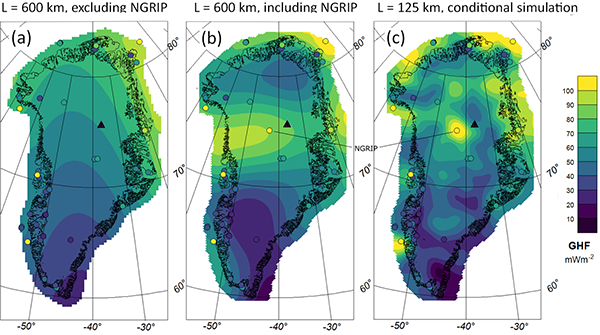
Judith Freienstein, Wolfgang Szwillus, Agnes Wansing, and Jörg Ebbing
Solid Earth, 15, 513–533, https://doi.org/10.5194/se-15-513-2024, https://doi.org/10.5194/se-15-513-2024, 2024
Short summary
Short summary
Geothermal heat flow influences ice sheet dynamics, making its investigation important for ice-covered regions. Here we evaluate the sparse measurements for their agreement with regional solid Earth models, as well as with a statistical approach. This shows that some points should be excluded from regional studies. In particular, the NGRIP point, which strongly influences heat flow maps and the distribution of high basal melts, should be statistically considered an outlier.
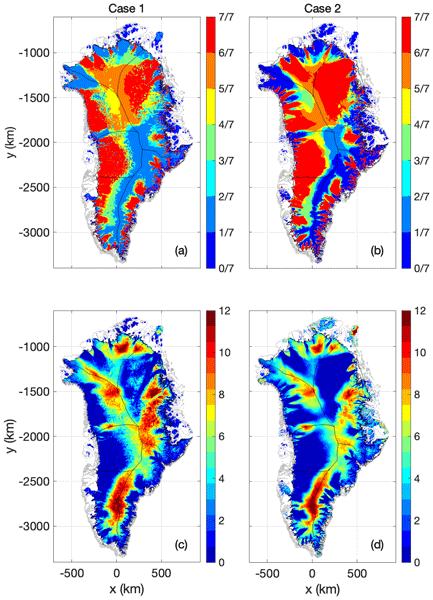
Tong Zhang, William Colgan, Agnes Wansing, Anja Løkkegaard, Gunter Leguy, William H. Lipscomb, and Cunde Xiao
The Cryosphere, 18, 387–402, https://doi.org/10.5194/tc-18-387-2024, https://doi.org/10.5194/tc-18-387-2024, 2024
Short summary
Short summary
The geothermal heat flux determines how much heat enters from beneath the ice sheet, and thus impacts the temperature and the flow of the ice sheet. In this study we investigate how much geothermal heat flux impacts the initialization of the Greenland ice sheet. We use the Community Ice Sheet Model with two different initialization methods. We find a non-trivial influence of the choice of heat flow boundary conditions on the ice sheet initializations for further designs of ice sheet modeling.
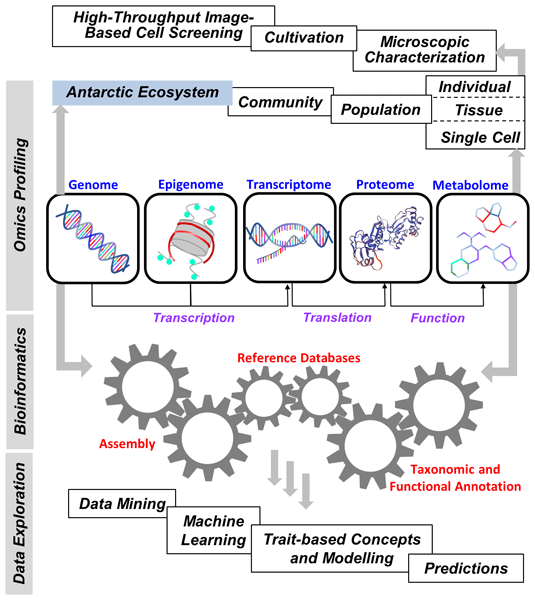
Angelika Graiff, Matthias Braun, Amelie Driemel, Jörg Ebbing, Hans-Peter Grossart, Tilmann Harder, Joseph I. Hoffman, Boris Koch, Florian Leese, Judith Piontek, Mirko Scheinert, Petra Quillfeldt, Jonas Zimmermann, and Ulf Karsten
Polarforschung, 91, 45–57, https://doi.org/10.5194/polf-91-45-2023, https://doi.org/10.5194/polf-91-45-2023, 2023
Short summary
Short summary
There are many approaches to better understanding Antarctic processes that generate very large data sets (
Antarctic big data). For these large data sets there is a pressing need for improved data acquisition, curation, integration, service, and application to support fundamental scientific research, and this article describes and evaluates the current status of big data in various Antarctic scientific disciplines, identifies current gaps, and provides solutions to fill these gaps.
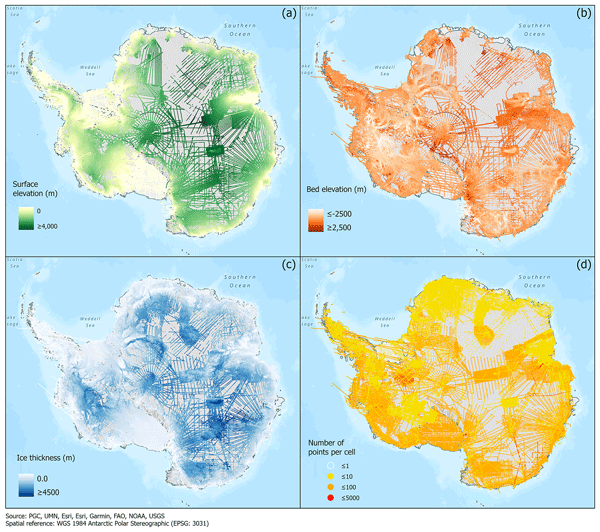
Alice C. Frémand, Peter Fretwell, Julien A. Bodart, Hamish D. Pritchard, Alan Aitken, Jonathan L. Bamber, Robin Bell, Cesidio Bianchi, Robert G. Bingham, Donald D. Blankenship, Gino Casassa, Ginny Catania, Knut Christianson, Howard Conway, Hugh F. J. Corr, Xiangbin Cui, Detlef Damaske, Volkmar Damm, Reinhard Drews, Graeme Eagles, Olaf Eisen, Hannes Eisermann, Fausto Ferraccioli, Elena Field, René Forsberg, Steven Franke, Shuji Fujita, Yonggyu Gim, Vikram Goel, Siva Prasad Gogineni, Jamin Greenbaum, Benjamin Hills, Richard C. A. Hindmarsh, Andrew O. Hoffman, Per Holmlund, Nicholas Holschuh, John W. Holt, Annika N. Horlings, Angelika Humbert, Robert W. Jacobel, Daniela Jansen, Adrian Jenkins, Wilfried Jokat, Tom Jordan, Edward King, Jack Kohler, William Krabill, Mette Kusk Gillespie, Kirsty Langley, Joohan Lee, German Leitchenkov, Carlton Leuschen, Bruce Luyendyk, Joseph MacGregor, Emma MacKie, Kenichi Matsuoka, Mathieu Morlighem, Jérémie Mouginot, Frank O. Nitsche, Yoshifumi Nogi, Ole A. Nost, John Paden, Frank Pattyn, Sergey V. Popov, Eric Rignot, David M. Rippin, Andrés Rivera, Jason Roberts, Neil Ross, Anotonia Ruppel, Dustin M. Schroeder, Martin J. Siegert, Andrew M. Smith, Daniel Steinhage, Michael Studinger, Bo Sun, Ignazio Tabacco, Kirsty Tinto, Stefano Urbini, David Vaughan, Brian C. Welch, Douglas S. Wilson, Duncan A. Young, and Achille Zirizzotti
Earth Syst. Sci. Data, 15, 2695–2710, https://doi.org/10.5194/essd-15-2695-2023, https://doi.org/10.5194/essd-15-2695-2023, 2023
Short summary
Short summary
This paper presents the release of over 60 years of ice thickness, bed elevation, and surface elevation data acquired over Antarctica by the international community. These data are a crucial component of the Antarctic Bedmap initiative which aims to produce a new map and datasets of Antarctic ice thickness and bed topography for the international glaciology and geophysical community.
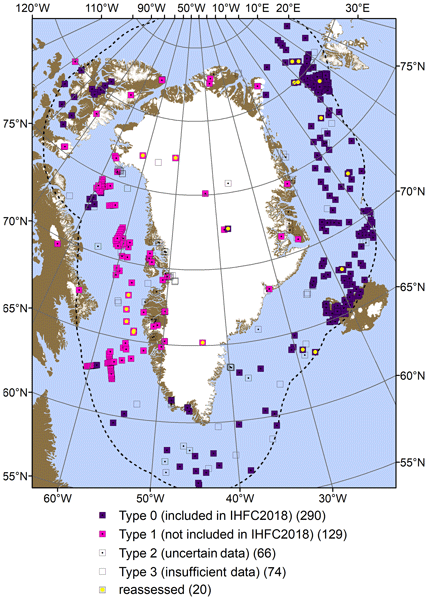
William Colgan, Agnes Wansing, Kenneth Mankoff, Mareen Lösing, John Hopper, Keith Louden, Jörg Ebbing, Flemming G. Christiansen, Thomas Ingeman-Nielsen, Lillemor Claesson Liljedahl, Joseph A. MacGregor, Árni Hjartarson, Stefan Bernstein, Nanna B. Karlsson, Sven Fuchs, Juha Hartikainen, Johan Liakka, Robert S. Fausto, Dorthe Dahl-Jensen, Anders Bjørk, Jens-Ove Naslund, Finn Mørk, Yasmina Martos, Niels Balling, Thomas Funck, Kristian K. Kjeldsen, Dorthe Petersen, Ulrik Gregersen, Gregers Dam, Tove Nielsen, Shfaqat A. Khan, and Anja Løkkegaard
Earth Syst. Sci. Data, 14, 2209–2238, https://doi.org/10.5194/essd-14-2209-2022, https://doi.org/10.5194/essd-14-2209-2022, 2022
Short summary
Short summary
We assemble all available geothermal heat flow measurements collected in and around Greenland into a new database. We use this database of point measurements, in combination with other geophysical datasets, to model geothermal heat flow in and around Greenland. Our geothermal heat flow model is generally cooler than previous models of Greenland, especially in southern Greenland. It does not suggest any high geothermal heat flows resulting from Icelandic plume activity over 50 million years ago.
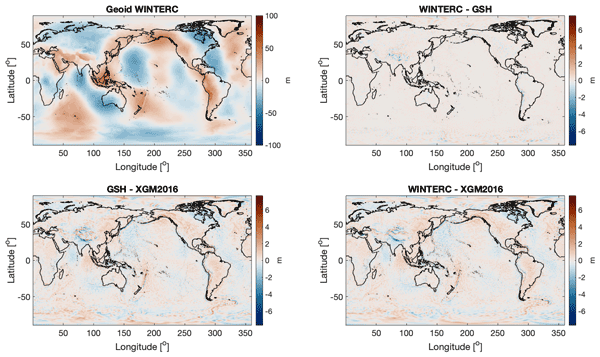
Barend Cornelis Root, Josef Sebera, Wolfgang Szwillus, Cedric Thieulot, Zdeněk Martinec, and Javier Fullea
Solid Earth, 13, 849–873, https://doi.org/10.5194/se-13-849-2022, https://doi.org/10.5194/se-13-849-2022, 2022
Short summary
Short summary
Several alternative gravity modelling techniques and associated numerical codes with their own advantages and limitations are available for the solid Earth community. With upcoming state-of-the-art lithosphere density models and accurate global gravity field data sets, it is vital to understand the differences of the various approaches. In this paper, we discuss the four widely used techniques: spherical harmonics, tesseroid integration, triangle integration, and hexahedral integration.
Robert Jackisch, Björn H. Heincke, Robert Zimmermann, Erik V. Sørensen, Markku Pirttijärvi, Moritz Kirsch, Heikki Salmirinne, Stefanie Lode, Urpo Kuronen, and Richard Gloaguen
Solid Earth, 13, 793–825, https://doi.org/10.5194/se-13-793-2022, https://doi.org/10.5194/se-13-793-2022, 2022
Short summary
Short summary
We integrate UAS-based magnetic and multispectral data with legacy exploration data of a Ni–Cu–PGE prospect on Disko Island, West Greenland. The basalt unit has a complex magnetization, and we use a constrained 3D magnetic vector inversion to estimate magnetic properties and spatial dimensions of the target unit. Our 3D modelling reveals a horizontal sheet and a strong remanent magnetization component. We highlight the advantage of UAS use in rugged and remote terrain.
Igor Ognev, Jörg Ebbing, and Peter Haas
Solid Earth, 13, 431–448, https://doi.org/10.5194/se-13-431-2022, https://doi.org/10.5194/se-13-431-2022, 2022
Short summary
Short summary
We present a new 3D crustal model of Volgo–Uralia, an eastern segment of the East European craton. We built this model by processing the satellite gravity data and using prior crustal thickness estimation from regional seismic studies to constrain the results. The modelling revealed a high-density body on the top of the mantle and otherwise reflected the main known features of the Volgo–Uralian crustal architecture. We plan to use the obtained model for further geothermal analysis of the region.
Cited articles
Berger, D. and Jokat, W.: A seismic study along the East Greenland margin from 72° N to 77° N, Geophys. J. Int., 174, 733–748, https://doi.org/10.1111/j.1365-246X.2008.03794.x, 2008. a
Blakely, R. J.: Potential Theory on Gravity and Magnetic Applications, Cambridge University Press, https://doi.org/10.1017/CBO9780511549816, 1995. a, b
Brethes, A., Guarnieri, P., Rasmussen, T. M., and Bauer, T. E.: Interpretation of aeromagnetic data in the Jameson Land Basin, central East Greenland: Structures and related mineralized systems, Tectonophysics, 724–725, 116–136, https://doi.org/10.1016/j.tecto.2018.01.008, 2018. a, b
Brozena, J. M.: The Greenland Aerogeophysics Project: Airborne Gravity, Topographic and Magnetic Mapping of an Entire Continent, in: From Mars to Greenland: Charting Gravity With Space and Airborne Instruments, edited by: Colombo, O. L., vol. 110, International Association of Geodesy Symposia, Springer-Verlag, 203–214, https://doi.org/10.1007/978-1-4613-9255-2_19, 1992. a, b
Christiansen, F. G.: Greenland petroleum exploration history: Rise and fall, learnings, and future perspectives, Resour. Policy, 74, 102425, https://doi.org/10.1016/j.resourpol.2021.102425, 2021. a
Damaske, D. and Estrada, S.: Correlation of aeromagnetic signatures and volcanic rocks over Northern Greenland and adjacent Lincon Sea, in: Proceedings of the Fourth International Conference on Arctic Margins, 224–232, https://www.diva-portal.org/smash/get/diva2:207900/FULLTEXT01.pdfVictor#page=234 (last access: 5 March 2026), 2003. a
Damaske, D. and Oakey, G. N.: Volcanogenic Sandstones as Aeromagnetic Markers on Judge Daly Promontory and in Robeson Channel, Northern Nares Strait, Polarforschung, 74, 9–19, 2006. a
Dampney, C. N. G.: The equivalent source technique, Geophysics, 34, 38–53, https://doi.org/10.1190/1.1439996, 1969. a
Drenth, B. J., Heincke, B. H., and Kokfelt, T. F.: Aeromagnetic expression of the central Nagssugtoqidian Orogen, South-East Greenland, Precambrian Res., 391, 107060, https://doi.org/10.1016/j.precamres.2023.107060, 2023. a, b, c
Døssing, A., Hopper, J. R., Olesen, A. V., Rasmussen, T. M., and Halpenny, J.: New aero-gravity results from the Arctic Ocean: Linking the latest Cretaceous-early Cenozoic plate kinematics of the North Atlantic and Arctic Ocean, Geochem. Geophy. Geosy., 14, 4044–4065, https://doi.org/10.1002/ggge.20253, 2013. a
Geissler, W. H., Gaina, C., Hopper, J. R., Funck, T., Blischke, A., Arting, U., Horn, J. A., Peron-Pinvidic, G., and Abdelmalak, M. M.: Seismic volcanostratigraphy of the NE Greenland continental margin, in: The NE Atlantic Region, edited by: Peron-Pinvidic, G., Hopper, J. R., Stoker, M., Gaina, C., Doornenbal, J. C., Funck, T., and Arting, U. E., vol. 447, Geological Society – Special Publication, 149–170, ISBN 978-1-78620-278-9, 2017. a
Golynsky, A. V., Ferraccioli, F., Hong, J. K., Golynsky, D. A., von Frese, R. R. B., Young, D. A., Blankenship, D. D., Holt, J. W., Ivanov, S. V., Kiselev, A. V., Masolov, V. N., Eagles, G., Gohl, K., Jokat, W., Damaske, D., Finn, C., Aitken, A., Bell, R. E., Armadillo, E., Jordan, T. A., Greenbaum, J. S., Bozzo, E., Caneva, G., Forsberg, R., Ghidella, M., Galindo-Zaldivar, J., Bohoyo, F., Martos, Y. M., Nogi, Y., Quartini, E., Kim, H. R., and Roberts, J. L.: New Magnetic Anomaly Map of the Antarctic, Geophys. Res. Lett., 45, 6437–6449, https://doi.org/10.1029/2018GL078153, 2018. a
Heincke, B. H. and Møller Stensgaard, B.: Prospectivity mapping for orogenic gold in South-East Greenland, GEUS Bulletin, 38, 41–44, https://doi.org/10.34194/geusb.v38.4405, 2017. a, b
Heincke, B. H. and Szwillus, W.: GREENMAG – Magnetic anomaly map of Greenland, GEUS DataVerse [data set], https://doi.org/10.22008/FK2/LQN5YJ, 2025. a
Kolb, J.: Structure of the Palaeoproterozoic Nagssugtoqidian orogen, South-East Greenland: model for the tectonic evolution, Precambrian Res., 255, 809–822, https://doi.org/10.1016/j.precamres.2013.12.015, 2014. a
Kolster, M. E., Døssing, A., and Khan, S. A.: Satellite magnetics suggest a complex geothermal heat flux pattern beneath the Greenland Ice Sheet, Remote Sens., 15, https://doi.org/10.3390/rs15051379, 2023. a
Larsen, H. and Thorning, L.: Project EASTMAR: acquisition of high sensitivity aeromagnetic data off East Greenland, Rapport Grønlands Geologiske Undersøgelse, 100, 91–94, https://doi.org/10.34194/rapggu.v100.7707, 1980. a, b
Lesur, V. and Maus, S.: A global lithospheric magnetic field model with reduced noise level in the Polar Regions, Geophys. Res. Lett., 33, L13304, https://doi.org/10.1029/2006GL025826, 2006. a
Lesur, V., Hamoudi, M., Choi, Y., Dyment, J., and Thébault, E.: Building the second version of the World Digital Magnetic Anomaly Map (WDMAM), Earth Planets Space, 68, 1–13, https://doi.org/10.1186/s40623-016-0404-6, 2016. a
Li, Y. and Oldenburg, D. W.: Rapid construction of equivalent sources using wavelets, Geophysics, 75, L51–L59, https://doi.org/10.1190/1.3378764, 2010. a
MacGregor, J. A., Colgan, W. T., Paxman, G. J. G., Tinto, K. J., Csathó, B., Darbyshire, F. A., Fahnestock, M. A., Kokfelt, T. F., MacKie, E. J., Morlighem, M., and Sergienko, O. V.: Geologic Provinces Beneath the Greenland Ice Sheet Constrained by Geophysical Data Synthesis, Geophys. Res. Lett., 51, 1–11, https://doi.org/10.1029/2023GL107357, 2024. a
Martos, Y. M., Jordan, T. A., Catalán, M., Jordan, T. M., Balmer, J. L., and Vaughan, D. G.: Geothermal Heat Flux Reveals the Iceland Hotspot Track Underneath Greenland, Geophys. Res. Lett., 45, 8214–8222, https://doi.org/10.1029/2018GL078289, 2018. a
Matzka, J., Rasmussen, T. M., Olesen, A. V., Nielsen, J. E., Forsberg, R., Olsen, N., Halpenny, J., and Verhoef, J.: A new aeromagnetic survey of the North Pole and the Arctic Ocean north of Greenland and Ellesmere Island, Earth Planets Space, 62, 829–832, https://https://doi.org/10.5047/eps.2010.07.002, 2010. a
Meyer, B., Chulliat, A., and Saltus, R.: Derivation and Error Analysis of the Earth Magnetic Anomaly Grid at 2 arc min Resolution Version 3 (EMAG2v3), Geochem. Geophy. Geosy. 18, 4522–4537, https://doi.org/10.1002/2017GC007280, 2017. a
Meyer, U., Damaske, D., Steinhage, D., Nixdorf, U., and Miller, H.: First highlights from the NOGRAM'98 – Northern Gravity, Radio Echo Sounding and Magnetics, Polarforschung, 69, 25–33, 2001. a
Nasuti, A. and Olesen, O.: Chapter 4: Magnetic Data, in: Tectonostratigraphic Atlas of the North-East Atlantic Region, edited by: Hopper, J. R., Funck, T., Stoker, M., Arting, U., Peron-Pinvidic, G., Doornenbal, H., and Gaina, C., NAG-TEC Group, 41–51, ISBN 978 87 7871 378 0, https://doi.org/10.22008/FK2/ZZQRQ1, 2014. a, b
Nelson, B., Hardwick, D., Forsyth, D., Bower, M., Marcotte, D., MacPherson, M., Macnab, R., and Teskey, D.: Preliminary analysis of data from the Lincoln Sea surveys 1989–1990, Current Research, Part B, Geological Survey of Canada, Paper 91-1B, 15–21, 1991. a
Oakey, G. N. and Damaske, D.: Continuity of Basement Structures and Dyke Swarms in the Kane Basin Region of Central Nares Strait Constrained by Aeromagnetic Data, Polarforschung, 74, 51–62, 2006. a
Olsen, N., Ravat, D., Finlay, C. C., and Kother, L. K.: LCS-1: a high-resolution global model of the lithospheric magnetic field derived from CHAMP and Swarm satellite observations, Geophys. J. Int., 211, 1461–1477, https://doi.org/10.1093/gji/ggx381, 2017. a, b, c
Paige, C. C. and Saunders, M. A.: LSQR: An Algorithm for Sparse Linear Equations and Sparse Least Squares, ACM T. Math. Software, 8, 43–71, https://doi.org/10.1145/355984.355989, 1982. a
Ravat, D., Whaler, K. A., Pilkington, M., Sabaka, T., and Purucker, M.: Compatibility of high-altitude aeromagnetic and satellite-altitude magnetic anomalies over Canada, Geophysics, 67, 546–554, https://doi.org/10.1190/1.1468615, 2002. a
Riebeek, H.: IceBridge: Building a Record of Earth's Changing Ice, One Flight at a Time, NASA Earth Observatory, https://earthobservatory.nasa.gov/features/IceBridge/page1.php (last access: 5 March 2026), 2011. a
Riisager, P. and Rasmussen, T. M.: Aeromagnetic survey in south-eastern Greenland: project Aeromag 2013, GEUS Bulletin, 31, 63–66, https://doi.org/10.34194/geusb.v31.4662, 2014. a, b, c
Ruppel, A., Damaske, D., and Piepjohn, K.: Aeromagnetic high-resolution survey over the Vendom Fiord region, Ellesmere Island, Canadian High Arctic, in: Circum-Arctic Structural Events: Tectonic Evolution of the Arctic Margins and Trans-Arctic Links with Adjacent Orogens, Geological Society of America, 349–366, https://doi.org/10.1130/2018.2541(17), 2019. a
Schlindwein, V. and Meyer, U.: Aeromagnetic study of the continental crust of north-east Greenland, J. Geophys. Res., 104, 7527–7537, 1999. a
Steenfelt, A., Hollis, J., Kirkland, C. L., Sandrin, A., Gardiner, N. J., Olierook, H. K. H., Szilas, K., Waterton, P., and Yakymchuk, C.: The Mesoarchaean Akia terrane, West Greenland, revisited: New insights based on spatial integration of geophysics, field observation, geochemistry and geochronology, Precambrian Res., 352, 105958, https://doi.org/10.1016/j.precamres.2020.105958, 2021. a
Thorning, L., Bower, L., Hardwick, M., and Hood, P.: Greenland ice cap aeromagnetic survey 1987: completion of the survey over the southern end of the Greenland ice cap, Rapport Grønlands Geologiske Undersøgelse, 140, 70–72, https://doi.org/10.34194/rapggu.v140.8039, 1988. a, b
Wansing, A.: Greenland's lithospheric structure and its implications for geothermal heat flow, PhD thesis, Kiel University, https://macau.uni-kiel.de/receive/macau_mods_00005109 (last access: 5 March 2026), 2024. a
Wansing, A., Ebbing, J., and Moorkamp, M.: The lithospheric structure of Greenland from a stepwise forward and inverse modelling approach, Geophys. J. Int., 238, 719–741, https://doi.org/10.1093/gji/ggae183, 2024. a
Short summary
With over three-quarters of Greenland hidden beneath ice, direct geological observation is nearly impossible. Magnetic mapping provides now a passive and efficient geophysical method to image hidden subsurface features, offering a powerful tool for tectonic analysis and geological modeling in otherwise inaccessible regions. We have now developed a new magnetic anomaly map of Greenland using state-of-the-art technology providing new insight into Greenland's buried geology.
With over three-quarters of Greenland hidden beneath ice, direct geological observation is...


Altmetrics
Final-revised paper
Preprint