Articles | Volume 18, issue 3
https://doi.org/10.5194/essd-18-1683-2026
© Author(s) 2026. This work is distributed under
the Creative Commons Attribution 4.0 License.
the Creative Commons Attribution 4.0 License.
https://doi.org/10.5194/essd-18-1683-2026
© Author(s) 2026. This work is distributed under
the Creative Commons Attribution 4.0 License.
the Creative Commons Attribution 4.0 License.
Data description article
| 
04 Mar 2026
Data description article |
| 04 Mar 2026
| 04 Mar 2026
A 1 km hourly high-resolution 3D wind field dataset over the Yangtze River Delta incorporating dynamical downscaling, observational assimilation, and land use updates
Zhengyan Zhang
Key Laboratory of Geographic Information Science (Ministry of Education), East China Normal University, Shanghai 200241, China
School of Geographic Sciences, East China Normal University, Shanghai 200241, China

Key Laboratory of Geographic Information Science (Ministry of Education), East China Normal University, Shanghai 200241, China
School of Geographic Sciences, East China Normal University, Shanghai 200241, China
Xinjian Ma
Key Laboratory of Geographic Information Science (Ministry of Education), East China Normal University, Shanghai 200241, China
School of Geographic Sciences, East China Normal University, Shanghai 200241, China
Zhenglong Li
Cooperative Institute for Meteorological Satellite Studies, University of Wisconsin-Madison, Madison, Wisconsin 53706, USA
Pengbo Xu
School of Mathematical Sciences, Key Laboratory of MEA (Ministry of Education), Shanghai Key Laboratory of PMMP, East China Normal University, Shanghai 200241, China
Juan Zhang
Institute of Artificial Intelligence, Beihang University, Beijing, 100191, China
Shanghai Zhangjiang Institute of Mathematics, Shanghai, China
School of Atmospheric Sciences and Guangdong Province Key laboratory for Climate Change and Natural Disaster Studies, Sun Yat-sen University and Southern Laboratory of Ocean Science and Engineering, Zhuhai 519082, China
Di Di
Collaborative Innovation Center on Forecast and Evaluation of Meteorological Disasters, Nanjing University of Information Science and Technology, Nanjing 210044, China
Bo Li
Innovation Center for FengYun Meteorological Satellite (FYSIC), National Satellite Meteorological Center (National Center for Space Weather), Beijing 100081, China
Innovation Center for FengYun Meteorological Satellite (FYSIC), National Satellite Meteorological Center (National Center for Space Weather), Beijing 100081, China
Related authors
No articles found.
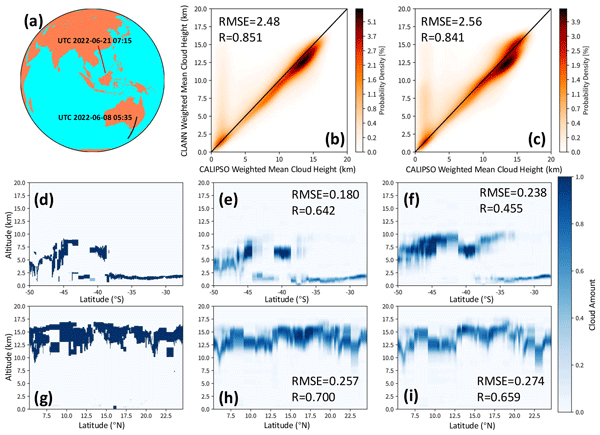
Min Min, Qiang Yu, Jun Li, Han Lin, Yunheng Xue, Xinran Xia, Di Di, Bo Li, and Peng Zhang
Atmos. Chem. Phys., 26, 14205–14228, https://doi.org/10.5194/acp-26-14205-2026, https://doi.org/10.5194/acp-26-14205-2026, 2026
Short summary
Short summary
A physics‑constrained transfer learning framework enables accurate radiance transformation across satellite sensors with different spectral response functions (SRFs). It integrates a Spectral‑Fidelity‑Preserving model from radiative transfer. Tests confirm robustness to calibration uncertainties and define SRF constraints. FY‑4A/B application improves cloud and precipitation retrievals, enabling operational algorithm transfer.
Pan Xia, Min Min, Jun Li, Na Xu, Di Di, Yan-An Liu, Gang Wang, Zijing Liu, and Yongqiang Chen
Earth Syst. Sci. Data Discuss., https://doi.org/10.5194/essd-2026-606, https://doi.org/10.5194/essd-2026-606, 2026
Preprint under review for ESSD
Short summary
Short summary
This study presents a validated FY-4B minute-scale mesoscale AMV dataset for 15 tropical cyclones (2022–2025), offering 3-km VIS and 24-km IRX vectors at 1/2/6/7 min intervals. It provides unprecedented observations of inner-core, rainband, and outflow structures. Evaluated against radiosondes and ERA5, VIS biases are 2.34 and 1.62 m/s, and IRX biases are 2.21 and 0.31 m/s, respectively. The dataset supports detailed monitoring of TC structural evolution and short-term intensity change.
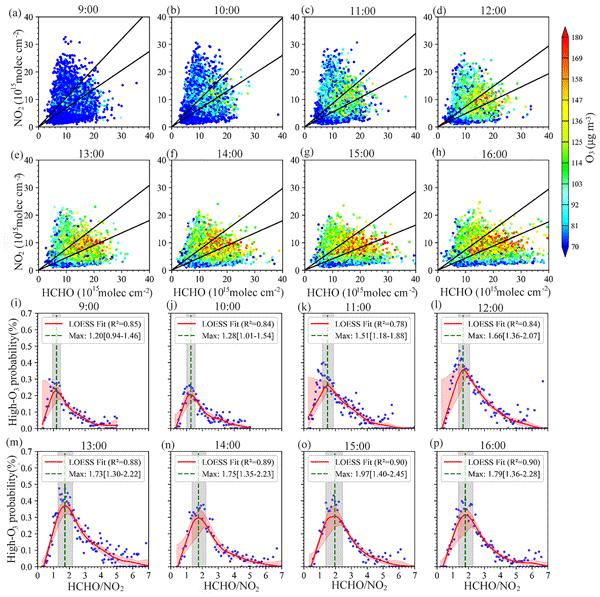
Cheng Huang, Junjie Wang, Yinbao Jin, Min Min, Qi Fan, and Jhoon Kim
Atmos. Chem. Phys., 26, 10221–10240, https://doi.org/10.5194/acp-26-10221-2026, https://doi.org/10.5194/acp-26-10221-2026, 2026
Short summary
Short summary
Ozone pollution is a growing issue in China, with levels increasing steadily from 2020 to 2024. This study uses satellite data to explore how different pollutants interact to form ozone. The results show that urban areas shift their pollution control strategies throughout the day. These findings suggest that targeting specific pollutants at different times could significantly improve air quality and help reduce harmful ozone pollution in China.
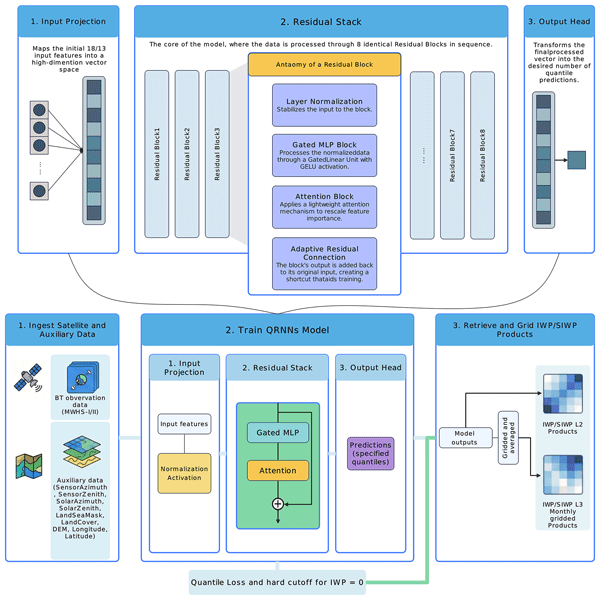
Yifan Yang, Tingfeng Dou, Gaojie Xu, Rui Zhou, Bo Li, Letu Husi, Wenyu Wang, and Cunde Xiao
Earth Syst. Sci. Data, 18, 1287–1305, https://doi.org/10.5194/essd-18-1287-2026, https://doi.org/10.5194/essd-18-1287-2026, 2026
Short summary
Short summary
We developed "FYAI" (Fengyun Satellite-Based Dataset for Atmospheric Ice Water Path), a fifteen-year dataset (2010–2024) derived from Chinese Fengyun satellites. Using artificial intelligence, we mapped global atmospheric ice. This continuous record fills critical gaps in observation. It provides scientists with a vital tool to improve weather forecasts and better understand how atmospheric ice interacts with the global climate system.
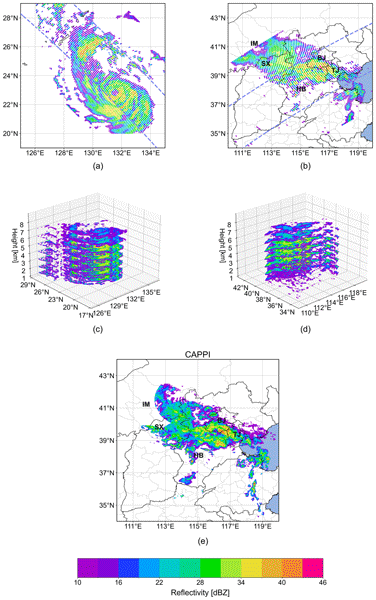
Yunfan Yang, Wei Han, Haofei Sun, Jun Li, Jiapeng Yan, and Zhiqiu Gao
Atmos. Meas. Tech., 18, 4249–4269, https://doi.org/10.5194/amt-18-4249-2025, https://doi.org/10.5194/amt-18-4249-2025, 2025
Short summary
Short summary
Our research improves satellite-based precipitation monitoring by using deep learning to reconstruct radar observations from passive microwave radiances. Active radar is costly, so we focus on a more accessible approach. Using data from the Fengyun-3G satellite, we successfully tracked severe weather like Typhoon Khanun and heavy rainfall in Beijing in 2023. This method enhances global precipitation data and helps better understand extreme weather.
Xinran Xia, Min Min, Jun Li, Yiming Zhao, Ling Gao, and Bo Li
EGUsphere, https://doi.org/10.5194/egusphere-2025-2928, https://doi.org/10.5194/egusphere-2025-2928, 2025
Preprint archived
Short summary
Short summary
New ML method fuses GEO hyperspectral & imager data to improve nighttime cloud retrievals. Achieves ~10 % better accuracy (CER:9.73μm, COT:6.09 errors), especially for thin clouds. Maintains day-night continuity, aids weather/climate monitoring.
Xinyu Li, Lin Zhu, Hongfu Sun, Jun Li, Ximing Lv, Chengli Qi, and Huanhuan Yan
Atmos. Meas. Tech., 18, 2333–2352, https://doi.org/10.5194/amt-18-2333-2025, https://doi.org/10.5194/amt-18-2333-2025, 2025
Short summary
Short summary
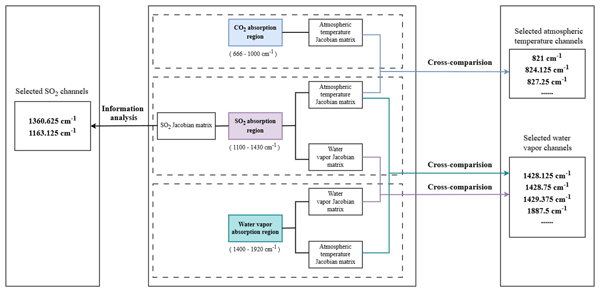
This paper proposes a novel methodology for selecting sulfur-dioxide-sensitive channels from FY-3E/HIRAS-II hyperspectral IR atmospheric sensors to quantitatively monitor volcanic sulfur dioxide. This methodology considers the interference of atmospheric temperature, humidity, and surface temperature with sulfur dioxide detection and retrieval, laying the groundwork for developing a more accurate and flexible volcanic sulfur dioxide retrieval algorithm under different atmospheric conditions.
Mengyuan Wang, Min Min, Jun Li, Han Lin, Yongen Liang, Binlong Chen, Zhigang Yao, Na Xu, and Miao Zhang
Atmos. Chem. Phys., 24, 14239–14256, https://doi.org/10.5194/acp-24-14239-2024, https://doi.org/10.5194/acp-24-14239-2024, 2024
Short summary
Short summary
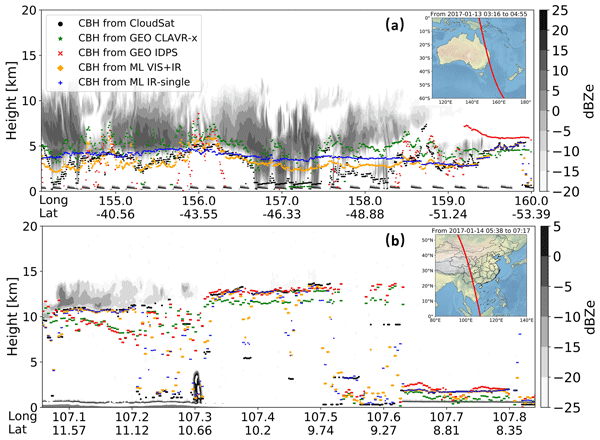
Although machine learning technology is advanced in the field of satellite remote sensing, the physical inversion algorithm based on cloud base height can better capture the daily variation in the characteristics of the cloud base.
Jian Liu, Jingjing Yu, Chuyong Lin, Min He, Haiyan Liu, Wei Wang, and Min Min
Earth Syst. Sci. Data, 16, 4949–4969, https://doi.org/10.5194/essd-16-4949-2024, https://doi.org/10.5194/essd-16-4949-2024, 2024
Short summary
Short summary
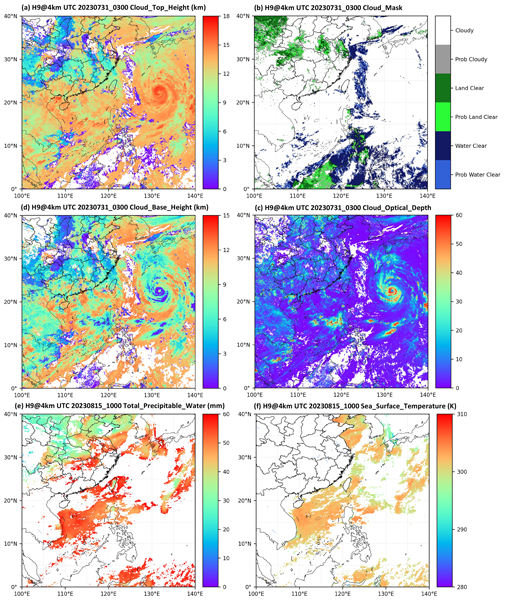
The Japanese Himawari-8 and Himawari-9 (H8/9) geostationary (GEO) satellites are strategically positioned over the South China Sea (SCS), spanning from 3 November 2022 to the present. They mainly provide cloud mask, fraction, height, phase, optical, and microphysical property; layered precipitable water; and sea surface temperature products within a temporal resolution of 10 min and a gridded resolution of 0.05° × 0.05°.
Xinran Xia, Rubin Jiang, Min Min, Shengli Wu, Peng Zhang, and Xiangao Xia
Earth Syst. Sci. Data Discuss., https://doi.org/10.5194/essd-2024-395, https://doi.org/10.5194/essd-2024-395, 2024
Revised manuscript not accepted
Short summary
Short summary
Based on the MicroWave Radiation Imager aboard FY-3 series satellites, we developed a global terrestrial precipitable water vapor dataset from 2012 to 2020. This dataset overcomes the limitations of infrared observations and provides accurate, all-weather PWV data ,spanning all types of land surface. Researchers are expected to leverage it to explore the role of water vapor in weather patterns, refine precipitation forecasting, and validate climate simulations.
Mengyuan Wang, Min Min, Jun Li, Han Lin, Yongen Liang, Binlong Chen, Zhigang Yao, Na Xu, and Miao Zhang
EGUsphere, https://doi.org/10.5194/egusphere-2023-2843, https://doi.org/10.5194/egusphere-2023-2843, 2023
Preprint archived
Short summary
Short summary
Our study primarily addresses the feasibility of employing advanced machine learning and physics-based algorithms to capture the diurnal variations in cloud base height parameters using geostationary meteorological satellite remote sensing. The results indicated that the caution is warranted when utilizing cloud base property products trained on satellite and laser radar data for climate research. Fixed training samples might obscure the pronounced diurnal variations in cloud base heights.
You Zhao, Chao Liu, Di Di, Ziqiang Ma, and Shihao Tang
Atmos. Meas. Tech., 15, 2791–2805, https://doi.org/10.5194/amt-15-2791-2022, https://doi.org/10.5194/amt-15-2791-2022, 2022
Short summary
Short summary
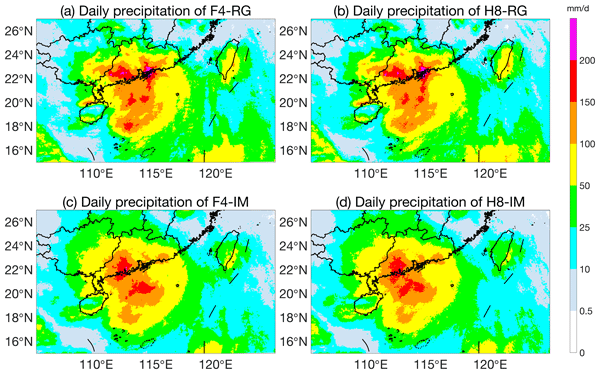
A typhoon is a high-impact atmospheric phenomenon that causes most significant socioeconomic damage, and its precipitation observation is always needed for typhoon characteristics and disaster prevention. This study developed a typhoon precipitation fusion method to combine observations from satellite radiometers, rain gauges and reanalysis to provide much improved typhoon precipitation datasets.
Cited articles
Alkhalidi, M., Al-Dabbous, A., Al-Dabbous, S., and Alzaid, D.: Evaluating the Accuracy of the ERA5 Model in Predicting Wind Speeds Across Coastal and Offshore Regions, J. Mar. Sci. Eng., 13, 149, https://doi.org/10.3390/jmse13010149, 2025.
Anderson, J. T., Hardy, E. E., Roach, J. T., and Witmer, R. E.: A land use and land cover classification system for use with remote sensor data, Professional Paper, U.S. Geological Survey, https://doi.org/10.3133/pp964, 1976.
Bao, J., Feng, J., and Wang, Y.: Dynamical downscaling simulation and future projection of precipitation over China, J. Geophys. Res.-Atmos., 120, 8227–8243, https://doi.org/10.1002/2015JD023275, 2015.
Bernini, L., Lagasio, M., Milelli, M., Oberto, E., Parodi, A., Hachinger, S., Kranzlmüller, D., and Tartaglione, N.: Convection-permitting dynamical downscaling of ERA5 for Europe and the Mediterranean basin, Q. J. Roy. Meteor. Soc., 151, e5014, https://doi.org/10.1002/qj.5014, 2025.
Boé, J., Terray, L., Habets, F., and Martin, E.: Statistical and dynamical downscaling of the Seine basin climate for hydro-meteorological studies, Int. J. Climatol., 27, 1643–1655, https://doi.org/10.1002/joc.1602, 2007.
Collier, E. and Mölg, T.: BAYWRF: a high-resolution present-day climatological atmospheric dataset for Bavaria, Earth Syst. Sci. Data, 12, 3097–3112, https://doi.org/10.5194/essd-12-3097-2020, 2020.
Daescu, D. N. and Langland, R. H.: Error covariance sensitivity and impact estimation with adjoint 4D-Var: theoretical aspects and first applications to NAVDAS-AR, Q. J. Roy. Meteor. Soc., 139, 226–241, https://doi.org/10.1002/qj.1943, 2013.
Dayon, G., Boé, J., and Martin, E.: Transferability in the future climate of a statistical downscaling method for precipitation in France, J. Geophys. Res.-Atmos., 120, 1023–1043, https://doi.org/10.1002/2014JD022236, 2015.
De Bode, M., Hedde, T., Roubin, P., and Durand, P.: A Method to Improve Land Use Representation for Weather Simulations Based on High-Resolution Data Sets – Application to Corine Land Cover Data in the WRF Model, Earth Space Sci., 10, e2021EA002123, https://doi.org/10.1029/2021EA002123, 2023.
Dudhia, J.: Numerical Study of Convection Observed during the Winter Monsoon Experiment Using a Mesoscale Two-Dimensional Model, J. Atmos. Sci., 46, 3077–3107, https://doi.org/10.1175/1520-0469(1989)046<3077:NSOCOD>2.0.CO;2, 1989.
Dujardin, J. and Lehning, M.: Wind-Topo: Downscaling near-surface wind fields to high-resolution topography in highly complex terrain with deep learning, Q. J. Roy. Meteor. Soc., 148, 1368–1388, https://doi.org/10.1002/qj.4265, 2022.
Dupuy, F., Durand, P., and Hedde, T.: Downscaling of surface wind forecasts using convolutional neural networks, Nonlin. Processes Geophys., 30, 553–570, https://doi.org/10.5194/npg-30-553-2023, 2023.
Fu, D., Liu, Y., Li, H., Liu, S., Li, B., Thapa, S., Yabo, S., Sun, X., Tang, B., Zuo, J., Qi, H., and Tian, C.: Evaluating the Impacts of Land Cover and Soil Texture Changes on Simulated Surface Wind and Temperature, Earth Space Sci., 7, e2020EA001173, https://doi.org/10.1029/2020EA001173, 2020.
Golzio, A., Ferrarese, S., Cassardo, C., Diolaiuti, G. A., and Pelfini, M.: Land-Use Improvements in the Weather Research and Forecasting Model over Complex Mountainous Terrain and Comparison of Different Grid Sizes, Bound.-Lay. Meteorol., 180, 319–351, https://doi.org/10.1007/s10546-021-00617-1, 2021.
Gutowski, W. J., Ullrich, P. A., Hall, A., Leung, L. R., O'Brien, T. A., Patricola, C. M., Arritt, R. W., Bukovsky, M. S., Calvin, K. V., Feng, Z., Jones, A. D., Kooperman, G. J., Monier, E., Pritchard, M. S., Pryor, S. C., Qian, Y., Rhoades, A. M., Roberts, A. F., Sakaguchi, K., Urban, N., and Zarzycki, C.: The Ongoing Need for High-Resolution Regional Climate Models: Process Understanding and Stakeholder Information, B. Am. Meteorol. Soc., 101, E664–E683, https://doi.org/10.1175/bams-d-19-0113.1, 2020.
Harkey, M. and Holloway, T.: Constrained dynamical downscaling for assessment of climate impacts, J. Geophys. Res.-Atmos., 118, 2136–2148, https://doi.org/10.1002/jgrd.50223, 2013.
Hersbach, H., Bell, B., Berrisford, P., Hirahara, S., Horányi, A., Muñoz-Sabater, J., Nicolas, J., Peubey, C., Radu, R., Schepers, D., Simmons, A., Soci, C., Abdalla, S., Abellan, X., Balsamo, G., Bechtold, P., Biavati, G., Bidlot, J., Bonavita, M., De Chiara, G., Dahlgren, P., Dee, D., Diamantakis, M., Dragani, R., Flemming, J., Forbes, R., Fuentes, M., Geer, A., Haimberger, L., Healy, S., Hogan, R. J., Hólm, E., Janisková, M., Keeley, S., Laloyaux, P., Lopez, P., Lupu, C., Radnoti, G., de Rosnay, P., Rozum, I., Vamborg, F., Villaume, S., and Thépaut, J.-N.: The ERA5 global reanalysis, Q. J. Roy. Meteor. Soc., 146, 1999–2049, https://doi.org/10.1002/qj.3803, 2020.
Höhlein, K., Kern, M., Hewson, T., and Westermann, R.: A comparative study of convolutional neural network models for wind field downscaling, Meteorol. Appl., 27, e1961, https://doi.org/10.1002/met.1961, 2020.
Hoke, J. E. and Anthes, R. A.: The Initialization of Numerical Models by a Dynamic-Initialization Technique, Mon. Weather Rev., 104, 1551–1556, https://doi.org/10.1175/1520-0493(1976)104<1551:tionmb>2.0.co;2, 1976.
Hong, S.-Y., Noh, Y., and Dudhia, J.: A New Vertical Diffusion Package with an Explicit Treatment of Entrainment Processes, Mon. Weather Rev., 134, 2318–2341, https://doi.org/10.1175/mwr3199.1, 2006.
Horvath, K., Koracin, D., Vellore, R., Jiang, J., and Belu, R.: Sub-kilometer dynamical downscaling of near-surface winds in complex terrain using WRF and MM5 mesoscale models, J. Geophys. Res.-Atmos., 117, https://doi.org/10.1029/2012JD017432, 2012.
Hu, W., Scholz, Y., Yeligeti, M., von Bremen, L. , and Deng, Y.: Downscaling ERA5 wind speed data: a machine learning approach considering topographic influences, Environ. Res. Lett., 18, 094007, https://doi.org/10.1088/1748-9326/aceb0a, 2023.
Jung, C. and Schindler, D.: On the influence of wind speed model resolution on the global technical wind energy potential, Renew. Sust. Energ. Rev., 156, 112001, https://doi.org/10.1016/j.rser.2021.112001, 2022.
Kain, J. S.: The Kain–Fritsch Convective Parameterization: An Update, J. Appl. Meteorol., 43, 170–181, https://doi.org/10.1175/1520-0450(2004)043<0170:TKCPAU>2.0.CO;2, 2004.
Kotlarski, S., Szabó, P., Herrera, S., Räty, O., Keuler, K., Soares, P. M., Cardoso, R. M., Bosshard, T., Pagé, C., Boberg, F., Gutiérrez, J. M., Isotta, F. A., Jaczewski, A., Kreienkamp, F., Liniger, M. A., Lussana, C., and Pianko-Kluczyńska, K.: Observational uncertainty and regional climate model evaluation: A pan-European perspective, Int. J. Climatol., 39, 3730–3749, https://doi.org/10.1002/joc.5249, 2019.
Lei, L. and Hacker, J. P.: Nudging, Ensemble, and Nudging Ensembles for Data Assimilation in the Presence of Model Error, Mon. Weather Rev., 143, 2600–2610, https://doi.org/10.1175/MWR-D-14-00295.1, 2015.
Lian, J., Huang, S., Shao, J., Chen, P., Tang, S., Lu, Y., and Yu, H.: TerraWind: A Deep Learning-Based Near-Surface Winds Downscaling Model for Complex Terrain Region, Geophys. Res. Lett., 51, e2024GL112124, https://doi.org/10.1029/2024GL112124, 2024.
Liu, J., Shi, C., Ge, L., Tie, R., Chen, X., Zhou, T., Gu, X., and Shen, Z.: Enhanced Wind Field Spatial Downscaling Method Using UNET Architecture and Dual Cross-Attention Mechanism, Remote Sens., 16, 1867, https://doi.org/10.3390/rs16111867, 2024a.
Liu, S., Zeman, C., and Schär, C.: Dynamical Downscaling of Climate Simulations in the Tropics, Geophys. Res. Lett., 51, e2023GL105733, https://doi.org/10.1029/2023GL105733, 2024b.
Liu, Y., Di, D., Li, J., Li, Z., Ma, Z., Zheng, J., Liu, Y.-A., and Zhang, T.: Consistency Assessment of the Winds in Reanalysis Datasets and the GIIRS Product Using Radiosondes, Adv. Atmos. Sci., https://doi.org/10.1007/s00376-025-4138-x, 2025.
Lo, J. C., Yang, Z., and Pielke, R. A.: Assessment of three dynamical climate downscaling methods using the Weather Research and Forecasting (WRF) model, J. Geophys. Res.-Atmos., 113, 2007JD009216, https://doi.org/10.1029/2007JD009216, 2008.
Mlawer, E. J., Taubman, S. J., Brown, P. D., Iacono, M. J., and Clough, S. A.: Radiative transfer for inhomogeneous atmospheres: RRTM, a validated correlated-k model for the longwave, J. Geophys. Res.-Atmos., 102, 16663–16682, https://doi.org/10.1029/97JD00237, 1997.
Molina, M. O., Gutiérrez, C., and Sánchez, E.: Comparison of ERA5 surface wind speed climatologies over Europe with observations from the HadISD dataset, Int. J. Climatol., 41, 4864–4878, https://doi.org/10.1002/joc.7103, 2021.
Nash, J. E. and Sutcliffe, J. V.: River flow forecasting through conceptual models part I – A discussion of principles, J. Hydrol., 10, 282–290, https://doi.org/10.1016/0022-1694(70)90255-6, 1970.
Nashwan, M. S., Shahid, S., and Chung, E.-S.: Development of high-resolution daily gridded temperature datasets for the central north region of Egypt, Sci. Data, 6, 138, https://doi.org/10.1038/s41597-019-0144-0, 2019.
National Centers for Environmental Prediction/National Weather Service/National Oceanic and Atmospheric Administration/U.S. Department of Commerce: NCEP ADP global upper air and surface weather observations (PREPBUFR format) (updated daily), Research Data Archive at the National Center for Atmospheric Research, Computational and Information Systems Laboratory, https://doi.org/10.5065/Z83F-N512, 2008.
Sahu, R. K., Bangalath, H. K., Mostamandi, S., Evans, J., Kucera, P. A., and Beck, H. E.: Evaluation of microphysics and boundary layer schemes for simulating extreme rainfall events over Saudi Arabia using WRF-ARW, Nat. Hazards Earth Syst. Sci., 26, 21–40, https://doi.org/10.5194/nhess-26-21-2026, 2026.
Santos-Alamillos, F. J., Pozo-Vázquez, D., Ruiz-Arias, J. A., and Tovar-Pescador, J.: Influence of land-use misrepresentation on the accuracy of WRF wind estimates: Evaluation of GLCC and CORINE land-use maps in southern Spain, Atmos. Res., 157, 17–28, https://doi.org/10.1016/j.atmosres.2015.01.006, 2015.
Siewert, J. and Kroszczynski, K.: Evaluation of High-Resolution Land Cover Geographical Data for the WRF Model Simulations, Remote Sens., 15, 2389, https://doi.org/10.3390/rs15092389, 2023.
Skamarock, W. C., Klemp, J. B., Dudhia, J., Gill, D. O., Liu, Z., Berner, J., Wang, W., Powers, J. G., Duda, M. G., Barker, D. M., and Huang, X.-Y.: A Description of the Advanced Research WRF Model Version 4, NSF, https://doi.org/10.5065/1DFH-6P97, 2019.
Stauffer, D. R. and Seaman, N. L.: Use of four-dimensional data assimilation in a limited-area mesoscale model. Part I: Experiments with synoptic-scale data, Mon. Weather Rev., 118, 1250–1277, https://doi.org/10.1175/1520-0493(1990)118<1250:UOFDDA>2.0.CO;2, 1990.
Sun, Y., Deng, K., Ren, K., Liu, J., Deng, C., and Jin, Y.: Deep learning in statistical downscaling for deriving high spatial resolution gridded meteorological data: A systematic review, ISPRS J. Photogramm., 208, 14–38, https://doi.org/10.1016/j.isprsjprs.2023.12.011, 2024.
Tang, J., Niu, X., Wang, S., Gao, H., Wang, X., and Wu, J.: Statistical downscaling and dynamical downscaling of regional climate in China: Present climate evaluations and future climate projections, J. Geophys. Res.-Atmos., 121, 2110–2129, https://doi.org/10.1002/2015JD023977, 2016.
Tareghian, R. and Rasmussen, P. F.: Statistical downscaling of precipitation using quantile regression, J. Hydrol., 487, 122–135, https://doi.org/10.1016/j.jhydrol.2013.02.029, 2013.
Tewari, M., Chen, F., Wang, W., Dudhia, J., LeMone, M. A., Mitchell, K., Ek, M., Gayno, G., Wegiel, J., and Cuenca, R.: Implementation and verification of the unified Noah land surface model in the WRF model, Proc. 20th Conf. Weather Analysis and Forecasting/16th Conf. Numerical Weather Prediction, Seattle, WA, American Meteorological Society, https://ams.confex.com/ams/84Annual/webprogram/Paper69061.html (last access: 25 June 2025), 2004.
Thompson, G., Field, P. R., Rasmussen, R. M., and Hall, W. D.: Explicit Forecasts of Winter Precipitation Using an Improved Bulk Microphysics Scheme. Part II: Implementation of a New Snow Parameterization, Mon. Weather Rev., 136, 5095–5115, https://doi.org/10.1175/2008mwr2387.1, 2008.
Viterbo, F., Sperati, S., Vitali, B., D'Amico, F., Cavalleri, F., Bonanno, R., and Lacavalla, M.: MERIDA HRES: A new high-resolution reanalysis dataset for Italy, Meteorol. Appl., 31, e70011, https://doi.org/10.1002/met.70011, 2024.
Xu, Z., Han, Y., Tam, C.-Y., Yang, Z.-L., and Fu, C.: Bias-corrected CMIP6 global dataset for dynamical downscaling of the historical and future climate (1979–2100), Sci. Data, 8, 293, https://doi.org/10.1038/s41597-021-01079-3, 2021.
Yuan, H., Cheng, L., Pan, Y., Tan, Z., Liu, Q., and Jin, Z.: A multi-level parallel approach to increase the computation efficiency of a global ocean temperature dataset reconstruction, J. Parallel Distr. Comp., 192, 104938, https://doi.org/10.1016/j.jpdc.2024.104938, 2024.
Zamo, M., Bel, L., Mestre, O., and Stein, J.: Improved Gridded Wind Speed Forecasts by Statistical Postprocessing of Numerical Models with Block Regression, Weather Forecast., 31, 1929–1945, https://doi.org/10.1175/waf-d-16-0052.1, 2016.
Zhang, J., Liu, B., Ren, S., Han, W., Ding, Y., and Peng, S.: A 4 km daily gridded meteorological dataset for China from 2000 to 2020, Sci. Data, 11, 1230, https://doi.org/10.1038/s41597-024-04029-x, 2024.
Zhang, L., Xu, Y., Meng, C., Li, X., Liu, H., and Wang, C.: Comparison of Statistical and Dynamic Downscaling Techniques in Generating High-Resolution Temperatures in China from CMIP5 GCMs, J. Appl. Meteorol. Clim., 59, 207–235, https://doi.org/10.1175/jamc-d-19-0048.1, 2020.
Zhang, N., Gao, Z., Wang, X., and Chen, Y.: Modeling the impact of urbanization on the local and regional climate in Yangtze River Delta, China, Theor. Appl. Climatol., 102, 331–342, https://doi.org/10.1007/s00704-010-0263-1, 2010.
Zhang, S. and Li, X.: Future projections of offshore wind energy resources in China using CMIP6 simulations and a deep learning-based downscaling method, Energy, 217, 119321, https://doi.org/10.1016/j.energy.2020.119321, 2021.
Zhang, Z. and Liu, Y.-A.: A 1 km Hourly High-Resolution 3D Wind Field Dataset over the Yangtze River Delta during June–August 2021–2023, Science Data Bank [data set], https://doi.org/10.57760/sciencedb.23752, 2025.
Short summary
We developed a three-dimensional wind dataset for the Yangtze River Delta with hourly information at one-kilometer resolution for the summers from 2021 to 2023. Using atmospheric modeling combined with ground observations and land surface data, the dataset represents local wind behavior more accurately than existing products. It supports studies of extreme weather, air pollution transport, wind energy planning, and low-altitude airspace safety in rapidly urbanizing regions.
We developed a three-dimensional wind dataset for the Yangtze River Delta with hourly...


Altmetrics
Final-revised paper
Preprint