Articles | Volume 18, issue 2
https://doi.org/10.5194/essd-18-1541-2026
© Author(s) 2026. This work is distributed under
the Creative Commons Attribution 4.0 License.
the Creative Commons Attribution 4.0 License.
https://doi.org/10.5194/essd-18-1541-2026
© Author(s) 2026. This work is distributed under
the Creative Commons Attribution 4.0 License.
the Creative Commons Attribution 4.0 License.
Data description article
| 
27 Feb 2026
Data description article |
| 27 Feb 2026
| 27 Feb 2026
Environment90m – globally standardized environmental variables for freshwater science at high spatial resolution
Jaime R. García-Márquez
CORRESPONDING AUTHOR
Leibniz Institute of Freshwater Ecology and Inland Fisheries (IGB), Department of Community and Ecosystem Ecology, Müggelseedamm 310, 12587 Berlin, Germany
Afroditi Grigoropoulou
Leibniz Institute of Freshwater Ecology and Inland Fisheries (IGB), Department of Community and Ecosystem Ecology, Müggelseedamm 310, 12587 Berlin, Germany
Thomas Tomiczek
Leibniz Institute of Freshwater Ecology and Inland Fisheries (IGB), Department of Community and Ecosystem Ecology, Müggelseedamm 310, 12587 Berlin, Germany
Marlene Schürz
Leibniz Institute of Freshwater Ecology and Inland Fisheries (IGB), Department of Community and Ecosystem Ecology, Müggelseedamm 310, 12587 Berlin, Germany
Freie Universität Berlin, Department of Biology, Chemistry, Pharmacy, Institute of Biology, Königin-Luise-Str. 1–3, 14195 Berlin, Germany
Universität für Bodenkultur Wien, Institute of Hydrobiology and Aquatic Ecosystem Management, Gregor-Mendel-Straße 33, 1180 Vienna, Austria
Vanessa Bremerich
Leibniz Institute of Freshwater Ecology and Inland Fisheries (IGB), Department of Community and Ecosystem Ecology, Müggelseedamm 310, 12587 Berlin, Germany
Yusdiel Torres-Cambas
Leibniz Institute of Freshwater Ecology and Inland Fisheries (IGB), Department of Community and Ecosystem Ecology, Müggelseedamm 310, 12587 Berlin, Germany
Merret Buurman
Leibniz Institute of Freshwater Ecology and Inland Fisheries (IGB), Department of Community and Ecosystem Ecology, Müggelseedamm 310, 12587 Berlin, Germany
Kristi Bego
Leibniz Institute of Freshwater Ecology and Inland Fisheries (IGB), Department of Community and Ecosystem Ecology, Müggelseedamm 310, 12587 Berlin, Germany
Giuseppe Amatulli
Yale University, School of the Environment, 195 Prospect Street, New Haven, CT, 06511, USA
Spatial Ecology, 35A, Hazlemere Road, Penn, Buckinghamshire, HP10 8AD, United Kingdom
Leibniz Institute of Freshwater Ecology and Inland Fisheries (IGB), Department of Community and Ecosystem Ecology, Müggelseedamm 310, 12587 Berlin, Germany
Related authors
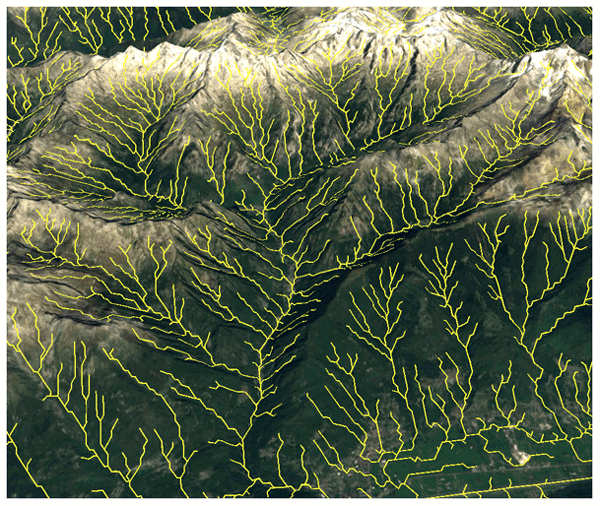
Giuseppe Amatulli, Jaime Garcia Marquez, Tushar Sethi, Jens Kiesel, Afroditi Grigoropoulou, Maria M. Üblacker, Longzhu Q. Shen, and Sami Domisch
Earth Syst. Sci. Data, 14, 4525–4550, https://doi.org/10.5194/essd-14-4525-2022, https://doi.org/10.5194/essd-14-4525-2022, 2022
Short summary
Short summary
Streams and rivers drive several processes in hydrology, geomorphology, geography, and ecology. A hydrographic network that accurately delineates streams and rivers, along with their topographic and topological properties, is needed for environmental applications. Using the MERIT Hydro Digital Elevation Model at 90 m resolution, we derived a globally seamless, standardised hydrographic network: Hydrography90m. The validation demonstrates improved accuracy compared to other datasets.
Giuseppe Amatulli, Jaime Garcia Marquez, Tushar Sethi, Jens Kiesel, Afroditi Grigoropoulou, Maria M. Üblacker, Longzhu Q. Shen, and Sami Domisch
Earth Syst. Sci. Data, 14, 4525–4550, https://doi.org/10.5194/essd-14-4525-2022, https://doi.org/10.5194/essd-14-4525-2022, 2022
Short summary
Short summary
Streams and rivers drive several processes in hydrology, geomorphology, geography, and ecology. A hydrographic network that accurately delineates streams and rivers, along with their topographic and topological properties, is needed for environmental applications. Using the MERIT Hydro Digital Elevation Model at 90 m resolution, we derived a globally seamless, standardised hydrographic network: Hydrography90m. The validation demonstrates improved accuracy compared to other datasets.
Cited articles
Almeida, B. and Cabral, P.: Data-Driven Modelling of Freshwater Ecosystems: A Multiscale Framework Based on Global Geospatial Data, in: GISTAM, 104–111, ISBN 978-989-758-649-1, 2023. a
Amatulli, G., Garcia Marquez, J., Sethi, T., Kiesel, J., Grigoropoulou, A., Üblacker, M. M., Shen, L. Q., and Domisch, S.: Hydrography90m: a new high-resolution global hydrographic dataset, Earth System Science Data, 14, 4525–4550, https://doi.org/10.5194/essd-14-4525-2022, 2022. a, b, c, d, e, f, g, h
Arrouays, D., Lelyk, G., Hempel, J. W., McKenzie, N. J., Lagacherie, P., Lelyk, G., McBratney, A. B., Odeh, I. O. A., Sanchez, P. A., Thompson, J. A., Grundy, M. G., Hartemink, A. E., Hong, S. Y., and Zhang, G.-L.: GlobalSoilMap: Toward a Fine-Resolution Global Grid of Soil Properties, in: Advances in Agronomy, vol. 125, Academic Press, 93–134, https://doi.org/10.1016/B978-0-12-800137-0.00003-0, 2014. a
Barbarossa, V., Huijbregts, M. A. J., Beusen, A. H. W., Beck, H. E., King, H., and Schipper, A. M.: FLO1K, global maps of mean, maximum and minimum annual streamflow at 1 km resolution from 1960 through 2015, Scientific Data, 5, 180052, https://doi.org/10.1038/sdata.2018.52, 2018. a, b, c
Basen, T., Chucholl, C., Oexle, S., Ros, A., and Brinker, A.: Suitability of Natura 2000 sites for threatened freshwater species under projected climate change, Aquatic Conservation: Marine and Freshwater Ecosystems, 32, 1872–1887, https://doi.org/10.1002/aqc.3899, 2022. a
Bellin, N., Tesi, G., Marchesani, N., and Rossi, V.: Species distribution modeling and machine learning in assessing the potential distribution of freshwater zooplankton in Northern Italy, Ecological Informatics, 69, 101682, https://doi.org/10.1016/j.ecoinf.2022.101682, 2022. a
Benda, L., Poff, N. L., Miller, D., Dunne, T., Reeves, G., Pess, G., and Pollock, M.: The network dynamics hypothesis: how channel networks structure riverine habitats, BioScience, 54, 413–427, 2004. a
Beven, K. J. and Kirkby, M. J.: A physically based, variable contributing area model of basin hydrology/Un modèle à base physique de zone d'appel variable de l'hydrologie du bassin versant, Hydrological Sciences Bulletin, 24, 43–69, https://doi.org/10.1080/02626667909491834, 1979. a
Brunner, A., Márquez, J. R. G., and Domisch, S.: Downscaling future land cover scenarios for freshwater fish distribution models under climate change, Limnologica, 104, 126139, https://doi.org/10.1016/j.limno.2023.126139, 2024. a, b
Domisch, S., Amatulli, G., and Jetz, W.: Near-global freshwater-specific environmental variables for biodiversity analyses in 1 km resolution, Scientific Data, 2, 1–13, 2015. a
Domisch, S., Bremerich, V., Buurman, M., Kaminke, B., Tomiczek, T., Torres-Cambas, Y., Grigoropoulou, A., Garcia Marquez, J., Amatulli, G., Grossart, H.-P., Gessner, M., Mehner, T., Adrian, R., and De Meester, L.: GeoFRESH – an online platform for freshwater geospatial data processing, International Journal of Digital Earth, 17, 2391033, https://doi.org/10.1080/17538947.2024.2391033, 2024. a, b, c, d, e
Ebi, K. L., Hallegatte, S., Kram, T., Arnell, N. W., Carter, T. R., Edmonds, J., Kriegler, E., Mathur, R., O’Neill, B. C., Riahi, K., Harald Winkler, H., Van Vuuren, D., and Zwickel, T.: A new scenario framework for climate change research: background, process, and future directions, Climatic Change, 122, 363–372, 2014. a
Friedrichs-Manthey, M., Langhans, S. D., Hein, T., Borgwardt, F., Kling, H., Jähnig, S. C., and Domisch, S.: From topography to hydrology – The modifiable area unit problem impacts freshwater species distribution models, Ecology and Evolution, 10, 2956–2968, 2020. a
García Márquez, J. R., Grigoropoulou, A., Tomiczek, T., Schürz, M., Bremerich, V., Torres-Cambas, Y., Buurman, M., Bego, K., Amatulli, G., and Domisch, S.: Environment90m – globally standardized environmental variables for freshwater science at high spatial resolution, Leibniz Institute of Freshwater Ecology and Inland Fisheries (IGB) [data set], https://doi.org/10.18728/igb-fred-995.0, 2025a. a, b
García Márquez, J. R., Grigoropoulou, A., Tomiczek, T., Schürz, M., Bremerich, V., Torres-Cambas, Y., Buurman, M., Bego, K., Amatulli, G., Domisch, S.: Environment90m – globally standardized environmental variables for freshwater science at high spatial resolution, Zenodo [code], https://doi.org/10.5281/zenodo.18483574, 2025b. a
Golden, H. E., Christensen, J. R., McMillan, H. K., Kelleher, C. A., Lane, C. R., Husic, A., Li, L., Ward, A. S., Hammond, J., Seybold, E. C., Jaeger, K. L., Zimmer, M., Sando, R., Jones, C. N., Segura, C., Mahoney, D. T., Price, A. N., and Cheng, F.: Advancing the science of headwater streamflow for global water protection, Nature Water, 3, 16–26, https://doi.org/10.1038/s44221-024-00351-1, 2025. a
GRASS Development Team: Geographic Resources Analysis Support System (GRASS GIS) Software, Version 8.4, Open Source Geospatial Foundation, USA, Zenodo [code], https://doi.org/10.5281/zenodo.5176030, 2024. a
Grigoropoulou, A.: Open science approaches on assessing global aquatic insect biodiversity, Dissertation, Freie Universität Berlin, https://doi.org/10.17169/refubium-45697, 2024. a
Grigoropoulou, A., Hamid, S. A., Acosta, R., Akindele, E. O., Al-Shami, S. A., Altermatt, F., Amatulli, G., Angeler, D. G., Arimoro, F. O., Aroviita, J., Astorga-Roine, A., Bastos, R. C., Bonada, N., Boukas, N., Brand, C., Bremerich, V., Bush, A., Cai, Q., Callisto, M., Chen, K., Cruz, P. V., Dangles, O., Death, R., Deng, X., Domínguez, E., Dudgeon, D., Eriksen, T. E., Faria, A. P. J., Feio, M. J., Fernández-Aláez, C., Floury, M., García-Criado, F., García-Girón, J., Graf, W., Grönroos, M., Haase, P., Hamada, N., He, F., Heino, J., Holzenthal, R., Huttunen, K.-L., Jacobsen, D., Jähnig, S. C., Jetz, W., Johnson, R. K., Juen, L., Kalkman, V., Kati, V., Keke, U. N., Koroiva, R., Kuemmerlen, M., Langhans, S. D., Ligeiro, R., Van Looy, K., Maasri, A., Marchant, R., Garcia Marquez, J. R., Martins, R. T., Melo, A. S., Metzeling, L., Miserendino, M. L., Moe, S. J., Molineri, C., Muotka, T., Mustonen, K.-R., Mykrä, H., Cavalcante do Nascimento, J. M., Valente-Neto, F., Neu, P. J., Nieto, C., Pauls, S. U., Paulson, D. R., Rios-Touma, B., Rodrigues, M. E., de Oliveira Roque, F., Salazar Salina, J. C., Schmera, D., Schmidt-Kloiber, A., Shah, D. N., Simaika, J. P., Siqueira, T., Tachamo-Shah, R. D., Theischinger, G., Thompson, R., Tonkin, J. D., Torres-Cambas, Y., Townsend, C., Turak, E., Twardochleb, L., Wang, B., Yanygina, L., Zamora-Muñoz, C., and Domisch, S.: The global EPTO database: Worldwide occurrences of aquatic insects, Global Ecology and Biogeography, 32, 642–655, https://doi.org/10.1111/geb.13648, 2023.
Guareschi, S., Cancellario, T., Oficialdegui, F. J., and Clavero, M.: Insights from the past: Invasion trajectory and niche trends of a global freshwater invader, Global Change Biology, 30, e17059, https://doi.org/10.1111/gcb.17059, 2024. a
He, C., Yang, C.-J., Turowski, J. M., Ott, R. F., Braun, J., Tang, H., Ghantous, S., Yuan, X., and Stucky de Quay, G.: A global dataset of the shape of drainage systems, Earth System Science Data, 16, 1151–1166, https://doi.org/10.5194/essd-16-1151-2024, 2024. a
Hengl, T., Mendes de Jesus, J., Heuvelink, G. B. M., Ruiperez Gonzalez, M., Kilibarda, M., Blagotić, A., Shangguan, W., Wright, M. N., Geng, X., Bauer-Marschallinger, B., Guevara, M. A., Vargas, R., MacMillan, R. A., Batjes, N. H., Leenaars, J. G. B., Ribeiro, E., Wheeler, I., Mantel, S., and Kempen, B.: SoilGrids250m: Global gridded soil information based on machine learning, PLOS ONE, 12, e0169748, https://doi.org/10.1371/journal.pone.0169748, 2017. a, b
Hermoso, V.: Restoring free-flowing rivers: Planning for longitudinal and lateral connectivity recovery, Journal of Applied Ecology, https://doi.org/10.1111/1365-2664.70095, 2025. a
Hill, R. A., Weber, M. H., Leibowitz, S. G., Olsen, A. R., and Thornbrugh, D. J.: The Stream-Catchment (StreamCat) Dataset: A database of watershed metrics for the conterminous United States, JAWRA Journal of the American Water Resources Association, 52, 120–128, 2016. a
Hill, R. A., Weber, M. H., Debbout, R. M., Leibowitz, S. G., and Olsen, A. R.: The Lake-Catchment (LakeCat) Dataset: characterizing landscape features for lake basins within the conterminous USA, Freshwater Science, 37, 208–221, 2018. a
Hughes, A. C.: The Post-2020 Global Biodiversity Framework: How did we get here, and where do we go next?, Integrative Conservation, 2, 1–9, https://doi.org/10.1002/INC3.16, 2023. a
Jelinski, D. E. and Wu, J.: The modifiable areal unit problem and implications for landscape ecology, Landscape Ecology, 11, 129–140, 1996. a
Karger, D. N., Conrad, O., Böhner, J., Kawohl, T., Kreft, H., Soria-Auza, R. W., Zimmermann, N. E., Linder, H. P., and Kessler, M.: Climatologies at high resolution for the earth’s land surface areas, EnviDat [data set], https://doi.org/10.16904/envidat.228, 2021. a, b
Lehner, B., Verdin, K., and Jarvis, A.: New global hydrography derived from spaceborne elevation data, Eos, Transactions American Geophysical Union, 89, 93–94, 2008. a
Lehner, B., Messager, M. L., Korver, M. C., and Linke, S.: Global hydro-environmental lake characteristics at high spatial resolution, Scientific Data, 9, 351, https://doi.org/10.1038/s41597-022-01425-z, 2022. a
Leopold, L. B., Wolman, M. G., Miller, J. P., and Wohl, E. E.: Fluvial Processes in Geomorphology, Courier Dover Publications, ISBN 978-0-486-84552-4, 2020. a
Linke, S., Pressey, R. L., Bailey, R. C., and Norris, R. H.: Management options for river conservation planning: condition and conservation re-visited, Freshwater Biology, 52, 918–938, 2007. a
Linke, S., Lehner, B., Ouellet Dallaire, C., Ariwi, J., Grill, G., Anand, M., Beames, P., Burchard-Levine, V., Maxwell, S., Moidu, H., Tan, F., and Thieme, M.: Global hydro-environmental sub-basin and river reach characteristics at high spatial resolution, Scientific Data, 6, 283, https://doi.org/10.1038/s41597-019-0300-6, 2019. a
Liu, X., Yu, L., Si, Y., Zhang, C., Lu, H., Yu, C., and Gong, P.: Identifying patterns and hotspots of global land cover transitions using the ESA CCI Land Cover dataset, Remote Sensing Letters, 9, 972–981, https://doi.org/10.1080/2150704X.2018.1500070, 2018. a
Lowe, W. H. and Likens, G. E.: Moving Headwater Streams to the Head of the Class, BioScience, 55, 196–197, https://doi.org/10.1641/0006-3568(2005)055[0196:MHSTTH]2.0.CO;2, 2005. a
Lv, Y., Jia, L., Menenti, M., Zheng, C., Lu, J., Jiang, M., Chen, Q., and Zhang, Y.: Estimations of Dynamic Water Depth and Volume of Global Lakes Using Machine Learning, Remote Sensing, 17, https://doi.org/10.3390/rs17061052, 2025. a
Maasri, A., Thorp, J. H., Gelhaus, J. K., Tromboni, F., Chandra, S., and Kenner, S. J.: Communities associated with the Functional Process Zone scale: A case study of stream macroinvertebrates in endorheic drainages, Science of the Total Environment, 677, 184–193, 2019. a
McKay, L., Bondelid, T., Dewald, T., Johnston, J., Moore, R., and Rea, A.: NHDPlus Version 2: User Guide, Tech. rep., US Geological Survey, https://www.epa.gov/system/files/documents/2023-04/NHDPlusV2_User_Guide.pdf (last access: 16 June 2025), 2012. a
Messager, M. L., Lehner, B., Grill, G., Nedeva, I., and Schmitt, O.: Estimating the volume and age of water stored in global lakes using a geo-statistical approach, Nature Communications, 7, 13603, https://doi.org/10.1038/ncomms13603, 2016. a, b
Modi, P., Revel, M., and Yamazaki, D.: Multivariable Integrated Evaluation of Hydrodynamic Modeling: A Comparison of Performance Considering Different Baseline Topography Data, Water Resources Research, 58, e2021WR031819, https://doi.org/10.1029/2021WR031819, 2022. a
Mojaddadi, H., Pradhan, B., Nampak, H., Ahmad, N., and Ghazali, A. H. B.: Ensemble machine-learning-based geospatial approach for flood risk assessment using multi-sensor remote-sensing data and GIS, Geomatics, Natural Hazards and Risk, 8, 1080–1102, https://doi.org/10.1080/19475705.2017.1294113, 2017. a
Moore, I. D., Grayson, R. B., and Ladson, A. R.: Digital terrain modelling: A review of hydrological, geomorphological, and biological applications, Hydrological Processes, 5, 3–30, https://doi.org/10.1002/hyp.3360050103, 1991. a
Neteler, M., Bowman, M. H., Landa, M., and Metz, M.: GRASS GIS: A multi-purpose open source GIS, Environmental Modelling & Software, 31, 124–130, 2012. a
Nishina, K., Ito, A., Hanasaki, N., and Hayashi, S.: Reconstruction of spatially detailed global map of NH
O’Neill, B. C., Kriegler, E., Ebi, K. L., Kemp-Benedict, E., Riahi, K., Rothman, D. S., van Ruijven, B. J., van Vuuren, D. P., Birkmann, J., Kok, K., Levy, M., and Solecki, W.: The roads ahead: Narratives for shared socioeconomic pathways describing world futures in the 21st century, Global Environmental Change, 42, 169–180, 2017. a
Schürz, M., Grigoropoulou, A., García Márquez, J., Torres-Cambas, Y., Tomiczek, T., Floury, M., Bremerich, V., Schürz, C., Amatulli, G., Grossart, H.-P., and Domisch, S.: hydrographr: An R package for scalable hydrographic data processing, Methods in Ecology and Evolution, 14, 2953–2963, 2023. a, b, c, d, e
Schürz, M., Márquez, J. G., and Domisch, S.: The Scale-Dependency in Freshwater Habitat Regionalisation Analyses, Ecohydrology, 18, e70018, https://doi.org/10.1002/eco.70018, 2025. a
Stoffers, T., Altermatt, F., Baldan, D., Bilous, O., Borgwardt, F., Buijse, A. D., Bondar-Kunze, E., Cid, N., Erős, T., Ferreira, M. T., Funk, A., Haidvogl, G., Hohensinner, S., Kowal, J., Nagelkerke, L. A. J., Neuburg, J., Peller, T., Schmutz, S., Singer, G. A., Unfer, G., Vitecek, S., Jähnig, S. C., and Hein, T.: Reviving Europe's rivers: Seven challenges in the implementation of the Nature Restoration Law to restore free-flowing rivers, WIREs Water, 11, e1717, https://doi.org/10.1002/wat2.1717, 2024. a
Tan, M. L., Tew, Y. L., Chun, K. P., Samat, N., Shaharudin, S. M., Mahamud, M. A., and Tangang, F. T.: Improvement of the ESA CCI Land cover maps for water balance analysis in tropical regions: A case study in the Muda River Basin, Malaysia, Journal of Hydrology: Regional Studies, 36, 100837, https://doi.org/10.1016/j.ejrh.2021.100837, 2021. a
Thorp, J. H.: Metamorphosis in river ecology: from reaches to macrosystems, Freshwater Biology, 59, 200–210, 2014. a
Tickner, D., Opperman, J. J., Abell, R., Acreman, M., Arthington, A. H., Bunn, S. E., Cooke, S. J., Dalton, J., Darwall, W., Edwards, G., Harrison, I., Hughes, K., Jones, T., Leclère, D., Lynch, A. J., Leonard, P., McClain, M. E., Muruven, D., Olden, J. D., Ormerod, S. J., Robinson, J., Tharme, R. E., Thieme, M., Tockner, K., Wright, M., and Young, L.: Bending the Curve of Global Freshwater Biodiversity Loss: An Emergency Recovery Plan, BioScience, 70, 330–342, https://doi.org/10.1093/biosci/biaa002, 2020. a
Tomiczek, T., Bremerich, V., Grigoropoulou, A., Schürz, M., García Márquez, J. R., Torres-Cambas, Y., Amatulli, G., Ogashawara, I., Grossart, H.-P., Friedrichs-Manthey, M., and Domisch, S.: Towards a seamless geospatial representation of freshwater habitats, Zenodo, https://doi.org/10.5281/zenodo.14361453, 2024. a
Vannote, R. L., Minshall, G. W., Cummins, K. W., Sedell, J. R., and Cushing, C. E.: The River Continuum Concept, Canadian Journal of Fisheries and Aquatic Sciences, 37, 130–137, https://doi.org/10.1139/f80-017, 1980. a
Vecchio, J. D., Palucis, M. C., and Meyer, C. R.: Permafrost extent sets drainage density in the Arctic, Proceedings of the National Academy of Sciences, 121, e2307072120, https://doi.org/10.1073/pnas.2307072120, 2024. a
Ward, J. V. and Stanford, J. A.: The serial discontinuity concept of lotic ecosystems, in: Dynamics of Lotic Ecosystems, edited by: Fontaine, T. and Bartell, S. M., Ann Arbor Science Publishers, 29–42, https://www.researchgate.net/publication/247493939_The_Serial_Discontinuity_Concept_Of_Lotic_Ecosystems (last access: 4 February 2026), 1983. a
Ward, J. and Stanford, J.: The serial discontinuity concept: extending the model to floodplain rivers, Regulated Rivers: Research & Management, 10, 159–168, 1995. a
WWF: Living Planet Report 2020. Bending the curve of biodiversity loss: a deep dive into freshwater, WWF, https://wwfint.awsassets.panda.org/downloads/lpr_2020___deep_dive_into_freshwater___spreads_embargo_10_09_20_1_1.pdf (last access: 4 February 2026), 2020. a
Yamazaki, D., Ikeshima, D., Tawatari, R., Yamaguchi, T., O'Loughlin, F., Neal, J. C., Sampson, C. C., Kanae, S., and Bates, P. D.: A high-accuracy map of global terrain elevations: Accurate Global Terrain Elevation map, Geophysical Research Letters, 44, 5844–5853, https://doi.org/10.1002/2017GL072874, 2017. a, b, c
Zomer, R. J. and Trabucco, A.: Version 3 of the “Global Aridity Index and Potential Evapotranspiration (ET0) Database”: Estimation of Penman-Monteith Reference Evapotranspiration, CGIAR-CSI GeoPortal, Tech. rep., CGIAR-CSI, https://cgiarcsi.community/2019/01/24/global-aridity-index-and-potential-evapotranspiration-climate-database-v3 (last access: 4 February 2026), 2022. a, b
Short summary
To support the conservation of freshwater ecosystems and biodiversity, standardized and high-resolution information is key. Environment90m is a new dataset, which aggregates 104 environmental variables across the 726 million sub-catchments of the Hydrography90m river network. It includes present and future climate, land cover, soils, topography, hydrographic and streamflow information. Environment90m provides an array of opportunities for research and applications in freshwater science.
To support the conservation of freshwater ecosystems and biodiversity, standardized and...


Altmetrics
Final-revised paper
Preprint