Articles | Volume 18, issue 2
https://doi.org/10.5194/essd-18-1061-2026
© Author(s) 2026. This work is distributed under
the Creative Commons Attribution 4.0 License.
the Creative Commons Attribution 4.0 License.
https://doi.org/10.5194/essd-18-1061-2026
© Author(s) 2026. This work is distributed under
the Creative Commons Attribution 4.0 License.
the Creative Commons Attribution 4.0 License.
Data description article
| 
10 Feb 2026
Data description article |
| 10 Feb 2026
| 10 Feb 2026
Fusing ERA5-Land and SMAP L4 for an improved global soil moisture product (1950–2025)
Wenhong Wang
Institute of Surface-Earth System Science, School of Earth System Science, Tianjin University, Tianjin, China
Shiao Feng
Institute of Surface-Earth System Science, School of Earth System Science, Tianjin University, Tianjin, China

Institute of Surface-Earth System Science, School of Earth System Science, Tianjin University, Tianjin, China
Zhongwang Wei
School of Atmospheric Sciences, Sun Yat-sen University, Guangzhou, Guangdong, China
Jianzhi Dong
Institute of Surface-Earth System Science, School of Earth System Science, Tianjin University, Tianjin, China
Lutz Weihermüller
Agrosphere Institute IBG-3, Forschungszentrum Jülich GmbH, Jülich, Germany
Cong-Qiang Liu
Institute of Surface-Earth System Science, School of Earth System Science, Tianjin University, Tianjin, China
Harry Vereecken
Agrosphere Institute IBG-3, Forschungszentrum Jülich GmbH, Jülich, Germany
Related authors
No articles found.
Hongbin Liang, Shulei Zhang, Omarjan Obulkasim, Qiancheng Ye, Linyi Song, Zhongwang Wei, and Yongjiu Dai
Earth Syst. Sci. Data Discuss., https://doi.org/10.5194/essd-2026-694, https://doi.org/10.5194/essd-2026-694, 2026
Preprint under review for ESSD
Short summary
Short summary
China has built the world’s largest reservoir system, yet modeling of its climate and environmental impacts lacks attribute values. We developed a database of 5,142 reservoirs across China with over 20 key attributes, covering 87.5 % of total storage and 62 % of hydropower capacity. It enables more realistic identification of reservoir-served irrigation areas and improves streamflow simulations, offering a valuable resource for hydrology, agriculture, energy, climate, and environmental research.
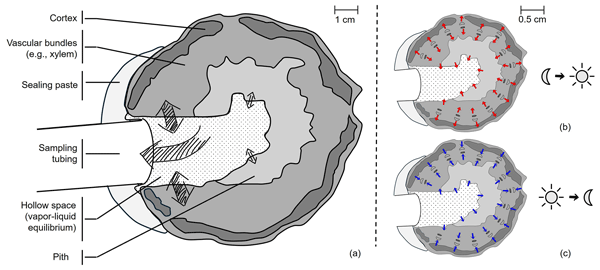
Youri Rothfuss, Samuel Le Gall, Nicolas Brüggemann, Sharmin Jahan, Mathieu Javaux, Julian Klaus, Harry Vereecken, and Dagmar van Dusschoten
Hydrol. Earth Syst. Sci., 30, 6095–6114, https://doi.org/10.5194/hess-30-6095-2026, https://doi.org/10.5194/hess-30-6095-2026, 2026
Short summary
Short summary
How plants cope with water stress is relevant when studying plant water sources in soil. We associated two techniques for measuring the content in water stable isotopes in the stem of sunflower plants and for locating where they take up water in a non-destructive manner. We highlight the role of stem water as a source of water to transpiration flux.
Nunzio Romano, Harry Vereecken, Heye R. Bogena, Giorgio Cassiani, Matteo Censini, Giovanna Armiento, Marco Proposito, Lorenzo De Silvestri, Eyal Ben Dor, Nicolas Francos, Christian Massari, János Mészáros, Tünde Takáts, Caterina Mazzitelli, Benedetto Sica, Ugo Lazzaro, and Paolo Nasta
Earth Syst. Sci. Data Discuss., https://doi.org/10.5194/essd-2026-725, https://doi.org/10.5194/essd-2026-725, 2026
Preprint under review for ESSD
Short summary
Short summary
Understanding how climate and land-use change affect water resources requires observations that connect processes from soils and vegetation to groundwater and streams. The Alento dataset is presented that integrates environmental monitoring with targeted field observations across multiple Critical Zone components and scales. The dataset offers a distinctive resource for studying water storage and movement, evaluating environmental models, and improving understanding of water-limited regions.
Zhilong Fan, Lu Li, Zhongwang Wei, Shupeng Zhang, Sisi Chen, Xingjie Lu, Wei Shangguan, Nan Wei, Hua Yuan, Pan Zhang, Jiaxin Tian, Jianhong Zhou, Baoxiang Pan, Wei Han, and Yongjiu Dai
EGUsphere, https://doi.org/10.5194/egusphere-2026-5358, https://doi.org/10.5194/egusphere-2026-5358, 2026
This preprint is open for discussion and under review for Geoscientific Model Development (GMD).
Short summary
Short summary
We developed a new land data assimilation framework based on deep generative models. Compared with existing methods, it better handles non-Gaussian model errors and noisy observations. Tests in both an idealized system and a realistic land data assimilation experiment showed more accurate and consistent estimates, demonstrating its potential for improving land-state estimation with complex land surface models.
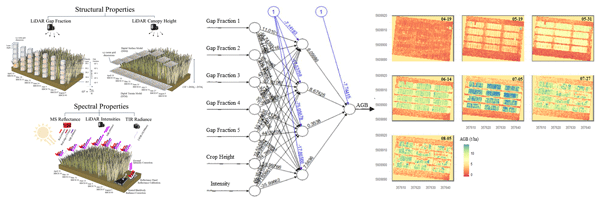
Jordan Steven Bates, Carsten Montzka, Rajina Bajracharya, Harry Vereecken, and François Jonard
Biogeosciences, 23, 6179–6210, https://doi.org/10.5194/bg-23-6179-2026, https://doi.org/10.5194/bg-23-6179-2026, 2026
Short summary
Short summary
This study compared drone-based laser, multispectral, and thermal sensors for estimating winter wheat biomass. Combining laser-derived crop structure and signal intensity improved predictions compared with crop height or multispectral data alone, while combining multispectral and thermal data with laser-derived features provided additional information during particular growth stages. The results highlight the potential of underutilized laser-derived features for crop biomass monitoring.
Matthias Cuntz, Stephan Thober, Anne Verhoef, Yijian Zeng, Aaron Boone, Agnès Ducharne, Sujan Koirala, David M. Lawrence, Philipp de Vrese, Carsten Montzka, Sonia I. Seneviratne, Harry Vereecken, Dani Or, Salma Tafasca, Naoki Mizukami, Rich Ellis, Patrick C. McGuire, and Lukas Gudmundsson
EGUsphere, https://doi.org/10.5194/egusphere-2026-4223, https://doi.org/10.5194/egusphere-2026-4223, 2026
Preprint archived
Short summary
Short summary
Land surface models (LSMs) are essential tools to analyze future climate change. Here we pushed state-of-the-art LSMs out of their comfort zone revealing hidden connections between processes encoded into the models. The LSMs reacted differently due to complex, sometimes counter-intuitive interactions of different water fluxes. We identified surface runoff and soil evaporation as the two main reasons behind model differences, which should be improved by using more mechanistic descriptions.
Xueqi Cao, Nan Wei, Hua Yuan, Shupeng Zhang, Zhongwang Wei, Xingjie Lu, Lu Li, and Yongjiu Dai
EGUsphere, https://doi.org/10.5194/egusphere-2026-4210, https://doi.org/10.5194/egusphere-2026-4210, 2026
Short summary
Short summary
Lakes influence weather by storing and releasing heat, but models often oversimplify how sunlight travels through water, snow, and ice. We improved how a model handles light entering a lake. Tests across nine diverse lakes show surface waters warm more, deep waters warm less, and under-ice heating is better captured. Benefits vary among lakes, so better light treatment must pair with better mixing and heat storage.
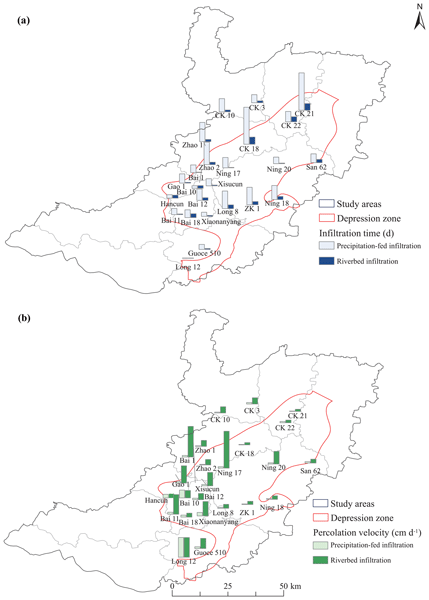
Shenghao Xu, Yonggen Zhang, Xinwang Li, Jianzhu Li, Wenhao Shi, Shaowei Lian, Lei Li, Lutz Weihermüller, and Marcel Schaap
Hydrol. Earth Syst. Sci., 30, 3763–3787, https://doi.org/10.5194/hess-30-3763-2026, https://doi.org/10.5194/hess-30-3763-2026, 2026
Short summary
Short summary
The North China Plain, home to over 300 million people, faces groundwater decline from irrigation, creating 80-meter-deep zones threatening supplies. We modeled rain and river infiltration using borehole and weather records to study restoration. Rain recharge averages 446 days, varying nearly 140 times: 10 days in sandy western foothills to 1395 days in clayey central/eastern plains. River recharge is faster at 91 days, suggesting flood basins could accelerate recovery for sustainable farming.
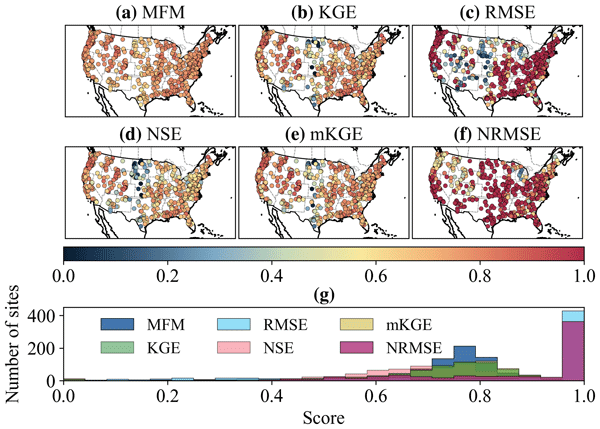
Zezhen Wu, Zhongwang Wei, Xingjie Lu, Nan Wei, Lu Li, Shupeng Zhang, Hua Yuan, Shaofeng Liu, and Yongjiu Dai
Hydrol. Earth Syst. Sci., 30, 2651–2666, https://doi.org/10.5194/hess-30-2651-2026, https://doi.org/10.5194/hess-30-2651-2026, 2026
Short summary
Short summary
Land surface models simulate exchanges at the Earth's surface. Traditional evaluation methods can be misleading because they may hide errors or be overly sensitive to outliers. We introduce the Model Fidelity Metric, which measures model performance in terms of accuracy, variability and distribution similarity. Tests with synthetic data and real streamflow observations show that this metric provides more stable and informative assessments of model performance.
Nedal Aqel, Jannis Groh, Lutz Weihermüller, Ralf Gründling, Andrea Carminati, and Peter Lehmann
Hydrol. Earth Syst. Sci., 30, 2523–2542, https://doi.org/10.5194/hess-30-2523-2026, https://doi.org/10.5194/hess-30-2523-2026, 2026
Short summary
Short summary
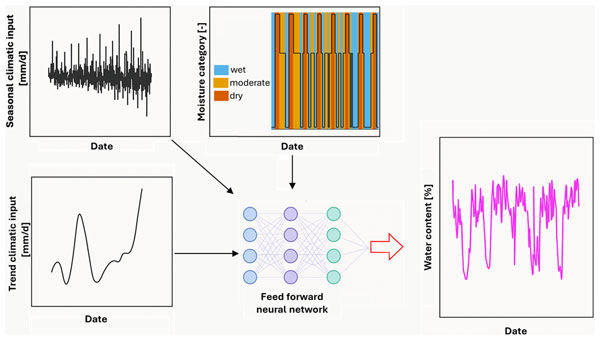
This study investigates how soils respond to major climatic disturbances, such as the extreme drought in Germany in 2018. Using long-term lysimeter observations and an artificial intelligence model, we show that persistent shifts in soil water dynamics indicate changes in hydraulic properties that may affect soil health, emphasizing the need for continuous monitoring under a changing climate.
Francois Rineau, Alexander H. Frank, Jannis Groh, Kristof Grosjean, Arnaud Legout, Daniil I. Kolokolov, Michel Mench, Maria Moreno-Druet, Benoît Pollier, Virmantas Povilaitis, Johanna Pausch, Thomas Puetz, Tjalling Rooks, Peter Schröder, Wieslaw Szulc, Beata Rutkowska, Xander Swinnen, Sofie Thijs, Harry Vereecken, Janna V. Veselovskaya, Mwahija Zubery, Renaldas Žydelis, and Evelin Loit
Biogeosciences, 23, 2261–2276, https://doi.org/10.5194/bg-23-2261-2026, https://doi.org/10.5194/bg-23-2261-2026, 2026
Short summary
Short summary
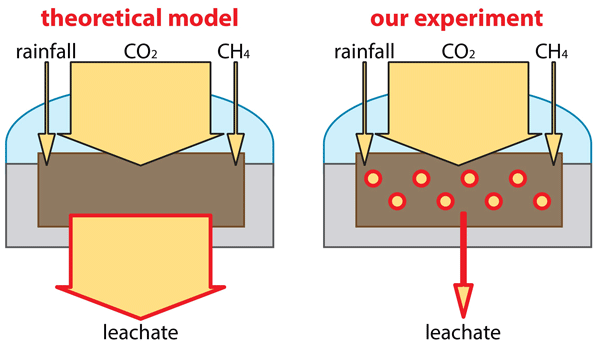
Enhanced weathering can significantly slow climate change by capturing CO2 and converting it into stable bicarbonate. In study, this method removed up to 1.5 tons of carbon per hectare in a single growing season. We had however very little evidence of bicarbonate formation. Our findings show that enhanced weathering facilitated instead carbon accrual via not only carbonate precipitation but also enhanced biogeochemical activities promoting additional carbon storage.
Wanyi Lin, Hua Yuan, Wenzong Dong, Zhuo Liu, Jiayi Xiang, Xinran Yu, Shupeng Zhang, Zhongwang Wei, and Yongjiu Dai
Earth Syst. Sci. Data Discuss., https://doi.org/10.5194/essd-2026-21, https://doi.org/10.5194/essd-2026-21, 2026
Manuscript not accepted for further review
Short summary
Short summary
Land surface models require information on vegetation composition and seasonal leaf area dynamics, yet long-term high-resolution datasets remain limited. We present a global dataset of plant functional types and corresponding leaf area index for 1985–2020, derived from multiple satellite observations. The dataset reduces uncertainties in vegetation representation and improves the description of phenological dynamics, supporting more realistic land surface and climate modeling.
Huiwen Zhang, Jianzhi Dong, Xiaoqi Kang, Lingna Wei, Ying Zhu, Rolf Hut, and Vincent Hoogelander
Earth Syst. Sci. Data Discuss., https://doi.org/10.5194/essd-2025-792, https://doi.org/10.5194/essd-2025-792, 2026
Manuscript not accepted for further review
Short summary
Short summary
We present SUPER v2, a 3-hourly, 0.1° precipitation dataset for global land areas covering 2000–2023. It merges satellite and reanalysis products using a statistical uncertainty-based framework that minimizes reliance on gauge observations, making it particularly suitable for data-sparse regions. Evaluation using over 5,000 independent gauges shows that SUPER v2 achieves higher accuracy than existing products, supporting global drought monitoring and hydrological modeling.
Heye R. Bogena, Frank Herrmann, Andreas Lücke, Thomas Pütz, and Harry Vereecken
Earth Syst. Sci. Data, 17, 6965–6992, https://doi.org/10.5194/essd-17-6965-2025, https://doi.org/10.5194/essd-17-6965-2025, 2025
Short summary
Short summary
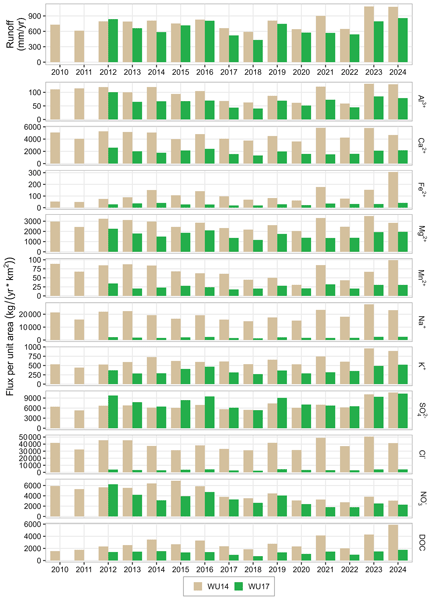
The Wüstebach catchment, which is part of the German TERENO (Terrestrial Environmental Observatories) network, was partially deforested in 2013 to promote natural forest regrowth. This data paper provides 16 years of hourly concentrations and fluxes of 11 solutes and runoff rates (2010–2024) from two runoff gauging stations, one affected by deforestation and one not, illustrating forest-management effects on solute transport processes at the catchment scale.
Joschka Neumann, Nicolas Brüggemann, Patrick Chaumet, Normen Hermes, Jan Huwer, Peter Kirchner, Werner Lesmeister, Wilhelm August Mertens, Thomas Pütz, Jörg Wolters, Harry Vereecken, and Ghaleb Natour
Geosci. Instrum. Method. Data Syst., 14, 353–377, https://doi.org/10.5194/gi-14-353-2025, https://doi.org/10.5194/gi-14-353-2025, 2025
Short summary
Short summary
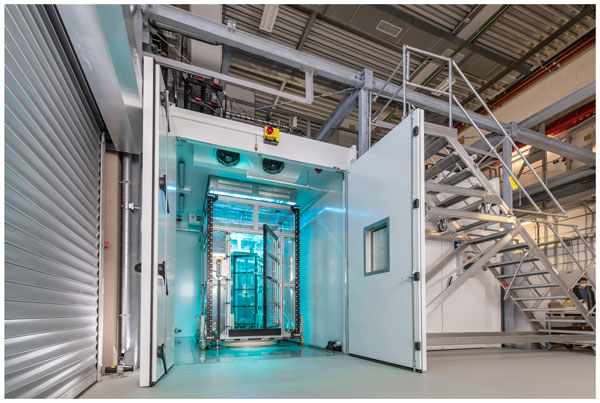
Climate change in combination with a steadily growing world population and a simultaneous decrease in agricultural land is one of the greatest global challenges facing mankind. In this context, Forschungszentrum Jülich established an "agricultural simulator" (AgraSim), which enables research into the effects of climate change on agricultural ecosystems and the optimization of agricultural cultivation and management strategies with the aid of combined experimental and numerical simulation.
Yaxin Liu, Yunting Xiao, Lehui Cui, Qinghao Guo, Yiyang Sun, Pingqing Fu, Cong-Qiang Liu, and Jialei Zhu
Biogeosciences, 22, 6445–6464, https://doi.org/10.5194/bg-22-6445-2025, https://doi.org/10.5194/bg-22-6445-2025, 2025
Short summary
Short summary
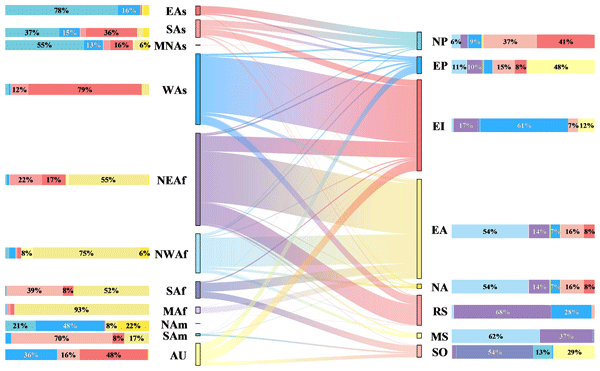
Dust carries iron deposits into the ocean, providing essential nutrients for the growth of marine phytoplankton, influencing their carbon uptake capacity. A model constrained by global datasets on dust iron content, ocean iron solubility, and dissolved iron concentrations was used to assess the contributions of 11 major dust sources to carbon uptake in 8 marine areas, enhancing understanding of the impact of global dust emissions on marine deposition and carbon cycle with decreased uncertainty.
Zhongwang Wei, Qingchen Xu, Fan Bai, Xionghui Xu, Zixin Wei, Wenzong Dong, Hongbin Liang, Nan Wei, Xingjie Lu, Lu Li, Shupeng Zhang, Hua Yuan, Laibao Liu, and Yongjiu Dai
Geosci. Model Dev., 18, 6517–6540, https://doi.org/10.5194/gmd-18-6517-2025, https://doi.org/10.5194/gmd-18-6517-2025, 2025
Short summary
Short summary
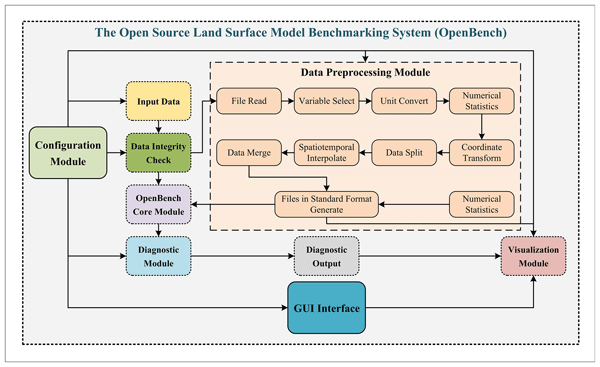
Land surface models are used for simulating how Earth's surface interacts with the atmosphere. As models grow more complex and detailed, researchers need better tools to evaluate their performance. OpenBench, a new software system that makes the evaluation process more comprehensive and efficient, stands out by incorporating various factors and working with data at any scale, enabling scientists to incorporate new types of models and measurements as our understanding of Earth's systems evolves.
Salar Saeed Dogar, Cosimo Brogi, Dave O'Leary, Ixchel M. Hernández-Ochoa, Marco Donat, Harry Vereecken, and Johan Alexander Huisman
SOIL, 11, 655–679, https://doi.org/10.5194/soil-11-655-2025, https://doi.org/10.5194/soil-11-655-2025, 2025
Short summary
Short summary
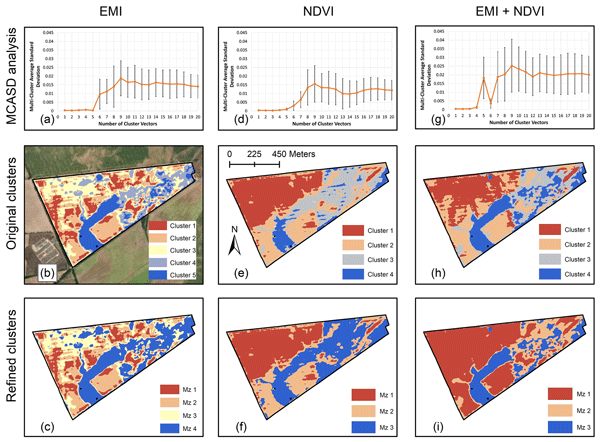
Farmers need precise information about their fields to use water, fertilizers, and other resources efficiently. This study combines underground soil data and satellite images to create detailed field maps using advanced machine learning. By testing different ways of processing data, we ensured a balanced and accurate approach. The results help farmers manage their land more effectively, leading to better harvests and more sustainable farming practices.
Jordan Bates, Carsten Montzka, Harry Vereecken, and François Jonard
EGUsphere, https://doi.org/10.5194/egusphere-2025-3919, https://doi.org/10.5194/egusphere-2025-3919, 2025
Short summary
Short summary
We used unmanned aerial vehicles (UAVs) with advanced cameras and laser scanning to measure crop water use and detect early signs of plant stress. By combining 3D views of crop structure with surface temperature and reflectance data, we improved estimates of water loss, especially in dense crops like wheat. This approach can help farmers use water more efficiently, respond quickly to stress, and support sustainable agriculture in a changing climate.
Chen Yang, Zitong Jia, Wenjie Xu, Zhongwang Wei, Xiaolang Zhang, Yiguang Zou, Jeffrey McDonnell, Laura Condon, Yongjiu Dai, and Reed Maxwell
Hydrol. Earth Syst. Sci., 29, 2201–2218, https://doi.org/10.5194/hess-29-2201-2025, https://doi.org/10.5194/hess-29-2201-2025, 2025
Short summary
Short summary
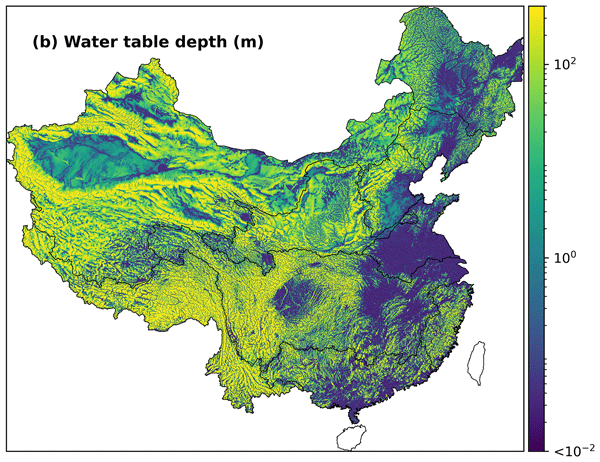
We developed the first high-resolution, integrated surface water–groundwater hydrologic model of the entirety of continental China using ParFlow. The model shows good performance in terms of streamflow and water table depth when compared to global data products and observations. It is essential for water resources management and decision-making in China within a consistent framework in the changing world. It also has significant implications for similar modeling in other places in the world.
Yanyou Wu, Mohamed Aboueldahab, and Congqiang Liu
EGUsphere, https://doi.org/10.5194/egusphere-2025-1764, https://doi.org/10.5194/egusphere-2025-1764, 2025
Preprint archived
Short summary
Short summary
The complex biochemical intricacies of modern photosynthesis may trace back to Earth's primordial geological processes, providing a transformative perspective on the continuum between inorganic and organic evolution. Origins of bicarbonate photolysis in photosynthetic O2 evolution may trace back to early abiotic O2-generating systems.
Xuemei Yang, Jie Zhang, Khan M. G. Mostofa, Mohammad Mohinuzzaman, H. Henry Teng, Nicola Senesi, Giorgio S. Senesi, Jie Yuan, Yu Liu, Si-Liang Li, Xiaodong Li, Baoli Wang, and Cong-Qiang Liu
Biogeosciences, 22, 1745–1765, https://doi.org/10.5194/bg-22-1745-2025, https://doi.org/10.5194/bg-22-1745-2025, 2025
Short summary
Short summary
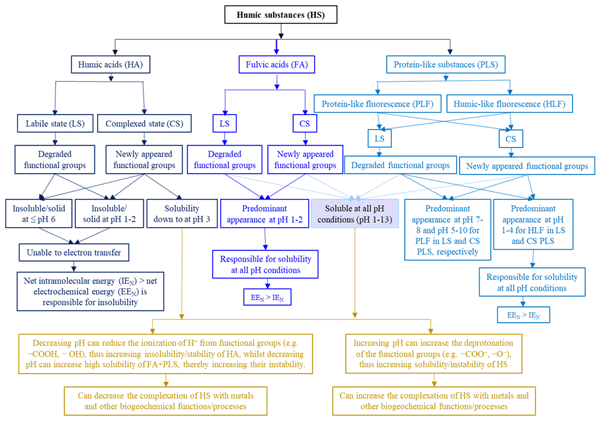
The solubility characteristics of soil humic acids (HAs), fulvic acids (FAs), and protein-like substances (PLSs) at varying pH levels remain unclear. The key findings include the following: HA solubility increases with increasing pH and decreases with decreasing pH; HApH6 and HApH1 contribute to 39.1–49.2% and 3.1–24.1% of dissolved organic carbon, respectively; and HApH2, FA, and PLSs are highly soluble at acidic pHs and are transported by ambient water. These issues are crucial for sustainable soil management.
Manuela S. Kaufmann, Anja Klotzsche, Jan van der Kruk, Anke Langen, Harry Vereecken, and Lutz Weihermüller
SOIL, 11, 267–285, https://doi.org/10.5194/soil-11-267-2025, https://doi.org/10.5194/soil-11-267-2025, 2025
Short summary
Short summary
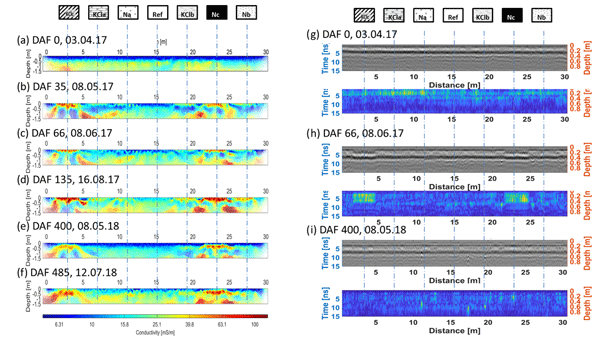
To use fertilizers more effectively, non-invasive geophysical methods can be used to understand nutrient distributions in the soil. We utilize, in a long-term field study, geophysical techniques to study soil properties and conditions under different fertilizer treatments. We compared the geophysical response with soil samples and soil sensor data. In particular, electromagnetic induction and electrical resistivity tomography were effective in monitoring changes in nitrate levels over time.
Bamidele Oloruntoba, Stefan Kollet, Carsten Montzka, Harry Vereecken, and Harrie-Jan Hendricks Franssen
Hydrol. Earth Syst. Sci., 29, 1659–1683, https://doi.org/10.5194/hess-29-1659-2025, https://doi.org/10.5194/hess-29-1659-2025, 2025
Short summary
Short summary
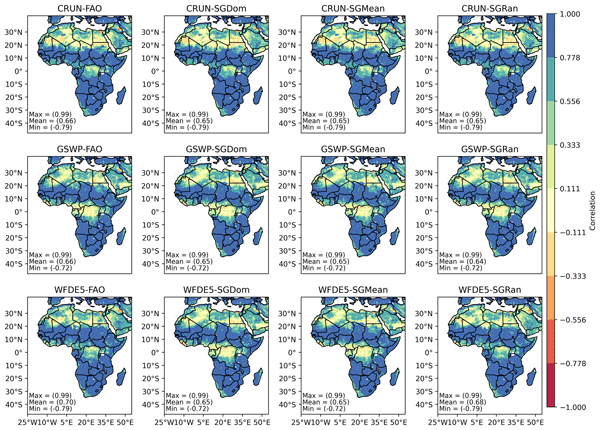
We studied how soil and weather data affect land model simulations over Africa. By combining soil data processed in different ways with weather data of varying time intervals, we found that weather inputs had a greater impact on water processes than soil data type. However, the way soil data were processed became crucial when paired with high-frequency weather inputs, showing that detailed weather data can improve local and regional predictions of how water moves and interacts with the land.
Zhichao Dong, Subba Rao Devineni, Xiaoli Fu, Zhanjie Xu, Mingyu Li, Pingqing Fu, Cong-Qiang Liu, and Chandra Mouli Pavuluri
EGUsphere, https://doi.org/10.5194/egusphere-2025-899, https://doi.org/10.5194/egusphere-2025-899, 2025
Preprint archived
Short summary
Short summary
We developed new method to detect and measure organosulfates in PM2.5. By synthesizing organosulfates and combining them with commercial standards, we improved detection accuracy. Testing air samples from Tianjin, China, we found wintertime levels of organosulfates were much higher than in other regions. Our results show how human actions directly impact air quality and provide a tool to track pollution sources. This work helps scientists understand and address harmful aerosols in environments.
Gaosong Shi, Wenye Sun, Wei Shangguan, Zhongwang Wei, Hua Yuan, Lu Li, Xiaolin Sun, Ye Zhang, Hongbin Liang, Danxi Li, Feini Huang, Qingliang Li, and Yongjiu Dai
Earth Syst. Sci. Data, 17, 517–543, https://doi.org/10.5194/essd-17-517-2025, https://doi.org/10.5194/essd-17-517-2025, 2025
Short summary
Short summary
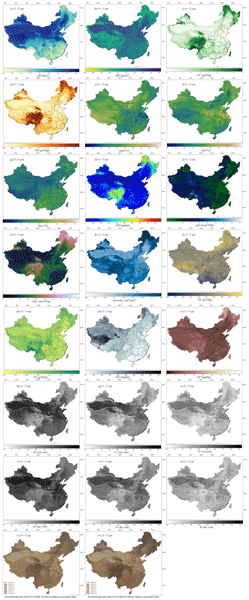
In this study, we developed the second version of China's high-resolution soil information grid using legacy soil samples and advanced machine learning. This version predicts over 20 soil properties at six depths, providing accurate soil variation maps across China. It outperforms previous versions and global products, offering valuable data for hydrological and ecological analyses and Earth system modelling, enhancing our understanding of soil roles in environmental processes.
Paolo Nasta, Günter Blöschl, Heye R. Bogena, Steffen Zacharias, Roland Baatz, Gabriëlle De Lannoy, Karsten H. Jensen, Salvatore Manfreda, Laurent Pfister, Ana M. Tarquis, Ilja van Meerveld, Marc Voltz, Yijian Zeng, William Kustas, Xin Li, Harry Vereecken, and Nunzio Romano
Hydrol. Earth Syst. Sci., 29, 465–483, https://doi.org/10.5194/hess-29-465-2025, https://doi.org/10.5194/hess-29-465-2025, 2025
Short summary
Short summary
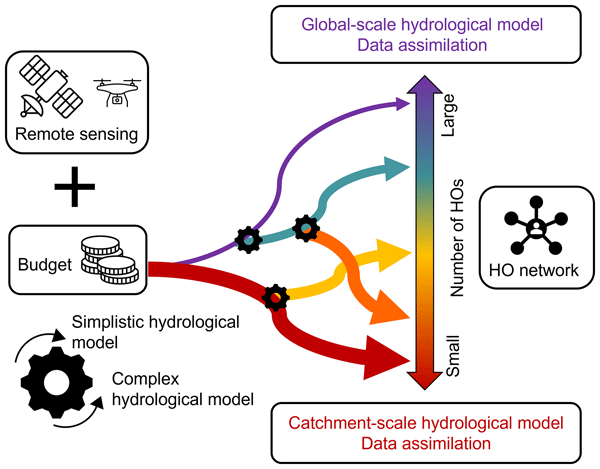
The Unsolved Problems in Hydrology (UPH) initiative has emphasized the need to establish networks of multi-decadal hydrological observatories to tackle catchment-scale challenges on a global scale. This opinion paper provocatively discusses two endmembers of possible future hydrological observatory (HO) networks for a given hypothesized community budget: a comprehensive set of moderately instrumented observatories or, alternatively, a small number of highly instrumented supersites.
Christian Poppe Terán, Bibi S. Naz, Harry Vereecken, Roland Baatz, Rosie A. Fisher, and Harrie-Jan Hendricks Franssen
Geosci. Model Dev., 18, 287–317, https://doi.org/10.5194/gmd-18-287-2025, https://doi.org/10.5194/gmd-18-287-2025, 2025
Short summary
Short summary
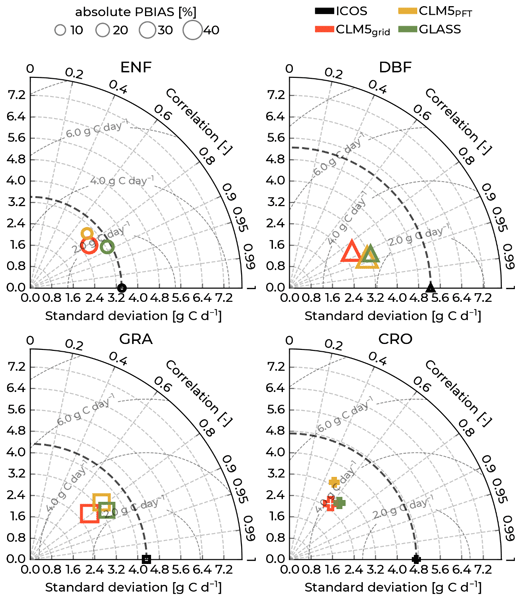
Carbon and water exchanges between the atmosphere and the land surface contribute to water resource availability and climate change mitigation. Land surface models, like the Community Land Model version 5 (CLM5), simulate these. This study finds that CLM5 and other data sets underestimate the magnitudes of and variability in carbon and water exchanges for the most abundant plant functional types compared to observations. It provides essential insights for further research into these processes.
Jiahao Shi, Hua Yuan, Wanyi Lin, Wenzong Dong, Hongbin Liang, Zhuo Liu, Jianxin Zeng, Haolin Zhang, Nan Wei, Zhongwang Wei, Shupeng Zhang, Shaofeng Liu, Xingjie Lu, and Yongjiu Dai
Earth Syst. Sci. Data, 17, 117–134, https://doi.org/10.5194/essd-17-117-2025, https://doi.org/10.5194/essd-17-117-2025, 2025
Short summary
Short summary
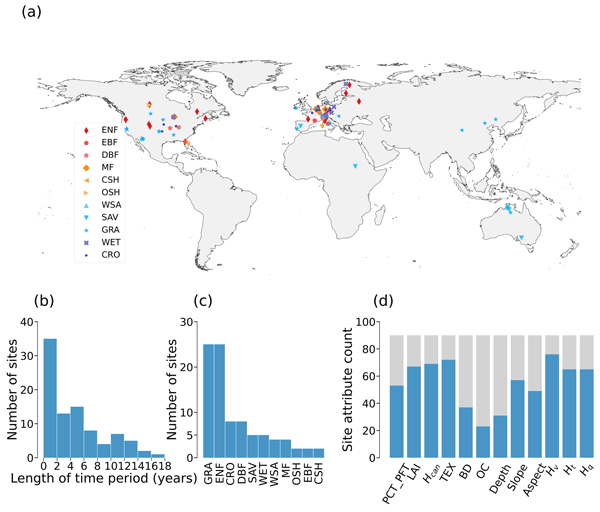
Flux tower data are widely recognized as benchmarking data for land surface models, but insufficient emphasis on and deficiency in site attribute data limits their true value. We collect site-observed vegetation, soil, and topography data from various sources. The final dataset encompasses 90 sites globally, with relatively complete site attribute data and high-quality flux validation data. This work has provided more reliable site attribute data, benefiting land surface model development.
Liqing Peng, Justin Sheffield, Zhongwang Wei, Michael Ek, and Eric F. Wood
Earth Syst. Dynam., 15, 1277–1300, https://doi.org/10.5194/esd-15-1277-2024, https://doi.org/10.5194/esd-15-1277-2024, 2024
Short summary
Short summary
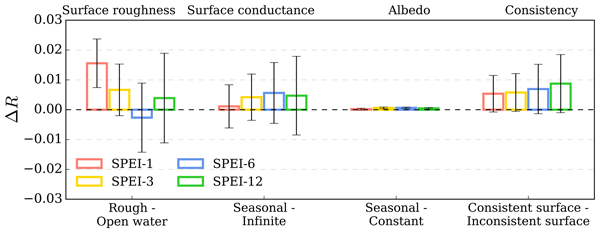
Integrating evaporative demand into drought indicators is effective, but the choice of method and the effectiveness of surface features remain undocumented. We evaluate various methods and surface features for predicting soil moisture dynamics. Using minimal ancillary information alongside meteorological and vegetation data, we develop a simple land-cover-based method that improves soil moisture drought predictions, especially in forests, showing promise for better real-time drought forecasting.
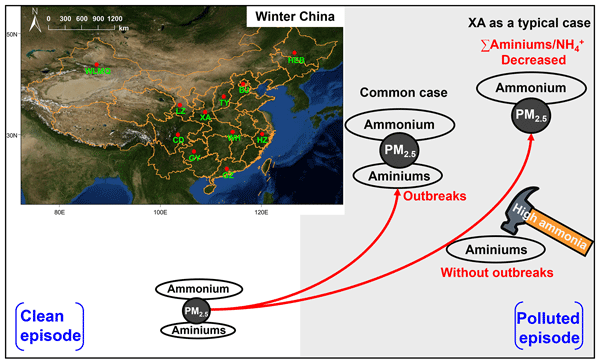
Yu Xu, Tang Liu, Yi-Jia Ma, Qi-Bin Sun, Hong-Wei Xiao, Hao Xiao, Hua-Yun Xiao, and Cong-Qiang Liu
Atmos. Chem. Phys., 24, 10531–10542, https://doi.org/10.5194/acp-24-10531-2024, https://doi.org/10.5194/acp-24-10531-2024, 2024
Short summary
Short summary
This study investigates the characteristics of aminiums and ammonium in PM2.5 on clean and polluted winter days in 11 Chinese cities, highlighting the possibility of the competitive uptake of ammonia versus amines on acidic aerosols or the displacement of aminiums by ammonia under high-ammonia conditions. The overall results deepen the understanding of the spatiotemporal differences in aminium characteristics and formation in China.
Ying Zhao, Mehdi Rahmati, Harry Vereecken, and Dani Or
Hydrol. Earth Syst. Sci., 28, 4059–4063, https://doi.org/10.5194/hess-28-4059-2024, https://doi.org/10.5194/hess-28-4059-2024, 2024
Short summary
Short summary
Gao et al. (2023) question the importance of soil in hydrology, sparking debate. We acknowledge some valid points but critique their broad, unsubstantiated views on soil's role. Our response highlights three key areas: (1) the false divide between ecosystem-centric and soil-centric approaches, (2) the vital yet varied impact of soil properties, and (3) the call for a scale-aware framework. We aim to unify these perspectives, enhancing hydrology's comprehensive understanding.
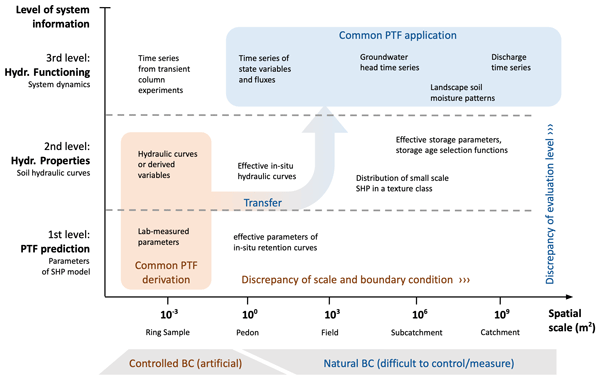
Tobias Karl David Weber, Lutz Weihermüller, Attila Nemes, Michel Bechtold, Aurore Degré, Efstathios Diamantopoulos, Simone Fatichi, Vilim Filipović, Surya Gupta, Tobias L. Hohenbrink, Daniel R. Hirmas, Conrad Jackisch, Quirijn de Jong van Lier, John Koestel, Peter Lehmann, Toby R. Marthews, Budiman Minasny, Holger Pagel, Martine van der Ploeg, Shahab Aldin Shojaeezadeh, Simon Fiil Svane, Brigitta Szabó, Harry Vereecken, Anne Verhoef, Michael Young, Yijian Zeng, Yonggen Zhang, and Sara Bonetti
Hydrol. Earth Syst. Sci., 28, 3391–3433, https://doi.org/10.5194/hess-28-3391-2024, https://doi.org/10.5194/hess-28-3391-2024, 2024
Short summary
Short summary
Pedotransfer functions (PTFs) are used to predict parameters of models describing the hydraulic properties of soils. The appropriateness of these predictions critically relies on the nature of the datasets for training the PTFs and the physical comprehensiveness of the models. This roadmap paper is addressed to PTF developers and users and critically reflects the utility and future of PTFs. To this end, we present a manifesto aiming at a paradigm shift in PTF research.
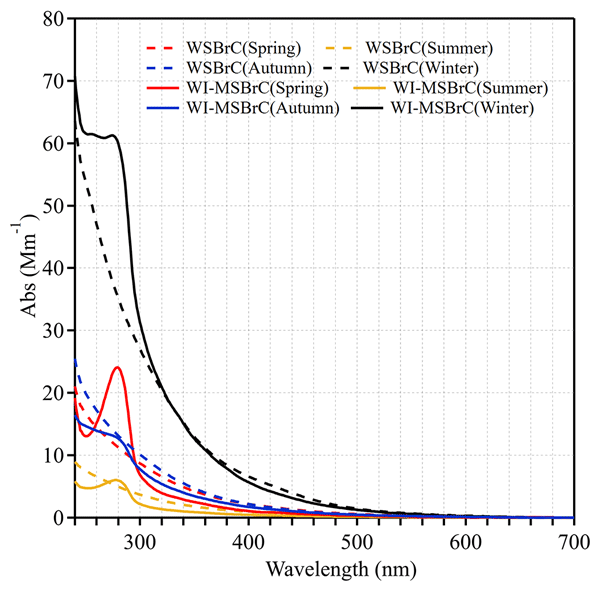
Zhichao Dong, Chandra Mouli Pavuluri, Peisen Li, Zhanjie Xu, Junjun Deng, Xueyan Zhao, Xiaomai Zhao, Pingqing Fu, and Cong-Qiang Liu
Atmos. Chem. Phys., 24, 5887–5905, https://doi.org/10.5194/acp-24-5887-2024, https://doi.org/10.5194/acp-24-5887-2024, 2024
Short summary
Short summary
Comprehensive study of optical properties of brown carbon (BrC) in fine aerosols from Tianjin, China, implied that biological emissions are major sources of BrC in summer, whereas fossil fuel combustion and biomass burning emissions are in cold periods. The direct radiation absorption caused by BrC in short wavelengths contributed about 40 % to that caused by BrC in 300–700 nm. Water-insoluble but methanol-soluble BrC contains more protein-like chromophores (PLOM) than that of water-soluble BrC.
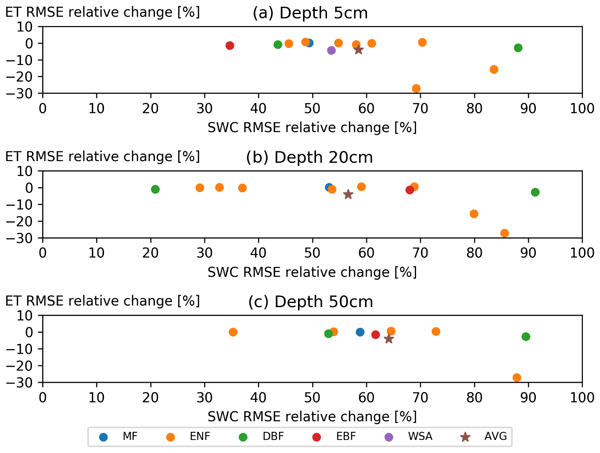
Lukas Strebel, Heye Bogena, Harry Vereecken, Mie Andreasen, Sergio Aranda-Barranco, and Harrie-Jan Hendricks Franssen
Hydrol. Earth Syst. Sci., 28, 1001–1026, https://doi.org/10.5194/hess-28-1001-2024, https://doi.org/10.5194/hess-28-1001-2024, 2024
Short summary
Short summary
We present results from using soil water content measurements from 13 European forest sites in a state-of-the-art land surface model. We use data assimilation to perform a combination of observed and modeled soil water content and show the improvements in the representation of soil water content. However, we also look at the impact on evapotranspiration and see no corresponding improvements.
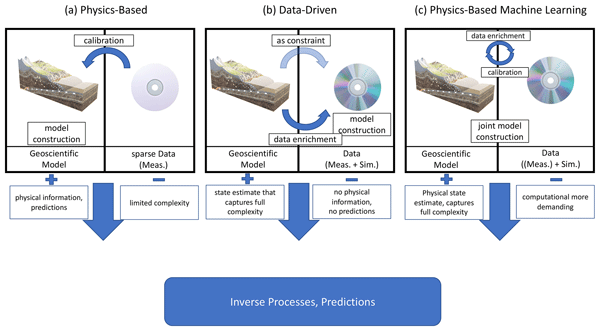
Denise Degen, Daniel Caviedes Voullième, Susanne Buiter, Harrie-Jan Hendricks Franssen, Harry Vereecken, Ana González-Nicolás, and Florian Wellmann
Geosci. Model Dev., 16, 7375–7409, https://doi.org/10.5194/gmd-16-7375-2023, https://doi.org/10.5194/gmd-16-7375-2023, 2023
Short summary
Short summary
In geosciences, we often use simulations based on physical laws. These simulations can be computationally expensive, which is a problem if simulations must be performed many times (e.g., to add error bounds). We show how a novel machine learning method helps to reduce simulation time. In comparison to other approaches, which typically only look at the output of a simulation, the method considers physical laws in the simulation itself. The method provides reliable results faster than standard.
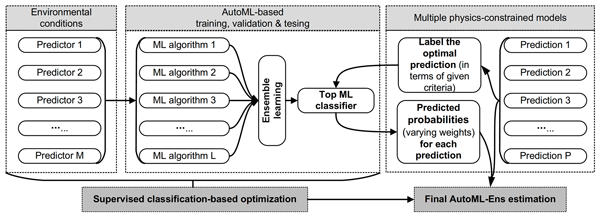
Hao Chen, Tiejun Wang, Yonggen Zhang, Yun Bai, and Xi Chen
Geosci. Model Dev., 16, 5685–5701, https://doi.org/10.5194/gmd-16-5685-2023, https://doi.org/10.5194/gmd-16-5685-2023, 2023
Short summary
Short summary
Effectively assembling multiple models for approaching a benchmark solution remains a long-standing issue for various geoscience domains. We here propose an automated machine learning-assisted ensemble framework (AutoML-Ens) that attempts to resolve this challenge. Results demonstrate the great potential of AutoML-Ens for improving estimations due to its two unique features, i.e., assigning dynamic weights for candidate models and taking full advantage of AutoML-assisted workflow.
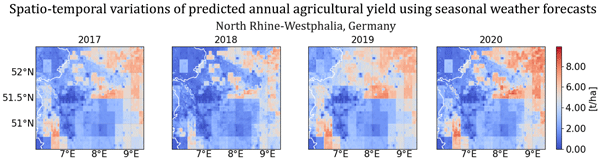
Theresa Boas, Heye Reemt Bogena, Dongryeol Ryu, Harry Vereecken, Andrew Western, and Harrie-Jan Hendricks Franssen
Hydrol. Earth Syst. Sci., 27, 3143–3167, https://doi.org/10.5194/hess-27-3143-2023, https://doi.org/10.5194/hess-27-3143-2023, 2023
Short summary
Short summary
In our study, we tested the utility and skill of a state-of-the-art forecasting product for the prediction of regional crop productivity using a land surface model. Our results illustrate the potential value and skill of combining seasonal forecasts with modelling applications to generate variables of interest for stakeholders, such as annual crop yield for specific cash crops and regions. In addition, this study provides useful insights for future technical model evaluations and improvements.
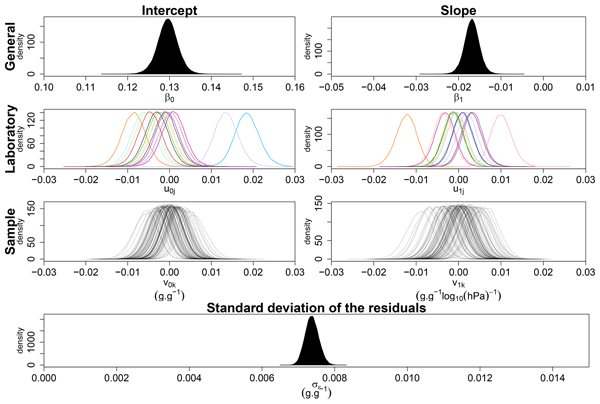
Benjamin Guillaume, Hanane Aroui Boukbida, Gerben Bakker, Andrzej Bieganowski, Yves Brostaux, Wim Cornelis, Wolfgang Durner, Christian Hartmann, Bo V. Iversen, Mathieu Javaux, Joachim Ingwersen, Krzysztof Lamorski, Axel Lamparter, András Makó, Ana María Mingot Soriano, Ingmar Messing, Attila Nemes, Alexandre Pomes-Bordedebat, Martine van der Ploeg, Tobias Karl David Weber, Lutz Weihermüller, Joost Wellens, and Aurore Degré
SOIL, 9, 365–379, https://doi.org/10.5194/soil-9-365-2023, https://doi.org/10.5194/soil-9-365-2023, 2023
Short summary
Short summary
Measurements of soil water retention properties play an important role in a variety of societal issues that depend on soil water conditions. However, there is little concern about the consistency of these measurements between laboratories. We conducted an interlaboratory comparison to assess the reproducibility of the measurement of the soil water retention curve. Results highlight the need to harmonize and standardize procedures to improve the description of unsaturated processes in soils.
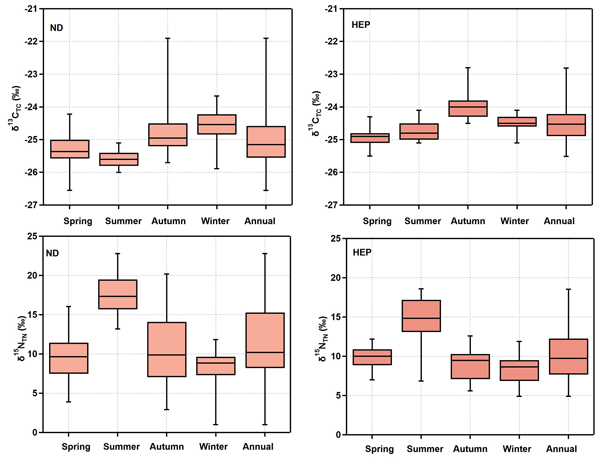
Zhichao Dong, Chandra Mouli Pavuluri, Zhanjie Xu, Yu Wang, Peisen Li, Pingqing Fu, and Cong-Qiang Liu
Atmos. Chem. Phys., 23, 2119–2143, https://doi.org/10.5194/acp-23-2119-2023, https://doi.org/10.5194/acp-23-2119-2023, 2023
Short summary
Short summary
This study has provided comprehensive baseline data of carbonaceous and inorganic aerosols as well as their isotope ratios in the Tianjin region, North China, found that Tianjin aerosols were derived from coal combustion, biomass burning and photochemical reactions of VOCs, and also implied that the Tianjin aerosols were more aged during long-range atmospheric transport in summer via carbonaceous and isotope data analysis.
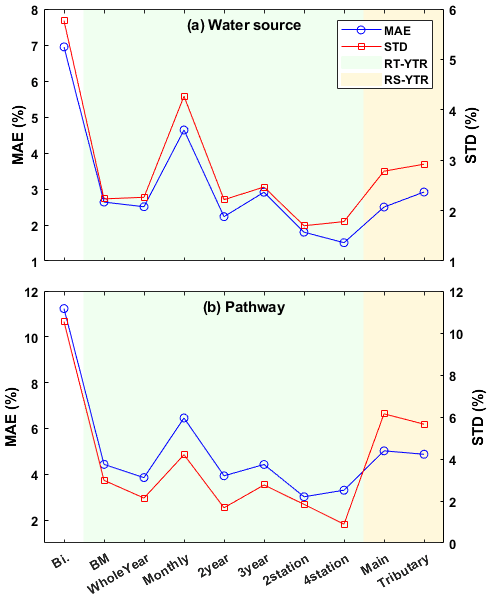
Yi Nan, Zhihua He, Fuqiang Tian, Zhongwang Wei, and Lide Tian
Hydrol. Earth Syst. Sci., 26, 4147–4167, https://doi.org/10.5194/hess-26-4147-2022, https://doi.org/10.5194/hess-26-4147-2022, 2022
Short summary
Short summary
Tracer-aided hydrological models are useful tool to reduce uncertainty of hydrological modeling in cold basins, but there is little guidance on the sampling strategy for isotope analysis, which is important for large mountainous basins. This study evaluated the reliance of the tracer-aided modeling performance on the availability of isotope data in the Yarlung Tsangpo river basin, and provides implications for collecting water isotope data for running tracer-aided hydrological models.
Jordan Bates, Francois Jonard, Rajina Bajracharya, Harry Vereecken, and Carsten Montzka
AGILE GIScience Ser., 3, 23, https://doi.org/10.5194/agile-giss-3-23-2022, https://doi.org/10.5194/agile-giss-3-23-2022, 2022
Wei Qu, Heye Bogena, Christoph Schüth, Harry Vereecken, Zongmei Li, and Stephan Schulz
Geosci. Model Dev. Discuss., https://doi.org/10.5194/gmd-2022-131, https://doi.org/10.5194/gmd-2022-131, 2022
Publication in GMD not foreseen
Short summary
Short summary
We applied the global sensitivity analysis LH-OAT to the integrated hydrology model ParFlow-CLM to investigate the sensitivity of the 12 parameters for different scenarios. And we found that the general patterns of the parameter sensitivities were consistent, however, for some parameters a significantly larger span of the sensitivities was observed, especially for the higher slope and in subarctic climatic scenarios.
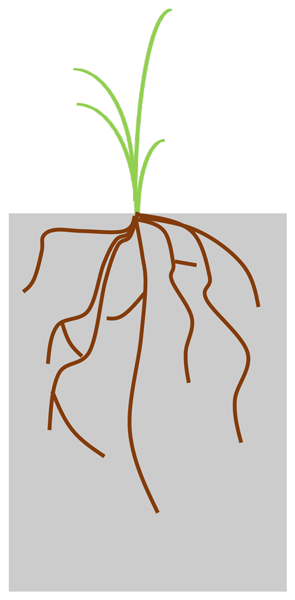
Nicholas Jarvis, Jannis Groh, Elisabet Lewan, Katharina H. E. Meurer, Walter Durka, Cornelia Baessler, Thomas Pütz, Elvin Rufullayev, and Harry Vereecken
Hydrol. Earth Syst. Sci., 26, 2277–2299, https://doi.org/10.5194/hess-26-2277-2022, https://doi.org/10.5194/hess-26-2277-2022, 2022
Short summary
Short summary
We apply an eco-hydrological model to data on soil water balance and grassland growth obtained at two sites with contrasting climates. Our results show that the grassland in the drier climate had adapted by developing deeper roots, which maintained water supply to the plants in the face of severe drought. Our study emphasizes the importance of considering such plastic responses of plant traits to environmental stress in the modelling of soil water balance and plant growth under climate change.
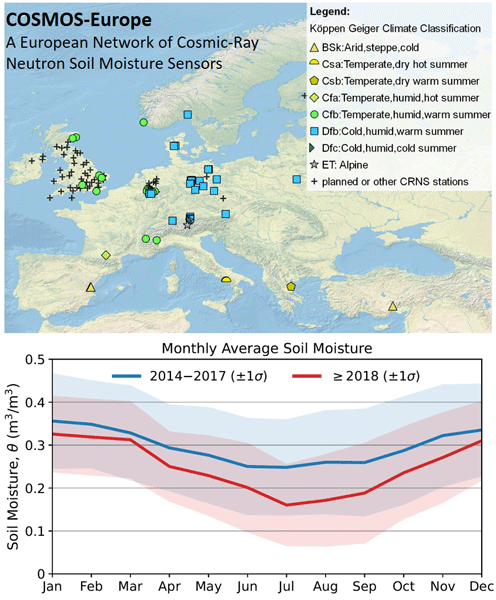
Heye Reemt Bogena, Martin Schrön, Jannis Jakobi, Patrizia Ney, Steffen Zacharias, Mie Andreasen, Roland Baatz, David Boorman, Mustafa Berk Duygu, Miguel Angel Eguibar-Galán, Benjamin Fersch, Till Franke, Josie Geris, María González Sanchis, Yann Kerr, Tobias Korf, Zalalem Mengistu, Arnaud Mialon, Paolo Nasta, Jerzy Nitychoruk, Vassilios Pisinaras, Daniel Rasche, Rafael Rosolem, Hami Said, Paul Schattan, Marek Zreda, Stefan Achleitner, Eduardo Albentosa-Hernández, Zuhal Akyürek, Theresa Blume, Antonio del Campo, Davide Canone, Katya Dimitrova-Petrova, John G. Evans, Stefano Ferraris, Félix Frances, Davide Gisolo, Andreas Güntner, Frank Herrmann, Joost Iwema, Karsten H. Jensen, Harald Kunstmann, Antonio Lidón, Majken Caroline Looms, Sascha Oswald, Andreas Panagopoulos, Amol Patil, Daniel Power, Corinna Rebmann, Nunzio Romano, Lena Scheiffele, Sonia Seneviratne, Georg Weltin, and Harry Vereecken
Earth Syst. Sci. Data, 14, 1125–1151, https://doi.org/10.5194/essd-14-1125-2022, https://doi.org/10.5194/essd-14-1125-2022, 2022
Short summary
Short summary
Monitoring of increasingly frequent droughts is a prerequisite for climate adaptation strategies. This data paper presents long-term soil moisture measurements recorded by 66 cosmic-ray neutron sensors (CRNS) operated by 24 institutions and distributed across major climate zones in Europe. Data processing followed harmonized protocols and state-of-the-art methods to generate consistent and comparable soil moisture products and to facilitate continental-scale analysis of hydrological extremes.
Lukas Strebel, Heye R. Bogena, Harry Vereecken, and Harrie-Jan Hendricks Franssen
Geosci. Model Dev., 15, 395–411, https://doi.org/10.5194/gmd-15-395-2022, https://doi.org/10.5194/gmd-15-395-2022, 2022
Short summary
Short summary
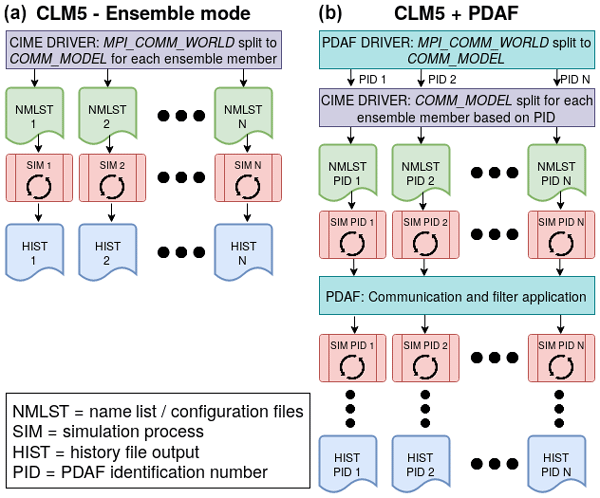
We present the technical coupling between a land surface model (CLM5) and the Parallel Data Assimilation Framework (PDAF). This coupling enables measurement data to update simulated model states and parameters in a statistically optimal way. We demonstrate the viability of the model framework using an application in a forested catchment where the inclusion of soil water measurements significantly improved the simulation quality.
Veronika Forstner, Jannis Groh, Matevz Vremec, Markus Herndl, Harry Vereecken, Horst H. Gerke, Steffen Birk, and Thomas Pütz
Hydrol. Earth Syst. Sci., 25, 6087–6106, https://doi.org/10.5194/hess-25-6087-2021, https://doi.org/10.5194/hess-25-6087-2021, 2021
Short summary
Short summary
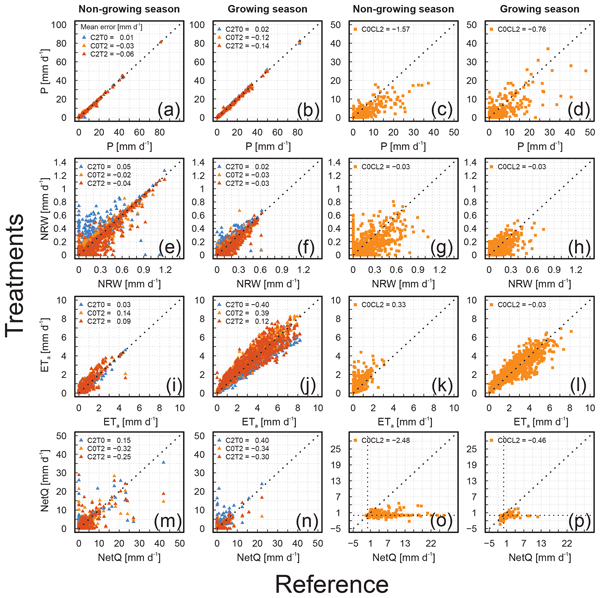
Lysimeter-based manipulative and observational experiments were used to identify responses of water fluxes and aboveground biomass (AGB) to climatic change in permanent grassland. Under energy-limited conditions, elevated temperature actual evapotranspiration (ETa) increased, while seepage, dew, and AGB decreased. Elevated CO2 mitigated the effect on ETa. Under water limitation, elevated temperature resulted in reduced ETa, and AGB was negatively correlated with an increasing aridity.
Yafei Huang, Jonas Weis, Harry Vereecken, and Harrie-Jan Hendricks Franssen
Hydrol. Earth Syst. Sci. Discuss., https://doi.org/10.5194/hess-2021-569, https://doi.org/10.5194/hess-2021-569, 2021
Manuscript not accepted for further review
Short summary
Short summary
Trends in agricultural droughts cannot be easily deduced from measurements. Here trends in agricultural droughts over 31 German and Dutch sites were calculated with model simulations and long-term observed meteorological data as input. We found that agricultural droughts are increasing although precipitation hardly decreases. The increase is driven by increase in evapotranspiration. The year 2018 was for half of the sites the year with the most extreme agricultural drought in the last 55 years.
Cited articles
Afshar, M. H., Yilmaz, M. T., and Crow, W. T.: Impact of Rescaling Approaches in Simple Fusion of Soil Moisture Products, Water Resour. Res., 55, 7804–7825, https://doi.org/10.1029/2019WR025111, 2019.
Almendra-Martín, L., Martínez-Fernández, J., Piles, M., González-Zamora, Á., Benito-Verdugo, P., and Gaona, J.: Influence of atmospheric patterns on soil moisture dynamics in Europe, Sci. Total Environ., 846, 157537, https://doi.org/10.1016/j.scitotenv.2022.157537, 2022.
Babaeian, E., Sadeghi, M., Franz, T. E., Jones, S., and Tuller, M.: Mapping soil moisture with the OPtical TRApezoid Model (OPTRAM) based on long-term MODIS observations, Remote Sens. Environ., 211, 425–440, https://doi.org/10.1016/j.rse.2018.04.029, 2018.
Babaeian, E., Sadeghi, M., Jones, S. B., Montzka, C., Vereecken, H., and Tuller, M.: Ground, Proximal, and Satellite Remote Sensing of Soil Moisture, Rev. Geophys., 57, 530–616, https://doi.org/10.1029/2018RG000618, 2019.
Balsamo, G., Albergel, C., Beljaars, A., Boussetta, S., Brun, E., Cloke, H., Dee, D., Dutra, E., Muñoz-Sabater, J., Pappenberger, F., de Rosnay, P., Stockdale, T., and Vitart, F.: ERA-Interim/Land: a global land surface reanalysis data set, Hydrol. Earth Syst. Sci., 19, 389–407, https://doi.org/10.5194/hess-19-389-2015, 2015.
Bauer-Marschallinger, B., Freeman, V., Cao, S., Paulik, C., Schaufler, S., Stachl, T., Modanesi, S., Massari, C., Ciabatta, L., Brocca, L., and Wagner, W.: Toward Global Soil Moisture Monitoring With Sentinel-1: Harnessing Assets and Overcoming Obstacles, IEEE Trans. Geosci. Remote Sens., 57, 520–539, https://doi.org/10.1109/TGRS.2018.2858004, 2019.
Beaudoing, H. and Rodell, M.: GLDAS (Global Land Data Assimilation System) Version 2.1 README, NASA Goddard Earth Sciences Data and Information Services Center (GES DISC), Greenbelt, MD, USA, https://hydro1.gesdisc.eosdis.nasa.gov/data/GLDAS/GLDAS_NOAH025_3H.2.1/doc/README_GLDAS2.pdf (last access: 4 February 2026), 2020.
Beck, H. E., Zimmermann, N. E., McVicar, T. R., Vergopolan, N., Berg, A., and Wood, E. F.: Present and future Köppen-Geiger climate classification maps at 1-km resolution, Sci. Data, 5, 180214, https://doi.org/10.1038/sdata.2018.214, 2018.
Bogena, H. R., Schrön, M., Jakobi, J., Ney, P., Zacharias, S., Andreasen, M., Baatz, R., Boorman, D., Duygu, M. B., Eguibar-Galán, M. A., Fersch, B., Franke, T., Geris, J., González Sanchis, M., Kerr, Y., Korf, T., Mengistu, Z., Mialon, A., Nasta, P., Nitychoruk, J., Pisinaras, V., Rasche, D., Rosolem, R., Said, H., Schattan, P., Zreda, M., Achleitner, S., Albentosa-Hernández, E., Akyürek, Z., Blume, T., del Campo, A., Canone, D., Dimitrova-Petrova, K., Evans, J. G., Ferraris, S., Frances, F., Gisolo, D., Güntner, A., Herrmann, F., Iwema, J., Jensen, K. H., Kunstmann, H., Lidón, A., Looms, M. C., Oswald, S., Panagopoulos, A., Patil, A., Power, D., Rebmann, C., Romano, N., Scheiffele, L., Seneviratne, S., Weltin, G., and Vereecken, H.: COSMOS-Europe: a European network of cosmic-ray neutron soil moisture sensors, Earth Syst. Sci. Data, 14, 1125–1151, https://doi.org/10.5194/essd-14-1125-2022, 2022.
Cantoni, E., Tramblay, Y., Grimaldi, S., Salamon, P., Dakhlaoui, H., Dezetter, A., and Thiemig, V.: Hydrological performance of the ERA5 reanalysis for flood modeling in Tunisia with the LISFLOOD and GR4J models, J. Hydrol.-Reg. Stud., 42, 101169, https://doi.org/10.1016/j.ejrh.2022.101169, 2022.
Colliander, A., Jackson, T. J., Bindlish, R., Chan, S., Das, N., Kim, S. B., Cosh, M. H., Dunbar, R. S., Dang, L., Pashaian, L., Asanuma, J., Aida, K., Berg, A., Rowlandson, T., Bosch, D., Caldwell, T., Caylor, K., Goodrich, D., Al Jassar, H., Lopez-Baeza, E., Martínez-Fernández, J., González-Zamora, A., Livingston, S., McNairn, H., Pacheco, A., Moghaddam, M., Montzka, C., Notarnicola, C., Niedrist, G., Pellarin, T., Prueger, J., Pulliainen, J., Rautiainen, K., Ramos, J., Seyfried, M., Starks, P., Su, Z., Zeng, Y., Van Der Velde, R., Thibeault, M., Dorigo, W., Vreugdenhil, M., Walker, J. P., Wu, X., Monerris, A., O'Neill, P. E., Entekhabi, D., Njoku, E. G., and Yueh, S.: Validation of SMAP surface soil moisture products with core validation sites, Remote Sens. Environ., 191, 215–231, https://doi.org/10.1016/j.rse.2017.01.021, 2017.
Colliander, A., Jackson, T. J., Chan, S. K., O'Neill, P., Bindlish, R., Cosh, M. H., Caldwell, T., Walker, J. P., Berg, A., McNairn, H., Thibeault, M., Martínez-Fernández, J., Jensen, K. H., Asanuma, J., Seyfried, M. S., Bosch, D. D., Starks, P. J., Holifield Collins, C., Prueger, J. H., Su, Z., Lopez-Baeza, E., and Yueh, S. H.: An assessment of the differences between spatial resolution and grid size for the SMAP enhanced soil moisture product over homogeneous sites, Remote Sens. Environ., 207, 65–70, https://doi.org/10.1016/j.rse.2018.02.006, 2018.
Crow, W. T., Berg, A. A., Cosh, M. H., Loew, A., Mohanty, B. P., Panciera, R., de Rosnay, P., Ryu, D., and Walker, J. P.: Upscaling sparse ground-based soil moisture observations for the validation of coarse-resolution satellite soil moisture products, Rev. Geophys., 50, https://doi.org/10.1029/2011RG000372, 2012.
Crow, W. T., Lei, F., Hain, C., Anderson, M. C., Scott, R. L., Billesbach, D., and Arkebauer, T.: Robust estimates of soil moisture and latent heat flux coupling strength obtained from triple collocation, Geophys. Res. Lett., 42, 8415–8423, https://doi.org/10.1002/2015GL065929, 2015.
Dalla Torre, D., Di Marco, N., Menapace, A., Avesani, D., Righetti, M., and Majone, B.: Suitability of ERA5-Land reanalysis dataset for hydrological modelling in the Alpine region, J. Hydrol.-Reg. Stud., 52, 101718, https://doi.org/10.1016/j.ejrh.2024.101718, 2024.
Di Virgilio, G., Ji, F., Tam, E., Evans, J. P., Kala, J., Andrys, J., Thomas, C., Choudhury, D., Rocha, C., Li, Y., and Riley, M. L.: Evaluation of CORDEX ERA5-forced NARCliM2.0 regional climate models over Australia using the Weather Research and Forecasting (WRF) model version 4.1.2, Geosci. Model Dev., 18, 703–724, https://doi.org/10.5194/gmd-18-703-2025, 2025.
Dorigo, W., Himmelbauer, I., Aberer, D., Schremmer, L., Petrakovic, I., Zappa, L., Preimesberger, W., Xaver, A., Annor, F., Ardö, J., Baldocchi, D., Bitelli, M., Blöschl, G., Bogena, H., Brocca, L., Calvet, J.-C., Camarero, J. J., Capello, G., Choi, M., Cosh, M. C., van de Giesen, N., Hajdu, I., Ikonen, J., Jensen, K. H., Kanniah, K. D., de Kat, I., Kirchengast, G., Kumar Rai, P., Kyrouac, J., Larson, K., Liu, S., Loew, A., Moghaddam, M., Martínez Fernández, J., Mattar Bader, C., Morbidelli, R., Musial, J. P., Osenga, E., Palecki, M. A., Pellarin, T., Petropoulos, G. P., Pfeil, I., Powers, J., Robock, A., Rüdiger, C., Rummel, U., Strobel, M., Su, Z., Sullivan, R., Tagesson, T., Varlagin, A., Vreugdenhil, M., Walker, J., Wen, J., Wenger, F., Wigneron, J. P., Woods, M., Yang, K., Zeng, Y., Zhang, X., Zreda, M., Dietrich, S., Gruber, A., van Oevelen, P., Wagner, W., Scipal, K., Drusch, M., and Sabia, R.: The International Soil Moisture Network: serving Earth system science for over a decade, Hydrol. Earth Syst. Sci., 25, 5749–5804, https://doi.org/10.5194/hess-25-5749-2021, 2021.
Dorigo, W. A., Wagner, W., Hohensinn, R., Hahn, S., Paulik, C., Xaver, A., Gruber, A., Drusch, M., Mecklenburg, S., van Oevelen, P., Robock, A., and Jackson, T.: The International Soil Moisture Network: a data hosting facility for global in situ soil moisture measurements, Hydrol. Earth Syst. Sci., 15, 1675–1698, https://doi.org/10.5194/hess-15-1675-2011, 2011.
Dorigo, W. A., Xaver, A., Vreugdenhil, M., Gruber, A., Hegyiová, A., Sanchis-Dufau, A. D., Zamojski, D., Cordes, C., Wagner, W., and Drusch, M.: Global Automated Quality Control of In Situ Soil Moisture Data from the International Soil Moisture Network, Vadose Zone J., 12, 1–21, https://doi.org/10.2136/vzj2012.0097, 2013.
Dorigo, W. A., Wagner, W., Albergel, C., Albrecht, F., Balsamo, G., Brocca, L. L., Chung, D., Ertl, M., Forkel, M., Gruber, A., Haas, E., Hamer, P. D., Hirschi, M., Ikonen, J., Jeu, R. A. M. de, Kidd, R., Lahoz, W. A., Liu, Y. Y., Miralles, D. G., Mistelbauer, T., Nicolai-Shaw, N., Parinussa, R. M., Pratola, C., Reimer, C., Schalie, R. van der, Seneviratne, S. I., Smolander, T., and Lecomte, P.: ESA CCI Soil Moisture for improved Earth system understanding: State-of-the art and future directions, Remote Sens. Environ., 203, 185–215, 2017.
Entekhabi, D., Njoku, E., and O’Neill, P.: The Soil Moisture Active and Passive Mission (SMAP): Science and applications, in: 2009 IEEE Radar Conference, 1–3, https://doi.org/10.1109/RADAR.2009.4977030, 2009.
Entekhabi, D., Njoku, E. G., O'Neill, P. E., Kellogg, K. H., Crow, W. T., Edelstein, W. N., Entin, J. K., Goodman, S. D., Jackson, T. J., Johnson, J., Kimball, J., Piepmeier, J. R., Koster, R. D., Martin, N., McDonald, K. C., Moghaddam, M., Moran, S., Reichle, R., Shi, J. C., Spencer, M. W., Thurman, S. W., Tsang, L., and Van Zyl, J.: The Soil Moisture Active Passive (SMAP) Mission, Proc. IEEE, 98, 704–716, https://doi.org/10.1109/JPROC.2010.2043918, 2010.
Fan, X., Liu, Y., Gan, G., and Wu, G.: SMAP underestimates soil moisture in vegetation-disturbed areas primarily as a result of biased surface temperature data, Remote Sens. Environ., 247, 111914, https://doi.org/10.1016/j.rse.2020.111914, 2020.
Glaser, B. and Lehr, V.-I.: Biochar effects on phosphorus availability in agricultural soils: A meta-analysis, Sci. Rep., 9, https://doi.org/10.1038/s41598-019-45693-z, 2019.
Green, J. K., Seneviratne, S. I., Berg, A. M., Findell, K. L., Hagemann, S., Lawrence, D. M., and Gentine, P.: Large influence of soil moisture on long-term terrestrial carbon uptake, Nature, 565, 476–479, https://doi.org/10.1038/s41586-018-0848-x, 2019.
Gruber, A., Su, C.-H., Zwieback, S., Crow, W., Dorigo, W., and Wagner, W.: Recent advances in (soil moisture) triple collocation analysis, Int. J. Appl. Earth Obs. Geoinf., 45, 200–211, https://doi.org/10.1016/j.jag.2015.09.002, 2016.
Gruber, A., Scanlon, T., van der Schalie, R., Wagner, W., and Dorigo, W.: Evolution of the ESA CCI Soil Moisture climate data records and their underlying merging methodology, Earth Syst. Sci. Data, 11, 717–739, https://doi.org/10.5194/essd-11-717-2019, 2019.
Guan, X., Huang, J., Guo, N., Bi, J., and Wang, G.: Variability of soil moisture and its relationship with surface albedo and soil thermal parameters over the Loess Plateau, Adv. Atmos. Sci., 26, 692–700, https://doi.org/10.1007/s00376-009-8198-0, 2009.
Hao, Y., Mao, J., Bachmann, C. M., Hoffman, F. M., Koren, G., Chen, H., Tian, H., Liu, J., Tao, J., Tang, J., Li, L., Liu, L., Apple, M., Shi, M., Jin, M., Zhu, Q., Kannenberg, S., Shi, X., Zhang, X., Wang, Y., Fang, Y., and Dai, Y.: Soil moisture controls over carbon sequestration and greenhouse gas emissions: a review, npj Clim. Atmos. Sci., 8, 16, https://doi.org/10.1038/s41612-024-00888-8, 2025.
Hersbach, H., Bell, B., Berrisford, P., Hirahara, S., Horányi, A., Muñoz-Sabater, J., Nicolas, J., Peubey, C., Radu, R., Schepers, D., Simmons, A., Soci, C., Abdalla, S., Abellan, X., Balsamo, G., Bechtold, P., Biavati, G., Bidlot, J., Bonavita, M., De Chiara, G., Dahlgren, P., Dee, D., Diamantakis, M., Dragani, R., Flemming, J., Forbes, R., Fuentes, M., Geer, A., Haimberger, L., Healy, S., Hogan, R. J., Hólm, E., Janisková, M., Keeley, S., Laloyaux, P., Lopez, P., Lupu, C., Radnoti, G., De Rosnay, P., Rozum, I., Vamborg, F., Villaume, S., and Thépaut, J.: The ERA5 global reanalysis, Q. J. Roy. Meteor. Soc., 146, 1999–2049, https://doi.org/10.1002/qj.3803, 2020.
Hirschi, M., Stradiotti, P., Crezee, B., Dorigo, W., and Seneviratne, S. I.: Potential of long-term satellite observations and reanalysis products for characterising soil drying: trends and drought events, Hydrol. Earth Syst. Sci., 29, 397–425, https://doi.org/10.5194/hess-29-397-2025, 2025.
Hoffmann, L., Günther, G., Li, D., Stein, O., Wu, X., Griessbach, S., Heng, Y., Konopka, P., Müller, R., Vogel, B., and Wright, J. S.: From ERA-Interim to ERA5: the considerable impact of ECMWF's next-generation reanalysis on Lagrangian transport simulations, Atmos. Chem. Phys., 19, 3097–3124, https://doi.org/10.5194/acp-19-3097-2019, 2019.
Hong, X., Jia, S., Zhu, W., and Song, Z.: Evaluation of global seamless soil moisture products over China: A perspective of soil moisture sensitivity to precipitation, J. Hydrol., 641, 131789, https://doi.org/10.1016/j.jhydrol.2024.131789, 2024.
Humphrey, V., Berg, A., Ciais, P., Gentine, P., Jung, M., Reichstein, M., Seneviratne, S. I., and Frankenberg, C.: Soil moisture–atmosphere feedback dominates land carbon uptake variability, Nature, 592, 65–69, https://doi.org/10.1038/s41586-021-03325-5, 2021.
Imaoka, K., Kachi, M., Kasahara, M., Ito, N., Nakagawa, K., and Oki, T.: Instrument performance and calibration of AMSR-E and AMSR2, Int. Arch. Photogramm. Remote Sens. Spatial Inf. Sci., XXXVIII, Part 8, International Society for Photogrammetry and Remote Sensing (ISPRS), https://www.isprs.org/proceedings/XXXVIII/part8/pdf/JTS13_20100322190615.pdf (last access: 04 February 2026), 2010.
Kerr, Y. H., Waldteufel, P., Wigneron, J.-P., Delwart, S., Cabot, F., Boutin, J., Escorihuela, M.-J., Font, J., Reul, N., Gruhier, C., Juglea, S. E., Drinkwater, M. R., Hahne, A., Martín-Neira, M., and Mecklenburg, S.: The SMOS Mission: New Tool for Monitoring Key Elements ofthe Global Water Cycle, Proc. IEEE, 98, 666–687, https://doi.org/10.1109/JPROC.2010.2043032, 2010.
Koster, R. D., Dirmeyer, P. A., Guo, Z., Bonan, G., Chan, E., Cox, P., Gordon, C. T., Kanae, S., Kowalczyk, E., Lawrence, D., Liu, P., Lu, C.-H., Malyshev, S., McAvaney, B., Mitchell, K., Mocko, D., Oki, T., Oleson, K., Pitman, A., Sud, Y. C., Taylor, C. M., Verseghy, D., Vasic, R., Xue, Y., Yamada, T., and GLACE Team: Regions of strong coupling between soil moisture and precipitation, Science, 305, 1138–1140, https://doi.org/10.1126/science.1100217, 2004.
Kroll, C. N., Croteau, K. E., and Vogel, R. M.: Hypothesis tests for hydrologic alteration, Journal of Hydrology, 530, 117–126, https://doi.org/10.1016/j.jhydrol.2015.09.057, 2015.
Lal, P., Singh, G., Das, N. N., Colliander, A., and Entekhabi, D.: Assessment of ERA5-Land Volumetric Soil Water Layer Product Using In Situ and SMAP Soil Moisture Observations, IEEE Geosci. Remote Sens. Lett., 19, 1–5, https://doi.org/10.1109/LGRS.2022.3223985, 2022.
Lanzante, J. R.: Testing for differences between two distributions in the presence of serial correlation using the Kolmogorov–Smirnov and Kuiper's tests, International Journal of Climatology, 41, 6314–6323, https://doi.org/10.1002/joc.7196, 2021.
Li, C., Liu, T., and Wu, D.: Anomaly data detection method for in situ automatic soil moisture, Arid Land Geogr., 44, 1094–1102, 2021a.
Li, Q., Shi, G., Shangguan, W., Nourani, V., Li, J., Li, L., Huang, F., Zhang, Y., Wang, C., Wang, D., Qiu, J., Lu, X., and Dai, Y.: A 1 km daily soil moisture dataset over China using in situ measurement and machine learning, Earth Syst. Sci. Data, 14, 5267–5286, https://doi.org/10.5194/essd-14-5267-2022, 2022.
Li, W., Wang, G., Mu, Z., Qi, S., Zhou, S., and Xiang, D.: Microbially-Mediated Soil Carbon-Nitrogen Dynamics in Response to Future Soil Moisture Change, Earth's Future, 13, e2024EF005521, https://doi.org/10.1029/2024EF005521, 2025a.
Li, Y.-X., Leng, P., Kasim, A. A., and Li, Z.-L.: Spatiotemporal variability and dominant driving factors of satellite observed global soil moisture from 2001 to 2020, J. Hydrol., 654, 132848, https://doi.org/10.1016/j.jhydrol.2025.132848, 2025b.
Li, Z.-L., Leng, P., Zhou, C., Chen, K.-S., Zhou, F.-C., and Shang, G.-F.: Soil moisture retrieval from remote sensing measurements: Current knowledge and directions for the future, Earth Sci. Rev., 218, 103673, https://doi.org/10.1016/j.earscirev.2021.103673, 2021b.
Ma, H., Zeng, J., Chen, N., Zhang, X., Cosh, M. H., and Wang, W.: Satellite surface soil moisture from SMAP, SMOS, AMSR2 and ESA CCI: A comprehensive assessment using global ground-based observations, Remote Sens. Environ., 231, 111215, https://doi.org/10.1016/j.rse.2019.111215, 2019.
Madelon, R., Rodríguez-Fernández, N. J., van der Schalie, R., Scanlon, T., Al Bitar, A., Kerr, Y. H., de Jeu, R., and Dorigo, W.: Toward the Removal of Model Dependency in Soil Moisture Climate Data Records by Using an L-Band Scaling Reference, JSTARS, 15, 831–848, https://doi.org/10.1109/JSTARS.2021.3137008, 2022.
Manrique-Alba, À., Ruiz-Yanetti, S., Moutahir, H., Novak, K., De Luis, M., and Bellot, J.: Soil moisture and its role in growth-climate relationships across an aridity gradient in semiarid Pinus halepensis forests, Sci. Total Environ., 574, 982–990, https://doi.org/10.1016/j.scitotenv.2016.09.123, 2017.
Massey, F. J.: The Kolmogorov-Smirnov Test for Goodness of Fit, Journal of the American Statistical Association, 46, 68–78, https://doi.org/10.1080/01621459.1951.10500769, 1951.
Mazzariello, A., Albano, R., Lacava, T., Manfreda, S., and Sole, A.: Intercomparison of recent microwave satellite soil moisture products on European ecoregions, J. Hydrol., 626, 130311, https://doi.org/10.1016/j.jhydrol.2023.130311, 2023.
McColl, K. A., Alemohammad, S. H., Akbar, R., Konings, A. G., Yueh, S., and Entekhabi, D.: The global distribution and dynamics of surface soil moisture, Nat. Geosci., 10, 100–104, https://doi.org/10.1038/ngeo2868, 2017.
Mohanty, B. P., Cosh, M. H., Lakshmi, V., and Montzka, C.: Soil Moisture Remote Sensing: State-of-the-Science, Vadose Zone J., 16, 1–9, https://doi.org/10.2136/vzj2016.10.0105, 2017.
Mu, T., Liu, G., Yang, X., and Yu, Y.: Soil-Moisture Estimation Based on Multiple-Source Remote-Sensing Images, Remote Sens., 15, 139, https://doi.org/10.3390/rs15010139, 2022.
Muñoz-Sabater, J., Dutra, E., Agustí-Panareda, A., Albergel, C., Arduini, G., Balsamo, G., Boussetta, S., Choulga, M., Harrigan, S., Hersbach, H., Martens, B., Miralles, D. G., Piles, M., Rodríguez-Fernández, N. J., Zsoter, E., Buontempo, C., and Thépaut, J.-N.: ERA5-Land: a state-of-the-art global reanalysis dataset for land applications, Earth Syst. Sci. Data, 13, 4349–4383, https://doi.org/10.5194/essd-13-4349-2021, 2021.
Nogueira, M., Albergel, C., Boussetta, S., Johannsen, F., Trigo, I. F., Ermida, S. L., Martins, J. P. A., and Dutra, E.: Role of vegetation in representing land surface temperature in the CHTESSEL (CY45R1) and SURFEX-ISBA (v8.1) land surface models: a case study over Iberia, Geosci. Model Dev., 13, 3975–3993, https://doi.org/10.5194/gmd-13-3975-2020, 2020.
Nossent, J. and Bauwens, W.: Application of a normalized Nash-Sutcliffe efficiency to improve the accuracy of the Sobol' sensitivity analysis of a hydrological model, Geophys. Res. Abstr., 14, EGU2012-237, https://meetingorganizer.copernicus.org/EGU2012/EGU2012-237.pdf (last access: 4 February 2026), 2012.
Ochsner, T. E., Cosh, M. H., Cuenca, R. H., Dorigo, W. A., Draper, C. S., Hagimoto, Y., Kerr, Y. H., Larson, K. M., Njoku, E. G., Small, E. E., and Zreda, M.: State of the Art in Large-Scale Soil Moisture Monitoring, Soil Sci. Soc. Am. J., 77, 1888–1919, https://doi.org/10.2136/sssaj2013.03.0093, 2013.
Ortet, J., Mialon, A., Kerr, Y., Royer, A., Berg, A., Boike, J., Humphreys, E., Gibon, F., Richaume, P., Bircher-Adrot, S., Gorrab, A., and Roy, A.: Evaluating soil moisture retrieval in Arctic and sub-Arctic environments using passive microwave satellite data, Int. J. Digital Earth, 17, 2385079, https://doi.org/10.1080/17538947.2024.2385079, 2024.
Preimesberger, W., Scanlon, T., Su, C.-H., Gruber, A., and Dorigo, W. A.: Homogenization of Structural Breaks in the Global ESA CCI Soil Moisture Multisatellite Climate Data Record, IEEE Trans. Geosci. Remote Sens., 59, 2845–2862, 2020.
Reichle, R. H., Liu, Q., Koster, R. D., Crow, W. T., De Lannoy, G. J. M., Kimball, J. S., Ardizzone, J. V., Bosch, D., Colliander, A., Cosh, M., Kolassa, J., Mahanama, S. P., Prueger, J., Starks, P., and Walker, J. P.: Version 4 of the SMAP level-4 soil moisture algorithm and data product, J. Adv. Model. Earth Syst., 11, 3106–3130, https://doi.org/10.1029/2019MS001729, 2019.
Robinson, D. A., Campbell, C. S., Hopmans, J. W., Hornbuckle, B. K., Jones, S. B., Knight, R., Ogden, F., Selker, J., and Wendroth, O.: Soil Moisture Measurement for Ecological and Hydrological Watershed-Scale Observatories: A Review, Vadose Zone J., 7, 358–389, https://doi.org/10.2136/vzj2007.0143, 2008.
Rodell, M., Houser, P. R., Jambor, U., Gottschalck, J., Mitchell, K., Meng, C.-J., Arsenault, K., Cosgrove, B., Radakovich, J., Bosilovich, M., Entin, J. K., Walker, J. P., Lohmann, D., and Toll, D.: The Global Land Data Assimilation System, B. Am. Meteorol. Soc., 85, 381–394, https://doi.org/10.1175/BAMS-85-3-381, 2004.
Ruosteenoja, K., Markkanen, T., Venäläinen, A., Räisänen, P., and Peltola, H.: Seasonal soil moisture and drought occurrence in Europe in CMIP5 projections for the 21st century, Clim. Dynam., 50, 1177–1192, https://doi.org/10.1007/s00382-017-3671-4, 2018.
Sang, Y., Ren, H.-L., Shi, X., Xu, X., and Chen, H.: Improvement of Soil Moisture Simulation in Eurasia by the Beijing Climate Center Climate System Model from CMIP5 to CMIP6, Adv. Atmos. Sci., 38, 237–252, https://doi.org/10.1007/s00376-020-0167-7, 2021.
Shi, P., Leung, L. R., Lu, H., Wang, B., Yang, K., and Chen, H.: Uncovering the interannual predictability of the 2003 European summer heatwave linked to the Tibetan Plateau, npj Clim. Atmos. Sci., 7, 242, https://doi.org/10.1038/s41612-024-00782-3, 2024.
Trugman, A., Medvigy, D., Mankin, J., and Anderegg, W.: Soil Moisture Stress as a Major Driver of Carbon Cycle Uncertainty, Geophys. Res. Lett., 45, 6495–6503, https://doi.org/10.1029/2018GL078131, 2018.
Vereecken, H., Huisman, J. A., Bogena, H., Vanderborght, J., Vrugt, J. A., and Hopmans, J. W.: On the value of soil moisture measurements in vadose zone hydrology: A review, Water Resour. Res., 44, https://doi.org/10.1029/2008WR006829, 2008.
Vereecken, H., Amelung, W., Bauke, S. L., Bogena, H., Brüggemann, N., Montzka, C., Vanderborght, J., Bechtold, M., Blöschl, G., Carminati, A., Javaux, M., Konings, A. G., Kusche, J., Neuweiler, I., Or, D., Steele-Dunne, S., Verhoef, A., Young, M., and Zhang, Y.: Soil hydrology in the Earth system, Nat. Rev. Earth Environ., 3, 573–587, https://doi.org/10.1038/s43017-022-00324-6, 2022.
Wang, C., Gu, X., Zhou, X., Yang, J., Yu, T., Tao, Z., Gao, H., Liu, Q., Zhan, Y., Wei, X., Li, J., Zhang, L., Li, L., Li, B., Feng, Z., Wang, X., Fu, R., Zheng, X., Wang, C., Sun, Y., Li, B., and Dong, W.: Chinese Soil Moisture Observation Network and Time Series Data Set for High Resolution Satellite Applications, Sci. Data, 10, 424, https://doi.org/10.1038/s41597-023-02234-8, 2023.
Wang, J., Zhao, Y., Ren, Z., and Gao, J.: Design and Verification of Quality Control Methods for Automatic Soil Moisture Observation Data in China, Meteorol. Mon., 44, 244–257, https://doi.org/10.7519/j.issn.1000-0526.2018.02.004, 2018.
Wang, L. and He, Y.: Research on Outlier Threshold of Automatic SoilMoisture Observation Data, Meteorol. Mon., 41, 1017–1022, https://doi.org/10.7519/j.issn.1000-0526.2015.08.011, 2015.
Wang, W., Feng, S., Zhang, Y., Wei, Z., Dong, J., Weihermüller, L., Liu, C.-Q., and Vereecken, H.: Fusing ERA5-Land and SMAP L4 for an Improved Global Soil Moisture Product (1950–2025) (V2), Science Data Bank [data set], https://doi.org/10.57760/sciencedb.30546, 2026.
Wang, X., Edwards, R. L., Auler, A. S., Cheng, H., Kong, X., Wang, Y., Cruz, F. W., Dorale, J. A., and Chiang, H.-W.: Hydroclimate changes across the Amazon lowlands over the past 45,000 years, Nature, 541, 204–207, https://doi.org/10.1038/nature20787, 2017.
Wang, Y., Leng, P., Peng, J., Marzahn, P., and Ludwig, R.: Global assessments of two blended microwave soil moisture products CCI and SMOPS with in-situ measurements and reanalysis data, Int. J. Appl. Earth Obs. Geoinf., 94, 102234, https://doi.org/10.1016/j.jag.2020.102234, 2021.
Wang, Y., Sun, H., Xu, Z., Gao, J., Xu, H., Zhang, T., and Wu, D.: GSSM: A global seamless soil moisture dataset from 1981 to 2022 matching CCI to SMAP with a novel bias correction method, Earth Syst. Sci. Data Discuss. [preprint], https://doi.org/10.5194/essd-2024-200, 2024.
Wu, Z., Feng, H., He, H., Zhou, J., and Zhang, Y.: Evaluation of Soil Moisture Climatology and Anomaly Components Derived From ERA5-Land and GLDAS-2.1 in China, Water Resour. Manage., 35, 629–643, https://doi.org/10.1007/s11269-020-02743-w, 2021.
Xie, Q., Jia, L., Menenti, M., Chen, Q., Bi, J., Chen, Y., Wang, C., and Yu, X.: Evaluation of remote sensing soil moisture data products with a new approach to analyse footprint mismatch with in-situ measurements, Int. J. Digit. Earth, 17, https://doi.org/10.1080/17538947.2024.2437051, 2024.
Xu, X. and Frey, S. K.: Validation of SMOS, SMAP, and ESA CCI Soil Moisture Over a Humid Region, IEEE J. Sel. Topics Appl. Earth Observ. Remote Sens., 14, 10784–10793, https://doi.org/10.1109/JSTARS.2021.3122068, 2021.
Zeri, M., S. Alvalá, R. C., Carneiro, R., Cunha-Zeri, G., Costa, J. M., Rossato Spatafora, L., Urbano, D., Vall-Llossera, M., and Marengo, J.: Tools for Communicating Agricultural Drought over the Brazilian Semiarid Using the Soil Moisture Index, Water, 10, 1421, https://doi.org/10.3390/w10101421, 2018.
Zhang, D. and Zhou, G.: Estimation of Soil Moisture from Optical and Thermal Remote Sensing: A Review, Sensors, 16, 1308, https://doi.org/10.3390/s16081308, 2016.
Zhang, L., LV, H., and Wang, L.: Analysis and Calibration of Singular Historical: Observed Data of Manual Soil Water, Meteorol. Mon., 43, 189–196, 2017.
Zhang, Q., Yuan, Q., Li, J., Wang, Y., Sun, F., and Zhang, L.: Generating seamless global daily AMSR2 soil moisture (SGD-SM) long-term products for the years 2013–2019, Earth Syst. Sci. Data, 13, 1385–1401, https://doi.org/10.5194/essd-13-1385-2021, 2021a.
Zhang, R., Kim, S., Sharma, A., and Lakshmi, V.: Identifying relative strengths of SMAP, SMOS-IC, and ASCAT to capture temporal variability, Remote Sens. Environ., 252, 112126, https://doi.org/10.1016/j.rse.2020.112126, 2021b.
Zhang, Y., Schaap, M. G., and Zha, Y.: A High-Resolution Global Map of Soil Hydraulic Properties Produced by a Hierarchical Parameterization of a Physically Based Water Retention Model, Water Resour. Res., 54, 9774–9790, https://doi.org/10.1029/2018WR023539, 2018.
Zhang, Y., Liang, S., Ma, H., He, T., Wang, Q., Li, B., Xu, J., Zhang, G., Liu, X., and Xiong, C.: Generation of global 1 km daily soil moisture product from 2000 to 2020 using ensemble learning, Earth Syst. Sci. Data, 15, 2055–2079, https://doi.org/10.5194/essd-15-2055-2023, 2023.
Zheng, C., Jia, L., and Zhao, T.: A 21-year dataset (2000–2020) of gap-free global daily surface soil moisture at 1-km grid resolution, Sci. Data, 10, 139, https://doi.org/10.1038/s41597-023-01991-w, 2023.
Short summary
Current soil moisture data often suffers from gaps or errors. We combined the long-term coverage of ERA5-Land with the high accuracy of SMAP (Soil Moisture Active Passive) satellites to create a corrected global moisture dataset spanning 1950–2025. Validated against 3.8 million ground measurements, our product reduces errors by ~ 25 % in the modern period (2015–2020) and maintains ~ 20 % improvement historically (1960–2015). This reliable, daily 75-year record is essential for monitoring long-term climate trends and droughts.
Current soil moisture data often suffers from gaps or errors. We combined the long-term coverage...


Altmetrics
Final-revised paper
Preprint