Articles | Volume 18, issue 1
https://doi.org/10.5194/essd-18-1-2026
© Author(s) 2026. This work is distributed under
the Creative Commons Attribution 4.0 License.
https://doi.org/10.5194/essd-18-1-2026
© Author(s) 2026. This work is distributed under
the Creative Commons Attribution 4.0 License.
Seismicity catalogue of the entire Chilean margin (18 to 56° S) from an automated approach

Departamento de Ciencias de la Tierra, Universidad de Concepción, Concepción, Chile
Christian Sippl
Institute of Geophysics, Czech Academy of Sciences, Prague, Czech Republic
Andrés Tassara
Departamento de Ciencias de la Tierra, Universidad de Concepción, Concepción, Chile
Sergio Ruiz
Departamento de Geofísica, Universidad de Chile, Santiago, Chile
Bertrand Potin
Departamento de Geofísica, Universidad de Chile, Santiago, Chile
Jorge Puente
Institute of Geophysics, Czech Academy of Sciences, Prague, Czech Republic
Related authors
No articles found.
Daniel Basualto, Andrés Tassara, Jonathan Lazo-Gil, Luis Franco-Marin, Carlos Cardona, Juan San Martín, Fernando Gil-Cruz, Marcela Calabi-Floddy, and Cristian Farías
Solid Earth, 14, 69–87, https://doi.org/10.5194/se-14-69-2023, https://doi.org/10.5194/se-14-69-2023, 2023
Short summary
Short summary
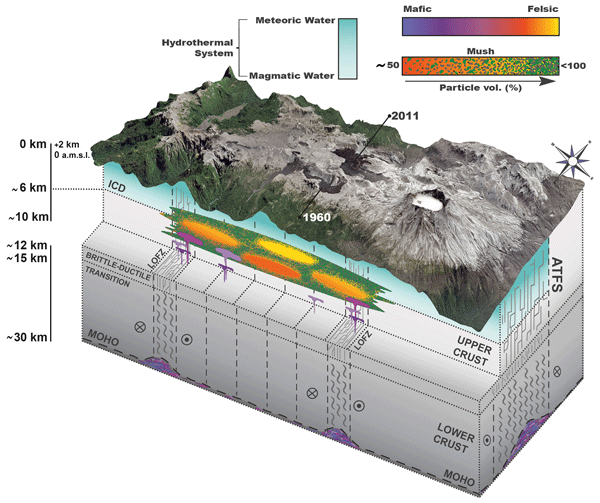
Infrequent eruptions of acidic magma are one of the most dangerous natural phenomena, but almost none of them have been witnessed by modern science. We present the first systematic characterization of seismicity recorded near an erupting acidic volcano (Cordón Caulle 2011). We define different phases of unrest and eruption, which combined with previous findings allows us to discuss the main processes associated with this type of violent eruption, with implications for their volcanic hazard.
Javier Ojeda and Sergio Ruiz
Solid Earth, 12, 1075–1085, https://doi.org/10.5194/se-12-1075-2021, https://doi.org/10.5194/se-12-1075-2021, 2021
Short summary
Short summary
In Santiago, Chile, the lockdown imposed due to COVID-19 was recorded by seismological instruments. This analysis shows temporal changes in the surface vibrations controlled by lockdown phases, mobility, and epidemiological factors. Our findings suggest that
dynamic lockdownand the early deconfinement in April 2020 caused an increase in mobility and therefore virus transmission. We propose that seismic networks could be used to monitor urban mobility as a new proxy in public policies.
Cited articles
Adaros, R.: Sismicidad y Tectónica del extremo sur de Chile, Memoria de Magister, Facultad de Ciencias Físicas y Matemáticas, Univ. de Chile, 1–82, https://bibliotecadigital.uchile.cl/discovery/fulldisplay/alma991003601069703936/56UDC_INST:56UDC_INST (last access: 24 November 2025), 2003.
Ammirati, J. B., Azúa, K., Pastén-Araya, F., Richter, A., Wiens, D. A., Flores, M. C., Ruiz, S. Guzmán-Marín, P. Lanza, F., and Sielfeld, G.: Fault reactivation linked to rapid ice-mass removal from the Southern Patagonian Icefield (48–52° S), Tectonophysics, 230320, https://doi.org/10.1016/j.tecto.2024.230320, 2024.
Bohm, M., Lüth, S., Echtler, H., Asch, G., Bataille, K., Bruhn, C., Rietbock, A. and Wigger, P.: The Southern Andes between 36 and 40° S latitude: seismicity and average seismic velocities, Tectonophysics, 356, 275–289, https://doi.org/10.1016/S0040-1951(02)00399-2, 2002.
Bormann, P. (Ed.): New Manual of Seismological Observatory Practice (NMSOP-2), IASPEI, GFZ German Research Centre for Geosciences, Potsdam, https://doi.org/10.2312/GFZ.NMSOP-2, 2012.
Bormann, P. and Wielandt, E.: Seismic signals and noise, In New manual of seismological observatory practice 2 (NMSOP2), Deutsches GeoForschungsZentrum GFZ, 1–62, https://doi.org/10.2312/GFZ.NMSOP-2_ch4, 2013.
Breitsprecher, K. and Thorkelson, D. J.: Neogene kinematic history of Nazca–Antarctic–Phoenix slab windows beneath Patagonia and the Antarctic Peninsula, Tectonophysics, 464, 10–20, https://doi.org/10.1016/j.tecto.2008.02.013, 2009.
Cesca, S., Sobiesiak, M., Tassara, A., Olcay, M., Günther, E., Mikulla, S., and Dahm, T.: The Iquique Local Network and PicArray, GFZ Data Services [data set], https://doi.org/10.14470/VD070092, 2009.
Farías, M., Comte, D., Charrier, R., Martinod, J., David, C., Tassara, A., Tapia, F., and Fock, A.: Crustal-scale structural architecture in central Chile based on seismicity and surface geology: Implications for Andean Mountain building, Tectonics, 29, https://doi.org/10.1029/2009TC002480, 2010.
GEOFON Data Centre: GEOFON Seismic Network, GFZ Data Services [data set], https://doi.org/10.14470/TR560404, 1993.
GFZ German Research Centre for Geosciences and Institut Des Sciences De L'Univers-Centre National De La Recherche CNRS-INSU: IPOC Seismic Network Integrated Plate boundary Observatory Chile – IPOC [data set], https://doi.org/10.14470/PK615318, 2006.
González-Vidal, D., Moreno, M, Sippl, C., Báez, J., Ortega-Culaciati, F., Lange, D., Tilmann, F., Socquet, A., Bolte, J., Hormazábal, J., Langlais, M, Morales-Yáñez, C., Melnick, D., Benavente, R., Münchmeyer, J., Araya, R., and Heit, B.: Relation Between Oceanic Plate Structure, Patterns of Interplate Locking and Microseismicity in the 1922 Atacama Seismic Gap, Geophys. Res. Lett., 50, https://doi.org/10.1029/2023gl103565, 2023.
Guzmán, P.: Seismicity of the Austral Andes, Southernmost Patagonia, ETH Zürich, https://doi.org/10.3929/ethz-b-000473652, 2020.
Hayes, G., Moore, G., Portner, D., Hearne, M., Flamme, H., Furtney, M., and Smoczyk, G. M.: Slab2, a comprehensive subduction zone geometry model, Science, 362, 58–61, https://doi.org/10.1126/science.aat4723, 2018.
Hernández-Soto, N., Miller, M., Moreno, M., Lange, D., Socquet, A., Sippl, C., and González-Vidal, D.: From regional to local structures imaged by seismic tomography at the Atacama seismic gap, Central-Northern Chile (24.5–29° S), EGU General Assembly 2024, Vienna, Austria, 14–19 April 2024, EGU24-20700, https://doi.org/10.5194/egusphere-egu24-20700, 2024.
Hutton, L. and Boore, D. M.: The ML scale in Southern California, Bull. Seismol. Soc. Am., 77, 2074–2094, https://doi.org/10.1785/BSSA0770062074, 1987.
IPGP and EOST (Institut de physique du globe de Paris and EOST and École et Observatoire des Sciences de la Terre de Strasbourg): GEOSCOPE, French Global Network of broad band seismic stations, IPGP – Institut de physique du globe de Paris, Université de Paris, https://doi.org/10.18715/GEOSCOPE.G, 1982.
ISC – International Seismological Centre: On-line Bulletin, https://doi.org/10.31905/D808B830, 2025.
Kendrick, E., Bevis, M., Smalley, R., Brooks, B. A., Vargas, R. B., Lauría, E., and Souto, L.: The Nazca-South America Euler vector and its rate of change, J. S. Am. Earth Sci., 16, 125–131, https://doi.org/10.1016/s0895-9811(03)00028-2, 2003.
Küperkoch, L., Meier, T. and Diehl, T.: Automated Event and Phase Identification, in: New Manual of Seismological Observatory Practice 2 (NMSOP-2), edited by: Bormann, P., GFZ – Deutsches GeoForschungsZentrum, Potsdam, 1–52, https://doi.org/10.2312/GFZ.NMSOP-2_ch16, 2012.
Lomax, A. and Savvaidis, A.: High-precision earthquake location using source-specific station terms and inter-event waveform similarity, J. Geophys. Res.-Solid, https://doi.org/10.1029/2021jb023190, 2021.
Lomax, A., Virieux, J., Volant, P., and Berge-Thierry, C.: Probabilistic earthquake location in 3D and layered models: Introduction of a Metropolis-Gibbs method and comparison with linear locations, in: Advances in seismic event location, Springer, 101–134, https://doi.org/10.1007/978-94-015-9536-0_5, 2000.
Marot, M., Monfret, T., Pardo, M., Ranalli, G., and Nolet, G.: A double seismic zone in the subducting Juan Fernandez Ridge of the Nazca Plate (32° S), central Chile, J. Geophys. Res., 118, 3462–3475, https://doi.org/10.1002/jgrb.50240, 2013.
Michelini, A., Cianetti, S., Gaviano, S., Giunchi, C., Jozinović, D., and Lauciani, V.: INSTANCE – the Italian seismic dataset for machine learning, Earth Syst. Sci. Data, 13, 5509–5544, https://doi.org/10.5194/essd-13-5509-2021, 2021.
Mignan, A. and Woessner, J.: Estimating the magnitude of completeness for earthquake catalogs, https://doi.org/10.5078/corssa-00180805, 2012.
Mousavi, S. M., Ellsworth, W. L., Zhu, W., Chuang, L. Y., and Beroza, G. C.: Earthquake transformer-an attentive deep-learning model for simultaneous earthquake detection and phase picking, Nat. Commun., 11, https://doi.org/10.1038/s41467-020-17591-w, 2020.
Münchmeyer, J.: PyOcto: A high-throughput seismic phase associator, Seismica, 3, https://doi.org/10.26443/seismica.v3i1.1130, 2024.
Münchmeyer, J., Molina‐Ormazabal, D., Marsan, D., Langlais, M., Baez, J. C., Heit, B., González-Vidal, D., Moreno, M., Tilmann, F., Lange, D., and Socquet, A: Characterizing the Atacama segment of the Chile subduction margin (24 S–31 S) with > 165,000 earthquakes, Journal of Geophysical Research: Solid Earth, 130, e2025JB031256, https://doi.org/10.1029/2025JB031256, 2025.
Münchmeyer, J., Woollam, J., Rietbrock, A., Tilmann, F., Frederik, T., Lange, D., Lange, D., Thomas Bornstein, Diehl, T., Giunchi, C., Haslinger, F., Dario Jozinović, Michelini, A., Joachim Saul, and Soto, H.: Which picker fits my data? A quantitative evaluation of deep learning based seismic pickers, J. Geophys. Res.-Solid, https://doi.org/10.1029/2021jb023499, 2022.
Pastén-Araya, F., Potin, B., Azua, K., Saez, M., Aden-Antoniów, F., Ruiz, S., Cabrera, L., Ampuero, J. P., Nocquet, J. M., Rivera, L., and Duputel, Z.: Along-dip segmentation of the slip behavior and rheology of the Copiapó Ridge Subducted in North-Central Chile, Geophys. Res. Lett., 49, e2021GL095471, https://doi.org/10.1029/2021GL095471, 2022.
Potin, B., Ruiz, S., Aden-Antoniow, F., Madariaga, R., and Barrientos, S.: A Revised Chilean Seismic Catalog from 1982 to Mid-2020, Seismol. Res. Lett., https://doi.org/10.1785/0220240047, 2025.
Puente Huerta, J., Sippl, C., Münchmeyer, J., and McBrearty, I. W.: Benchmarking seismic phase associators: Insights from synthetic scenarios, Seismica, 4, 1559, https://doi.org/10.26443/seismica.v4i2.1559, 2025.
Quiero, F., Tassara, A., Iaffaldano, G., and Rabbia, O.: Growth of Neogene Andes linked to changes in plate convergence using high-resolution kinematic models, Nat. Commun., 13, 1339–1339, https://doi.org/10.1038/s41467-022-29055-4, 2022.
Riedel-Hornig, M., Sippl, C., Tassara, A., Ruiz, S., Potin, B., and Puente, J.: Automated seismicity catalogue and picks for the Chilean margin, Zenodo [data set], https://doi.org/10.5281/zenodo.15284375, 2025.
Ruiz, S., Aden-Antoniow, F., Baez, J. C., Otarola, C., Potin, B., Del Campo, F., Poli, P., Flores, C., Satriano, C., Leyton, F., Madariaga, R., and Bernard, P.: Nucleation phase and dynamic inversion of the Mw 6.9 Valparaíso 2017 earthquake in Central Chile, Geophys. Res. Lett., 44, 10290–10297, https://doi.org/10.1002/2017GL075675, 2017.
Sernageomin: Red Nacional de Vigilancia Volcánica Chile, http://sernageomin.cl/ (last access: 24 November 2025), 2015.
Sielfeld, G., Lange, D., and Cembrano, J.: Intra-arc crustal seismicity: Seismotectonic implications for the southern Andes volcanic zone, Chile, Tectonics, 38, 552–578, https://doi.org/10.1029/2018TC004985, 2019.
Sippl, C., Schurr, B., Asch, G., and Kummerow, J.: Seismicity structure of the northern Chile forearc from double-difference relocated hypocenters, J. Geophys. Res.-Solid, 123, 4063–4087, https://doi.org/10.1002/2017JB015384, 2018.
Sippl, C, Schurr, B., Münchmeyer, J., Barrientos, S., and Oncken, O.: The Northern Chile forearc constrained by 15 years of permanent seismic monitoring, J. S. Am. Earth Sci., 126, 104326, https://doi.org/10.1016/j.jsames.2023.104326, 2023.
Tassara, A. and Echaurren, A.: Anatomy of the Andean subduction zone: Three-dimensional density model upgraded and compared against global-scale models, Geophys. J. Int., 189, 161–168, https://doi.org/10.1111/j.1365-246x.2012.05397.x, 2012.
Tassara, C., Cesca, S., Miller, M., López-Comino, J., Sippl, C., Cortés-Aranda, J., and Schurr, B.: Seismic source analysis of two anomalous earthquakes in Northern Chile, J. S. Am. Earth Sci., 119, 103948, https://doi.org/10.1016/j.jsames.2022.103948, 2022.
Universidad de Chile: Red Sismologica Nacional, International Federation of Digital Seismograph Networks [data set], https://doi.org/10.7914/SN/C1, 2012.
Universidad de Chile: Red Sismologica Nacional [Data set], International Federation of Digital Seismograph Networks, http://service.iris.edu/fdsnws/dataselect/1/ (last access: 24 November 2025) ,1991.
Universidad Nacional de San Juan (UNSJ): West Central Argentina Network [Data set], International Federation of Digital Seismograph Networks, http://service.iris.edu/fdsnws/dataselect/1/ (last access: 24 November 2025), 1958.
USGS: Global Seismograph Network (GSN – IRIS/USGS), International Federation of Digital Seismograph Networks [data set], https://doi.org/10.7914/SN/IU, 1988.
USGS: Global Telemetered Seismograph Network (USAF/USGS), International Federation of Digital Seismograph Networks [data set], https://doi.org/10.7914/SN/GT, 1993.
Valenzuela-Malebrán, C., Cesca, S., Ruiz, S., Passarelli, L., Leyton, F., Hainzl, S., Potin, B., and Dahm, T.: Seismicity clusters in Central Chile: Investigating the role of repeating earthquakes and swarms in a subduction region, Geophys. J. Int., 224, 2028–2043, https://doi.org/10.1093/gji/ggaa562, 2021.
Waldhauser, F. and Ellsworth, W.: A Double-Difference Earthquake Location Algorithm: Method and Application to the Northern Hayward Fault, California, Bull. Seismol. Soc. Am., 90, 1353–1368, https://doi.org/10.1785/0120000006, 2000.
Wiens, D. and Magnani, M.: Solid Earth response of the Patagonia Andes to post-Little Ice Age glacial retreat, International Federation of Digital Seismograph Networks, https://doi.org/10.7914/SN/1P_2018, 2018.
Woollam, J., Münchmeyer, J., Tilmann, F., Rietbrock, A., Lange, D., Bornstein, T., Diehl, T., Giunchi, C., Haslinger, F., Jozinovic, D., Michelini, A., Saul, J., and Soto, H.: SeisBench – A toolbox for machine learning in seismology, Seismol. Soc. Am., 93, 1695–1709, https://doi.org/10.1785/0220210324, 2022.
Zhang, M., Ellsworth, W. L., and Beroza, G. C.: Rapid earthquake association and location, Seismol. Res. Lett. 90.6, 2276–2284, https://doi.org/10.1785/0220190052, 2019.
Short summary
Seismic networks produce large volumes of data, that are hard to process through traditional methods. Here we create an automatic workflow using machine and deep learning techniques to process five years of data in the western coast of South America. This allows us to detect smaller earthquakes than before, creating a catalogue of seismicity that contains far more events than other regional catalogues.
Seismic networks produce large volumes of data, that are hard to process through traditional...
Altmetrics
Final-revised paper
Preprint