Articles | Volume 17, issue 12
https://doi.org/10.5194/essd-17-6807-2025
© Author(s) 2025. This work is distributed under
the Creative Commons Attribution 4.0 License.
the Creative Commons Attribution 4.0 License.
https://doi.org/10.5194/essd-17-6807-2025
© Author(s) 2025. This work is distributed under
the Creative Commons Attribution 4.0 License.
the Creative Commons Attribution 4.0 License.
Data description article
| 
04 Dec 2025
Data description article |
| 04 Dec 2025
| 04 Dec 2025
Dataset of oil slicks, look-alikes and remarkable SAR signatures obtained from Sentinel-1 data in the Eastern Mediterranean Sea
Yi-Jie Yang
CORRESPONDING AUTHOR

Team SAR Oceanography, Remote Sensing Technology Institute, German Aerospace Center (DLR), Bremen, Germany
Faculty of Mathematics and Natural Sciences, Kiel University, Kiel, Germany
Suman Singha
National Centre for Climate Research, Danish Meteorological Institute (DMI), Copenhagen, Denmark
Team SAR Oceanography, Remote Sensing Technology Institute, German Aerospace Center (DLR), Bremen, Germany
Ron Goldman
Israel Marine Data Center, Israel Oceanographic and Limnological Research (IOLR), Haifa, Israel
Florian Schütte
GEOMAR Helmholtz Centre for Ocean Research Kiel, Kiel, Germany
Related authors
No articles found.
Nana Hocke, Lavinia Patara, John Dunne, Florian Schütte, Mariana Maia Pacheco, and Ivy Frenger
EGUsphere, https://doi.org/10.5194/egusphere-2026-4347, https://doi.org/10.5194/egusphere-2026-4347, 2026
Short summary
Short summary
We investigate how ocean eddies influence carbon dioxide and oxygen exchange between the ocean and atmosphere using a high-resolution coupled ocean–biogeochemical climate model. We find that mesoscale variability explains 6–7 % of flux variance globally, with regional contributions exceeding 30 %. Biological processes dominate globally integrated mesoscale flux anomalies, accounting for about two-thirds of the signal, while temperature-driven effects become more important under warming.
André Emil Toft Jensen, Rasmus Tage Tonboe, Hoyeon Shi, Suman Singha, Mads Hvid Ribergaard, Imke Sievers, Marcus Huntemann, Melody Sandells, and Vishnu Nandan
EGUsphere, https://doi.org/10.5194/egusphere-2026-3613, https://doi.org/10.5194/egusphere-2026-3613, 2026
This preprint is open for discussion and under review for The Cryosphere (TC).
Short summary
Short summary
Sea ice models are essential for understanding climate change, but evaluating them across the Arctic is challenging. We developed a method that compares model simulations directly with satellite measurements of microwave radiation. The resulting performance metric reflects the overall state of the sea ice and snow cover and provides a largely independent way to evaluate and improve large-scale sea ice models, helping to increase confidence in future climate studies.
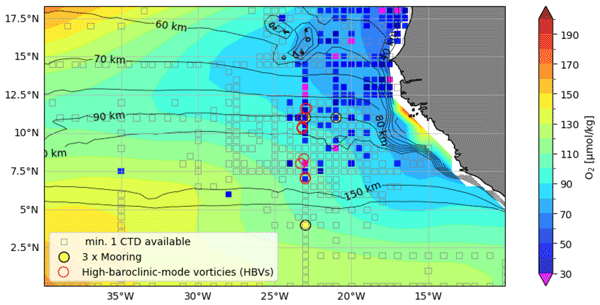
Florian Schütte, Johannes Hahn, Ivy Frenger, Arne Bendinger, Ahmad Fehmi Dilmahamod, Marco Schulz, and Peter Brandt
Ocean Sci., 22, 119–143, https://doi.org/10.5194/os-22-119-2026, https://doi.org/10.5194/os-22-119-2026, 2026
Short summary
Short summary
We found extreme drops in oxygen levels in the tropical Atlantic linked to surprisingly long-lived, small subsurface eddies. These eddies are hidden beneath the surface (undetectable by satellites) and are unusually stable, even in the highly dynamic ocean near the equator. Using long-term measurements and computer models, we show that these features can strongly influence oxygen supply and potentially impact marine ecosystems.
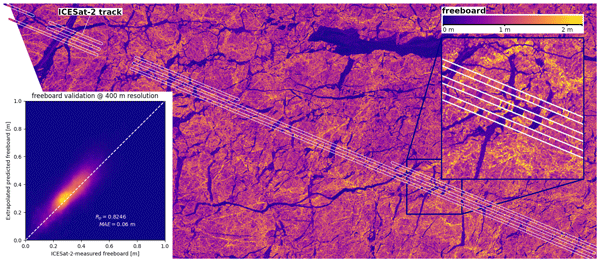
Karl Kortum, Suman Singha, and Gunnar Spreen
The Cryosphere, 19, 4701–4714, https://doi.org/10.5194/tc-19-4701-2025, https://doi.org/10.5194/tc-19-4701-2025, 2025
Short summary
Short summary
Improved sea ice observations are essential to understanding the processes that lead to the strong warming effect currently being observed in the Arctic. In this work, we combine complementary satellite measurement techniques and find remarkable correlations between the two observations. This allows us to expand the coverage of ice topography measurements to a scope and resolution that could not previously be observed.

Swantje Bastin, Aleksei Koldunov, Florian Schütte, Oliver Gutjahr, Marta Agnieszka Mrozowska, Tim Fischer, Radomyra Shevchenko, Arjun Kumar, Nikolay Koldunov, Helmuth Haak, Nils Brüggemann, Rebecca Hummels, Mia Sophie Specht, Johann Jungclaus, Sergey Danilov, Marcus Dengler, and Markus Jochum
Geosci. Model Dev., 18, 1189–1220, https://doi.org/10.5194/gmd-18-1189-2025, https://doi.org/10.5194/gmd-18-1189-2025, 2025
Short summary
Short summary
Vertical mixing is an important process, for example, for tropical sea surface temperature, but cannot be resolved by ocean models. Comparisons of mixing schemes and settings have usually been done with a single model, sometimes yielding conflicting results. We systematically compare two widely used schemes with different parameter settings in two different ocean models and show that most effects from mixing scheme parameter changes are model-dependent.
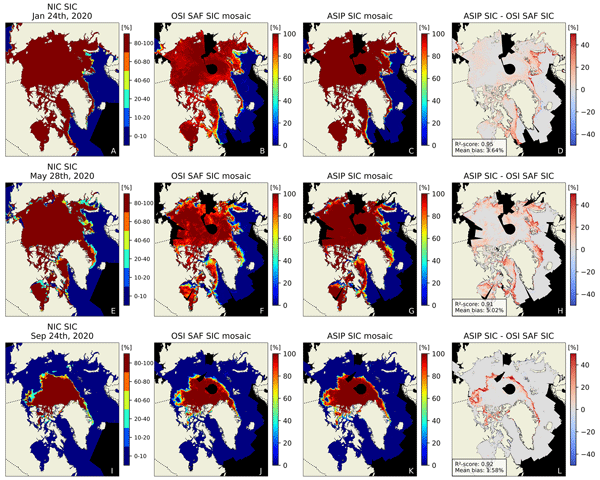
Tore Wulf, Jørgen Buus-Hinkler, Suman Singha, Hoyeon Shi, and Matilde Brandt Kreiner
The Cryosphere, 18, 5277–5300, https://doi.org/10.5194/tc-18-5277-2024, https://doi.org/10.5194/tc-18-5277-2024, 2024
Short summary
Short summary
Here, we present ASIP: a new and comprehensive deep-learning-based methodology to retrieve high-resolution sea ice concentration with accompanying well-calibrated uncertainties from satellite-based active and passive microwave observations at a pan-Arctic scale for all seasons. In a comparative study against pan-Arctic ice charts and well-established passive-microwave-based sea ice products, we show that ASIP generalizes well to the pan-Arctic region.

Karl Kortum, Suman Singha, Gunnar Spreen, Nils Hutter, Arttu Jutila, and Christian Haas
The Cryosphere, 18, 2207–2222, https://doi.org/10.5194/tc-18-2207-2024, https://doi.org/10.5194/tc-18-2207-2024, 2024
Short summary
Short summary
A dataset of 20 radar satellite acquisitions and near-simultaneous helicopter-based surveys of the ice topography during the MOSAiC expedition is constructed and used to train a variety of deep learning algorithms. The results give realistic insights into the accuracy of retrieval of measured ice classes using modern deep learning models. The models able to learn from the spatial distribution of the measured sea ice classes are shown to have a clear advantage over those that cannot.
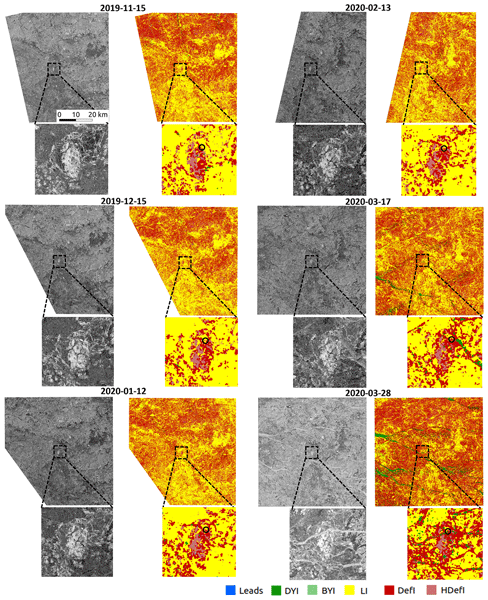
Wenkai Guo, Polona Itkin, Suman Singha, Anthony P. Doulgeris, Malin Johansson, and Gunnar Spreen
The Cryosphere, 17, 1279–1297, https://doi.org/10.5194/tc-17-1279-2023, https://doi.org/10.5194/tc-17-1279-2023, 2023
Short summary
Short summary
Sea ice maps are produced to cover the MOSAiC Arctic expedition (2019–2020) and divide sea ice into scientifically meaningful classes. We use a high-resolution X-band synthetic aperture radar dataset and show how image brightness and texture systematically vary across the images. We use an algorithm that reliably corrects this effect and achieve good results, as evaluated by comparisons to ground observations and other studies. The sea ice maps are useful as a basis for future MOSAiC studies.
Cited articles
Ahsbahs, T., Nygaard, N. G., Newcombe, A., and Badger, M.: Wind Farm Wakes from SAR and Doppler Radar, Remote Sensing, 12, https://doi.org/10.3390/rs12030462, 2020. a
Alpers, W. and Huang, W.: On the Discrimination of Radar Signatures of Atmospheric Gravity Waves and Oceanic Internal Waves on Synthetic Aperture Radar Images of the Sea Surface, IEEE Transactions on Geoscience and Remote Sensing, 49, 1114–1126, https://doi.org/10.1109/TGRS.2010.2072930, 2011. a, b, c, d
Alpers, W. and Zeng, K.: On Radar Signatures of Upwelling, Journal of Geodesy and Geoinformation Science, 4, 17, https://doi.org/10.11947/j.JGGS.2021.0102, 2021. a, b
Alpers, W., Huang, W., and Xilin, G.: Observations of atmospheric gravity waves over the Chinese seas by spaceborne synthetic aperture radar, Proc. Dragon (ESA SP-655), 2008. a
Alpers, W., Brandt, P., Lazar, A., Dagorne, D., Sow, B., Faye, S., Hansen, M. W., Rubino, A., Poulain, P.-M., and Brehmer, P.: A small-scale oceanic eddy off the coast of West Africa studied by multi-sensor satellite and surface drifter data, Remote Sensing of Environment, 129, 132–143, https://doi.org/10.1016/j.rse.2012.10.032, 2013. a
Alpers, W., Dagorne, D., and Brandt, P.: Satellite Observations of Oceanic Eddies Around Africa, Springer Netherlands, Dordrecht, 205–229, ISBN 978-94-017-8008-7, https://doi.org/10.1007/978-94-017-8008-7_11, 2014. a
Alpers, W., Zhang, B., Mouche, A., Zeng, K., and Chan, P. W.: Rain footprints on C-band synthetic aperture radar images of the ocean – Revisited, Remote Sensing of Environment, 187, 169–185, https://doi.org/10.1016/j.rse.2016.10.015, 2016. a, b, c
Alpers, W., Holt, B., and Zeng, K.: Oil spill detection by imaging radars: Challenges and pitfalls, Remote Sensing of Environment, 201, 133–147, https://doi.org/10.1016/j.rse.2017.09.002, 2017. a
Amri, E., Dardouillet, P., Benoit, A., Courteille, H., Bolon, P., Dubucq, D., and Credoz, A.: Offshore Oil Slick Detection: From Photo-Interpreter to Explainable Multi-Modal Deep Learning Models Using SAR Images and Contextual Data, Remote Sensing, 14, https://doi.org/10.3390/rs14153565, 2022. a
Atlas, D.: Origin of Storm Footprints on the Sea Seen by Synthetic Aperture Radar, Science, 266, 1364–1366, https://doi.org/10.1126/science.266.5189.1364, 1994. a
Bakun, A. and Agostini, V. N.: Seasonal Patterns of Wind-Induced Upwelling/Downwelling in the Mediterranean Sea, Scientia Marina, 65, 243–257, https://doi.org/10.3989/scimar.2001.65n3243, 2001. a
Berthon, J.-F. and Zibordi, G.: Bio-optical relationships for the northern Adriatic Sea, International Journal of Remote Sensing, 25, 1527–1532, https://doi.org/10.1080/01431160310001592544, 2004. a
Brekke, C. and Solberg, A. H.: Oil spill detection by satellite remote sensing, Remote Sensing of Environment, 95, 1–13, https://doi.org/10.1016/j.rse.2004.11.015, 2005. a, b
Brown, C. and Fingas, M.: A review of current global oil spill surveillance, monitoring and remote sensing capabilities, in: Proceedings of the Twenty-Eighth Arctic and Marine Oil Spill Program Technical Seminar, Environment Canada, Ottawa, Ontario, OSTI ID 20638888, 789–798, https://www.osti.gov/etdeweb/biblio/20638888 (last access: 4 December 2025), 2005. a
Buongiorno Nardelli, B., Tronconi, C., Pisano, A., and Santoleri, R.: High and Ultra-High resolution processing of satellite Sea Surface Temperature data over Southern European Seas in the framework of MyOcean project, Remote Sensing of Environment, 129, 1–16, https://doi.org/10.1016/j.rse.2012.10.012, 2013. a
Cantorna, D., Dafonte, C., Iglesias, A., and Arcay, B.: Oil spill segmentation in SAR images using convolutional neural networks. A comparative analysis with clustering and logistic regression algorithms, Applied Soft Computing, 84, 105716, https://doi.org/10.1016/j.asoc.2019.105716, 2019. a
Carpenter, A. and Kostianoy, A. G. (Eds.): Oil Pollution in the Mediterranean Sea: Part I: The International Context, The Handbook of Environmental Chemistry, Springer Cham, ISBN 978-3-030-12236-2, https://doi.org/10.1007/978-3-030-12236-2, 2016. a
Chelton, D. B., Schlax, M. G., Samelson, R. M., and de Szoeke, R. A.: Global observations of large oceanic eddies, Geophysical Research Letters, 34, https://doi.org/10.1029/2007GL030812, 2007. a
Chen, S., Wei, X., and Zheng, W.: ASA-DRNet: An Improved Deeplabv3+ Framework for SAR Image Segmentation, Electronics, 12, https://doi.org/10.3390/electronics12061300, 2023. a
Chen, Y. and Wang, Z.: Marine Oil Spill Detection from SAR Images Based on Attention U-Net Model Using Polarimetric and Wind Speed Information, International Journal of Environmental Research and Public Health, 19, https://doi.org/10.3390/ijerph191912315, 2022. a
Christiansen, M. B. and Hasager, C. B.: Wake effects of large offshore wind farms identified from satellite SAR, Remote Sensing of Environment, 98, 251–268, https://doi.org/10.1016/j.rse.2005.07.009, 2005. a
Clemente-Colon, P. and Yan, X.-H.: Observations of East Coast upwelling conditions in synthetic aperture radar imagery, IEEE Transactions on Geoscience and Remote Sensing, 37, 2239–2248, https://doi.org/10.1109/36.789620, 1999. a, b
Copeland, A., Ravichandran, G., and Trivedi, M.: Localized Radon transform-based detection of ship wakes in SAR images, IEEE Transactions on Geoscience and Remote Sensing, 33, 35–45, https://doi.org/10.1109/36.368224, 1995. a
Copernicus Sentinel data: Legal notice on the use of Copernicus Sentinel Data and Service Information, https://sentinels.copernicus.eu/documents/247904/690755/Sentinel_Data_Legal_Notice (last access: 4 December 2025), 2019–2024.
Danklmayer, A., Doring, B. J., Schwerdt, M., and Chandra, M.: Assessment of Atmospheric Propagation Effects in SAR Images, IEEE Transactions on Geoscience and Remote Sensing, 47, 3507–3518, https://doi.org/10.1109/TGRS.2009.2022271, 2009. a
Deng, J., Dong, W., Socher, R., Li, L.-J., Li, K., and Fei-Fei, L.: ImageNet: A large-scale hierarchical image database, in: 2009 IEEE Conference on Computer Vision and Pattern Recognition, 248–255, https://doi.org/10.1109/CVPR.2009.5206848, 2009. a
Etling, D. and Brown, R. A.: Roll vortices in the planetary boundary layer: A review, Boundary-Layer Meteorology, 65, 215–248, https://doi.org/10.1007/BF00705527, 1993. a
E.U. Copernicus Marine Service Information (CMEMS) and Marine Data Store (MDS): Mediterranean Sea – High Resolution and Ultra High Resolution L3S Sea Surface Temperature, E.U. Copernicus Marine Service Information (CMEMS) and Marine Data Store (MDS) [data set],https://doi.org/10.48670/moi-00171, 2024a. a, b, c, d
E.U. Copernicus Marine Service Information (CMEMS) and Marine Data Store (MDS): Mediterranean Sea, Bio-Geo-Chemical, L3, daily Satellite Observations (1997–ongoing), E.U. Copernicus Marine Service Information (CMEMS) and Marine Data Store (MDS) [data set], https://doi.org/10.48670/moi-00299, 2024b. a, b, c, d, e
E.U. Copernicus Marine Service Information (CMEMS) and Marine Data Store (MDS): Global Ocean Hourly Sea Surface Wind and Stress from Scatterometer and Model, E.U. Copernicus Marine Service Information (CMEMS) and Marine Data Store (MDS) [data set], https://doi.org/10.48670/moi-00305, 2024c. a, b, c, d, e, f, g, h, i, j, k, l, m
European Space Agency: SNAP – ESA Sentinel Application Platform v8.0, http://step.esa.int (last access: 15 January 2021), 2020. a
Everingham, M., Van Gool, L., Williams, C. K., Winn, J., and Zisserman, A.: The PASCAL visual object classes (VOC) challenge, International journal of computer vision, 88, 303–338, https://doi.org/10.1007/s11263-009-0275-4, 2010. a, b
Ferraro, G., Meyer-Roux, S., Muellenhoff, O., Pavliha, M., Svetak, J., Tarchi, D., and Topouzelis, K.: Long term monitoring of oil spills in European seas, International Journal of Remote Sensing, 30, 627–645, https://doi.org/10.1080/01431160802339464, 2009. a
Fingas, M. and Brown, C.: Chapter 5 – Oil Spill Remote Sensing, in: Oil Spill Science and Technology (Second Edition), edited by: Fingas, M., Gulf Professional Publishing, Boston, 2nd Edn., 305–385, ISBN 978-0-12-809413-6, https://doi.org/10.1016/B978-0-12-809413-6.00005-9, 2017. a
Franceschi, N., Recchia, A., Piantanida, R., Giudici, D., Albinet, C., and Miranda, N.: A Global C-Band RFI Monitoring System Based on Sentinel-1 Data, in: 2021 IEEE International Geoscience and Remote Sensing Symposium IGARSS, 1658–1661, https://doi.org/10.1109/IGARSS47720.2021.9554119, 2021. a
Franceschi, N., Recchia, A., Piantanida, R., Hajduch, G., Vincent, P., Pinheiro, M., Miranda, N., and Albinet, C.: Operational RFI Mitigation Approach in Sentinel-1 IPF, in: EUSAR 2022; 14th European Conference on Synthetic Aperture Radar, 1–5, ISBN 978-3-8007-5823-4, 2022. a
Gade, M., Scholz, J., and von Viebahn, C.: On the detectability of marine oil pollution in European marginal waters by means of ERS SAR imagery, in: IGARSS 2000, IEEE 2000 International Geoscience and Remote Sensing Symposium. Taking the Pulse of the Planet: The Role of Remote Sensing in Managing the Environment. Proceedings (Cat. No.00CH37120), 6, 2510–2512 https://doi.org/10.1109/IGARSS.2000.859623, 2000. a
Gade, M., Byfield, V., Ermakov, S., Lavrova, O., and Mitnik, L.: Slicks as Indicators for Marine Processes, Oceanography (Washington D.C.), 26, 138–149, 2013. a
Graziano, M. D., Grasso, M., and D’Errico, M.: Performance Analysis of Ship Wake Detection on Sentinel-1 SAR Images, Remote Sensing, 9, https://doi.org/10.3390/rs9111107, 2017. a
Hajduch, G., Franceschi, N., Pinheiro, M., and Valentino, A.: SAR-MPC Sentinel-1: Using the RFI annotations, Report number: SAR-MPC-OTH-0540-1-0, https://doi.org/10.13140/RG.2.2.13758.56641, 2022. a
Hasimoto-Beltran, R., Canul-Ku, M., Díaz Méndez, G. M., Ocampo-Torres, F. J., and Esquivel-Trava, B.: Ocean oil spill detection from SAR images based on multi-channel deep learning semantic segmentation, Marine Pollution Bulletin, 188, 114651, https://doi.org/10.1016/j.marpolbul.2023.114651, 2023. a
Hühnerfuss, H.: Basic physicochemical principles of monomolecular sea slicks and crude oil spills, Springer Berlin Heidelberg, Berlin, Heidelberg, 21–35, ISBN 978-3-540-33271-8, https://doi.org/10.1007/3-540-33271-5_4, 2006. a
Karathanassi, V., Topouzelis, K., Pavlakis, P., and Rokos, D.: An object-oriented methodology to detect oil spills, International Journal of Remote Sensing, 27, 5235–5251, https://doi.org/10.1080/01431160600693575, 2006. a
Karimova, S. and Gade, M.: Submesoscale eddies seen by spaceborne radar, Proc. EMEC, 665–676, 2013. a
Karin, T.: toddkarin/global-land-mask: Release of version 1.0.0, Zenodo [code], https://doi.org/10.5281/zenodo.4066722, 2020. a
Konik, M. and Bradtke, K.: Object-oriented approach to oil spill detection using ENVISAT ASAR images, ISPRS Journal of Photogrammetry and Remote Sensing, 118, 37–52, https://doi.org/10.1016/j.isprsjprs.2016.04.006, 2016. a
Krestenitis, M., Orfanidis, G., Ioannidis, K., Avgerinakis, K., Vrochidis, S., and Kompatsiaris, I.: Oil Spill Identification from Satellite Images Using Deep Neural Networks, Remote Sensing, 11, https://doi.org/10.3390/rs11151762, 2019. a
Langmuir, I.: Surface Motion of Water Induced by Wind, Science, 87, 119–123, https://doi.org/10.1126/science.87.2250.119, 1938. a, b
Lehner, S., Horstmann, J., Koch, W., and Rosenthal, W.: Mesoscale wind measurements using recalibrated ERS SAR images, Journal of Geophysical Research: Oceans, 103, 7847–7856, https://doi.org/10.1029/97JC02726, 1998. a
Li, X. and Lehner, S.: Observation of TerraSAR-X for Studies on Offshore Wind Turbine Wake in Near and Far Fields, IEEE Journal of Selected Topics in Applied Earth Observations and Remote Sensing, 6, 1757–1768, https://doi.org/10.1109/JSTARS.2013.2263577, 2013. a
Lin, I.-I., Alpers, W., Khoo, V., Lim, H., Lim, T., and Kasilingam, D.: An ERS-1 synthetic aperture radar image of a tropical squall line compared with weather radar data, IEEE Transactions on Geoscience and Remote Sensing, 39, 937–945, https://doi.org/10.1109/36.921411, 2001. a
Liu, A. K., Chang, Y. S., Hsu, M.-K., and Liang, N. K.: Evolution of nonlinear internal waves in the East and South China Seas, Journal of Geophysical Research: Oceans, 103, 7995–8008, https://doi.org/10.1029/97JC01918, 1998. a
Liu, G., Perrie, W., Kudryavtsev, V., He, Y., Shen, H., Zhang, B., and Hu, H.: Radar imaging of intense nonlinear Ekman divergence, Geophysical Research Letters, 43, 9810–9818, https://doi.org/10.1002/2016GL070799, 2016. a
Lloyd, S.: Least squares quantization in PCM, IEEE Transactions on Information Theory, 28, 129–137, https://doi.org/10.1109/TIT.1982.1056489, 1982. a
Lyden, J. D., Hammond, R. R., Lyzenga, D. R., and Shuchman, R. A.: Synthetic aperture radar imaging of surface ship wakes, Journal of Geophysical Research: Oceans, 93, 12293–12303, https://doi.org/10.1029/JC093iC10p12293, 1988. a, b
Lévy, M., Ferrari, R., Franks, P. J. S., Martin, A. P., and Rivière, P.: Bringing physics to life at the submesoscale, Geophysical Research Letters, 39, https://doi.org/10.1029/2012GL052756, 2012. a
MacQueen, J.: Some methods for classification and analysis of multivariate observations, in: Proceedings of the fifth Berkeley symposium on mathematical statistics and probability, Oakland, CA, USA, vol. 1, 281–297, 1967. a
Mahmoud, A. S., Mohamed, S. A., El-Khoriby, R. A., AbdelSalam, H. M., and El-Khodary, I. A.: Oil spill identification based on dual attention UNet model using Synthetic Aperture Radar images, Journal of the Indian Society of Remote Sensing, 51, 121–133, 2023. a
McWilliams, J. C. and Molemaker, M. J.: Baroclinic Frontal Arrest: A Sequel to Unstable Frontogenesis, Journal of Physical Oceanography, 41, 601–619, https://doi.org/10.1175/2010JPO4493.1, 2011. a
Menna, M., Poulain, P.-M., Zodiatis, G., and Gertman, I.: On the surface circulation of the Levantine sub-basin derived from Lagrangian drifters and satellite altimetry data, Deep Sea Research Part I: Oceanographic Research Papers, 65, 46–58, https://doi.org/10.1016/j.dsr.2012.02.008, 2012. a, b
Meyer, F. J., Nicoll, J. B., and Doulgeris, A. P.: Correction and Characterization of Radio Frequency Interference Signatures in L-Band Synthetic Aperture Radar Data, IEEE Transactions on Geoscience and Remote Sensing, 51, 4961–4972, https://doi.org/10.1109/TGRS.2013.2252469, 2013. a
Miller, T., Potter, L., and McCorkle, J.: RFI suppression for ultra wideband radar, IEEE Transactions on Aerospace and Electronic Systems, 33, 1142–1156, https://doi.org/10.1109/7.625096, 1997. a
Monti-Guarnieri, A., Giudici, D., and Recchia, A.: Identification of C-Band Radio Frequency Interferences from Sentinel-1 Data, Remote Sensing, 9, https://doi.org/10.3390/rs9111183, 2017. a
Natsuaki, R., Motohka, T., Watanabe, M., Shimada, M., and Suzuki, S.: An Autocorrelation-Based Radio Frequency Interference Detection and Removal Method in Azimuth-Frequency Domain for SAR Image, IEEE Journal of Selected Topics in Applied Earth Observations and Remote Sensing, 10, 5736–5751, https://doi.org/10.1109/JSTARS.2017.2775205, 2017. a
Nieto-Hidalgo, M., Gallego, A.-J., Gil, P., and Pertusa, A.: Two-Stage Convolutional Neural Network for Ship and Spill Detection Using SLAR Images, IEEE Transactions on Geoscience and Remote Sensing, 56, 5217–5230, https://doi.org/10.1109/TGRS.2018.2812619, 2018. a
Pegliasco, C., Chaigneau, A., Morrow, R., and Dumas, F.: Detection and tracking of mesoscale eddies in the Mediterranean Sea: A comparison between the Sea Level Anomaly and the Absolute Dynamic Topography fields, Advances in Space Research, 68, 401–419, https://doi.org/10.1016/j.asr.2020.03.039, 2021. a
Qi, L., Wang, M., Hu, C., and Holt, B.: On the capacity of Sentinel-1 synthetic aperture radar in detecting floating macroalgae and other floating matters, Remote Sensing of Environment, 280, 113188, https://doi.org/10.1016/j.rse.2022.113188, 2022. a
Rey, M., Tunaley, J., Folinsbee, J., Jahans, P., Dixon, J., and Vant, M.: Application Of Radon Transform Techniques to Wake Detection in Seasat-A SAR Images, IEEE Transactions on Geoscience and Remote Sensing, 28, 553–560, https://doi.org/10.1109/TGRS.1990.572948, 1990. a, b
Robinson, A. R.: Overview and Summary of Eddy Science, in: Eddies in Marine Science, edited by: Robinson, A. R., Springer Berlin Heidelberg, Berlin, Heidelberg, 3–15, ISBN 978-3-642-69003-7, https://doi.org/10.1007/978-3-642-69003-7_1, 1983. a
Rosen, P. A., Hensley, S., and Le, C.: Observations and mitigation of RFI in ALOS PALSAR SAR data: Implications for the DESDynI mission, in: 2008 IEEE Radar Conference, 1–6, https://doi.org/10.1109/RADAR.2008.4720738, 2008. a
Shemdin, O. H.: Synthetic aperture radar imaging of ship wakes in the Gulf of Alaska, Journal of Geophysical Research: Oceans, 95, 16319–16338, https://doi.org/10.1029/JC095iC09p16319, 1990. a
Siokou-Frangou, I., Christaki, U., Mazzocchi, M. G., Montresor, M., Ribera d'Alcalá, M., Vaqué, D., and Zingone, A.: Plankton in the open Mediterranean Sea: a review, Biogeosciences, 7, 1543–1586, https://doi.org/10.5194/bg-7-1543-2010, 2010. a, b, c
Szegedy, C., Vanhoucke, V., Ioffe, S., Shlens, J., and Wojna, Z.: Rethinking the Inception Architecture for Computer Vision, arXiv [preprint], https://doi.org/10.48550/arXiv.1512.00567, 2015. a
Tings, B., Pleskachevsky, A., and Wiehle, S.: Comparison of detectability of ship wake components between C-Band and X-Band synthetic aperture radar sensors operating under different slant ranges, ISPRS Journal of Photogrammetry and Remote Sensing, 196, 306–324, https://doi.org/10.1016/j.isprsjprs.2022.12.008, 2023. a
Topouzelis, K. and Psyllos, A.: Oil spill feature selection and classification using decision tree forest on SAR image data, ISPRS Journal of Photogrammetry and Remote Sensing, 68, 135–143, https://doi.org/10.1016/j.isprsjprs.2012.01.005, 2012. a
Trujillo-Acatitla, R., Tuxpan-Vargas, J., Ovando-Vázquez, C., and Monterrubio-Martínez, E.: Marine oil spill detection and segmentation in SAR data with two steps Deep Learning framework, Marine Pollution Bulletin, 204, 116549, https://doi.org/10.1016/j.marpolbul.2024.116549, 2024. a
Tzutalin: LabelImg, Github [code], https://github.com/tzutalin/labelImg (last access: 1 July 2020), 2015. a
Volpe, G., Colella, S., Brando, V. E., Forneris, V., La Padula, F., Di Cicco, A., Sammartino, M., Bracaglia, M., Artuso, F., and Santoleri, R.: Mediterranean ocean colour Level 3 operational multi-sensor processing, Ocean Sci., 15, 127–146, https://doi.org/10.5194/os-15-127-2019, 2019. a
von Jackowski, A., Bouchachi, N., Barral, Q.-B., Labatut, P., Marie, B., Crispi, O., Escoubeyrou, K., Paulin, C.-H., Dimier, C., Ras, J., et al.: Seasonality of amino acid enantiomers and microbial communities at MOLA time series in the NW Mediterranean Sea, Organic Geochemistry, 196, 104839, https://doi.org/10.1016/j.orggeochem.2024.104839, 2024. a
Woodhouse, I. H.: Introduction to Microwave Remote Sensing, CRC press, https://doi.org/10.1201/9781315272573, 2006. a, b, c, d
Yang, Y.-J.: yi-jie-yang/dataset_DARTIS_2019: Dataset code v1 (Version v1), Zenodo [code], https://doi.org/10.5281/zenodo.17789853, 2025. a
Yang, Y.-J. and Schnupfhagn, C.: A near real-time automated oil spill monitoring system using SAR imagery from the European Copernicus mission, in: Active and Passive Remote Sensing of Oceans, Seas, and Lakes, edited by: Frouin, R. J., Murakami, H., Choi, J.-K., and Tseng, K.-H., International Society for Optics and Photonics, SPIE, . 13264, 132640G, https://doi.org/10.1117/12.3040472, 2025. a
Yang, Y.-J. and Singha, S.: Oil Slicks, Look-Alikes and Other Remarkable SAR Signatures in Sentinel-1 Imagery in the Eastern Mediterranean Sea in 2019, PANGAEA [data set], https://doi.org/10.1594/PANGAEA.980773, 2025. a, b
Yang, Y.-J., Singha, S., and Goldman, R.: A Near Real-Time Automated Oil Spill Detection and Early Warning System Using Sentinel-1 SAR Imagery for the Southeastern Mediterranean Sea, International Journal of Remote Sensing, 45, 1997–2027, https://doi.org/10.1080/01431161.2024.2321468, 2024. a, b, c, d, e, f, g, h, i
Zeng, K. and Wang, Y.: A Deep Convolutional Neural Network for Oil Spill Detection from Spaceborne SAR Images, Remote Sensing, 12, https://doi.org/10.3390/rs12061015, 2020. a
Zhou, L., Zheng, G., Wang, C., Shao, J., Chen, P., Ren, L., Wan, X., Zhu, Y., and Wang, H.: Wavelength Extraction and Analysis of Wind Streaks in SAR Imagery, IEEE Journal of Selected Topics in Applied Earth Observations and Remote Sensing, 18, 16769–16779, https://doi.org/10.1109/JSTARS.2025.3584105, 2025. a
Zodiatis, G., Drakopoulos, P., Brenner, S., and Groom, S.: Variability of the Cyprus warm core Eddy during the CYCLOPS project, Deep Sea Research Part II: Topical Studies in Oceanography, 52, 2897–2910, https://doi.org/10.1016/j.dsr2.2005.08.020, 2005. a
Short summary
This data descriptor presents a dataset containing oil slicks, look-alikes, and other remarkable ocean phenomena in synthetic aperture radar (SAR) data, which can be used for training oil spill detection methods. It explains the formation of various oceanic phenomena, supported by examples and supporting materials. These insights can help researchers from diverse backgrounds, such as remote sensing, oceanography, and machine learning, to better understand the sources of the signatures.
This data descriptor presents a dataset containing oil slicks, look-alikes, and other remarkable...


Altmetrics
Final-revised paper
Preprint